



My theme for this demonstration is how to balance a variety of greens, which almost everyone has a tough time with. I will also show my method of working from the inside out by comparing adjacent values on the palette. About three-quarters of this painting is done alla prima (in one sitting). Working from three known adjacent values, I can work out from there during my block in.
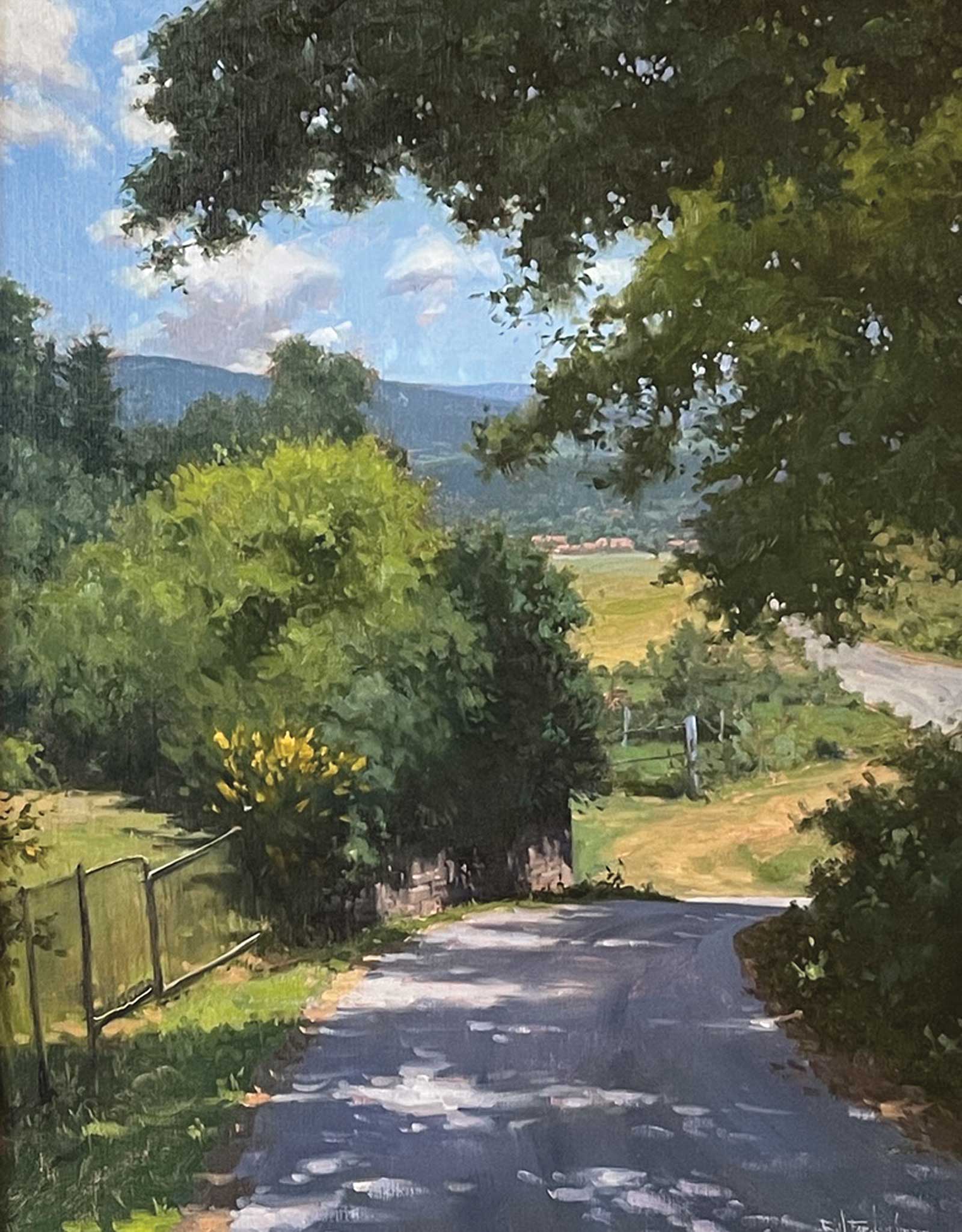
A Walk in the Country, oil, 30 x 24" (76 x 60 cm)
My goal is to start a story with the painting and let the viewer finish it to conjure a remembered time or a place they want to wander into. I’m not interested in creating a photorealistic painting where everything is spelled out, but rather, a painting with some realism, some vague areas and a feeling that you are right there in the scene—to feel the warm sunshine or cool air, the humidity and dryness. The source of my inspiration is pure observation from life, whether it is a field study, photo or memory.
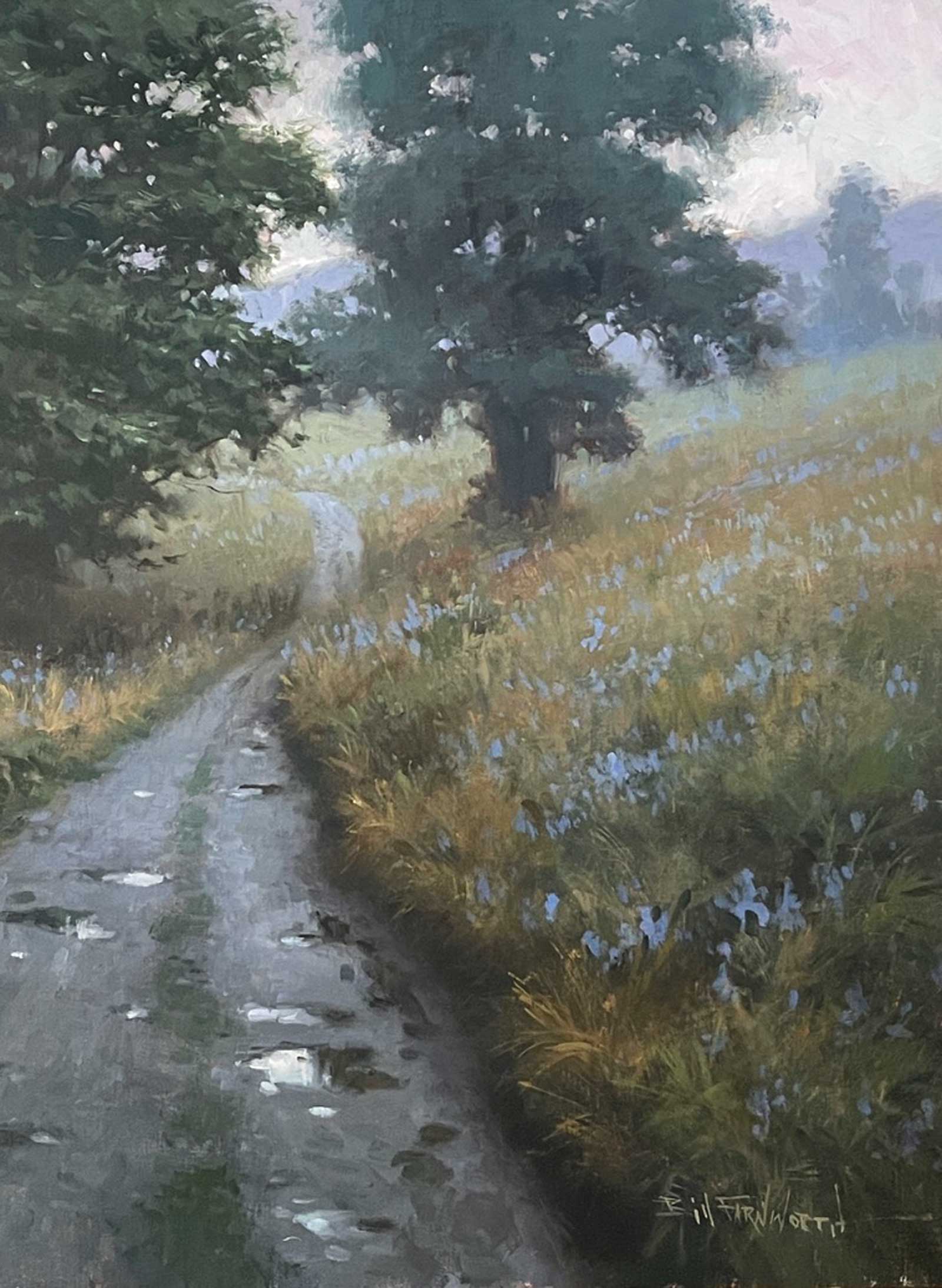
Into the Mist, oil, 24 x 18" (60 x 45 cm)
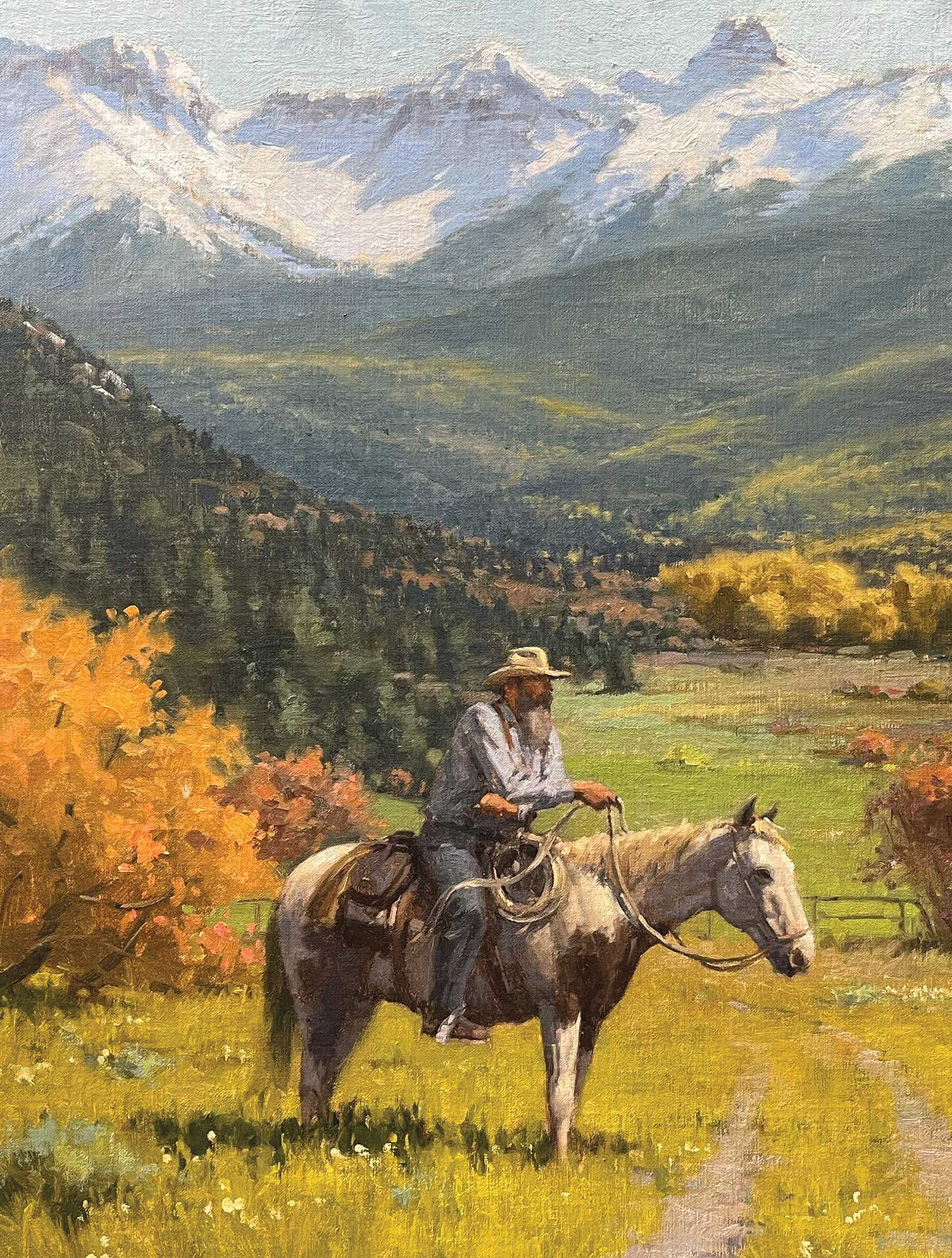
Yonder, oil, 24 x 24" (60 x 60 cm)
It’s amazing how much we remember from being there on the spot. I bring back to the studio the essence of the scene. The thing that I remember most is what struck me emotionally. That is the essence which becomes the title. Sometimes we can wander in a painting and lose what the picture is all about. I have a general title before I start to get to work. Through intense observation we begin to feel empathy for our subject, and from that comes understanding.
My Art in the Making Stalwart
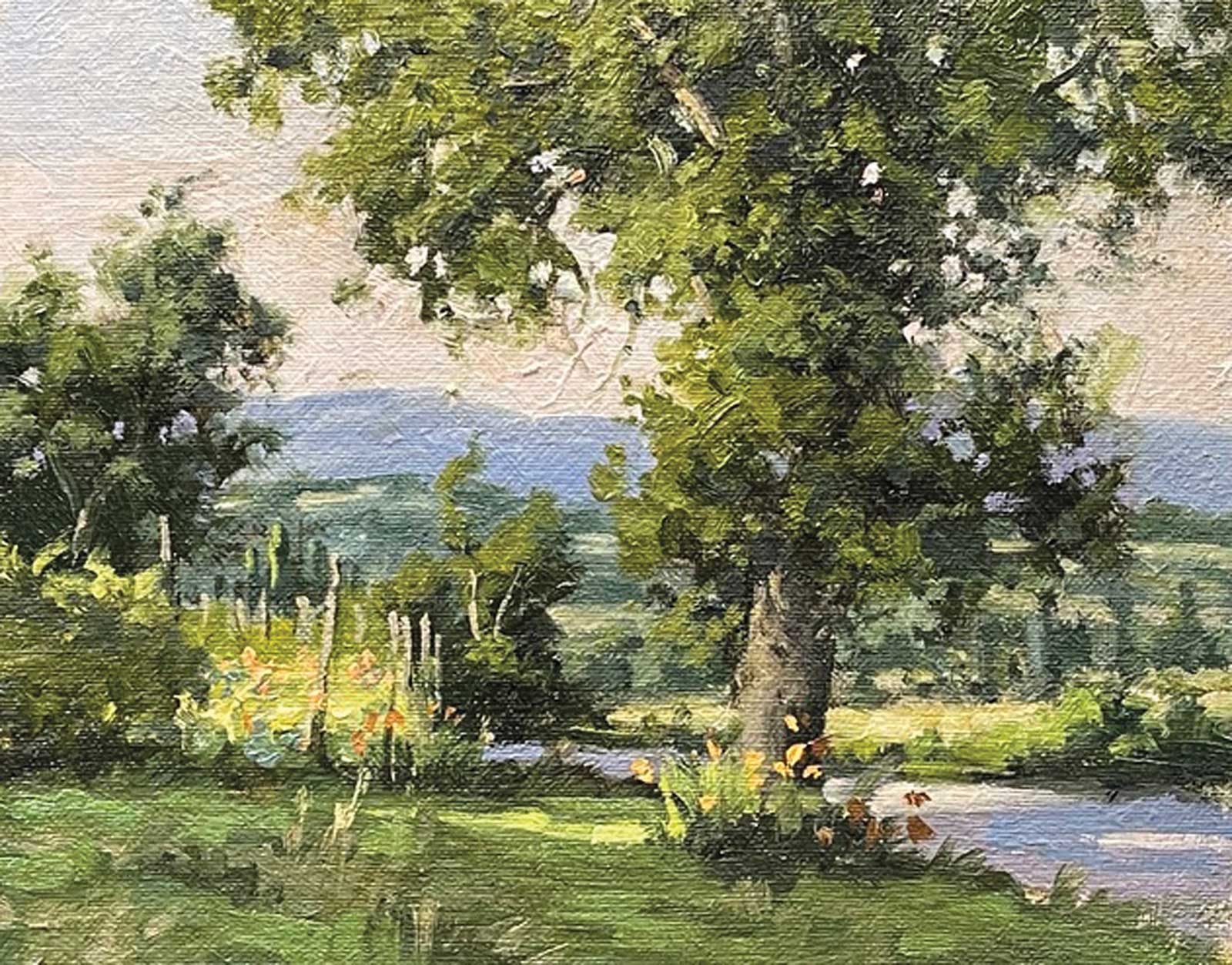
Study
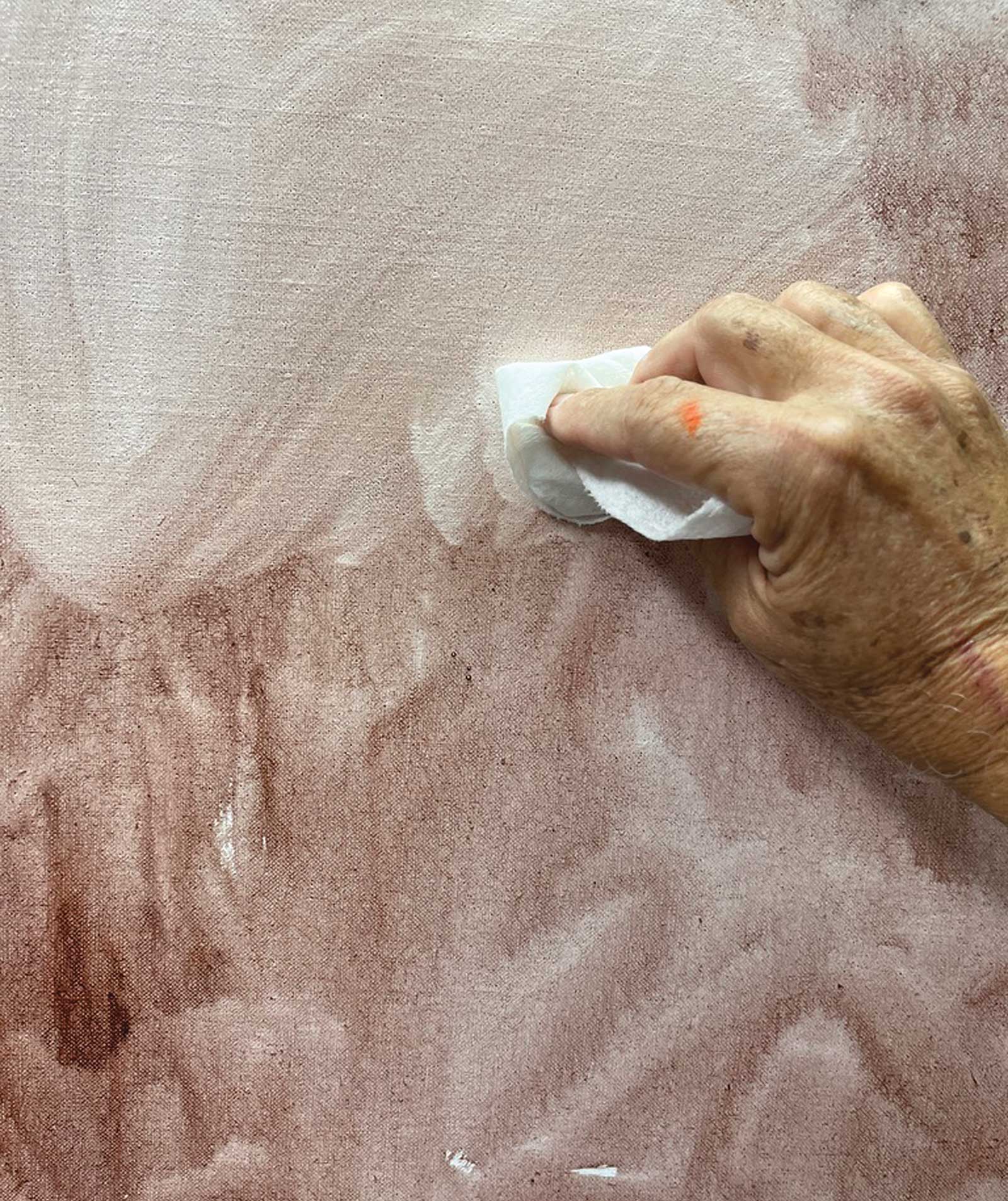 Stage 1
Stage 1 Toning the Canvas
I tone my canvas with the neutral pile that leans toward an earthy red, the complement of the greens I will be layering on. Thinning the paint with mineral spirits and a touch of Galkyd gel, I rub it into the canvas for a light tone. The gel medium helps set the paint up to a tacky surface.
Using ultramarine blue and a touch of alizarin orange, I mix a cool green that I scumble on with an old brush to block in my darkest darks. My technique for these leafy shadows is to brush it on to create some texture. It can’t be too wet because it won’t go on dark enough.
WHAT THE ARTIST USED
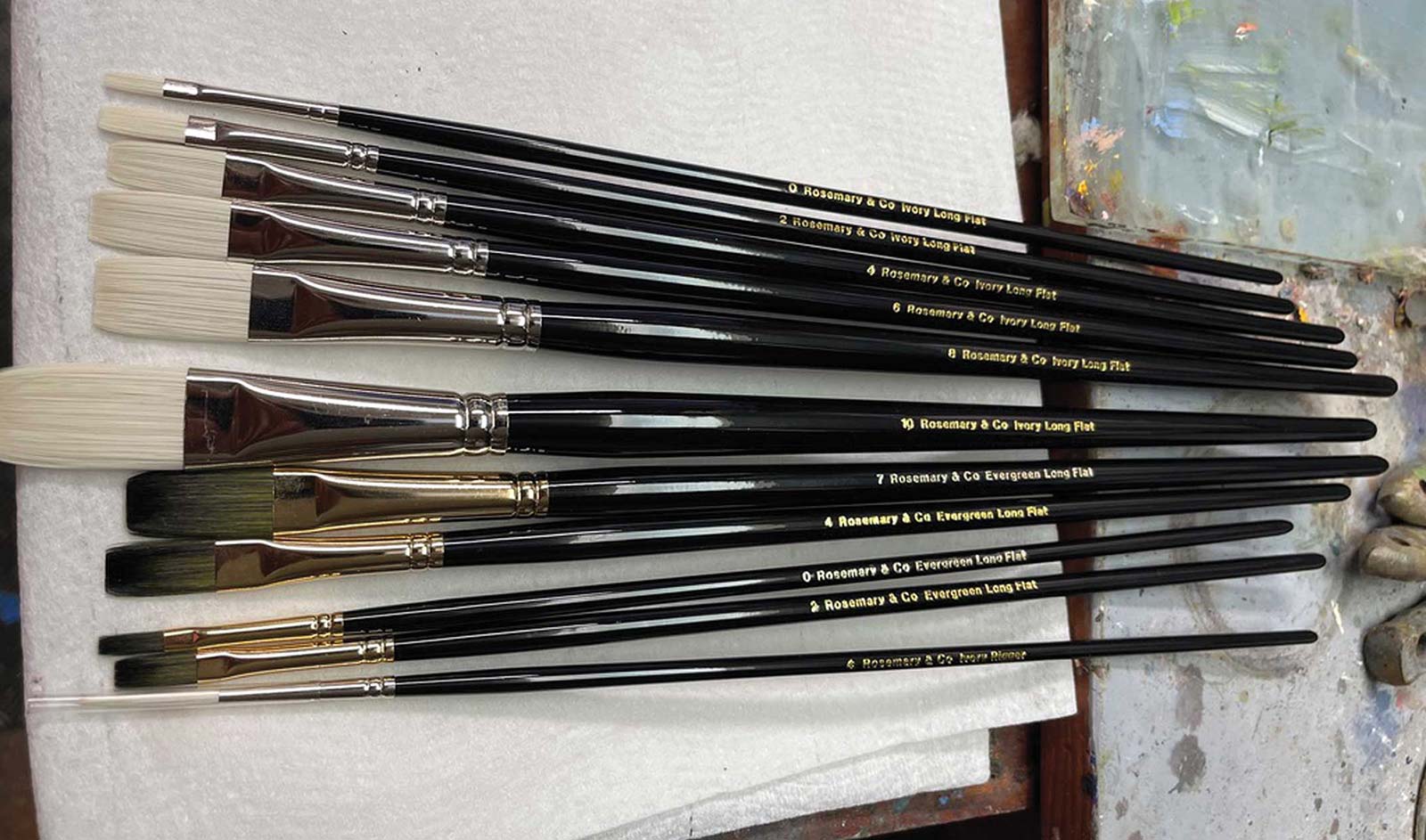
Oils
Cobalt blue, Ultramarine blue, Transparent red iron oxide, Lamp black, Titanium white, Alizarin crimson, Cadmium red light, Alizarin orange, Cadmium yellow light
Additional Materials
Linen mounted on Gatorboard, Rosemary & Co. brushes
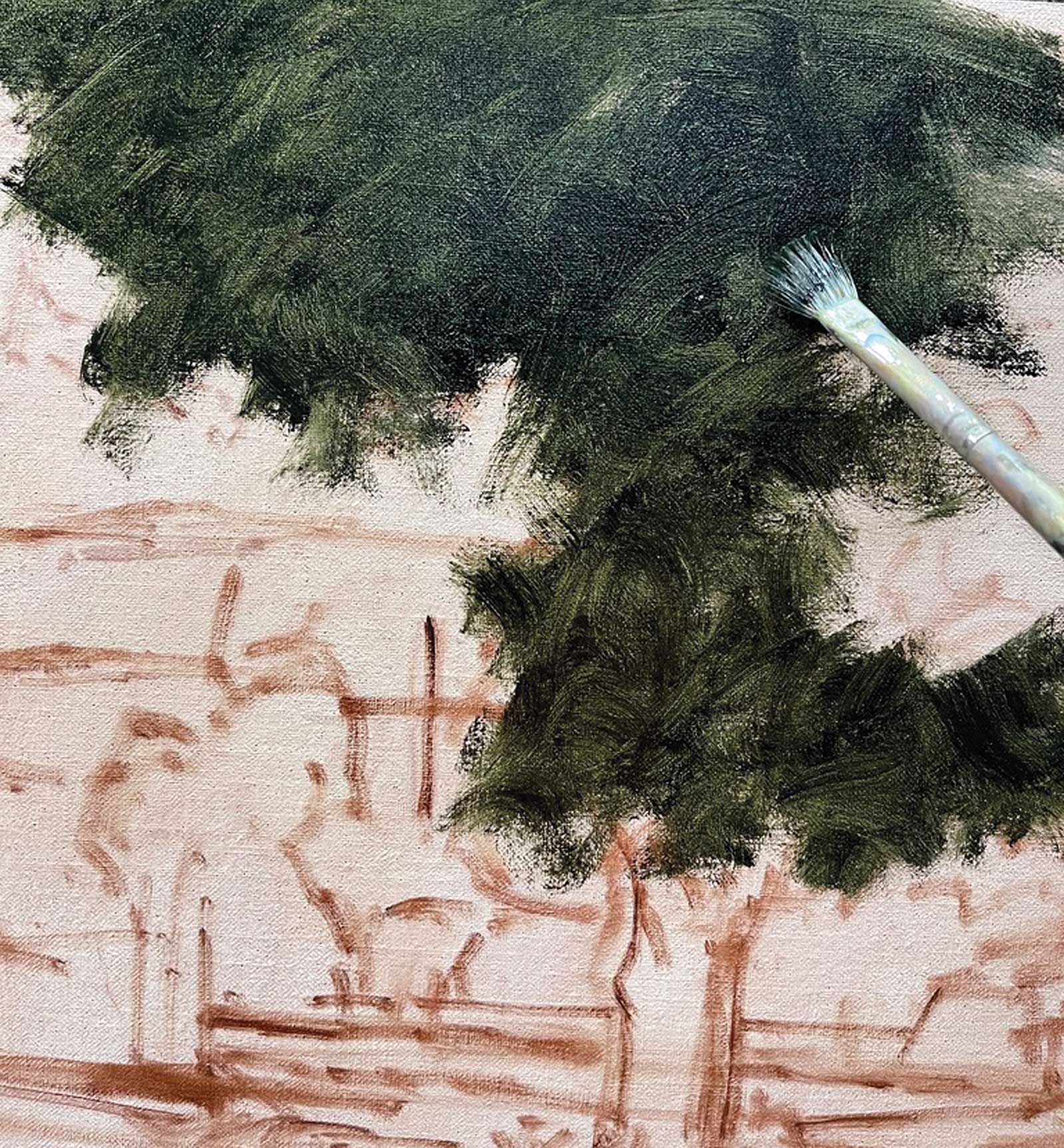 Stage 2
Stage 2 Scumbling in the Darks
In this next stage, I am scumbling in the dark tones over my loose drawing.
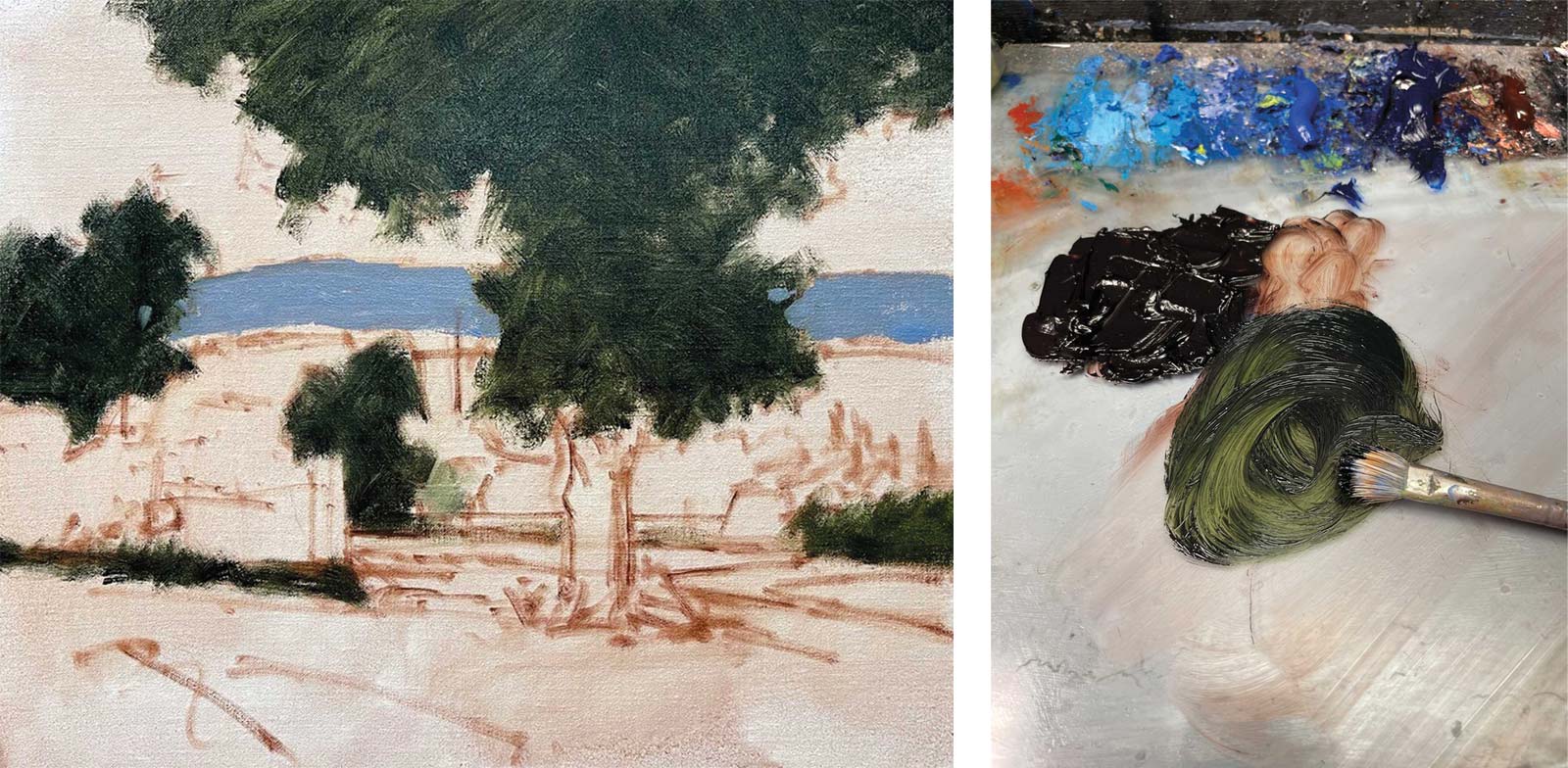 Stage 3
Stage 3 Darks, Mid-tones and Lights
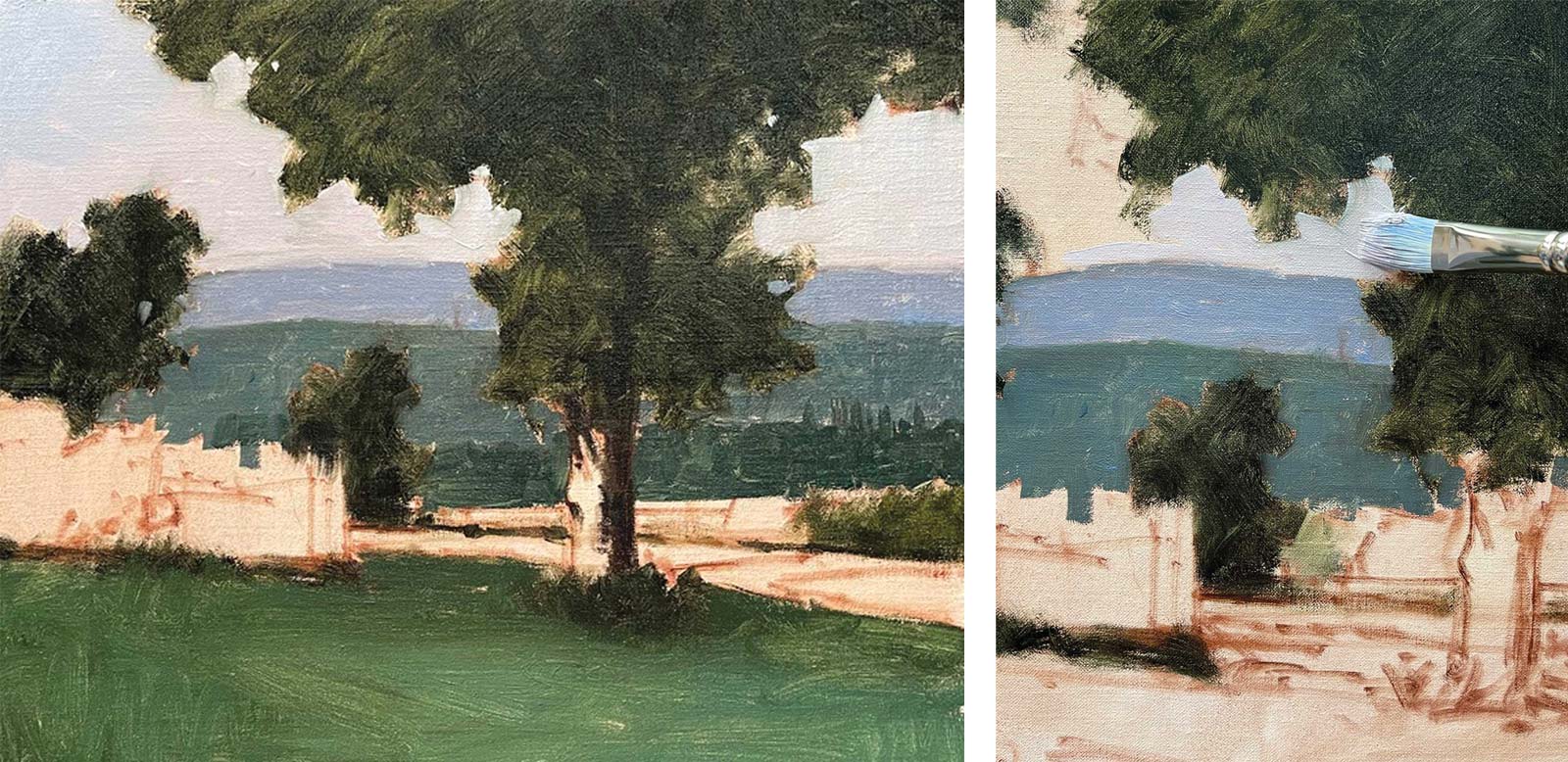
My darkest darks, mid-tones and lightest lights are placed adjacent to one another. From here I can confidently block in the rest of the painting.
 Stage 4
Stage 4 Starting to Block In
Now I am working on blocking in the major shapes of the foreground area and the sky.
 Stage 5
Stage 5 Block in Complete
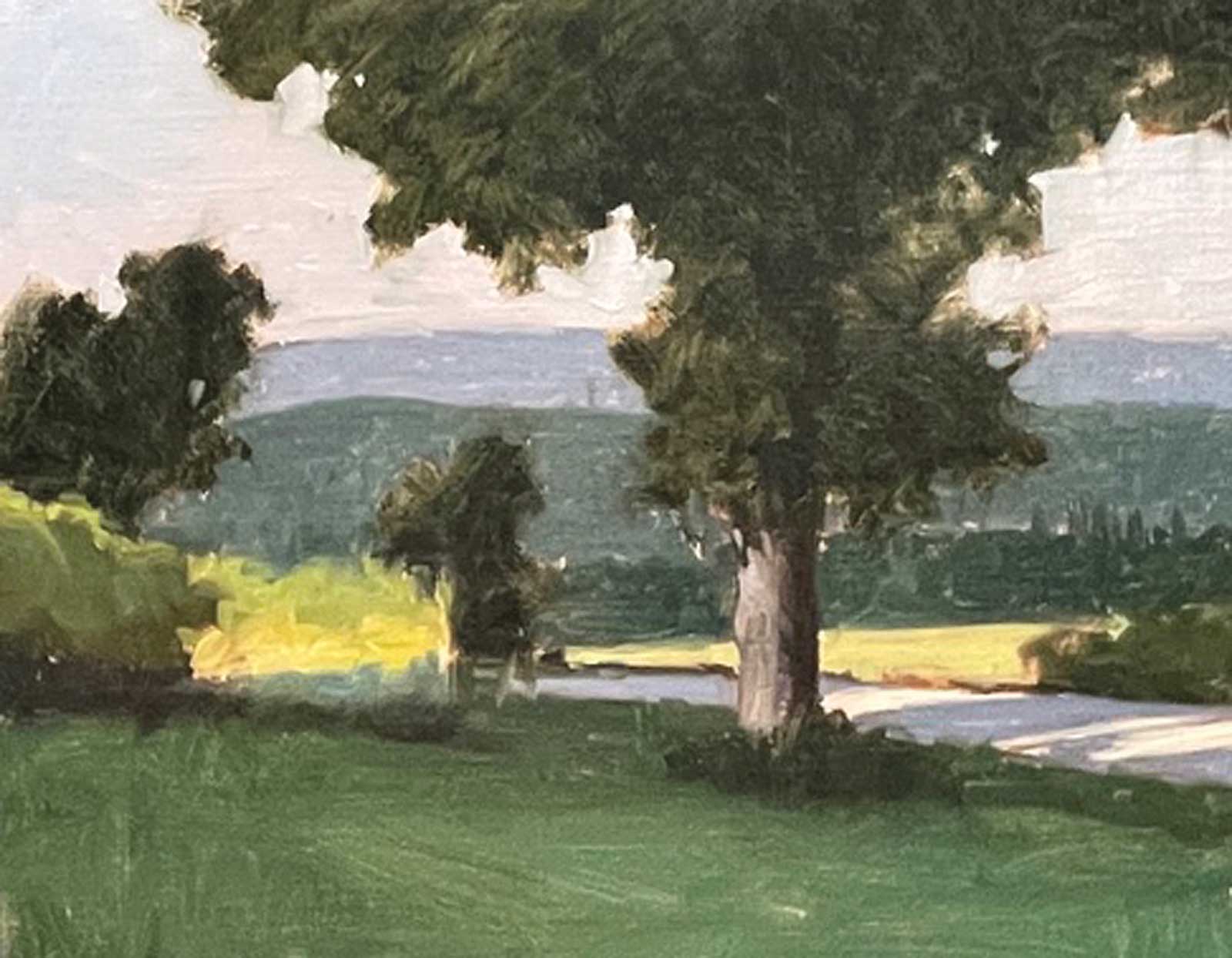
By this time, the first layer of paint is set up enough to accept the second more opaque layer of paint. I lay in the tree mass with ultramarine blue, alizarin orange and white. I’m also identifying the tree holes. Note: tree holes are always a touch darker. This scene captures the early morning light with pink in the western sky.
 Stage 6
Stage 6 Removing Paint and Adding More Light Tones
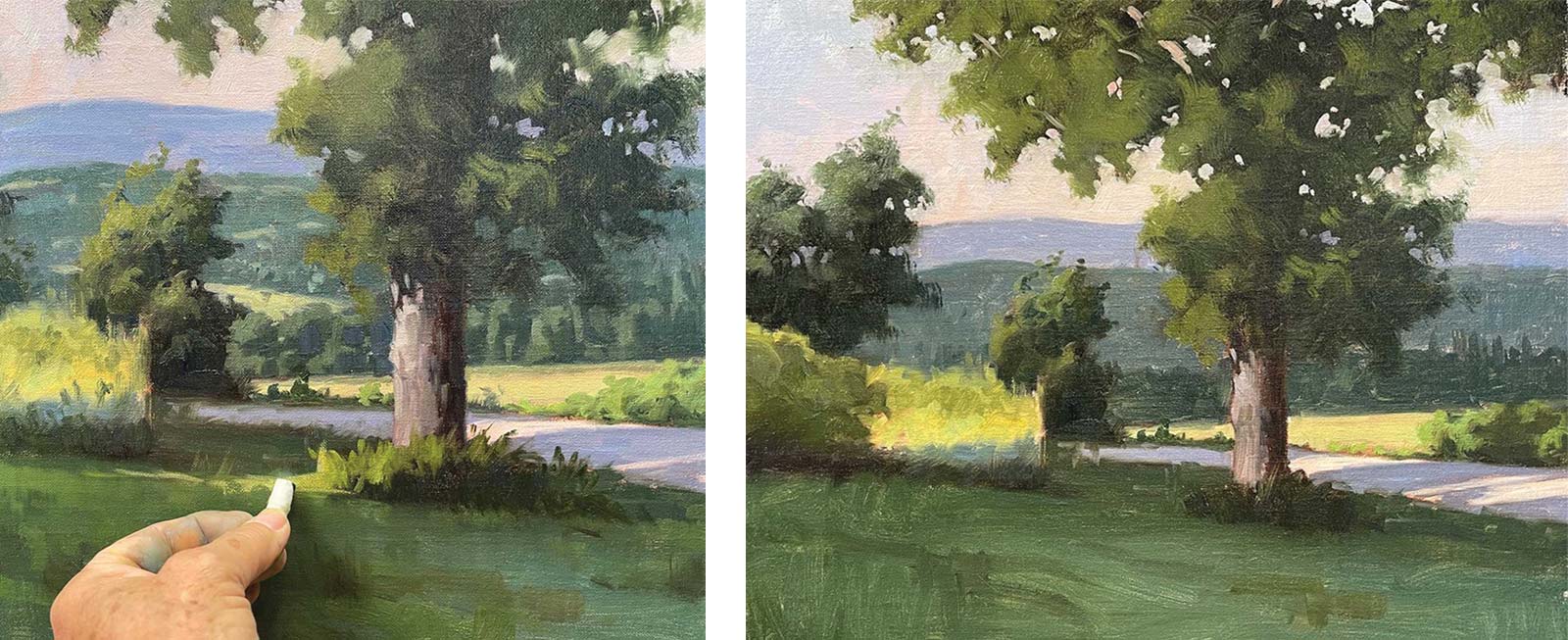
Using a cotton swab, I pull paint off in order to lay the groundwork for applying my brightest greens.
 Stage 7
Stage 7 Sculpting the Forms
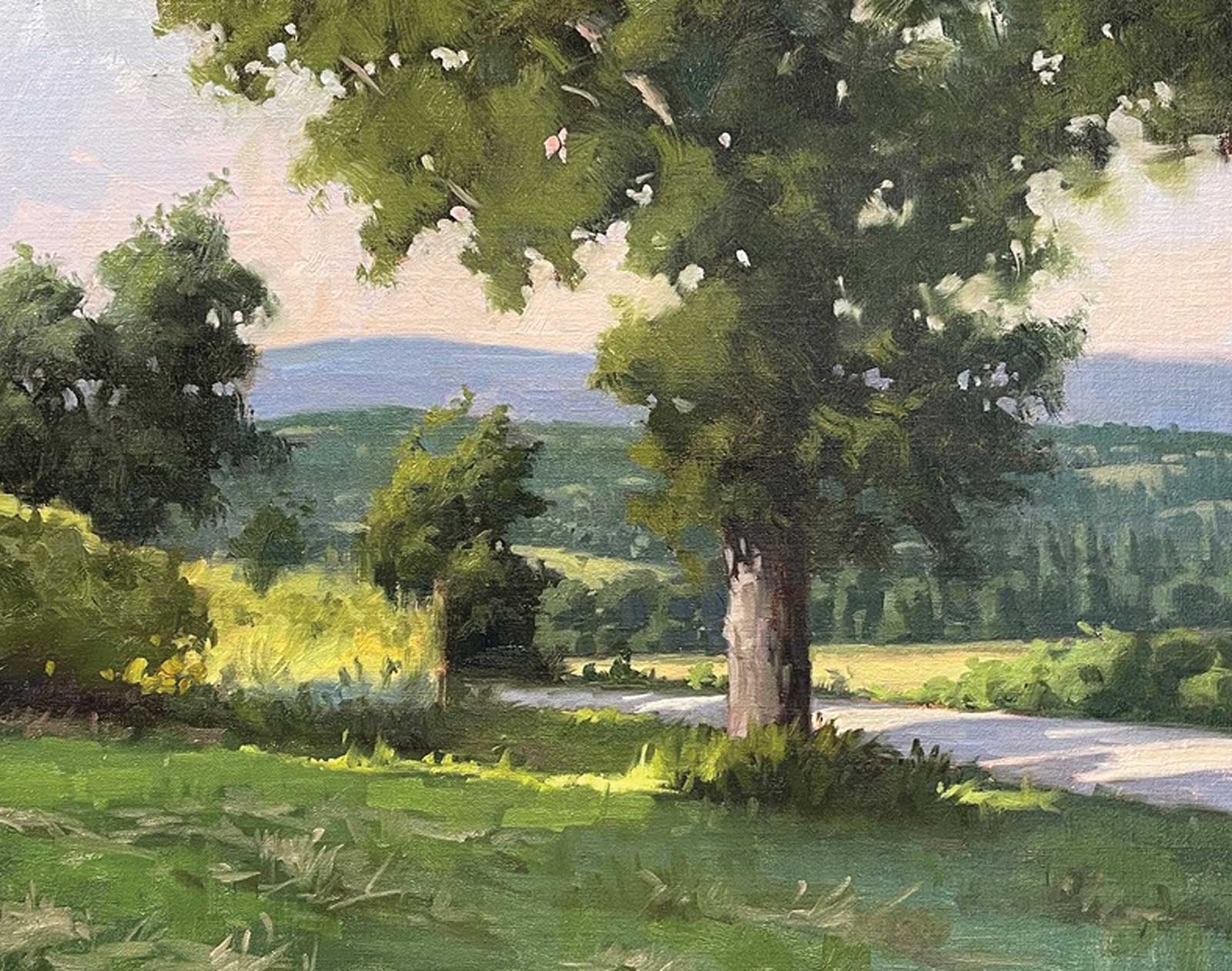
I further sculpt the paint and push the greens to show variety. Trees have more red in them while grasses tend to have more minty greens. The hills in the background were established early on with blue greens, and as I worked forward, I warmed up the fields and trees, careful not to bring anything too far forward or too far back. This is controlled by value and color temperature. At this point, my focus is more about the painting than the reference. This is the stage where I frame it and look at it for a week or so to make sure it doesn’t need a tweak or two.
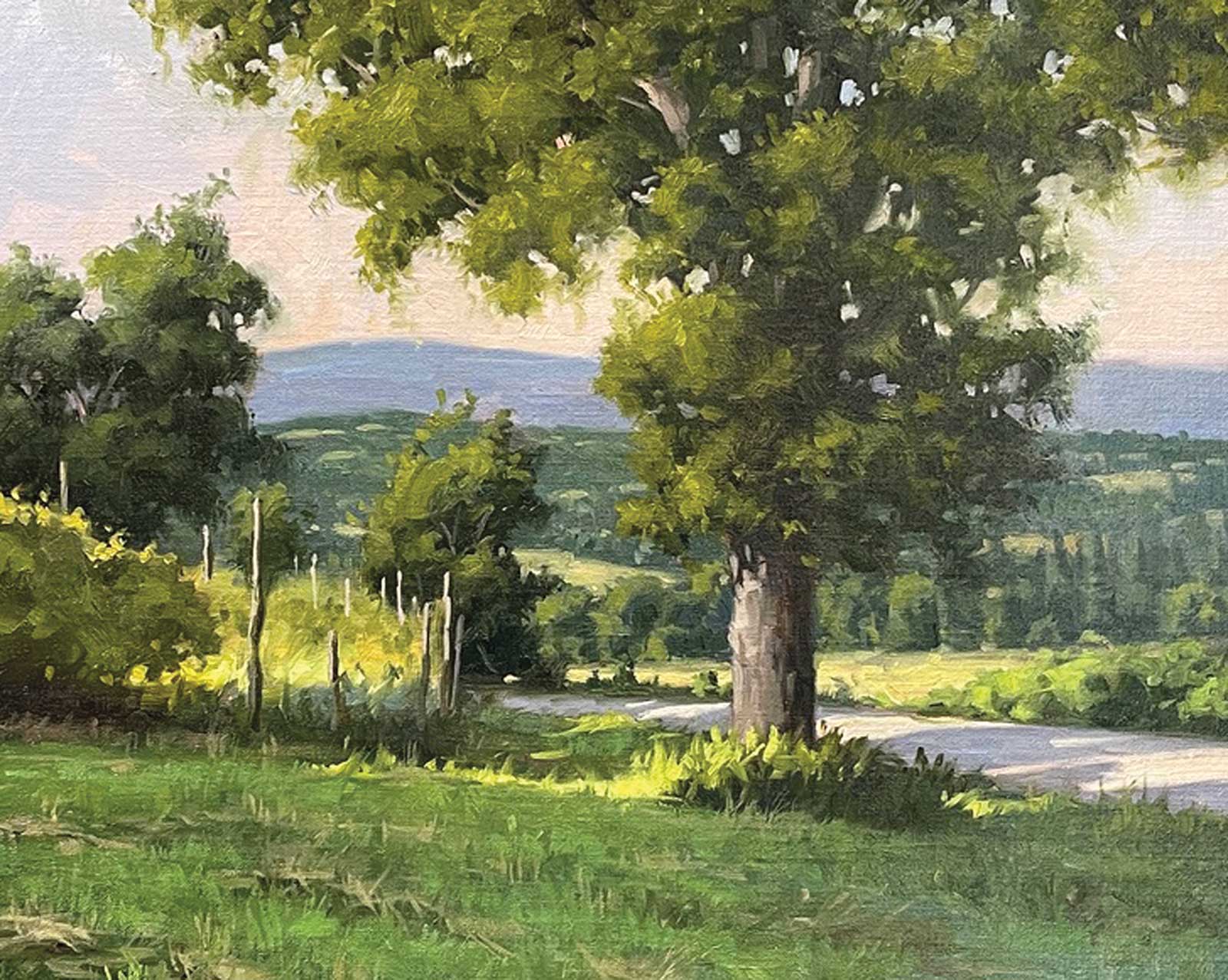 Stage 8
Stage 8 Edges and Further Refinements
I am continuing to refine the painting. A variety of edges will help make the painting more believable. Hard edges bring objects closer and push the background back. Soft edges are found in the grasses and trees.
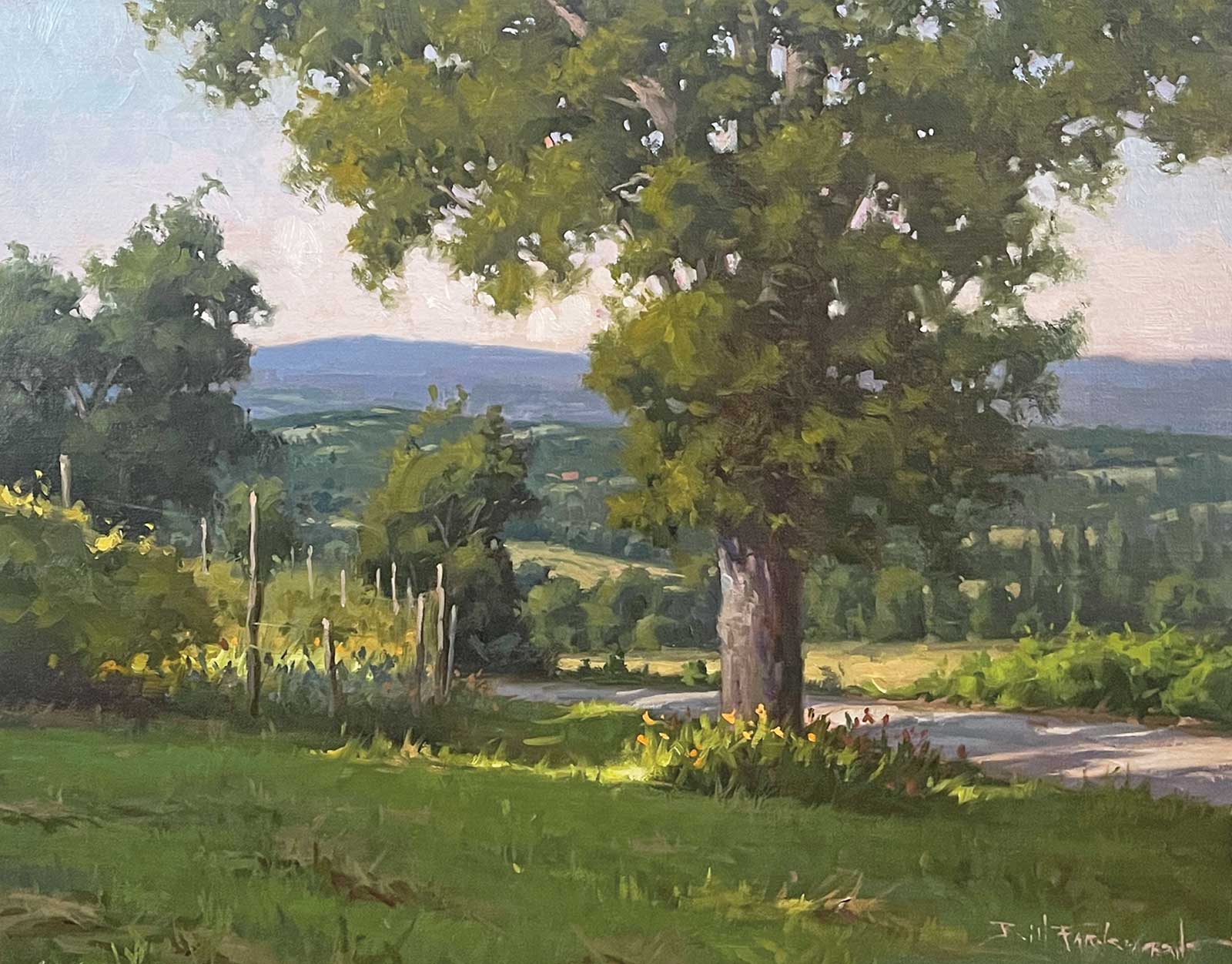 Stage 9
Stage 9 FINISHED ARTWORK
Stalwart, oil on linen, 16 x 20" (40 x 50 cm)
About the artist
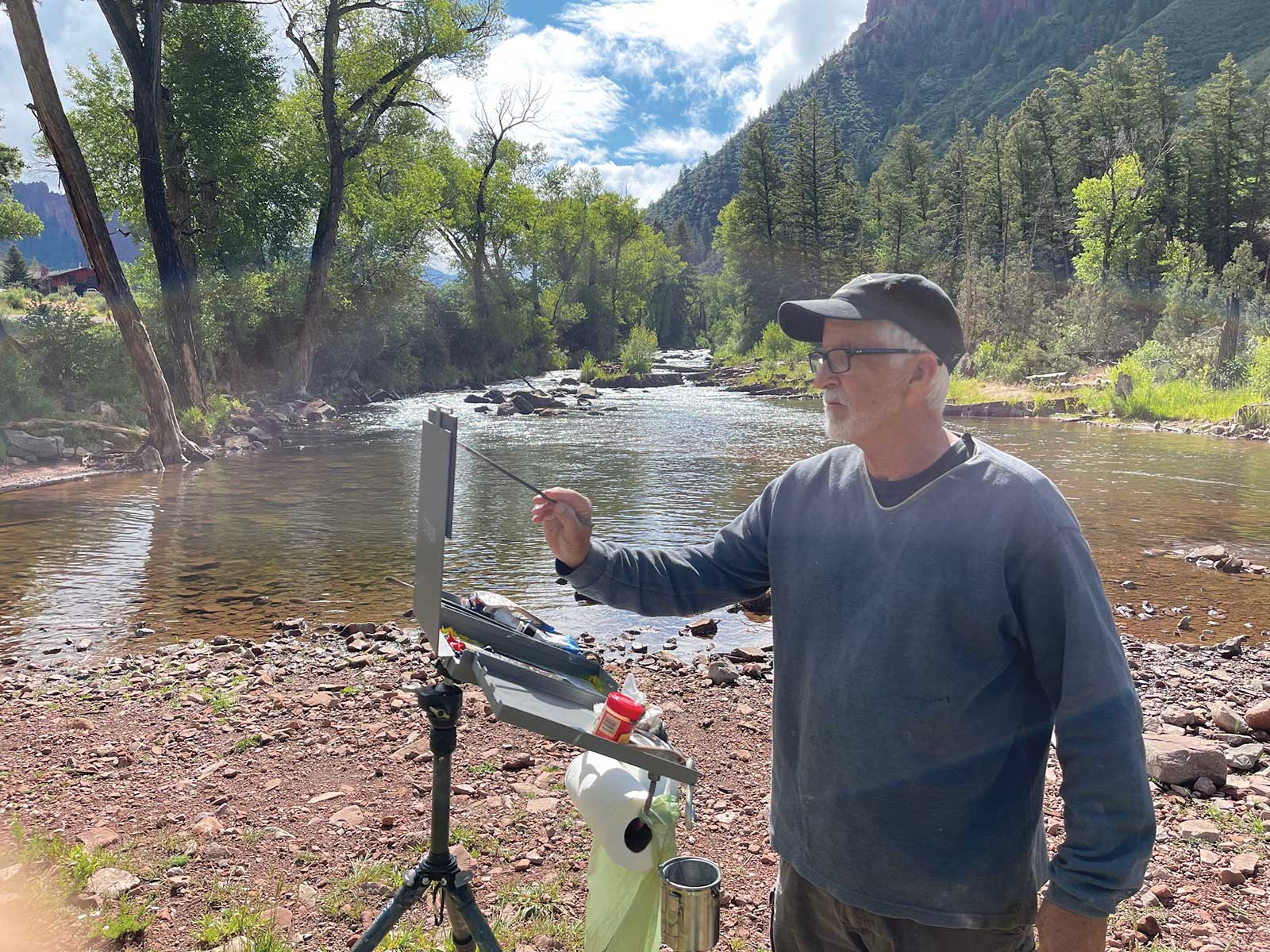 Bill Farnsworth
As a 1980 graduate of the Ringling School of Art and Design, Bill Farnsworth has spent more than 40 years as an illustrator and fine artist. Born in Norwalk, Connecticut in 1958, Farnsworth spent most of his life in New Milford, Connecticut, painting landscapes of the rural area while supporting himself and family with his growing illustration career. Farnsworth is a Fellow of the American Society of Marine Artists, a Master Signature member of the National Oil and Acrylic Painters’ Society, and a Signature member of Oil Painters of America and American Society of Impressionists. He has also been elected an Art Renewal Center Associate Living Master.
Farnsworth is represented by Anderson Fine Art, the Good Art Company, Ballards Fine Art, Helena Fox Fine Art, Palm Avenue Fine Art, Hindes Fine Art, Cawdry Gallery and Gingerbread Square Gallery. He currently lives in Venice, Florida, with his wife Debbie.