In 2023, I dedicated my time to creating a body of work for my debut solo show, Halcyon, with Arcadia Contemporary. Peace was one of the portraits featured in this exhibition. As I transition from still life to portraiture, each new portrait presents its own unique challenges, requiring thoughtful problem-solving and technical refinement. While portrait painting still feels like uncharted territory at times, I embrace the challenge—it pushes me to grow as an artist.
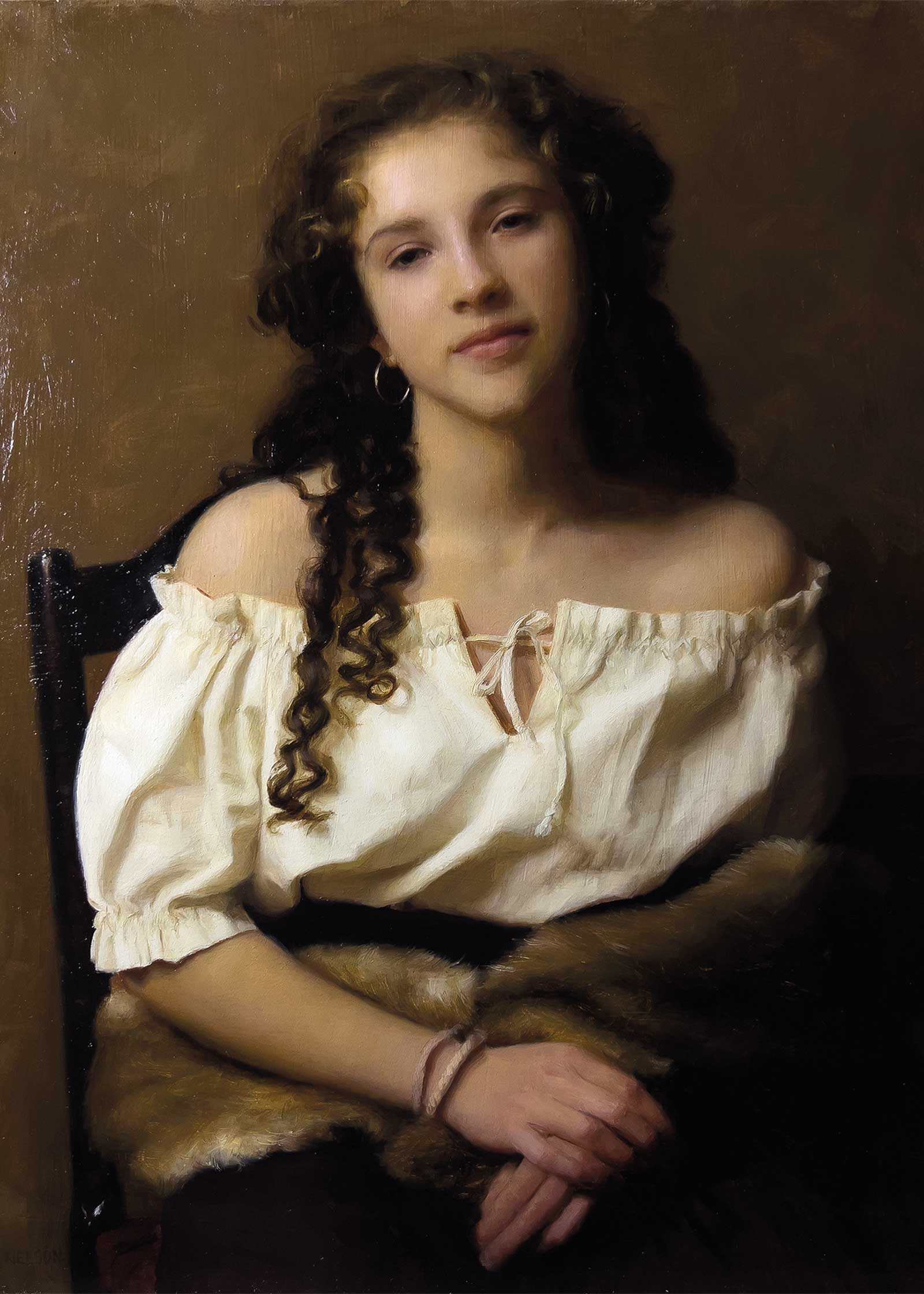
Each portrait demands a delicate balancing act of technical elements: value, chroma, hue, brushstroke quality, form modeling, and, of course, precise drawing. This particular portrait posed a distinct technical challenge. My model’s youthful face has delicate, rounded planes, with subtle shifts in value and hue, particularly around her softly smiling cheeks. Her expression is peacefully enigmatic, and the contrast between her long, curly dark hair and crisp white shirt creates a striking interplay of light and shadow.
My process follows an indirect painting approach, working in layers to build depth and luminosity. I begin by carefully transferring my drawing onto the painting surface. To do this, I rub oil paint on the back of the drawing, then trace over the lines with a pencil or needle-point tool, ensuring an accurate transfer. Once the image is in place, I begin painting in layers.
Typically, I work in two layers. The first is intentionally lighter in value and warmer in hue, serving as a foundation. In the second layer, I refined the painting, bringing everything to full value with richer depth and greater nuance. This layered approach allows me to capture the subtleties of my subject while maintaining a sense of vitality and atmosphere in the final work.
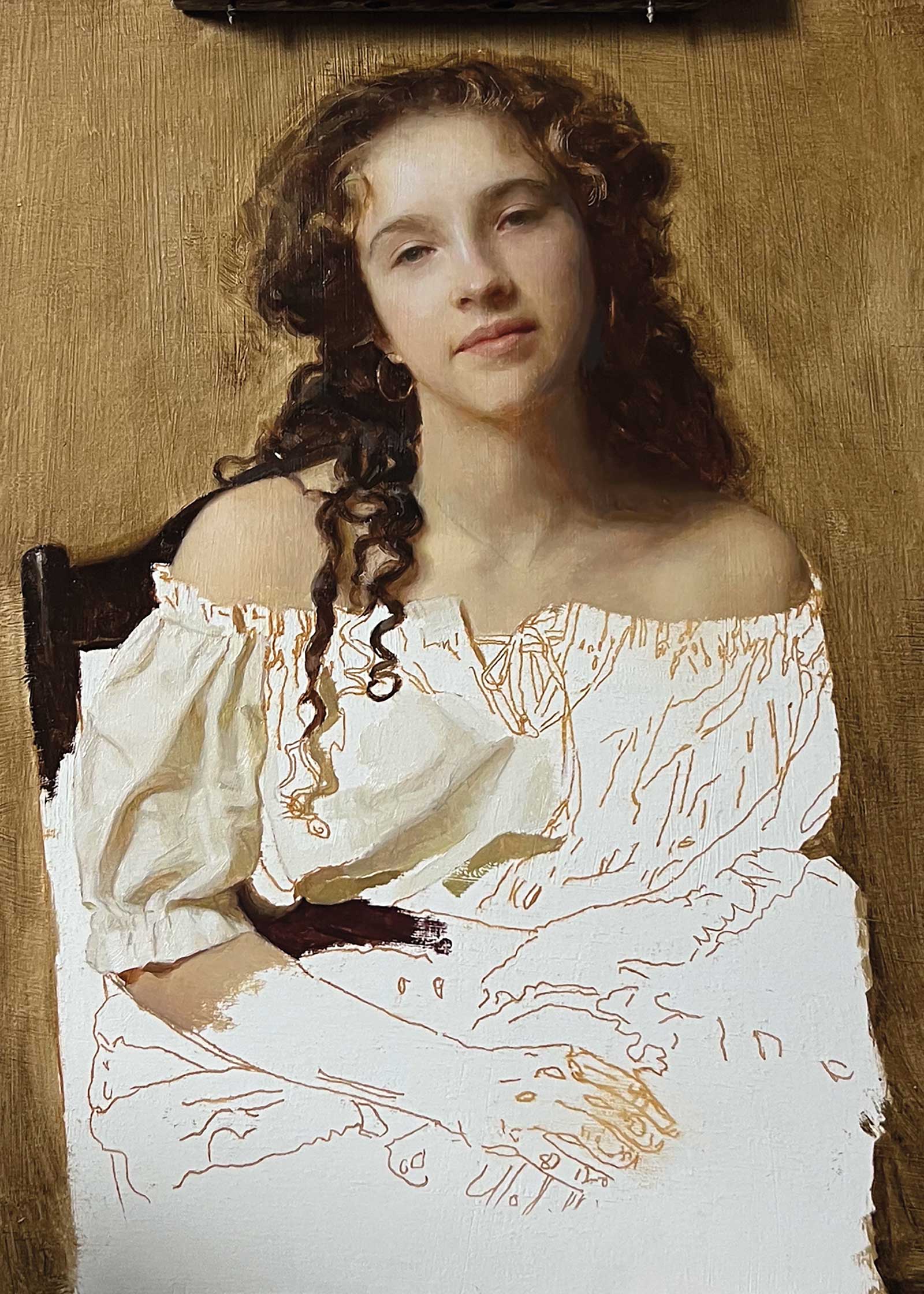 Stage 1
Stage 1 Establishing the Foundation: The first layer serves as the groundwork for the entire painting. It’s important not to overemphasize the pearly white hues of the subject’s skin too early. I remind myself that the brightest and lightest value in the painting is the white of her shirt. If I were to create a value scale, the skin tones would be a few steps lower in brightness. Once this initial layer is complete, I allow it to dry fully before moving forward.
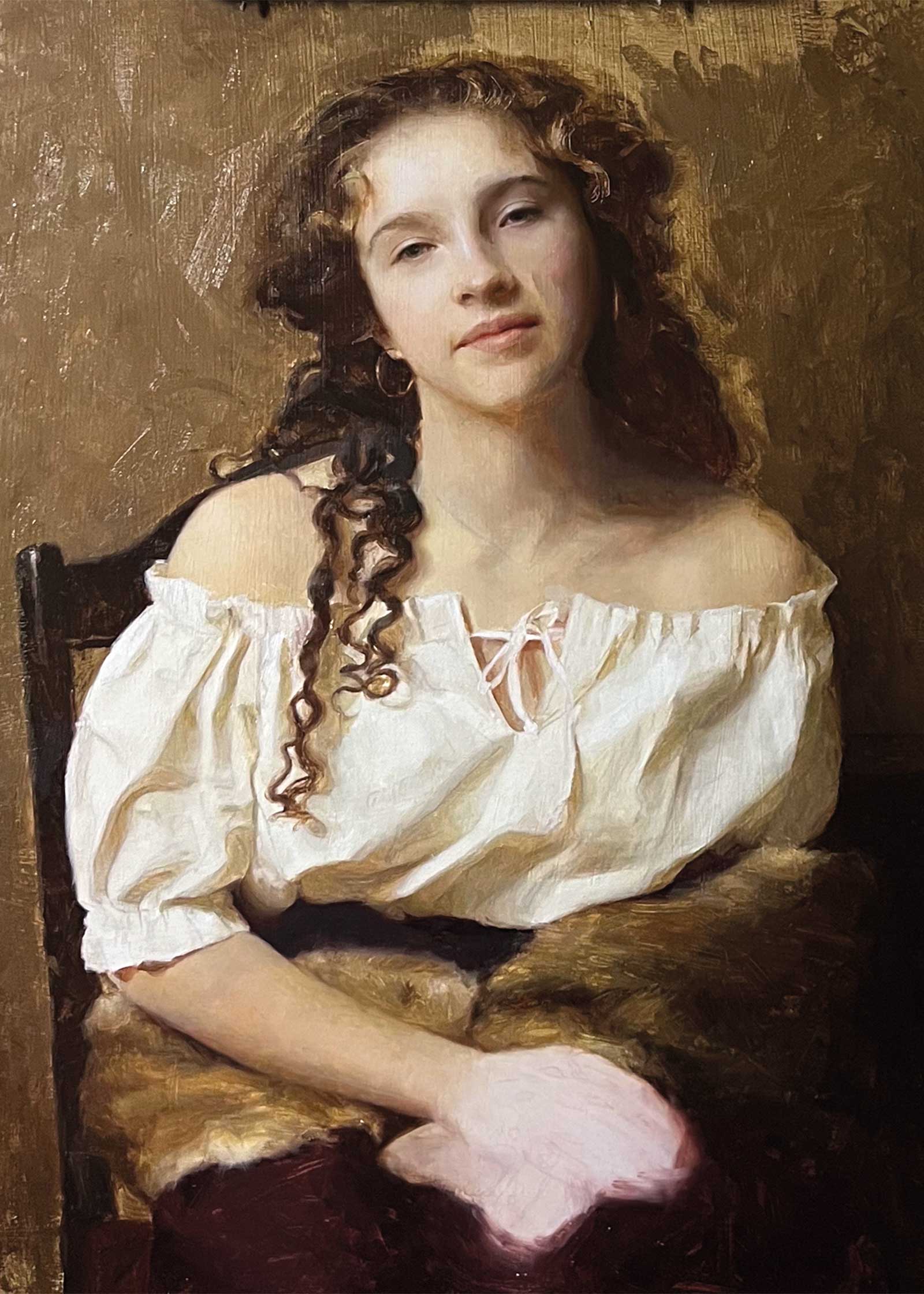 Stage 2
Stage 2 Setting the Background: In the second layer, context becomes essential. I begin by establishing the background, which is a warm brown. This step ensures that the skin tones remain cooler in comparison, creating a necessary balance in the composition.
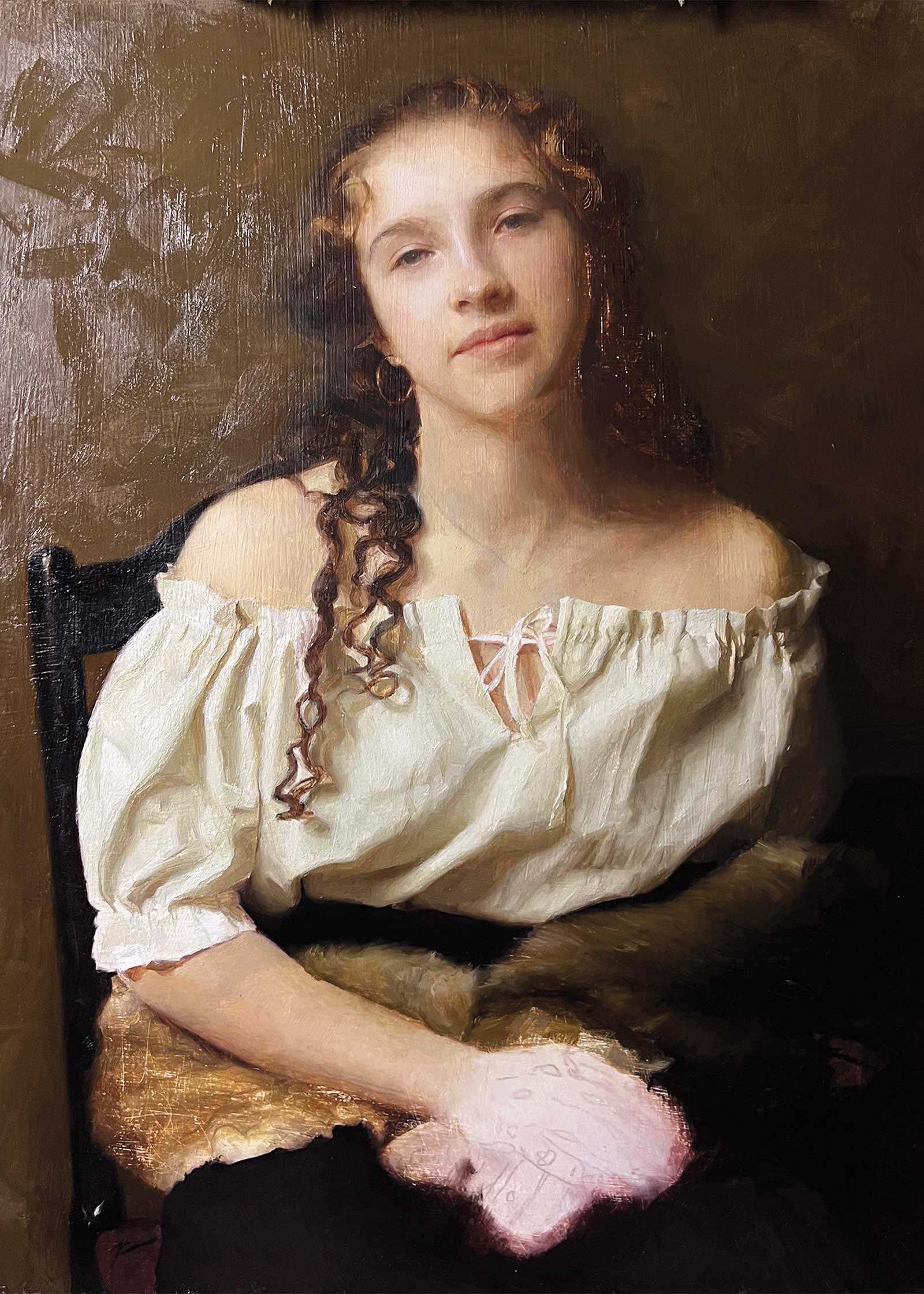 Stage 3
Stage 3 Adding Depth with Darkest Values: Once the background is in place, I introduce the darkest values in the painting. The deep tones of the skirt and the sheen of the mahogany chair help anchor the composition, providing contrast against the lighter elements.
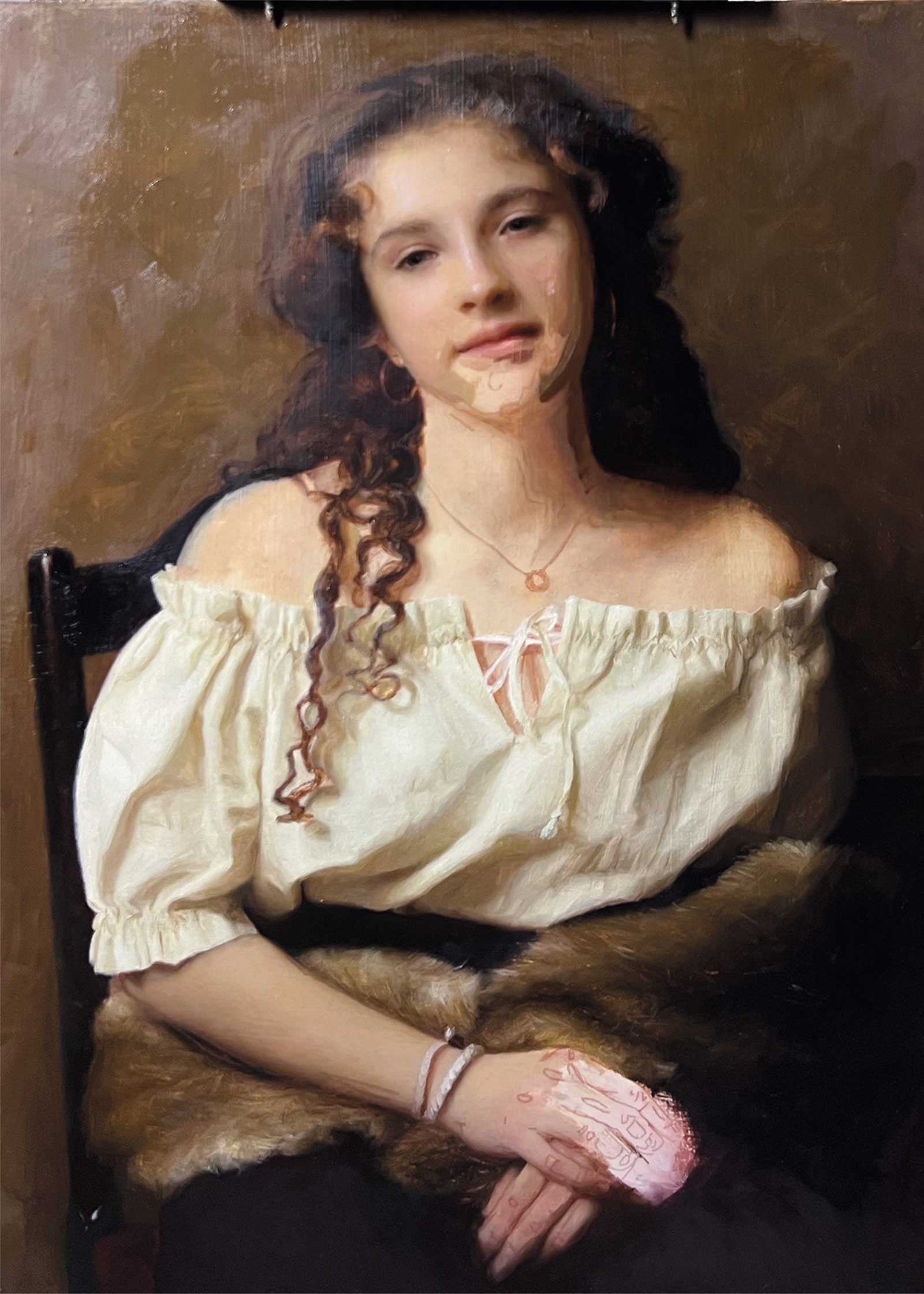 Stage 4
Stage 4 Refining the Hair and Skin: Before painting the skin, I focus on rendering the hair. The warm richness of the hair and backdrop influence the cooler purples and blues in the skin tones. I was surprised by how often I reached for ivory black on my palette to neutralize the skin’s colors into more muted hues. Working from shadows to highlights, I methodically crawl across the form, ensuring smooth transitions in tone and color.
 Stage 5
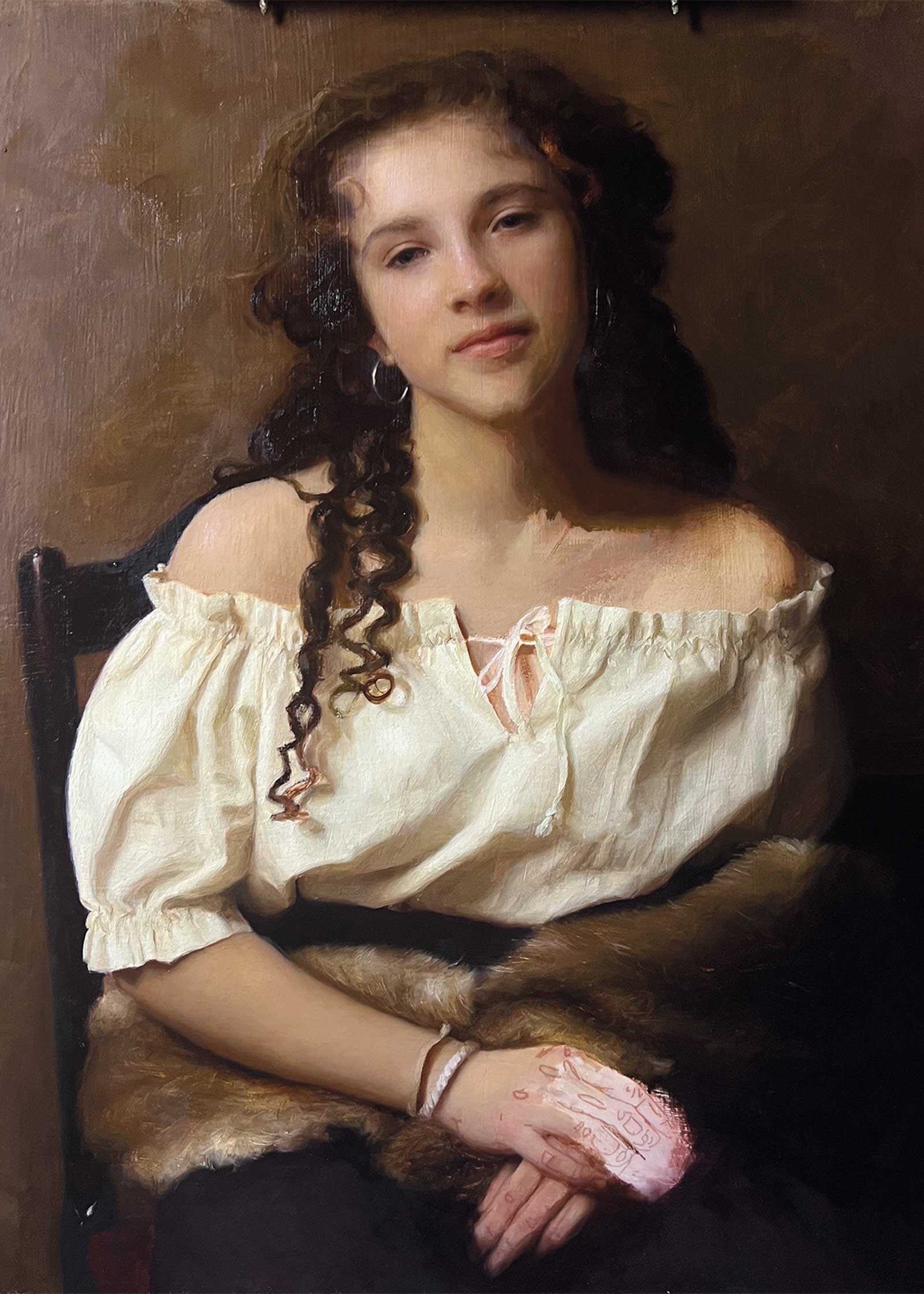
Stage 5 Tackling the Hands: The most challenging aspect of this painting was the subject’s hands. I approached them in the final stages, recognizing that every painting presents its own unique difficulties. Rather than panicking when something doesn’t work, I stay adaptable. In this case, I repainted the hands by covering them with white, then re-transferring the drawing to give myself a fresh start.
 Stage 6
Stage 6 Final Adjustments and Completion: A painting is complete when I feel that it is balanced and faithfully represents both my reference and the intended mood. I conduct a final evaluation to ensure that every element harmonizes visually. In the end, I am very pleased with the final outcome of Peace, as it captures the essence of my subject and the atmosphere I envisioned. —