This article is for the person who made art when they were younger, then for one reason or another, they went on to other things. Now they want to return to it again. Does this describe you or someone you know? Perhaps your art supplies have been neatly put away in a closet, but you haven’t touched them for years. Before we uncap those paint tubes, let’s confront what may have kept you away from your artwork, and I’ll offer three solutions to help you get going again.
After each section, I’ll share the life stories of people who commented on my original Substack post.
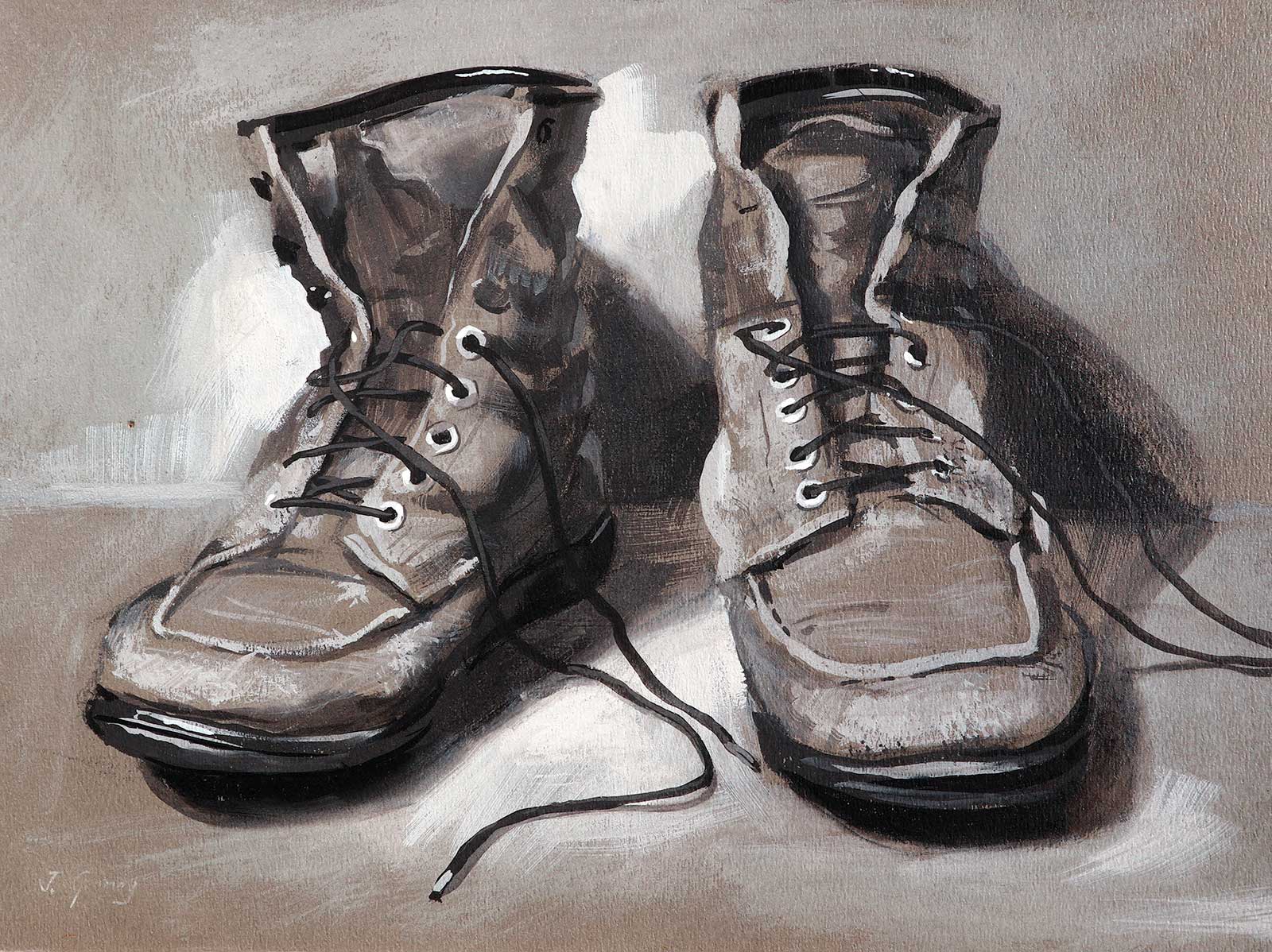
Old Boots, gouache on gray board, 8 x 10” (20 x 25 cm)
Immovable Force
Obstacle: Something happened in your life that forced you to give up your art, but you’re finding your way back.
Solution 1: Death, illness, money issues or natural disasters can take you away from your creative life. To restart, you’ll have to figure out what conditions need to be in place for your tree to flower again.
Solution 2: Try to find a way to set up similar conditions, even if they’re not perfect. If you’ve suffered a loss, consider ways you can process that loss through your art.
Solution 3: If you need to get outside yourself to be more creative, consider a more reportorial approach to sketching, where your goal is information gathering, not expression or introspection.
Aja Mulford faced a massive challenge: “My house burned down in the Camp Fire. It destroyed all my supplies, and every bit of art I’d ever made, including most files, since I lost my computer too. It was overwhelming to replace everything, not only socks and shoes, but also art supplies. Focusing on the stories I want to tell has helped me find my way back to art.”
Deborah Bird’s setback made her stronger: “Covid halted my painting for homeschooling. Architecture and art felt impossible to balance. A break was welcome, relieving pressure. Switching to an office and watercolors restarted me. Now, in galleries and competitions, I’m winning awards, my best work yet, after a four-year pause.”
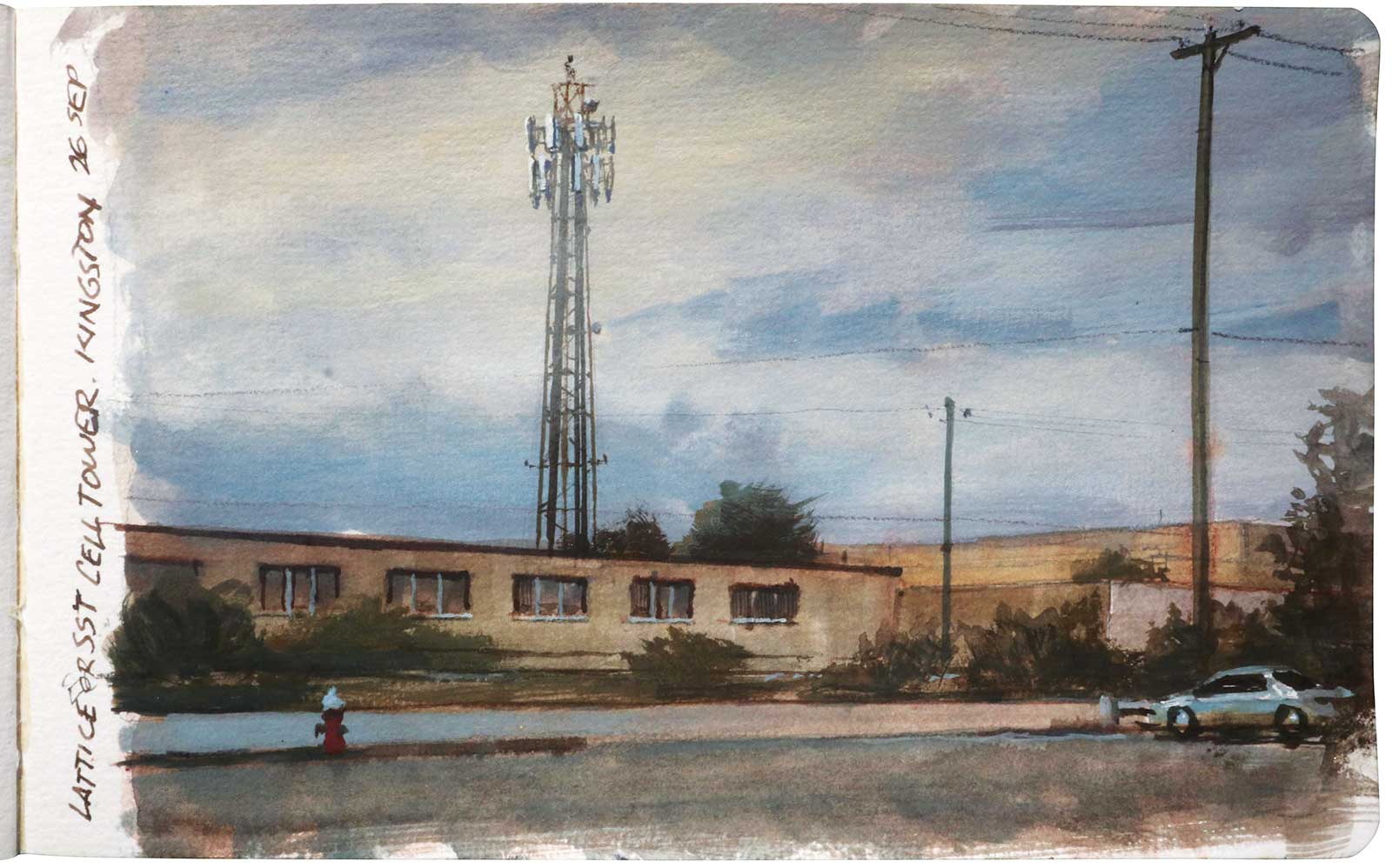
Cell Tower, gouache, 5 x 8” (12 x 20 cm)
First Page Syndrome
Obstacle: That pristine first sketchbook page or blank canvas stares back at you, paralyzing you with the pressure of perfection.
Solution 1: Start on page 2. Bypass the intimidation by starting on the second page. You can do page 1 later. The book is already “broken in,” so the pressure is off.
Solution 2: Test first on paper that you throw out. Use scrap paper for warm-ups and experimentation. Treat it like artistic “stretching” before the main event. Remember that sketchbooks don’t have to be neat and tidy.
Solution 3: You don’t have to show anyone. Make it a private affair. Your sketchbook is your artistic diary, not a gallery exhibit.
Ken Bishop’s experience highlights the power of consistent practice, even with simple sketches: “About five years ago I started drawing portraits of people who followed my Instagram account, just to dust off my traditional drawing skills. Eventually, I ended up completing 1,000 drawings! Having an (almost) daily practice of drawing again brought me a lot of joy.”
Gabriel Stockton’s comment shows he uses the sketchbook as a tool for rediscovering joy: “If I would just start drawing in a sketchbook for 20 minutes, I would go to other worlds. I’d find my sweet spot. It would bring me peace. The sketchbook was always my gateway back to art making.”
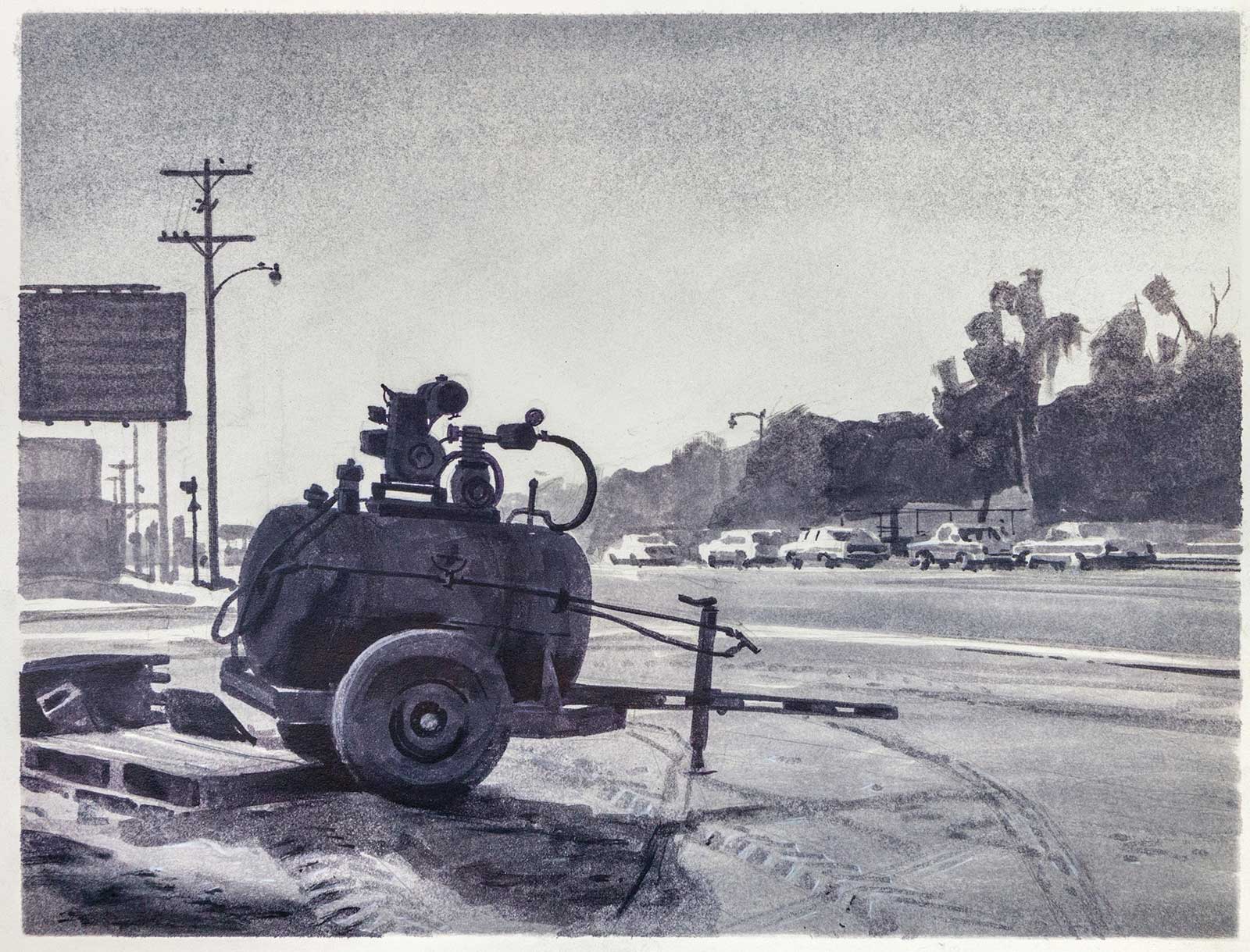
Asphalt Machine, gray markers on board, 11 x 15” (27 x 38 cm)
Agoraphobia
Obstacle: You’re not comfortable with being observed in public while creating.
Solution 1: Bring a buddy. Art is more fun with a friend. Think of someone you’re really comfortable with, whether they sketch or not. You can support each other and laugh about the awkward moments.
Solution 2: Connect. Instead of hiding, make a point of engaging with someone. “I’m trying to capture the light on this building, isn’t it amazing?”
Solution 3: Start in a café. Have a disarming comment ready like, “I’m an art student and I’m just learning to draw heads.” A self-deprecating joke can break the ice and make you seem approachable.
Anthony Taylor’s story emphasizes the joy of sharing the experience: “I took my children to the National Museum here in Victoria. We had A3 sketchbooks, some charcoal and a pencil, and we sat down in the quiet space and drew some sculptures and Old Masters. Just having the quiet hour with my kids that didn’t involve a screen was enough to remind me why I enjoy drawing.”
Joe Marilo found urban sketching as a way to connect to the world: “During lockdown, I found myself drawn back to art. My mother’s creative spirit, childhood sketching memories and a film background converged. Urban sketching became my outlet, a way to document life’s vibrant details when the world felt still.”
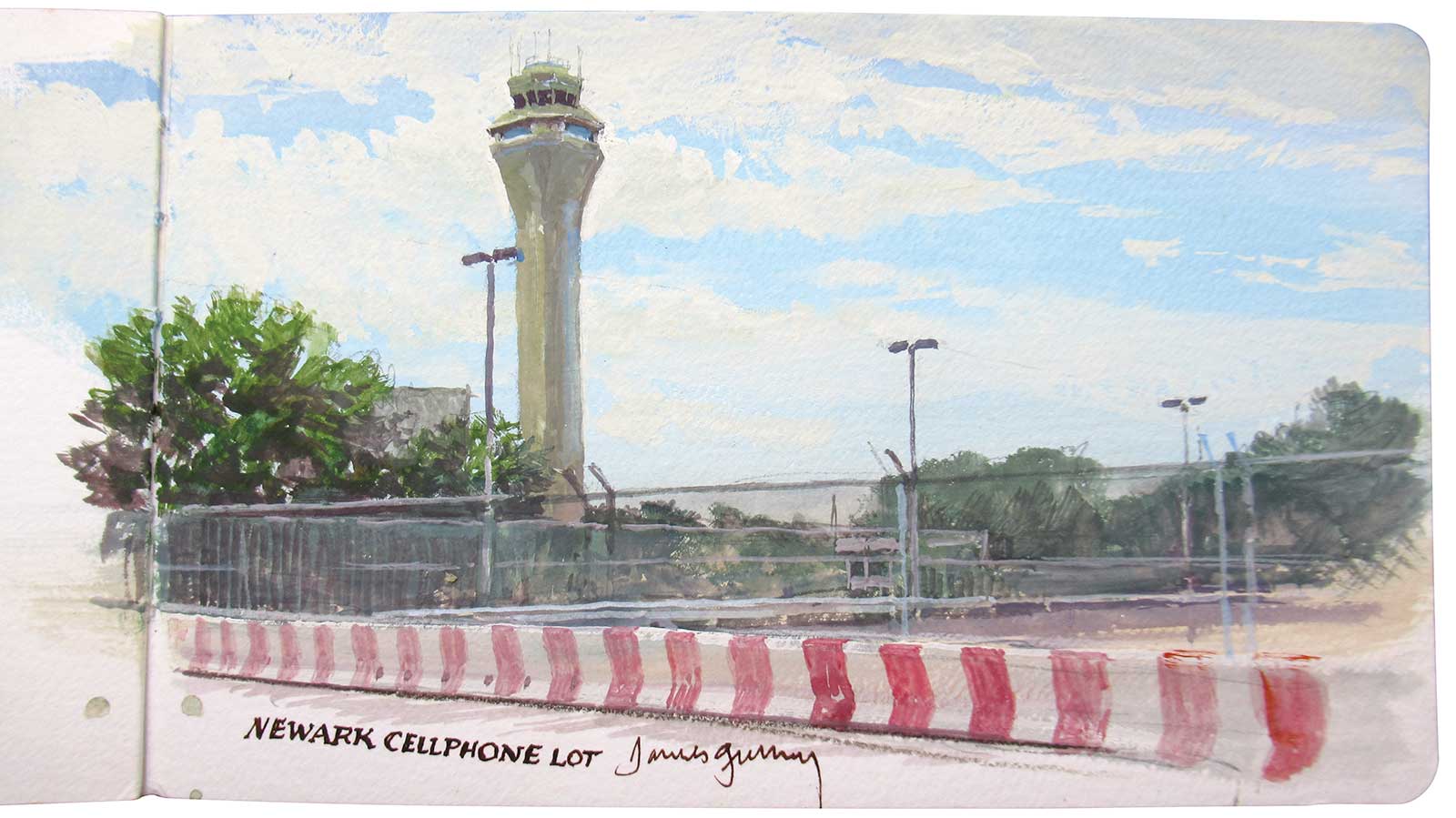
Control Tower, gouache, 5 x 8” (12 x 20 cm)
Feeling Rusty
Obstacle: You compare your current work to your past “glory days” and feel discouraged.
Solution 1: Keep a study book. Focus on learning and observation, a place for trying something new. Treat it as a “skill gym” where you exercise your artistic muscles.
Solution 2: Take a workshop. Learn from an expert and connect with other artists. It’s a structured way to refresh your skills and gain new perspectives.
Solution 3: Poor drawing? Add written notes. If a sketch doesn’t turn out as planned, surround it with writing. Turn “failures” into learning opportunities.
Michaelangelo Reina’s experience is a powerful reminder that skills need to be maintained: “I was shocked at the low quality of the drawings I produced, they were terrible, which was hard for me because I was very skilled...I’ve gained a great deal of value in re-developing my skills.”
May Yin Giang’s story shows the importance of continuous learning: “Now that I am older, I am taking a color theory class to obtain a strong foundation of fundamentals. I am getting in the habit of drawing every day and to immerse myself with art friends and be involved in my art community.”
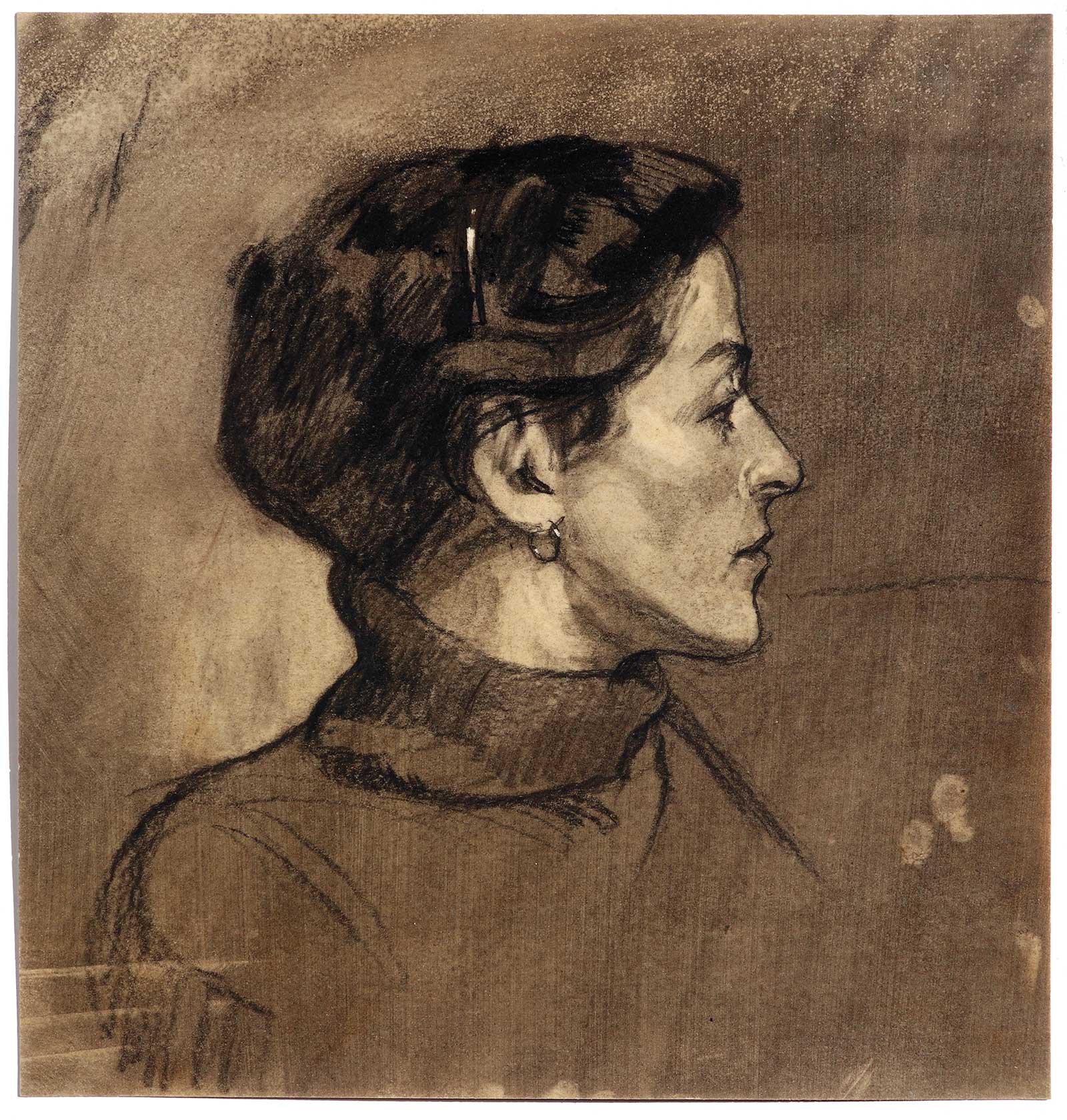
Head Study, charcoal on tracing paper, 9 x 9” (22 x 22 cm)
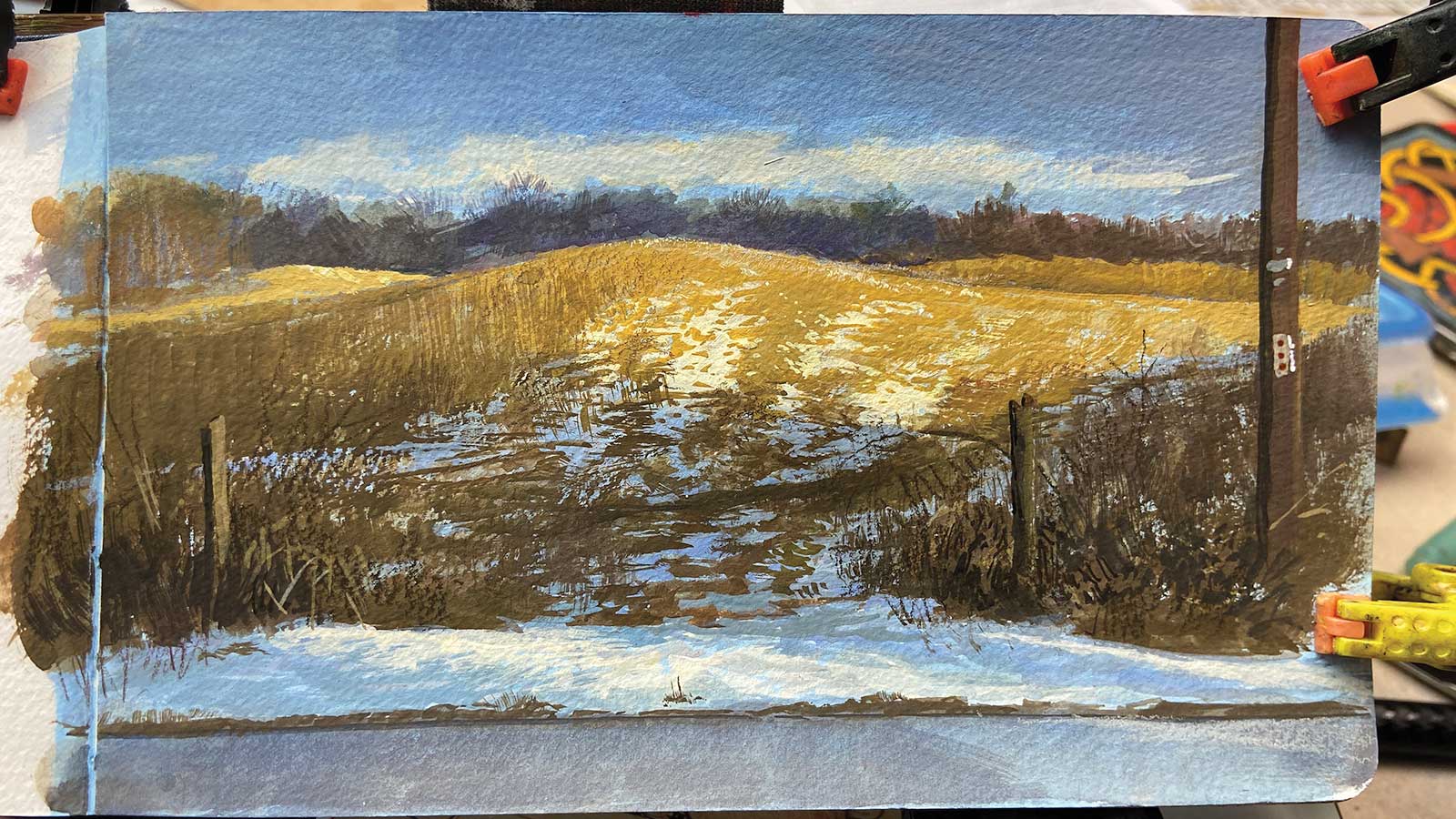
Staatsburg, gouache, 5 x 8” (12 x 20 cm)
Time Management
Obstacle: You’re not intimidated by the blank page, you’re okay with sketching in public, and you know what skills to work on. But carving out time? Fitting art into your schedule? That’s the challenge.
Solution 1: Schedule art time like a doctor’s appointment. Treat it as a non-negotiable part of your week. Put it in your calendar, and stick to it.
Solution 2: Create a dedicated art space, even if it’s small. Having a designated area signals to your brain that it’s “art time,” making it easier to get started.
Solution 3: Join a local art group or class. Social connection can be incredibly motivating. Share your past career experiences in an artistic way.
John Sanchez’s “sketch-ready” approach is a practical solution: “I have a few ‘ready to go’ drawing bags, plein air set-ups, and painting easels that my wife ‘lovingly’ trips over.”
Sam Basnett found a way to work art into her life as a mother: “Watercolors are great because you can abandon them when your baby wakes up from a nap and come back the next day without ruining your paints or brushes.”
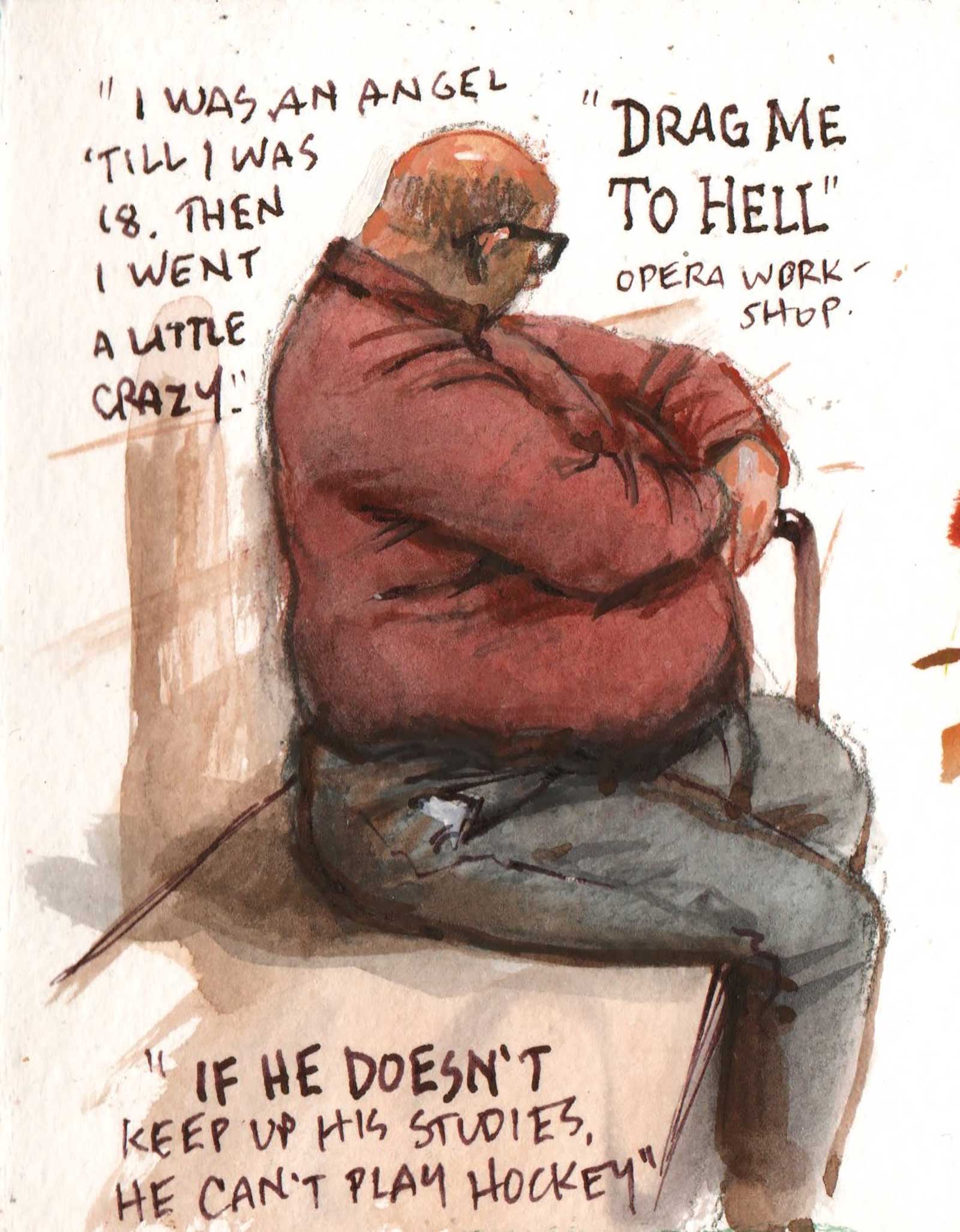
Opera Workshop, watercolor and fountain pen, 5 x 8” (12 x 20 cm)
Rip van Winkle Syndrome
Obstacle: If you haven’t done art in 20 years or more, perhaps you haven’t fully experienced what it’s like to be an artist in the age of the internet. You might face pressure to share your art with a million strangers.
Solution 1: Seek out real human contact for feedback, rather than relying on your computer.
Solution 2: Keep focused on why you’re back into art. Maybe it’s the satisfaction of sketching with your grandkids or using your eyes and brain in a new way.
Solution 3: Use social media to share your work if you want, but don’t worry too much about the number of likes, comments or subscribers. If someone is critical in a mean way, it says more about them than you.
Tina Kramer’s story highlights the changed environment: “Now that I am retired, I have time to pursue art and access to a wealth of online art supplies, workshops, tutorials, courses, videos and worldwide art communities to connect with.”
Sandra D’Onofrio shows the power of persistence: “I returned to an art practice in my 70s. It has been challenging as so much has changed since art school and my individual practice. Also painful. I’m not the young ‘rising star.’ Now I’m out of date and inexperienced with new technology and techniques. But I persist. I’m slowly finding my new way and some of the old excitement is here. I’m following my dream again.”