Growing up on the Northwest coast of Ireland, I learned from an early age to see the landscape as a living entity, constantly evolving from one moment to the next. Even now, living so close to the Atlantic ocean, the changing coastlines feel like a part of my daily life, influencing my dedication to capturing the ever-changing light on water and rapidly altering climatic conditions. In my work, I aim to convey a sense of time as much as place. As a result, light plays an essential role, with the weather and time of day often holding as much significance as the location itself.
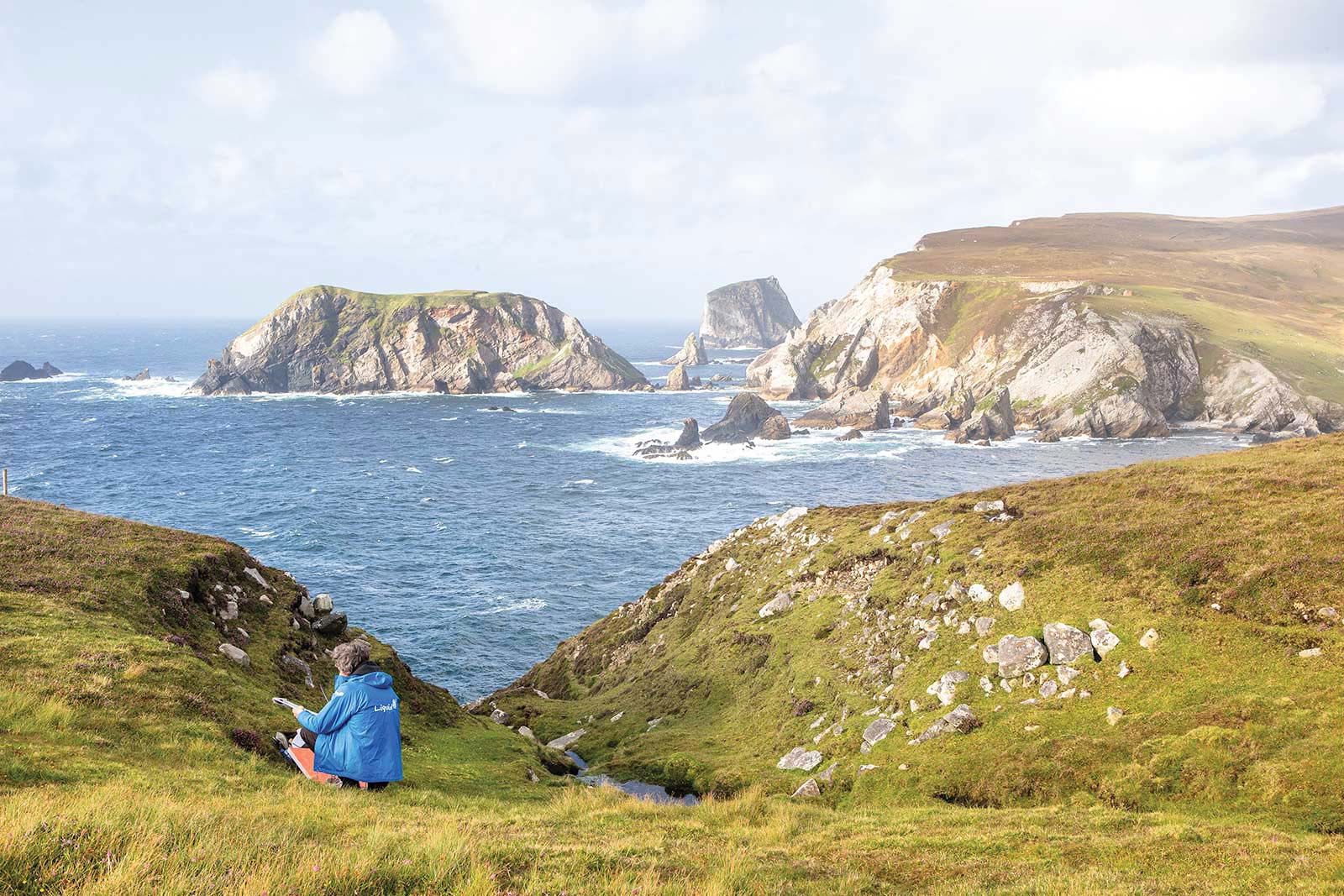
Lowery painting Ireland’s idyllic landscape in plein air. Photo by Darragh Gorman.
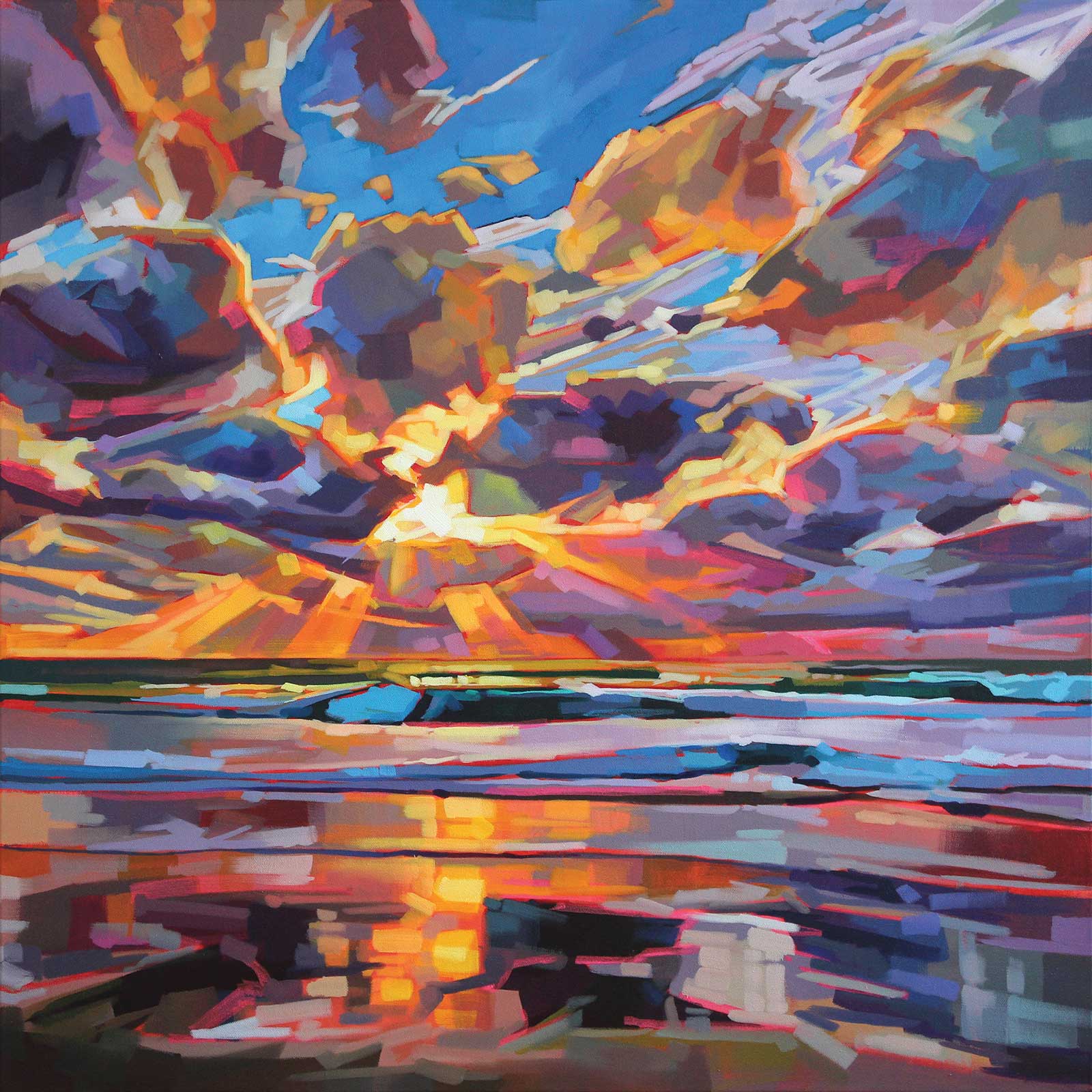
Luminous Roseland, oil on canvas, 31½ x 31½" (80 x 80 cm)
Before beginning a painting or a new series, I gather a lot of reference material. I take trips along the coast, sometimes for several days, collecting materials to work from. These range from photographs and sketches to memories, and I even start some paintings in the back of my van. While my paintings may appear somewhat controlled, the process is quite expressive. Different days, moods or circumstances can yield wildly different results from the same subject.
This painting of Keem Bay on Achill Island continues my exploration of Ireland’s west coast. However, for me the painting becomes as much about the process as the subject, pushing boundaries of color, drawing and outline within realism.
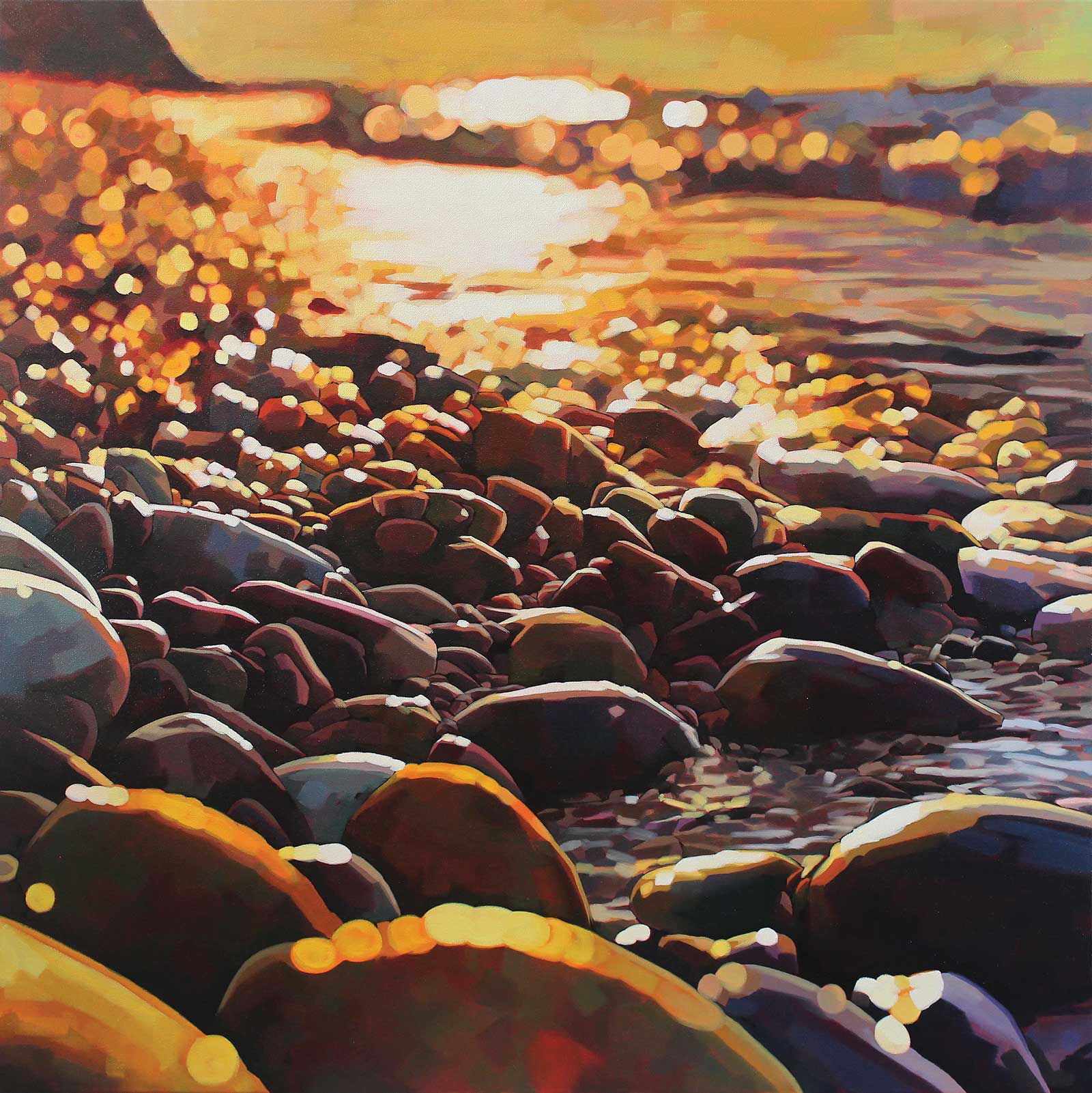
Pebbles LVIII, oil on canvas, 31½ x 31½" (80 x 80 cm)
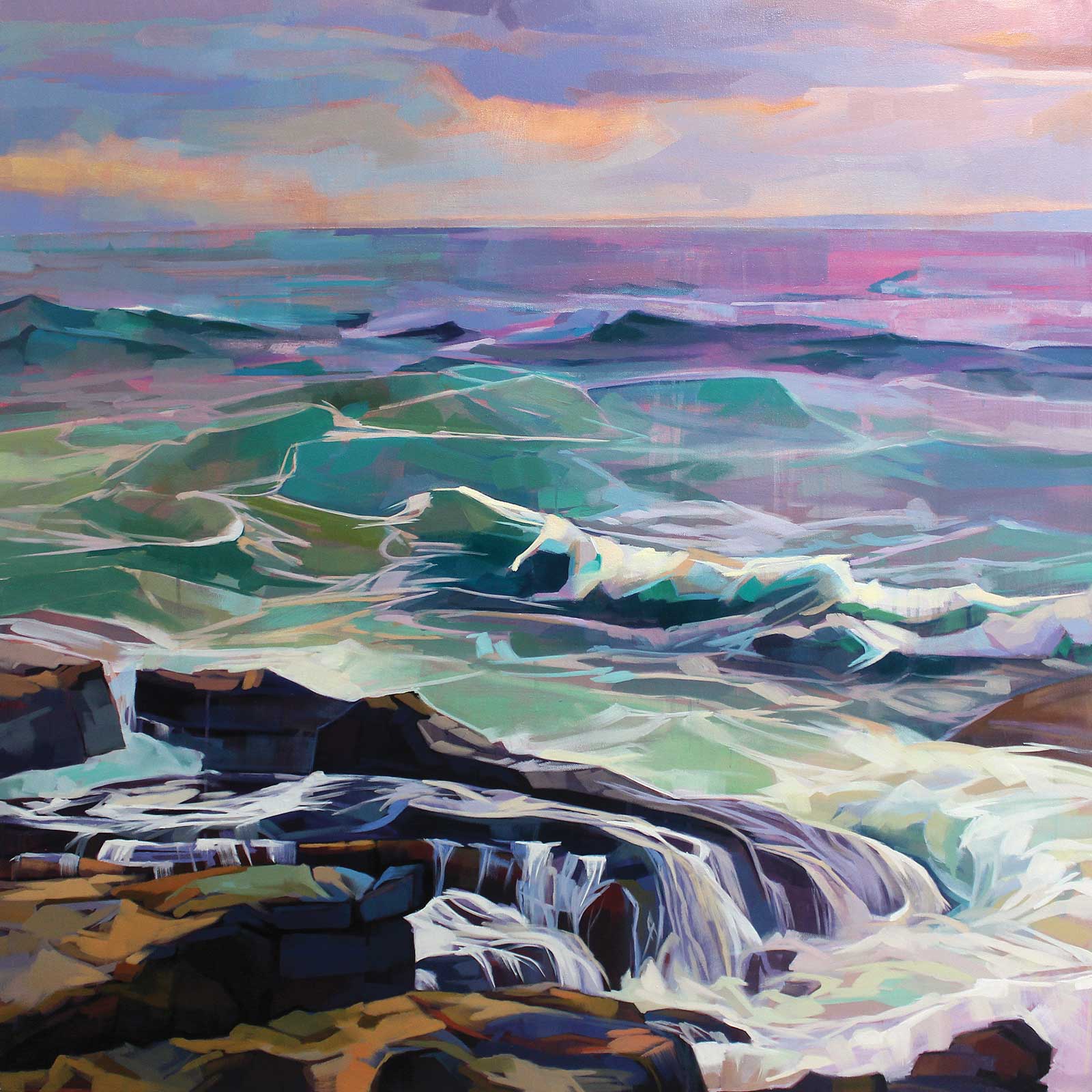
Creevy, Storm Eleanor II, oil on canvas, 391⁄3 x 391⁄3" (100 x 100 cm)
Working on almost exclusively square canvases, I enjoy the greater freedom they allow in terms of composition, something which I find much more restrictive with rectangular formats. I like to work in distinct layers, always working on the canvas as a whole, building up the composition gradually. When painting, almost all of the mixing happens on the palette with rarely any blending on the canvas, resulting in a slightly abstracted pattern of very defined brushstrokes and distinct blocks of color.
I always have a vision of the finished painting before beginning, but many important decisions are dictated by previous layers so I often end up taking a different direction than what I might have envisaged depending on what the painting is telling me.
My Art in the Making Keem Bay
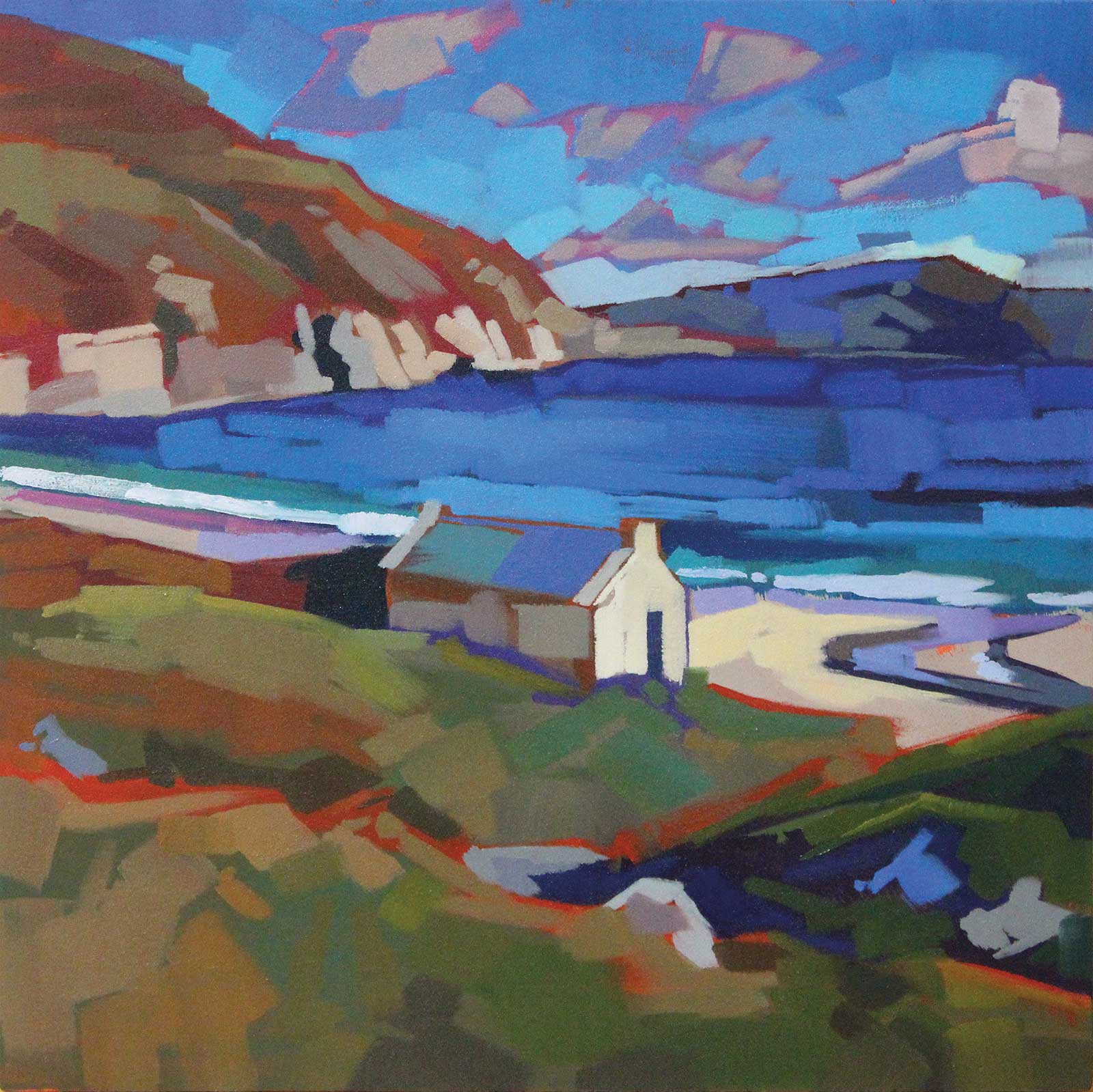
A quick study painting
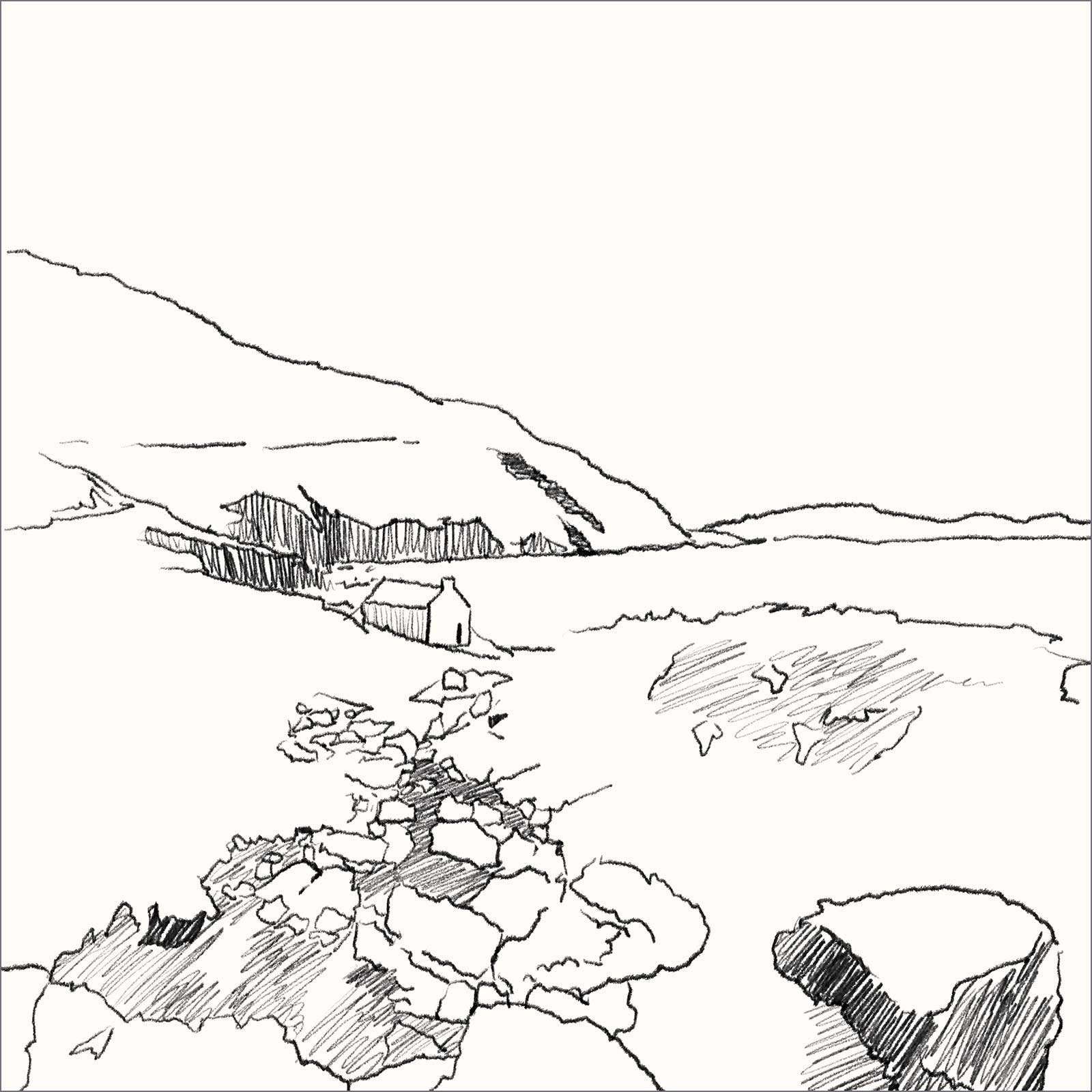
Preliminary composition sketch on iPad using Procreate
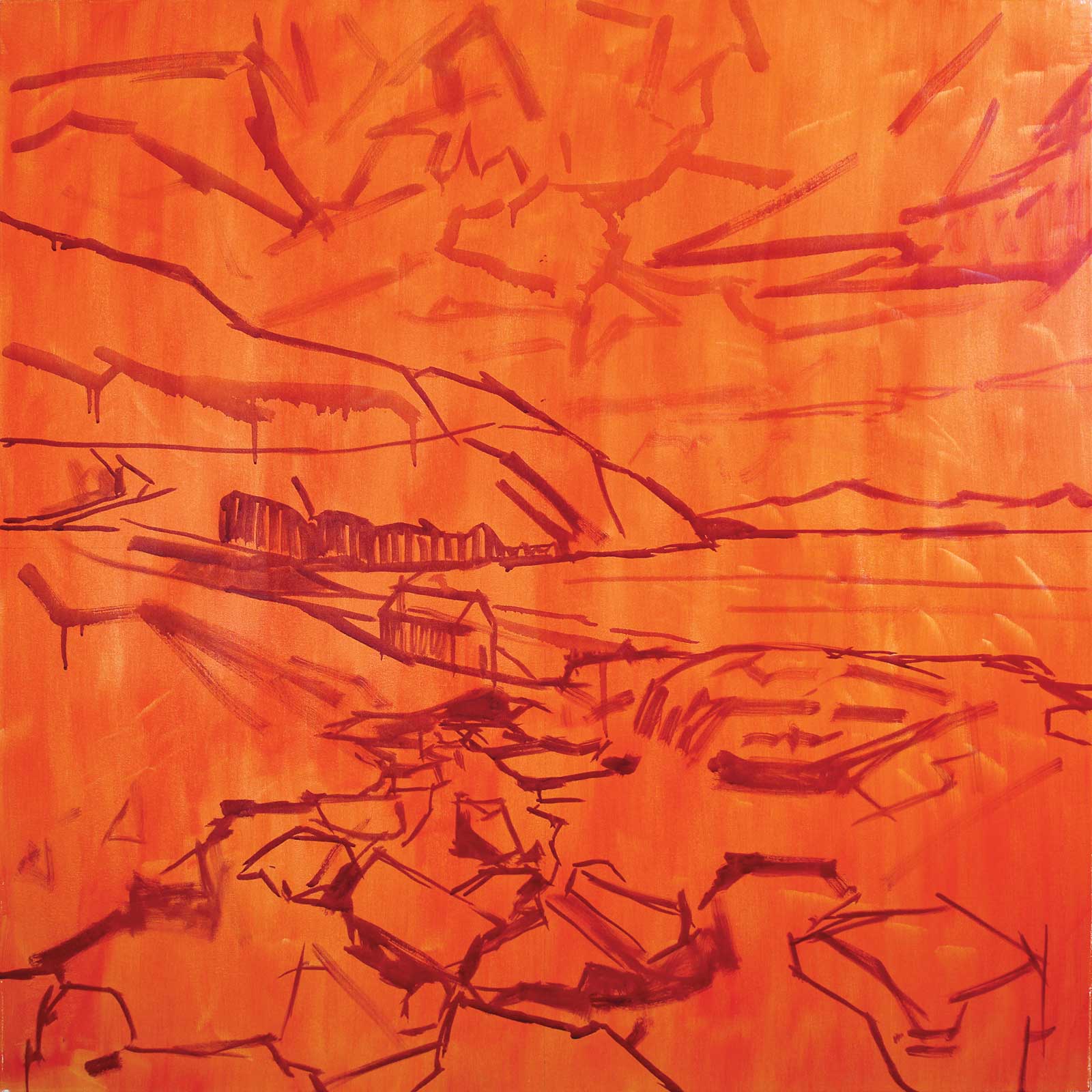 Stage 1
Stage 1 Canvas Preparation and Initial Drawing
I prepare the canvas with orange, which is ground using a mixture of clear gesso and acrylic paint. Using a size 6 filbert brush and watered down quinacridone magenta, I lay out the initial drawing on the canvas.
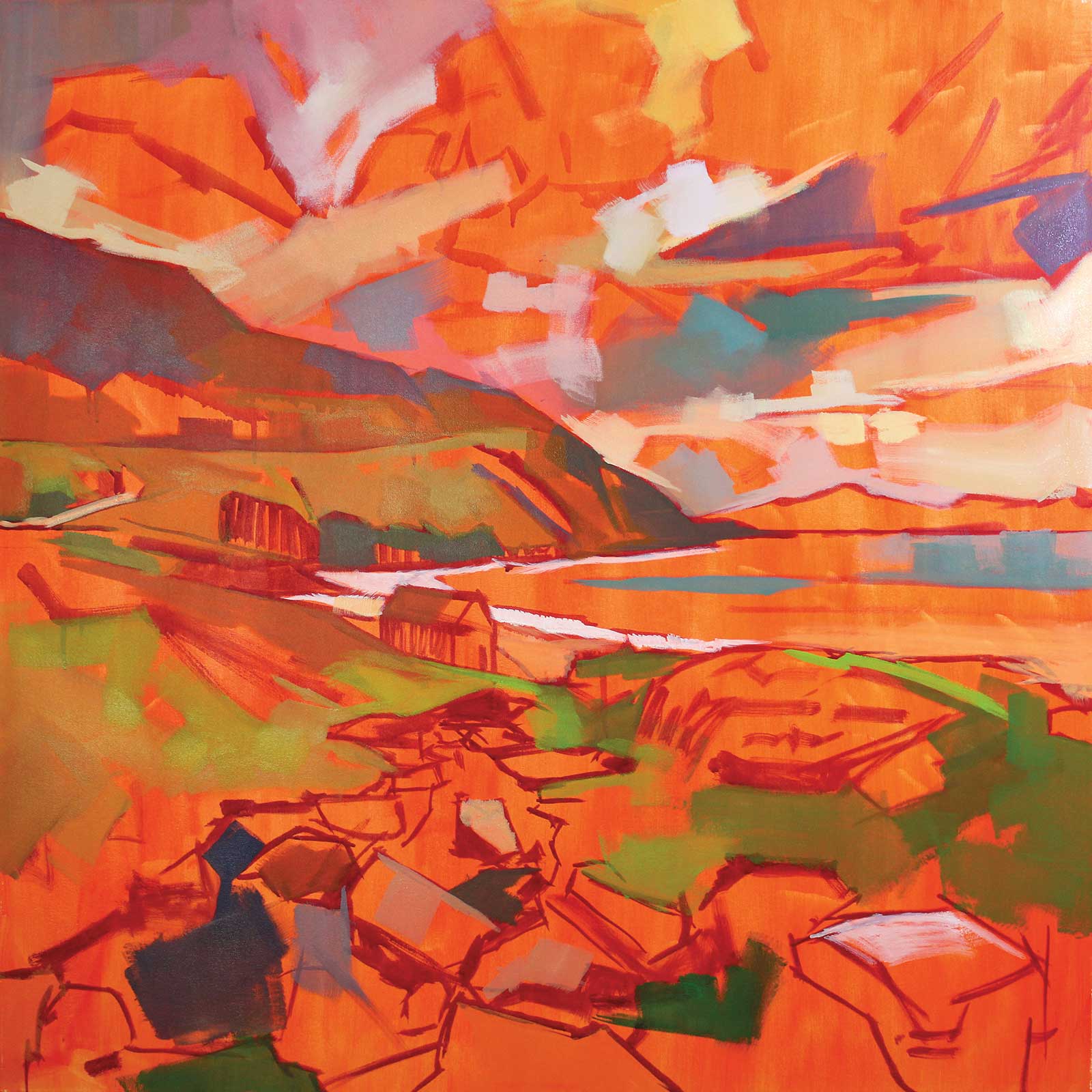 Stage 2
Stage 2 Blocking-In
Using 2" and 1½" synthetic flat brushes, I’ll start to block in areas of color, moving around the canvas and taking care not to become too focused on any one area, using water, often liberally, to thin the acrylic paint.
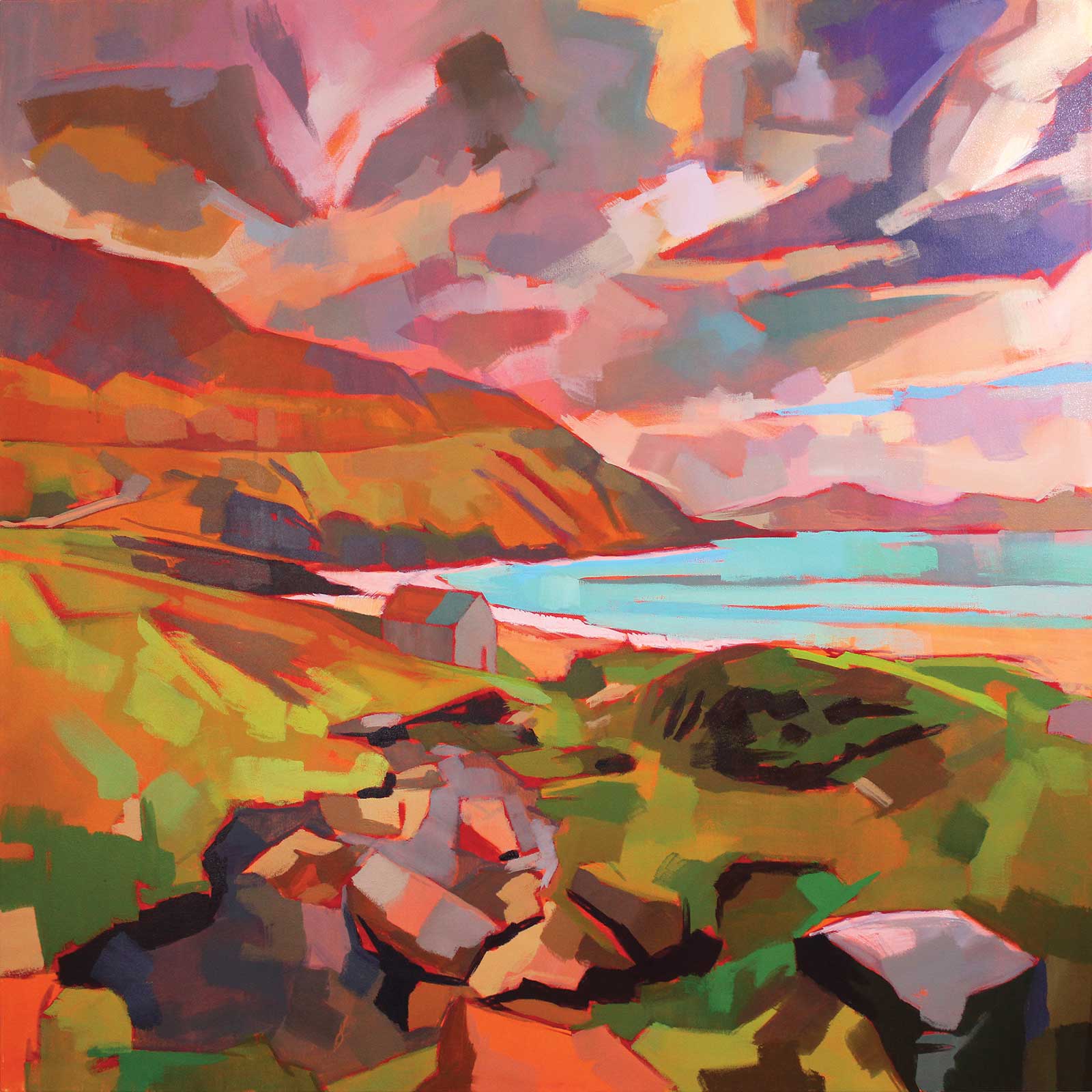 Stage 3
Stage 3 Completing The Block-In
Without overthinking it, I often like to leave elements of the magenta drawing and orange ground peeping through.
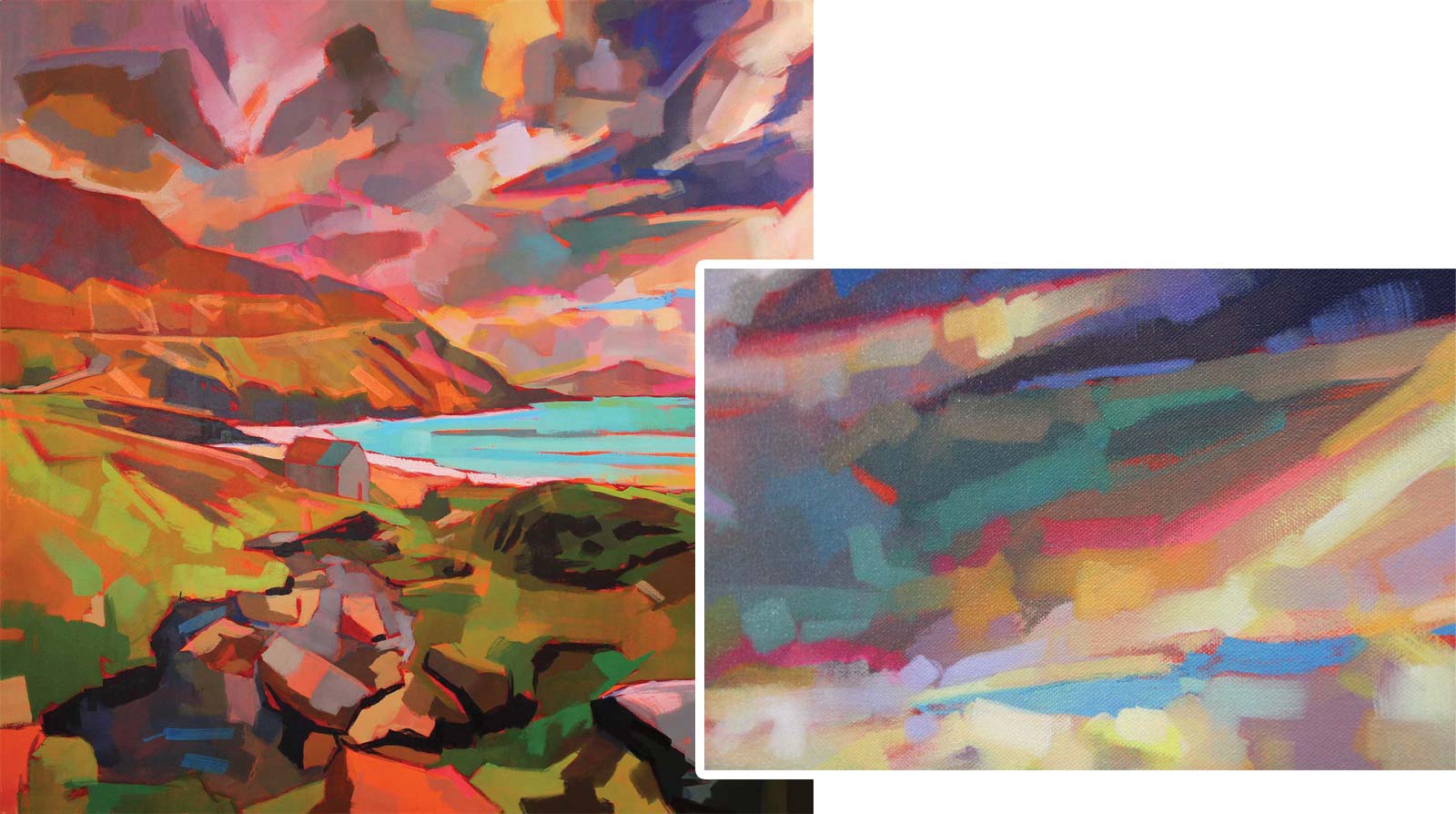 Stage 4
Stage 4 Adding Fluorescent Highlights
Using acrylic paint markers I highlight some areas mostly around the focal points. I will often overdo or exaggerate this stage with the intention of toning down or covering up in later layers.
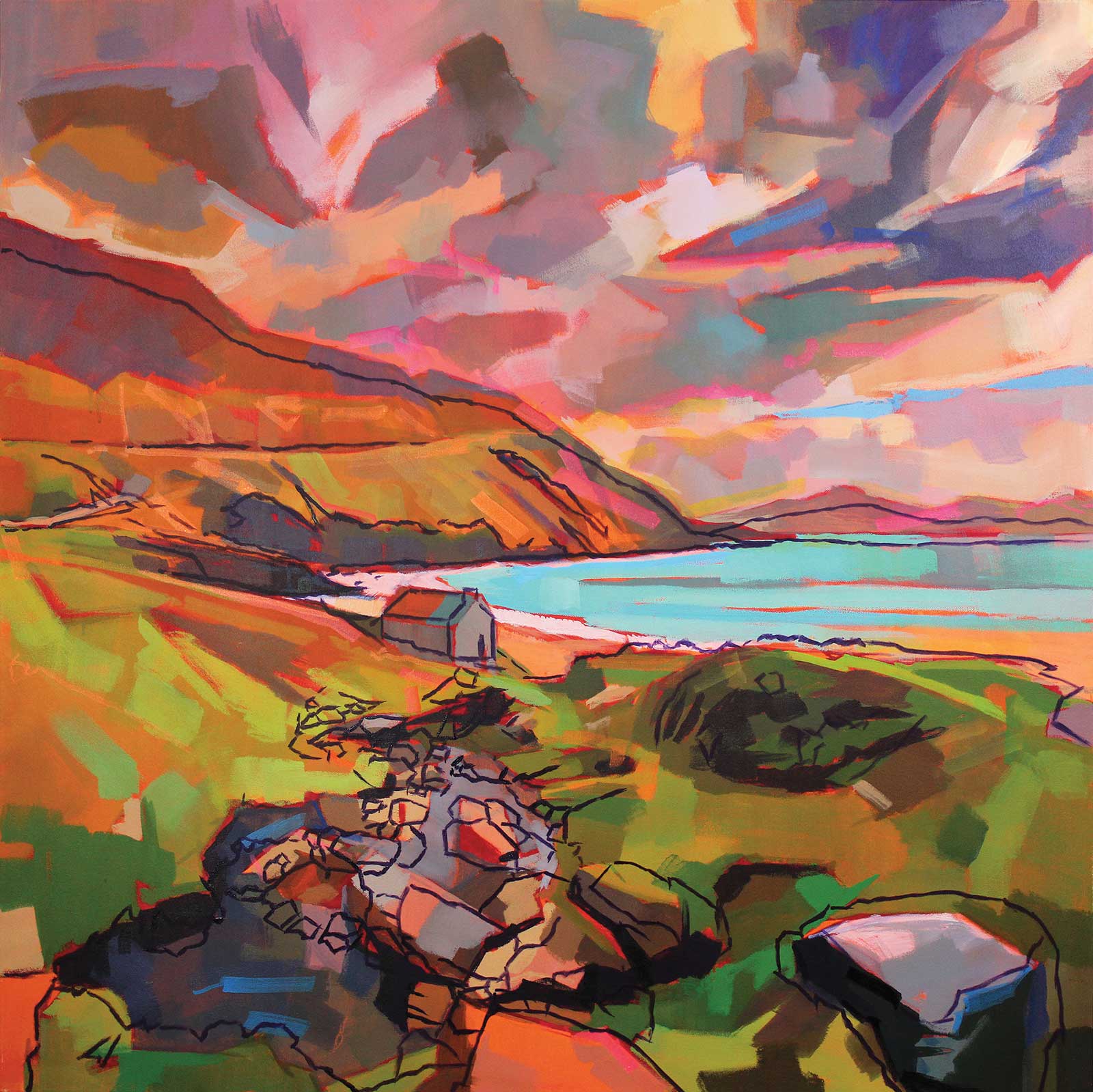 Stage 5
Stage 5 Redrawing
Switching to oils now, I redraw some of the more important or definite elements of the composition. This is partly to make certain elements more accurate but will also infuse a sense of movement and complexity as the painting develops. For this I use a mix of phthalo blue and permanent alizaron crimson using a size 6 filbert brush.
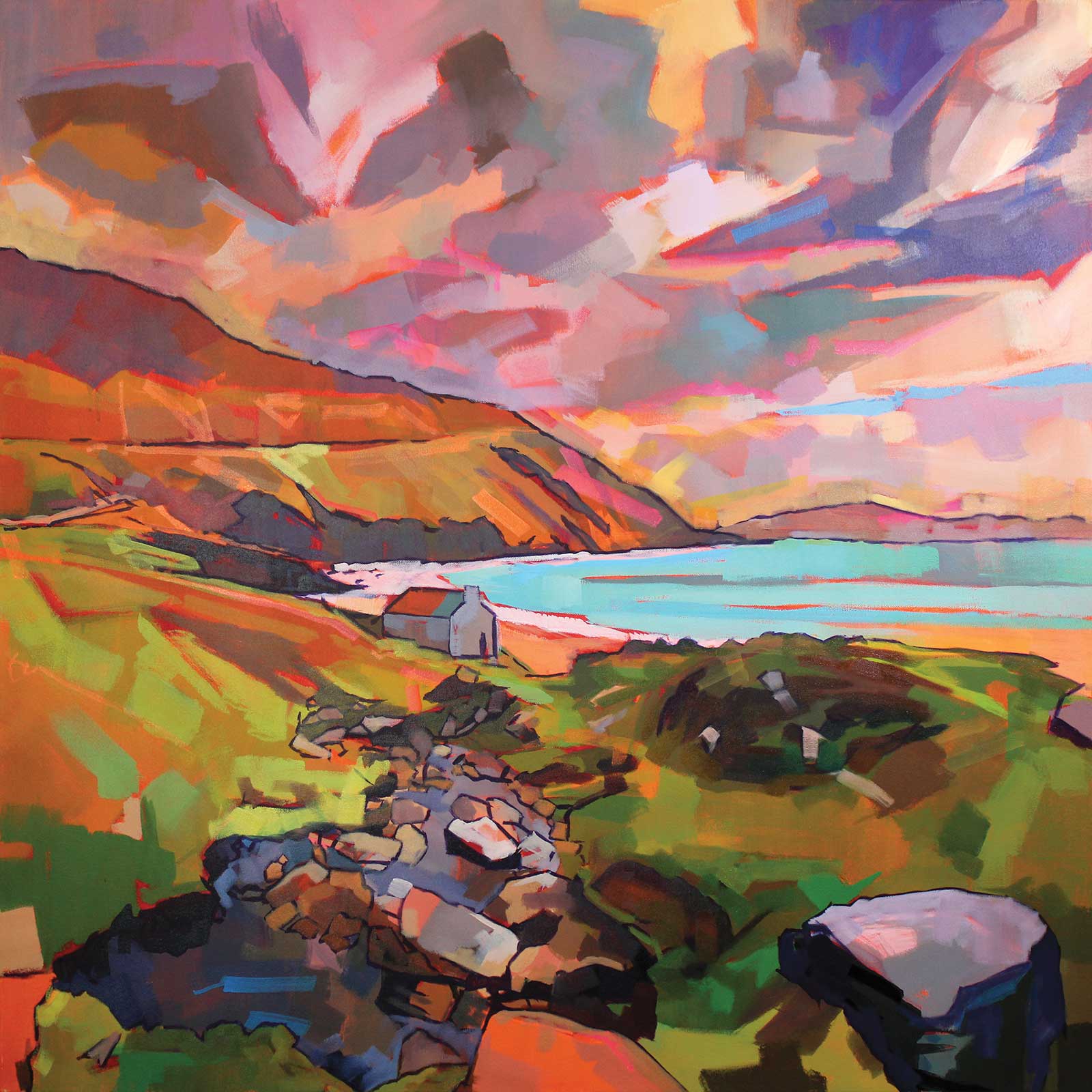 Stage 6
Stage 6 Adjustments after Redrawing
Working quickly, I block in the areas to be adjusted according to the new drawing using smaller ¾" and ½" synthetic flat brushes. Having almost ignored the previous painting in my redrawing, I am free from any preciousness about what has already been done, helping to keep me expressive as I continue to paint.
Technique Spotlight
While blocking in I use a number of the same sized brushes, each dedicated to certain colors or values. This allows me to work quickly and avoid the distraction of having to clean brushes regularly as I work. Part of what keeps my work vibrant and full of color is the fact that I almost never use black, and on the very rare occasions that I do, I use it independently and never mix with other colors. An effective way of creating a sense of depth and distance is to initially paint with similar saturation and contrast as the foreground and later use a thin wash using white tinted with some color to push an area back.
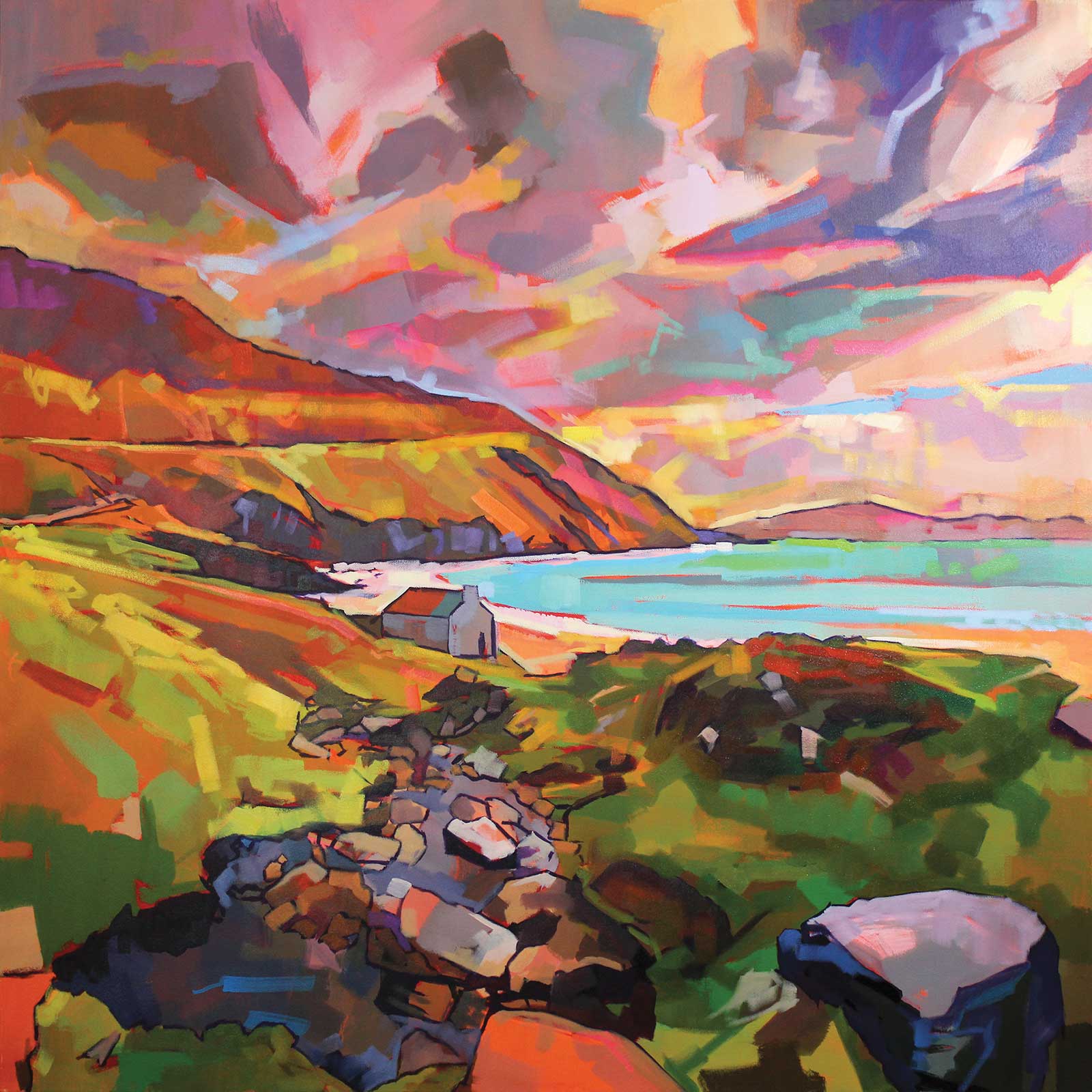 Stage 7
Stage 7 Adding Detail
I add some detail as well as picking out some highlights and shadows using a combination of 1", ¾" and ½" synthetic flat brushes.
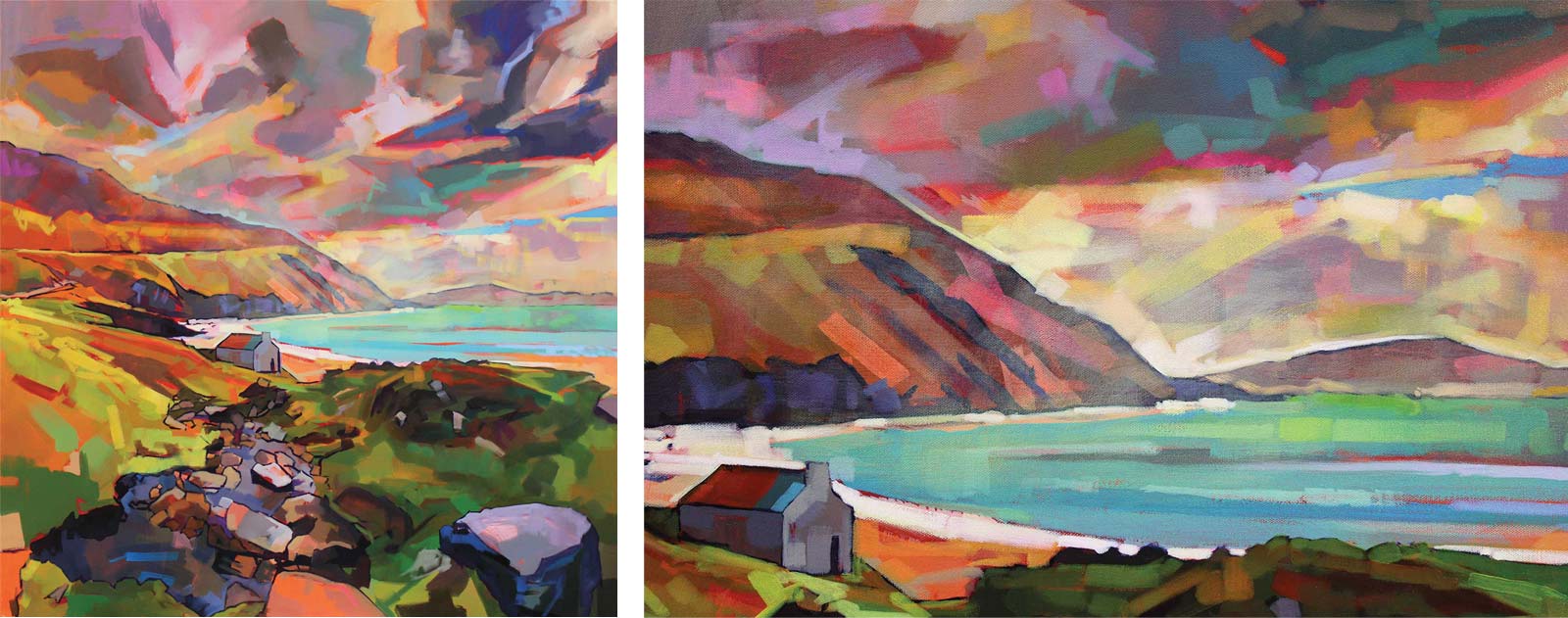 Stage 8
Stage 8 Creating Depth and Distance
In order to “push back” the far mountains and create a sense of distance, I apply a wash using titanium white and lemon yellow thinned with turpentine and applied with a 2" synthetic flat brush.
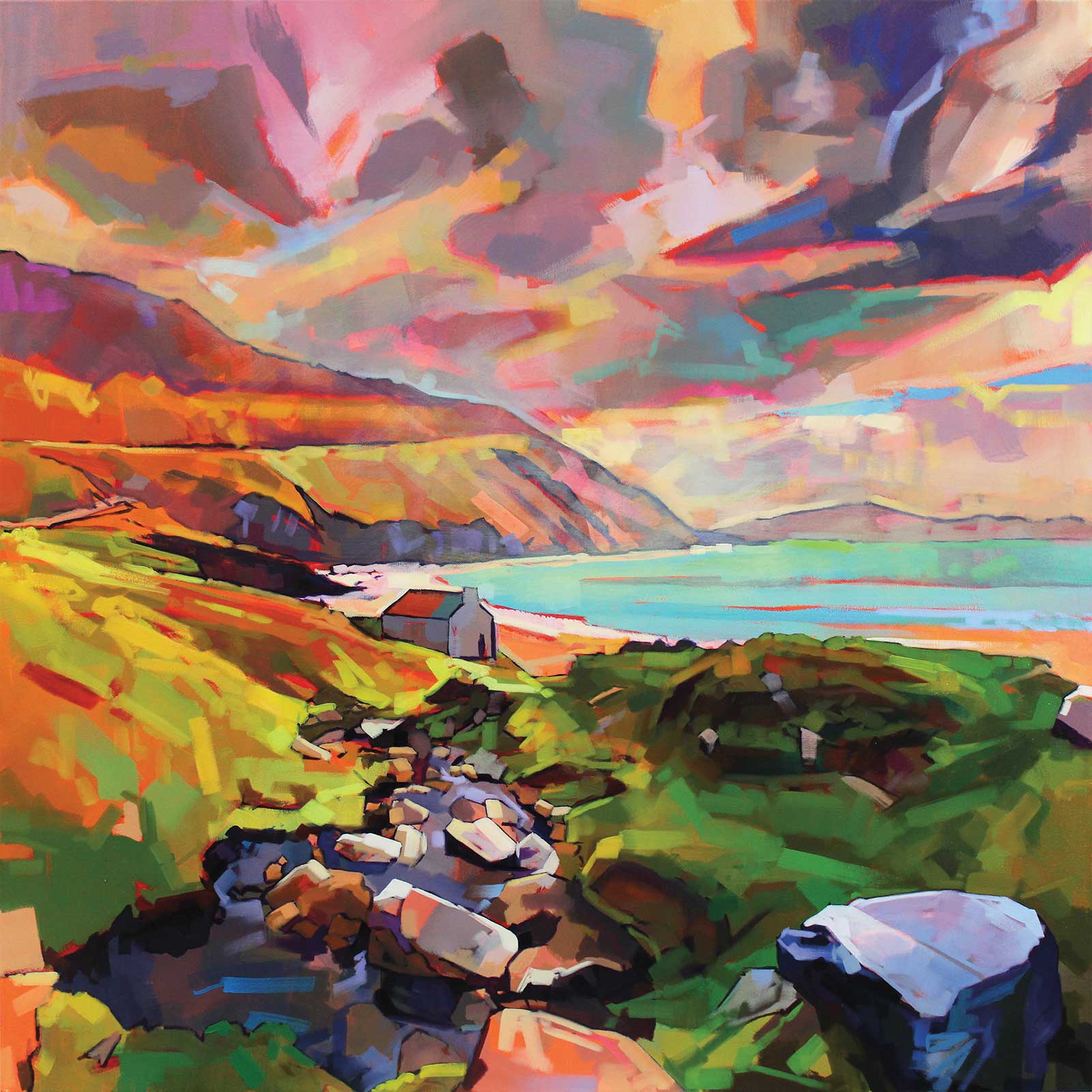 Stage 9
Stage 9 Final Foreground Layer
Before working on the final layer I coat the surface with a 50/50 mix of turpentine and refined linseed oil. This both has the effect of “oiling out” to intensify the darker areas, and making for a very fluid surface to work on as I add the final details and adjustments as well as pick out the remaining highlights in the foreground.
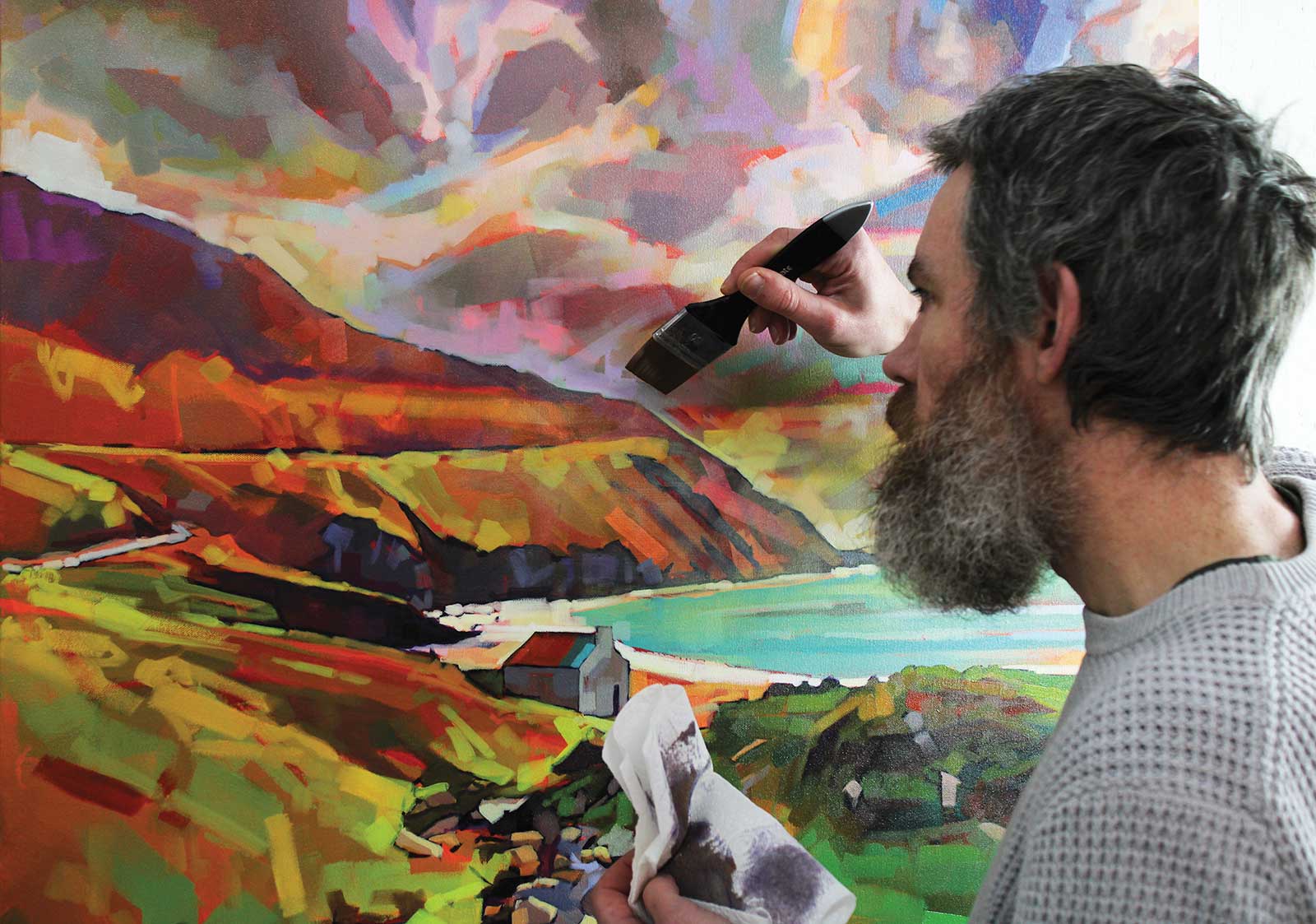 Stage 10
Stage 10 Finishing Touches
Similar to the foreground, my final step is to pick out highlights and add some detail to the sky. Finally, I make a couple of minor final adjustments to the cottage, mountain and water.
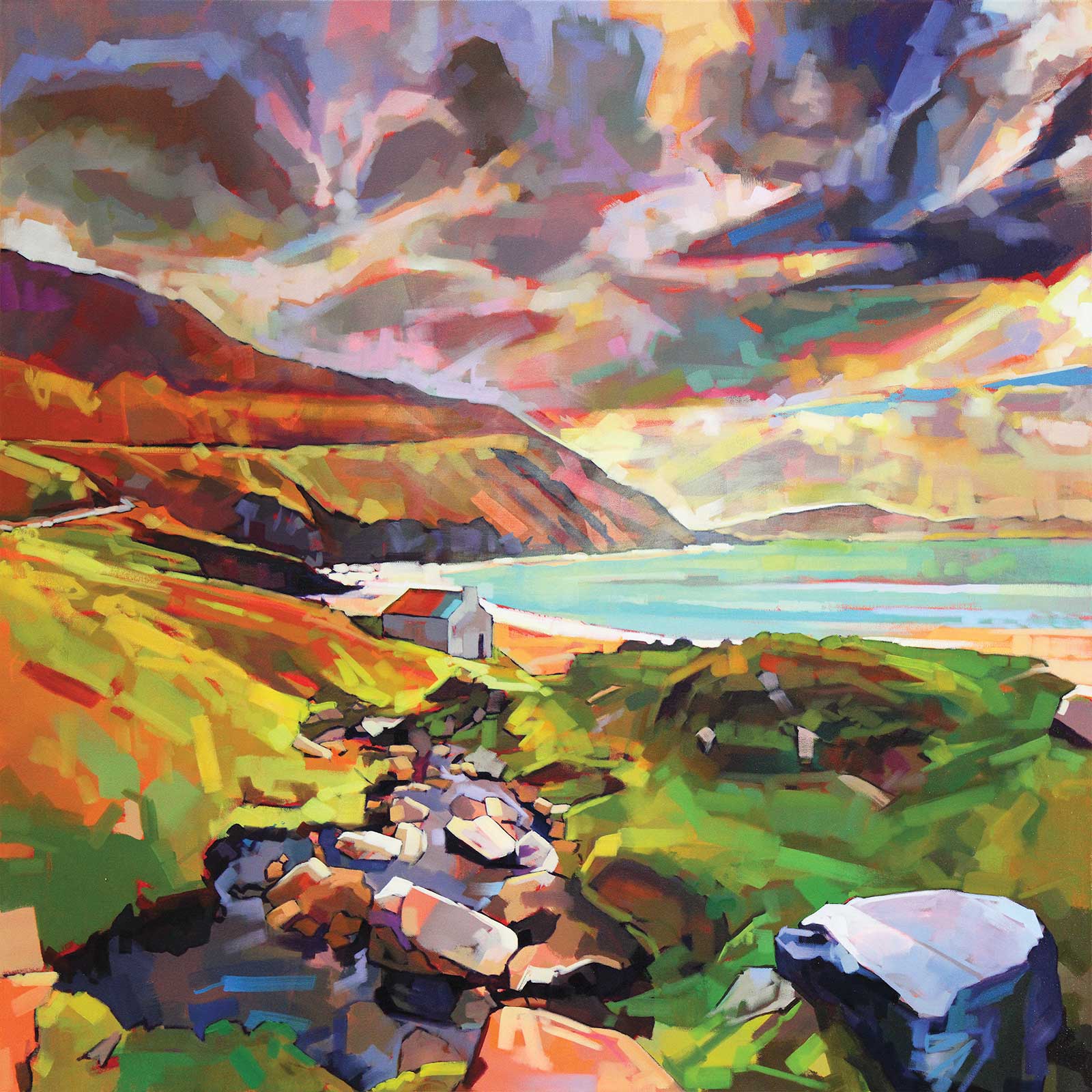 Stage 11
Stage 11 Finished Artwork
Keem Bay, mixed media, 391⁄3 x 391⁄3" (100 x 100 cm)
About the artist
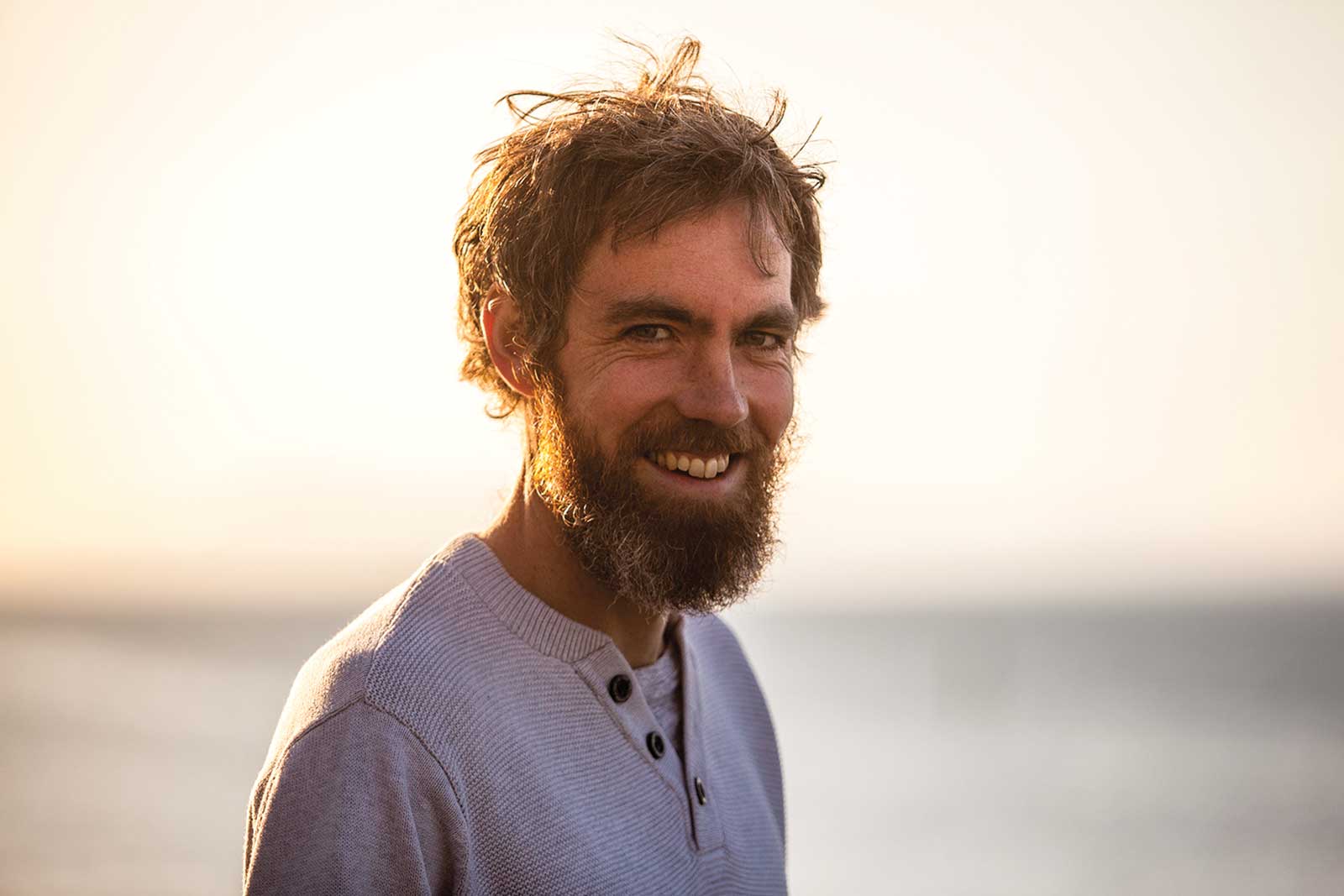 Kevin Lowery
Kevin Lowery’s work is shaped by the landscape of Northwest Ireland. His paintings reflect the diverse environments around him, capturing the essence of the region’s dramatic scenery and shifting light.
After studying painting at Dublin’s National College of Art and Design, Lowery spent 15 years forging a career in the Irish music industry before dedicating himself full time to his art practice in 2017. Since then, he has exhibited extensively, with his work included in shows by the Royal Ulster Academy and the Royal Society of Marine Artists, to name a few. A number of his works are held in both Irish and international collections. In May 2024, he opened his own studio and gallery in Bundoran, Donegal.
Lowery is represented by Whitethorn Gallery in Galway, Ireland; Russell Gallery in Clare, Ireland; Gallery One in Belfast, Northern Ireland; Irish Art Plus in Antrim, Northern Ireland; Harbour Gallery in Cornwall, England; and Corte Real Gallery in Algarve, Portugal.
Contact at
info@kevinlowery.ie
kevinlowery.ie