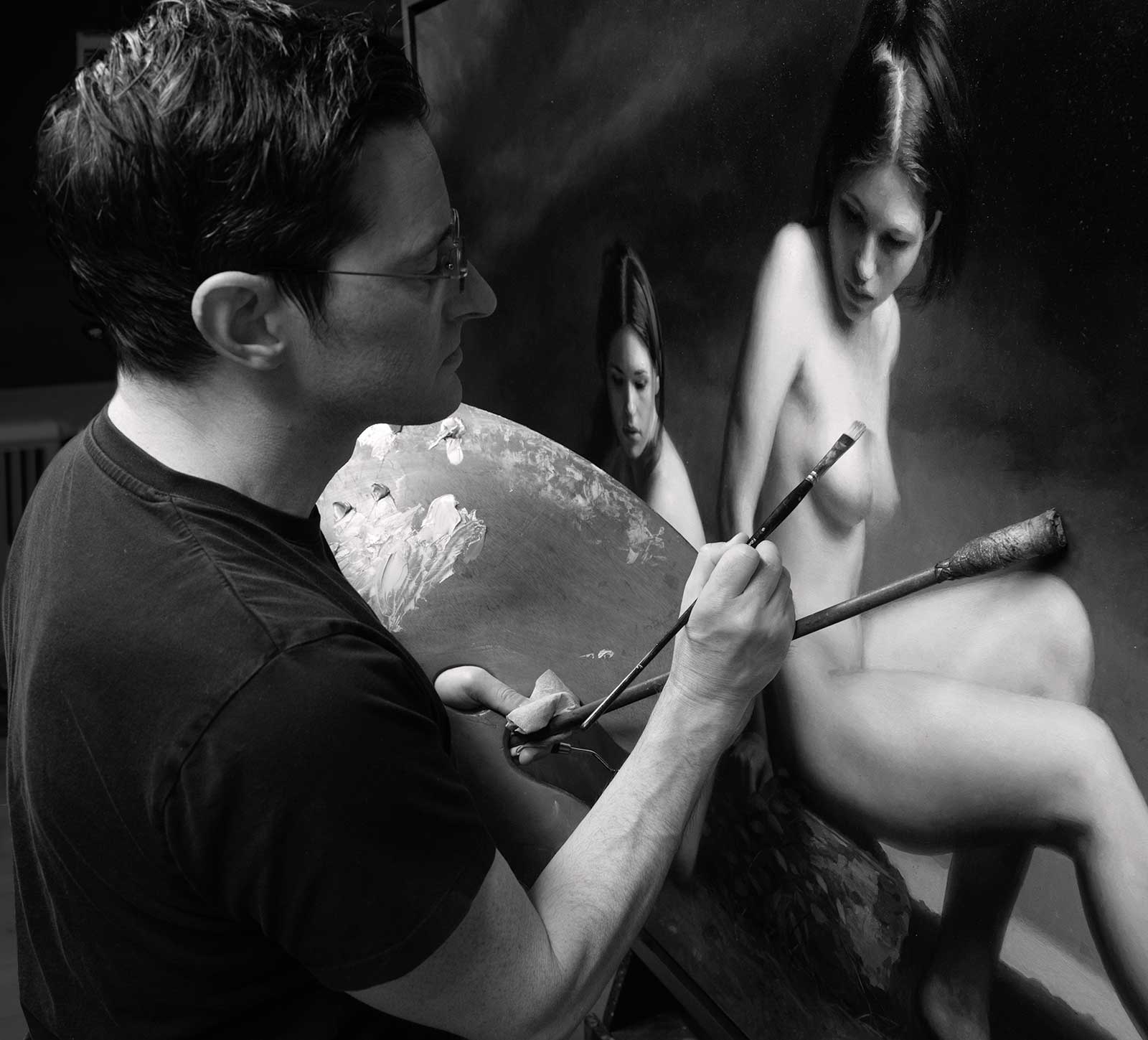
Adrian Gottlieb working on his oil Duality.
Scottsdale Artists’ School: How did teaching at Scottsdale Artists’ School begin?
Adrian Gottlieb: Several years ago, Scott Jones, then director of Legacy Gallery, introduced me to Scottsdale Artists’ School. I was immediately impressed by the space and the high regard other instructors had for the school. Inspired by its reputation, I contacted the administration and offered to teach as an instructor. Within a year, I started teaching my first workshop at the school.
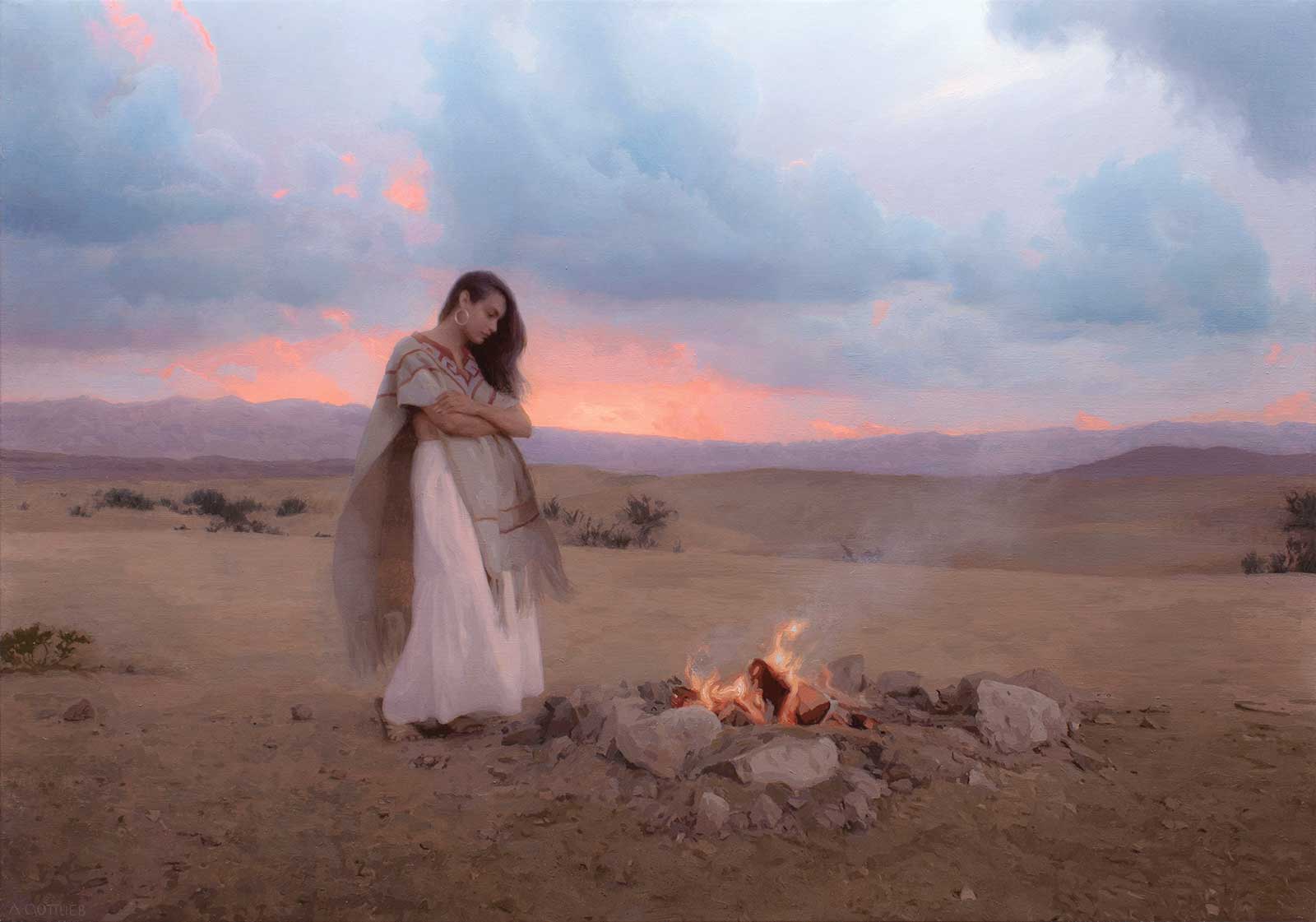
Mesquite Sunset, oil on linen, 28 x 40” (71 x 101 cm)
SAS: What do you look forward to the most when teaching online and in person?
AG: Teaching online opens doors for students who might not have been able to attend in-person classes. I’m thrilled that these students now have access to instruction they might have otherwise missed. Online classes also provide flexibility, allowing students to learn from the comfort of their homes and take breaks as needed. Plus, teaching online allows me to work from my own home and studio, making the experience convenient for both students and instructors alike. However, nothing compares to the experience of painting a model from life or demonstrating a technique directly on a student’s canvas. In-person classes also allow for more immediate interaction, making communication clearer and more direct. While I appreciate the convenience of online instructions, it could never replace the invaluable experience of teaching in person.
SAS: Have you always had the desire to become an artist or was this an unexpected plan?
AG: I compulsively drew Garfield in the first and second grades. It was evident to everyone that art was in my future. Seriously, though, before I had any formal instruction I was always painting and drawing, either from life or from magazines. It was an obvious path for me.
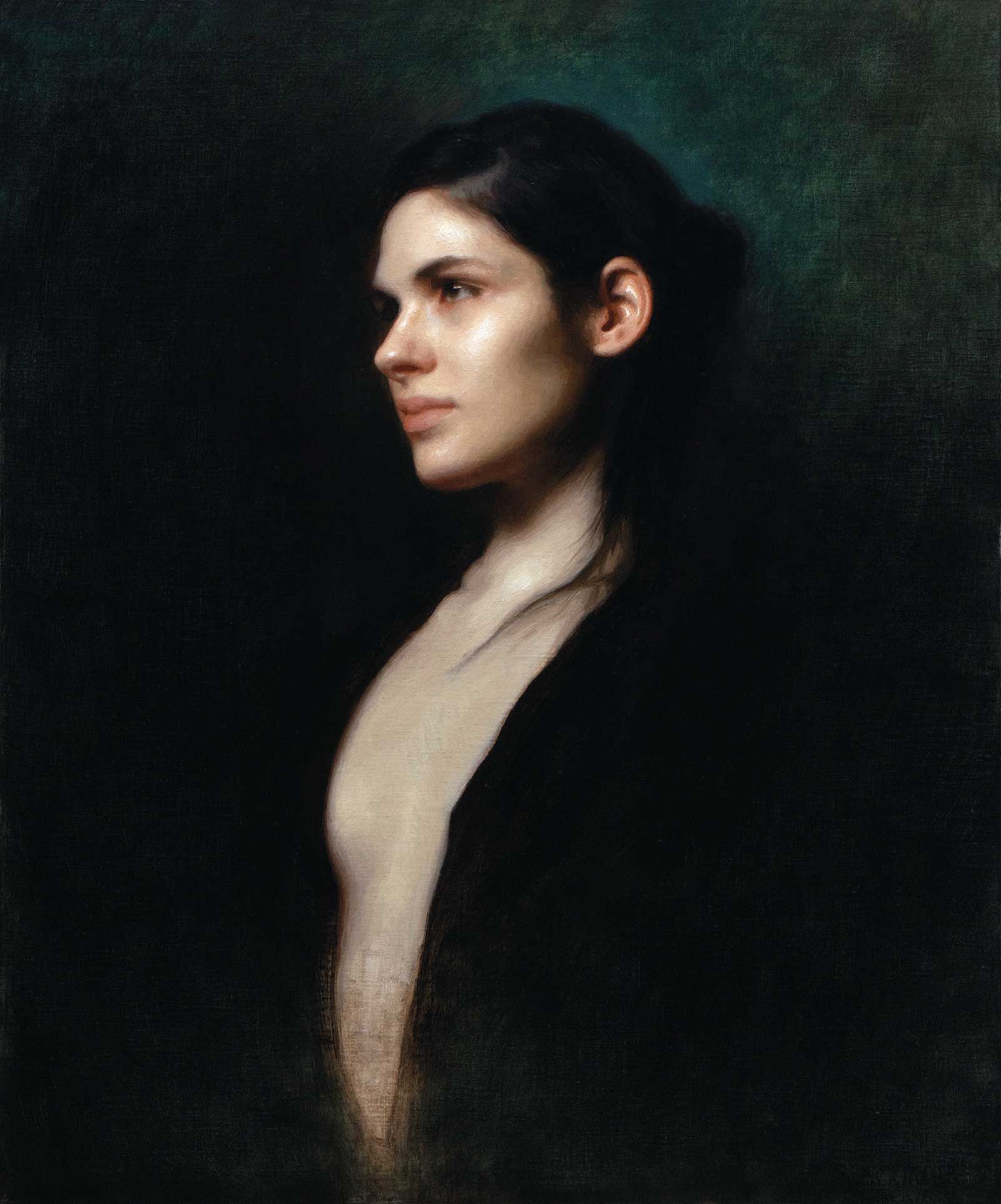
Sarah, oil on linen, 24 x 20” (60 x 50 cm)
SAS: What was the biggest challenge you faced when starting your art career?
AG: The question suggests that this challenge has been overcome, but in reality, the art world is constantly evolving. The reasons people seek art one year may change the next, making adaptability essential. The key is staying true to yourself while continuously growing. It’s tempting to follow trends, but veering too far from your artistic vision can dilute the passion that led you to create in the first place.
SAS: Can you recall the moment you booked your first commission?
AG: I believe my first commission was a landscape of a pond, requested by my high school gym teacher to memorialize a family vacation. I don’t recall the exact price, but if I had to guess, it was around $50. That commission was just the beginning, one small step on a path that would eventually lead me to paint English nobility, Fortune 500 CEOs and American elected representatives.
SAS: Have figurative and portraiture always been your chosen subjects?
AG: Yes, absolutely. My first exposure to representational art was through Rembrandt. While my work doesn’t necessarily resemble his, he was the first artist who inspired me to paint figures and portraits.
SAS: You discussed the importance of creating the “total experience” in your upcoming workshop. Can you tell us more about this approach?
AG: The “total experience” refers to the dynamic interaction between the artist and the model, as well as the instructor and the student. At its core, it’s about “documenting” your subject but also striving to capture a deeper truth, something beyond just the physical likeness. This process of exploration and connection is something I’ve always found to be both positive and deeply rewarding.
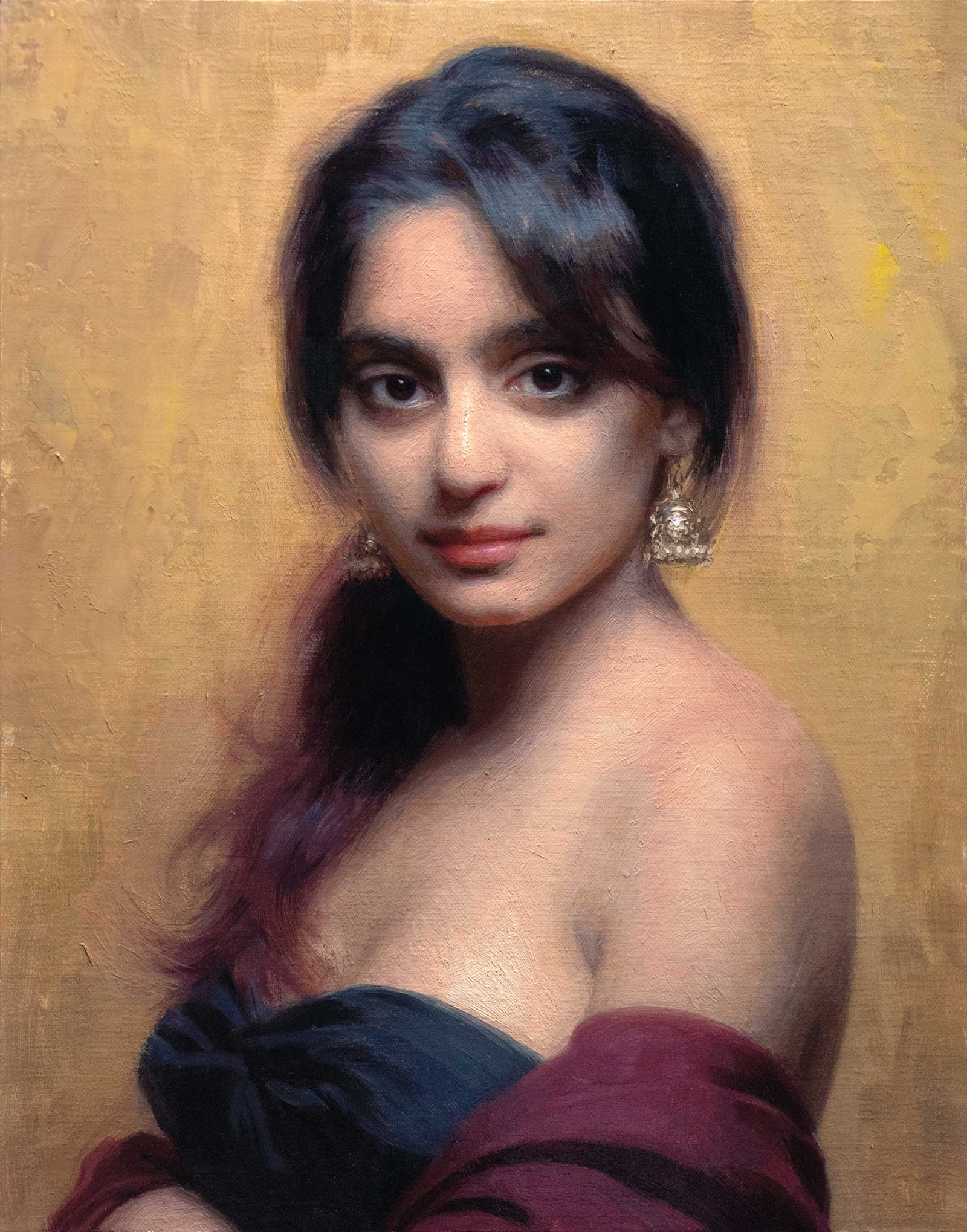
Venya, oil on linen, 14 x 11” (35 x 27 cm)
SAS: What are the biggest takeaways that you hope your students will gain from your online and in-person workshops?
AG: My main goal is for students to have an enjoyable experience, but more importantly, I want to provide them with a clear pathway to creating paintings that demystify the process. Representational oil painting can be highly challenging, so anything that makes the process feel more structured and approachable is a win. A reliable system is essential for progressing through a painting with minimal frustration, helping students reach their final touches with confidence and clarity. —