Like most of my works, I’ve been planning this painting for some time. The idea began for a very intimate portrait, showing the close bond between the lions. The color palette is very warm and natural, picking up the tones of nature warmed by the sun.
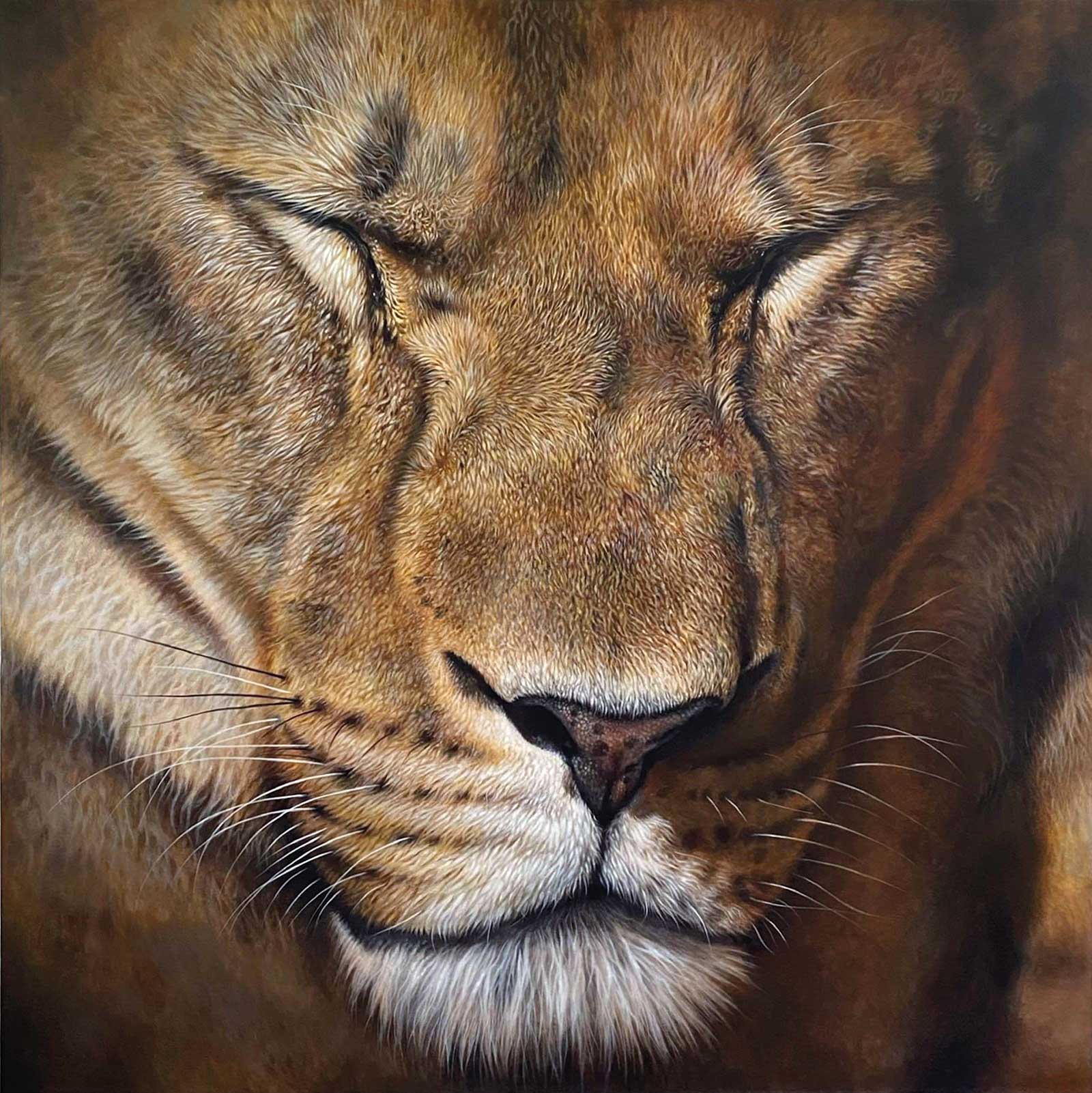
Wisdom, acrylic on canvas, 391/3 x 391/3” (100 x 100 cm)
I began by sketching and finalizing the composition, then building my canvas to size. Everything about the composition had to draw the lions together and enhance the sense of closeness and unity. The tall/narrow canvas did just this.
All my pieces follow the same layering process, starting with the most basic, flat colors and building the levels of depth and detail with each consecutive layer of painting. Acrylics lend themselves perfectly to my painting technique with their fast drying time. I like to work quickly at first, which always looks quite messy to begin with. Then I slow down as the painting becomes more detailed and take my time obsessing over the smallest details.
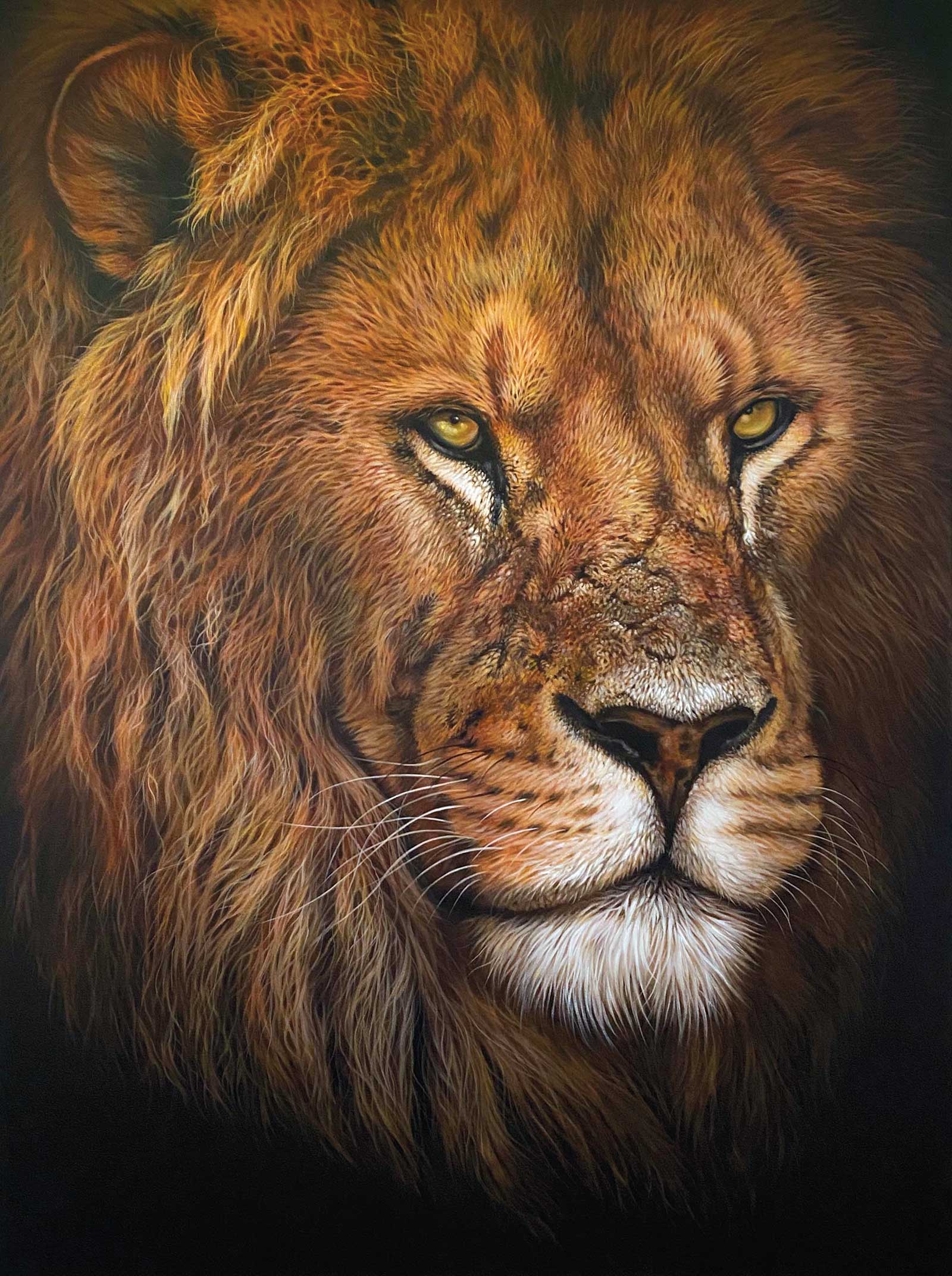
Golden Warrior, acrylic on canvas, 48 x 35½” (122 x 90 cm)
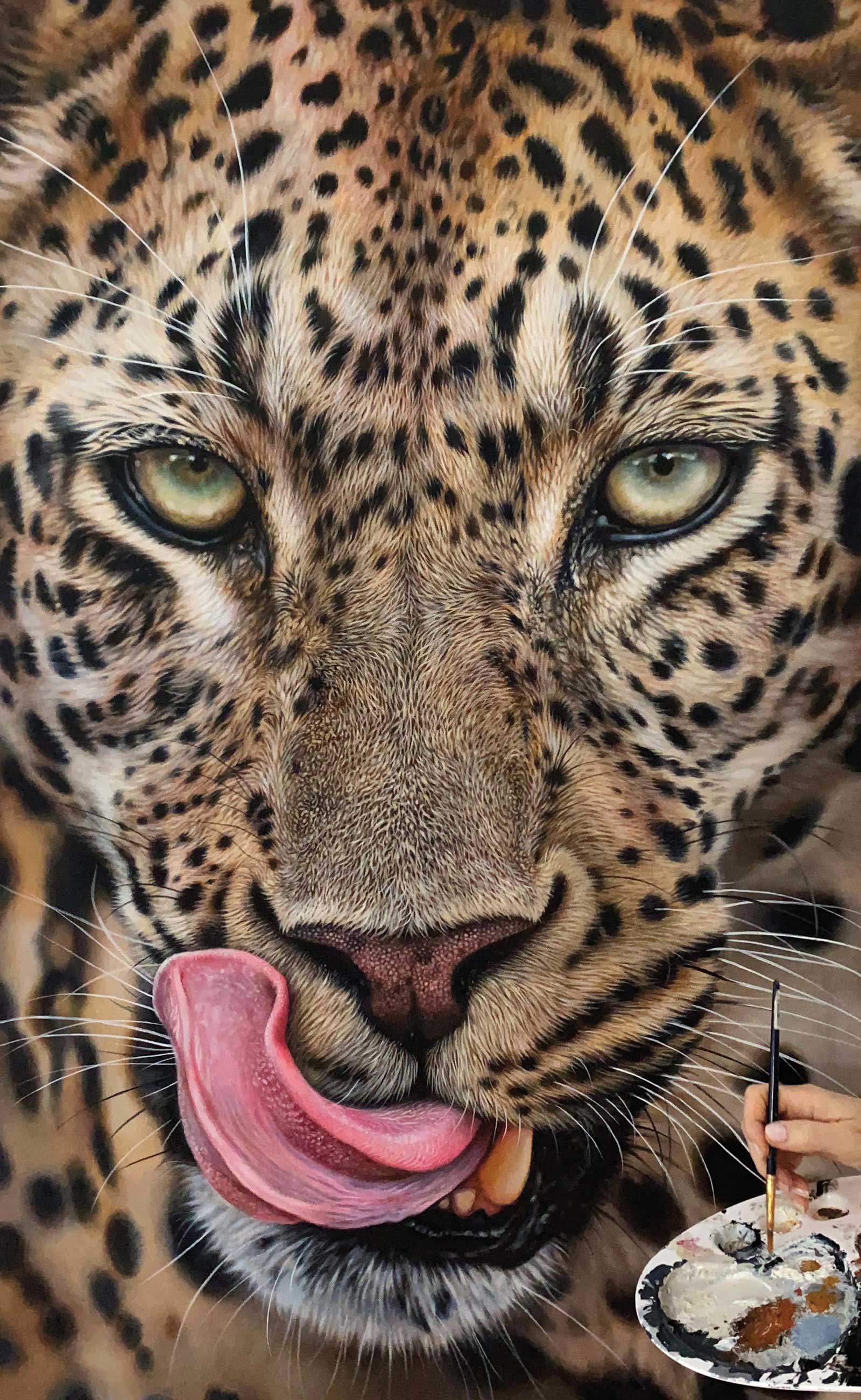
The Aftermath, acrylic on canvas
Detail is very important to my work but also knowing when not to use detail is just as important. I knock back areas with soft focus to send them retreating into the background and bring forward the closest parts of the lions, like the nose and eyes, with hyper-detailing.
My Art in the Making Cherished
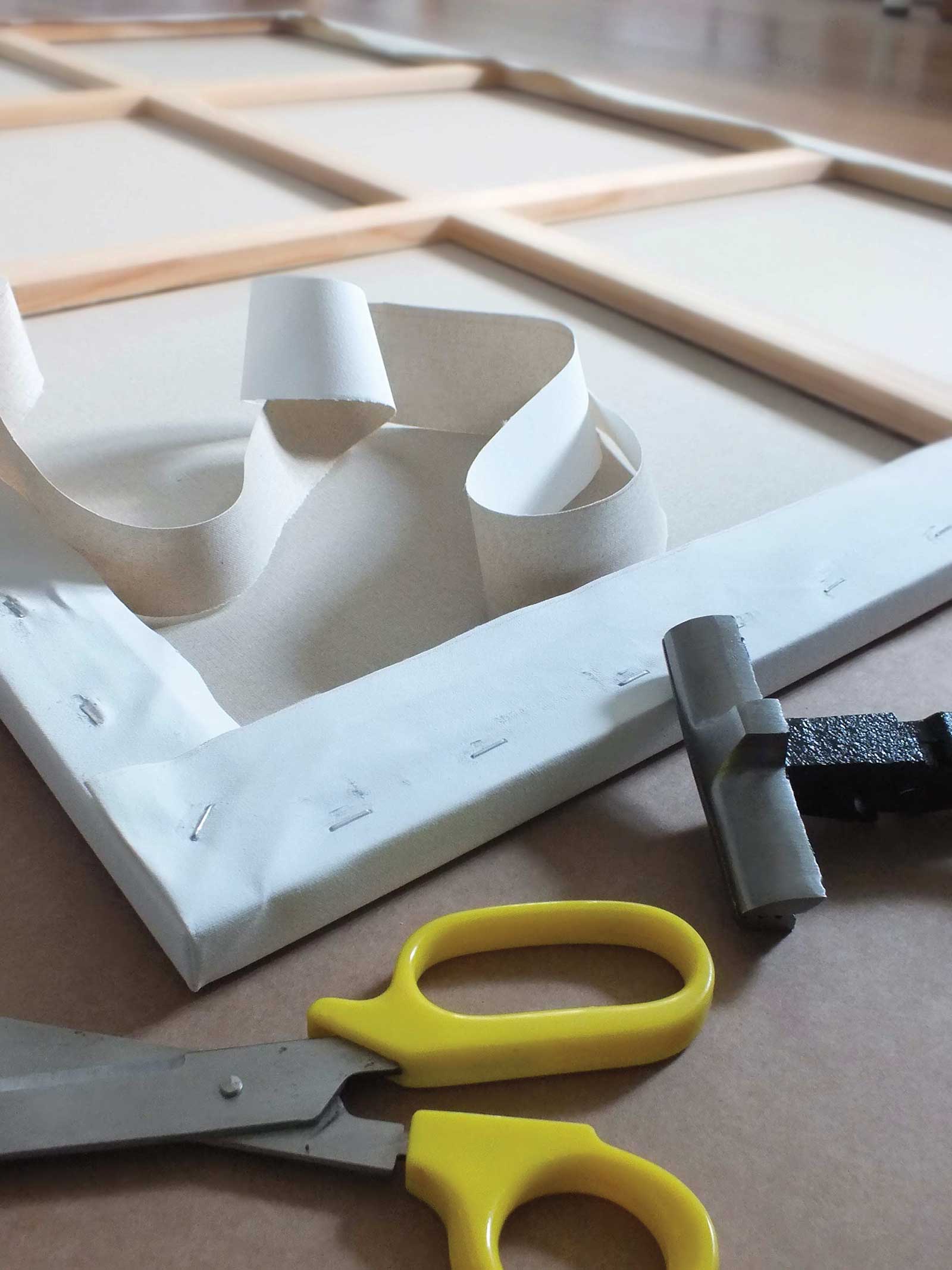 Stage 1
Stage 1 Stretching the Canvas
I stretch the cotton canvas over the wooden stretcher bars, pulling it tight with pliers and then stapling it in place. A few coats of gesso and I’m ready to paint.
WHAT THE ARTIST USED
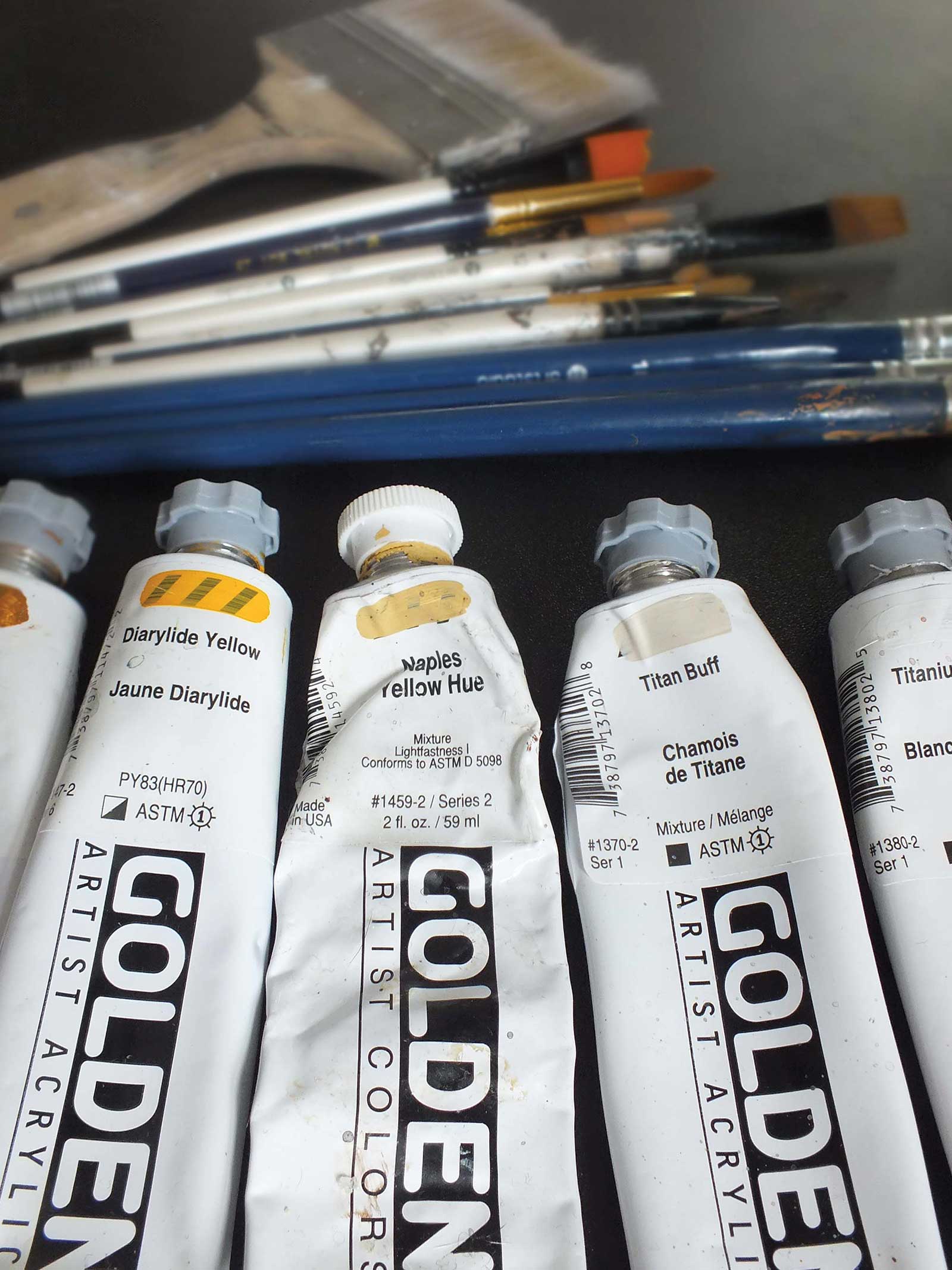
Golden Acrylics
Titanium white, Zinc white, Titan buff, Burnt umber light, Raw umber, Burnt sienna, Diarylide yellow, Naples yellow, Raw sienna, Payne’s gray, Carbon black
Brushes
Royal & Langnickel round brushes, sizes 1-10, Pro Arte flat filbert brushes, Sword liners
 Stage 2
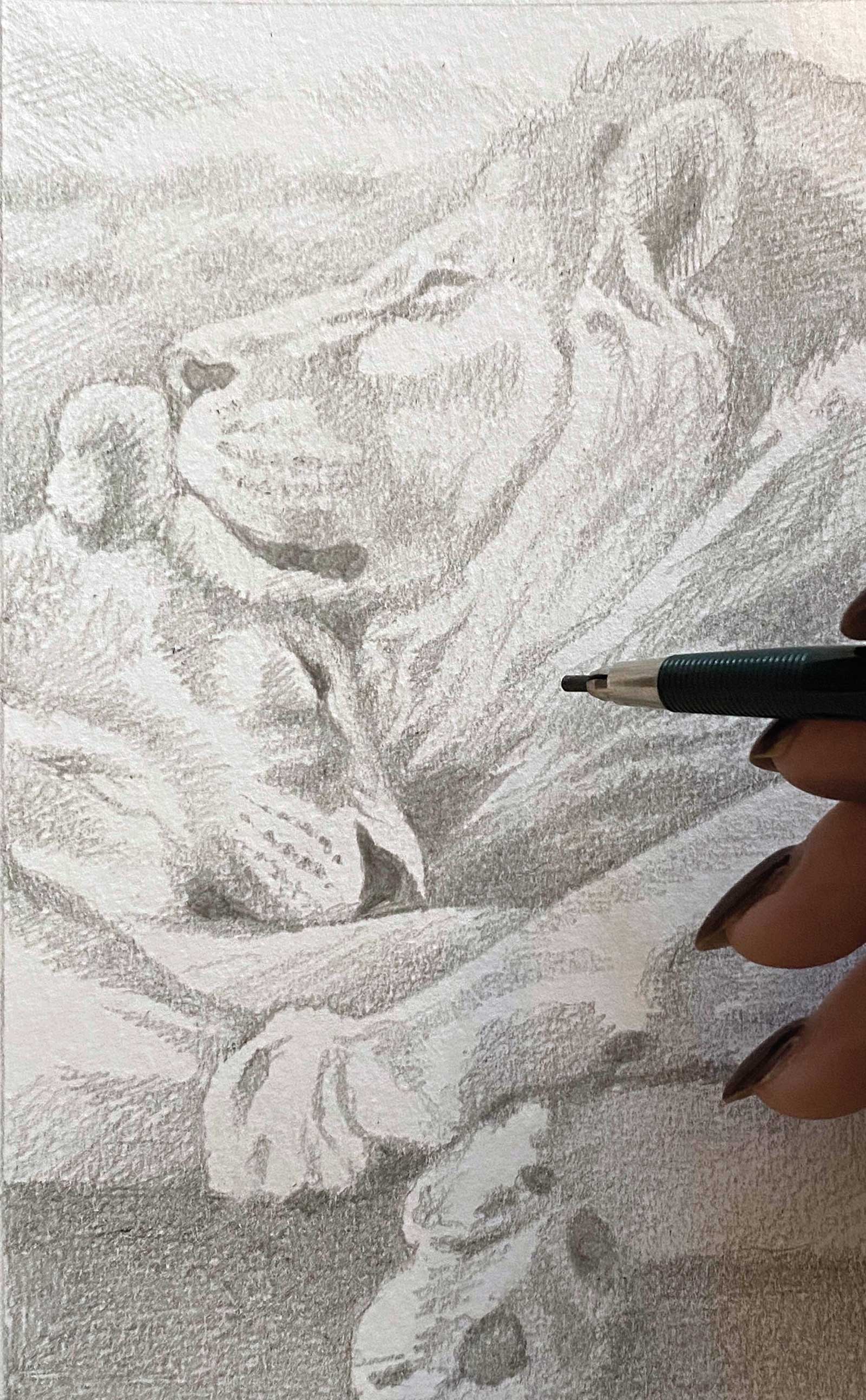
Stage 2 Sketch
A little graphite pencil study helps me decide if I’ll go ahead with the full-size painting, as it allows me to finalize the composition at this very early stage. This painting is quite complex with two lions lying together. It’s so important that it looks right before I begin the time-consuming detail work. When I’m happy with my sketch I transfer it to the canvas.
 Stage 3
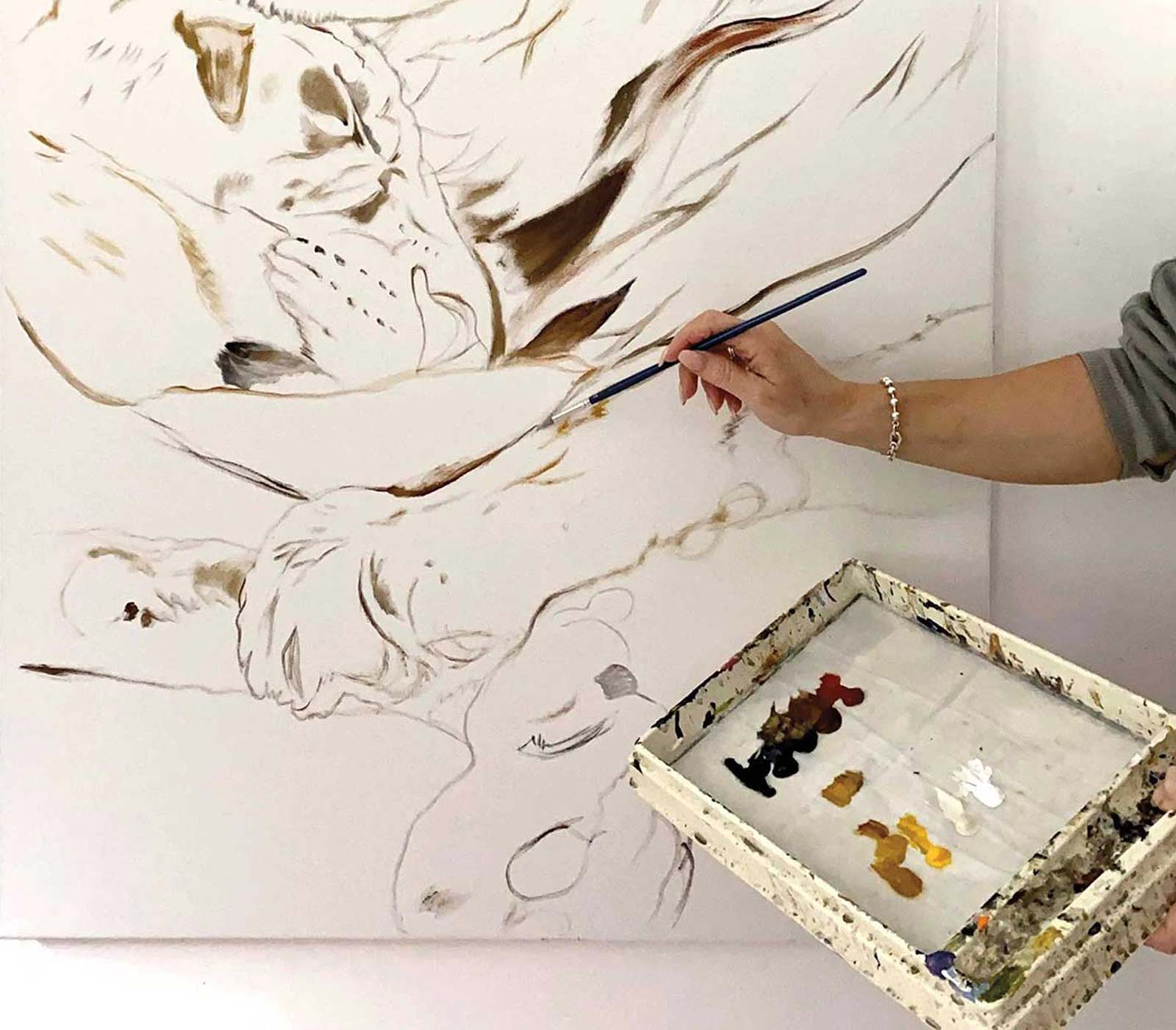
Stage 3 Starting to Paint
This is where I put paint to canvas. There is no detail at this stage. This is more about mapping out the composition, laying down some base lines to follow as the work progresses. The composition is key to this piece: the closeness of the lions and the bond between them.
 Stage 4
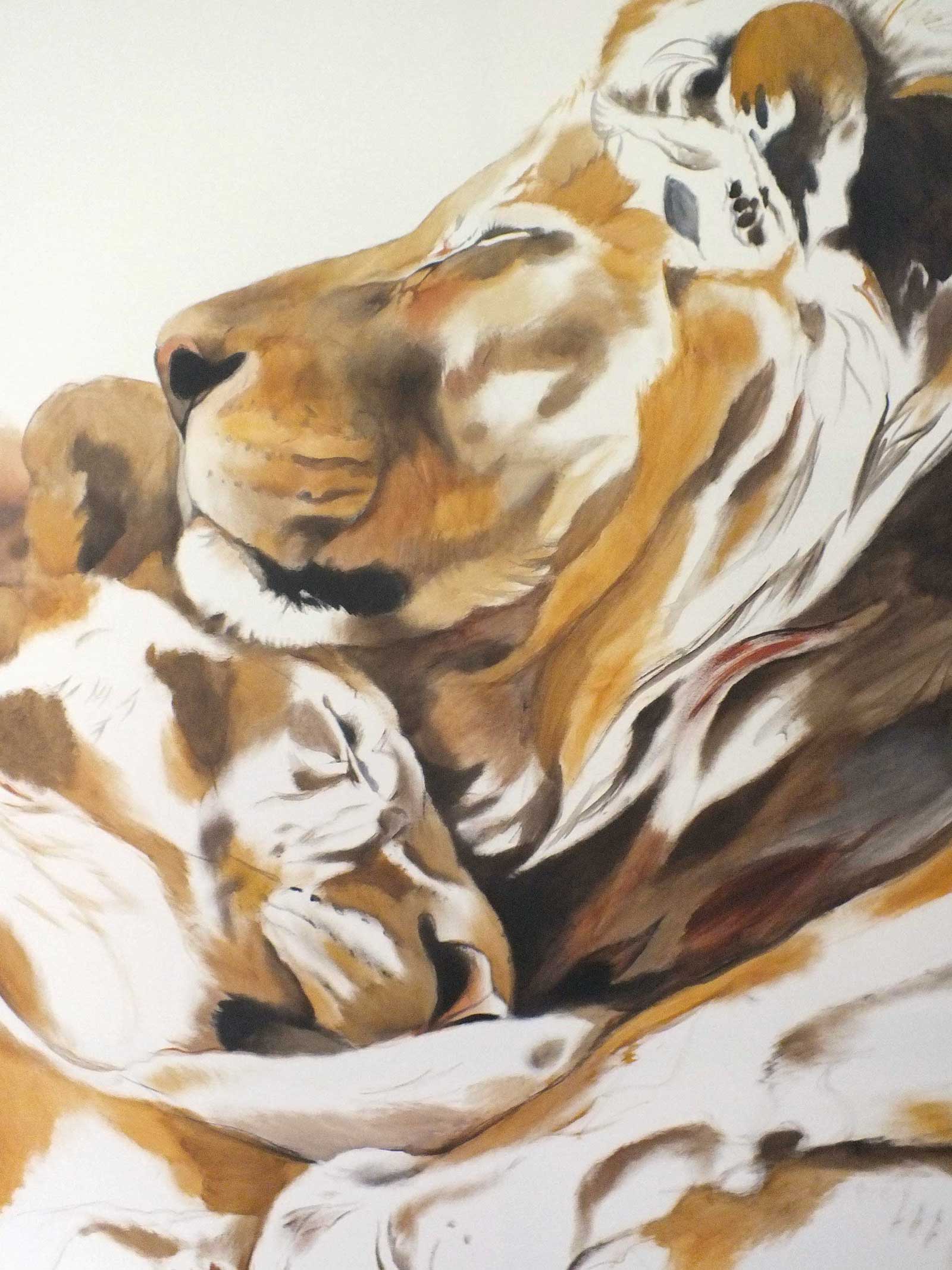
Stage 4 Blocking In
It is so easy to get lost in the complexity of the lion’s mane and fur. I block in areas of flat color, light and shadow to guide me as I move on to the more complex layers of painting.
 Stage 5
Stage 5 Establishing the Background
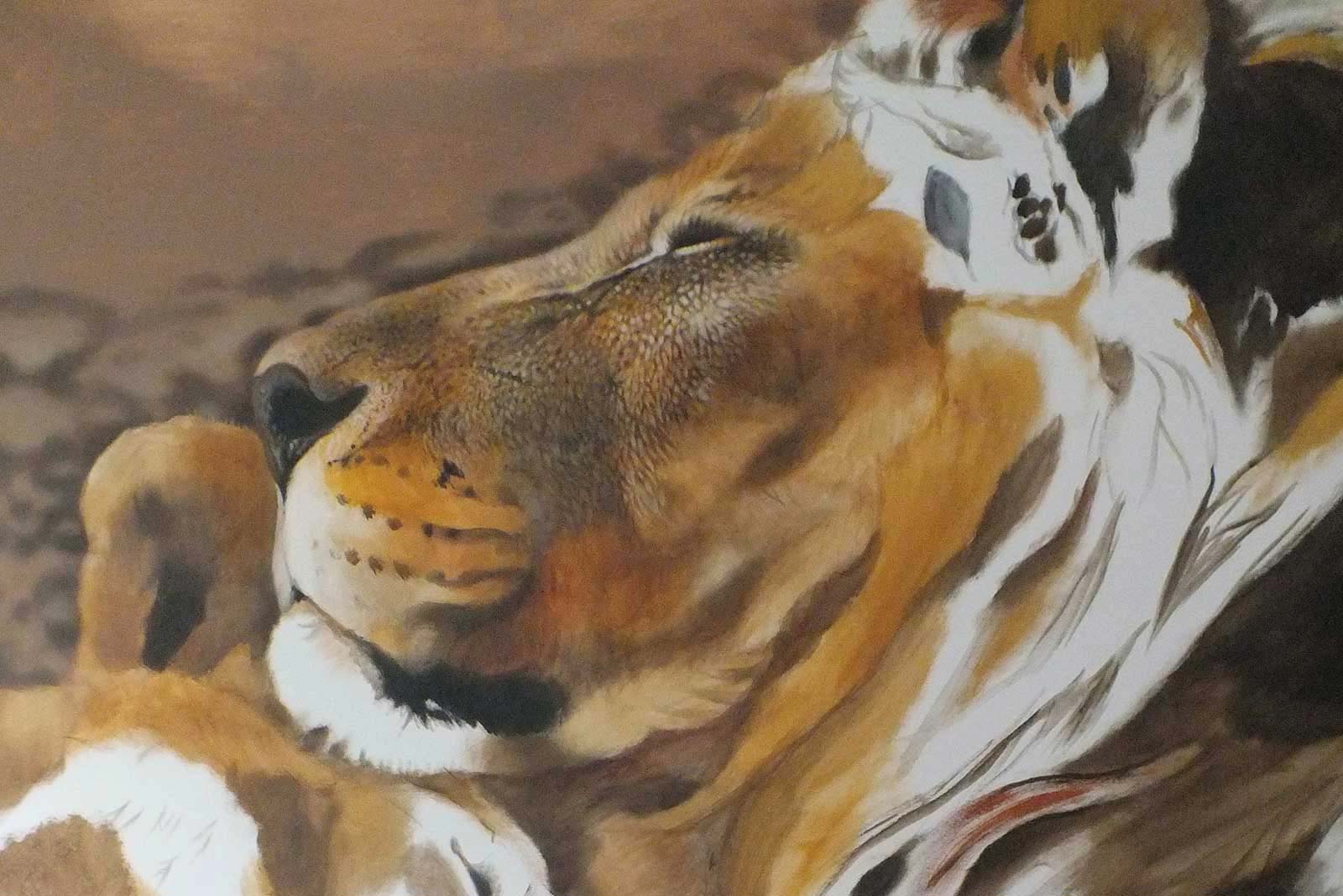
Set the background in place at an early stage to help establish the tones for the rest of the piece. With the background blocked in, I can paint the fine details of the lions’ fur over the top of it.
 Stage 6
Stage 6 First Layers of Detail
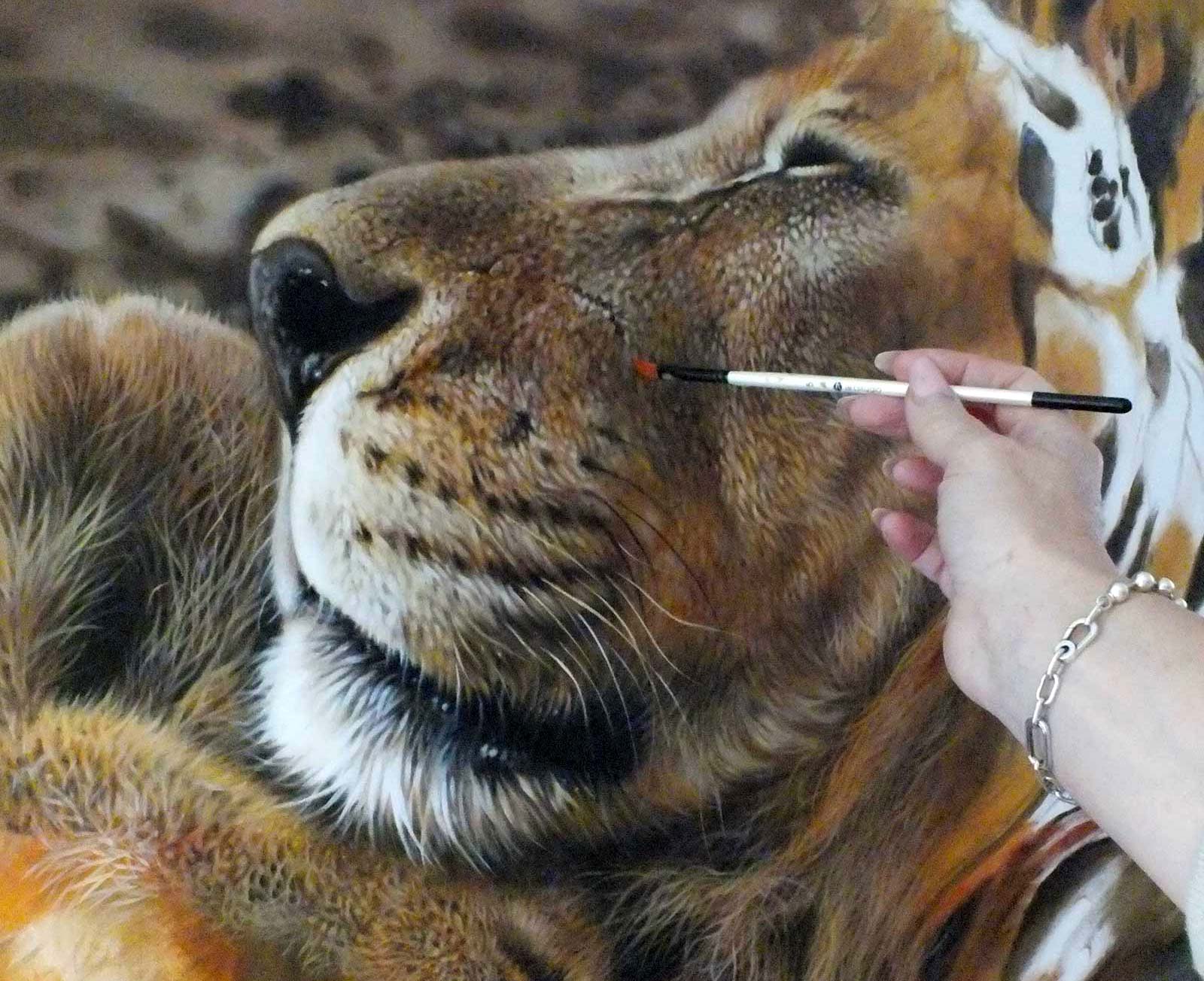
My work is built up from thin layers of paint. Each layer adds more detail than the last, creating depth. Animal fur is notoriously difficult to paint realistically. Over time my technique has allowed me to work faster with greater efficiency but there is no shortcut or quick trick, it takes time and layers.
Color Palette
- I wanted to use a very warm color palette for this painting to exude the warmth of the low sun setting. Lions’ fur always seems to reflect the colors of nature around them and on dark days can look very pale or almost gray. In the sunset the colors pop with warm orange and yellow tones.
- I also use color theory to make my artwork look more realistic. I use cooler tones to recede areas into the shadows and warmer tones to bring areas forward.
 Stage 7
Stage 7 First Layers vs. All Layers
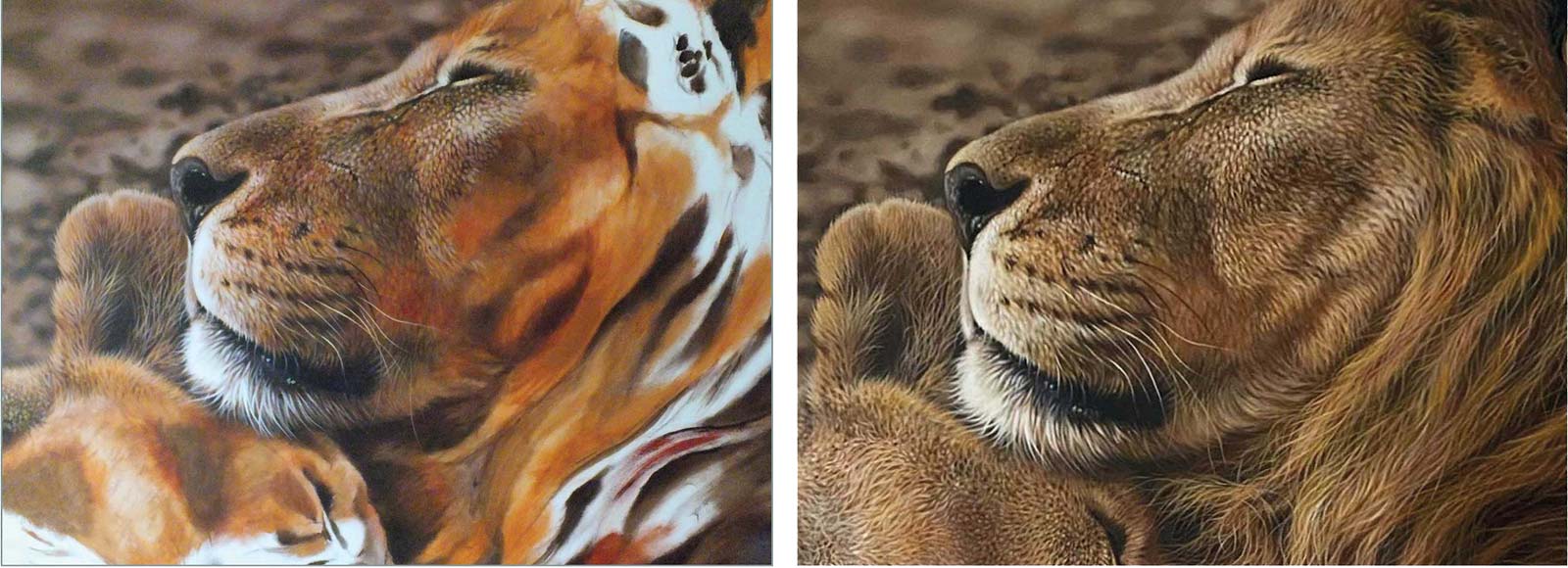
Before and after: a little section with just the first few layers and all the layers.
 Stage 8
Stage 8 Working in Sections
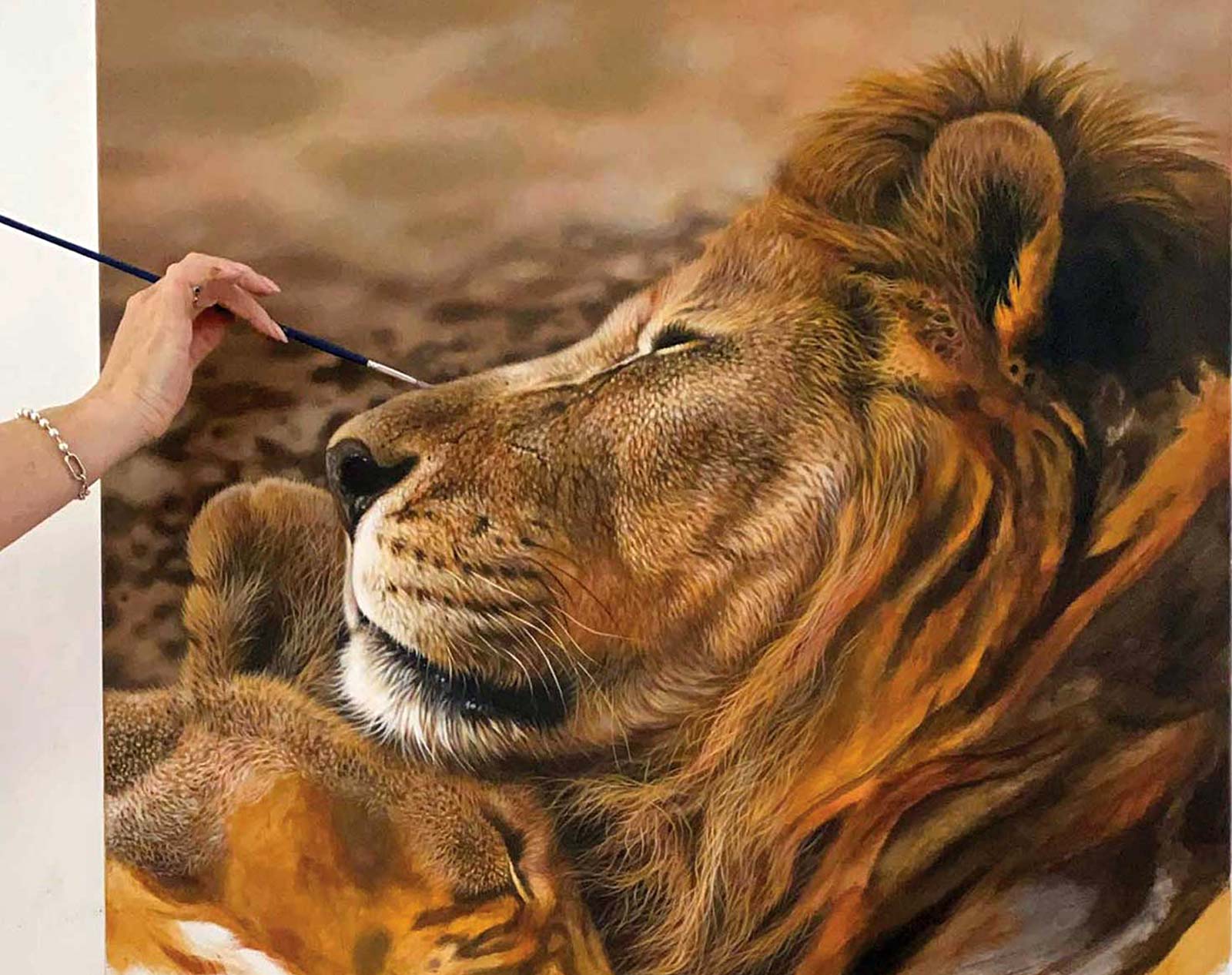
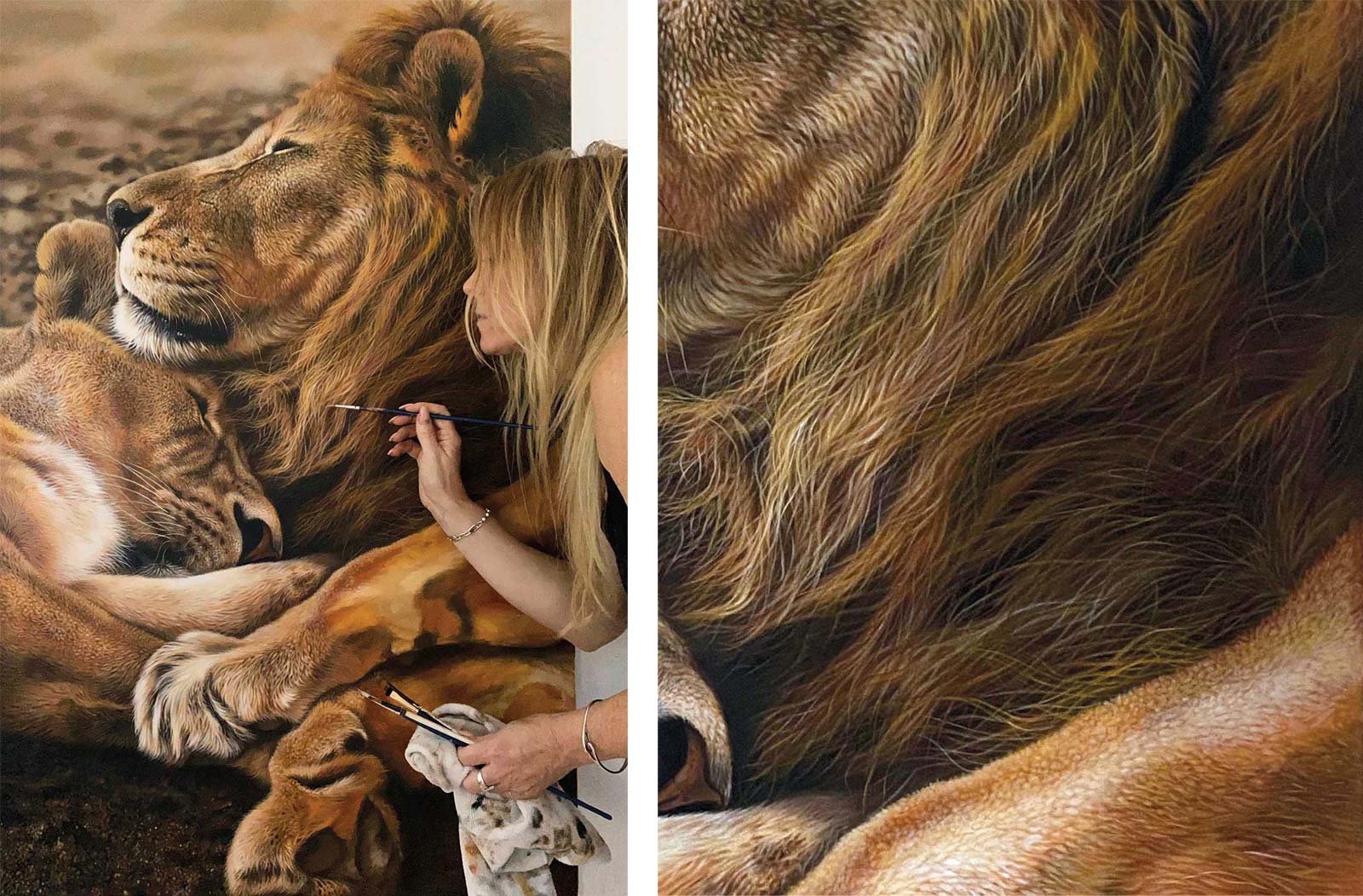
I find it easier to focus on one section of the painting at a time, as a very large canvas can feel overwhelming. I have to step back and view my paintings from afar at regular intervals to ensure they are in harmony, the color is balanced and the depth is correct. The painting must be viewed well from close up and from across the room.
 Stage 9
Stage 9 Ramping up the Detail
While details are key to my work, I also need to remain cognizant of creating too much. If I use detail over the entirety of the piece it won’t look realistic. As our eyes naturally focus on the closest part of the subject, the areas further away must recede into the distance. I use sharp focus and details on the foremost parts of the lions and main areas of focus, and blend the paint into a soft focus effect to “knock back” the rest of the painting.
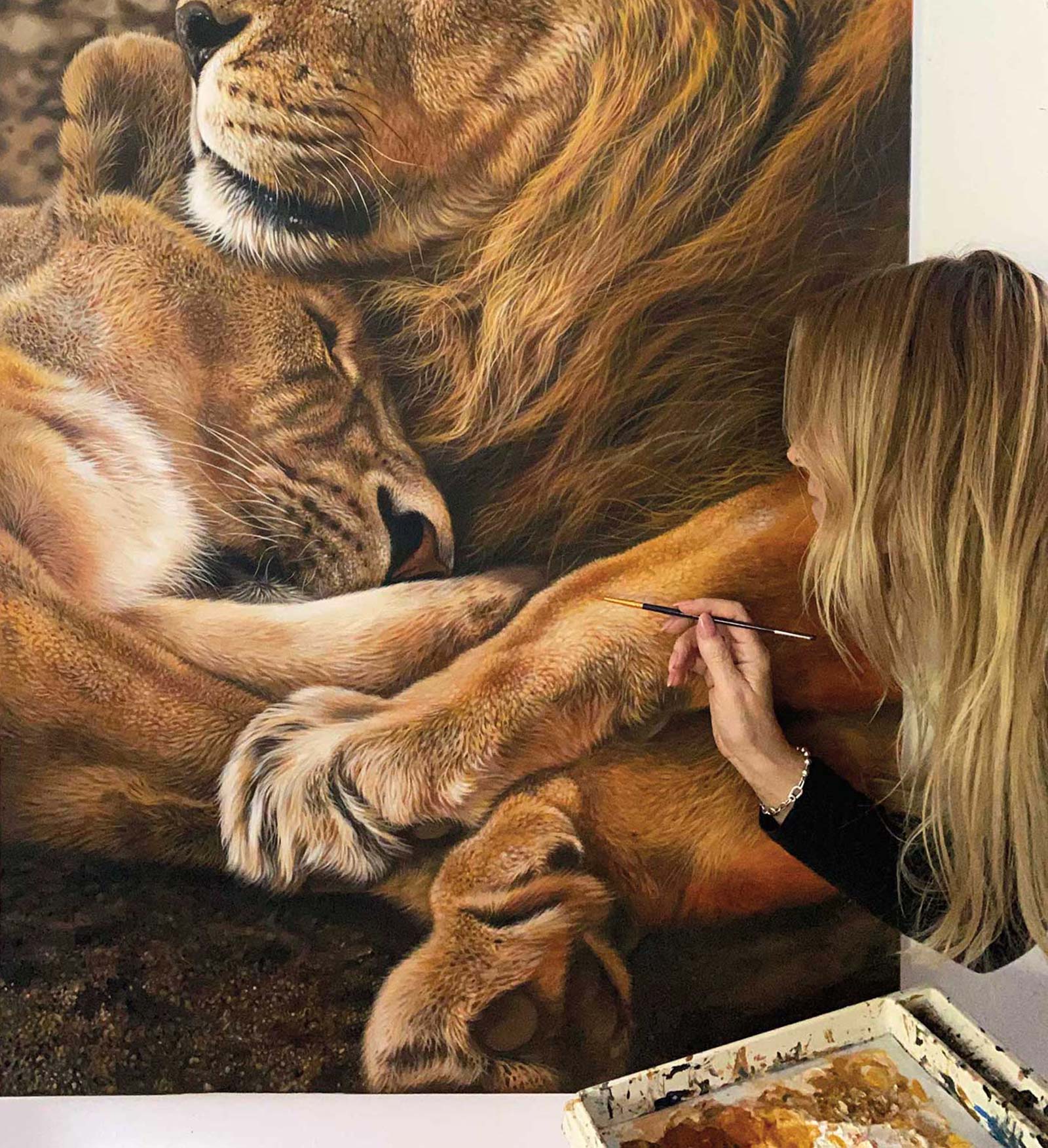 Stage 10
Stage 10 Coming Together
The painting is really starting to take shape now. I revisit areas often to add more highlight or depth and use subtle glazes to correct areas of color so the painting looks balanced.
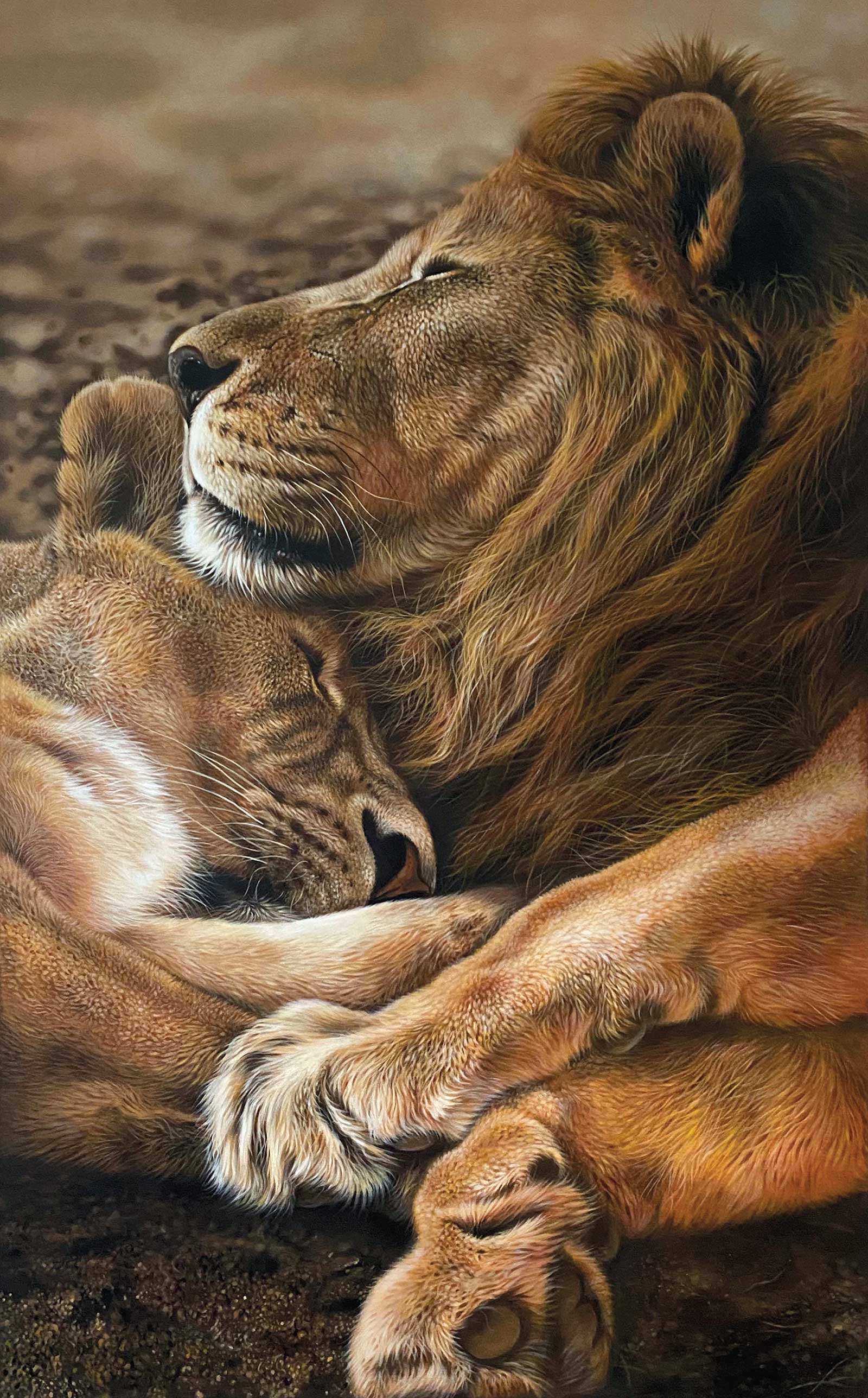 Stage 11
Stage 11 Finished Artwork
Cherished, acrylic. The finished painting is typically made up of two to eight fine layers. The surface is smooth, and I don’t use any impasto marks. I take care to smooth any hard lines before they dry.
About the artist
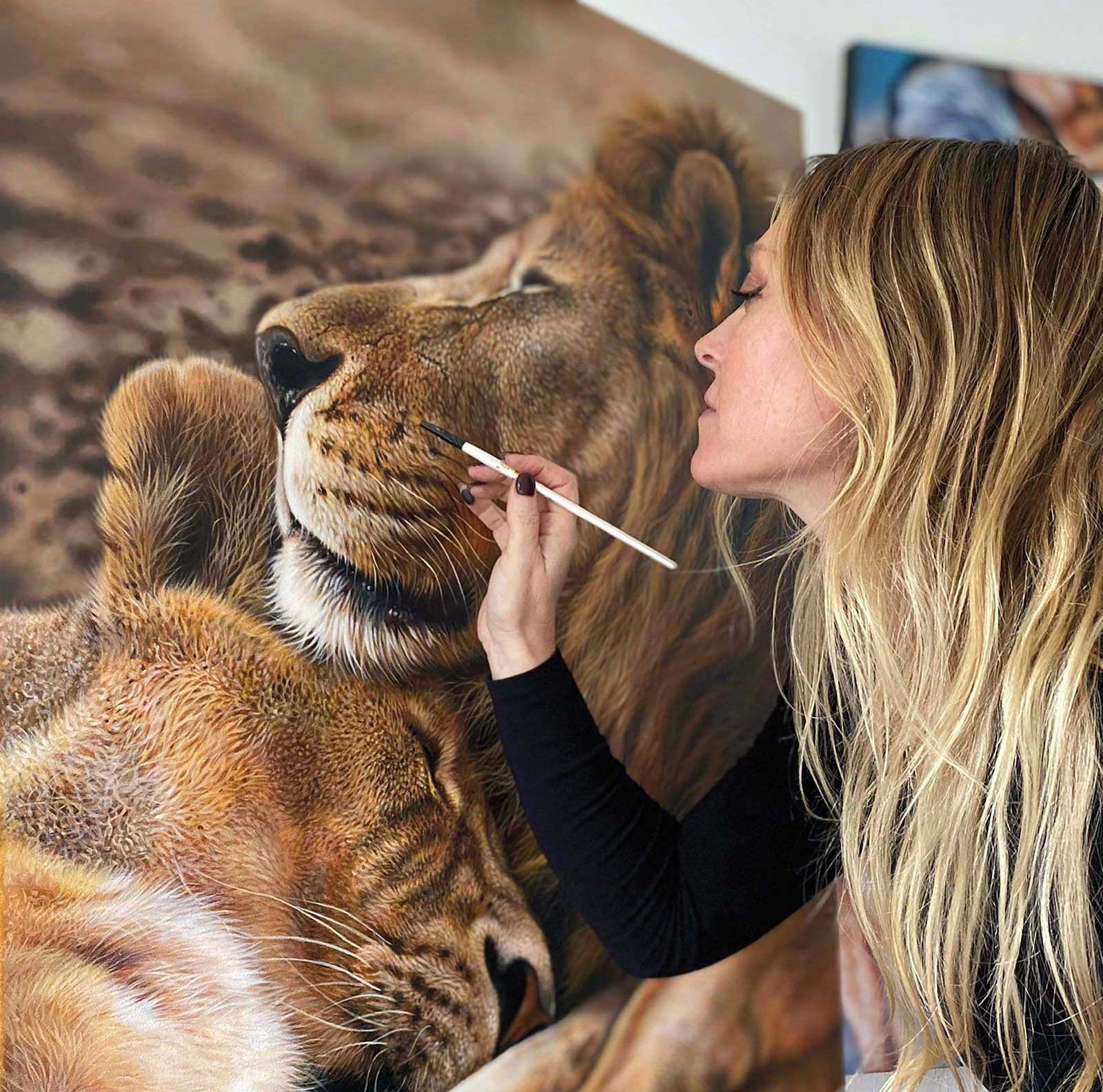 Julie Rhodes
Julie Rhodes was born in 1977 in Surrey, England. For the last 22 years she has lived on the beautiful Cornish coast in North Cornwall where her studio is located. Rhodes balances being a mom with working as a full-time professional artist. Her work has always centered around wildlife, but in the last 10 years big cats have been her chosen subject, painted in acrylic on larger-than-life canvases. Rhodes’ paintings take anywhere from 50 to 300 hours to complete.
Contact at
julierhodes.com