The Portrait Society of America is thrilled to celebrate another year of creativity and excellence in portraiture and figurative art at our 27th annual Art of the Portrait conference, taking place May 8 to 11 in Washington, D.C. This year’s program is packed with exciting opportunities, including a lineup of new and returning faculty artists, along with some of the most anticipated events like pre-conference workshops, the opening night Face-Off demonstration, portfolio critiques, open drawing sessions and the highly anticipated 6x9 Mystery Art Sale. A highlight of the weekend will be the exhibition of the top 20 finalists in the International Portrait Competition—recognized as the premier portrait competition worldwide. These exceptional artists will showcase their work, competing for the prestigious Draper Grand Prize and a $50,000 cash award. Leading up to this grand event, I had the opportunity to connect with several of our internationally known faculty artists to discuss topics ranging from mentorship and education to overcoming artistic challenges. In this issue, we’re excited to share insights from Michelle Dunaway, Paul Newton, Ruth Fitton, Rose Frantzen, Mario Robinson and Oliver Sin.
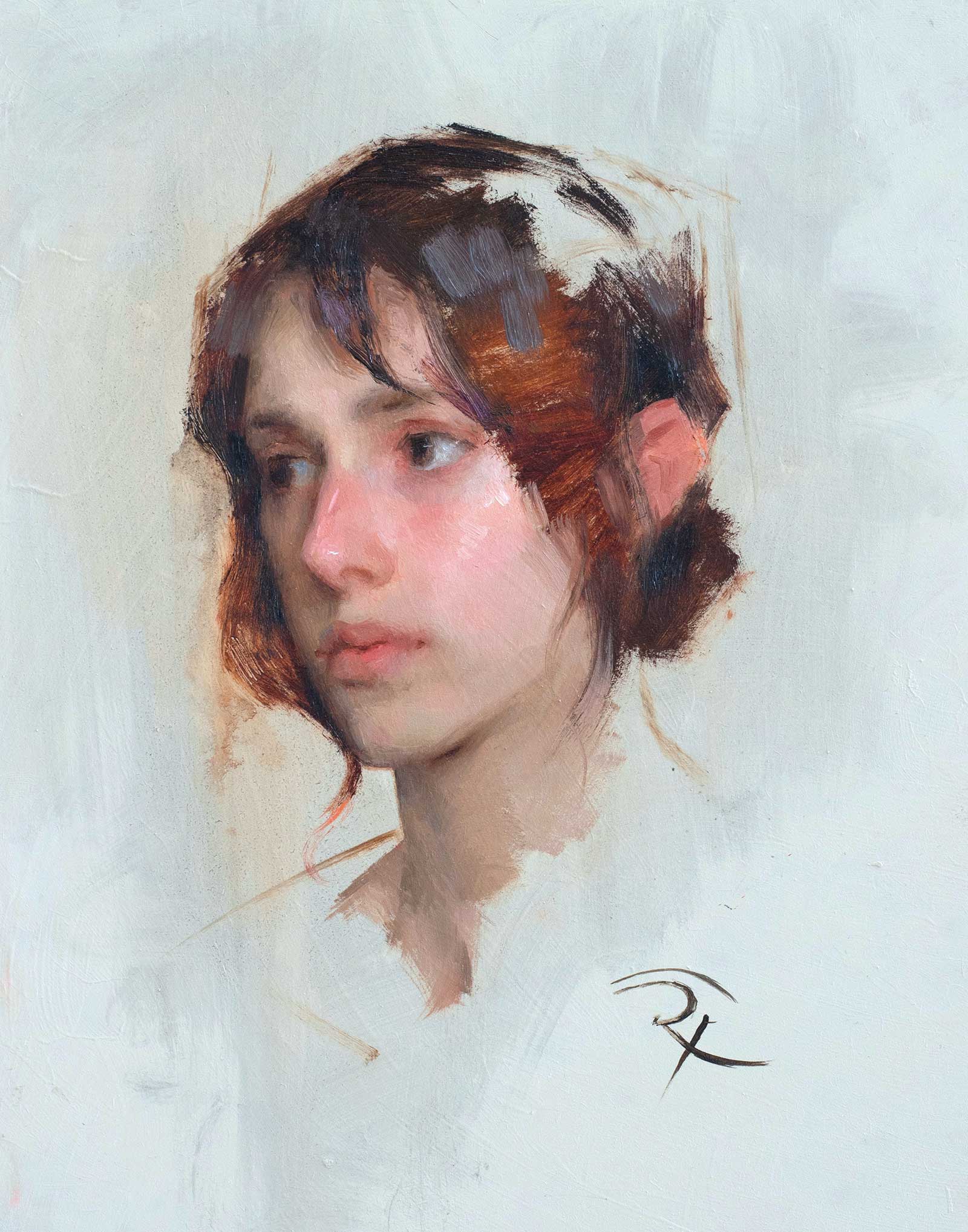
Ruth Fitton, Study of Rafa, oil on panel, 14 x 11" (35 x 27 cm)
Mentoring can be a transformative experience in an artist’s journey. “One of the biggest mentors and influences in my career has been the artist Richard Schmid,” says Michelle Dunaway. “I met him and his wife, artist Nancy Guzik in 2009 and painted with them regularly, developing a close friendship with both of them over the years.” Schmid’s 1998 book Alla Prima: Everything I Know about Painting, in which he shares his masterful knowledge of alla prima painting techniques, has influenced a generation of artists. “When he saw my painting that was one of the finalists in the Portrait Society Competition in 2010, he called me and invited me to come paint with him at his studio. We quickly became good friends, and he became an influential mentor and dear friend until his recent passing. Although I was already an established artist at the time I met Richard, his encouragement and generosity of spirit in sharing his knowledge was so valuable and really inspired me in countless ways.”
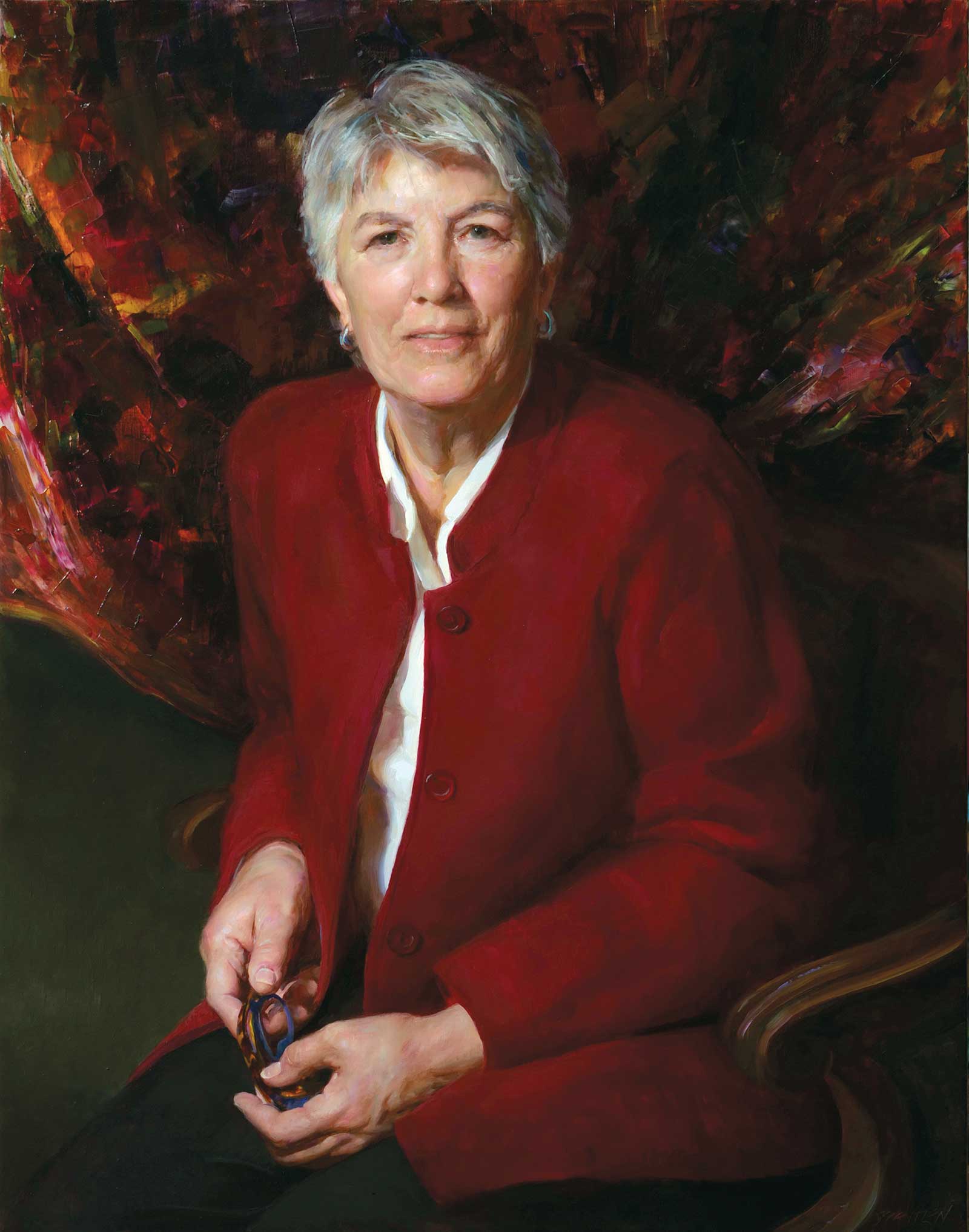
Rose Frantzen, Sue Blodgett, oil on linen, 36 x 28" (91 x 71 cm)
Likewise, artist Paul Newton recalls, “At the beginning of my career in the arts, I remember talking to a guy who was a senior in the field of commercial illustration. He gave me a number of tips that were really helpful. One thing he said which I’ve never forgotten, is that if you make a mistake when painting, do it confidently, and it is likely no one will ever realize it was a mistake!” Over the last few years, Newton has spent a lot of time with younger artists in an effort to encourage them to follow their dreams. “Unlike law, accountancy or medicine, there’s no prescribed career path to become an artist,” he says. “You must forge your own pathway, and it’s often difficult to know if you’re even on the right track. It’s such a precarious way to make a living, so it’s hard for someone starting out to know whether it’s even worthwhile pursuing this path. Clearly one needs a degree of talent, or the hill becomes too steep. But even more importantly than talent, one needs drive and passion and a strong work ethic. I tell young artists that if I can do it, they can do it too.”
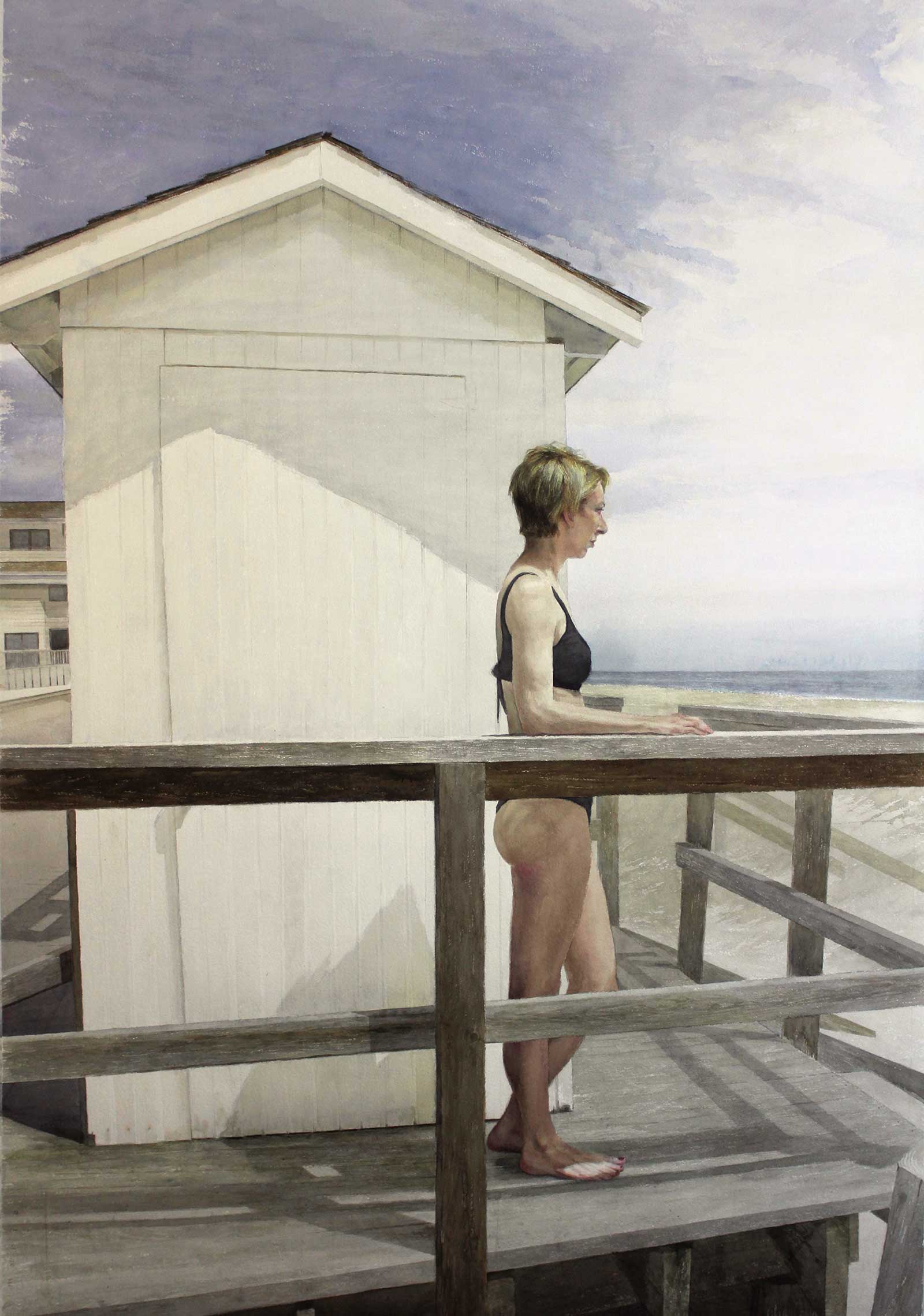
Mario Robinson, Pixie, watercolor, 60 x 40" (152 x 101 cm)
Portraiture can be a challenging genre with many obstacles to overcome. For Ruth Fitton, an early obstacle she faced was simply finding models to work from life. “I didn’t go to an art school, so models were not readily available to me,” she says. “In the early years I painted a lot of self-portraits, working from life with a mirror. Eventually I was able to team up with a couple of other artists who were interested in figurative work and began hosting regular open studio portrait sessions in my studio, splitting the cost of model hire between us. It was amazing how quickly my skills improved after that.” She surmised that the other challenge in starting out is how to become known and build a reputation. “You have to be seen, somewhere, somehow, in order to start getting work,” she explains. “It’s easy to see the specifics of your personal situation as limitations if they prevent you from following the same paths as your peers. I would advise emerging artists to focus on what they do have, rather than what they don’t. There will always be opportunities. They may not be the same opportunities accessible to others. Good! This allows you to be you. The differing experiences you have, will make you and your art more unique.”
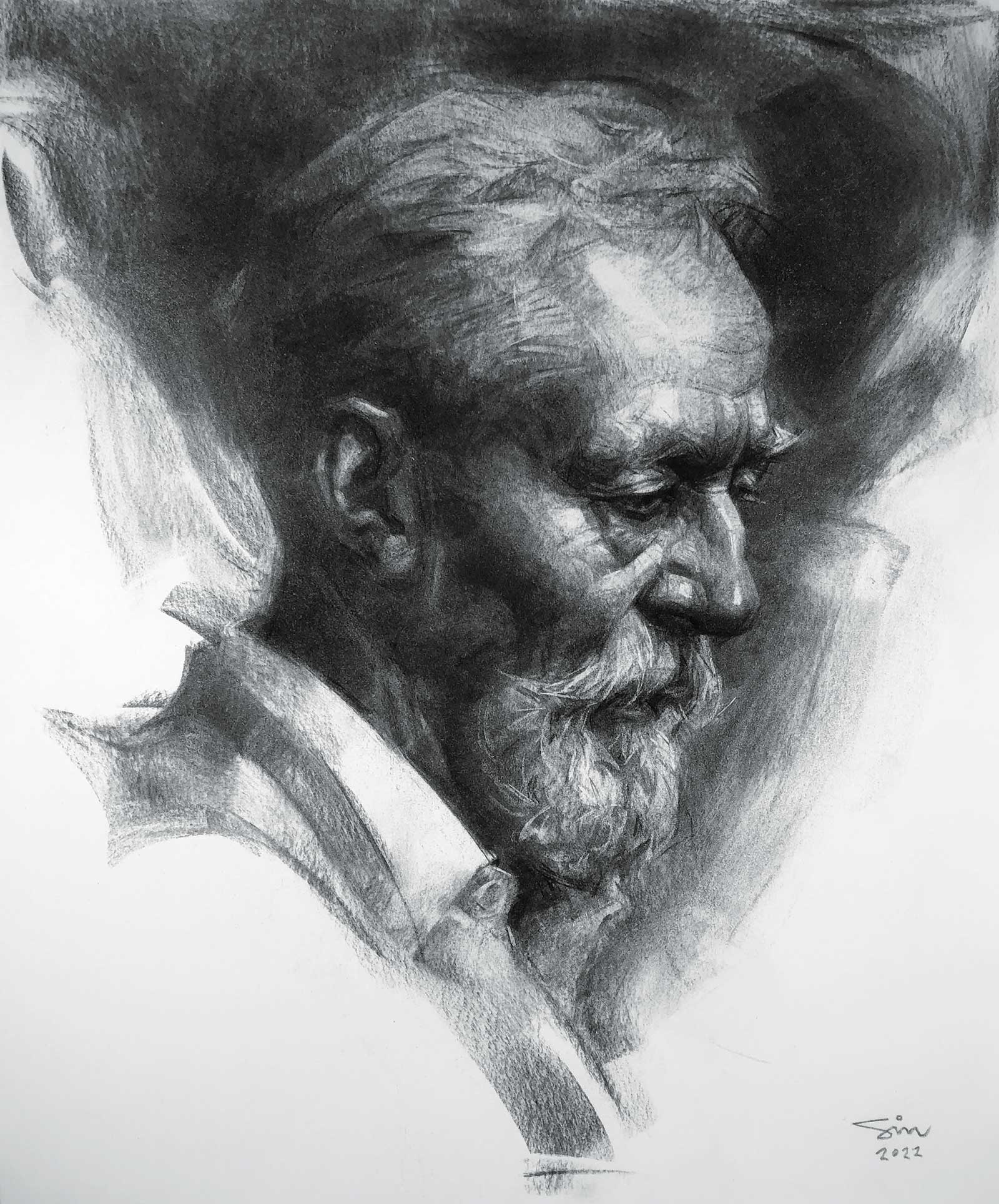
Oliver Sin, The Legend, vine charcoal, 17 x 14" (43 x 35 cm)
For artist Rose Frantzen, the challenges of portraiture are also part of the adventure. “What is it about a face, a portrait, a person that leaves me endlessly fascinated with the adventure of capturing an essence in paint?” she asks. “I say adventure because, for decades now, I have been humbled and challenged by the process of turning a blank canvas into a representation, a visceral sense of the aliveness of both my subject and myself.” She goes on to explain, “I believe portraiture is work that serves a purpose, often honoring individuals that have served or are the temporal face of an institution, those who are benefactors and charitable with their life’s efforts. Portraits can hold family members’ presences, and validate lives lived and loved. It is important to learn that you, your skill set and style are being asked to capture something about these persons’ lives.”
For artists who are new to commissioned portraiture, it can be challenging to handle a client’s critique. In those situations, Frantzen explains, “I think it is important to be open to the opportunity and learn within it. This might mean welcoming feedback from your client. Take it well; sit with it a while before you react. Listen to your customers’ concerns and try to learn what is actually needed for the painting. As a teacher of representational portrait painting, I’ve learned that the lay person can see something is off, but they and perhaps you, don’t know what it is. They may say the mouth is not right or the eyes are off, but your solution to these comments only starts with the realization that something is off. I find it is best to note the concern, thank them for their help, and go back to the studio and look at everything. Question even your favorite passage in the portrait. Then put a piece of Duralar over your painting and practice solutions to the problems that were raised. When you get what you want, fix the actual painting.”
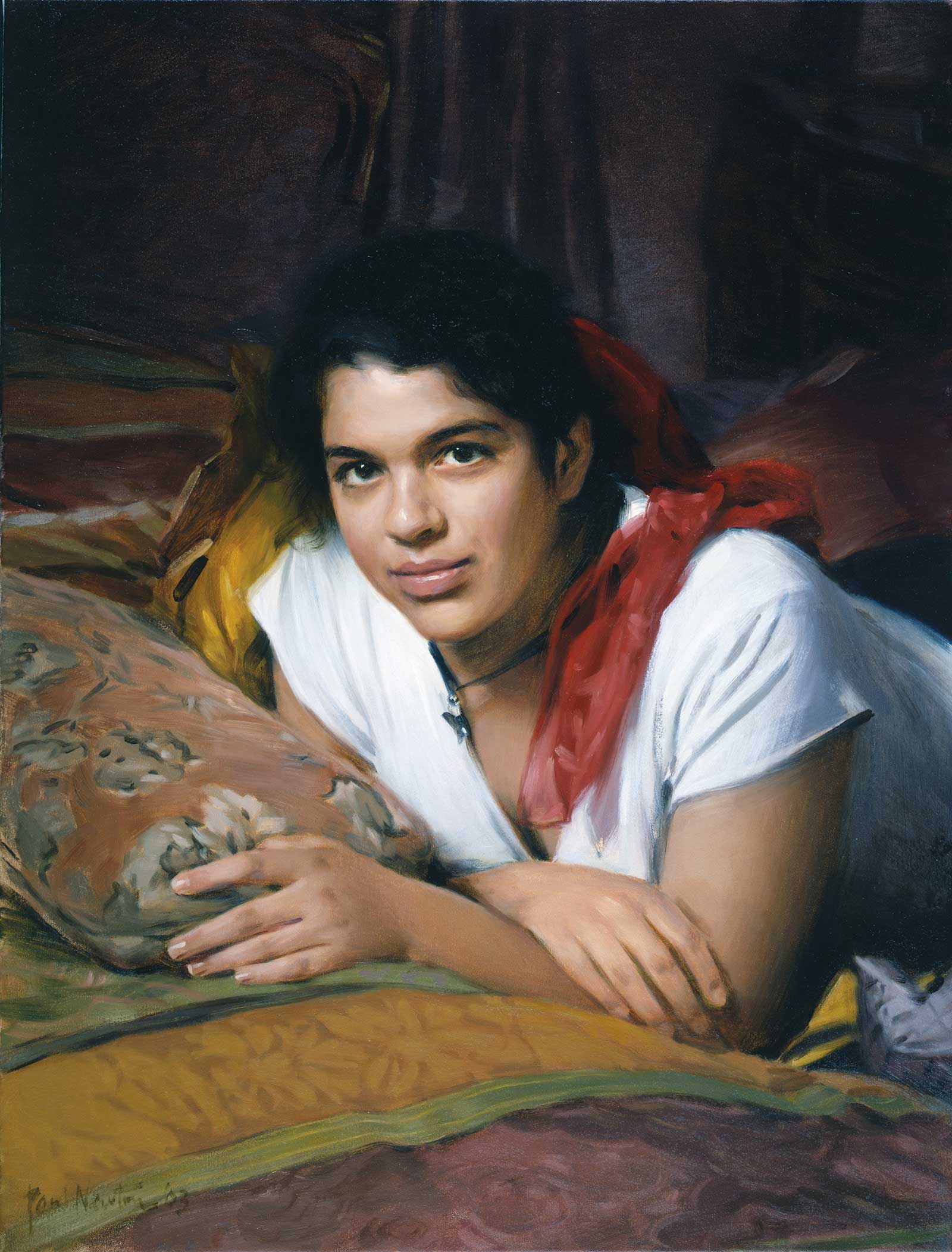
Paul Newton, Katherine, oil on canvas, 31 x 24" (78 x 60 cm)
Artists Oliver Sin and Mario Robinson both agree that it can be important to have a well-rounded education. Sin is an alumnus of the Academy of Art University in San Francisco where he earned his BFA in illustration. After graduating in 1996, he began his art career as a concept artist at LucasArts. In 2001, Sin returned to his alma mater as an art professor, continuing to teach and inspire others. He primarily works from life, drawing and painting live models or natural settings. He explains, “This approach allows me to observe light, color and texture in their purest forms, capturing subtleties that photography often misses. Painting from life fosters a deeper connection to the subject, enabling me to respond to the energy and expression of the model in real time, which brings vitality and emotion to my work. The dynamic and ever-changing environment of painting outdoors also challenges me to stay engaged and adaptive, sharpening my observational and technical skills.”
Choosing where to study can be a difficult decision for any artist. “Choosing between traditional training, atelier education or mentorship depends on an artist’s goals and learning preferences,” says Sin. “Traditional art schools offer a broad education, exposing students to various mediums and art theory, making them ideal for those seeking a well-rounded experience. Ateliers, however, focus on technical mastery and classical methods, appealing to artists passionate about representational art. Mentorship provides personalized guidance and real-world insights, offering a flexible and targeted approach to skill development.”
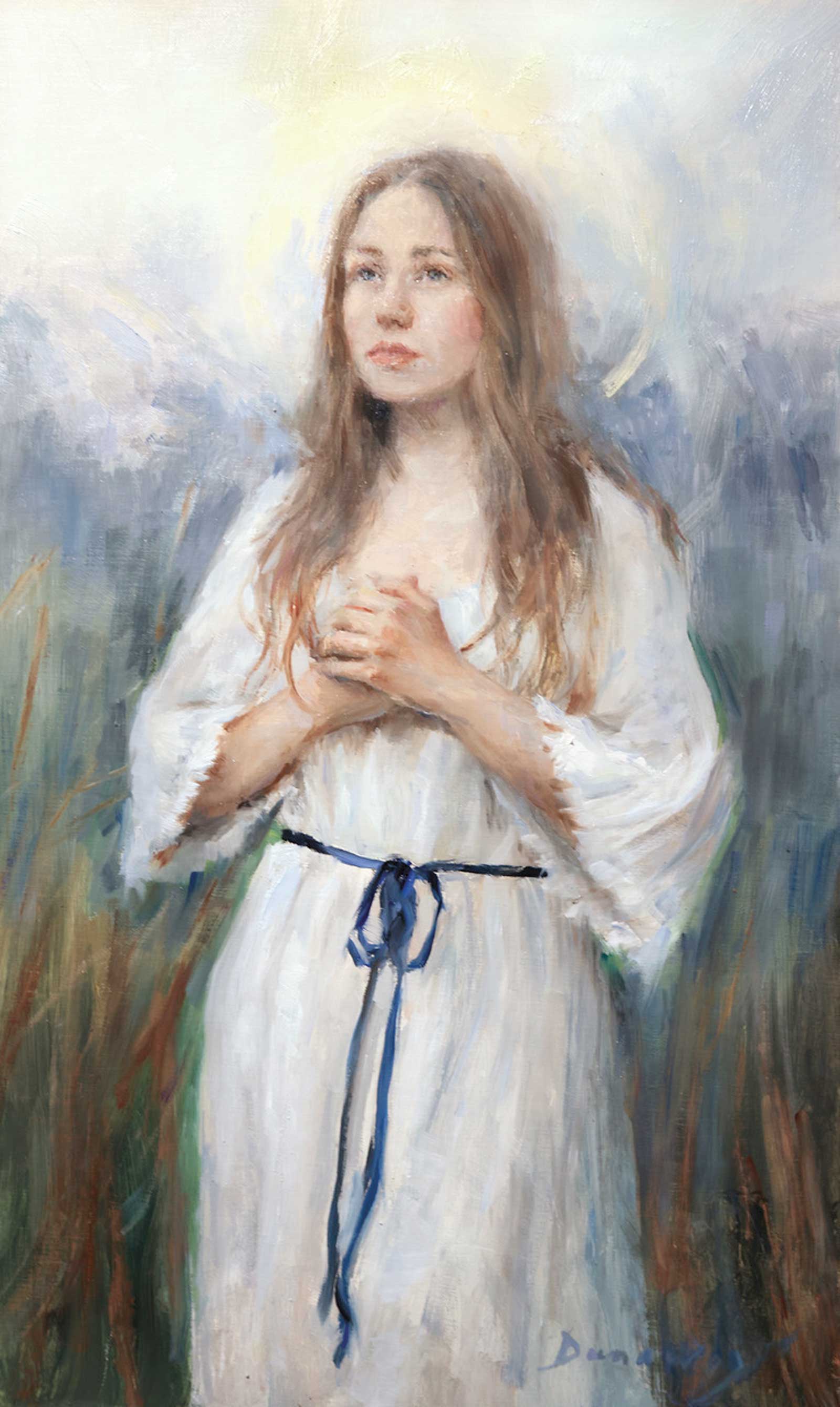
Michelle Dunaway, Revelation - Jeanne D’ Arc, oil on linen, 20 x 12" (50 x 30 cm)
Likewise, Robinson says, “While art education is not a ‘one size fits all,’ I highly recommend a program that’s well rounded. I’m partial to a traditional art school, largely due to the accreditation. In addition, the cross pollination of disciplines can spark interesting ideas. There’s a different kind of energy on a college campus. I recommend a no-nonsense approach to approaching the years a student allocates to their academic career.” Robinson studied fine art at Pratt Institute in Brooklyn, New York. “The introduction to basic principles such as understanding painting materials, design elements and the importance of drawing skills laid a firm foundation on which I could build my body of work,” he explains. “In conjunction to furthering my personal growth as an artist, I gained respect for artists who came before me in my art history classes.”
We hope you’ll join us in Washington, D.C., this May to hear more words of wisdom from our 2025 faculty artists. For information on registering for the conference, visit portraitsociety.org.