In the art world, opportunities for growth, recognition and connection often don’t come easily, but they are all things the Portrait Society of America strives to provide to our members. One way we do this is with the Members Only Competition. Offering a variety of categories, this yearly competition is a chance to gain exposure and recognition. The process of preparing for a competition also forces the artists to push their creative boundaries, helping them refine their skills and explore uncharted territories in their work.
As I’ve mentioned before, not winning a competition isn’t necessarily a setback. In fact, it can be an invaluable learning experience. It is an opportunity to reflect on your work, receive feedback and identify areas for improvement. Competitions such as this aren’t just about winning—they are about challenging yourself and taking your art to the next level.
Below are this year’s first place pieces along with a description of each artist’s inspiration and methods. If you’ve never entered the Members Only Competition, I hope this also inspires you to consider doing so next year!
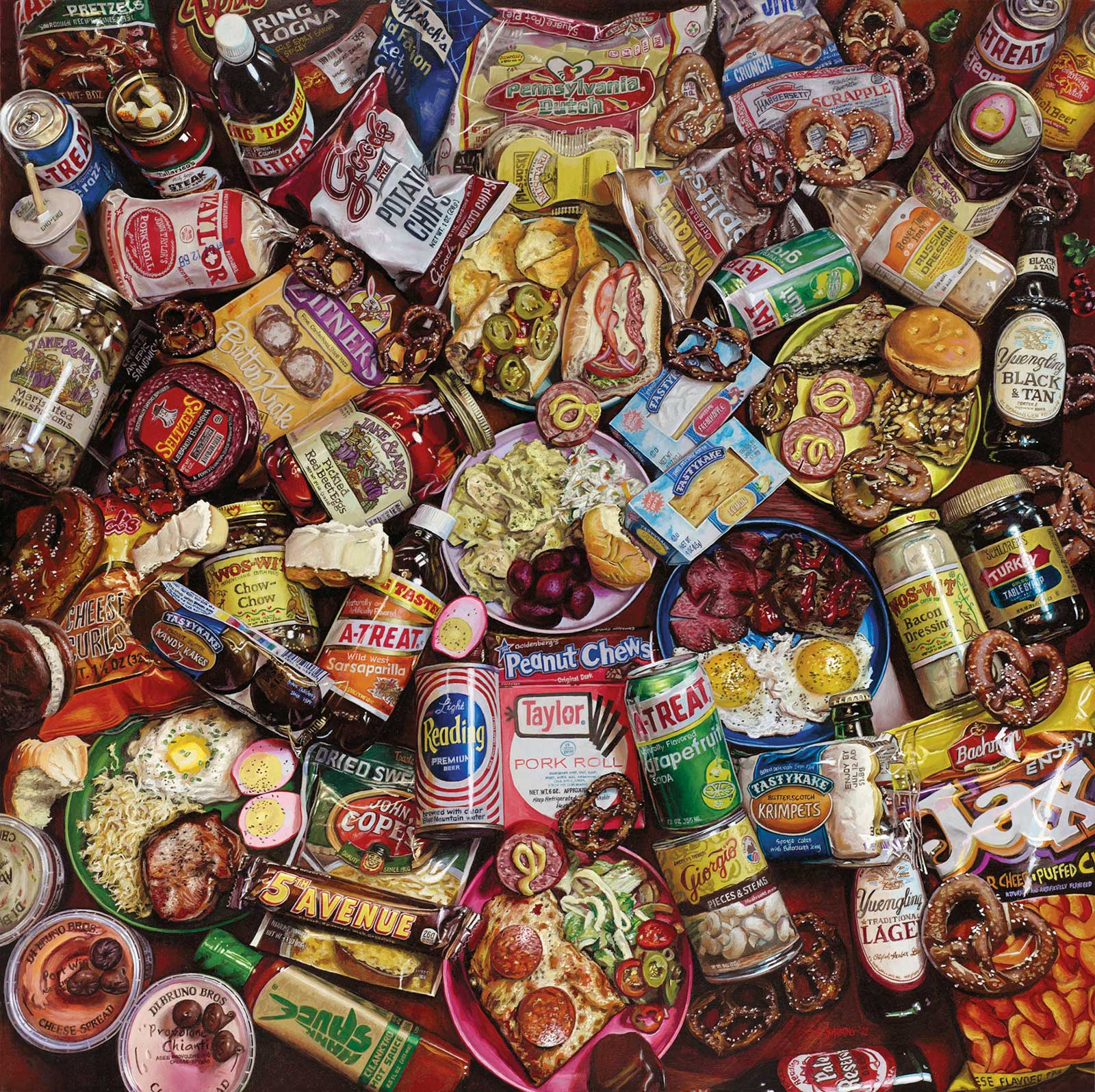
Steve Scheuring, Tastes Of Home, oil on canvas, 48 x 48" (121 x 121 cm)
Steve Scheuring
If you want to learn about a culture, eat their food. Tastes Of Home celebrates foods easily identifiable to anyone from my home of Reading, Pennsylvania, some obvious like pretzels and cheesesteaks and some subtle “deep cuts” like scrapple, Taylor pork roll and “dippy” eggs.
Many of my paintings, like this, are a collage centered around a topic. I positioned the objects to create a swirling flow, using colored plates to break up the detail and create zones. Objects I wanted to bring forward have high contrast of lights and darks or colors opposite on the color wheel. Objects I wanted to sit back have low contrast, cooler colors, and are close to each other on the color wheel. Unity is created by evenly spreading colors and repeating circular shapes throughout.
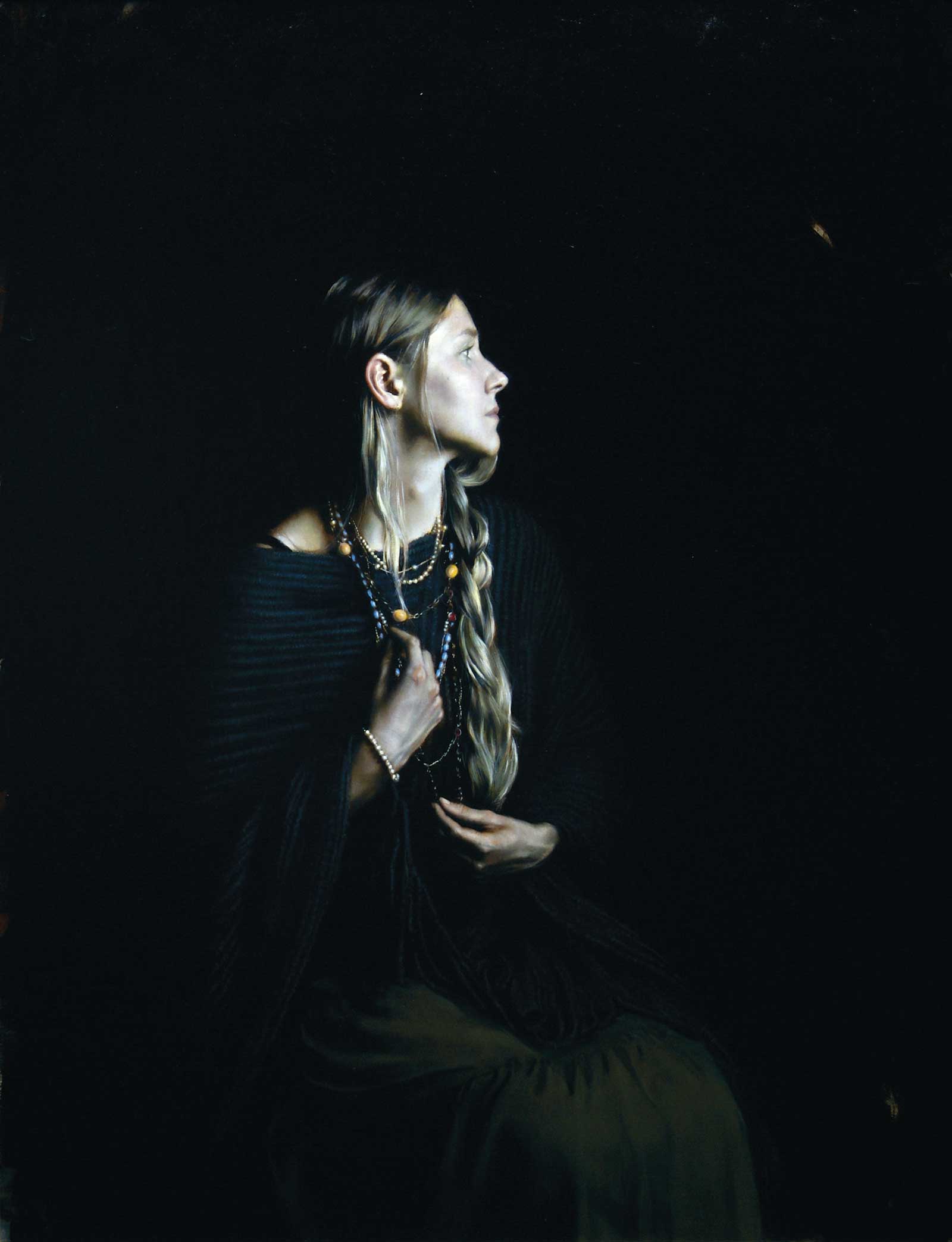
Carla Paine, Whispers, oil, 26 x 20" (66 x 50 cm)
Carla Paine
My work grows in an internal, subconscious manner: my ideas begin with images rather than an intellectual statement, and I prefer to allow the viewer to find their own meaning. I will add that hands can express as much as a face, and in this work used that emotive quality. I looked particularly at John Collier’s Cassandra for inspiration, both for pose and his use of color.
I planned splashes of color in an otherwise dark composition. The beads were decided upon, and the rest evolved from work with the model in different dress and pose until something struck just right. I was drawn to the textural differences between the knitted shawl, braided hair and beads. Working with natural light, I set up a “shadow box” using black drapery surrounding the model on three sides to heighten the drama of the window as the single light source.
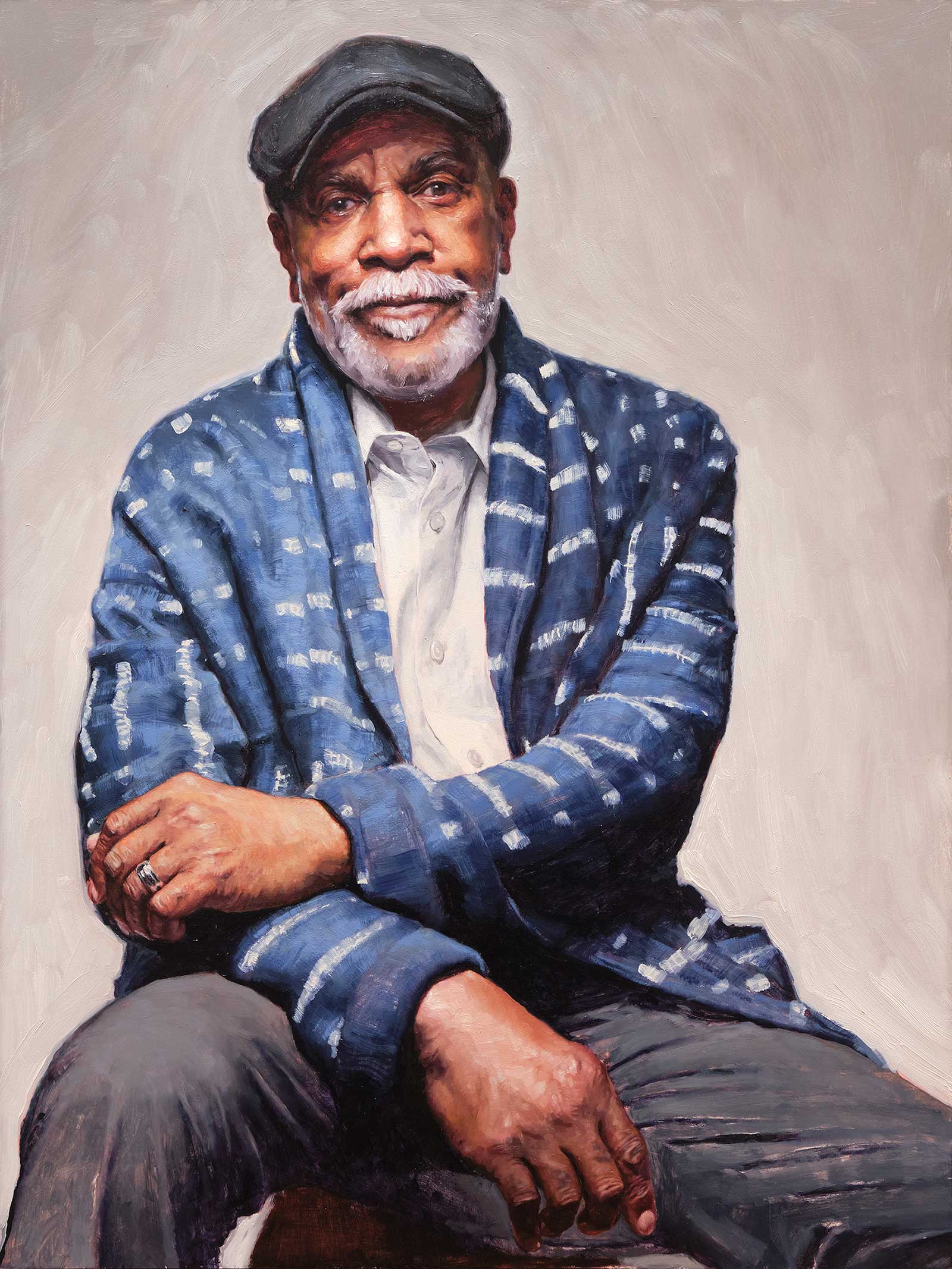
David Pagani, Marvin Curl, oil, 24 x 18" (60 x 45 cm)
David Pagani
In portraiture, inspiration often begins with the immediate impression of a subject—in this case, Marvin, a charming and handsome gentleman with impeccable taste. Through our conversations, I discovered Marvin’s deeper story: he’s a seasoned world traveler, avid art collector and decorated Vietnam veteran. These richer layers of inspiration add depth and color to the portrait. There’s also my personal reservoir of inspiration I’ve built over years. Every artistic influence in my life up to the moment I begin converges with the unique inspiration provided by the subject. The result, I hope, is a dynamic and engaging portrait that captures more than just a likeness.
Marvin is a no-nonsense guy who naturally commands attention without demanding it, so I chose a relaxed yet direct pose, seated and facing forward. I used a single-light setup, complemented by a bounce card to illuminate under his cap. To keep the focus on Marvin and his carefully curated wardrobe, I opted for a neutral background, avoiding colors that might compete with the simplicity and strength. I reserved precision for his face and hands—the key areas of focus—while using more gestural strokes for elements like his sweater and pants.
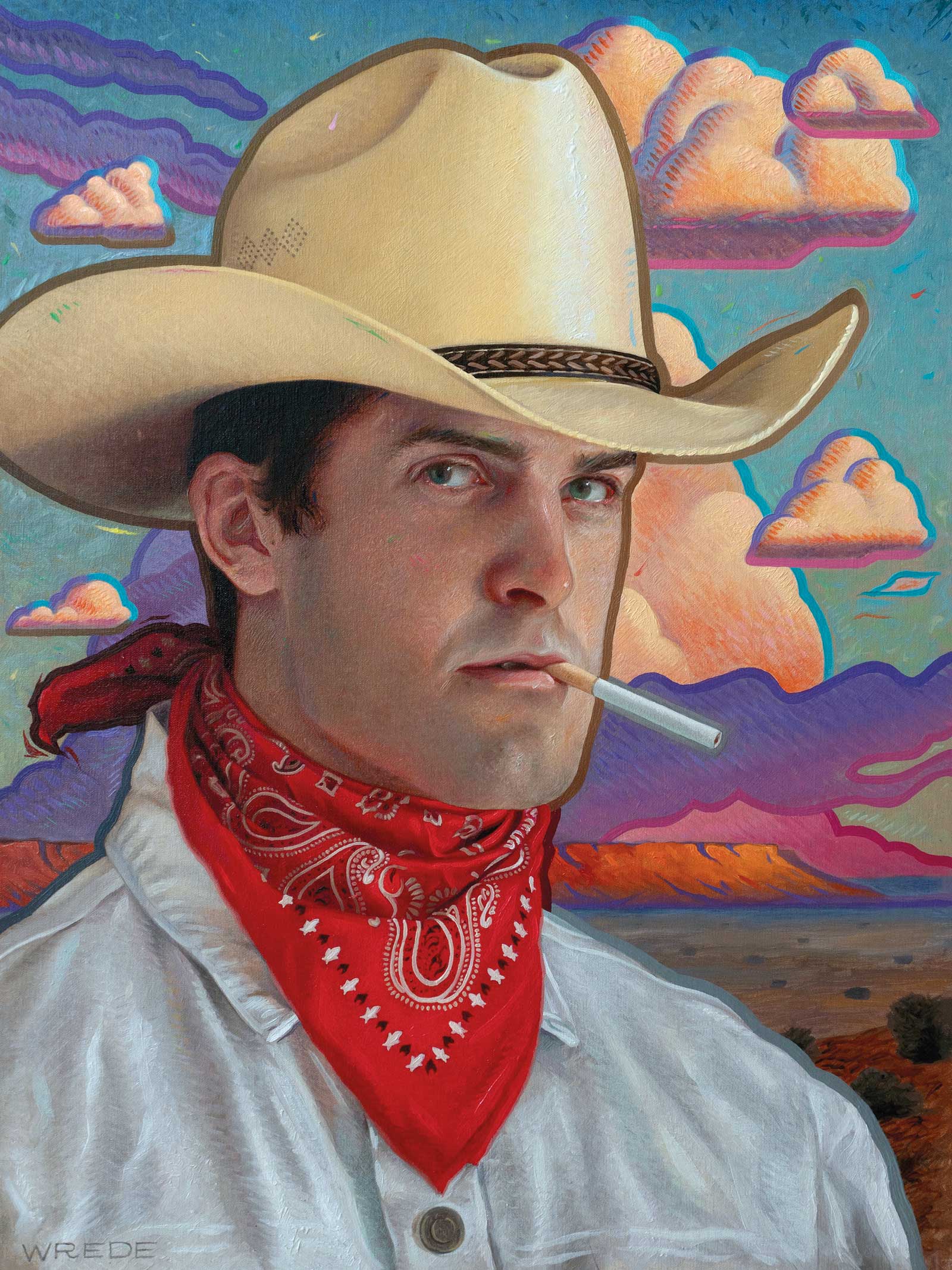
Jackson Wrede, Self-Portrait in a Hat, oil, 24 x 18" (60 x 45 cm)
Jackson Wrede
This self portrait reflects my fascination with the mythos of the American West—a world distant from my daily life in Grand Rapids, Michigan. Though cowboys and horses aren’t native to my surroundings, I feel a nostalgic connection to that rugged, iconic imagery. I leaned into that inspiration, blending realism with a playful, expressive, exaggerated cartoon sensibility. I am essentially using this picture as an opportunity to “play dress-up” and embody a character outside my everyday experience, blending sincerity with a touch of theatricality.
I find more success when my references are close to what I envision for the painting, so I ordered a cheap cowboy hat and staged myself in natural light. To heighten the character’s sense of grit, I even bought a pack of cigarettes—something I never do—to add another prop. The real focus of this picture became the dynamic background. After selecting a photo, I printed black-and-white copies and sketched background ideas onto the paper. Drawing from works by several artists, I crafted a composition centered around strong diagonals and layered details that guide the viewer’s eye around the canvas. The goal was to create an energetic interplay where my gaze anchors the painting while inviting closer exploration of the richly articulated surface around it.
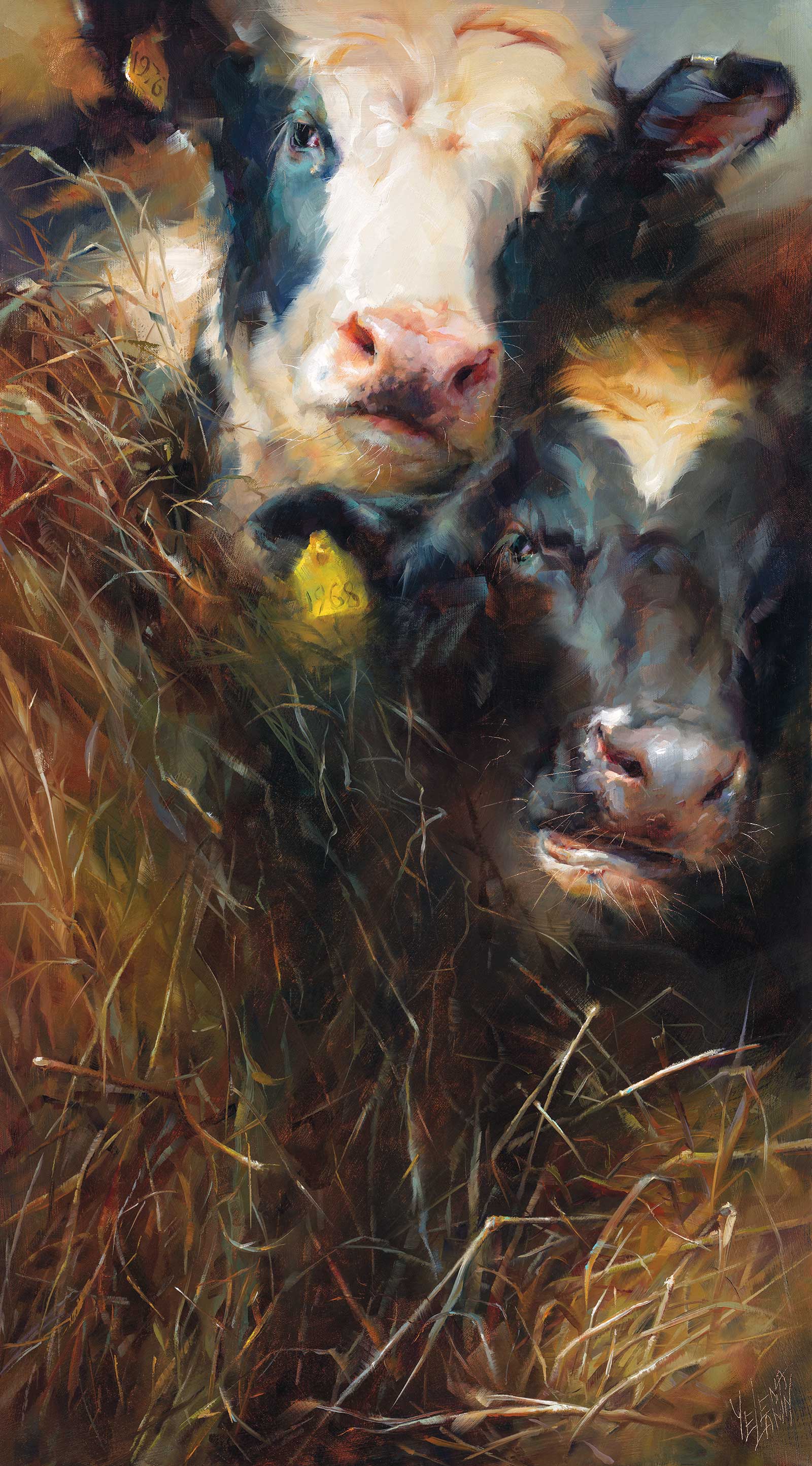
Yelena Lamm, Hide and Seek, oil, 36 x 20" (91 x 50 cm)
Yelena Lamm
Cows have always been one of my favorite subjects. I’ve painted enough cows to fill a dairy farm, and I never get tired of their faces. They are social, friendly, and full of character with hilarious facial expressions, beautiful eyelashes, the best hairdos, and the softest ears. I always imagine what they might be thinking and often assign them characters and personalities while trying not to fall too deeply into anthropomorphism. I enjoy adding a healthy dose of humor to my work.
Hide and Seek is both playful and thought-provoking. It invites viewers to reflect on the fragile world we share while also encouraging them to simply smile at the cows’ faces. The idea came to me when I envisioned cows peeking out from behind a bale of hay. I built the composition in a vertical format with a circular, forward-moving rhythm. Throughout, it was important that every element of the painting supported this spiral motion.
Sincerely,
Michael Shane Neal
Chairman