



Once you have developed your skills as an artist in the medium of your choice and have a certain style you paint in that is your own, it’s important to think about your subject matter. There are so many talented painters and sculptors out there, and what sets an artist apart from others is often their choice of subject matter. As artists, we tend to find beauty in everything. A simple still life of a brilliant red apple, the light on the top of a tree. Of course, it’s fine to want to capture those things, those moments, but as a professional fine artist hoping to sell artwork, you will want to consider what your viewers might like on their walls, as well as what a gallery might be looking for.
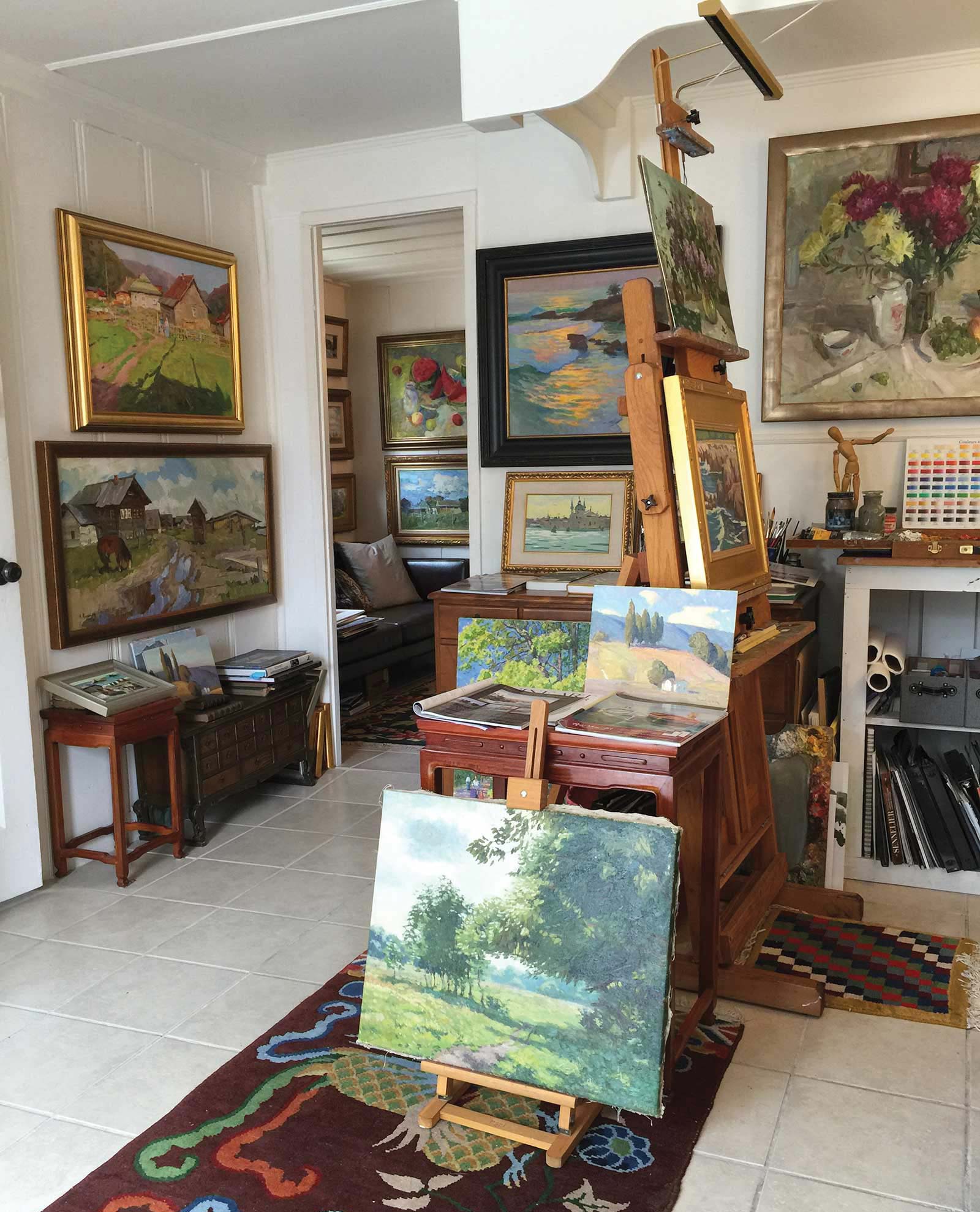
Landscape paintings in the studio.
Most art collectors are going to want to hang art that is pleasing in their home, such as a landscape or a still life. They also tend to decorate in themes, such as a bedroom with all seascapes, or a wall filled with portraits in the library. It’s important to know what sells, and there is published data that supports these recent trends. Landscapes tend to be the widest selling works of art in the representational genre, as they are easy to decorate with, give a sense of natural beauty to a home and often offer an expansive view to a room. Western scenes with horses and riders currently occupy a large portion of the buying market and seem to be a new subject for many of our contemporary realist painters. Still life is also easy to decorate with and fits in any room. Multi-figures can be great works for living rooms and larger rooms, especially if they are telling a story. Portraits are harder to sell and place, unless of course they are a commission of the collector or family. They tend to be very personal. There are, however, many collectors who collect portraits, but they are not currently in the majority. Nudes are the hardest to place in a home and are not hung in an office, so that gives them the least chance of a sale. They are usually for private bedrooms or bathrooms. This data can simply be helpful to be aware of. Modern art is usually innovative and tries to tell a story or is based on beautiful abstract colors that fit well in a room.
Your choice of subject matter is also important to galleries. In my 25 years of experience as a gallery owner, talking with many gallerists and leaders in the art world, I have learned that galleries are often looking at artists by their subjects. Again, with so many talented artists out there, galleries have more than enough choices for new work. They are often looking for a specific subject that their clients will want to buy often. It also depends on where the gallery is located. A coastal town gallery is not often going to sell snowy mountain scenes, for example, as they know their local clientele will most likely be decorating with seascapes. A New York gallery does not often look for colorful California impressionism. Galleries often look for work that can be a themed show, such as a landscape or figurative show, so it’s important to keep the subject in mind when creating work. Gallery owners try to present a mix of subjects, as they know they need to present a varied collection of subjects to hit different buyers and markets. For example, a gallery may not have enough artists who paint still life, so they will be looking for a still life artist to fill that hole in their showing market. So keep in mind that galleries do not always look at the style of the artists alone, but consider if the subjects they paint will actually sell. You need to research the gallery and think about the subjects they carry.
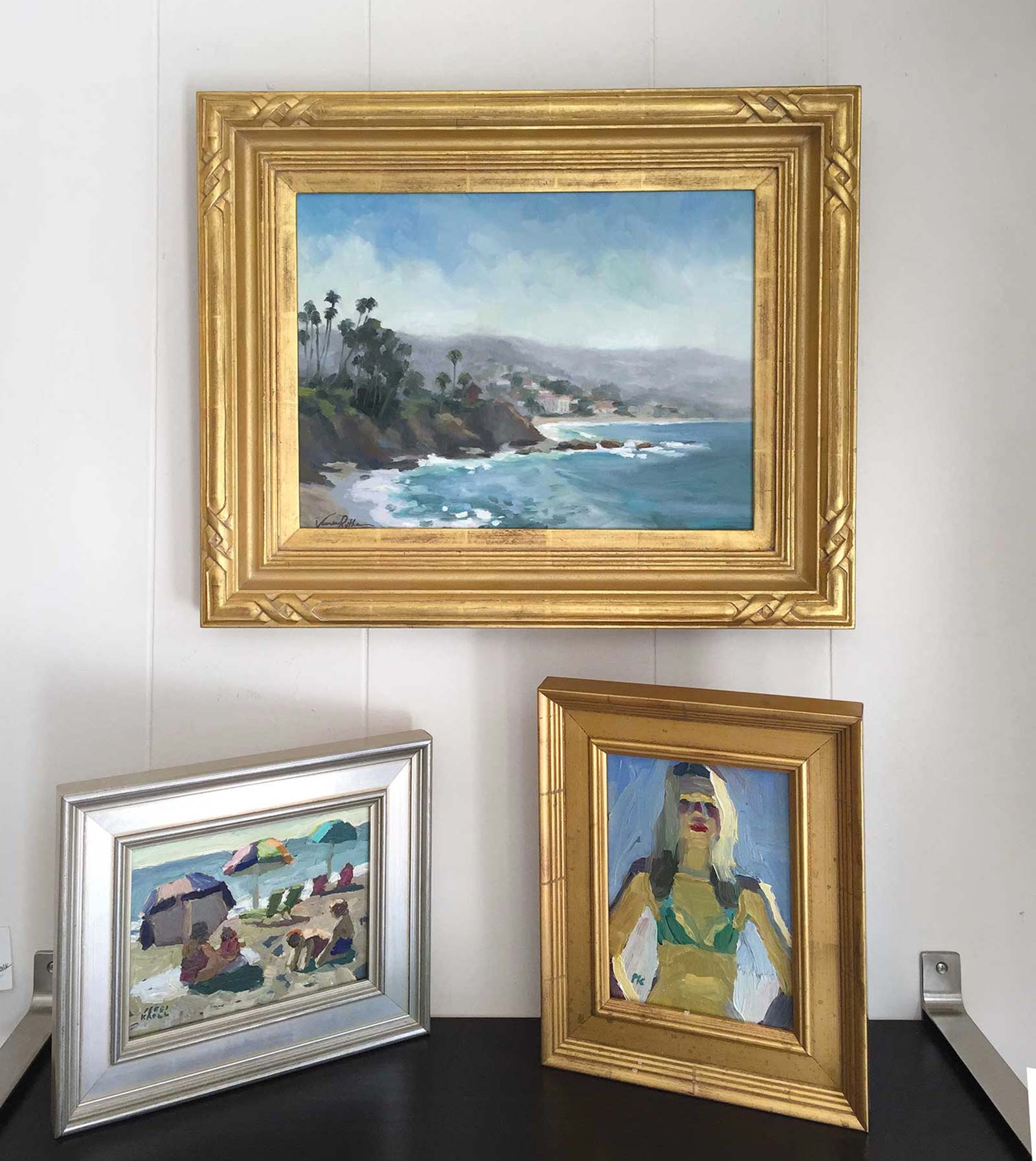
Seascapes and beach scenes.
An artist often becomes known often for a style and subject matter that helps them sell and be recognizable. This is not to say you can’t change your subject later. For example, I am known as a landscape and seascape painter, but I have a passion for all things related to fashion, having grown up the daughter of a fashion designer. After establishing myself as a landscape painter for many years, I have recently been painting vintage-inspired fashion in oils and watercolors, and they are slightly flatter and more illustrative. I paint them knowing that they would need to be presented to a different type of gallery or group of collectors than those who buy my landscapes as they are very different in style and subject. So, you can have various subject matters but creating a cohesive collection is important to present to galleries and collectors. Your style will tie the groupings together first and foremost, but the subjects can also aid in this.
You can always change your subject but try to create works in batches of the same general theme. One artist friend who is a modern impressionist paints in a very bold colorful manner, realism but with loose strokes. He became well known for his cityscapes and then became known for his fruit trees painted close up with dappled light. Then he moved to California and began to paint seagulls and seascapes. He changed his subject, but his style remained the same, and each time he changed subjects he painted 10 to 15 works in that new subject, not only to get good at it, but to create a body of work that could be shown and marketed together.
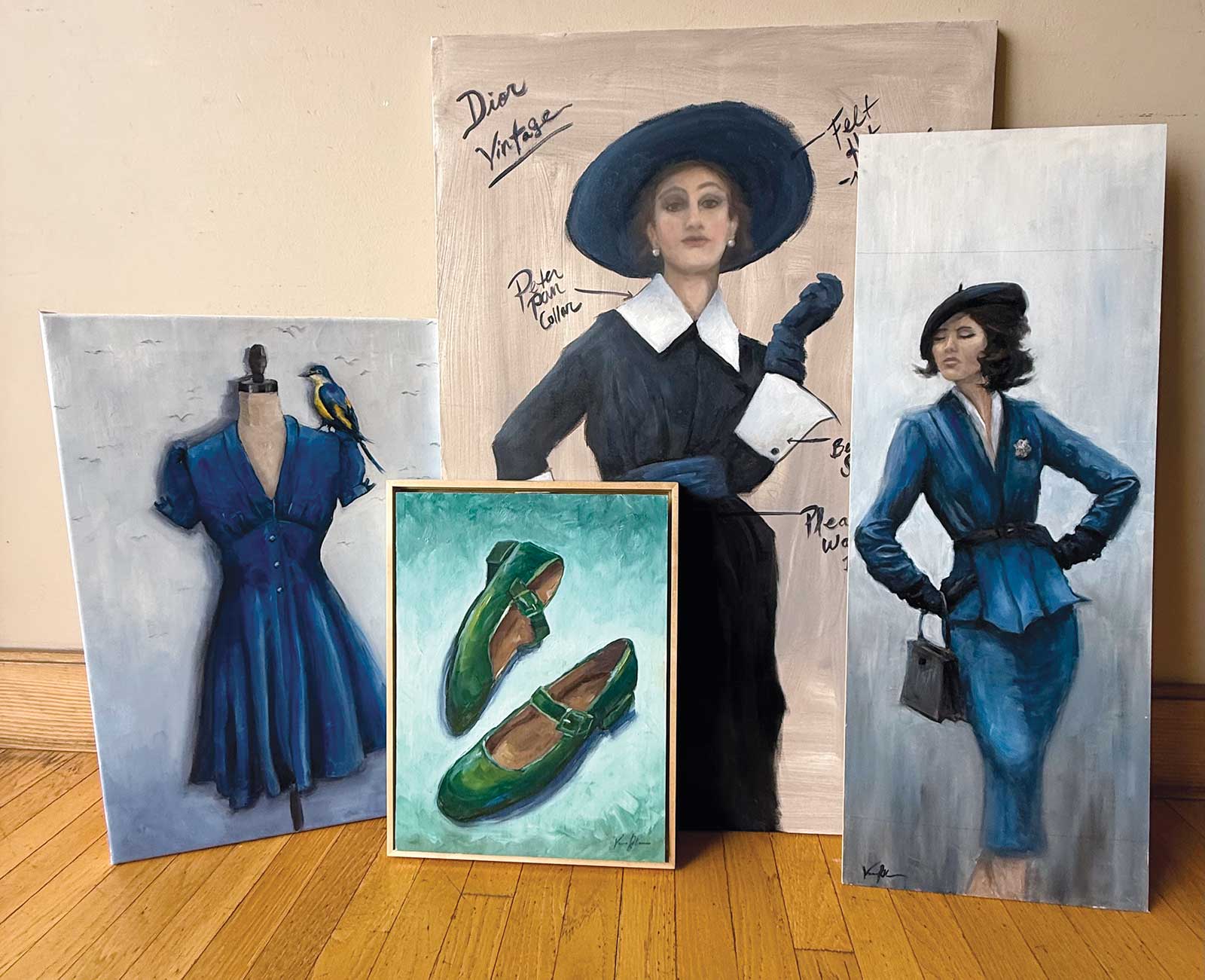
A collection of fashion-focused paintings.
So, whether you aim to capture the light in the landscape, paint hyperrealist still lifes or create bold portraits, keep yourself open to thinking about subjects. It’s a good idea to research what has been selling and get your own idea as to what subjects sell well. Of course, we would never sway you from painting whatever brings you joy, but for commercial sales, collectors and galleries, subject matter does come into play, and as an artist, you should be generally conscious of it. —