Creating a commissioned portrait begins with a photoshoot to capture fleeting expressions and dynamic poses, especially for children. The face serves as the cornerstone, establishing likeness, spirit and emotion to guide the entire work. These stages outline my initial approach to crafting the face into a larger, more intricate portrait.
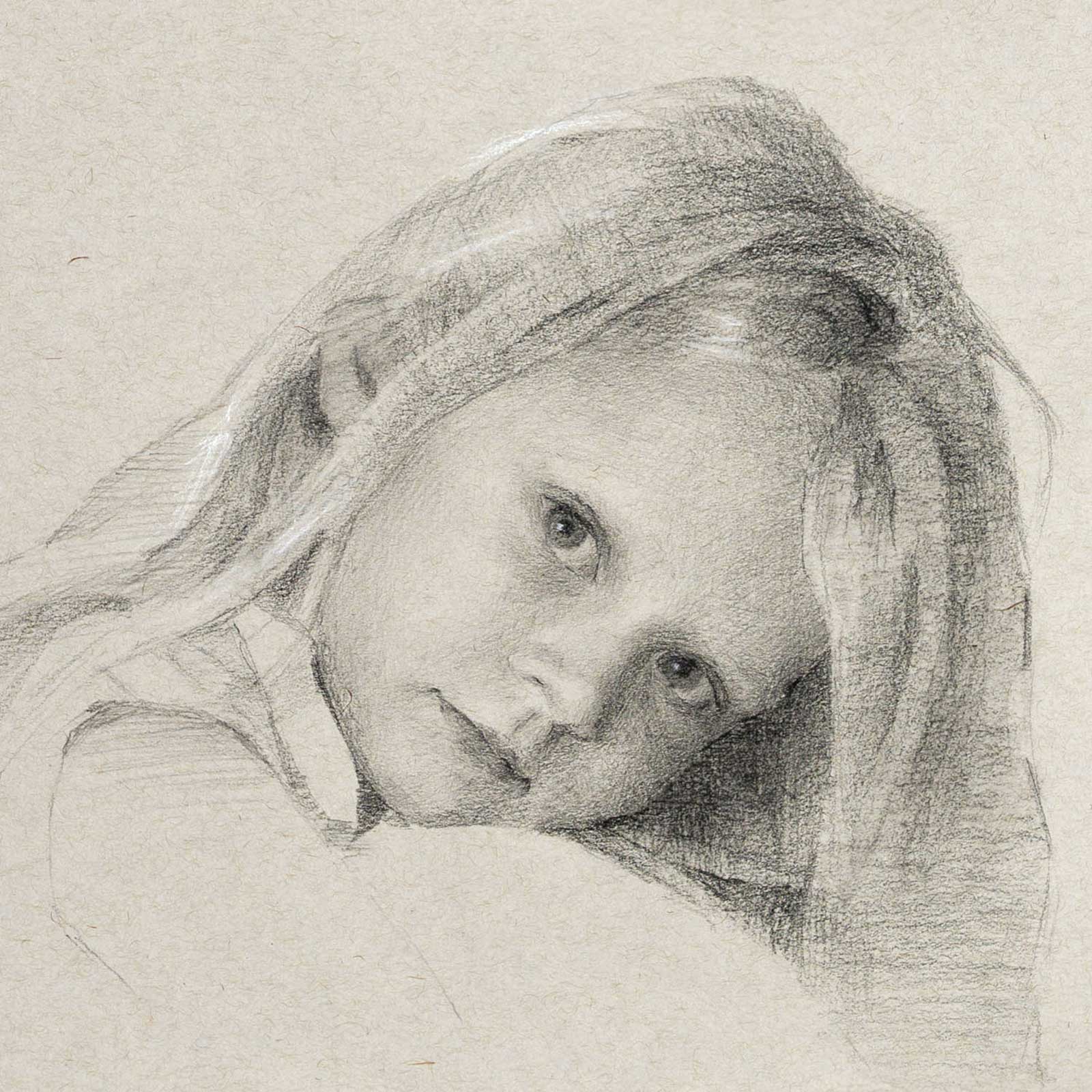 Stage 1
Stage 1 Study Sketch: The process begins with a study sketch on toned gray paper, using hard charcoal pencils. This step helps me simplify complex elements and interpret the subject with an artistic lens while keeping my drawing skills sharp. The study sketch is not just a preparatory stage but an essential part of the process, allowing me to explore the subject’s features and create a more personalized interpretation, breaking away from reliance on the photo.
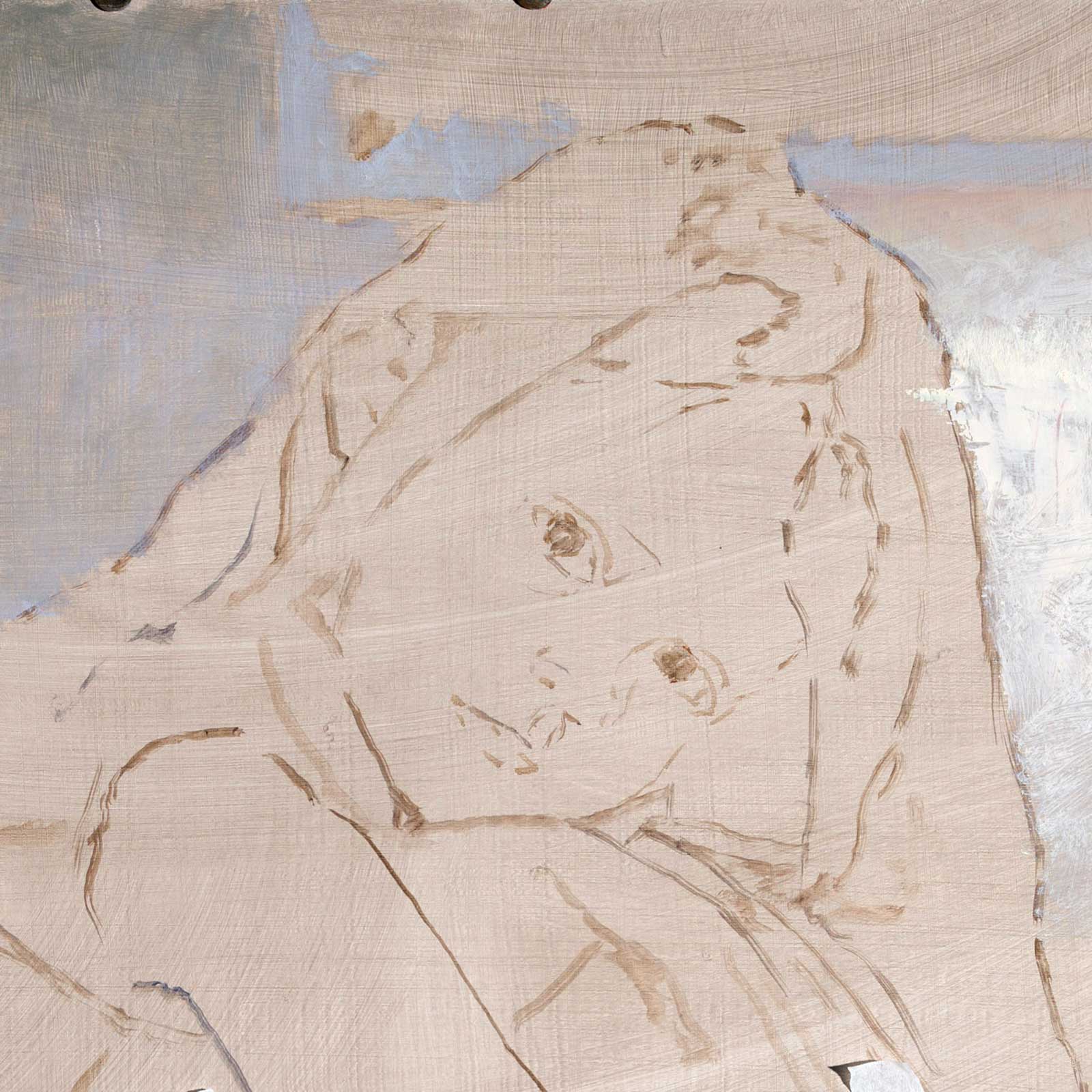 Stage 2
Stage 2 Panel Preparation and Background: For the next stage, I prepare an aluminum composite material (ACM) panel with a lead alkyd ground. To tone the background, I use a mix of ultramarine blue, transparent oxide red and white, aiming for a high-value neutral warm tone around value 6. I transfer a loose drawing from the study sketch, keeping the edges less precise to avoid overreliance on them. This is important because it forces me to overlap my colors and create softer edges to reestablish the drawing. The background is thinly applied using a lean medium made of lavender oil and linseed oil. Establishing the background color first sets the tone for the entire painting, helping me “key” the values and colors in relation to it.
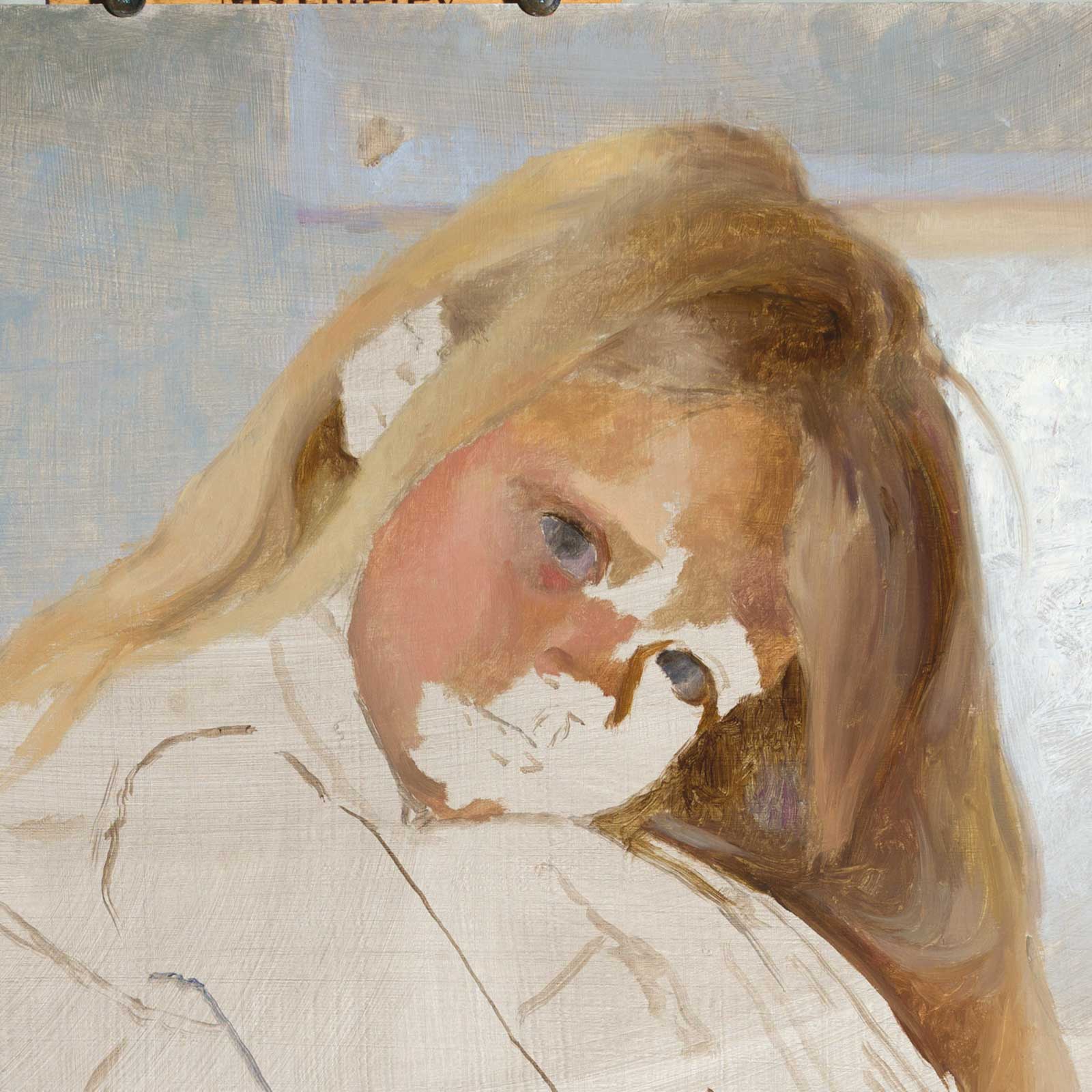 Stage 3
Stage 3 Mixing Colors: Mixing colors is a critical stage where I establish harmony and balance. I start with a thin layer of darks and mid-tones, focusing on achieving high chroma for the skin tones. The process begins with the hair, which connects to the background and serves as a contextual anchor for color and value. I then move to the face tone, eye color and sclera. In this layer, I start with the light side of the face to key my chroma and lightest value. The face is divided into zones: the forehead has a slightly yellow, less chromatic tone; the cheeks are warmer and redder; and the chin area leans slightly green and neutral. These subtle variations add depth and life to the portrait.
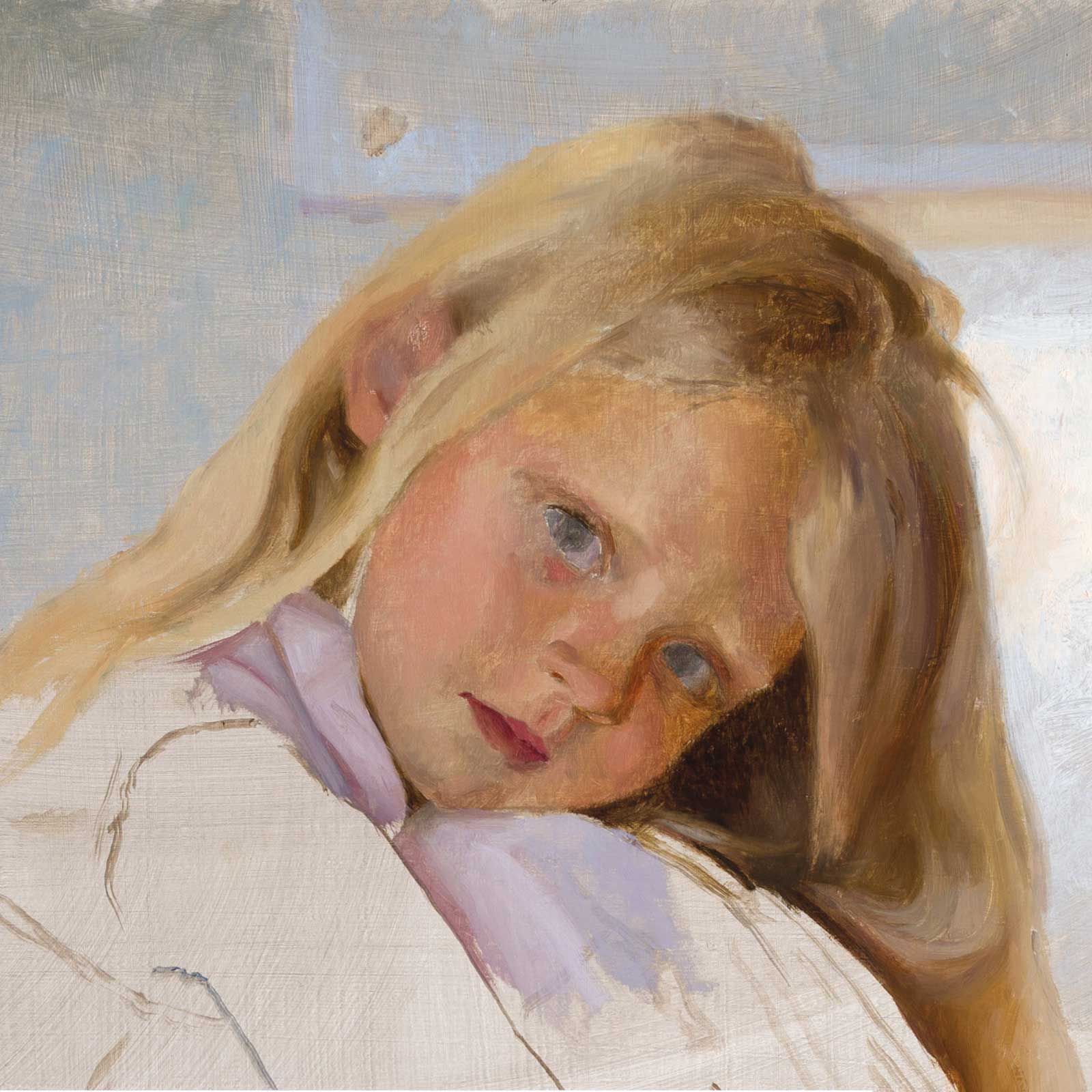 Stage 4
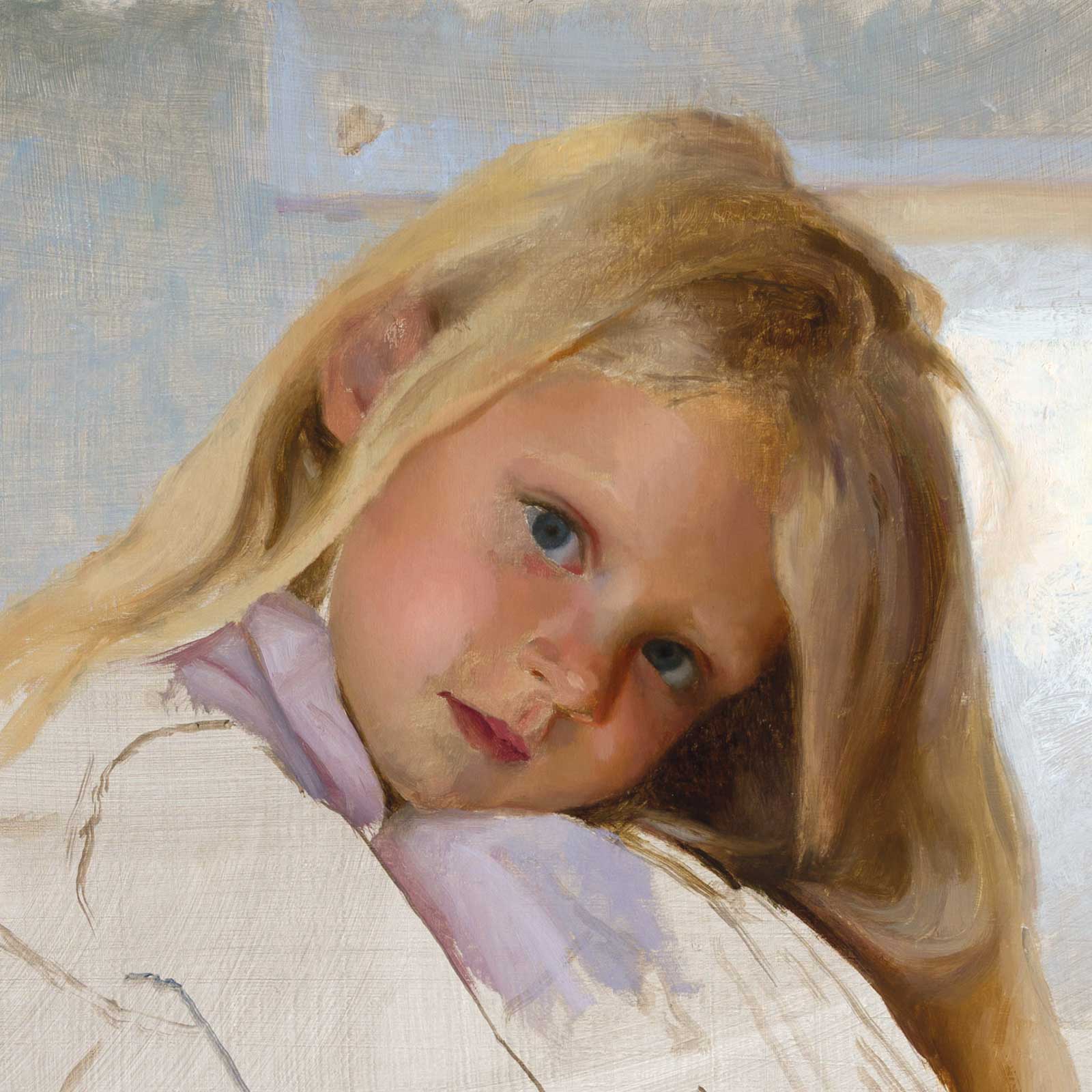
Stage 4 Finalizing the First Layer: With the first layer complete, I move on to refining the face. I darken the hair’s shadows and fill in the ear with less chromatic, lower-value tones and softer edges. Portions of the dress are also painted at this stage to provide context for the chin. To harmonize the warm and cool tones of the face, I make sure each mixture contains at least a small amount of every color used in mixing the skin tones. For example, even in a cool, low-chromatic area, I will include a very small amount of red and yellow in the mixture. I also focus on the planes of the face, ensuring the larger bone structures capture the likeness and proportions before moving on.
 Stage 5
Stage 5 Second Layer and Features: The second layer starts on the shadowed side of the face, connecting the form with the shadows to create depth. I establish warm and cool relationships, with cooler tones in the light and warmer tones near the shadows. This approach is specific to this painting, as my key light source is cool and my fill light source is warm. I work on the eyes first, then the nose, wrapping around the forehead and cheek.
 Stage 6
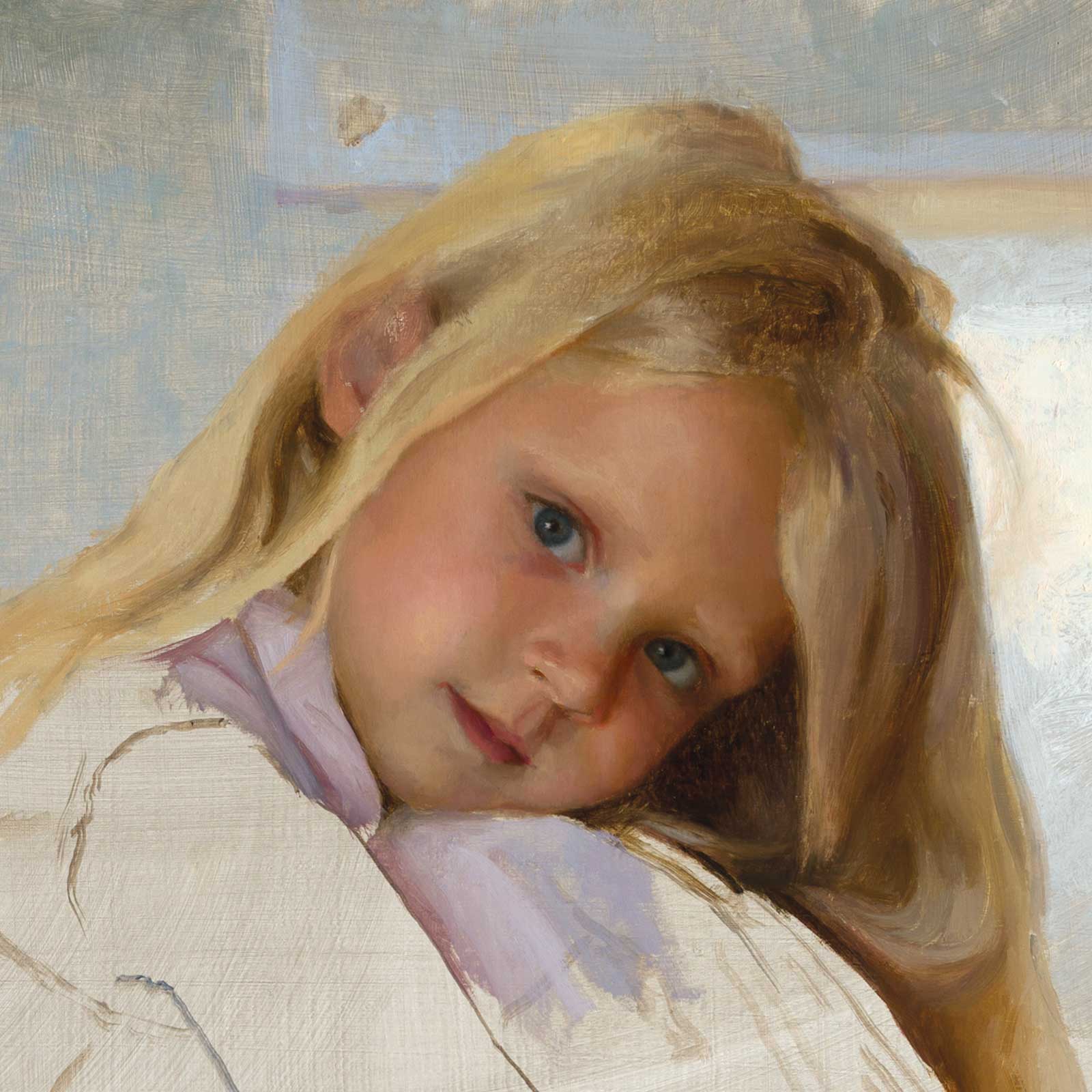
Stage 6 Refining Touches on the Face: In the final stage, I focus on refining the light side of the face and enhancing dimensionality by balancing high chroma with appropriate values. Cooler tones are subtly added to areas like the tear duct and glabella, while the cheeks retain warmth for vibrancy. Small details, such as soft edges and highlights in the irises or where the hair casts shadows, are refined. These final adjustments bring depth, realism and polish to the painting.
Louis Carr lives in Raleigh, North Carolina. His work focuses on classical realism through the delicate rendition of the human figure and landscapes of the natural world. See more from the artist at lcarr.faso.com.