It’s easy to fall into the habit of sticking to a familiar size and proportioned format for your paintings. It is convenient, as you can prepare a number of supports in advance, and it is comfortable working on a familiar shape. In this article, we will look at the often overlooked benefits of examining your subject, then making a decision on the most suitable shape and orientation to communicate what you want to say about the subject.4
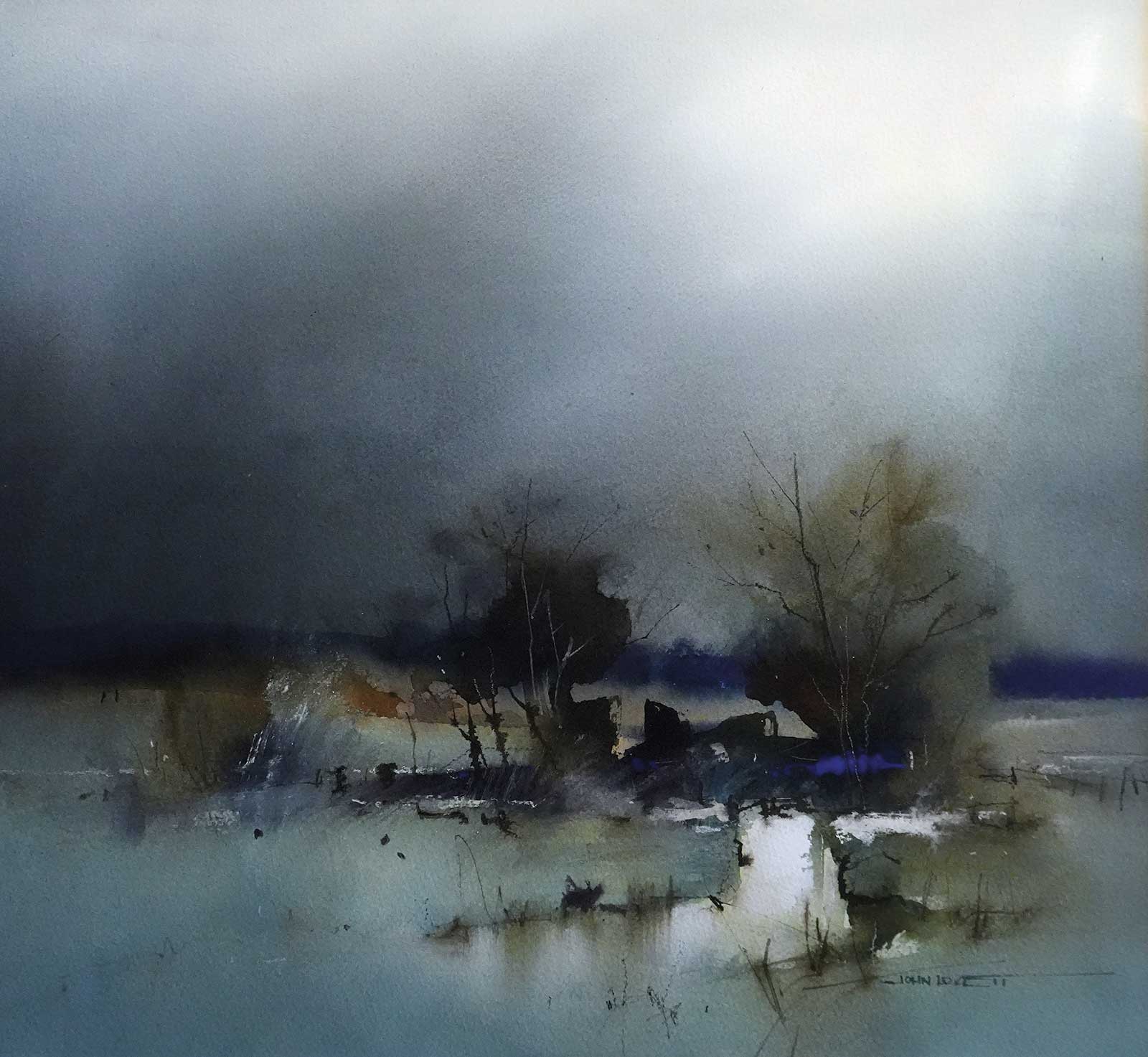
Sometimes the simplicity of a square format works well. Here I liked the contrast between the static formality of the square and the wild, dynamic subject with a dark, threatening sky, sparse trees and strong, contrasting light reflected in the water.
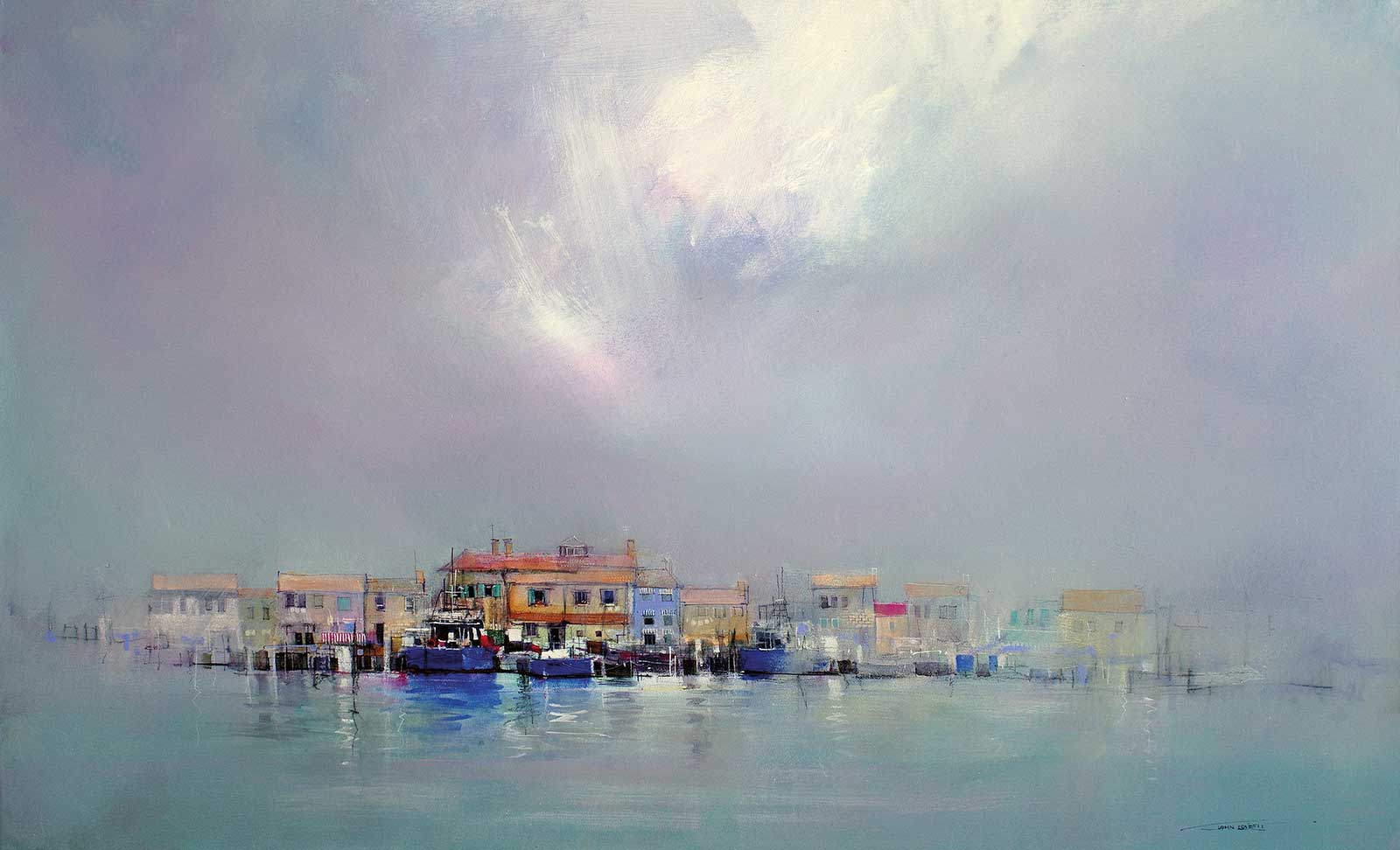
Pellestrina, bordering the Venetian Lagoon, is a long stretch of interesting buildings and bright blue fishing boats. It would make a great long stretched out horizontal painting, but the sky and water also tell a big part of the story. For this painting I decided to emphasize the dramatic light and reflections in the water and use the buildings and ultramarine boats as a focal area. The swirling patch of light in the sky draws the eye down through the sky to the contrasting focal area.
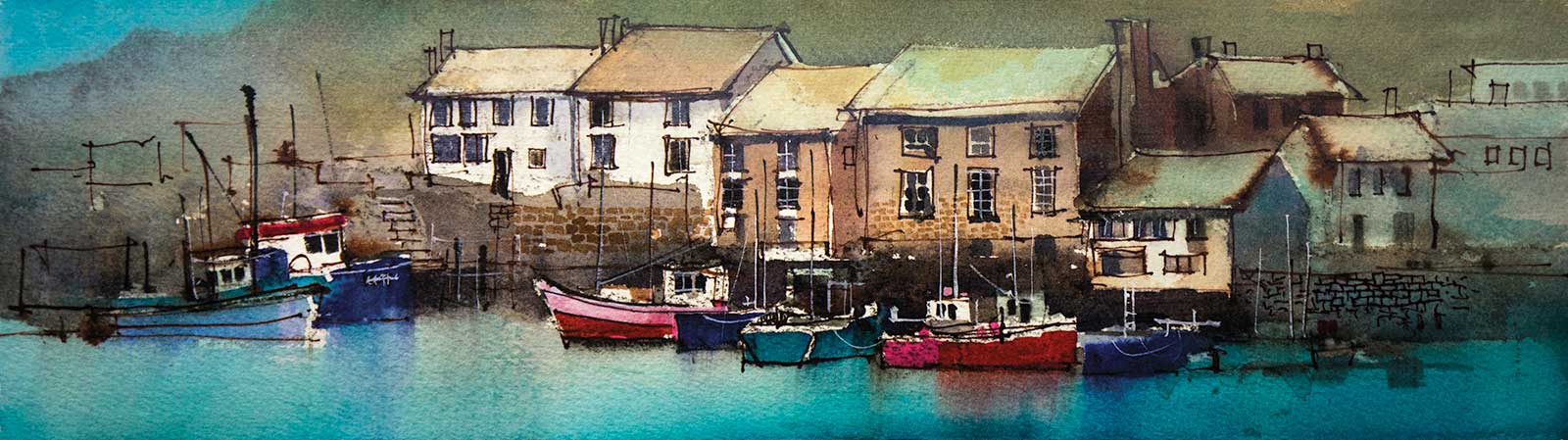
The UK coast is dotted with beautiful old fishing villages. The interesting arrangement of stone buildings and variety of colored fishing boats are ideal for a long, horizontal format.
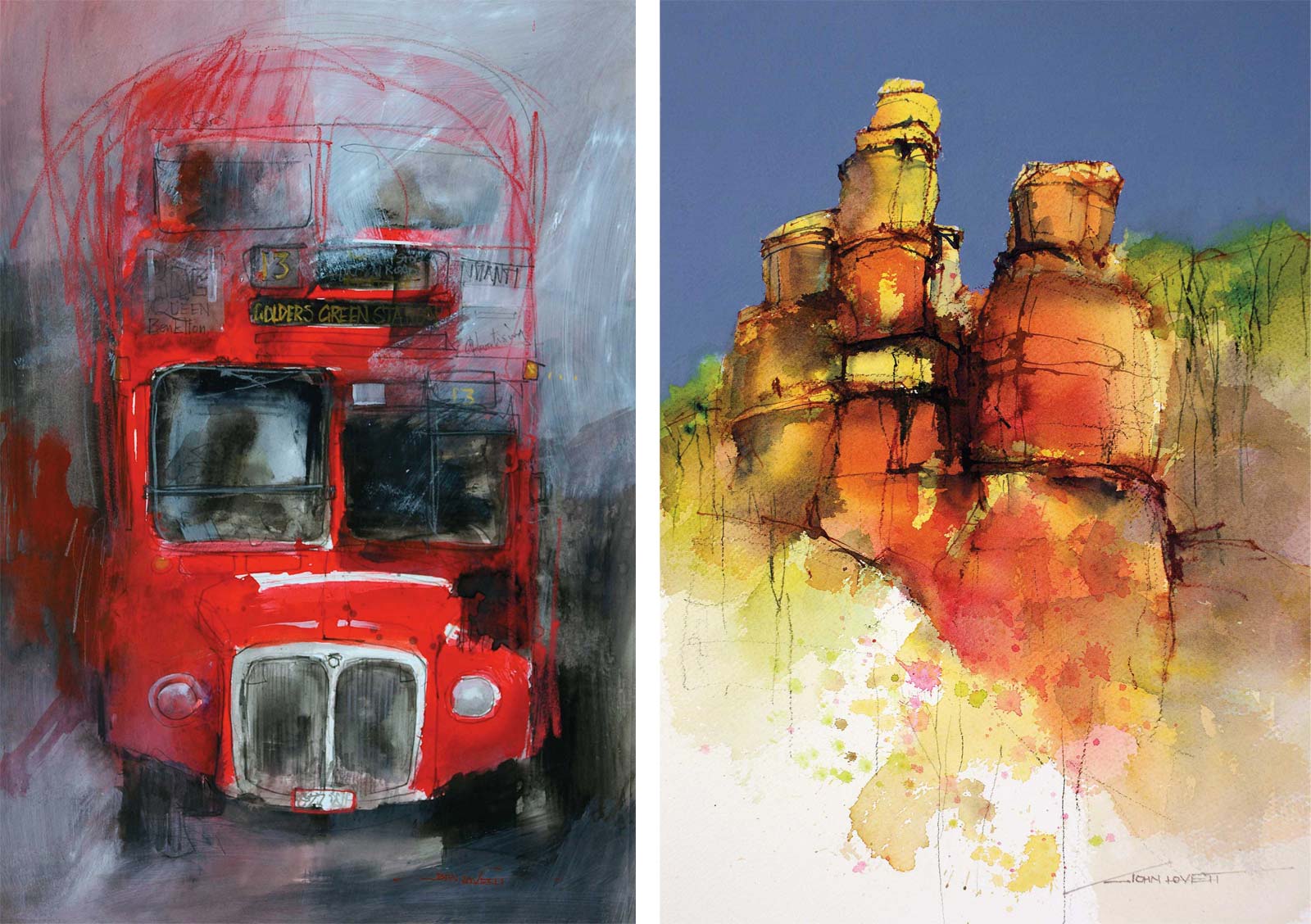
Last Bus Leaving (left) draws the eye down through a vertical format to a shiny, focused engine and driver’s cabin. The loose, sketchy marks indicating the top of the bus as well as encouraging the eye downwards suggest the “rattley” vibrations of the ancient diesel engine.
The precariously balanced rocks (Right) at the top of this outcrop make a dramatic focal point against a contrasting dark sky. Again, the simple understated foreground encourages the eye up to the focal area at the top. The detail and intensity of the rocks are relieved by the flat, featureless sky and simple foreground. The vertical format amplifies the scale and drama of the outcrop.
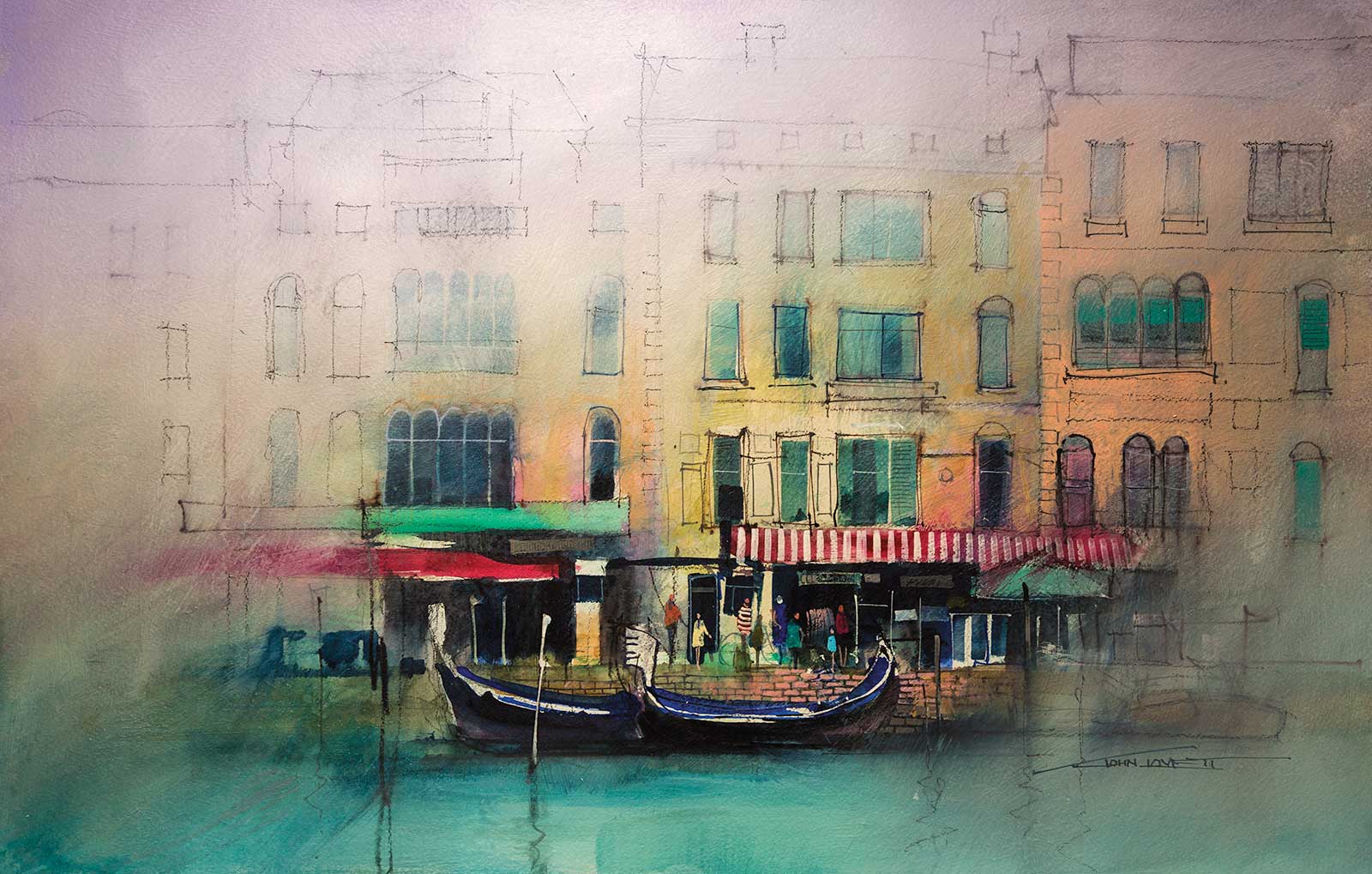
The horizontal format of this painting is broken roughly into four horizontal bands. The simple green band of water and graded pale area of sky sandwich the region of detail. This is made up of the horizontal focal area of boats, awnings and people topped by the less detailed band of windows and building textures. By softening the top left and bottom right corners, a contrasting diagonal area of interest relieves the strong horizontals.
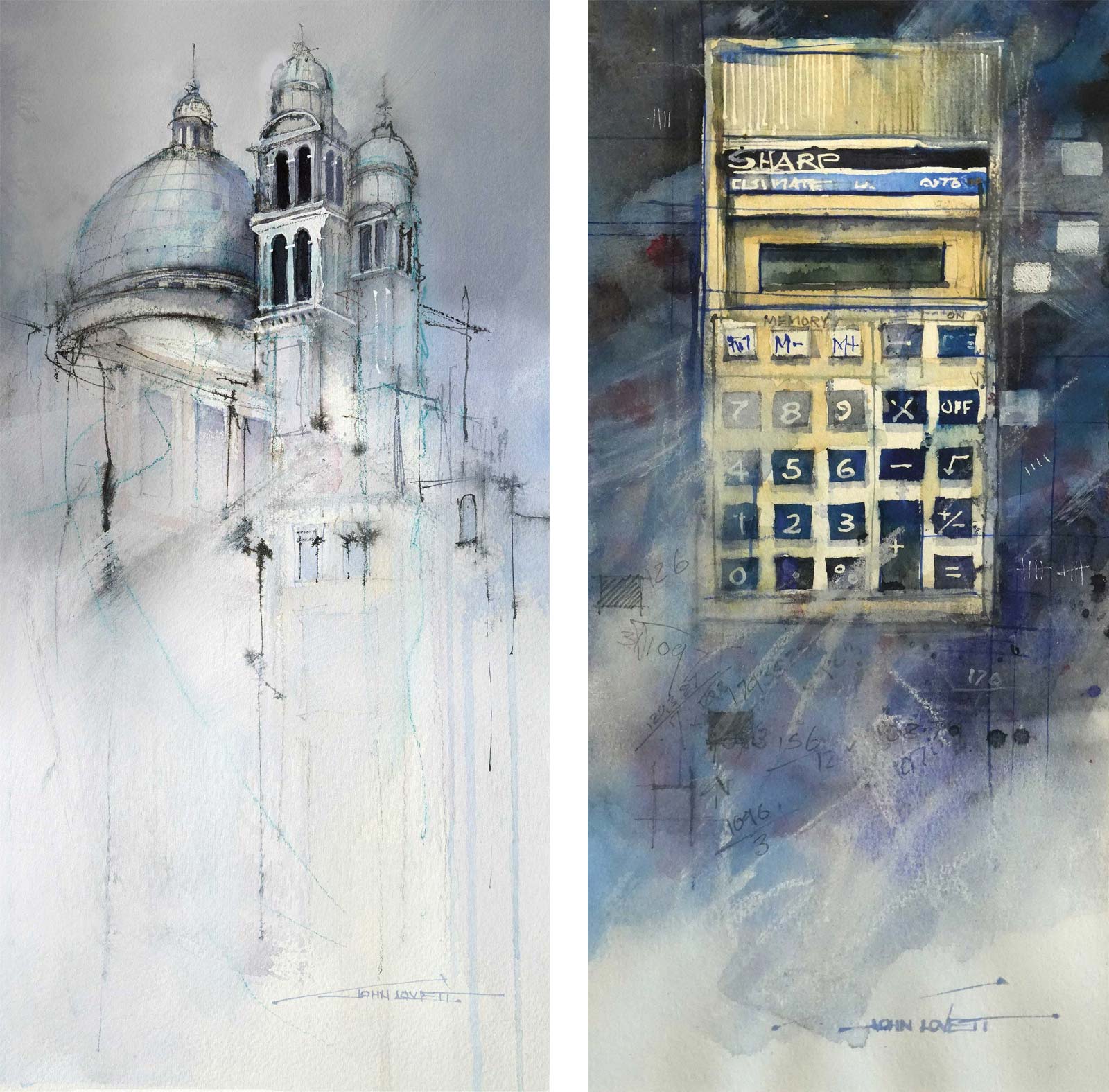
A vertical format can be dramatic and monumental. These domes (left), from an alleyway behind Santa Maria della Salute in Venice, make a dramatic subject. By pushing the detail up into the top third of a long vertical format and using simple vertical marks to draw the eye up to the domes and arches, more impact is created and the dominating height of the structure is emphasized.
Titled Arithmetic (right), this is a simple painting of an old calculator. By using a vertical format and drawing the eye up to the business end of the calculator with rough abstract marks and loose scribbled sums, I have tried to create a feeling of accumulating mathematical achievement. The fractured scruffiness of the background adds to the feeling of frantic calculations.
Next time you are considering what to paint, give some thought to the format of your painting. Sometimes a subject will immediately suggest either horizontal or vertical. Other times a subject can be treated in either way and will require other factors to be considered. Will lead in lines or shapes help the composition? How will I balance complexity with simplicity? What shaped format best tells the story I am after? Answering these few questions and putting in a little bit of extra planning can often make the difference between an average painting and a good one.
Contact at
johnlovett.com