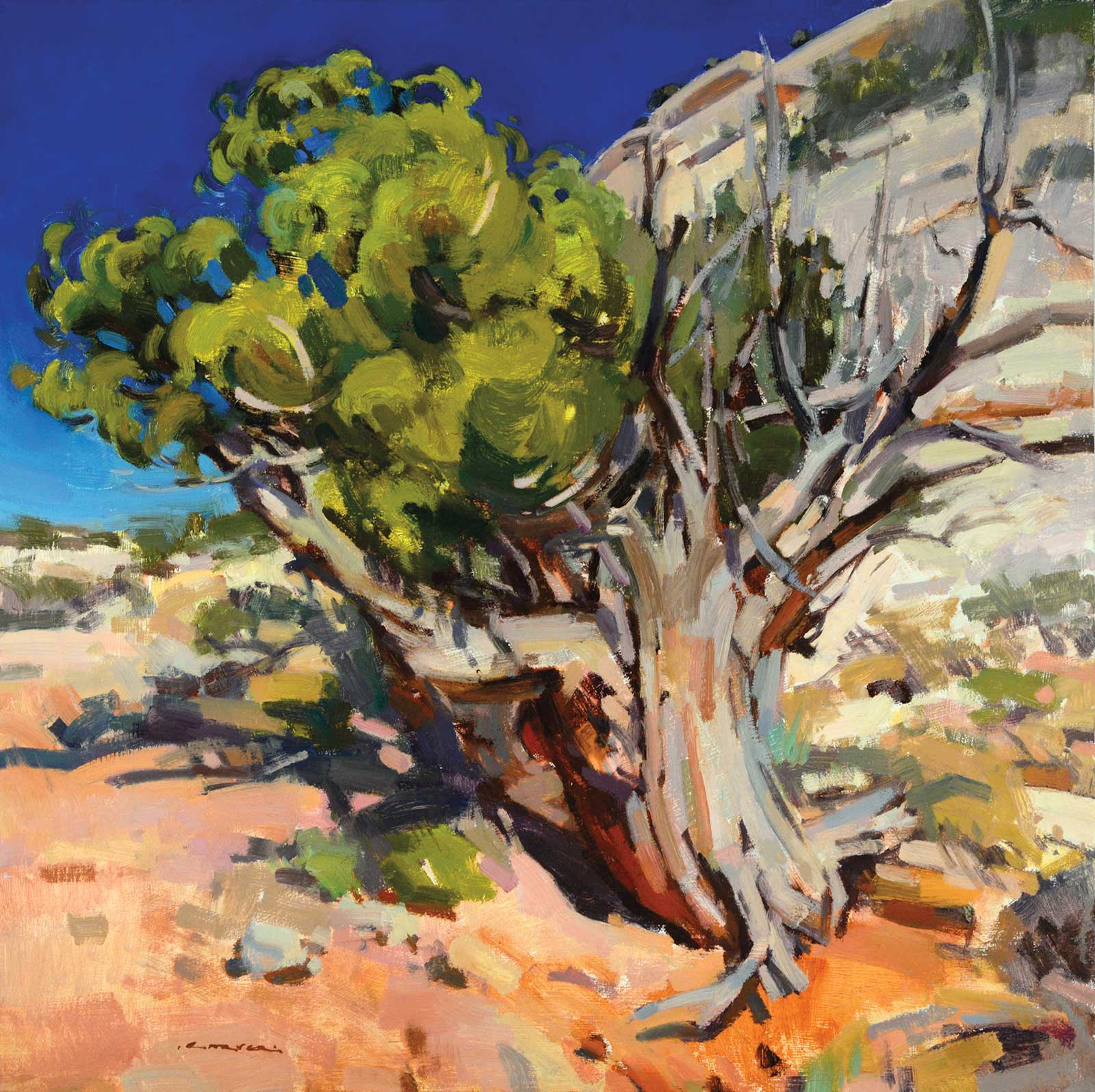
Jill Carver, Cliff Dweller, oil on board, 20 x 20" (50 x 50 cm)
Scottsdale Artists’ School: How did the opportunity arise to teach at the Scottsdale Artists’ School?
Jill Carver: Having taught a lot of outdoor workshops, I realized that many students were missing some of the design fundamentals that, frankly, are best suited to being taught indoors, not in weather or moving light. So I was looking for an excellent indoor facility and Scottsdale Artists’ School is the premier facility in the Southwest. I had taught a few times alongside Matt Smith for Plein Air Painters of America. He knew of my deep commitment to the craft and to teaching, and so recommended me to the school. I have been teaching there twice a year ever since.
SAS: What do you look forward to most when teaching your workshop?
JC: I feel a deep obligation to pass on knowledge. I know the epiphanies and turning points that helped my own work reach new levels, and I am keen to pass those on. I thoroughly enjoy lightbulb moments! The folks that show up to class tend to be curious and inquisitive individuals, and I love hearing their life stories, and working as a team of “explorers” for the week. I’ve made many good friends in the classroom over the years.
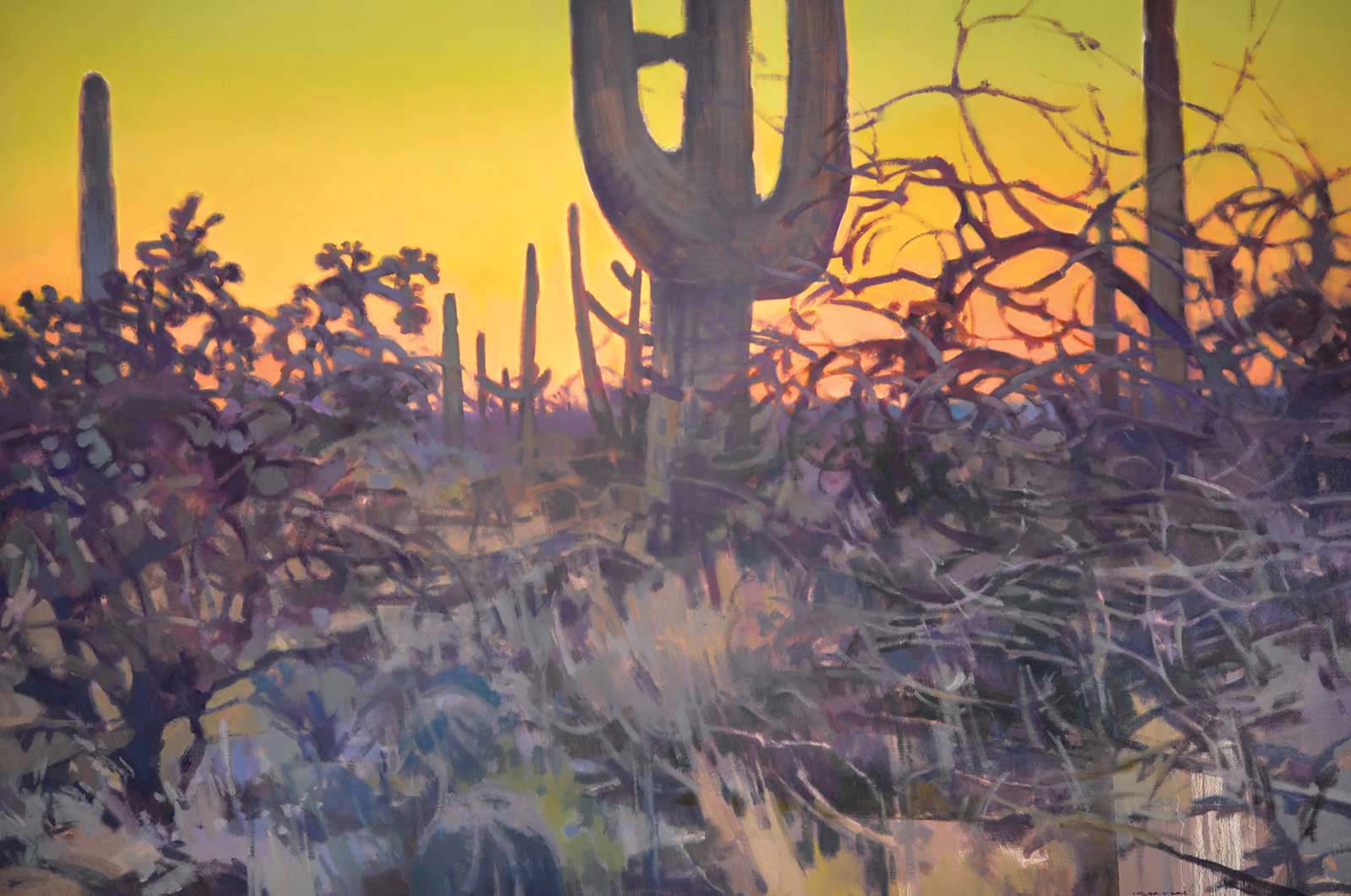
Jill Carver, Desert Meditations, oil on canvas, 40 x 60" (101 x 152 cm)
SAS: Have you always wanted to become an artist?
JC: I believe that becoming an artist is a way of being rather than a choice. I know my visual senses are heightened in the same way that for others it might be sound or taste. My language, my way of understanding the world around me, has always been through visual interpretation and understanding. My earliest memories are of drawing. But I never thought I would do this professionally—that came out of necessity. I had moved to the United States to marry and thought that I would continue the research/curatorial work that I had been doing in London, but those opportunities just didn’t arise, so I had to turn to my art, which I had always done regularly and see if it could become a profession. I started off by doing art fairs with my 10-by-10-foot tent and literally worked my way up to where I am today. It can be done!
SAS: What is the relationship between plein air and studio work for you?
JC: Plein air work, whether it’s painting or observing and making notes, is always the beginning, and the most crucial aspect of understanding our subject matter. I feel so alive when immersed in studying directly from nature. It’s the foundation stone to everything that follows. These days, most of my “finished” work is completed in the studio where I have time to deconstruct and reconstruct what it is I want to say, to focus on concept and design. In short, plein air study is the source of ideas and information, and the studio is where the craft and production happen.
SAS: How do you overcome obstacles?
JC: Some obstacles are beyond our control, so all we can do is adjust. The journey of a painter is a life full of learning, so facing failures, facing our own ignorance, is all a part of that process. What I would advise is not to be an obstacle to yourself, being open to the idea that failure and frustration are symptoms of progress.
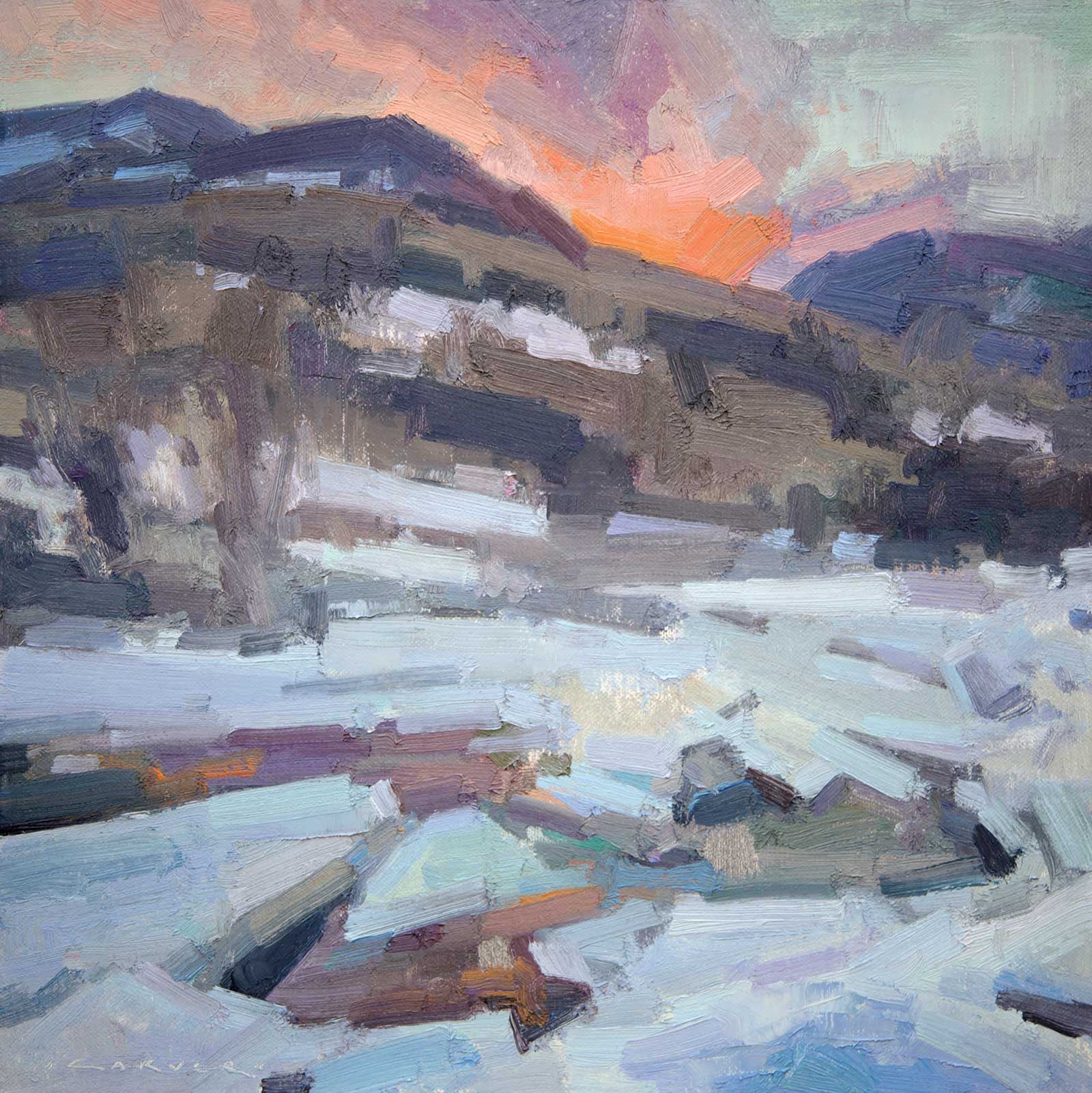
Jill Carver, Ice Jam, oil on board, 12 x 12" (30 x 30 cm)
SAS: Can you tell us about the time you sold your first painting?
JC: I believe it was to a colleague at the National Portrait Gallery in London. I used to spend my weekends and holidays painting and was getting to the point where I felt comfortable enough to show them to folks. The positive response encouraged me to take a sabbatical from my job at the National Portrait Gallery and take six months to paint full time. I went to New Zealand and lived in a van, producing work for my first solo show, which took place at the New Zealand Embassy in London upon my return.
SAS: What do you want someone to see when they look at your work?
JC: A passion for the land I choose to paint and a passion for paint and process. It’s a combination of the two. I don’t like rendering every detail, and I feel like that then draws the viewer in, to complete the conversation and finish the thought. It’s really a three-way conversation between the land, me and the viewer.
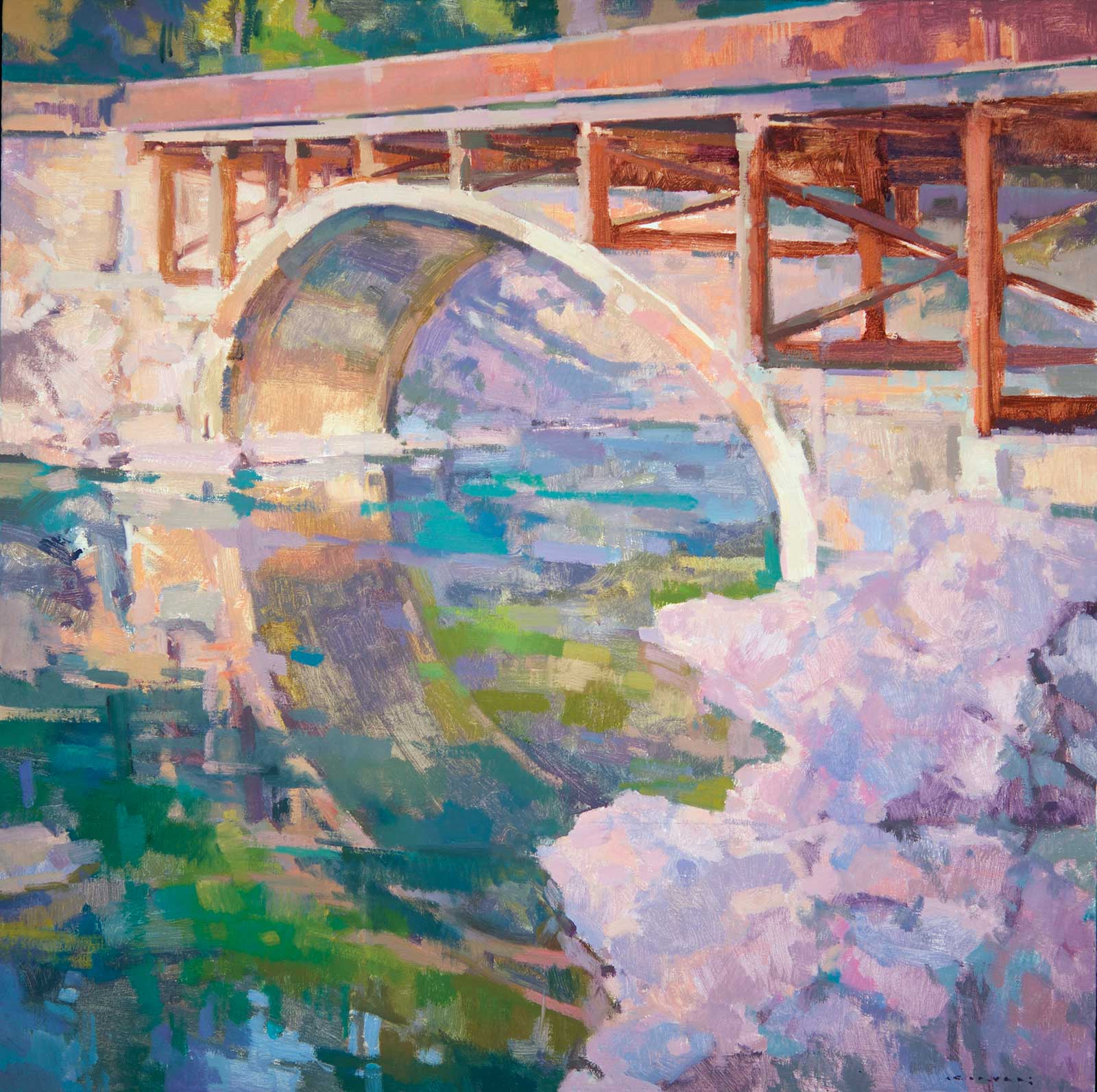
Jill Carver, Reflection, oil on canvas, 30 x 30" (76 x 76 cm)
SAS: Tell us about your upcoming workshop.
JC: I have been focusing on design principles in my workshops. It’s a huge topic, so I introduce a different principle for each day. I don’t teach my own painting process. Given my background, I have a knowledge for a variety of genres and styles and so I teach the underlying aesthetic principles that are common to all good paintings, regardless of style.
SAS: What do you hope students will take away from your teachings?
JC: I think my teachings are really aimed at students who want to move beyond rendering the landscape to be more concept driven and make more personal statements. It’s for those who acknowledge that “landscape is landscape” and “painting is painting.” I show them different ways in, different methods of adapting/editing what is there to embrace and embellish their own personal responses. It’s a lot of theory-based exploration that they can then take and apply themselves. —
Visit scottsdaleartschool.org for more information on the school and its upcoming workshops.