The Portrait Society of America is thrilled to celebrate another exciting year of portraiture and figurative art during our 27th annual The Art of the Portrait conference in Washington, D.C., May 8 to 11. Our program this year features many new and returning faculty artists as well as our crowd favorite events and programs, such as pre-conference workshops, an opening night Face-Off demonstration, portfolio critiques, open drawing sessions, a 6x9 Mystery Art Sale and so much more! Over the weekend the top 20 finalists of The International competition, the world’s premier portrait competition, will exhibit their outstanding artworks in hopes of winning the Draper Grand Prize and a cash award of $50,000. In anticipation of our grand event, I had a chance to talk with a few of our new and returning faculty artists to discuss a range of subjects from education and training to how advancements in technology have changed the way artists work and communicate with their audiences. In this issue, we will hear from artists Adrienne Stein, Alicia N. Ponzio, Dan Thompson, Timothy Rees, Shane Wolf and Michael Bergt.
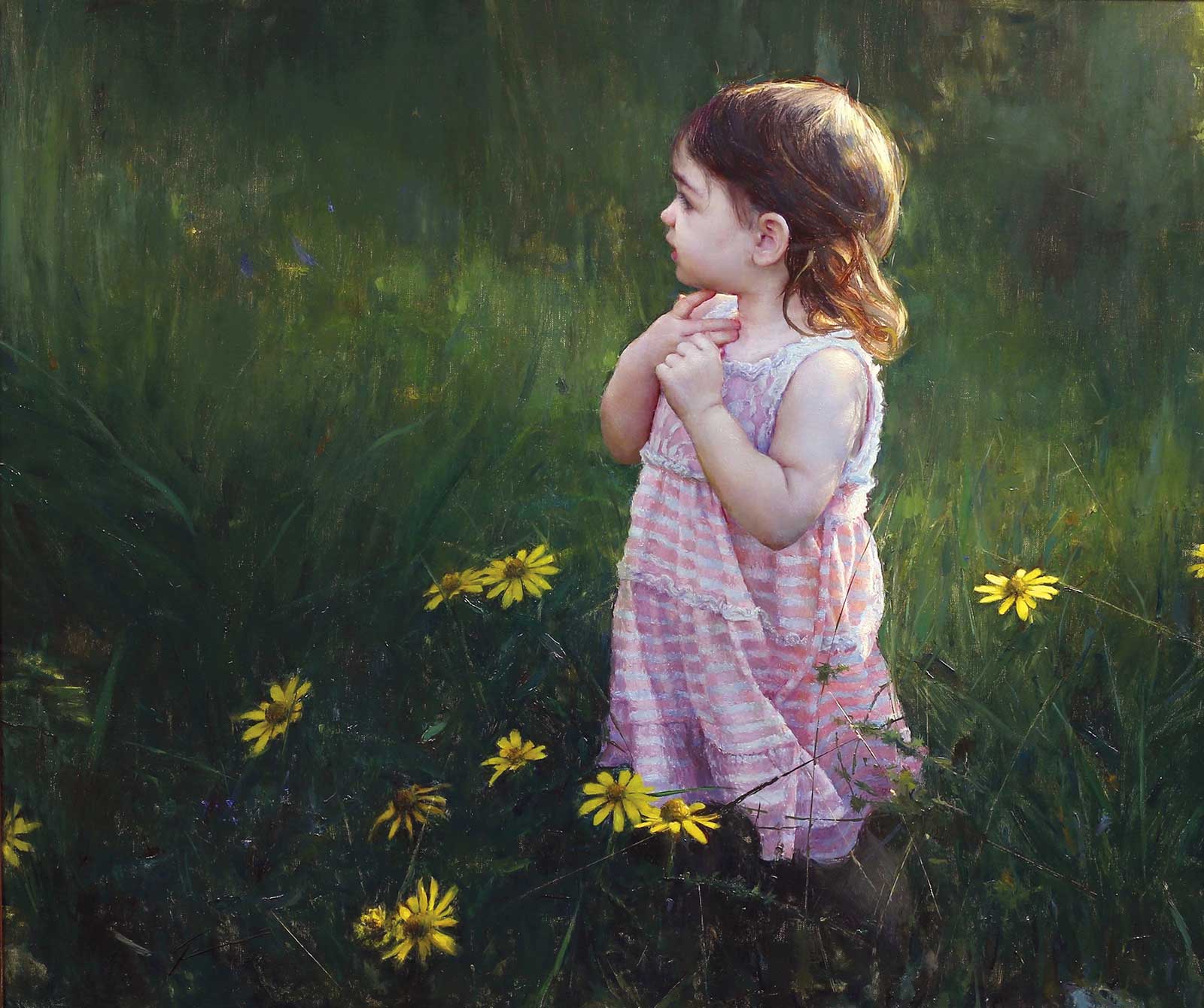
Timothy Rees, Summer’s Last Night, oil on linen panel, 27 x 32" (68 x 81 cm)
Recent advancements in technology, from new social media platforms to artificial intelligence, have changed the way many people—including artists—work and communicate with one another, and learning how to navigate this ever-changing online world can be challenging.
“With the advent of AI and widespread use of image-generating programs like Midjourney, I worry for the career security of friends who are in the animation, gaming, illustration, storyboarding, and fashion industries,” says Adrienne Stein. “As a fine art oil painter, I am somewhat insulated from this threat, as the currency of my work will always be in its slow ‘hand-made’ quality and the expressiveness and irreplaceable mark of the brush and tactile medium of oil paint. It is not made simply as an image for reproduction.” Stein, who works from her studio in Pennsylvania, has been using social media for many years to provide an intimate window into her studio and current projects. “I love to share my process with fellow artists and art lovers. It has never been easier to create community this way. Social media presence also makes it easier to reach potential students who are seeking instruction and are drawn to your particular approach.”
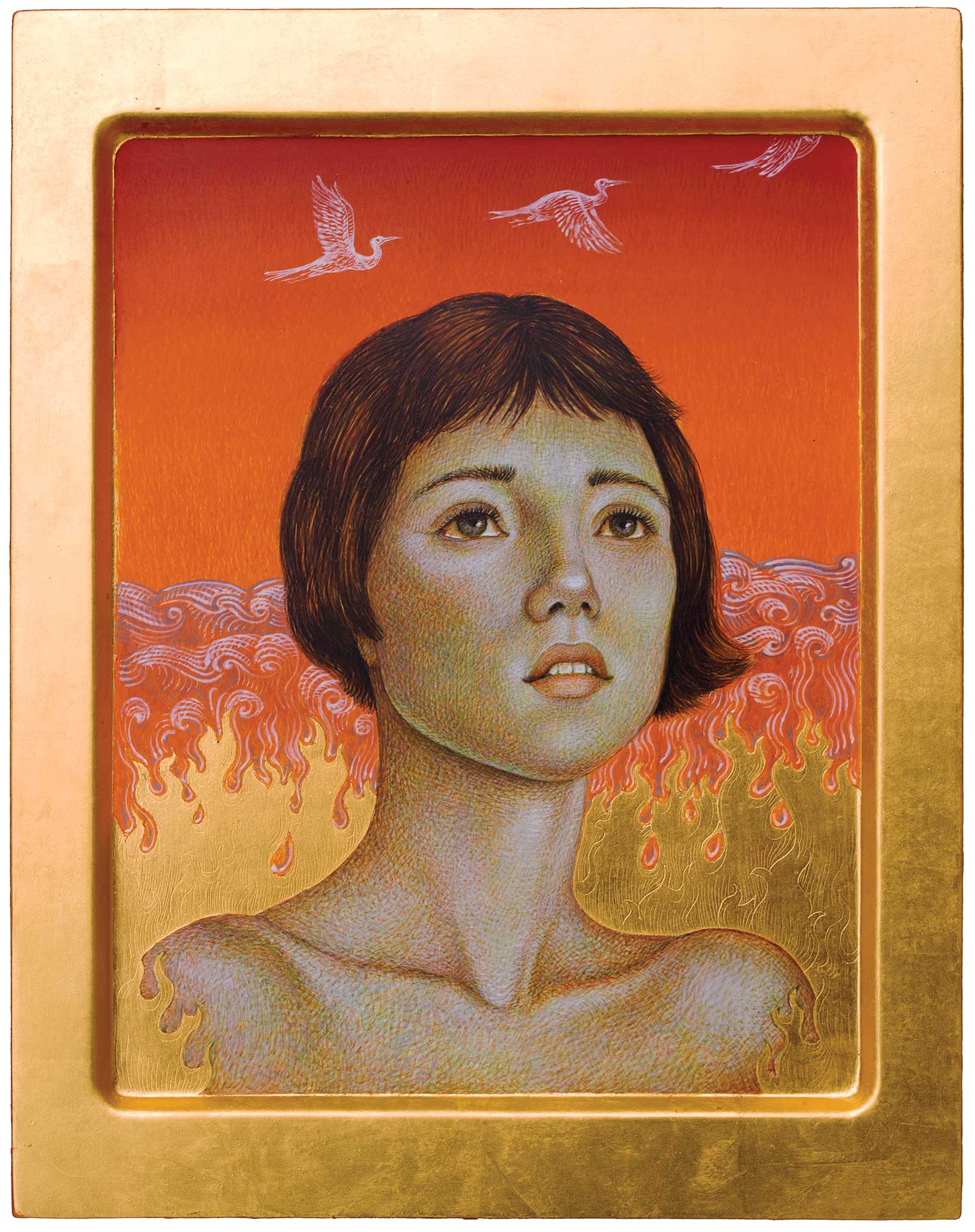
Michael Bergt, Joan of Arc, gouache, colored pencil and gold leaf on paper, 15 x 10" (38 x 25 cm)
Likewise, San Francisco Bay area sculptor Alicia N. Ponzio agrees that social media is a great tool for sharing her work. “New technologies are rapidly changing the way sculpture is produced commercially,” she says. “Many foundries are transitioning away from the traditional method that begins with clay and involves mold making, and wax work. They are instead investing in scanners and 3D printers. I use traditional methods in my practice as a fine art sculptor, and I find that there is an increased demand for the skills I teach. Many of my students over the years are 3D modelers working in videogame design and animation. I teach courses regularly at Pixar Studios, where designers and animators are encouraged to develop their skills in traditional sculpting. The tactile nature of clay modeling increases our understanding of form in a way that digital modeling alone cannot yet replicate.”
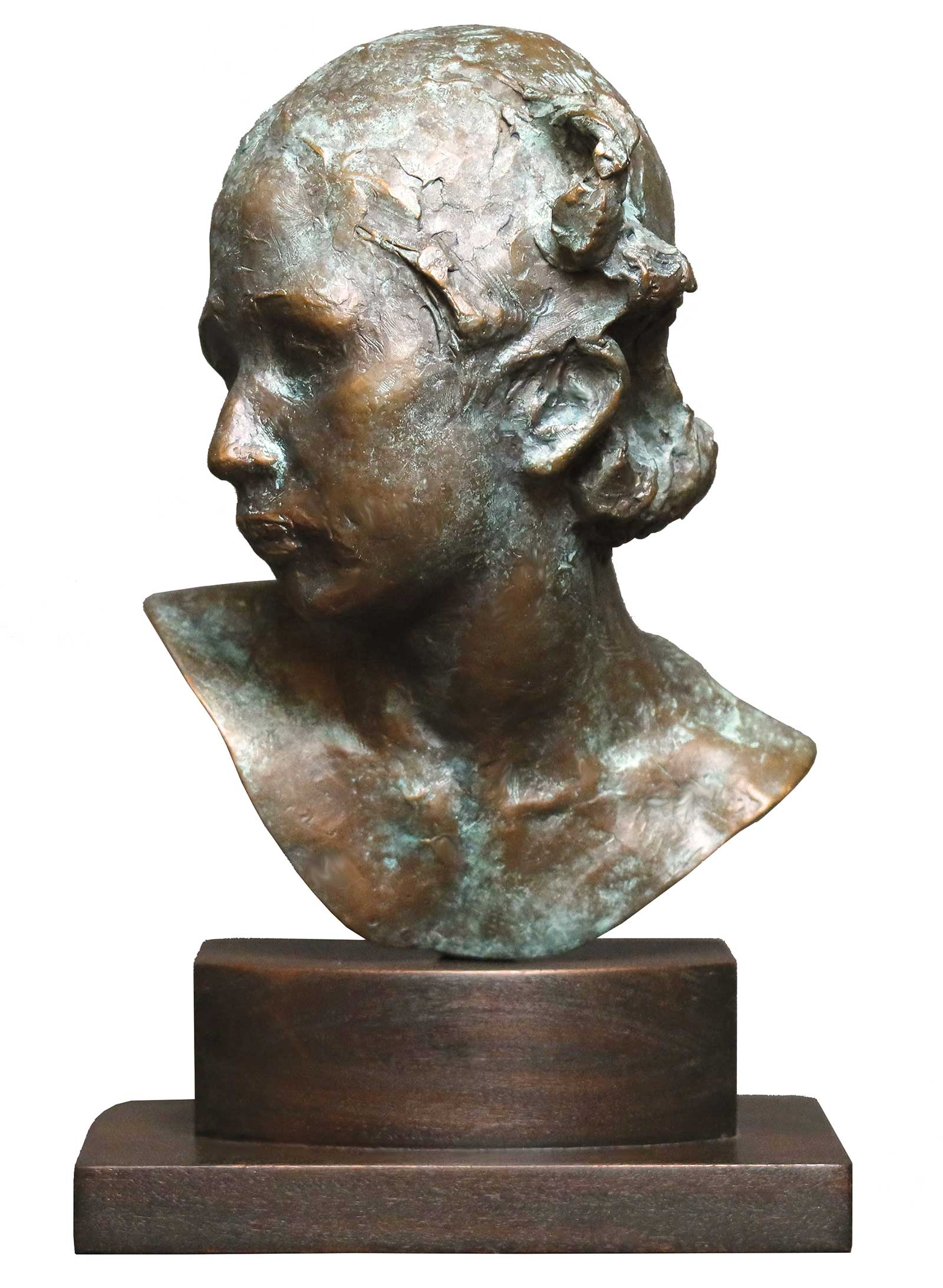
Alicia N. Ponzio, The Builder Portrait Vignette, bronze on wood, 11 x 5 x 7" (27 x 12 x 17 cm)
The subject of education and training is at the heart of the Portrait Society’s mission. When I asked Dan Thompson to share his advice to aspiring artists, he said, “It is imperative to get to know the terrain, territory and culture of an appealing educational environment. Schools are infused with a certain flavor, which reflects their founder’s vision as well as the professional ambitions of the faculty members. It also means that, because of their idiosyncrasies, schools are not suitable for every candidate. The better each student knows who they are, their goals, and perhaps their deficiencies, the more likely it is that she or he will find the right fit for what they seek. It is courageous to want to be an artist; to enroll in a school is a faithful act.”
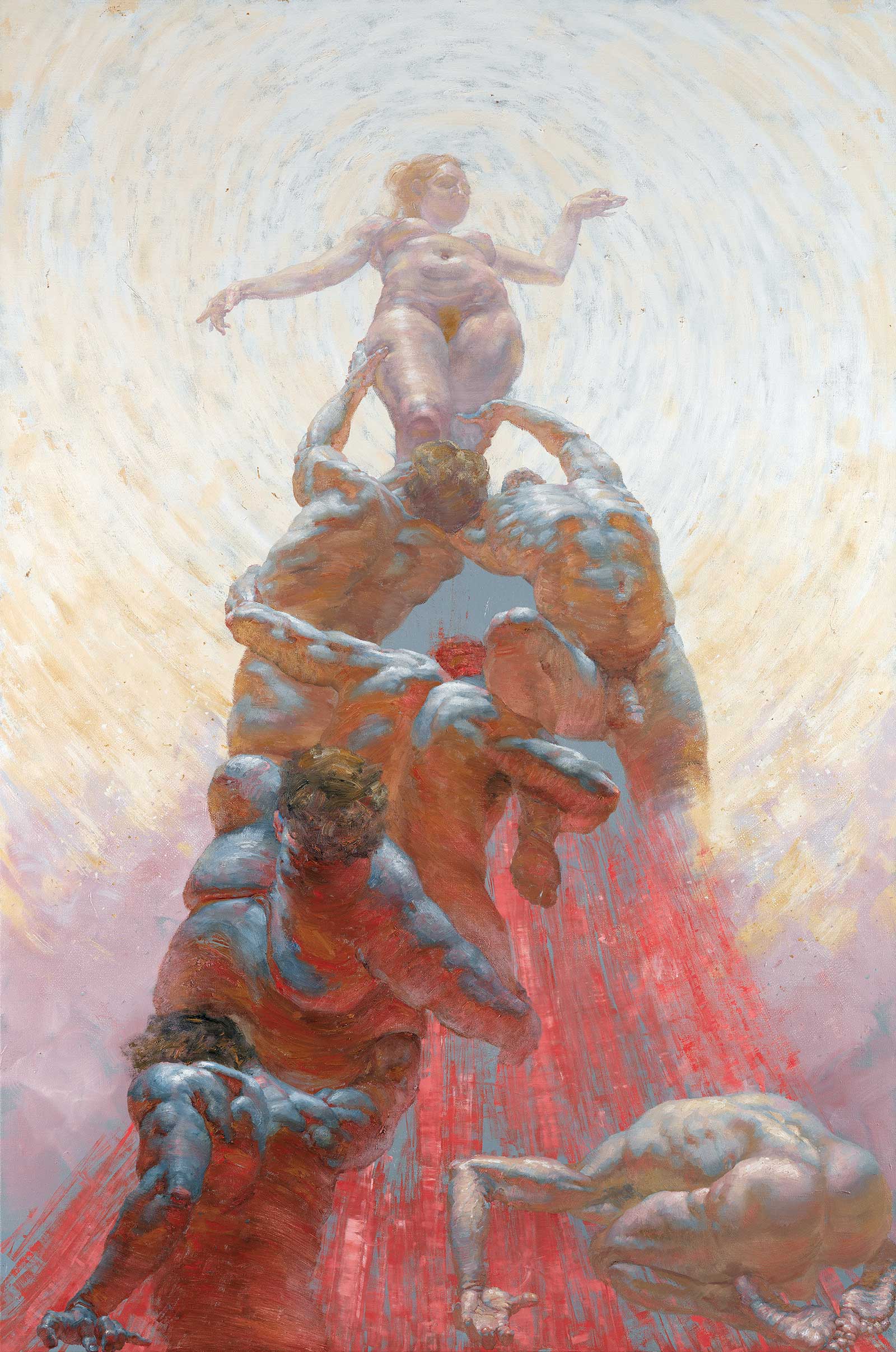
Shane Wolf, In Trutina, oil on canvas, 118 x 79" (299 x 200 cm)
Self-taught artist Timothy Rees knew from a young age that traditional universities couldn’t teach the type of realism he wanted to learn. “I thought art would be something I would do on the side,” he explains. “Then in my mid 20s, I learned that artists were still able to paint the way I wanted to paint, and shortly after I learned about open studios (short sessions of painting from a model). I moved to the Palette and Chisel in Chicago to attend open studios as sessions are free with membership. Although I never went to art school, painting from models many days out of the week was instrumental in learning how to paint. In my spare time, I read and looked at any resources available to me on how to paint.” For aspiring artists, he says, “Some people would benefit from the structure and curated curriculum of an art school. Others would benefit greatly from a mentor. Both of these are available through art school. Others like to figure things out for themselves, and their thirst for knowledge and exploration can make the structure and slower pace of a school difficult. My recommendation is to find an artist or school, working in a technique that is desirable, then follow that direction. The right school or mentor is more important than going to just any school or teacher.”
Lastly, I got to talk with artists Michael Bergt and Shane Wolf about what first inspired them to paint or draw the human figure. Bergt, who works primarily in egg tempera, explains, “I’m drawn to work with the figure not as a reference to daily life, but more as a vehicle for a more transcendent concept. Our bodies are more than simply a reference to our corporeal existence, they also hold the capacity to represent something transcendent—a way to address something internal that is sacred in all of us.”
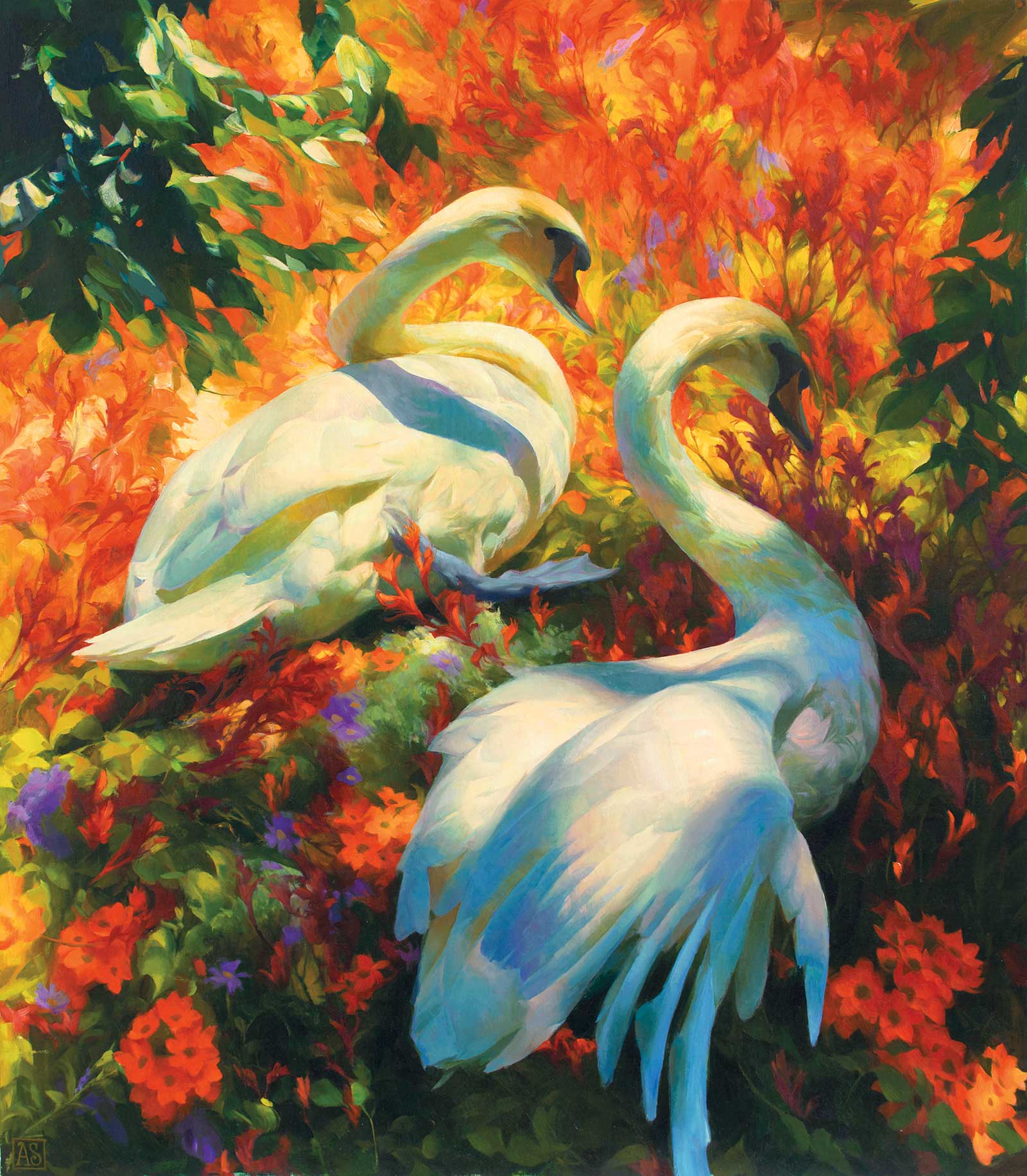
Adrienne Stein, Swan Fantasy, oil on linen, 45 x 39" (114 x 99 cm)
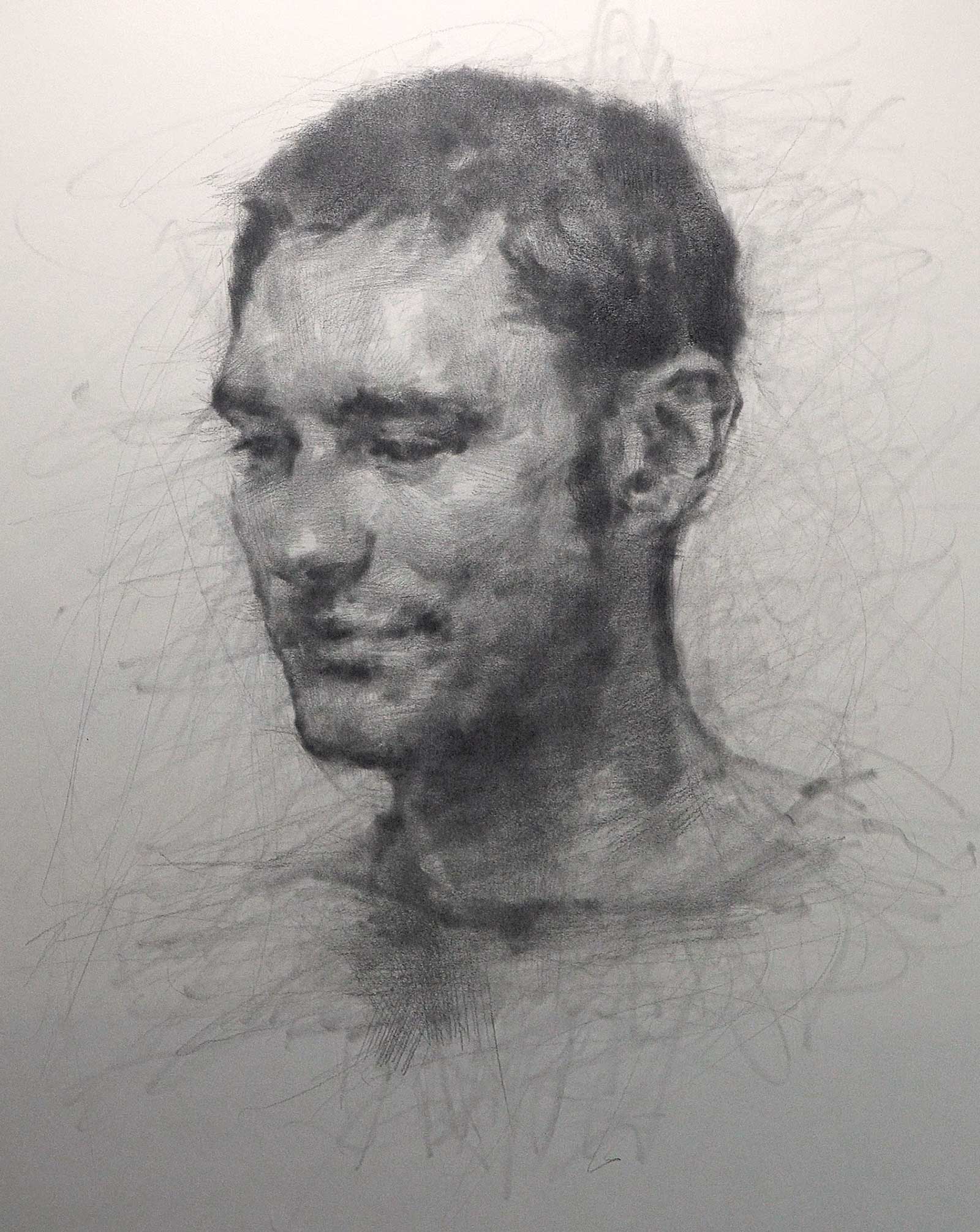
Dan Thompson, Bo, graphite on paper, 24 x 18" (60 x 45 cm)
Likewise, French American artist Wolf is interested in capturing the transcendence of the human spirit. “From early childhood memories I have been fascinated by the human form,” he says. “In college I almost deferred my design studies for an entire year so that I could finally take one figure drawing class at my university. Thankfully I did not end up doing that! When I had my first-ever experience drawing the nude model as a new student at the Angel Academy of Art in Florence, I knew my path was before me.” He continues, “When I was beginning my career as a professional artist, I knew I wanted to share my understanding of the human condition uniquely using the fully nude human form, totally free of any accessories and context. At first this meant single nudes maxed out in their formats, then I evolved into multi-figure works on an even larger scale. I began to use music as one of my inspiration sources, delving into choral pieces and opera arias and portraying them with the nude. Intentionally incorporating music was a big step in becoming more of a storyteller with my work, and it is something I will continue to explore.”
Look out for more words of wisdom from our 2025 The Art of the Portrait faculty artists in the following issue. For information on registering for the conference or submitting your work to The International, visit portraitsociety.org. —