Before he was the Painter of Light, and before I was the creator of Dinotopia, Tom Kinkade and I were two unknown and penniless art students. We had grown weary of sitting in windowless classrooms enduring lectures about art theory. We hatched a bold plan to drop out of school for a while, hop on a freight train and discover America, documenting everything in our sketchbooks. Our heroes were Lewis and Clark, John Steinbeck and Jack Kerouac. My mother was so terrified of the fate that might befall me (her brother was killed by a freight train) that she took out a life insurance policy on me. On September 16, 1980, a friend dropped us off at the Los Angeles freight yard. We spotted a boxcar with an open door, threw our backpacks into it, climbed aboard and sat in the shadows waiting for the train to start rolling east.
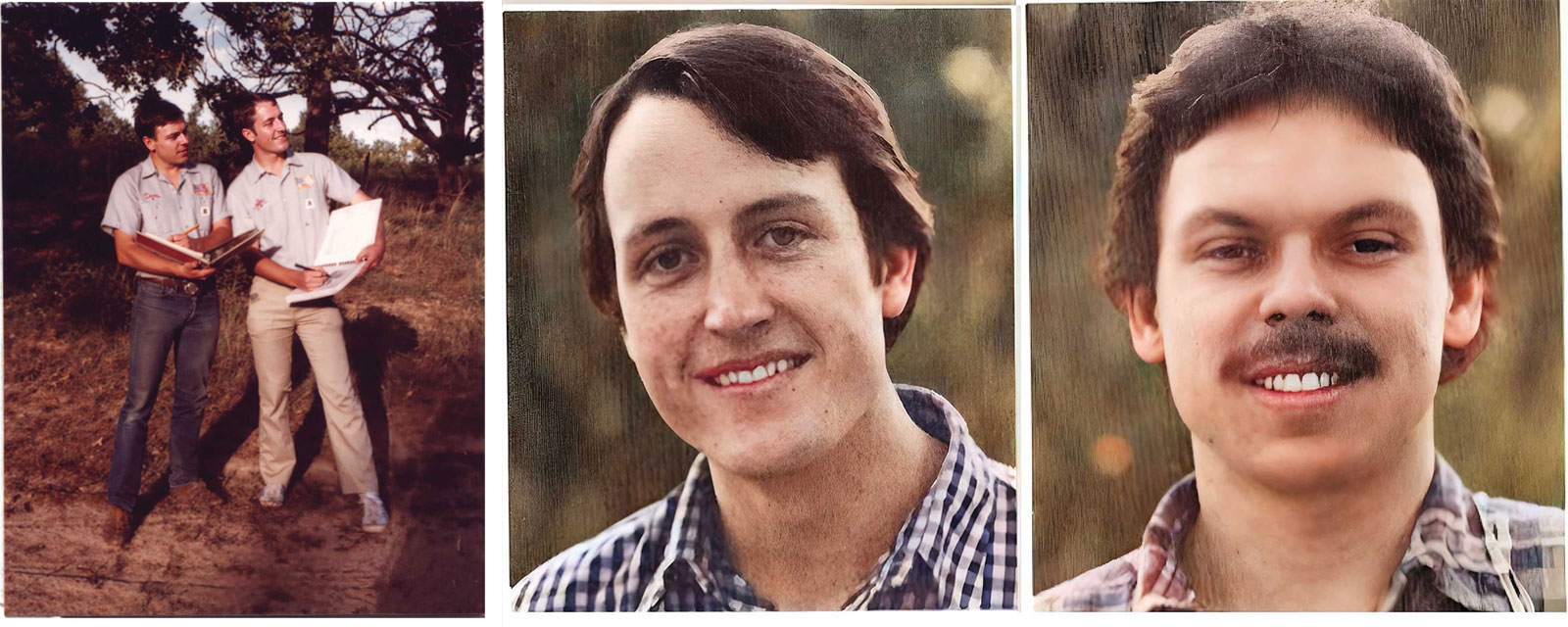
James Gurney and Thomas Kinkade in 1981.
I first met Tom Kinkade four years earlier, when he was assigned as my freshman college roommate at UC Berkeley. During the time I knew him he was painting gritty urban scenes and “street people.” The print business, with its glowing cottages, came later. We saw ourselves as rootless bohemians, called each other “Jackson” and invented a secret language that only we understood so we could comment freely in public. We concocted the train riding idea after we met a guy named Bud at a freight yard in Los Angeles. He told us which train cars to ride and where to catch them.
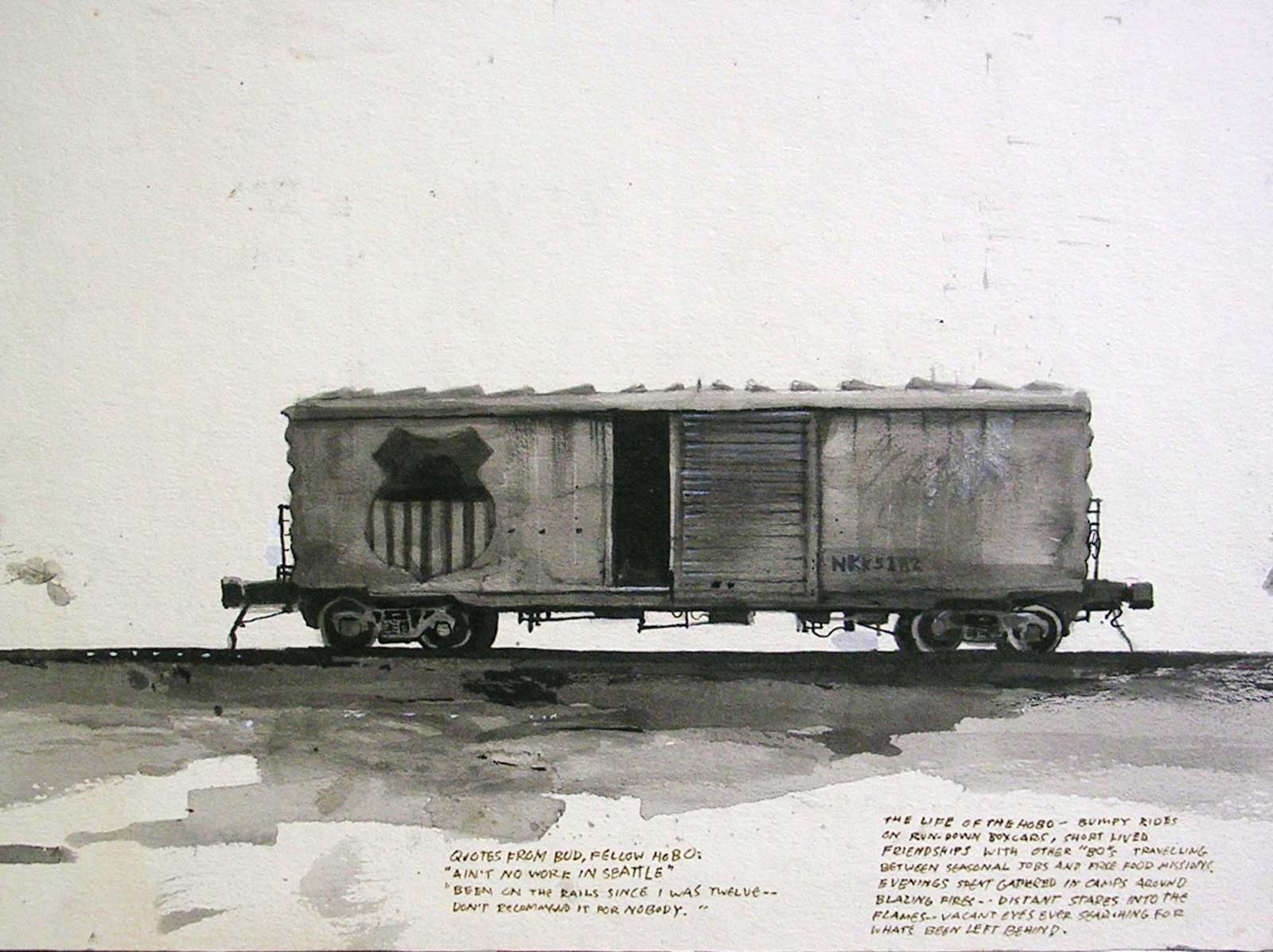
Thomas Kinkade (1958-2012), Boxcar, ink wash on drawing paper
We got short haircuts and matching gas-station uniform shirts that said “Jim” and “Tom.” We packed our backpacks with sketchbooks, pens, gray markers, corn cob pipes, felt hats, a cheap camera, tape recorders and harmonicas. We slept in graveyards and on rooftops and sketched portraits of lumberjacks and coal miners. To make money we drew two-dollar portraits in bars by the light of cigarette machines. One night we slept in the bicycle parking room of a college dorm. Another night we slept on top of a load of hay bales stacked on a parked truck. The truck started rolling at dawn, and we had to jump onto the cab to get the driver to stop. We spent some time in the little town of Doniphan, Missouri, where Tom’s mom lived.
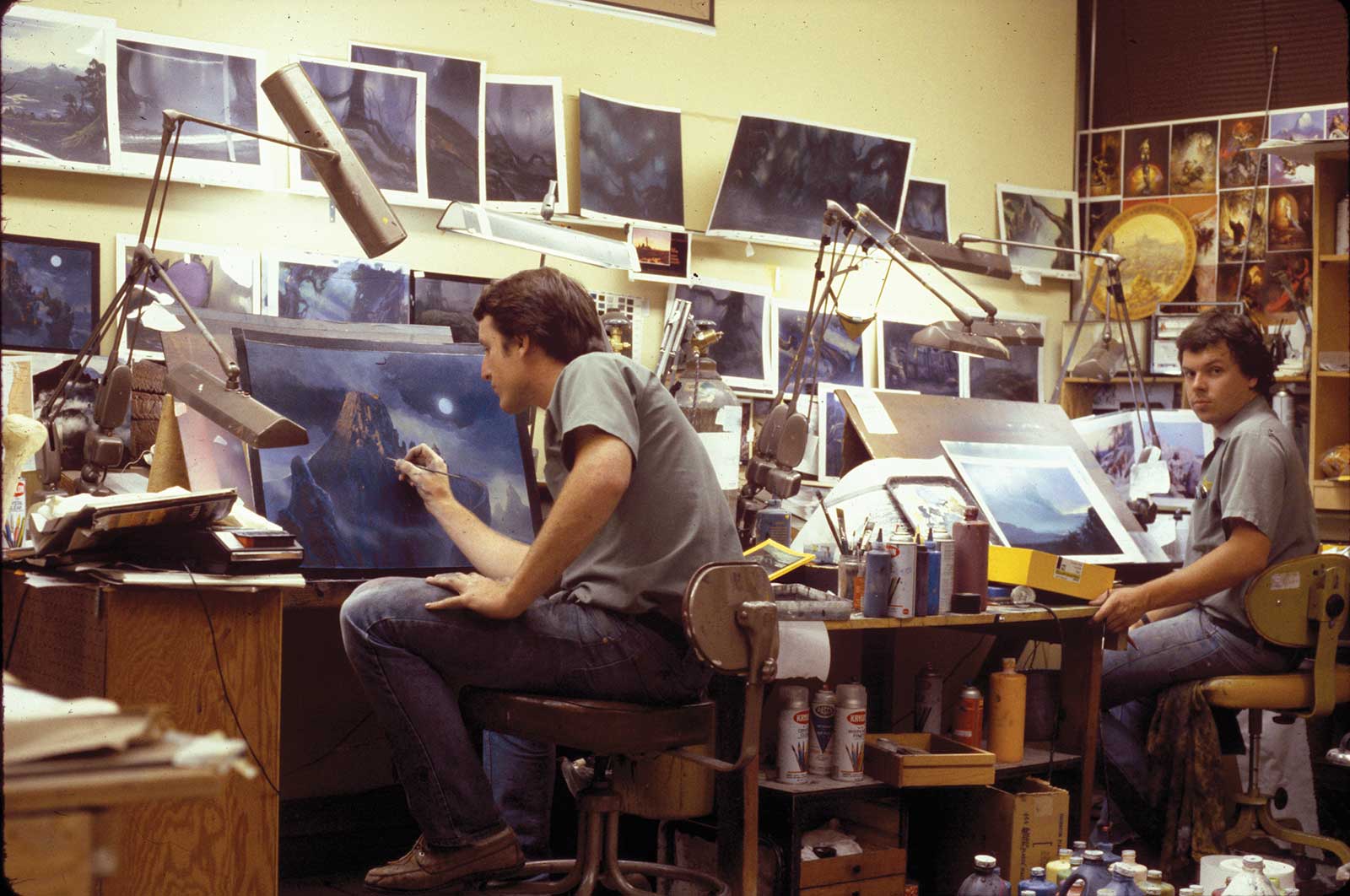
James and Thomas painting backgrounds for the animated film Fire and Ice, 1981.
We boarded the freights again and rode all the way to Willard, Ohio, where we were kicked off at gunpoint by police officers, who had received reports that we were trying to fly a kite off the top of the train. By the time we made it to New York City, we had concocted another crazy idea: to write a how-to book on sketching. We figured out the basic plan for the book on paper placemats from a Burger King on the Upper West Side. We made the rounds of the publishers without much luck.
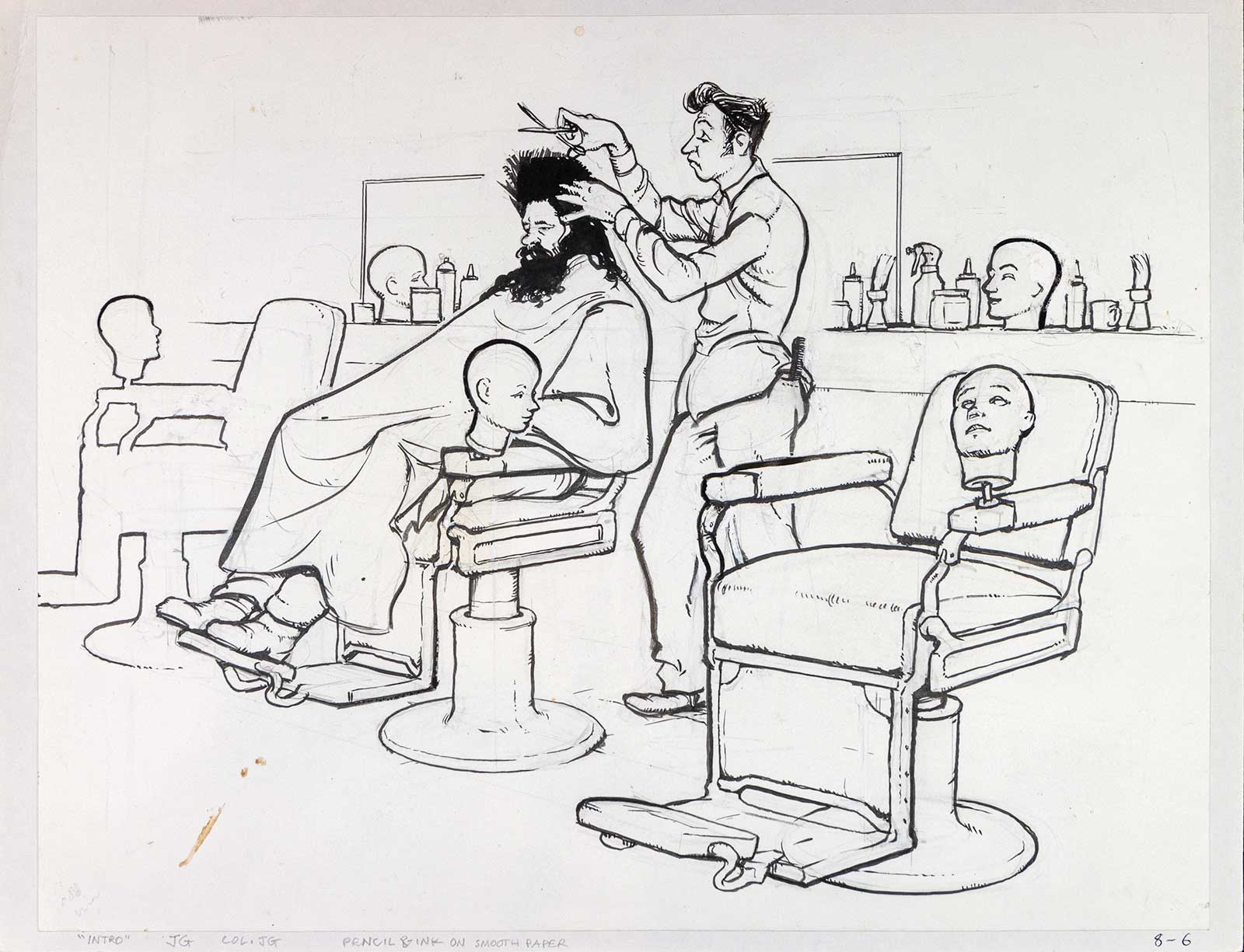
James Gurney, Barbershop, brush and ink on smooth paper
After returning to Los Angeles we still had no money, so we got a job painting backgrounds for an animated film called Fire and Ice. We eventually got the book contract from Watson-Guptill, but we had to break the news to the film’s producer that we had to write our book on sketching during long weekends while still keeping up our production quotas. The Artist’s Guide to Sketching was published in 1982. It is as much about the adventure of sketching on the road as it is about technique. All the sketches in the book were done 100 percent on location.
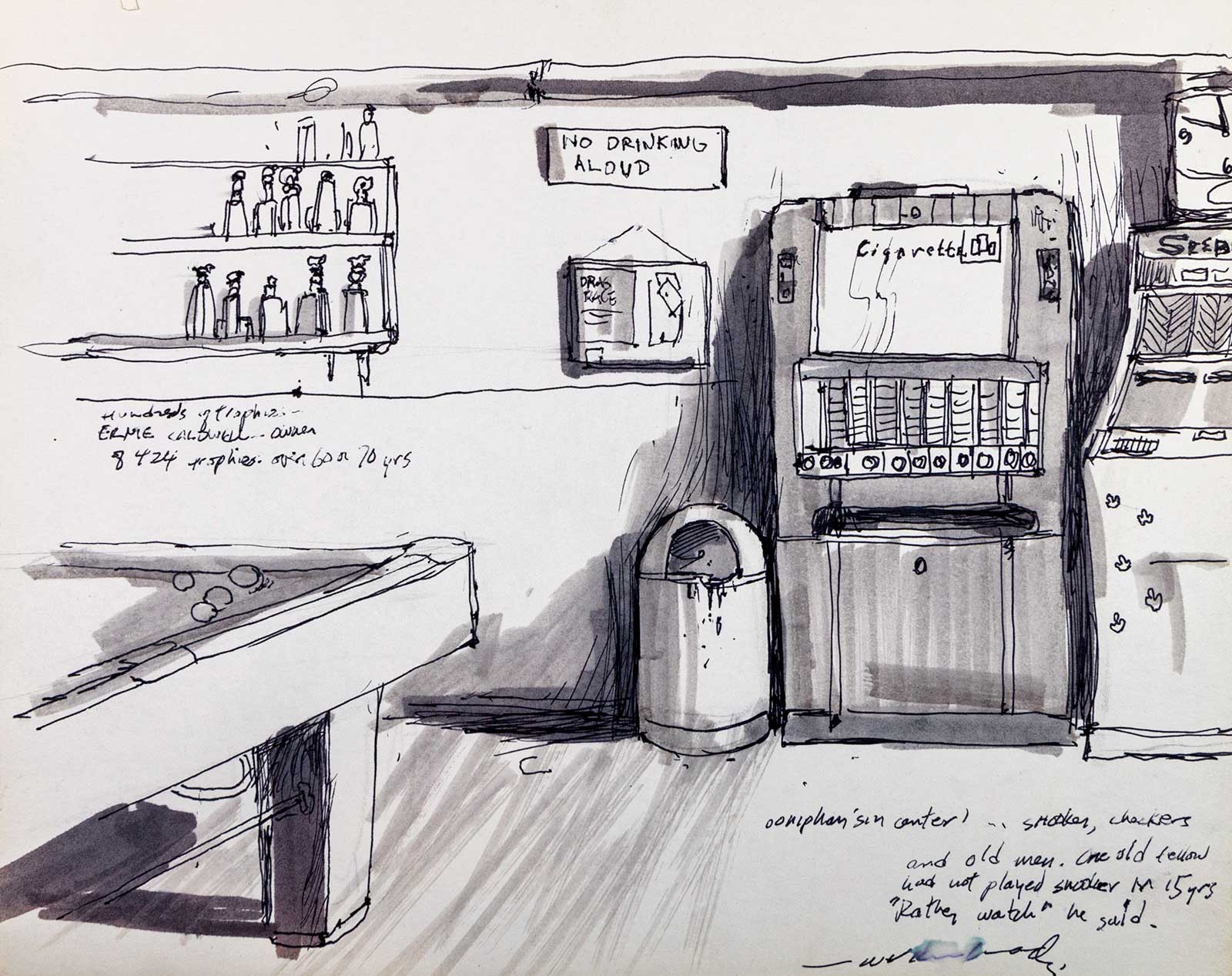
Thomas Kinkade (1958-2012), Sin Center, Doniphan, Missouri, fine-line and gray markers on smooth paper
We never returned to art school. My friend Jeanette and I stayed in touch and we did some sketching trips together. She eventually graduated from art school, and I learned what I could from her class notes. After the book was published, Tom returned to his hometown and married Nanette, his childhood sweetheart, and I married Jeanette. Tom and I were the best man for each others’ weddings.
I was always friendly with Tom in later years, but we were both busy and lived on opposite ends of the United States. Our families got together for a few painting excursions during the subsequent decades, to Ireland, to Colorado and to the Catskills of New York State. Tom and I didn’t keep in close contact with each other during the years he was building up his print company, and I was only dimly aware of the personal issues that eventually led to his death in 2012.
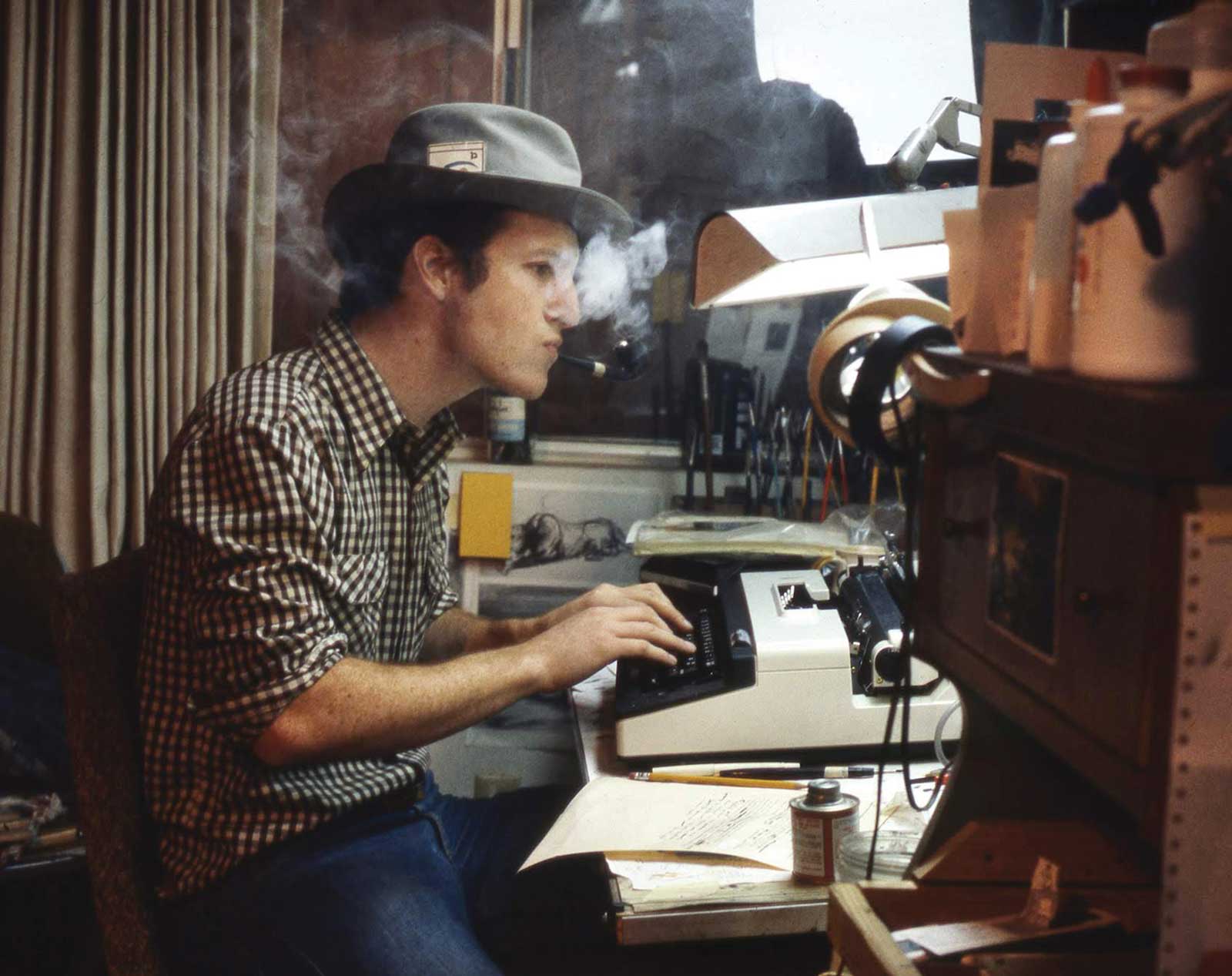
James Gurney writing The Artist’s Guide to Sketching.
Our friendship was partly fueled by a good-natured, high-spirited friendly competition, and a spirit of daring and discovery that still drives me today. The Kinkade I knew was a puckish prankster, fearless and exuberant. He was a good foil to my personality, a Huck Finn to my Tom Sawyer.
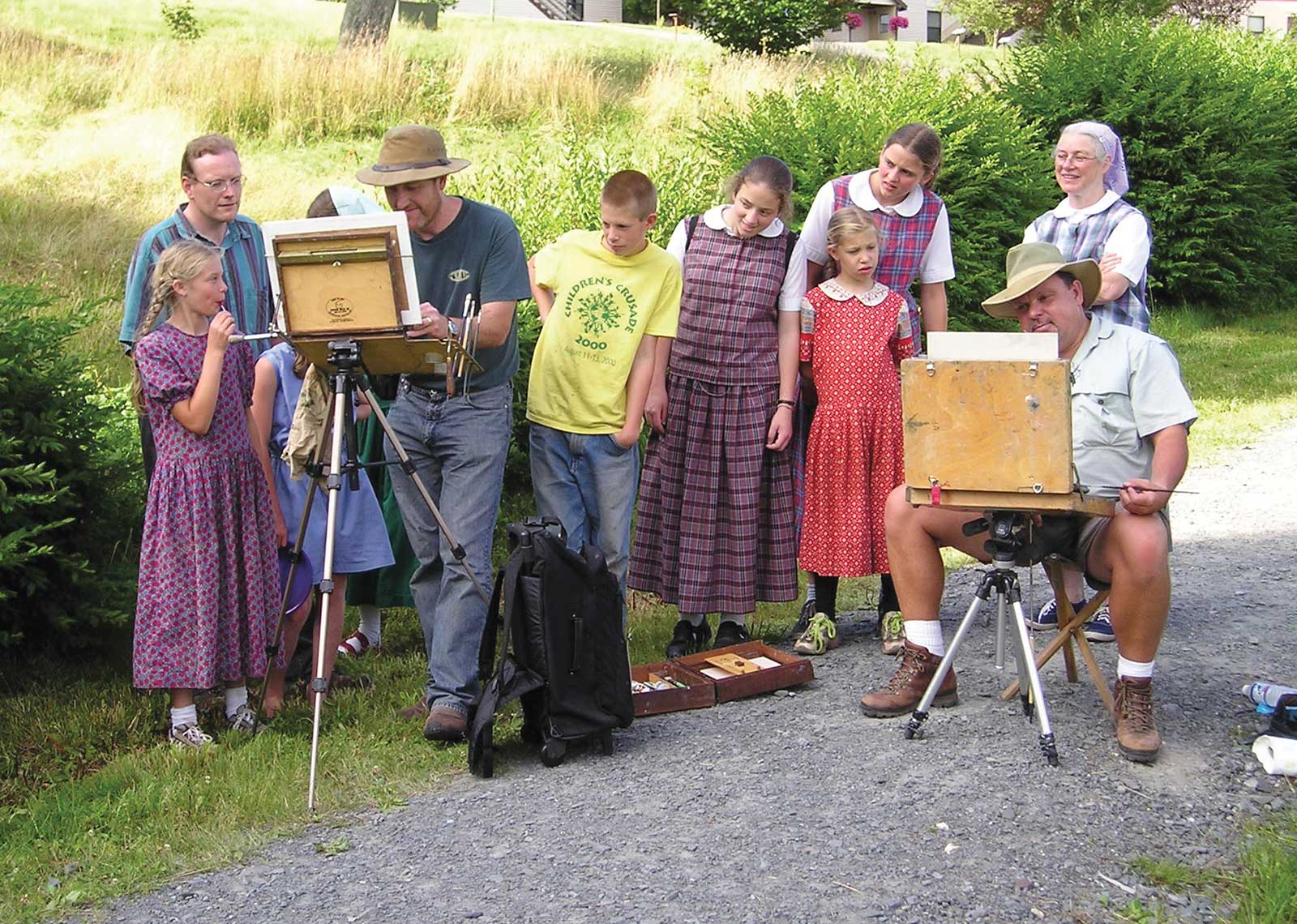
James Gurney and Thomas Kinkade painting in the Catskills in 2005.
Ultimately we wrote the book on sketching. It sold out the first printing and was soon out of print and hard to get. In the time since The Artist’s Guide to Sketching was first published, sketching from life has grown more and more popular. I’ve been pleased to witness the emergence of the movements that have come to be known as “plein air painting” and “urban sketching.” Today aspiring artists can find friends in almost any region of the world, and share their sketches and stories with online communities.
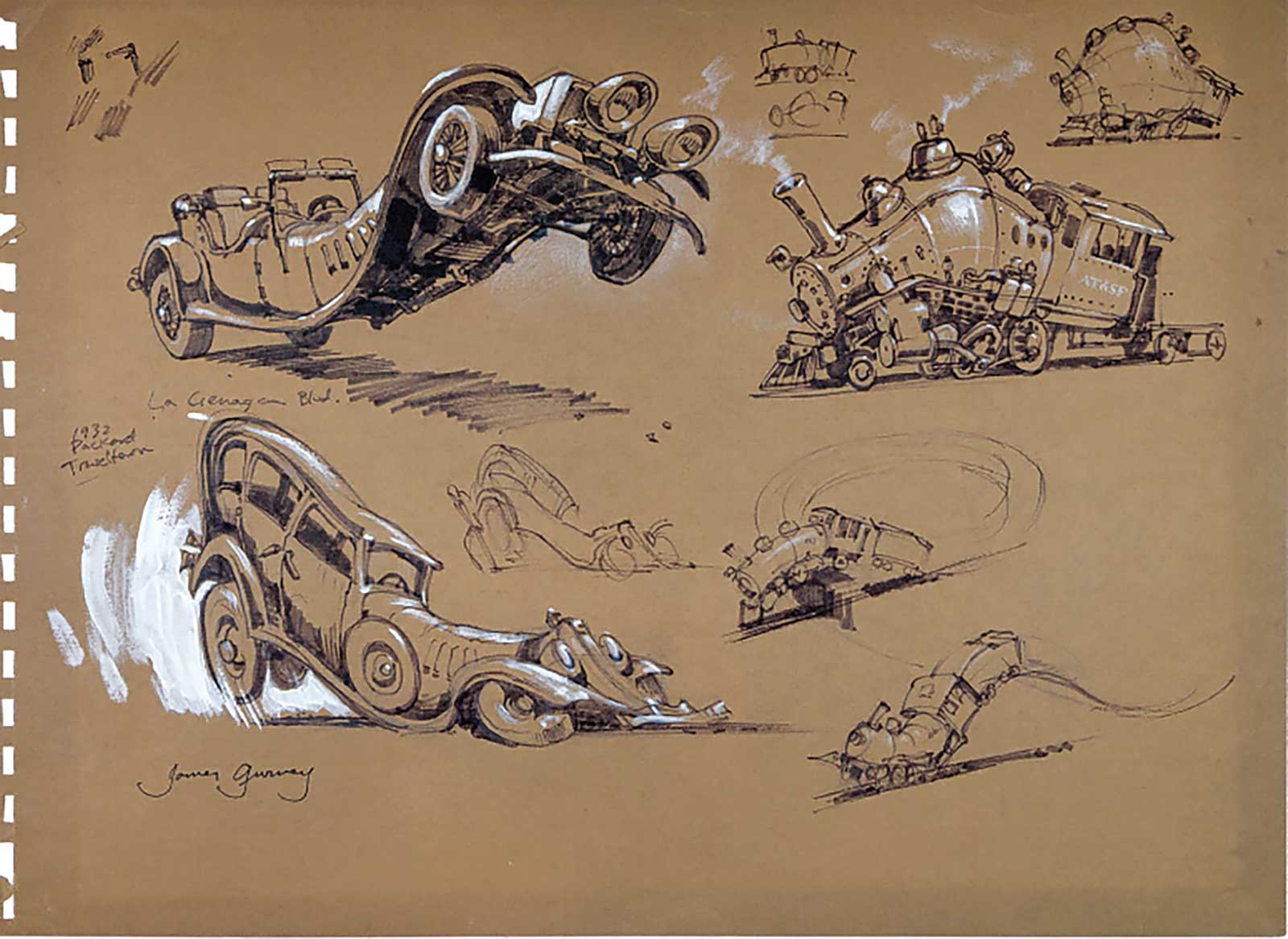
James Gurney, Lifelike Cars and Trains, calligraphy markers and white gouache on brown paper
Writing this book was my art education. It set the personal compass for my career afterward. It’s no accident that I conceived Dinotopia as an explorer’s sketchbook. Sketching in black and white was a helpful training ground for me to learn painting in full color. But the greatest benefit of sketching has been connecting with new places and new people. It taught me to be not just an eyewitness, but also an engaged participant in the ever changing world around us.
The new edition of The Artist’s Guide to Sketching was recently published. We have kept everything as much as possible as it was, but we’ve expanded the book with additional artwork created during the same period, and we rescanned all the artwork and printed it for the first time in full color.