To me, clouds, in their ethereal and ever-changing splendor, serve as a canvas upon which any emotion or feeling can be portrayed. Their formless nature allows them to be compared to almost anything, embodying the boundless freedom of interpretation and expression in art.
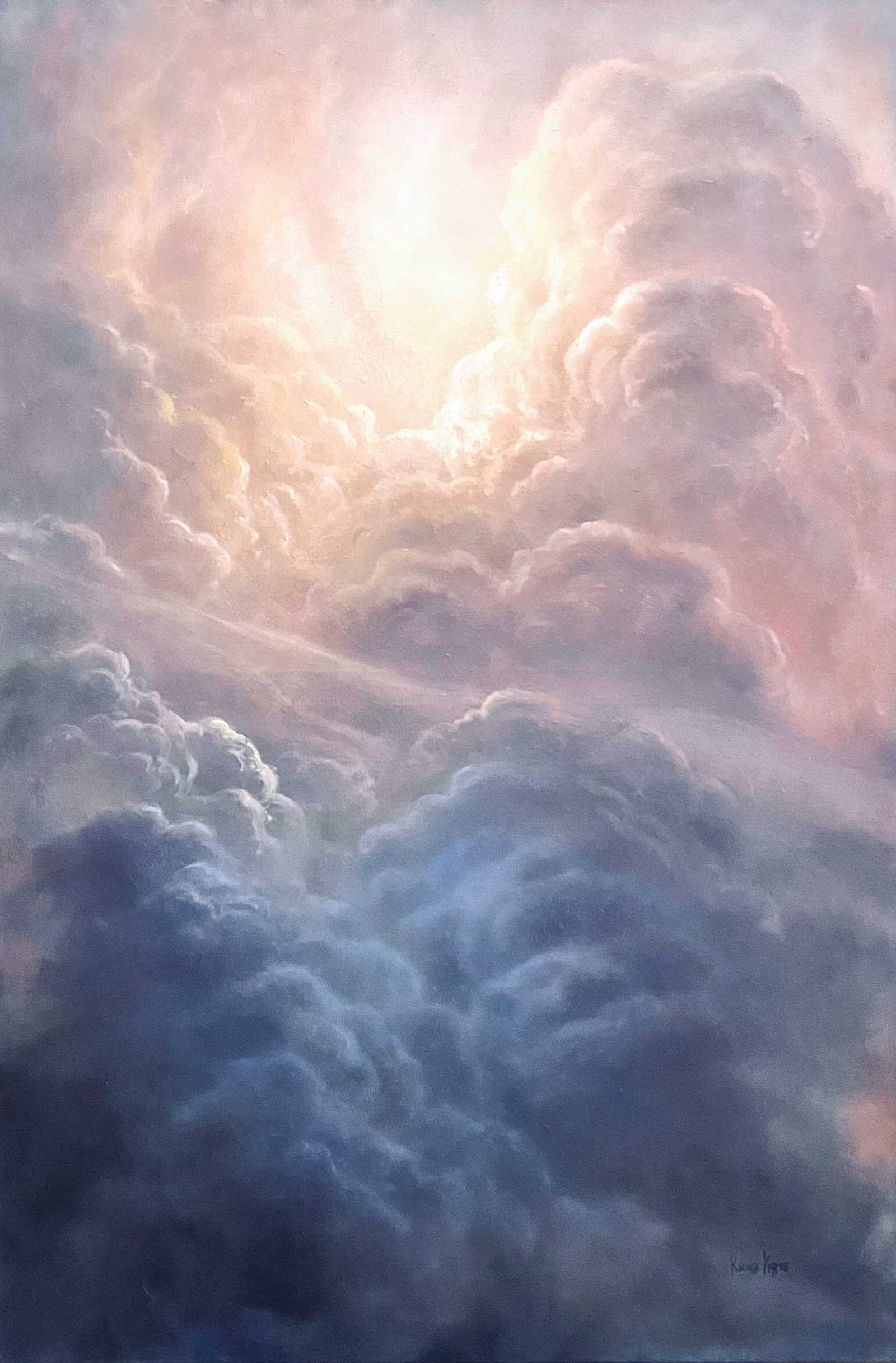
Iridescent Solace, oil on canvas, 36 x 24" (91 x 60 cm)
My approach to painting clouds reflects the limitless potential and the full spectrum of colors to capture the variety of moods and atmospheres clouds can convey. This unrestricted choice of colors is not random but a deliberate strategy to evoke specific emotions and to enhance the visual storytelling of a piece.
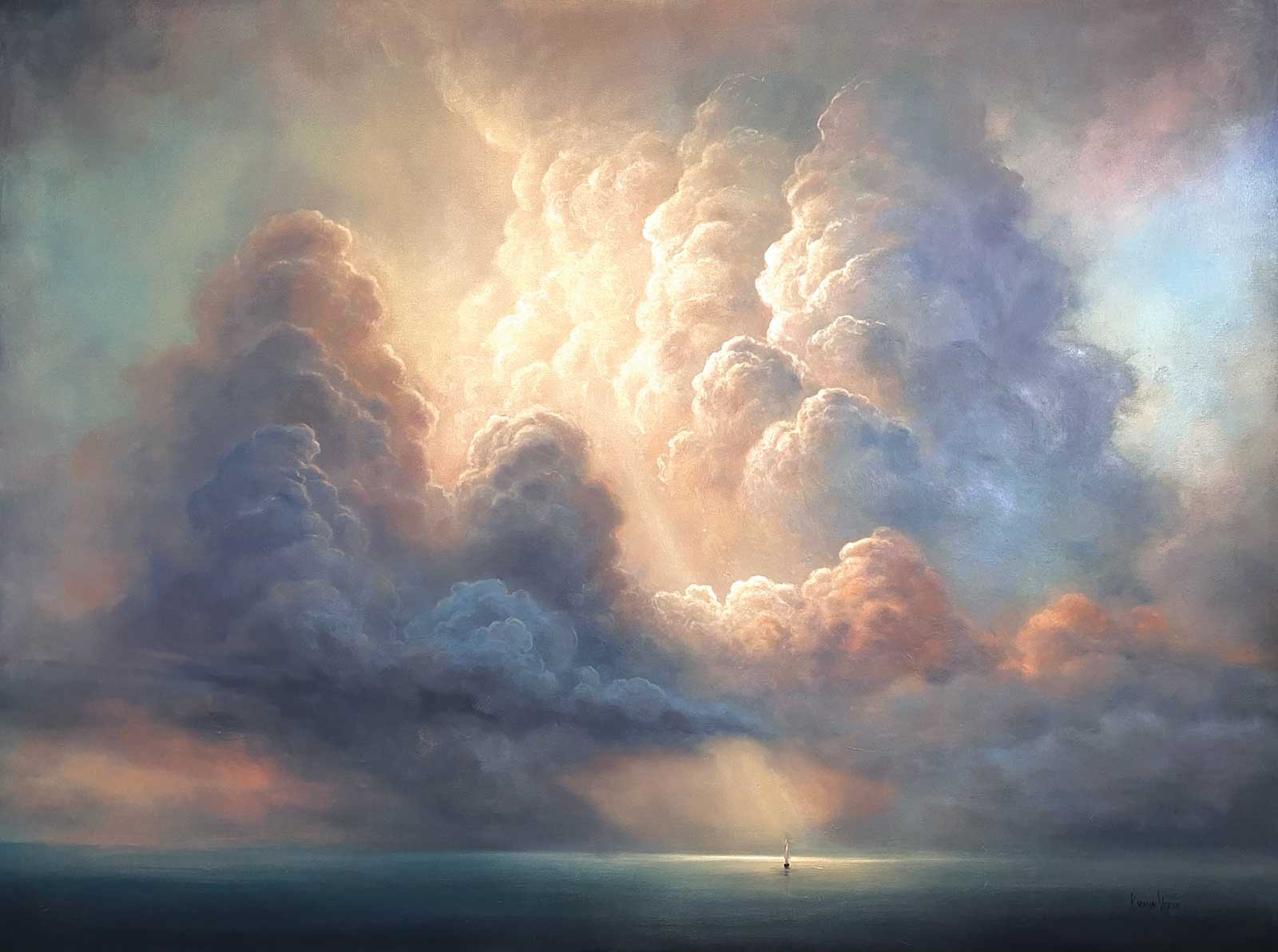
Heavenly Hues, oil on canvas, 36 x 48" (91 x 121 cm)
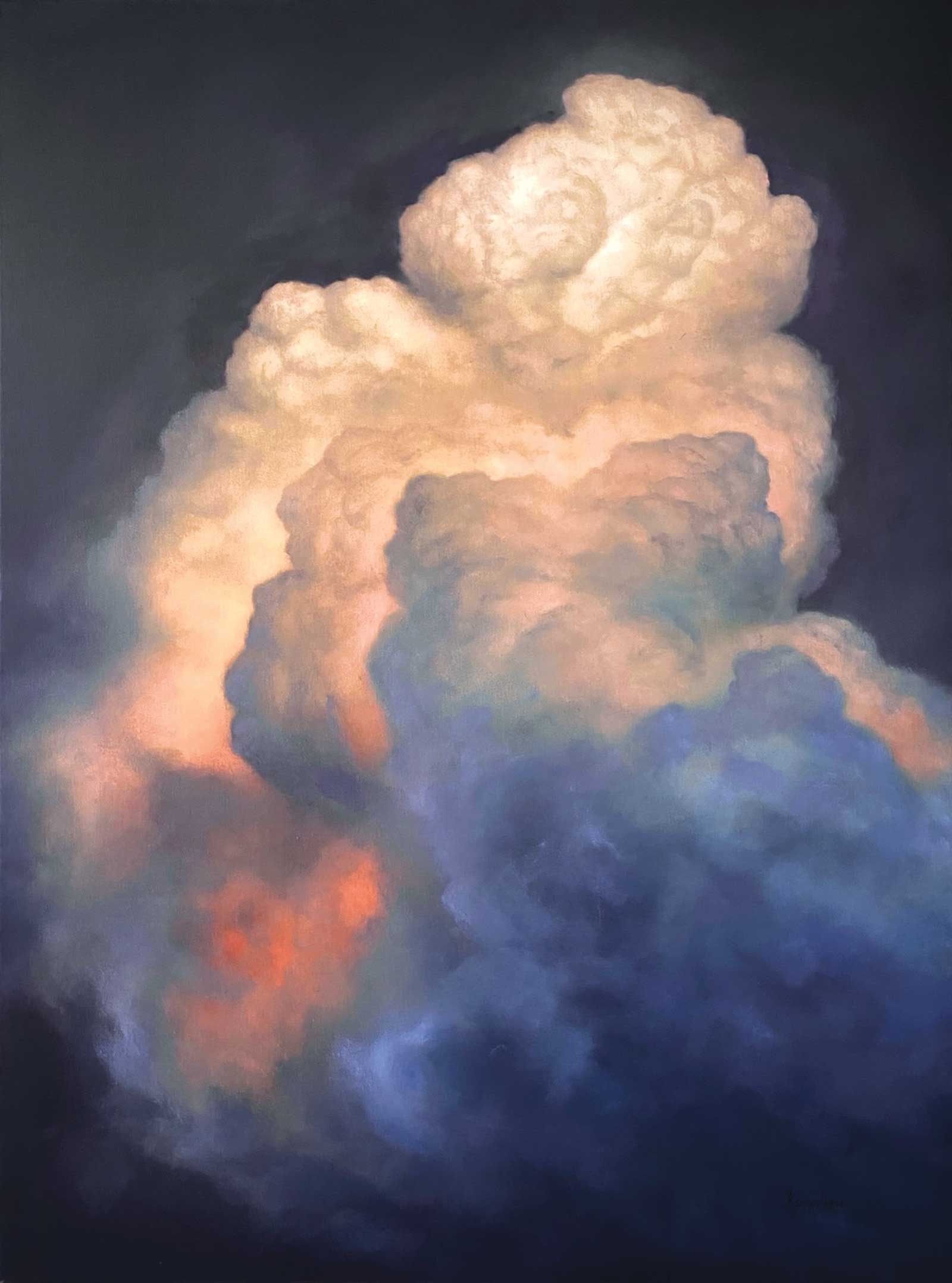
Creatio Nubis, oil on canvas, 48 x 36" (121 x 91 cm)
To successfully translate the complex beauty of clouds onto canvas, my essential tools include soft brushes and a palette knife. These tools offer the versatility needed to mimic the soft, delicate textures of clouds as well as their dynamic, sculptural forms. Given the complexity and variability of clouds, reference photos are useful for capturing their essence realistically, enabling an artist to study and replicate the countless details that make clouds so captivating.
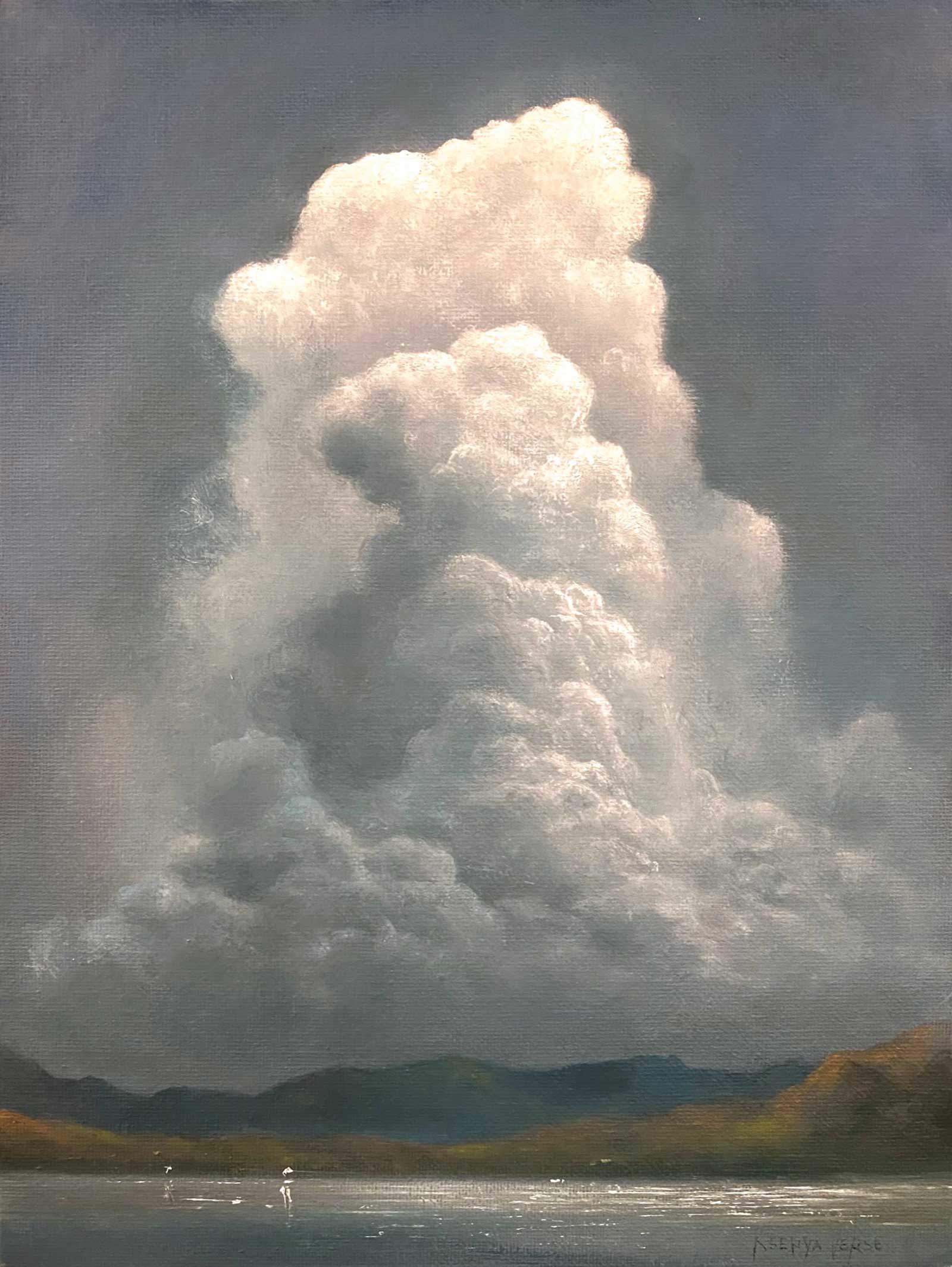
Cumulus Temple, oil on canvas, 12 x 9" (30 x 22 cm)
In summary, my color philosophy is grounded in the belief that color is a powerful medium of expression, capable of conveying a wide range of emotions and atmospheres. By understanding clouds’ versatile and dynamic nature, artists can utilize color without limitations, enabling them to depict the natural world in all its fleeting beauty.
My Art in the Making Manifestation
In this demonstration, I will create a dramatic, beautiful cumulus cloud as it ascends mightily above the sea, with foaming waves crashing onto a distant beach, weaving a dance of nature’s power and beauty.
I’ll be using Williamsburg fine oils on canvas to capture this stunning scene, as well as my favorite Tintoretto brushes for their versatility, allowing me to detail the cloud’s grandeur and the sea’s power in a vivid and dynamic way.
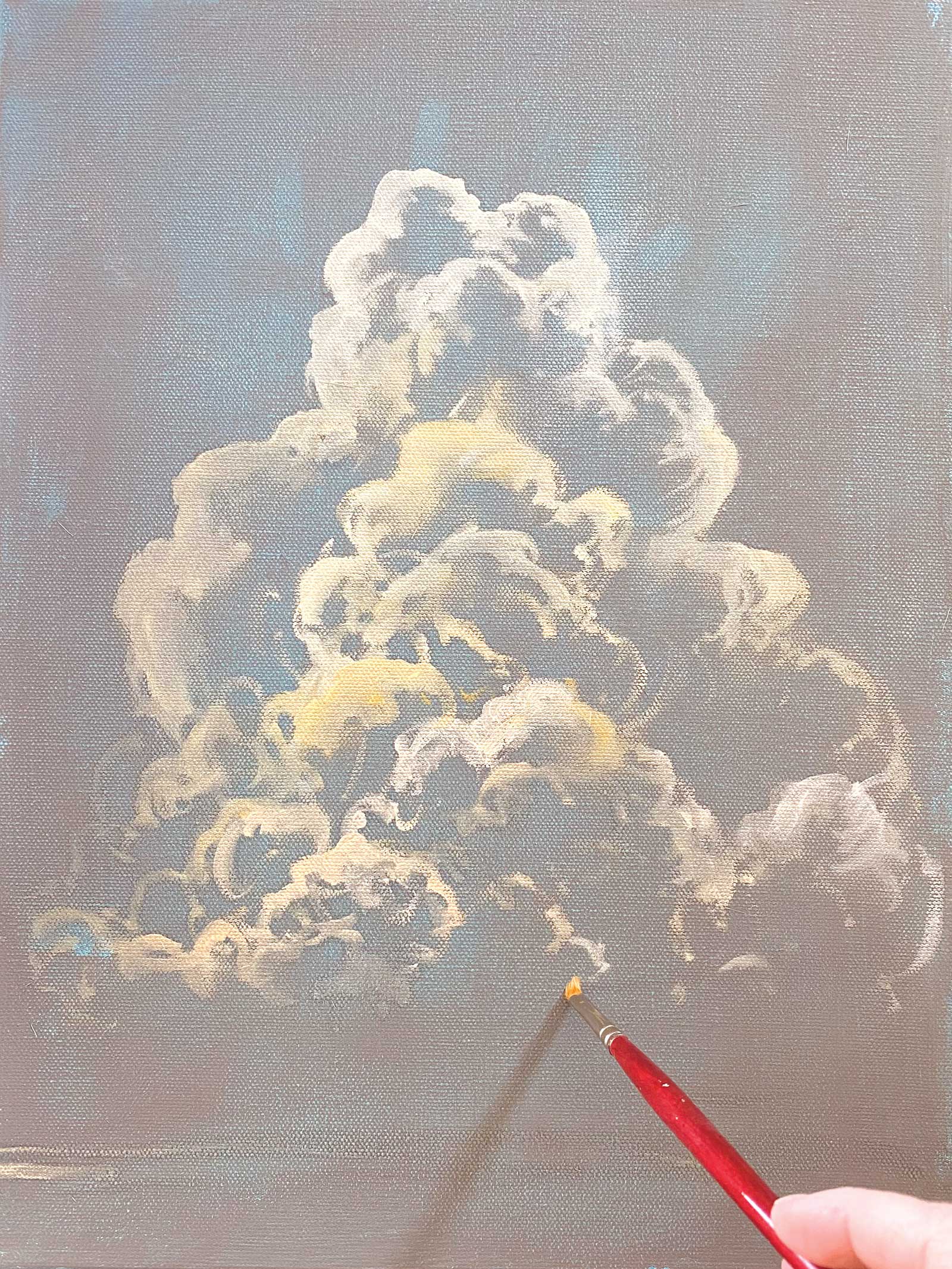 Stage 1
Stage 1 Base Layer of Color
I begin by laying down a base of color instead of facing a blank white canvas. I don’t sketch with pencil. Rather, using a detailed brush, I sketch with paint and let it take form as I go.
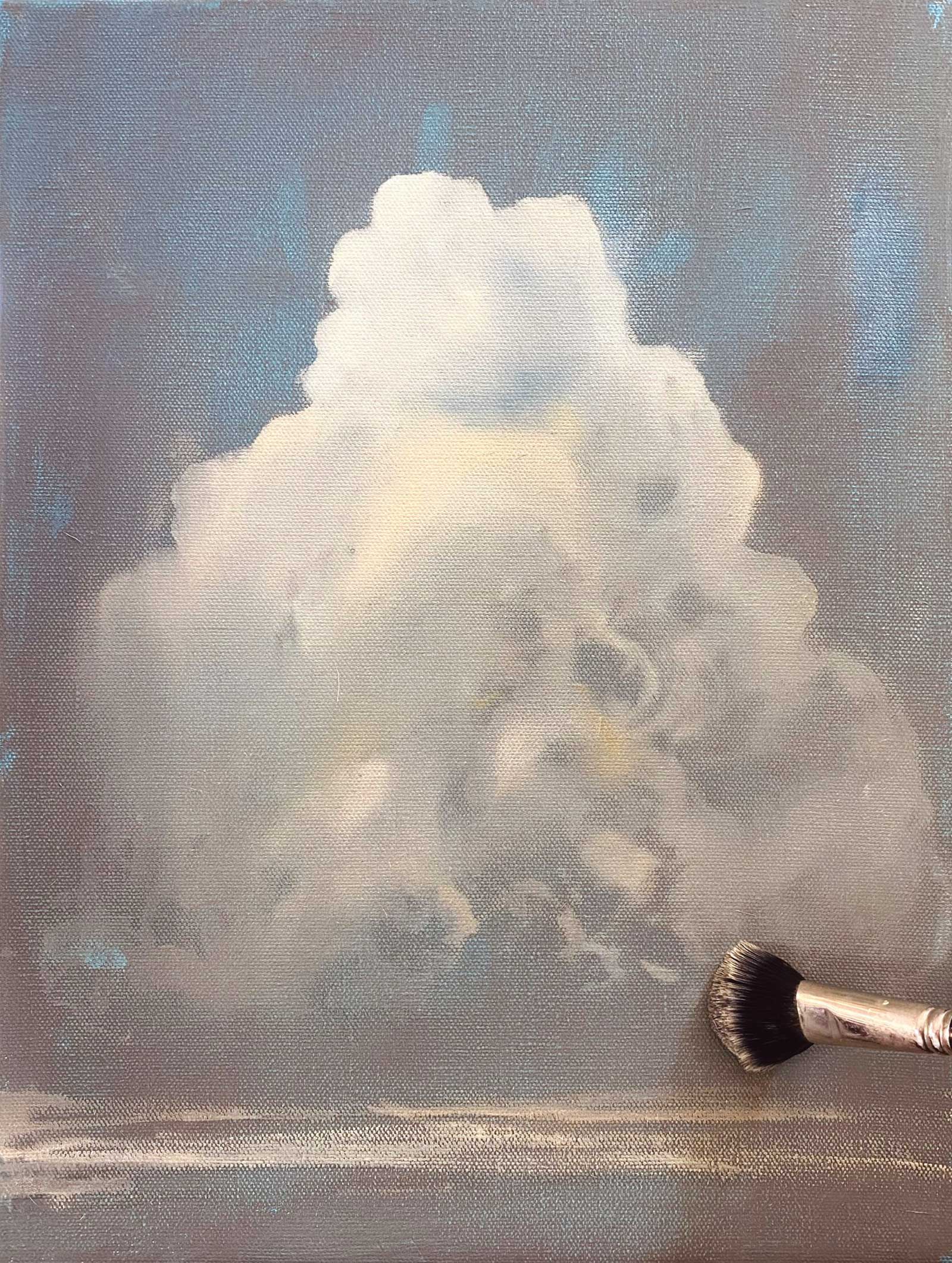 Stage 2
Stage 2 Oil Sketch
With a soft mop brush I lightly mix the oil paint sketch and smooth it all around where it takes more and more form. I use the softest Tintoretto mop brushes as they created ones specifically for me that work perfectly.
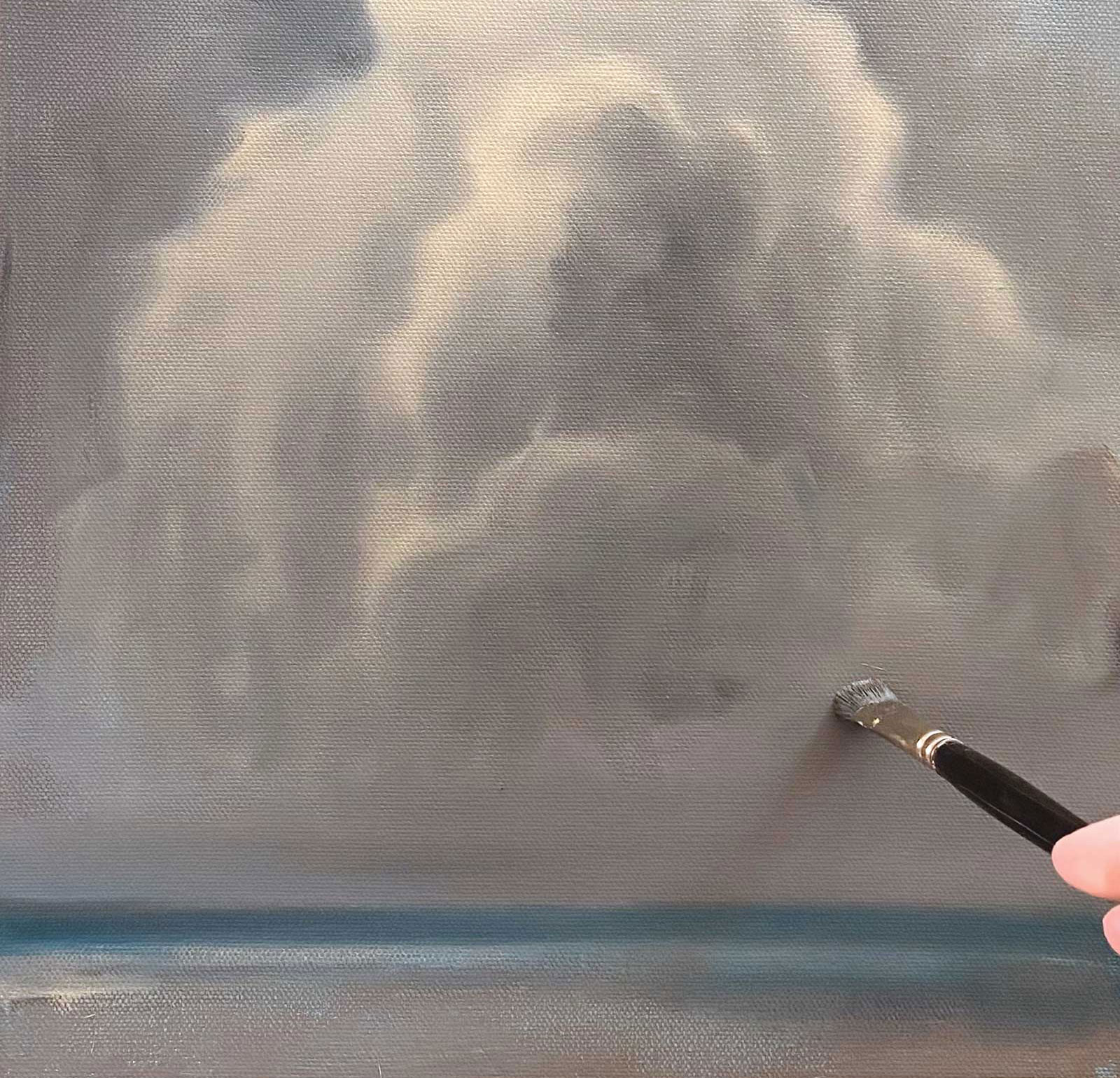 Stage 3
Stage 3 Creating Depth
As I smooth out the cloud, I start to add blocks of contrasting colors to create depth. I mix phthalo blue, pink, a little black or gray and a little purple for shading and work around the shapes with a soft filbert brush.
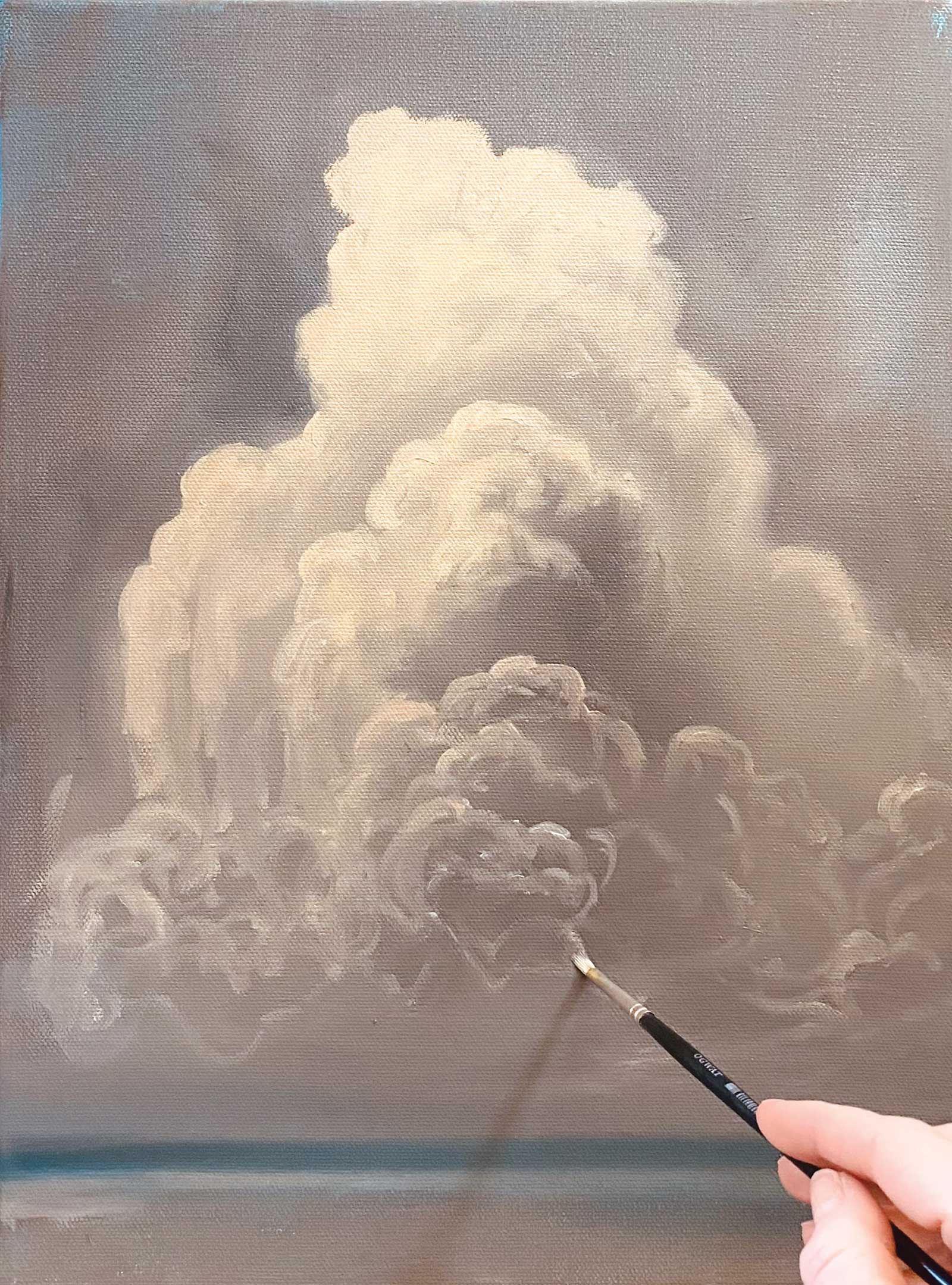 Stage 4
Stage 4 Highlights
After laying down the dark contrasts and smoothing it all with a mop brush, I now lay down the highlighting forms as I go, adding shape and depth to the cloud. I use a soft detail brush for thin silver linings.
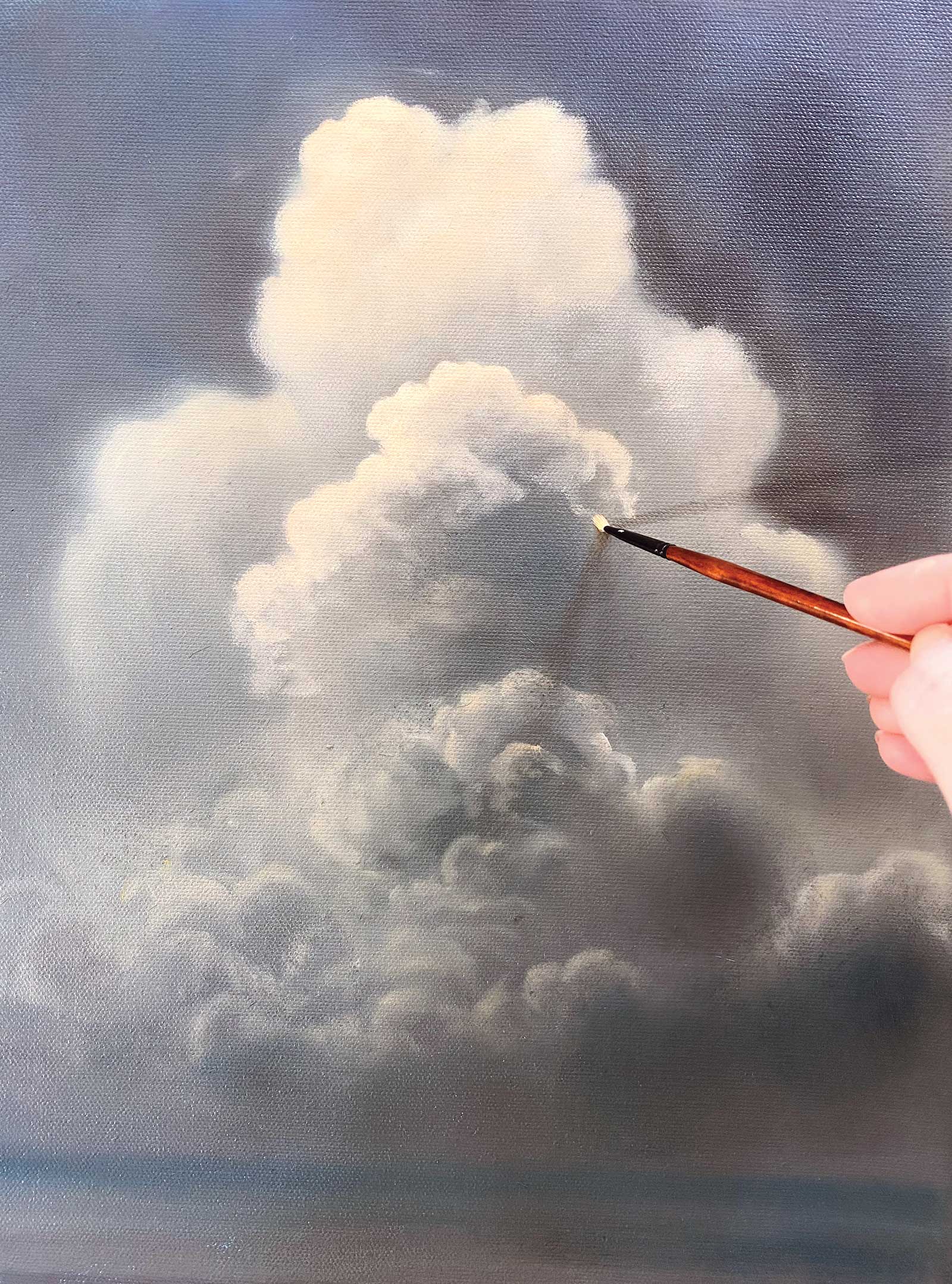 Stage 5
Stage 5 Softening the Scene
After the cloud is constructed with details, I smooth it yet again with a mop brush in very light gestures so I don’t entirely smooth them back. And with a soft, small filbert goat hair brush, I add another layer of highlights: a mix of titanium white, lemon yellow and just a dip of pink.
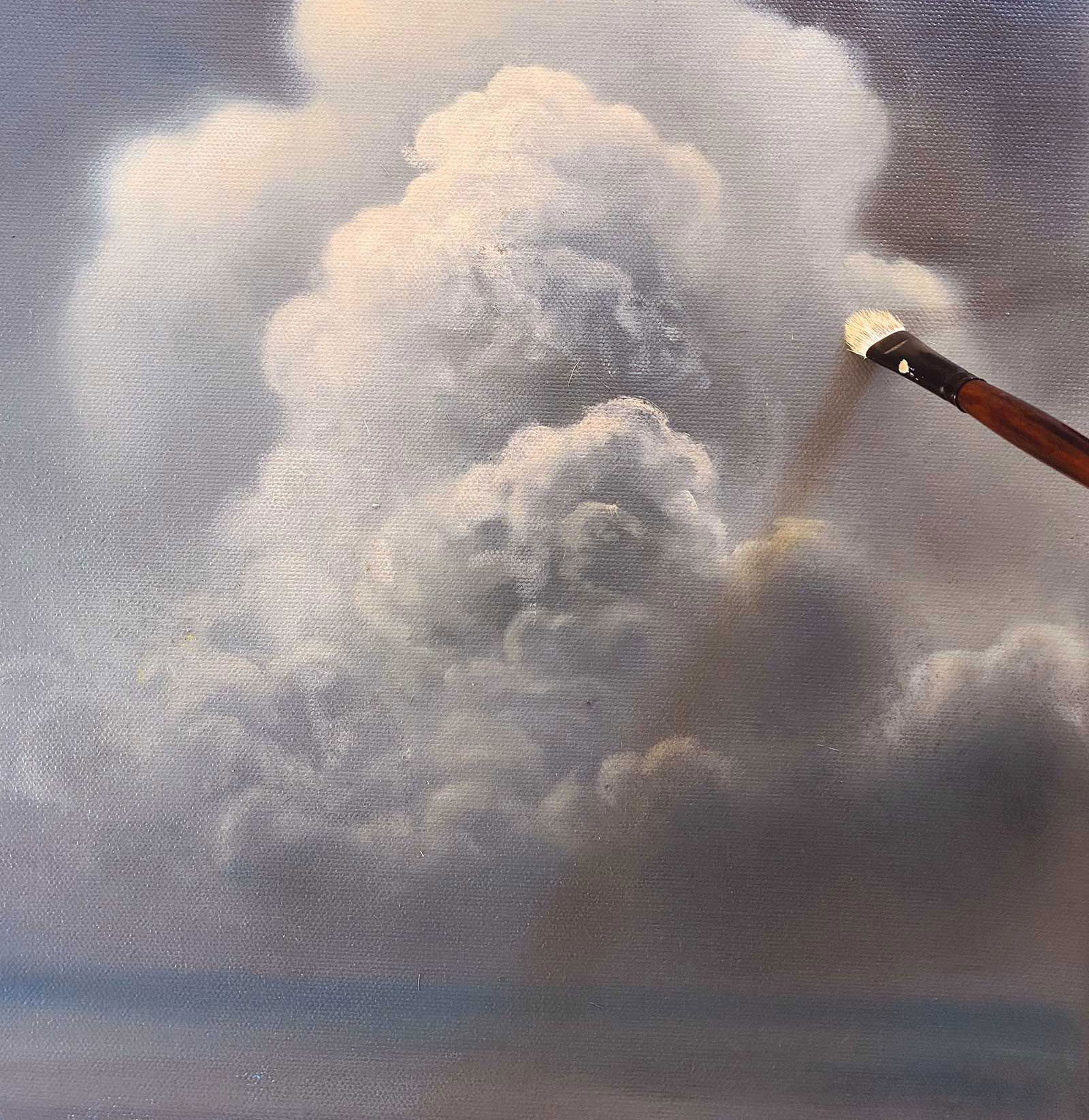 Stage 6
Stage 6 Continuing to Soften
I give it another very light mop to create a smooth finish. I also look around the cloud to determine if any spots need additional contrasts.
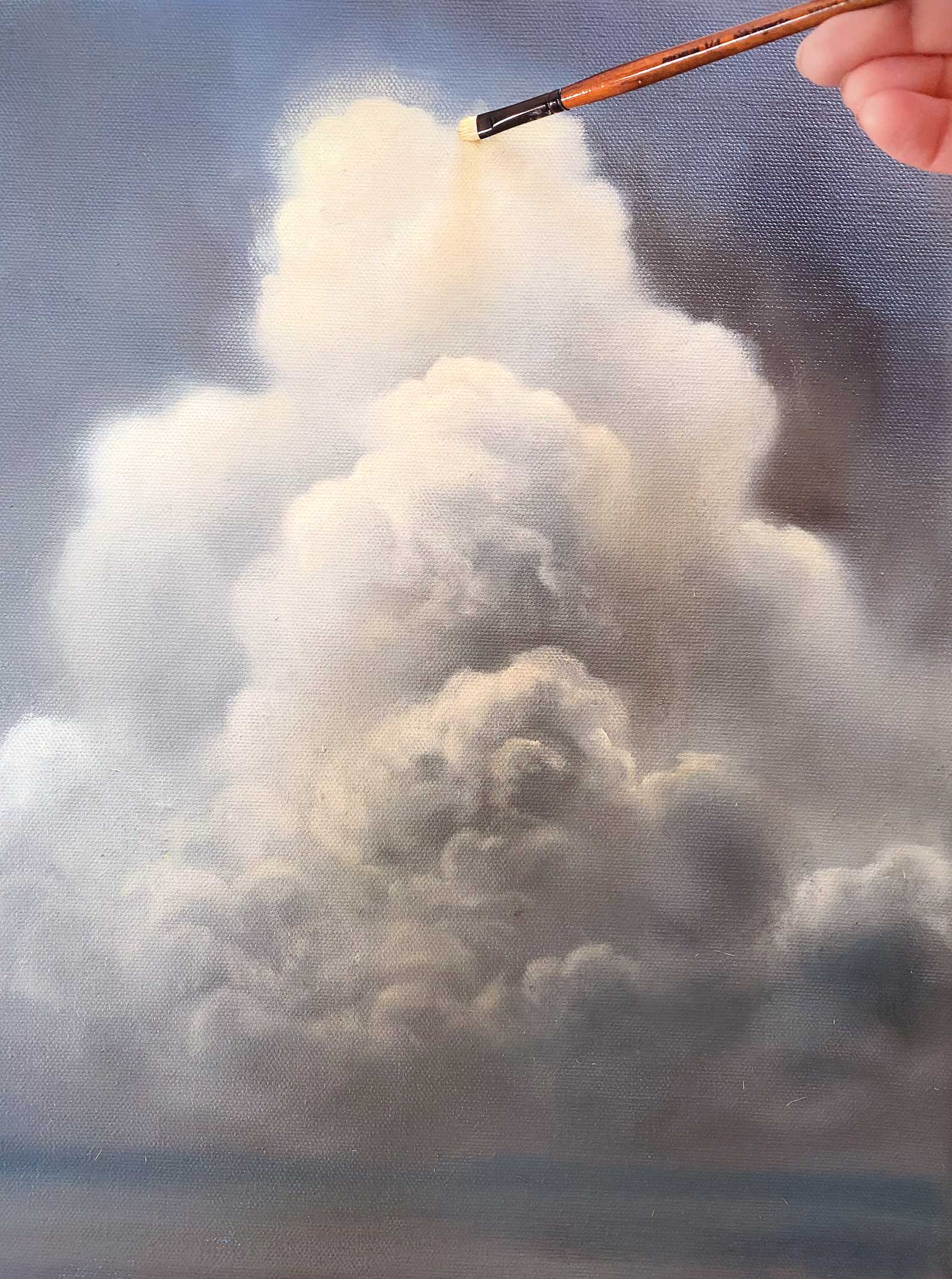 Stage 7
Stage 7 Ocean Waves
Using the palette knife strokes with titanium white and a little pink mix, I create the appearance of the faraway ocean waves—a simple but effective technique. Any type of longer palette knife will work for this.
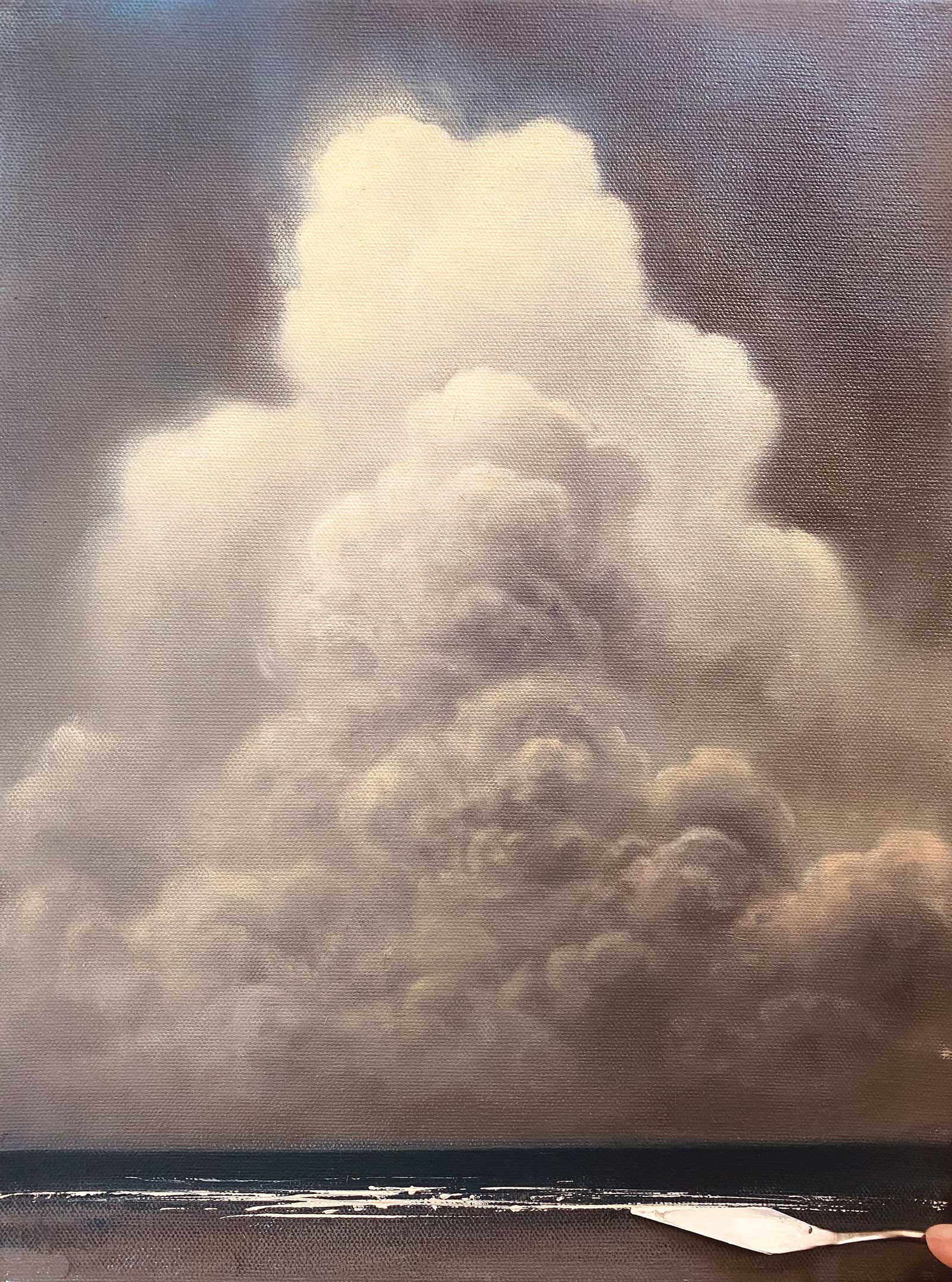 Stage 8
Stage 8 Final Details
Adding a few finishing touches.
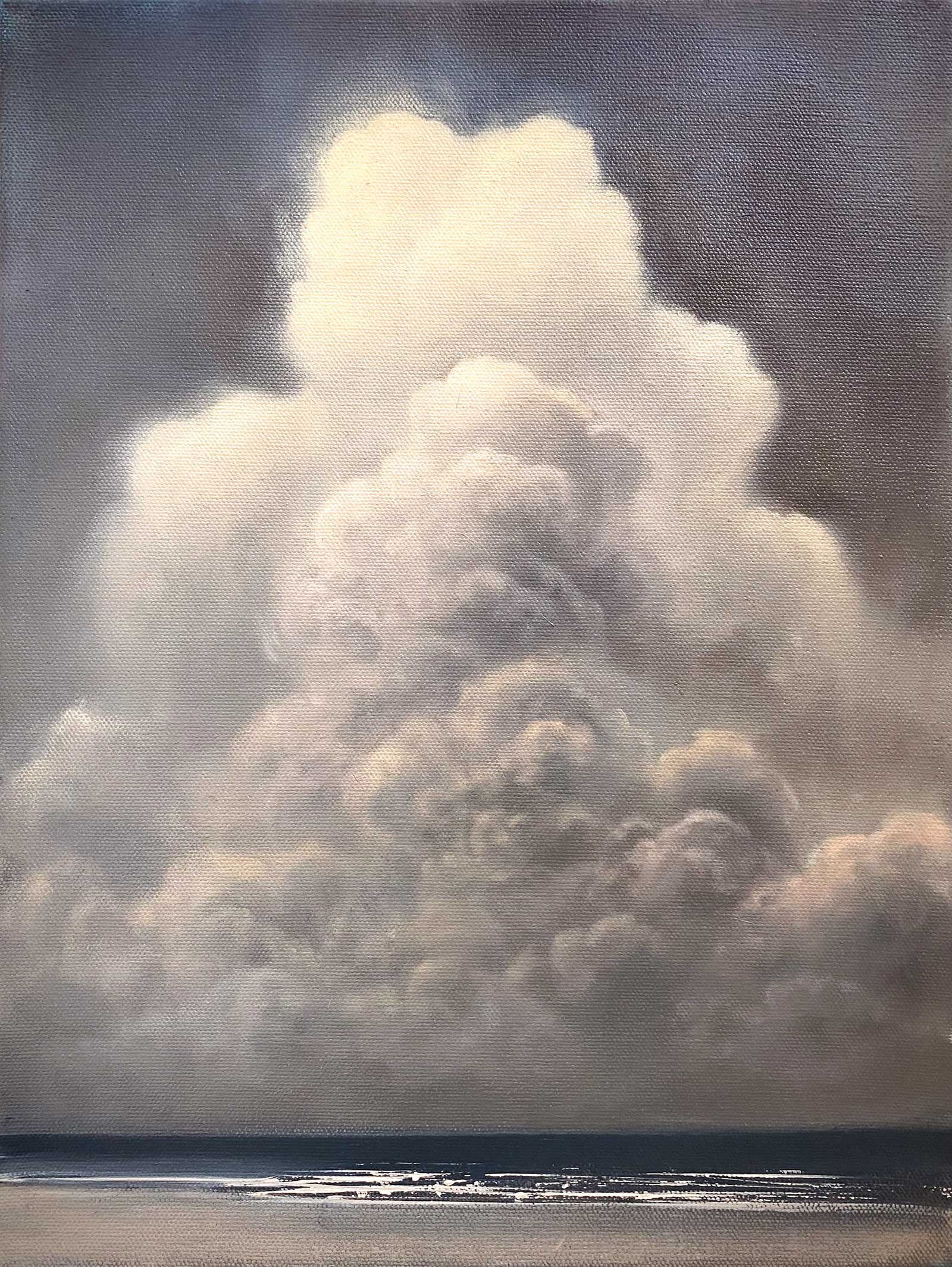 Stage 9
Stage 9 Finished Artwork
Manifestation, oil on canvas, 16 x 12" (40 x 30 cm)
About the artist
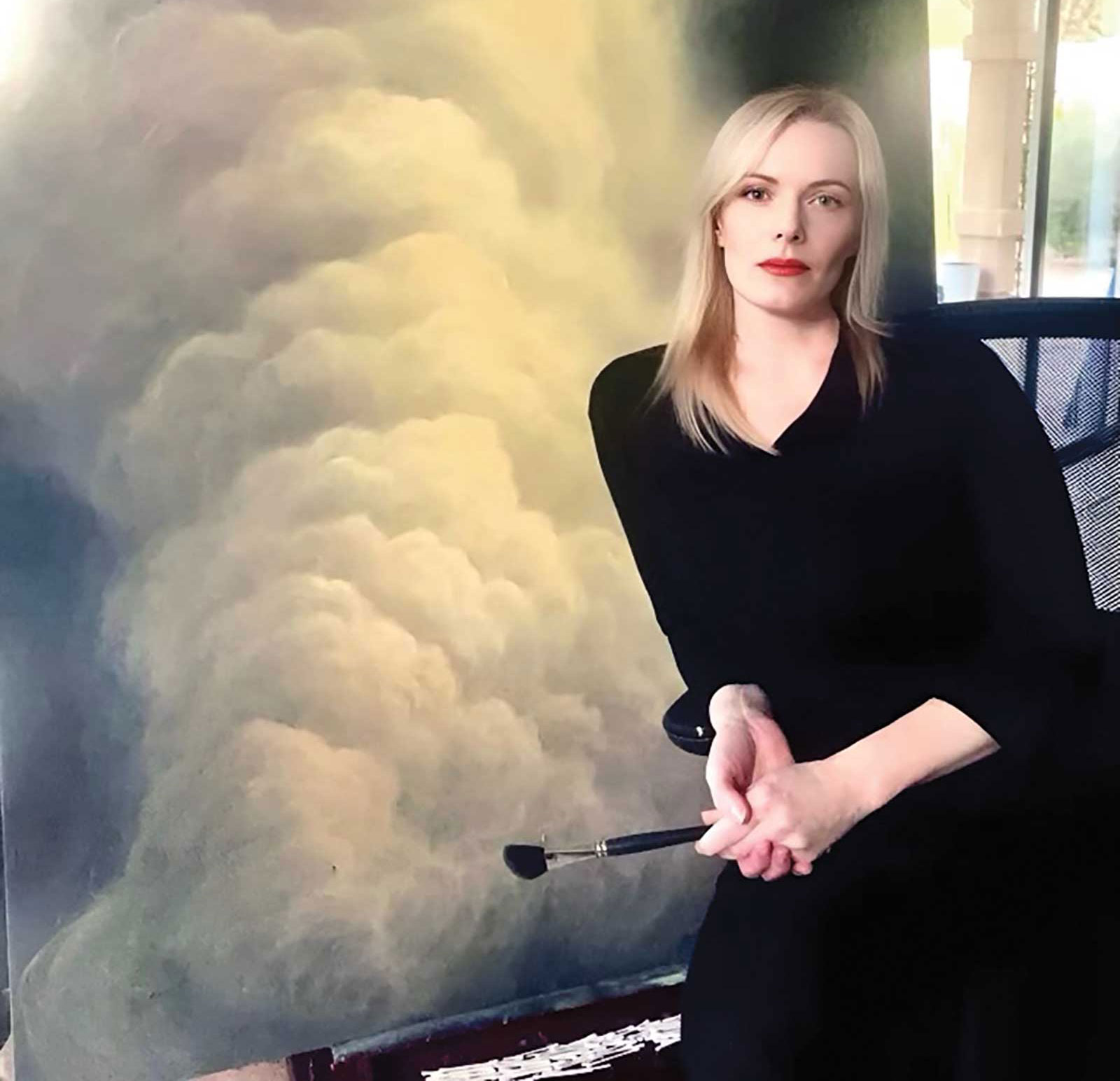 Ksenya Verse
Ksenya Verse is a visionary artist known for her ethereal cloudscapes and dramatic skies, which have captivated collectors worldwide. Based in Scottsdale, Arizona, her work extends beyond the canvas, revealing a profound link between nature’s beauty and our deepest emotions, inviting viewers into an intertwined realm of natural force and human sentiment. Verse has has been exhibiting her art in prestigious international venues, solo shows and numerous publications for over two decades.
Each artwork she produces is not merely a display of technical skill but a narrative imbued with dreamlike colors and dynamic forms, offering glimpses into the vast wonders of the universe.
As an artist wholly absorbed in the rhythm of creation, where emotions and spirituality converge on canvas, each artwork is a testament to the profound connection between art and soul.
Contact at
ksenyaverse.com