Most people are familiar with the process and techniques of an artist working on a canvas since it can be observed firsthand. However, the real secret is how the artist observes and perceives the subject before starting to paint. This is something outsiders cannot know. The way an artist observes the subject, their sensitivity to it and their creativity are the keys to a successful work of art. What do you feel about the subject? What moves you? Focus on that point to determine the emphasis in your depiction. For this particular demonstration (shown in the following pages), the light coming from both sides of the subject creates a rich and subtle line of light and shadow along the contours of the face, capturing its volume changes. Therefore, I decided to center my painting around this line of the core shadow, which is the focal point of this painting.
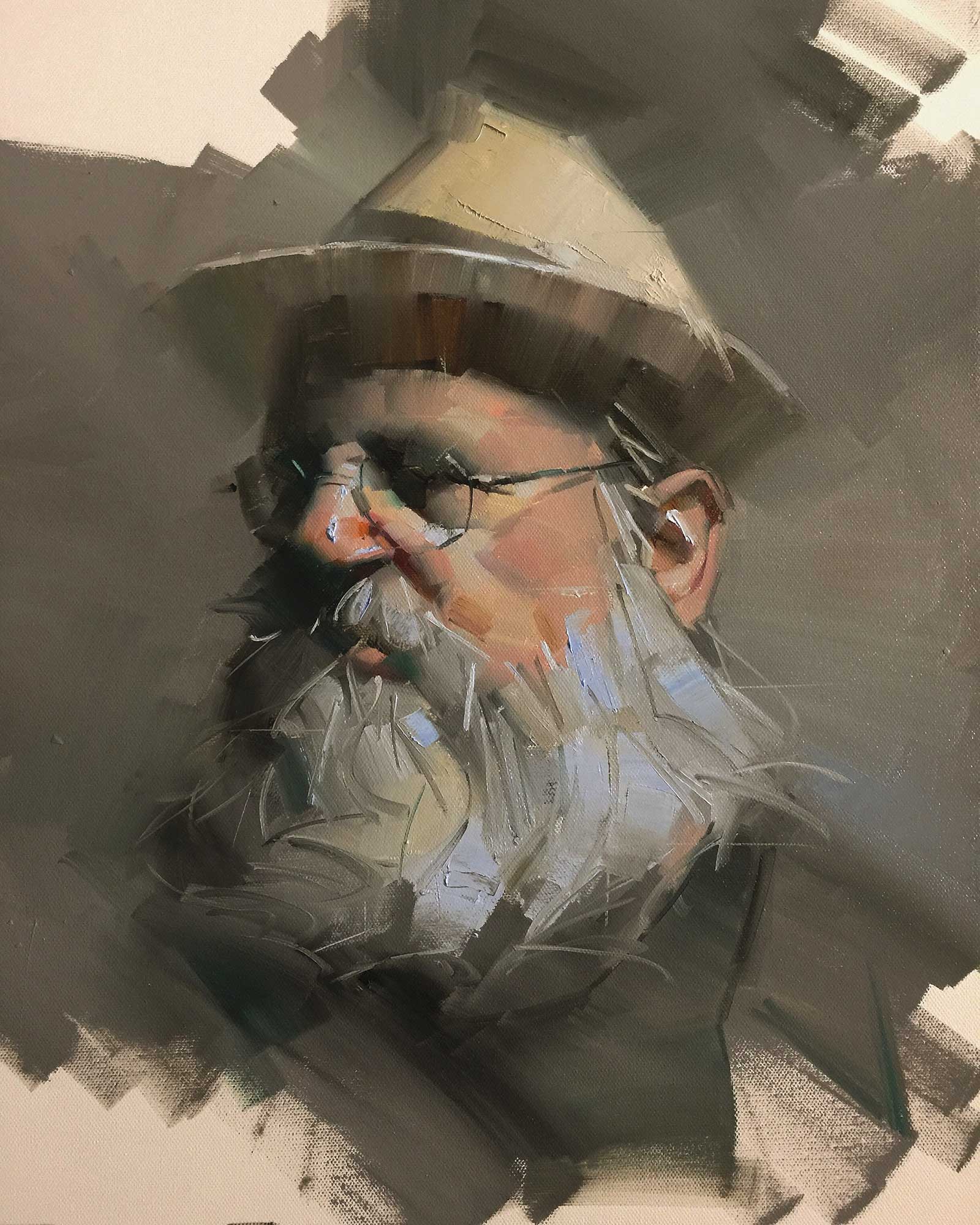
Oil Portrait 20, oil on canvas, 19½ x 15¾” (50 x 40 cm)
Mastering the characteristics of oil paint is crucial. Different brands can have completely different properties, including transparency, drying time and whether the pigment is plant-based or mineral-based. Additionally, understanding and mastering which colors are suitable for depicting specific areas or details requires extensive practice to accumulate experience. Generally, light areas are painted more thickly, while dark areas are better treated more thinly, using different techniques for different parts.
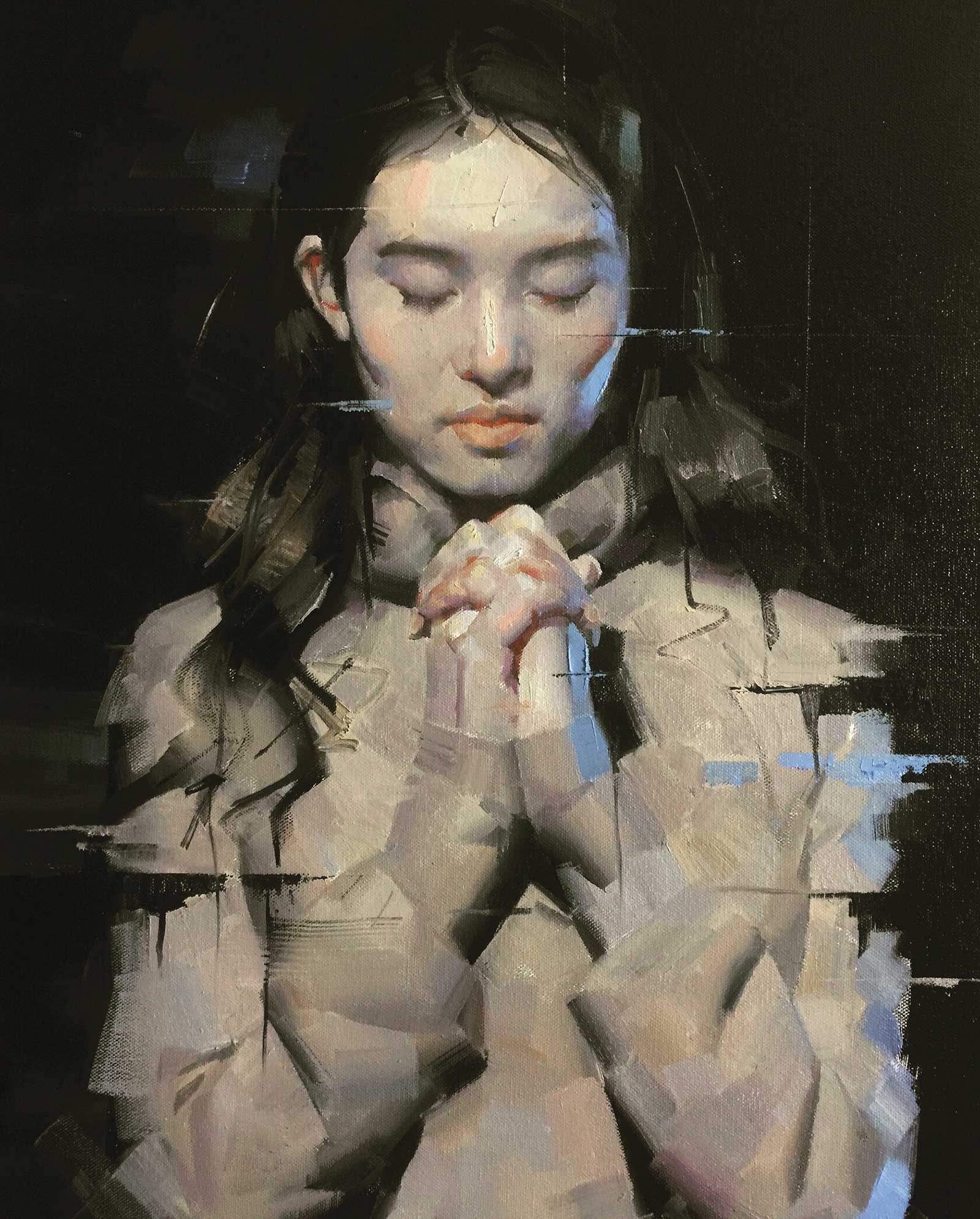
Oil Portrait 17, oil on canvas, 19½ x 19½” (50 x 50 cm)
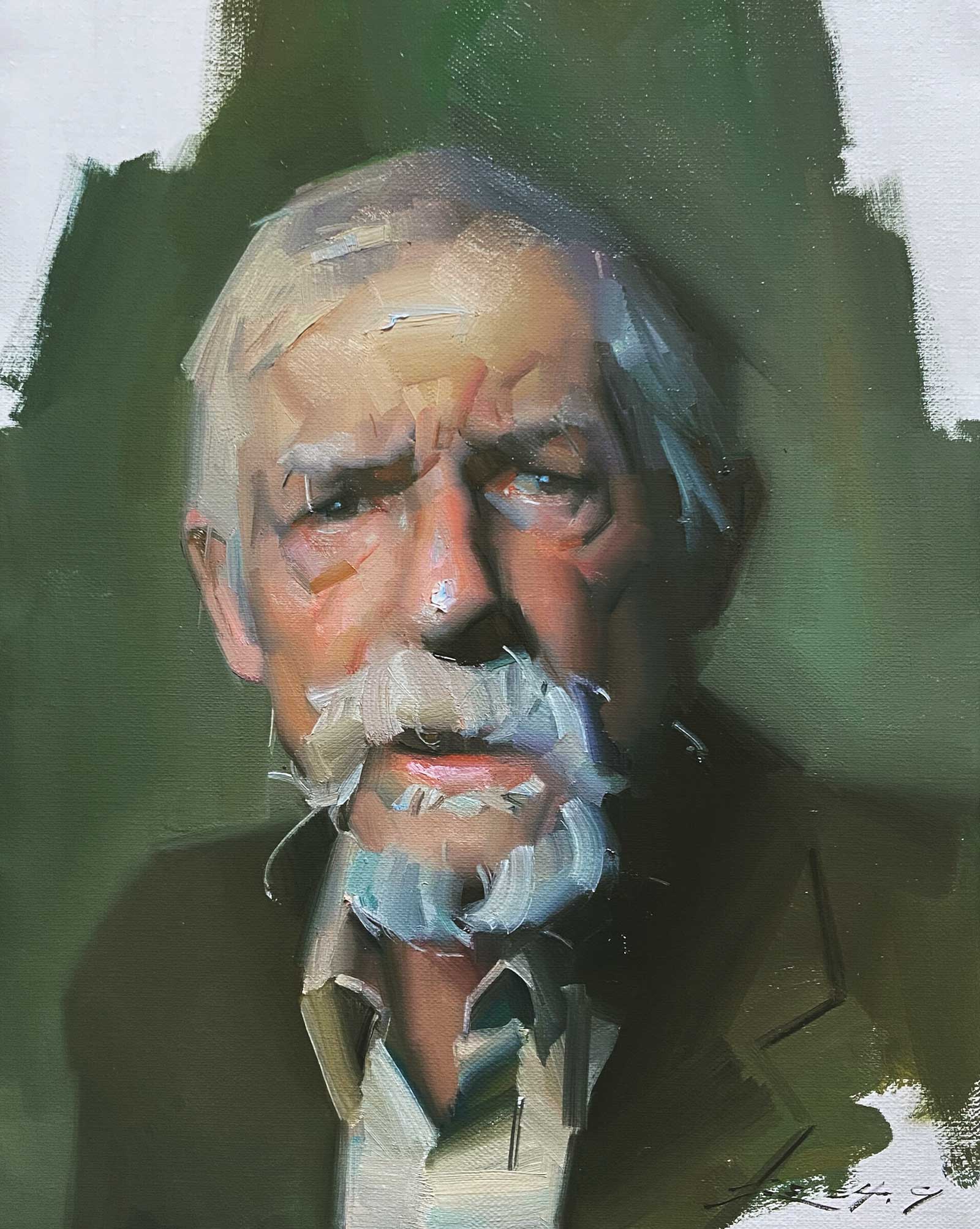
Oil Portrait 11, oil on canvas, 17¾ x 13¾” (45 x 35 cm)
Since the characteristics of different art materials and the styles they are best suited for can vary greatly, it is very important to find brushes, canvases and other tools that suit you. Even today, I spend a significant amount of time searching for and trying out different art materials. Painting essentially involves the artist constantly making decisions and judgments on the canvas, with each decision affecting the final outcome to some extent. My advice is that artists should recognize when they are at their most energetic and handle and judge their work during these periods. Conversely, working on a piece when in a less optimal state can potentially ruin a promising work.
My Art in the Making Oil Portrait 01
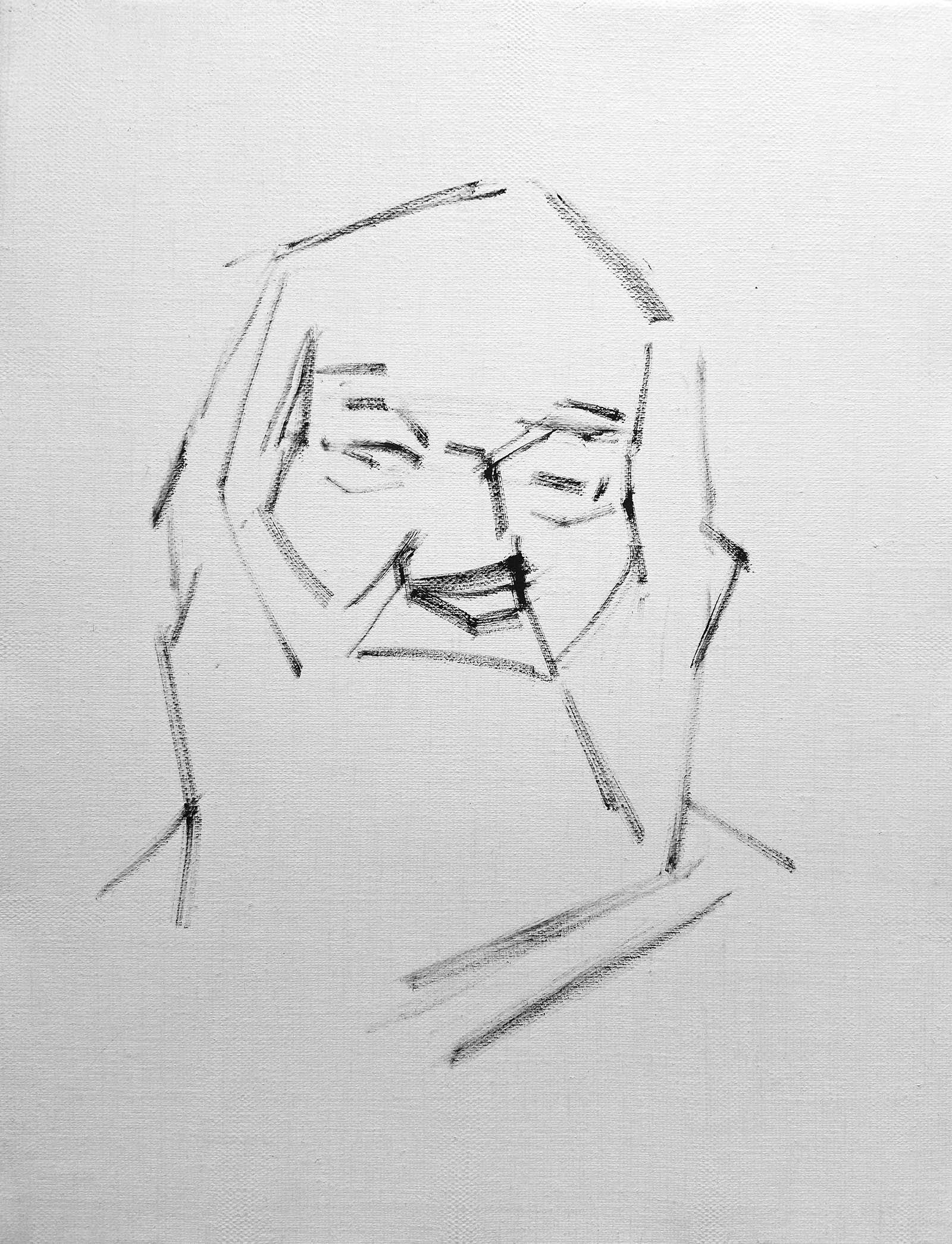 Stage 1
Stage 1 Composition and Proportions
In the practical phase, the first step is to make marks on the canvas to ensure the position and size of the composition are appropriate and that the proportions of the figures are accurate. These two points need to be constantly checked. What is important here is the variation and rhythm of the volumes, not the superficial light and shadow. When making marks with points, lines and planes, it is crucial to generalize and summarize the details. From the beginning, it is essential to understand and remember that everything you do on the canvas is based on volume and space. We can emphasize details that help express volume and space; conversely, we should weaken or even discard details that would undermine or weaken them. Experienced artists can even “create” certain details to enhance the sense of volume and spatial relationships. Therefore, learn to be the master of your painting, rather than being led by superficial appearances.
WHAT THE ARTIST USED
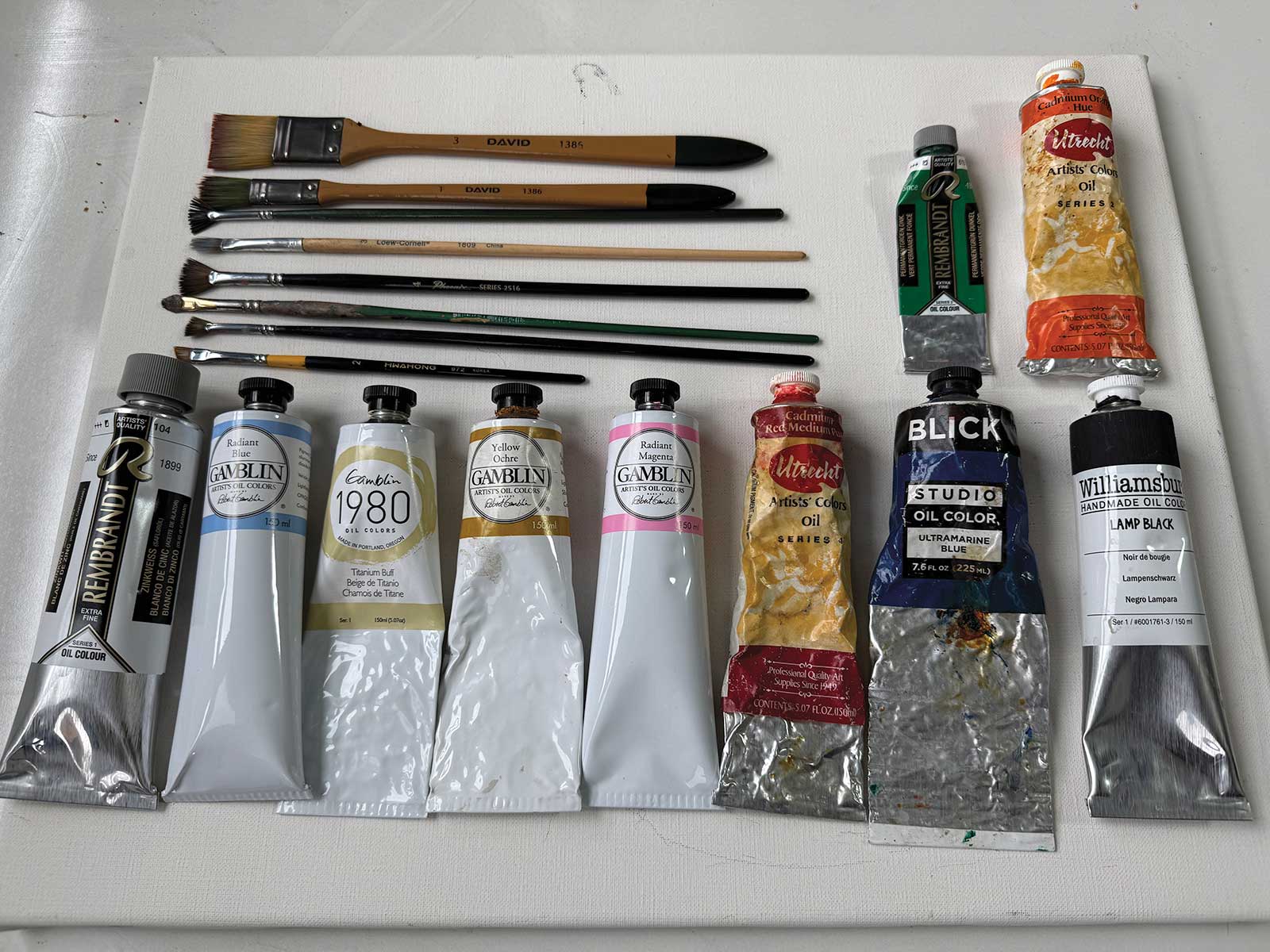
Oils
Mixed white, Radiant blue, Titanium buff, Yellow ochre, Radiant magenta, Cadmium red, Ultramarine blue, Lamp black
Additional Materials
Flat brush, Fan brush, Angle brush
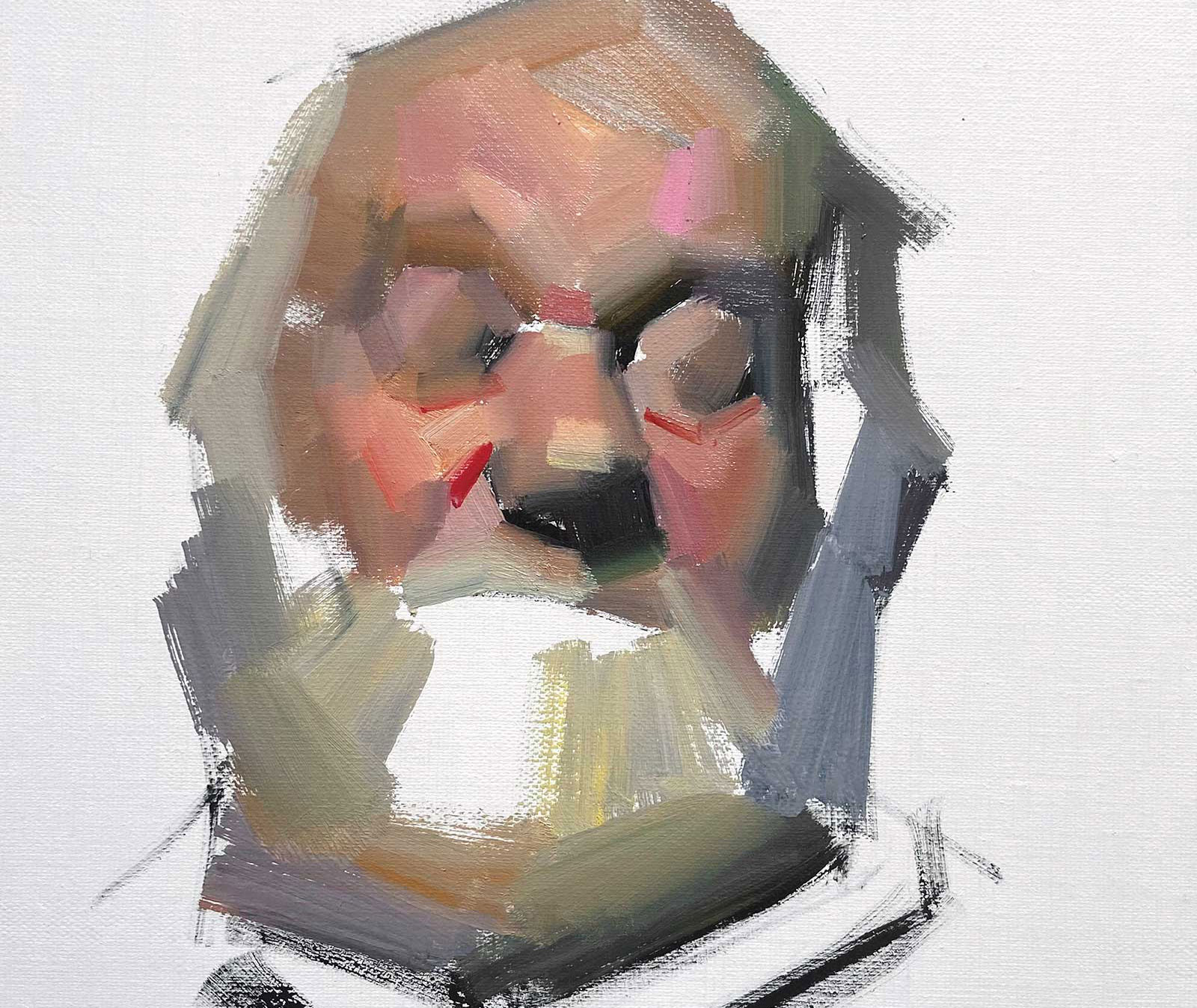 Stage 2
Stage 2 Building the Basic Forms
After determining the overall position and proportions, it is essential to focus on volume and space. The key is to use the relationships between light and shadow, as well as color, to accurately capture the subtle changes in the subject’s volume and place it correctly in space. Pay attention to the color variations in different areas of the face due to varying blood distribution. Generally, the forehead tends to be slightly yellow, the cheeks slightly red and the chin a bit blue-green. It is important to follow objective reality while also understanding these patterns. You need to plan and design your painting, always starting from the focus point. Regarding brushstrokes, pay attention to the direction, pressure and rhythm of your strokes. Each brushstroke represents a plane of volume, and your strokes should follow the undulations of the volume to generalize the details. From this step, I always work around the core shadow on the face, which serves as an anchor for the painting. Once it is established, the rest of the composition can gradually unfold.
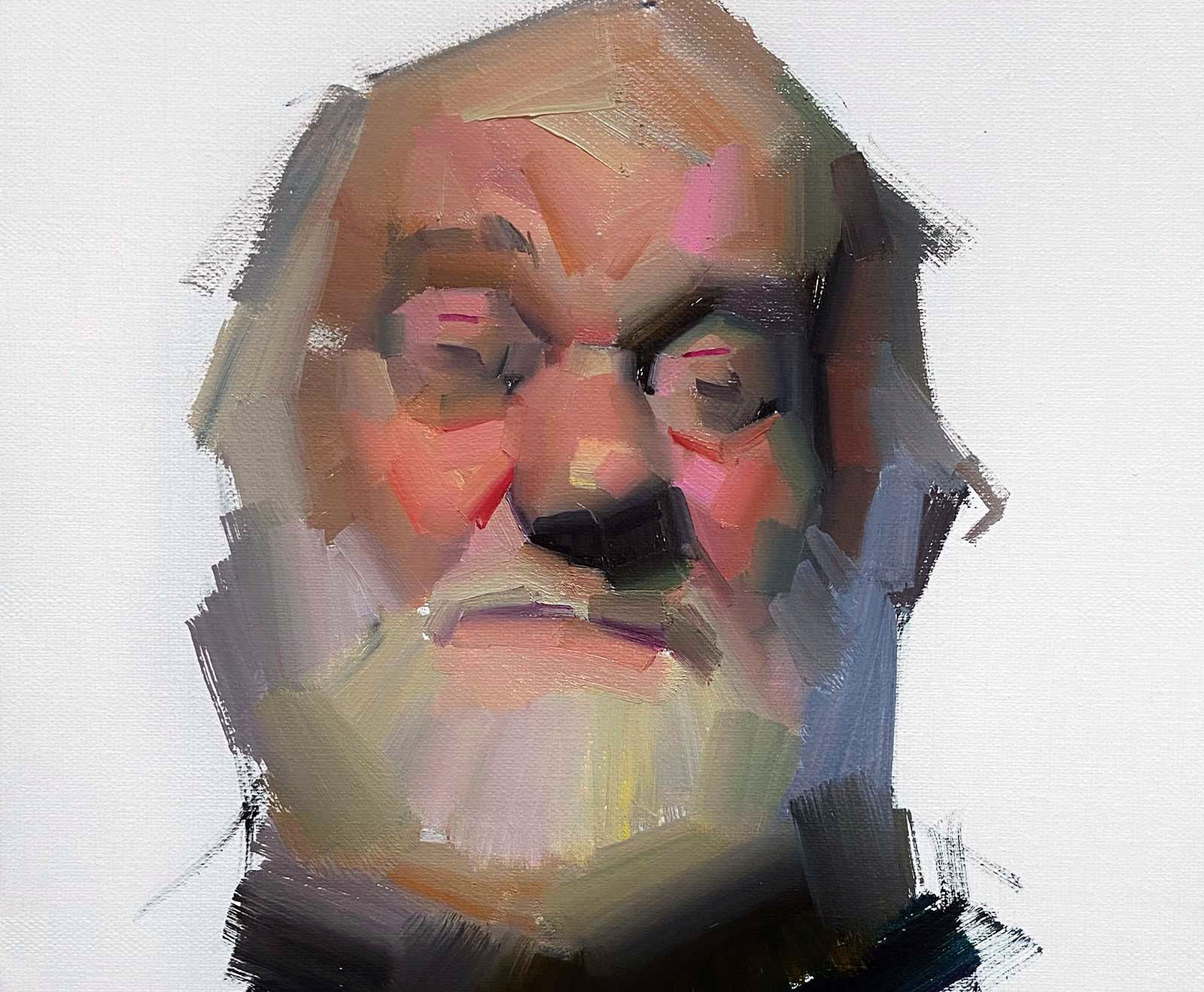 Stage 3
Stage 3 Getting Into the Details
When refining the details, increase the details in the focal point while reducing them in areas that need to recede. For core areas where details are insufficient, continue to enhance them. Conversely, in secondary areas and transitional regions, manage and control the density of details, the light intensity and dark contrasts, as well as the color temperature. These factors will affect and create variations in spatial depth. Also be sure to maintain the liveliness of your brushstrokes and the vibrancy of the paint. Always let your inner feeling of the rhythm and changes of the painting guide your decisions.
Tips on Color Matching
First, try not to overmix on the palette, as overmixed colors will look less vivid. Sometimes the best palette is actually the canvas. Second, the most important characteristic of color is relativity. When the same color is adjacent to different colors, it will have a completely different feeling in terms of color temperature, lightness, etc. So when mixing colors, you can’t judge what color you need in isolation. Instead, look at the relationship between the target color and the surrounding colors. Also, it is crucial to control the ratio of pigment to medium.
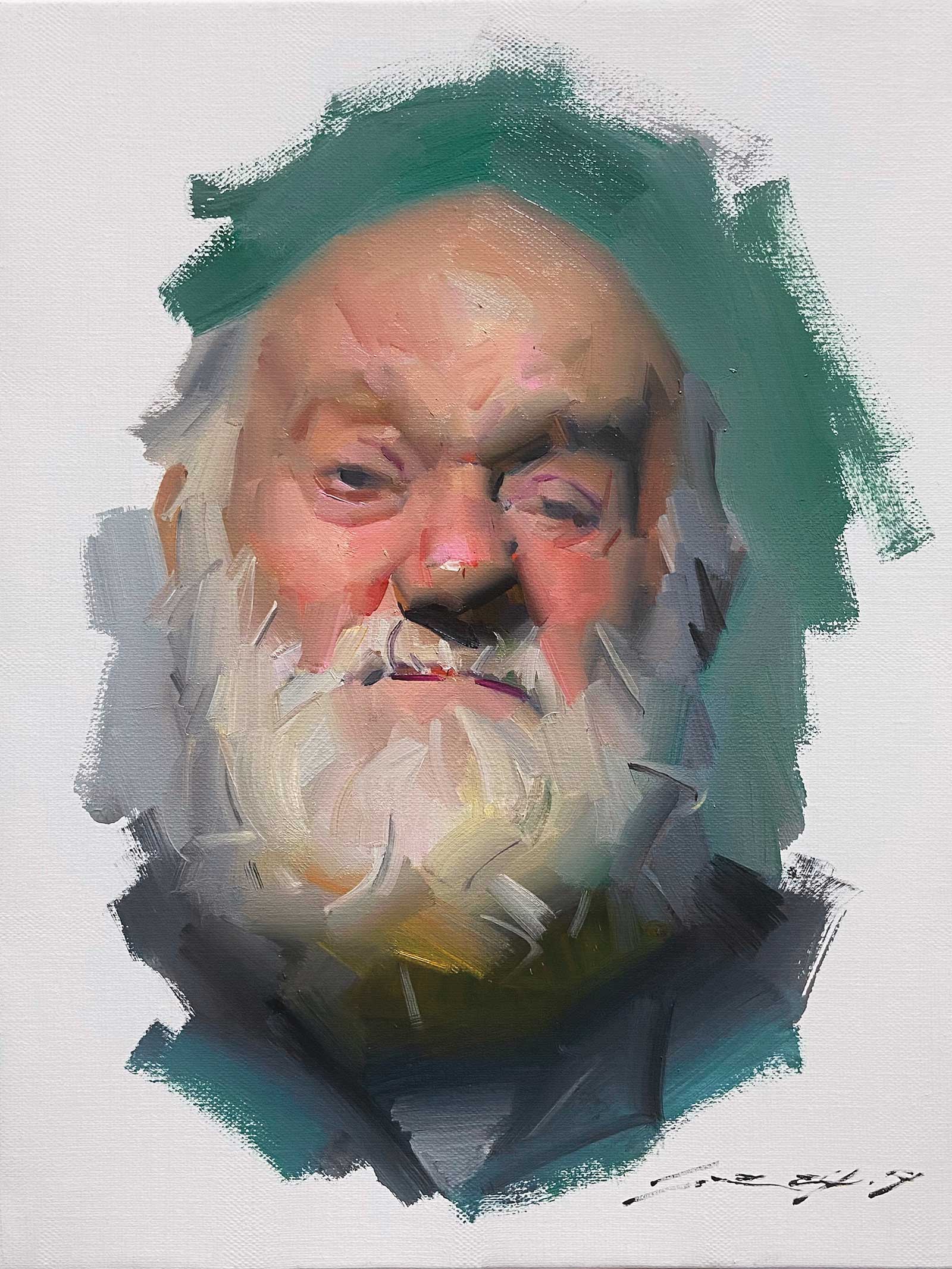 Stage 4
Stage 4 Full Details
Improve and enhance the overall picture’s completeness and design details for the focal points. Adjust and repeatedly consider the overall space and volume relationships. Adjust and control the rhythm and edges of the painting.
 Stage 5
Stage 5 Reviewing the Painting as a Whole
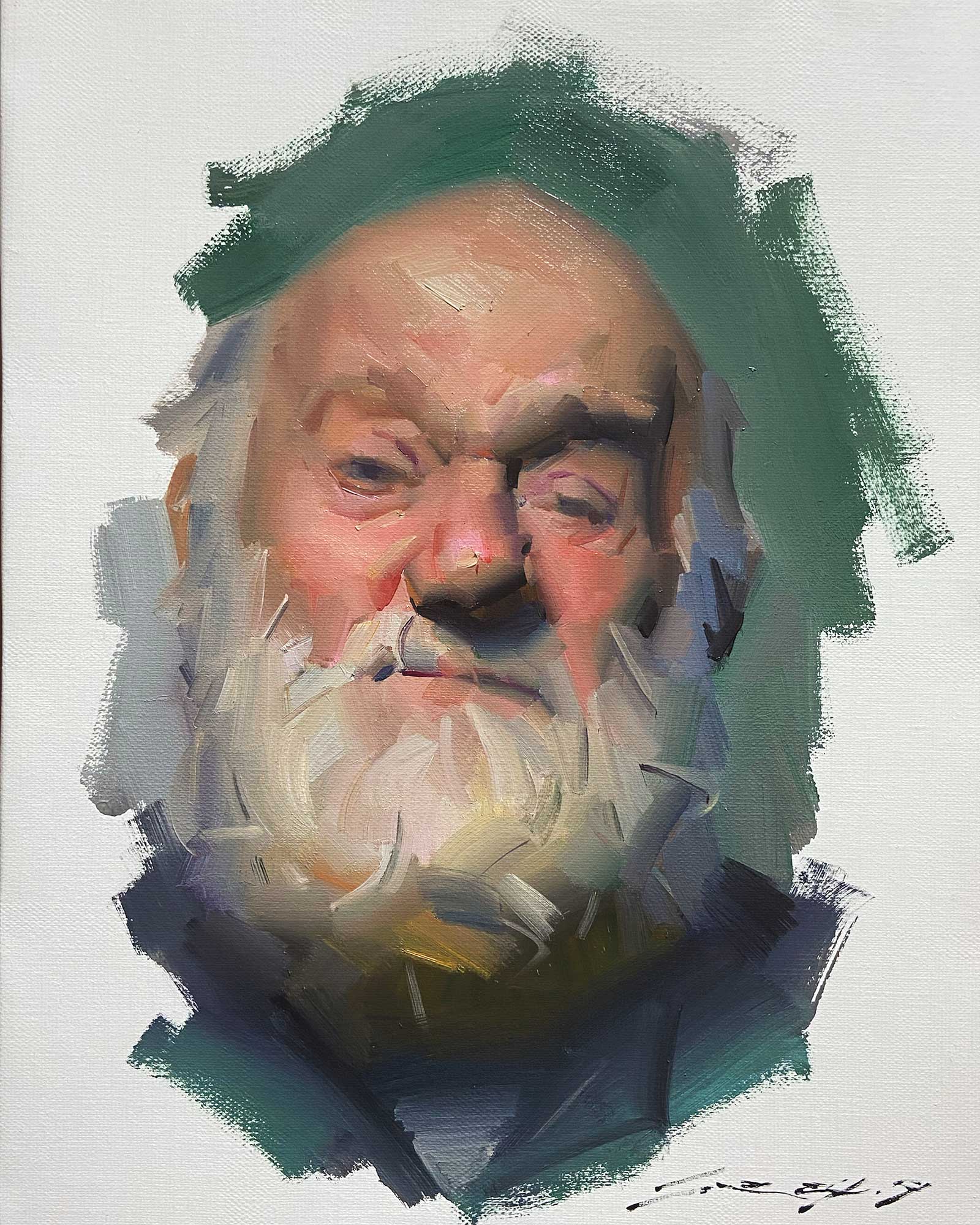
Oil Portrait 01, oil on canvas, 17¾ x 13¾” (45 x 35 cm)
Finally, further refine the relationships and layers of color temperature values and make choices regarding the details in the painting. Focus on the core shadows, continually review the overall picture, and organize the painting. Retain lively and essential brushstrokes while removing unnecessary ones. Apply the final touches and adjustments to the edges.
About the artist
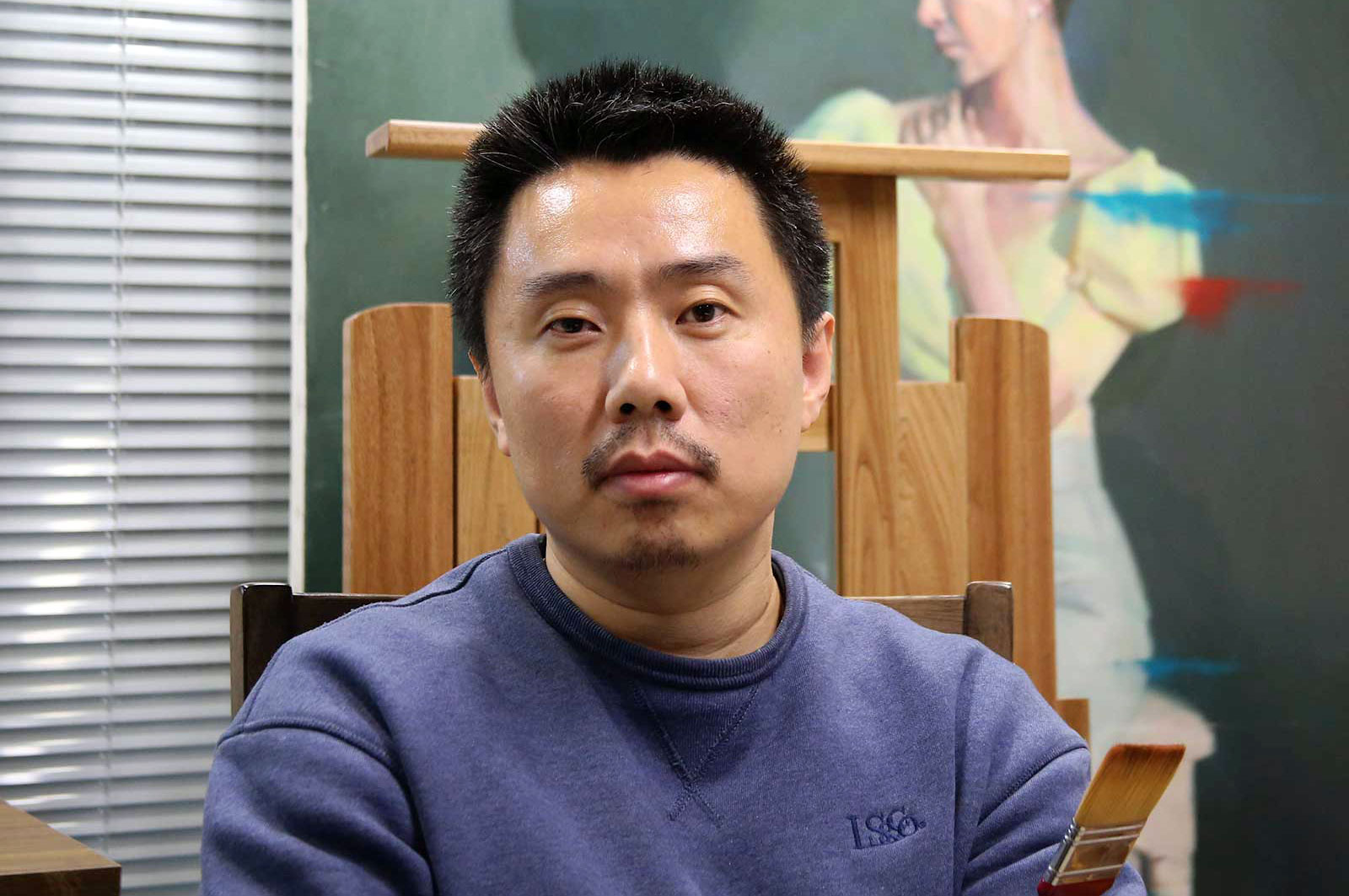 Jie Gao
Jie Gao was born in China, studied in the United States during his early years, and lived in North America for many years. He has now returned to Beijing to focus on art full time. With an emphasis on portrait painting, Gao is motivated by a strong desire for artistic expression, always captivated by the unique moments of beauty in ordinary people. In his view, maintaining a humble attitude in art is crucial.
Contact at
jiegaoart.com