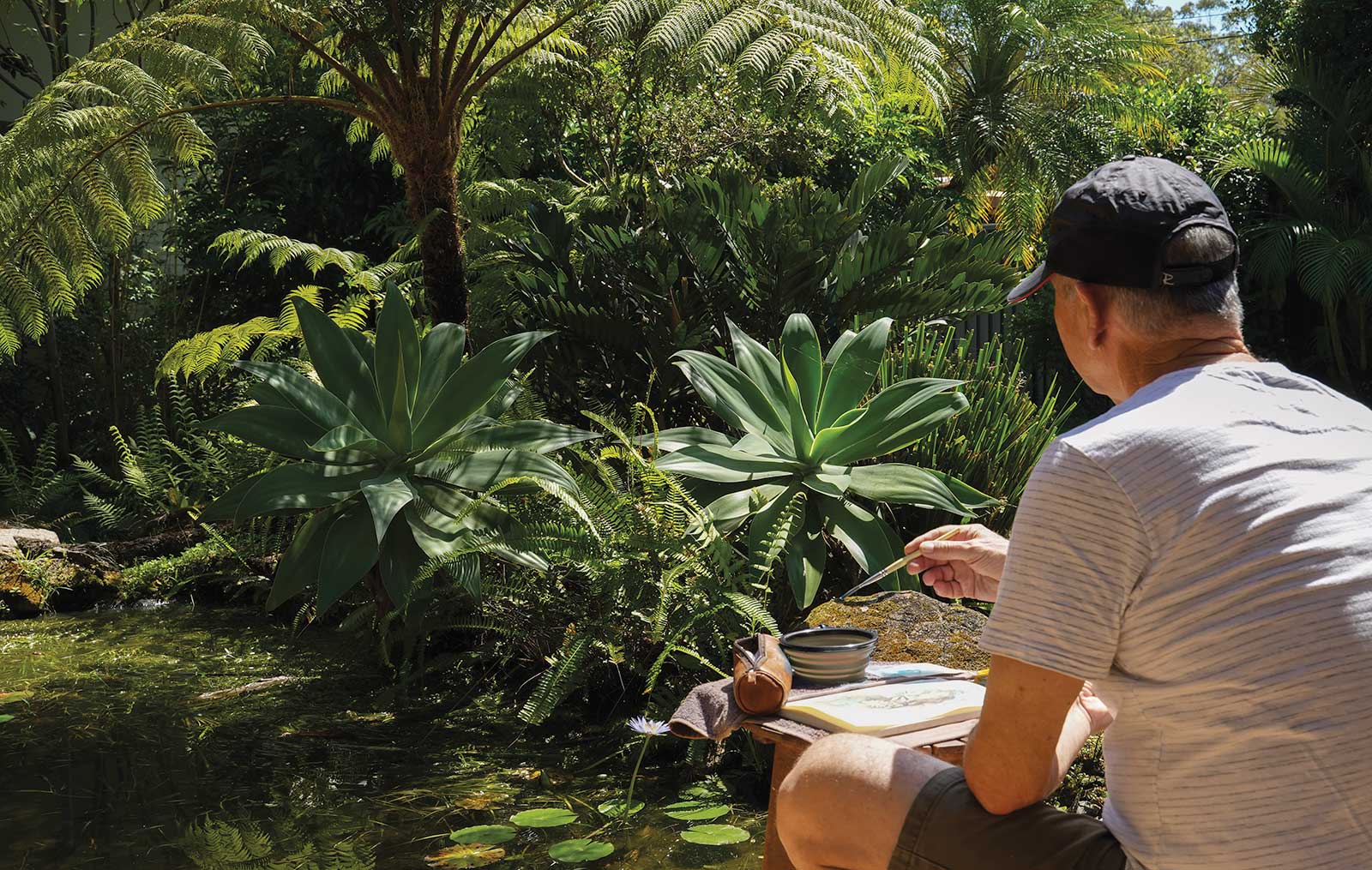
In this watercolor workshop, I will demonstrate how I approached painting this sheltered spot on a nice sunny day. This pond with mossy rocks, water lilies and lush green vegetation made for great subject matter. I worked in a small sketchbook with a limited amount of equipment, so there was no pressure to produce a masterpiece—just enjoy the location and have fun with the subject.
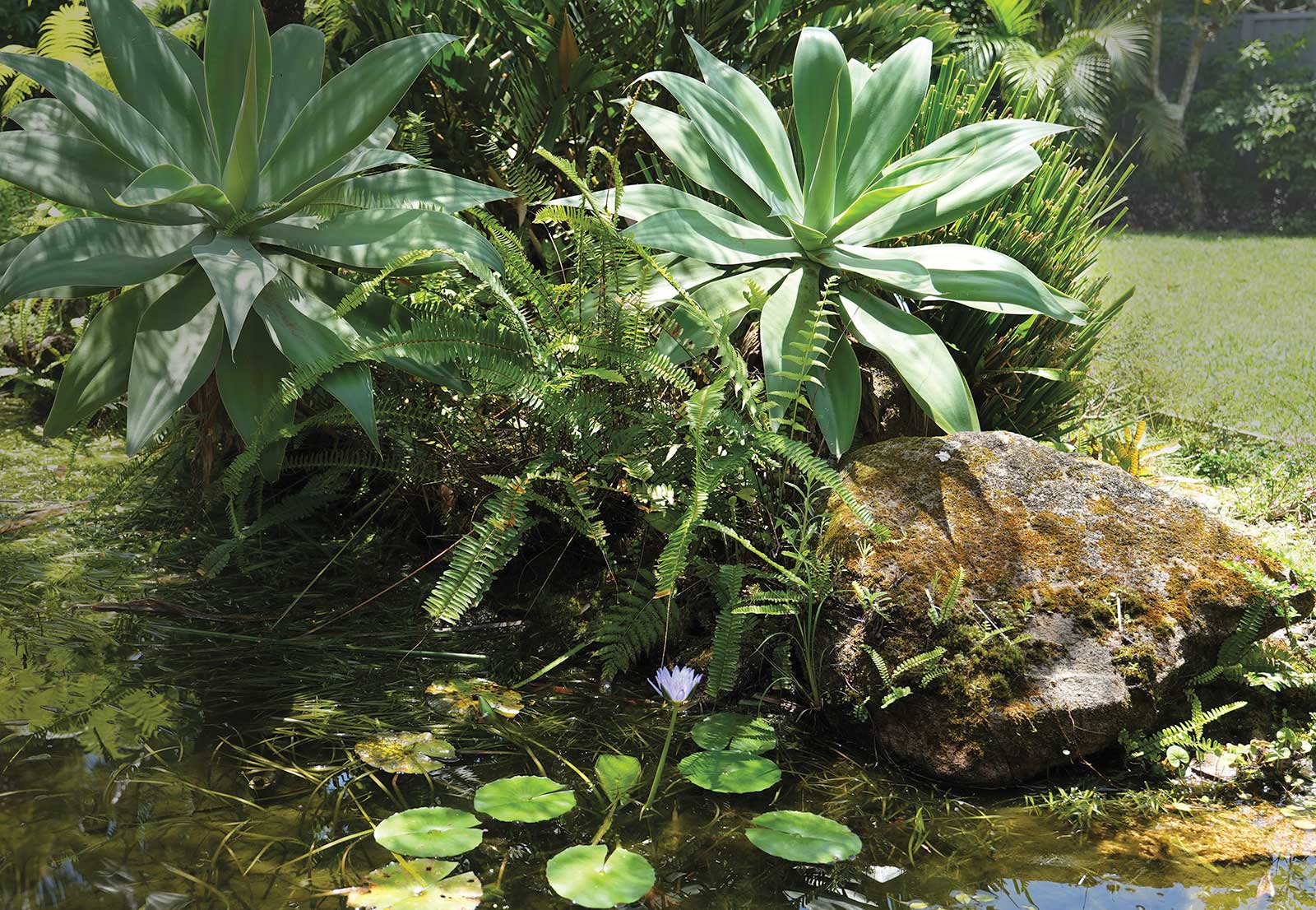
Reference Photo
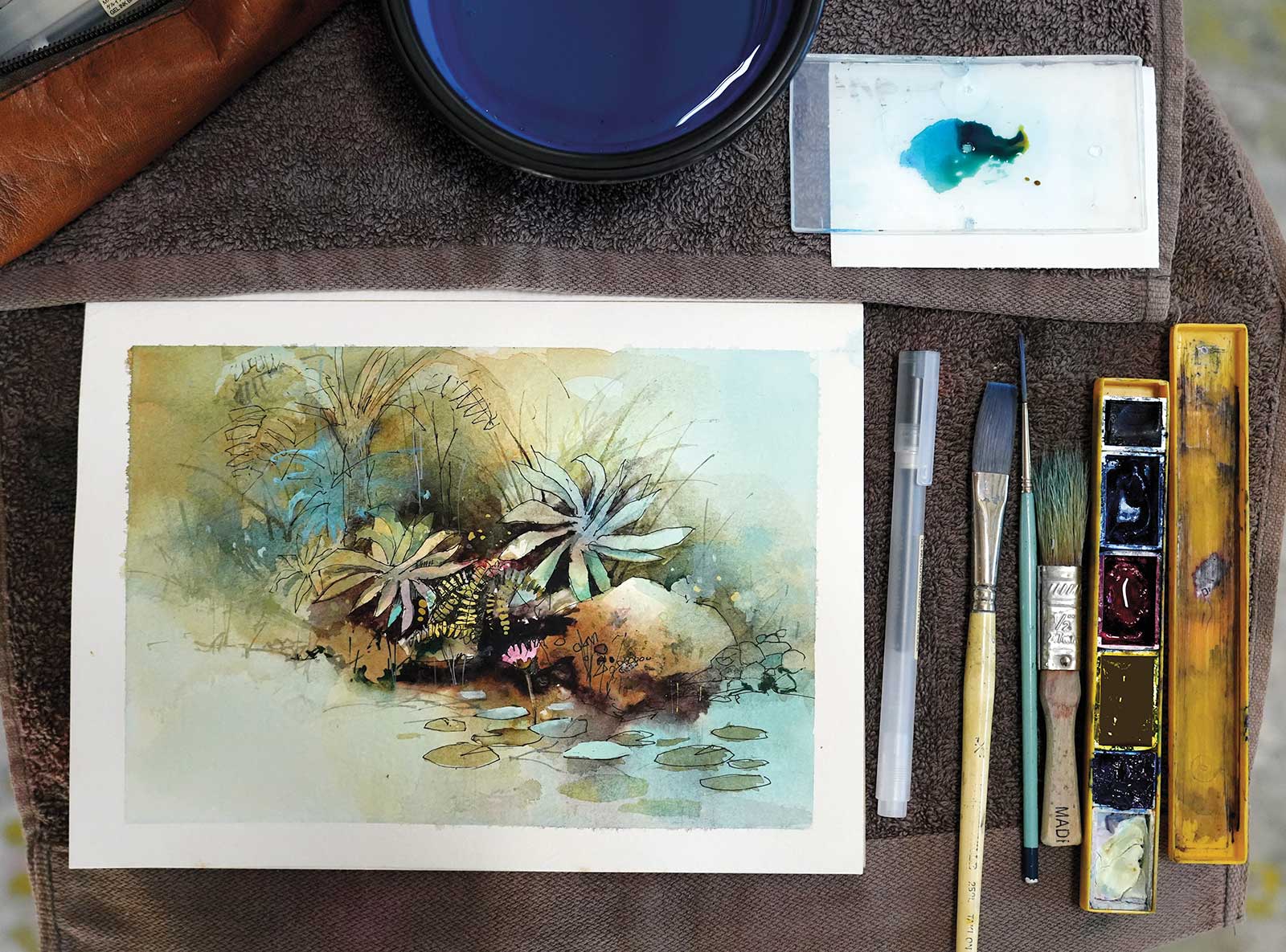
Materials
Here is all the equipment I used: At the top you can see a collapsible water container and a small, transparent, rectangular, plastic mixing palette. I placed the mixing palette on a white card so I can see the colors. The sketchbook is Arches 300 gsm colored pencil paper at about 7 by 9”. Beside the sketchbook is a black, fine tip waterproof Muji pen, a ½” flat brush, a #1 rigger and a cut down old ½” bristle brush. Alongside the brushes is a long thin palette of refillable pans containing indigo, French ultramarine, permanent alizarin crimson, quinacridone gold and phthalo blue. The pan at the bottom contains titanium white gouache. Underneath all of this is an old towel to adjust the moisture in my brushes.
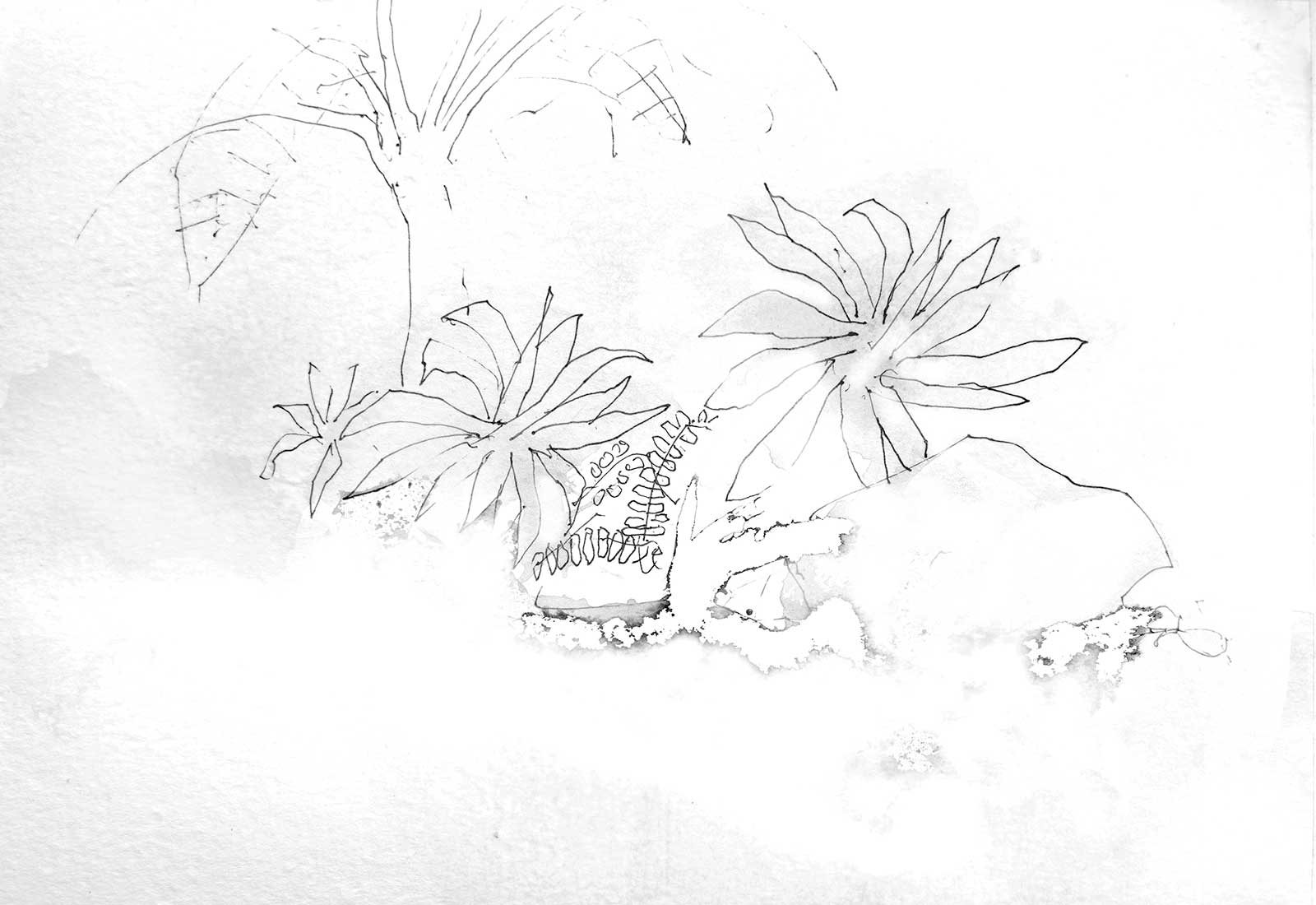 Stage 1
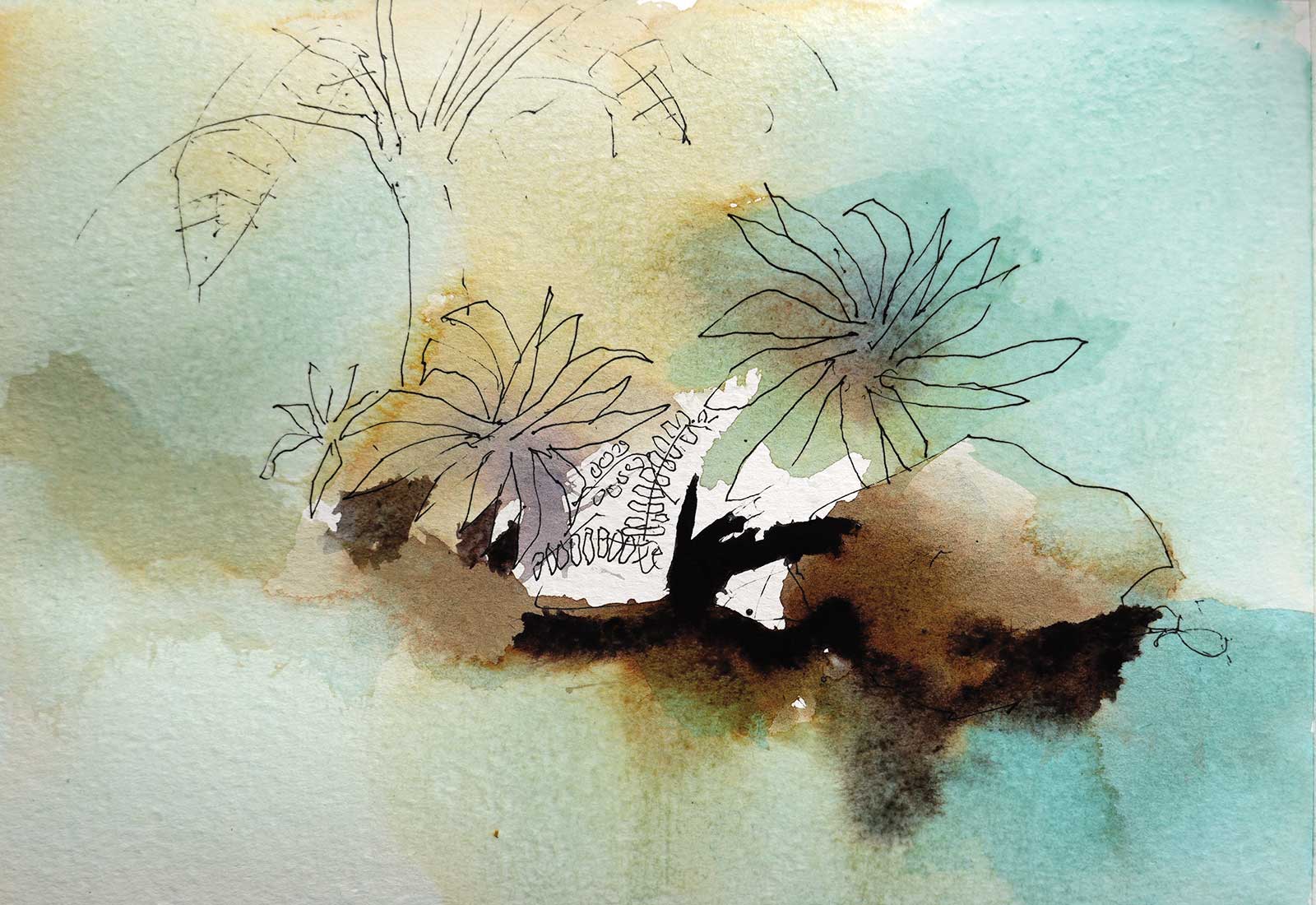
Stage 1 Drawing
To start this painting I launched straight into it with the waterproof pen and loosely drew the subject. I didn’t try to get everything in, just an interesting arrangement of the main shapes. More drawing will be done later with the pen and various brushes.
 Stage 2
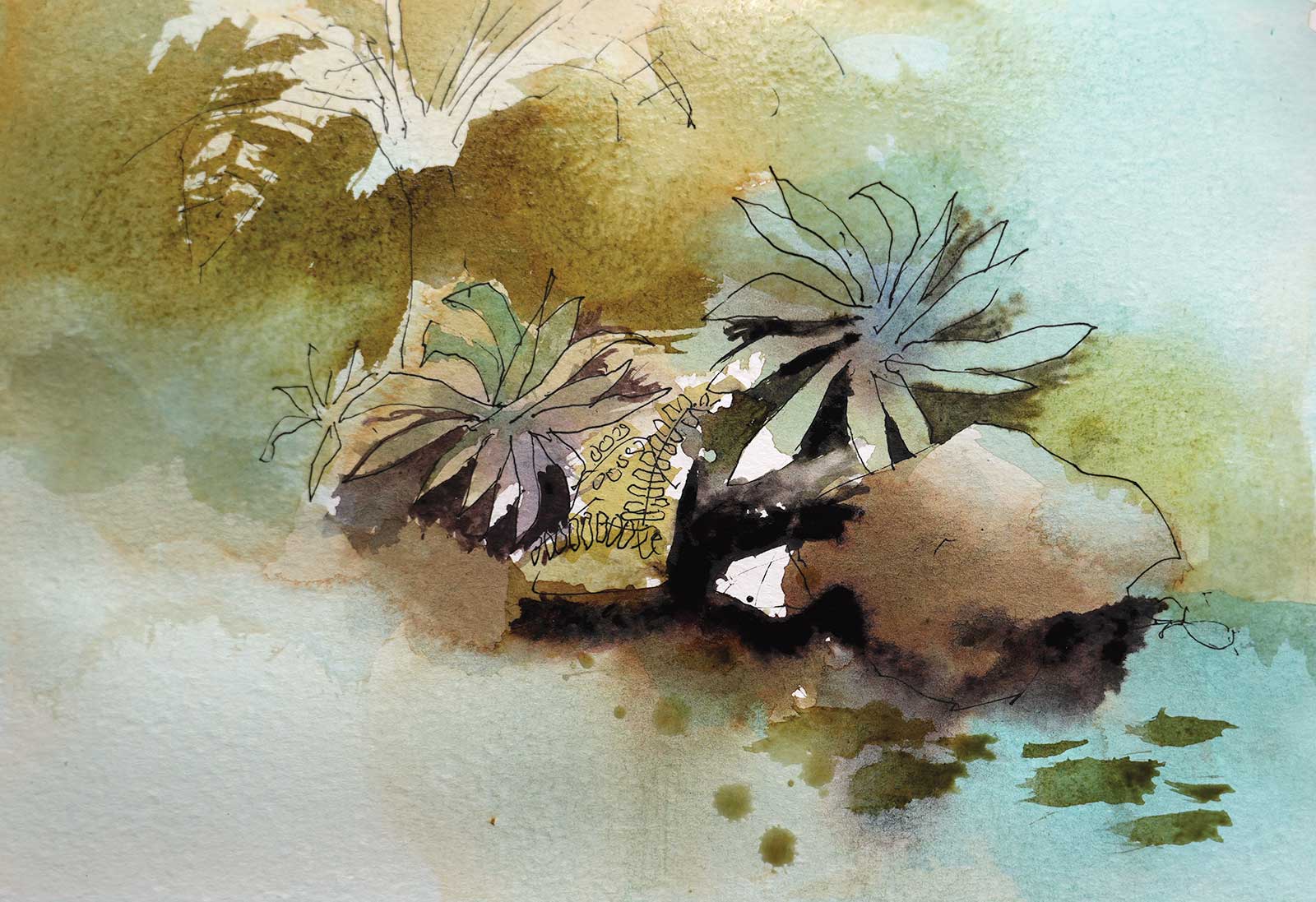
 Stage 2 First Wash
The first wash I applied was a dirty yellow, roughly applied with the ½” bristle brush. While this was still wet, phthalo blue was worked over the rest of the background and most of the foreground. This was kept very pale and varied in intensity. My aim was to get a diagonal band of interest running upper left to lower right through the painting. Next came the warm brown mixed from alizarin, quinacridone gold and a small amount of ultramarine. The strong dark under the rocks was made from the same three colors but with very little water. Notice how the dark has some hard, sharp edges and some soft bleeding edges. Also notice the patches of white paper left to add details later.
 Stage 3
Stage 3 Second Wash
A darker dirty yellow was washed through the background and cut carefully around some of the leaves and fronds with the ½" flat brush. More of the dark mixture was cut around the leaf details of the main foreground plants, and some lilly pads were added to the lower right hand corner.
 Stage 4
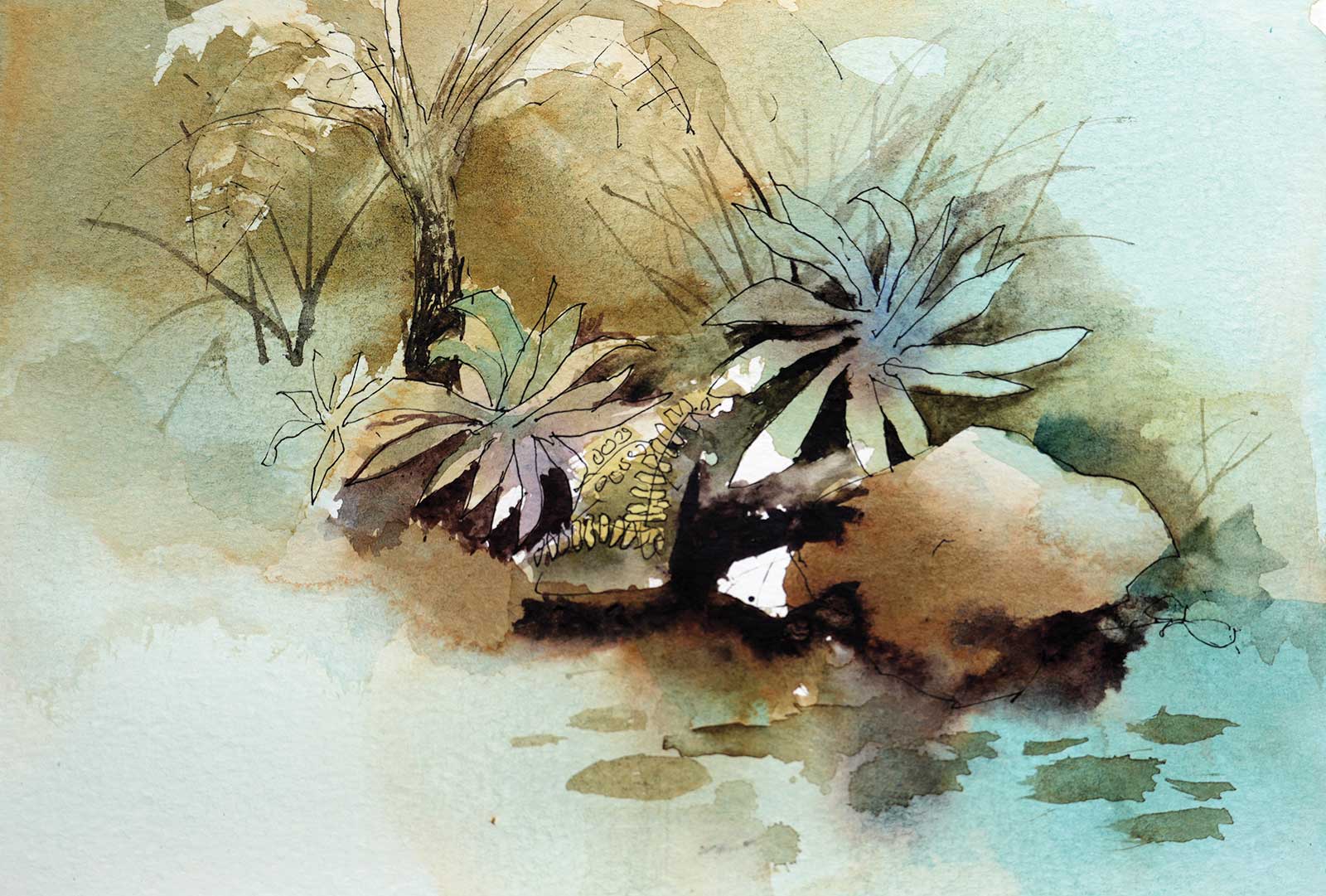
 Stage 4 Third Wash
A few more sticks, twigs and grasses add to the busy look of the subject, but because they are applied with little tonal contrast, they don’t become distracting. A few more lily pads and some more contrast to pop out the foreground rock and we are almost ready to finish off.
 Stage 5
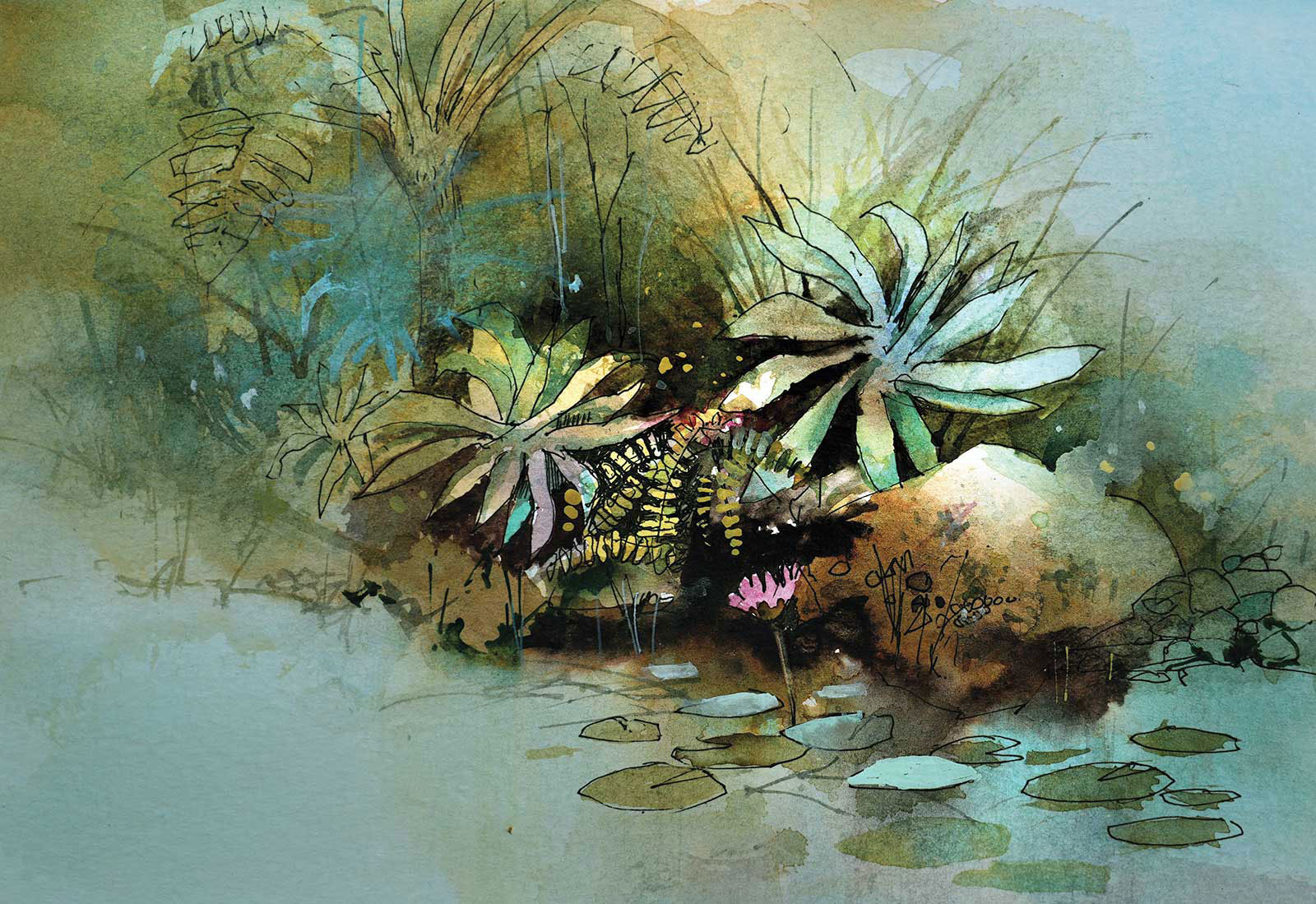
 Stage 5 Finished Artwork
More intensity and variation was introduced to the agave leaves. The yellow ferns in the center were carefully cut around with the rigger brush to sharpen their definition. A pale wash of pure alizarin added color to the lily flower. To paint the pale lily pads, I used white gouache tinted with phthalo blue and quinacridone gold. This same mixture was worked loosely over the trunk of the background tree fern to soften it and ease it back. The final step was to add a light phthalo blue wash over the top right and lower left corners. This helped focus the diagonal band of interest through the painting.