Scottsdale Artists’ School: How did your teaching career begin at the Scottsdale Artists’ School?
Guy Combes: The executive director reached out to me soon after I had moved to Tucson and asked if I would be interested in teaching at SAS, and I jumped at the chance. I had been teaching for many years previously around the country and overseas, so to have this opportunity not too far from home has been a huge plus.
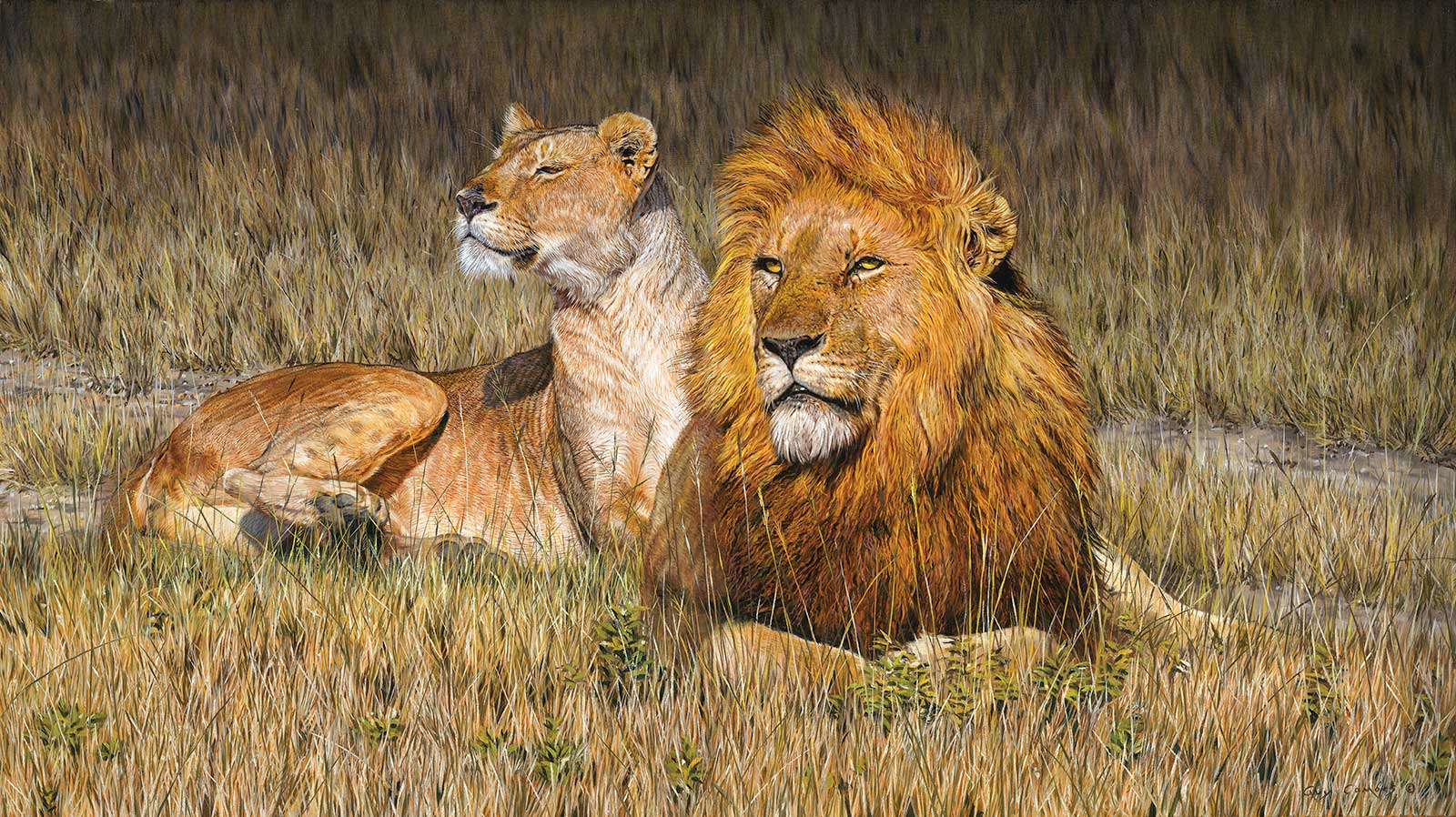
Guy Combes, Essential Nobility, oil, 28 x 48" (71 x 121 cm)
SAS: What inspires you to paint wildlife?
GC: I grew up in Kenya surrounded by wildlife with a father who was an honorary park warden, safari guide and wildlife artist. My childhood fascination and wonder has matured into a strong spiritual and creative relationship with nature, and I find it quite challenging to go for long periods of time without some kind of immersion into the natural world.
SAS: Did you always have the desire to become an artist or was this an unexpected path?
GC: I was given the tools early in life and demonstrated aptitude pretty much from the get go. My fathers’ career was blossoming internationally as I was growing up, and the example he led with was as one of the most recognized African wildlife artists in the world. In some ways this negatively affected my self confidence because the task of finding my own spotlight with his ever present looming shadow was very daunting. I pursued many varied avenues of creativity until I realized that the skills I inherited from him were a blessing, and certain factors which contributed to my confidence allowed me to appreciate that I could shine in my own right.
SAS: Conservation activism seems to be a movement you strongly value. How has this inspired your work?
GC: I pioneered a way to raise large sums of money by auctioning live quickdraws for grassroots conservation projects at the place that was my home in Kenya for many years, Soysambu Conservancy. Now I’m working on a new initiative to help Kenyan artists to have the same opportunities I’ve had to communicate the importance of conservation in an age when Kenya is developing at breakneck speed. I’m launching this in 2025 and will be on the ground to mentor two aspiring Kenyan artists in the field with a view toward raising funds to provide them with better opportunities in the future.
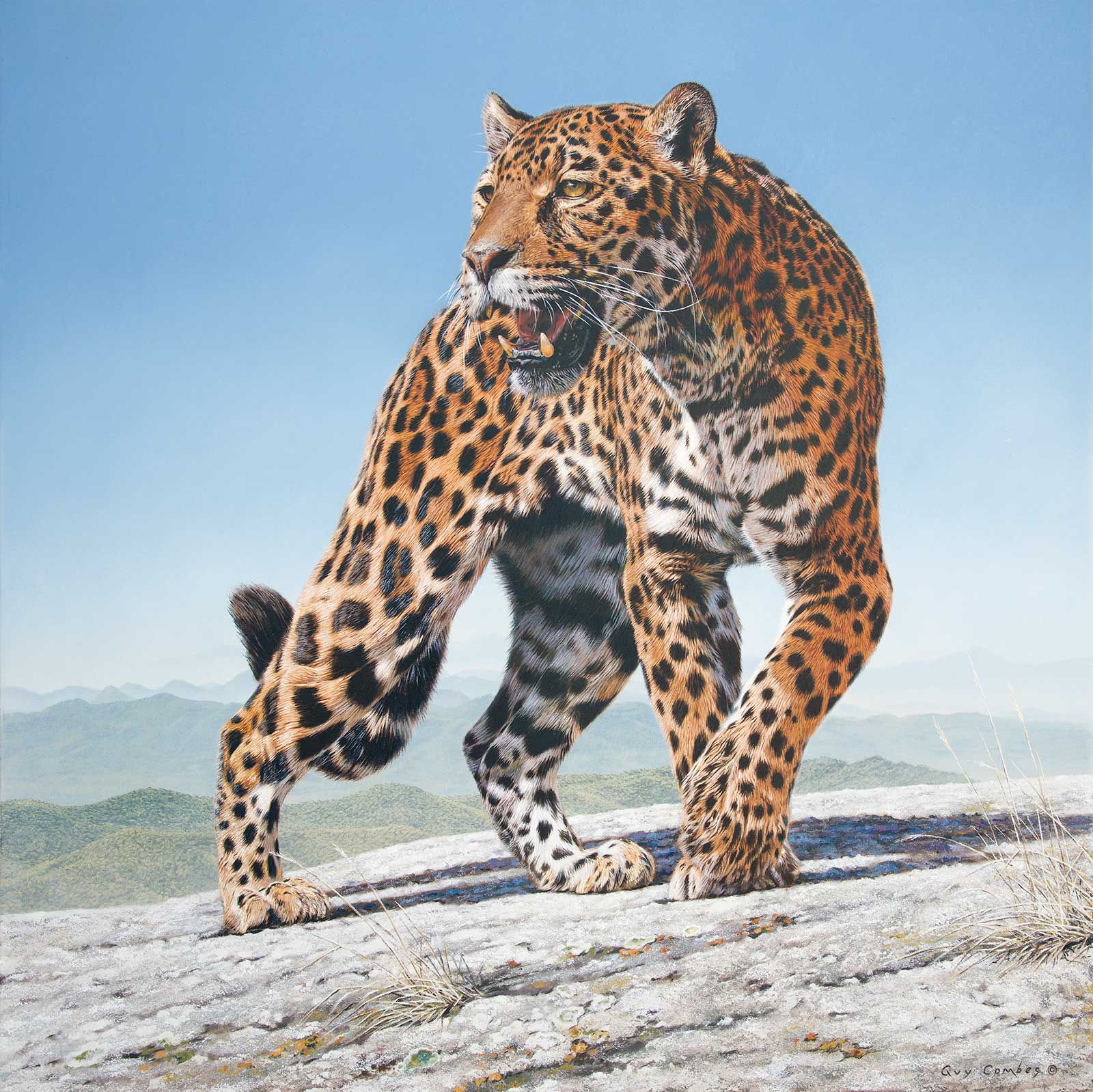
Guy Combes, Border Patrol, oil, 24 x 24" (60 x 60 cm)
SAS: Can you describe the moment you sold your first painting?
GC: My first show was at Peponi Hotel in Lamu, a remote ancient town on a north Kenyan coastal archipelago. The hotel attracts wealthy visitors from all over the world and is the only place on the island that has a bar, so there is a somewhat captive audience. Lars, the hotel owner greeted me as I clambered off the boat with all my paintings. He looked at them and my prices carefully and said, “You can’t possibly charge those amounts.” Horrified, I asked how much I should reduce them and he replied, “No, no, dear boy you must double them all!”. I did as he instructed and the show sold out. It was the first time I realized the value of my work and that there was the distinct possibility that I could do it for a living.
SAS: Tell us about your upcoming “Big Cat Intensive” workshop.
GC: Of all the subjects I paint, cats rule my repertoire. Their character and presence has always been an irresistible draw for me. Every time I finish a painting of a spotted cat I say, please no more spots! And then I’m looking at references of leopards and cheetahs a week later. Because I have studied them so extensively in the wild and in captivity I feel like I have the authority to pay tribute to them adequately in my own paintings, and they are a subject I can teach with confidence. The class will cover the technicalities of achieving texture of fur, the liquidity of the eyes and the details of anatomy, but will also cover how to create a narrative using a cat as a subject within its surrounding environment.
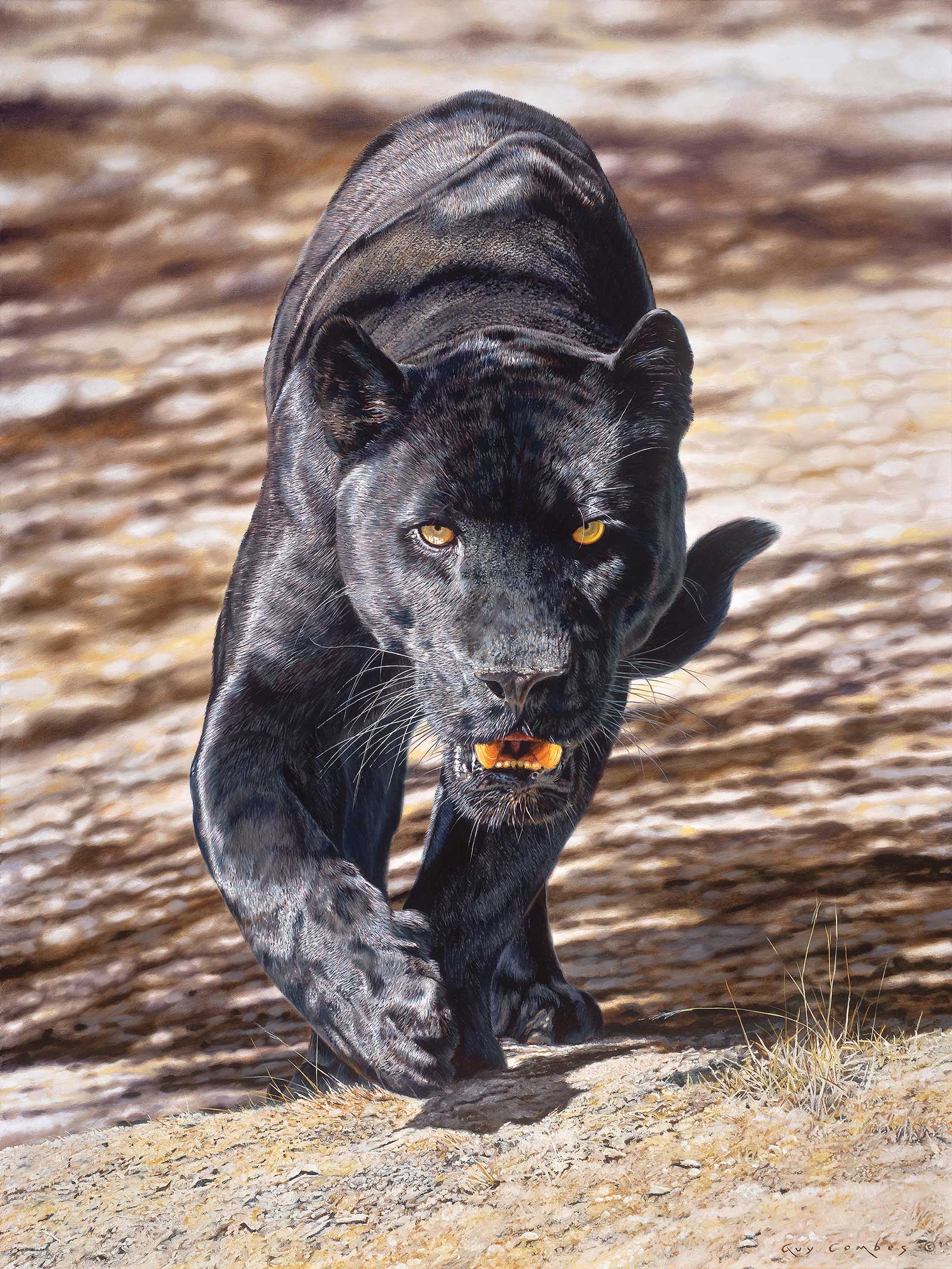
Guy Combes, Velvet Threat, oil, 48 x 36" (121 x 91 cm)
SAS: When a person looks at your art, what do you want them to see?
GC: I want to pull them into a world that I have seen and felt with all my senses. It’s supremely important to me that my paintings are accurate representations of experiences I have had with subjects I have seen with my own eyes, be they captive or wild. My goal is always to create images that bring the viewer as close as possible to those experiences. I also like the idea that the viewer gets a sense of my passion from the degree of commitment I have to detail and accuracy. More recently I have been including elements in my paintings that allow for more narrative interpretation, and armed with years of experience of representational painting I feel like it’s time to play with some ideas that have been simmering for a long time. —
Visit scottsdaleartschool.org for more information on the school and its upcoming workshops.