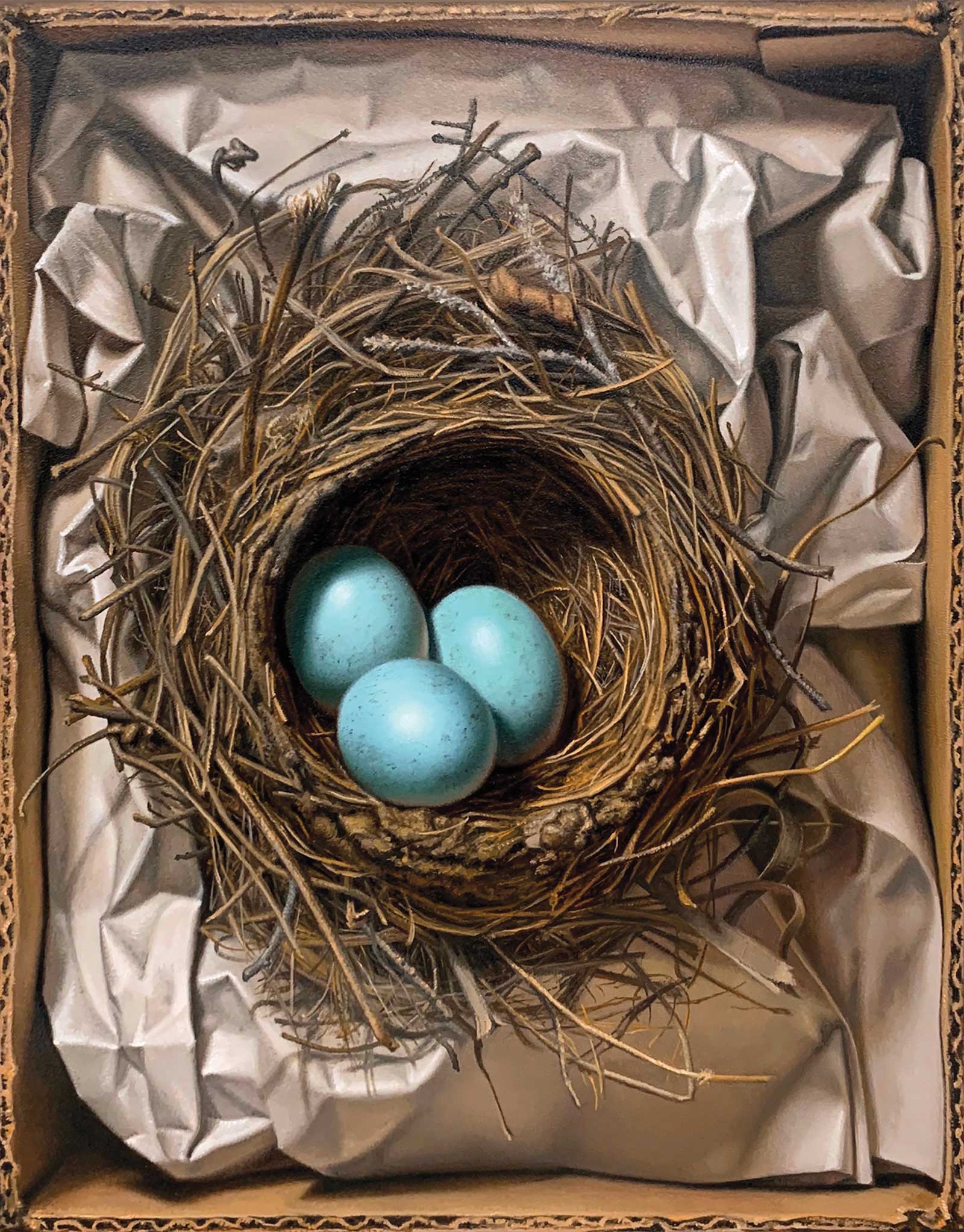
Natalie Featherston, Nesting Instinct, oil on panel, 10 x 8" (25 x 20 cm)
Scottsdale Artists’ School: How did you become a painter?
Natalie Featherston: I became a painter because of boredom and a great advertising campaign by the School of Visual Arts in the New York City subway system. I was living in New York working on my Master’s degree as a cellist and had decided music was no longer something I wanted to pursue. I dropped out of school, got a job waiting tables and thought taking an art class at night might be fun after seeing ads for SVA’s continuing education program. It turned out not only was it fun, it was the creative outlet I’d been searching for.
SAS: Has trompe l’oeil always been your subject of choice?
NF: I always knew I wanted to paint realistically, but I didn’t have a clue as to what that meant. I had no art background and hadn’t even drawn much as a kid, but somehow I gravitated toward high definition oil painting. I think we’re wired to like what we like, and my background as a classically trained musician meant order, structure and virtuosity appealed to me. If I’d been a jazz musician I might have become an abstract impressionist, who knows?
Portraits or landscapes never really held my interest. I’ve always liked narrative and storytelling through objects and nostalgia. Gradually, trompe l’oeil elements worked their way in, and I found I loved the humor and whimsy the genre provided. There’s also a perception shift in the viewer that’s unique to trompe l’oeil—that moment where they’re suspended between knowing what’s real and what’s painted. That moment of connection is the thing I strive for in my work.
SAS: What obstacles did you have to overcome to be an artist?
NF: At first it was finding training. Back in the ’90s there weren’t many people teaching the fundamental skills of drawing and painting, and even less offering rigorous atelier training. I fumbled around NYC for a few years before I finally found my teacher, who taught me pretty much everything I know about drawing and painting. He changed the course of my life, and I’m very grateful to have done a six-year apprenticeship with him.
Once I had some skills under my belt, the next obstacle was finding time to paint. I was very lucky to have the opportunity to quit my waitressing job and start work as a decorative painter. I got to use some of my training, and since it was freelance, I could pick and choose my hours. It gave me enough flexibility to create a body of work to shop to galleries and still pay rent. Eventually I found gallery representation and tapered off on the decorative painting jobs.
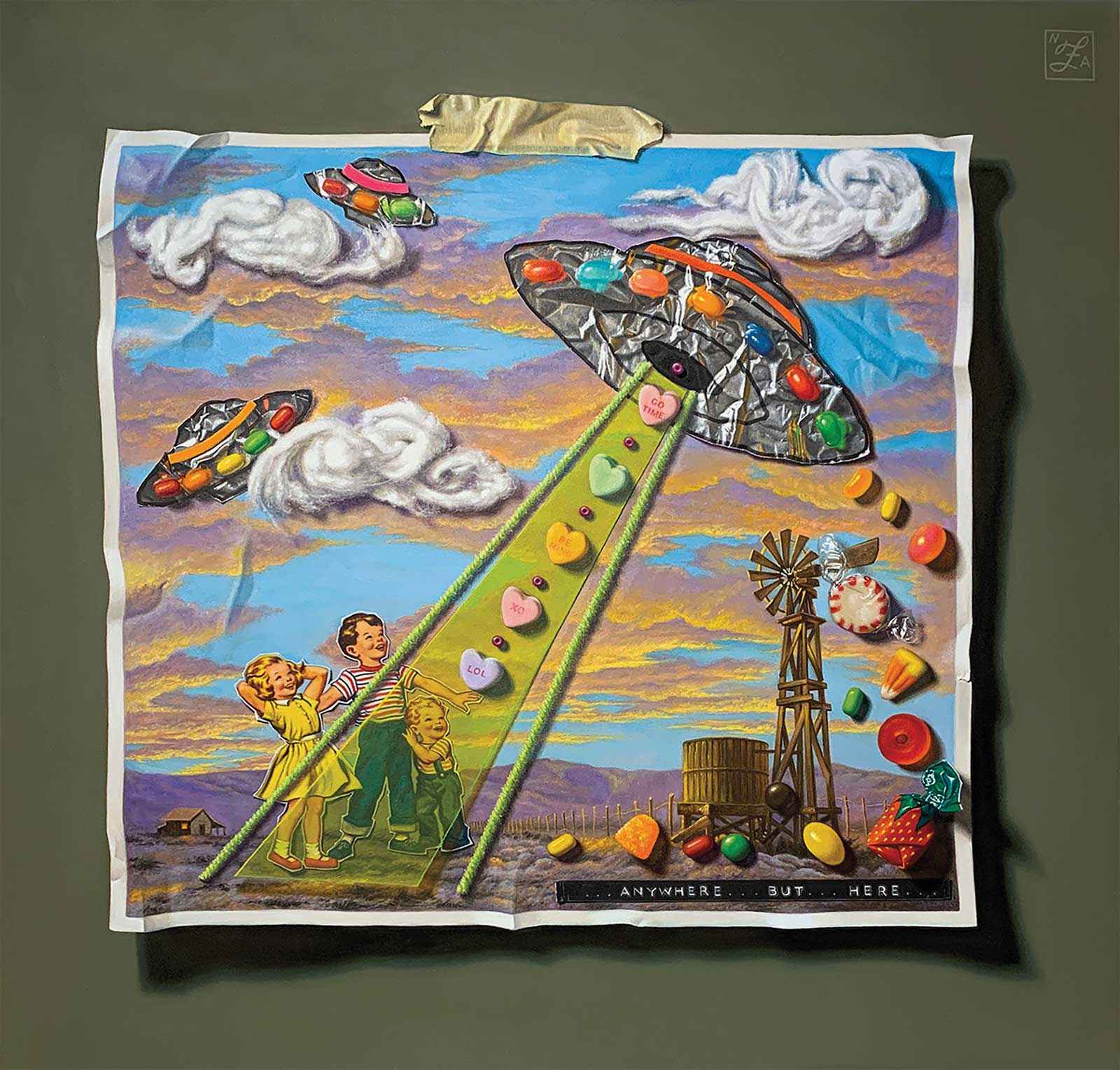
Natalie Featherston, Anywhere But Here, oil on panel, 18 x 19" (45 x 48 cm)
SAS: How did the opportunity arise to teach at SAS?
NF: Some of the best advice I share is to make art friends at every opportunity. We can help each other and support each other in this journey, and those people understand the unique challenges we face as artists. I was very lucky that another wonderful teacher at SAS recommended me as an instructor. I’d done a few workshops but hadn’t pursued much teaching because of my hectic show schedule. However, after the recommendation and my initial meeting with SAS, I was excited to travel for an in-person workshop and teach at a world class art school.
SAS: What do you look forward to the most when teaching?
NF: There’s so much I love—showing someone a new technique, discussing color theory. But my favorite moment is when someone is struggling and I can help them have that ‘ah ha!’ moment that changes how they see something.
I had a student at SAS last year who was painting a paper clip—yes, I know that sounds silly— and I showed them how to do a tiny impasto highlight to describe the metallic form of the curved wire. When they did it on their own it looked amazing! It’s a small thing, but that was such an incredible feeling.
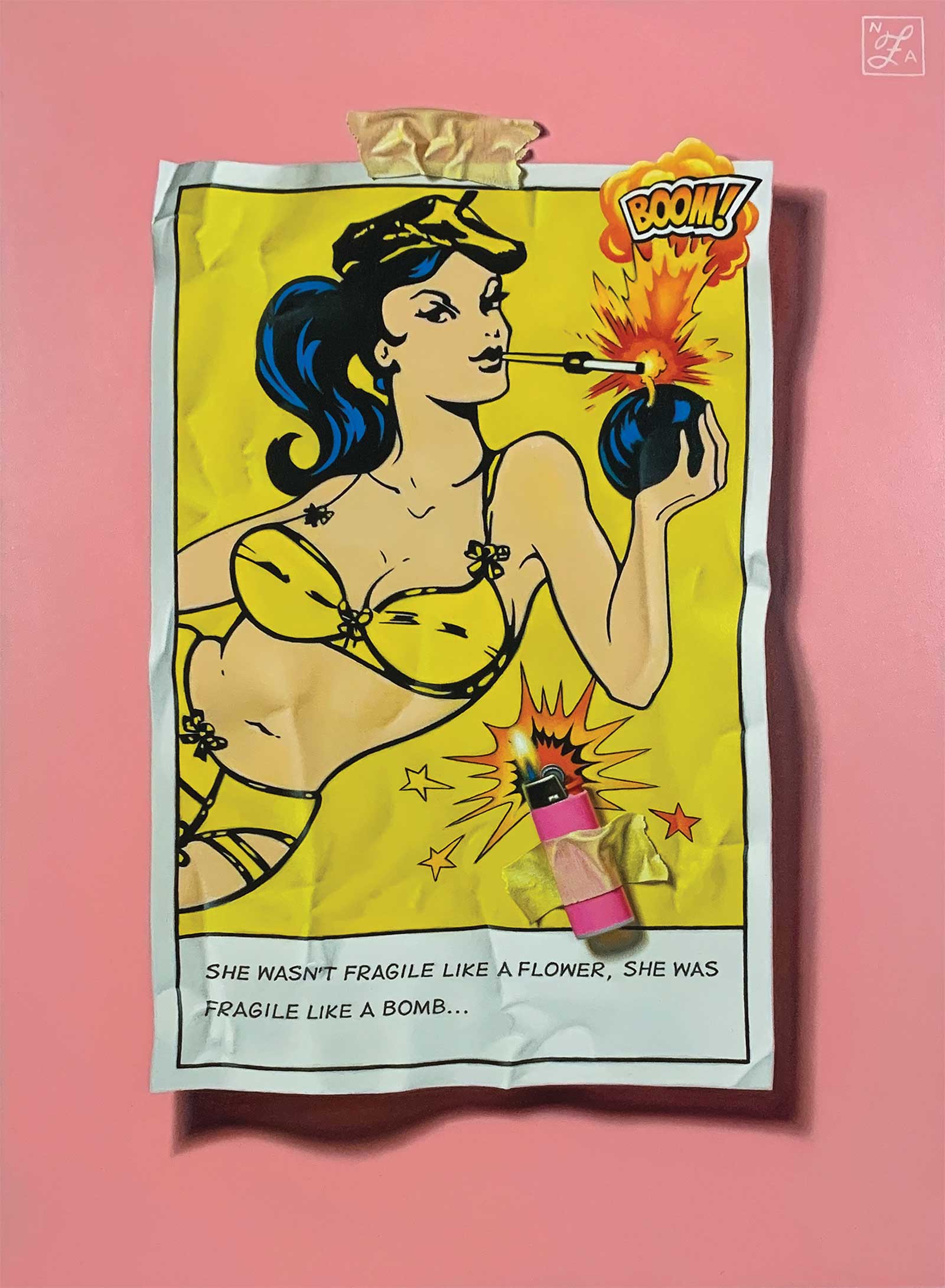
Natalie Featherston, BOOM!!, oil on panel, 18 x 13" (45 x 33 cm)
SAS: Tell us about your upcoming workshop.
NF: I’m super excited about this year’s workshop! Much of my work revolves around painting illusion, and painting texture has always been a big part of my art. My workshop, “Painting Texture in Still Life and Trompe L’Oeil” will focus on all of texture’s greatest hits: wood, glass, metal, satin and paper. Artists can work from their own compositions or my own paint-along photo reference that’s designed to challenge while streamlining the painting process. Presenting this as a specific skill-building workshop for all levels will offer a connection to a wide range of artists.
SAS: What is one takeaway you want students to get from your instruction?
NF: One important thing I like to share is there’s usually a simple solution to challenges we face as artists. Giving students a toolbox of ideas to figure out a path forward when they face obstacles in their work is super valuable. There can be many different routes to the same destination, but I focus on repeatable and reliable solutions, whether that’s learning how to transfer a drawing in oil, how to mix and match colors with confidence, or even simple work around to improve drawing skills.
SAS: What is one of the most important lessons you have learned as an artist?
NF: Stay true to the art that fulfills you. There have been many paintings over the years that I’ve been warned not to make as being too edgy or unsaleable for a commercial gallery, and those have been some of my greatest successes. You will always find the right venue and audience for your work if you believe in what you’re making, and success will follow. —
Visit www.scottsdaleartschool.org for more information on the school and its upcoming workshops.