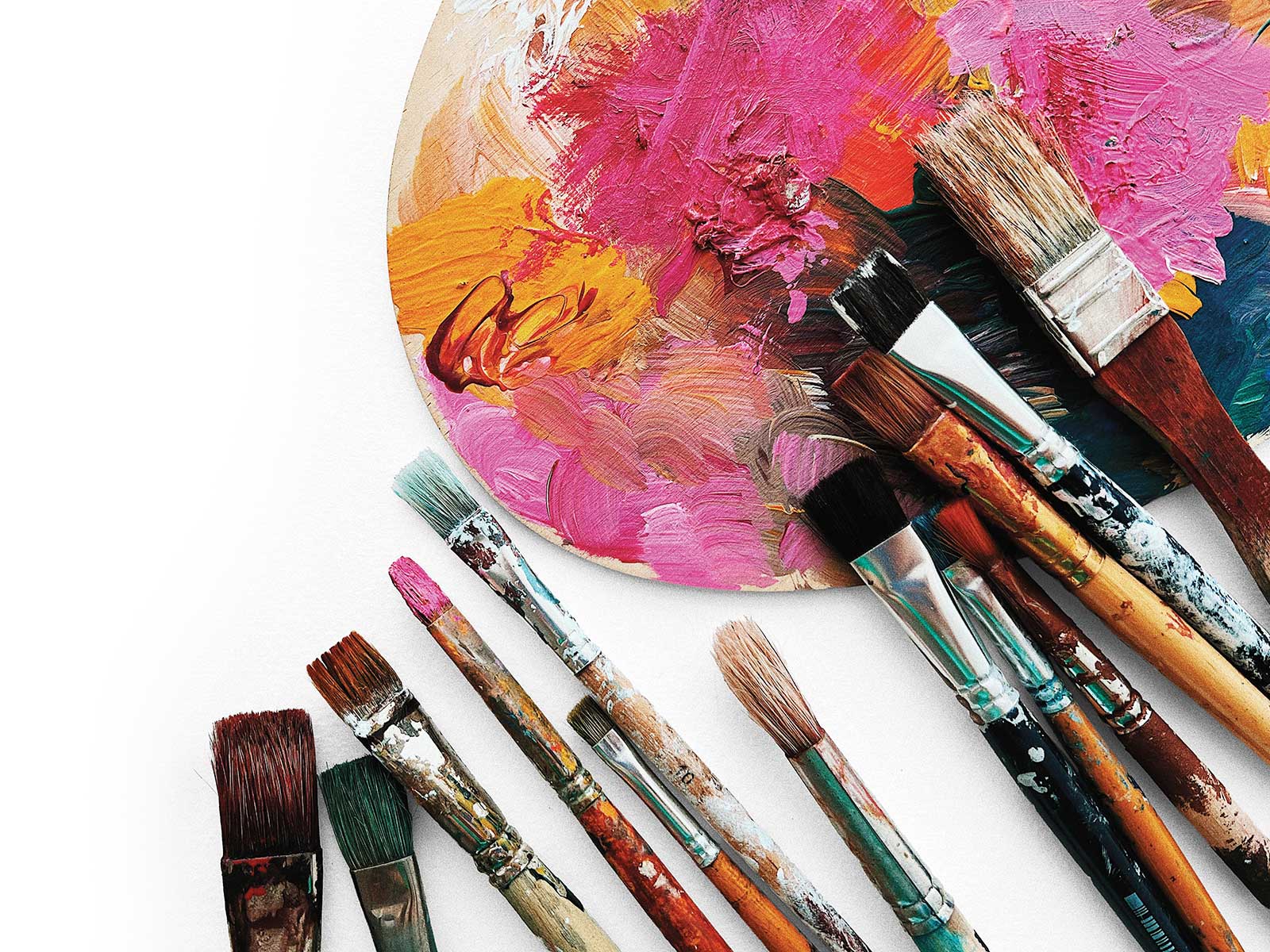
Natural
Natural fibers refer to any paintbrush hairs that come from an animal. These brushes absorb water and work well with oils, making them a staple for watercolorists and oil painters. Natural brushes also hold their shape well and leave visible brushstrokes, an often desired effect.
Hog
Both strong and flexible, hog hair is one of the most common natural bristle types. It’s recommended for both oil and acrylic painters and has a natural resistance to fraying. It also spreads medium to thick paints smoothly and evenly, but it’s much coarser than other fibers. Natural hog bristle brushes have a split tip called a flag, which helps the brush hold more paint.
Kolinsky Sable
Kolinsky sable comes from the tail of the kolinsky, a species of weasel native to Asia. The long, fine hairs on this professional-grade hair allow for precise control with your brushwork (with great snap) and is one of the primary brushes of choice for watercolorists and oil painters.
Red Sable
This hair type comes from any member of the weasel family with red fur. A versatile, durable fiber that works well with multiple mediums, red sable can be a more affordable alternative to high-end Kolinsky sable.
Ox
Generally taken from the ears of oxen or cattle for the best quality, this hair type is both silky smooth and long lasting. It also has a good snap, but lacks a fine tip. For this reason, brushes with ox hair are most useful in medium-grade wash brushes or flat-shaped brushes.
Squirrel
While squirrel hair brushes lack spring or “snap” (making them a bit difficult to control), these medium-grade brushes have a lot of the advantages of sables, including thin hairs that form sharp points. Soft and absorbant, squirrel hair is a good choice for watercolor painters. This brush type is also typically less expensive.
Synthetic
The appeal of synthetic brushes comes from their affordability and ease of use. Unlike natural bristles, these human-made fibers don’t require such an intense level of care, and they work well with a variety of mediums.
Nylon
A go-to for many acrylic and water-based artists, nylon is known for its durability and elasticity. These flexible bristles hold acrylic paint well and allow artists to create a highly smooth finish.
Polyester
Like nylon bristles, polyester is also less prone to damage from the caustic nature of solvents and paints. This material is also easy to clean and is suitable for all skill levels.