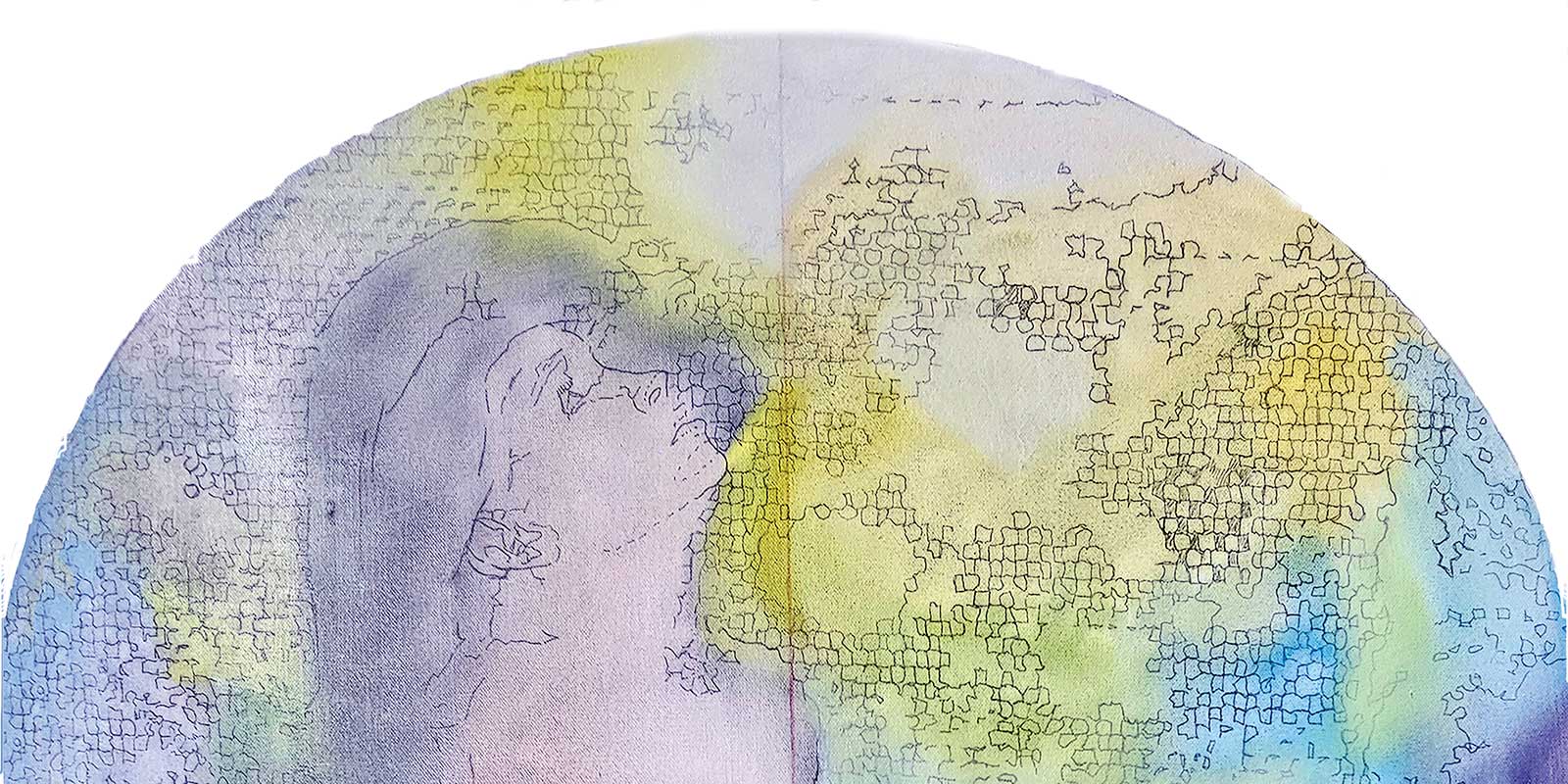
 Stage 1
Stage 1: My paintings all start with an idea that involves the entanglement of places, people and memories. I first journal sketch the overall concept, making decisions that involve the model, the pose, the environment and the color palette for the work. I go through many of my images, weaving them together to see how their compositions and color presentations work together. Once the two images are selected and woven together, I choose the model and the pose and move all my images into Photoshop. The final composition becomes a layered collaboration of all my choices.
This painting is for a very specific location, which is why I chose a half-moon shape. I typically work on polyester canvas adhered to ACM with BEVA371 film. Because of the size of the panel, I chose a corrugated ACM for better stability. I primed the canvas with a couple of coats of oil-based primer and then created a support-size sketch of the model, the major visual points, and the main weave to transfer them via an oil transfer.
I am always trying different methods for starting the painting in an effort to speed up the process. I started this painting by wiping in color blocks to lay a sheer underpainting of tone. I wanted a fresh, new growth feel, so I stayed with blues, greens and yellows.
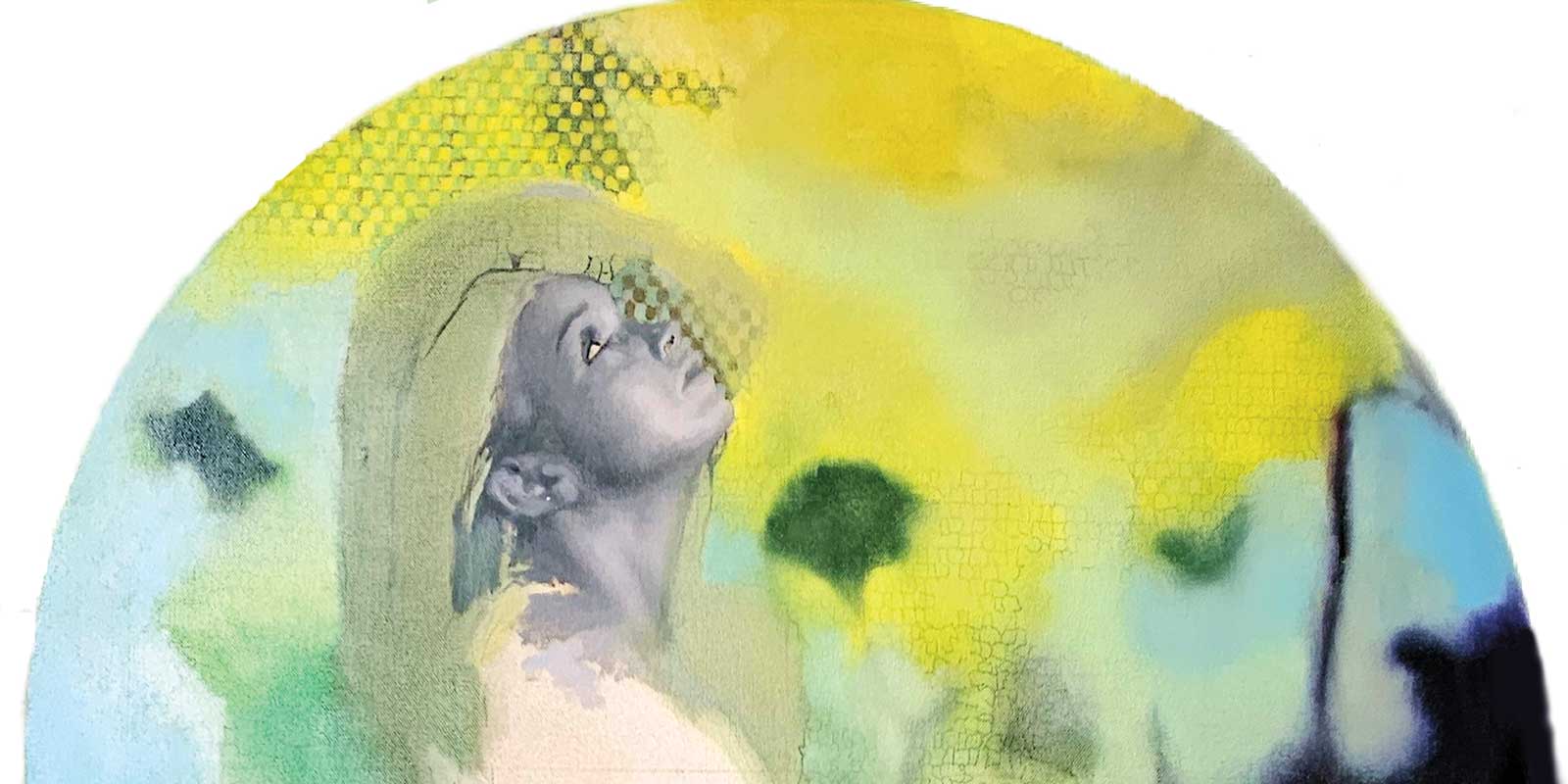 Stage 2
Stage 2: Painting the weave is very time-consuming, so after deepening the blocks of color, I start with a grayscale capture of the model. Once I am mentally ready to get lost in the details of the weave, I grab my tiny flats and filberts and methodically work the weave, inch by inch. I love the size 2 Silver Brush 2600 Monza® for this job, and their smaller goat hair mops to knock down glare and soften edges.
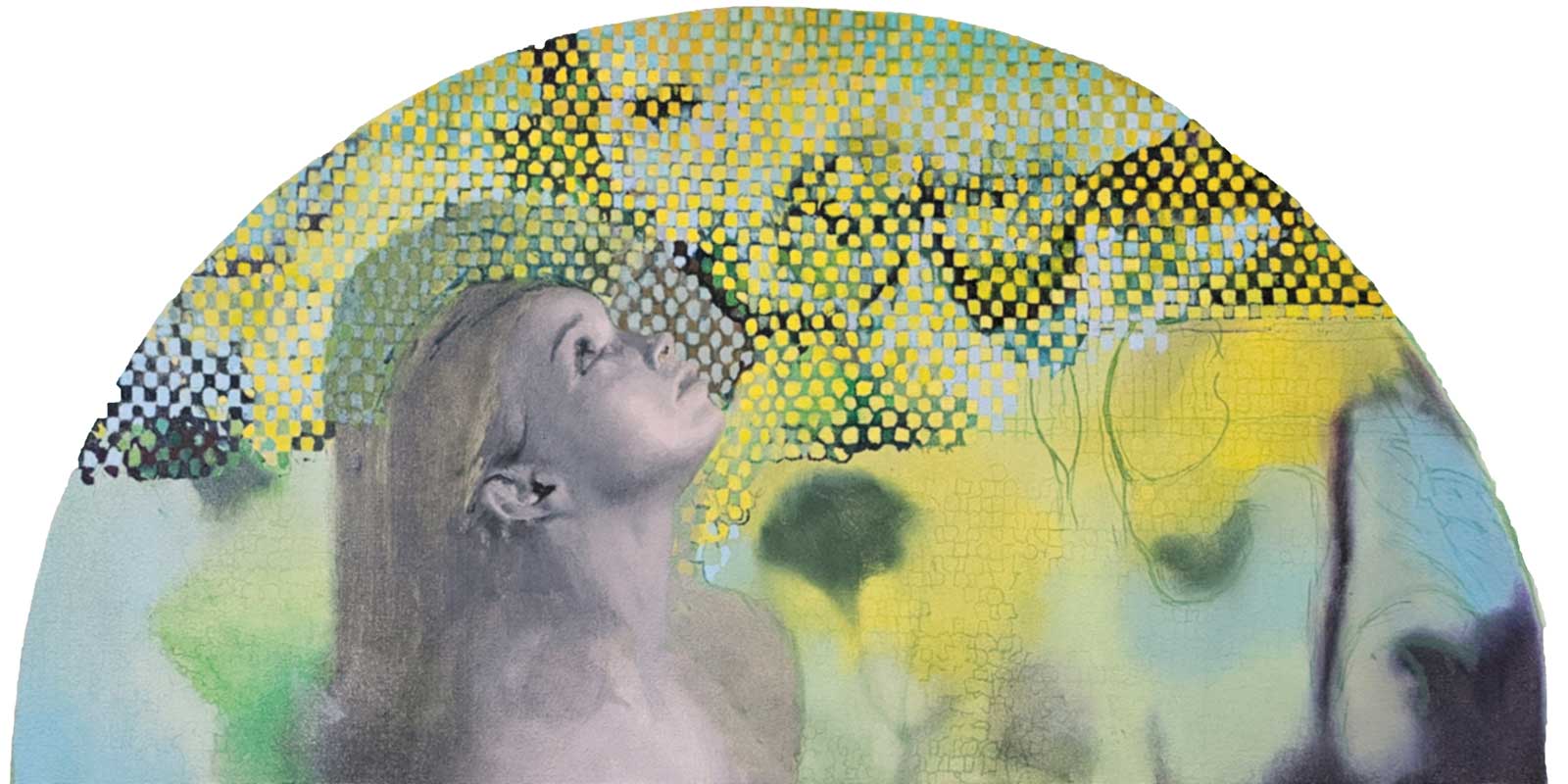 Stage 3
Stage 3: The only way to accurately create the weave is to methodically work my way across the canvas. Sometimes I work vertically, sometimes horizontally, but there is no other way to get the paint on. To speed up the process, I premixed my paint for the day. When I tire of the small shapes and tiny brushstrokes, I take a break to block in more of the model, which allows me to use bigger, broader shapes with larger brushes.
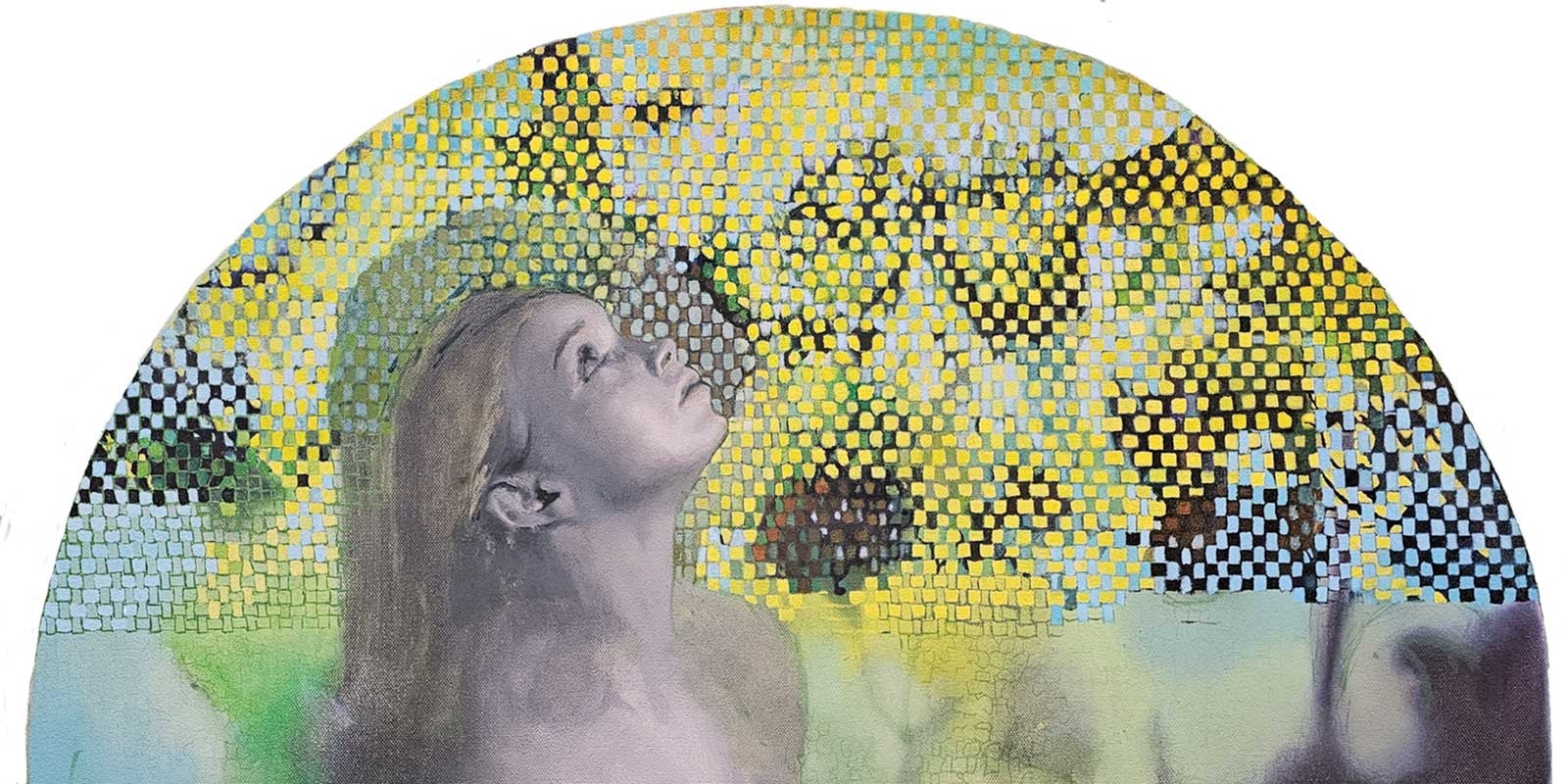 Stage 4
Stage 4: Once the initial weave gets established, I go back through to restate tiny cast shadows. I have been trying to state a brushstroke just once to move through the process without overworking it, but I confess to sometimes getting lost in the details.
 Stage 5
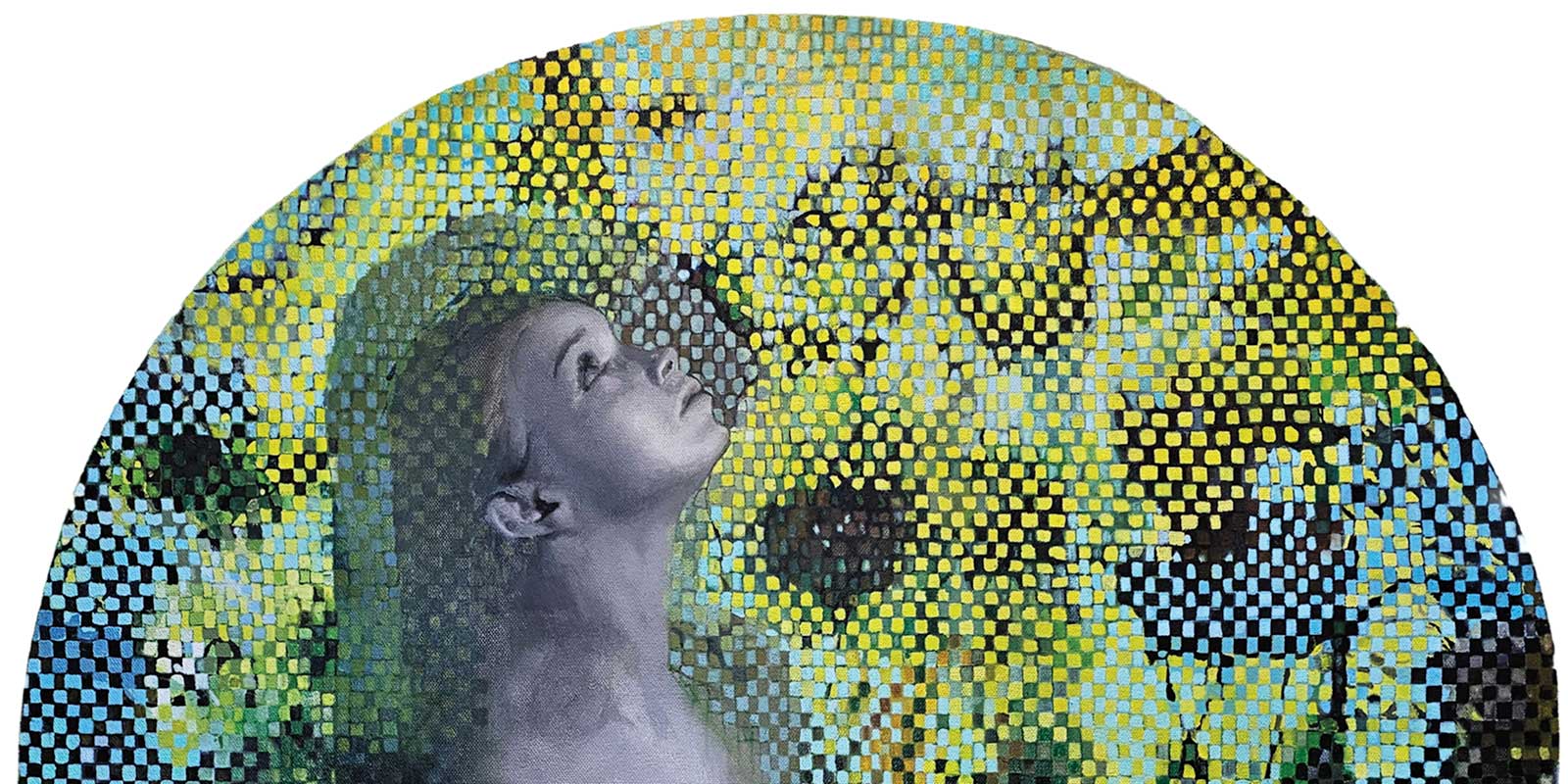
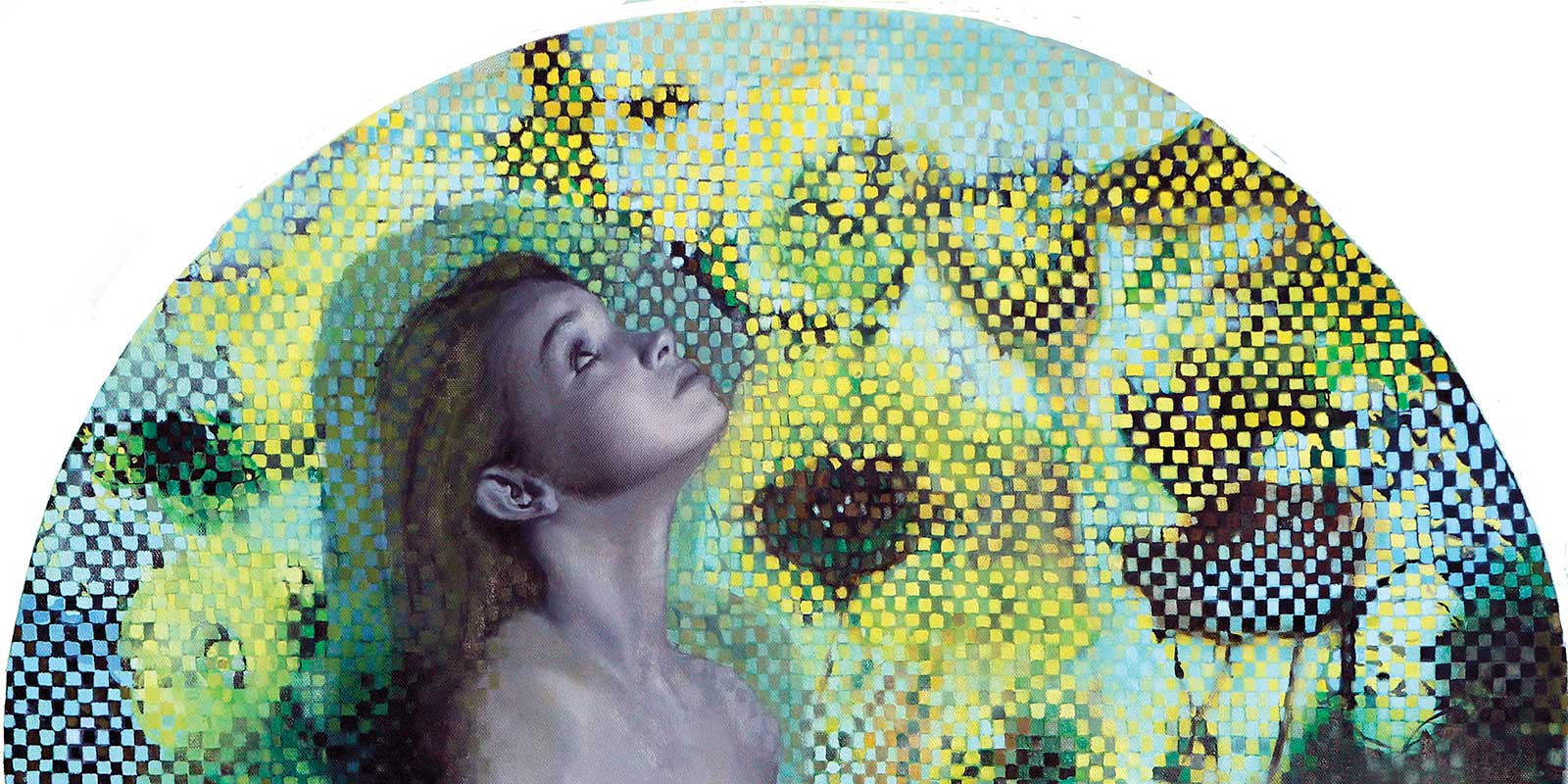
Stage 5: Once the weave of colors was completed and revisited with dimensional highlights, I concentrated on finishing the figure. In this painting, she was intentionally kept in grayscale. It’s important to finish the figure, then scumble the weaving pattern on top. This conveys her further connectedness with her environment, though it is already represented by the silhouette woven with the background. At this point, I revisited any areas throughout the weave that felt like needed some more attention to either add definition or dimensionality. After leaving the work to dry, I came back in for glazing and toning to add a little more depth and dimension to the big flower shapes.
 Stage 6
Stage 6 Finished Artwork: The Interconnectedness of Faith and Flowers, oil on polyester-mounted aluminum panel, 12 x 24" (30 x 60 cm) —
Jamie Lindholm is an artist, writer, teacher and mentor living near Boulder, Colorado. She graduated from Ashland University with a BSBA in business management and marketing and continued her studies with a Master of Fine Art from Regis University, Denver. She is most known for her complex oil paintings visually weaving people, places and memories that culminate in conceptual work about our human entanglements and interconnectedness.