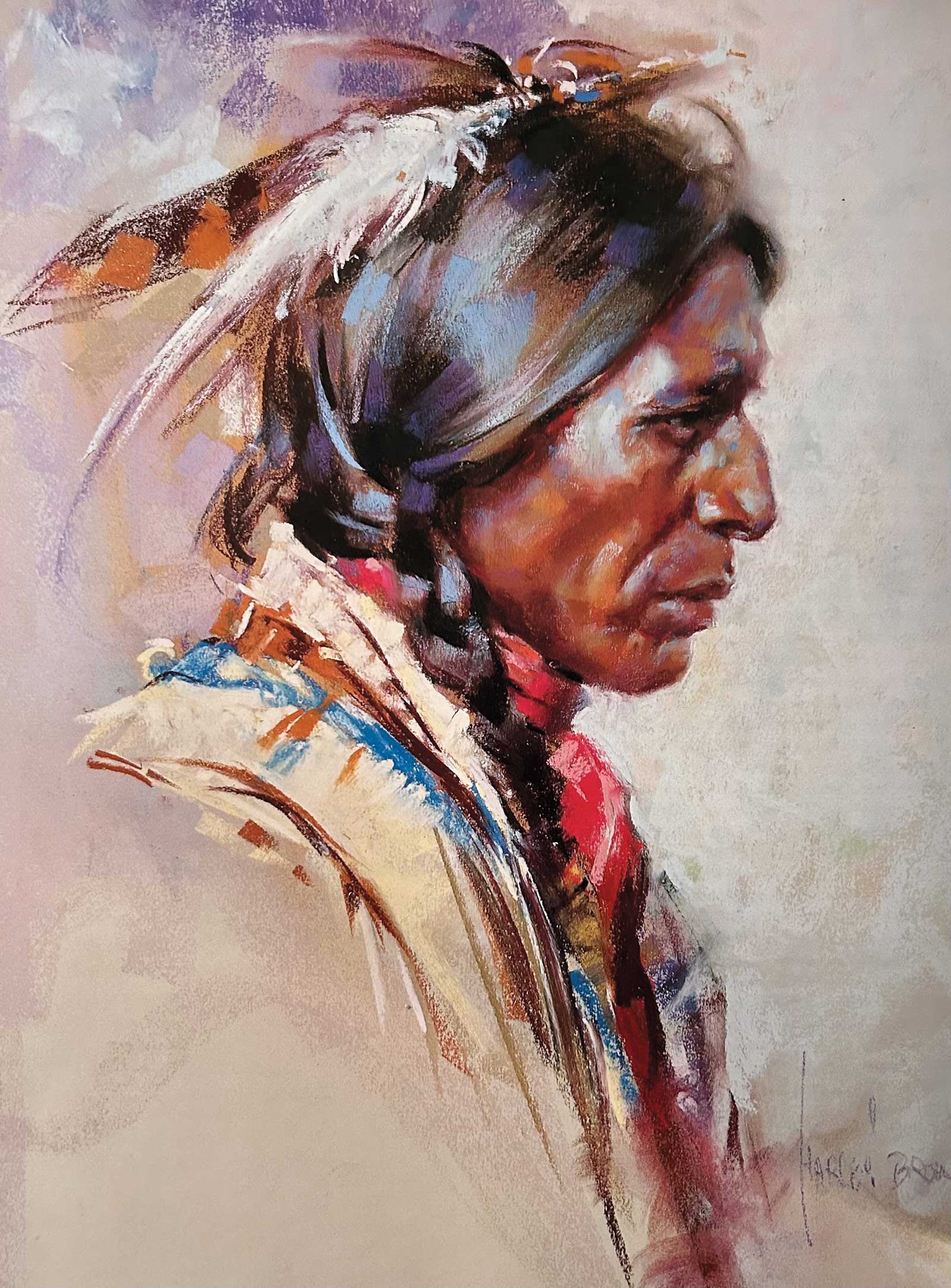
 WARRIOR
Getting Started
I generally start my artworks with a medium neutral/warm pastel. It is so essential to get my first strokes precise with my subject. While laying them in the right place, I also put strokes into the background that are inspired along with those details. Back and forth impassioned strokes. Soon after, I begin adding the darker and lighter areas, introducing my subject’s colors.
Color
With pastels, I have every color possible and plenty of them. Enough to last me decades. I lay some of them down on my palette, separating blues, greens, reds, etc. In a separate section, I have a mixture of various colors scrambled together—ones that I might grab and use just for the fun of it. My inner mind sometimes gets a very interesting idea, and it just might work. I really don’t quite understand that inner intuitive side, but it understands me all too well. It knows just when to kick in, and I nourish and welcome its well-earned independence and perception.
Don’t lay in lots of colors just because you want a colorful piece of art. Colors, like melodies and words in a poem, need extra thought as to how they will work together and also help bring the subject to “life.”
I work with Canson paper and have done so since the beginning of my pastel career. I’ve always bought more expensive pastel pieces that have pure color and lay onto the paper lavishly and pure.
Experience tells me when to do a quick spraying of fixative on my pastel piece. I use it in areas where I want to lay clean strokes on top. I never use fixative when the work is finished as it can harm the values and color. We know the art piece will be under slightly raised museum glass to protect it over the decades or even centuries.
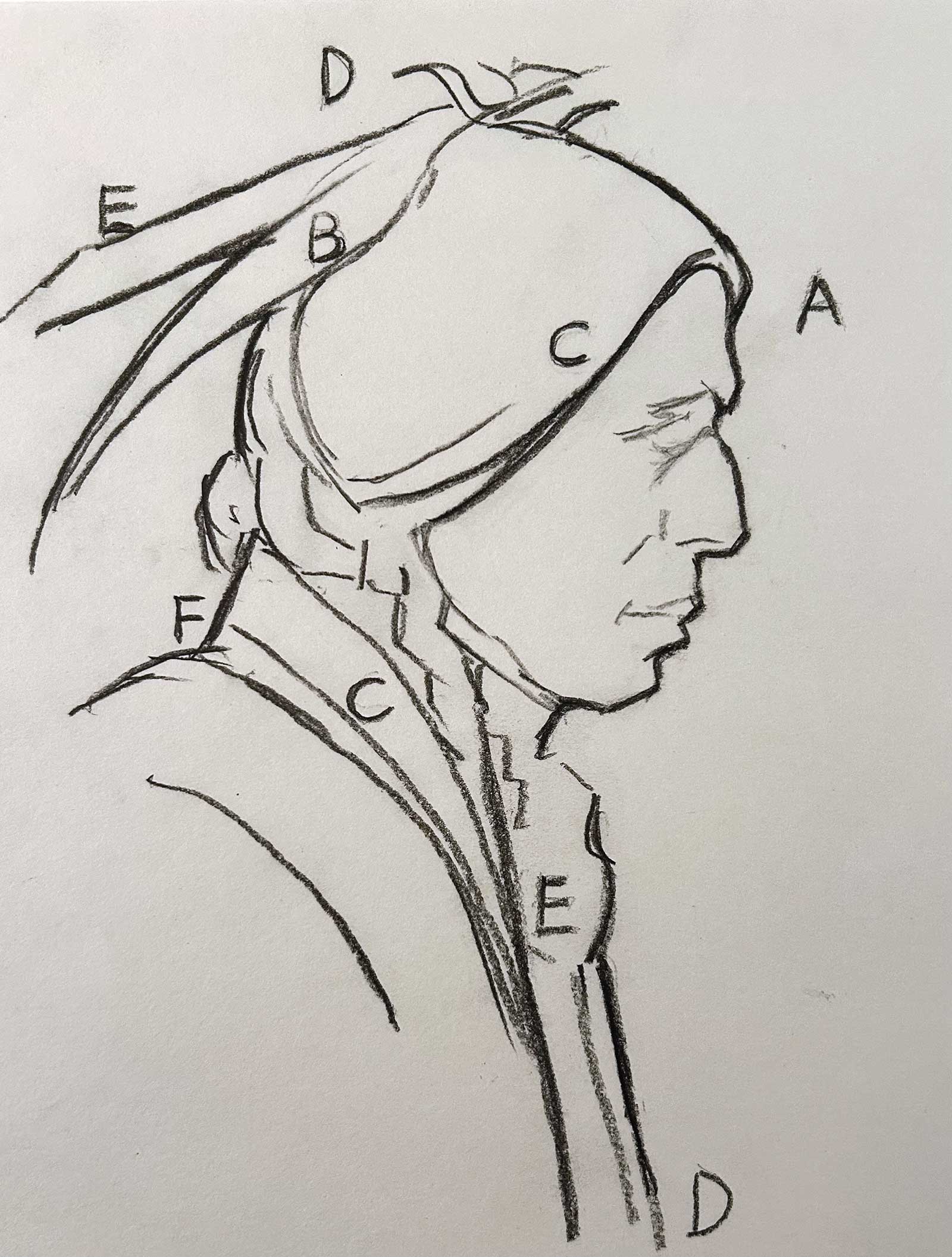 Warrior tatics
A Few Pointers
In my studio, I use a north window for light. I have an electric light as well, which is very close to the sun’s natural light.
I take short breaks and walk away from the easel. These also give me fresh looks at what’s happening with my work as I re-enter my studio. I often have music on, which can inspire me in unique, positive ways. A glass of cold extra-healthy juice is another good addition. Best of all, my cat or dog resting and enjoying the creative atmosphere.
The longer we’re with our art, the more confident we will be with how we lay in our strokes and details. Developing a work can be as natural as driving a car or working on a computer. It begins to flow from what we learn and how we apply. While we observe and consider, there is really no end to learning, which so often happens without us consciously realizing it.
Most of what you’re going through, I’ve been through. The best part is that you’ll make it in the art world. You love it and you’ll do it.
Bounty paper towels are what I’ve used for many years. Bounty is great to quickly clean pastels while in use as well as rubbing areas on the pastel paper. It’s soft and tough at the same time.
I have a kneaded eraser ready for taking out large or small areas.
I keep my easel straight up and down so the pastel dust can easily drop off the paper while I’m throwing on the strokes.
Remember that a work of art should have a dominant value: light, dark, medium. For example, landscapes are mostly medium value with smaller areas of light and dark. Also, an art piece should be predominantly warm in color and tone, or cool in color and tone. Other colors and values can enter the work, but it needs these dominant factors. In other words, a work of art shouldn’t have half cool colors and half warm colors.
Most important is the design. One of my artist friend’s final words to me was “design!”. This is something I’ll keep passing on.
When I’m painting a live model, I measure my subject several times, like a carpenter. In realism, getting the twists, turns, sizes and lengths is of extreme importance.
A small black dot on a white wall is important only in that you spot it right away. And for sure, you’ll keep glancing over at it. In other words, it’s the center of interest, in the extreme.
Take your art seriously and not yourself. I’m loose and compatible with myself and the world around me. With my art, I’m totally and positively absorbed.
Over the years I’ve learned that in much of the art world, there are no barriers and no limits. There is literally nothing that is not allowed into the art-scape of today. In fact, “no limits” is an understatement. The art and artists who are appreciated is another very complex factor.
For Ourselves
Always find time to create a subject that intrigues you, even if it is not likely saleable. We’re intuitive artists and we make art for the love of it as well as keeping food on the table. I sometimes look at the art I’ve done over the years, and there are subjects obviously done for me alone.
For instance, I joyfully did a pastel of the Alice in Wonderland statue in Central Park, New York. Alice stayed in my home. You would be amazed at the offbeat art I’ve created. Also, I’ve painted strange film characters, including many monsters for magazine covers, bringing them to life on paper.
Yes, I joyfully create art for galleries and events, but when I’m drawing or painting, I don’t consider for a minute how others might feel about the work. My thoughts are concentrating entirely as to how my work is going. There’s me and my art.
Our work time is our own; we come and go when we want. There’s no boss threatening to fire us if we don’t smarten up. Once in a while I take time off to have coffee with a friend or watch the ocean waves come in. Also, I don’t have to measure up to someone else’s particular standards.
Focus on the Eyes
It’s easy to explain why certain mountains, flowers or sunsets are beautiful. But to me it is impossible to give details why eyes (and women’s eyes in particular) are so magically beautiful. I’ve drawn their eyes since childhood, and they fascinate me continually. In a general way, eyes can be explained, but the subtle differences will always remain a mystery. Incidentally, I’m thinking of eyes not necessarily with makeup.—
A Brief Demonstration—ROSE WEASEL
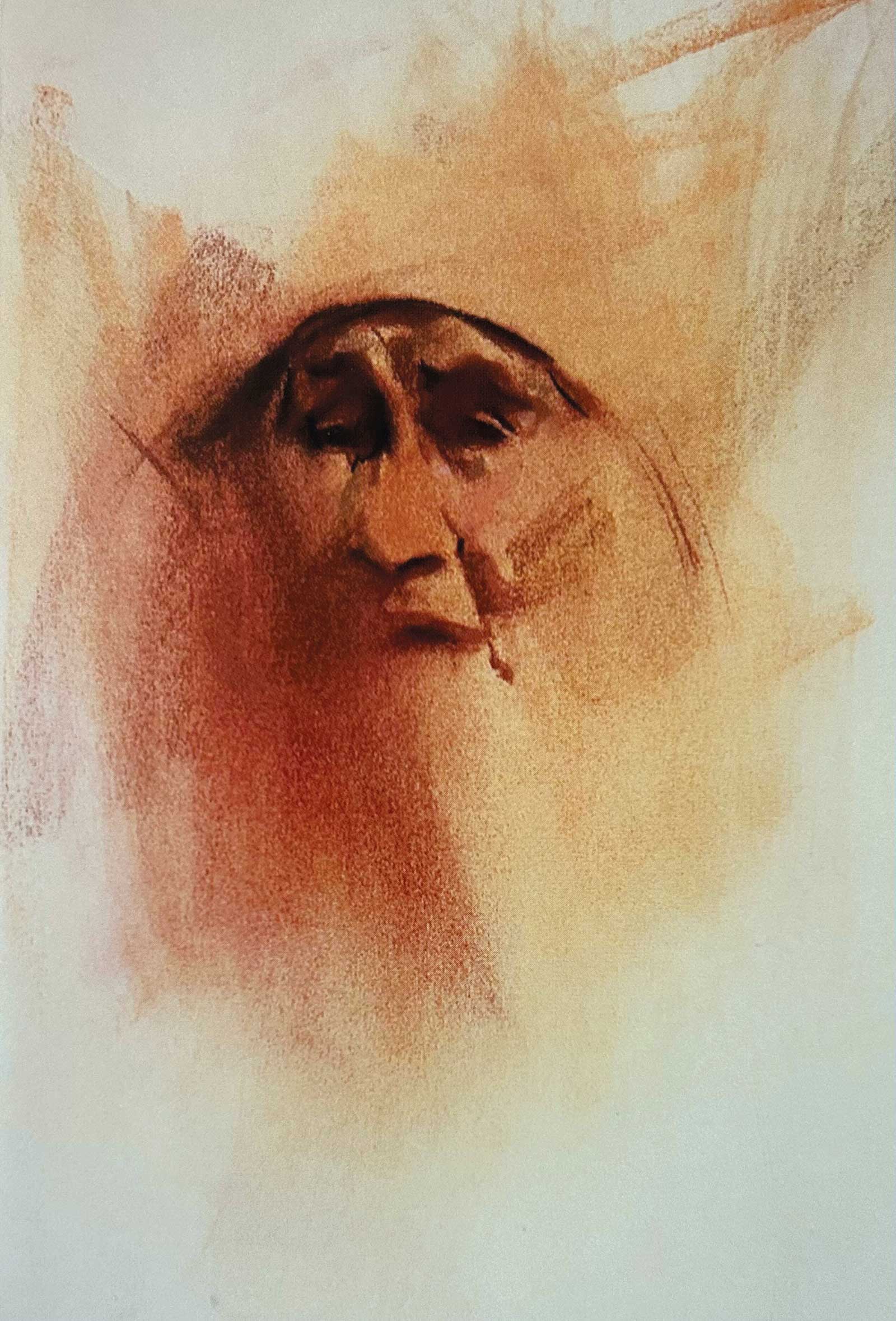 Stage 1
Stage 1
Here are the first few strokes of my pastel of Rose Weasel. You see the accuracy of the form and shadow shapes. At this beginning stage, they must be spot on. At the same time you certainly see the artist within those shapes.
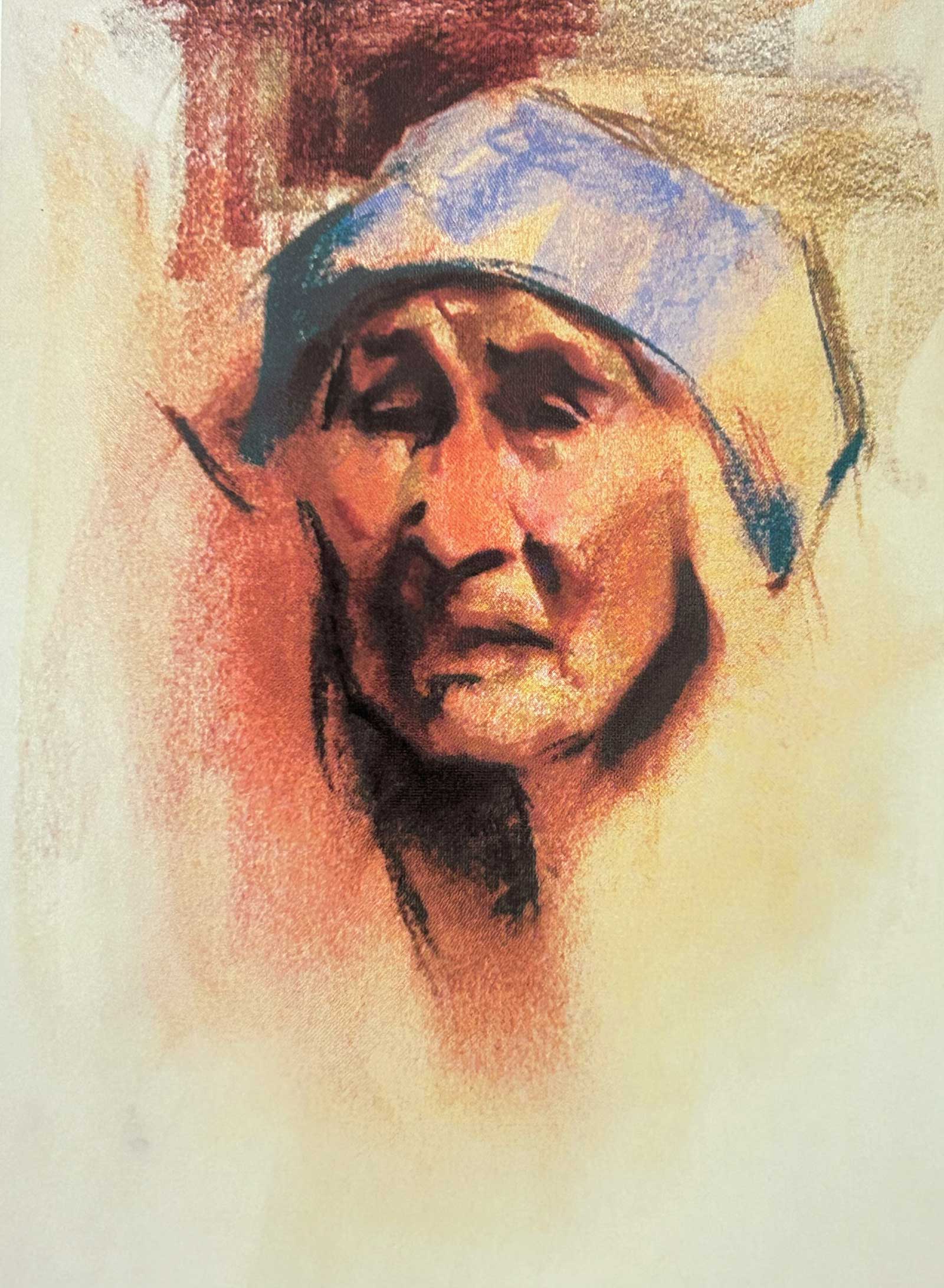 Stage 2
Stage 2
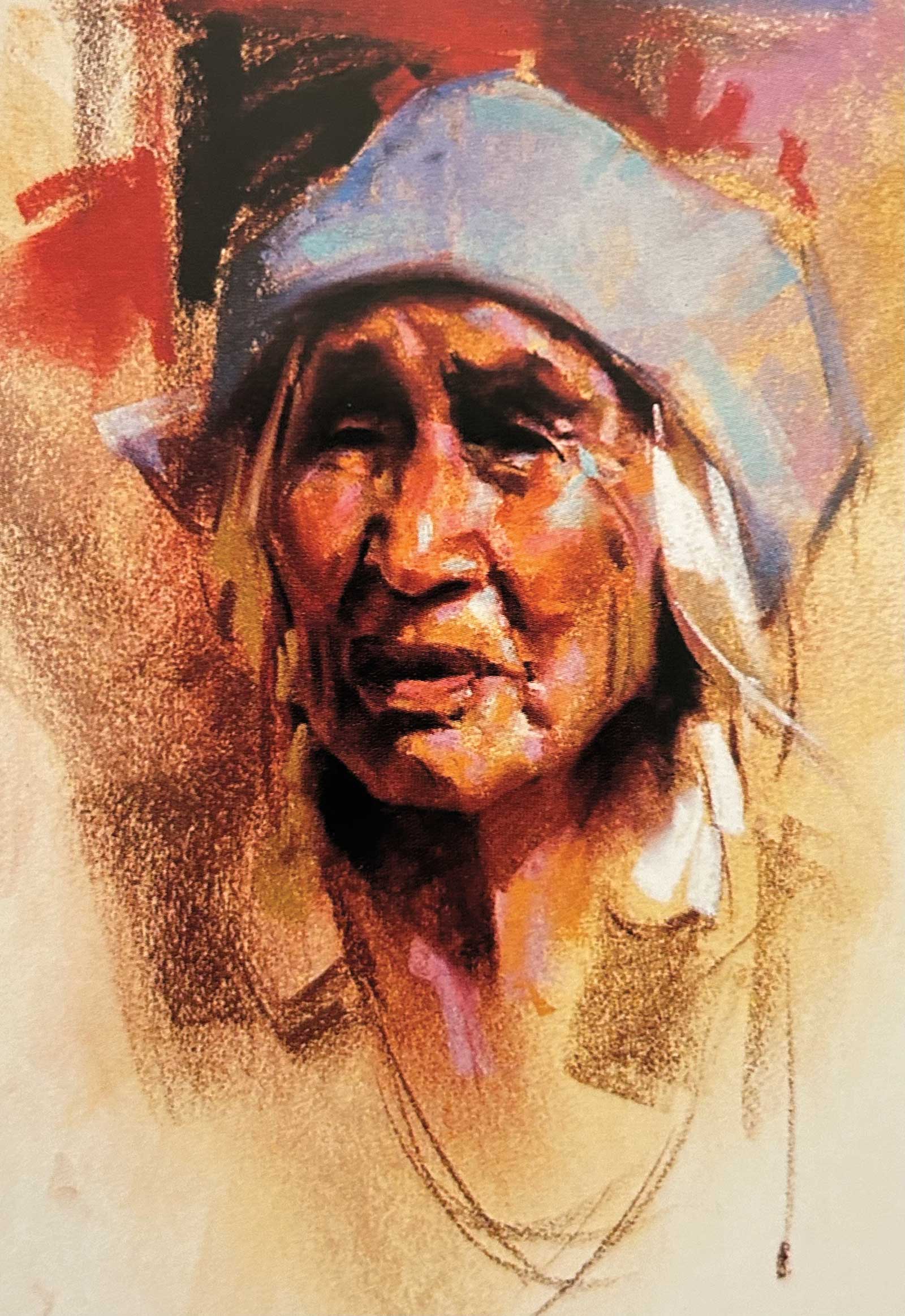
Now I’ve carried Rose’s portrait to a very important stage where her head scarf, facial features and background are getting worked in. No doubt you see the energy in these strokes. The values give form, and the angles give movement. Warm against the cool scarf.
 Stage 3
Stage 3
Here I’ve turned the corner and am moving towards a completed art piece. All the details are where they should be. I’ve handed myself a pathway to the end. Hitting strokes that are “accurate” and then right to the next without looking back—shaping her headscarf, hair and the location of her necklace, and forming “lines of character” on her face.
 Stage 4
Stage 4
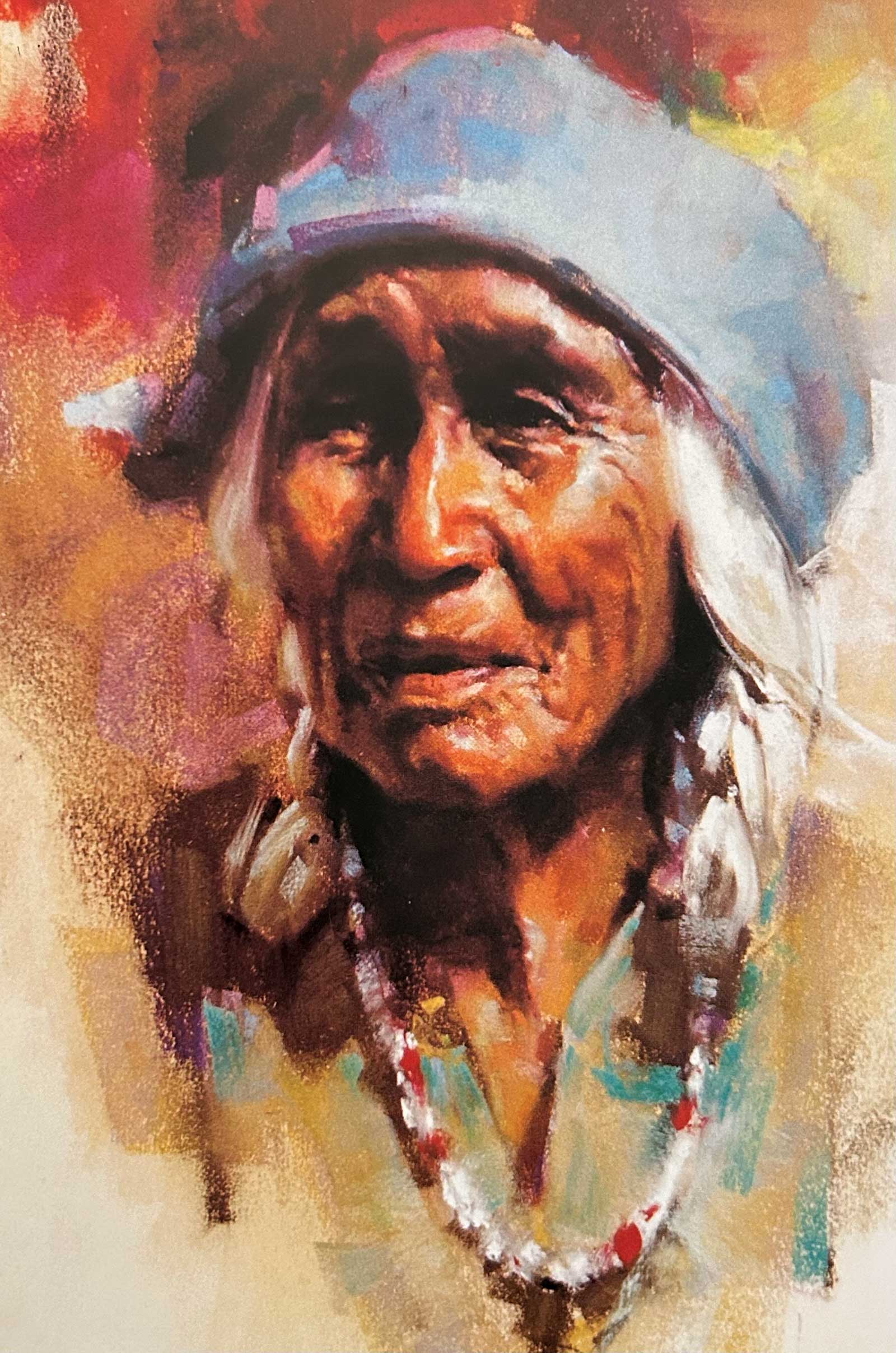
And now the final strokes bring us to Rose Weasel. The fine shadows and lights are carefully worked into her face. I observe very, very closely, where the final highlights go in her cheeks, forehead, nose, lips and chin. Within all these areas you don’t see me fussing. Rather, you see me filled with high spirits, bringing Rose to life before us. You observe the creation of what I wanted with design, color and the personal facial features of Rose Weasel. To put it simply, you see subject and artist, both very alive. —
BALINOFSKI: AKI FROM GIFT LAKE
 AKI FROM GIFT LAKE
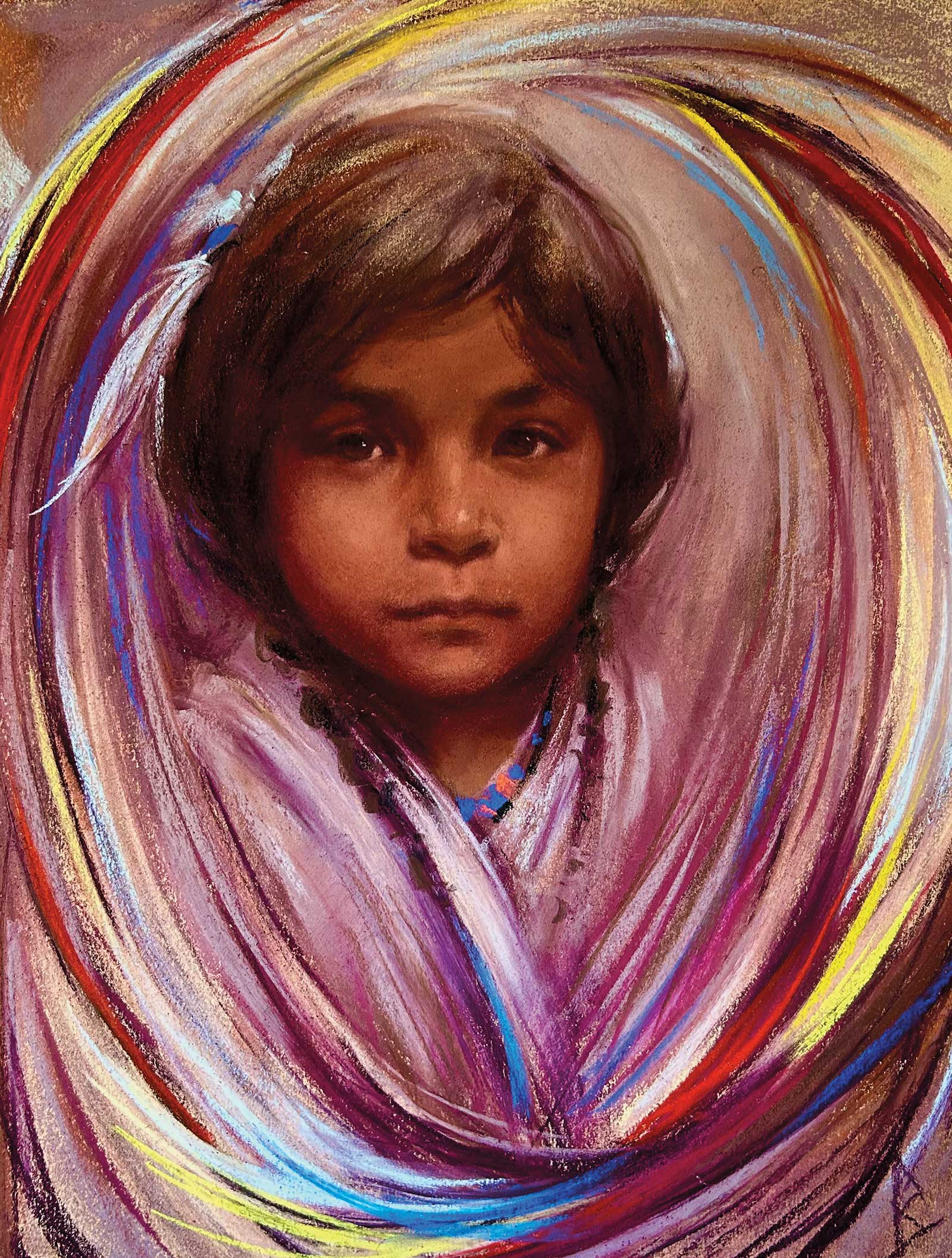
Here’s a young child named Aki. Both Harley and I had the joy of portraying her. We see her in a state of wonder—wondering what is going on with her family and friends walking around her, trying to get her attention. With this in mind, later when I began this pastel piece, my hand continued these circular movements whenever I wasn’t fussing with her features. Incidentally, it took me quite a bit of time to finish her face; it appears so perfect and quite fragile. You can see the contrasting wild exuberance in the background and the delicate intricacies creating this moment with Aki.