

To be an artist is to be a small business owner. It is unlike many other jobs in that you are the one creating a unique item to be sold, and nowadays, you are also the one selling it. Creating the work takes time, inspiration, creativity and focus, not to mention a specialized skill set. Running a business involves a completely different set of skills and know-how than creating your art. In past editions of Art Industry Insider, I have shown you how to run your art business, introduced software programs such as ArtworkArchive.com and more, but now I’ll try to answer this important question: “How does one successfully juggle these two separate jobs?” The key is time management.
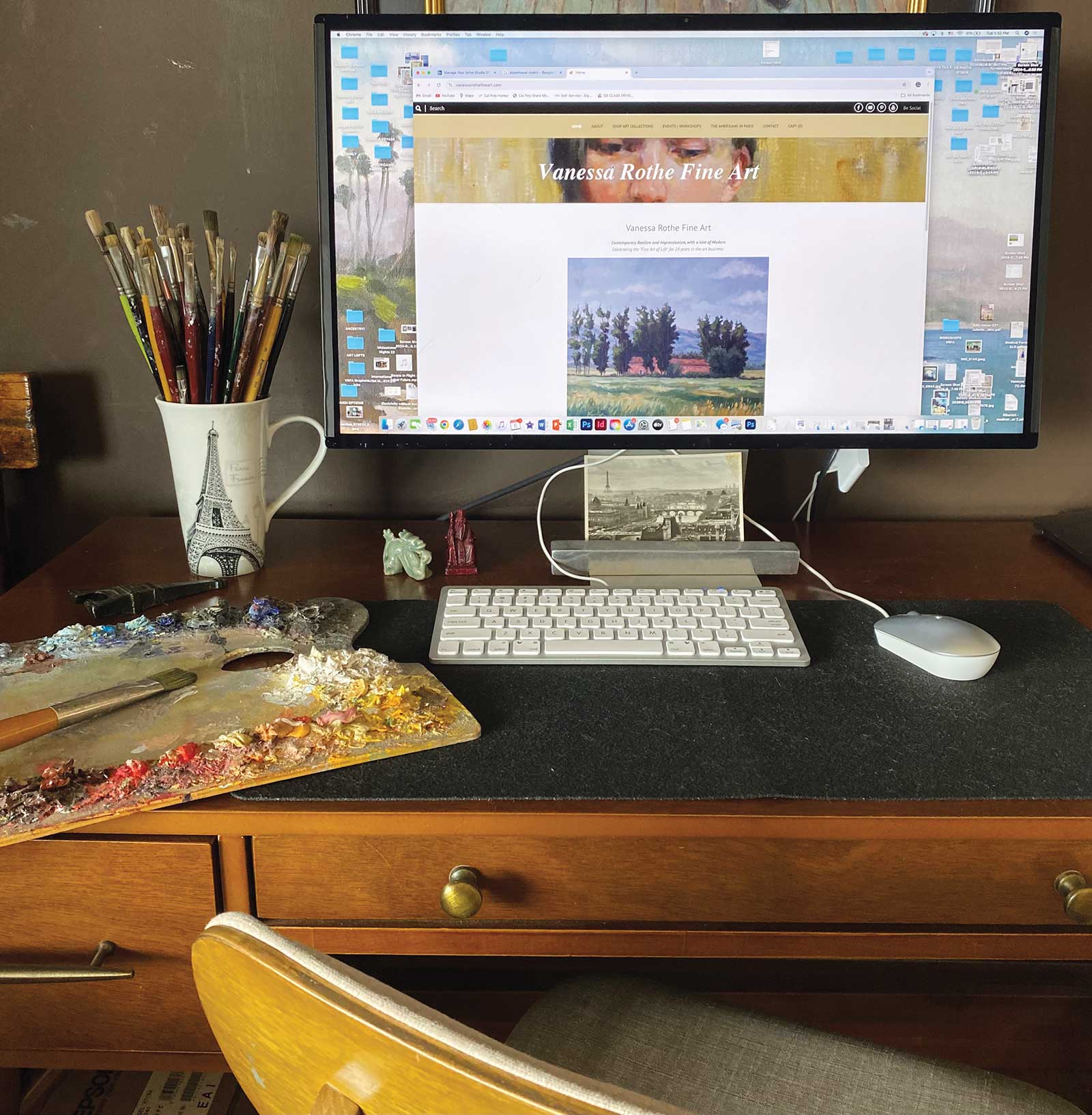
In the past, artists have been able to create their work and stay in the “creative zone” by working with a gallery or art dealer who ran the business side of the job: promoting, marketing and offering their work for sale. But the gallery would usually require about 40 to 50 percent of the profits. This combination can still be found today and still works for many artists. However, with the advancements of technology, you can do it yourself, and if you want to keep all the profit, you will have to do the business side as well.
We all seem to get frustrated when the two parts of our job overlap. We get distracted by business deadlines and can’t create! Short of hiring someone to do all of that for you, we all agree that to succeed at this, you need to separate the time blocks for the two tasks. Your creative mind and your business mind need to be able to work without distraction from the other side.
Many talk about the artist 80/20 ratio, but I find the 75/25 or 50/50 works even better. In other words, if you have some help from the outside, you would be working on creating your art 75 percent of the time, and running your business 25 percent of the time. If you are doing it all on your own, I recommend using a half creative, half business model.
The creative side might entail preparing canvases, looking at reference photos, traveling, collecting ideas or doing a photoshoot. Then painting, sculpting or collaging, or creating your work. As artists we need to get in the zone. The business side might consist of invoicing, inventory, photographing finished artwork, calling clients, entering shows, answering emails, updating your website, ordering supplies, etc.
Divide and Conquer
If you are working with a gallery or have someone doing some of your business side, and you look at your job over a month of time, we recommend working on your art three weeks out of the month and your business for about one week. The idea is to keep you in that “mode” of either creative or business. Let’s say you are inspired to create a few new French interior scenes. You prepare the canvases, review your reference photos and dive into creating some great new works within about three weeks. You might even make time to study a new technique or experiment with a new color.
The final week of that month, we then suggest you mentally switch to “business mode.” This week you would run the business. You’d photograph your artwork, upload it onto your inventory software, add them to your website, post on social media, take out or design marketing ads and work on selling your art. Mentally, you have allotted this time to running your business, so you won’t get as frustrated.
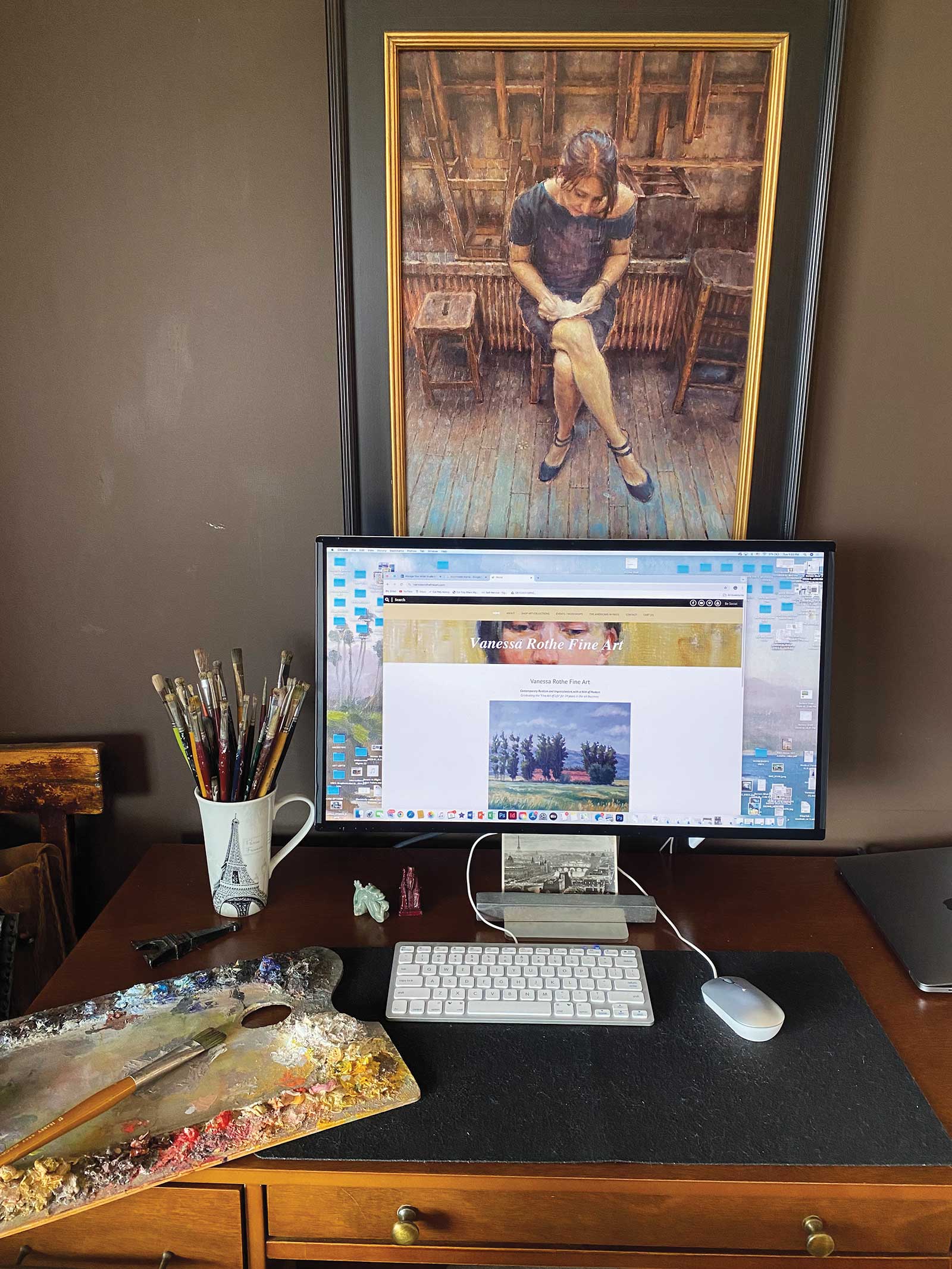
It’s not a perfect science. Sometimes during your creative time, depending on deadlines, you might have to stop and enter a work into a show one day during those three weeks. Alternatively, when you are doing your inventory or collecting payment you might be hit with inspiration and want to run to the easel. Sometimes your jobs can overlap in a good way. It would be smart, for example, to film yourself as you are painting to use in social media posts, or to add to your website later during your “business mode” time. Generally speaking, if you can still keep your mind focused on whichever mode you are in, you will be more successful with it.
Lists, Organization and Distraction
I personally find it helpful to use a list and write down everything I want to get done in a day, a week or a month. I write down show deadlines and plan ahead. Choose a time slot for each item and make a daily/weekly/monthly calendar. Divide your day up into segments and pencil in projects to be done. This may take some time but will ultimately save you time later. Remember that you need breaks and rest, too. You can set up alarms with Apple or Google calendar to help with this. There are a few time management software programs out there that can help as well, including Artwork Archive’s “Reminders” section, Monday, Artlogic, ArtCloud, Trello and HoneyBook.
Feeling overwhelmed? I also suggest using the “Eisenhower Matrix” to help define your tasks by urgency and importance. It helps you organize and eliminate tasks that may not even need to be done. A quick search online will lead you to many explanations of this. When you organize your time and limit distractions, you are setting yourself up for success. —
About Vanessa Rothe
In addition to her curatorial, editorial and lecturing, Vanessa Rothe is a fine artist exhibiting the last 20 years alongside the nation’s top artists in galleries, art clubs and museums. After majoring in business at USD and French literature at UCI, Rothe received classical fine art training at Laguna College of Art + Design and received honors throughout. Rothe has been working as an editor, graphic designer and artist in the publishing industry for 35 years.
Contact at
vanessarothefineart.com