The contrast between fine rigger lines, crisp pen lines and loose rough brush marks add variation to a painting and make it interesting. A big part of my work is unity and interest generated by threading a variety of pen lines through the work. I have tried out just about every type of pen. Some are great and some, for various reasons, live in a drawer, never to be touched again. In this article we will examine the various types of pens and look at the pros and cons of each.
 Dip Pens
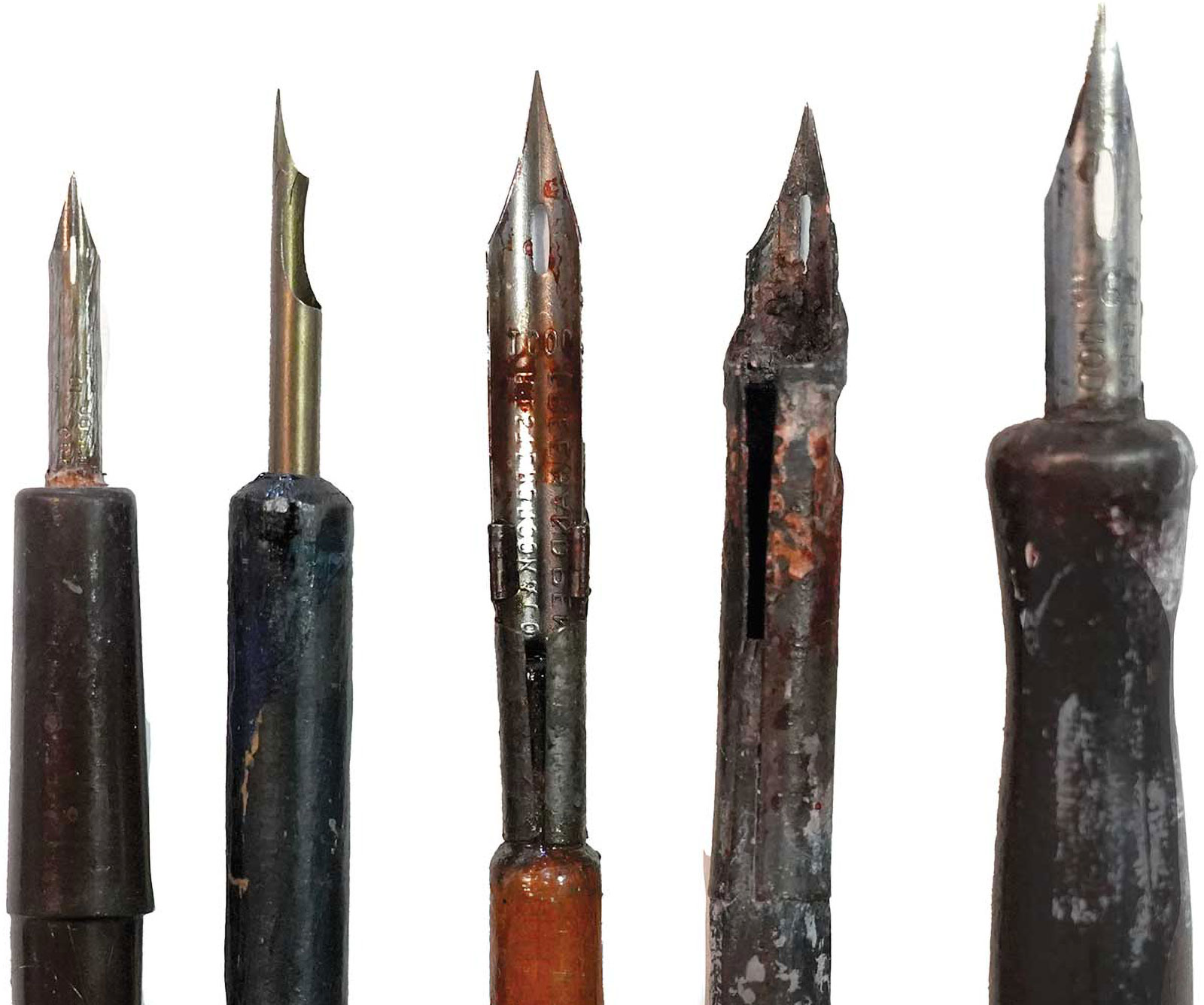
Dip Pens
The plain old dip pen has been around since the demise of the quill pen. It is extremely simple and easy to maintain. Provided the nib is kept clean and not dropped or bumped, it will last for years. As the nib ages it becomes more flexible, giving a greater variety to the lines. It also becomes polished on the tip at just the right angle for the user.
Once broken in they are smooth to use, produce beautiful fine lines and hold a surprising amount of ink.
Pros
• Easy to keep clean and functioning
• Can be used with any ink, watercolor or dilute gouache
• Cheap, simple and reliable
Cons
• Requires a bottle of ink to be carried
• Takes time to wear into a really comfortable tool
• Easily damaged if dropped
• Can blot easily, so keep a tissue handy
 Ruling Pens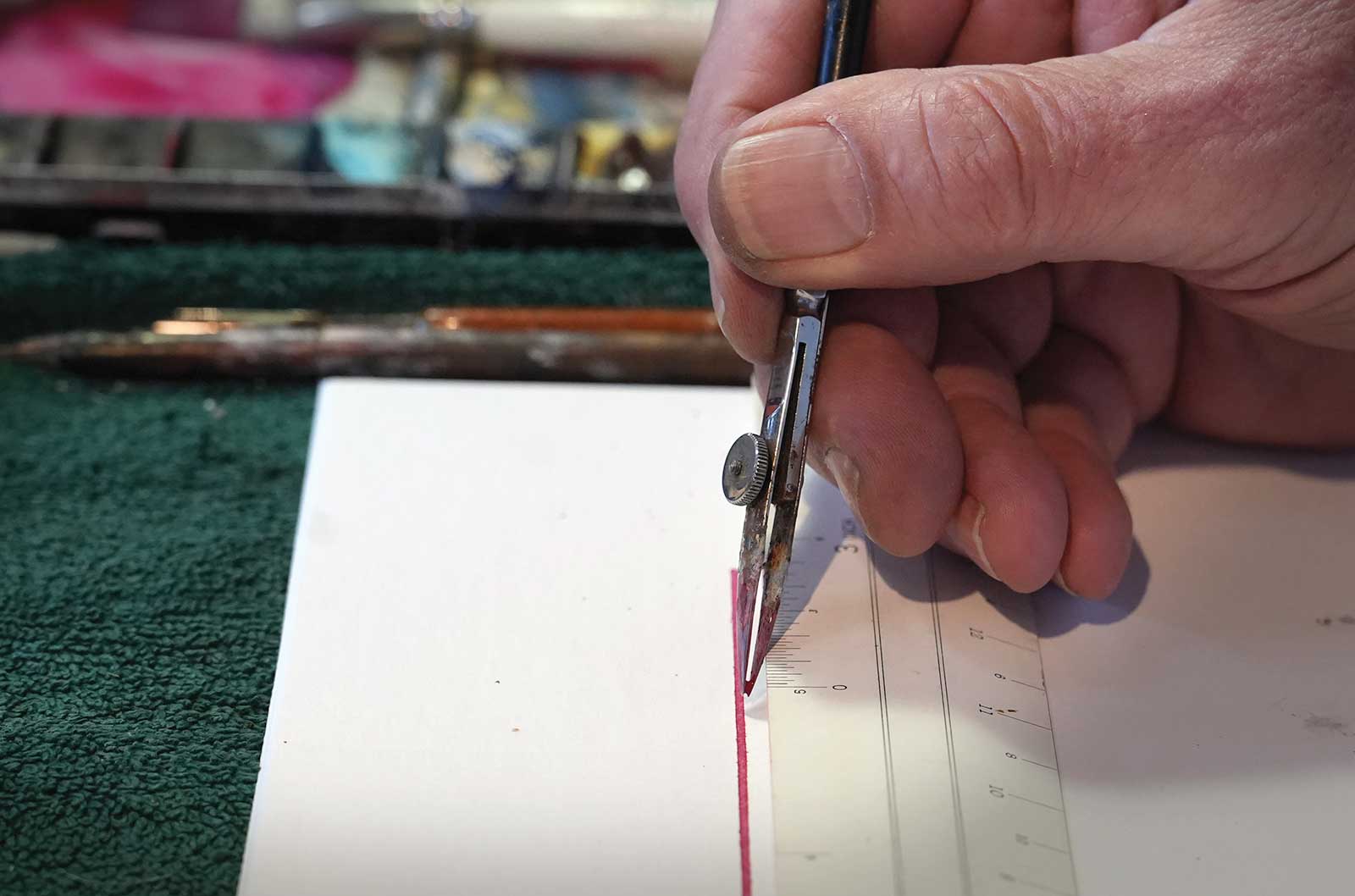
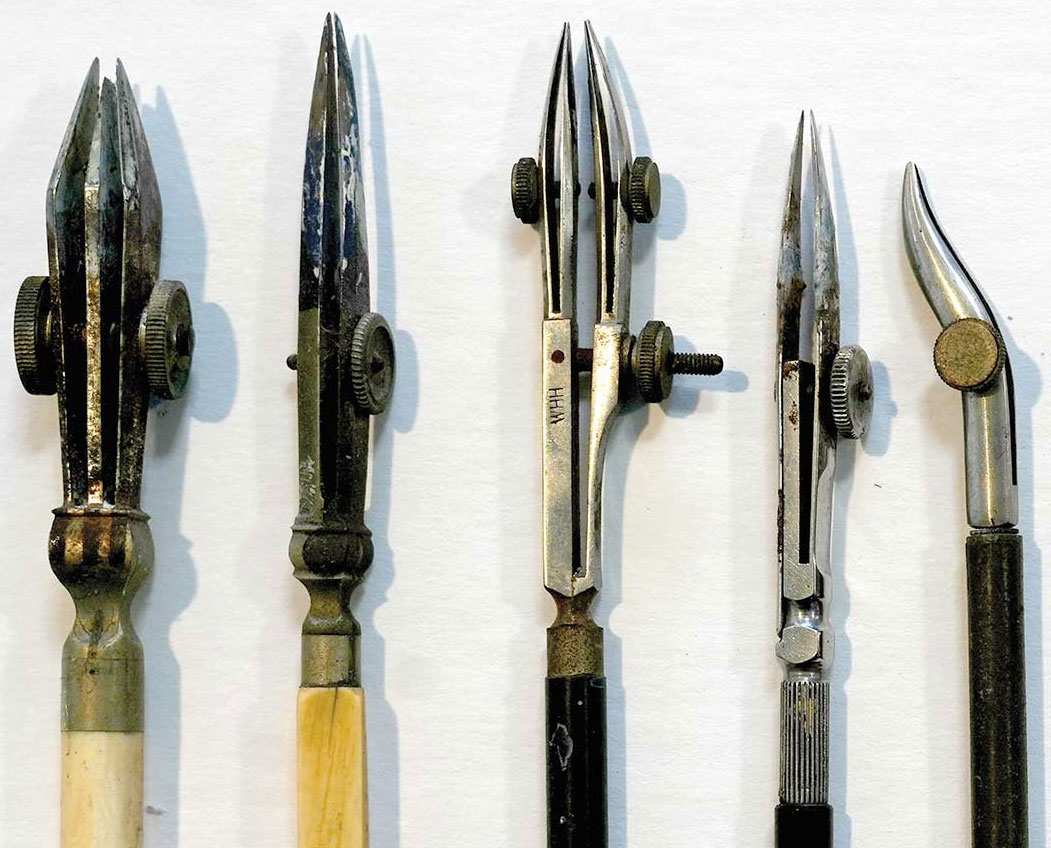
Precise, accurate lines of even width, tone and color are the features of a ruling pen.
Ruling Pens
Back before computers and printers, the easiest way to make a line of even width and consistency was to use a ruling pen. These devices trapped ink or paint between two tapered blades. A small screw on the side of the pen varied the gap between the blades, altering the thickness of the line. These pens were best suited to straight lines guided by a ruler. They were ideal for architects and draftsmen making precise, clinical renderings, but not so suited to expressive organic marks.
Pros
• Makes consistent, predictable lines
• Accepts ink or paint
Cons
• Not so good for curves or organic marks
• Fiddly to load and use
 Rotring Pens
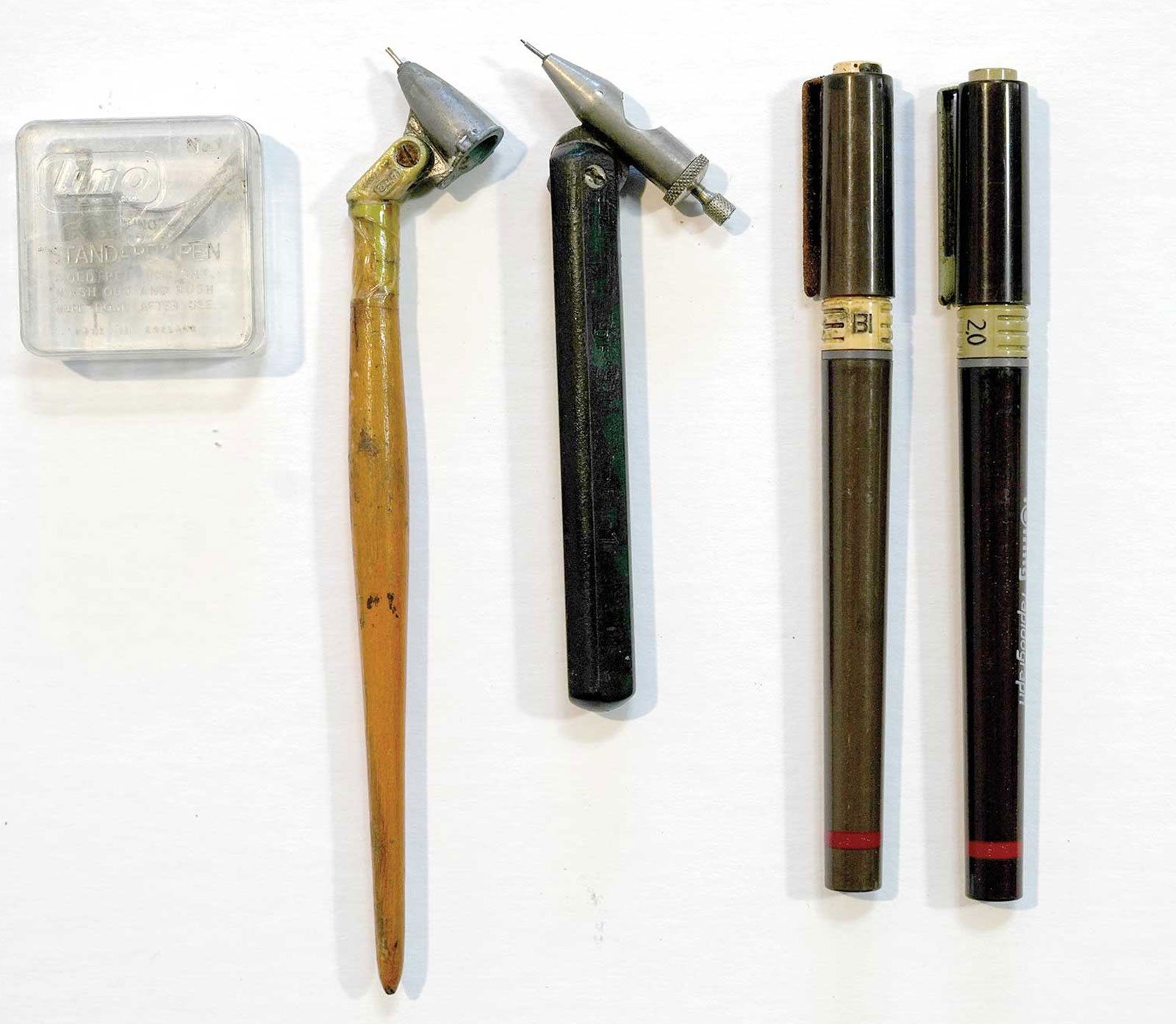
Rotring Pens
The Rotring type pen also made a very even line. Because the pen didn’t tend to track like the ruling pen, the lines could be curved and organic in shape, but still of consistent width. The two older style pens on the left have a reservoir which is filled with ink or paint. This is fed by gravity through a small pipe to the paper. A fine wire plunger can be pumped up and down to keep the pipe from blocking. The two pens on the right work on a similar principle but the open reservoir is replaced with a sealed cartridge making the pen more portable.
Pros
• Consistent line width for those that need it
• Open reservoir model accepts ink or paint
Cons
• Require thorough cleaning
• Tend to clog easily
 Fountain Pens
Fountain Pens
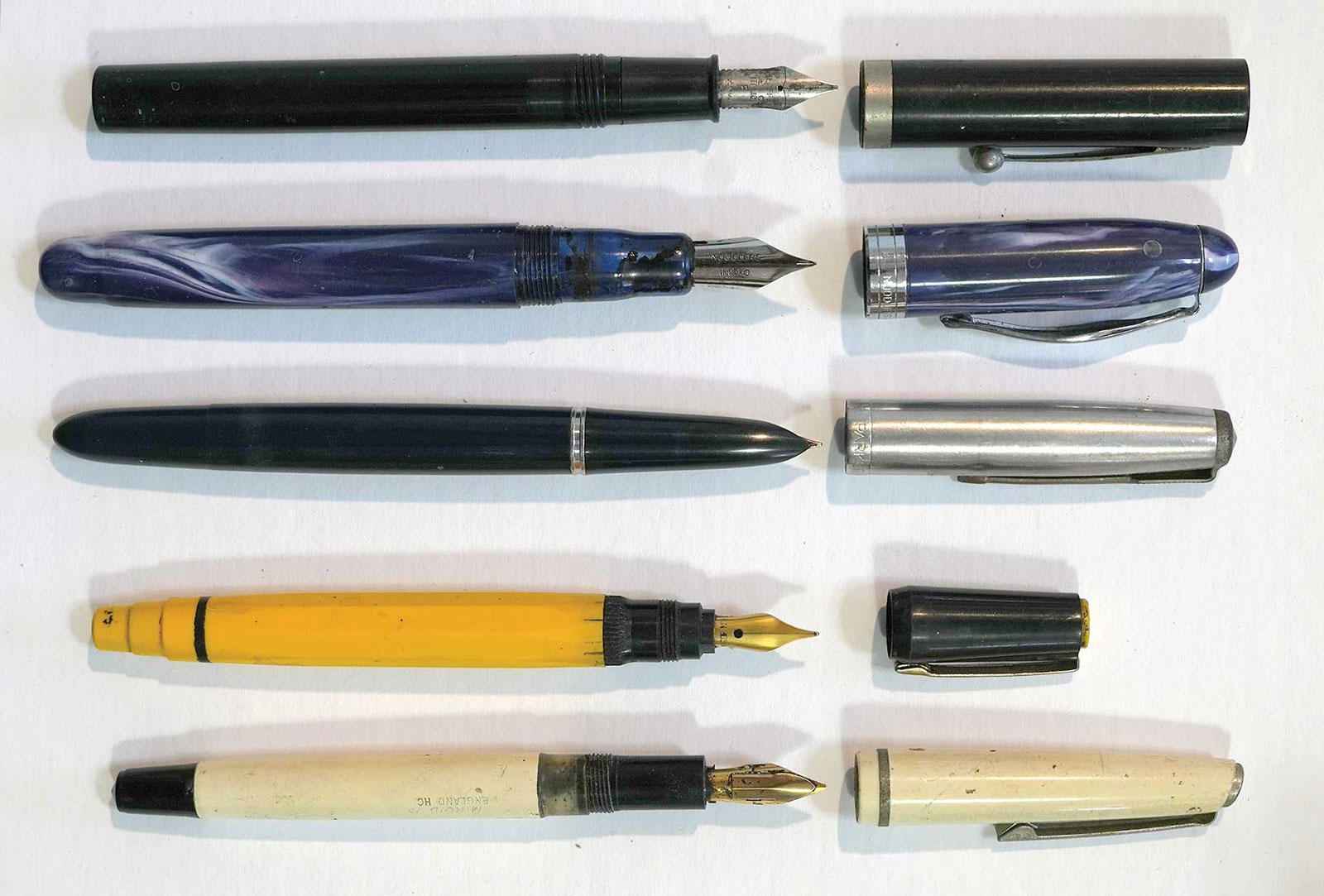
Fountain pens, carrying their own supply of ink and not requiring constant dipping, made the dip pen almost obsolete. The disadvantage of a fountain pen is that, unless certain types of ink are used, they can clog up. They also need to be used regularly or dismantled and thoroughly cleaned out after use to prevent the ink drying out inside them. I have lost a number of fountain pens by putting them away full and forgetting about them. Provided you look after them properly, they are great to use and come with all sorts of interesting nibs. Inks have also improved—just ask an urban sketcher. There is an amazing range of colors, both permanent and water-soluble suitable for fountain pens.
Pros
• Good variety of nibs and inks
• No need to carry a bottle of ink
• No constant dipping
• Can be sprayed with water to produce interesting bleeds
Cons
• Difficult to keep clean
• Can leak if overheated or when flying
 Felt-Tip Pens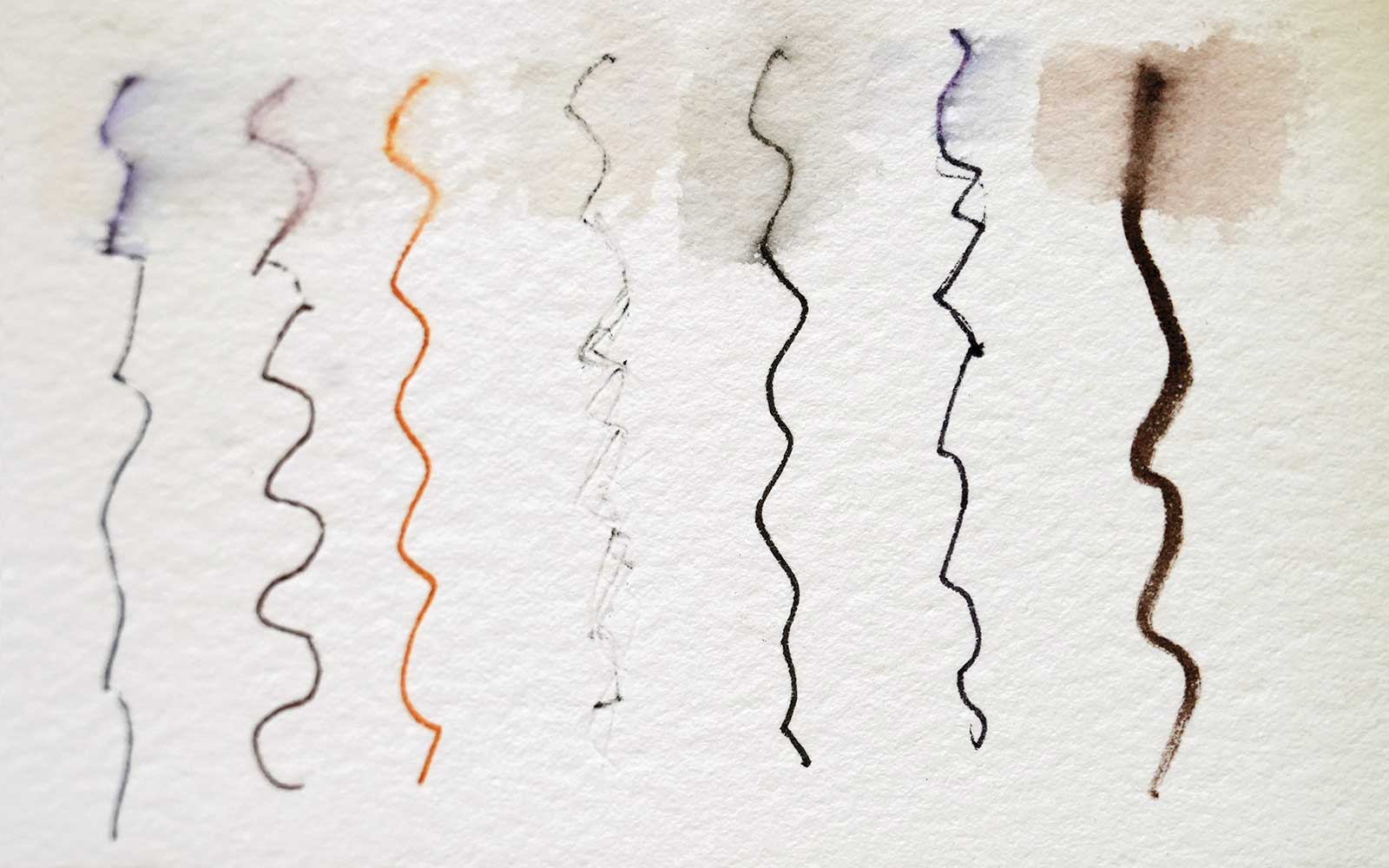
These lines were made with fiber tip pens then moistened with a damp brush as soon as they were applied. Some bleed more than others so it pays to experiment if you will be using them with washes.
Felt-Tip Pens
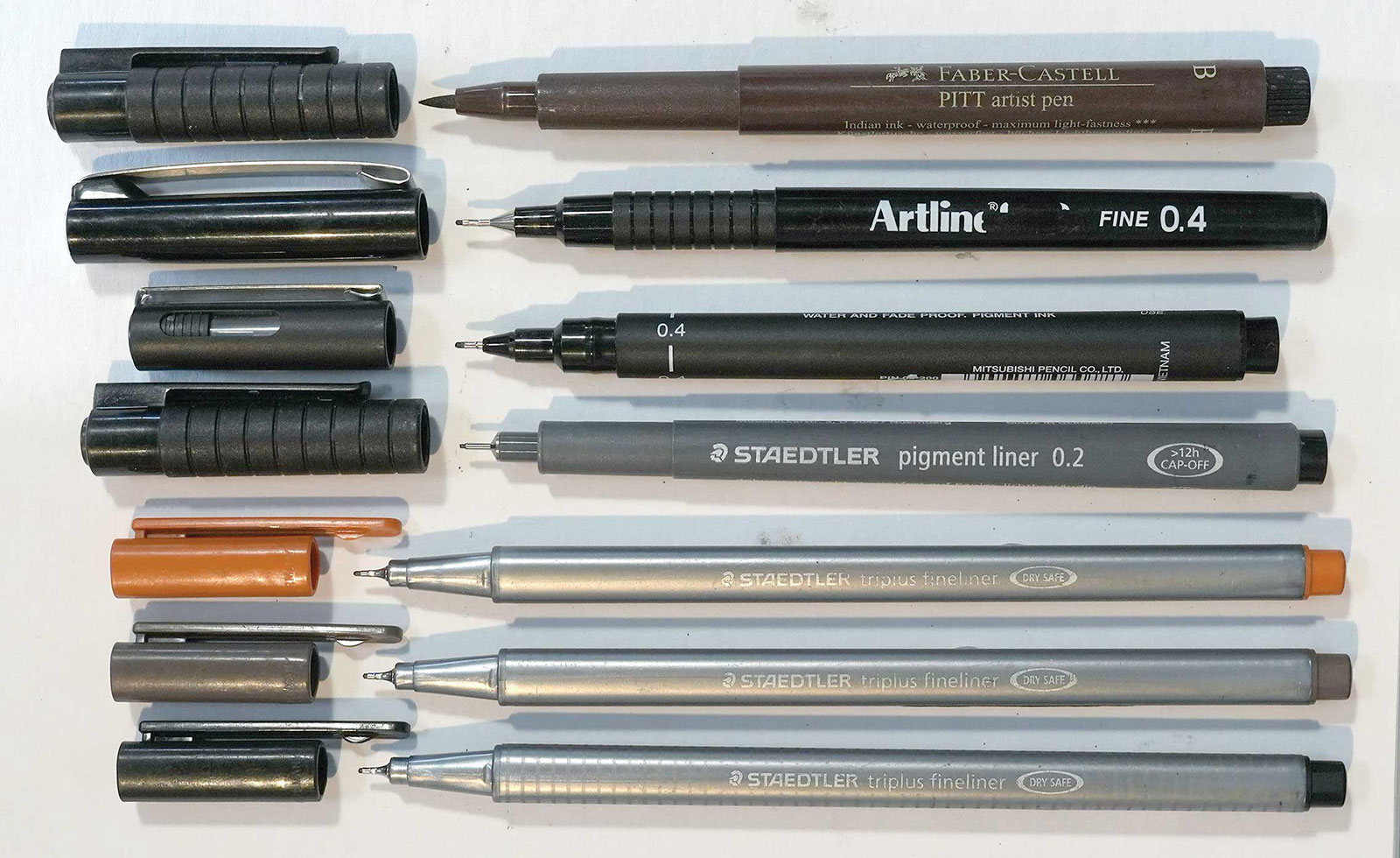
Fiber tip pens come in a range of tip sizes, colors and ink types. They are convenient, easy to use and permanent. The downside is they make a fairly mechanical mark compared to a fountain pen or a dip pen. Fiber tip pens are also available with a flexible brush type tip. These allow for a variation in line thickness but don’t produce really fine lines. They are great for quick sketches particularly when traveling.
Pros
• Self contained and don’t leak
• Easy to use and require no cleaning
• Come in a range of sizes, ink types and colors
Cons
• Lines lack variety
• Small sizes (0.2mm) block up when used on wet paper
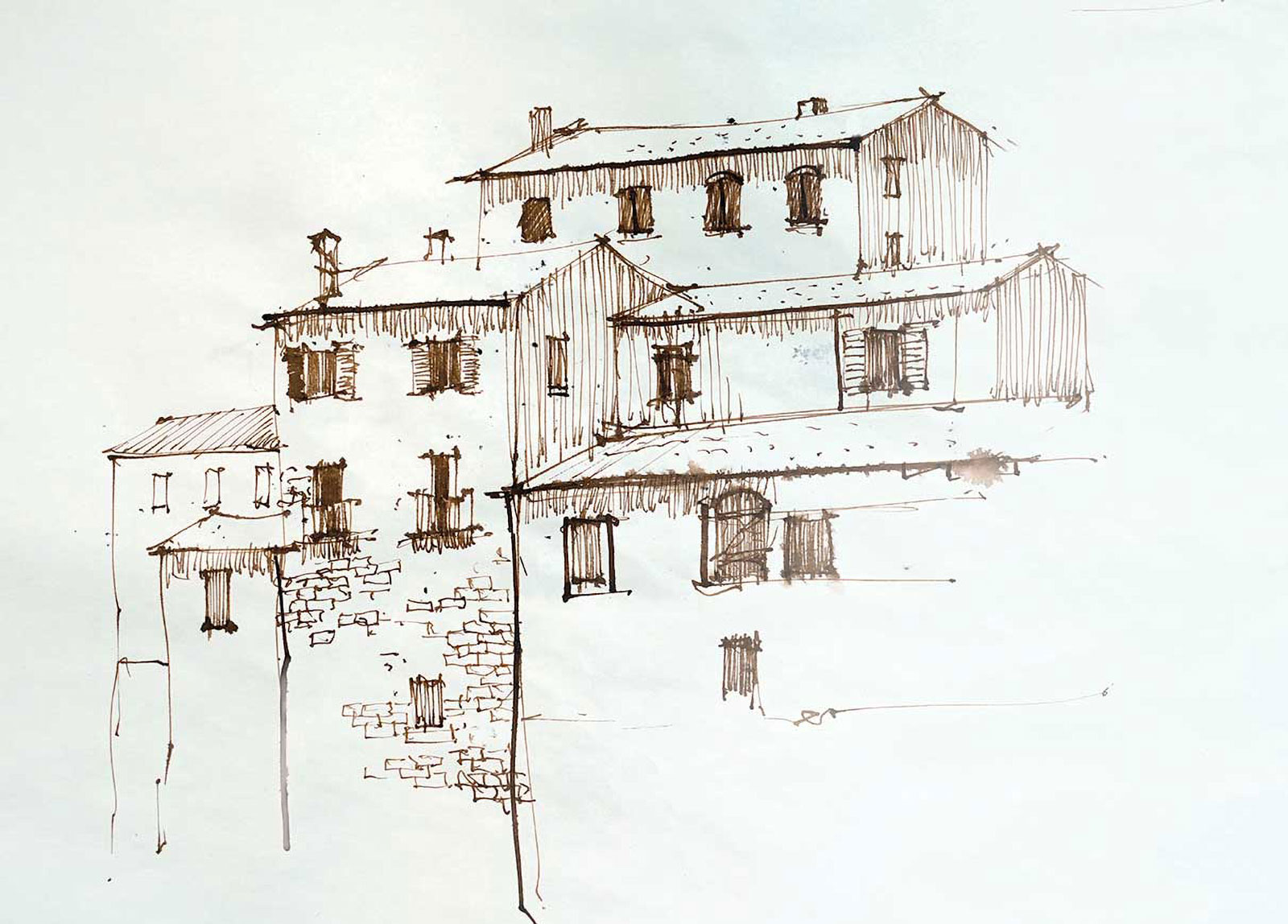
This sketch was done with a dip pen and burnt sienna pigment ink. The flexible nib produces a variety of lines, and the ink color and tone can be adjusted by adding water or paint to the ink in the nib with a small brush.
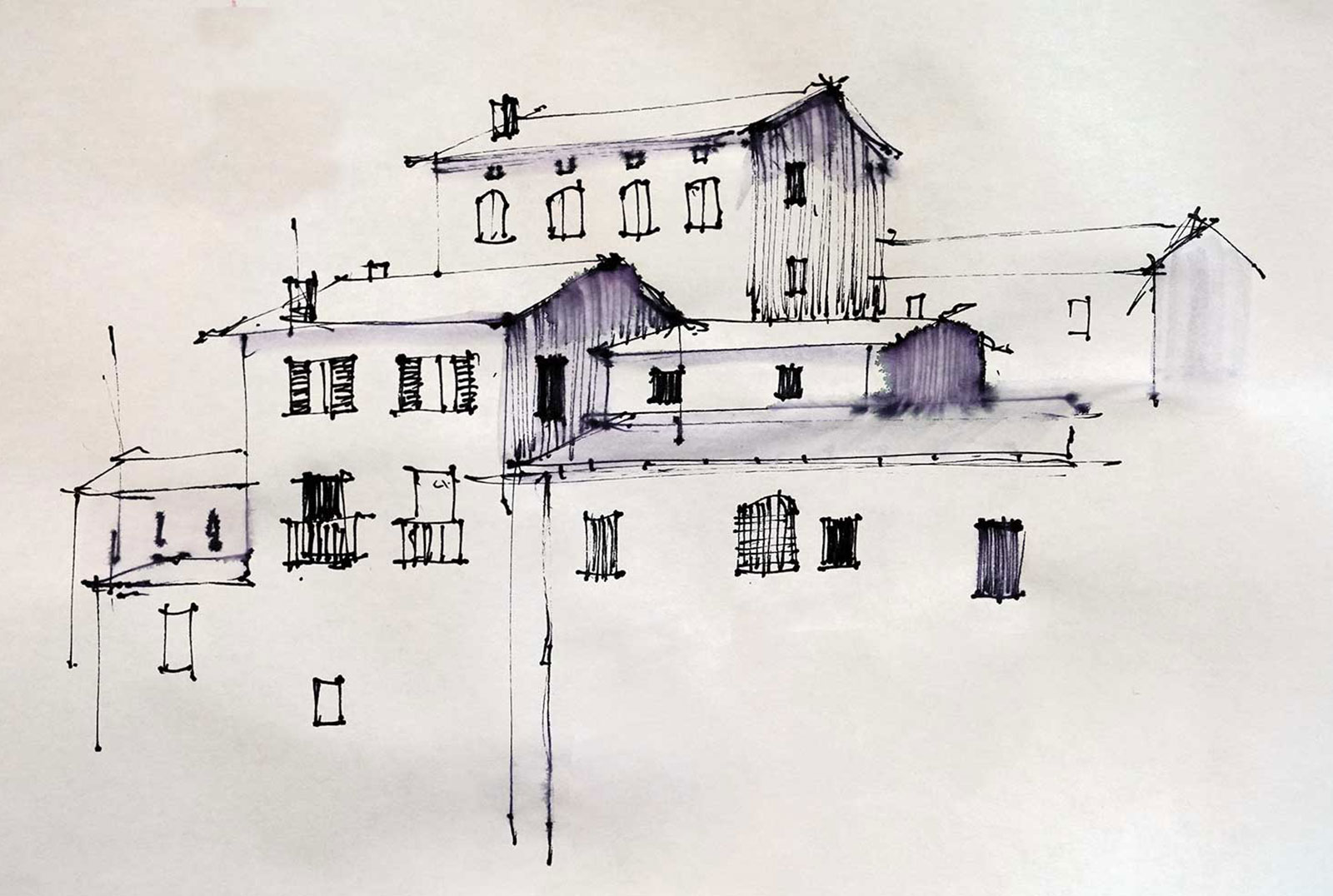
The same subject sketched with a 0.4mm fiber tip pen. A damp brush was applied to the fresh marks to produce the washes.
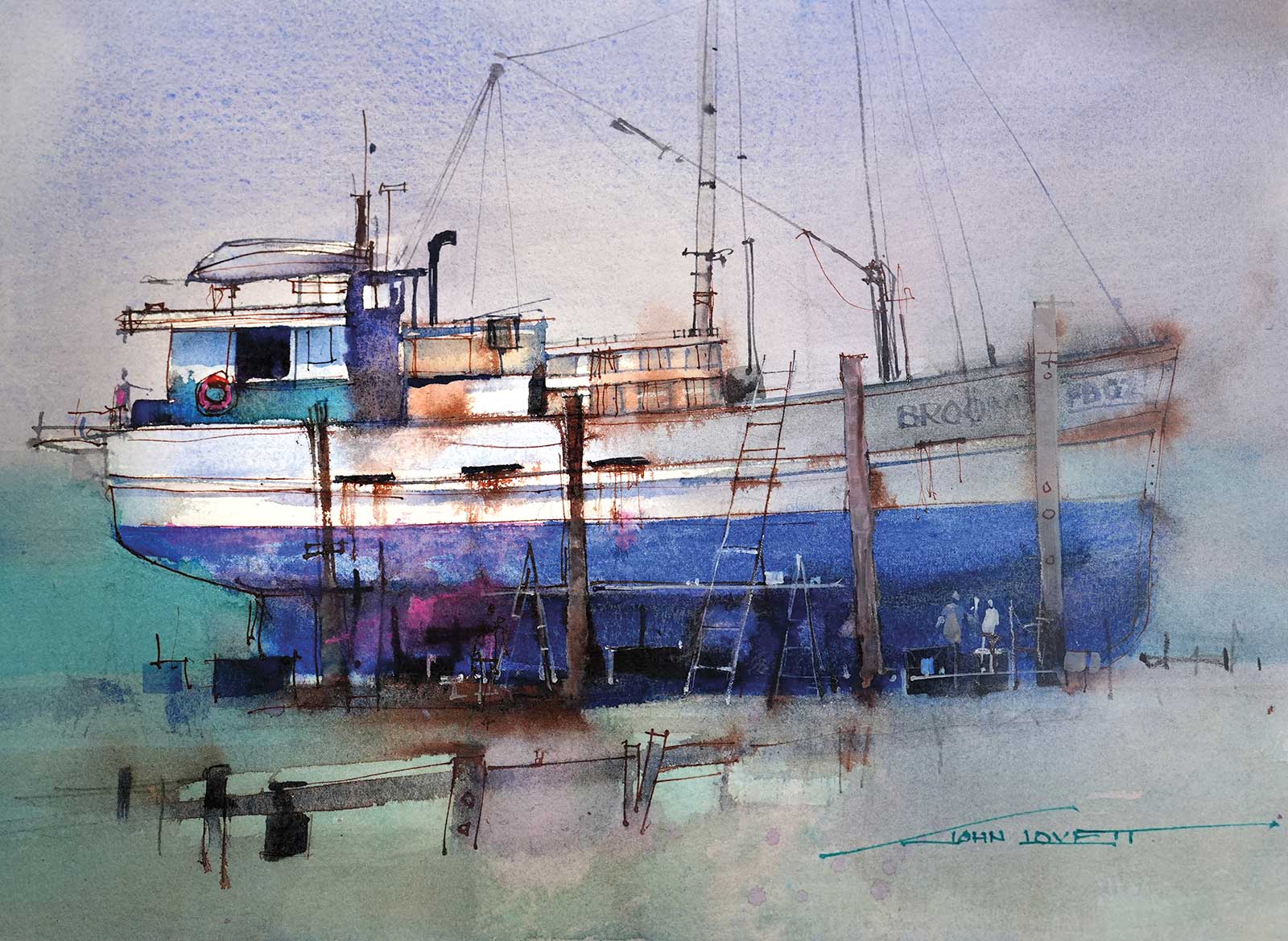
In this painting the suggestion of busy detail comes from the variety of fine lines. The palest fine lines were made with a size 1 rigger brush, and the darker fine lines were applied with a dip pen and burnt sienna ink. Threading the ink lines throughout the painting and spraying them with a mist of water created the soft bleeds that suggest the rusted patina of an old fishing boat needing maintenance.
Even though it’s a nuisance when working on location, my favorite pen is the simple old dip pen with a well worn nib. I always have a small sketch book and a couple of fiber tip pens in my camera bag. They take up no space and just seem to go on working. There are always new things coming on the market so it’s worth checking the art supply shop every now and then. The perfect thing hasn’t been made yet, but I can’t help trying to find it. —
Contact at www.johnlovett.com