As a wildlife artist, I have always been drawn to the vibrant and diverse colors of nature. My preferred medium is colored and graphite pencils, which allow me to capture the intricate details and textures of my subjects. One of the challenges I set for myself is to create an image that feels alive, as if it could leap off the page. To achieve this, I focus on trying to capture the essence of the animal, rather than aiming for a photorealistic representation. Recently, I have been working more in graphite again, as I enjoy the challenge of only using one color to create depth and dimension in my artwork, trying to make my artwork appear three-dimensional and visually engaging. Graphite, with its wide tonal range, is an ideal medium to achieve this effect. By carefully employing shading techniques and varying the pressure applied to the pencil, I can create a gradation of values that mimics the play of light and shadows. This creates the illusion of depth, allowing viewers to immerse themselves in the artwork. By building up multiple layers of graphite, removing areas and building this up again, I can enhance the contrast and add richness to my drawings, making each stroke contribute to the overall depth and realism of the piece. The versatility of graphite enables me to hopefully breathe life into my subjects, capturing their form and essence with the precision and subtlety I enjoy. This approach adds an intriguing challenge to my creative process, but I find immense enjoyment in pushing the boundaries of my skills. As a professional artist, I am constantly seeking ways to grow and evolve in my craft, and this exploration of monochromatic tones has been a rewarding journey.
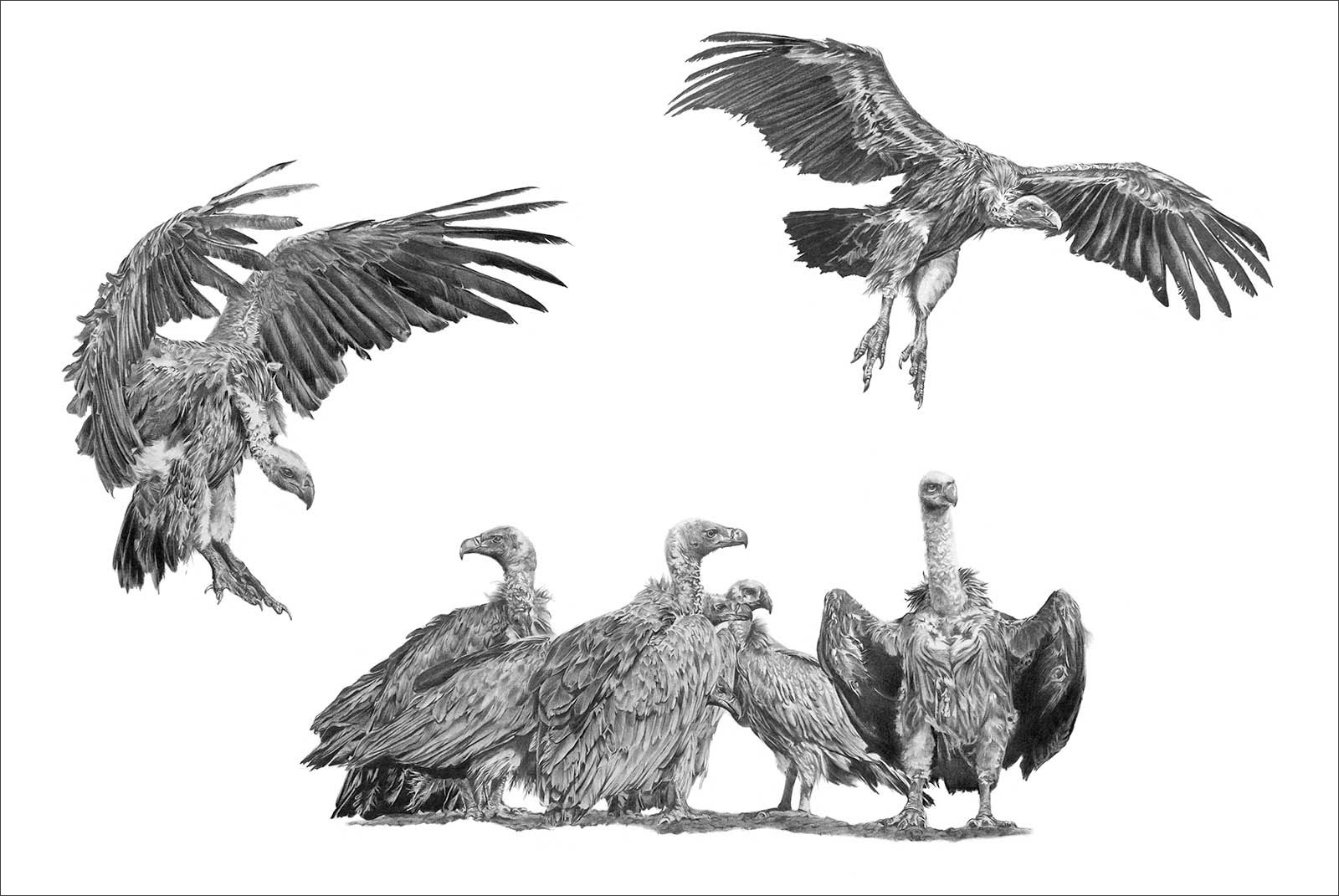
Joining the Committee, graphite, 16 x 29" (40 x 73 cm) I wanted to simply show just how stunning and beautiful these birds are, which are heavily persecuted and often thought of as “ugly,” by highlighting their stunning feathers and beautiful features.
In the world of art, there is a constant evolution of styles and techniques. As an artist, my style leans towards realism, capturing the essence and details of my subjects. However, lately, I have been exploring the idea of loosening up my approach. I find myself drawn to creating more complex compositions, or pieces where I selectively focus on certain areas of an image and don’t feel the need to fully complete the image as I have previously done. My process typically involves a pretty rigid way of working, always beginning with the eyes. I rarely deviate from this process as I can form an image of the completed piece in my head when I do it this way. If, when I have started, the eyes are not right, I will happily start again. By carefully rendering the eyes with accuracy and attention to detail, I can establish the foundation for the entire artwork. If the eyes are not right, it is crucial to start anew, as they play a pivotal role in conveying emotion and capturing the essence of the subject. By dedicating time and attention to perfecting the eyes, I can create a strong focal point that will guide viewers’ gaze and establish a sense of connection between the artwork and its audience.
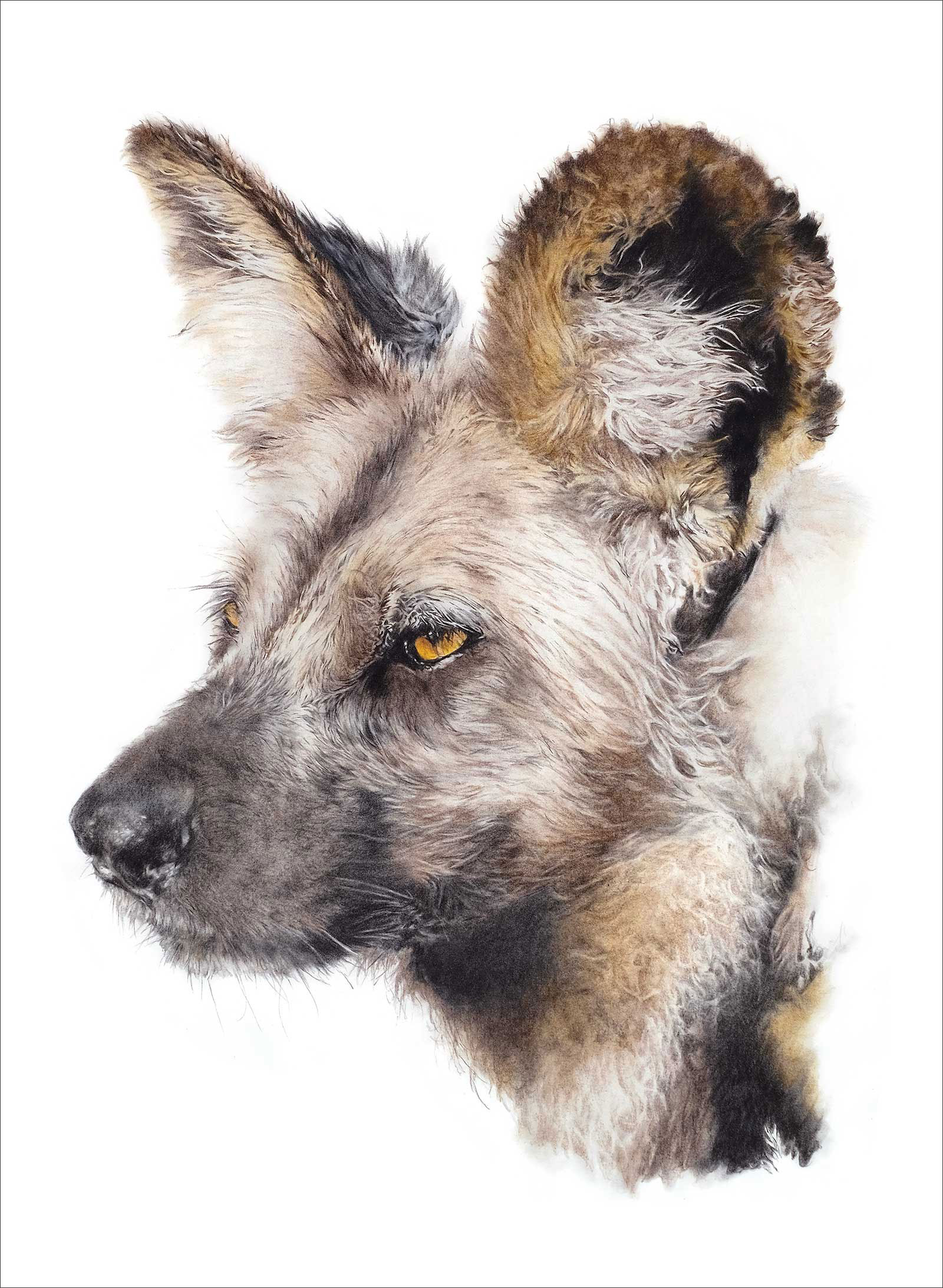
Painted Dog, colored pencil, 12 x 9" (30 x 22 cm) These stunning animals are sadly endangered. They are a keystone species, meaning they play a critical role in shaping their habitats and altering ecosystems. I wanted to portray this amazing animal simply, focusing purely on the facial features. They will play heavily in my work to come.
I constantly seek ways to evolve and grow my artistic practice and have recently introduced oils to my repertoire, which allows me to explore a new dimension in my work. Oil paints offer a rich and vibrant palette that can be used to create luminous and highly detailed artworks. The slow drying time of oils allows me to manipulate and blend colors, achieving smooth transitions and subtle gradations. Adapting my style to accommodate the unique characteristics of oil painting can open new doors for my artistic expression, offering me endless possibilities for artistic exploration and creative growth.
To create pieces that feel alive, I don’t follow a principle or technique. The true artistry lies in creating pieces that exude a sense of life and vitality and I want my pieces to show off my vision and creativity. I, as most artists, am very critical of my own creations, constantly striving for improvement and accepting constructive feedback. It is not merely about creating technically proficient art but also about infusing the artwork with my personal style and unique voice. Ultimately, my goal is to create artworks that resonate with viewers and, hopefully, evoke an emotional response. —
My Art in the Making Into the Light
 Stage 1
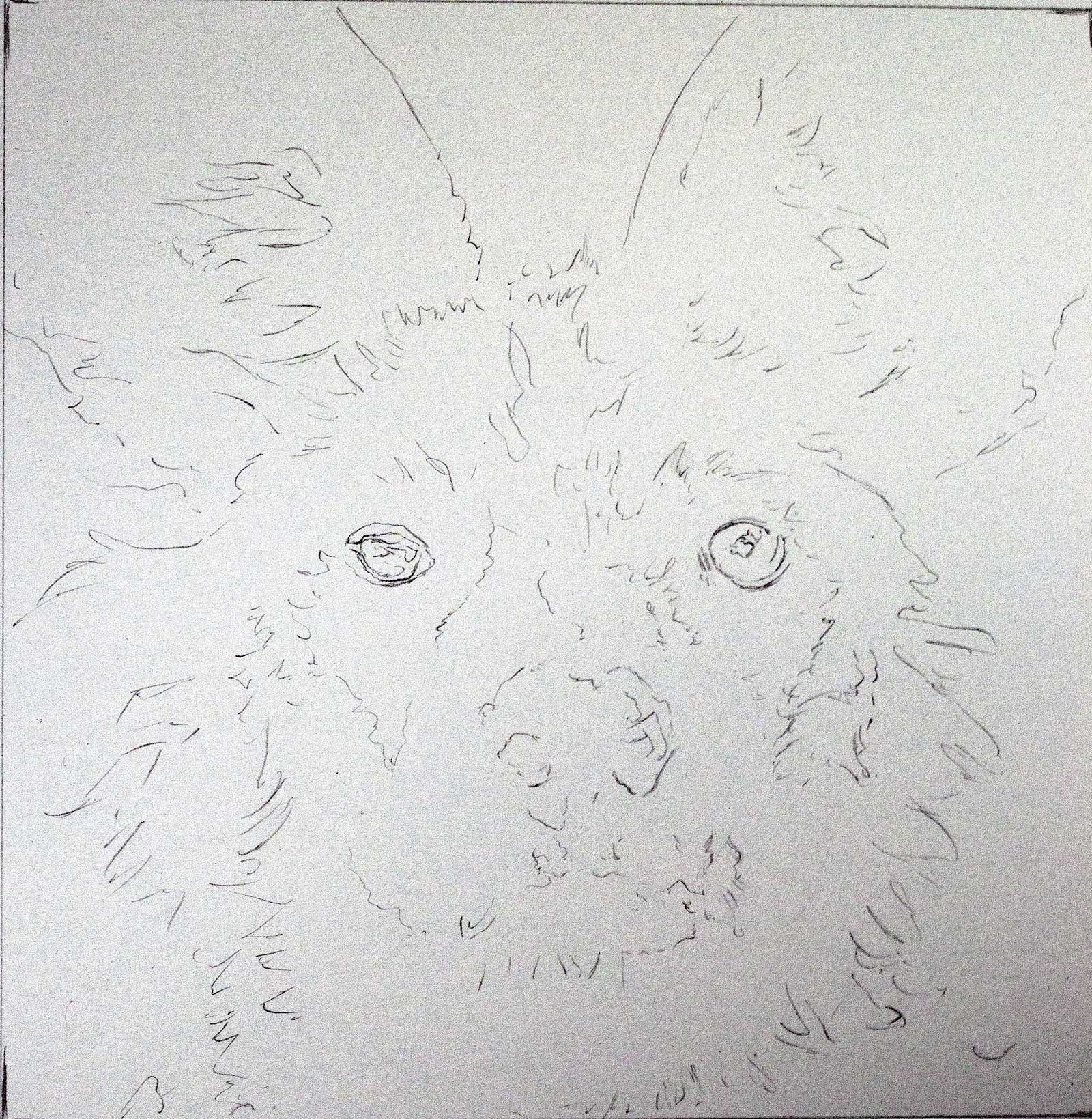
Stage 1 Drawing
I start by having a very loose outline of the image, as it is just a guide. I will often crop an image or reverse it, so it is not an exact copy of the reference photo.
 Stage 2
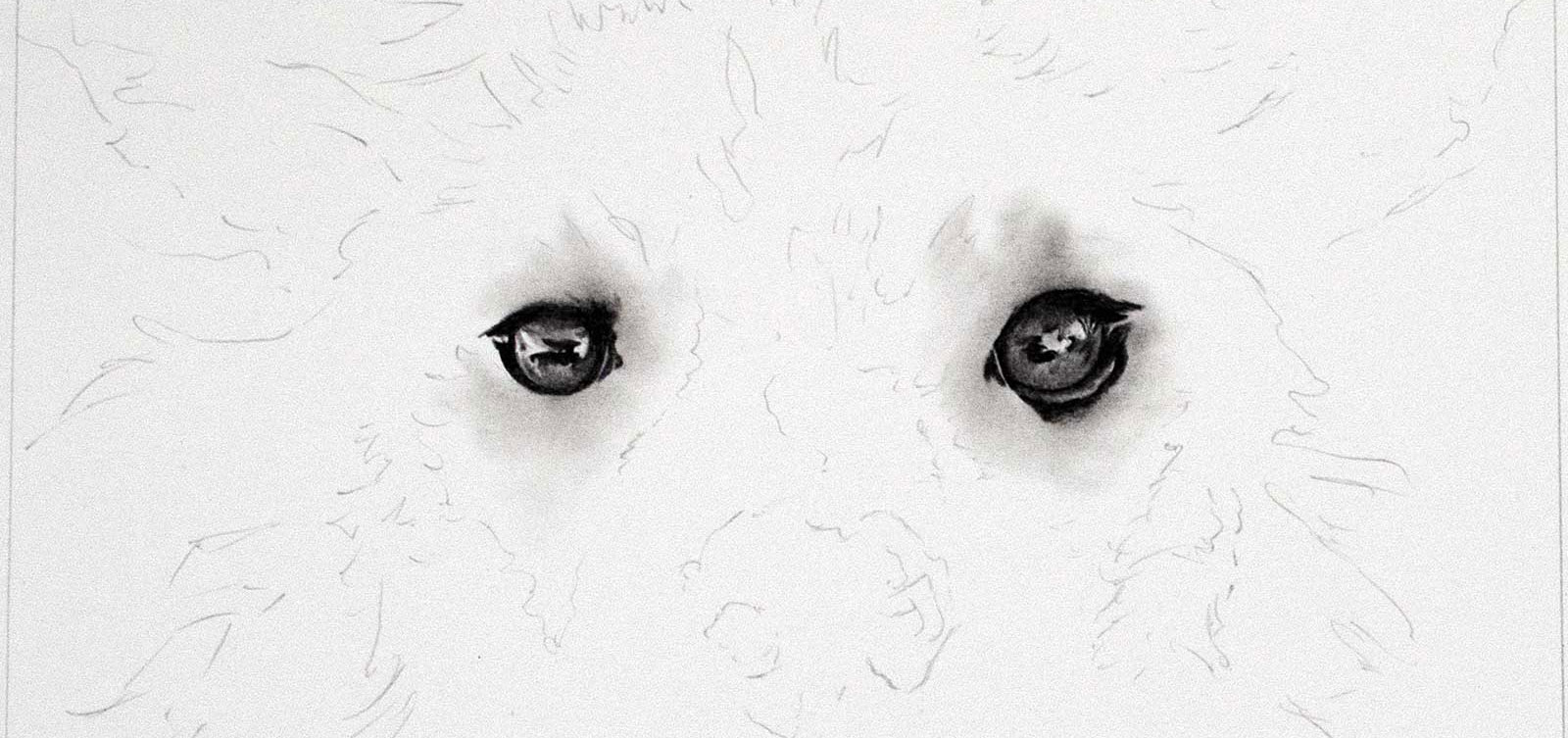
Stage 2 The Eyes
The first thing to be drawn is the eyes. These need to be fully completed before I will move onto outlining anything else. It sounds daft, but I always get a “that’s it” feeling when it’s time to stop working on them.
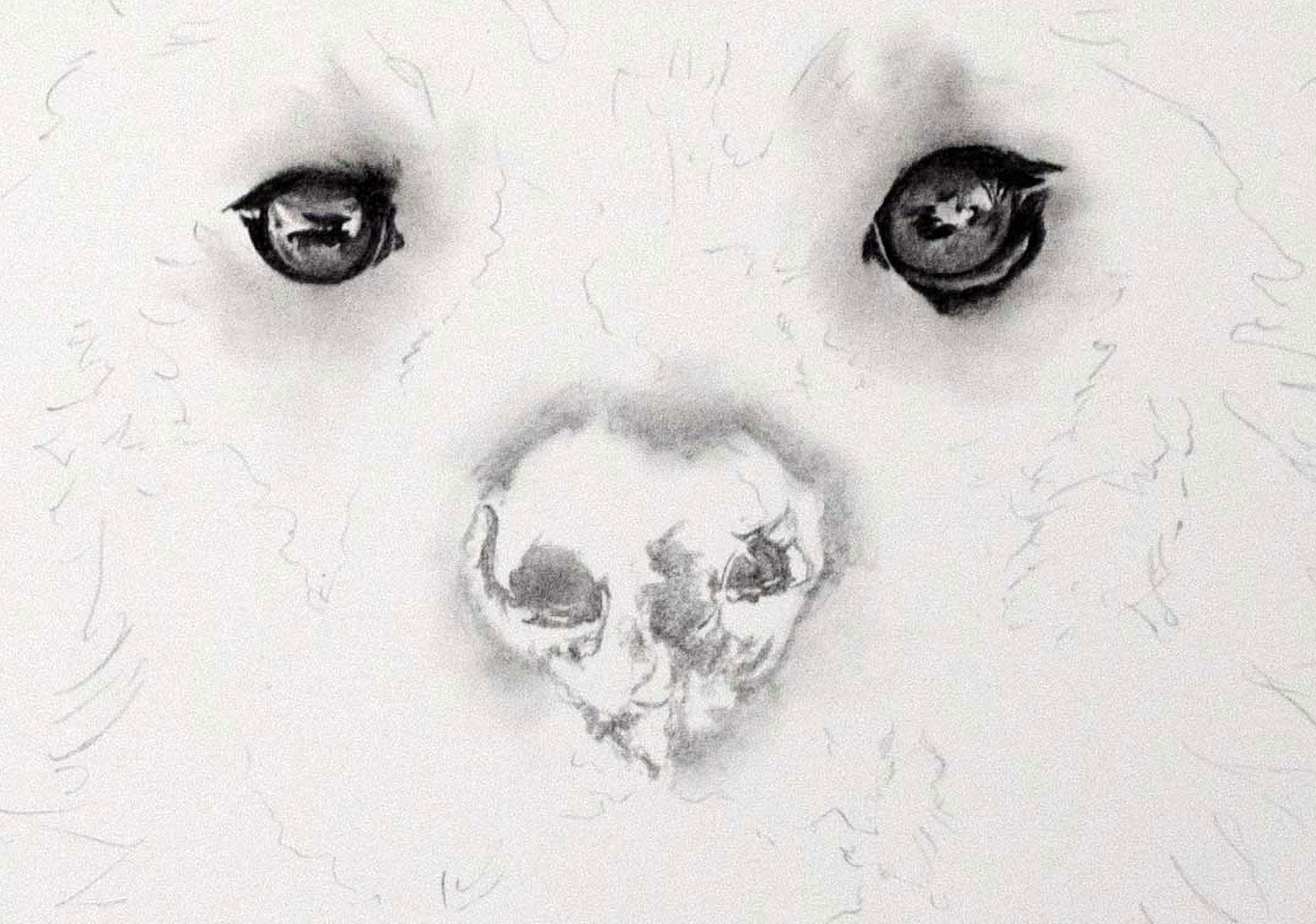 Stage 3
Stage 3 Outlining the Nose
Next, I will very lightly outline the nose. As I work on cotton paper, it is hard to remove graphite clearly, so lightly does it.
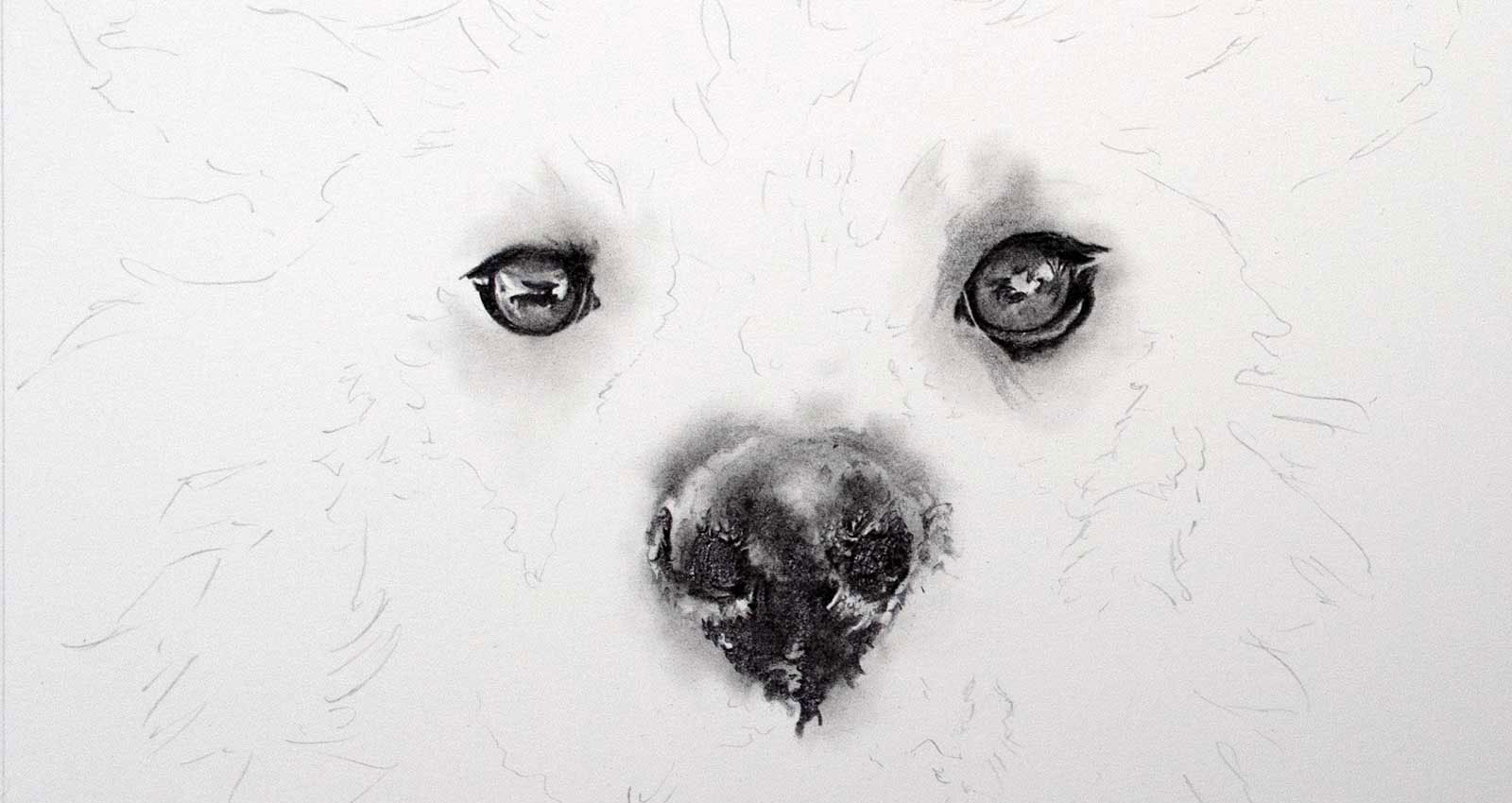 Stage 4
Stage 4 Strengthening the Tones
When I am happy, I will start to add the full tones, adding and removing graphite as I go, striving to give it a more three-dimensional look. Then I will add the final dark tone.
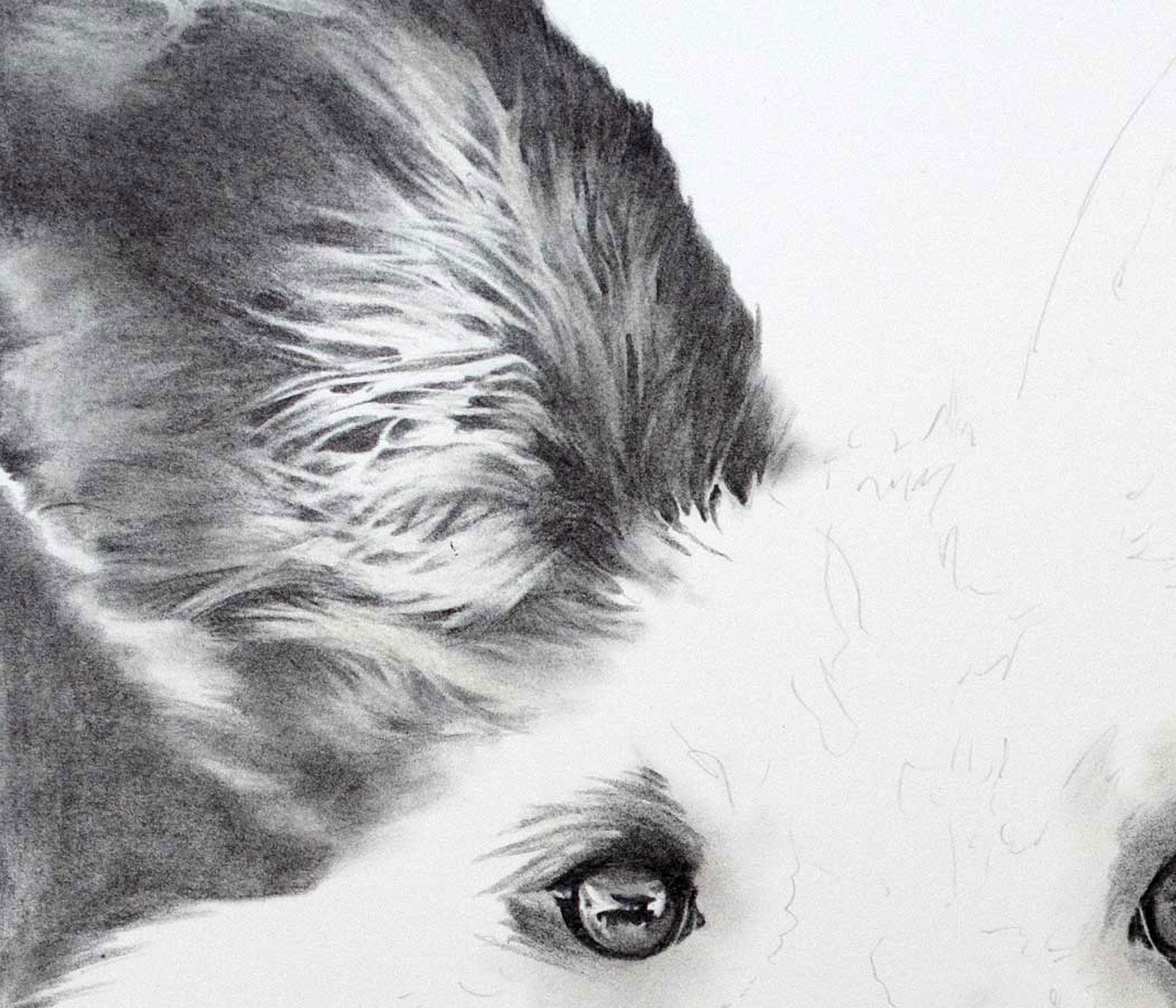 Stage 5
Stage 5 The Ears
The next sections are the ears. These need to look fluffy and full so I will, again, lightly mark them out before I add depth and tone to them.
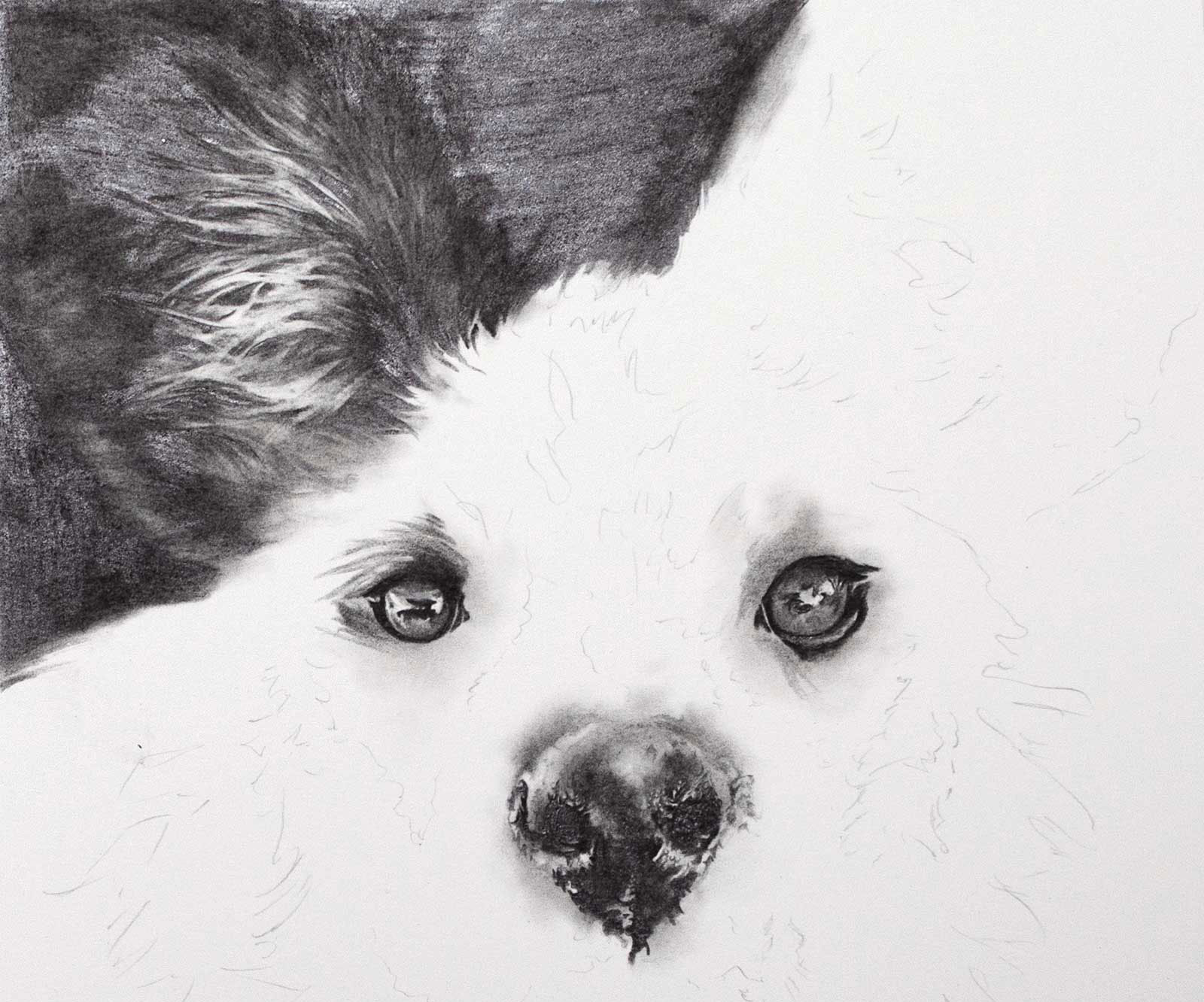 Stage 6
Stage 6 The Dark Areas
At this stage, as I am altering from the reference image, I add in dark areas in order to see if my vision is going to look okay. If it’s not right, then I would start the process again.
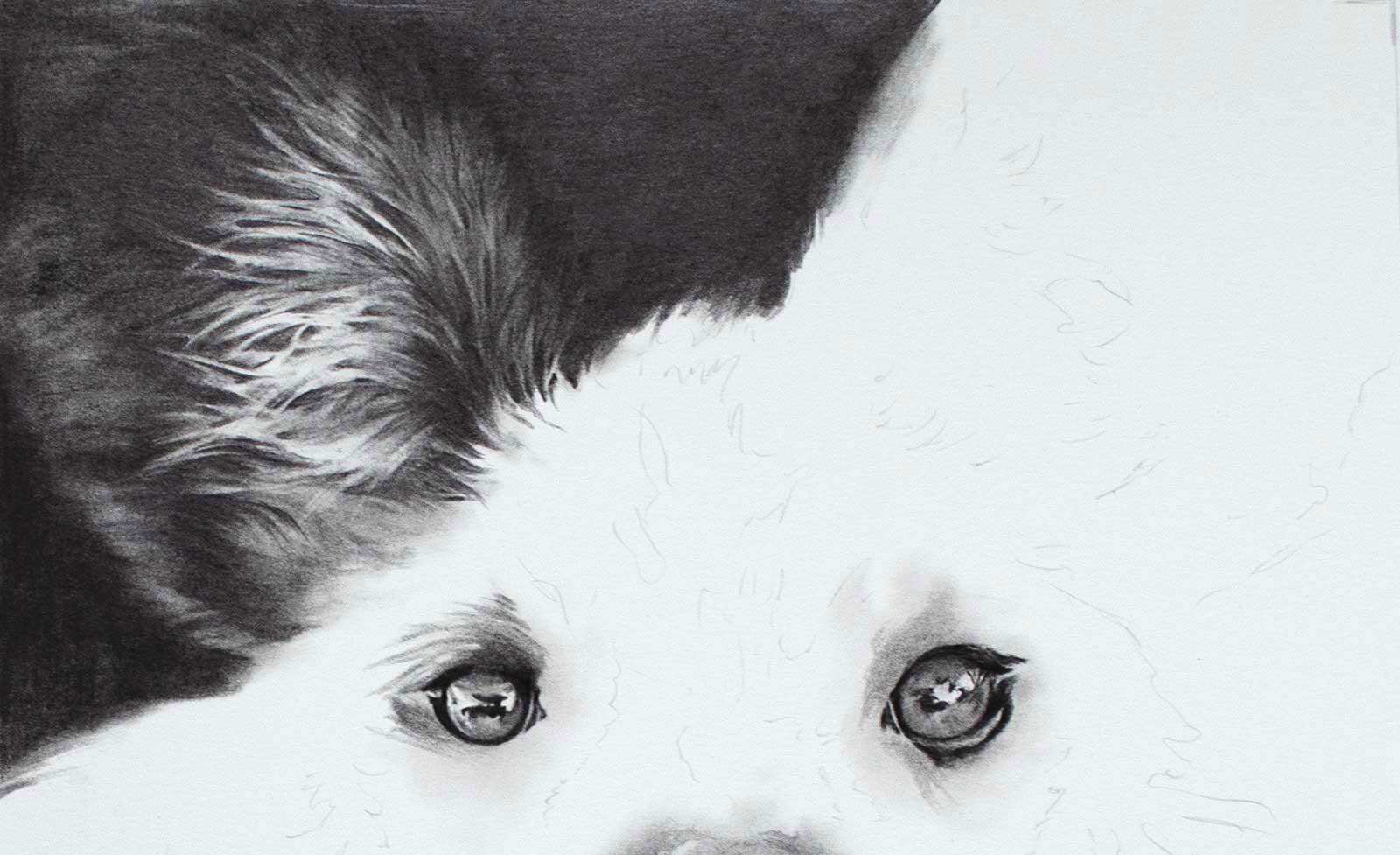 Stage 7
Stage 7 Full Tones
As I am happy with how this will look, I then add the full tones to the entire piece. This exact same process will now be repeated around the image until my piece is complete.
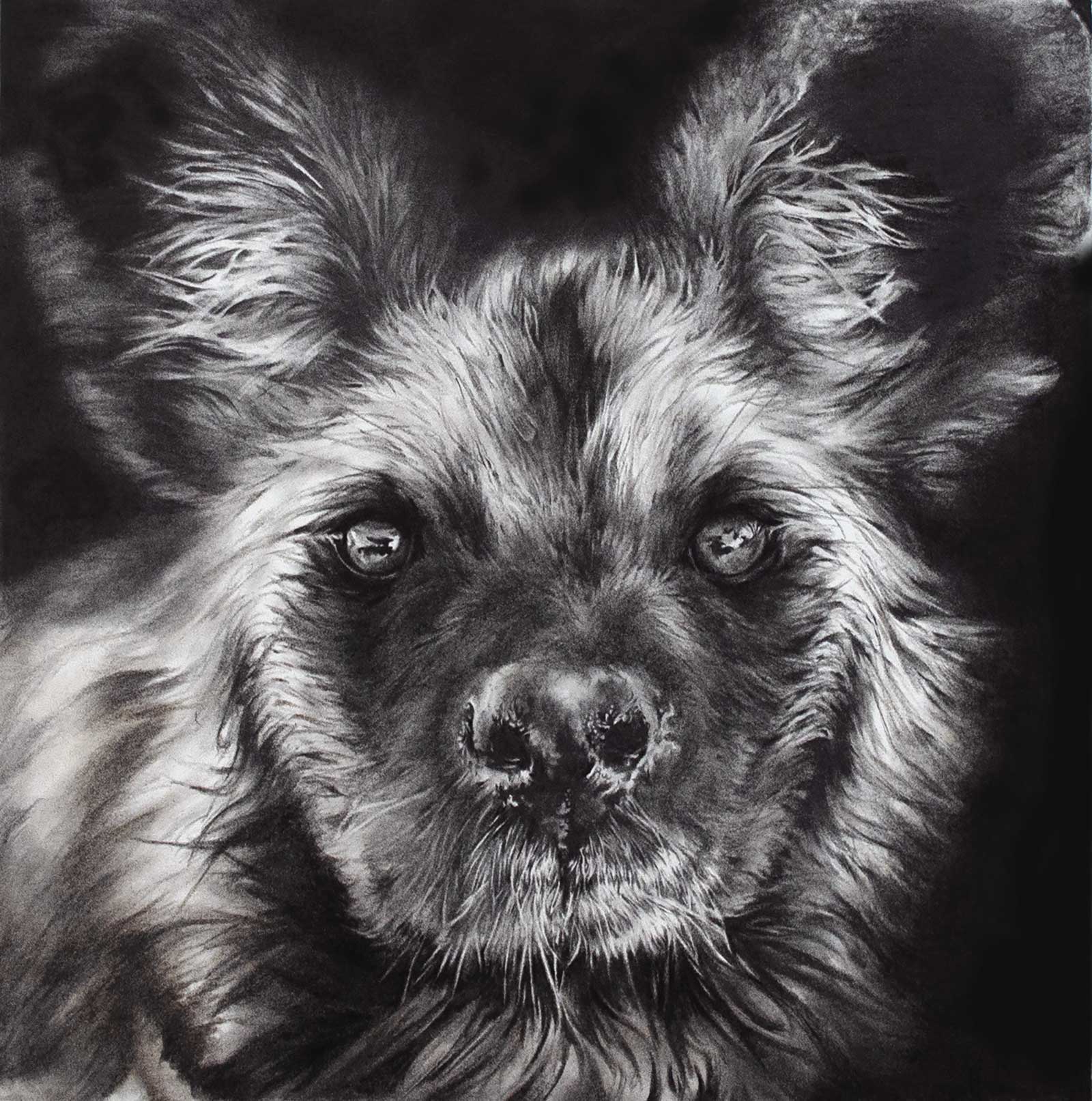 stage 8
Stage 8 Finished Artwork
Into the Light, graphite, 10 x 10" (25 x 25 cm) The same process of adding, removing, adding and removing graphite has, hopefully, allowed me to produce a piece with depth and softness of a stunningly beautiful, yet endangered animal.