
How can you create vibrancy and movement in a painting? This dramatic New Zealand landscape lends itself to an energetic, vibrantly colored approach. This demo is conducted in acrylics, but it’s fine for oils too. I’ll take you step by step through this whole process, and in just a couple of hours, you’ll have a beautiful beach painting. Use the QR code at the end of this article to access the full video lesson.
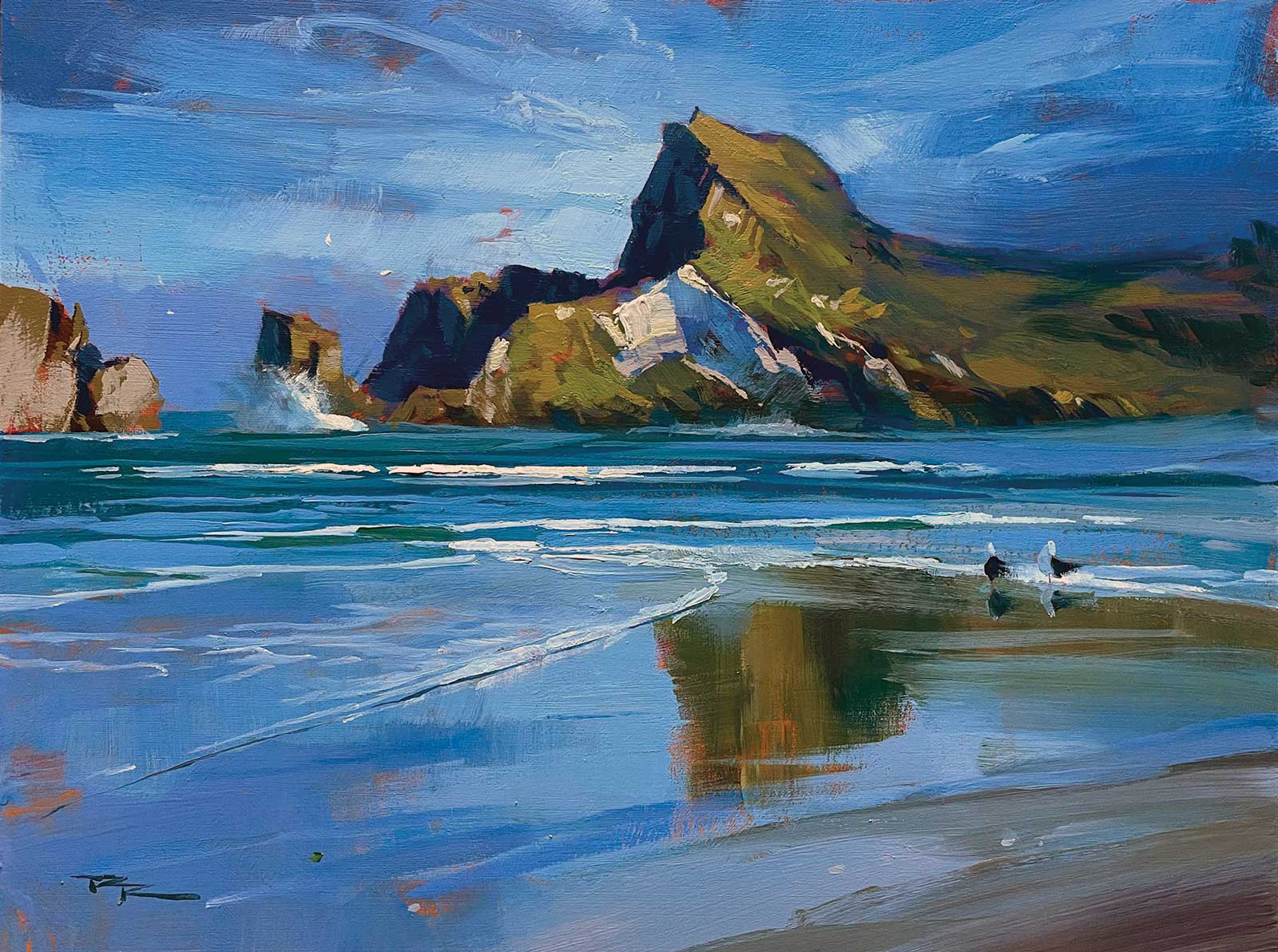 Richard Robinson, Castle Point, acrylic on panel, 12 x 16" (30 x 40 cm)
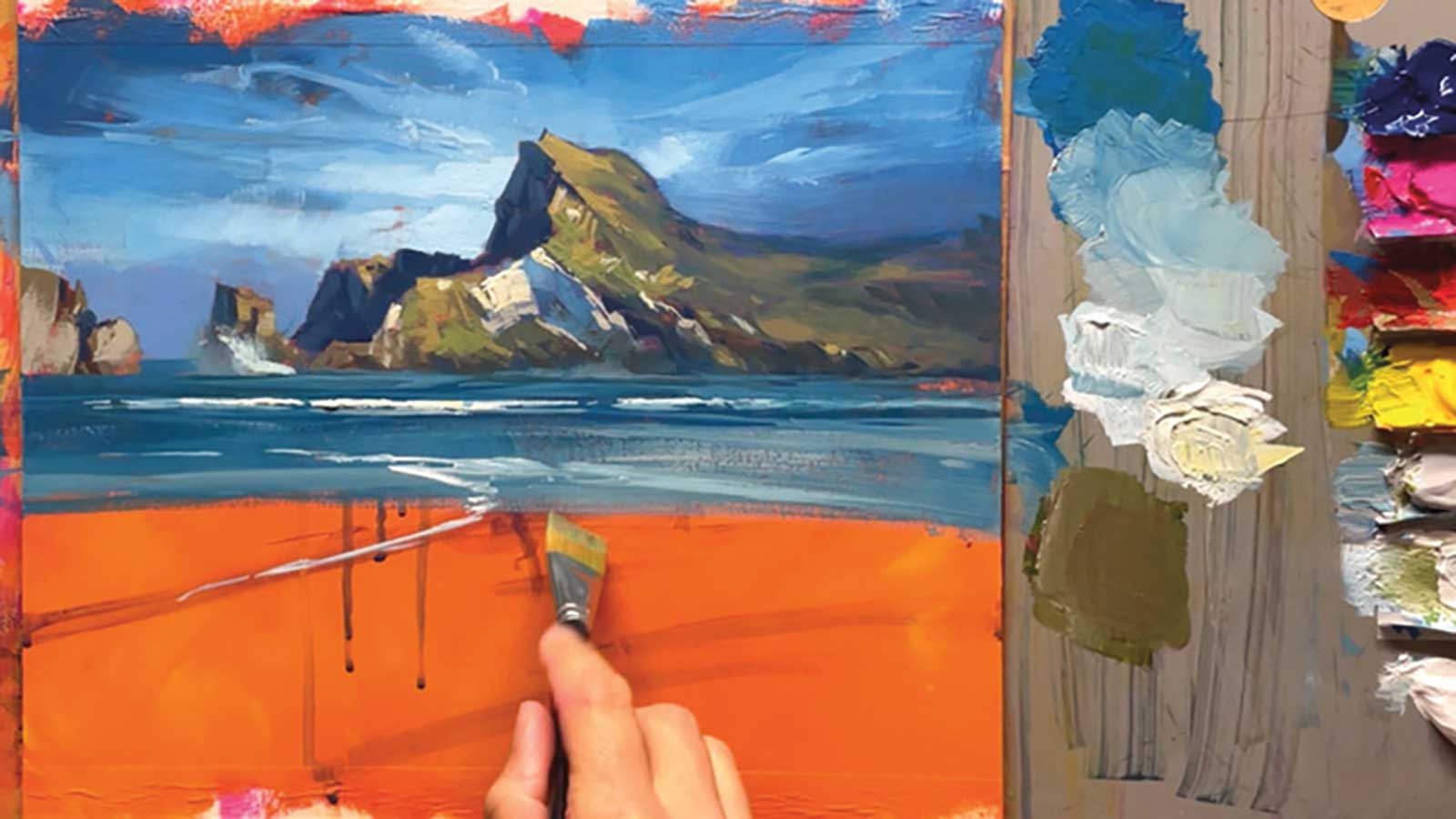
Richard Robinson, Castle Point, acrylic on panel, 12 x 16" (30 x 40 cm)
Student critiques
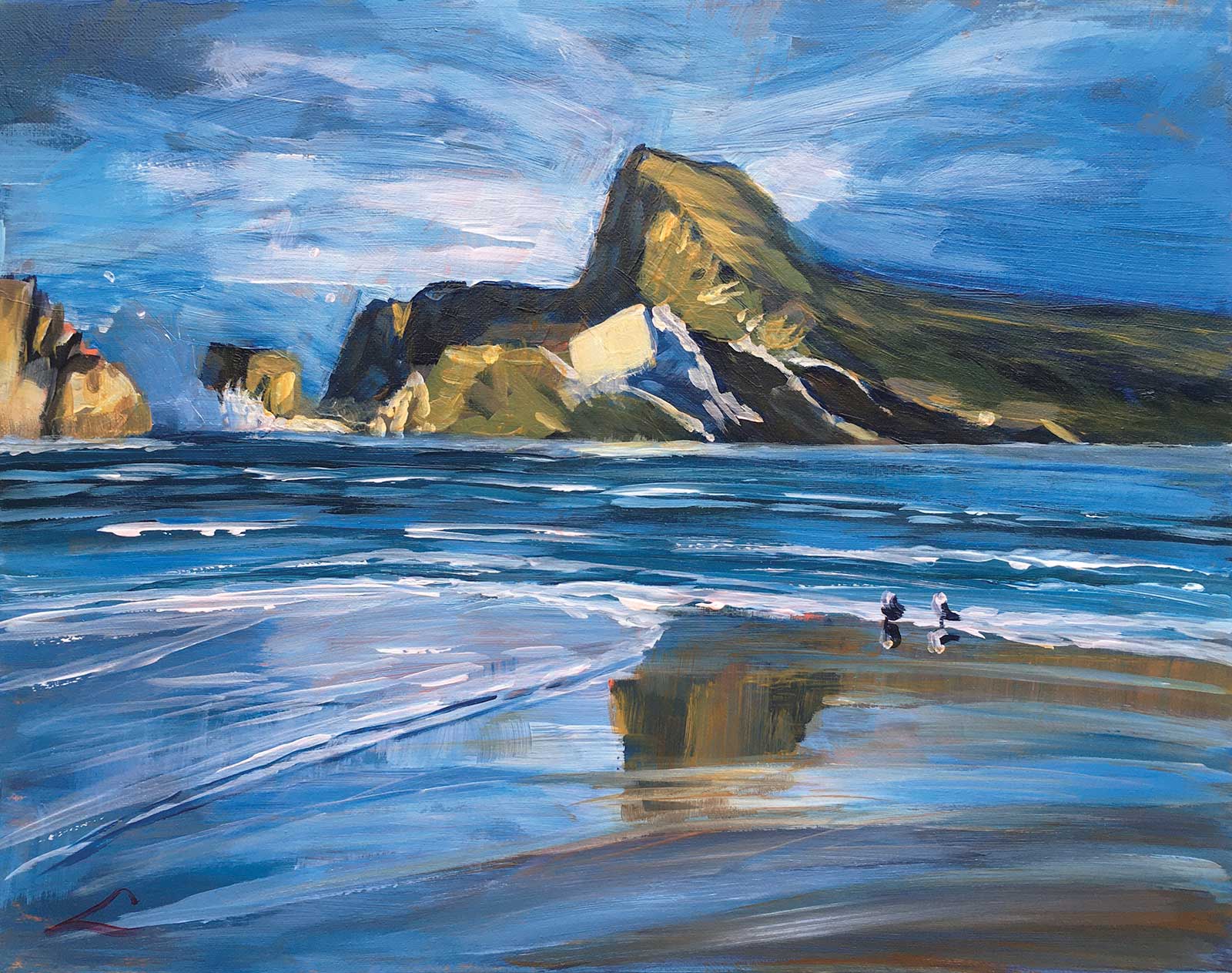 Seascape with rocks, acrylic with oil glazing on canvas, 15¾ x 19½" (40 x 50 cm)
Elena Sokolova
Strong work, Elena—you’ve expressed the big shapes well with bold strokes and a strong spotlight effect. Good to see you got a few sharp chinks of interest in the hill’s edge where it meets the sky. The big cliff could do with a little sharper edge against the sky. The big chunk of light in the middle could do with a bit of texture in it because it’s conspicuously plain as it is. Great job.
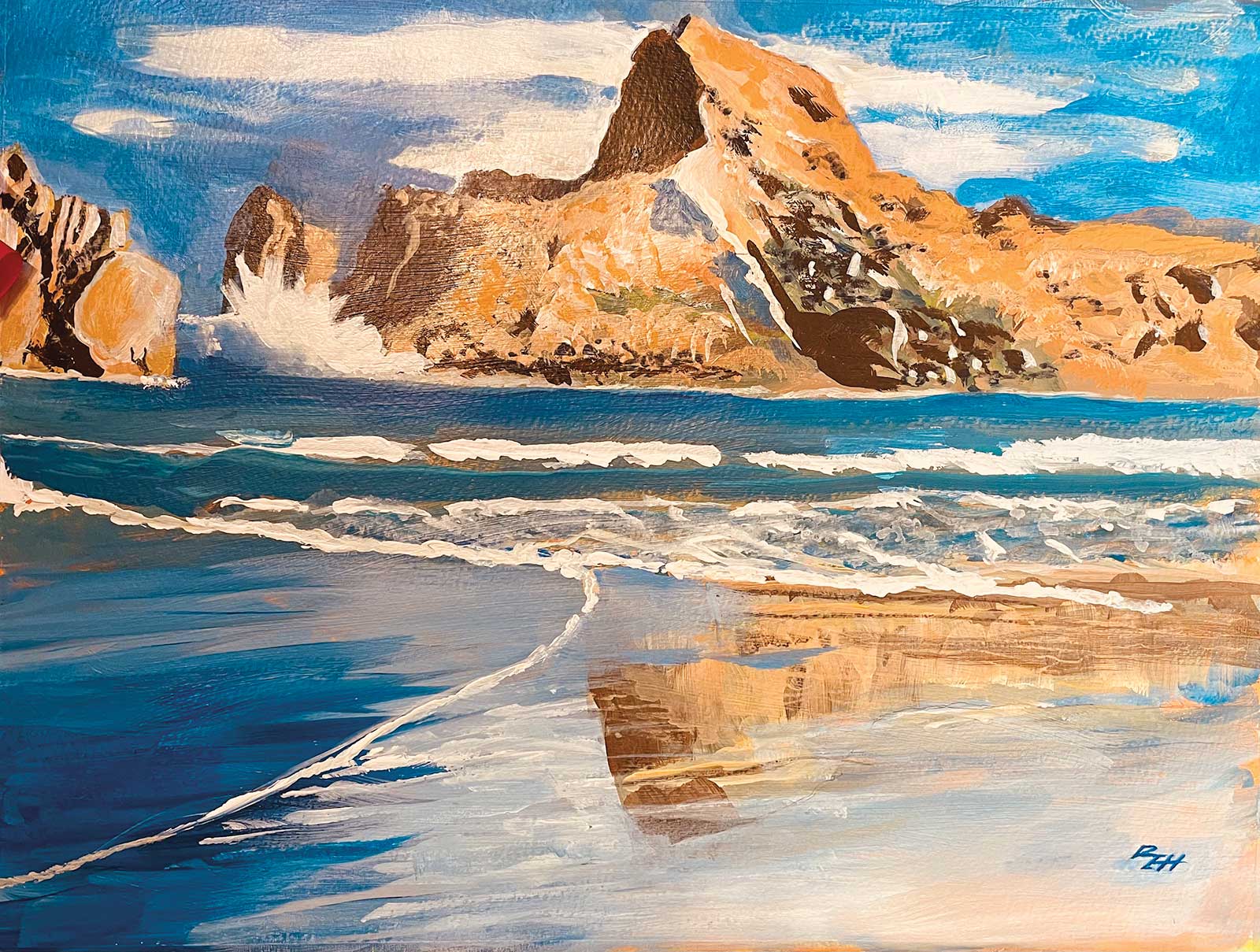 Castle Point, acrylic
Eric Hillmer
Nice work, Eric. All those brown tones in the hill are giving a real sense of warm afternoon light and contrasts nicely with the blues surrounding it. The drawing of the hill is nicely angular and crisp, and you’ve made an interesting variety of shapes and texture in the sunlit face. It looks like you had some trouble making soft edges on the crashing wave. That can be achieved in a few ways, by planning ahead and creating those soft small gradations from rock to spray as you paint the rocks, and/or by letting the rocks dry first and then covering them with a thin coat of gloss medium and painting the spray into that while still wet, and/or scumbling the spray on softly with dry-ish paint over the rocks (called dry brush). Be careful with the angle of the base lines on all land touching the water. The rock on the left needs a more horizontal base. Similarly the lines of foam in the midground should be flatter on their bases and lumpy on the top.
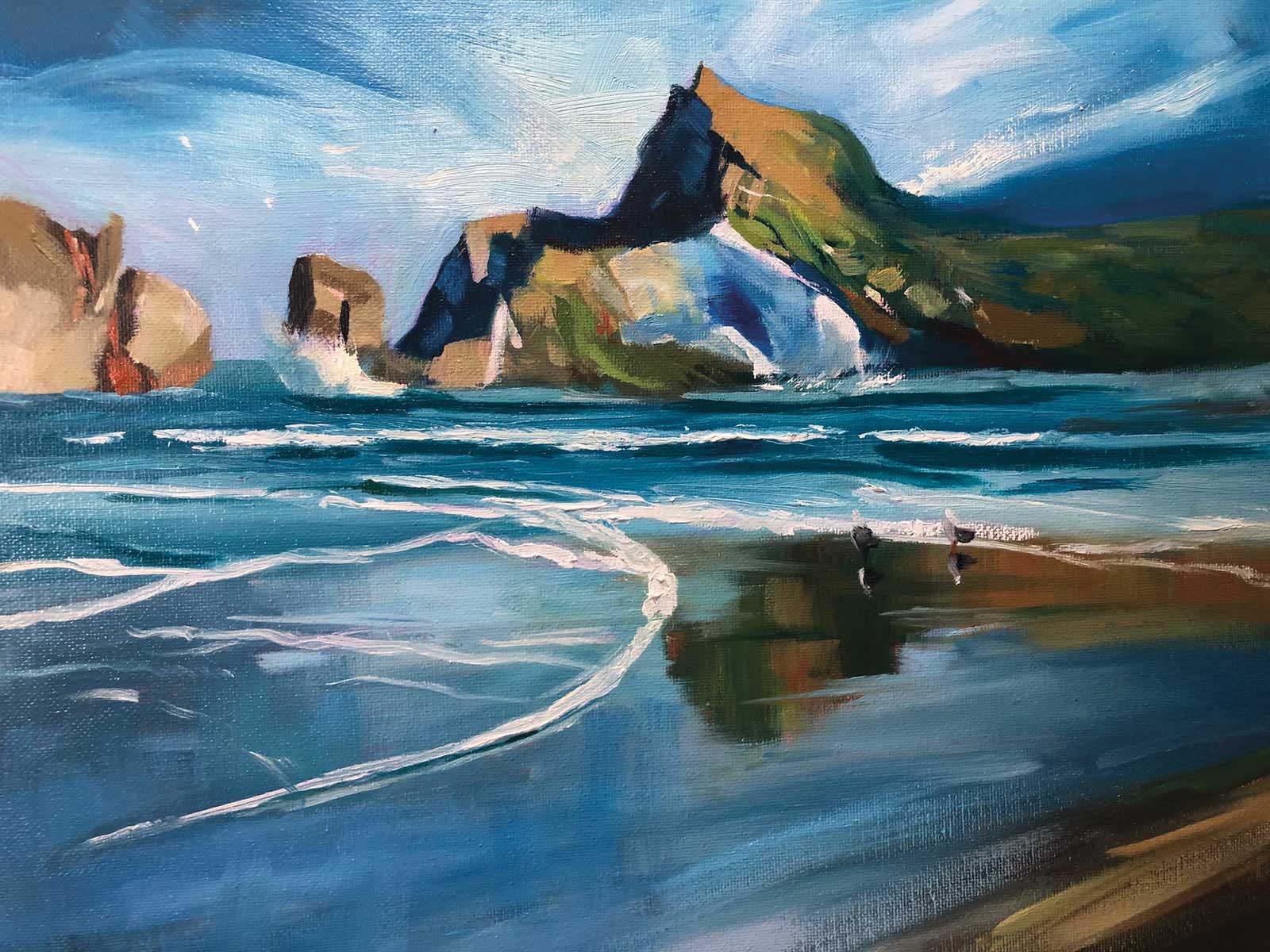 Castle Point, oil on canvas, 11 x 14" (27 x 35 cm)
Nancy Newton
Wow Nancy, that’s a really striking little painting, power packed with strong color contrasts, beautiful, interesting shapes and bold brushwork. I’m loving it all except for the white lines in the bottom half of the painting. They just look a little heavy handed and labored compared to the rest. The main culprit is that double-pronged lightening shaped foam touching the left side just below half way. Remove or edit that and I’ll sleep better tonight. Beautiful work!
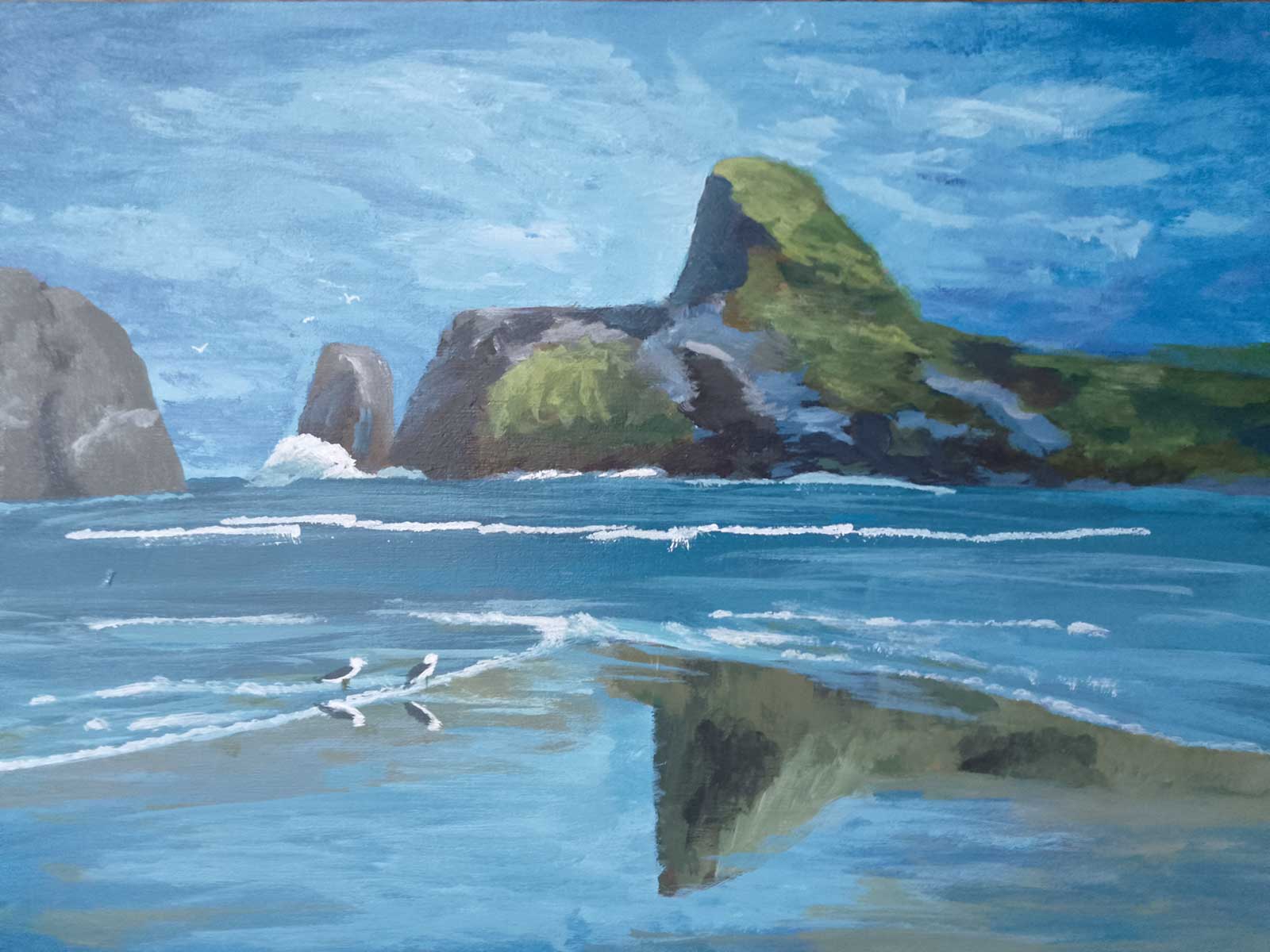 Castle Point after Richard Robinson, acrylic on birch
Rachel Chard
Hi Rachel, some really nice work here with strong color and expressive brushwork. Good to see. I have three ideas for improvement: 1. Add more interesting chinks of rock to the profiles of the land. 2. Keep the foam lines in line more carefully and avoid making marks all the same size. 3. Flip the painting upside down or view it in a mirror to clearly see the reflection shape versus the hill shape. Currently they’re not quite in line. Hope that helps!
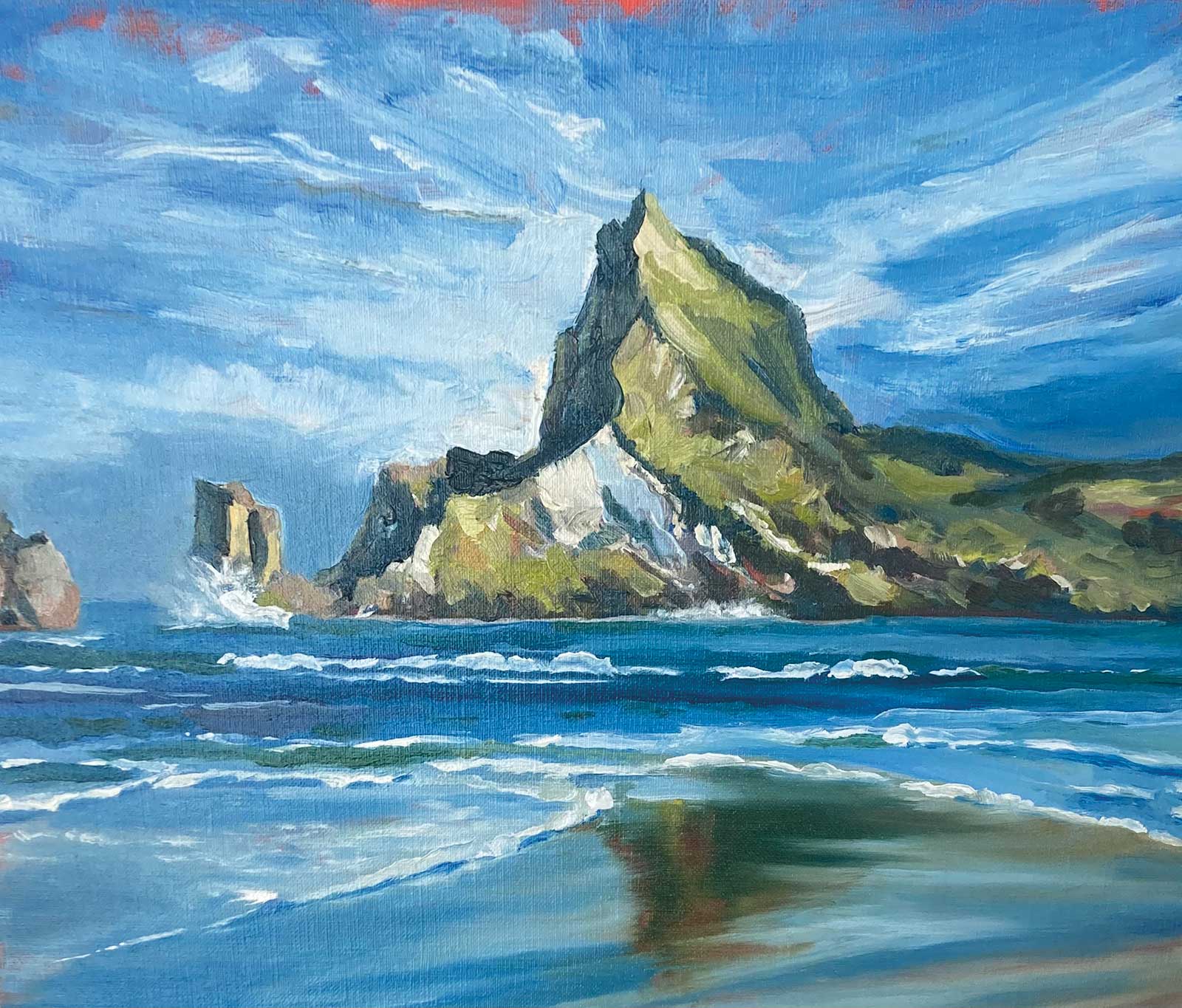 Castle Point, oil on paper
Geoffrey Geeson
Oh this is a cracker, Geoffrey! I love the vertical enhancement you’ve made to the hill—much more drama and a better sense of the height of it. It appears that lowering the horizon and giving the hill more space to stretch up was a better idea than mine of giving more lead-in to the hill. The hill is the star of the show, so, yes give it more space as you have done. Nice! You’ve used beautiful fluid brushwork everywhere too, uniting the painting. You have also achieved a great spotlight effect on the hill and in the sky.
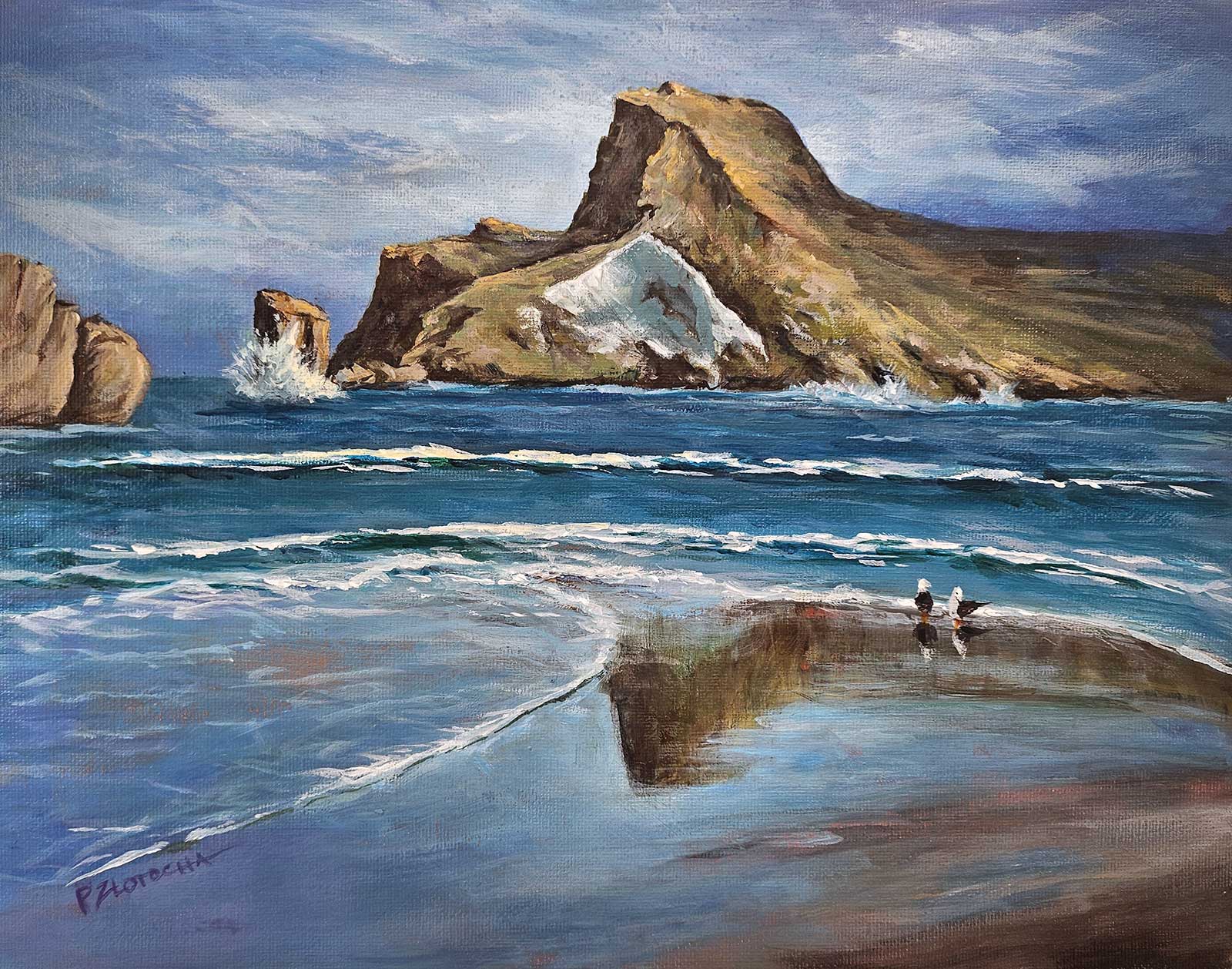 Castle Point, acrylic on canvas board, 11 x 14" (27 x 35 cm)
Patti Zlotocha
Great work here, Patricia. Good attention to the transition from shade to light and lots of interesting variety in everything you’ve painted. Nicely done.
About Your Tutor
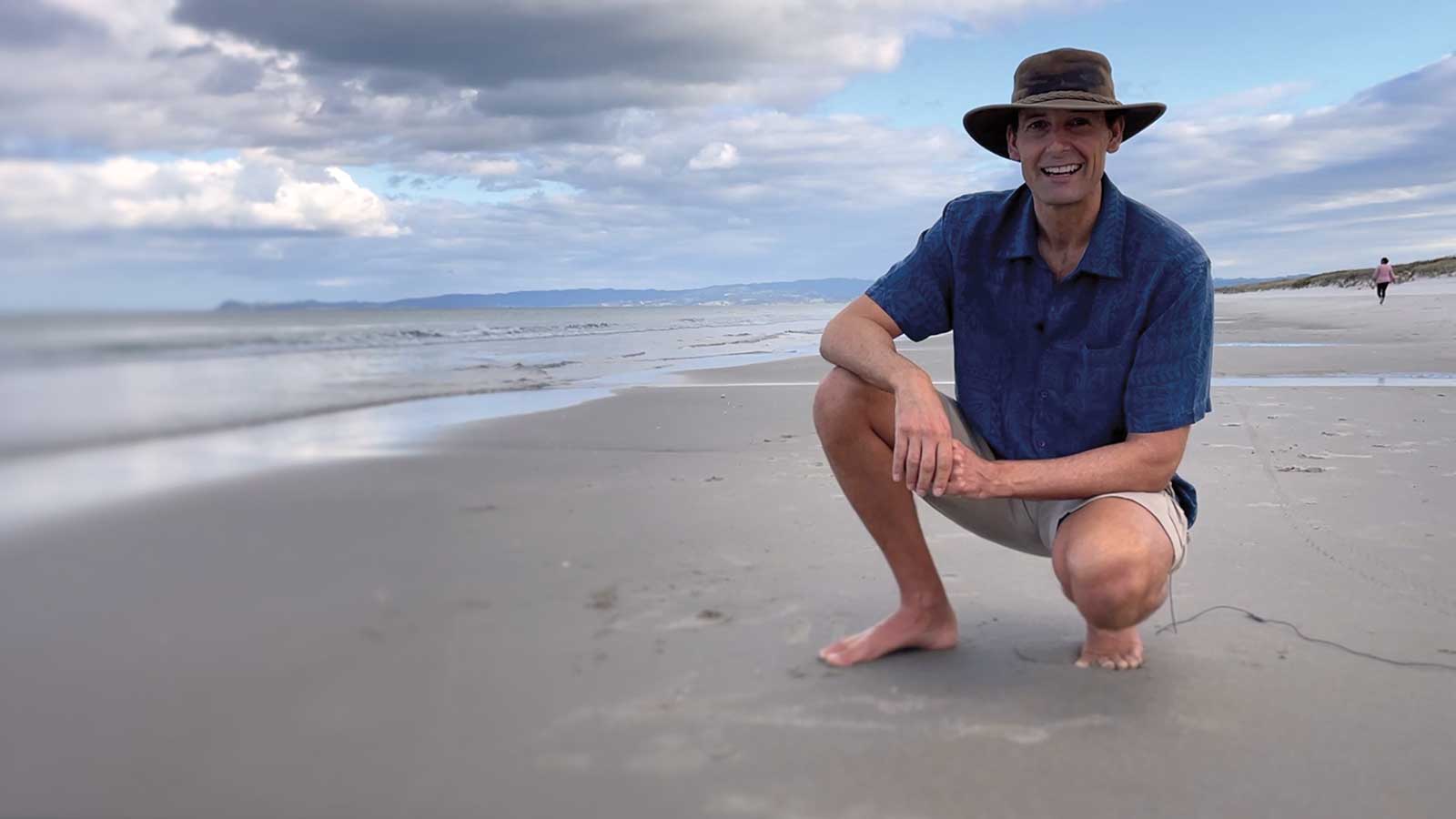 Richard Robinson
Richard Robinson is one of New Zealand’s premier outdoor painters. You can view his extensive online lessons at www.mypaintingclub.com.