
My current technique evolved from a desire to preserve my sanity because working with colored pencil is slow—very, very slow. But it is also rewarding and unsurpassed in its ability to replicate the textures, softness and subtlety of colors that exist around us.
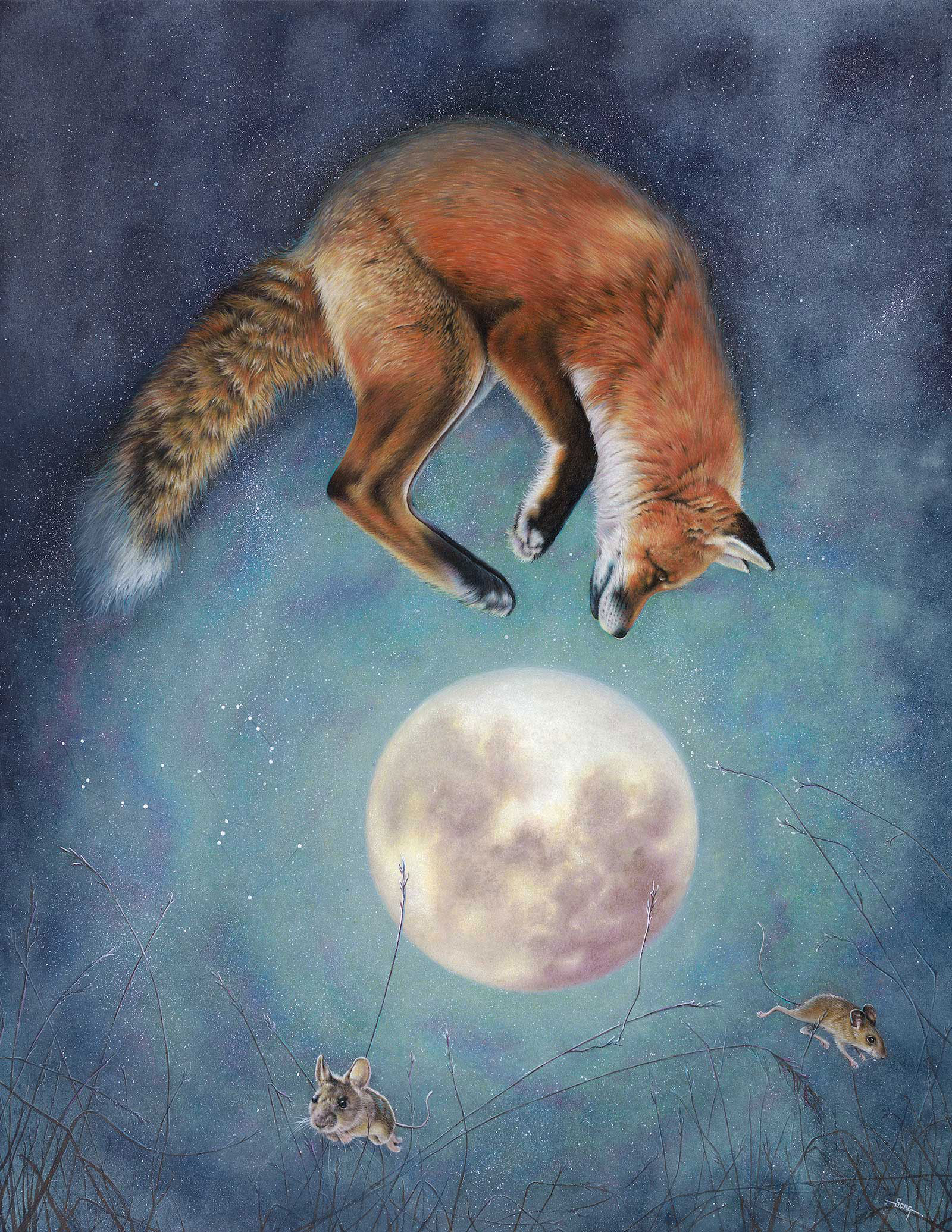
Over the Moon, colored pencil over watercolor and ink, 22 x 17" (55 x 43 cm) Not every drawing I produce is centered solely around a story. Sometimes it’s simply about depicting something that I think is just aesthetically beautiful, such as the shape of a fox as it pounces during a hunt. The placement of the moon and its glow was used here to highlight the fox’s body and make it the clear focus of the drawing. The complementary color palette also serves to accentuate the fox’s shape allowing the russet fur to vibrate against the deep blue-gray night sky. The subtle addition of the constellation Orion (the Hunter), completes the story.
When starting a new drawing, I use newsprint so I can freely work out my composition without damaging the final drawing paper. Once completed, I transfer the line drawing onto a sheet of hot-pressed watercolor paper as its smooth surface will allow for the fine details to be drawn in later. Using acrylic ink or waterproof pens, I apply black to all the areas that I want dark (think value scale of 7 to 9). Once dry, water is applied over the entire surface and allowed to dry, which is my version of stretching the paper and prepping it for paint.
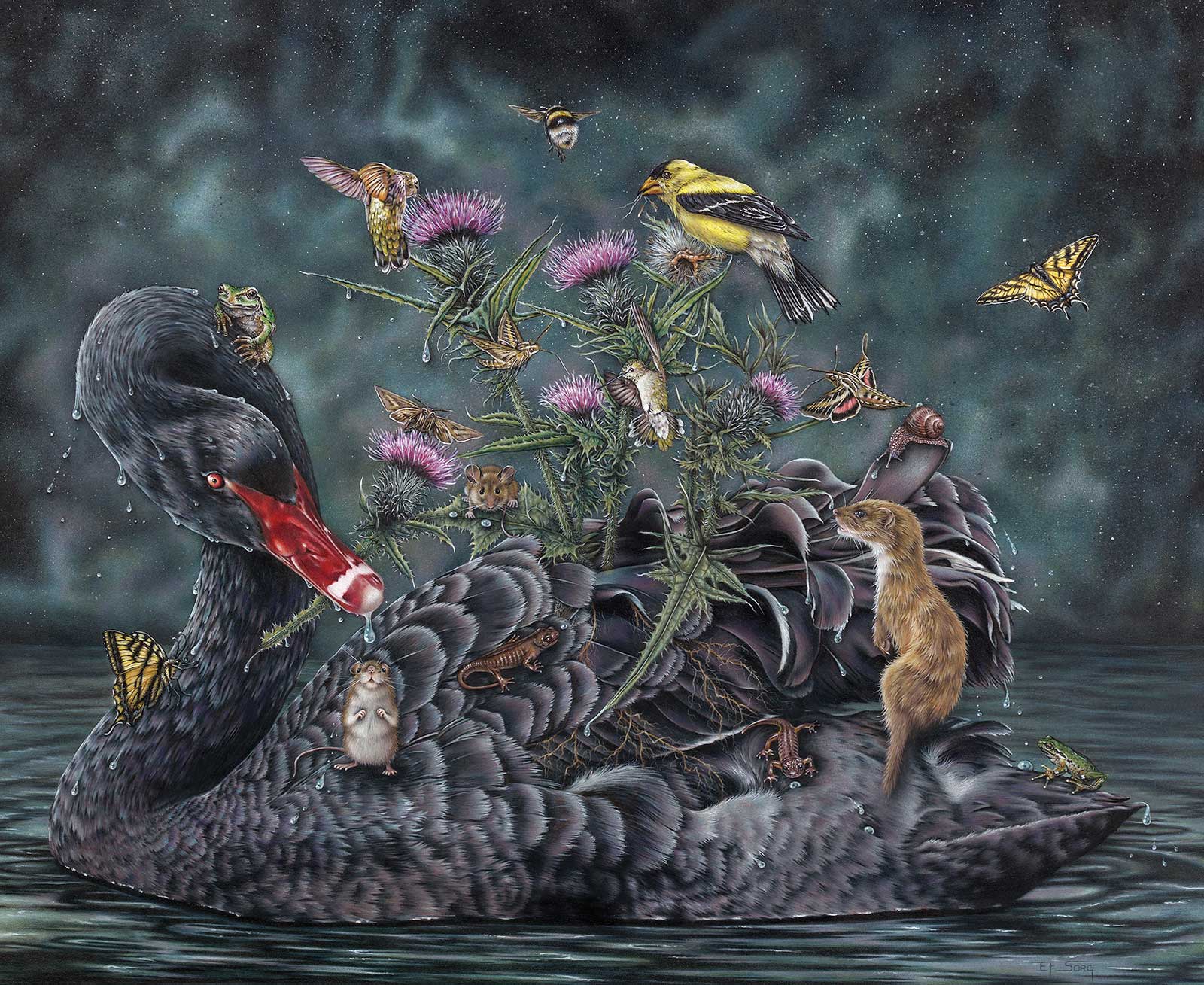
Have a Drink on Me, colored pencil over watercolor and ink, 18 x 22" (45 x 55 cm) A repeating theme that shows itself in my work is cooperation and little kindnesses shared between subjects. Sometimes it is a group of animals working together toward a common goal or, as in this drawing, a single subject selflessly caring for others. Here, a maternal swan is nurturing an entire little ecosystem on her back, showcasing this idea of interconnectedness and the importance of caring for others. The triangular shaped composition was used to help further convey the sense of stability and calmness that I wanted for this piece.
Watercolor is then applied over the drawing, preserving the white of the paper for the lightest areas and placing the colors I want down just a bit darker than where I want it to be when completed. This is important as it is easier to lighten a dark area with pencil than it is to darken an area that was left too light.
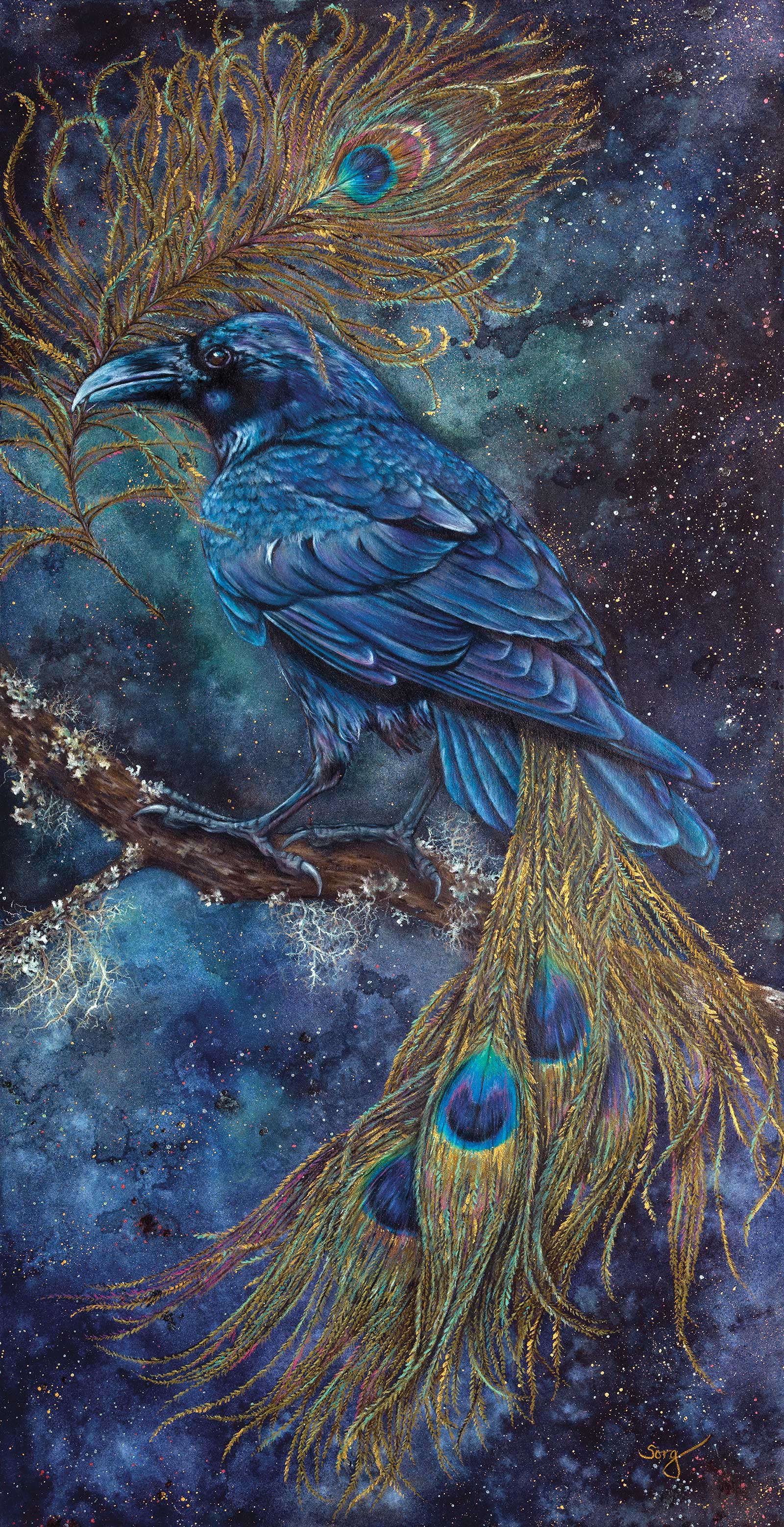
The Pursuit of Happiness, colored pencil and 24k gold leaf over watercolor and ink, 18½ x 9½" (46 x 24 cm) Crows and ravens are a favorite subject for me, and this drawing had the added bonus of being my visual depiction of a wonderful old fable called “The Crow and the Peacock.” To achieve a more storybook feel, I used metallic watercolors and 24k gold leaf over a very dark background to set the mood I was looking for and to make sure the peacock feather really popped. And the moral of the story—don’t compare yourself to others based on what you see on the outside. Happiness comes from within.
The final step is to add the colored pencil over the top and use it to apply the details, soften any hard edges, and make subtle color and temperature shifts within the piece. This method reduces the layers of pencil (and time) that is typically required and creates a rich and vibrant final product. —
About the artist
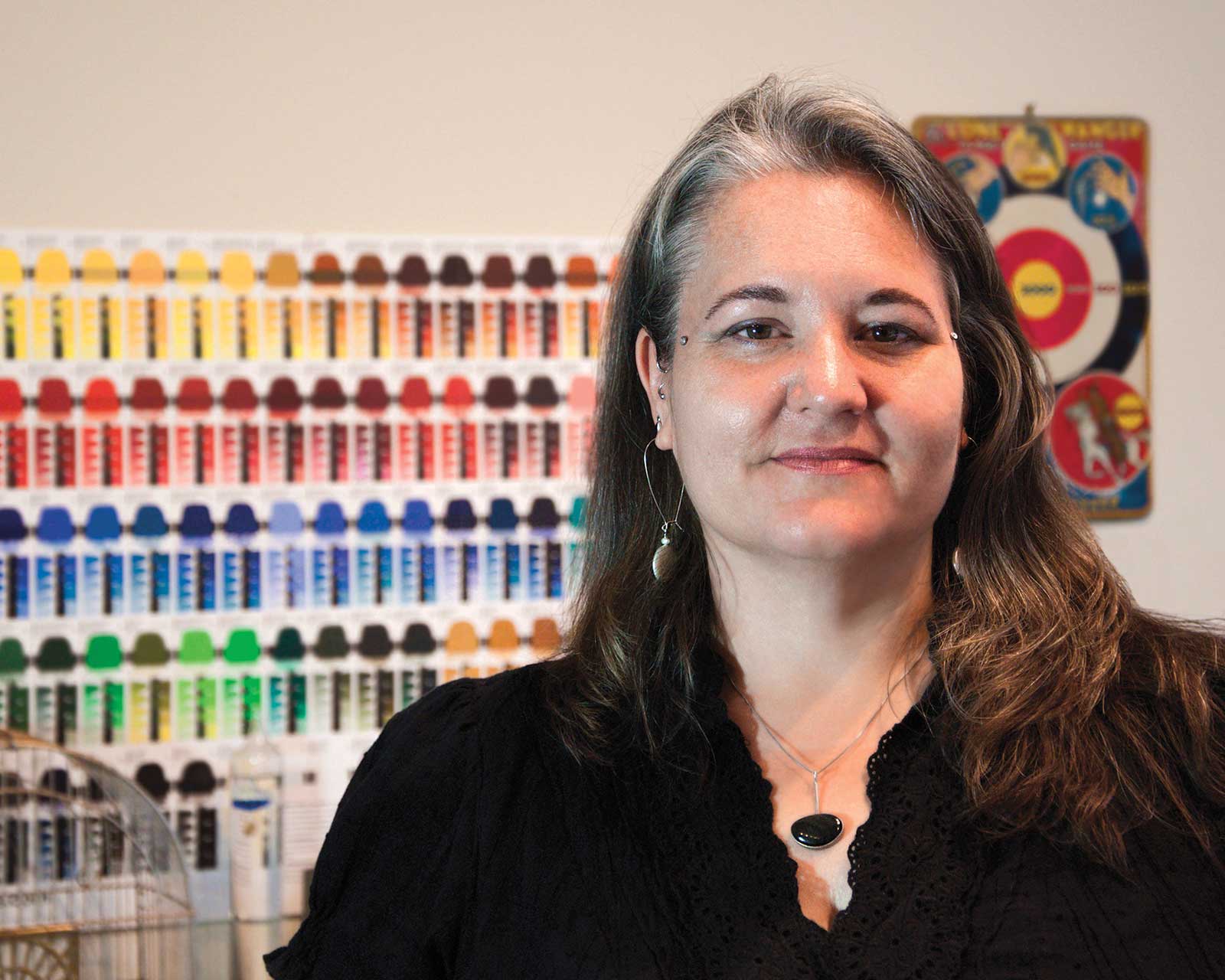 Eileen Sorg
Born in Seattle, Washington, Eileen Sorg lives and works overlooking the inspiring Hood Canal and has a keen interest and respect for the natural landscape and its wild inhabitants. With her degree in wildlife science from the University of Washington and subsequent time spent studying birds and mammals as a biologist for Washington Department of Fish & Wildlife, she returned to art with the creation of Two Dog Studio, bringing a bit of the scientist along to fuse art and whimsy with nature.
Sorg enjoys studying her subjects and seeking out the minutest details to express in her work, ensuring she captures them as accurately and honestly as possible. Her primary medium is colored pencil over a base of ink and watercolor, but she also paints in oil on copper. A popular instructor, Sorg is known for her hands-on, full disclosure teaching style. Her love for the energy that is generated when groups of artists come together has led to a new endeavor: the Black Barn Fine Art Studio, a large teaching facility and gathering place for artists on the grounds of her 10-acre farm.
Sorg is a Signature Member of the Colored Pencil Society of America and author of several books on drawing with colored pencils by Walter Foster Publishing. She shows her work in juried art festivals across the country, and her originals can be found in museums and private collections worldwide.
Contact at
twodogstudio.com