



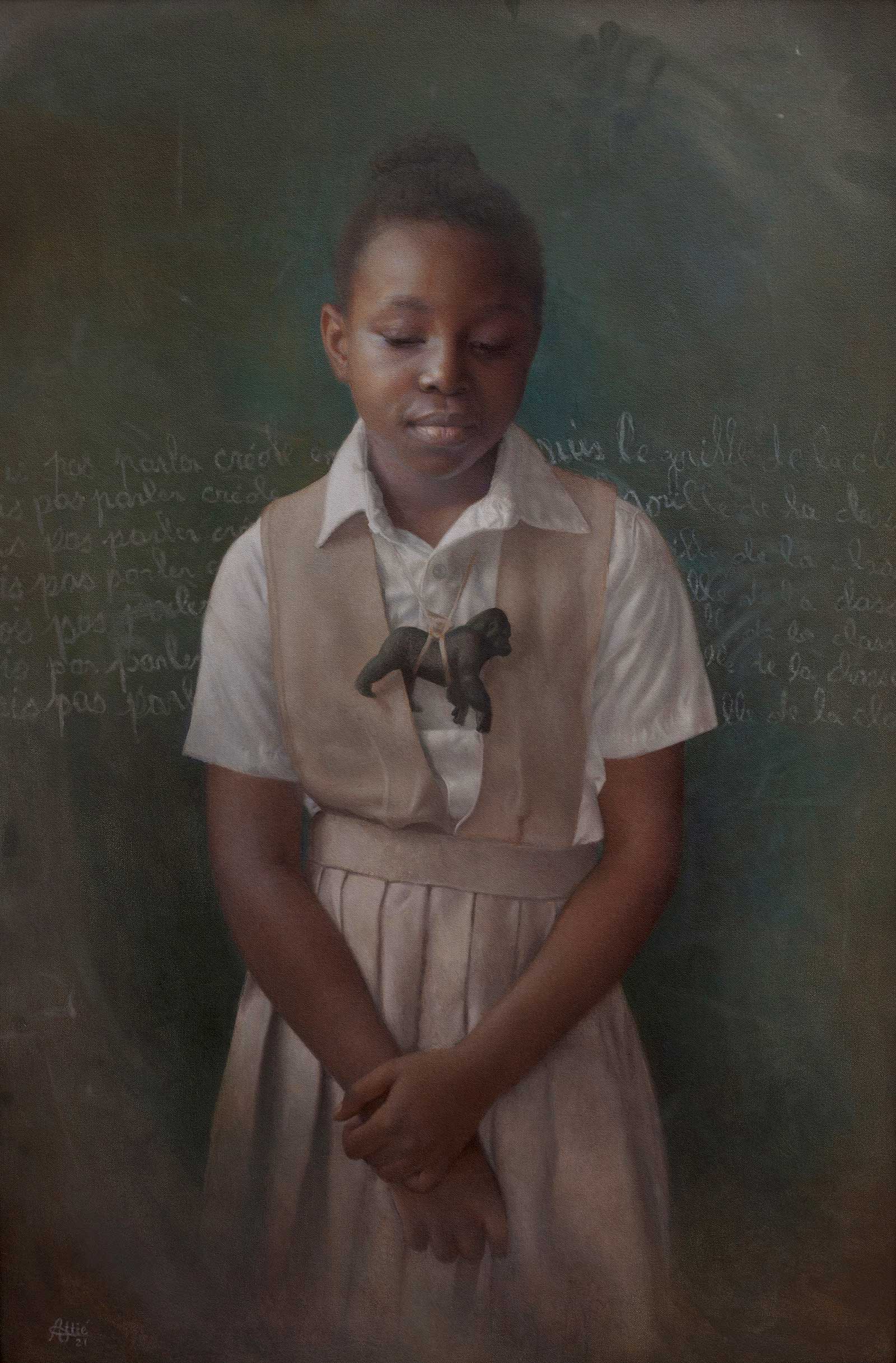
 800-pound Gorilla, oil, 36 x 24" (91 x 60 cm)
Philippe Attie
Inspiration
The inspiration for my painting, 800-pound Gorilla, stems from my personal experiences attending primary school in Haiti. During that time, the teachers enforced a strict ban on speaking our native language, Creole. They used symbolic punishments like making us wear objects such as a gorilla or a paper donkey cap around our necks to shame and discourage us from using Creole. This experience impacted me, highlighting how language suppression can be a tool of cultural suppression and identity inferiority. Through my artwork, I aim to raise awareness about the consequences of linguistic imperialism and the resilience of native languages amidst such challenges.
Process
In creating this work, I began with a sketch and a photo session with my sitter wearing the uniform in front of a chalkboard. Initially, I established a random color in the background to set the tone. Then, I proceeded with a detailed sketch of the subject before applying a layer of acrylic as an underpainting. The final stages involved building up multiple thin layers of oil paint with a focus on achieving depth and detail.
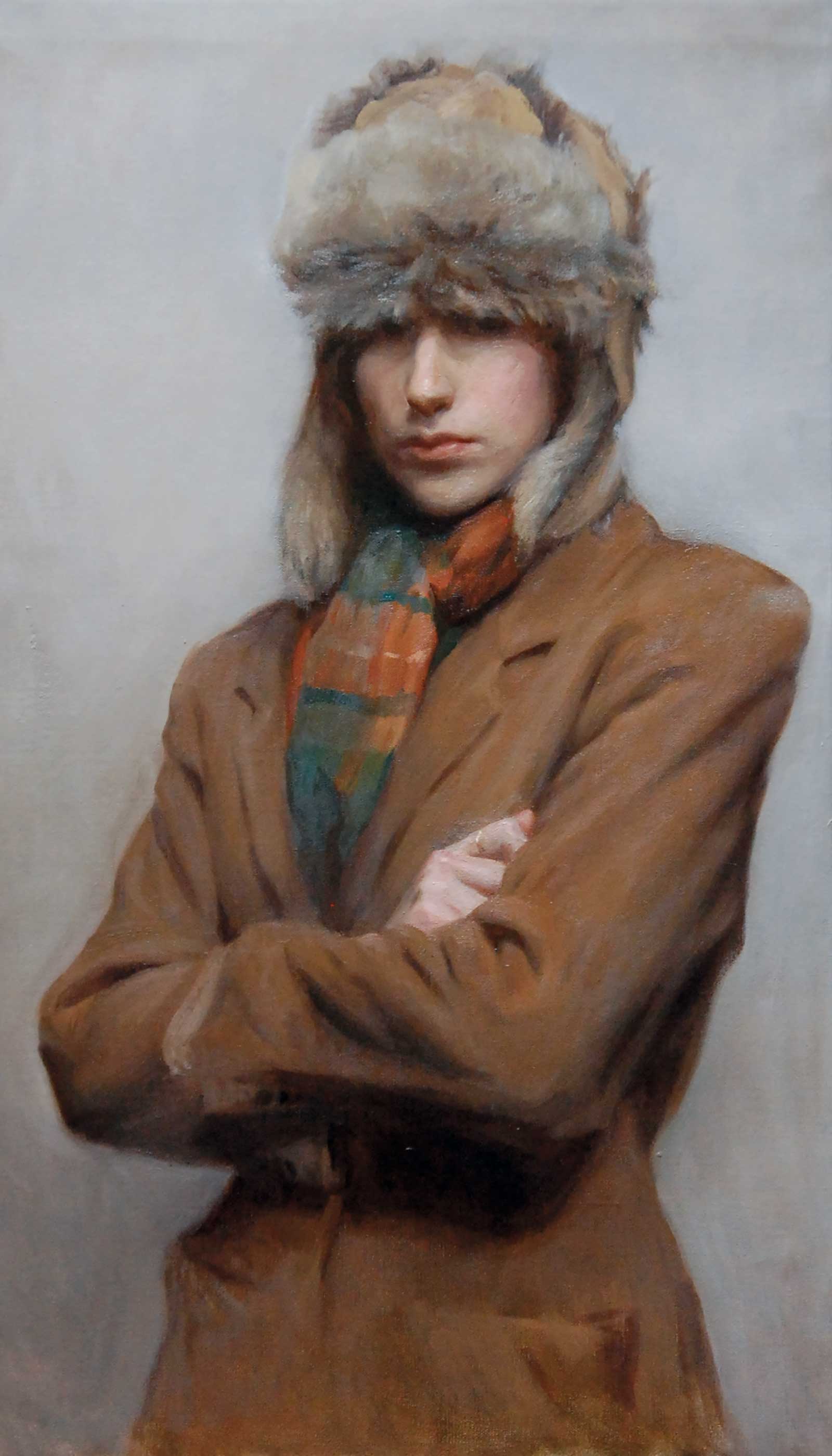 Self Portrait in Winter, oil, 31 x 23" (78 x 58 cm)
Phoebe-Louise Stewart Carter
Inspiration
I painted this self-portrait during my final year in Florence where I was an artist in residence and teacher at the Florence Academy of Art. The Januarys in Florence are similar to those in England—quite cold and wet. I was initially wearing this particular outfit just to brave the walk into work. However, on catching my reflection, I was reminded of my favorite Anders Zorn self-portrait: full fur coat and hat with a casual cigar hanging from his hand, like a mobster. I decided to paint myself in the “get-up” before the winter weather was over.
Process
This picture was painted completely from life in the “English method” of self-portrait painting, where the artist stands next to the canvas and the mirror is across the room reflecting both artist and canvas in the glass. This is so I could accurately paint myself in sight-size and more easily compare the accuracy of my drawing and color. It did also entail working “backwards” into the reflection, especially for the beginning stages of the portrait. Additionally, using this method meant my painting would not be a flipped image of my face, which I believe can make even an accurate likeness look slightly off.
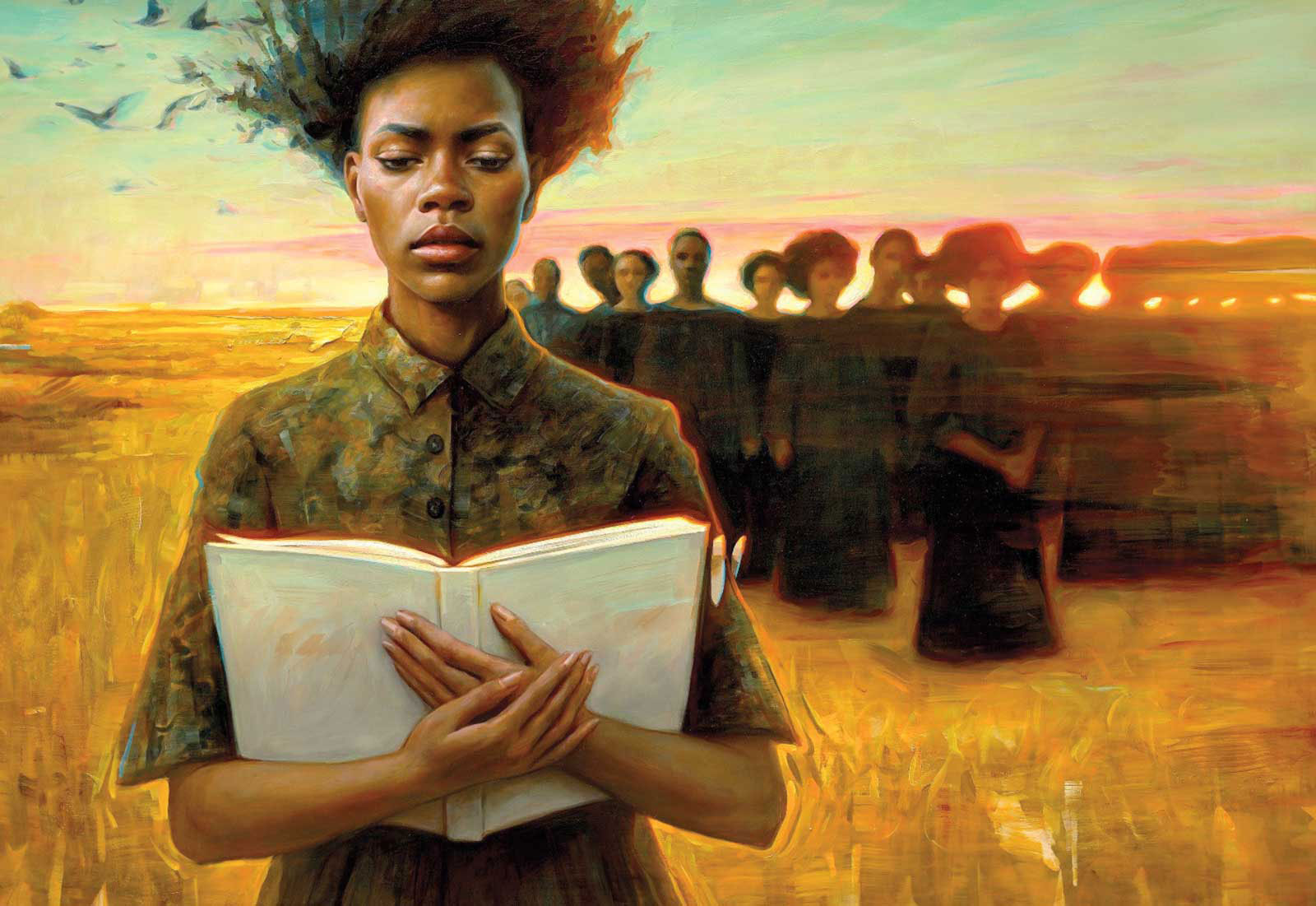 I’ll Fly Away, oil, 32 x 48" (81 x 121 cm)
Steve Forster
Inspiration
I love painting stories through portraiture but without an overt social statement, as over-explaining takes away the magic of interpretation. While painting I’ll Fly Away, I was thinking about the present generation participating in the life cycle—inheriting beautiful things from the past, but also difficulties. Our predecessors were flawed but were warriors of the human spirit. The injustices faced, the problems created, the humanity experienced—these ideas flow through my consciousness more since my mother’s passing. While this isn’t exactly a self-portrait, there is a relationship between the subject and me. After all, it is said that every painting is a self-portrait. There is another narrative about the complicated legacy that America has with race and spirituality, also suggesting a positive notion that one day, we will pass from this life to the next and will be united, understanding how our roles fit together.
Process
As a realistic painter, I tend to think about the formal qualities of the work first, but I’m discovering that it’s often better to start with a strong idea, which guides the decisions. With this painting, I was thinking about this generational conversation. A painting goes through many iterations. It starts as a sketch or a collage. Next is a notan design phase—thinking about how the black, gray and white shapes lay out graphically. Then comes a photoshoot to get the features and expression. Finally, I start the painting. Midway through there’s usually a problem, and I reshoot or rearrange things to bring the painting across the finish line. To make a rich composition, an artist must create a world and surround it with ideas. Great references and great visual ideas birth a meaningful painting.
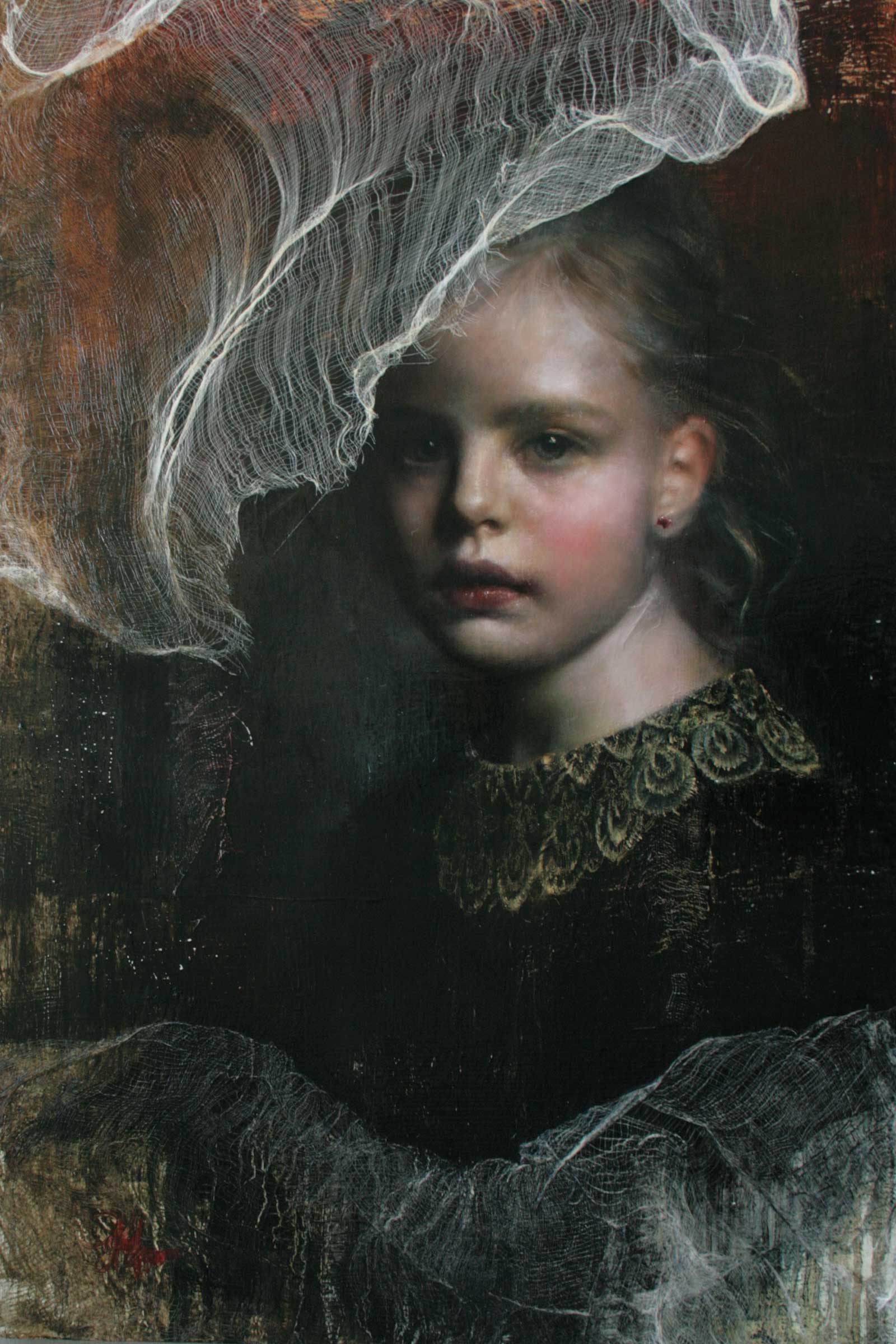 Girl with a Ruby Earring, oil, 36 x 24" (91 x 60 cm)
Mara Light
Inspiration
The inspiration behind Girl with a Ruby Earring stems from the work of renowned photographer Rudi Huisman. I was drawn to one of his photographs, where he masterfully employs Rembrandt lighting to illuminate the model. This technique, known for its dramatic interplay of light and shadow, perfectly showcases the subject’s skin tones against a dark, moody background. The delicate balance of light brings out the contours and textures of her face, highlighting her natural beauty in a timeless manner. Huisman’s generous permission to use his photographs as references allowed me to translate his brilliance into the realm of oil painting, blending classical techniques with modern inspiration. The result is a piece that pays homage to the skill of the photographer and captures the essence and beauty of the girl in a way that is evocative and intimate.
Process
My process for this painting is rooted in the exploration of texture and layering. I began by painting over three underlying portraits. Starting with texture and pre-existing paint allows me to dive into the creative process with a sense of playfulness and spontaneity. The dynamic interaction of layers adds depth and complexity to the final piece. As I build up the surface, I incorporate textured layers beneath and atop the paint. In this work, a material layer floats above her head, introducing a sense of movement. This obscures a portion of her face, creating a delicate tension between visibility and concealment. The interplay of seen and unseen elements invites the viewer to engage more intimately with the subject. By integrating these techniques, I aim to evoke a rich, multifaceted experience where each layer contributes to the narrative and emotional resonance of the artwork.