If you attended the Portrait Society’s The Art of the Portrait conference this past April, then you had the opportunity to see the Draper Grand Prize-winning painting King Hall in person. This portrait, by artist Jeffrey T. Larson, is truly magnificent, and I hope you will read more about his artwork and career in the feature article on him in this issue. Larson, like many artists today, studied art at an atelier rather than a university.
Perhaps you’ve heard the term “atelier” thrown around by artists but never really understood what it is or how it differs from a college or any other art school. Traditionally, ateliers consisted of a master artist who would work with a small number of students to train them in the fine arts. They were the standard practice for European artists from the Middle Ages to the 19th century but then started to gradually be replaced by academies.
In 1946, artist R.H. Ives Gammell published a book called Twilight of Painting in response to what he saw as “the rapid erosion of both painting standards and the quality of art teaching and the steady diminution of the professional knowledge and competence shown by each oncoming generation of painters.” As he stated in a 1973 interview, Gammell was very concerned that painting was a “vanishing art.” After his book was published, he began to have young, aspiring artists seek him out as a teacher. Gammell explained that “from these, a small nucleus of promising students evolved under my direction.”
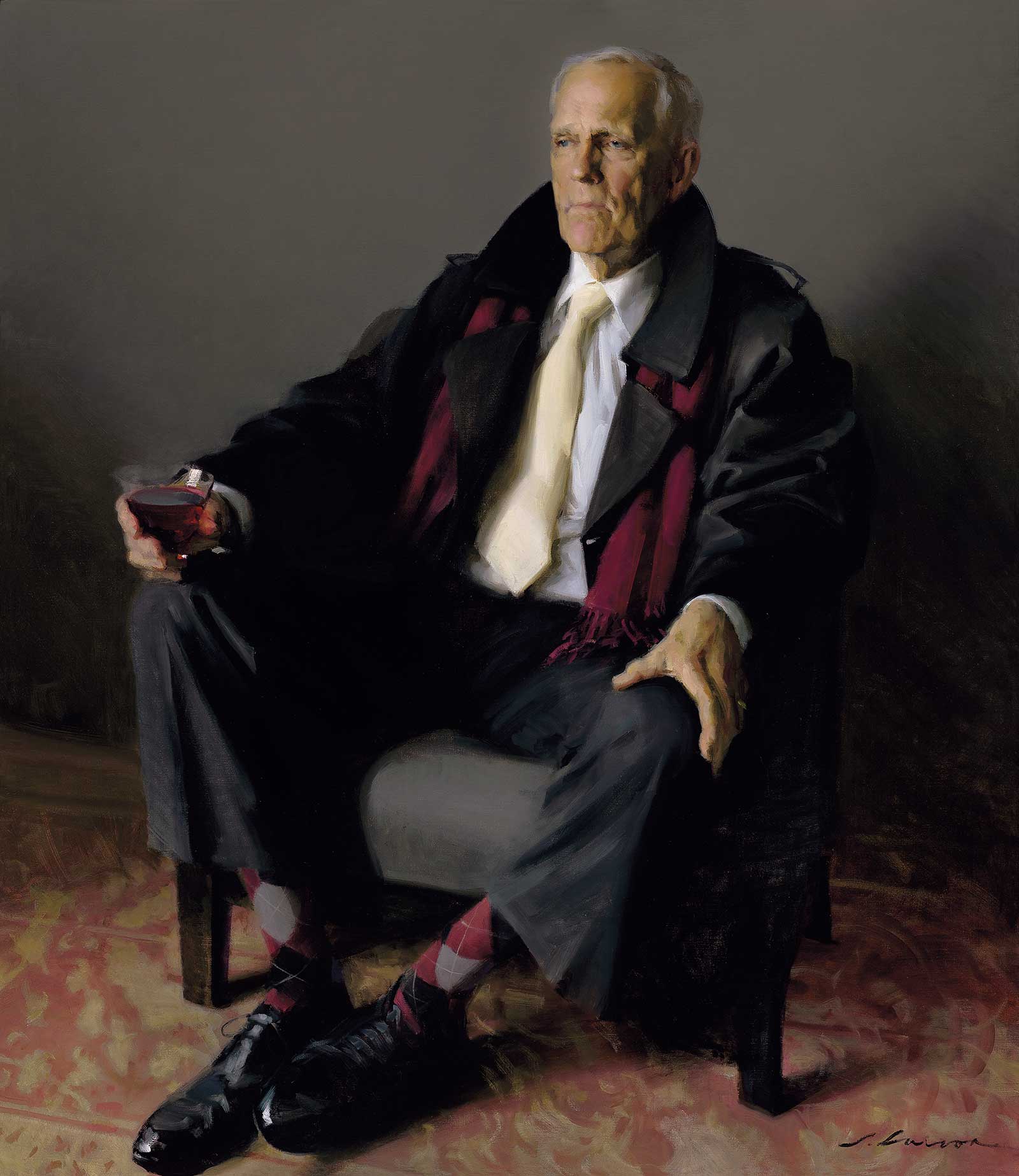
Jeffrey T. Larson, King Hall, oil on linen, 60 x 52" (152 x 132 cm)
One of these promising young students was Richard Frederick Lack. Yearning to learn to paint in the tradition of the Old Masters, Lack soon realized that his instructors at the Minneapolis School of Art, where he was a student, could not help in his endeavor. In 1950, he quit art school and moved to New York, spending his mornings copying paintings at the Metropolitan Museum of Art and his afternoons looking for a teacher. He visited the Art Students League, hoping to study with Frank Vincent DuMond, but learned that the aging DuMond had retired from teaching. Discouraged, Lack planned to return to Minneapolis and study chemistry instead of continuing in art. Fortunately, while still in New York and copying a painting at The Met, Lack met a man named Robert Cumming who was studying with Gammell. Impressed by his copy work, Cumming encouraged Lack to visit Gammell’s Boston studio. The rest, as they say, is history as Lack was accepted into Gammell’s atelier.
Almost 20 years later, in 1969, Lack opened his own atelier in Minneapolis. The curriculum at Atelier Lack consisted of cast drawing and painting, figure drawing and painting, still life, and head drawing and painting. Lack visited the studio two days each week to critique his students’ work, gauge their progress and demonstrate. He encouraged his students to study human anatomy and to make skeletal and muscular overlays on each of their figure drawings to better understand the structure of the human body. One young artist who eventually found his way to Atelier Lack in 1980 was Jeffrey Larson. At that time, there were fewer than ten schools in the world that still offered the atelier method of teaching art.
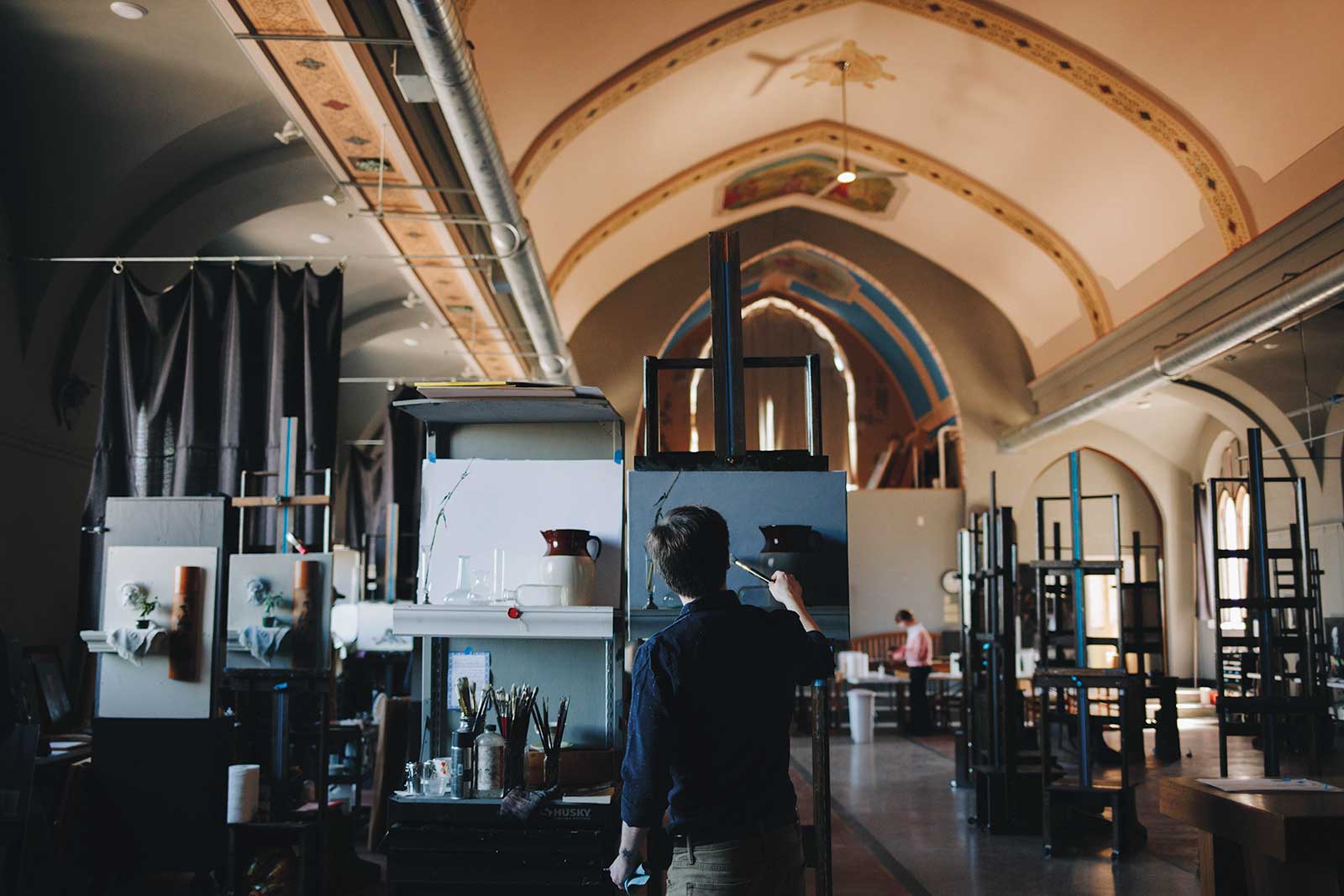
The Great Lakes Academy of Fine Art, co-founded by Jeffrey Larson, offers classical training programs modeled after the traditional European Atelier system. For more information about the academy, visit greatlakesacademyoffineart.com.
You may have heard me speak in the past of my own art lineage, which traces back through Everett Raymond Kinstler all the way to John Singer Sargent. Larson’s lineage from teacher to student can be traced back to Jacques-Louis David, the famous painter of Napoleon. The reason these “art family trees,” as I sometimes call them, are important is that they embody the practice of artists passing down what they have learned, generation to generation, in order to keep alive the lessons, methods and techniques.
I often heard my teacher, Everett Raymond Kinstler, telling anyone studying with him, “All I ask is that you continue to share what I have given you.” This concept of passing on knowledge and, specifically, this request by Kinstler, is what prompted me to write The Art of Seeing. It was also the driving force behind the establishment of The Portrait Society in 1998. Our founders were dedicated to furthering the traditions of fine art portraiture and figurative art. Our educational programs, articles and newsletters all strive to provide resources for artists to learn from artists. In fact, one of the qualifications required for earning Signature Status from The Portrait Society is that the applicant must be involved in passing on what he or she has learned through teaching, writing or mentoring.
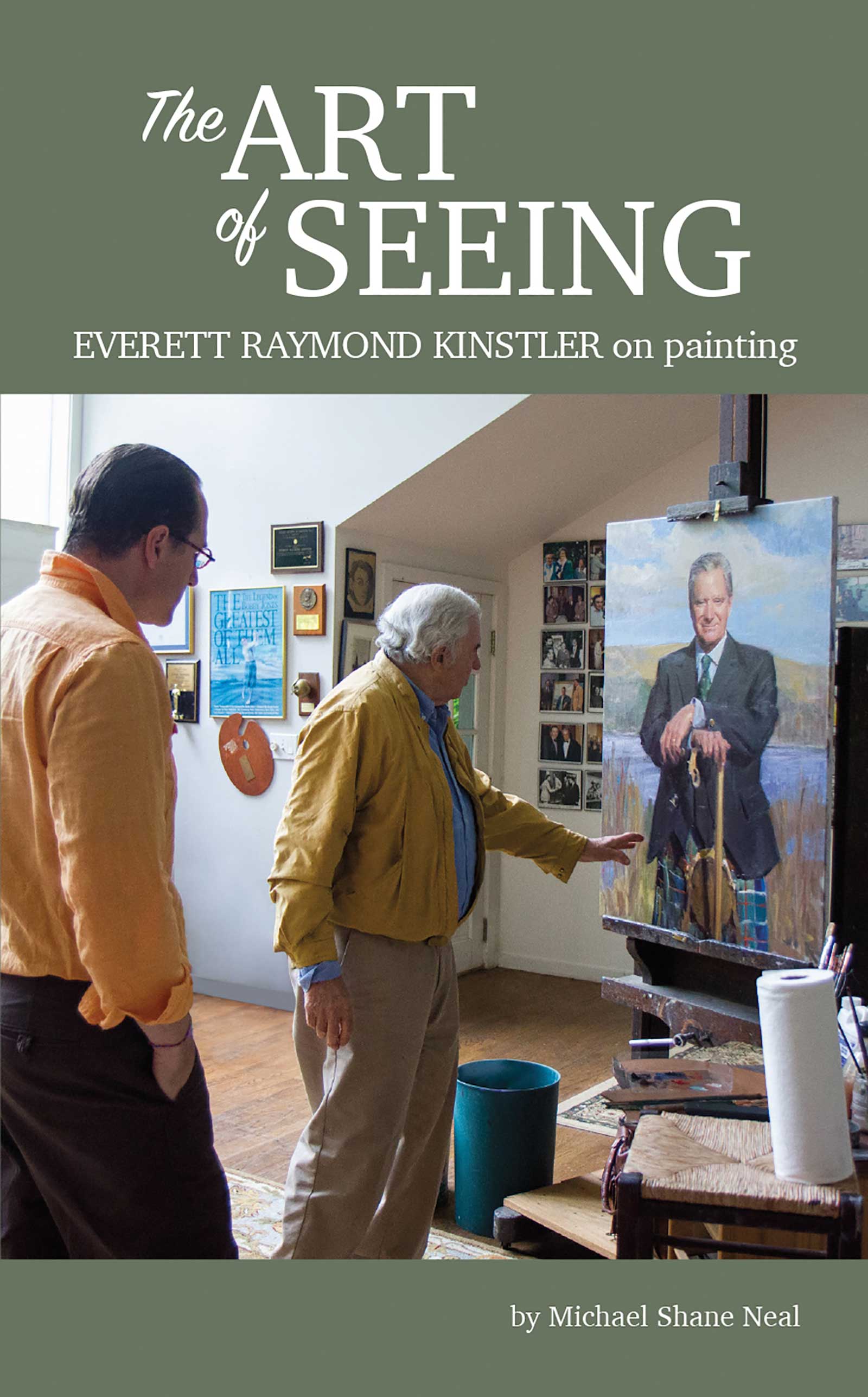
Compiled by Michael Shane Neal, The Art of Seeing is a collection of notes from classes and critiques with his mentor, Everett Raymond Kinstler. All proceeds benefit the Portrait Society of America. Visit michaelshaneneal.com to purchase.
These days, aspiring artists have many options for study as the atelier movement is once again flourishing. Larson himself, along with his wife and son, founded Great Lakes Academy in Duluth, Minnesota. Accepting three or four students a year, with a maximum of 16 students enrolled at a time, they focus on “classical impressionism,” striving to keep alive the great tradition of ateliers. Drawing and painting are the only subjects taught there, with students spending all of their time in front of an easel, learning to see and translate the world around them onto paper or canvas.
Wherever you find yourself in your journey as an artist, I would encourage each of you to seek out artists who teach, whether that be in a traditional university setting, an atelier, a workshop, a Wednesday Webinar, a weekly class—wherever you can find it. Then, I encourage you to take that knowledge and pass it on. Keep the great traditions of fine art alive and continuing throughout future generations.
Sincerely,
Michael Shane Neal
Chairman