
The winner of the Portrait Society’s 2024 Draper Grand Prize, Jeffrey T. Larson, was born in 1962 in Two Harbors, Minnesota, and grew up in the Twin Cities. He received his artistic training in the style of the Old Masters at the renowned Atelier Lack, a school rooted in the traditions and teaching methods dating back to impressionism and the French academies of the 19th century. Following his formal four-year education, he furthered his studies through museum visits in the United States and abroad. In 2015, Larson founded the Great Lakes Academy of Fine Art, aiming to pass on his knowledge by offering a classical training program. This program is modeled after the traditional European Atelier system that thrived in the 19th-century Parisian art scene. I recently interviewed Larson in his studio in Minnesota.
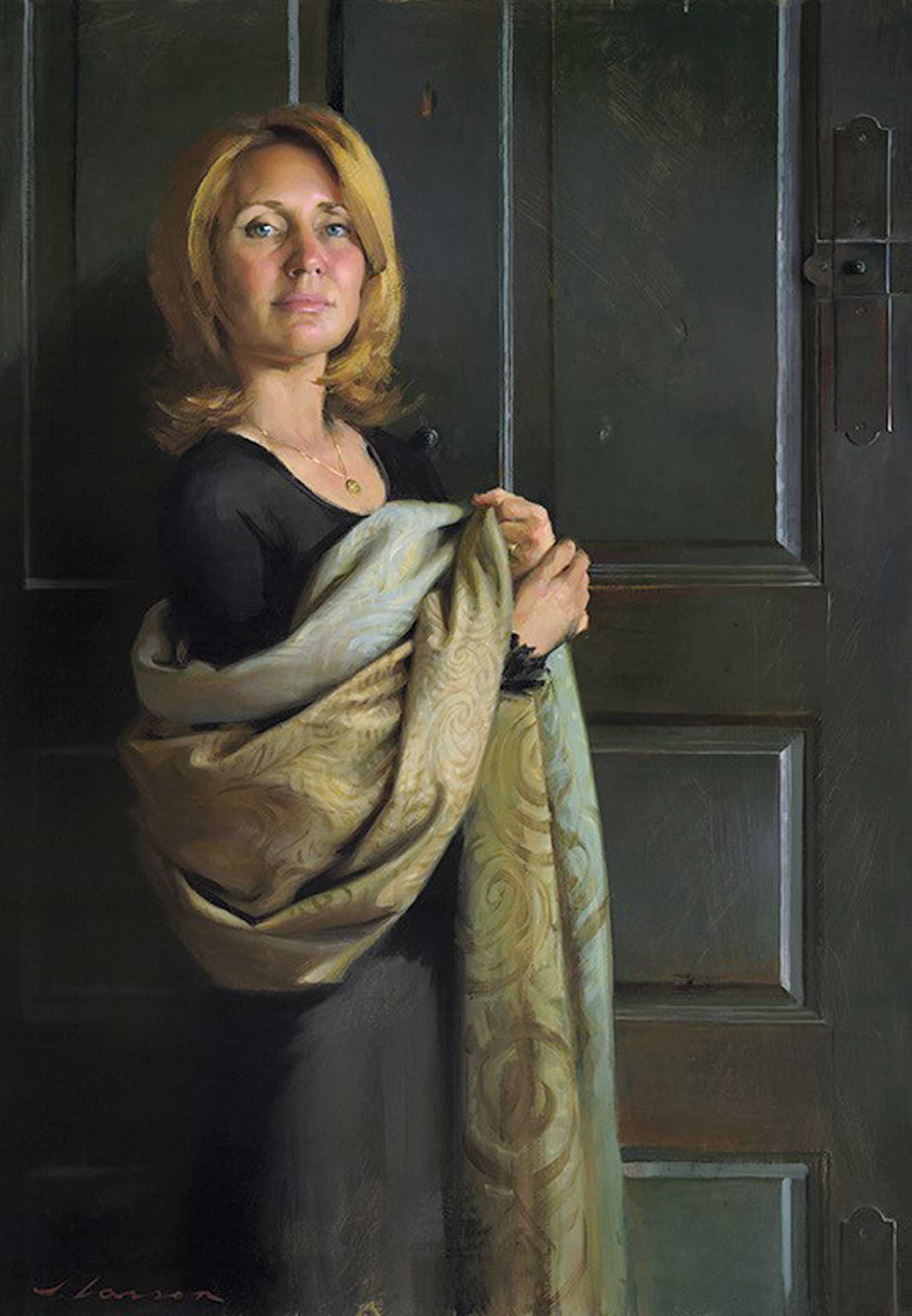
Jeffrey T. Larson, Heidi, oil on linen, 52 x 38" (132 x 96 cm)
Christine Egnoski: You have been painting for over 40 years and founded an atelier. Can you tell us about your education and what compelled you to open your own atelier?
Jeffrey T. Larson: My own education began at the Atelier Lack, and my son followed in those footsteps attending The Atelier Studio Program of Fine Arts, an Atelier in Minneapolis, Minnesota. I was coming down once a month to teach for a couple days just so I could be a part of his life during this stage. Other than a few seminars here and there, I had not taught for 30-plus years. I found that I really had missed it and very much enjoyed working with talented individuals who reminded me of myself back when I was young and on fire to learn. Brock eventually began to teach part-time there and was offered a full-time position. At the same time, I was offered the opportunity to accept a position teaching in Florence, Italy. It occurred to us, why don’t we just create an atelier together? The training that I received at the Atelier Lack was foundational and changed my life. A good Atelier is like a visual Juilliard, with the best studio practices honed over many generations passed on to you in a practical, hands-on, systematic, time-tested approach.
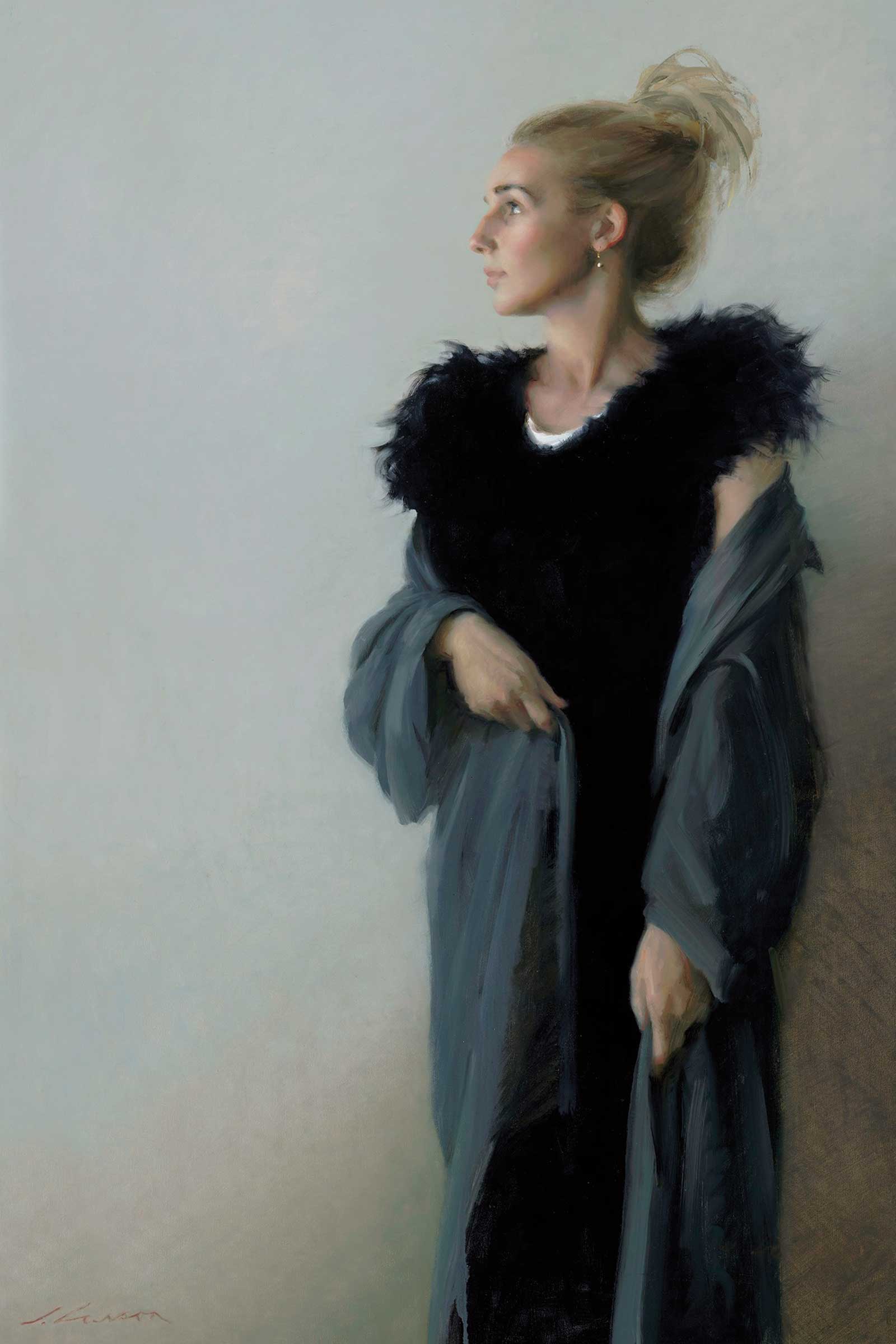
Jeffrey T. Larson, Sophia Rose, oil on linen, 60 x 40" (152 x 101 cm)
CE: If you can, can you articulate what you think an artist needs to study for their work to reach the next level?
JL: Yes, after painting professionally for 40 years, I have come to the conclusion that one becomes a master painter by mastering the fundamentals. The physical reality of all paintings, whether bold or refined and regardless of how it was painted, is that they are in the end just an elaborate arrangement of specific puzzle pieces. Every puzzle piece has a specific shape containing a specific value altered into a specific hue, and all of the puzzle pieces nestle up to their neighbors creating a variety of edges. Learning to paint begins with training the eye to evaluate the full spectrum of light as it affects the three-dimensional world. One must train their eye to see and isolate the specific shapes, values, hues and edges and how they work in relation to each other. The rest that our eye takes and our mind evaluates in the course of us living our life is primarily of little value, and in fact, tends to muddy the waters. Seeing specifically and simply is at the core of becoming an effective artist.
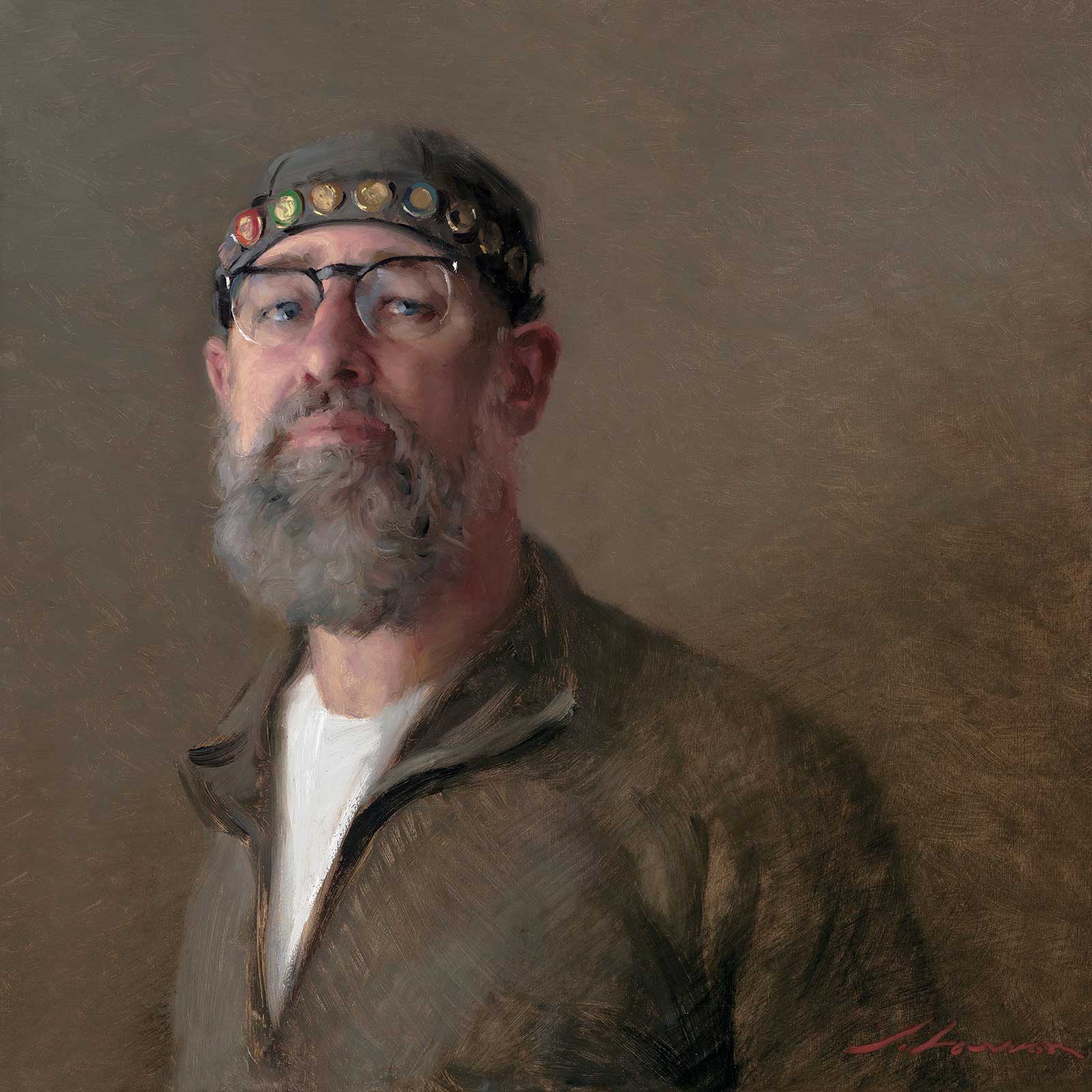
Jeffrey T. Larson, Self-Portrait; Birkie hat, oil on linen, 24 x 24" (60 x 60 cm)
CE: I watched a documentary about your artistic journey, and in it you said, “You kind of get good enough to see how bad you are.” Can you expand on what you mean by that?
JL: My take on it is that we learn to filter all the visual stimuli that strikes our eye through a very practical lens, throwing out or ignoring all that doesn’t help us navigate our way through our days. We see that the floor is flat and hard, and the door is over there, and this is soft, etc. What we don’t really notice is the subtleties of values and color and composition, which is also included within all of that visual stimulus. So, when we begin painting, we often paint what we think we see and not the truthful arrangement of what is really there. My training consisted primarily of my working on something and Mr. Lack coming over and making corrections on it, which most often I could see immediately that he was right. Then I’d do it again, then he’d do it again, over and over until you get good enough to start seeing for yourself just how far off you are much of the time.
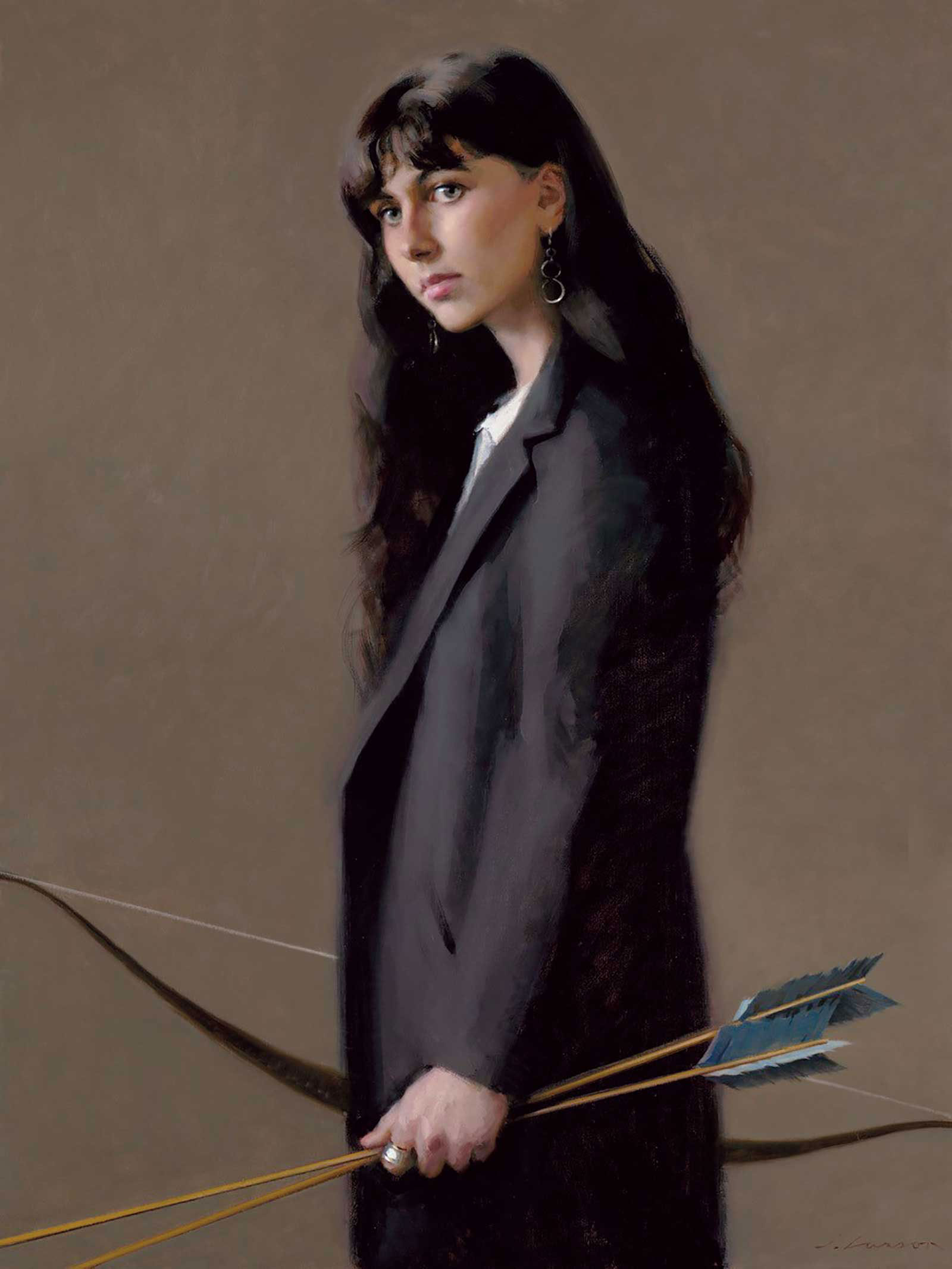
Jeffrey T. Larson, The Archer, oil on linen, 48 x 36" (121 x 91 cm)
CE: You met your wife Heidi Larson, also an artist, in 1984 at Atelier LeSueur, and it seems like you have a mutually supportive relationship. How important has it been for you to have a partner that understands the joys as well as the frustrations an artist experiences?
JL: Upon graduating from Lack’s Atelier in 1984, I was invited to be the head instructor and assistant director at Atelier LeSueur. Heidi was in that first class of students. Once we got married, everything from that point on was a team effort. Together we worked our butts off, took chances, made mistakes, tried again and very slowly figured a few things out. It’s been a team effort, along with our kids as they got older. I have just been very blessed and know that I couldn’t have done it alone.
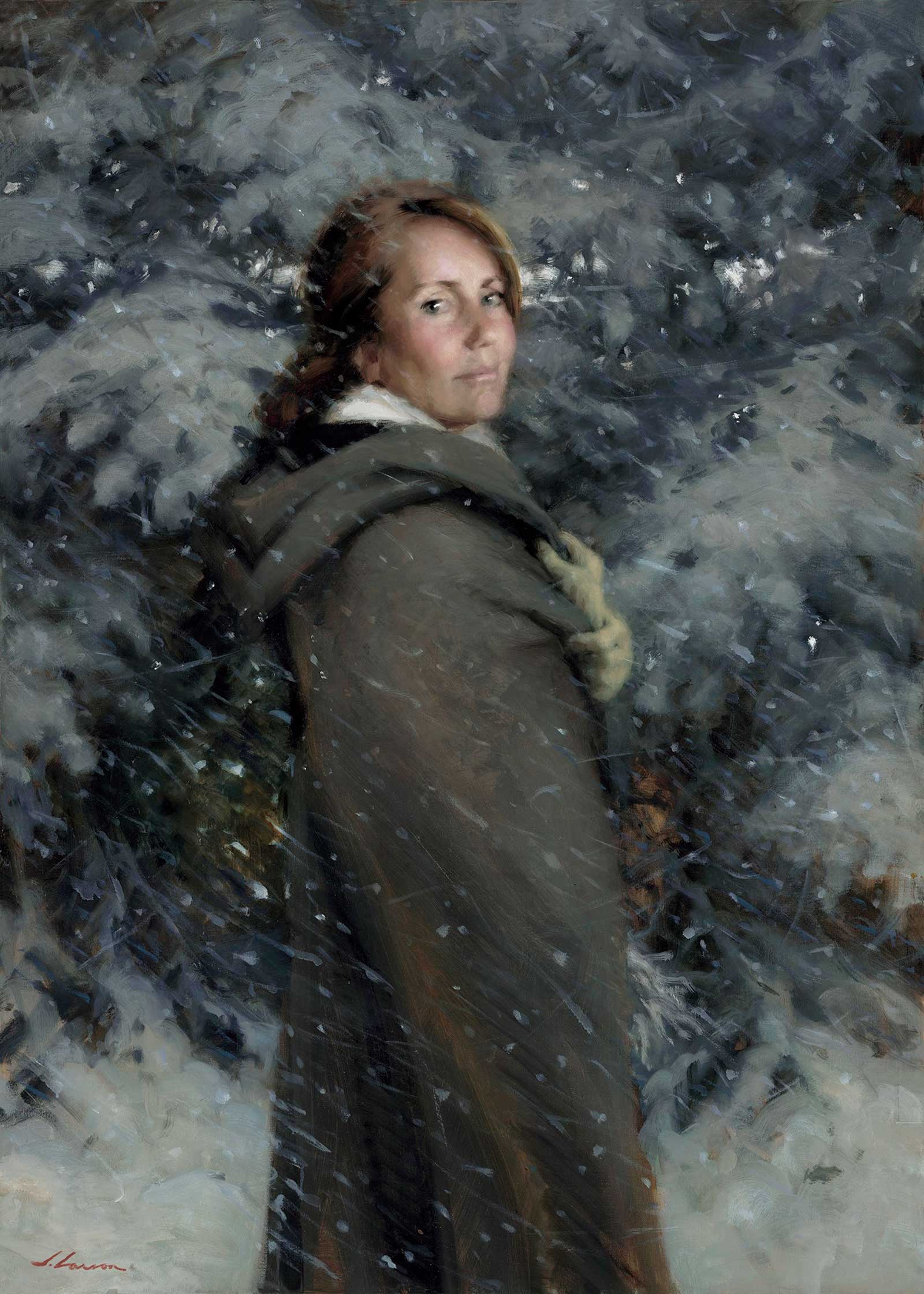
Jeffrey T. Larson, Heidi in Winter, oil on linen, 52 x 38" (132 x 96 cm)
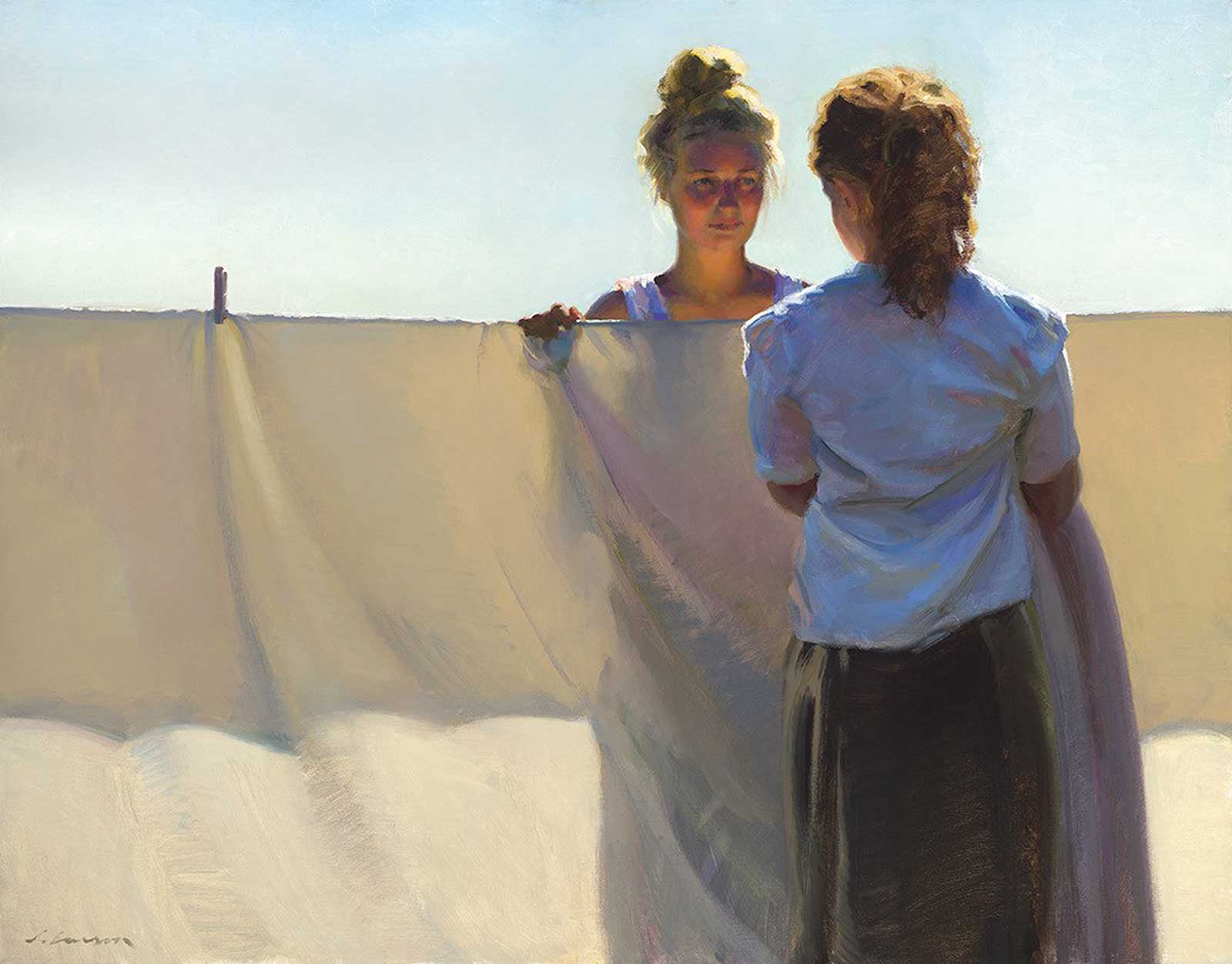
Jeffrey T. Larson, Over the Line, oil on linen, 36 x 46" (91 x 116 cm)
CE: Congratulations on being awarded the 2024 Draper Grand Prize. You gave a brief acceptance speech at the event in April. Was there anything else you would like to add about that night and what it has meant to be awarded the premier prize in portraiture?
JL: To be honest it was so unexpected that it still feels quite surreal. What stands out the most was probably just the pride I felt in being included in the top 20 and how much I enjoyed finally meeting several of the artists whose careers I’d been following, some for decades. Winning the Draper is a high mark in anyone’s career, and I will be forever grateful.
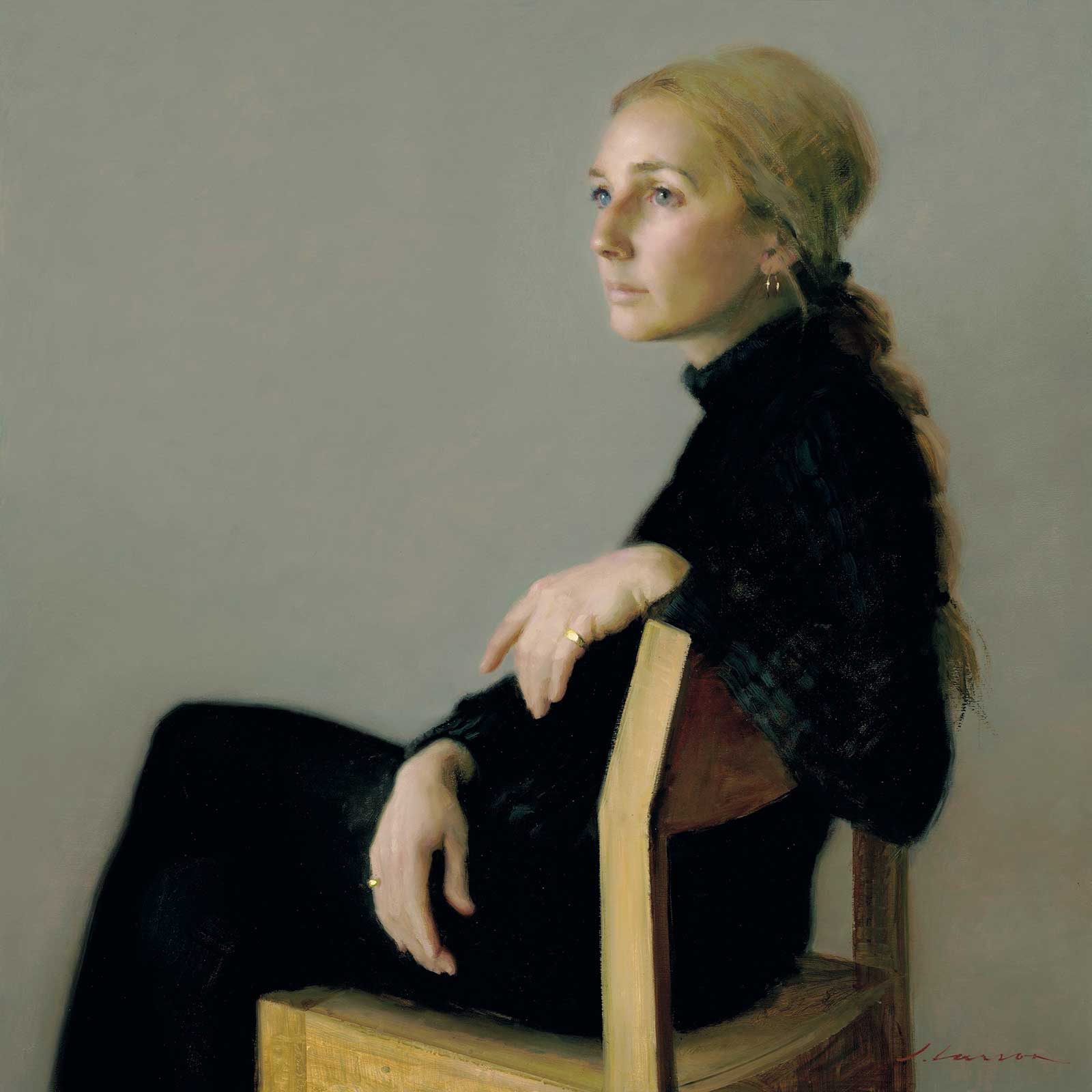
Jeffrey T. Larson, Sophia McCann, oil on linen, 36 x 36" (91 x 91 cm)
CE: Since winning the Draper Grand Prize, what have you been working on, and do you have any upcoming projects you would like to share?
JL: I was fortunate to come back home to a full schedule of interesting, outdoor figure commissions. I’m in the midst of working with models and cursing the clouds and rain as they mess up my days. Christine Egnoski is the executive director for the Portrait Society of America and has served in this position since the founding of the organization in February of 1998. In addition to writing for International Artist, she also provides occasional articles for American Art Collector. Passionate about portraiture? She can be reached at christine@portraitsociety.org.—