“The New Face of the Old West”—it’s a time that no longer exists, merging with a time that is dynamic in its use of color, form, texture, space and light. “The West” as we know it from history no longer exists, but the West in this new age allows an opportunity to bring old and new to life. Whether landscape, wildlife or Western, my work is emotionally charged through color, light and contrast. My artistic endeavors are inspired by the history that’s right behind us, and of the cultures of our ancestors that lived on the very land we live today. My artistic expression lies in highlighting a timeless, symbolic and ambient West of old, to this new daring and vibrant era in which we live today.
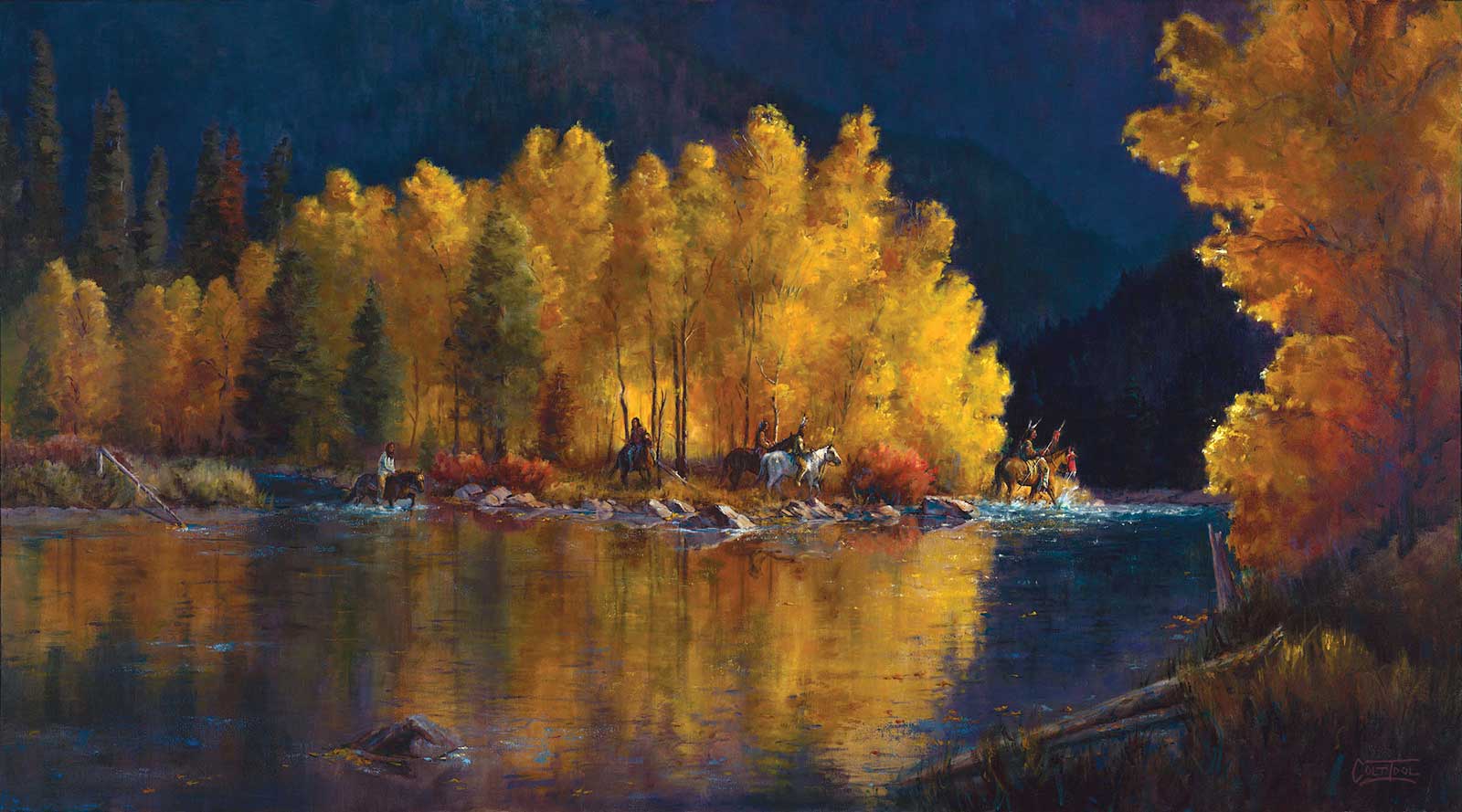
Riverwalkers, oil, 40 x 72" (101 x 182 cm) This painting from 2015 was a real breakthrough for me incorporating figures into a grand landscape for the first time.
The concept of color is extremely important in my work—exploring color usage, color gradients and color harmonies. In my work I typically try to incorporate exaggerated, saturated color as well as a strong sense/use of light and a high value contrast—color, light and contrast. Before beginning I like to pick out the predominant complementary color pair. In the case of this demonstration, that pair is green/red, both cool in temperature.
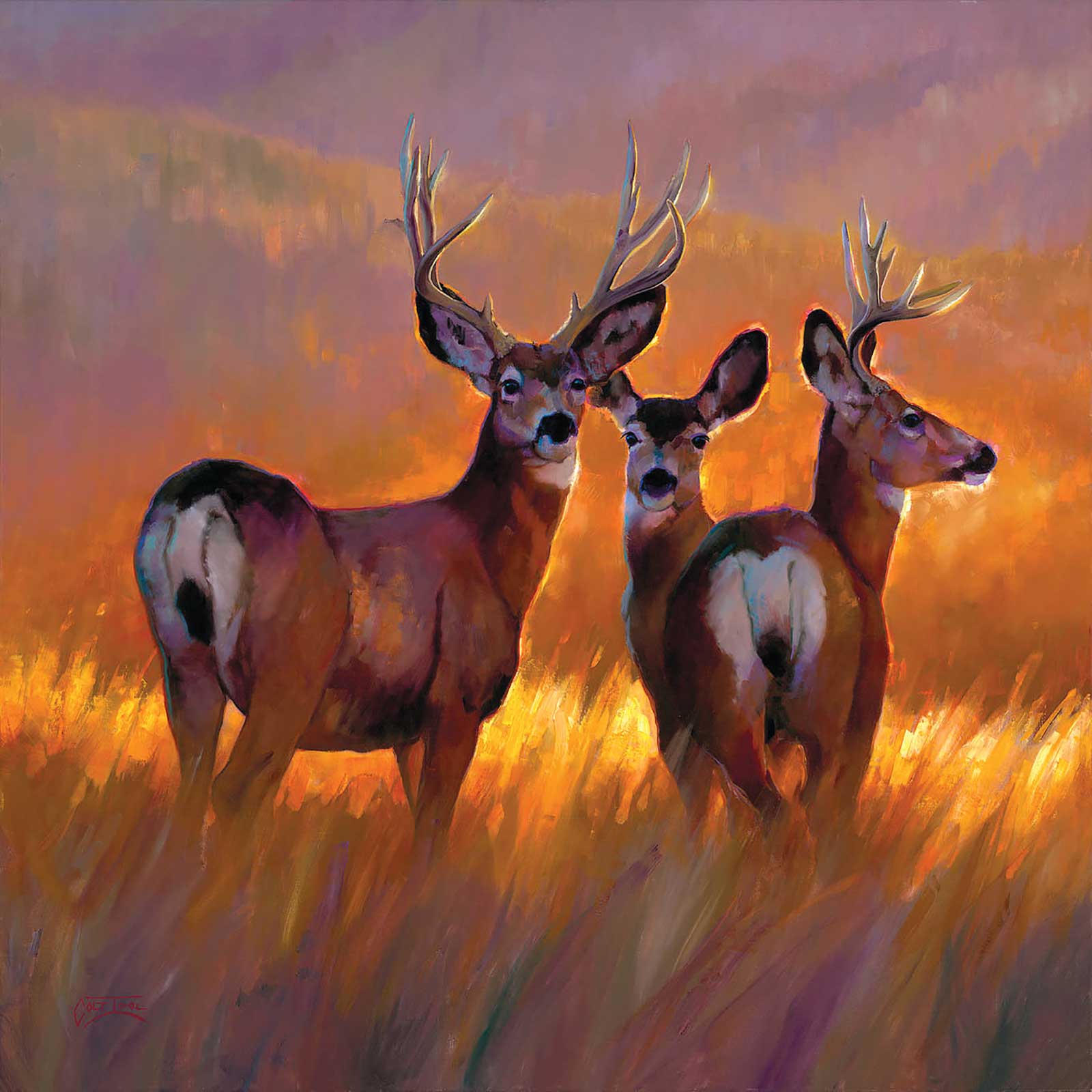
No Butts About It, oil, 48 x 48" (121 x 121 cm) This painting was in the National Museum of Wildlife Art’s Western Visions show and sale in 2022.
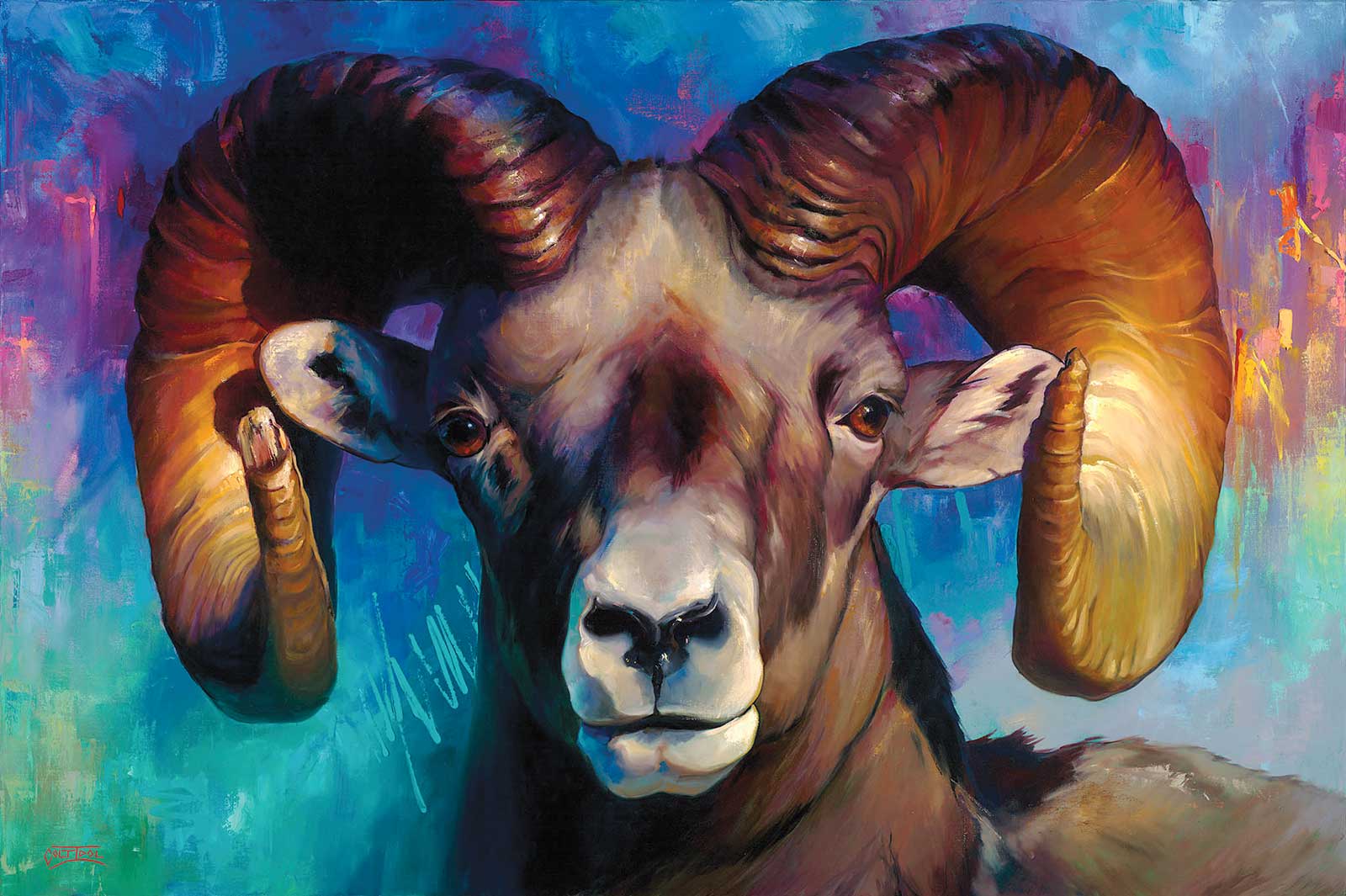
Tough Guy, oil, 40 x 60" (101 x 152 cm) I enjoy the juxtaposition of a realistic animal bust against the loose, colorful background.
I don’t limit a painting to one complementary pair in most cases, however, one pair typically presents as the most dominant. Color is an infinite yet delicate endeavor. Too much saturation and an entire painting can fall apart. Too little saturation and all the wonder can be lost. Your mixed color on the palette is like a swimming pool, if you start introducing things that don’t belong in the swimming pool it doesn’t take long before no one wants to be in the water. Your colors need to stay clean and harmonious. Within the context of your purposes, learn which colors preserve the colors they’re mixed with and which destroy them.
My Art in the Making Lasting Reflection
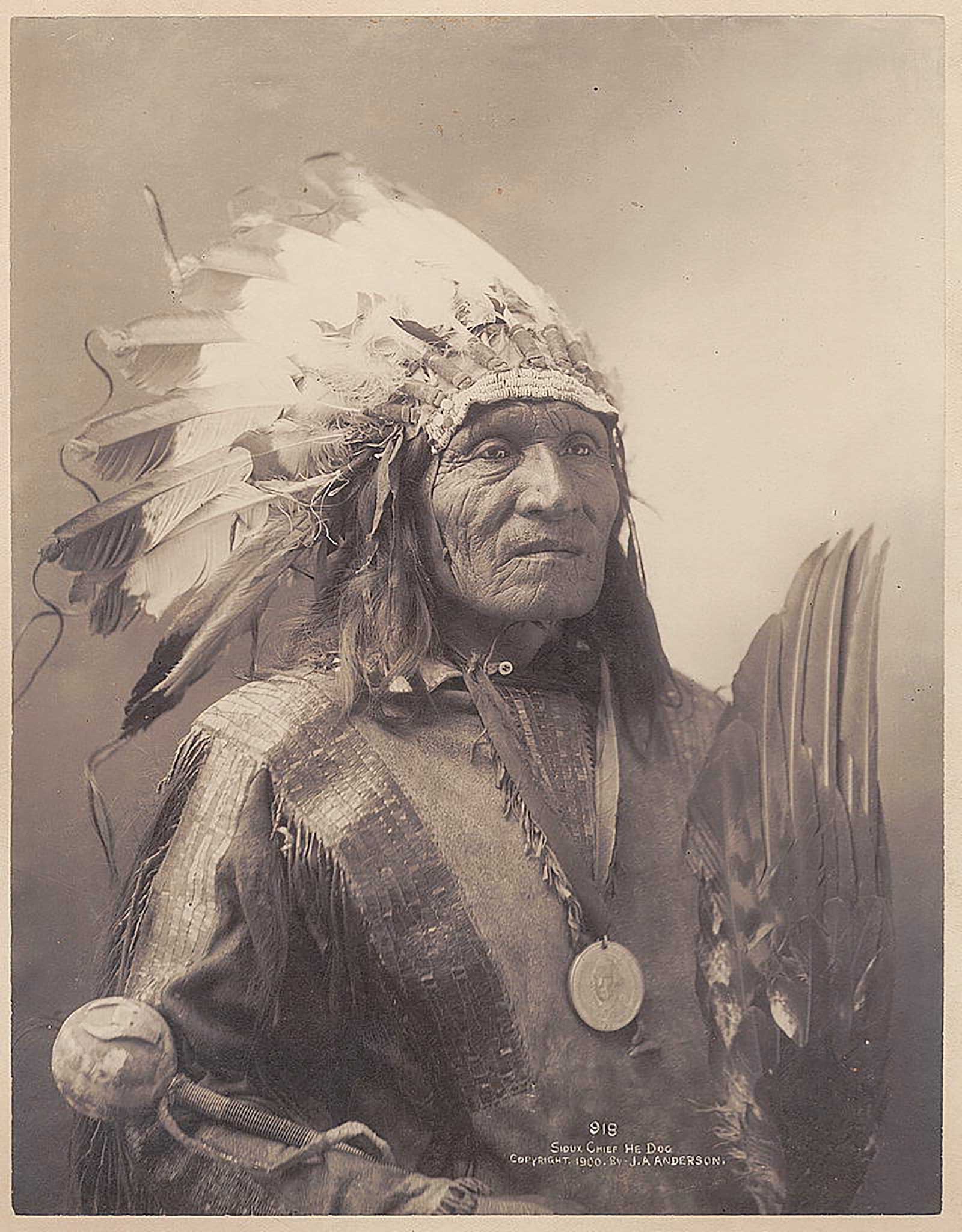
Reference Photo
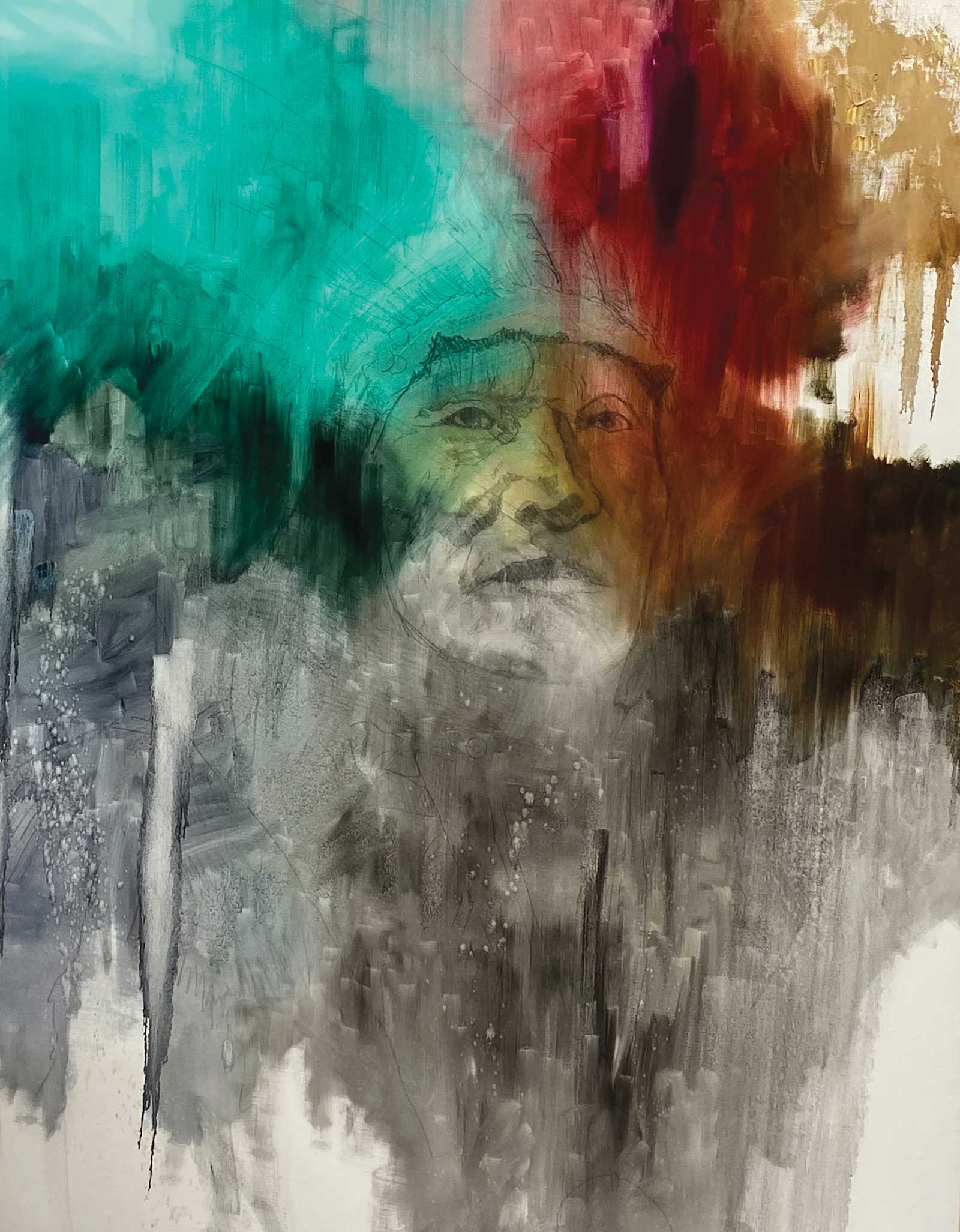 Stage 1
Stage 1 Drawing and Underpainting
In this picture I have drawn my subject on canvas and made it permanent with a spray fixative. Once the fixative is dry I can apply paint without it smearing my drawing. I’m using various colors as my under painting here. I’ll dip my brush in paint thinner and then in my mixed color before applying to canvas so that the paint is mostly transparent and moves easily. This is where some extra paint thinner applied to canvas can result in some fun dripping effects.
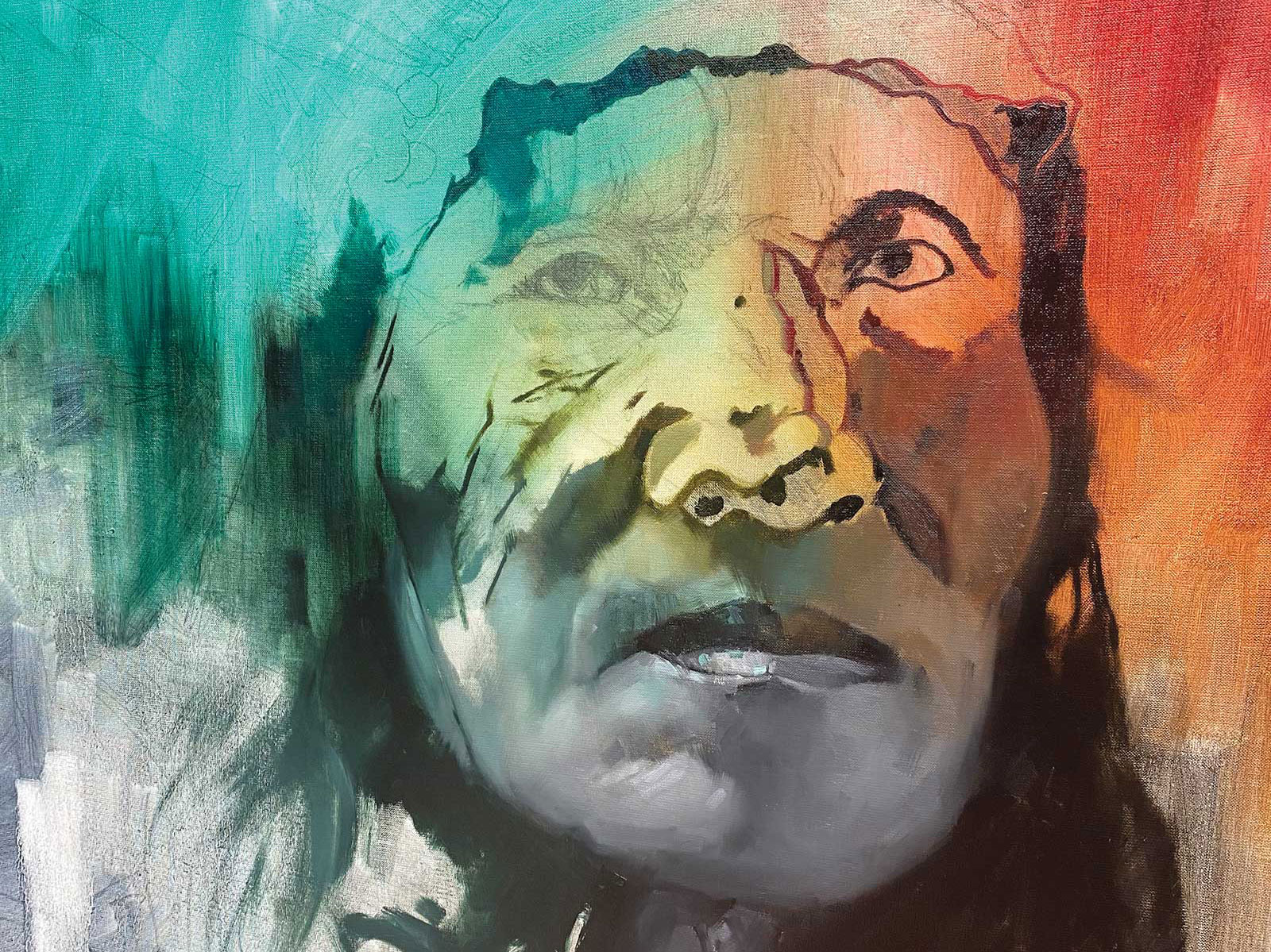 Stage 2
Stage 2 Blocking in the Face
I’ve begun blocking in the painting starting with the face. The lower half is mostly black and white. I’ve started in the chin area and am moving upward.
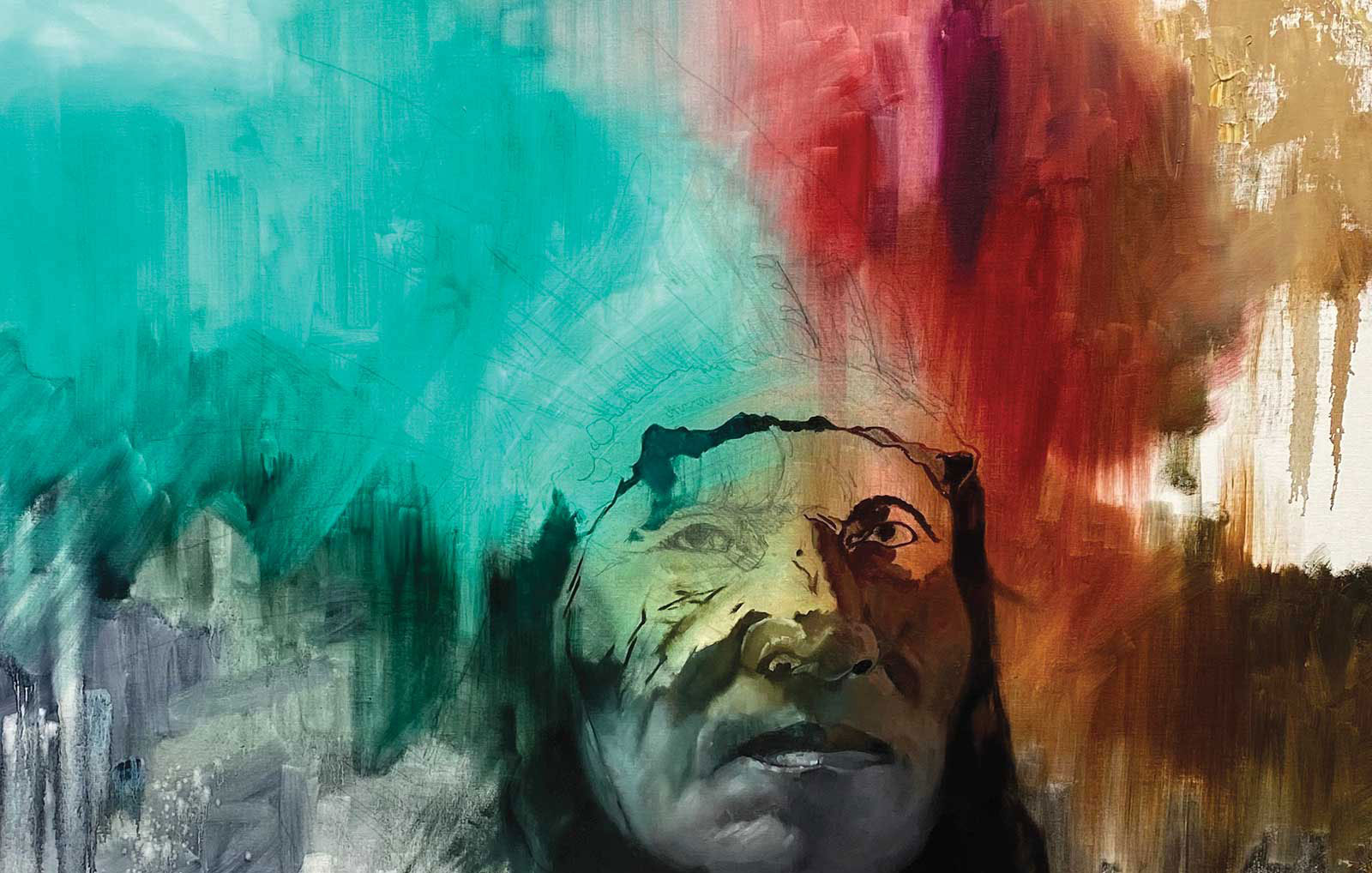 Stage 3
Stage 3 Color Transitions
As I move upward on the face I’m trying to move to new color areas, and I’m attempting to make the color transition as seamless as possible.
My Design and Composition Tactics
- High Value Contrast: Keep your darkest darks and lightest lights close to each other if possible. Limit the use of your lightest value and use near your focal point.
- When using bold color, try to avoid entering “fantasy land.” Keep your color bold, fun and exciting while remaining close to reality.
- The best way to achieve a strong, believable sense of light is through use of darks. If a painting is too high key it likely will feel washed out and not tethered to any real scene that the viewer identifies with.
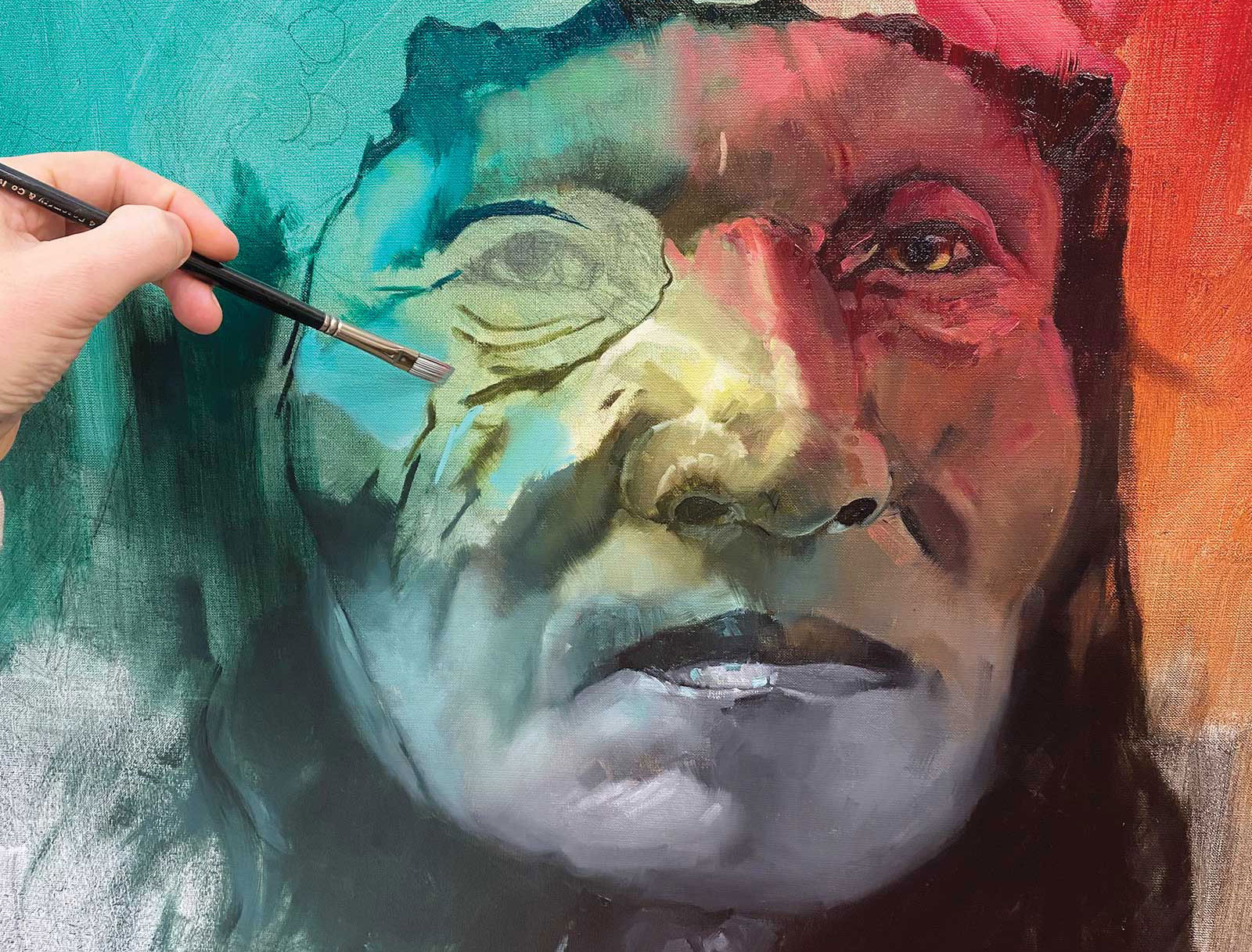 Stage 4
Stage 4 Balance of Detail and Looseness
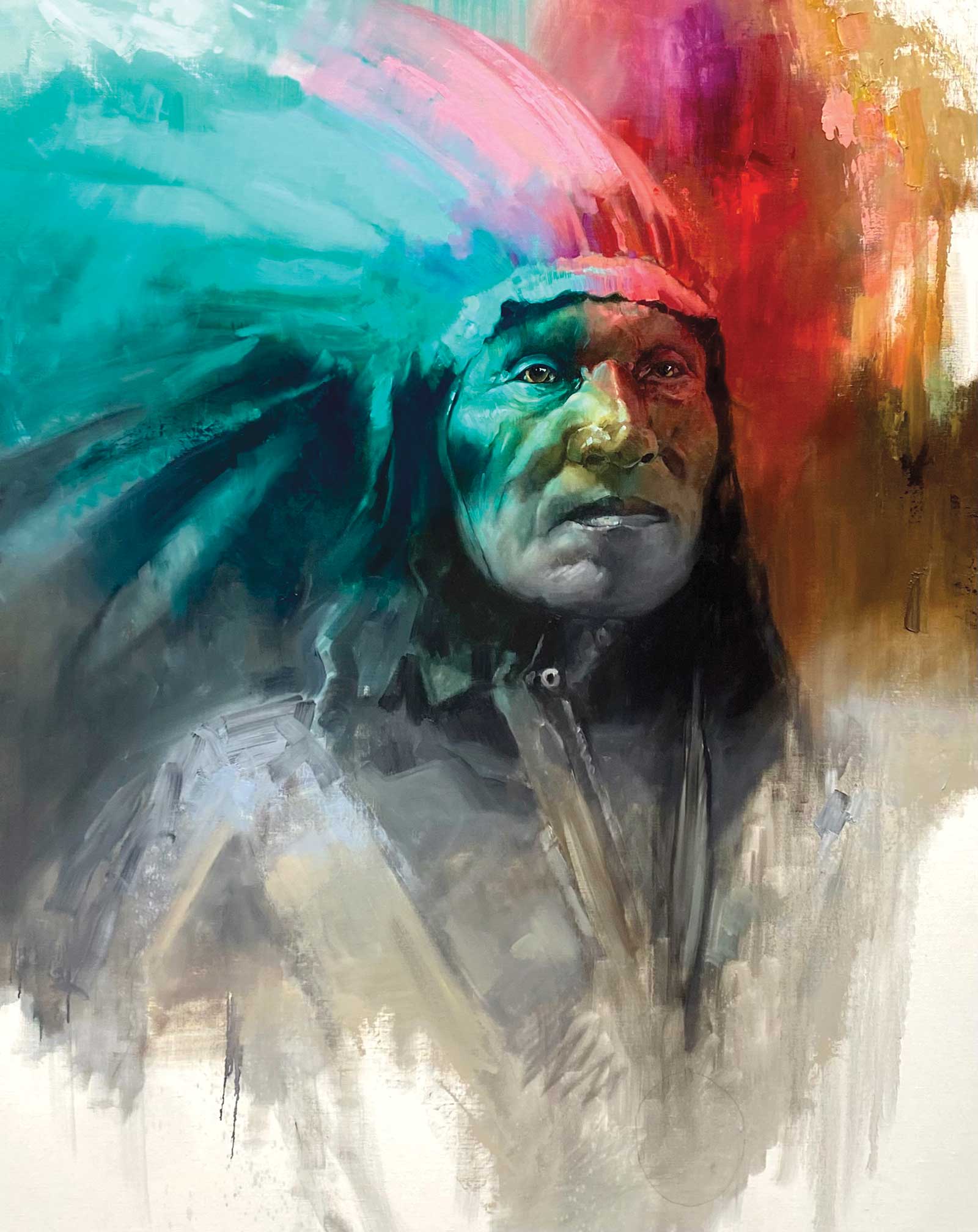
In this photo I’m using a size 4 Rosemary & Co. ivory flat brush. I want to put in as much information as I can while moving quickly. Often I find that when I spend too much time in a small area, I lose the overall “essence” of a painting.
 Stage 5
Stage 5 Taking a Break
This was my stopping point for day one. I was fortunate with this painting to have a lot of things come into place. Often, I can’t cover this much difference effectively in one day.
 Stage 6
Stage 6 Continuing to Apply Paint
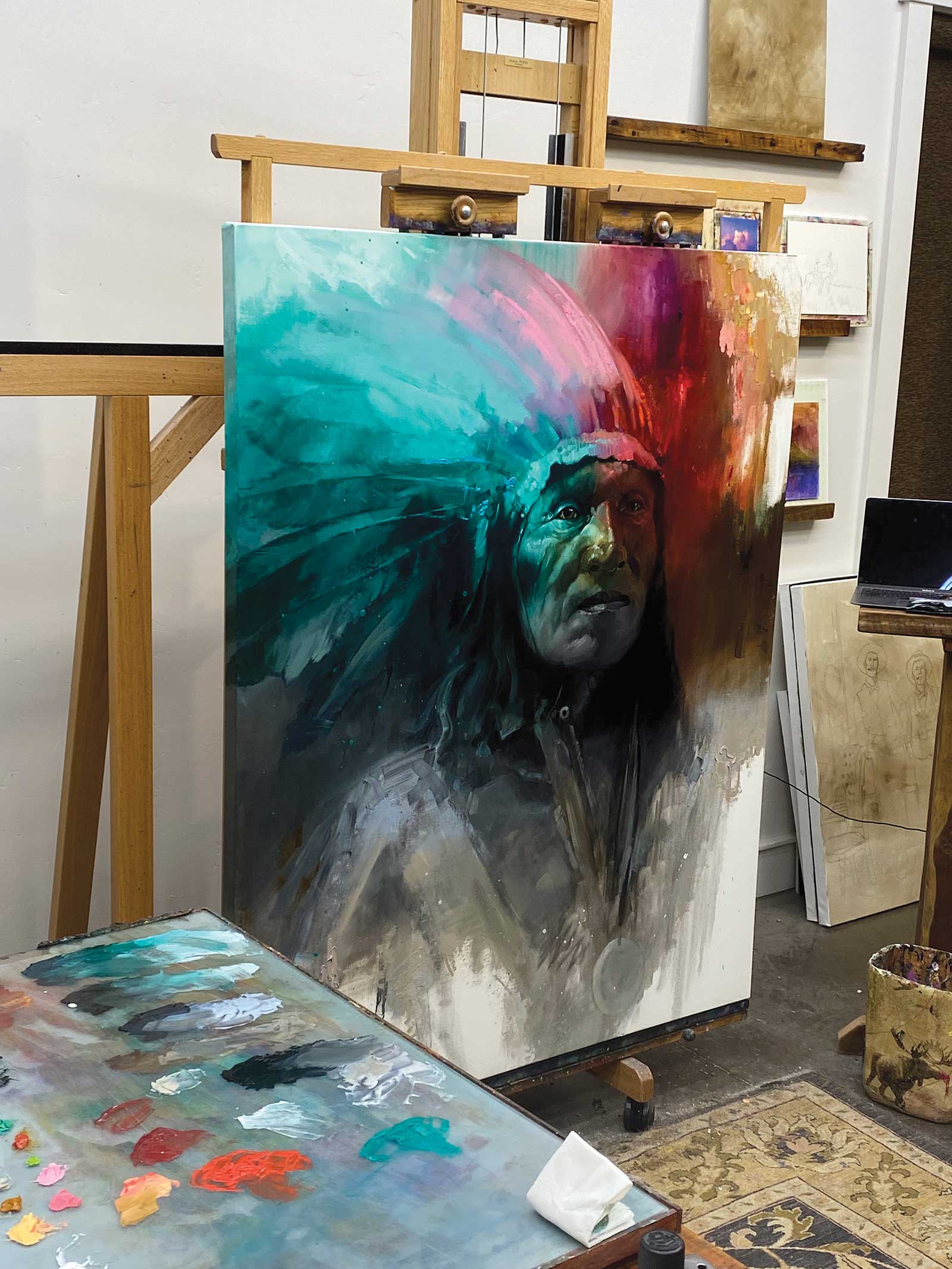
By the end of day two, I’ve further developed the feathers in the headdress, the hair and shoulder/neck area and introduced more palette knife paint, paint splatter and out of the tube directly applied paint. Side note: paint applied to the canvas straight out of the tube can be wet to the touch for over a month! This is the painting from a side profile on my easel.
 Stage 7
Stage 7 Stepping Back for Clarity
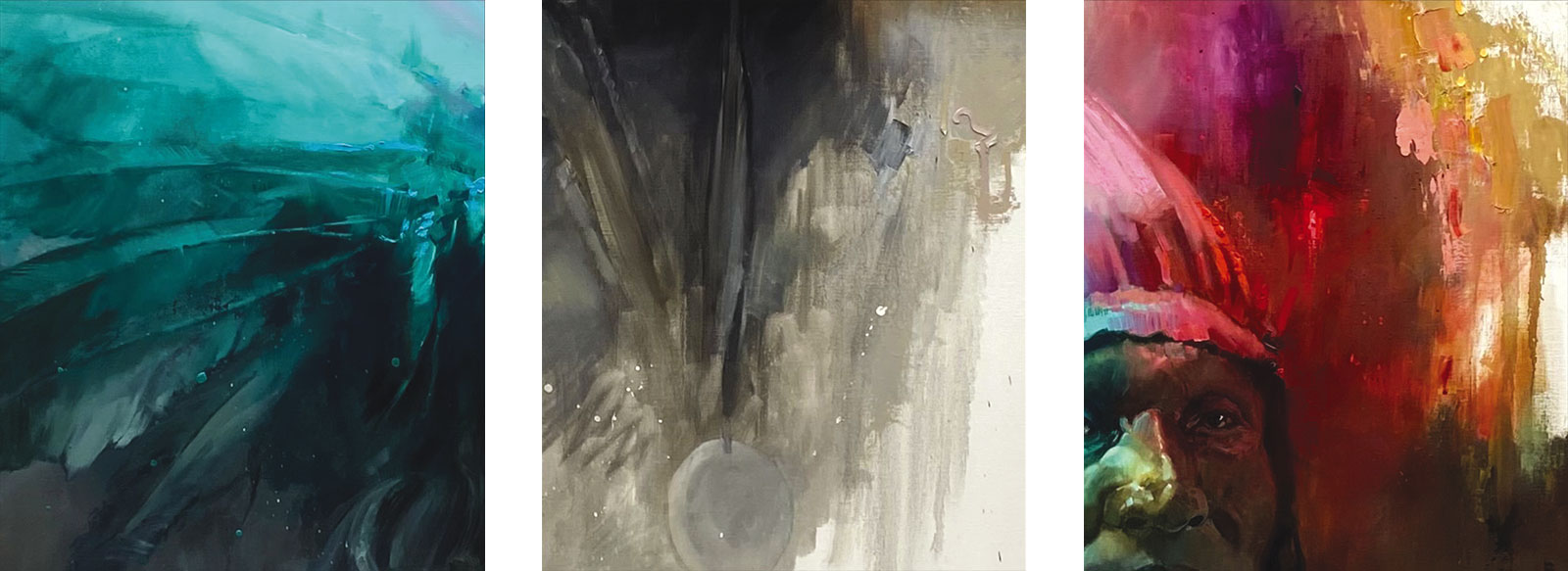
This is another image from the end of day two, looking at various aspects of the painting and making little adjustments as needed.
 Stage 8
Stage 8 Finished Artwork
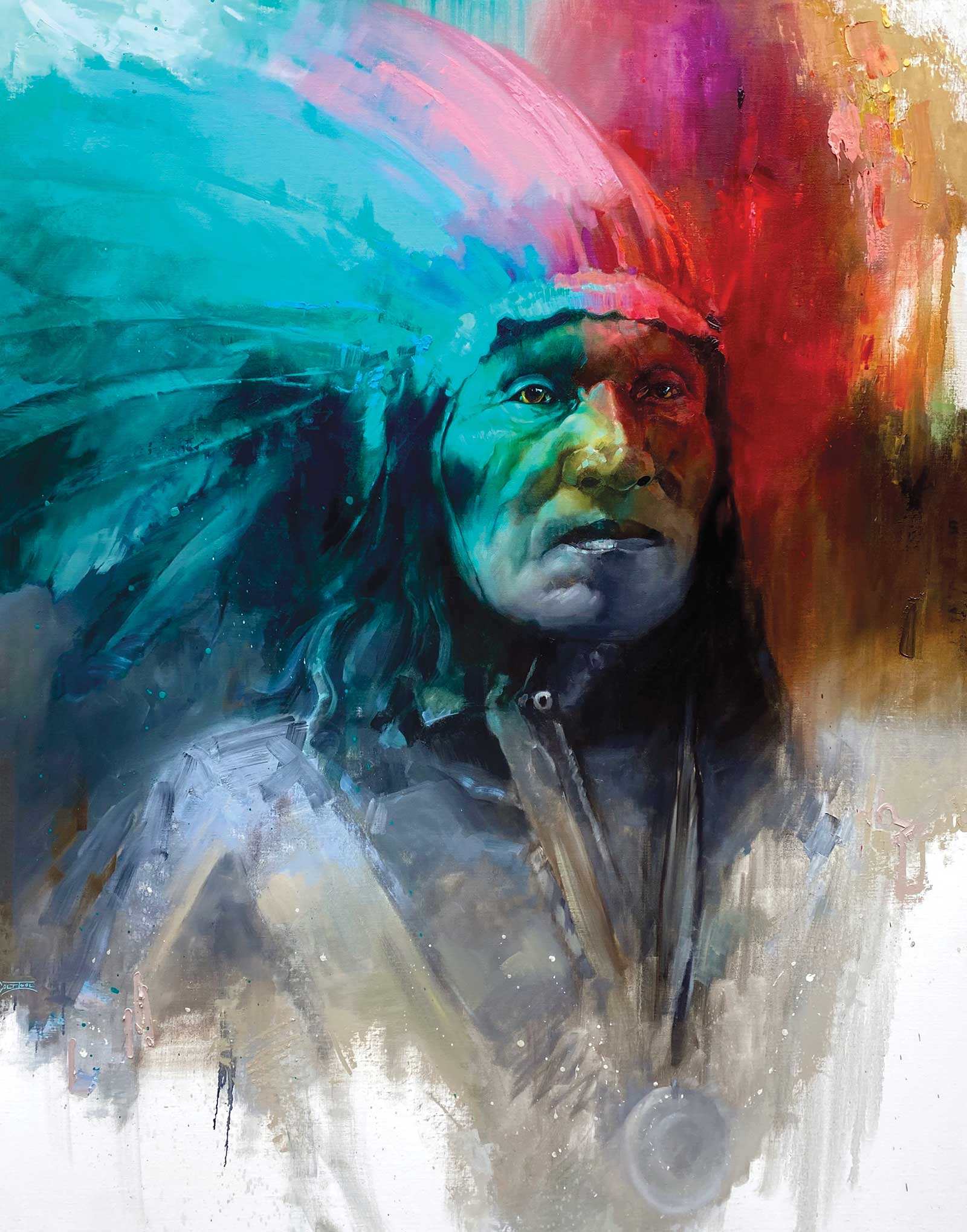
Lasting Reflection, oil on canvas, 60 x 48" (152 x 121 cm)
This is an image of a completed painting. I’ve worked on it for three separate settings, and I’m ready to call it done!
About the artist
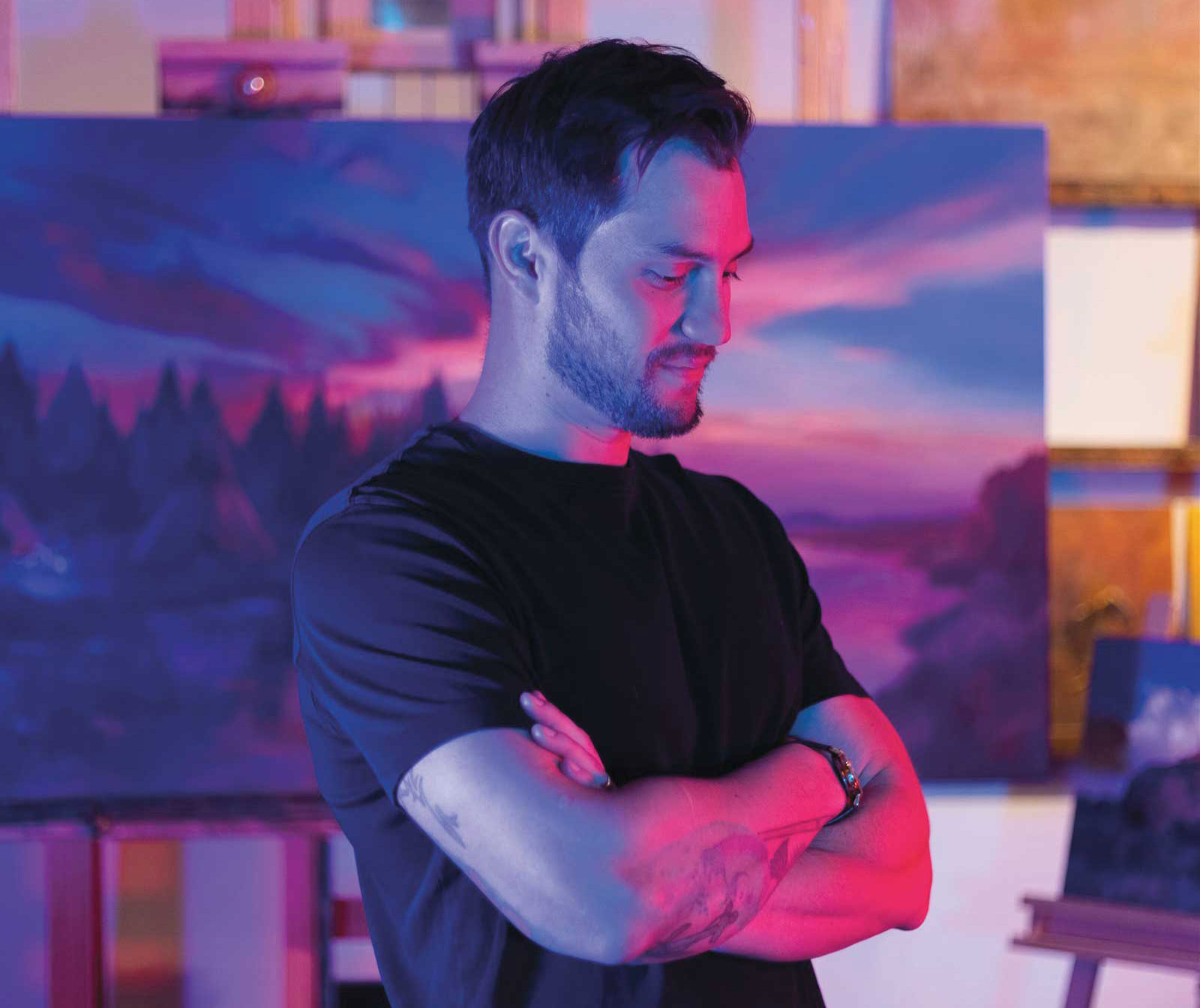 Colt Idol
Lifetime Montana resident Colt Idol has always been enamored with “the West” and all that it represents. After an injury-plagued high school and collegiate basketball career, Idol decided to pursue art full time. With the guidance of his father, Dick Idol, he was able to develop his abilities and advance his knowledge of art. He had undoubtedly found his passion. The artist lives in Whitefish, Montana, with his wife Jennifer, their young son and infant daughter. Idol exhibits his work in galleries and auctions throughout the western United States. He is represented by Legacy Gallery in New Mexico, Mountain Trails Galleries in Utah and Wyoming, Coeur d’Alene Galleries in Idaho, Settlers West Galleries in Arizona, as well as Dick Idol Signature Gallery, Beartooth Gallery, Illume Gallery West and Cassens Fine Art, all located in Montana. He has shown his work at the National Museum of Wildlife Art’s Western Visions show and auction, the Scottsdale Art Auction, the C.M. Russell Museum’s The Russell Live Auction and the March in Montana auction.
Contact at
coltidolart.com