As a self-taught artist my process and philosophy continue to evolve, but I feel like the core of my approach to painting has always been simplification. In content, in materials—in all things, I suppose (or at least I aspire to bring this into my external life as well). In a nutshell, my goal when painting is generally to do as much as I can with as few materials as possible.
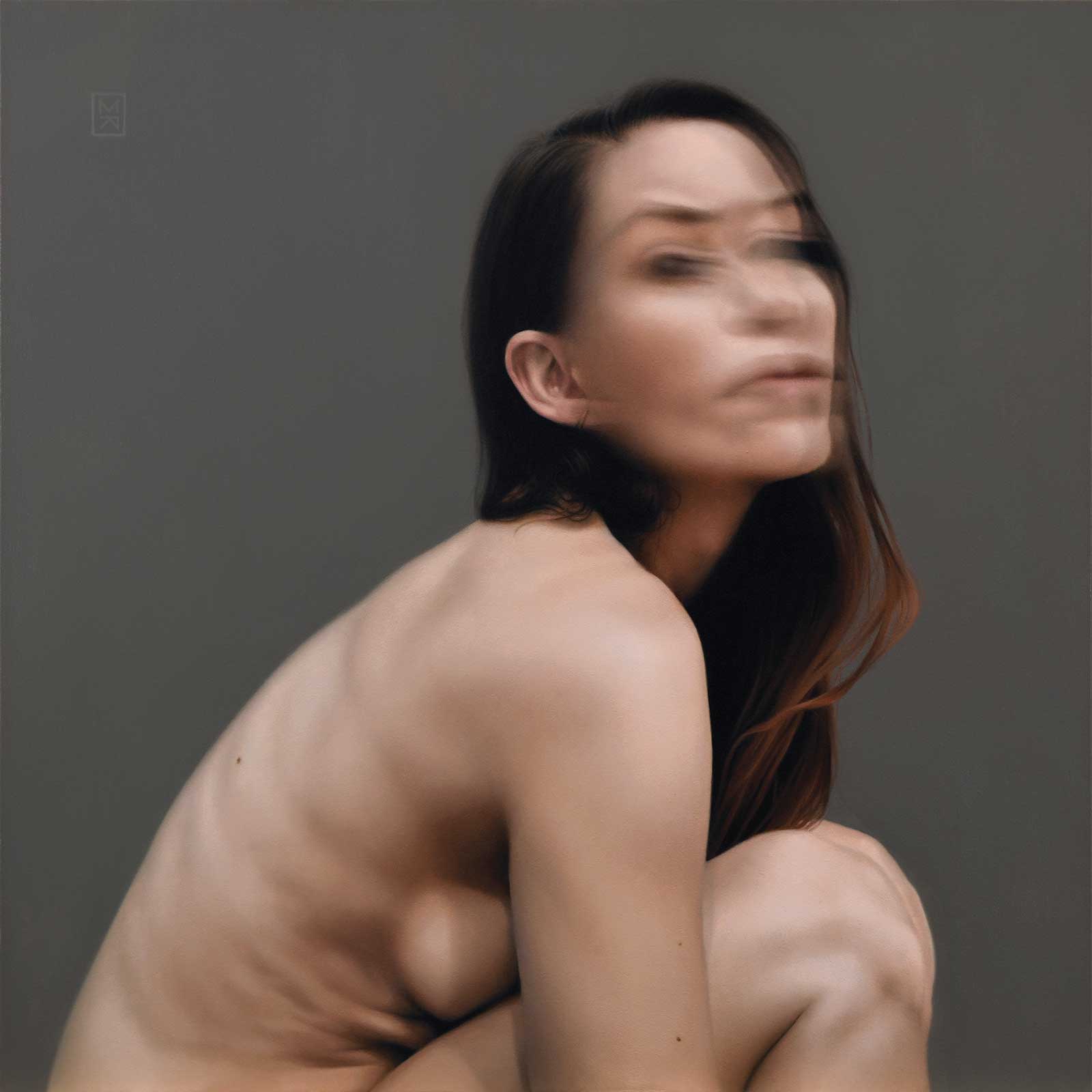
Bubble, oil on panel, 12 x 12" (30 x 30 cm) This painting was part of a small solo show entitled ‘Fast and Slow’ that I began working on during the pandemic and the pieces were meant to encapsulate the boredom, drama, and pace of that period. For this I moved away from the chiaroscuro and went with a lighter palette, while still sticking with my usual 5 colors.
In a way this technical approach mirrors the scenes and spaces in the works themselves. They often feel to me almost like sensory deprivation chambers of sorts. Spaces where the noise and chaos are somehow held at bay. And all that is left is the heart of the matter. And I like the process to reflect that.
The first thing I do for any painting is take lots of photos. It is in photographing and then experimenting with those images that I begin to understand my compositions completely. Many of my paintings are woven together from a number of photos, and a bit of my imagination. Although I like to draw as well, I tend to “sketch” on paper very rarely, and I do most of my sketching and experimenting in Photoshop.
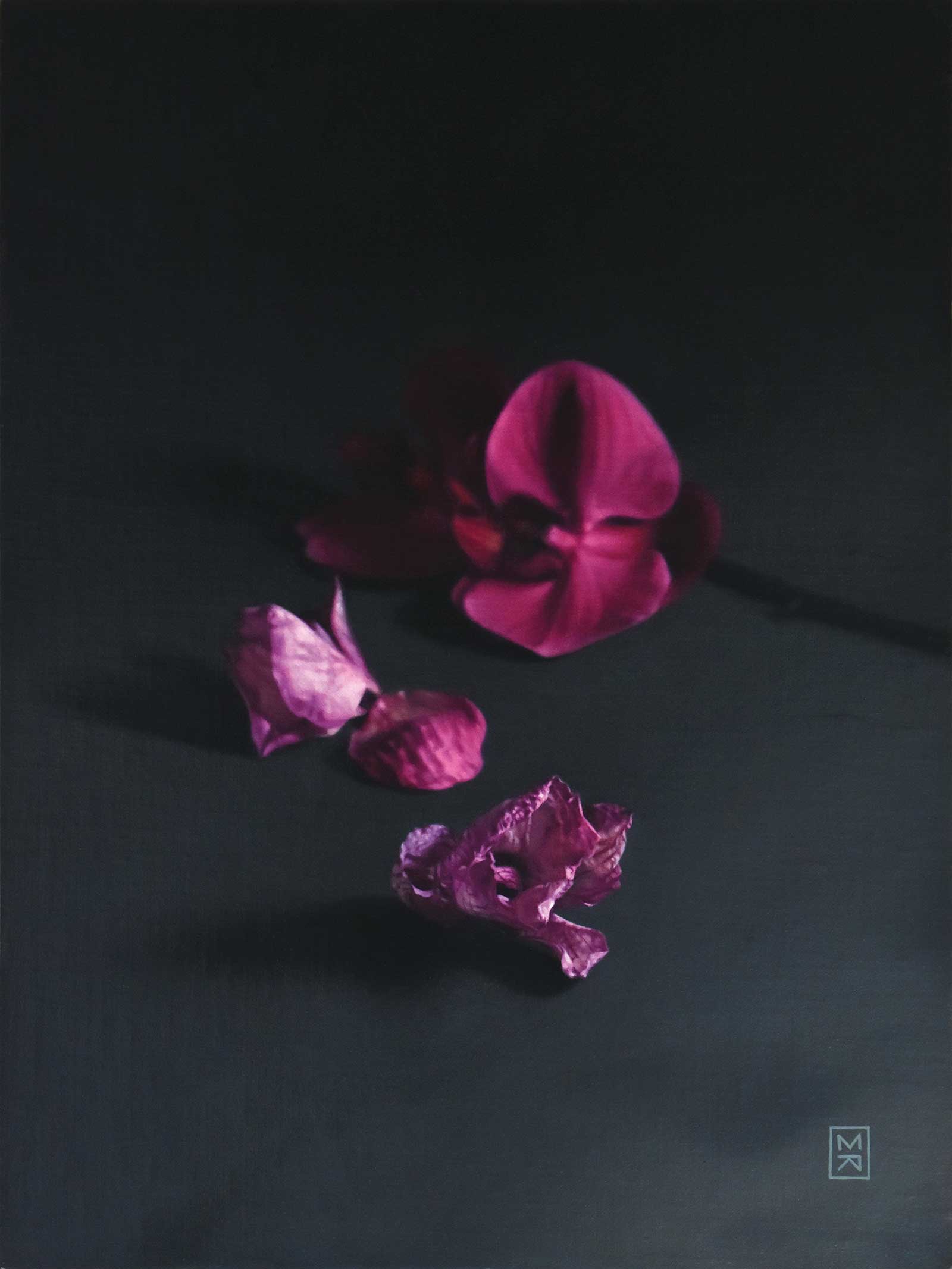
Domani e Domani, oil on linen, 12 x 9" (30 x 22 cm) Here I really wanted to highlight the contrast between the smooth, vibrant flower in the background and the dry, wrinkled flower in the foreground and I went ahead and exaggerated the depth of field to expand on this contrast and bring the focus almost fully to the one in foreground. In addition to my usual small palette I added ultramarine blue.
Once I have my overall, if rough, mockup, I transfer my image in charcoal to my surface (usually a super fine linen) before I begin painting. This can happen with a grid, or by sketching out the image and then creating a transfer from that, or even simply creating a transfer from the photos themselves. These transfers are never particularly detailed. Just enough to save me the time of recreating all the larger, most basic shapes as I go along so I can focus on the transitions and surface quality, which are incredibly important to me.
Next, I tend to mix as many colors as I think I’ll need before I even start. If there is a single small area that I know I can mix on the spot as a one-off I’ll skip it, but I make sure I have color strings of all the main hues/values I’ll need ready to go, especially if there are large areas to cover. This can be wasteful, but for me it means I don’t get lazy and try to use another color that I already have mixed for something similar instead of respecting the slight differences. I find this laziness is easier to avoid when I have most of what I might need already mixed and at my fingertips. But despite this preparation, I usually still use an incredibly limited palette and try to push the colors in as many directions as possible, relying on subtle shifts in temperature and value to carry the piece—nuances that might even go fully unnoticed in a work that was busier or had a more complex palette.
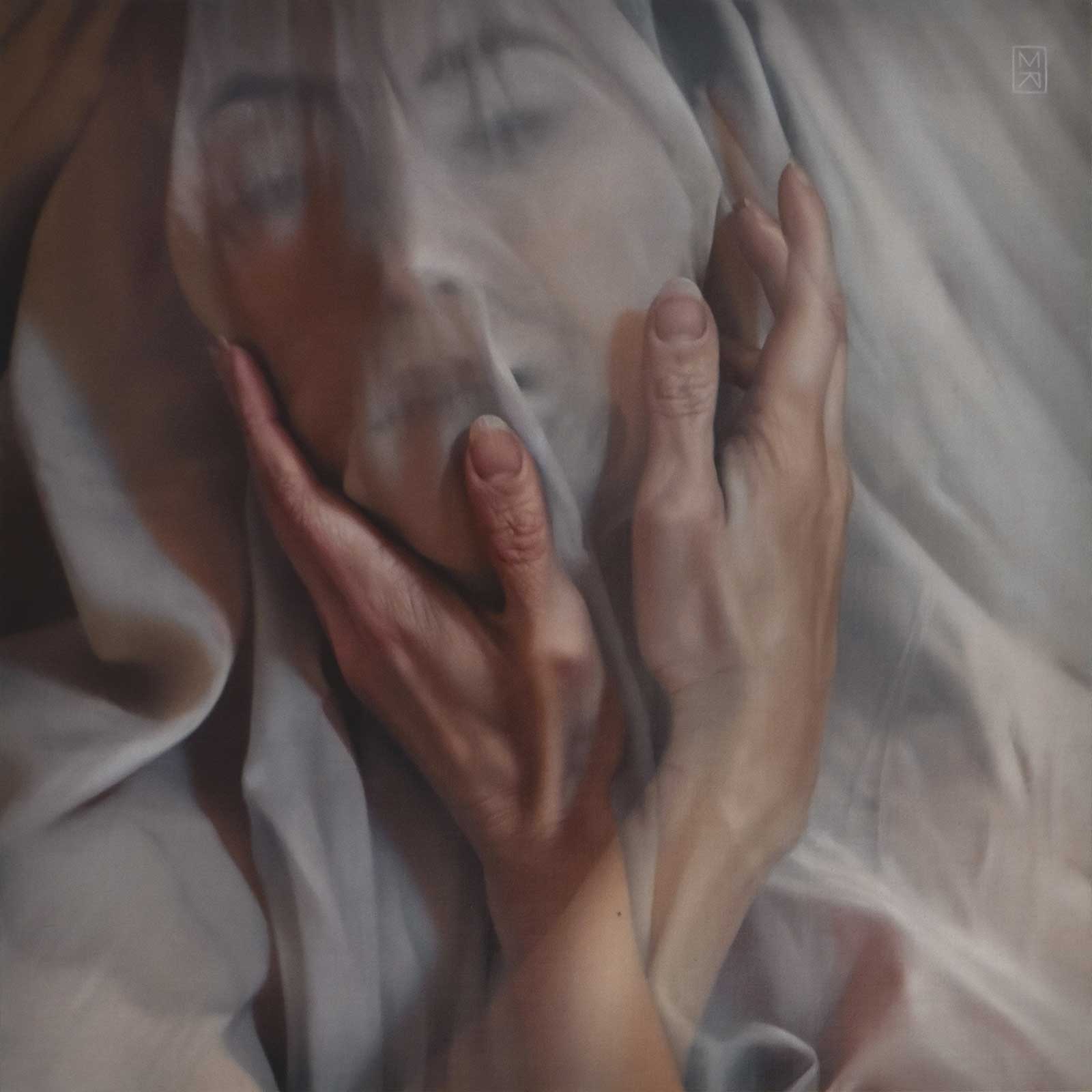
Emergence, oil on linen, 12 x 12" (30 x 30 cm) When creating these paintings with overlays and multiple versions of the self I first take a number of photos with slight variations and then stitch them together in Photoshop to create a final reference. That was the process for this painting and, despite the transparent look of the one hand and arm, it allows me to paint the full painting directly. This painting was done in one layer and I believe the only adjustments were a few small highlights on the fabric and perhaps a tiny bit of glazing in the warm shadow areas.
Finally, I tend to work in contiguous areas so things are not drying while I am jumping back and forth. It helps me to create the smoothest transitions if I can get them in while everything is wet so I am often working against the clock, moving across the surface, and painting the majority alla prima. It’s a push and pull between taking the time to be as specific and careful as possible, while trying to move across the painting as quickly as possible. It’s also about being strategic about what areas can be sectioned off and completed on different days and which areas simply must be wet to complete in a manner I am satisfied with.
My Art in the Making Evanesce (or “The Comeback Kid”)
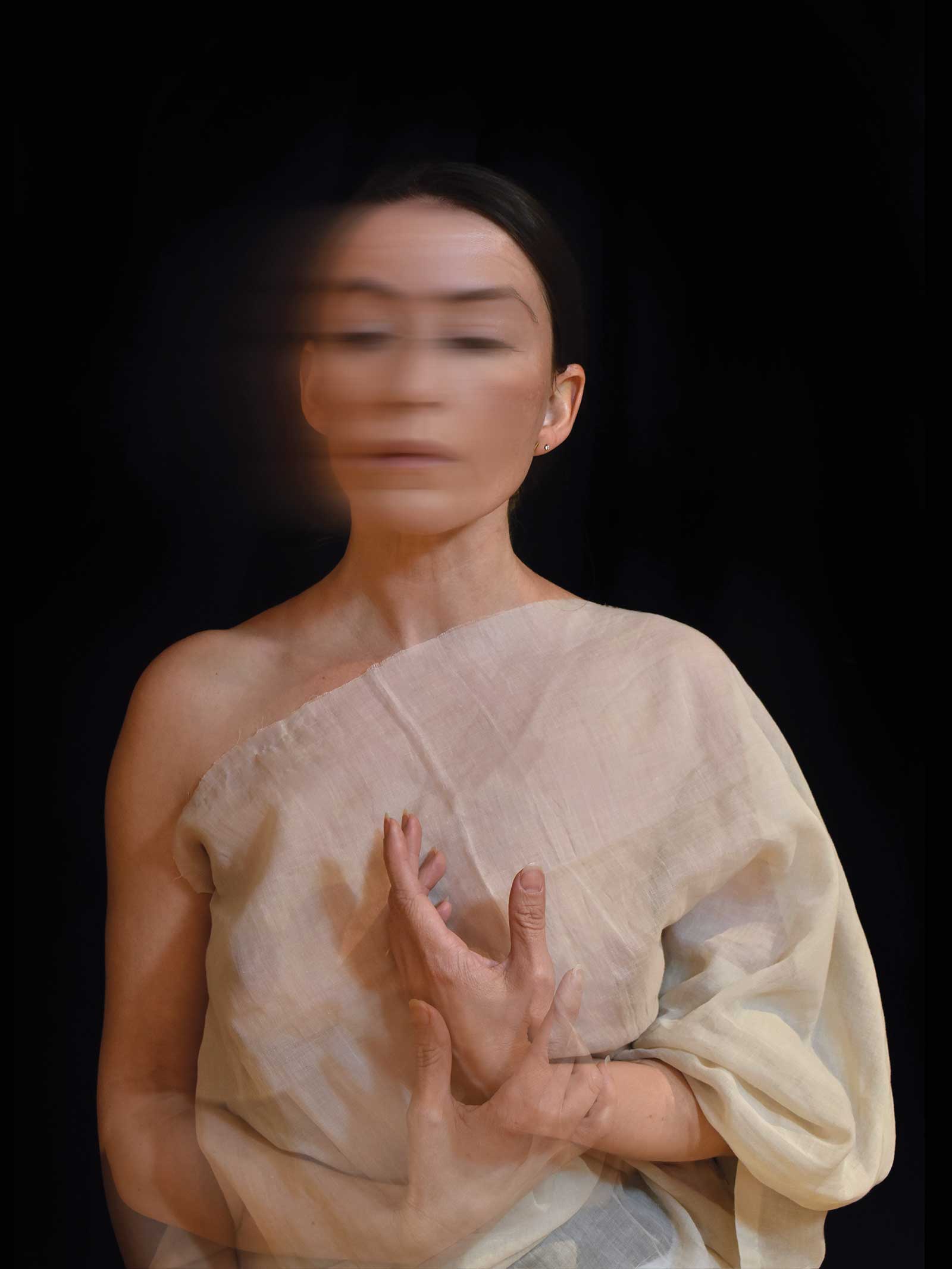
Reference Photo
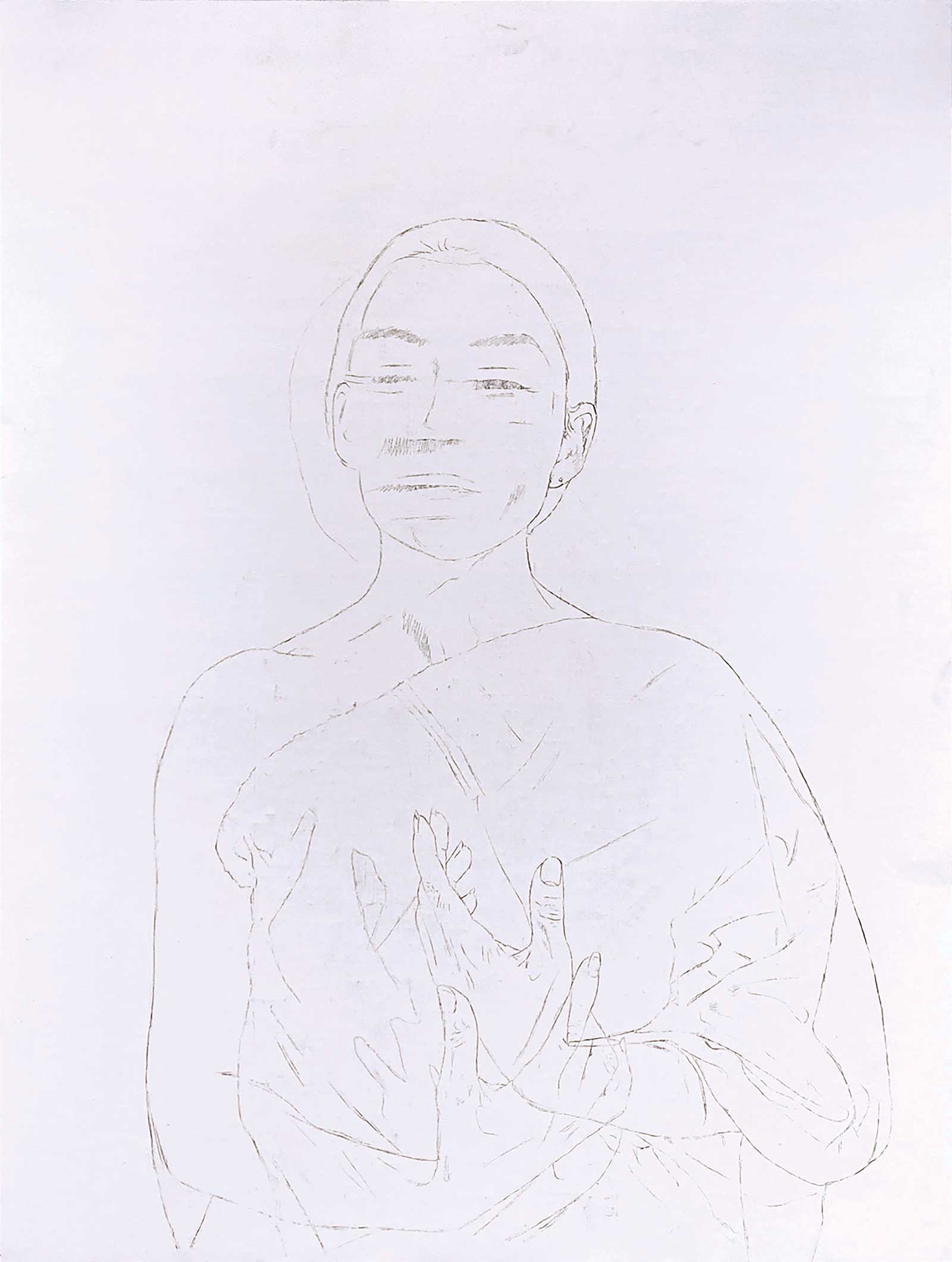 Stage 1
Stage 1 The Transfer
Charcoal is applied to the back of a large piece of paper, which is placed on the painting surface. The important lines are gone over with a sharp pencil.
WHAT THE ARTIST USED
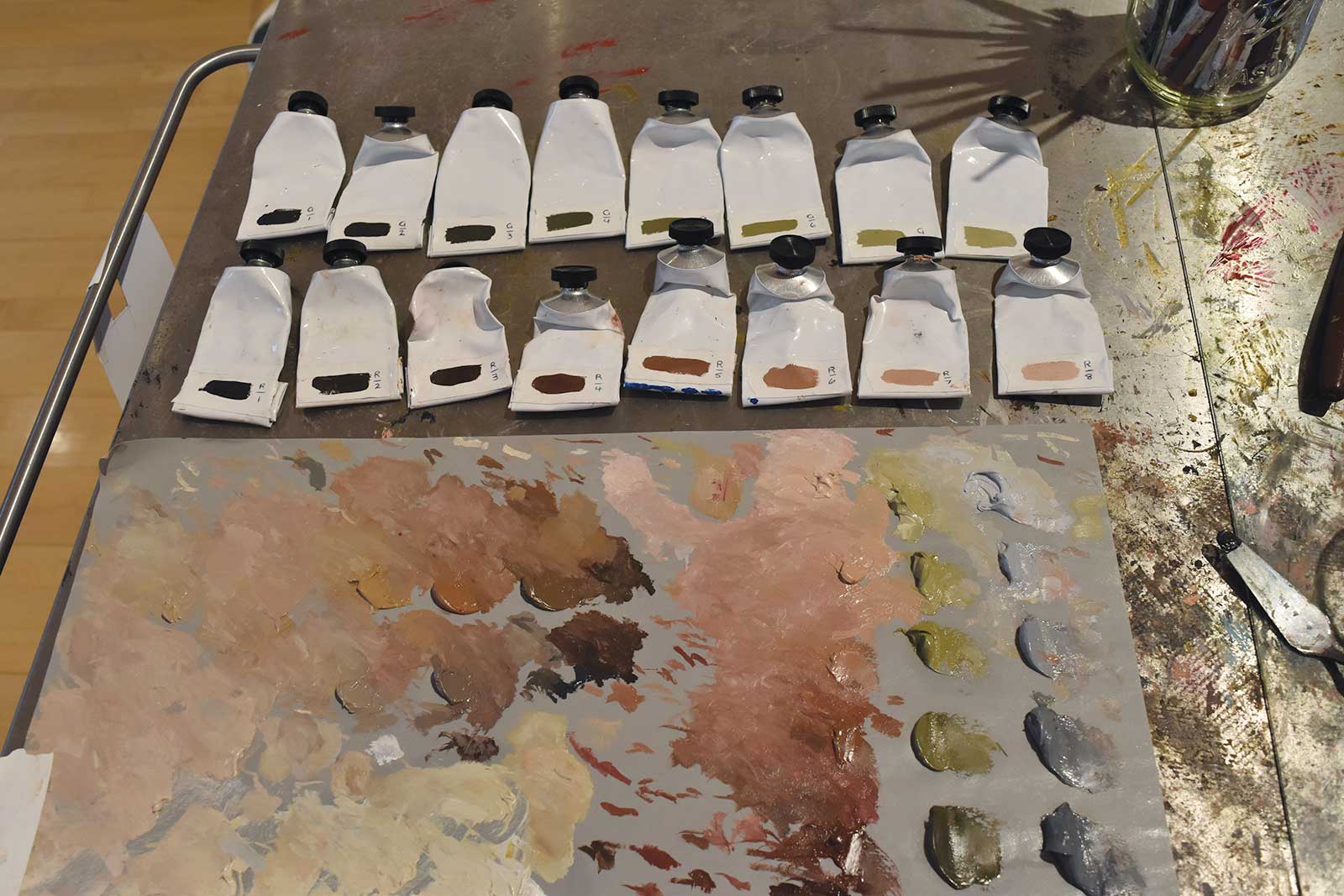
Oils
Mars black, Titanium white, Burnt umber, Yellow ochre, Quinacridone red
Brushes
A mix of rounds and filberts were used for the majority of the painting, and mops were used to help blend and rough edges.
Additional Materials
Charcoal, Raymar fine linen panel, Grey Matters palette paper, Palette knives, Painters tape, Linseed oil, Empty aluminum paint tubes to store mixes
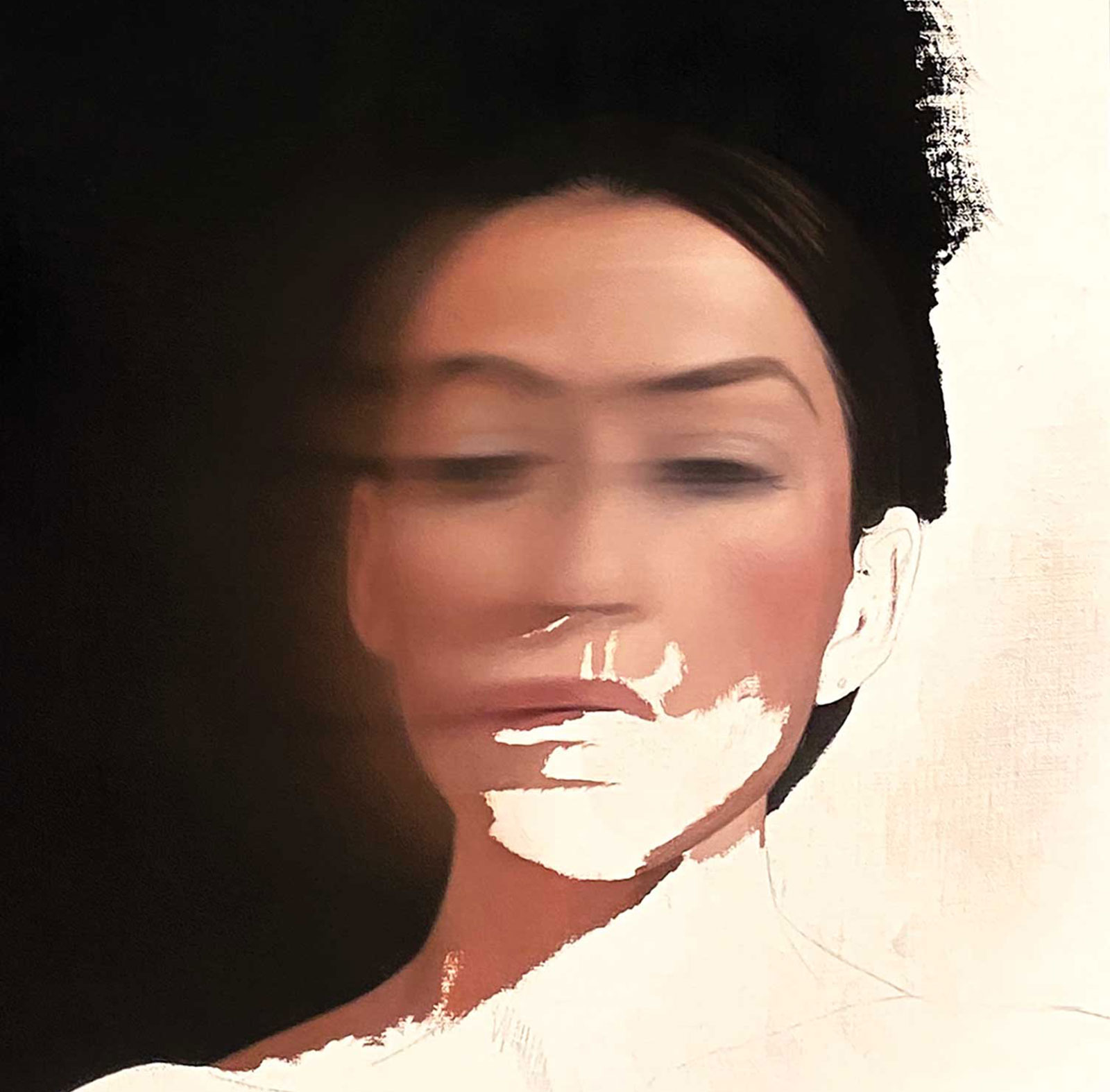 Stage 2
Stage 2 The Face
I added the background to the left hand side and top, and I began to render the face. Here you can see areas that are complete as well as ones that are just being laid in.
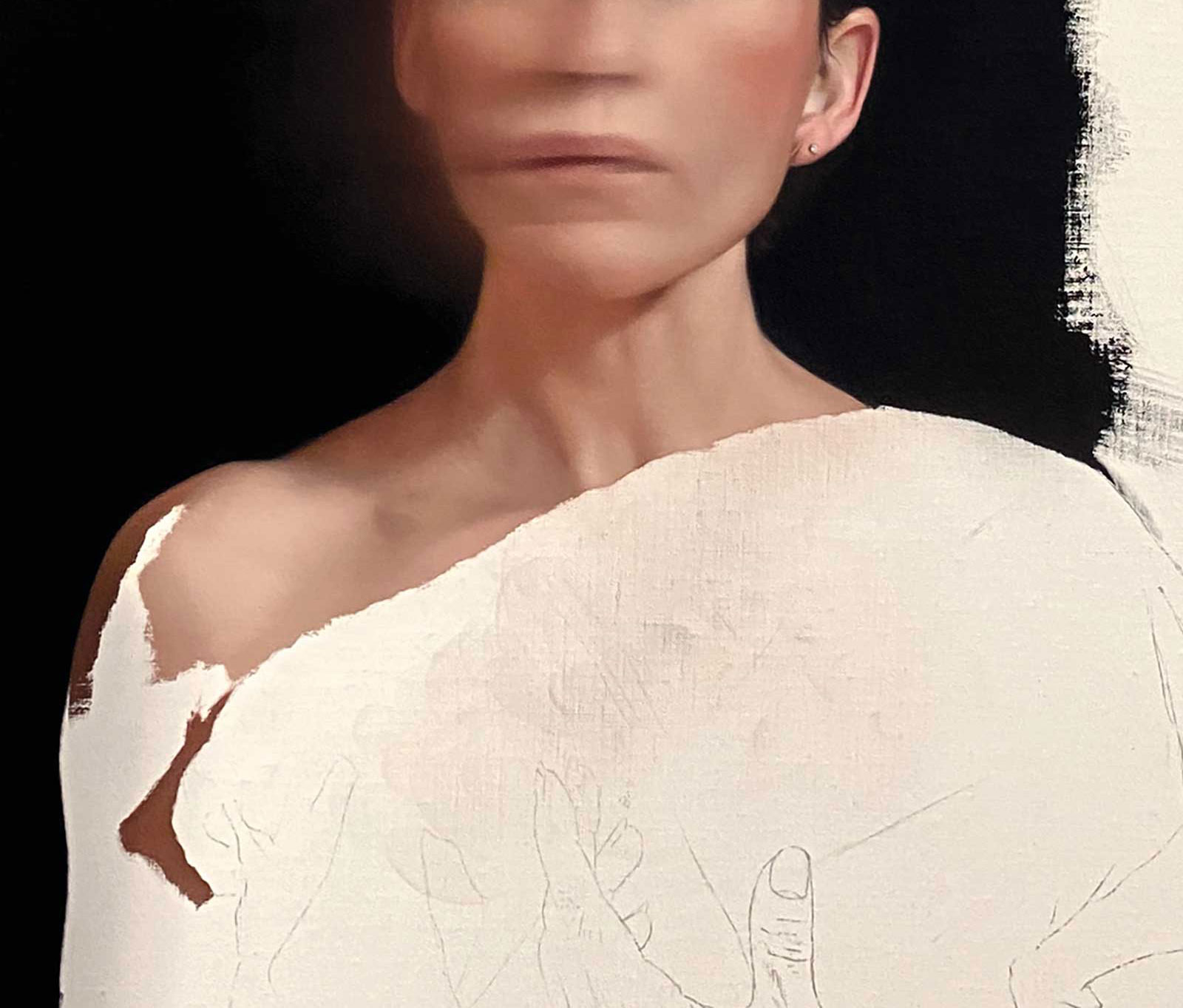 Stage 3
Stage 3 The Neck and Shoulders
While the paint is still wet I continued to move down the form and create smooth transitions. Most of the skin was painted directly with a light mopping to knock off edges where necessary.
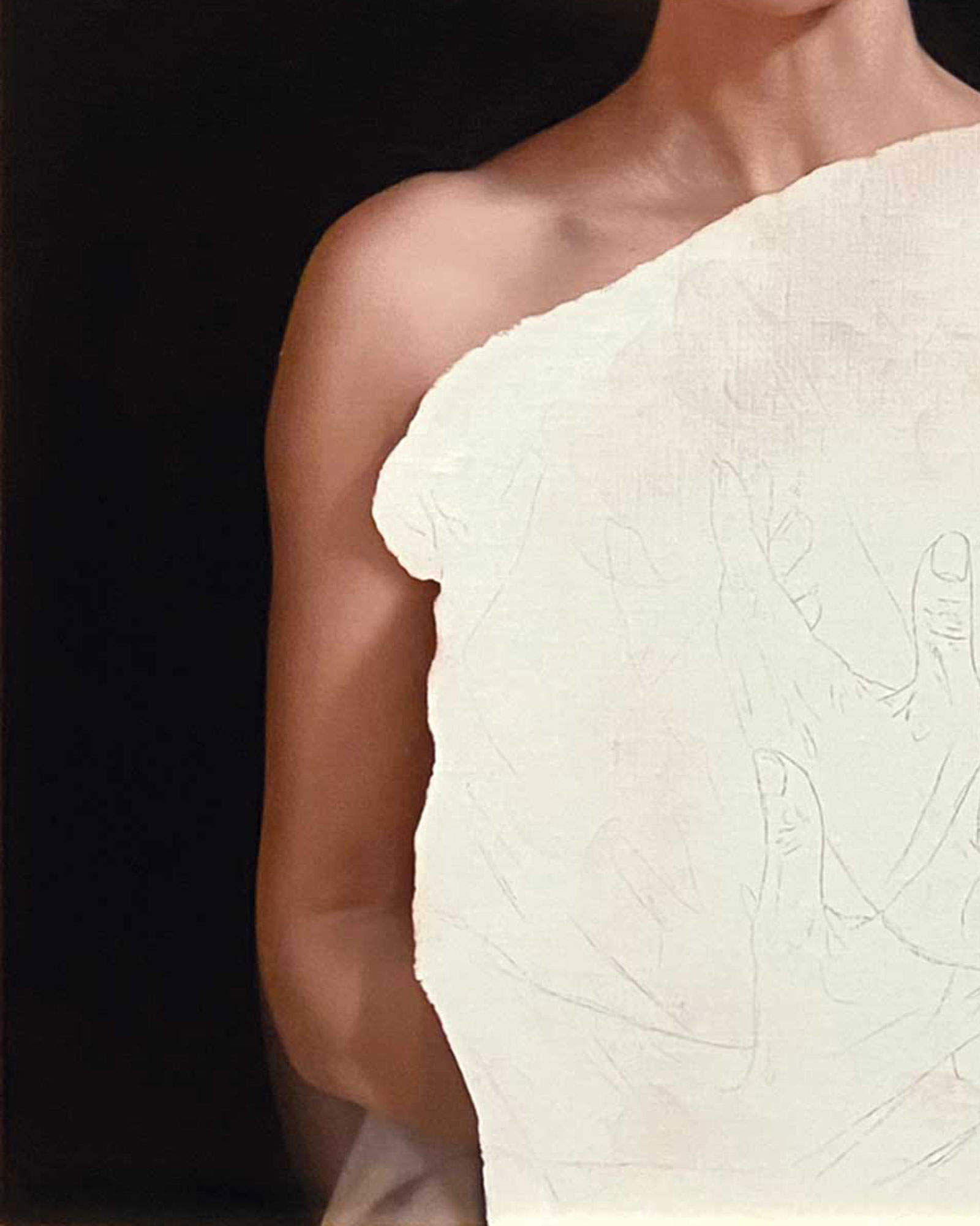 Stage 4
Stage 4 The Arms
I continued working down strategically, making sure to stop at a major transition in the image so that I wouldn’t have to work into/match paint in areas that should be smooth in another sitting.
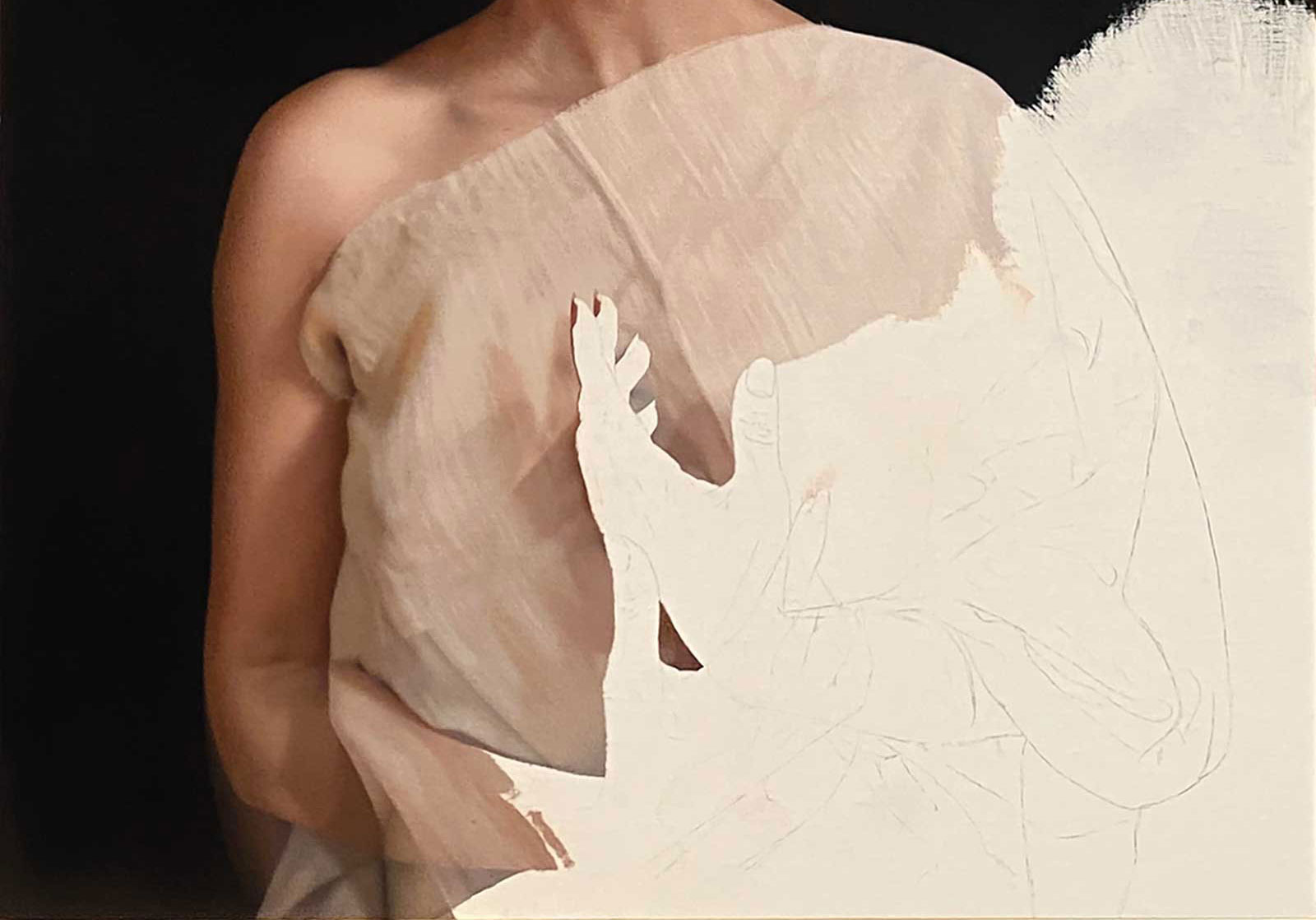 Stage 5
Stage 5 The Fabric
I mixed a new range of colors to add to my palette and began laying in the fabric in a very direct manner, being as conscious as possible about shifts in temperature and texture.
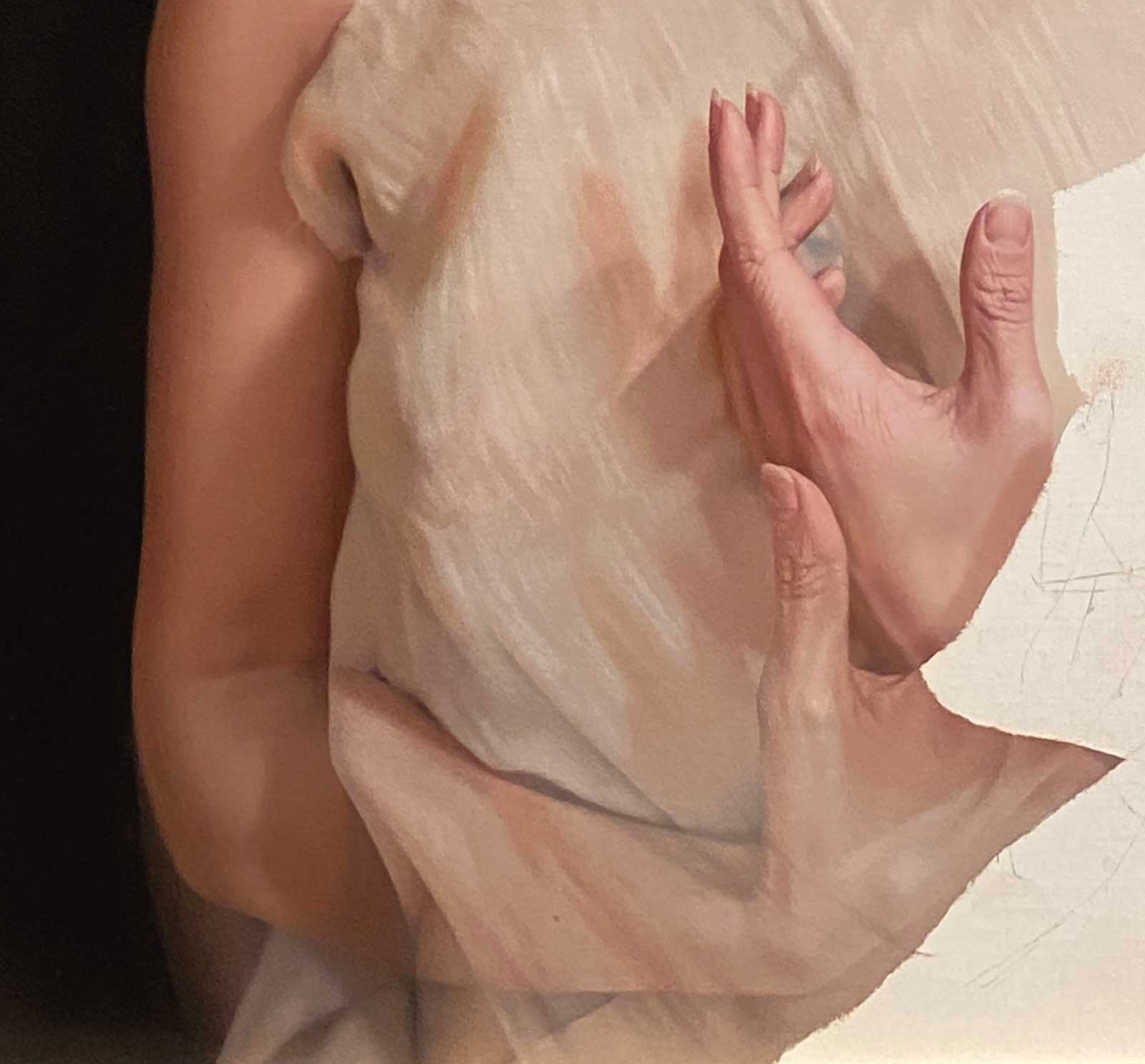 Stage 6
Stage 6 The Hands
I love painting hands, and the combination of solid and transparent ones here are very satisfying. Although people often assume my ghost images are overlaid, they are in fact painted directly like the rest.
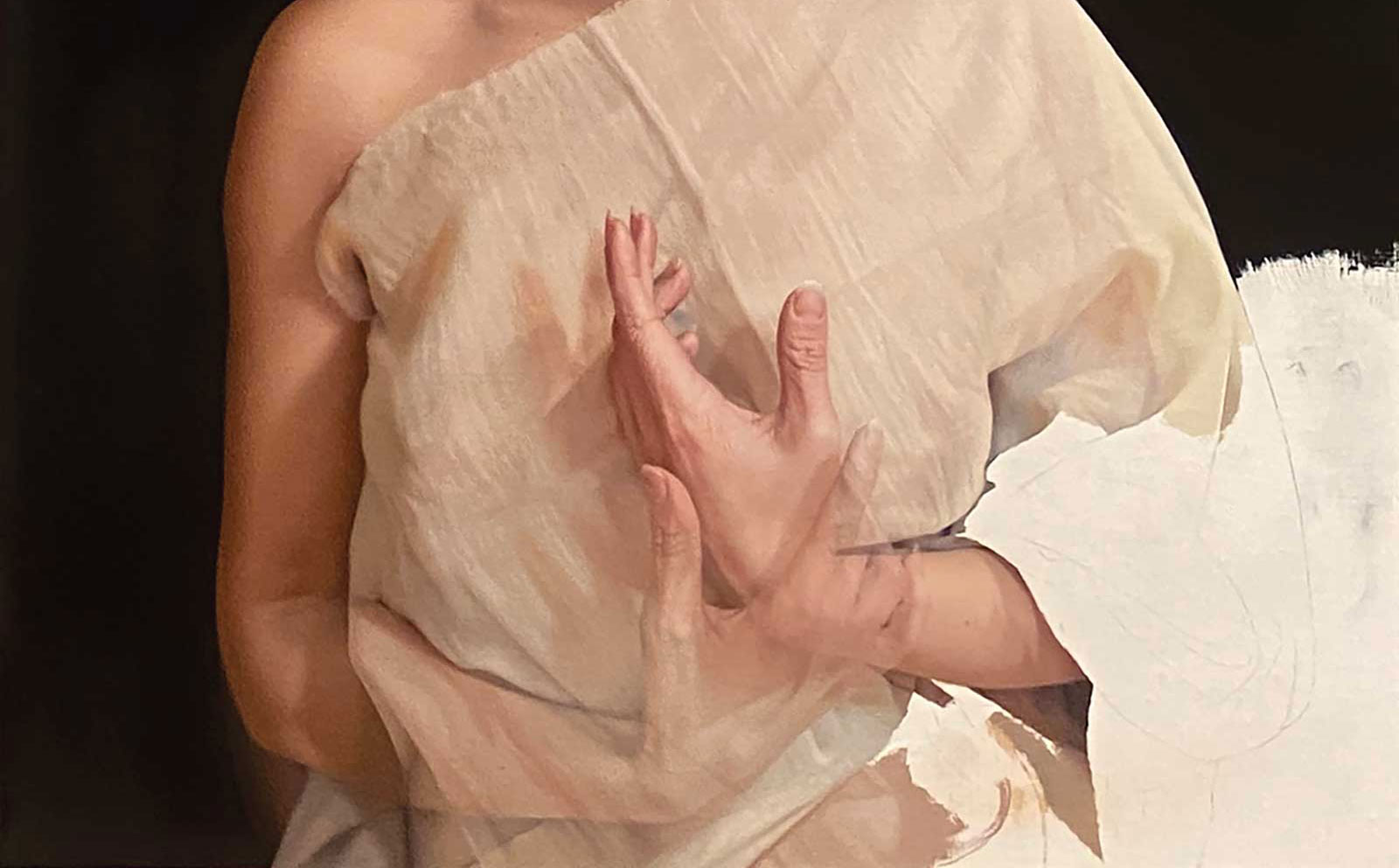 Stage 7
Stage 7 Working on the Rest
Once the hands and forearms were in, I went back to rendering the rest of the fabric, moving along from top left to bottom right, adding background as I went, until the entire surface was covered.
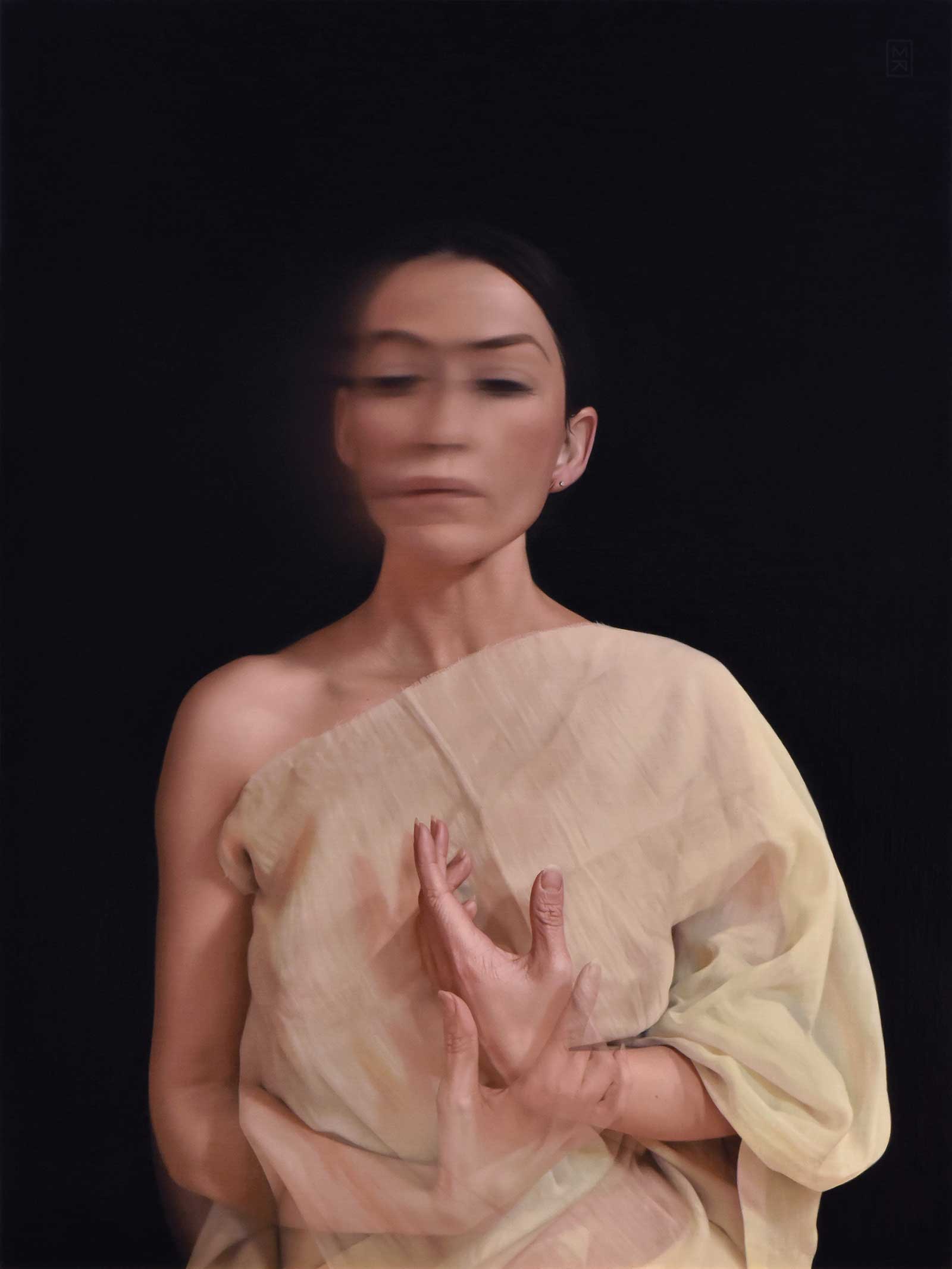 Stage 8
Stage 8 Finished Artwork
Evanesce (or “The Comeback Kid”), oil on linen, 24 x 18" (60 x 45 cm)
About the artist
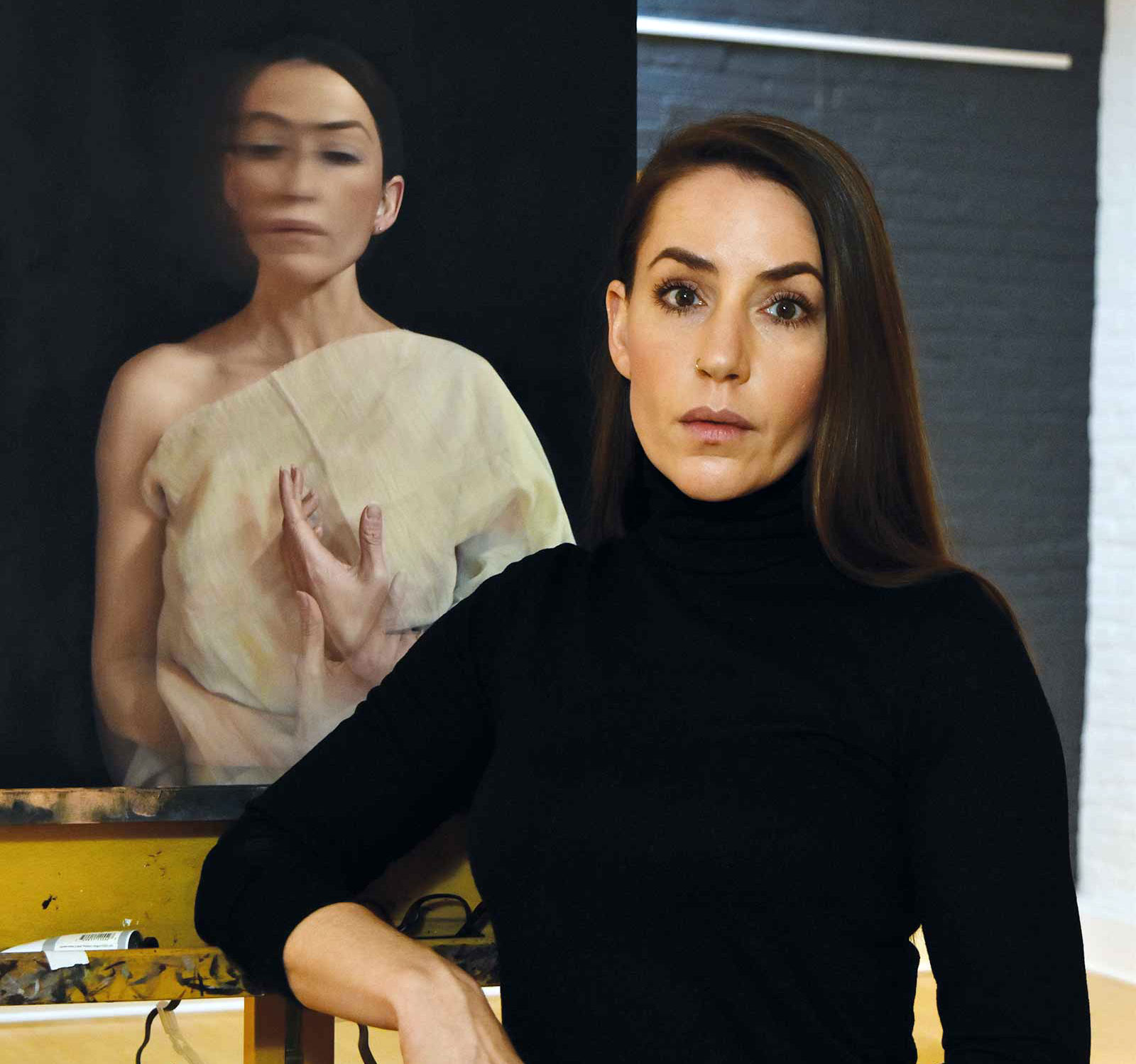 Megan (Mae) Elizabeth Read
Megan (Mae) Elizabeth Read is an American figurative artist living and working in Charlottesville, Virginia. Largely self-taught, she began as a charcoal and pencil artist but now works almost exclusively in oil with pieces ranging from small still lifes to large-scale figurative paintings, often featuring the female form. Since Read began focusing on painting in 2017 her work has been exhibited internationally with galleries and museums including the European Museum of Modern Art (MEAM) in Barcelona, Spain, the Wausau Museum of Contemporary Art in Wisconsin, and Arcadia Contemporary in New York City. Her work is held in a number of collections, including the Bennett Collection of Women Realists and the permanent collection at the New Salem Museum, has been included in various publications, and has received a number of awards including 1st place for Imaginative Realism at the 2019 International Art Renewal Center Salon and Director’s Choice at the 2020 International Guild of Realism Juried Exhibition.
Contact at
maeread.com