There are two basic strategies for generating an income from your artwork online. The first is to build a big following on social media so that you can market your influence through advertising or product promotion. I covered that approach last time in Part 1.
But there’s another pathway to earning a living online. The second way, which we’ll look at now, is to go narrow but deep: to nurture a small group of loyal fans who will support you more actively. Instead of generating content with the broadest popular appeal, you can develop high quality relationships with a smaller group of loyal fans.
Who are Your True Fans?
One of the quiet trends happening online is the rise of private groups, subscription newsletters and curated communities. According to Wired founder Ken Kelly, all you need is 1,000 true fans. A “true fan” is someone who loves your work enough to buy about $100 worth of your offerings per year on average. Those offerings might be critiques, tutorials, masterclasses, merch or books.
With this approach, you can be active or not on social media, as long as you can keep enough new people entering into your smaller forums and engaging with them. To give your true fans some valuable insights, be sure to capture stage-by-stage photos or videos
Indoor Scene with Two Human Characters
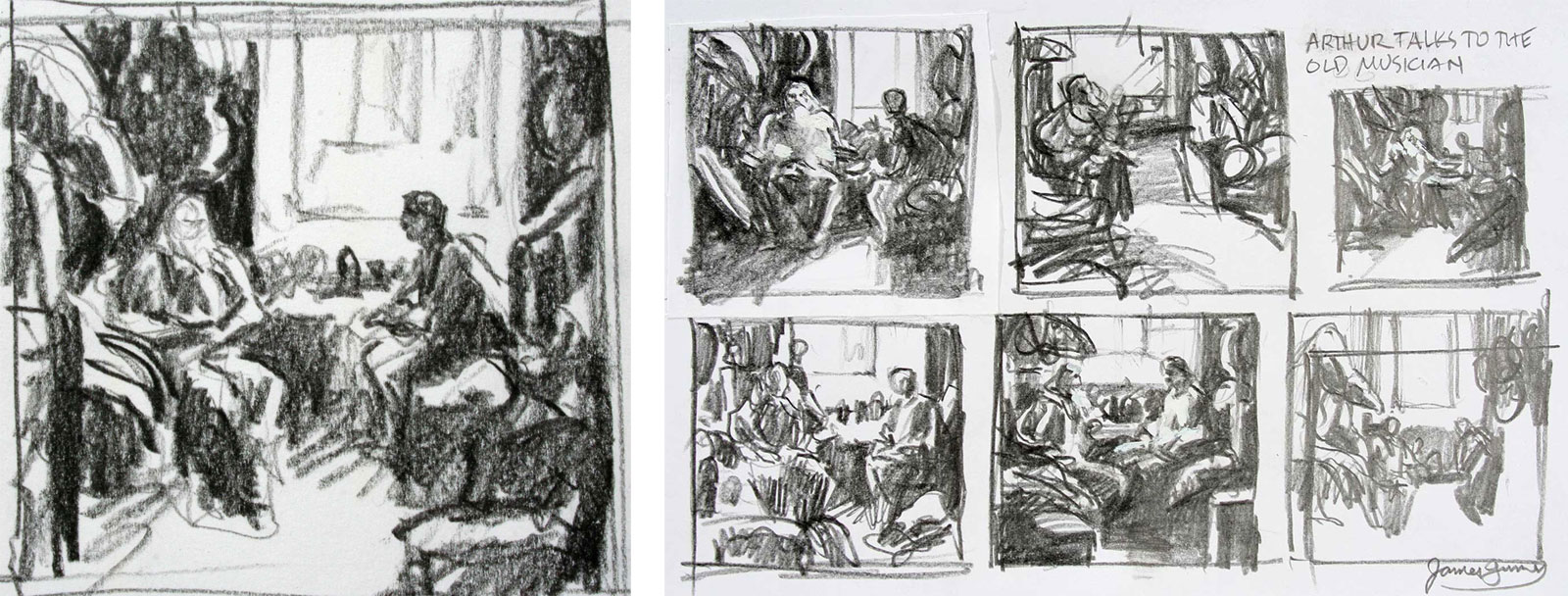 Stage 1
Stage 1 Thumbnails
In the initial pencil thumbnail sketches, all I know is that there would be two figures sitting near a bright window with lots of details scattered around the margins. I’m not sure what those details should be, and I haven’t brought in models yet.
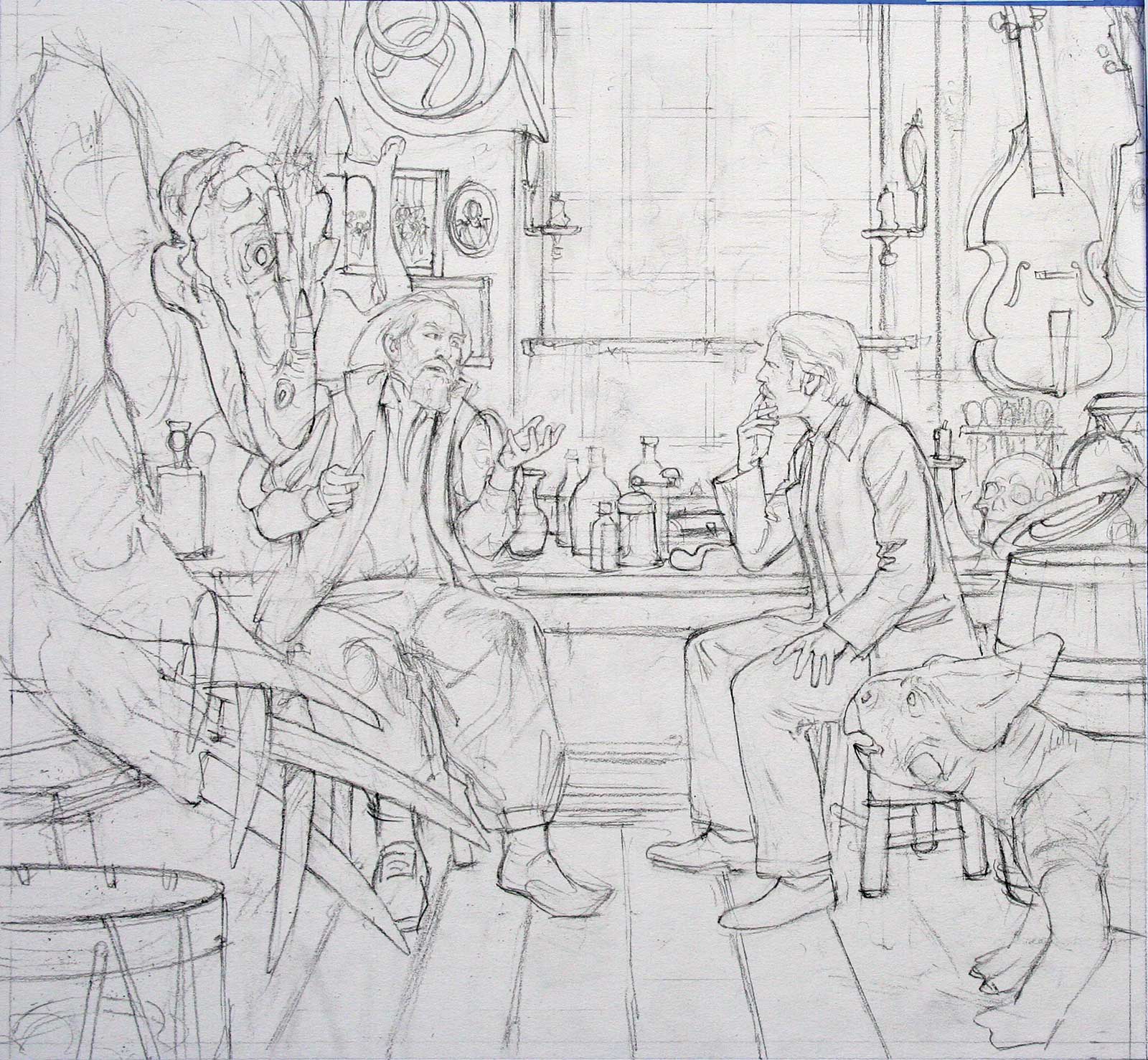 Stage 2
Stage 2 Line Drawing
The line drawing is drawn in pencil on a piece of illustration board. This step comes after all the time invested in research, models, props and color sketches. I seal the pencil drawing with acrylic matte medium before applying the finished paint.
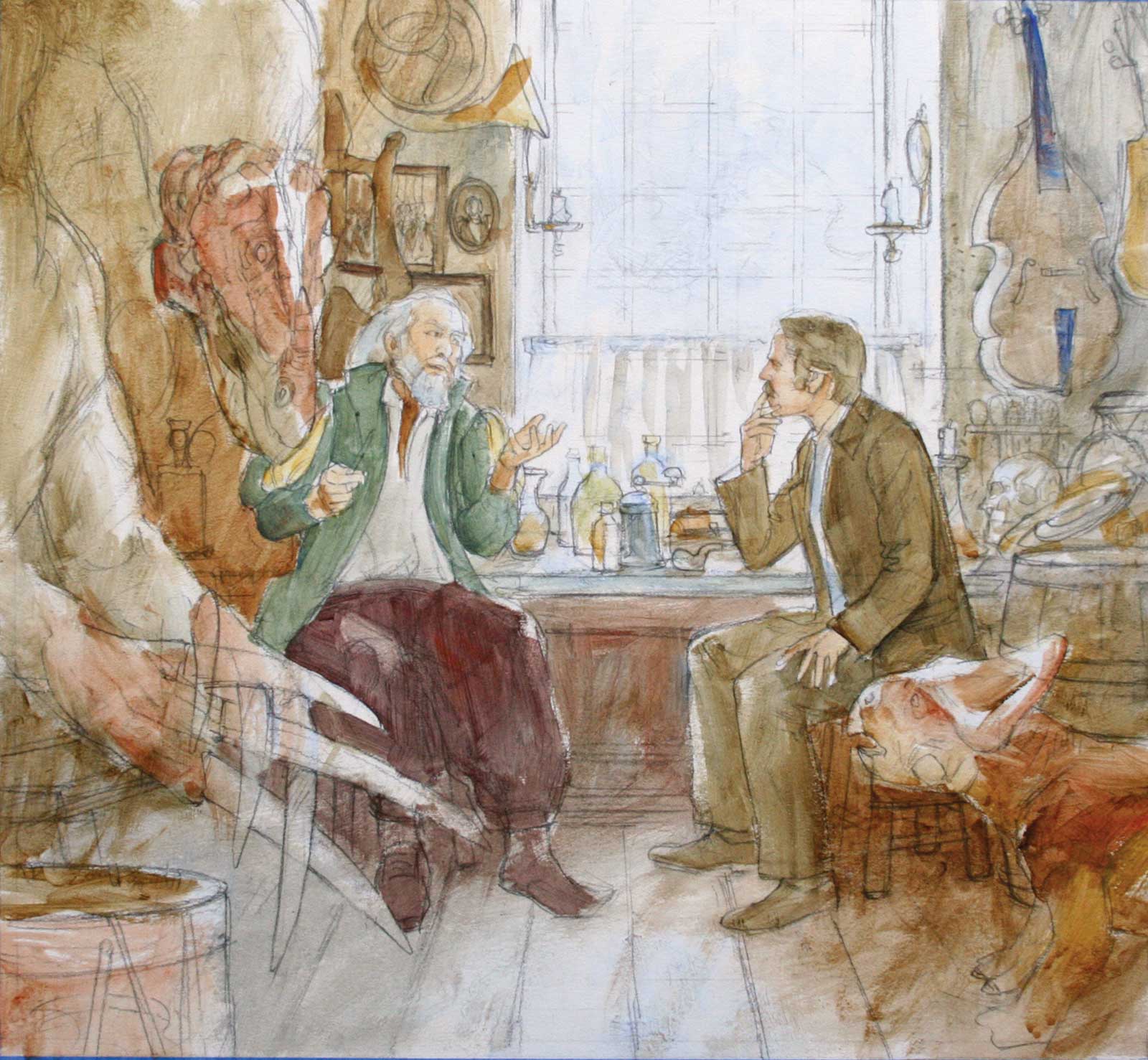 Stage 3
Stage 3 Transparent Block-in
I cover the surface of the painting with a quickly stated layer of acrylic colors. This block-in covers the surface and begins to suggest the overall tonal design. The darkest value is no more than 60 percent, saving the punch for last.
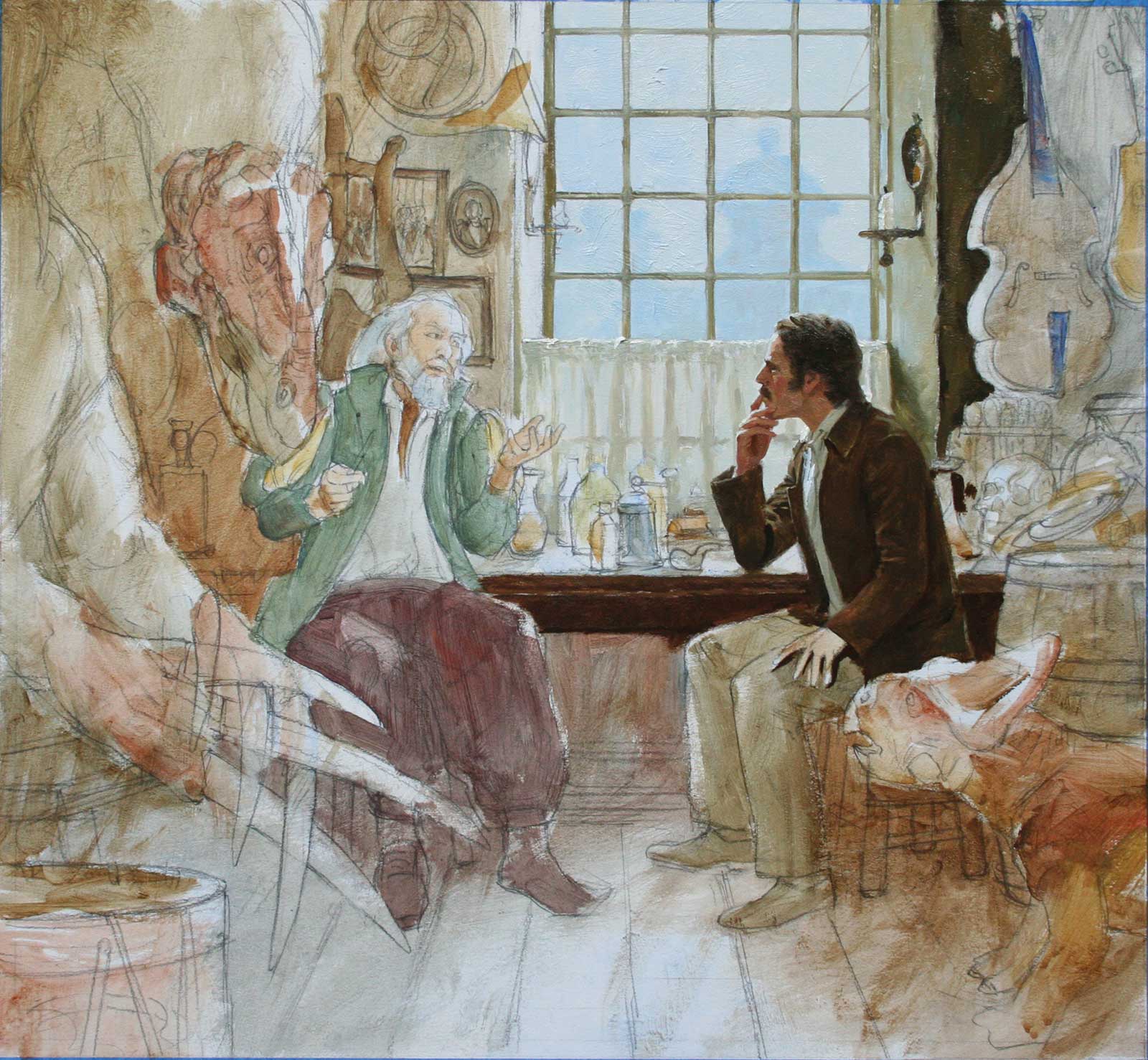 Stage 4
Stage 4 Focal Point
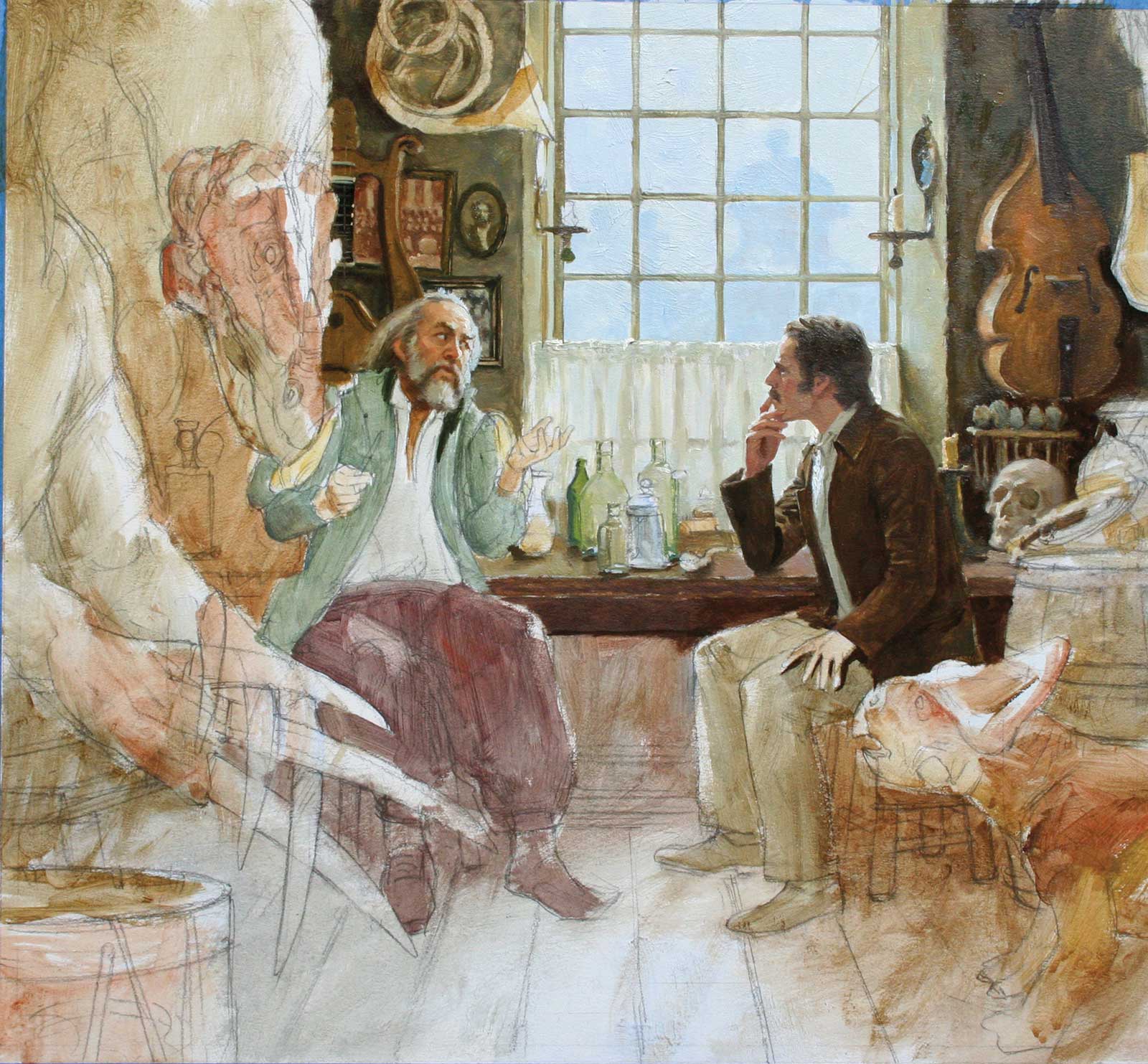
I render the scene area by area, starting with the face of the protagonist Arthur Denison. It’s a good idea to solve the most difficult parts of your picture first. Once you do, the rest of the picture will follow naturally.
 Stage 5
Stage 5 Building Out
Now the heads of both principal characters are established, and I have begun to paint the details in the environment around them. I try to finish background elements first before painting the foreground.
Interacting With Your True Fans
Let’s consider the various ways you can interact with a small group of true fans and in turn allow them to support you:
- Discord: Creators build dedicated communities with chat channels, voice calls and events.
- Facebook Groups: Artists foster tight-knit communities centered around shared interests.
- Subreddits: Niche communities gather around specific topics or fandoms.
- Online Book Clubs: Authors connect with dedicated readers for discussions and insights.
- Portfolio Reviews and Critique Sessions: Experienced painters offer constructive feedback with fans.
- Private Masterclasses: Artists present personalized workshops and demos either live or recorded.
- Mentorship Programs: Creators provide more long-range guidance and support to a limited number of mentees.
- Direct Messaging and Video Calls: Creators offer personalized communication for dedicated patrons.
- Patreon: Creators offer exclusive content, early access and personalized interactions to paying members.
- Substack: Writers and artists email newsletters, podcasts, and in-depth content to paid subscribers.
- Kickstarter: Creators invite backers to support contemplated projects in exchange for special rewards.
- Teachable, Udemy, Skillshare: Experts share their knowledge and earn income by creating and selling online courses.
- Gumroad: Creators prepare digital content for students and fans to purchase and download.
- Exclusive Challenges and Contests: Participants respond to a challenging prompt, often tied to a month, theme or season.
- Feedback and Voting: Community input shapes future content and projects.
All these online modes of interaction can be supplemented with a variety of face-to-face events, workshops or meet-ups. It’s best not to think of your audience as a collection of distant faces but rather a collection of tiny personal relationships. Don’t worry about the size of the audience; it’s the quality of the interaction that matters.
 Stage 6
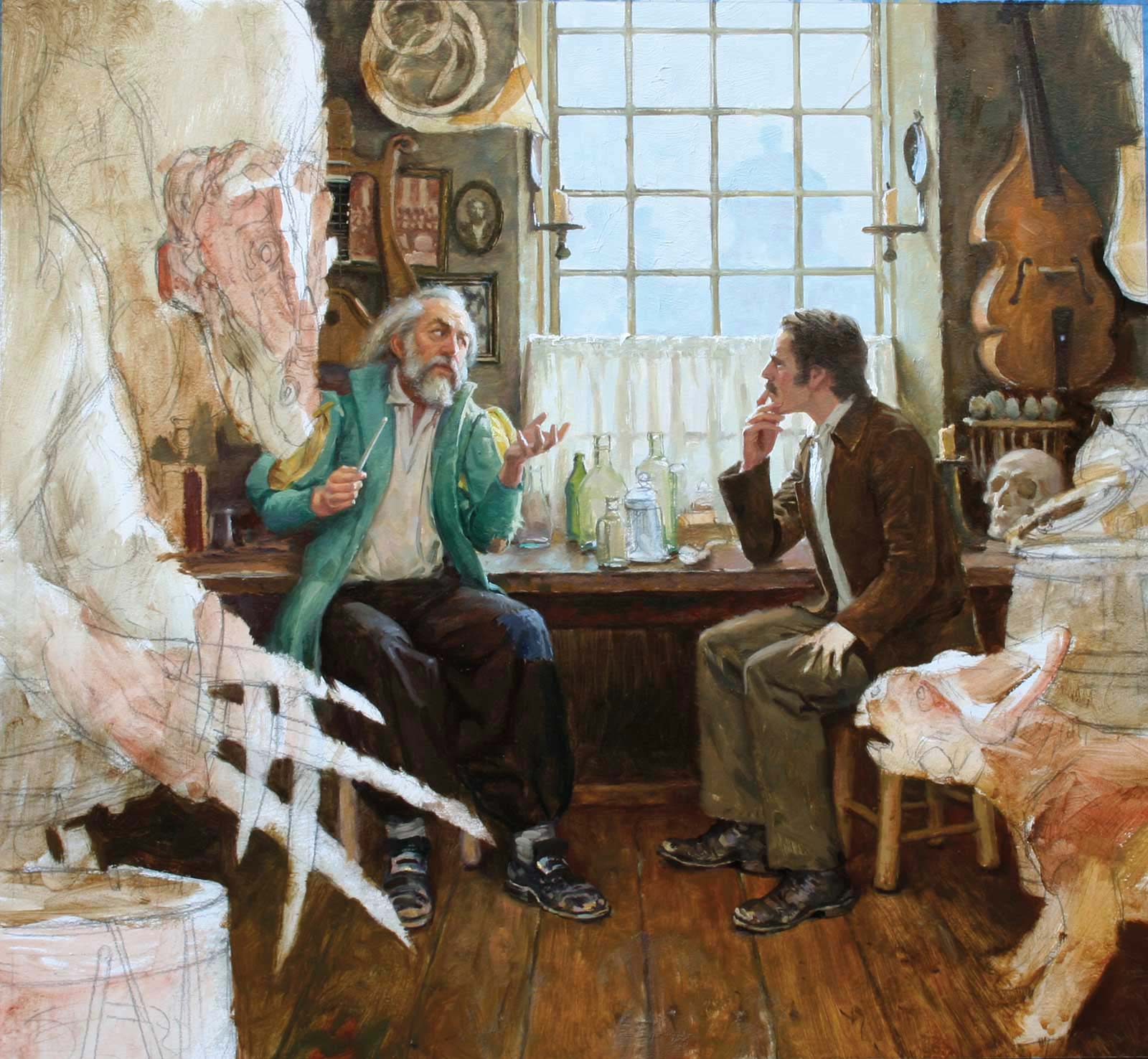
Stage 6 Left Figure and Arthur’s Legs
We now see the hands, coat and legs of the retired conductor Cornelius Mazurka. His hands are in a pose reminiscent of someone conducting an orchestra. Before I can paint Bix, the pink dinosaur in the lower right, I’ve got to work out what’s behind her. Arthur’s legs are mostly dark so that she can be edge-lit against those shadows.
 Stage 7
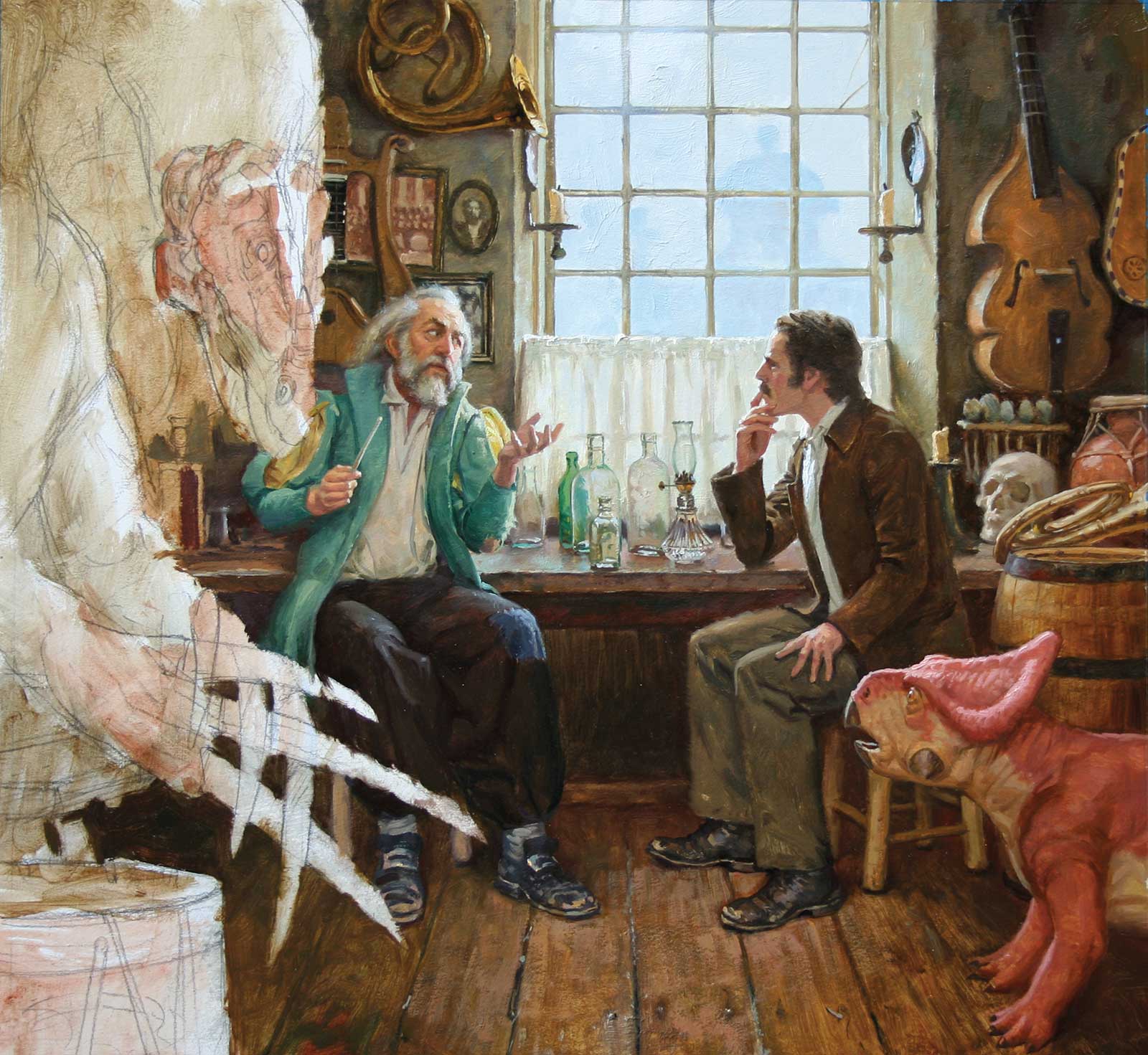
Stage 7 Bix Arrives
The little dinosaur and the barrel behind her are next. I don’t want any of these subordinate elements to compete with the stars, so I play them down.
 Stage 8
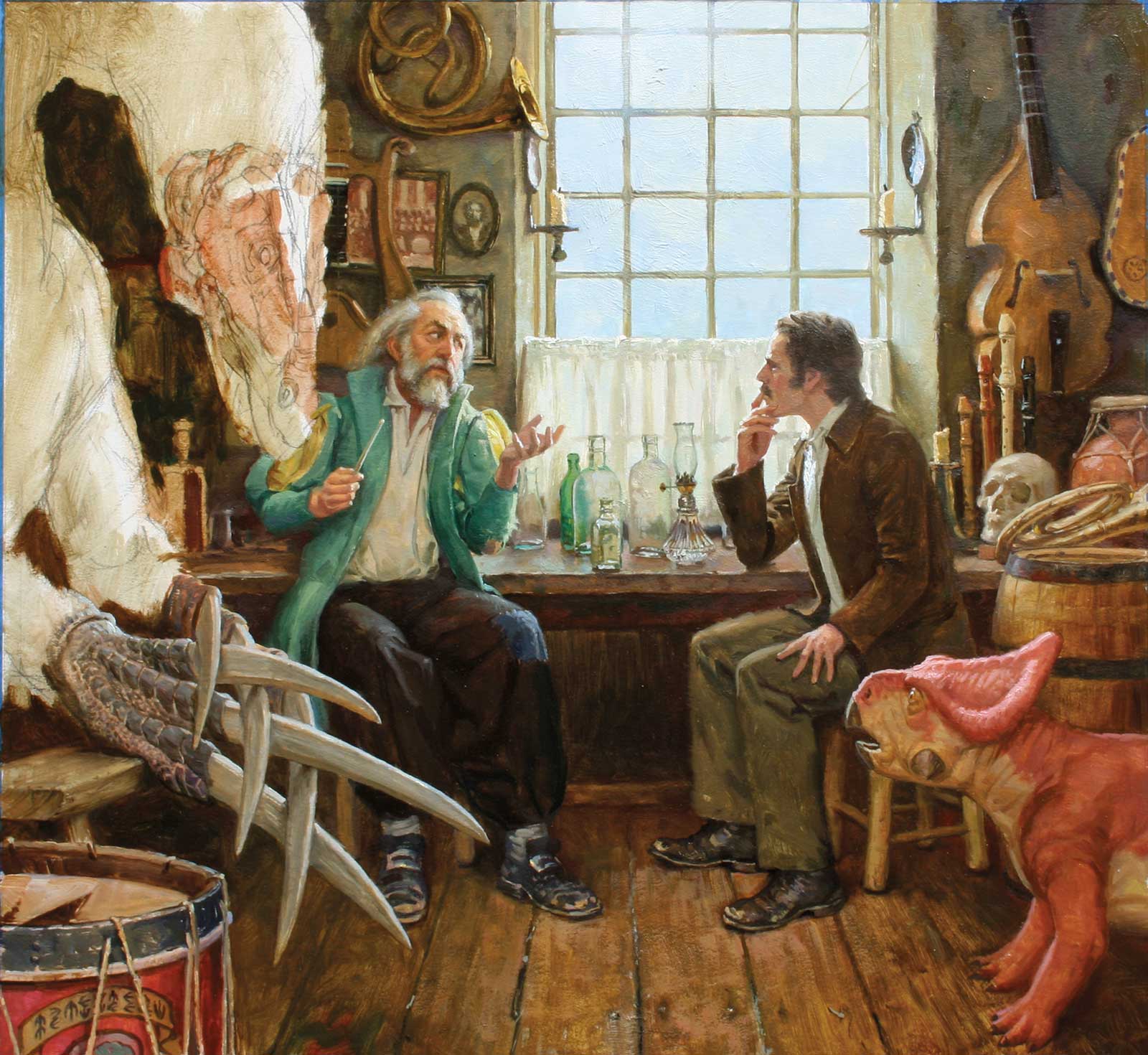
Stage 8 Claws and Drum
The left-hand edge of the picture, including the drum at the lower left, is now finished. The Therizinosaurus, with its 2-foot-long claws, is the last character to paint. The whole painting takes more than a week to do, from start to finish.
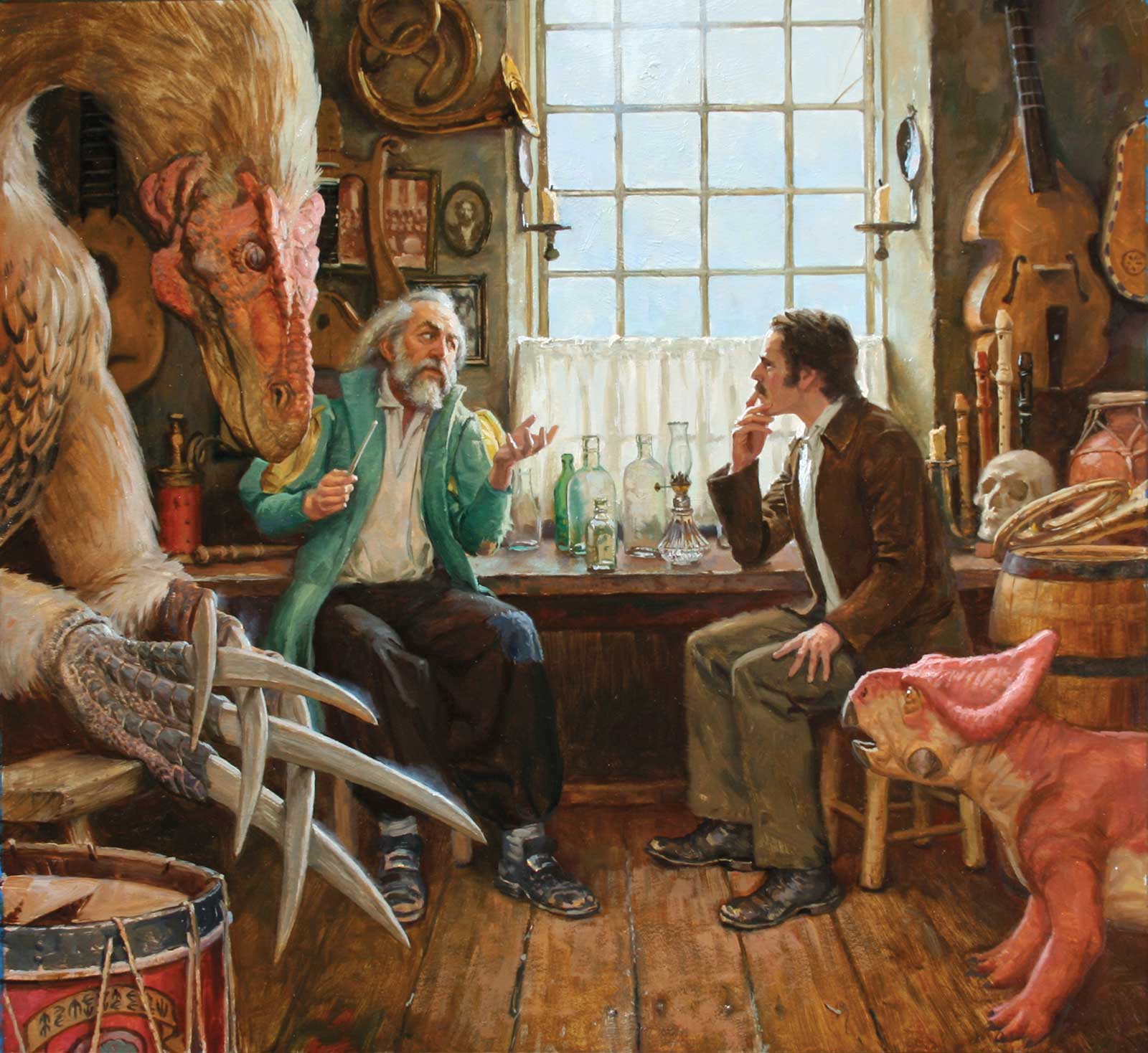 Stage 9
Stage 9 Finished Artwork
Old Conductor, oil on board, 13 x 14” (33 x 35 cm)
This painting will appear in my upcoming book Life Lessons from Dinosaurs, which will be available September 17.
About the Artist
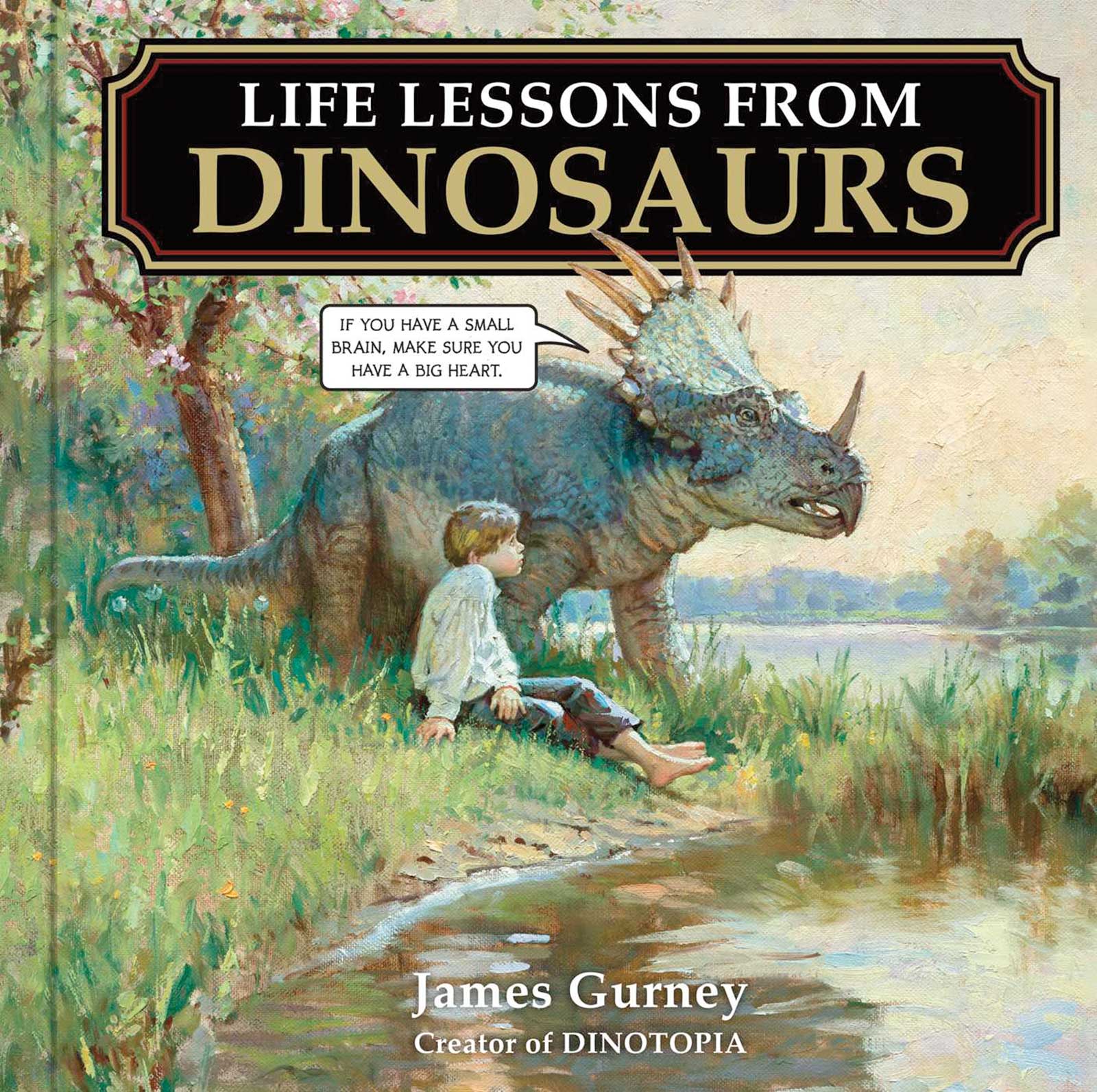
James Gurney recently received the Mazza Medallion of Excellence for Artistic Diversity from the Mazza Museum in Findlay, Ohio. His next book is called Life Lessons from Dinosaurs, which includes the picture in this article. He is the author of two Amazon-bestselling books: Color and Light and Imaginative Realism, which are also available in Spanish, Japanese, Korean and Chinese. His original Dinotopia artwork has been featured in over 30 one-man museum exhibitions.
Contact at