As a painter, I am driven mostly by five elements: mood, composition, texture, color and lines.
How these elements interact with each other is peculiar to each and every painting, and depends on many factors: some external, some very intimate and connected to my own state of mind. The unpredictability of the resulting combination is what makes the act of creation truly special if not magic to me.
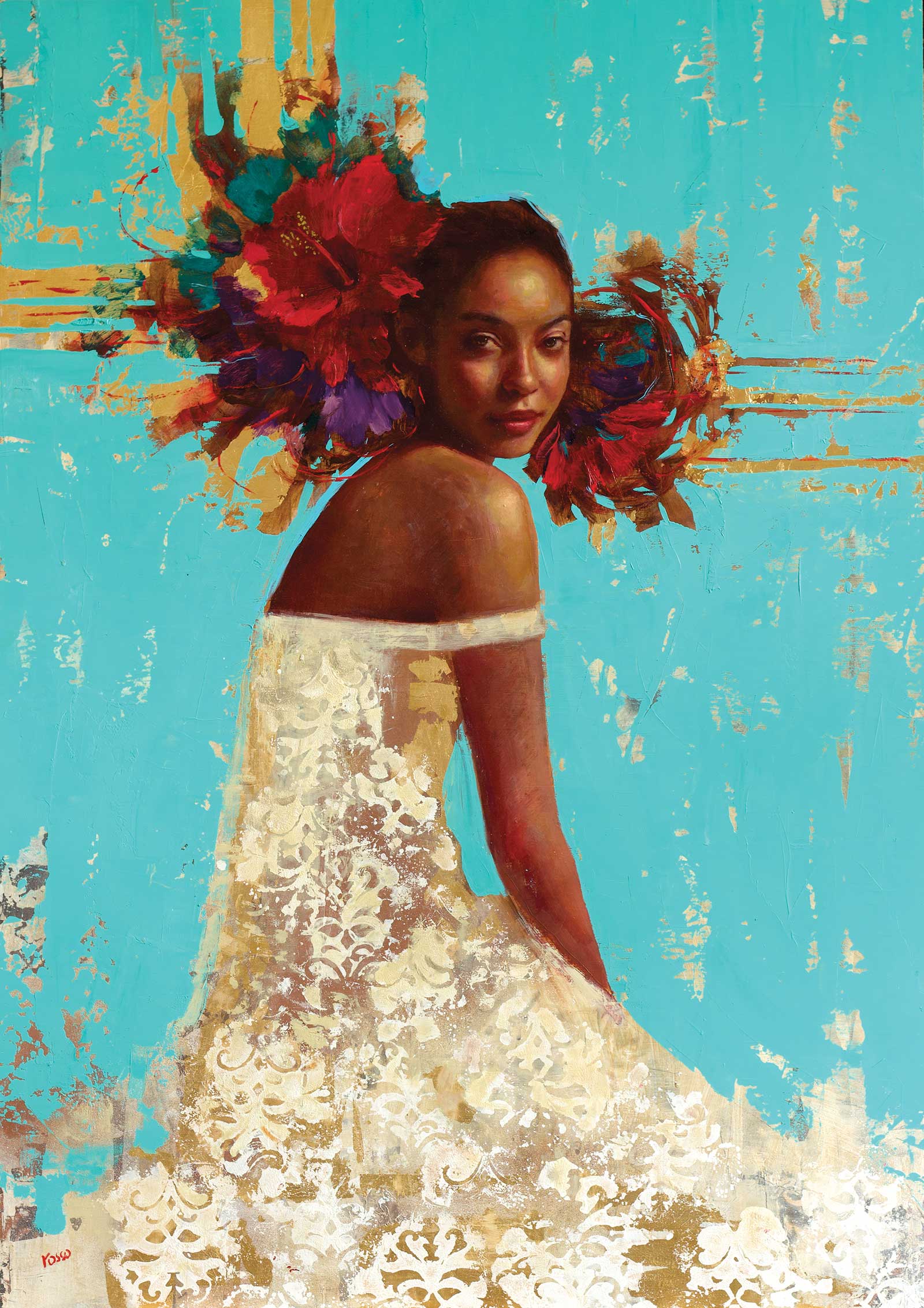 Fortuna, oil and gold leaf on panel, 40 x 30” (101 x 76 cm) This is an example of when color and rich texture come forward, becoming as important as the figure. The pose and mood of the model called for a majestic interpretation: the oversized, vibrant flower headdress metaphorically crowns the model while the intricate dress with its distressed golden patterns is reminiscent of a baroque style, with a decadent flavor.
Being a figurative/portrait painter, the very first step of my creative process is establishing a strong connection with the model. They are going to be my anchor throughout and need to inspire me to push my paintings forward and beyond. I usually ask the models to pose in a neutral environment where they can feel at ease and be themselves. I take several photos until I find a pose/mood that captures my imagination. The next step is figuring out a composition and a color palette that fits with the mood. At the very beginning I use a combination of sketches, digital manipulation of the photographic reference and small color studies to help me expand my original visualizations.
Following, I prepare the ground. For me inspiration and creativity must manifest at any stage, which is why I cannot simply use already-made canvases or panels bought from an art store. Instead, I source, cut, and mount my surfaces differently for every single painting. I prime the panels and let them cure for at least 24 hours.
Once cured, before moving onto the actual figurative work, I like to create abstract-looking backgrounds that serve as an underpainting and will eventually interact with the final image in surprising ways. This is always a very experimental free-flowing stage when I test various tools, techniques and mixed media to create interesting textures and marks. I can spend days working on this substrate until I get to a stage where I find it appealing to move on to the figurative work.
The portrayal of the subject is always my main passion, and the reason why I spend a lot of time in what precedes and surrounds the figure is to find ways that enhance it without overtaking or distracting from it. I use different yet very classical approaches to paint the figure: either alla prima, in one go, or a direct method, building up the figure in overlapping shapes from the bigger, more general shapes, to the smaller, very final touches.
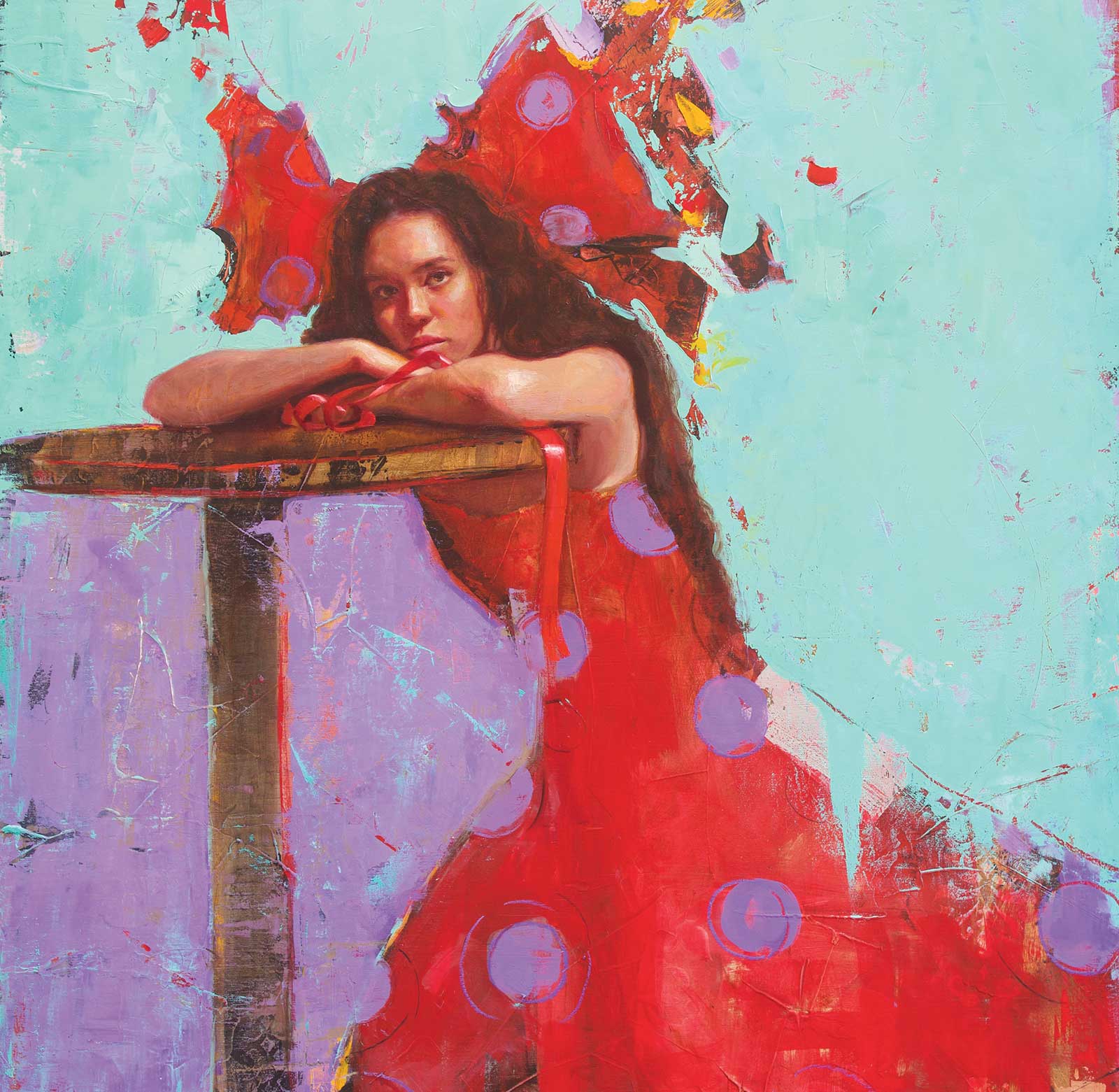
Waiting for My Valentine, oil on panel, 38 x 40” (96 x 101 cm) Here I was interested in creating an abstract context for the figure using strong saturated colors. I went for a bold red surrounded by an almost complementary light blue-green, then muted with violet. Paint is layered flat with a spatula and texture is created by leaving fragments of the underpainting showing through as well as using charcoal lines and pastels on the top layers.
As I paint the portrait, I strive to endow the subject with a sense of “presence.” This is why most of the time I pick images and poses where the model stares directly at the viewer. The body language tends to be evocative, arousing a feeling of curiosity in the viewer. The message is never straightforward and clear, not even to me. The story and feelings change from day to day. I dwell in this ambiguity with trepidation for the story that might eventually unfold.
An ongoing conversation between what is already there and the potential paths ahead runs throughout the entire creative process. While I keep refining the portrait, and especially the facial expression, I scan every inch of the painting from up close and then step back and look at it from far away to “see” beyond—identifying connections between the patterns underneath and what is layered on top, emphasizing rhythm and compositional elements, but also erasing and covering up what disturbs the visual field. Toward the end, the surroundings might remain raw and untouched, with the addition of simple suggestive lines over a prevalently muted background; or sometimes they fully develop into areas of contrasting saturated colors or nuanced hues intersecting with gold and copper leaf. Some paintings start muted and then take a big colorful detour toward the end, and vice versa.
Overall, my aim is to create an atmosphere that supports and complements the general mood. I only stop when I feel I have reached a balance between each part of the painting and have created something pleasant to the eyes and stimulating for the mind.
My Art in the Making Repose
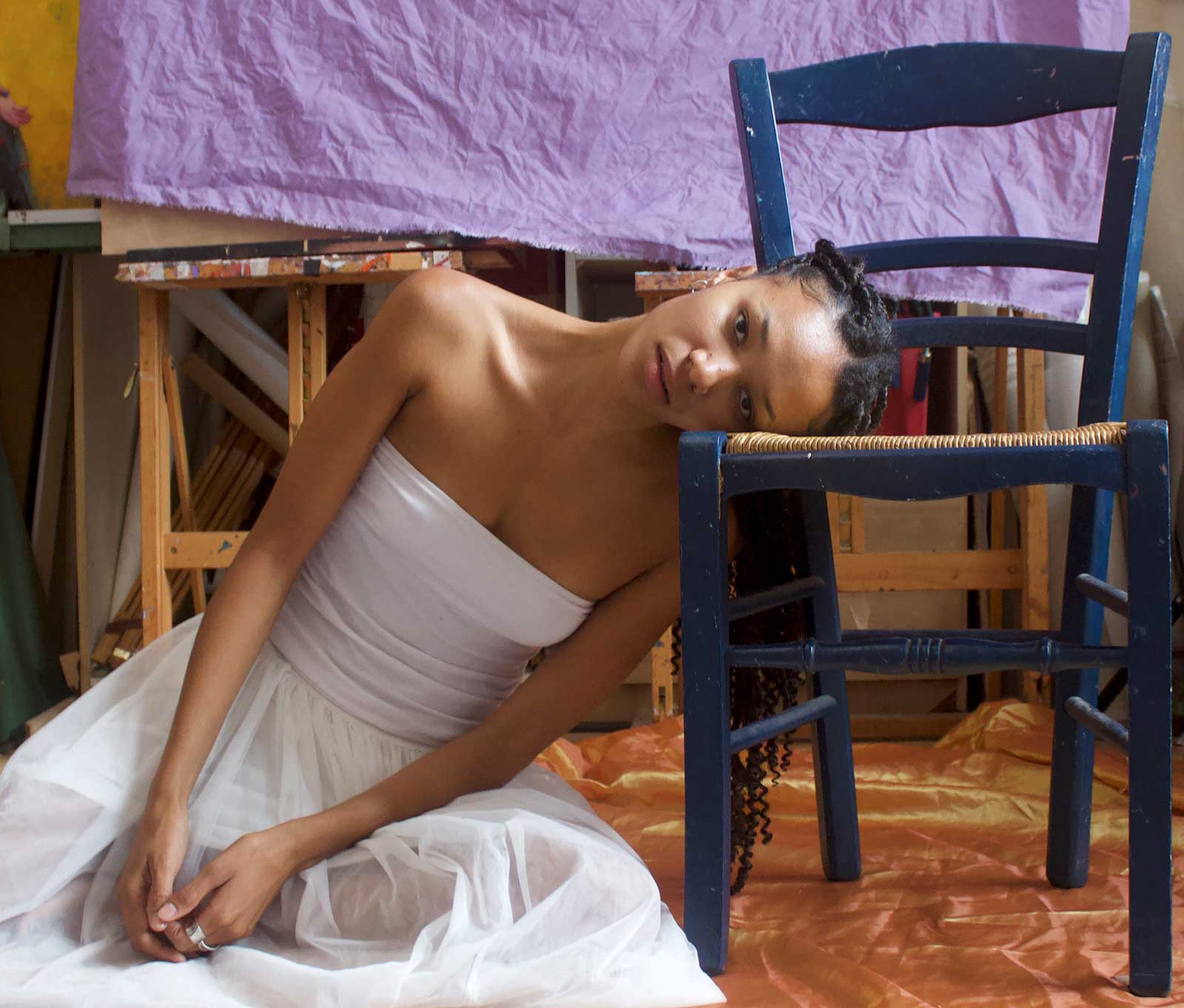 Reference Photo
Here’s a step-by-step demo of the making of my painting Repose. I used a mixture of traditional techniques with a more contemporary mixed media approach to achieve a balance between figurative and abstract work. The pose is relaxed and the atmosphere is dreamy, which is why I opted for a predominantly creamy, muted palette, interrupted by abstract patterns and touches of pastel tones.
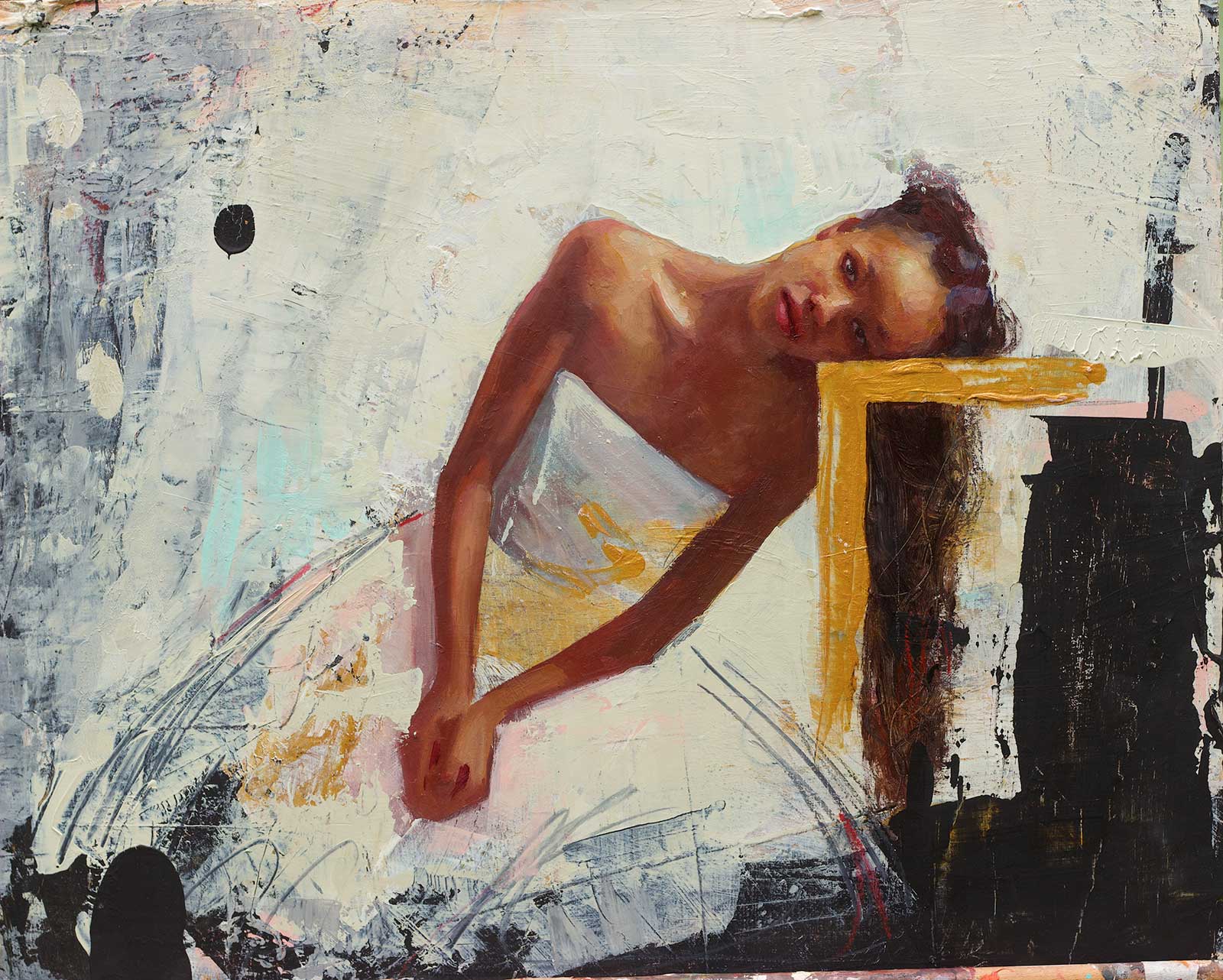 Stage 1
Stage 1 Color Study
In the study I try out the composition, the skin tones and possible solutions for the background. This was painted on a wooden panel, measuring 20 by 16". The black stripes were added last.
 Stage 2
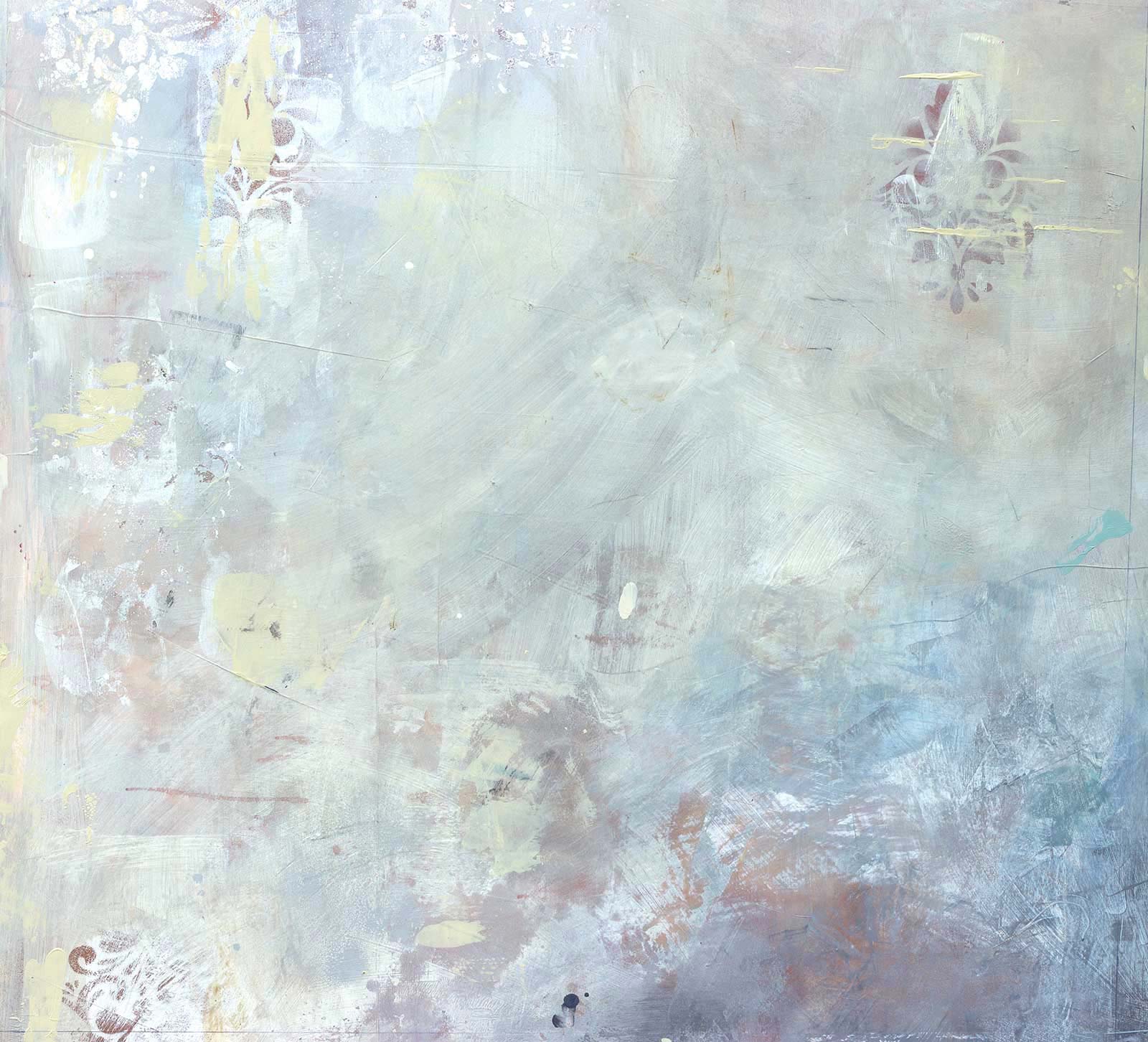
Stage 2 The Ground
On the primed panel, I use spray paint, acrylic, charcoal and stencils very randomly in thin transparent layers until texture and patterns spontaneously form.
 Stage 3
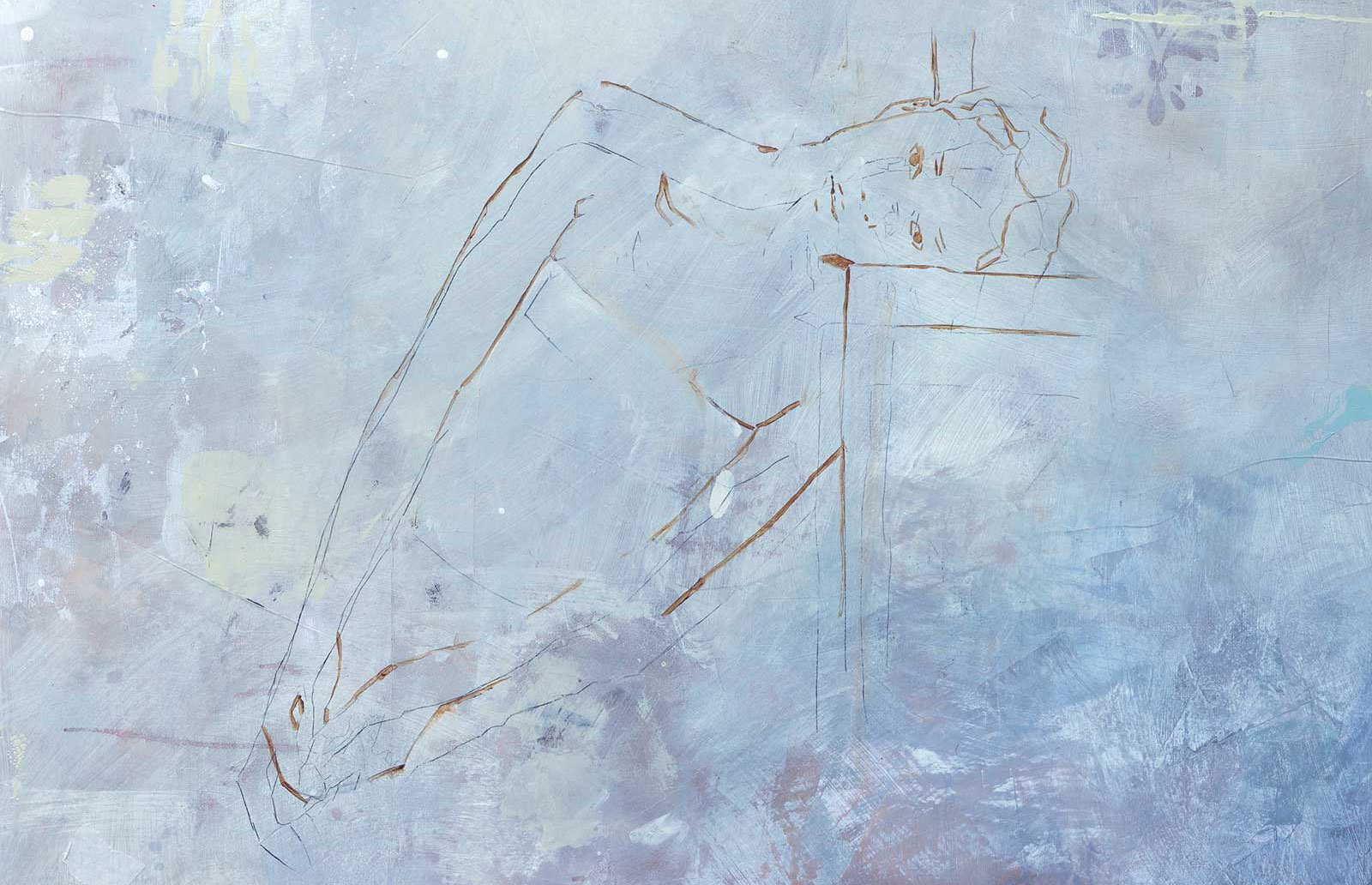
Stage 3 Transferring the Drawing
Here I transferred the drawing of the figure onto the panel. This method allows me to retain control over the size of the figure and composition.
 Stage 4
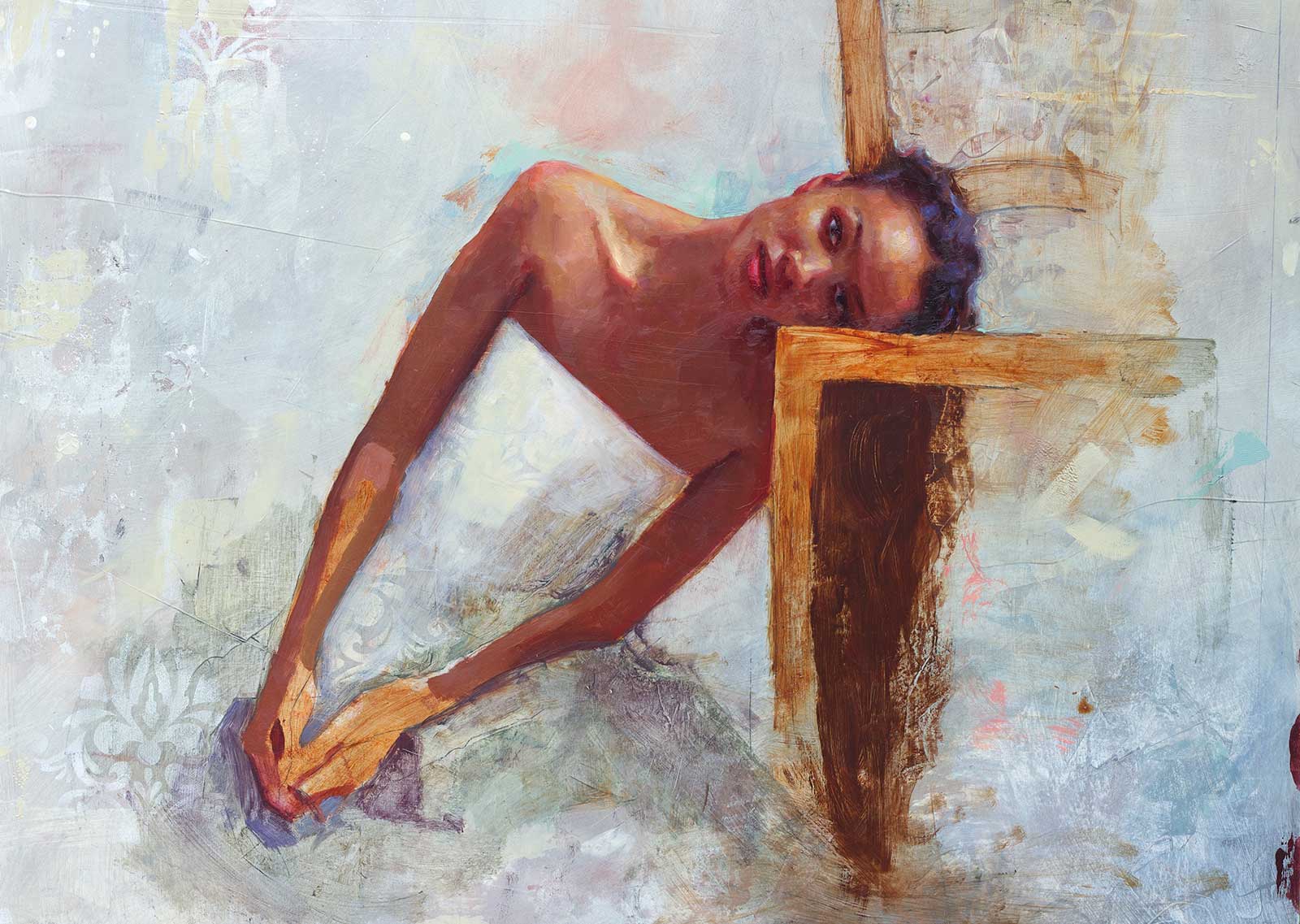
Stage 4 Working on the Figure
The portrait and figure are blocked in with thick layers of paint, from bigger shapes down to the smaller, using a wet-on-wet, direct method. I premix the skin tones and keep refining them as I progress.
 Stage 5
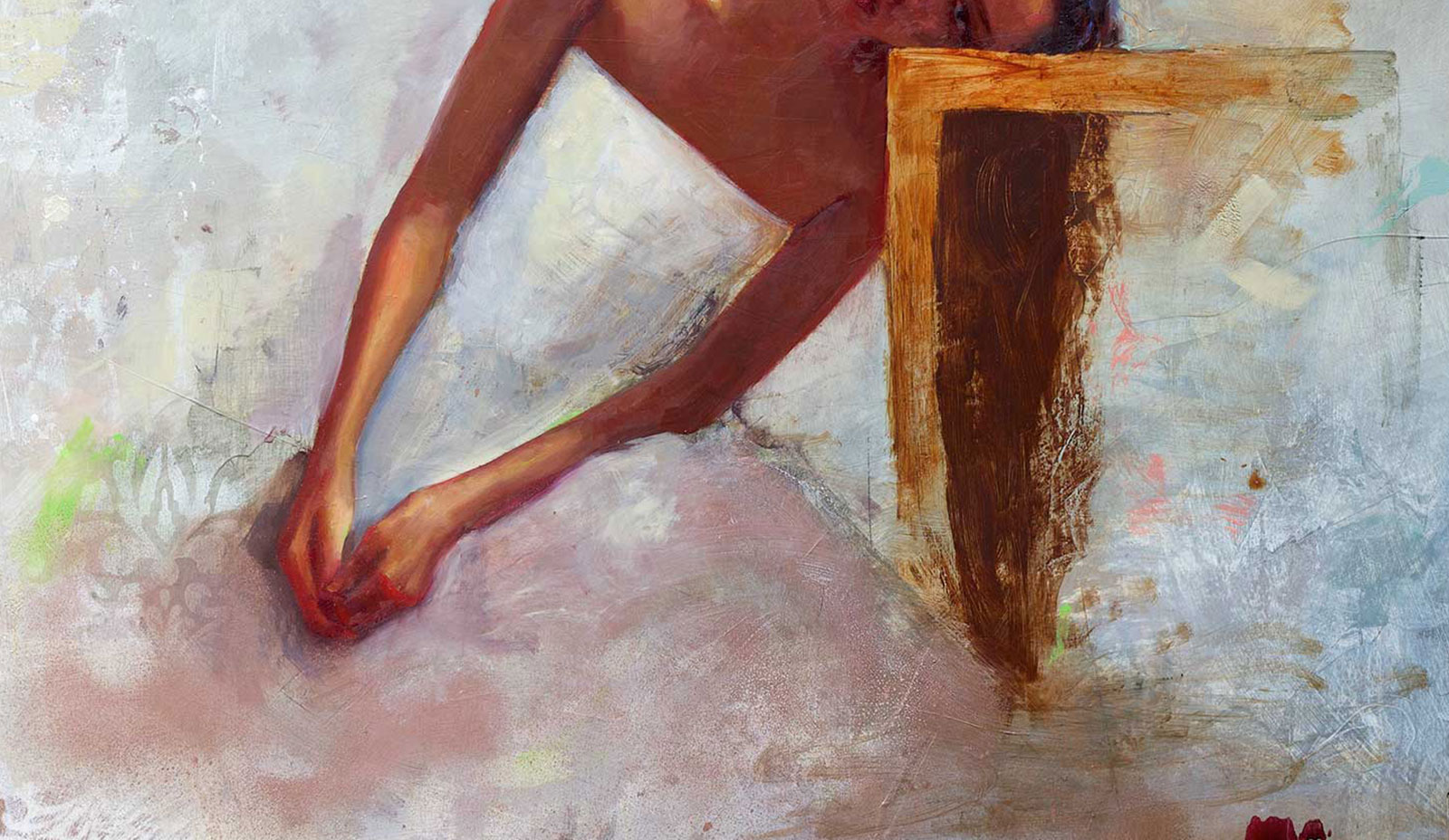
Stage 5 Chair and Dress
In the surroundings, I added the chair and more definition in the dress, but keeping these ancillary elements raw and “minimalistic.” My motto throughout the painting process is “how much can I say with less?”
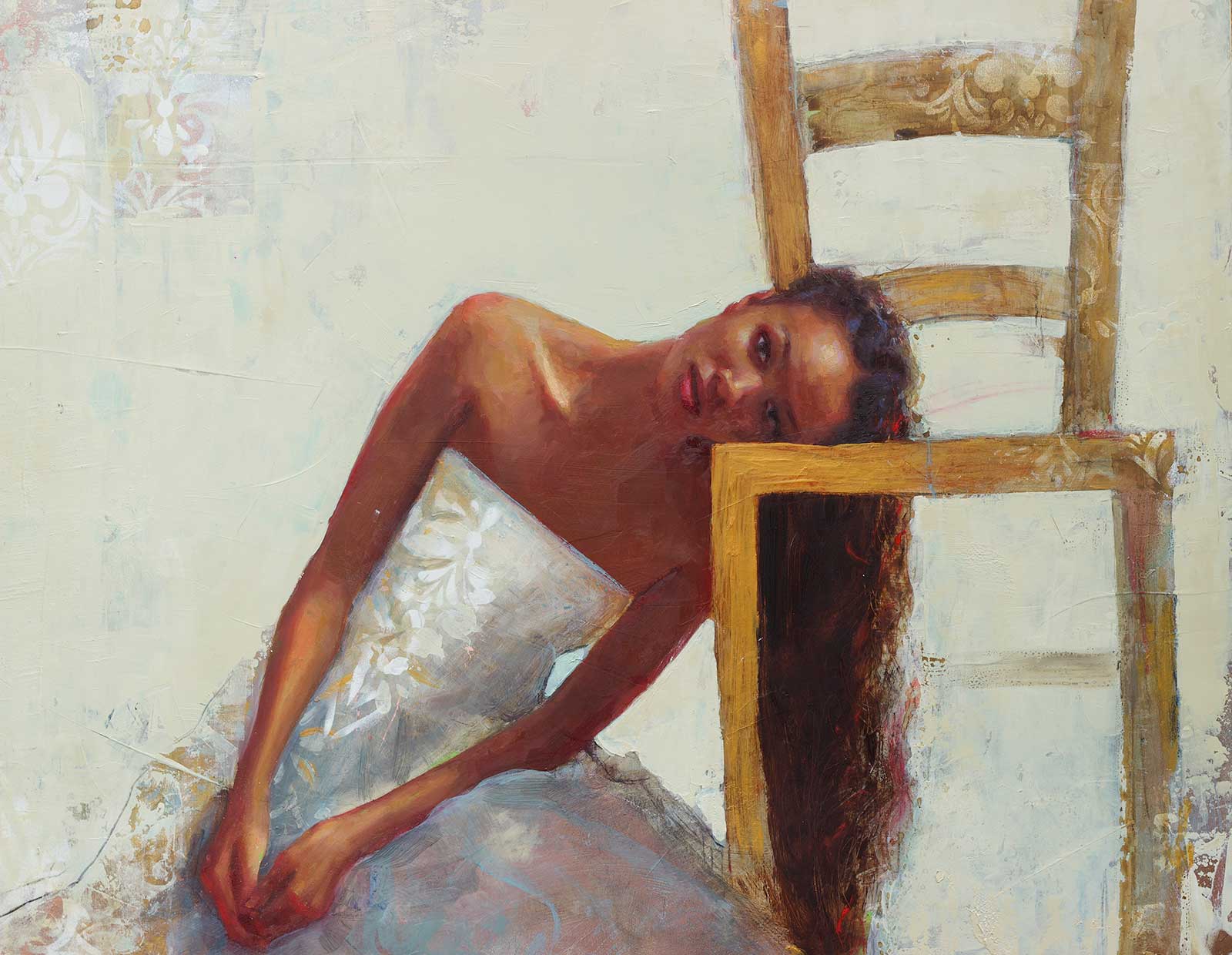 Stage 6
Stage 6 Defining the Figure
A more defined and flattened background makes the figure stand out. A thick layer of gold painting adds volume on one side of the chair. Part of the dress is enriched with patterns, and the rest remains evanescent.
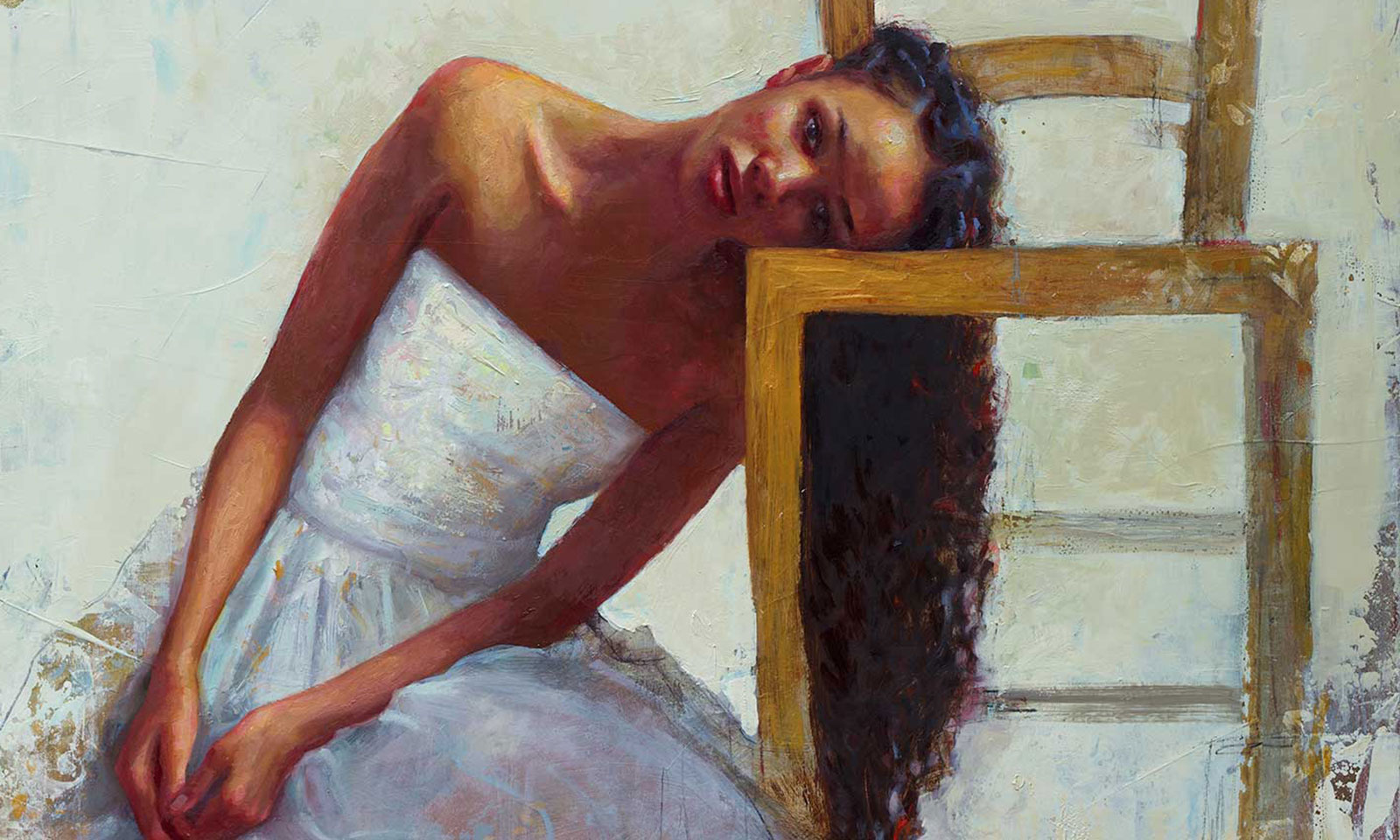 Stage 7
Stage 7 Second Pass on Figure
Now, I’m back onto the portrait/figure to emphasize the beauty of the pose and intensity of the glance. More values and colors are added in the light; soft edges interplay with vivid brushstrokes.
My Design and Composition Tactics
- Pick an image/pose that inspires you deeply.
- Make several sketches and studies to find the best composition and size for the work.
- Work from the general to the particular and spare the details until the end.
- Be open to changing your ideas and adapting your process as you move forward.
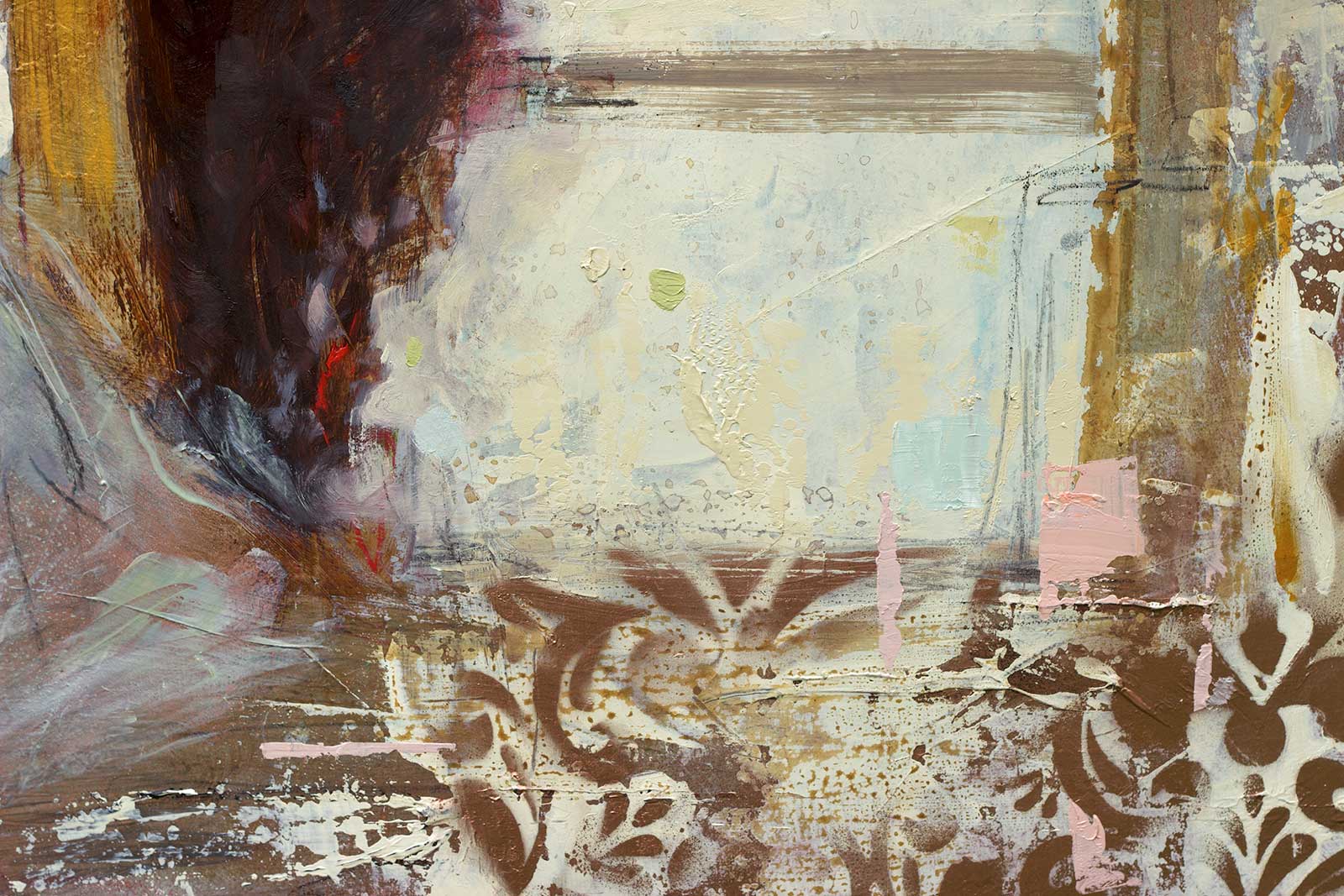 Stage 8
Stage 8 Final Touches
Towards the end, I drop hints of colors without interrupting the painting’s general soothing atmosphere. Unnoticeable touches of muted pink and mint green break the monotony and add interest upon a closer look.
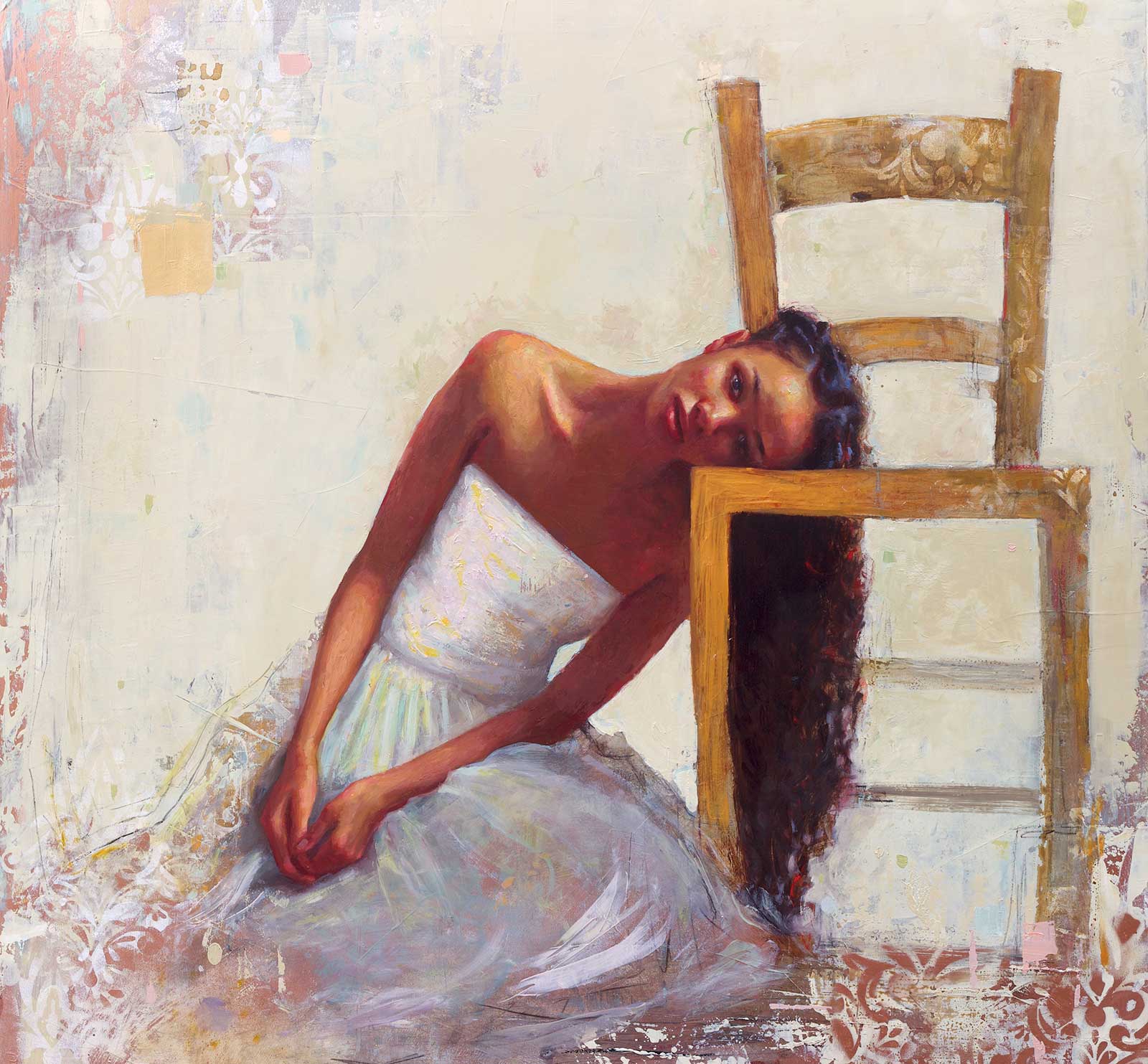 Stage 9
Stage 9 Finished Artwork
Repose, oil, spray paint and gold leaf on panel, 38 x 37” (96 x 93 cm)
About the artist
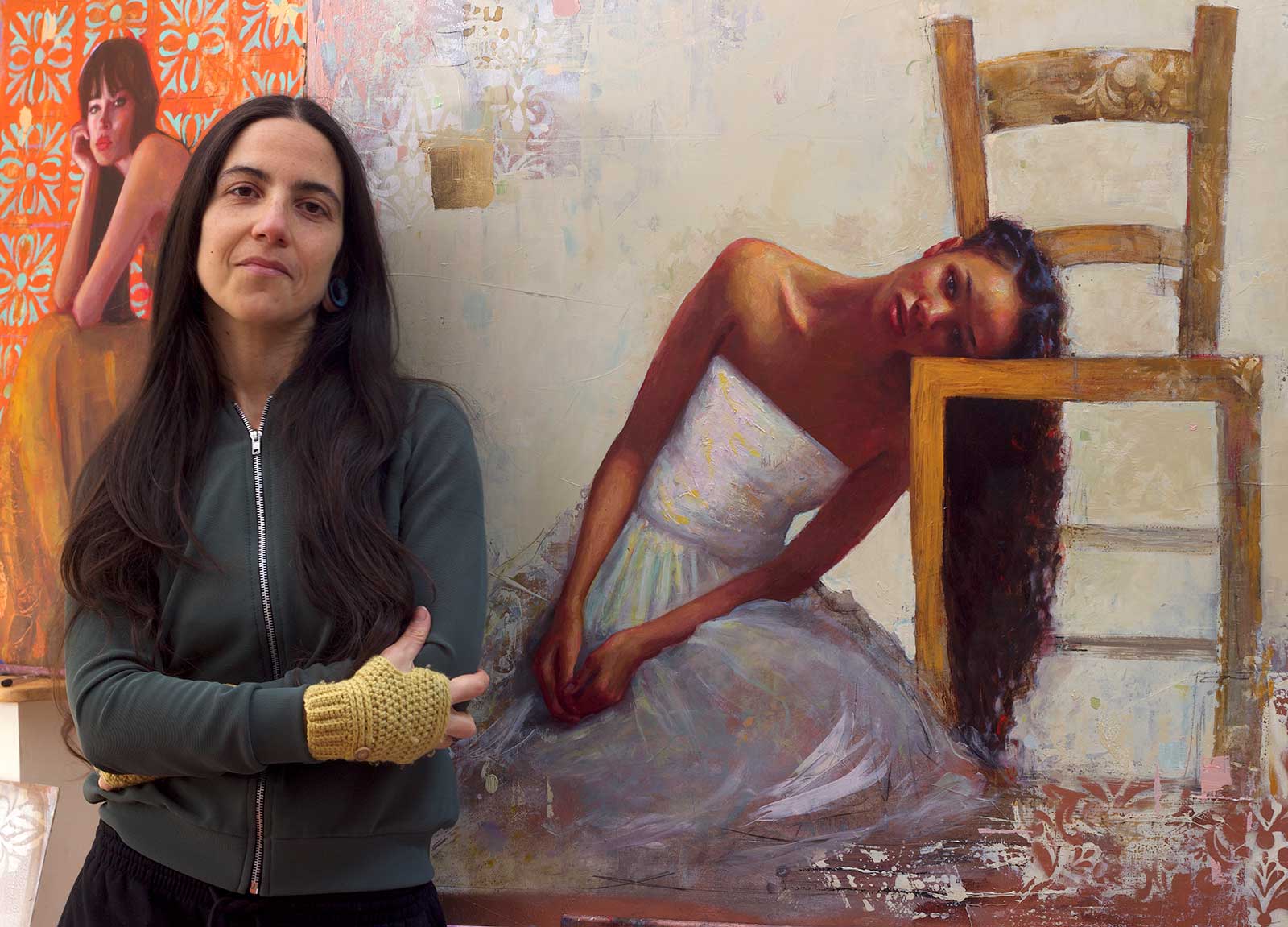 Rosso Emerald Crimson
Italian-born Rosso Emerald Crimson has lived in the United Kingdom since 2000. She has won numerous art awards including the 2016 Winter Pride Award; the Emerging Woman Painter Prize (2016); and first prize for the portrait category at the Jackson Open Painting Prize (2017). She participated in Sky Arts’ Portrait Artist Of The Year in 2019 and 2021, and was a finalist in the Beautiful Bizarre Art Prize in 2021. She recently exhibited at Meam Museum in Barcelona and with the Royal Institute of Oil Painters at the Mall Galleries in London.
Crimson has been featured in Colossal, Create! and other publications and has exhibited internationally with Principle Gallery Charleston in the United States, Galleri Ramfjord in Norway and more. Her work can be bought on Saatchi Art or directly from her studio. She also runs workshops in United States, the UK and Italy and teaches online/via zoom.
Contact at
rossoart@outlook.com
rossoart.net