My paintings offer a unique vision of the landscape and the forces of nature that shape it. They are inspired by the hidden geometries that exist on the edge of our visual experiences, found in the shadows of great mountains, the faces of ancient stones, reflections on the surface of lakes and seas and within the ever-changing currents of rivers.
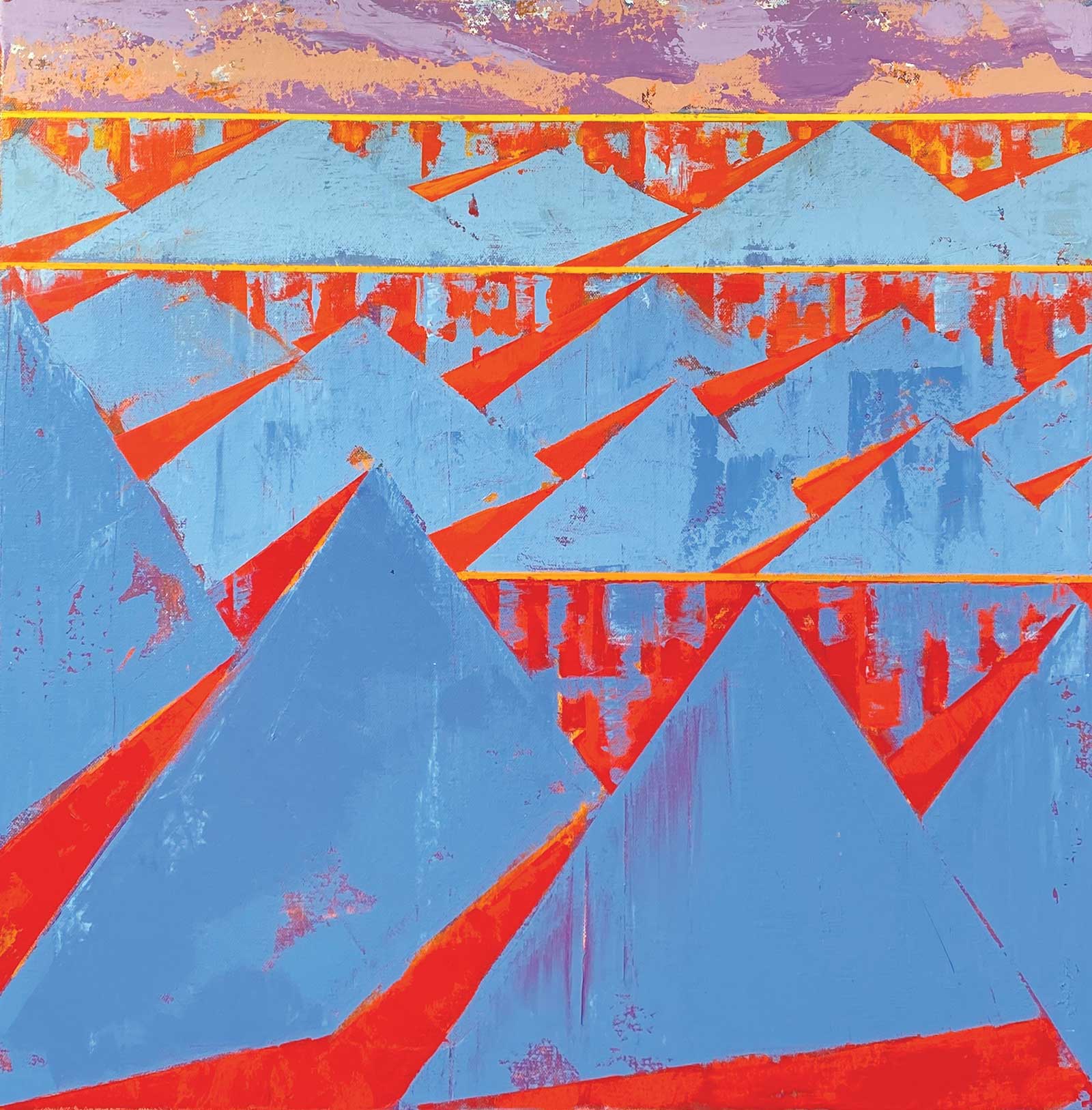
Silverado, acrylic on canvas, 24 x 24" (60 x 60 cm)
Many subjects can inspire the artist, and one must have the confidence to explore a variety of sources. I draw from personal experiences and memories that have impacted my world vision. I spent much of my youth in the mountains of North Idaho and Western Montana. The forests, rivers and lakes of my childhood became a foundation for my perception of the world. As an abstract painter, my approach is, in many ways, the same as that of a representational artist. I employ a technique with the goal of creating something both inventive and descriptive, images that speak to the actual act of making marks on the canvas and can simultaneously be imagined as the surface of something else altogether.
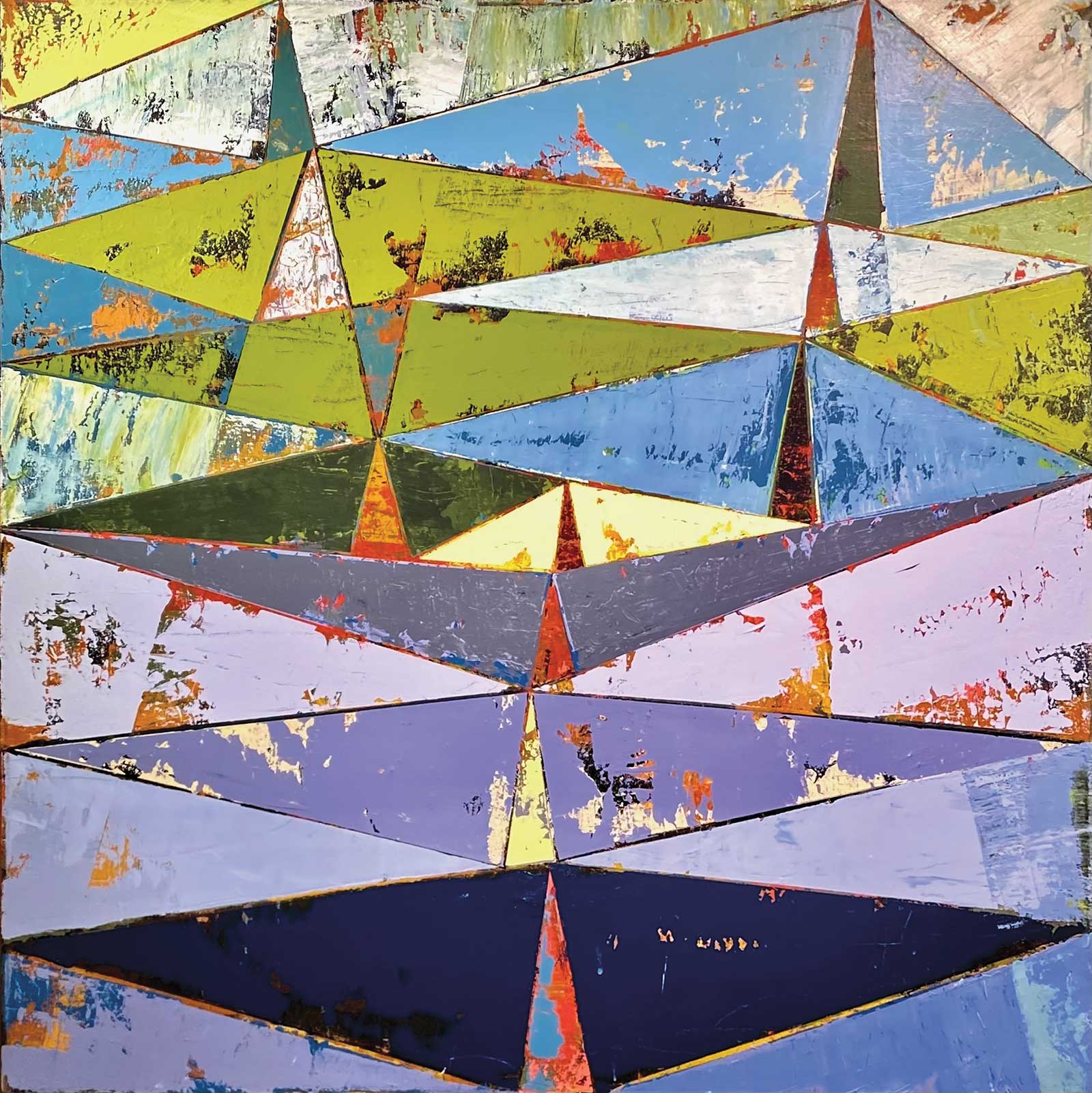
Bajadas (Winter), acrylic on canvas, 34 x 34" (86 x 86 cm)
The brushwork and surfaces of my paintings are energetic, reflecting the physicality of the land and the painting process. My primary medium is Amsterdam Expert Acrylic paint, an artists’ grade, highly pigmented heavy body acrylic that is excellent for direct applications, including layering and masking.
I use very few mediums and prefer to use the paint straight from the tube or jar. My method relies on a rapid layering of color, making acrylic the best paint for me, as it dries much more quickly than oils.
My brush choices have developed as my techniques have evolved. Mark-making is central to my concerns as a painter, and I tend toward bristle brushes, using mostly brights and filberts. I like these brushes for their strength and flexibility. They also wear over time, giving each one its own recognizable and individual character.
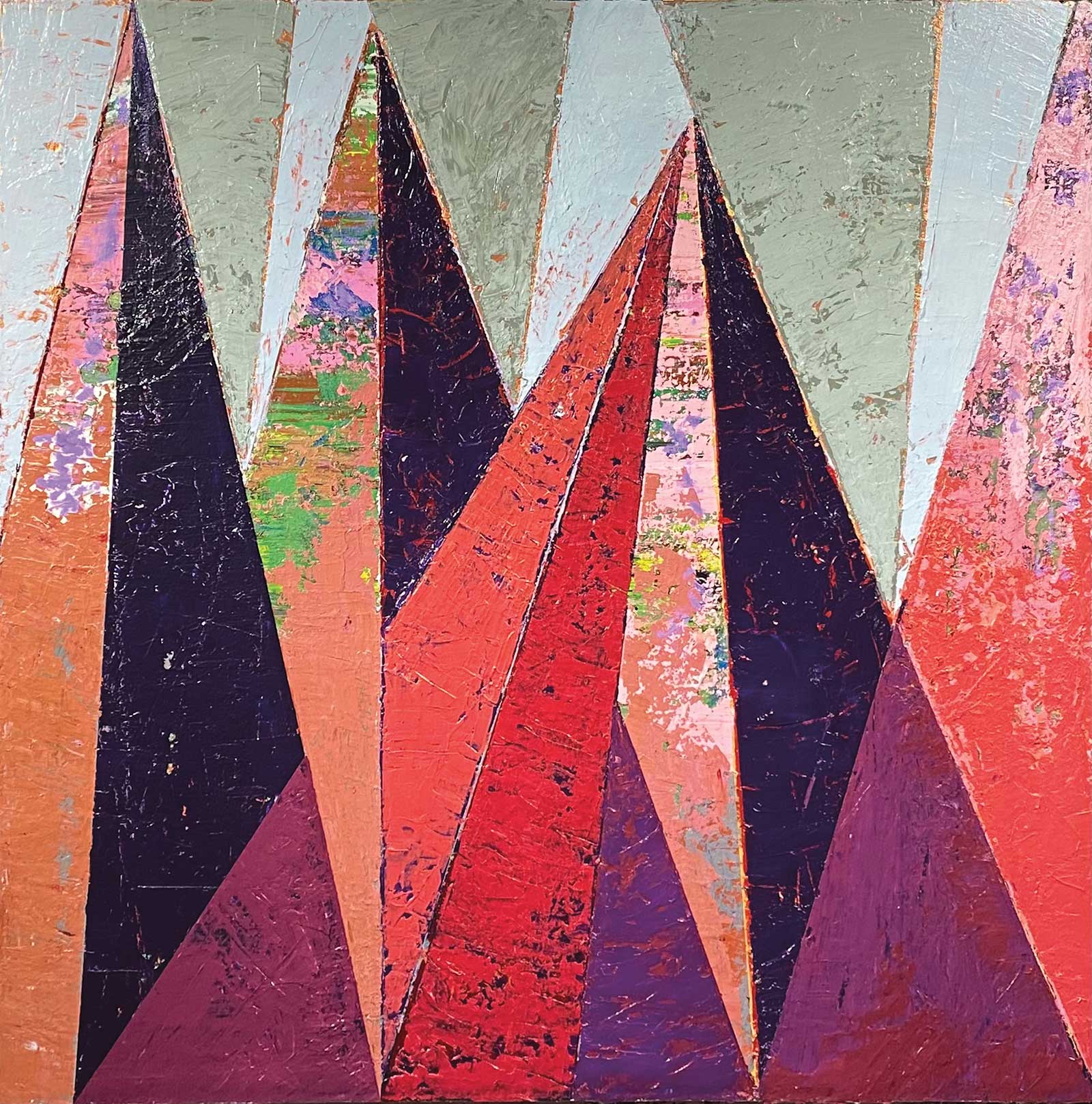
Peaks, acrylic on canvas, 30 x 30" (76 x 76 cm)
Brushes are not the only tools I employ; experimenting with painting knives, sponges and even old rags has become essential in my most recent paintings. The central theme of my work has always been the primacy of the application of material in the painting process. I’m searching for a quality that can suggest something exciting and will lead to real exploration.
After applying the paint onto the canvas, I search for an image that appears realistic but has enough vagueness to create a sense of ambiguity. This allows the paint to exist in a state of possibility, where it can transform into something greater. I rely on spontaneity, embrace the unplanned and accept that painting, like nature, is a continuous chain. The emphasis of my effort is one of discovery.
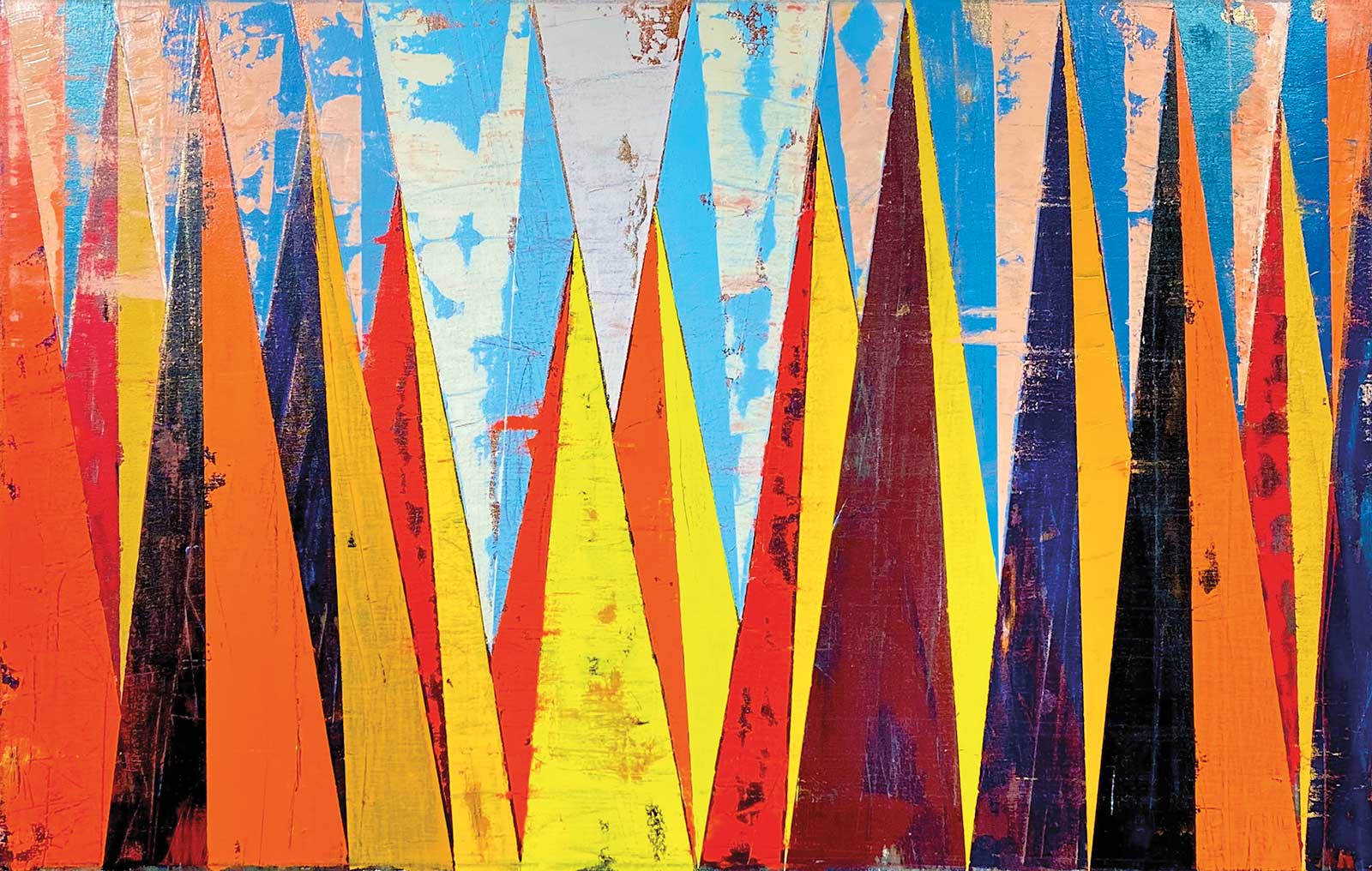
Canyon, acrylic on canvas, 24 x 38" (60 x 96 cm)
My canvases are boldly colored because I seek to harness colors’ ability to transport the viewer emotionally. I often begin by overlapping complementary colors, creating a vibrant surface. My palette includes mostly mono-pigmented paints centered around primary and secondary colors, creating variations in value and intensity through basic mixtures and juxtapositions of color.
Abstraction is a product of the imagination. It isn’t simply a matter of making something odd or different. I believe in the uniqueness of experience, as I believe in the uniqueness of painting. The difference may be only a matter of inches, and it only takes a few inches to alter one’s entire way of seeing and transform one’s understanding of reality.
My Art in the Making Gem Mountain
This painting is an exploration of themes that are common to my studio practice. Beginning with the idea of the landscape based on memory and continuing through layering, masking and palette knife techniques, I echo the experience of the forces of nature through the painting process. The colors in this painting are intuitive and create a dynamic visual experience for the viewer that aims to elicit an emotional response based on their own experiences of seeing. Gem Mountain refers to a sapphire mine in Montana that dates from 1892. Still operating today, it also welcomes the public to try their hand at discovering the perfect gem. Both of my grandfathers were miners in North Idaho and Western Montana, and their stories were one of my direct connections to the land and the mythology I created around it as a child.
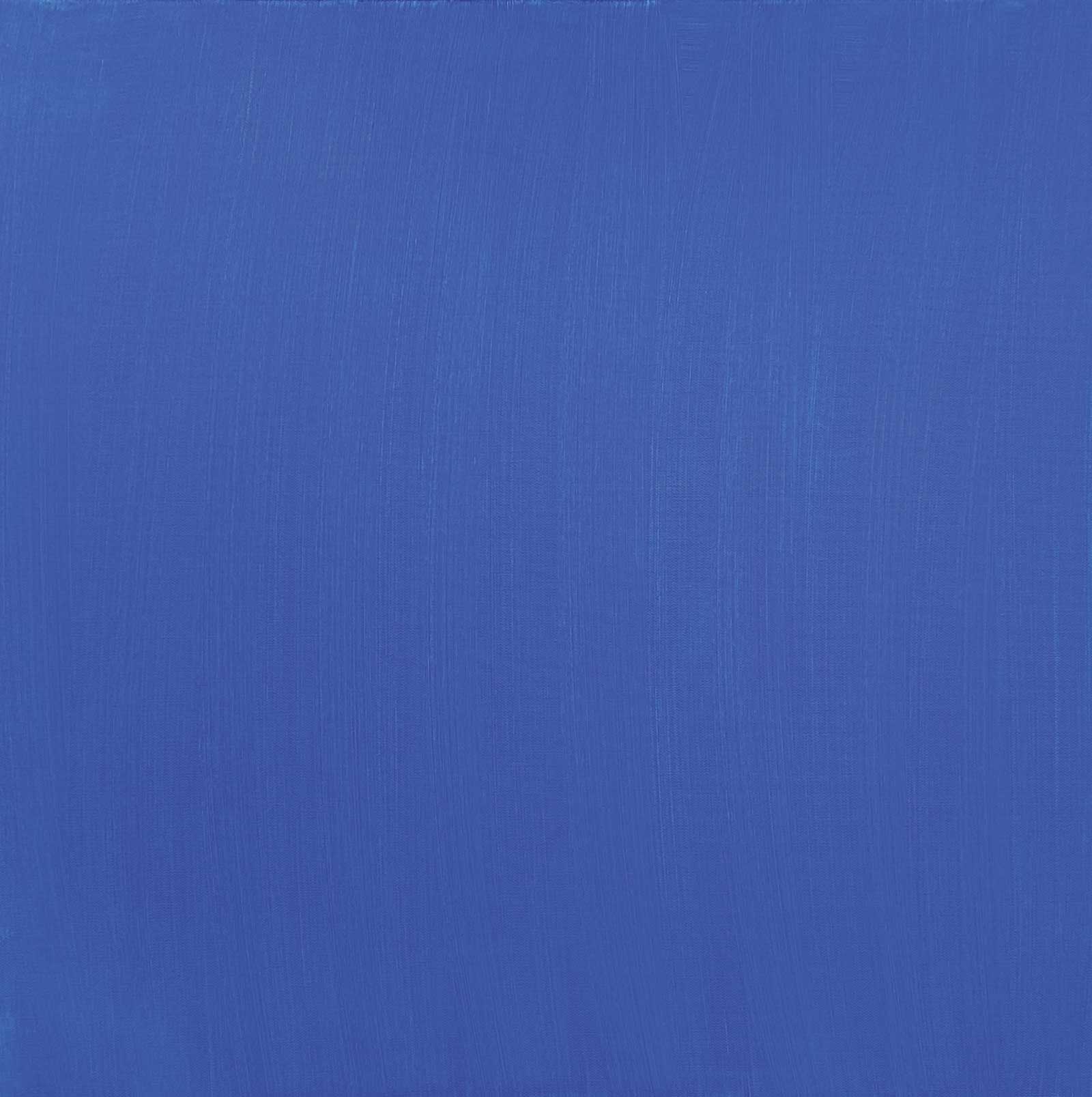 Stage 1
Stage 1 Toning the Canvas
I always begin by toning my canvas. The colors I use for this can vary and are selected based on an intuitive sense of where I would like the painting to evolve. Here, I am beginning with cobalt blue. The color I start with sets the mood and tone for the rest of the painting; some of this color will always “peek through” in the finished painting.
WHAT THE ARTIST USED
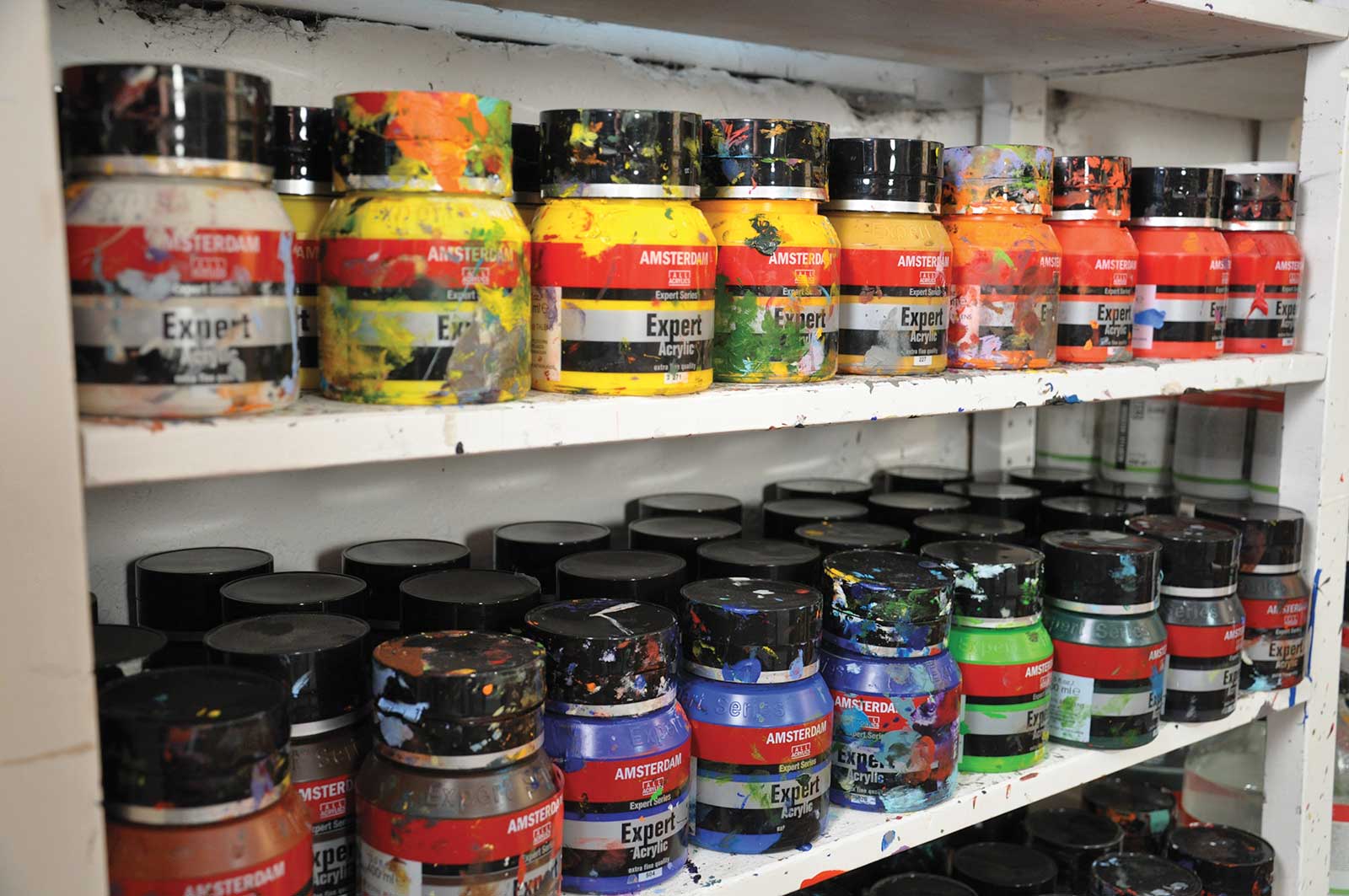
Amsterdam Expert Acrylics
Titanium white 105, Titanium buff 290, Cadmium yellow medium 271, Cadmium orange 211, Cadmium red light 303, Cadmium red medium 314, Cadmium red deep 306, Ultramarine blue 504, Cobalt blue 511, Sèvres blue 530, Indigo 533, Light oxide red 339, Burnt sienna 411, Permanent green light 616, Sap green 623, Ivory black 701
Brushes and Knives
Bristle brushes (hog hair and synthetic blends) - flats, brights and filberts, sizes 4-12, Royal Talens painting knife 3010, 1", 2", 3", 6" steel blade painters putty knives
Additional Materials
4 x 24" heavy duty stretcher bars, Cotton canvas, 12 oz unprimed, Amsterdam white gesso 1001, Blue painter’s tape, 1" wide
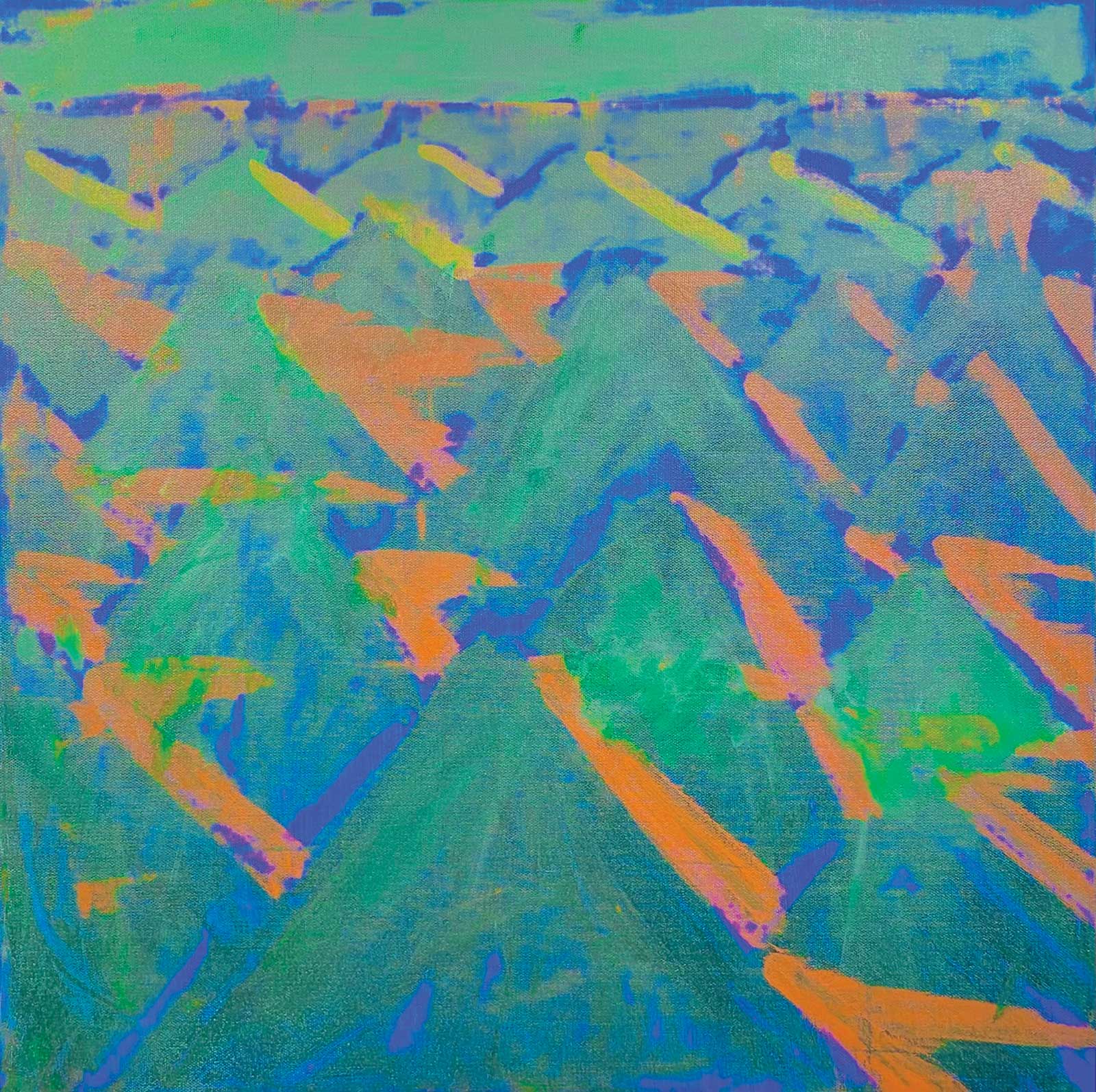 Stage 2
Stage 2 Designing the Composition
I don’t do any preliminary sketches or drawings but rather work out my composition directly on the surface of the dry-toned canvas using a brush. I am searching for something balanced yet pleasing that leaves enough room for improvisation as the painting develops. This is also where I explore color combinations, in this case using both cool and warm colors—a mixture of greens enriched with burnt sienna—that complement and contrast from the ground.
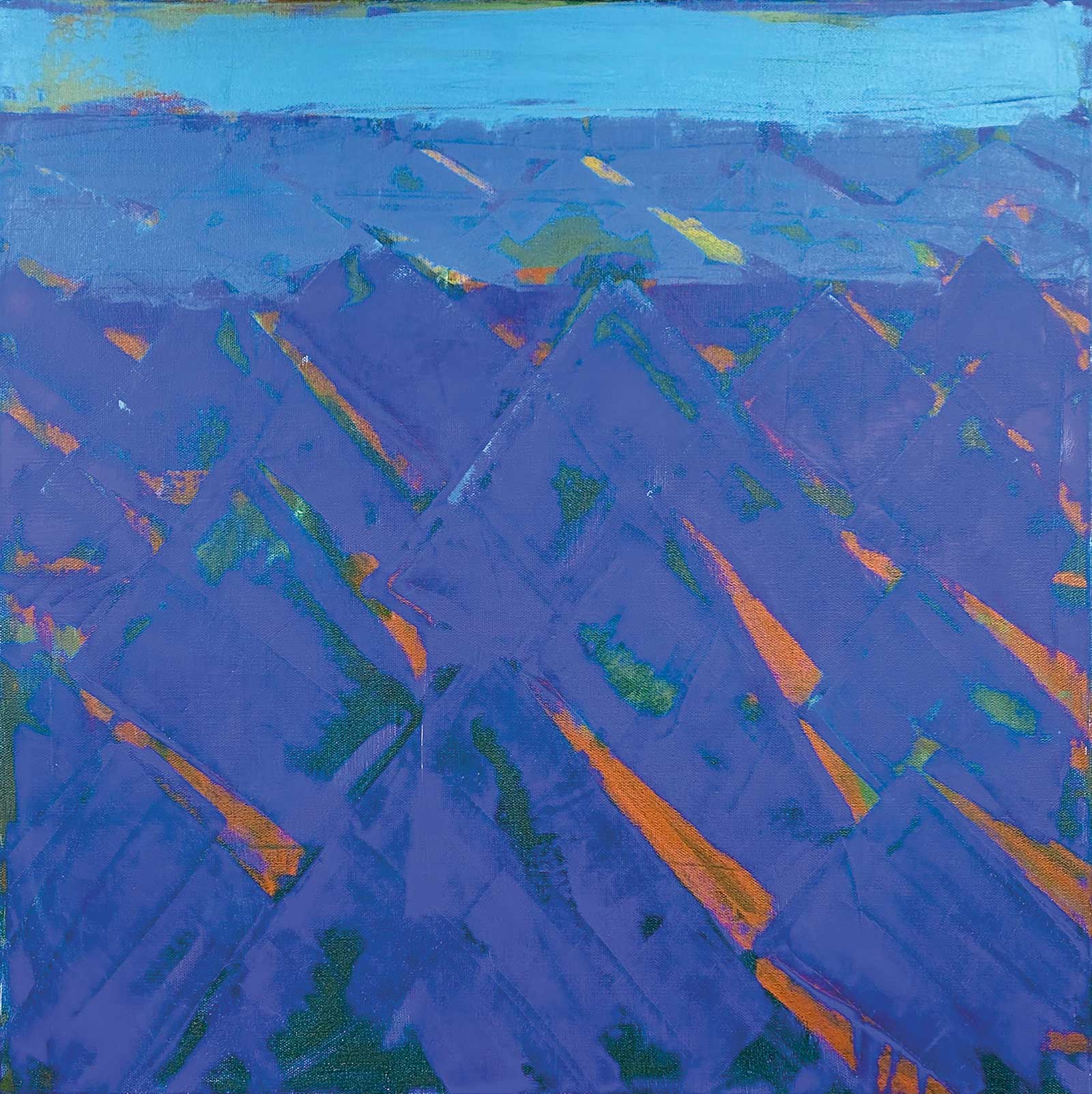 Stage 3
Stage 3 Exploration
In these early stages, experimentation and free play dominate. Rather than labor over what to do next, I work rapidly, pausing after each new application of color and evaluating the result. I avoid getting too locked into any one shape or color, instead favoring a process of creation and destruction, much like the processes at work forming the landscape.
 Stage 4
Stage 4 Taking Shape
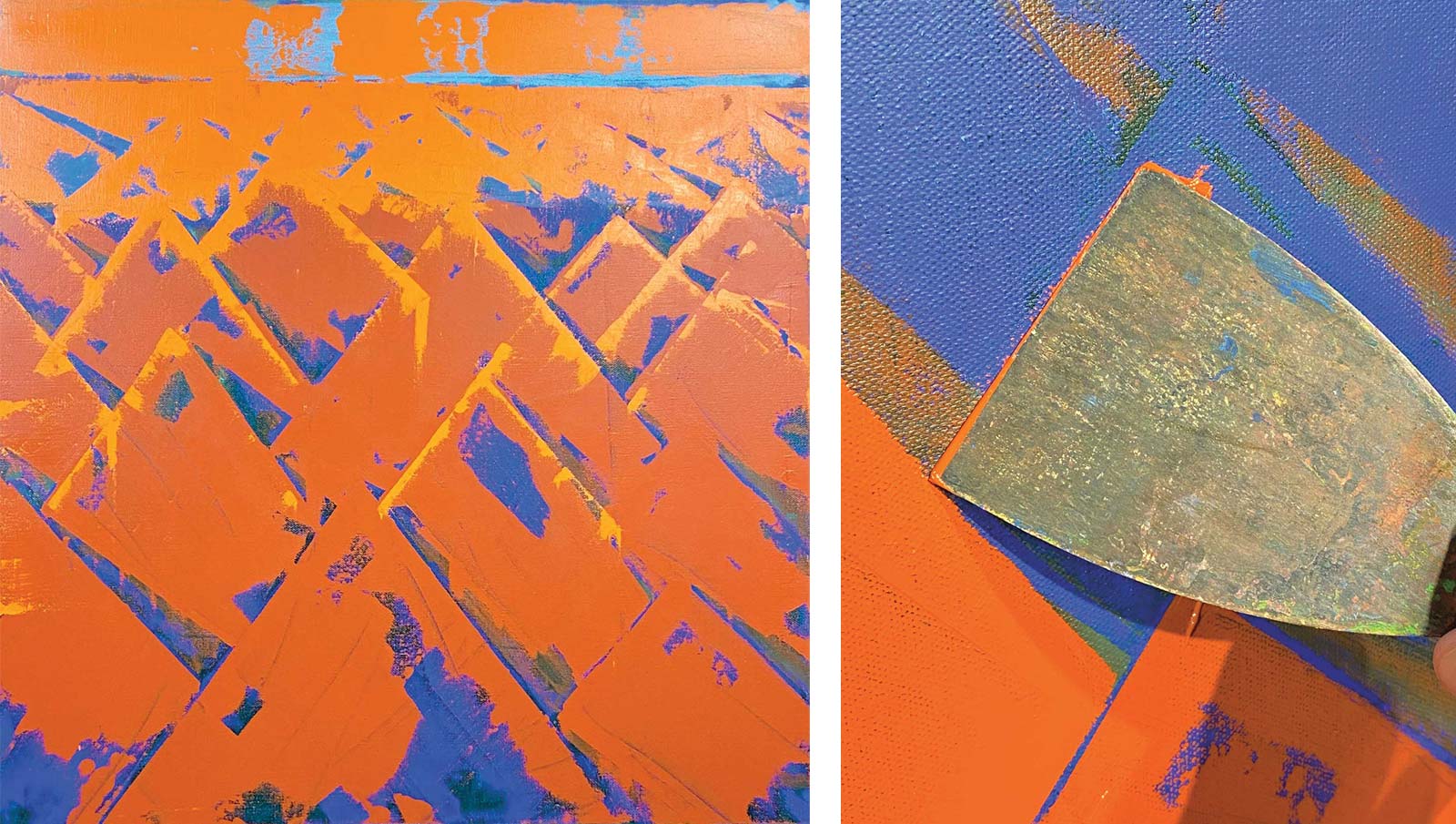
In this stage of the painting, I begin to define my shapes and composition with a complementary color, in this instance, light oxide red, applying the color using the painting knife. The painting knife allows me to create cleaner edges, where I can see the interaction of the color and form clearly. This is also where editing begins, adjusting and even removing shapes. I’ll also start making decisions on value and color.
 Stage 5
Stage 5 Refinements
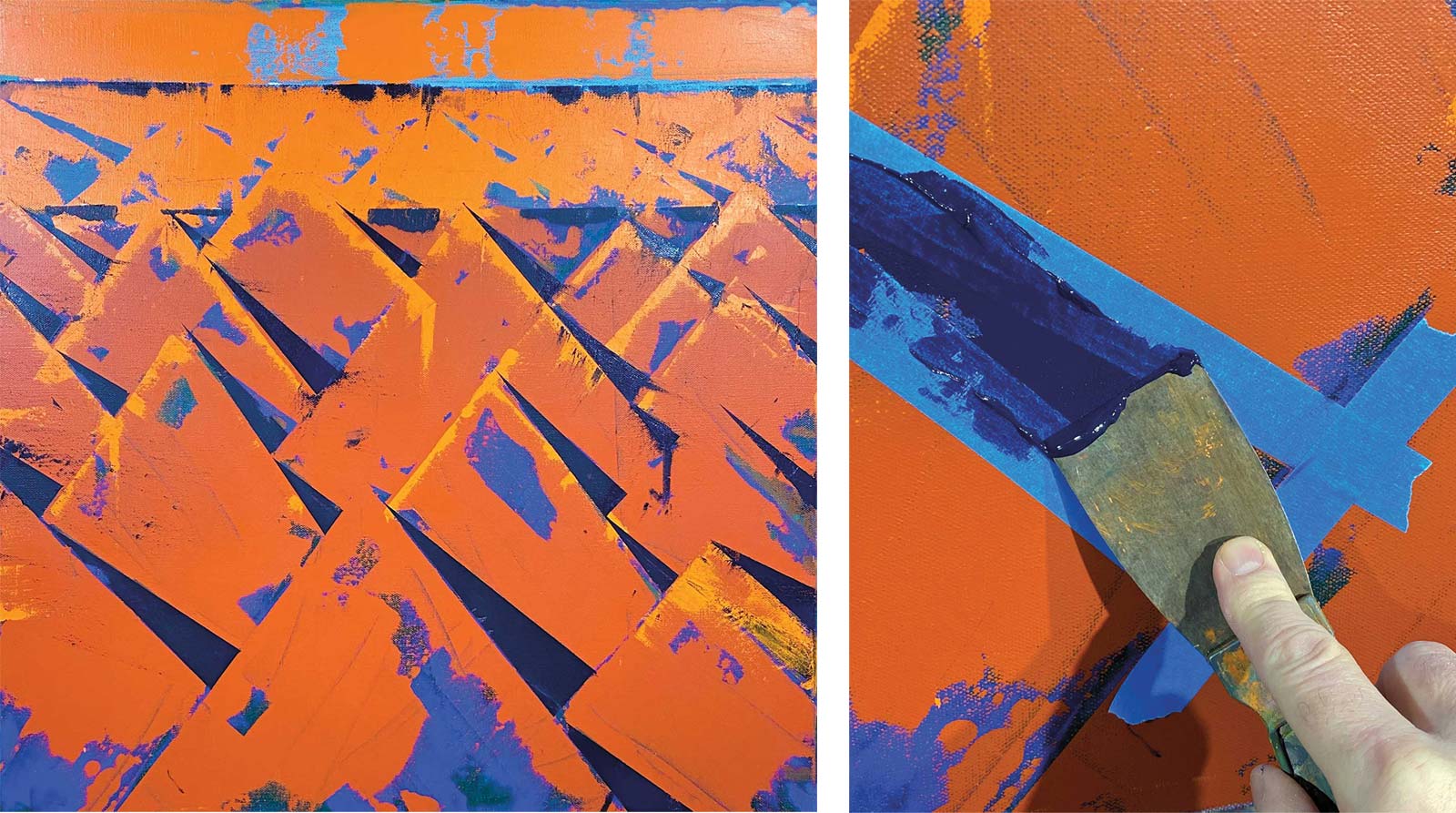
Once I have a good handle on the overall composition, I will refine elements using a masking technique with painter’s tape. Because acrylic paint dries quickly, it is excellent for masking techniques like this, which results in sharp, crisp edges. This allows me to focus on the application of the paint with the painting knife, knowing the edges will be clean. As the shapes in this stage are intended to suggest shadows, I’m using a rich Indigo. This cool dark blue creates a great sense of depth.
Amsterdam Expert Acrylics
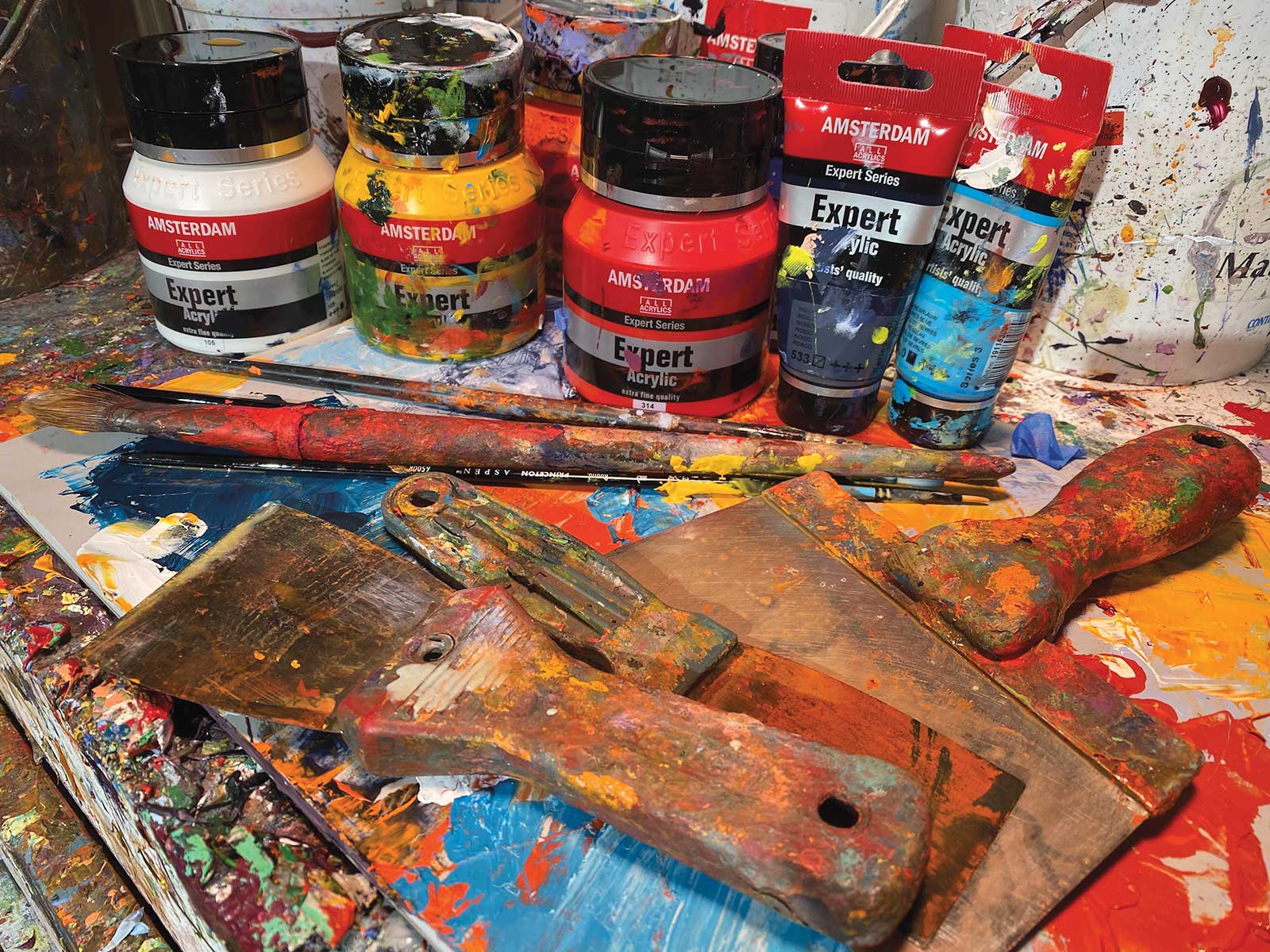
The first artist acrylic paints, as we know them today, were introduced in the 1950s. By the end of the last century, they had become the most used painting medium around the world and continue to grow in popularity, primarily because of their versatility and ease of use. As a paint binder, the acrylic polymer emulsion has many advantages over other paint binders like linseed oil or gum arabic: greater resistance to moisture, better adhesion, superior resistance to blistering and cracking, is non-yellowing and alkali resistant. While acrylic is a plastic, not all plastic is acrylic. Acrylic has outstanding strength, optical clarity and superior weathering properties compared to many other plastics. Amsterdam Expert is one of Royal Talens’ highest-quality professional acrylic paints. It boasts superior pigmentation, which means excellent tinting strength for better color mixing. The extra-fine grind on a triple-roll mill ensures the highest pigment dispersion for more brilliant and true color. Only high-quality, lightfast pigments are used to ensure the paint’s archival quality. The 70-color line includes opaque and transparent colors, providing a complete palette for a variety of techniques and color combinations. Artist-exclusive colors like cadmium and cobalt are included. The high-viscosity heavy body professional paint allows for firm brushstrokes and knife marks, great texture and a soft satin finish. Amsterdam Expert’s 100 percent acrylic resin binder produces an exceptionally durable, alkali-resistant paint film, making it ideal for interior or exterior wall painting. A proprietary preparation technique makes the paint virtually odorless, perfect for comfortable use in personal workspaces, classrooms and other shared spaces.
 Stage 6
Stage 6 Bold Colors
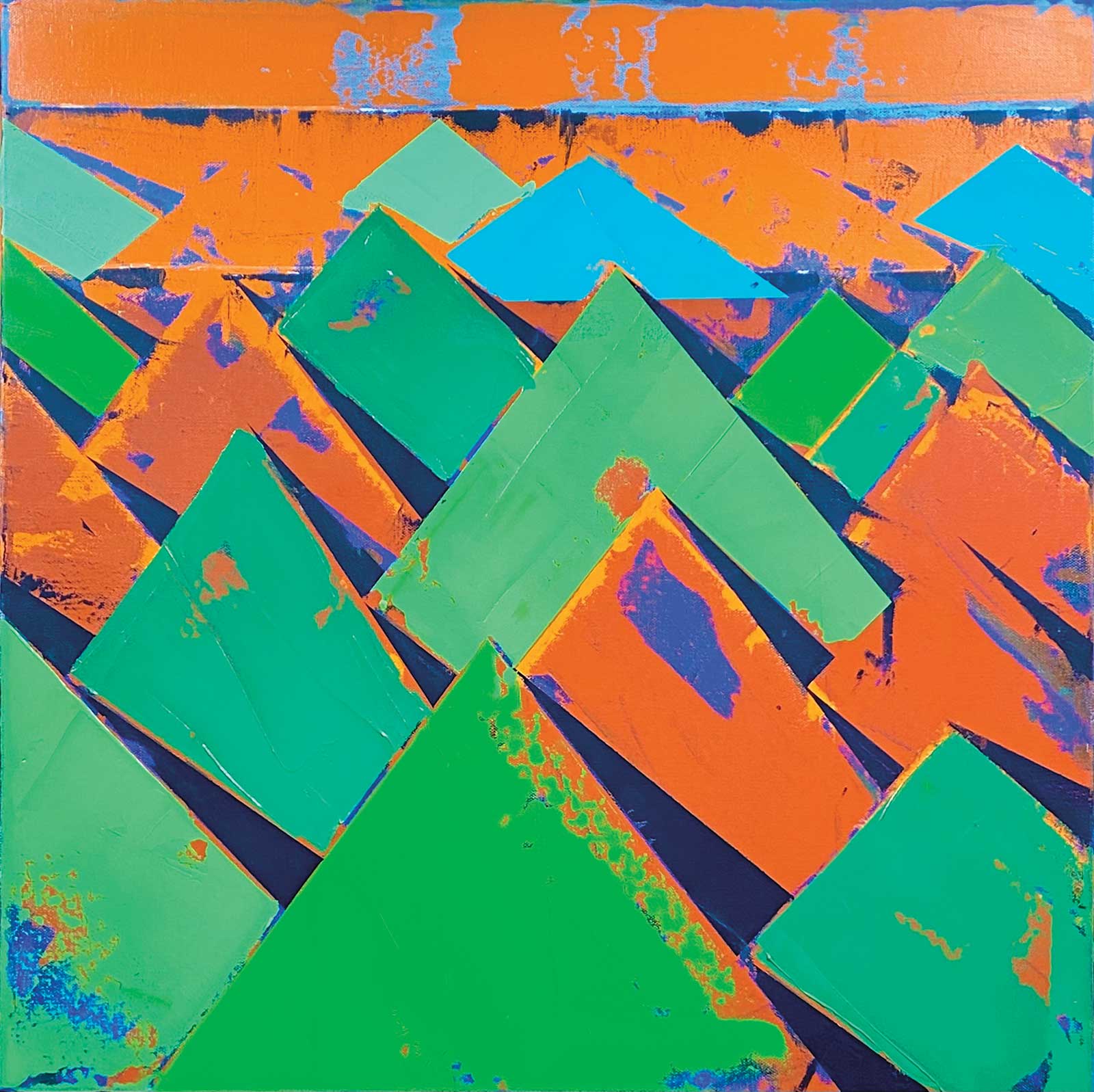
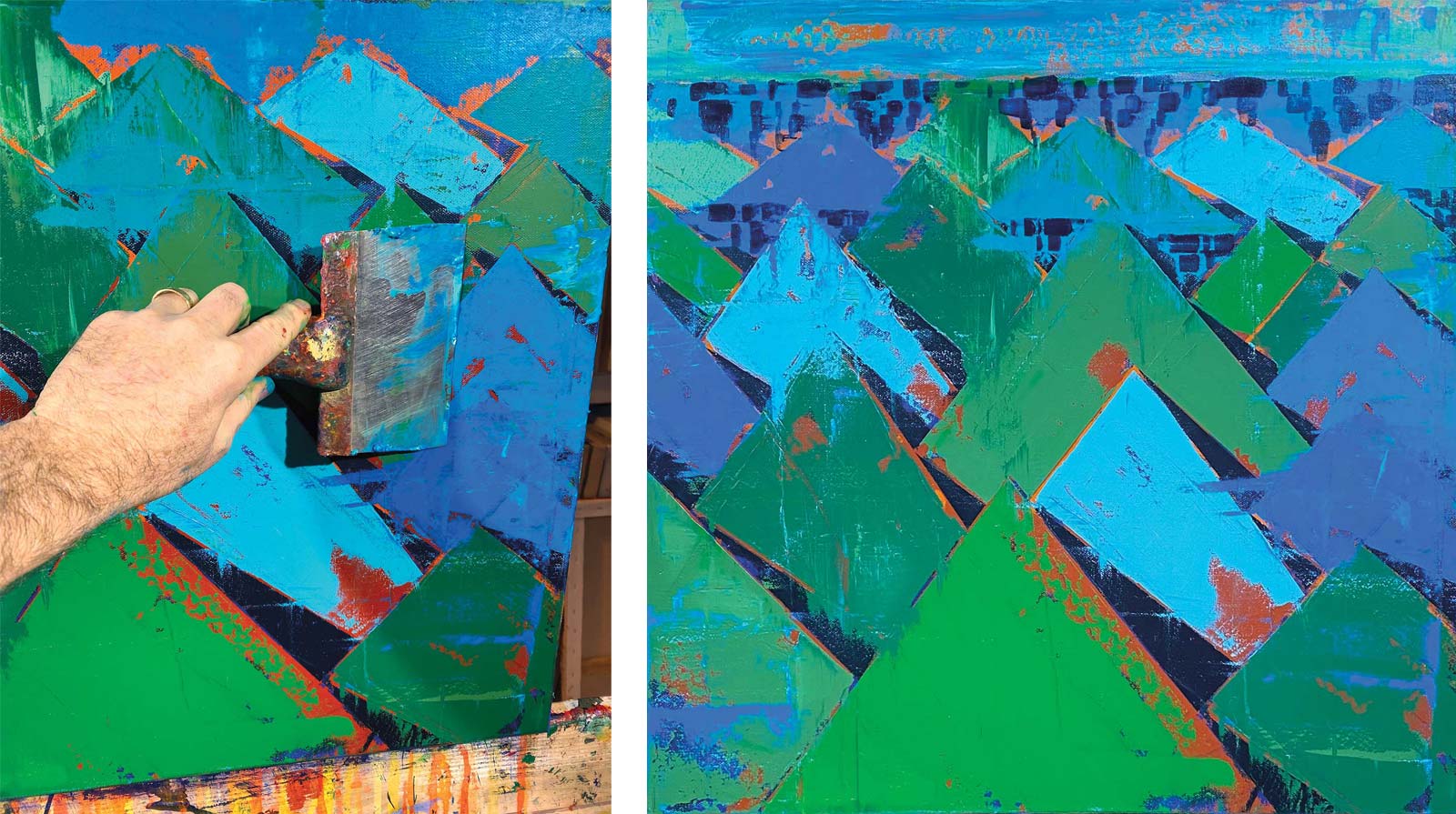
Now that I’m satisfied with the initial shapes, value and composition, I begin experimenting more boldly with color. In this stage, I’m not working toward something as much as I’m engaging in a dialogue. I have chosen a mixture of sap green and permanent green light. The strong contrast in temperature and intensity to the light oxide red will create a powerful dynamic at the edges of the shapes. As I continue to layer the colors, areas of broken color will emerge to add interest for the viewer as well as tell the story of the process of the painting.
My Design and Composition Tactics
- Value – While my paintings are abstract, I employ many of the same strategies as traditional landscape painters, including the use of atmospheric perspective and warm and cool colors to create a sense of depth.
- Color – I gravitate toward bold colors. While many of the colors I employ can be found in the visual experience of the landscape, I’m less concerned with using colors to describe objects and more in favor of exploiting the energy, drama and emotion associated with color itself.
- Composition – I’m always looking for a certain sense of balance that melds the symmetrical and asymmetrical, the iconographic and the narrative. I often work on a square canvas as it frees me from the associations of figure (vertical) and landscape (horizontal).
- Surface (Texture) – Much of what interests me in painting lies on the surface of the canvas. The textures and effects I can create by layering, dragging and scrapping paint provide a record of my interaction with the material, a sense of time and place, and are akin to those forces that shape the landscape itself.
- Layering (Broken Color) – Building up multiple layers of paint is essential to developing the surface texture I desire. Through this process, I can exploit the nuances of color revealed by allowing previous layers of paint to show through at the edges of shapes and where I let the brush and painting knife drag and skip. This technique creates interesting details and focal points, telling the story of the creation of the painting.
 Stage 7
Stage 7 Large Palette Knife
As the paint is drying, I’ll drag my largest palette knife across the entire painting surface in both horizontal and vertical strokes. This process does a couple of things—it helps speed up the drying so I can get to the next layer sooner, and where the paint is still wet, the smears and smudges create a looser and more spontaneous surface. The result generates some exciting surprises. Most importantly, it keeps me from getting too hung up on small details.
 Stage 8
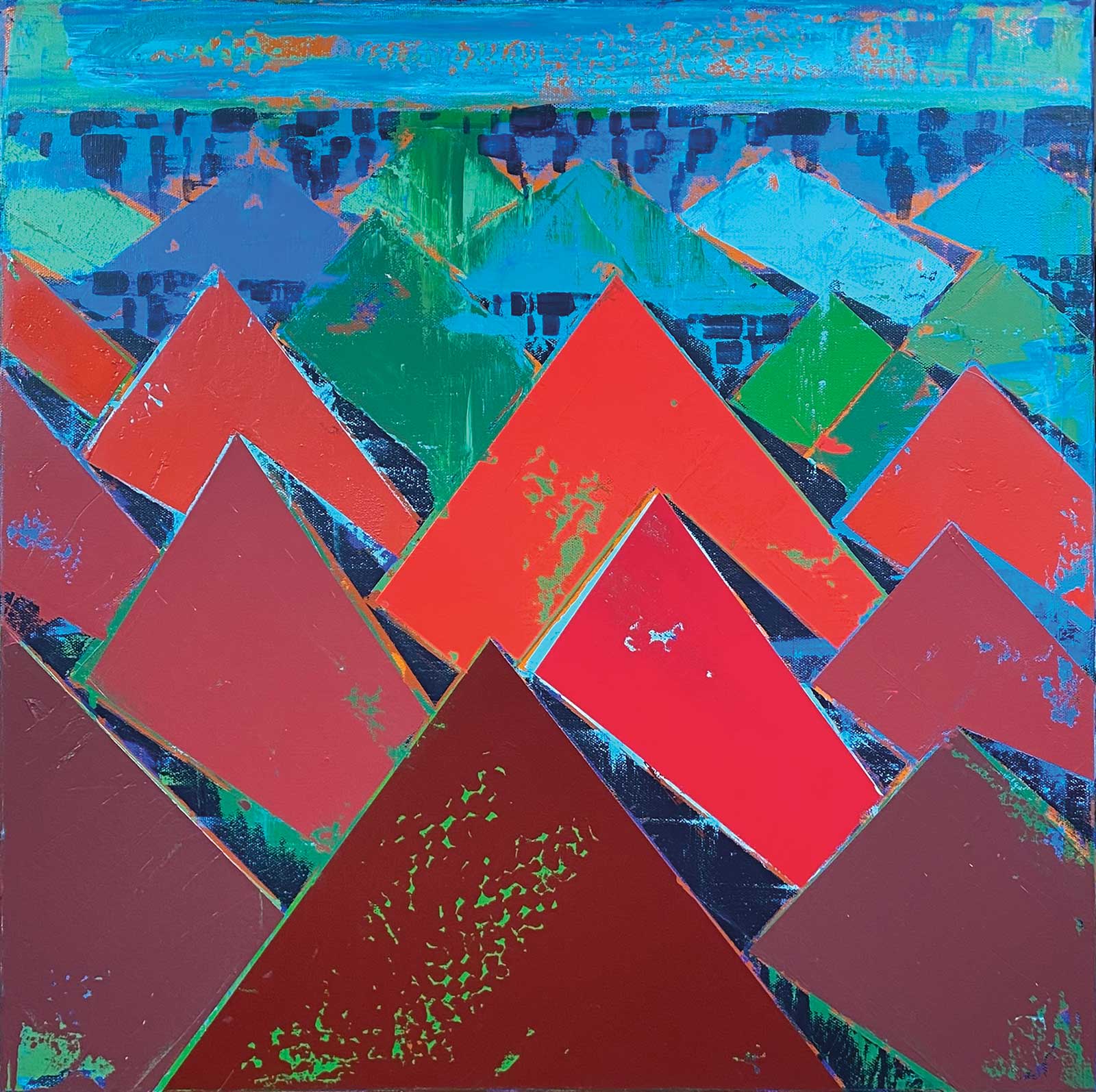
Stage 8 Juxtapositions of Color
At this stage, the process repeats, again employing bold color juxtapositions with a mixture of different cadmiums.
 Stage 9
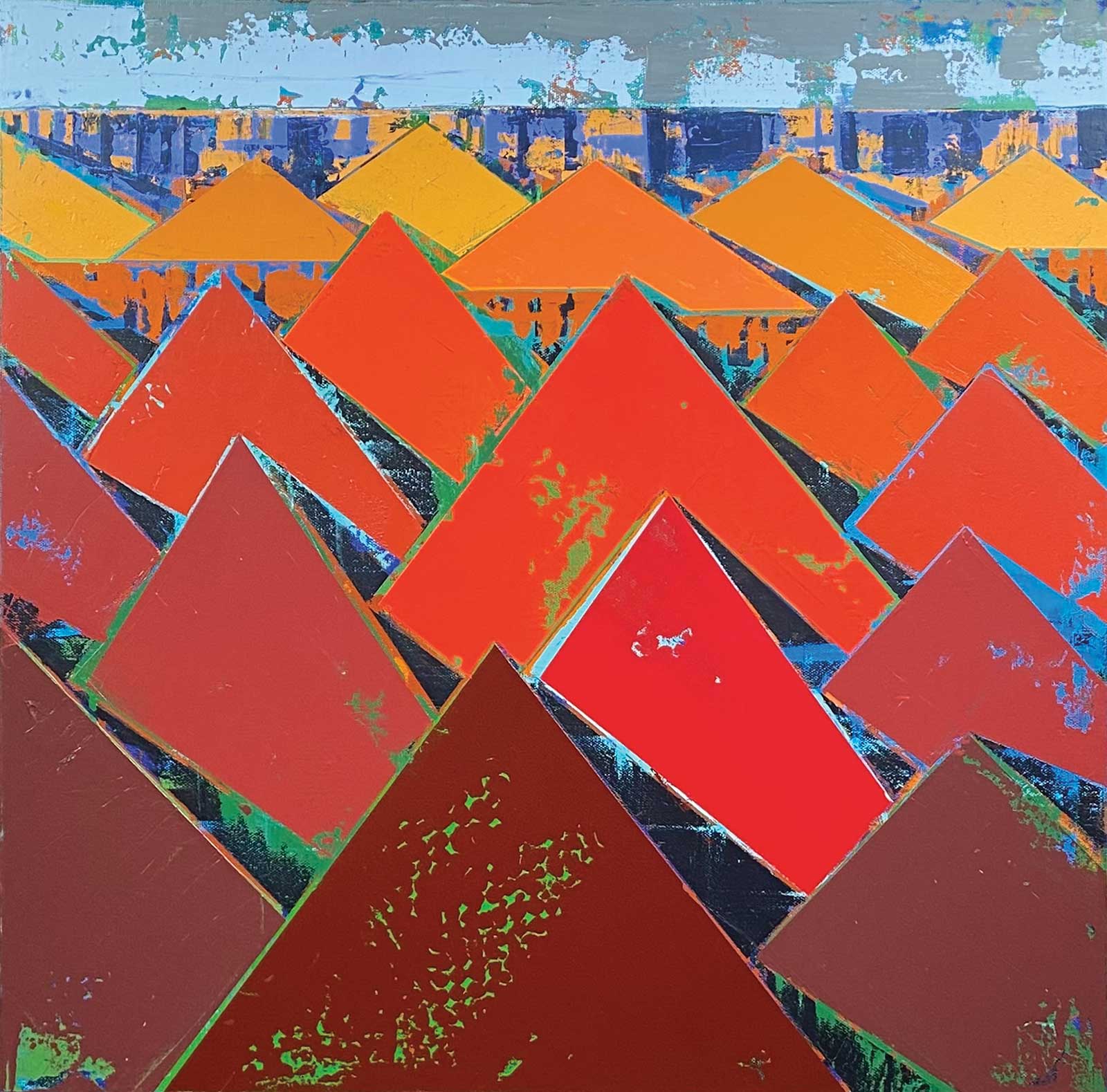
Stage 9 Interesting Details
As the finished painting emerges, I refine colors and values and create exciting details that speak to the subject matter. I’m looking to make marks specific enough to make the association needed to tell the story without being literal. Abstract painting, for me, is a balancing act of creating descriptive marks that speak to our collective visual experiences without losing their core identity as a record of the paint on the canvas.
 Stage 10
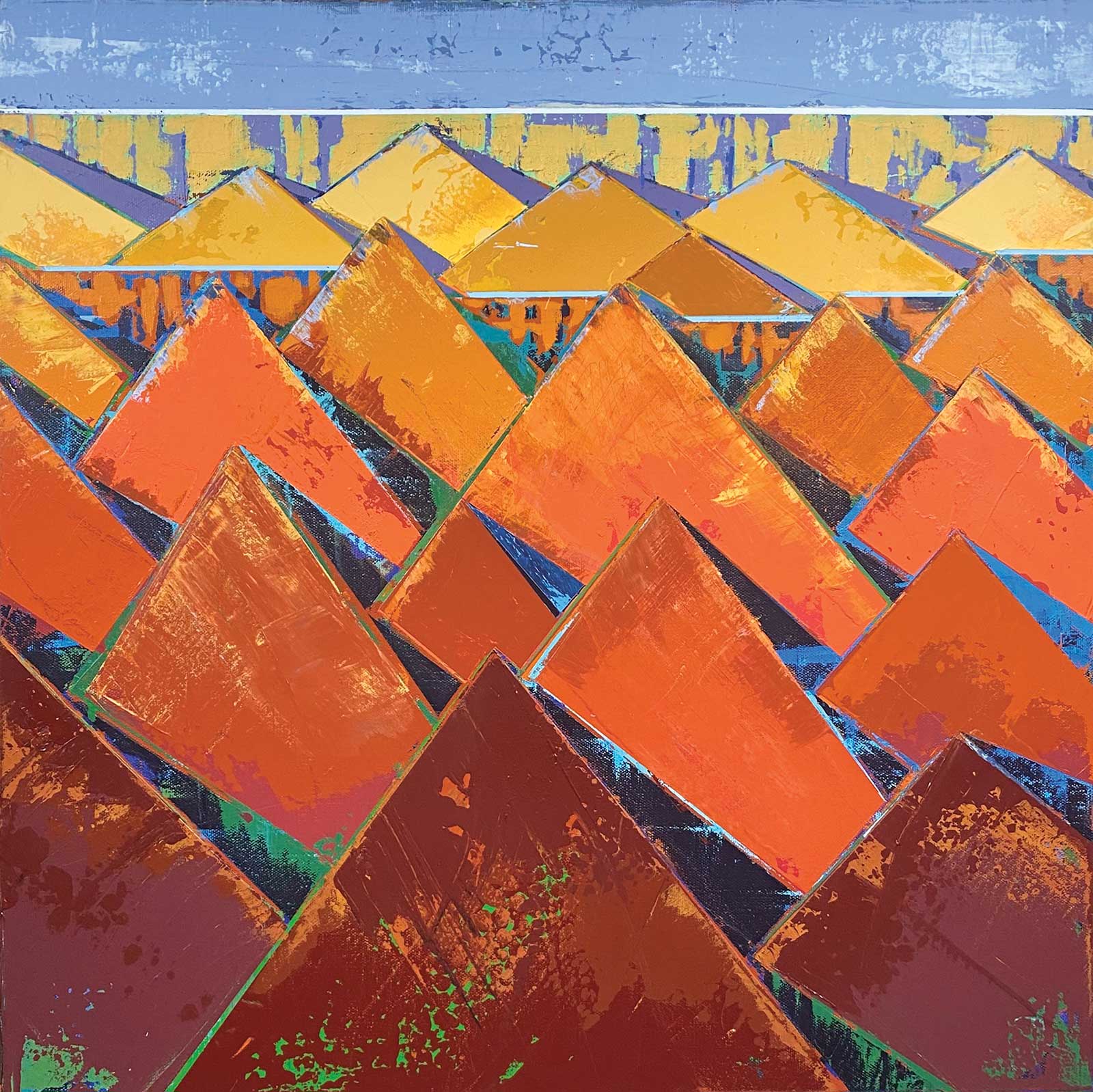
Stage 10 Finished Artwork
Gem Mountain, acrylic on canvas, 24 x 24" (60 x 60 cm) To finish the painting, I adjust the colors’ value and intensity. I will use a painting knife to pull color from one shape to another to unify the painting and create looser, more interesting marks and surfaces in the final application. I’ve also added compositional elements where I thought changes were needed. In the end, I employ a masking technique to create sharp horizontal lines defining what can be read as the horizon. This provides a visual cue for the viewer when reading the painting, marking the transition between the foreground and background.
About the artist
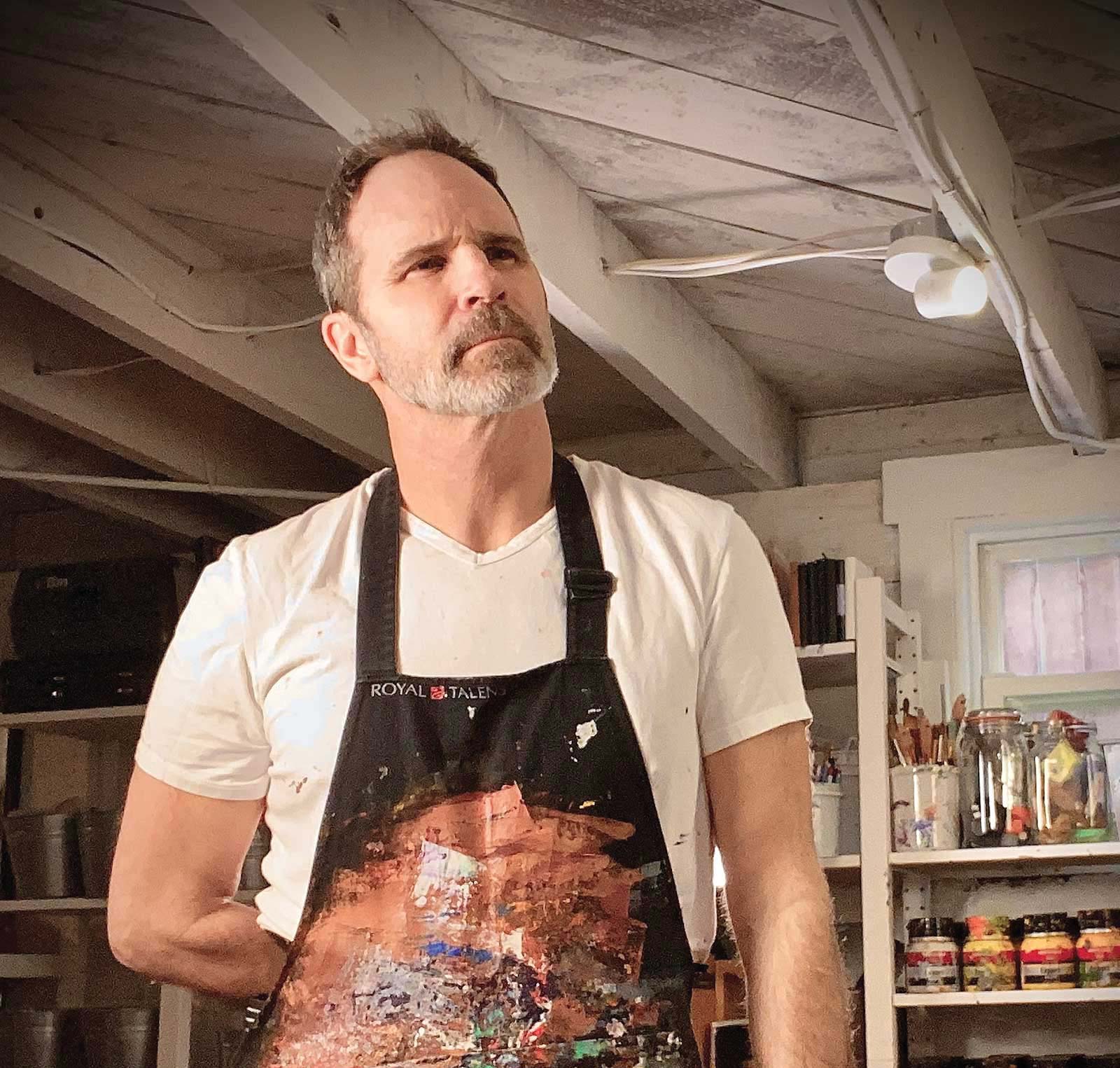 Jeff Olson
Jeff Olson is a Seattle, Washington-based artist with a significant and original body of work spanning more than 30 years. He was brought up in the Inland Northwest among the lakes, rivers and mountains of Eastern Washington, North Idaho and Western Montana and these experiences still resonate within his art today.
Olson holds an MFA in painting and drawing from Washington State University. Since graduating, he has lived and traveled across North America, and journeyed throughout Europe and into North Africa, developing a passion for art history and art education along the way. He has more than a decade of college and university teaching experience in studio art and art history, and 25 years in the art materials industry with product expertise in a variety of mediums.
Olson is currently the director of art education for Royal Talens of North America. He speaks and leads workshops regularly at colleges, universities and art organizations. Olson’s lectures deliver meaningful insights into the history, development and application of artists’ materials.
Represented by
Marmot Art Space, Washington, USA, marmotartspace.com
Contact at
jeffolsonart.com