



For as long as I can remember, I have been an observer with a deeply rooted desire to be an artist. As a rural farm kid, I quietly took in the world around me, but there was a disconnection between what I saw and the understanding of knowing how to paint it. Fast forward a few years, and with a degree in interior design and architecture under my belt, a husband and a young family of three boys, we returned to farm life after 10 years in the city. The impact of what I saw around me literally took my breath away. I decided that if the landscapes around me created such an emotional response, I should try to bring that same emotion to the canvas.
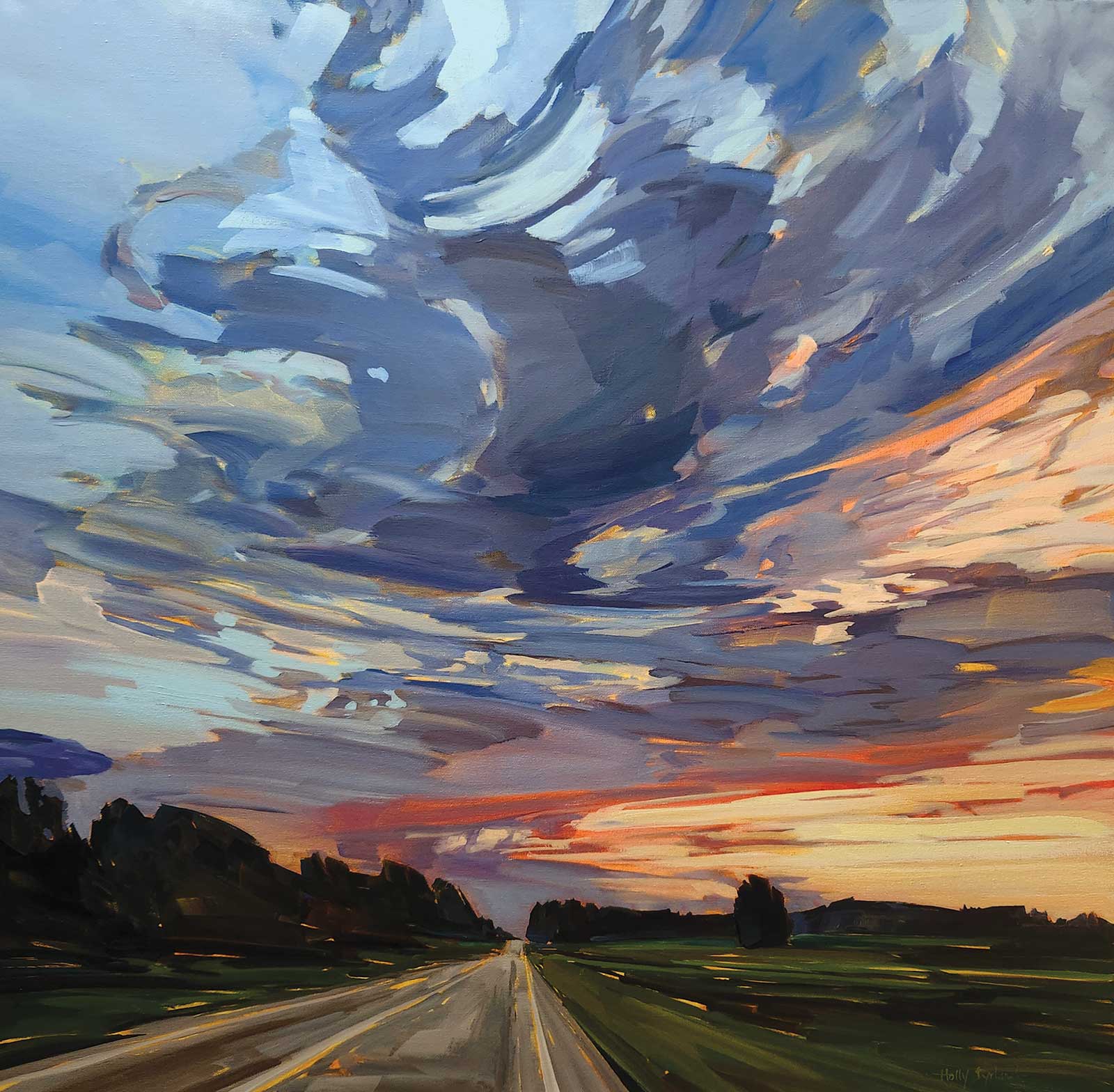
Dusk, acrylic, 36 x 36" (91 x 91 cm) This is a high contrast painting with bold and loose brushwork, evoking movement and changing light.
A lifetime of observing as well as my design training helped me to focus on composition first. Quick sketches/thumbnails are incredibly useful to simplify shape and play with composition. For reference, I found the idea of notan drawings fascinating as they really focused the balance in the composition. I found that the more I did this, my sketches would continue to simplify down to the main idea. Once I knew “the main idea,” I could begin to create the story. Developing the story of a painting and captivating the audience is very important, and I do this in a few ways. First, I really believe in instinctive painting, where I deliberately try to not copy my reference material. I do this because freedom of expression goes a long way in creating the energy in a piece, and it’s my desire to convey the emotion in that particular scene. I lay out paint on my palette in the same order so that I don’t need to think about where my color is or what I need next. Once I start painting, I don’t like to stop. I use big brushes and I show up to have fun. I want to capture the emotion in the moment I am painting, and I develop this with grand gestures, bold brushwork, interesting compositions and intense movement. My subject matter is literally out my window and my desire is to let you feel the breath of these places.
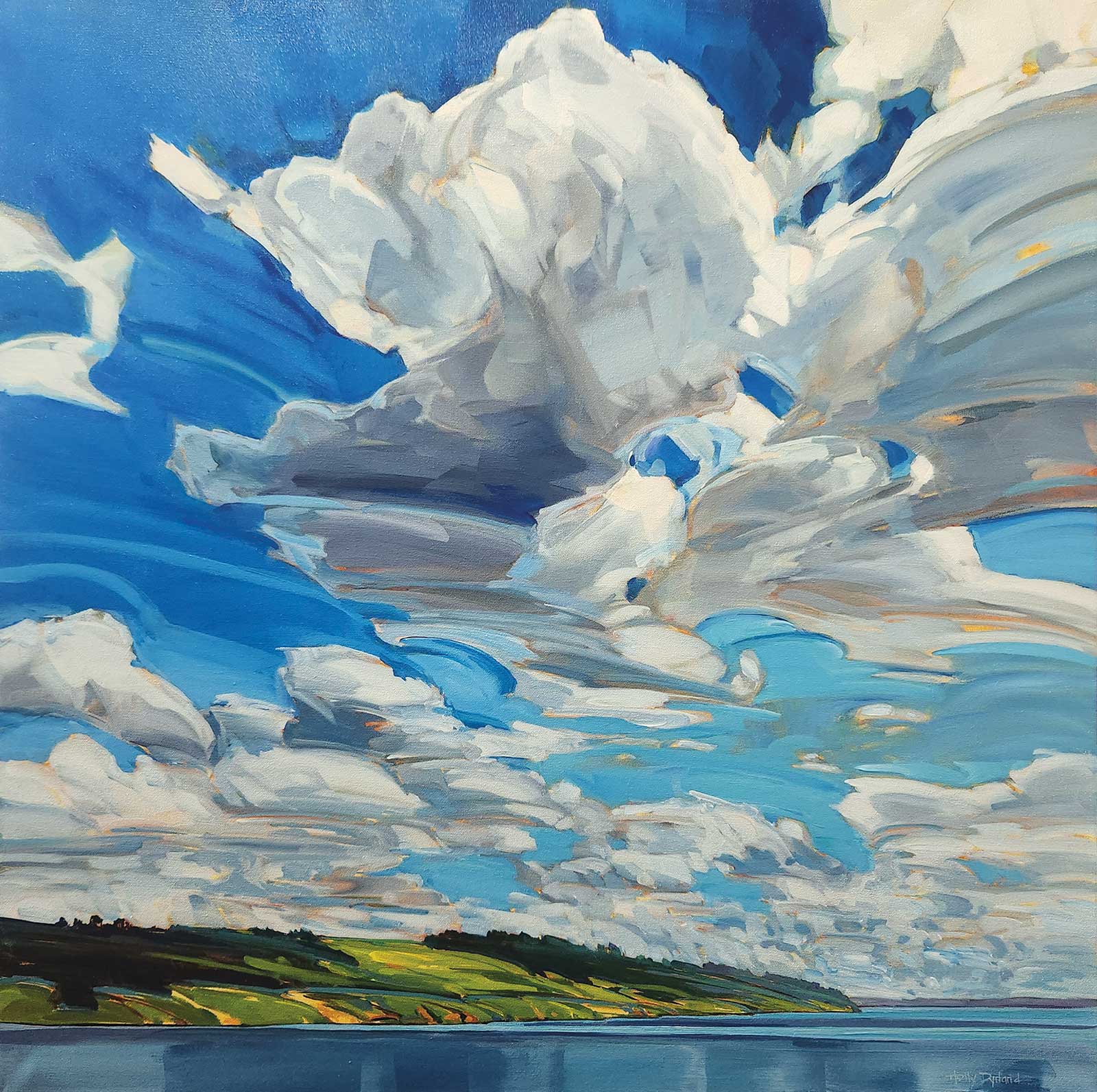
Summer Skies at Cole Lake, acrylic, 36 x 36" (91 x 91 cm) Here, I’m using bold, directional brushwork and a very distinct scale (large foreground clouds to a small body of water). This gives the sense that the clouds are moving and are very large overhead on this sunny summer day.
Once my initial pencil sketch is on the canvas, I deepen the sketch by hard lining it with paint. Then I cover it all up with a transparent glaze over the whole canvas, wiping out the lightest spots, essentially building a value-scaled monochrome painting.
Working top to bottom, I start by adding glazes of color—blocking in the sky, for example, which will change in value and saturation as I work through the painting. This creates fantastic layers while helping me to further see pattern and exaggerate shape. Changing the value also enables the creation of distance, especially closer to the horizon line in a landscape.
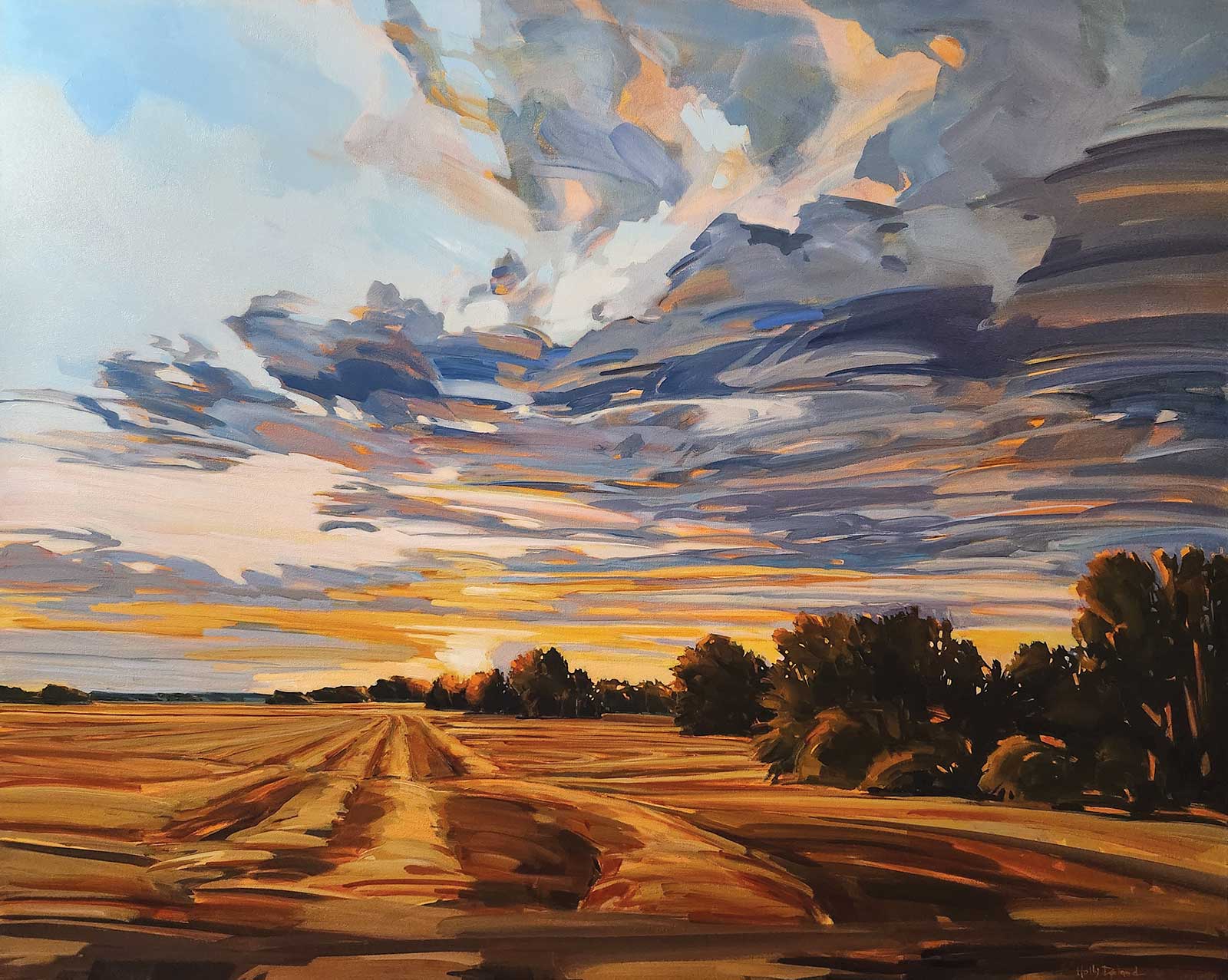
Evening Glow, acrylic, 48 x 60" (121 x 152 cm) It was important in this painting to create a warm evening light. I’m maintaining bold brushwork to accentuate movement and shape. Warm glazes were used over the field and trees to unify and add a similar color tone. The overall atmosphere was also achieved with a darker, more neutral color palette.
Being very sensitive to the direction of light, I apply paint loosely and quickly, working between lights and darks to establish volume in the spaces and shapes. Maintaining some of the translucency is important as it adds a lot of depth; the colors created with the layering of glazes can be both subtle and spectacular! As the painting progresses, I like to bring bold brushwork and more opaque paint into areas that I want to pull forward, always exaggerating depth of color for a bold aesthetic.
The final stage of my work is where I finesse the painting. I soften edges, add glazes to push areas back and apply deeper colors to pull areas forward. I clean up areas that are a bit messy, and I assess for one final bold stroke of paint to break up an area or enforce a focal point. It’s my goal to help people to see the world around us for how incredible it is.
Let’s have a look at what I mean.
My Art in the Making Day on the Water: Georgian Bay
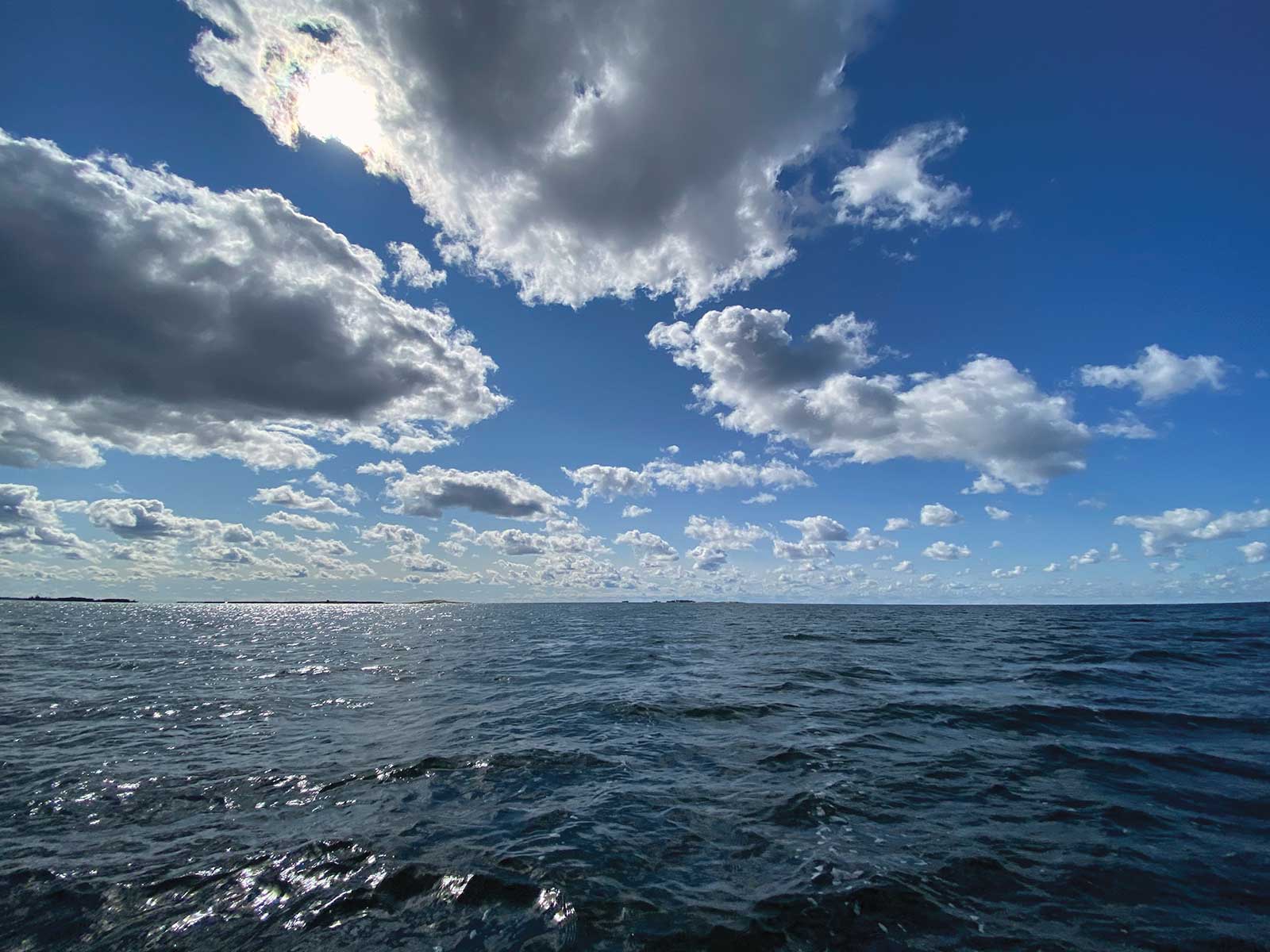
Reference Photo: Georgian Bay, Ontario. Photographer: Mark Fletcher.
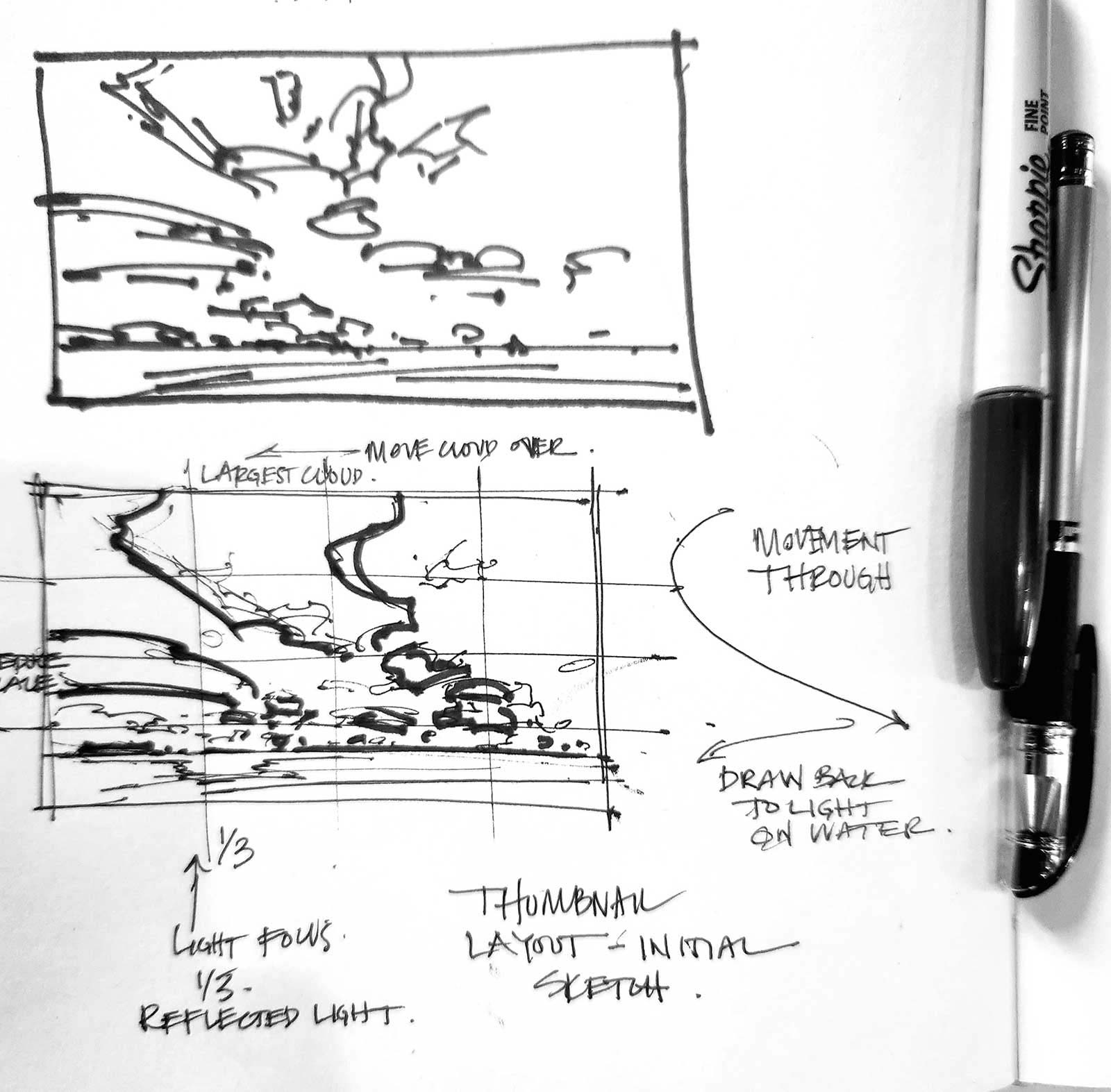 Stage 1
Stage 1 Thumbnail Drawing
I begin with thumbnail compositional drawings focusing on form, movement and the emotional impact of what I’m hoping to say.
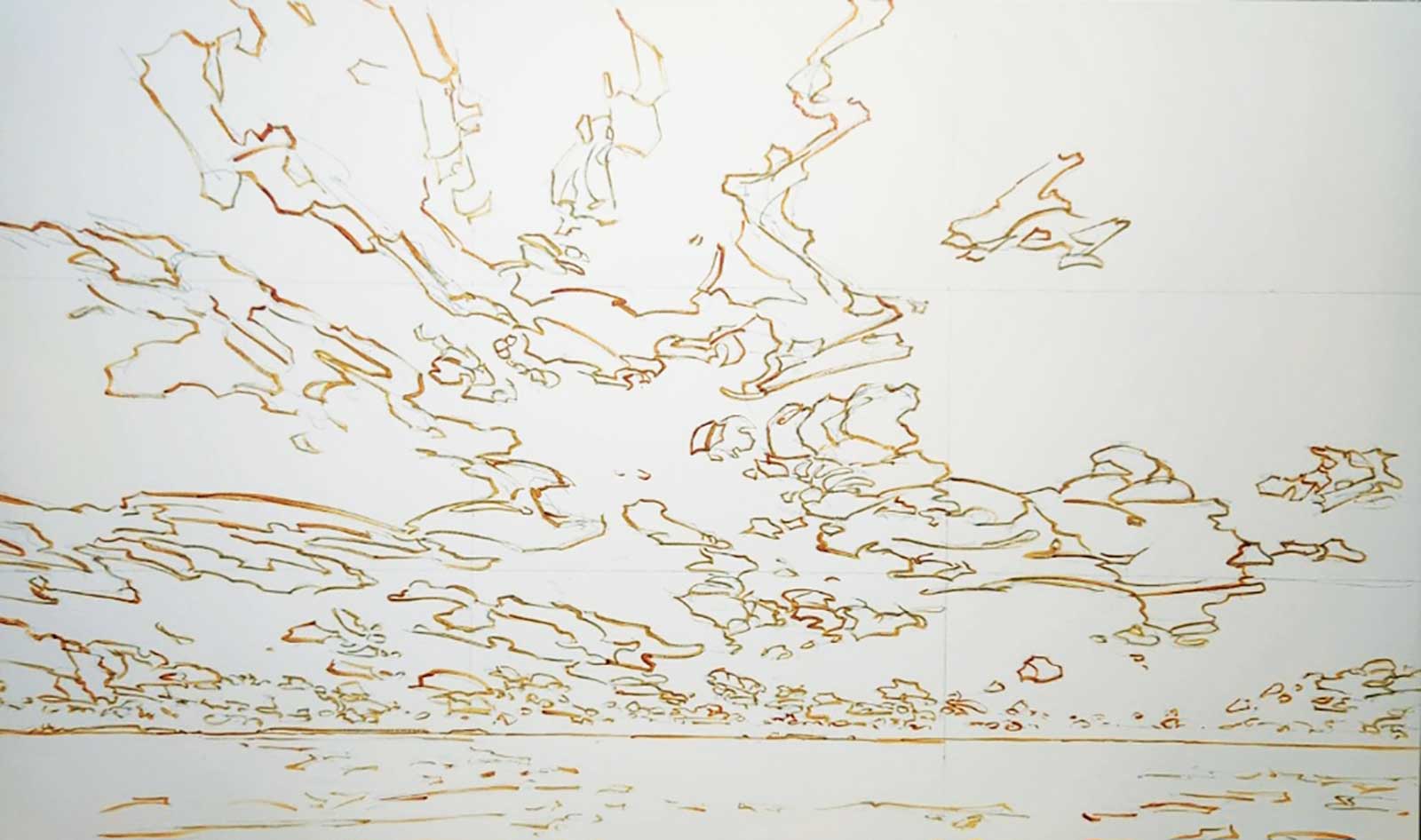 Stage 2
Stage 2 Sketch
Then, I create a hardlined sketch on canvas, pencil first, followed by a line drawing with fluid acrylic mixed with GAC 500 (both by Golden). This guarantees I won’t lose my pencil drawing while I build the painting. The painting is laid out based on the thumbnail.
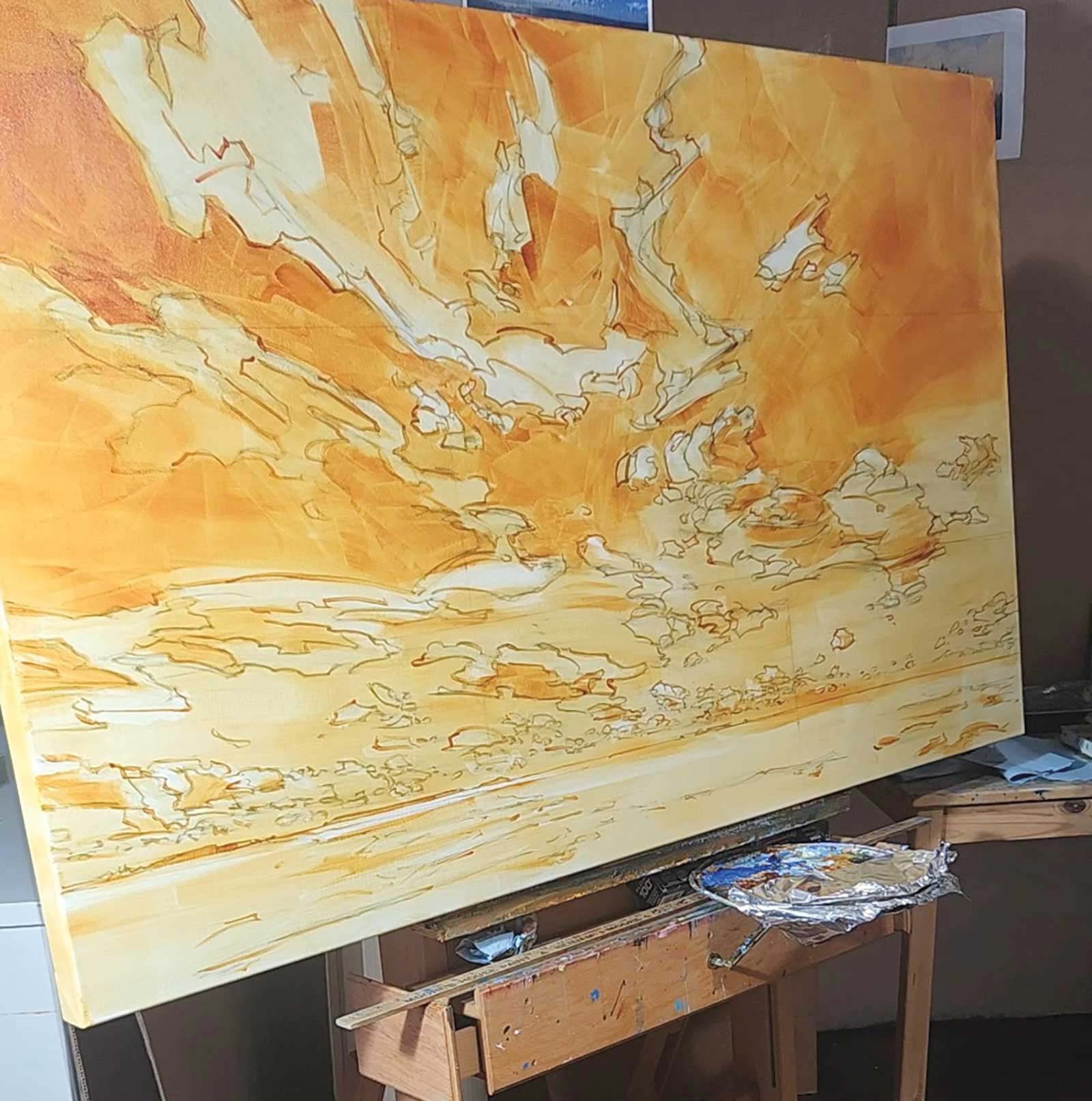 Stage 3
Stage 3 Ground Color
Here, I am showing the application of a common ground color (seen here is a transparent orange mixed with GAC 500). Areas that I want lighter I wipe out with blue cloth and add another layer of ground color to the darkest areas of the painting.
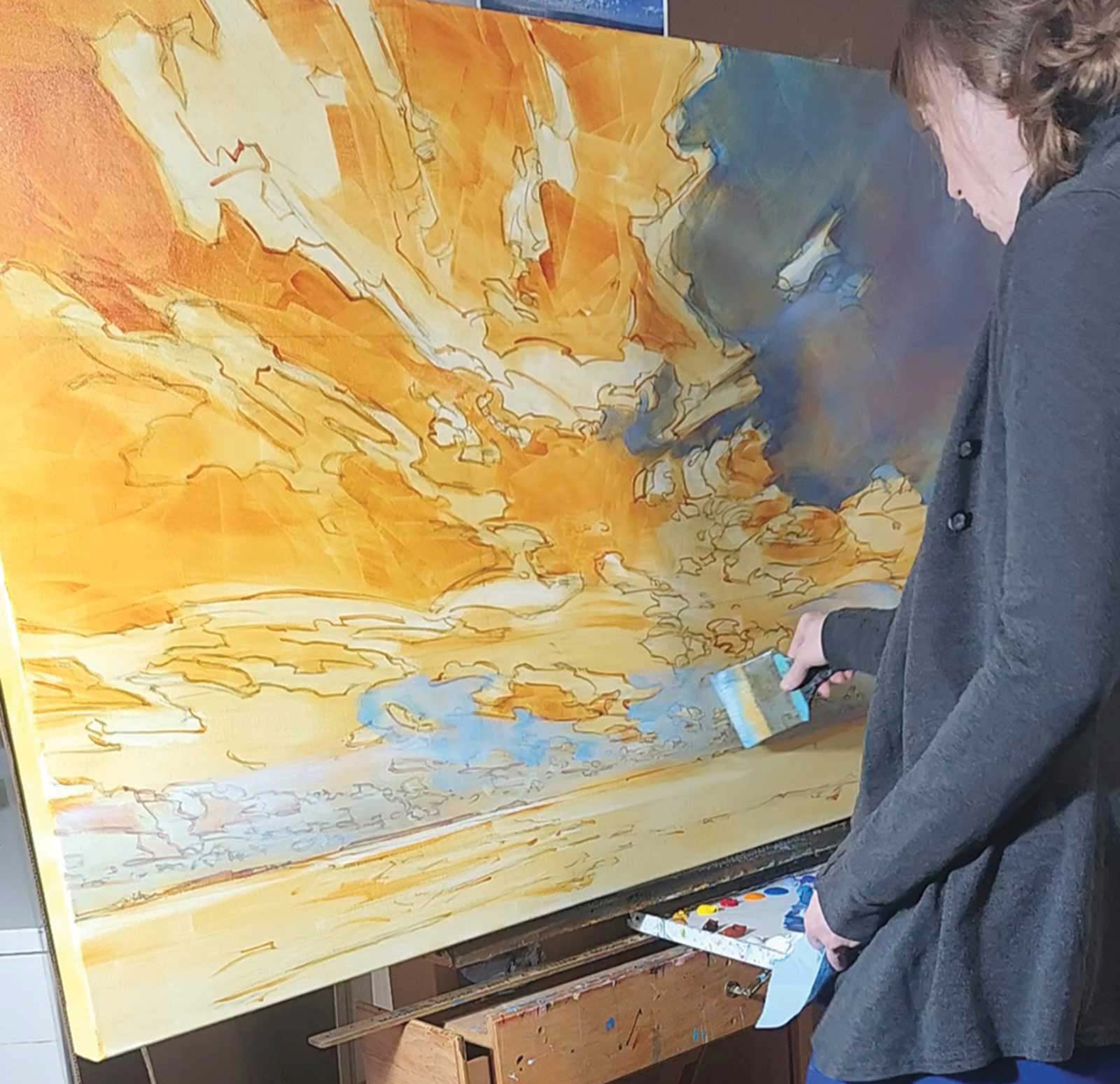 Stage 4
Stage 4 Glaze
Adding color happens quickly in layers. I start by applying a glaze—again, color mixed with some GAC 500—to block in colors, always starting with the background and working to the foreground, top to bottom.
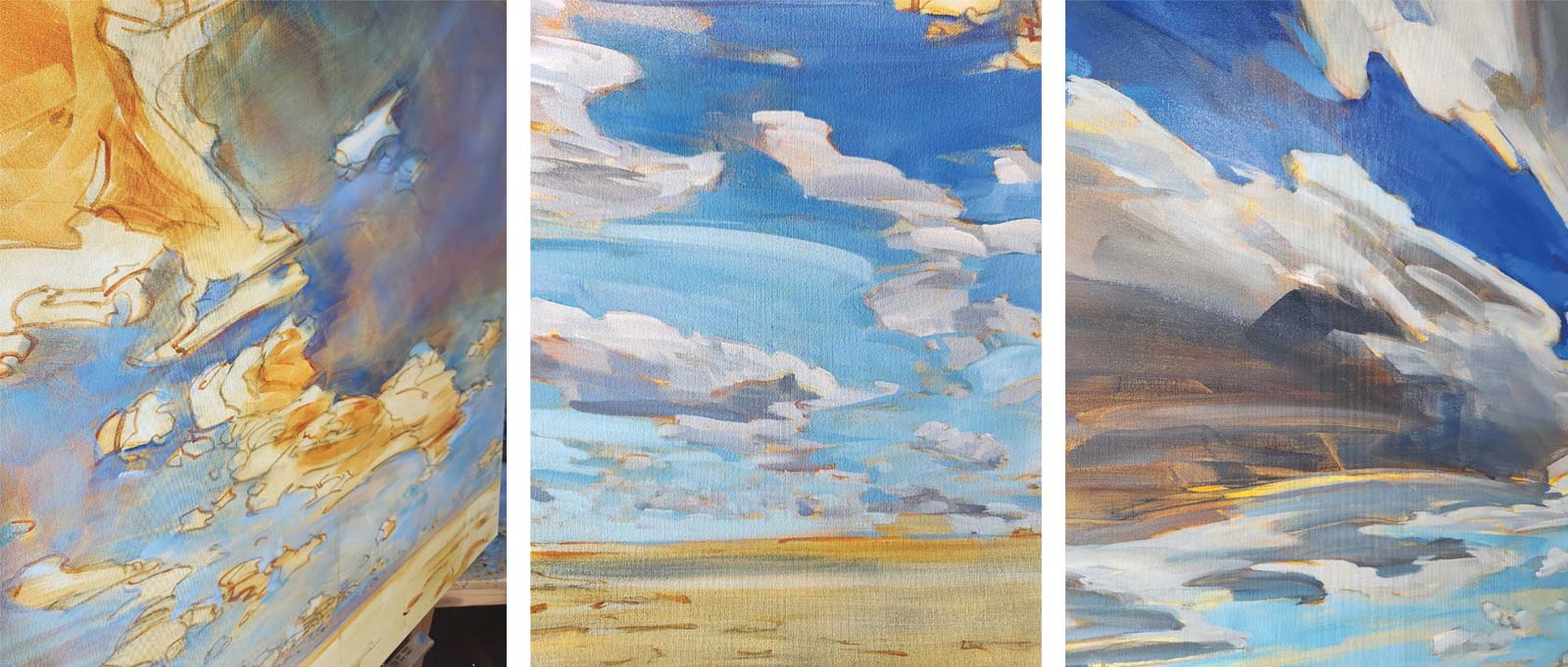
Left: Initial glazes to block color and build distance; Middle: Horizon line detail showing value of distant clouds as well as brushstroke development (used to enforce movement and break up open areas where needed); Right: Close up of cloud development, showing transparent layering of color, building to opaque and bold brushwork where that part of the cloud pulls forward.
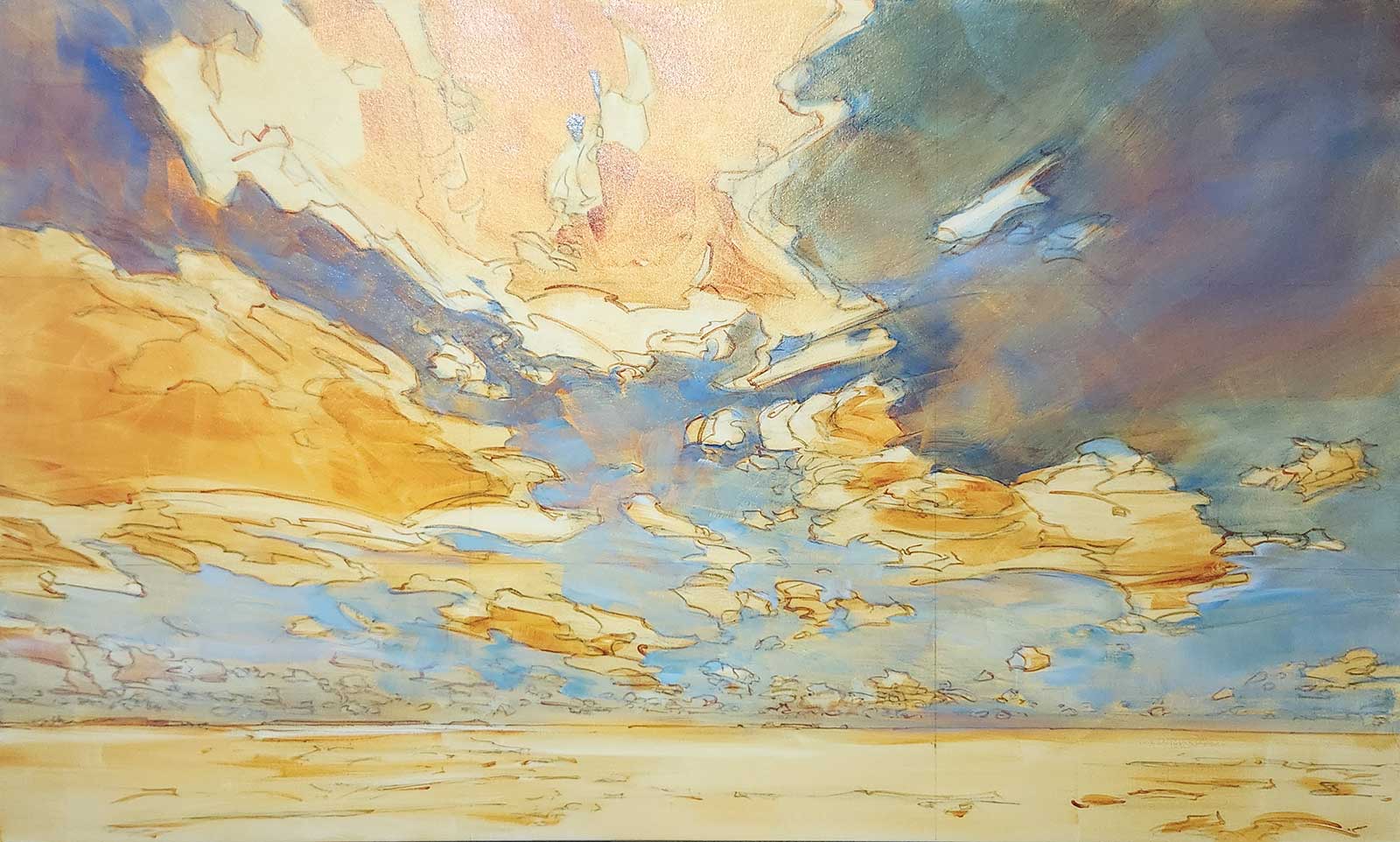 Stage 5
Stage 5 Blocking in Color
The color is blocked in with the intention of creating value, working the whole area.
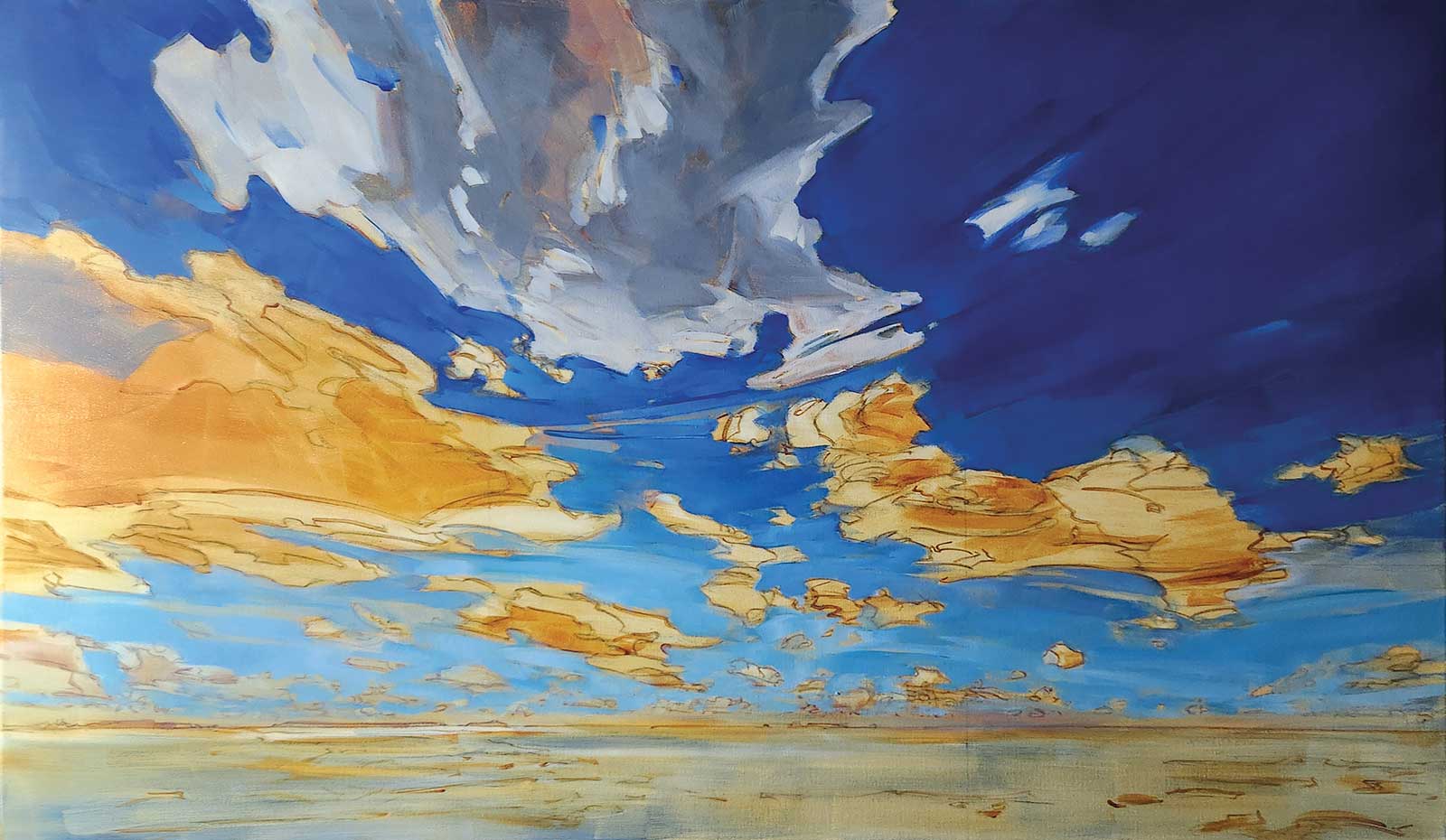 Stage 6
Stage 6 Applying Paint Over the Glaze
Paint is added over the top of the glaze. I like to leave some of the glaze in areas to show through, as well as some of the underpainting as I paint. It gives a coherent feel to the painting and can enforce the movement. It also creates beautiful depth.
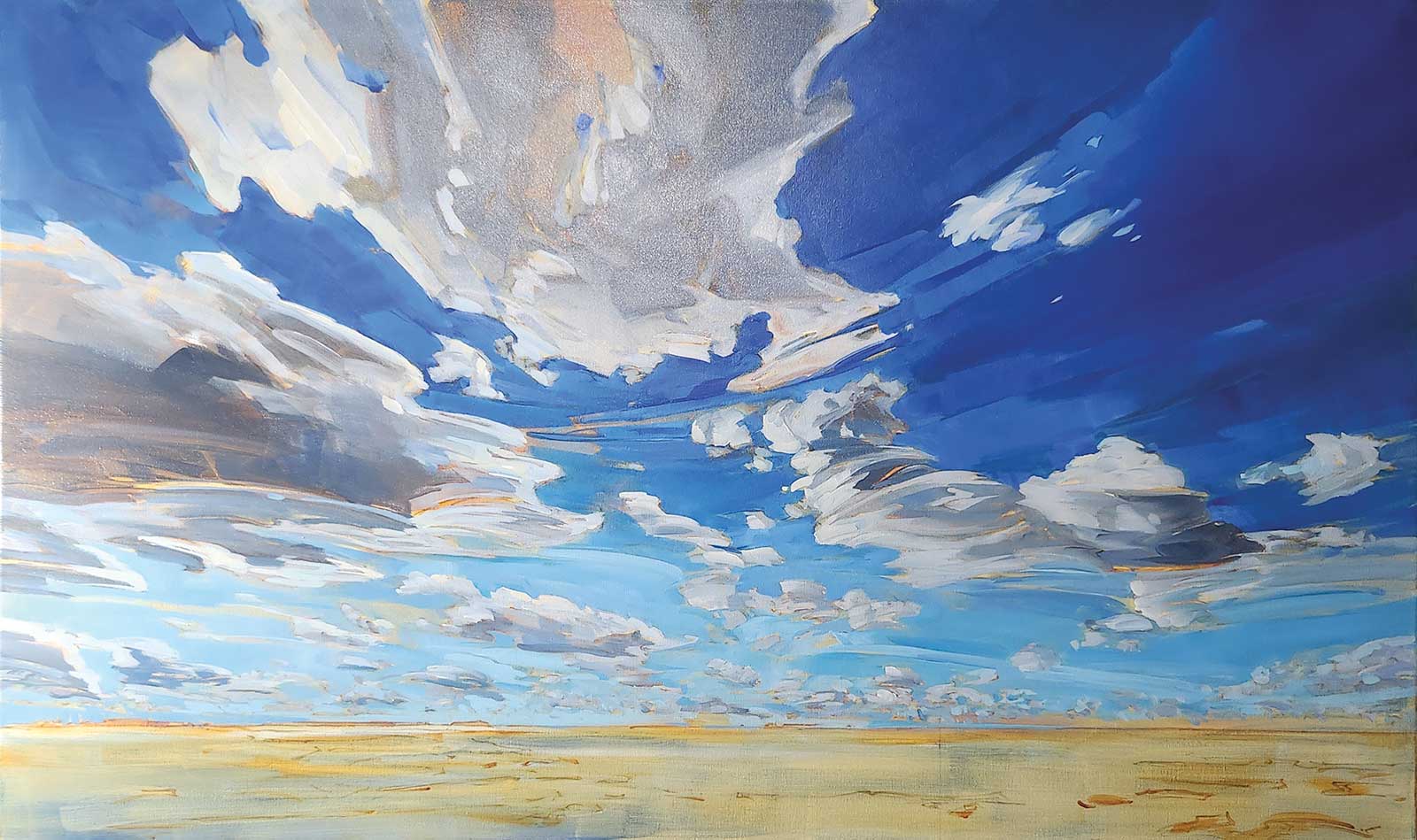 Stage 7
Stage 7 Clouds
The clouds are blocked in, moving between darks and lights while the paint is layered and adjusted. Brushwork is bold and fast to enforce a sense of movement.
 Stage 8
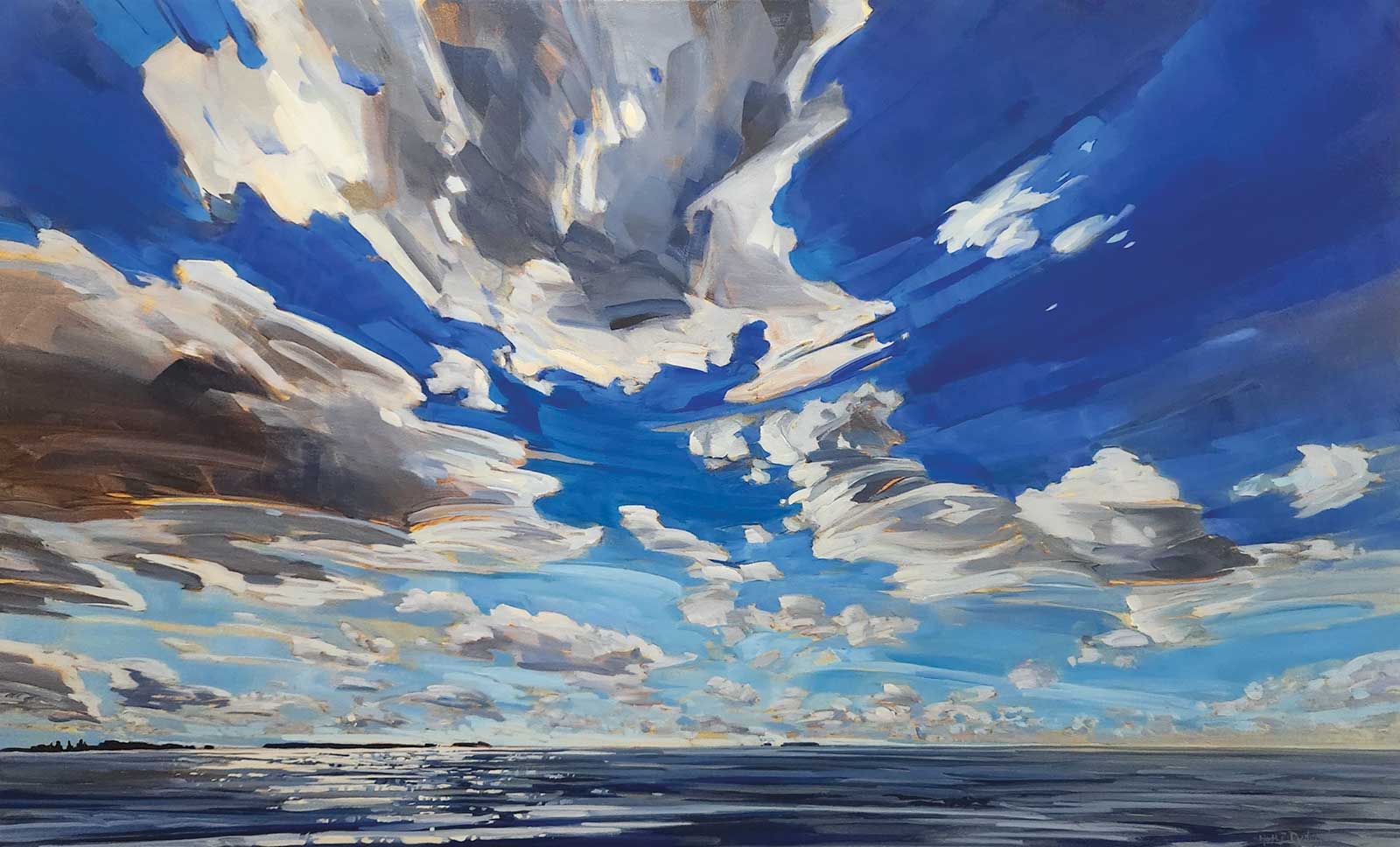
Stage 8 Finished Artwork
Day on the Water: Georgian Bay, acrylic, 36 x 60" (91 x 152 cm). Water is painted in and final adjustments are made to strengthen the overall intent. I’m also brightening and tinting whites where there is backlight, as well as darkening darks, balancing contrasts and adding glazes to recede (i.e., at the horizon line).
About the artist
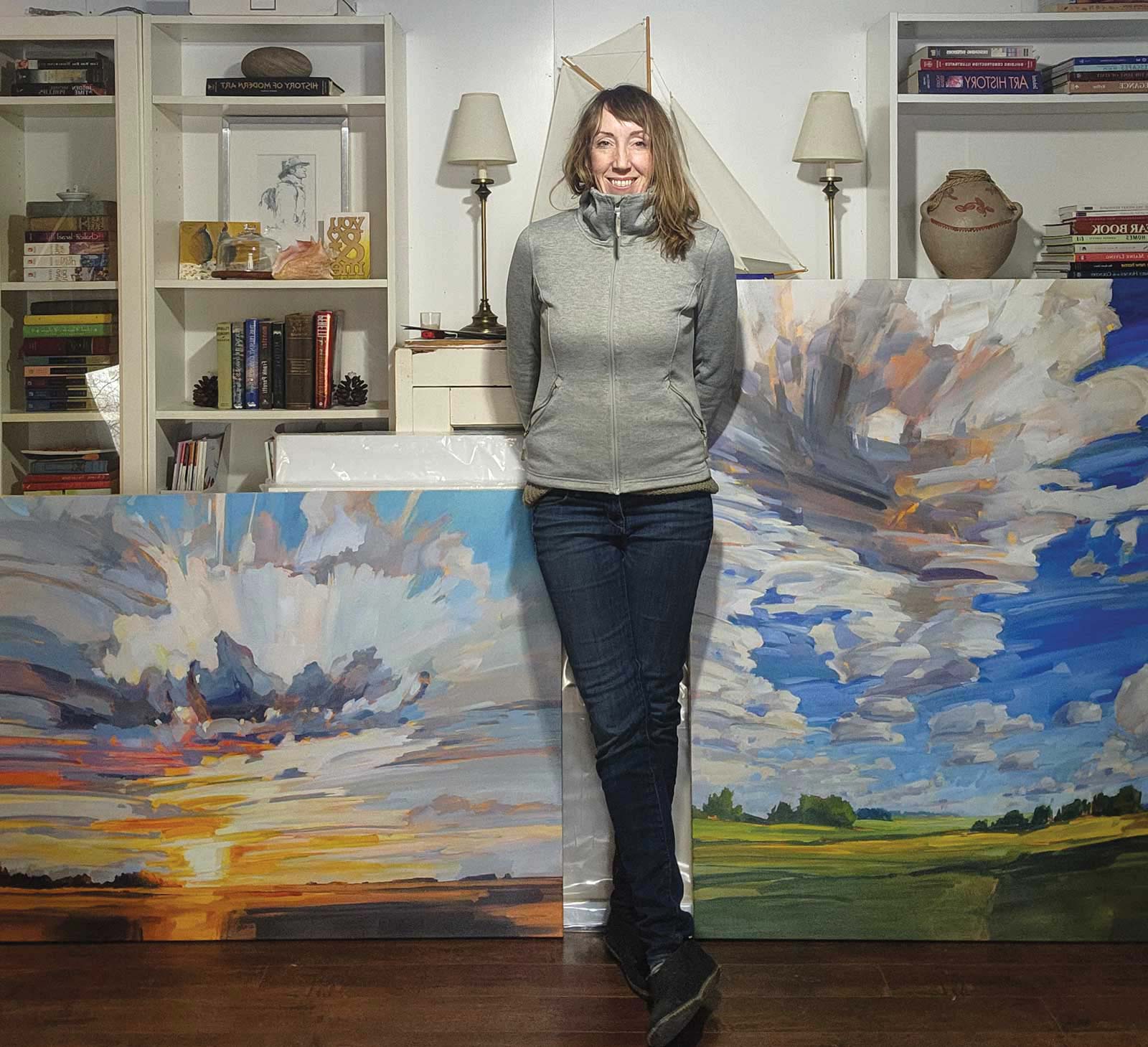 Holly Dyrland
Primarily self-taught, Holly Dyrland has been pursuing her career in art since 2010. Watching her grandmother paint while growing up ignited a passion, curiosity and drive to work in a creative capacity. After achieving her degree in interior design from Mount Royal University in Alberta, Canada, she started the exploration of acrylics.
Dyrland is greatly influenced by artists such as David Langevin, Min Ma, Robert Genn and Doug Swinton, who leave visible brushstrokes and have distinct technique in their work. She desires to capture light and the life of the subject, learning to capture the heart and soul of what she is painting. She uses glazes and veils, as taught by Langevin, to add depth, light and translucency to her work.
Her work has won numerous awards, has been juried into international shows and is included in private collections around the world. Dyrland is represented by the following galleries located in Canada: Gibson Fine Art, Lloyd Gallery, Mayberry Fine Art, Crown & Press, Cloud Gallery and Paula White Diamond.
Contact at
www.hollydyrland.com