No matter how traditional we want our art to be, we have to come to terms with using computers and the internet to get our work seen and sold. What’s the best way to allocate our time and resources? How can we be as effective as possible at promoting our work and building a following? And how do we make a living at it?
I’ll be delving into some of these questions below, as well as providing a short painting demonstration that illustrates the type of material I create for my own online content.
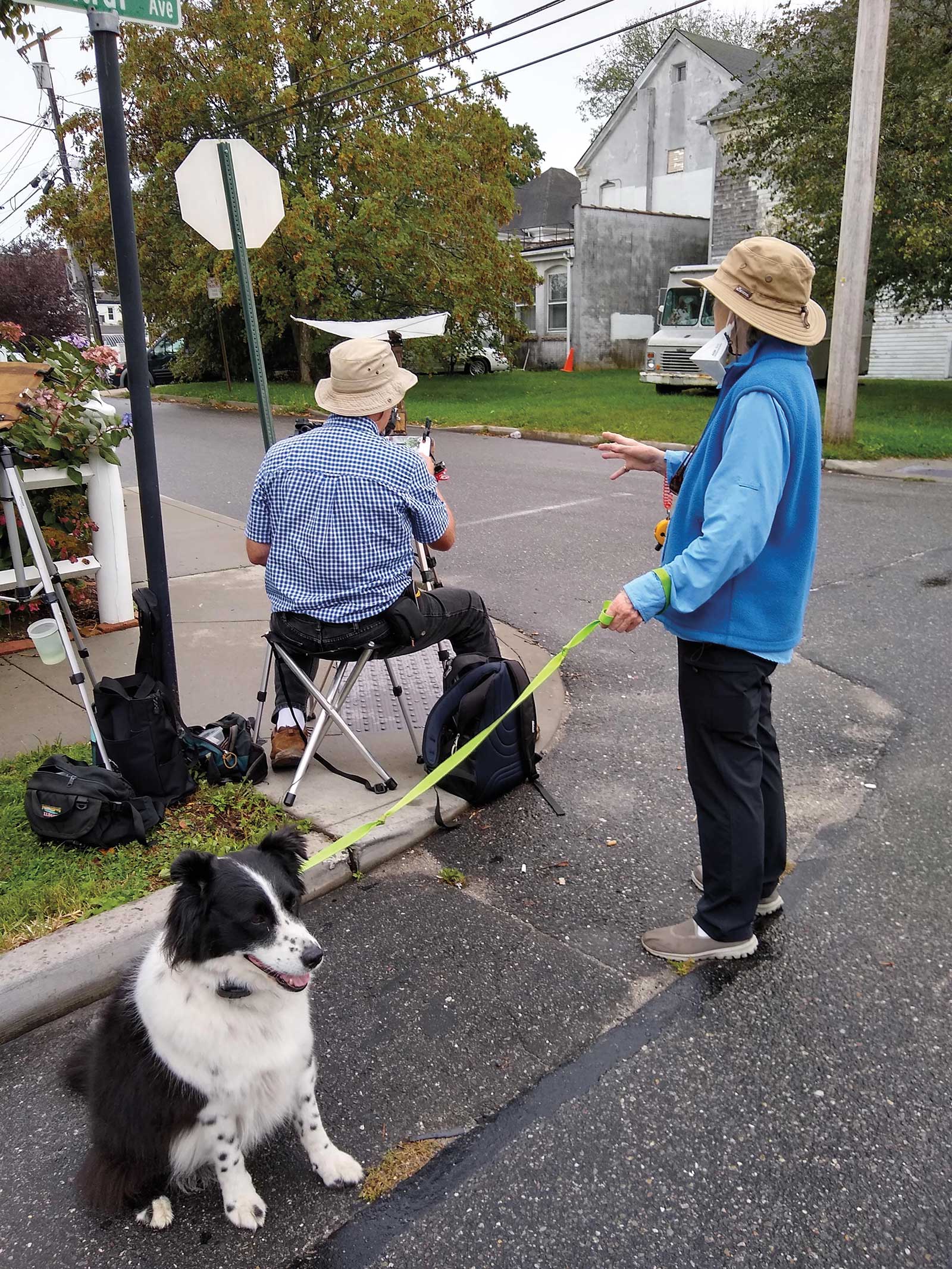
An artist friend in Greenport, Long Island, stops by to see how I’m coming on the sketch of the van. As the drizzle turns into a light rain, my diffuser (just above my hat) serves as an umbrella over my easel.
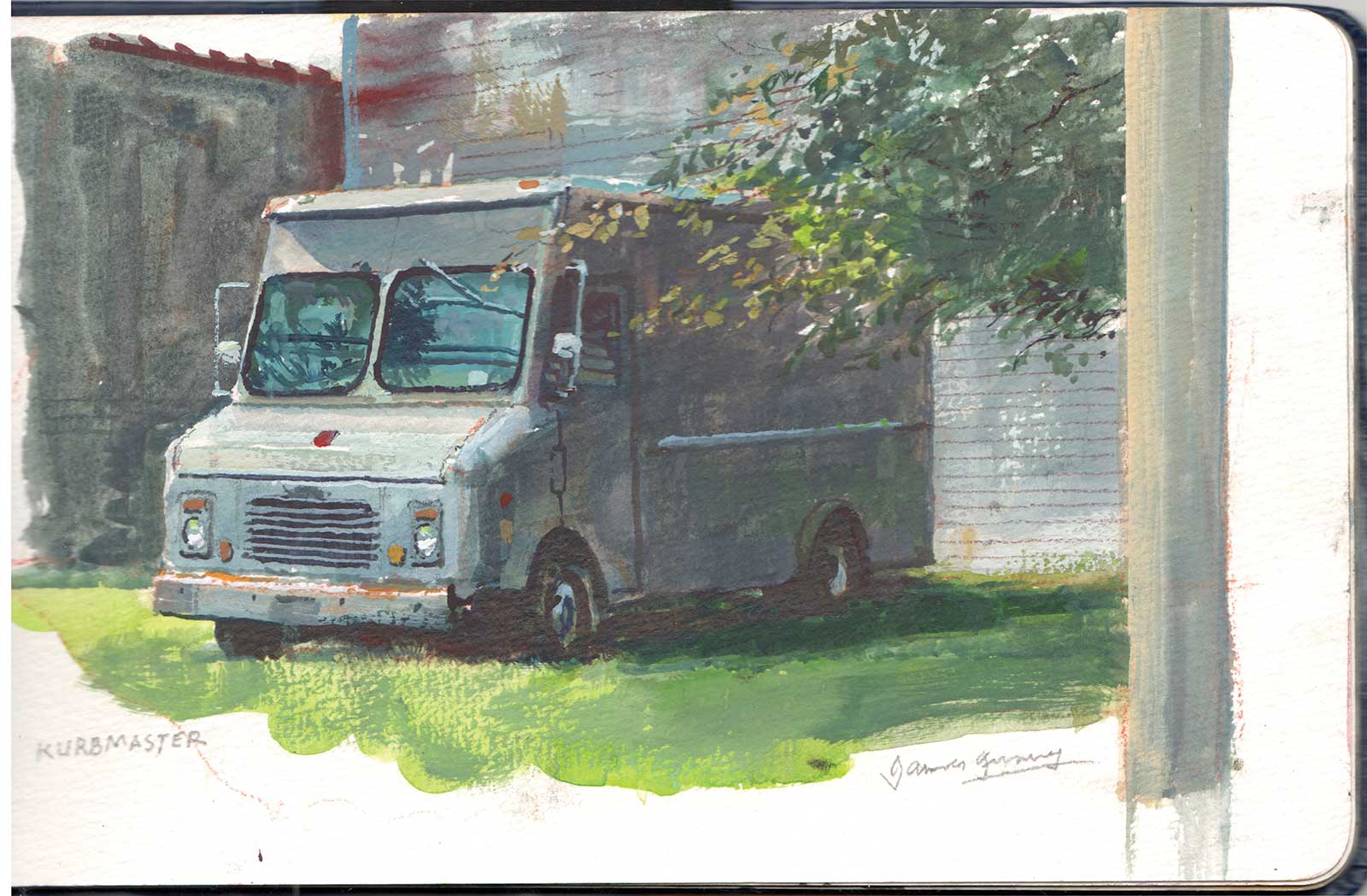
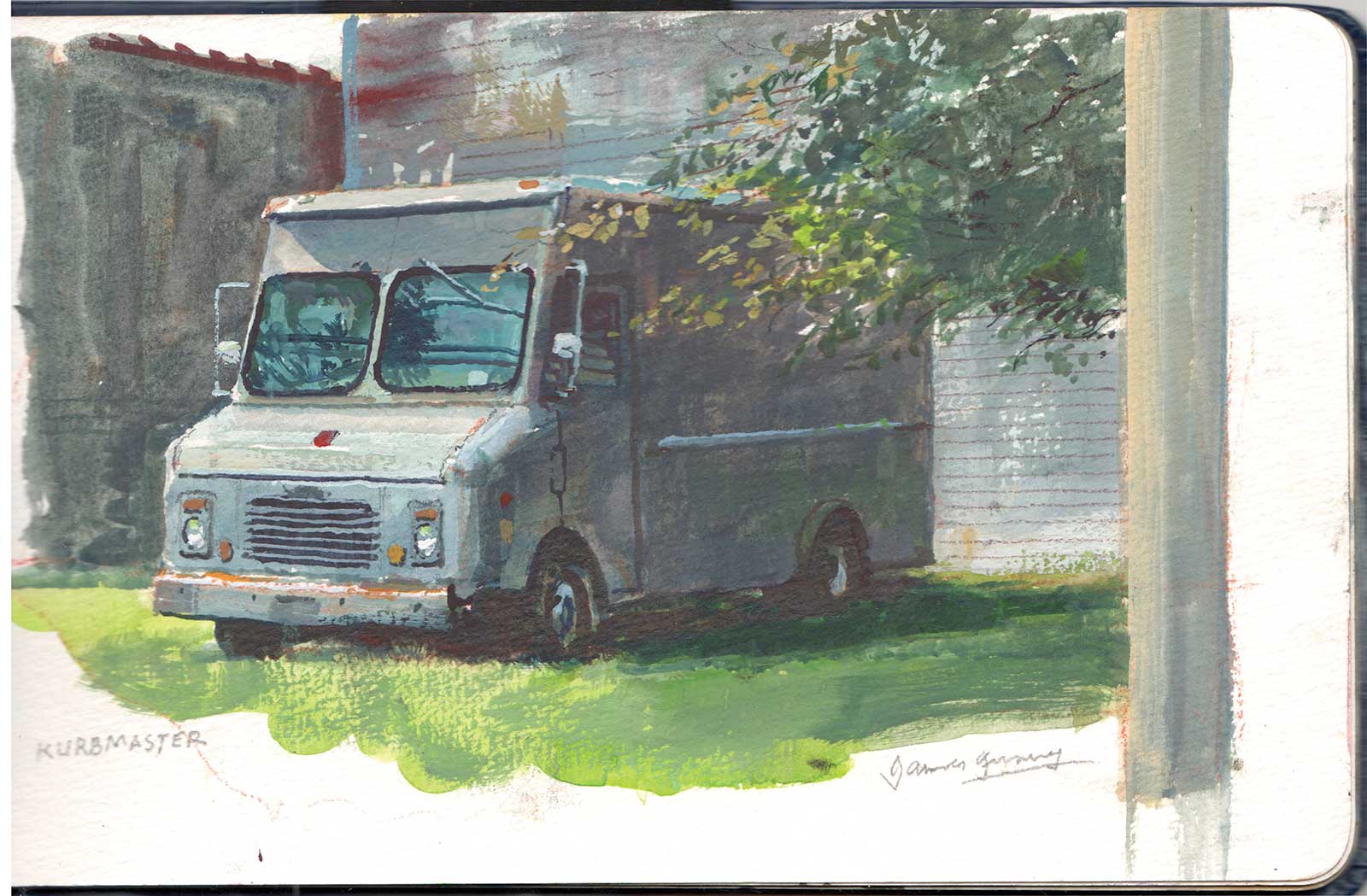
Kurbmaster, watercolor with white gouache, 5 x 8" (12 x 20 cm)
Shifting Goalposts
Let’s start by looking at the state of social media. The last two decades have witnessed the invention and evolution of social media. They have received a lot of criticism, but they are still the most popular way to spend time online. Over the years, the goalposts have changed. The original idea was to share your life and thoughts with a finite network of known friends and family. Nowadays it’s much more about building follower counts by creating more entertaining content.
Short Form or Long Form?
Along with that change of network orientation has been an evolution in content. Today there’s less emphasis on words and pictures alone, and more focus on short-form video. These changes were already happening at Facebook, Instagram and Twitter/X before TikTok came along, but the dramatic success of TikTok led all the others to emphasize attention-getting video content. YouTube created Shorts, and they’ve been successful with it.
But it’s not just a story of attention spans getting shorter. Long-form podcasts and real-time videos get a lot of views, too, especially in the art field. So you can do well going short or long.
Feeding the Algorithm
The recommendation algorithms used by these platforms determine which videos and which posts get seen. The algorithms are optimized for maximum engagement, hooking the viewer’s attention and holding it. This has led to an over-saturation of emotionally charged content, and unfortunately that means prioritizing outrage and negativity over nuance and constructive discourse.
Most of us need to promote ourselves online if we want to make a living at art. Many creators try to second-guess the algorithm in hopes of maximizing subscribers, comments and likes. That’s fine as long as you don’t get too emotionally attached to the numbers or the negative comments. It helps to think of platforms as “push media,” meaning places to publish, rather than consume, information. To make the most of your time spent in content creation, it helps to streamline your workflow so that you can post similar content on multiple platforms. You can develop a considerable amount of synergy by cross-linking content, or publishing both in print and digital.
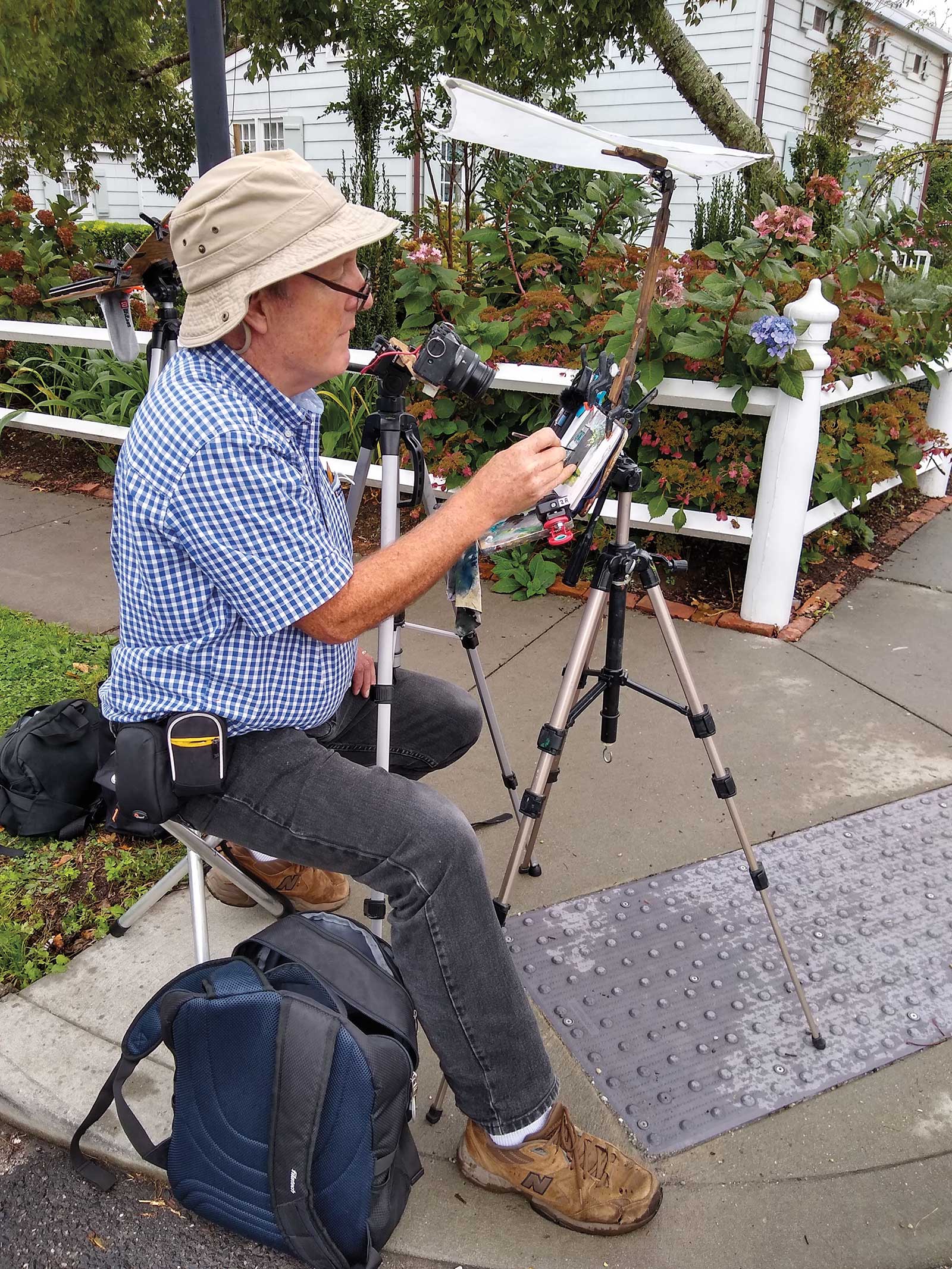
Painting the Kurbmaster.
Monetizing Subscribers
If you’re popular as an artist on social media, how do you convert that into lunch money? First, you can think of this exposure as a promotional tool. Any place you share your artwork, such as Pinterest, Behance, ArtStation or LinkedIn, plus the social media mentioned earlier, raises awareness for your work.
If you want to be hired by a studio or commissioned by an art director or collector, then you can think of your feed as a place to present your portfolio, announce your shows, or offer work for sale. You can occasionally use your feed to announce a new print on Etsy, an original for sale or a gallery exhibit. But you can’t always be passing the hat. You have to give a lot of stuff away if you want to sell other stuff.
In addition to directly promoting what you have to offer, you can market your influence through advertising and product promotion. YouTube is the social medium best able to yield a passive advertising income for its creators. Currently the platform shares 55 percent of its advertising revenue to the creator, and that can start to add up once your subscriber count passes into the six figure range.
Promoting Other Brands
Another way to make a living on social media is the placement of affiliate links to Amazon or other online retailers. These links are coded in such a way that you can earn you a small kickback for each sale you generate without costing the customer anything. Some manufacturers offer a full-fledged affiliate partnership program, where you act as a brand ambassador for their products. When your following is large enough, companies are willing to pay you to personally promote their products or services with sponsored posts or brand integrations.
It’s essential to be completely open with your followers about these product promotions to avoid giving the appearance that your judgments aren’t independent, especially if you use those products in your public posts. Monetizing a large following on social media is just one strategy for building a career online. In the next issue, we’ll look at other approaches.
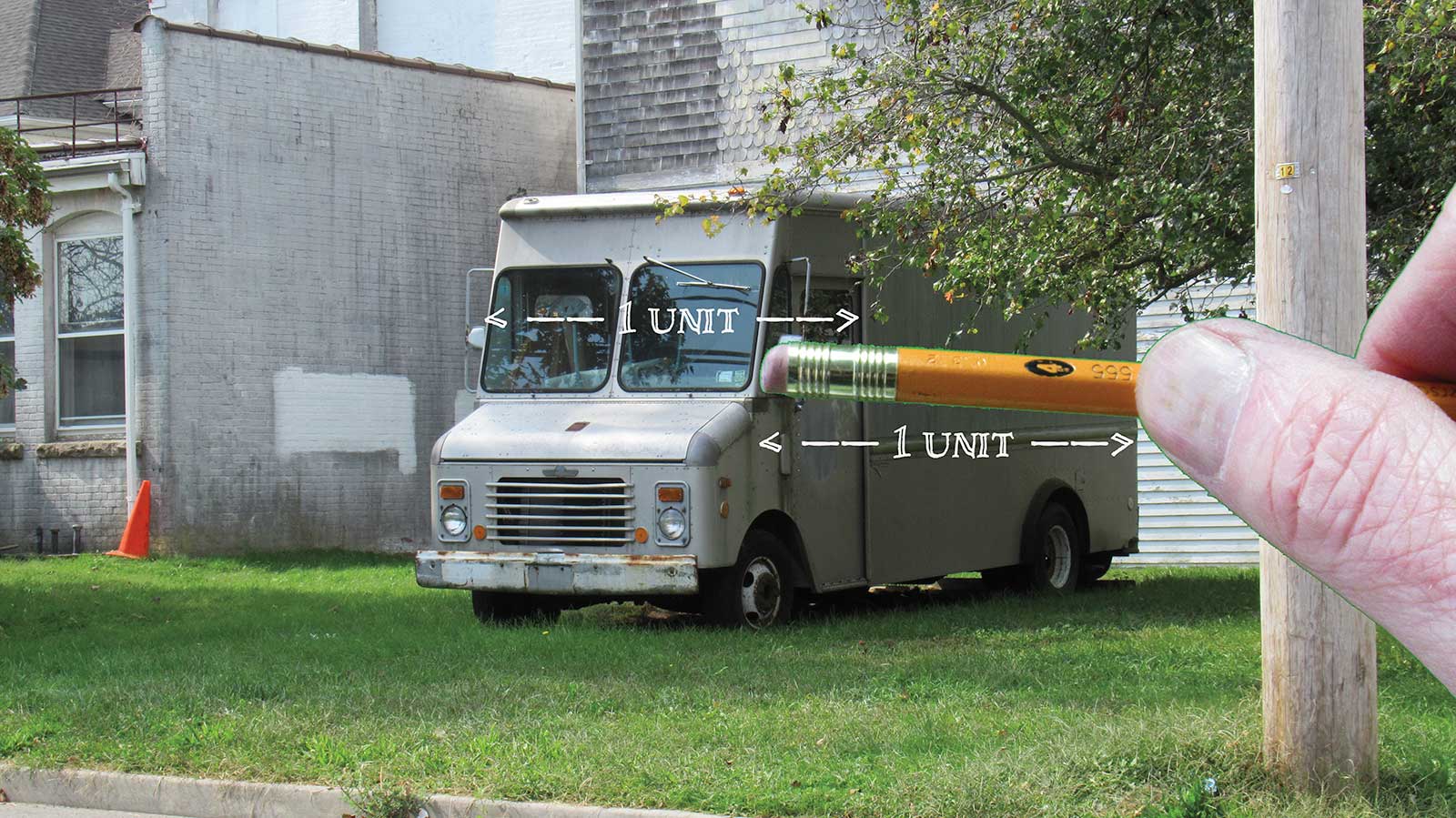 Stage 1
Stage 1 Measuring
I establish a unit of length. The distance from the left edge of the windshield to the back of the door equals the distance from the A-pillar to the back of the van.
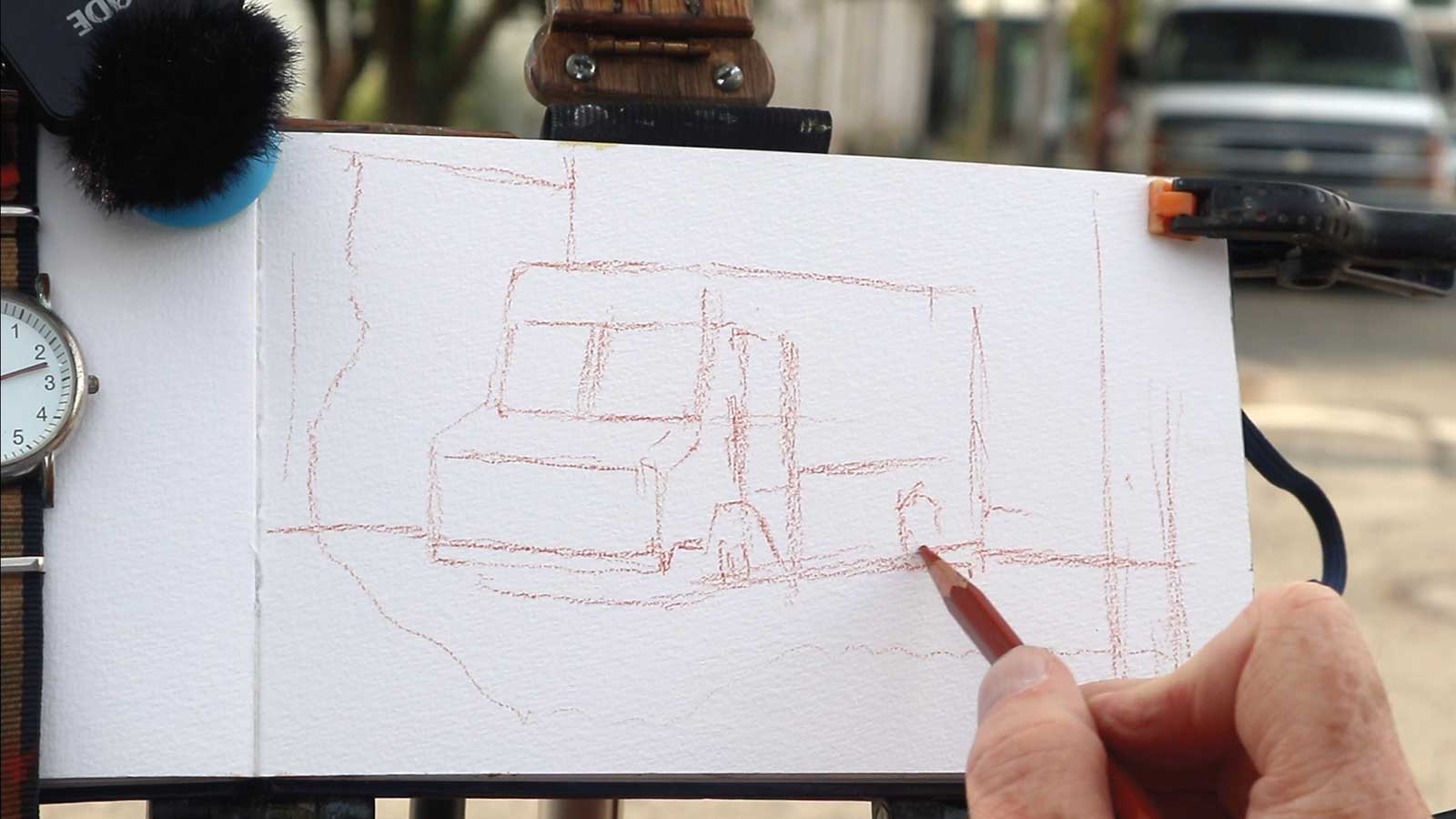 Stage 2
Stage 2 Mapping
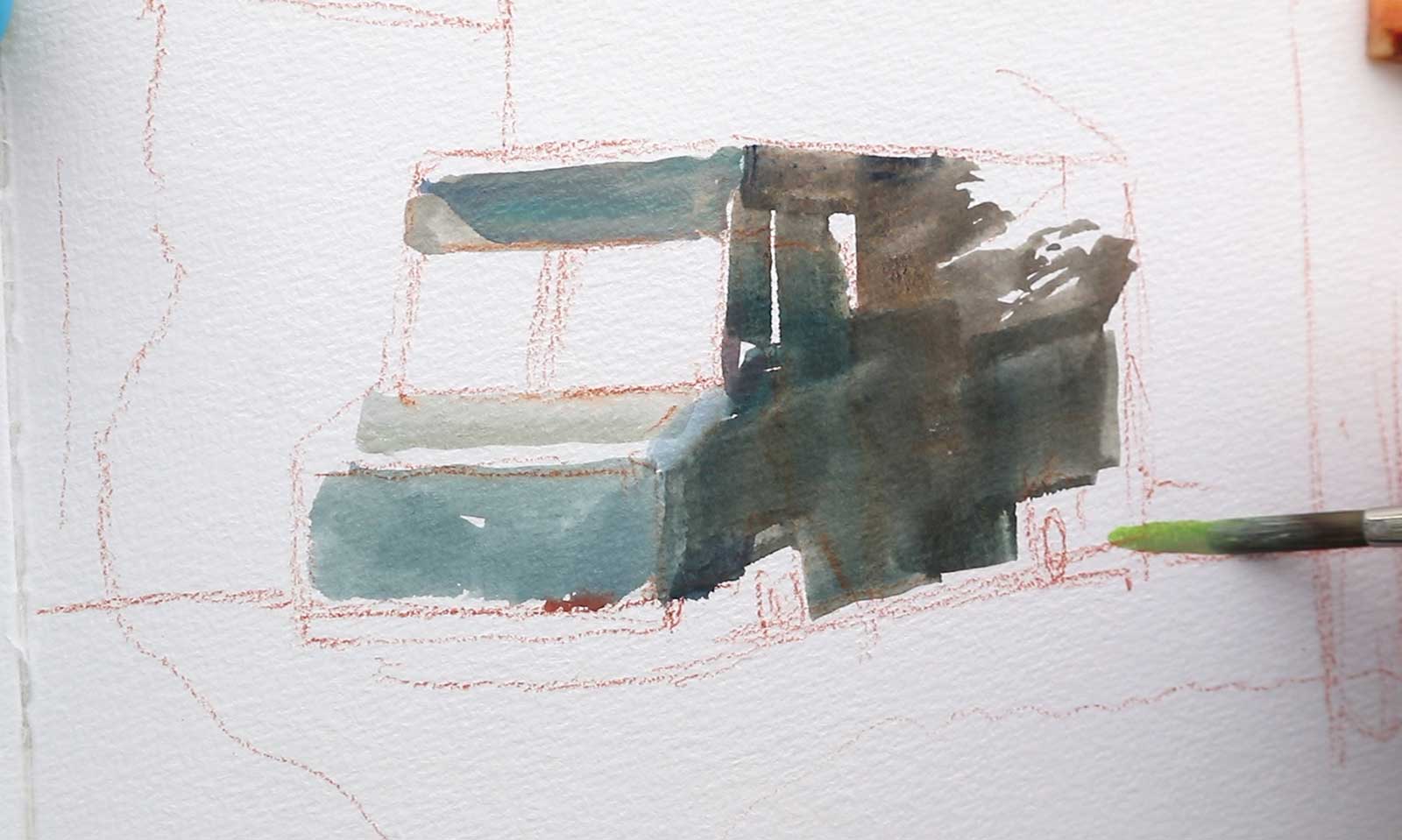
I mark out the basic lines in a red-brown watercolor pencil.
 Stage 3
Stage 3 Blocking In
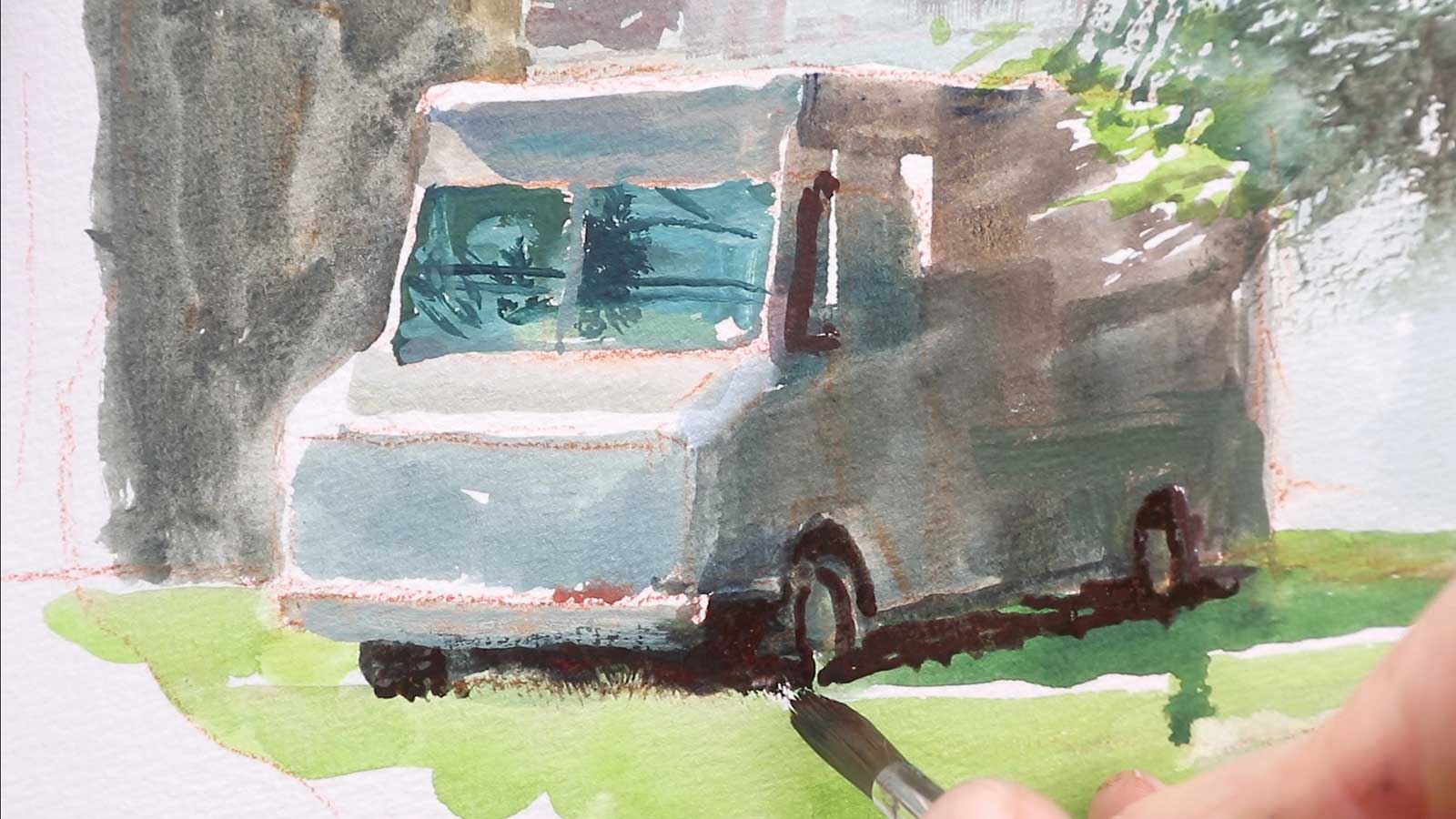
I continue to map out the basic lines and start blocking in major shapes.
 Stage 4
Stage 4 Big Areas First
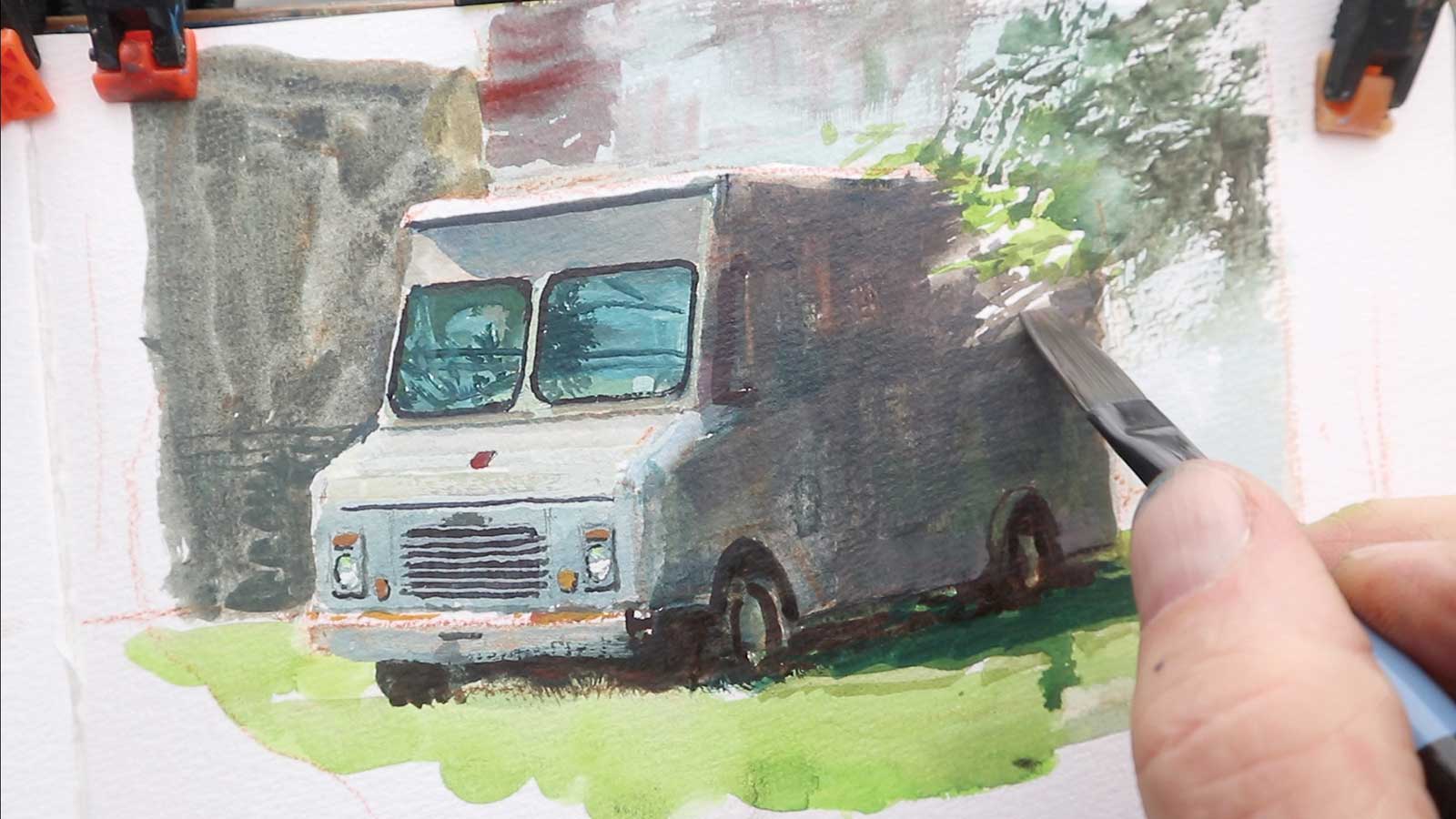
I’m eager to dive into the details, beginning with the reflections in the windshield, and after that I’ll do the front lights and grillwork.
 Stage 5
Stage 5 Getting Opaque
I paint the leaves transparently on the first pass, then start bringing in opaques.
 Stage 6
Stage 6 Pencil Lines
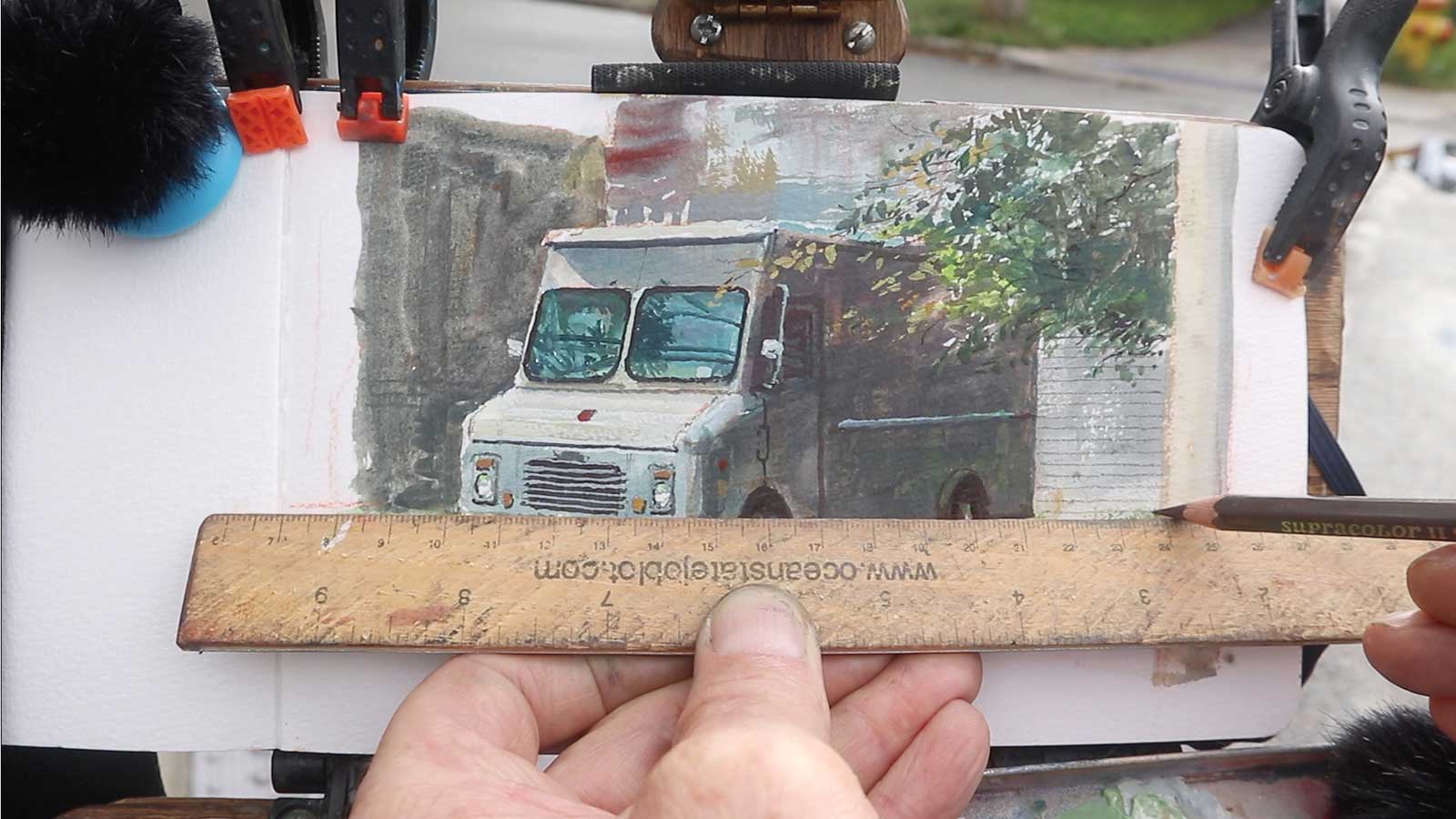
I use a ruler and a pencil for the fine lines of the clapboards on the far building.
 Stage 7
Stage 7 Finished Artwork
Kurbmaster, watercolor with white gouache, 5 x 8" (12 x 20 cm) This is a Kurbmaster delivery van, made with aluminum paneling by the Grumman company.
About the Artist
 James Gurney
James Gurney is the author of two Amazon-bestselling books: Color and Light and Imaginative Realism, which are also available in Spanish, Japanese, Korean and Chinese. His original Dinotopia artwork has been featured in over 30 one-man museum exhibitions.
Contact at
gurneyjourney.blogspot.com