I think of myself as a direct impressionist, able to paint any subject in any lighting. I must admit there are a few subjects I still find a bit of a struggle. The surface texture of my finished painting is extremely important to me, and I believe my brushwork to be a subtle secret code. When thinking of paint application, one of my favorite things I’ve learned is to think of the sky as if it were a piece of fine silk, the mid distance as the texture of cotton and the foreground a thick piece of carpet.
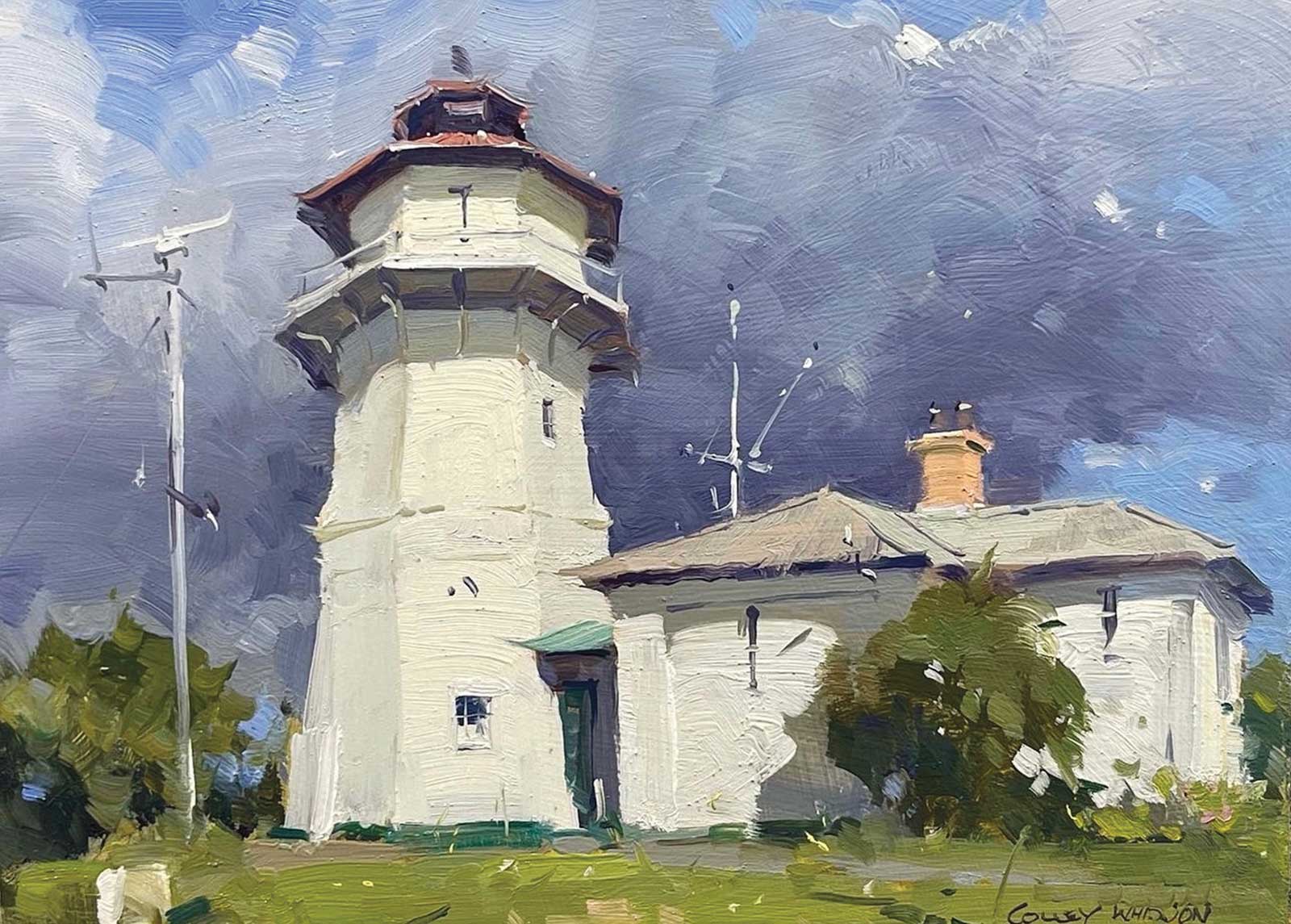
The Signal Tower, Sydney, oil on MDF gessoed panel, 9 x 12" (22 x 30 cm) On rare occasions, an artist stumbles on a great subject, and this is one of them. My son Alex and I flew a drone up to see if there was a better angle. I found the aerial view had too much rooftop, so in the end, I settled for the vantage point on the ground this time. If you go to my YouTube channel, you will be able to see an abbreviated video version of this painting being created.
I place a high importance on creating depth in my paintings, almost to an obsession, looking for ways to get more French ultramarine blue into my work, wherever or whenever, especially in the distance. I like to think of it as the power of blue, and my mentor is our earth’s atmosphere. Sometimes before I start a painting, I’ll photograph the scene and flip the image upside down, as this gives me a true indication of the amount of atmosphere that is in my chosen subject on the day.
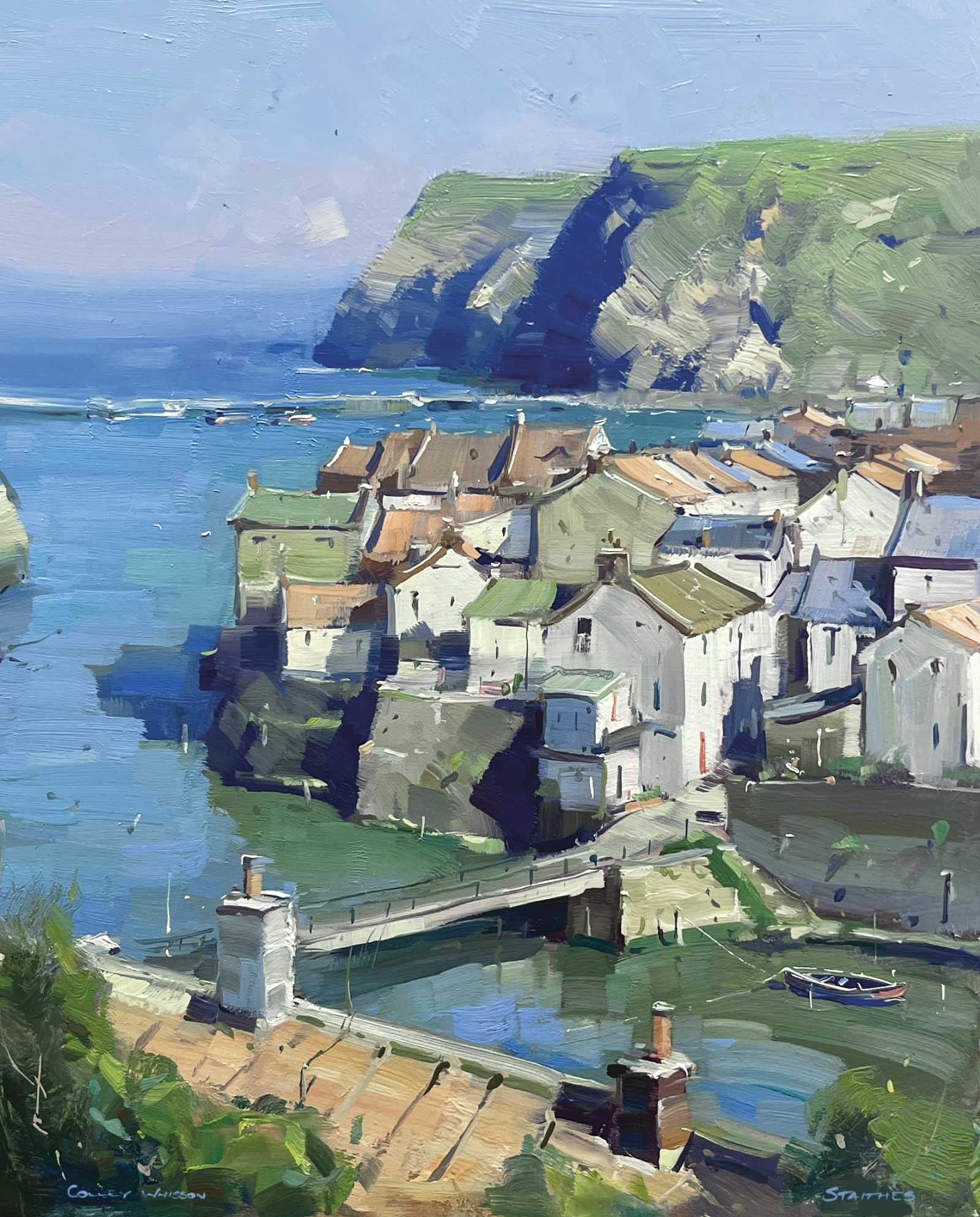
Staithes Symphony, England, oil on MDF gessoed panel, 14 x 11" (35 x 27 cm) Staithes is a magical place to paint. So often it sets itself up so perfectly, foreground, mid-distance and distance. The biggest worry is whether I can do the scene justice. On this trip, I had the great pleasure of painting English master artist David Curtis. Arranging the rooftops was the most difficult aspect, creating unity and individuality of the different shapes and colors.
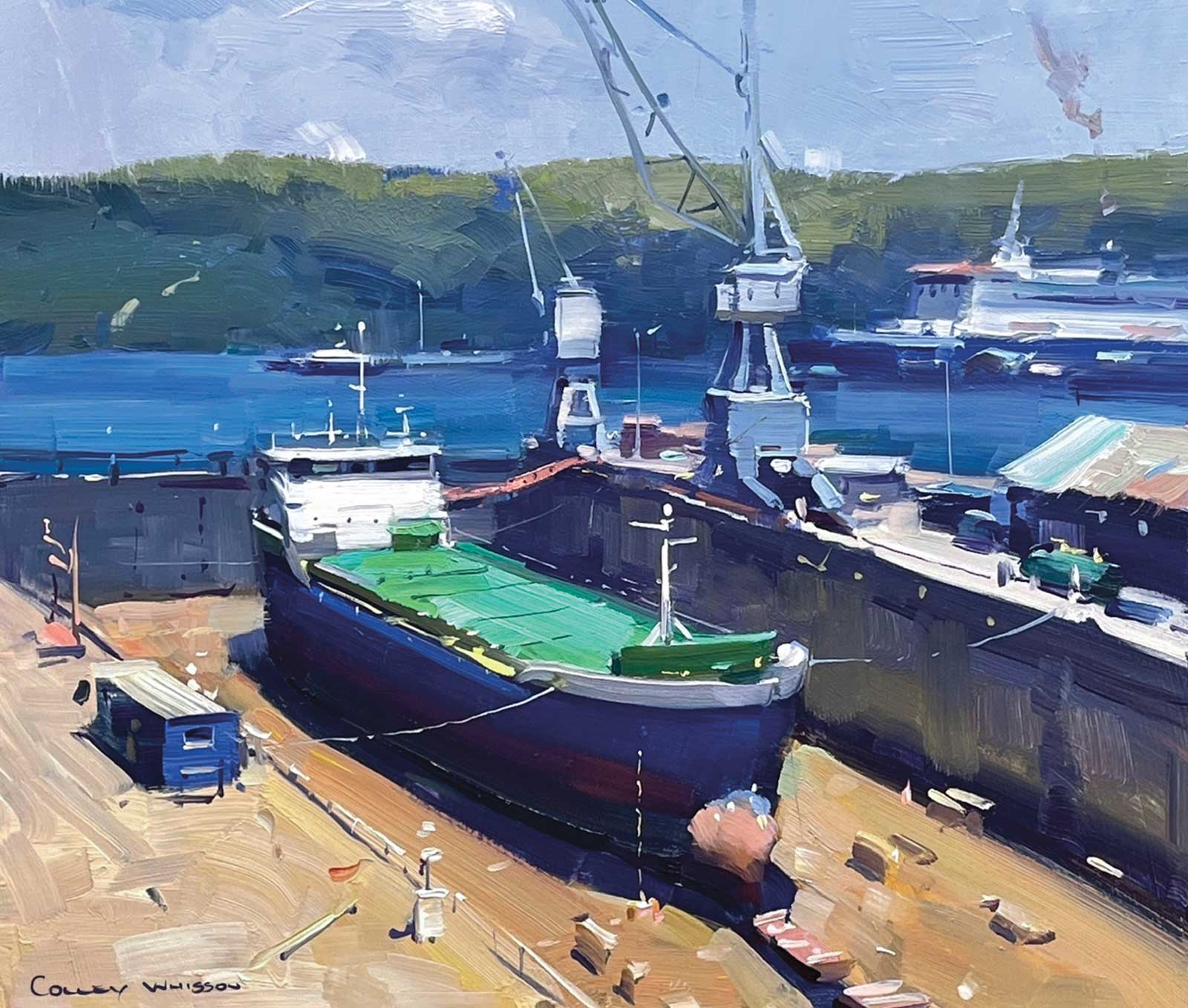
Under Repair, UK, oil on MDF gessoed panel, 11 x 14" (27 x 35 cm) With each painting I’m aiming to employ a type of visual shorthand, as I find this helps me get my message across. To achieve this, I’m placing a high importance on my edges, especially the edge where one shape starts and another shape begins. This is a marvelous way to achieve visual impact.
The fact that we work on a one-dimensional surface without depth means that all the detail in the world won’t create the effect I’m after. So often I see a painting with plenty of visual information but very little illusion of distance. One of the best pieces of advice that I’ve ever received was from art gallery director David Galloway. After nearly 25 years owning a gallery, he said the one thing most people admire in a piece of art is the sense of depth—they want to get the feeling they’re looking out a window at a beautiful view. I was 23 years old when he said this to me, and this simple statement has had a huge influence on my work.
My Art in the Making A Time and Place to Rest, USA
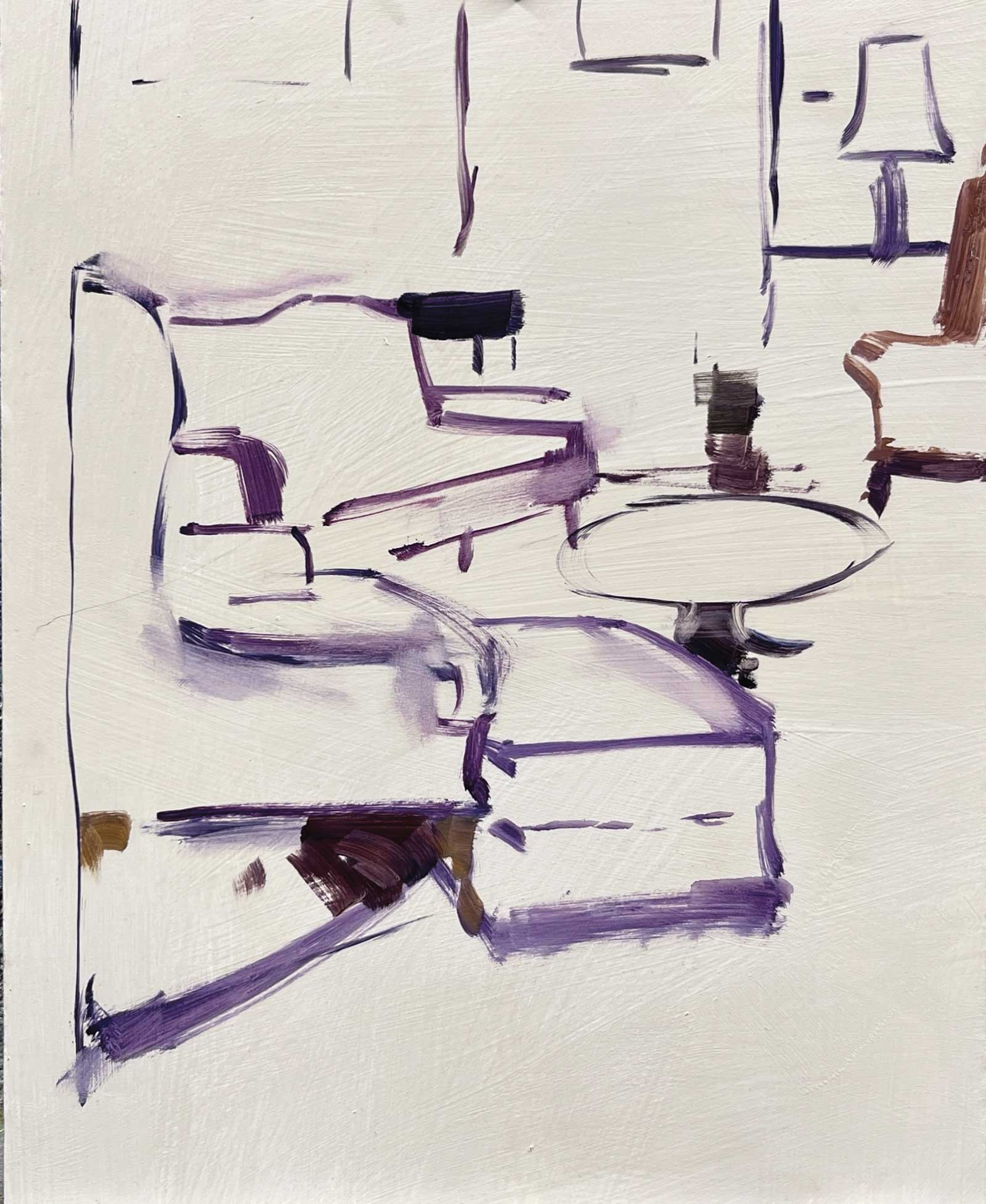 Stage 1
Stage 1 Rough Shapes
I find this stage is all about construction lines because it’s so easy to adjust things at this stage rather than later. I like to stop and pause for a while to contemplate the shapes and mass of each area.
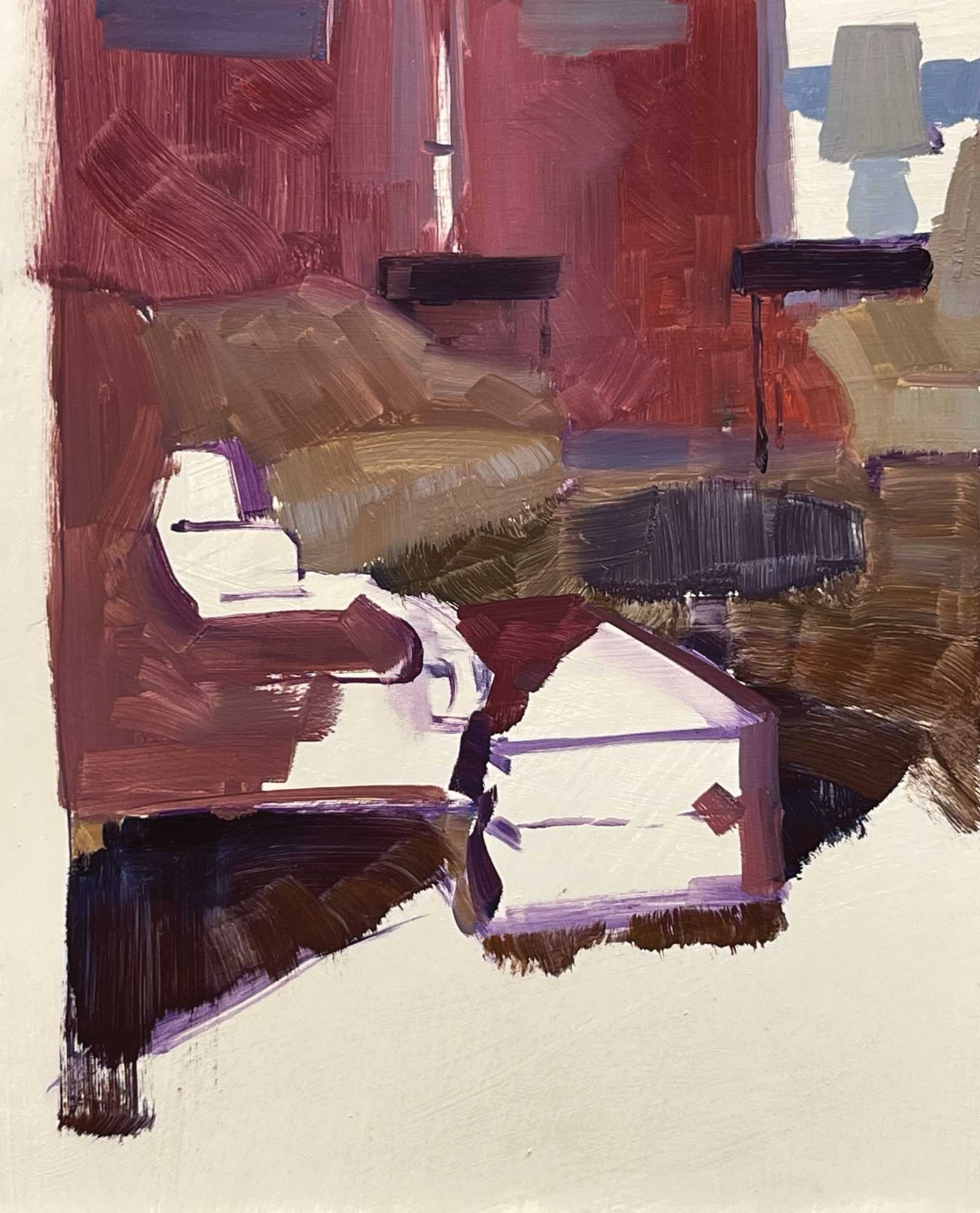 Stage 2
Stage 2 Starting to Define the Forms
I must say these lines look a little uninspiring, but when I bring my big hog hair brush into action, the skeleton shapes will start to get some muscle onto them.
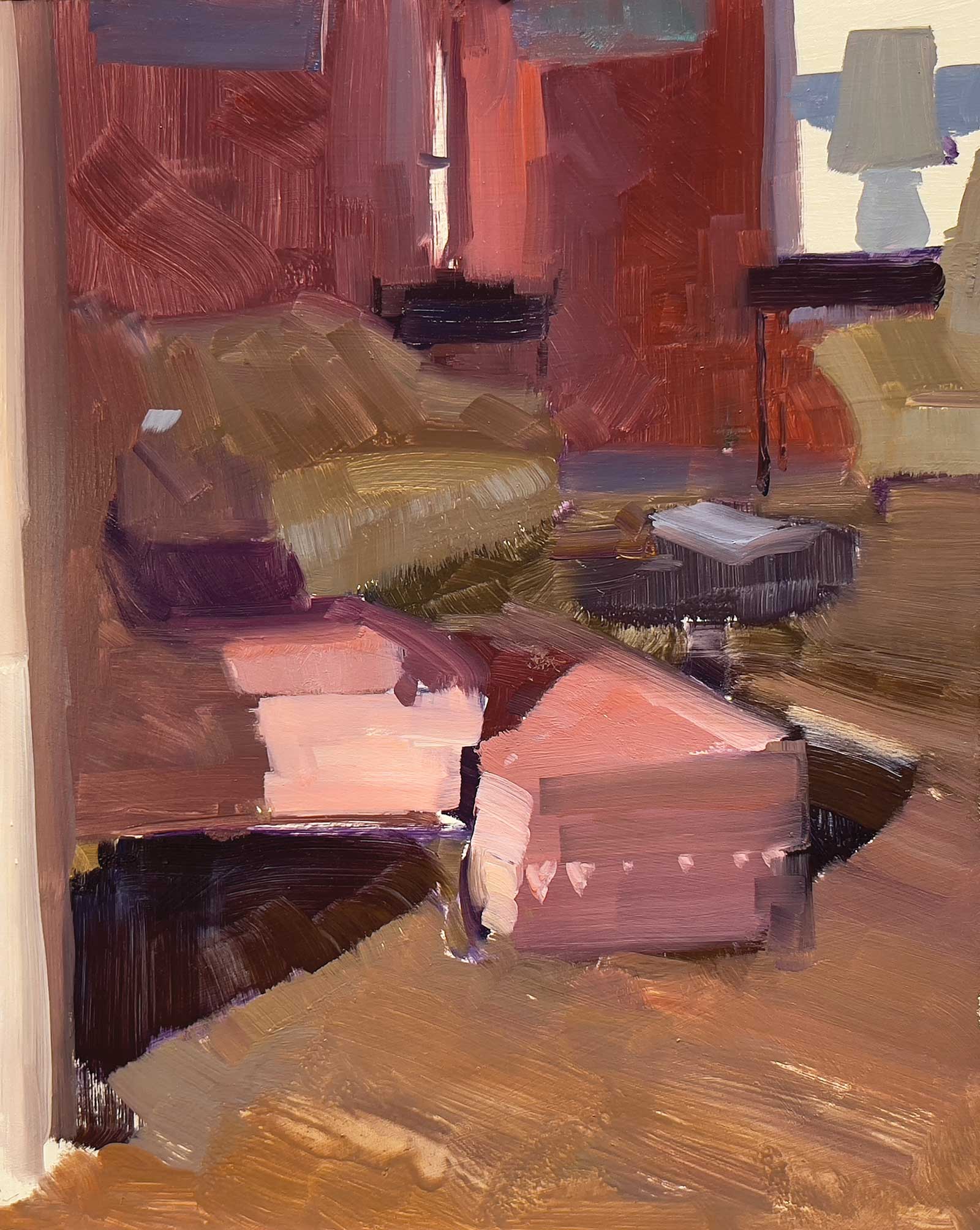 Stage 3
Stage 3 Unifying the Major Shapes
This is quite a complex scene, and I’m realizing that I needed to spend more time on the initial stage. The most imperative thing is to keep thinking of unification of the big shapes.
My Design and Composition Tactics
- Directional lines can be dramatic or they can be subtle. I like to think of the stronger lines like a steel chain. My mid-strength directional lines are a piece of rope, and my finer, more subtle lines are the strength of a piece of string.
- Unification of the shapes. I find this to be important when trying to create depth and a level of solidarity in my composition.
- I have employed an S-shape design approach. Even though there are plenty of compositional devices, I find I mostly use the S, L and X-shaped compositional devices.
- Overlapping shapes naturally create a sense of depth and tie my composition together.
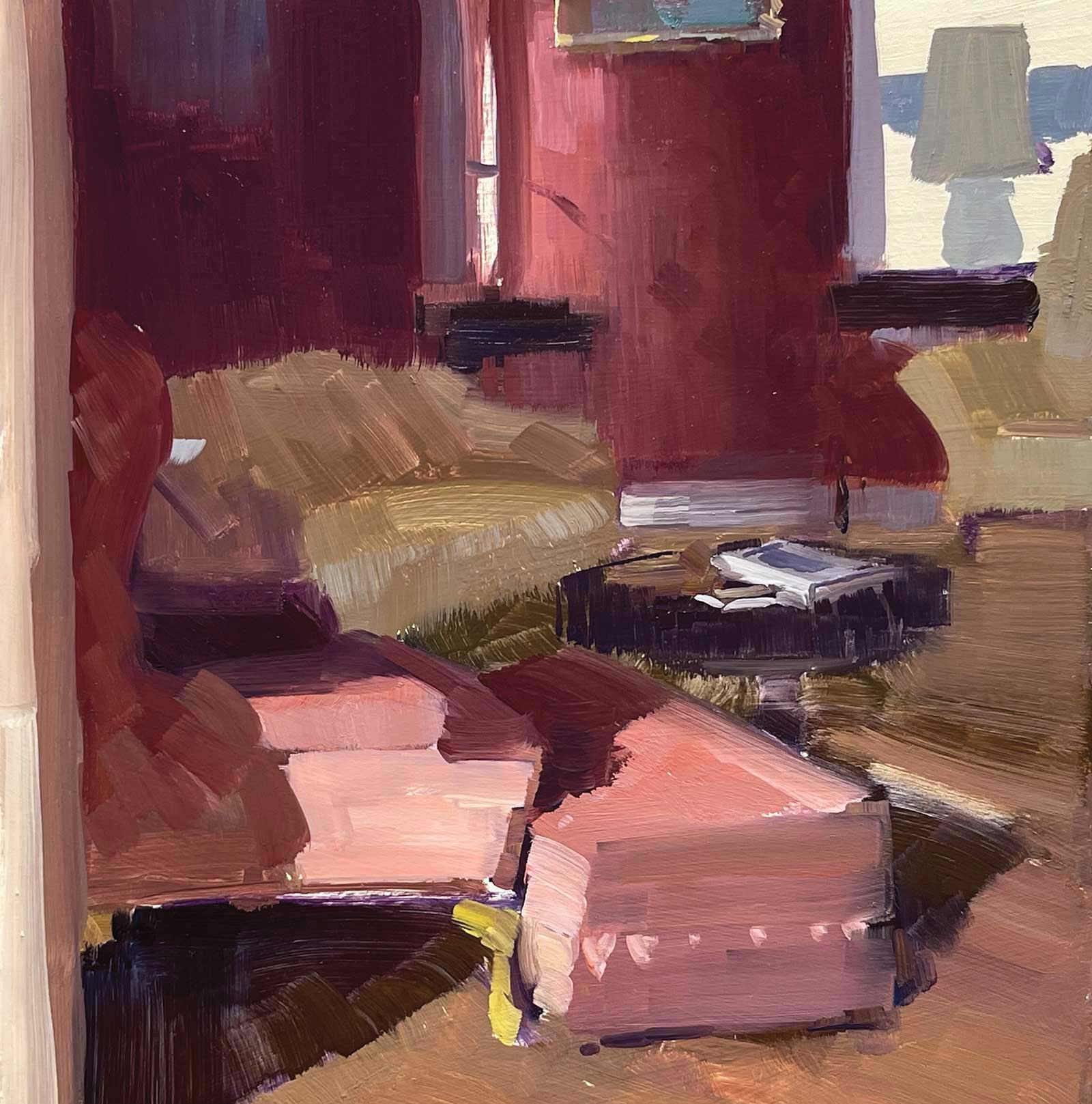 Stage 4
Stage 4 Adjustments
Once I am happy with stage 3, I will then start to use thicker paint, aiming to cover the board and make any small adjustments where I see necessary.
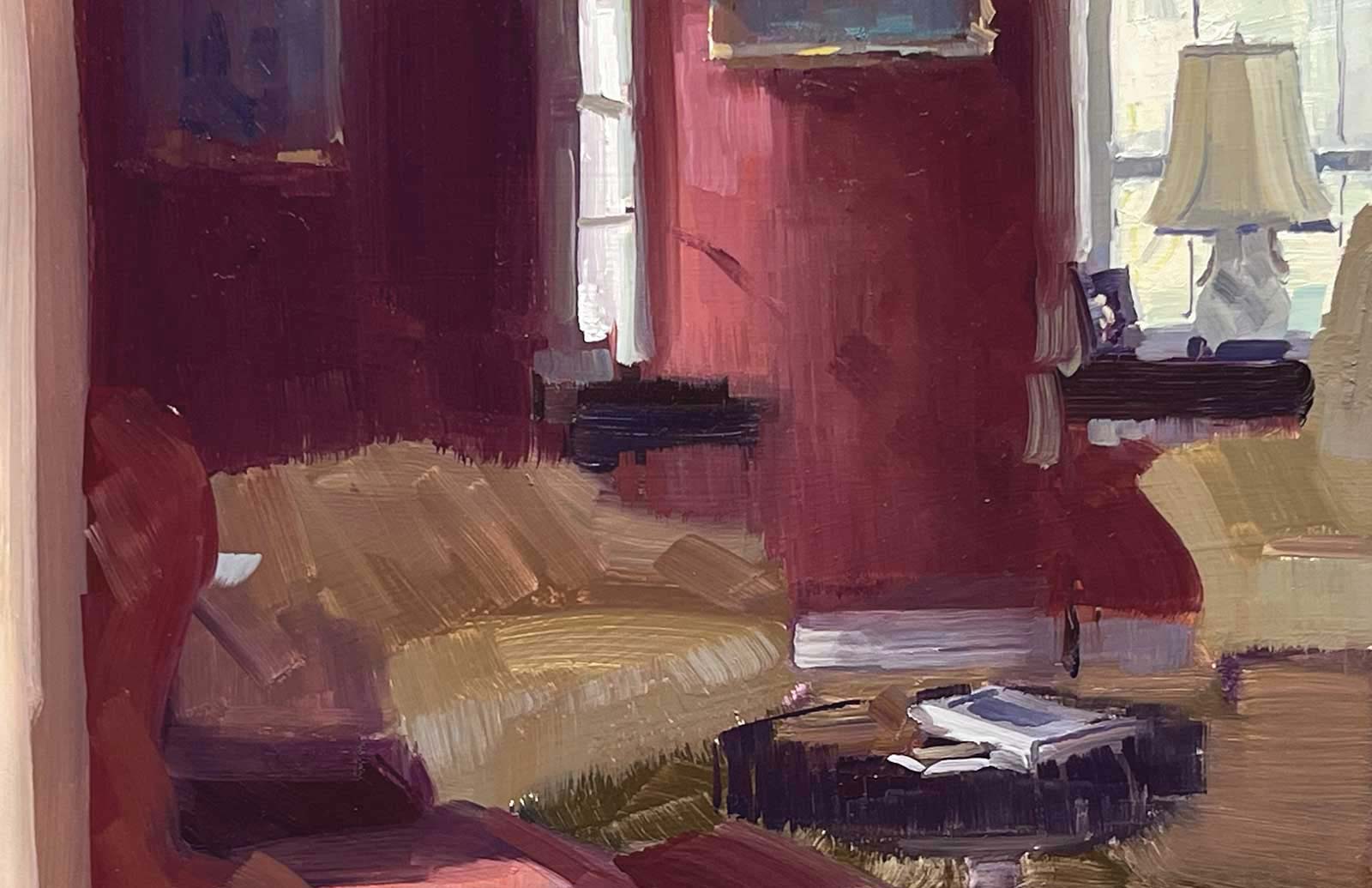 Stage 5
Stage 5 Windows and Background Wall
I am now able to begin work on the windows and the background wall. This is the first moment that I’ve put paint on the window areas. I like to approach it this way because it helps me guarantee that I’m using clean color. It is very easy to go one value too dark, and the overall contrast will be off.
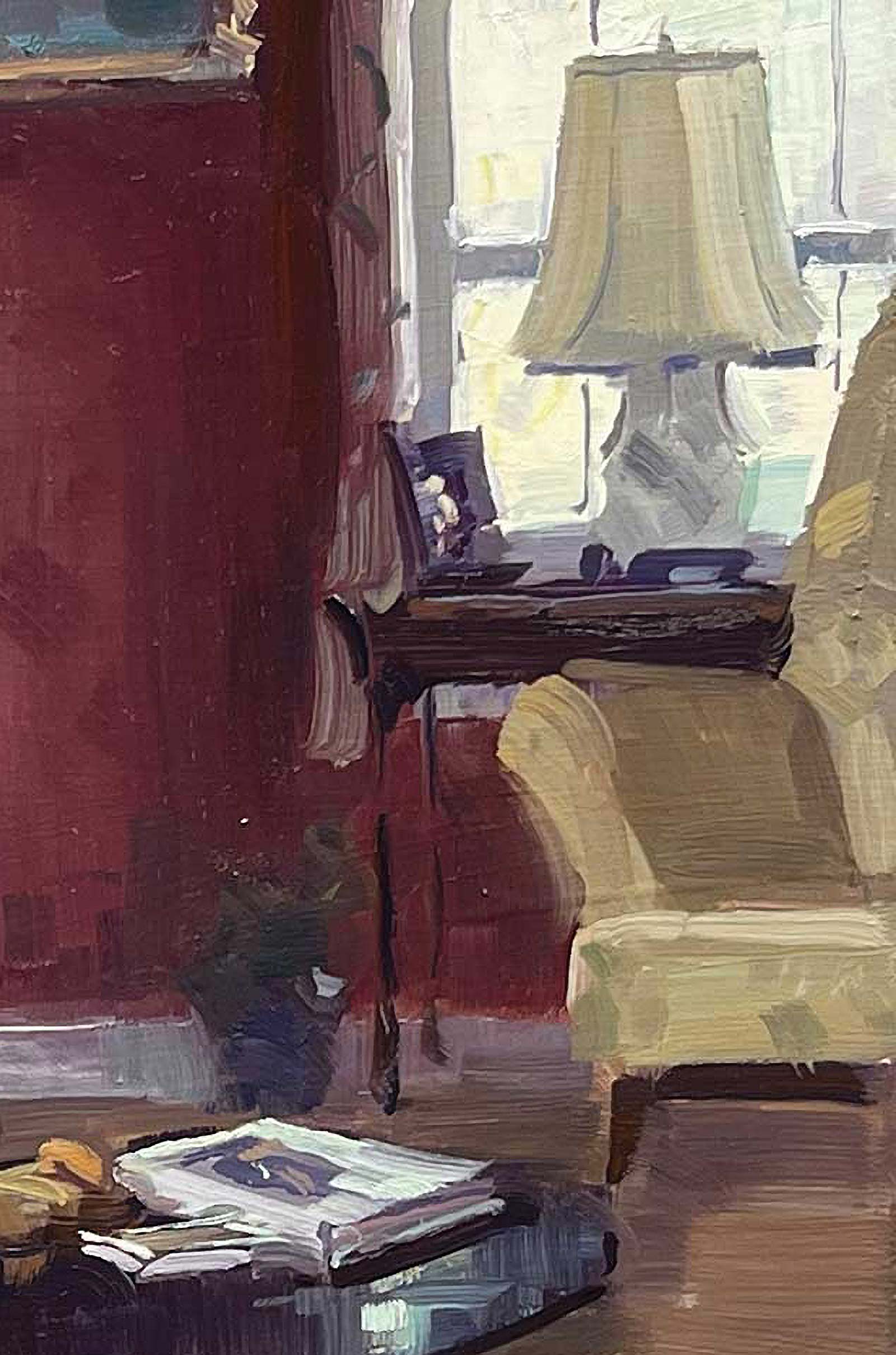 Stage 6
Stage 6 Chair in the Back
The chair in the background on the right is now ready for a little more attention. The one key important aspect that I am mindful of is that I need to allow certain areas time to set up. By this, I mean that the paint has started to tack off.
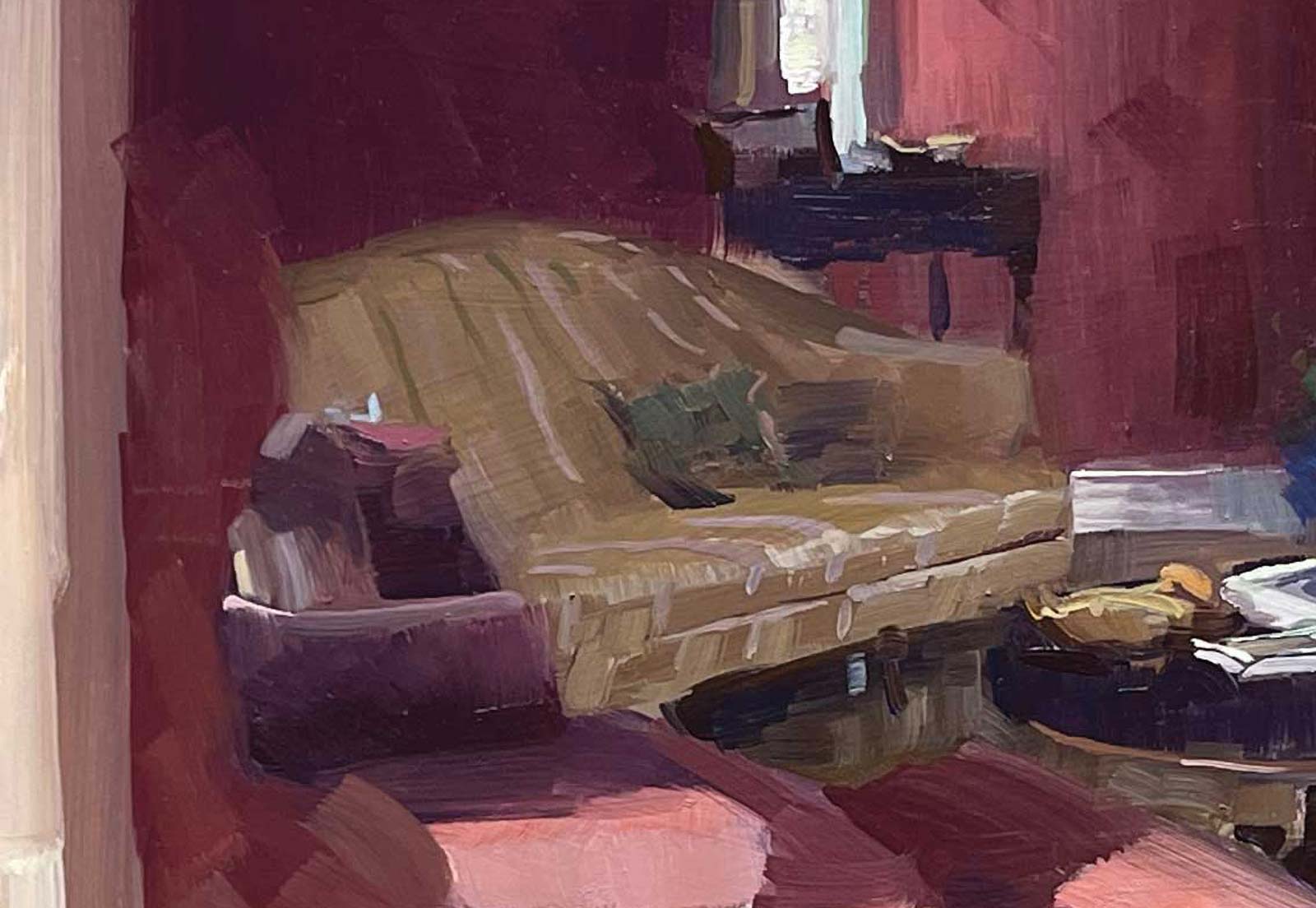 Stage 7
Stage 7 The Sofa
The large sofa in the mid-distance is easy to overwork. The way I like to approach this situation is to think, “I’ll try to get it right in one go,” but I’ll still allow myself to rework it, maybe putting in more detail or less.
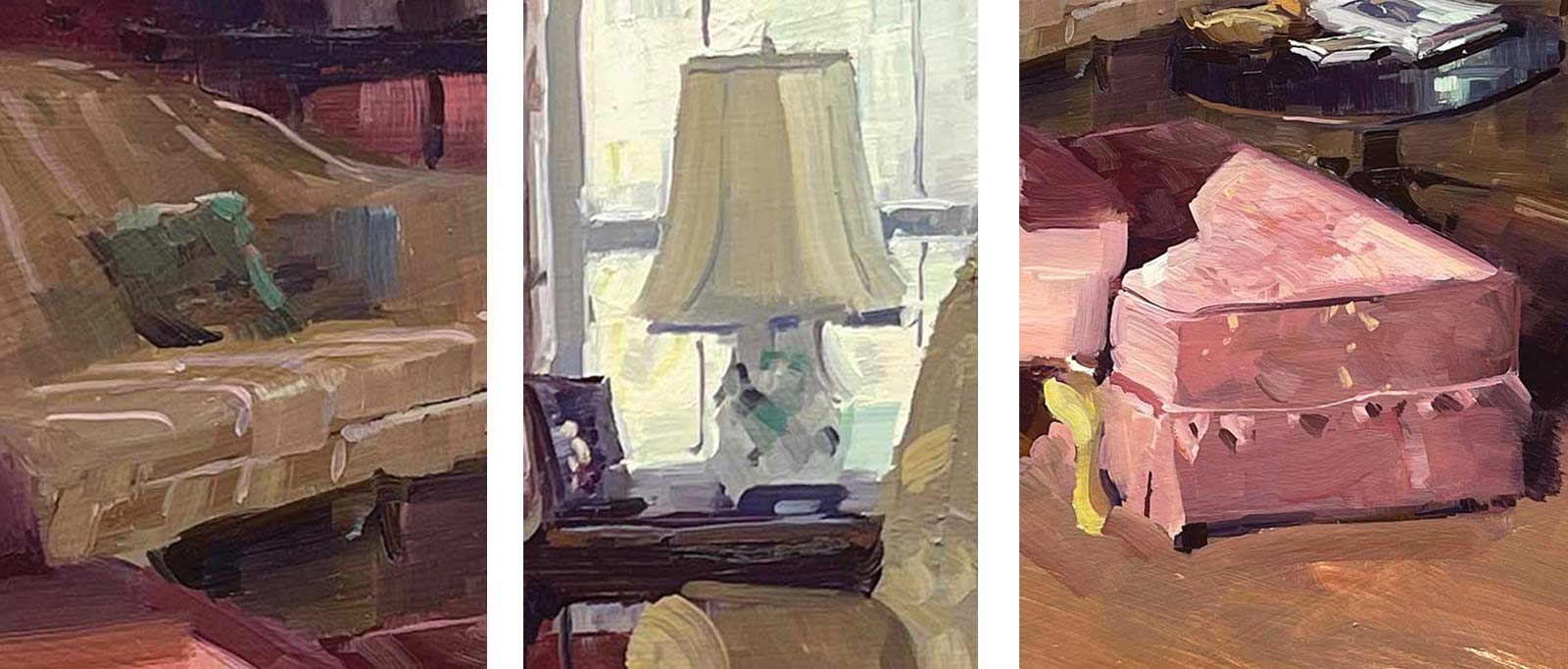 Stage 8
Stage 8 Subtle Blues and Greens
One of my overriding concerns was color saturation, which is why I took every opportunity to add some subtle blues and greens. The footstool now needs some refinement, as it’s an important shape for the overall composition and helps tie the foreground with the background.
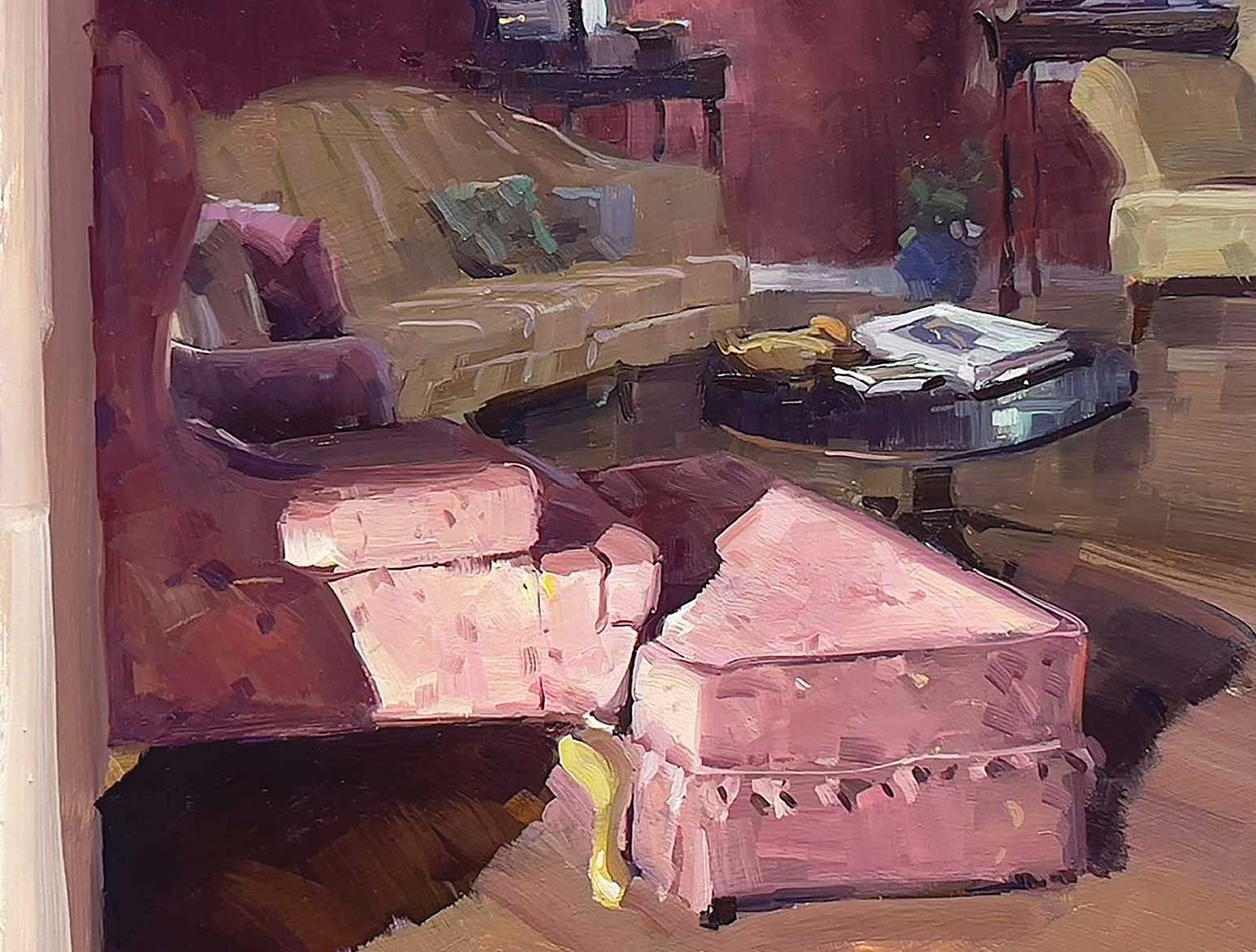 Stage 9
Stage 9 Main Chair
The main chair is pivotal to this painting’s success, which is why I like to leave it until I’m closer to the end. I now have a greater understanding of its position visually in my painting, especially the intensity of the cast shadow.
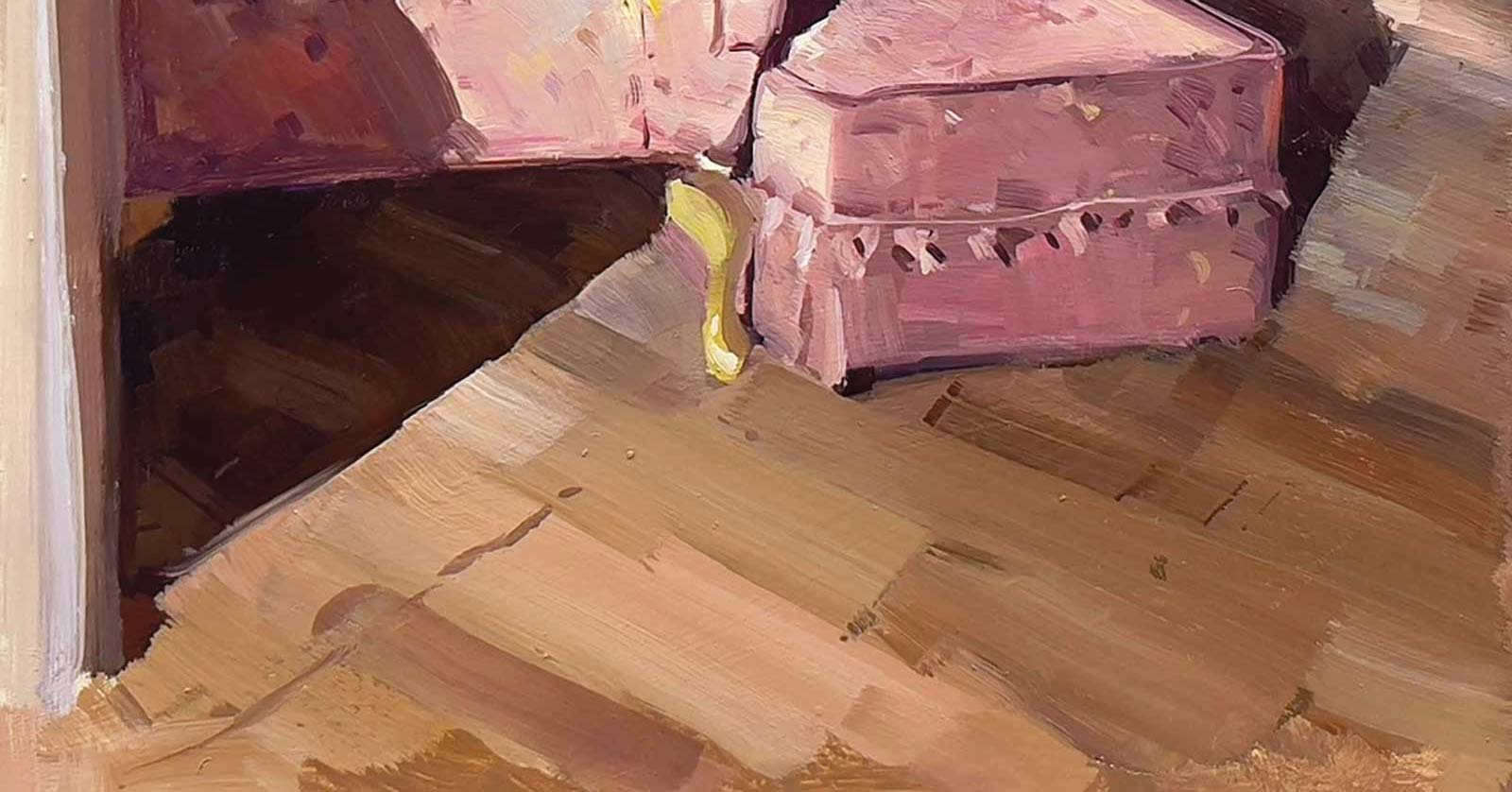 Stage 10
Stage 10 Building up the Floor
Everything has been leading up to this point. The floor is possibly the largest individual shape in my painting. It also helps provide a few subtle directional lines.
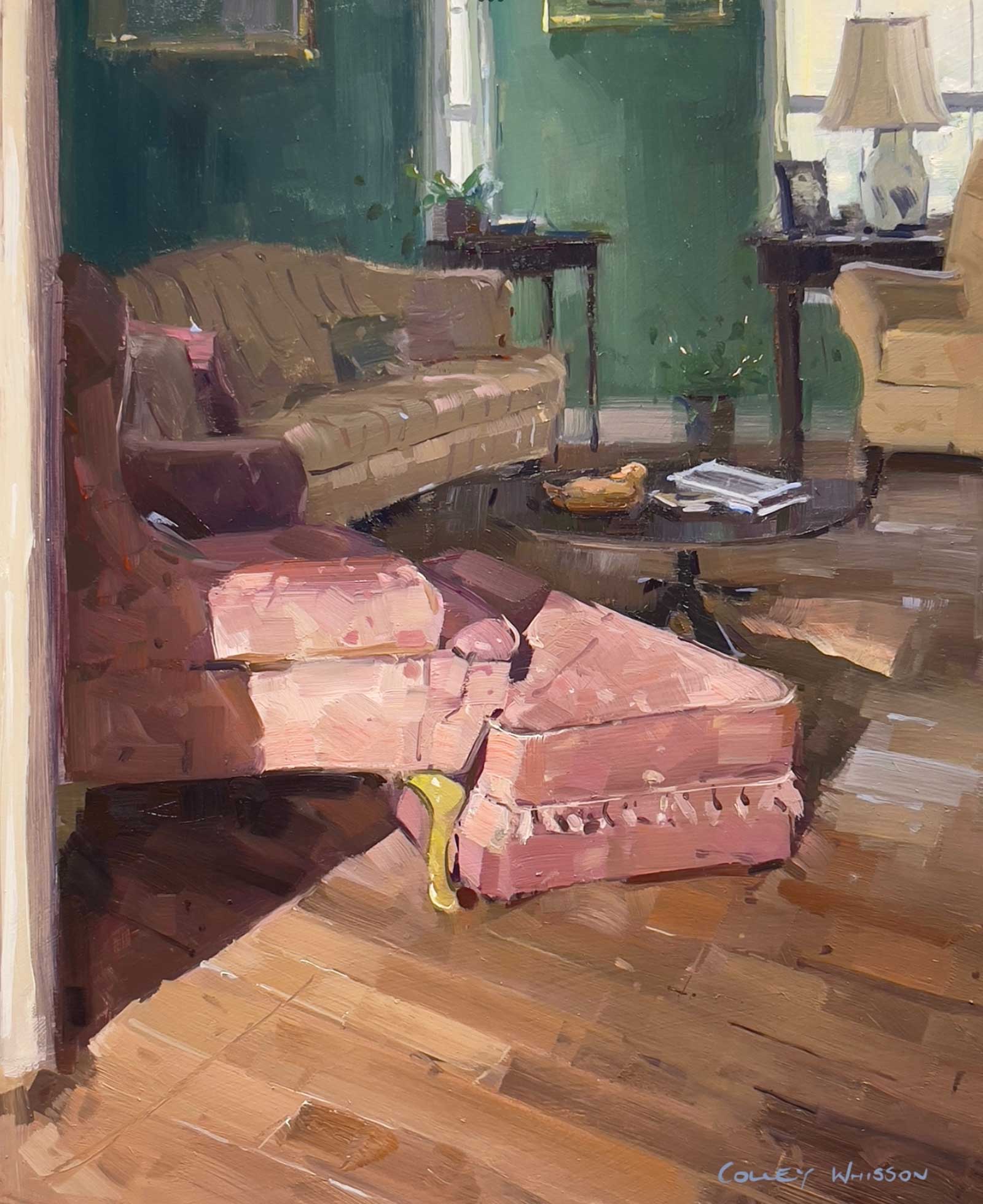 Stage 11
Stage 11 Alternate Version
This is around the time in the painting process that I like to take a visual break. Sometimes I’ll even spend some time working on an earlier painting. Here, I included a different version of the same scene, except this version was all about color balance. It’s amazing how looking at a different painting cleanses and refreshes my eye.
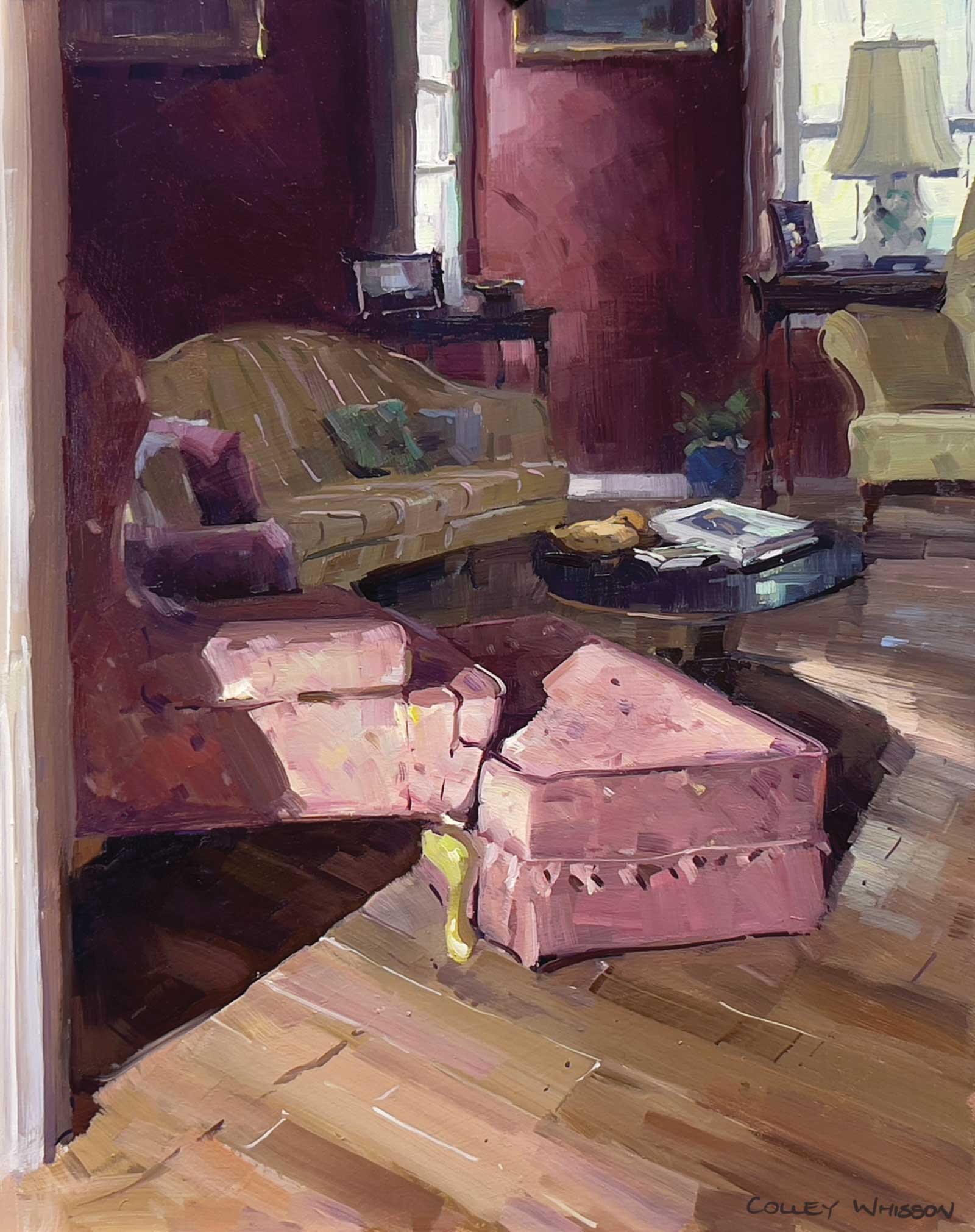 Stage 12
Stage 12 Finished Artwork
A Time and Place to Rest, USA, oil on MDF gessoed panel, 14 x 11" (35 x 27 cm) Even though we paint locally, I need to view my painting globally, so stepping back is vital. As a conductor of a royal symphonic orchestra, I am hoping my painting is really starting to sing. I’m sizing up the relationship between the small, medium and large shapes.
About the artist
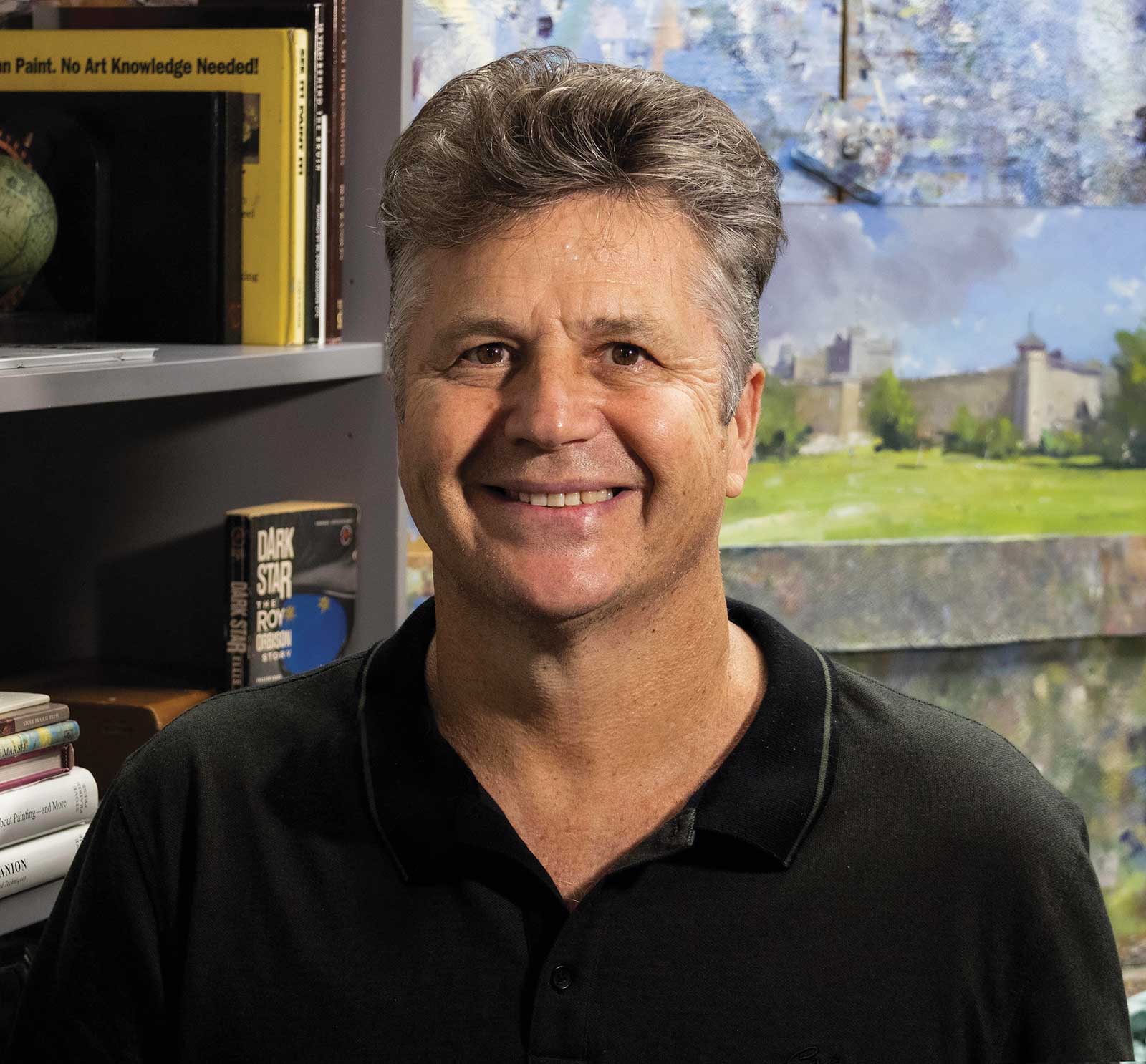 Colley Whisson
Colley Whisson was born in Brisbane, Australia, in 1966 and grew up in semi-rural surroundings. This gave him an immense appreciation for nature and the outdoors, enjoying every opportunity he’s been given to study and appreciate its nuances. He has long believed, “It’s not what you paint but how you paint it.” With this in the forefront of his mind, Whisson has dedicated himself to developing his skills to the highest level possible. The artist aims to tell a visual story with clarity and sophistication but is also driven to distort and abstract the image as much as possible while still maintaining a realistic image. Whisson holds exhibitions, conducts in-person and online workshops and does art demonstrations across Australia and abroad. Online courses taught by Whisson can be found at tucsonartacademyonline.com.
Represented by
Montville Art Gallery, Queensland, Australia, montvilleartgallery.com.au
Contact at
www.colleywhisson.com