This year, the Portrait Society of America looks forward to celebrating another exciting year of portraiture during our 26th annual Art of the Portrait conference in Atlanta, Georgia, from April 25 to 28. Many new and returning faculty artists will be participating in crowd-favorite events such as the opening night Face-Off demonstration, Portfolio Critique sessions, Open Drawing Studios and the 6x9 Mystery Painting Sale. The top 20 finalists of The International, the world’s premier portrait competition, will exhibit their outstanding works in hopes of winning the Draper Grand Prize and over $150,000 in cash and awards. In preparation for our grand event, I had an opportunity to speak with a few of our new and returning faculty artists to discuss a range of subjects from technology and art to new developments in art education and teaching. In this issue, we will hear from artists Ali Cavanaugh, Mattie Ree Neal, Oliver Sin, Susan Lyon, Frances Bell and Liz Harris.
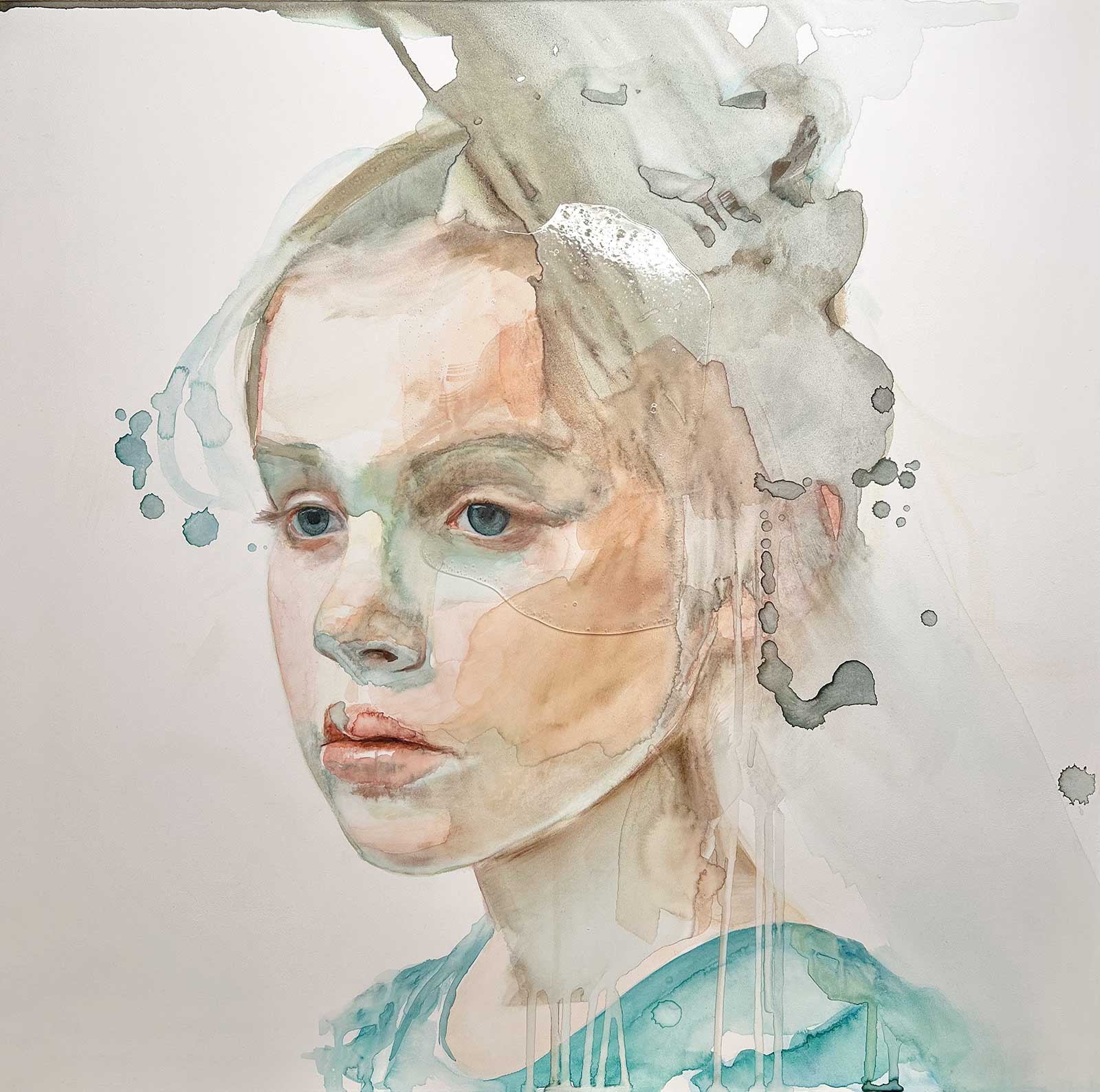
Ali Cavanaugh, Fiona, watercolor on panel, 24 x 24" (60 x 60 cm)
New technologies—from the invention of the paint tube in 1841 to NFTs and Instagram—have had a profound impact on the way art is created and shared. “Technology has made a huge impact on my work over the years,” shares New Mexico-based artist Ali Cavanaugh, known for her modern fresco process. “When I graduated art school in 1995, the internet and email were not yet in every home. I started www.alicavanaugh.com in the late ’90s and in 2006 began blogging on WordPress. The blog format was catching on in art circles, and I’d have approximately 8,000 visitors each day to my blog. Not only did this lead to consistent sales, but also the format was so accessible that writers and journalists could easily grab my info. Instagram was the biggest turning point for my work because I was able to connect easily to my fans and collectors on a larger scale. I have used Instagram like a journal to record my creative process. Posting new paintings daily or weekly keep followers and collectors connected. Since 2015 a majority of all my sales and commissions have come through Instagram.”
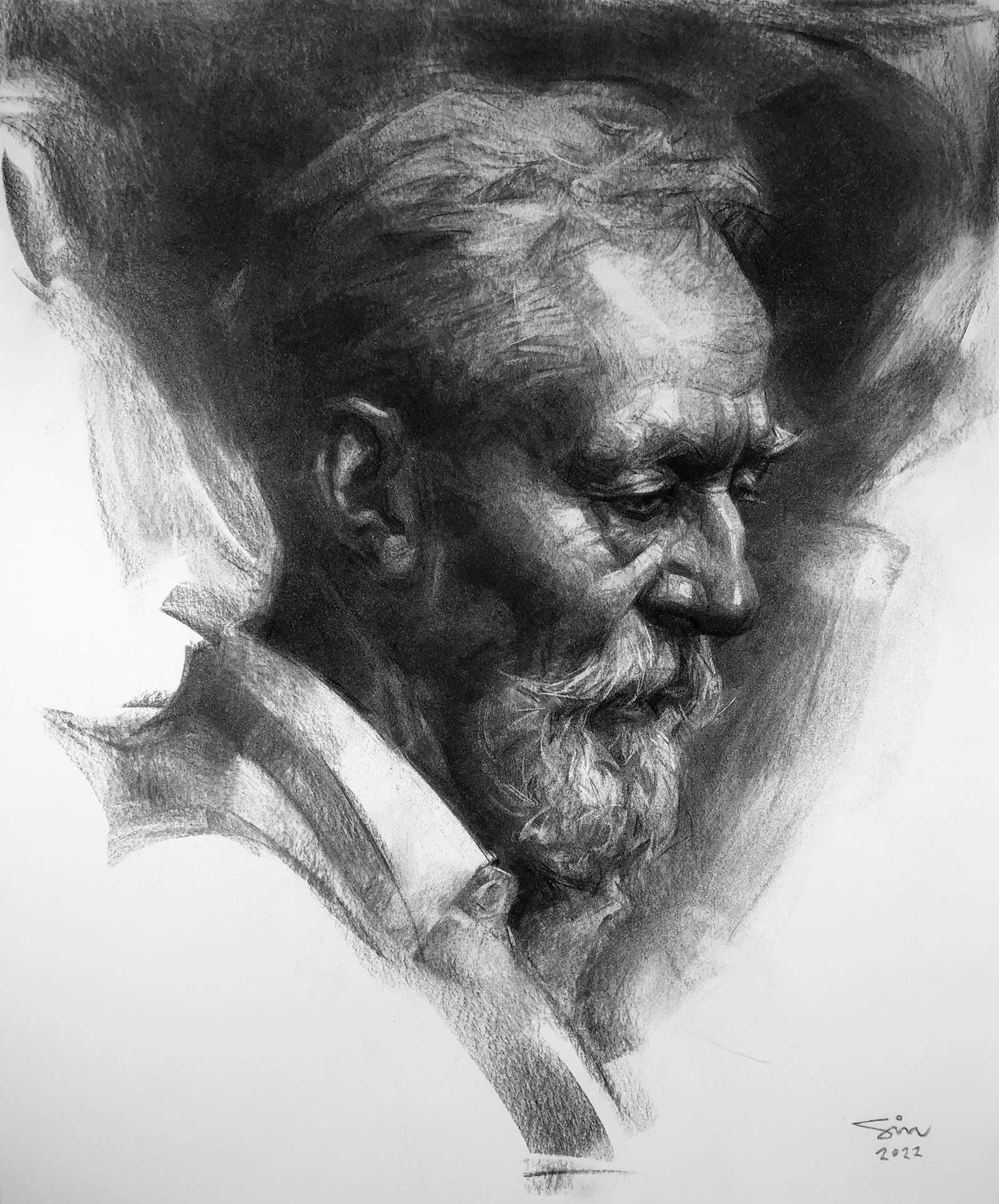
Oliver Sin, The Legend, vine charcoal on drawing paper, 17 x 14" (43 x 35 cm)
While advancements in technology have had a huge impact on art and design, they are often a subject of much dispute. “In my watercolor community there has been a lot of talk about where the future of art is headed with all the AI software and apps popping up,” says Cavanaugh. “I don’t believe it’s anything we should fear. We have tools now that can make our jobs easier, but I don’t think they are obsolete. Great art (and craft) leaves an imprint of something that transcends. Art collectors collect for many reasons, for investment purposes, but also because there is something sublime about being in the presence of art created by human hands. This special experience cannot be replaced by artificial intelligence. Good art at its core contains a unique human experience, that goes beyond the physical world. This is the mystery that we are drawn to and a mystery that AI will never have.”
Mattie Ree Neal, a young artist who grew up in a portrait painting family, recognizes the advantages of being an artist in today’s ever-changing technological world. “My career as a portrait artist is just beginning, but so far almost every commission has come through Instagram or because of it,” says Neal. “Everett Raymond Kinstler used to remind my dad (Michael Shane Neal) how lucky he was to have access to color reproductions of paintings. My dad now reminds me how lucky I am to have grown up in a time where the whole of art history is at my fingertips. How fortunate we are to have this resource of information and inspiration and to be so connected with both the artists of the past and present. I’ve travelled all around the country to take workshops and learn in the studios of painters and sculptors, and I was introduced to many of these artists through social media and the internet. I don’t think this avenue would have been open to me just a short time ago.” Neal, however, also remains aware of the pitfalls that technology can present for artists. “Kinstler always warned his students about becoming too dependent on technology,” she says. “It’s true that each device between us and our subjects removes us another step from reality. I think that we need to consciously work to ensure the sincerity of the relationship between artist and subject. We shouldn’t lean on technology too much. There is a point where it can become a crutch and keeps us from striving to realize our own potential.”
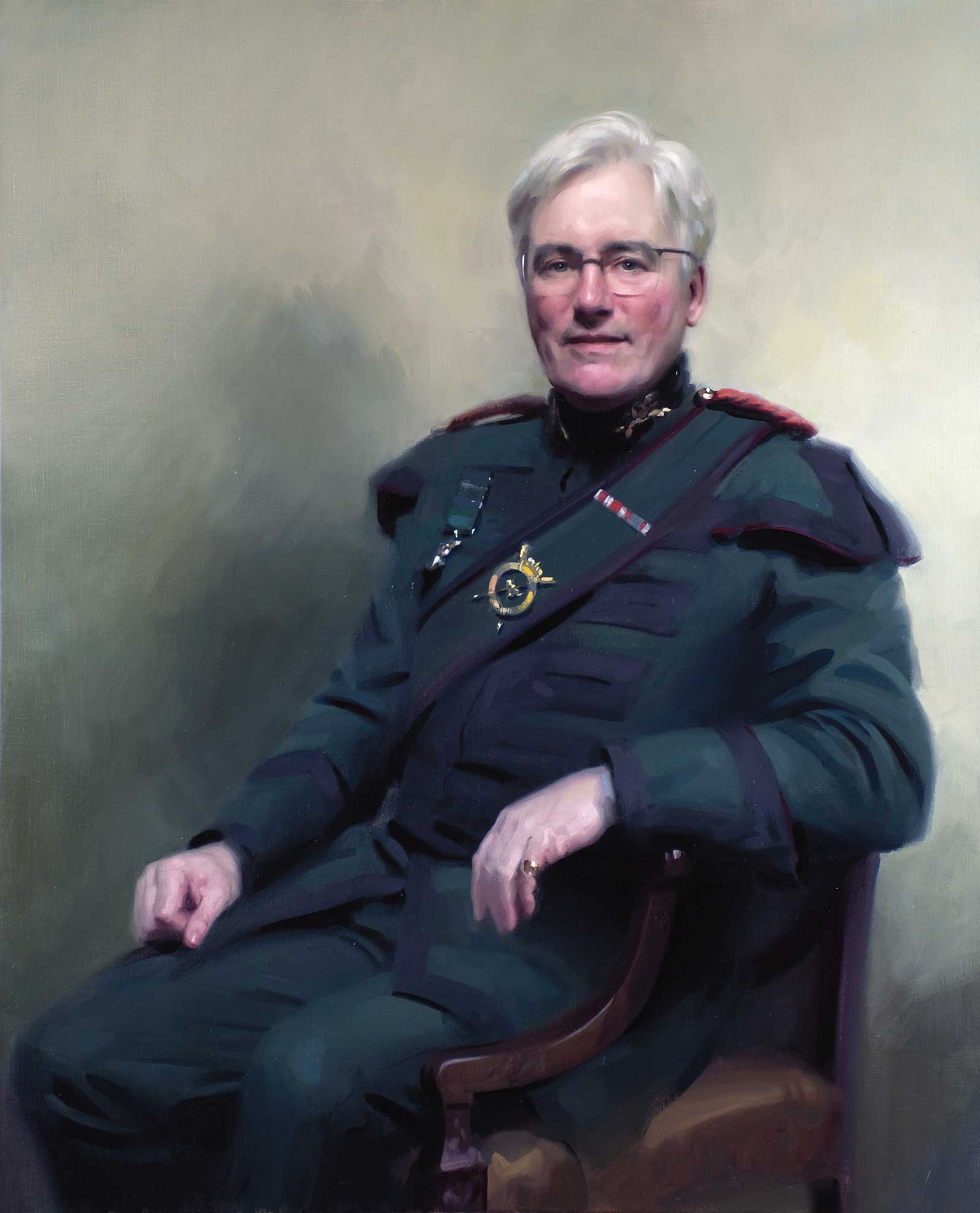
Frances Bell, Archer, oil on canvas, 40 x 30" (101 x 76 cm)
Deciding whether to attend art school—and if so which type, or forgo traditional education for alternative paths—is a choice every artist must face. Oliver Sin, a San Francisco-based artist known for his exquisite vine charcoal portraits, believes there is no substitute for a formal education. “By the time I started college in 1992 at the Academy of Art University in San Francisco, I took illustration as a major. I thought I would like to become a children’s book illustrator, but I ended up working for George Lucas’ LucasArts in 1996 for almost four years. I enjoyed my college days and believed there is no substitute for a formal art education. Art college curriculum is a constant driving force, and it disciplined me to draw, create, and learn every single day. Without that, you must be your own taskmaster, and you better be very self-disciplined. Those four years in art college strengthened my determination to become a professional artist, which means an ongoing investment in time and effort. The best part of college is to get perceptive critique from teachers who are renowned professional artists. It is different from joining an artist group whose members critique among themselves. Participants generally don’t know enough to suggest an improvement or simply avoid saying anything ‘hurtful.’ As a result, the critique is much less effective.”
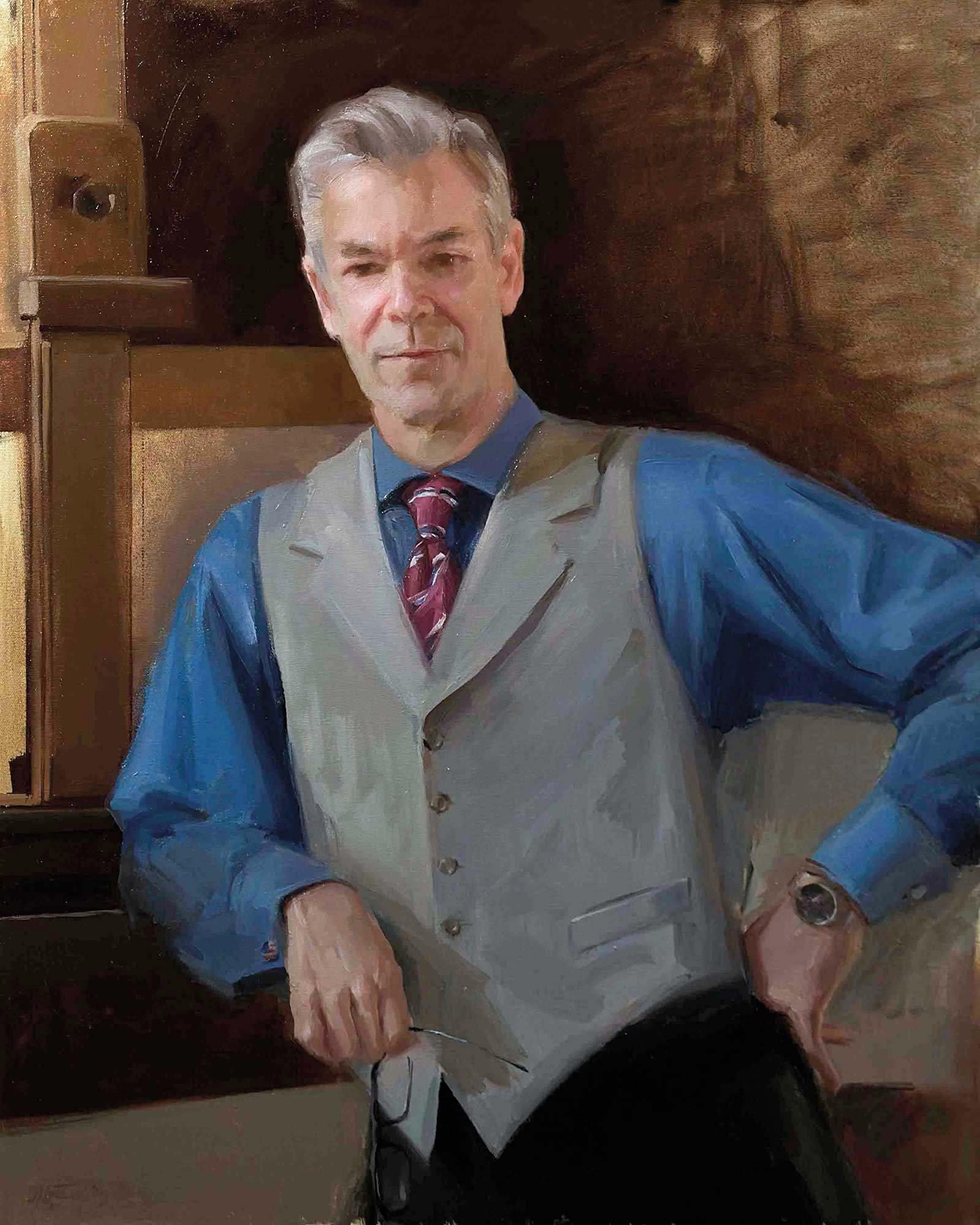
Mattie Ree Neal, Robert Scott, oil on canvas, 30 x 24" (76 x 60 cm)
For aspiring artists, Sin recommends art school as a place to learn both art and marketing skills. “The well-structured environment helps students keep up their motivation. Learning skills on your own is likely to take much longer,” explains Sin. “In art school, students acquire skills much quicker with help from classmates and art professors. Teamwork is part of art school training, which can only be achieved through collaboration, constructive criticism, responsibility and appreciation of different cultures. The best art educators don’t just teach techniques but become mentors to their students. They help students to refine their skills, avoid pitfalls, try different mediums and open new possibilities. A common misconception is that art schools only teach art. While art is the core of education, many art schools teach marketing skills. Potential career artists will need to know how to market their work, price their art or even run a small business. An extra bonus of art school is the large network of alumni, which gives students the opportunity to connect with graduates who become distinguished professionals in their fields. When surrounded by like-minded students who are serious about shaping a career in art, the camaraderie will push artists to find a path to fulfill their dreams.”
North Carolina-based artist Susan Lyon was inspired to pursue fine art education by a teacher she met at the American Academy of Art in Chicago. “My father signed me up for summer classes at the American Academy of Art after high school,” says Lyon. “I didn’t have good grades in high school and going to college wasn’t in the plan. I became interested in being an artist after watching a PBS program on Georgia O’Keefe. After a couple of weeks at the school I changed my mind and wanted to go into the fine art department because of a kind teacher named Mr. Parks.” As for which path aspiring artists should choose, Lyon admits it’s a hard question to answer. “I know many successful artists who have done both of those paths. I hate to think of people becoming in debt because of art school, so I tend to talk to people about going the way of workshops and painting in a group of good artists. It depends on the person’s personality; you really need to be driven to go it alone. Some people need the structure of a school setting. I don’t think either way is the only way. I think now because of social media artists can take control of their careers if they are disciplined. It used to be that you relied on galleries, but you can’t do that anymore. I am constantly diversifying where I put my energies, and I am also adapting to new technologies.”
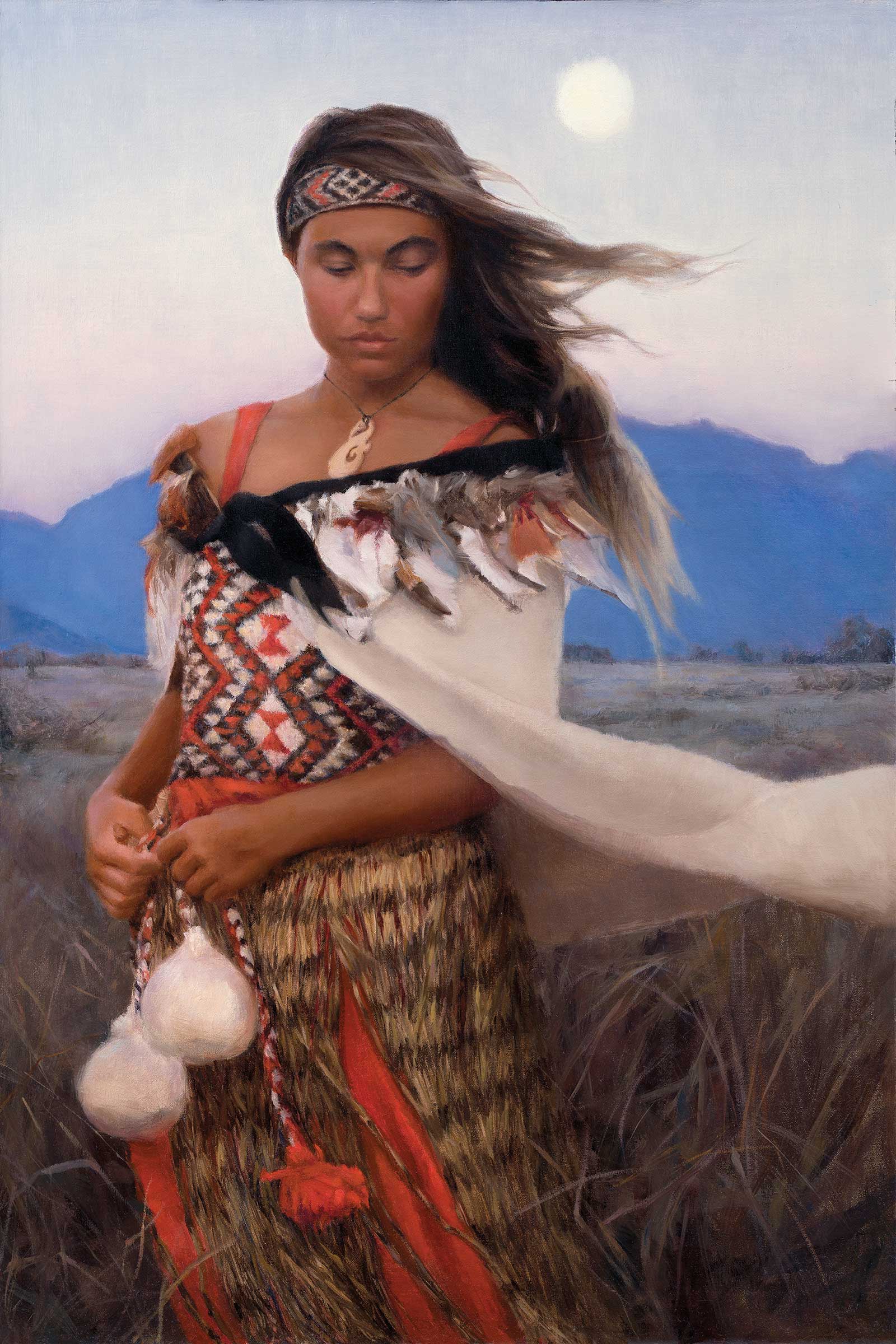
Liz Harris, Windswept, oil on linen, 30 x 20" (76 x 50 cm)
Artist Frances Bell, who lives and works in the United Kingdom, began her formal art training in Florence, Italy, at a very young age. “I went to Charles Cecil Studios in Florence for three years when I was just 18 years old. I then taught there in the summers for a few years after, so my training was about four years in total. I think what the training gave me was a sound basis in how to see shapes and proportions, and because the school was entirely ‘from life’ it allowed me to develop observational skills over long periods of study direct from the model,” she says. “I think it served to set me up with the skills or toolbox I needed to go forward with my painting. Having had traditional training, it would be hard for me to argue from another point of view. I think with the development of ever more accommodating technology, the menu of options is ever greater. I loved my training and would recommend a long stint doing disciplined work with a school, but this could be combined with other shorter courses and online courses. Given that there are several ways that artists are produced to high ability these days, it’s clear the options are varied.”
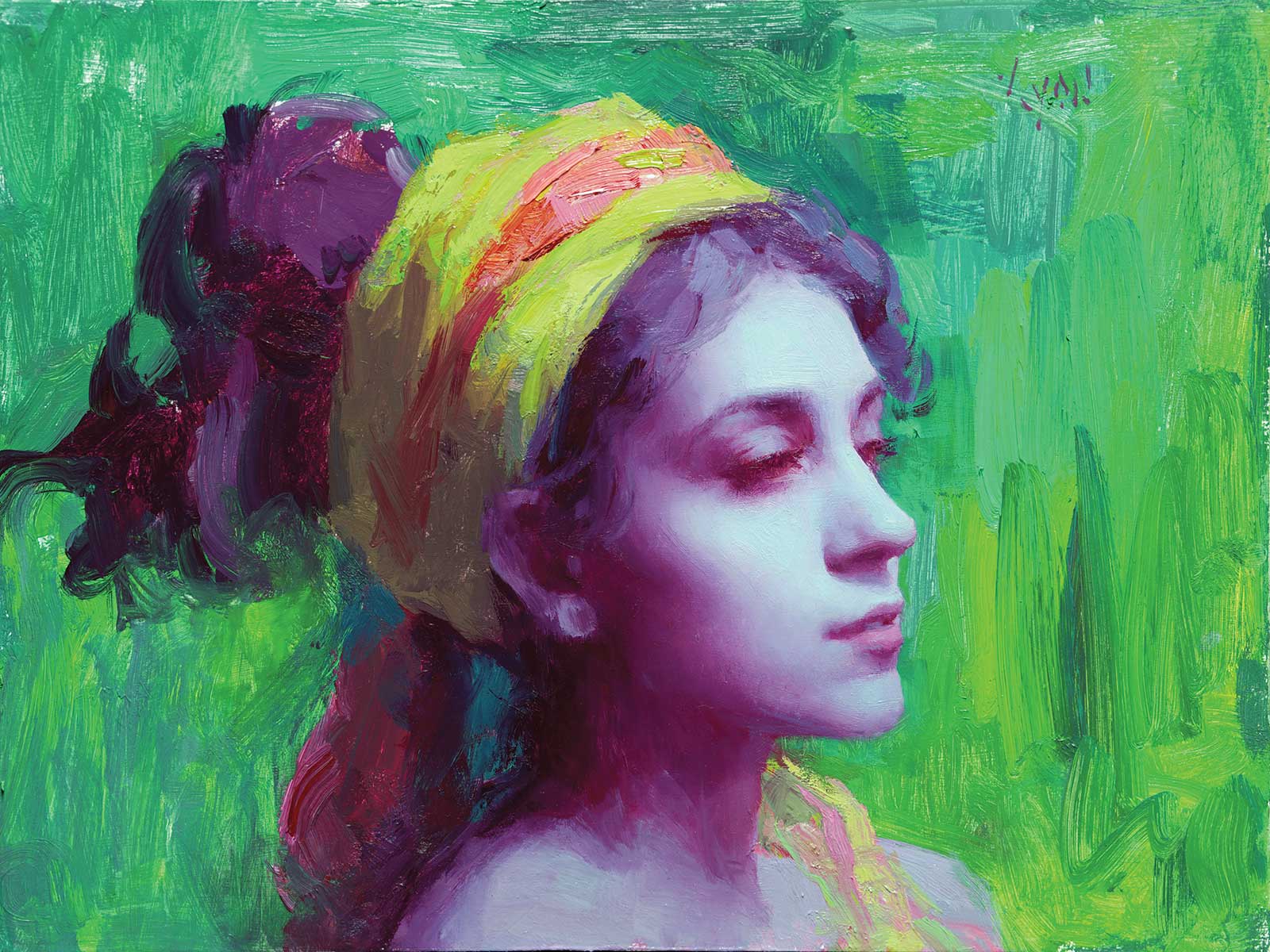
Susan Lyon, Fairy Green, pastel, 9 x 12" (22 x 30 cm)
Utah-based artist, Liz Harris, is a self-taught artist who gained her education through discipline and opportunities to travel around the world. “My art education has been self-directed and even perhaps a bit meandering,” says Harris. “When I was a child, my father would take me to art museums and we would discuss art, arguing over the merits of Rousseau, Modigliani, Rembrandt and his favorite, Vermeer. Later, I had the opportunity to live in France and then in Germany. I spent every penny I had traveling to as many museums as I could throughout Europe, studying brush strokes, composition, color, and drawing. I studied from books, copying master works, trying to understand what the artist was thinking and how they were solving problems.” However, Harris admits that “this type of study will only take you so far.” She explains, “I started taking workshops with my favorite artists. I had been painting large abstract paintings at the time and decided that I really wanted to pivot and paint portraits. I had moved to Utah by this time, and I started a mentorship with Casey Childs. I studied with him for a little over two years. I love that my path has been so eclectic, and I believe that learning from such varied and broad sources has kept my art mind open, sharp, and widened my art perspective considerably.”
Hear more from these artists by attending our 2024 The Art of the Portrait conference in Atlanta, Georgia, April 25 to 28. For information on registering for the conference, virtually or in-person, visit portraitsociety.org. —