A recurrent theme in my work is a sense of space and light, so I have chosen to show how I achieve these effects in my recent painting, Morning Mist. My inspiration for this scene came about one foggy autumn morning. The sun was trying to burn through the fog, which created the perfect opportunity for me to convey two of my favorite themes: atmospheric perspective and backlit trees. I witnessed the scene for several minutes, taking in the overall mood and feeling, which is difficult to get from a photo. I used a combination of photographic references, memory and imagination to execute this painting. There was no shimmer on the water in the original scene, but I moved some elements around to create this point of interest.
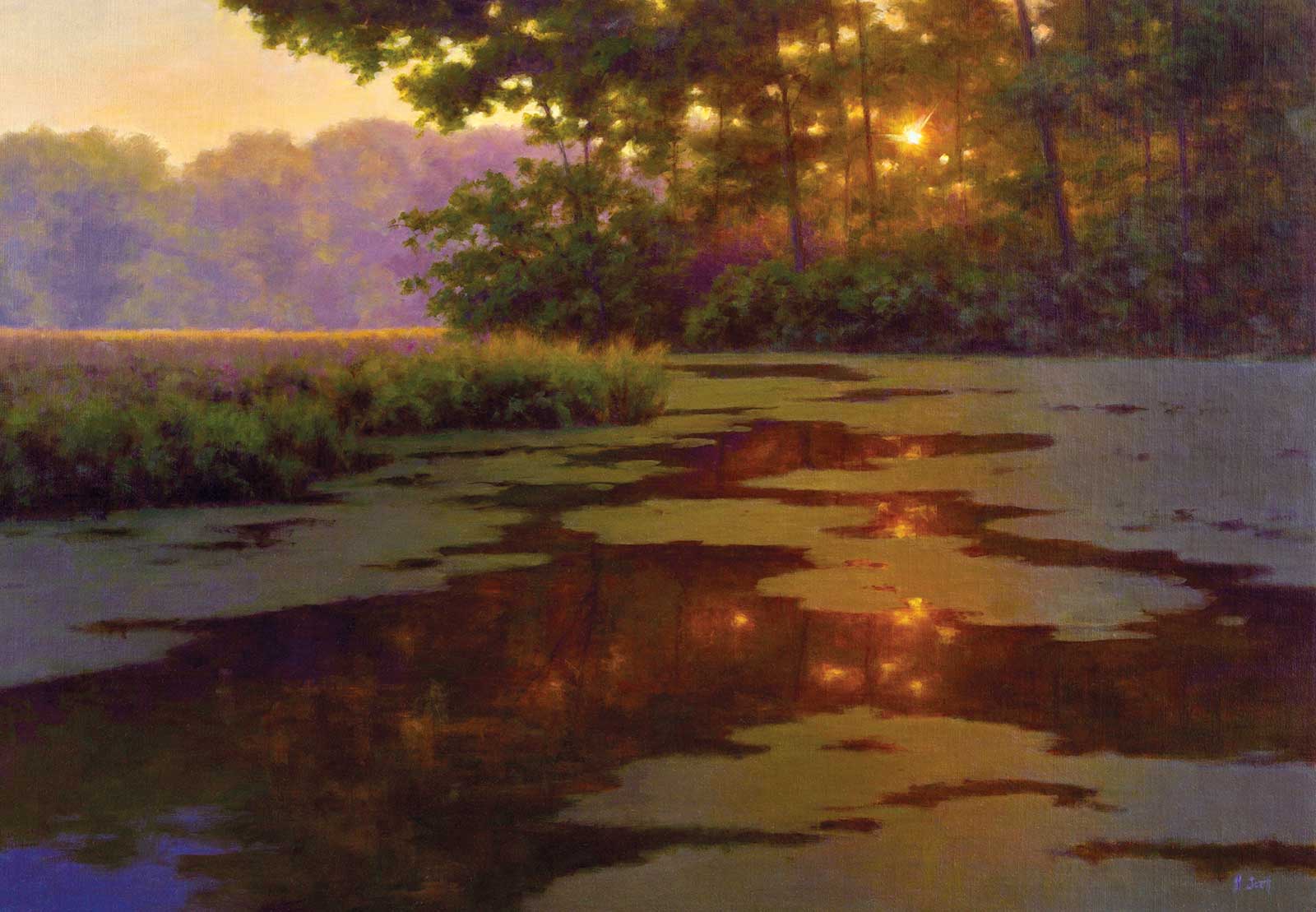
Morning Radiance, oil on linen, 24 x 36" (60 x 91 cm) This painting was a study in backlit trees and the play of light on water and the water lilies. The inspiration was a warm fall morning with beautiful filtered light coming through the leaves and shimmering onto the water.
I always start with a monochromatic underpainting to establish the composition and value structure before I dive into color. I generally use burnt umber to create my underpainting. The reason for this is to leave some of this warm tone coming through in areas of the painting. This helps create a glowing effect in the areas where light is hitting. If the image looks great in monochrome it has a very high chance of success as a full color painting.
My small color studies are for the purpose of figuring out the color palette for the finished work. If the image doesn’t work on a small scale it will not succeed on a larger scale. I usually create more than one color study with various color combinations, and in this painting I made two. One had a warmer, more violet/red palette and the other was more green/yellow. For my larger painting, I chose a color palette somewhere in between the two. All of my color ideas are worked out prior to executing the final painting.
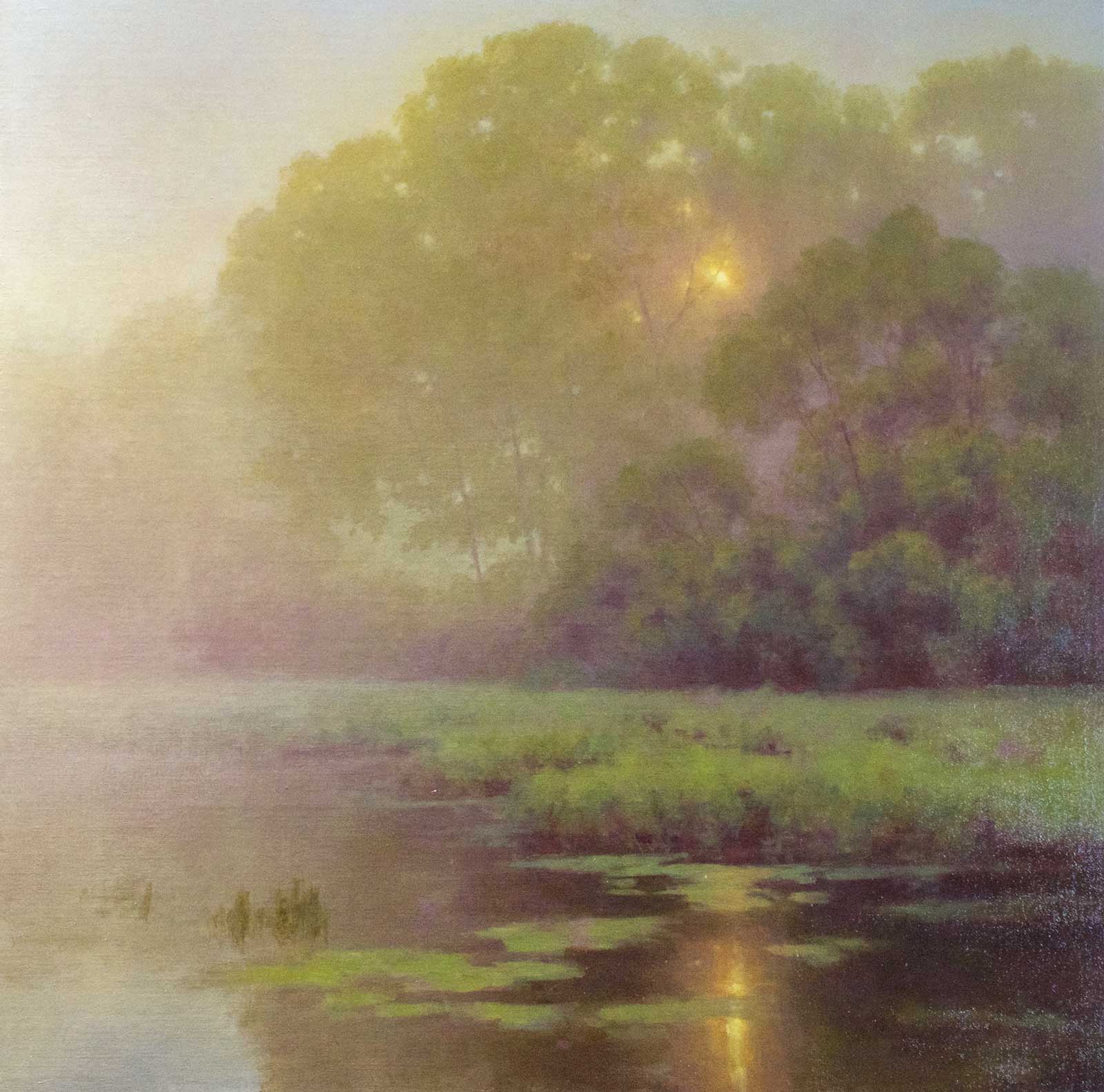
Morning Mystique, oil on linen, 30 x 30" (76 x 76 cm) This was my first fog painting where I learned how to control the value and temperature to create the illusion of a heavy fog being burned off by the sun. Much attention to edges was required to execute the effects of a thick fog.
When creating a sense of depth, one must understand the basic principles in atmospheric perspective: as objects get further away from the viewer they become less chromatic and less contrasted. Furthermore, distant objects take on the color of the atmosphere, which is the lower portion of the sky. The color temperature of distant planes is highly dependent on this atmosphere color. In a sunset painting these distance objects will appear warmer than objects in the foreground. On the contrary, in a cooler atmosphere objects furthest away will be cooler than objects in the foreground. This is essentially how we create atmospheric perspective. The illusion of fog is created using a compressed value structure in the distance, but full contrast can be found in the immediate foreground. When creating the misty effects seen in this painting, I use wet into wet to blend and keep the edges very soft. I have spent substantial time creating color charts to understand how to control the hues, value and chroma. This painting is primarily muted greens and violet hues. They work well together as split complementaries on the color wheel.
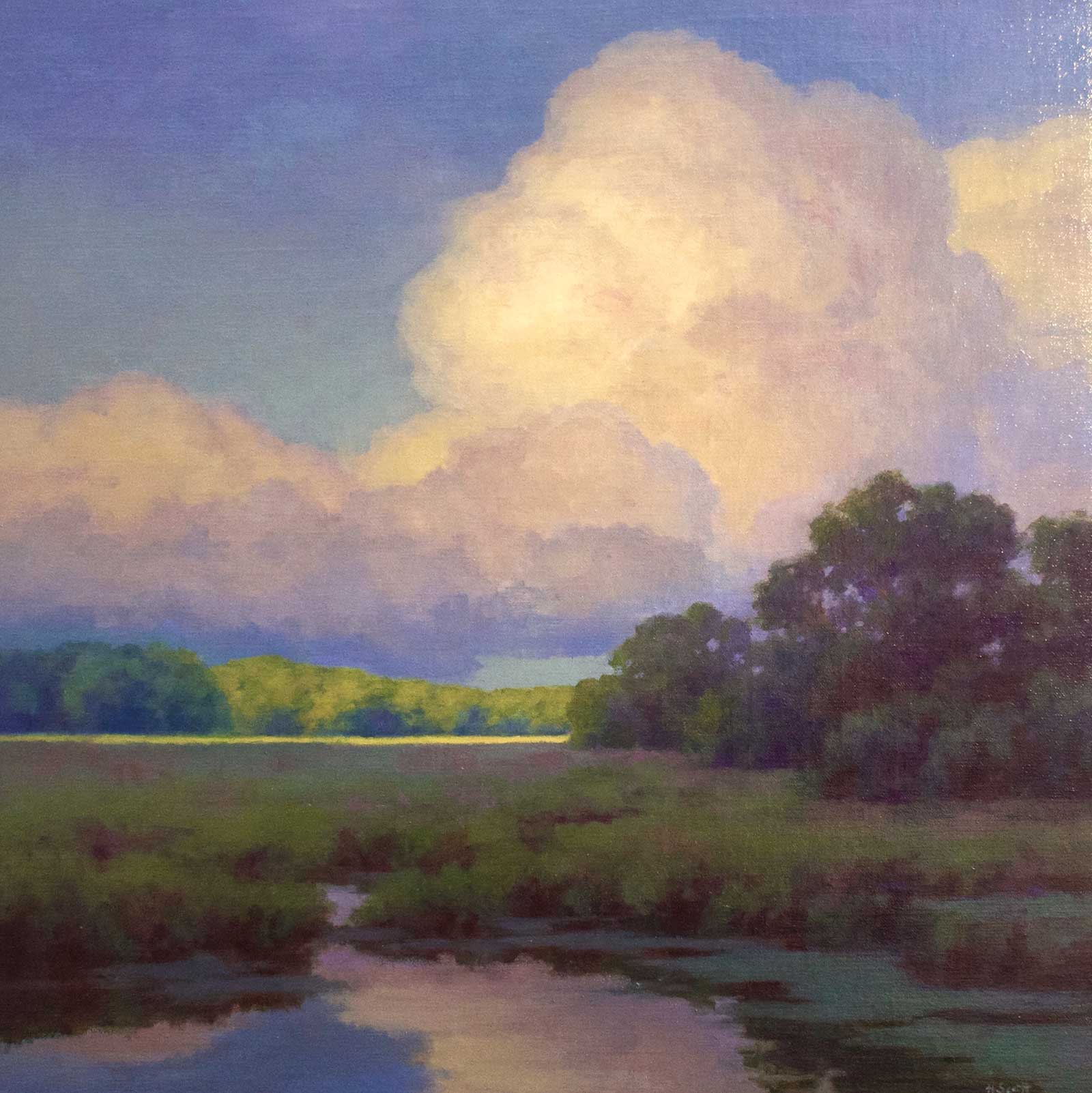
A June Afternoon, oil on linen, 20 x 20" (50 x 50 cm) The study for this painting was a plein air sketch, but the final composition was created from a combination of lighting effects seen during the field observation and my imagination of large billowing clouds.
In terms of lighting effects, a knowledge of color temperature is critical to understanding how to create these effects. The warmest, highest chroma color is right at the light source and everything away from this gets progressively cooler and less chromatic. In my process of making this painting I have designed it so that the focal point is where the sun peeks through the grove of pine trees. This is where my sharpest edges, highest chroma and lightest lights will occur. A secondary point of interest is the reflection/shimmer on the water, and a third point of interest is the strip of light on the grass below the distant trees, which are being lit by the sun.
My Art in the Making Morning Mist
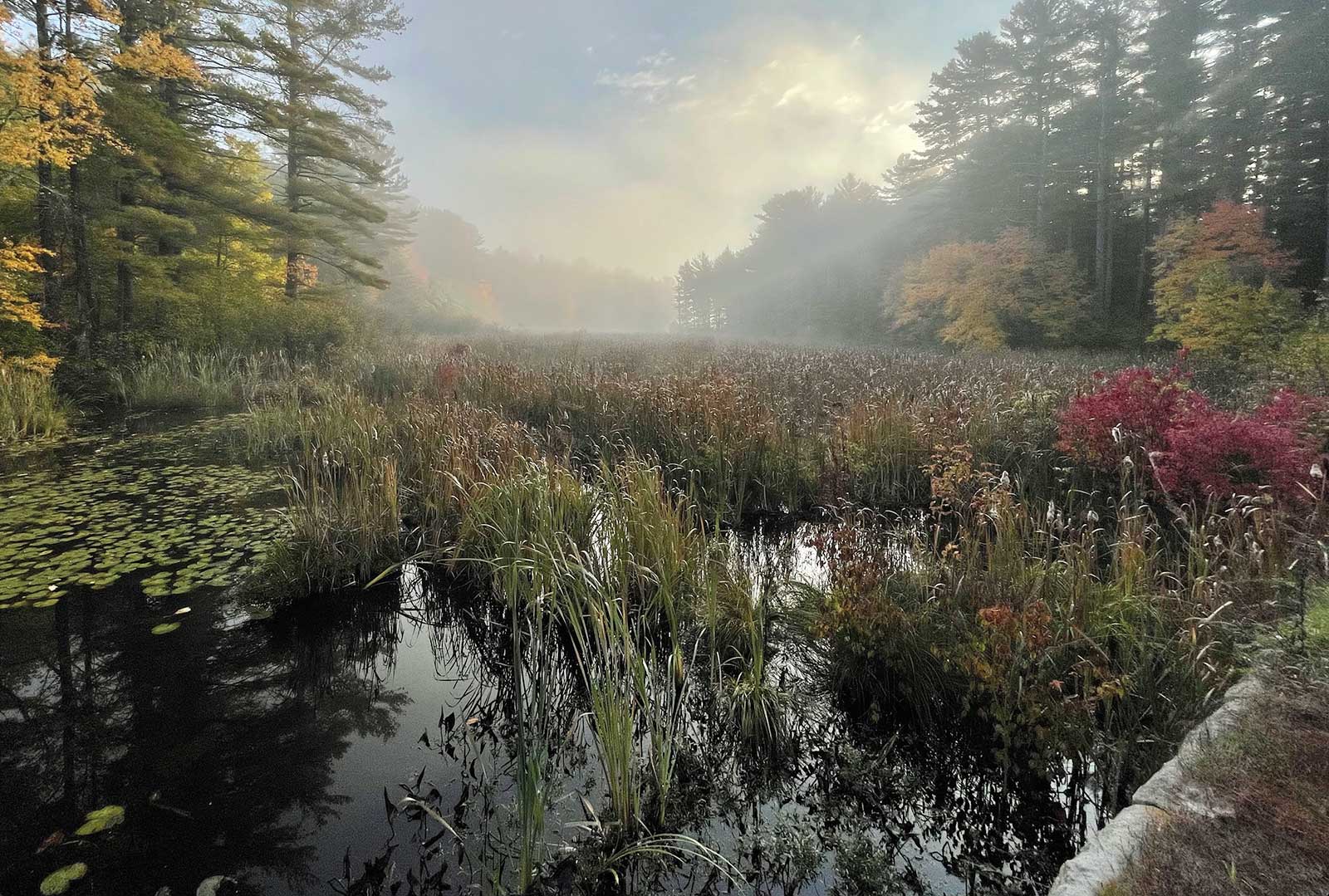
Reference Photo
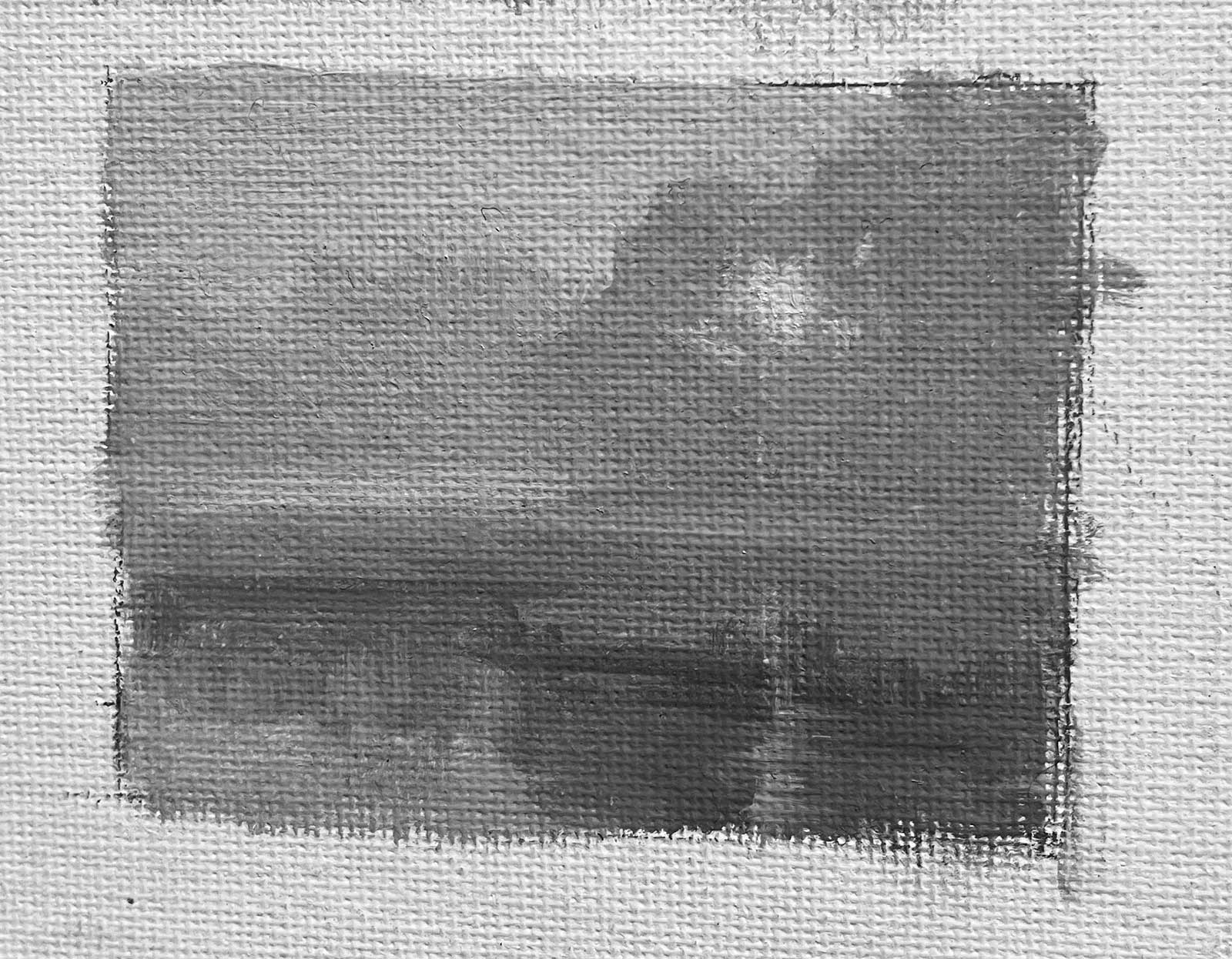 Stage 1
Stage 1 Value Sketch
This initial stage involves creating a simple grayscale value sketch using oil paints. This is thumbnail size.
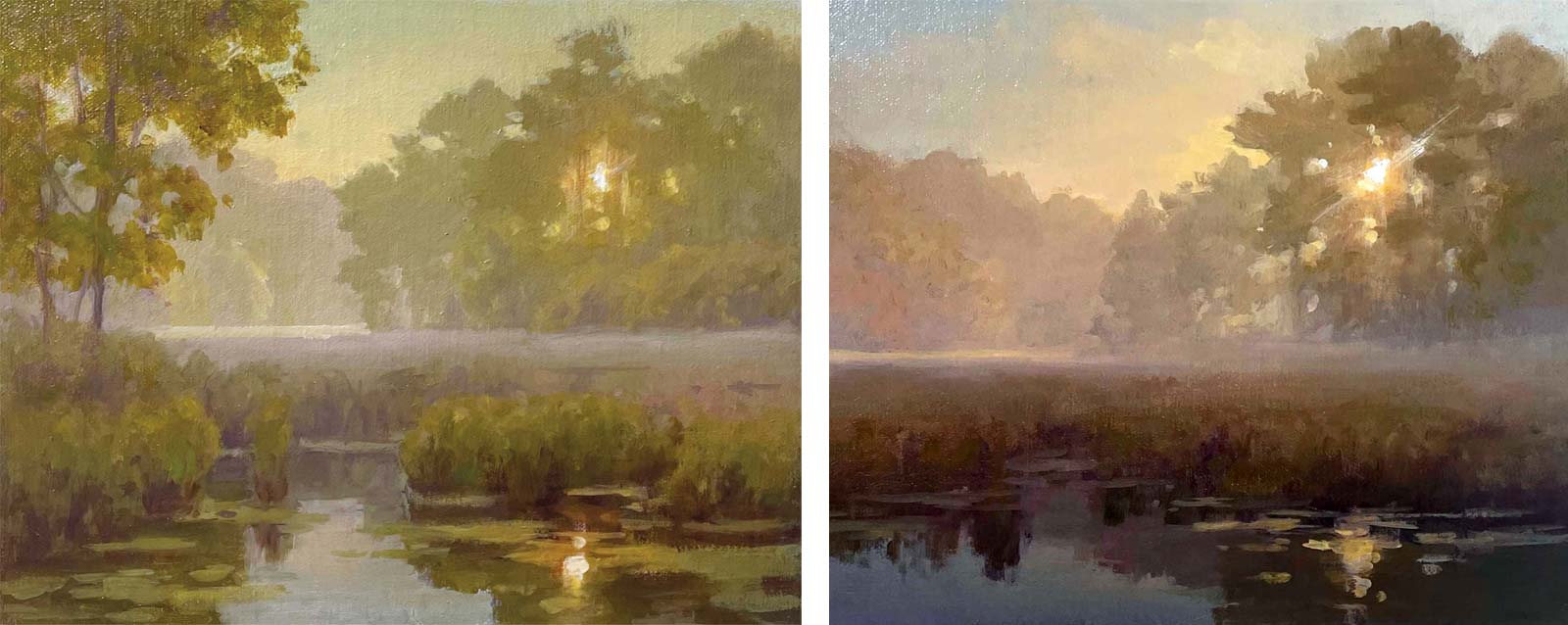 Stage 2
Stage 2 Color Studies
I created a couple of color studies to work out the palette for this painting. In one of them I explored the possibility of a tree in the foreground but ultimately decided to keep the left side open with a more “airy” feel. I also chose the temperature for the final work, which is somewhere in between the two.
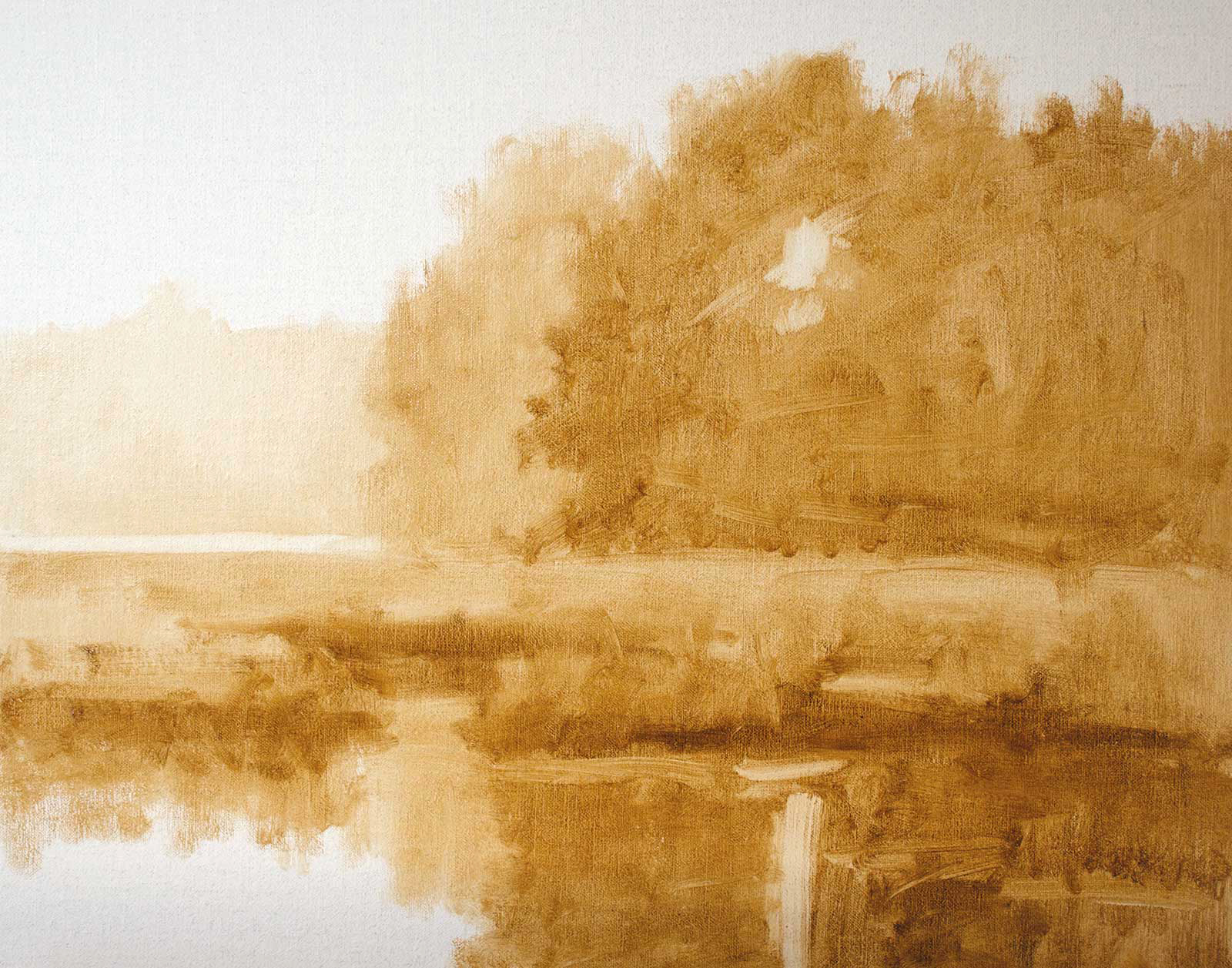 Stage 3
Stage 3 Tonal Underpainting
I now create a tonal underpainting with basic values and large shapes. At this phase it is easy to move shapes around if needed although the basic composition has been established in the notan sketch. I used burnt umber for the underpainting.
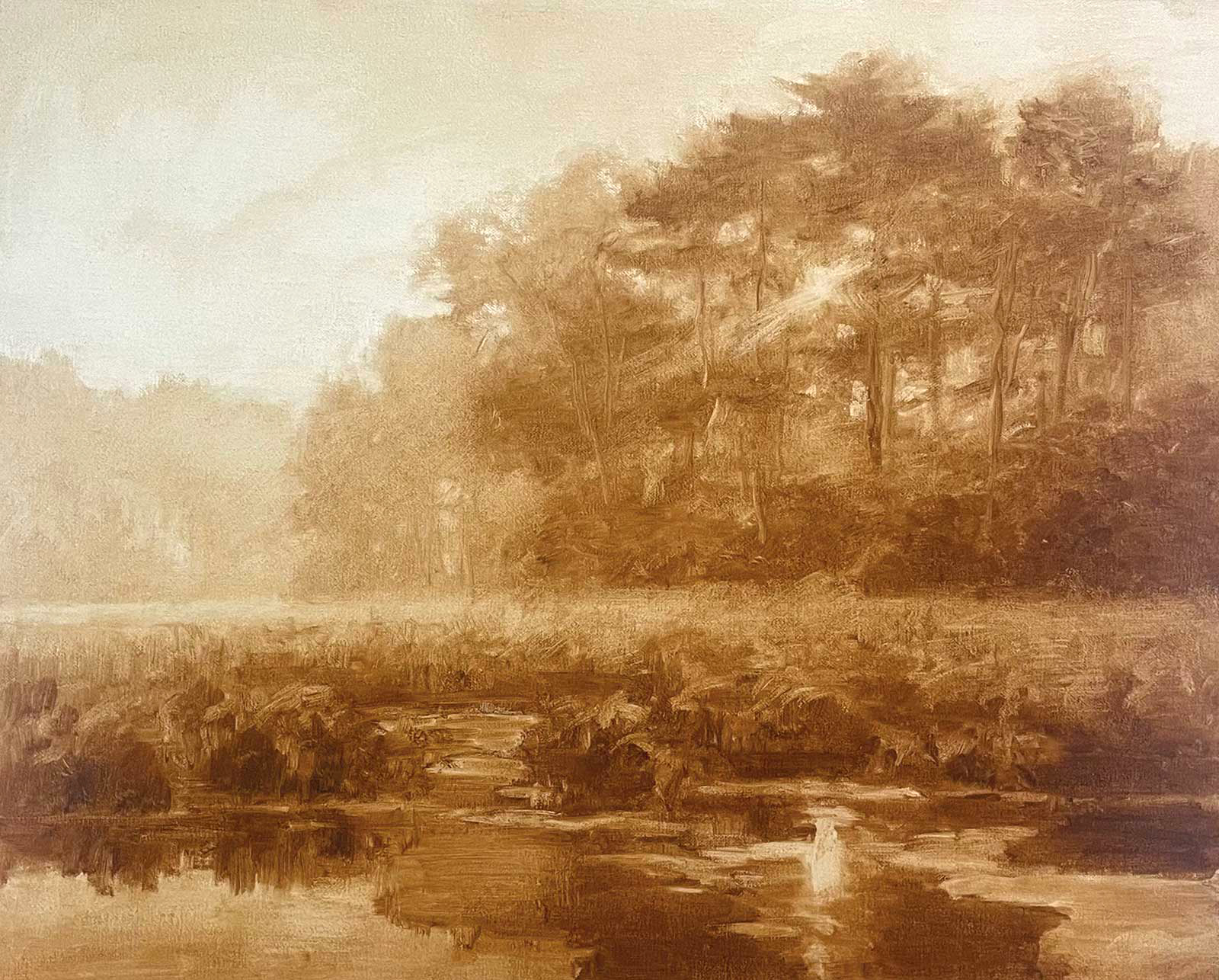 Stage 4
Stage 4 More Refined
I create a more finished brunaille with refinements of my shapes and a more extensive value structure. Some texture is added with the brush as well as more detail.
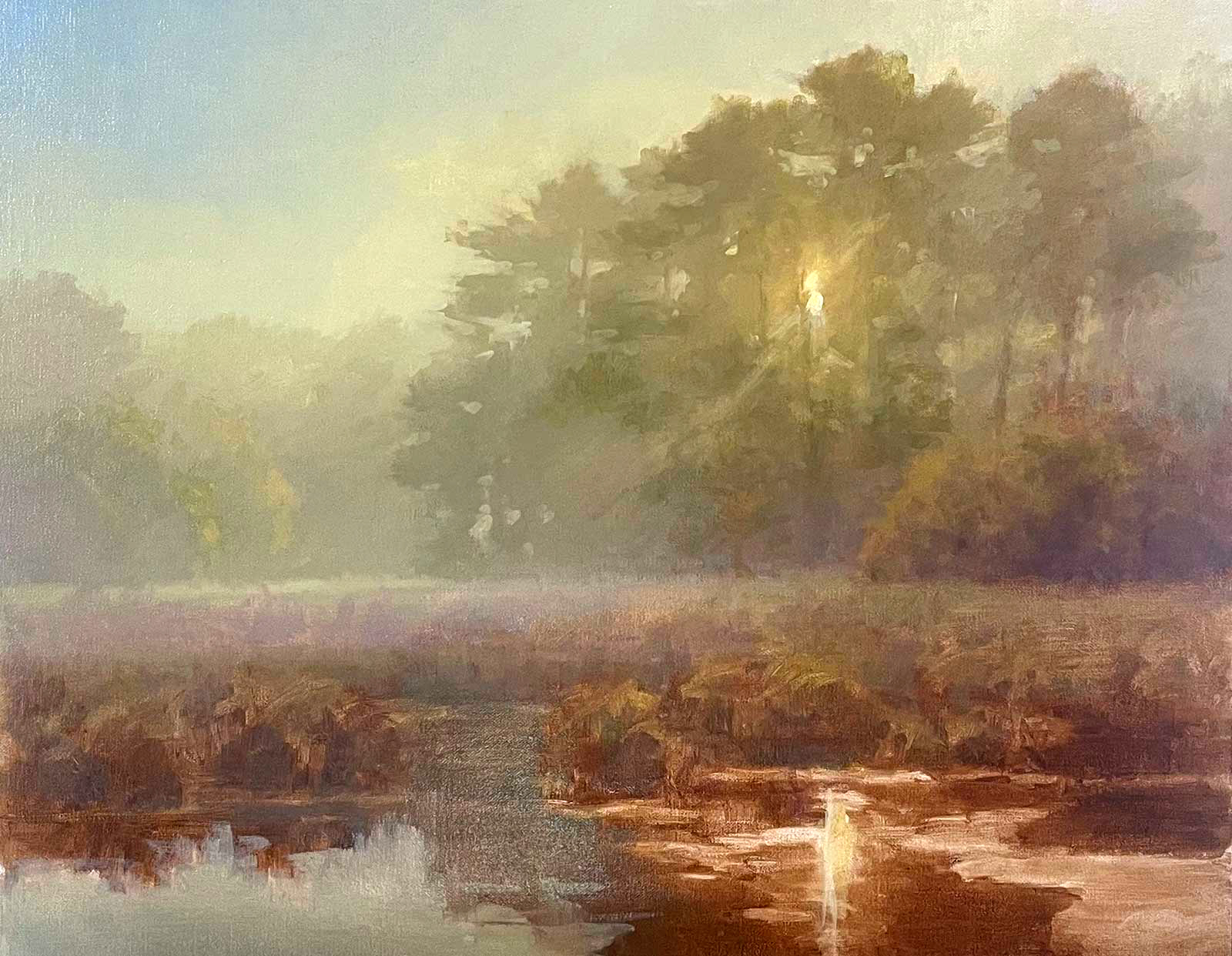 Stage 5
Stage 5 Adding Color
This stage is where color is applied in thin coats. Using my color studies as a guide, I block in the large shapes working background to foreground, still working on the composition as a whole without any detail work.
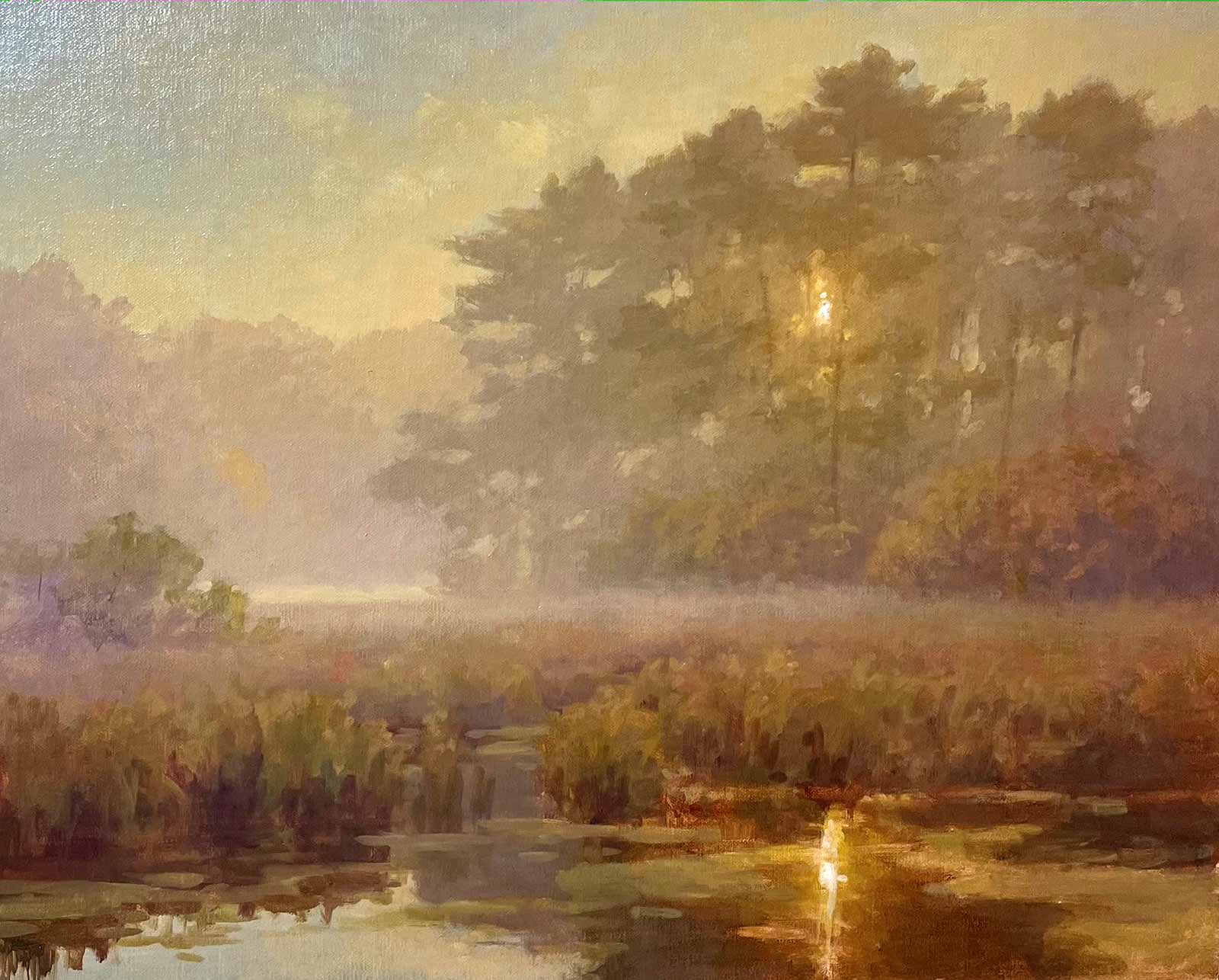 Stage 6
Stage 6 Playing with Composition
The entire composition is blocked in with a first color pass. To improve the composition I moved the mass in the lower left hand corner down. I also experiment with a small bush on the left, which ultimately gets removed.
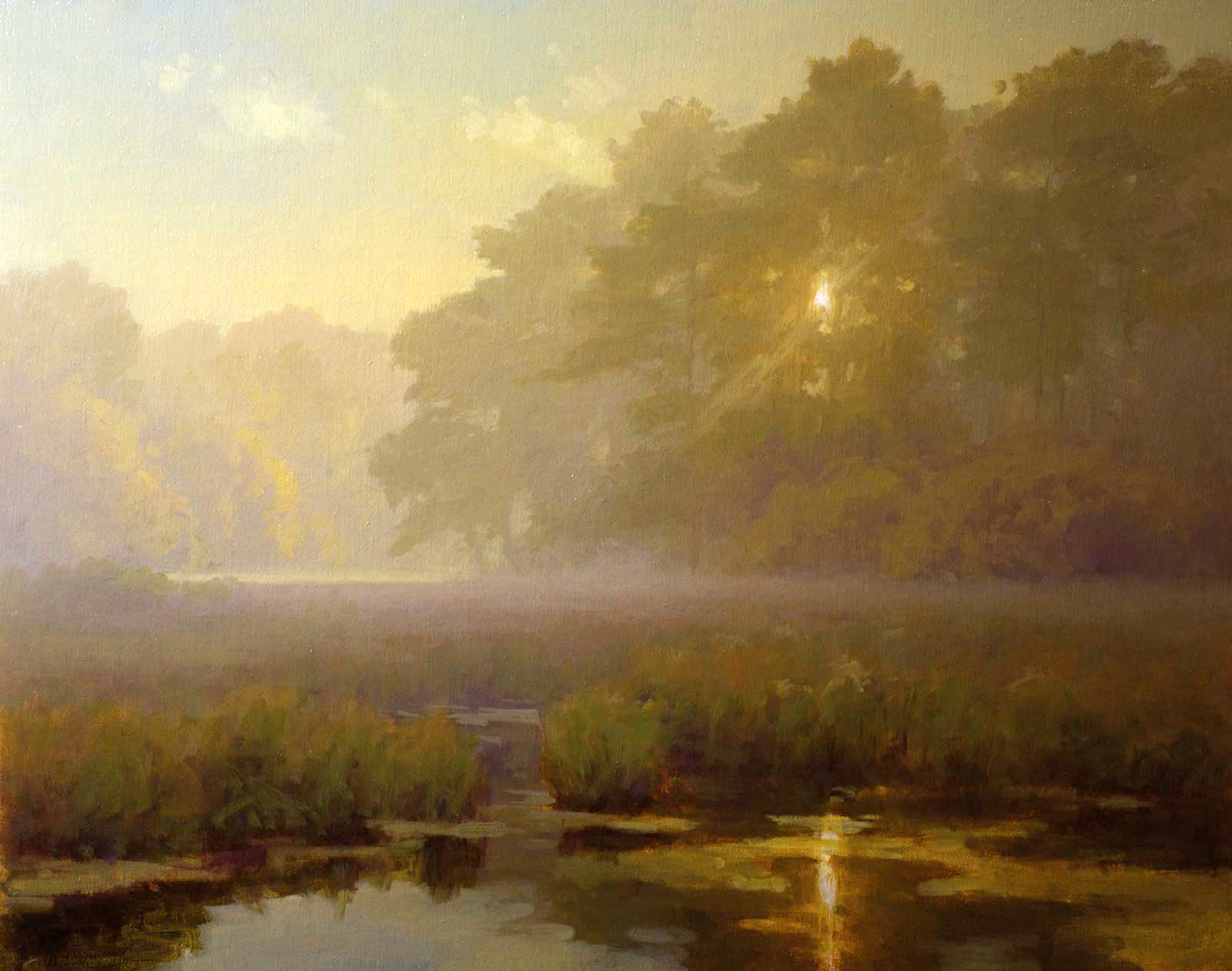 Stage 7
Stage 7 Intensifying the Focal Point
The focal point needed better definition with a slightly higher chroma and more orange hue, which I carried into the water reflection. I am careful to leave some of my underpainting showing through in the areas where light is hitting.
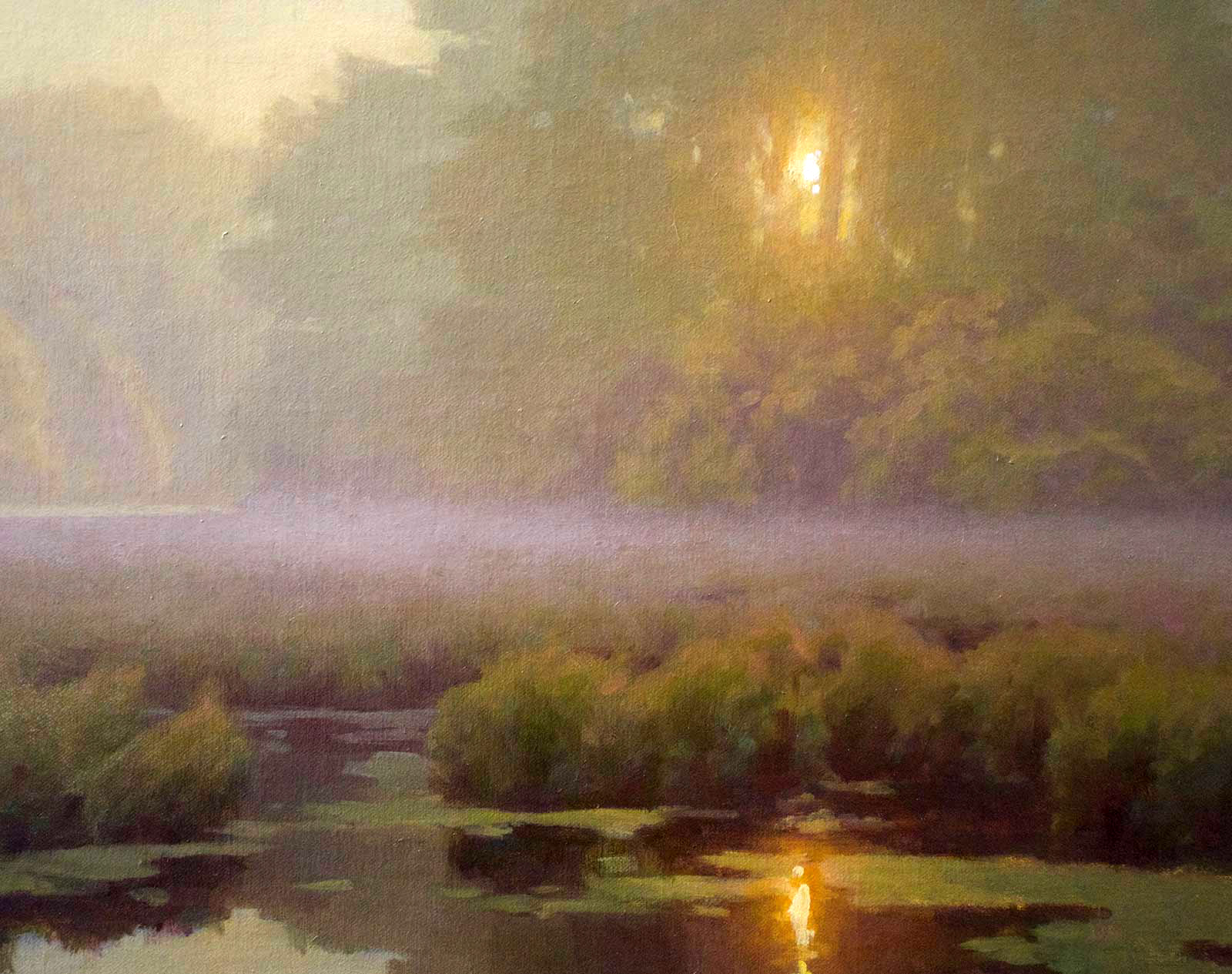 Stage 8
Stage 8 Fine Tuning
Some fine detail is added to the grass in the foreground, including some warm notes. I also reinstated the darks and made the purple mist more prominent.
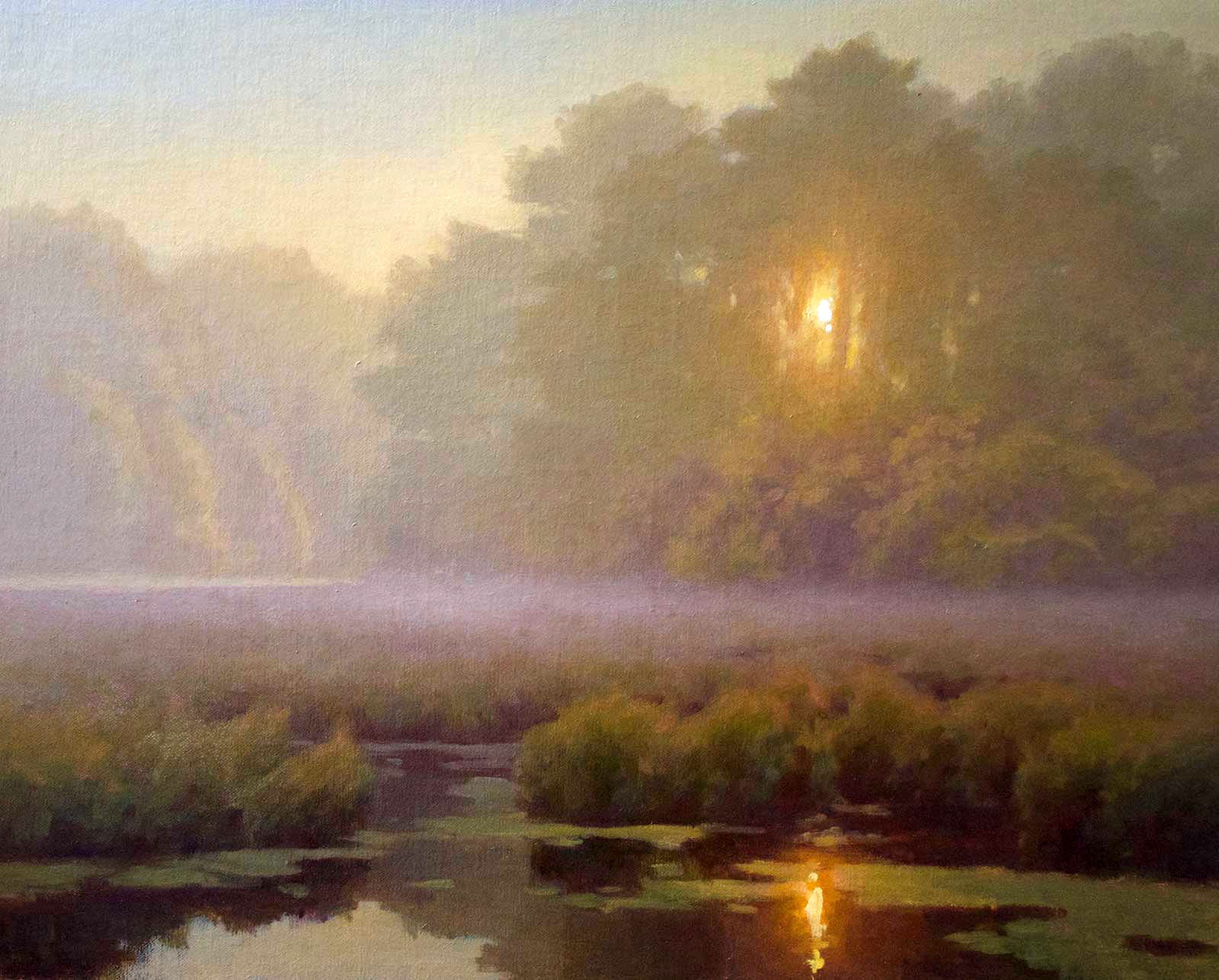 Stage 9
Stage 9 Finished Artwork
Morning Mist, oil on linen panel, 16 x 20" (40 x 50 cm)
About the artist
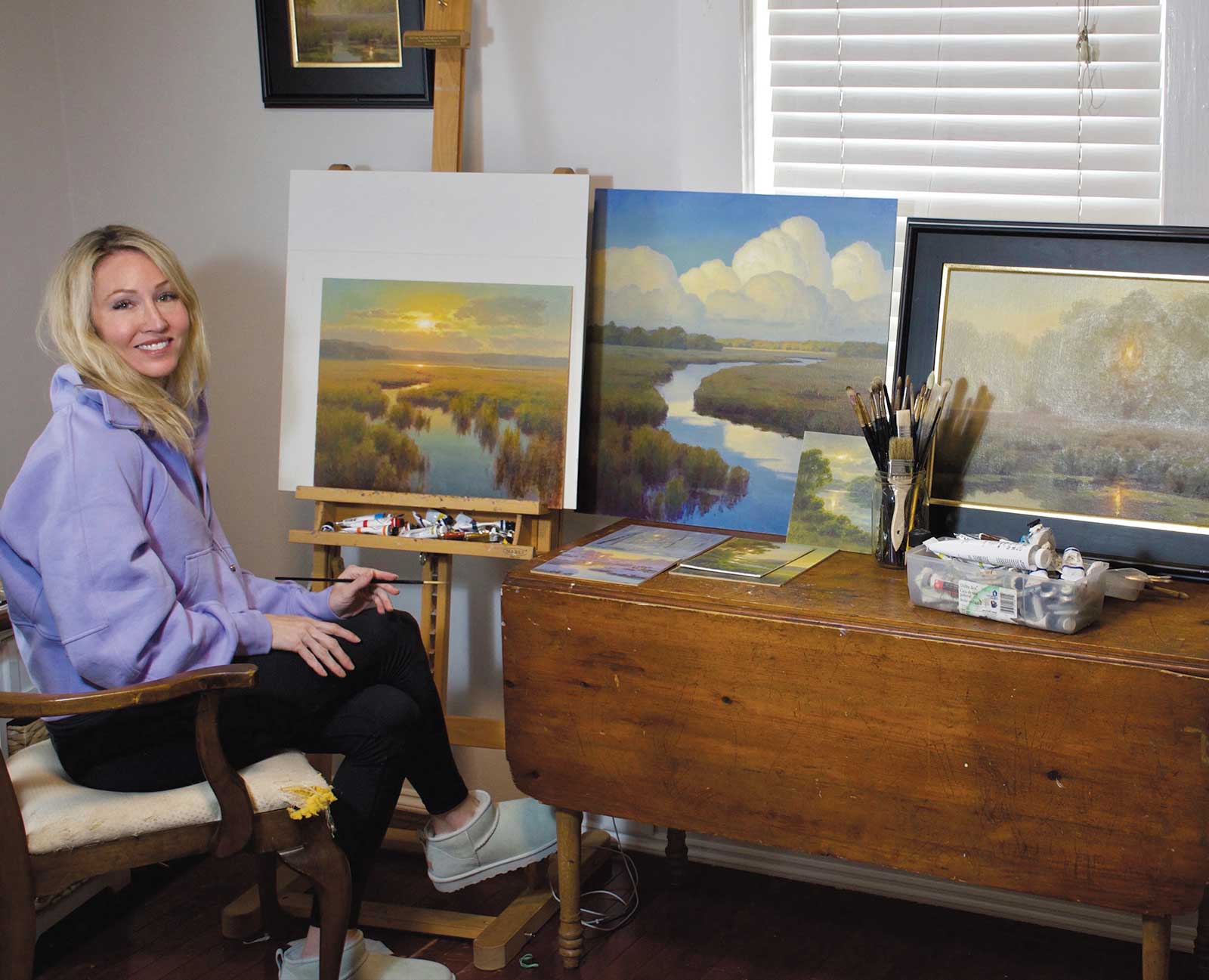 Hillary Scott in her studio
Hillary Scott is an academically-trained landscape painter from northeast Massachusetts. Before turning to landscape painting she was a children’s book illustrator. Scott loves to capture lighting effects and a sense of space and time in her work. She finds endless inspiration in the New England landscape, particularly the salt marshes and wetlands near her home. She creates her light-filled paintings through a combination of plein air studies, photography, direct observation, memory and imagination. Since she began exhibiting her oil paintings several years ago she has been accepted into numerous national shows and has won several awards. Scott’s paintings are in private collections worldwide. She is also a signature member of both Oil Painters of America and the American Tonalist Society and a Master member of the Newburyport Art Association. She is represented by Todd Bonita Gallery in New Hampshire; Valerie’s Gallery and The Gallery on Federal in Massachusetts; Martinhouse Gallery in North Carolina; and Ballards Fine Art in Wyoming.
Contact at
hillary@hillaryscottstudios.com
hillaryscottfineart.com