I love to paint with watercolors, and my main techniques are wet-on-wet and lifting colors. These techniques allow me to create smooth layers and give my artwork a soft look. They are essential to watercolors, and they are the key to creating realistic looking paintings.
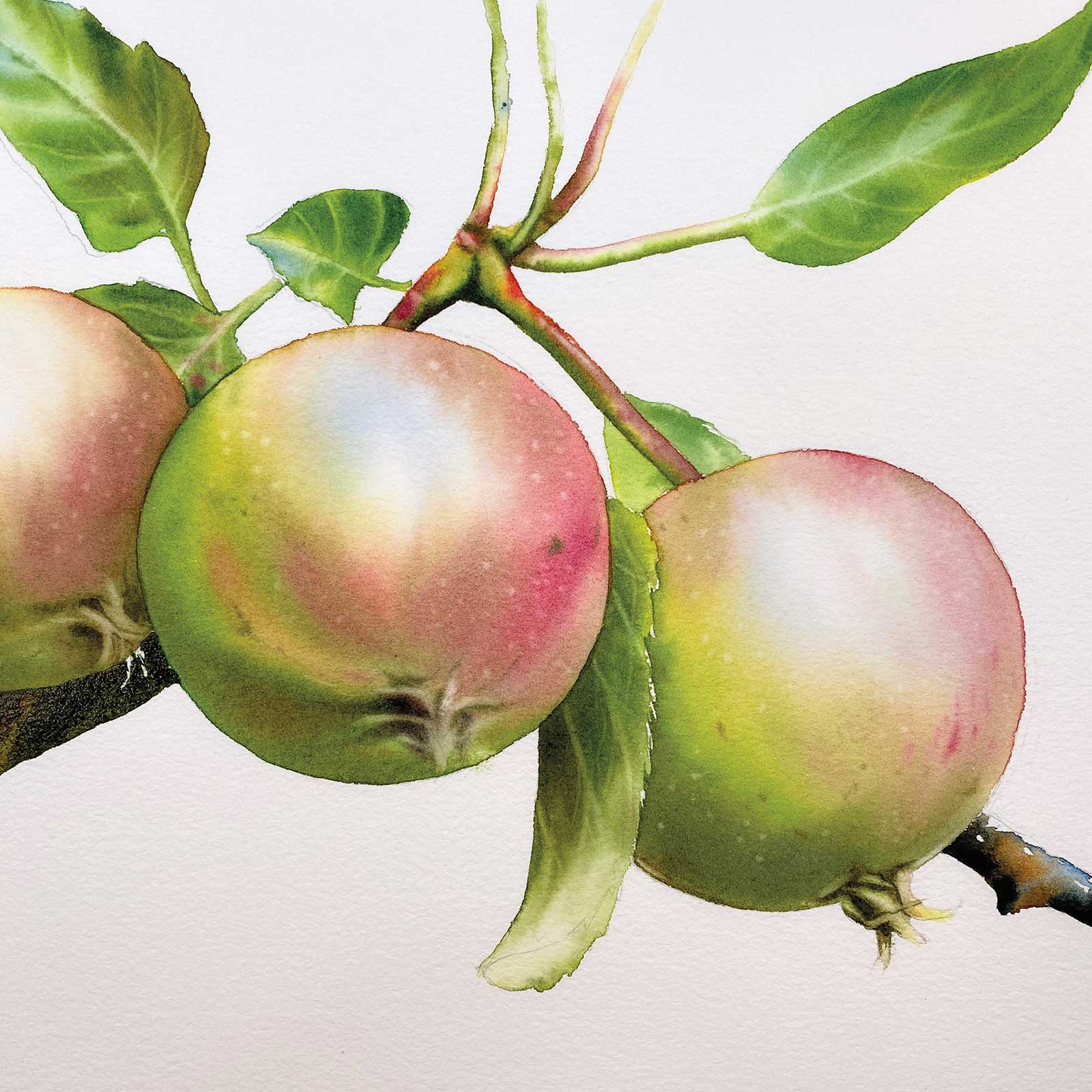
Apples on a tree, watercolor on 140 lb cold-pressed paper, 9 x 12" (22 x 30 cm) I find joy in both painting and capturing the beauty of nature through photographs, specifically of flowers and fruits on trees. Prior to the arrival of fall, I had the desire to paint apples. To make the painting more interesting, I decided to include a complete background. I utilized the wet-on-wet and lifting techniques to achieve a seamless and polished look.
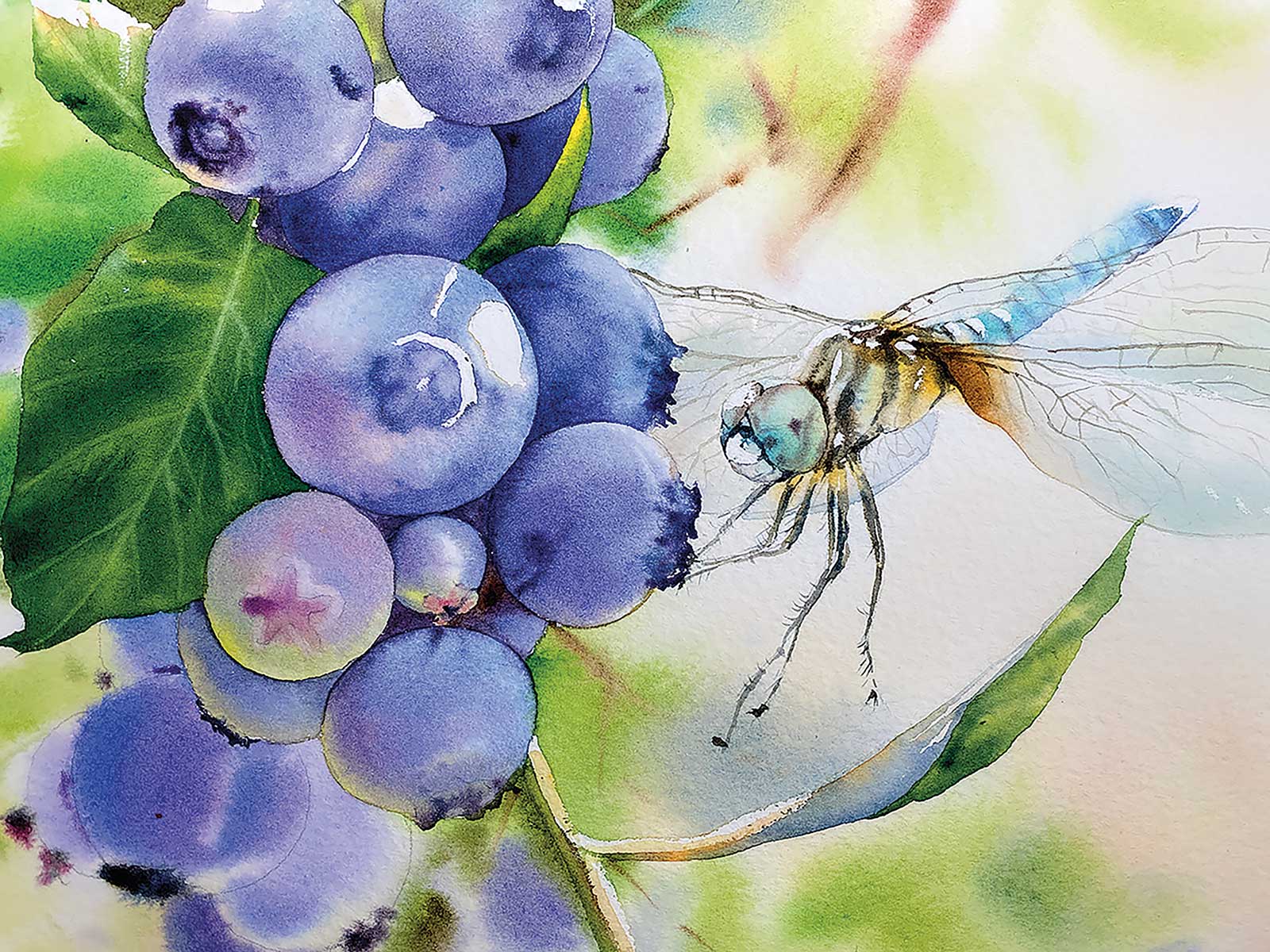
Dragonfly’s feast, watercolor on 140 lb cold-pressed paper, 9 x 12" (22 x 30 cm) Throughout my artistic journey, I have always found still life painting to be a fulfilling experience. However, I yearned to showcase more than just a few blueberries in my work. As a result, I decided to create a scene that featured a colorful dragonfly. In order to capture the delicate nature of this creature, I utilized gentle washes of paint, which I applied to the entire scene in a wet-on-wet technique. To further enhance the realism of the leaves, I carefully lifted the colors to create intricate veins.
I prefer a more natural look to my paintings, and while some parts are detailed and realistic, other areas are much looser. I like to say that my artwork is detailed and somewhat realistic, with a loose spin.
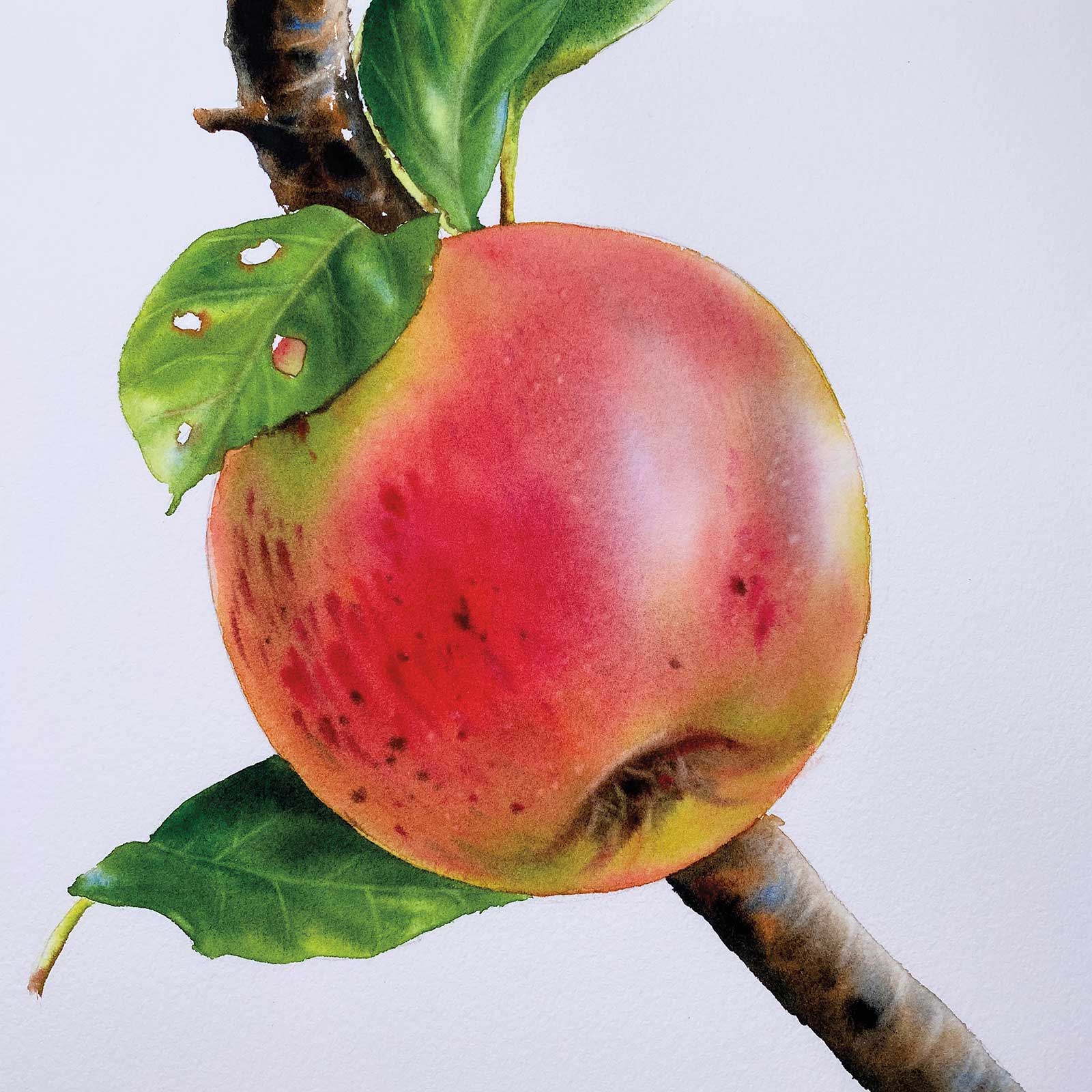
Red apple, watercolor on 140 lb cold-pressed paper, 9 x 12" (22 x 30 cm) I absolutely love the process of blending colors on paper and using apples as a subject in my art classes is always a hit. When brainstorming new ideas, I consider what my students would find interesting to learn, and my own passion for still life makes it easier to create something unique. For this particular piece, I utilized a wet-on-wet technique while painting the apple and intentionally avoided the highlight areas. The apple was painted using two layers, and I added darker spots towards the end, also using the wet-on-wet method.
When I first started painting with watercolors, I used to do everything wet-on-dry, but over time I have learned how to properly wet the paper and what ratios should be used at certain stages of the painting process. This is also the key to applying the colors wet-on-wet. It’s all about how you wet the paper when you apply the colors and what ratios of water and paint to use at different stages of painting. —
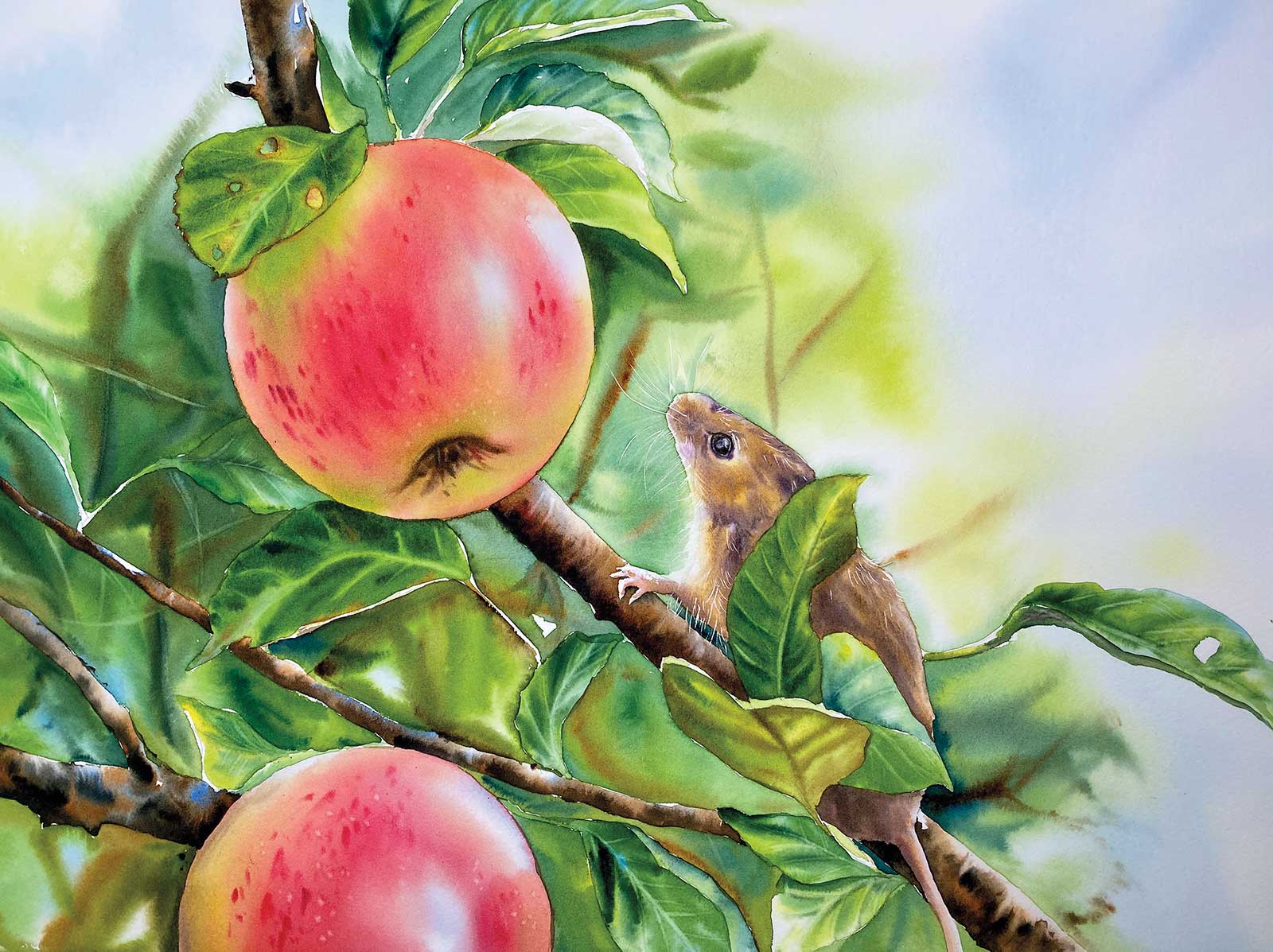
Apple and a mouse, watercolor on 140 lb cold-pressed paper, 9 x 12" (22 x 30 cm) I had been wanting to paint a small mouse for quite some time, but I knew I needed to come up with a suitable background that would be lively, colorful and refreshing. After giving it some thought, I decided to include a couple of apples in the background. I started by painting the mouse using the wet-on-wet technique, carefully lifting the colors to create the finest details of its hair. Then, I proceeded to paint the apples, also using the wet-on-wet approach. Finally, I added a vibrant background filled with leaves to complete the painting.
About the artist
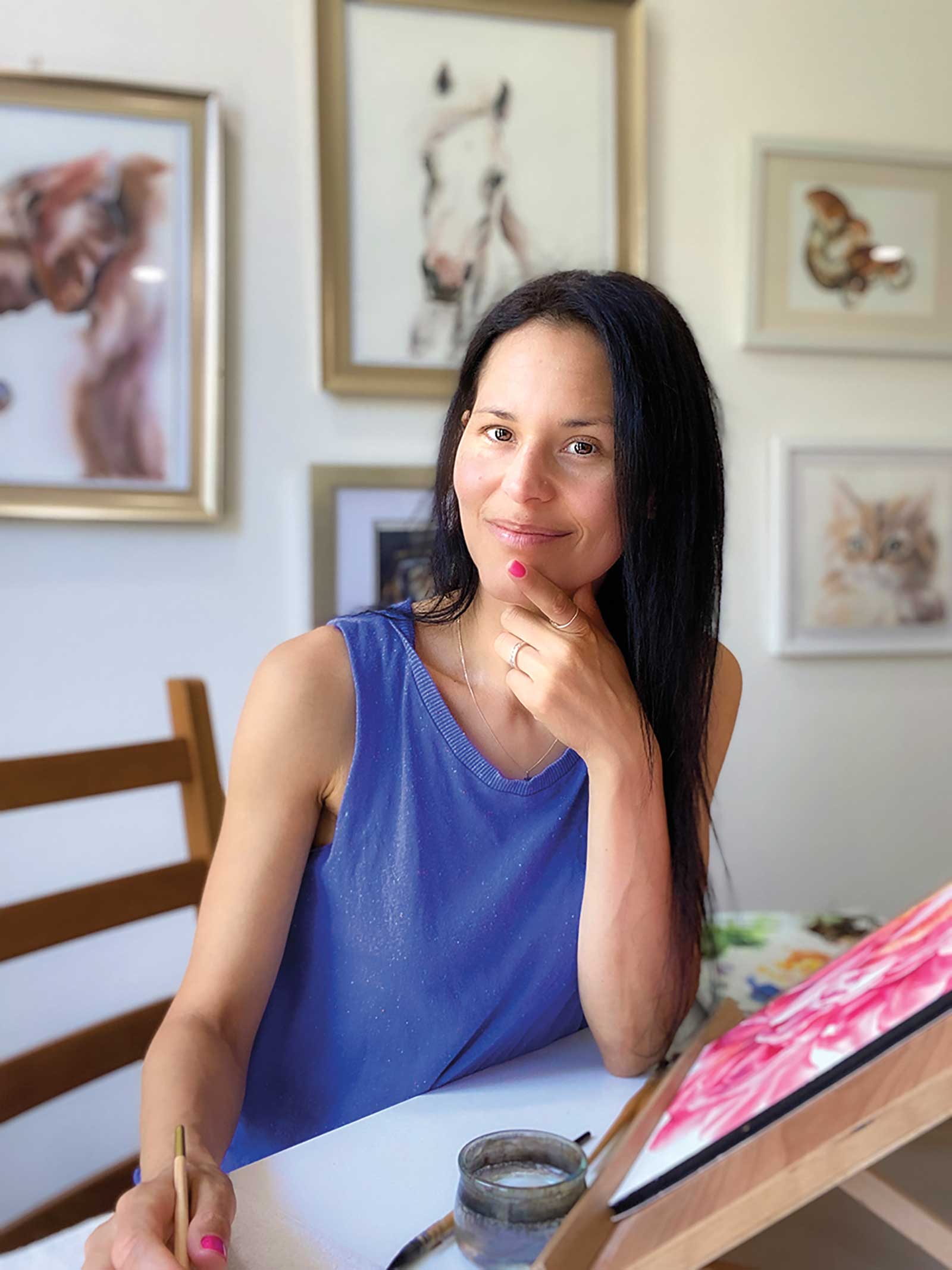 Maria Raczyńska
Maria Raczyńska is a skilled watercolor artist and an experienced teacher. She has shared her expertise with thousands of students from around the globe through her online tutorials and classes. Initially, Raczyńska began by teaching watercolor painting on her YouTube channel. However, the increasing demand for more detailed and comprehensive classes led her to establish two online schools on Patreon and Teachable.
Raczyńska’s mother, a talented oil painter, instilled in her the significance of light and shadows in painting, color theory and how to interpret a reference image. Her primary focus is on watercolor techniques, particularly wet-on-wet and lifting colors. She stresses the importance of using undertones and blending colors on the paper.
Raczyńska has created her own line of watercolor brushes called “Songbird,” designed in collaboration with Da Vinci Artist Brushes in Germany. In addition to her entrepreneurial pursuits, she has also served as a Holbein ambassador for several years. While Raczyńska is currently located in Orange County, California, she is a frequent traveler with her family, often spending extended periods in London. Her dedication and passion for watercolor painting have made her a highly sought-after instructor and a valuable asset to the global artistic community.
Contact at
mariamorjane@gmail.com
www.mariaraczynska.com
www.mariamorjane.com