My understanding of art began at a single digit age when my father showed me how to do simple sketches. During school years, learning from him about shapes, highlights, shadows and so much more. All that time, I just never understood math, chemistry, physics, languages, history, you name it. And I’ve always been relieved knowing that everything else is taken care of by dedicated individuals in medicine, education, builders, businesses, pilots, farmers, etc.
I was continually obsessed: The day after art college, I got a peddler’s license and started going up and down residential streets to sell my art. After 35 doors, I made my first sale—one dollar for a profile sketch. My first “professional payment.” I also made money doing sketches in fairgrounds and saloons. I was committed and encouraged.
I do thank my younger self for stubbornly getting into art and staying there. During those early times, most of the art I saw and admired were in magazines and on movie posters. I always loved them. To me, they’re not only illustrations, they are works of art created by artists.
Step by Step
In our childhood, when we’re learning to speak, we hear and use words and expressions from other people. This goes on for a while and then we begin expressing from our own hearts. And as you know, I eventually was lucky to see and listen to some marvelous masters of art. We’ll add that my ego has always needed a constant fill-up. Figuring I’m good helps me believe in myself enough to naturally want to be better. Understanding the intricacies of “better” is a major eureka for an artist—something I began to learn as that child.
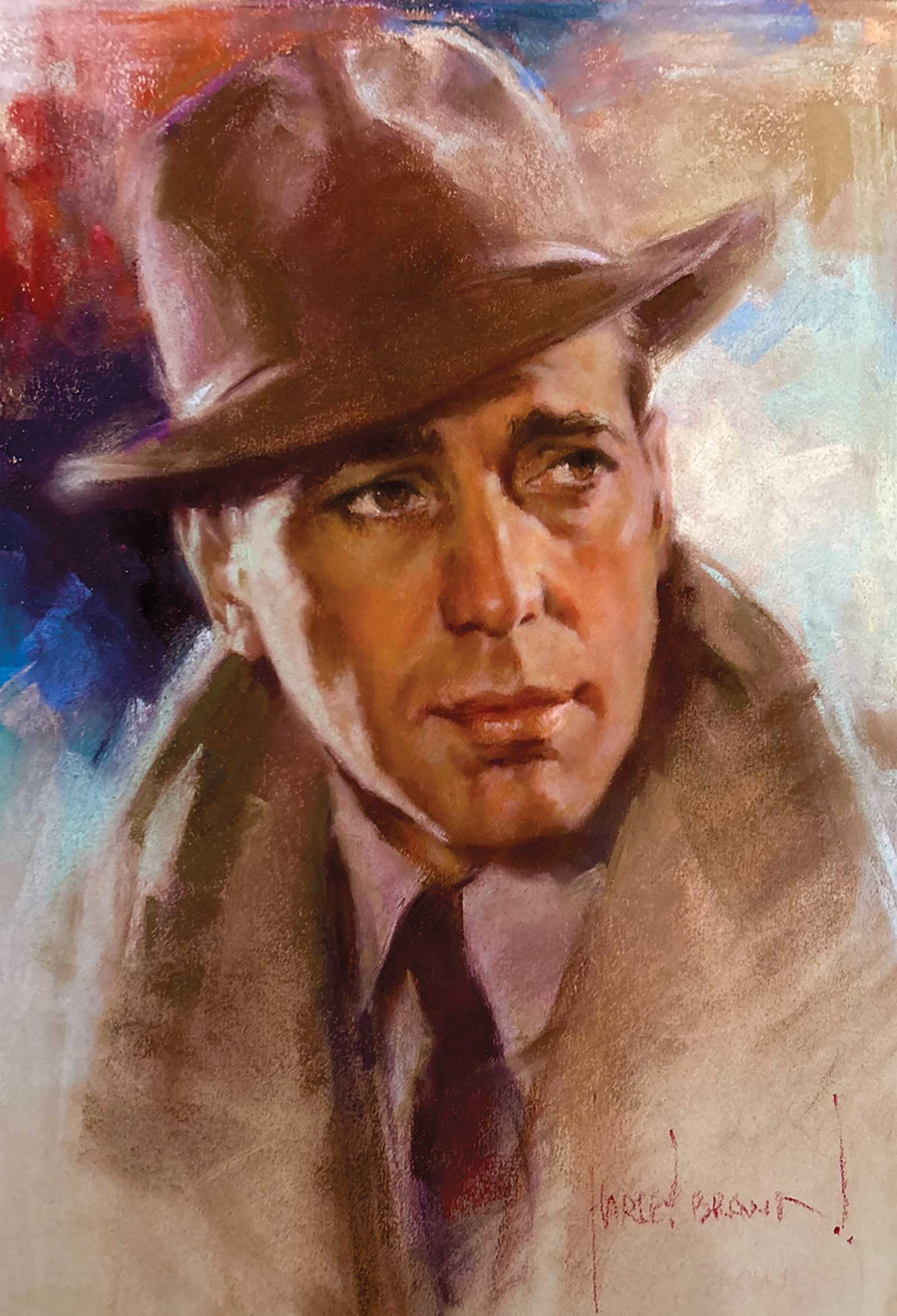
Humphrey Bogart
What is Representational Art?
It’s our own interpretation of the real world. I immediately recognize most representational artists’ works without checking the name on each piece. Our artworks are our devoutly created impressions of what we see in front of us; both reality and the artist combined into an art piece. In a way, it’s like reciting a well-known poem. We’re being accurate with the words and at the same time, those words have our feelings and emotions.
Contemporary artists do not get “deeper” into their subjects than representational artists. That’s because every individual on planet Earth has their own exclusive measure of “depth,” no matter what they do. We’re all different, and once in a while we can be together.
Art for Heart’s Sake
The human nose has more visual relevance than we give it credit for. In fact, it’s sometimes a special key to the face’s distinctiveness and adds to the drama of a human face. Particularly in profile.
Liberated
If anyone thinks I’m a mindless bore, I couldn’t care less. I know me quite well, and that’s what counts. It really comes down to this: what people think of us artists and our art is their business. In the meantime, we’ll be ourselves and let our surrounding world get used to us with our liberated, determined minds.
This also calms me somewhat: unlike playing piano at a concert or an ice skating performance, we artists can make a mistake on an art piece, fix the problem and happily send the finished work to an art event.
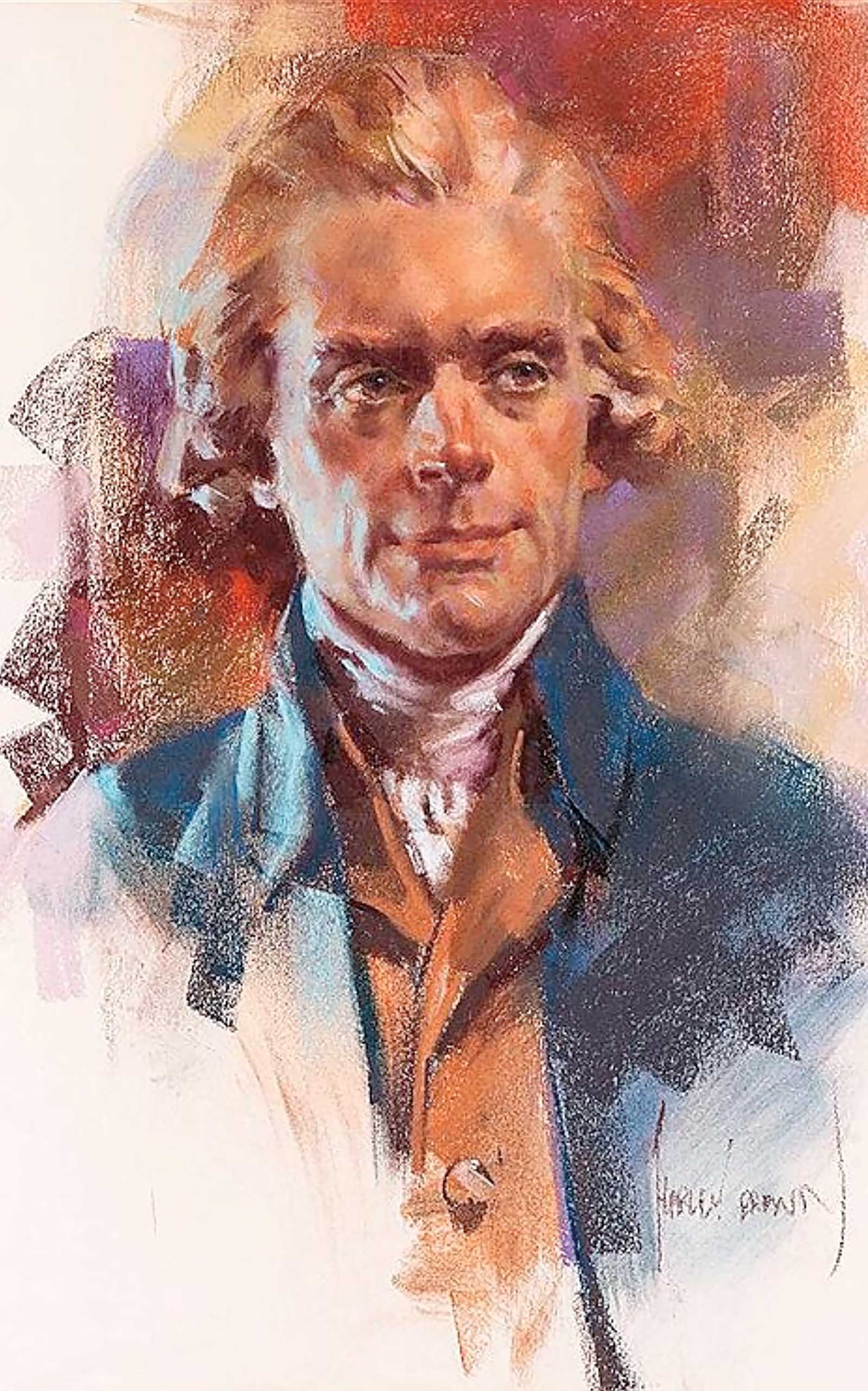
Thomas Jefferson
Reality Happens Within the Arts
While watching a film, we do realize that it was an actor who died in that scene. We also know that actor is going home at the end of the day. But if you’re like me, we’re witnessing a real person on the screen who is dying, bringing us to an intense feeling of sadness. Like Barbara Hershey in Beaches. Leonardo DiCaprio in Titanic.
When I look at a self portrait of Rembrandt, that’s not just an oil painting of him. That’s Rembrandt himself looking back at us and trying to decipher who we are and what we’re thinking. The same with words in a book that take us on grand adventures and classic love stories. Those words brought together to bring out enchanting incidents, emotions, disbelief and spirited journeys. Perceptive words making it happen.
I cry when seeing Swan Lake on stage or listening to “I Will Always Love You.” A painting that stays with me since childhood: Mona Lisa. I feel tears thinking of family and friends and yes, my many pets. Plenty of tears from the past and into the future.
The arts continually affect me profoundly. All the time, I’m overwhelmed by individuals going way beyond good. We all have those times that fully inspire us, and I’ll continue mentioning the many I continue admiring.
Color
One thought about color: use a simple palette. Red, yellow and blue along with black and white. The green from mixing blue and yellow. That green will go well with that blue and yellow in the painting—like a child connected to both parents. The same with orange and purple and all the varieties of pinks, siennas and turquoises.
When mixing colors, I learned to start with the lightest color and then add to it. For instance, to get the right orange, I’d start with yellow and add bits of red to it. I don’t have to mention getting the right pink. Once the mixing and applying finds confidence, remember to study Munsell Color Theory. That theory has a grand understanding of Mother Nature and all the colors that surround us.
Looking at art all my life, I decided long ago that there are artists today whose works are on the same great level as the masters of epic times. Today’s Rembrandts and Rubins. I’ve based this on decades of intense observations of many of today’s artists’ works. Artists who will be honored and admired for generations to come. Knowing we are in such a major renaissance continues to keep my spirits high.
It doesn’t matter how fast or slow you are when learning good art essentials and creating your artwork. The fact is that you are consistently motivated, and you are traveling in the right direction.
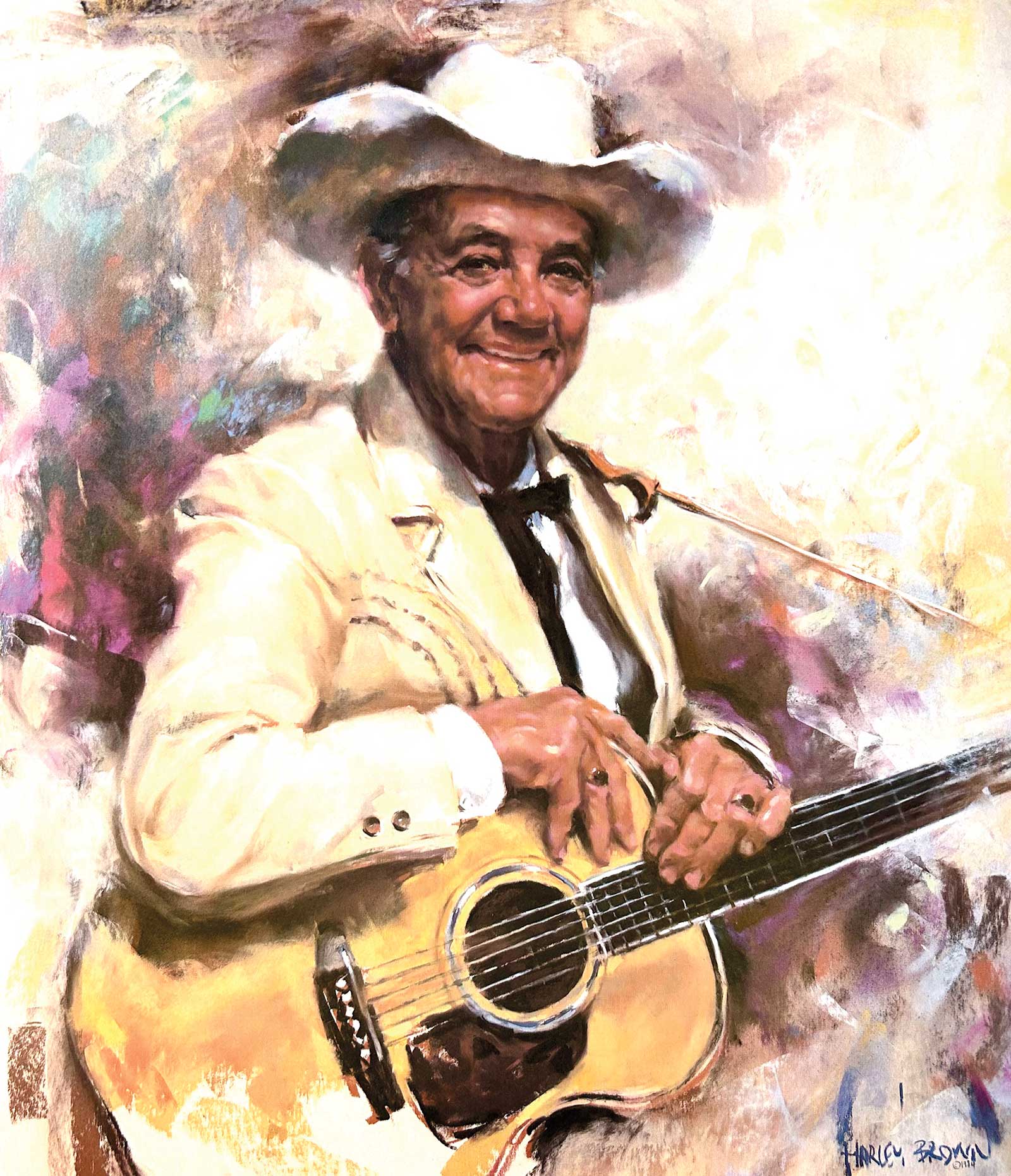
Wilf Carter
Where the Magic Happens
Art can be a strange role to take on—where artists try daily to target that moment with a stroke applied to canvas or paper. A broad slash of oil or pastel by itself can appear rather primal. It is the next in a series of strokes where the magic might happen. As with so many things in life, each adventure needs follow-through.
Once in a while, as I write these words, I reflect upon my mind going through the creative mode many thousands of times. And not two of those times are ever the same.
When You Don’t Have Time
Sometimes it’s great to do a subject when you don’t have much time. It gets your mind and your hands going with an up-tempo passion as you start to get into the details. What you have on your canvas or paper is a prized moment of you poured onto it with no fussing at all. I have piles of such works, and I love to see them and remember those moments.
Subtle
Watch that you don’t put the same highlights and same reflected lights throughout a work. There are subtle differences depending on each area of the subject’s variable surfaces, angle and distance from the light, etc. This is essential in artwork, as we need strong observations of subjects. An example of the wrong approach is using the same paint mixture or same pastel stick for all the light areas of a face. We do notice the values can be subtly lighter or darker. As time goes on you might want to slightly push those differences, but the main point is knowing their precise variances.
The Finish Factor
I can’t stop talking about the idea of finishing a work of art. This has always been part of my mindset. For instance, when I leave the house, I go back again and again to see if it’s locked. Or the stove is off. Even when I check them, my mind needs to be re-reassured. Like continually returning to work on my pastel piece and eventually not really making it any better. Finally, the time actually came when I would stop and calmly walk away from the easel—artwork finished! —
BALINOFSKI
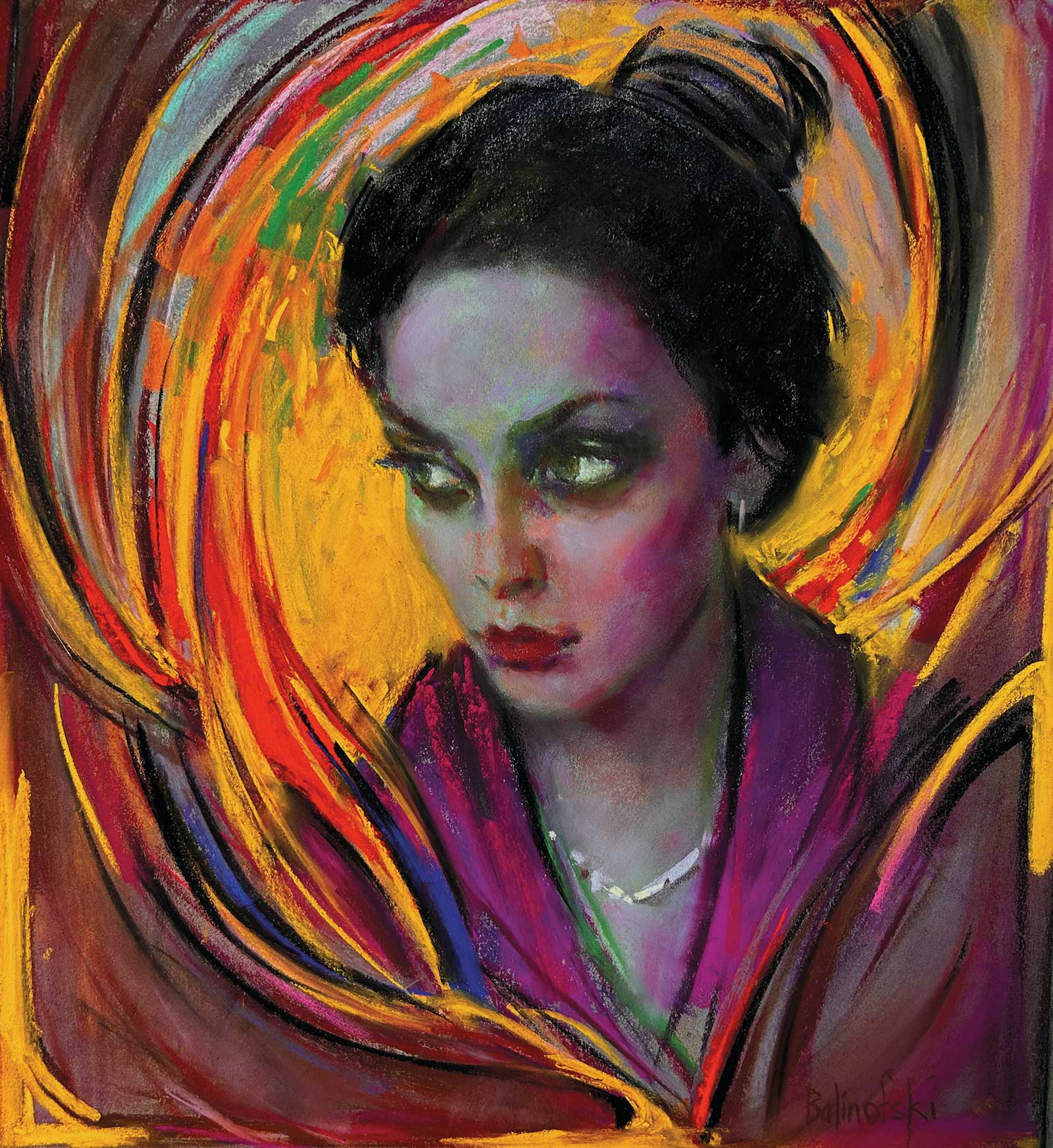 SERENE
This young lady sat for me a number of times, and with each visit there was something quite mystical about her. She didn’t talk much, but the slight changes in her features seemed to reveal perceptive notions flowing through her mind: a slight smile, a look of concern, a questioning moment. What she has surrounding her is a colorful universe of thoughts dynamically waiting to enter her mind or be released. Here she is like a fantasy for you to experience with me. Perhaps you can sense what her expression conveys.