I once heard artist John Howard Sanden say that one of the most important qualities of any successful artist is to be a “self-starter.” He stressed that creatives had to have the discipline and self-motivation to get to their studios, dig in and push their work to the next level.
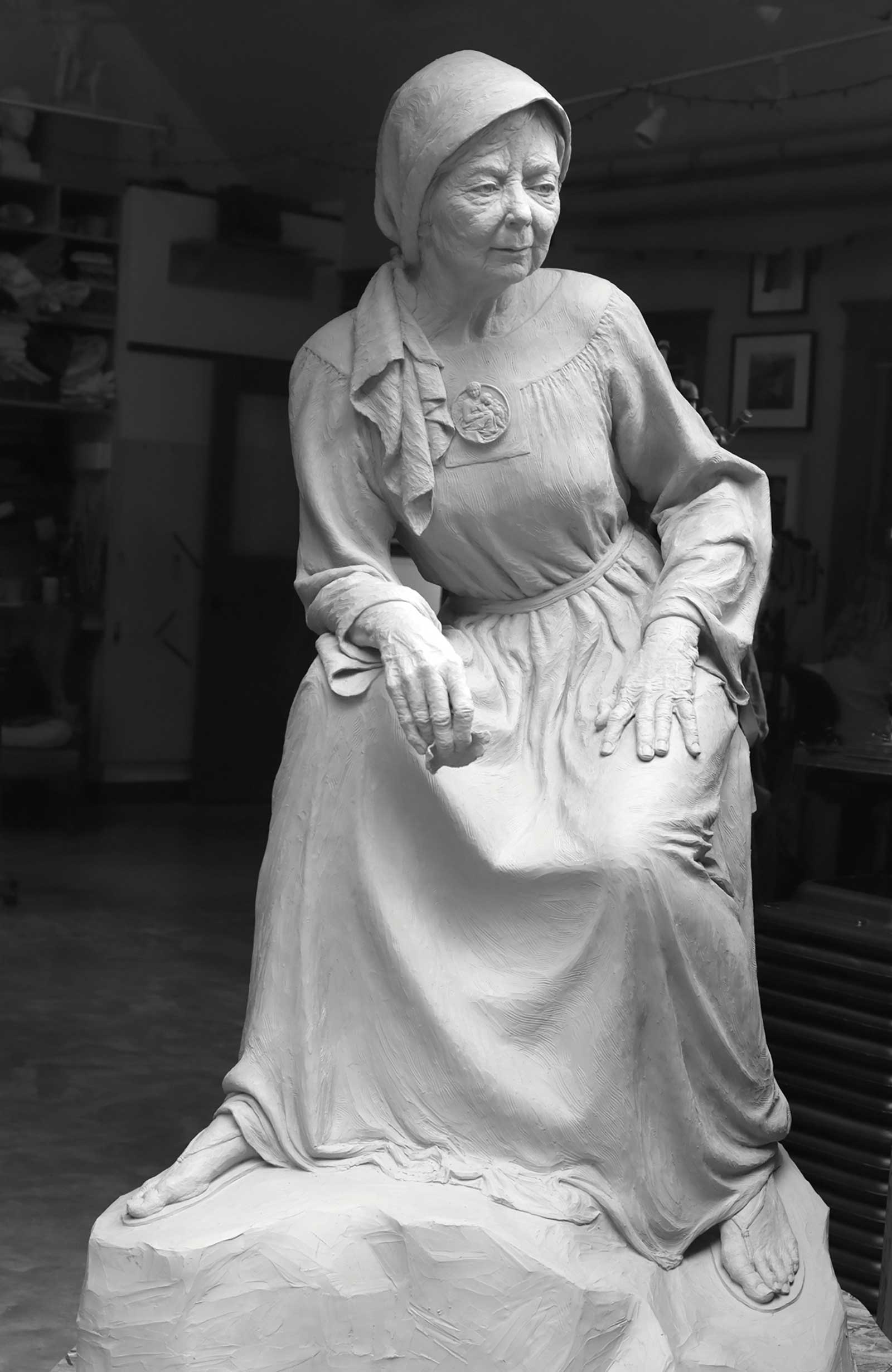
Mardie Rees, Saint Anne, clay for bronze, 76 x 50 x 40" (193 x 127 x 101 cm). First Place, Commissioned Portrait.
Although each of us creates work because we know we must, there are times when we like to share and compare our work to others. Often art competitions give us an exciting avenue for growth.
Art competitions have existed for centuries. As far back as the early 1400s, churches held competitions for artists who they sought out to decorate their places of worship. In France in the mid 1600s, the Royal Academy of Painting and Sculpture created the Prix de Rome, an art competition award that the king supported by giving the winning artist residence in Rome. The artist was given the means to further his or her education and grow. In the 19th century, salons in France could make or break an artist. Although a temporary setback, John Singer Sargent’s greatest “defeat” was his controversial portrait of Madam X that would, years later, become one of the most important images of his career and ultimately add much to his success.
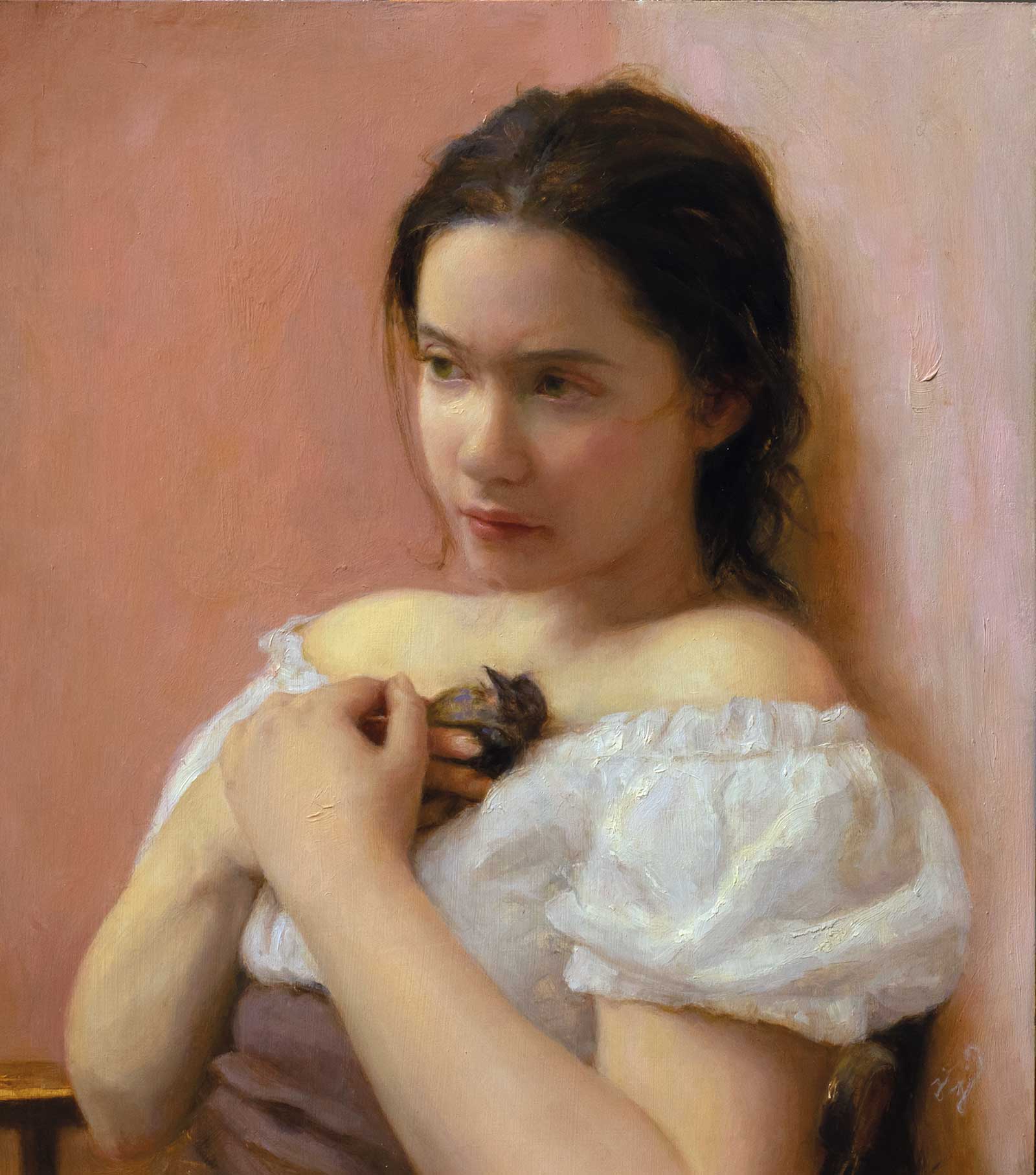
Tina Figarelli, To Bury A Friend, oil on panel, 10 x 11" (25 x 27 cm). First Place, Non-Commissioned Portrait.
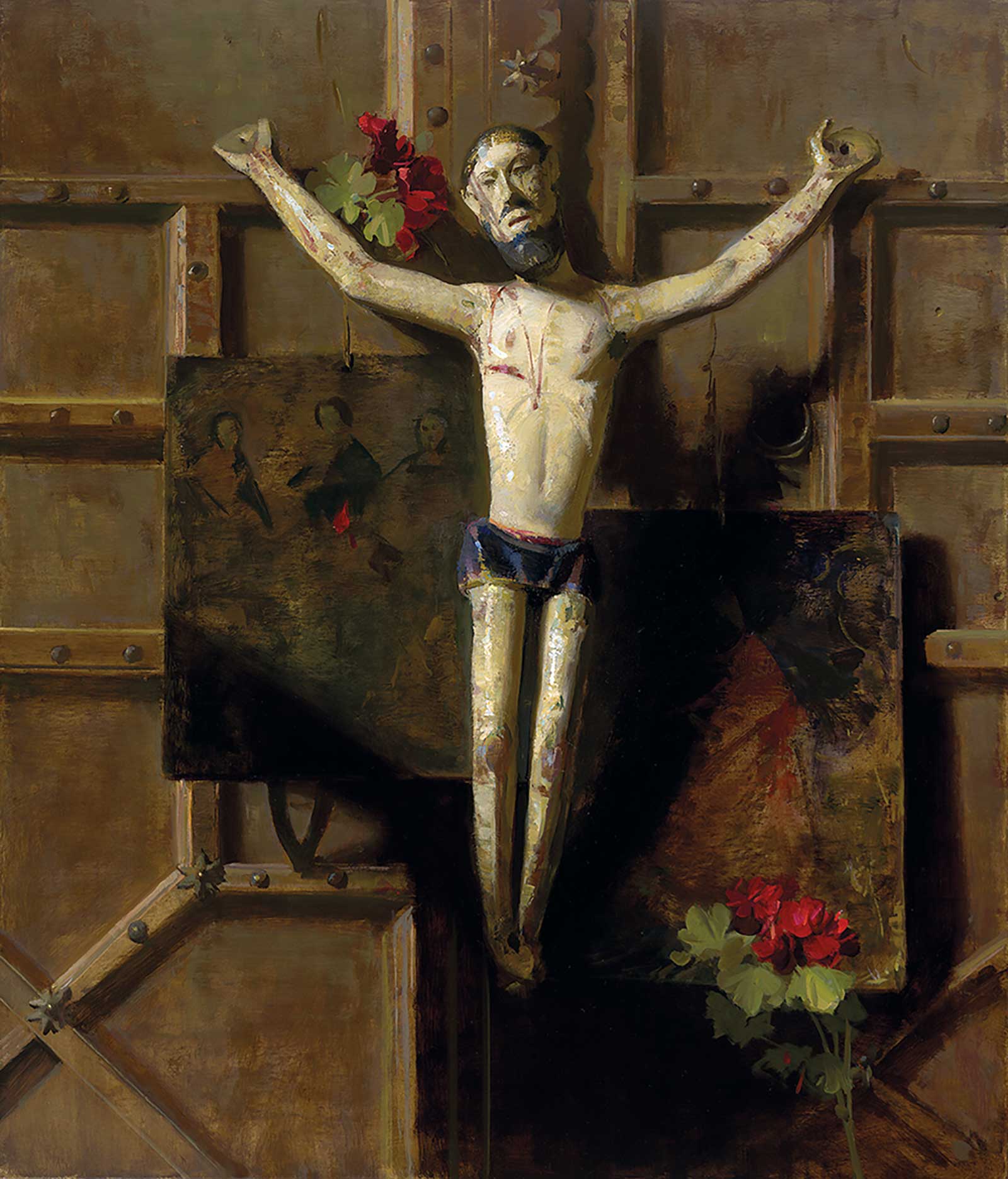
Sherrie McGraw, Spanish Cristo, oil, 28 x 24" (71 x 60 cm). First Place, Outside the Box.
There is something to tapping into our competitive spirit that drives many of us to enter. Some artists are driven by the motivation of setting and reaching goals, while still others are excited to share their work with esteemed judges and, after the decisions of the competitions are made known, ultimately receiving feedback by examining the works chosen for the awards.
Within our society of talented and devoted artists, we have sought to inspire and encourage with our Members Only Competition. Each year, our members enter works in a number of subject matters: Commissioned Portrait, Non-Commissioned Portrait, Animals, Outside the Box and Landscape.
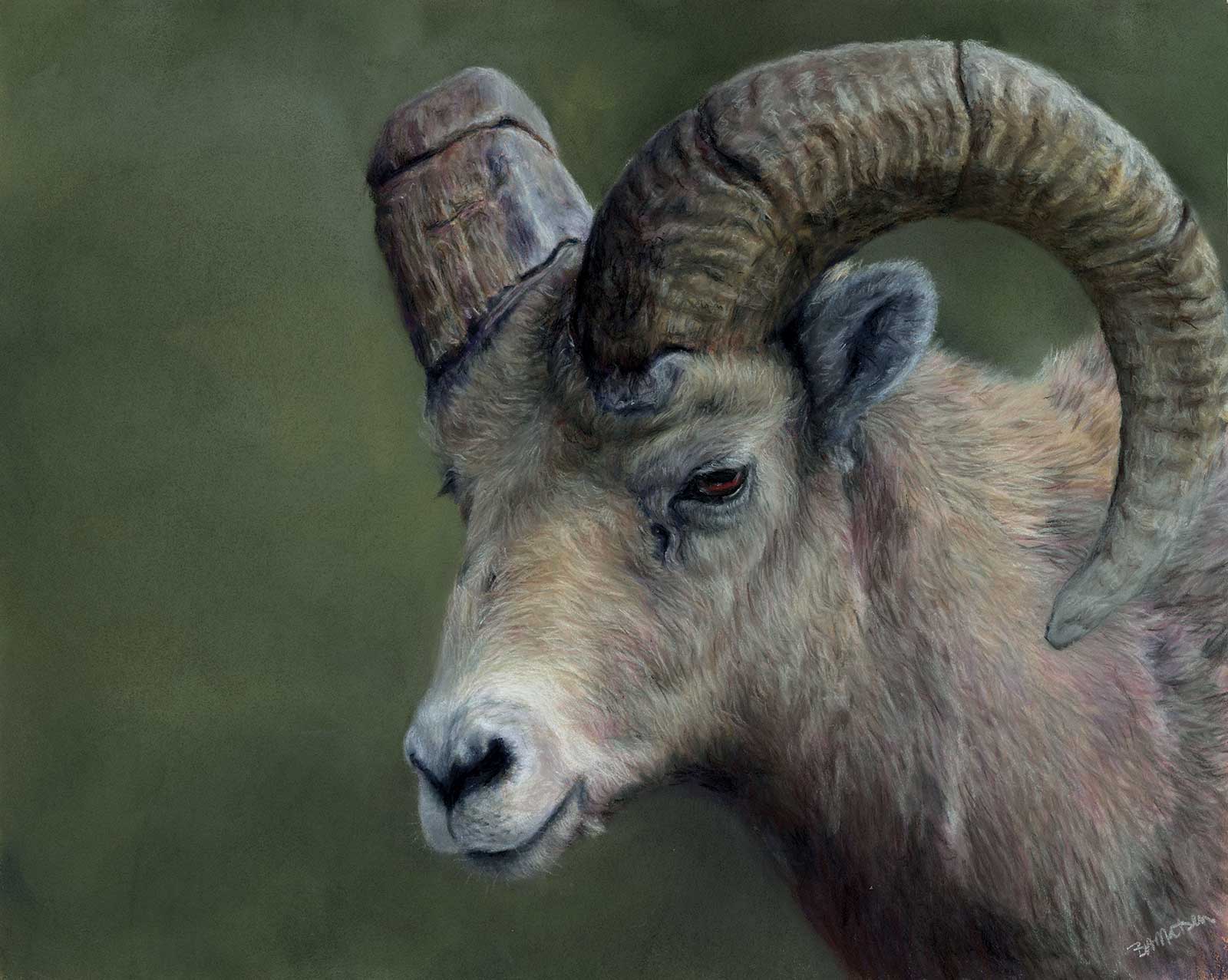
Brenda Matsen, Bighorn, pastel, 8.4 x 10½" (21 x 26 cm). First Place, Animals as the Subject.
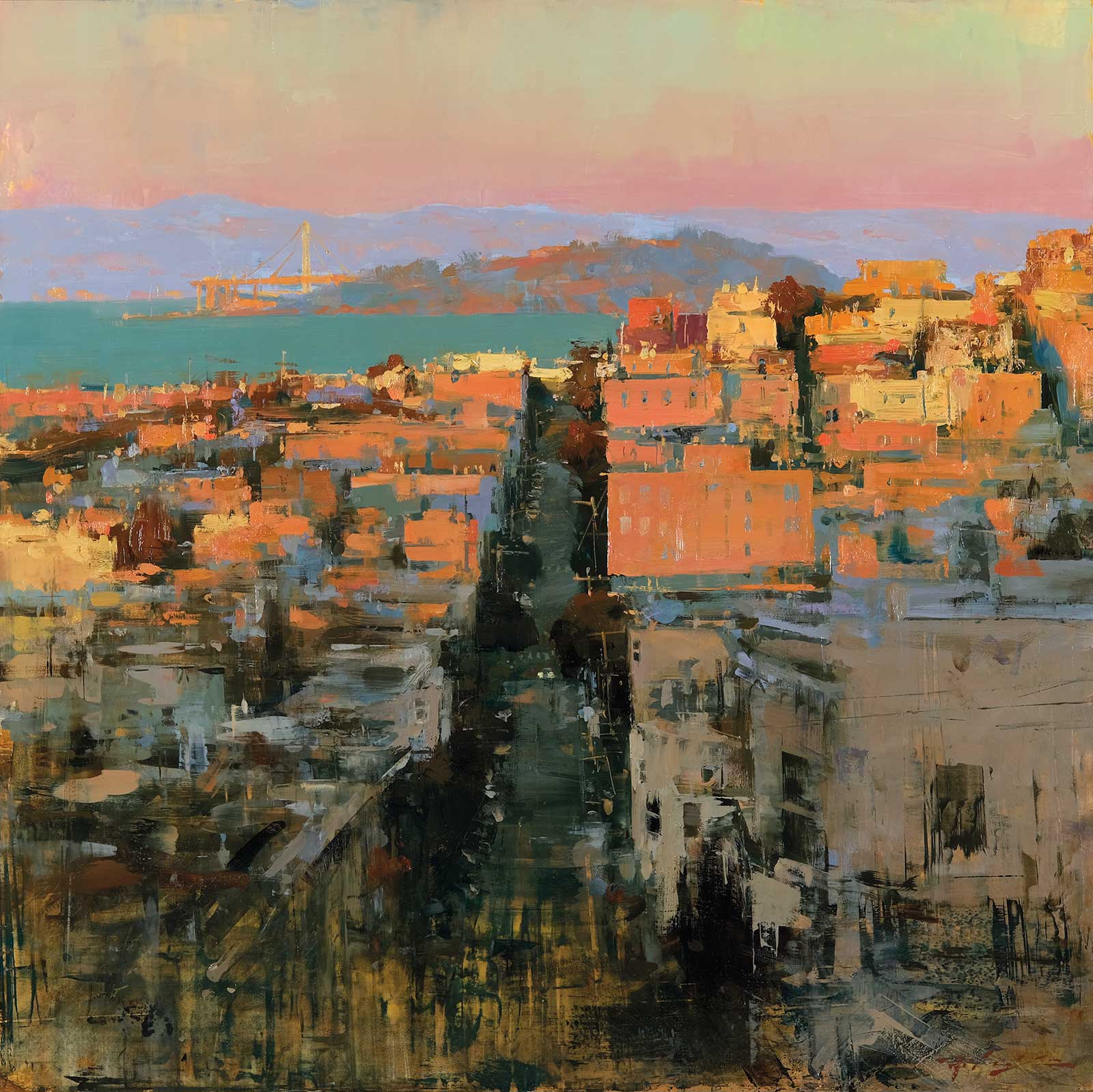
Hsin-Yao Tseng, City Progression, oil, 30 x 30" (76 x 76 cm). First Place, Landscape.
Our talented Portrait Society faculty members are chosen as judges for their exceptional knowledge and quality work of their own. We ask them to review the work submitted each year and ponder what qualities they feel make the strongest work.
This year’s judges were Wende Caporale-Greene, Bill Chambers, Susan Lyon, Kevin Macpherson and Dawn Whitelaw.
We are grateful for their thoughtful evaluations of each piece submitted. I know you will enjoy reading how and why they chose the works they did to receive awards. I hope their insight will help both those who were recognized with awards and those who weren’t.
Sincerely,
Michael Shane Neal
Chairman
Commissioned Portrait – Bill Chambers
Upon seeing this entry, I was immediately drawn to the intimate particulars of the pose. Her pained facial expression elicited a sense of empathy in me. Yet, her grimace is offset by the strength and pose of her hands. Although she is seated, the sculpture’s lines flow, simple and beautiful via her robe and the position of her feet, creating a wonderful sense of balance and movement. The attention to the hands, feet and face were beautifully done. It’s a beautiful piece, and Mardie Rees deserves first place in the Commissioned Portrait category.
Non-Commissioned Portrait – Dawn Whitelaw
This small painting has a timeless quality that is so appropriate for the universal theme of death and mourning a loss. Visually, the portrait is a feast of color harmony and beautiful compositional shapes that draw the viewer in and continue to engage. Technically, all the skill boxes are checked in a masterful way, but it is the emotional quality that set it apart from many other exquisite entries in this division of the competition.
Outside the Box – Susan Lyon
I chose Sherrie McGraw’s painting, Spanish Cristo, because it captured all aspects of what it means to paint out of the box. It had a strong story, and it wasn’t a typical portrait. I loved how there is a face in it, but it isn’t the first thing you see. The most important aspect of my decision is that she conveyed a truly unique point of view; you are not going to see other paintings with this same look. She didn’t show us too much; her ability to edit her brushstrokes is masterful.
Animals – Wende Caporale-Greene
Though there were many noteworthy depictions of animals for this category, I kept returning to Brenda Matsen’s compelling portrait of a ram shown in Bighorn. Concentrating on the head against a greenish-gray background, the artist’s sensitivity to the handling of her subject with the use of beautifully nuanced color was breathtakingly beautiful. In addition, the subtle lighting created a cinema-like atmospheric effect, giving the appearance of a work done from life. After reviewing the work numerous times, it became clear that this evocative portrait would be my choice for the top award.
Landscape – Kevin Macpherson
Tseng goes beyond just great technical ability. The artist engages and encourages the viewer to be involved. I look for aesthetic structure, the underlying abstract foundation to hang on reality.
He directs the viewer with clues of contrast, and creates tempo and rhythms through the mystery of lost and found edges, reality and abstractions. He offers areas of quiet and energetic visual stimulation. The whole canvas must be fully considered, fully orchestrated. I remember the great artist, Bettina Steinke, telling me every square inch of the canvas is important. I think this is a fine example of an artist who uses a balanced approach of academics and emotional content. When an artist is in command of the rules and the craft, passion and intuition can lead. This painting is an excellent example of fine selection, emphasis and subordination of the visual elements.
The color is beautiful based on nature’s harmonies. Limitations in the spectrum create unity yet variety.