In my painting world, I love realism. I would like my paintings to give the impression of photorealism, but as you get closer, you begin to see brushstrokes and abstract forms that give them a unique character. Someone once called my style “impressionistic realism,” and I agree with that term. Although my works may seem accurate from a distance, I paint them with few details, avoiding the precise rendering of each hair or eyelash.
Oil paint is my constant artistic companion, allowing me to manipulate the paint on the canvas and blend it for a long time, which I love. As for the support, I always choose smooth linen canvas because I prefer to see the brushstrokes rather than the canvas texture.
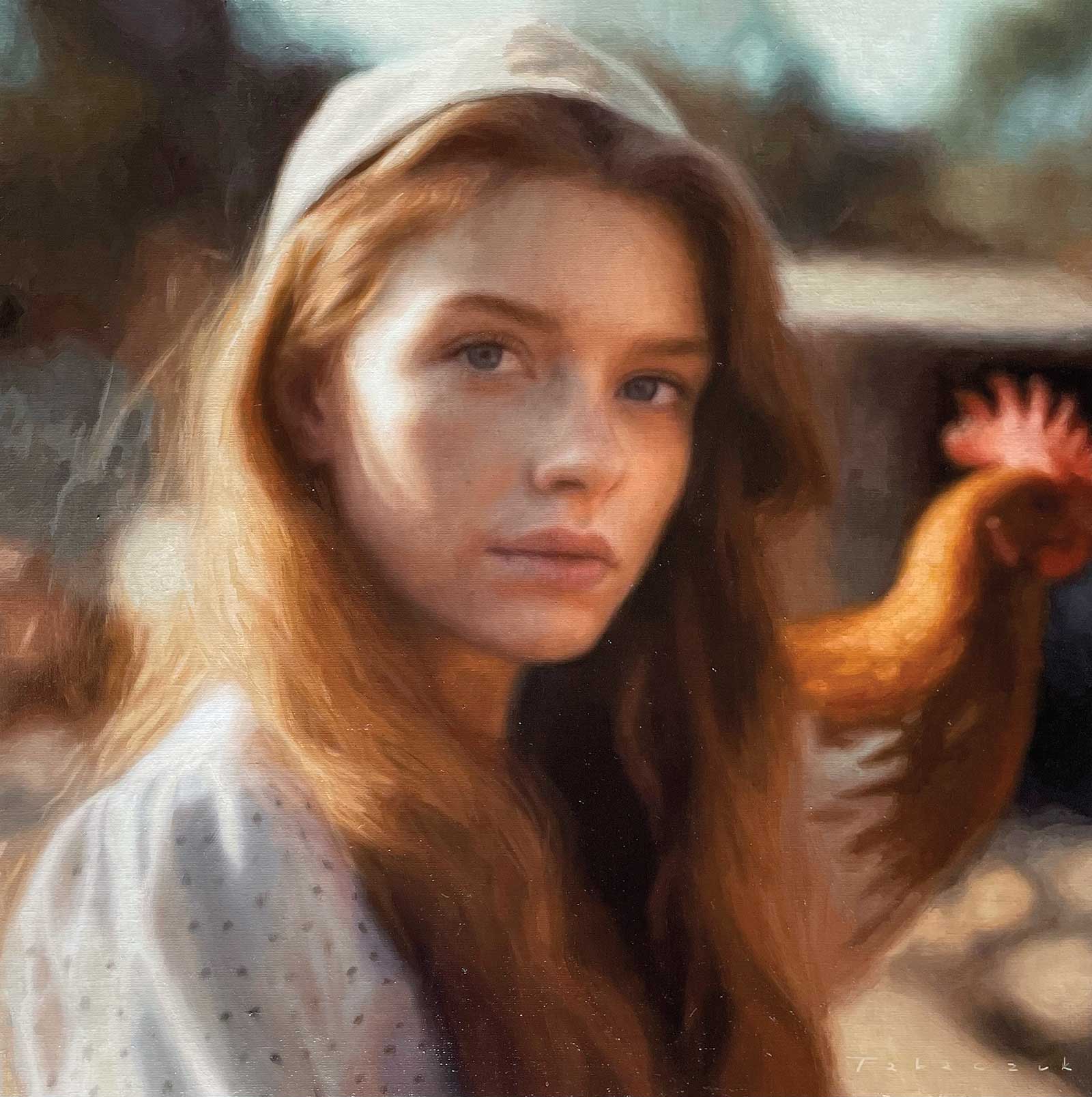
Glimpse of Yesteryears, oil on linen, 23½ x 23½" (60 x 60 cm)
In my artwork, people play a crucial role. I create compositions where the face and eyes are central elements. I am fascinated by painting human faces, especially mixing color for skin tones. I start my painting with a simple pencil drawing, using grid methods or freehand drawing if the format is small. The drawing is very basic—I only need to capture a general idea since the lines of the drawing tend to get lost during the painting process anyway. Later, when I know where everything is, I begin by painting the eyes, moving to the face, hair and other elements, using small brushes at the beginning. This approach may seem unusual because traditional art teaching usually recommends painting from large surfaces to details. However, in my case I start with the details, using small brushes initially, and only later move on to larger ones. Thanks to this unconventional technique, my focus point always remains where I start the painting—on the eyes and face—and the rest is painted with less precision. This approach allows me to focus on details that I consider crucial, conveying emotions and character.
Even though it can be a bit tricky and, let’s be honest, frustrating to kick off a painting this way, it’s become my thing. But I’m not saying it’s the best of methods, it’s just my groove.
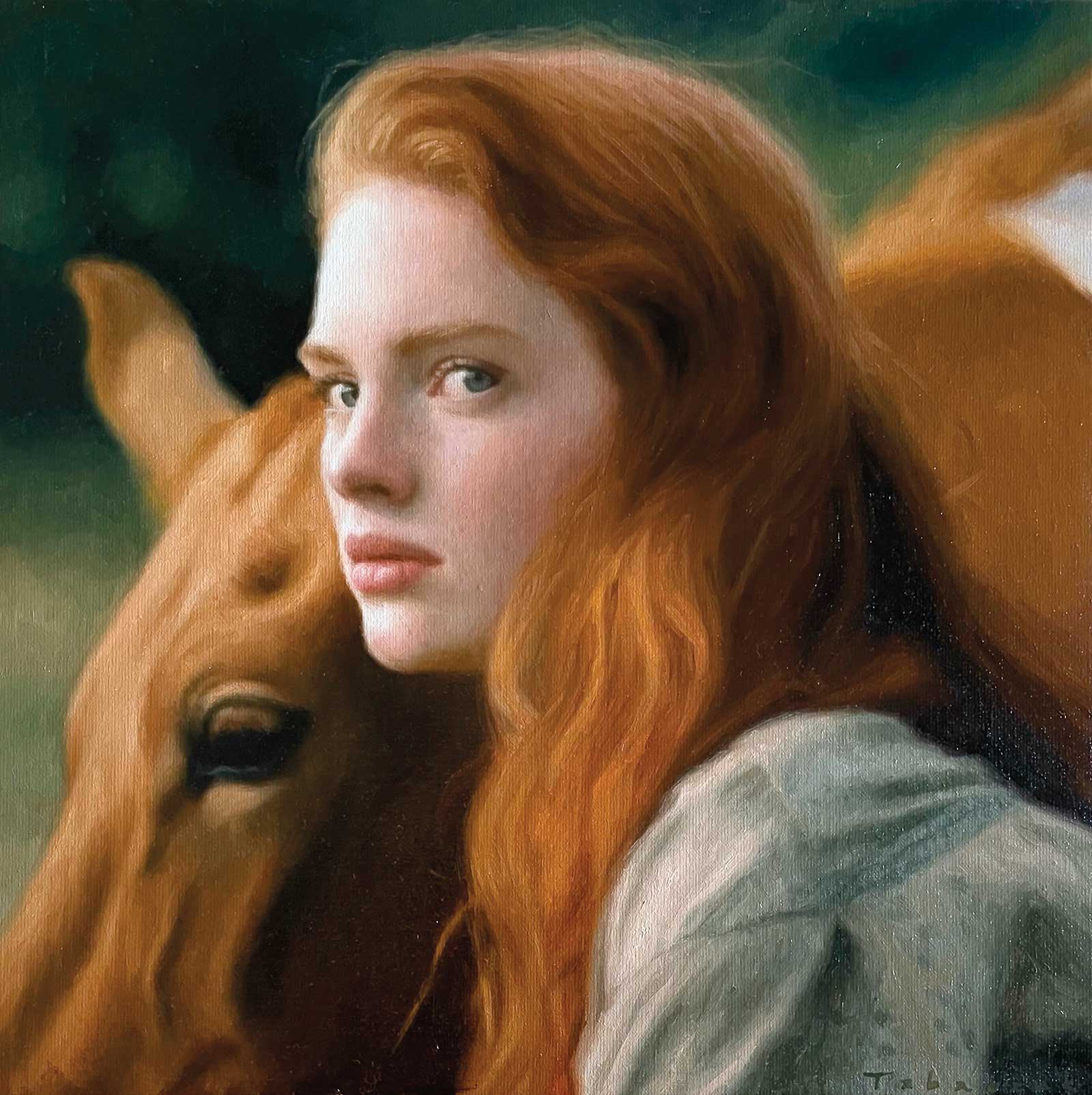
Rustic Harmony, oil on linen, 17¾ x 17¾" (45 x 45 cm)
I also think I start by painting faces because that’s what I love the most. It’s what truly excites me. I also love painting the colors of the skin. It’s fascinating how we find all shades on human faces—from warm browns and oranges to subtle reds, and even hints of greens and blues.
Painting faces is hands down my favorite part. It’s like watching people come alive on the canvas.
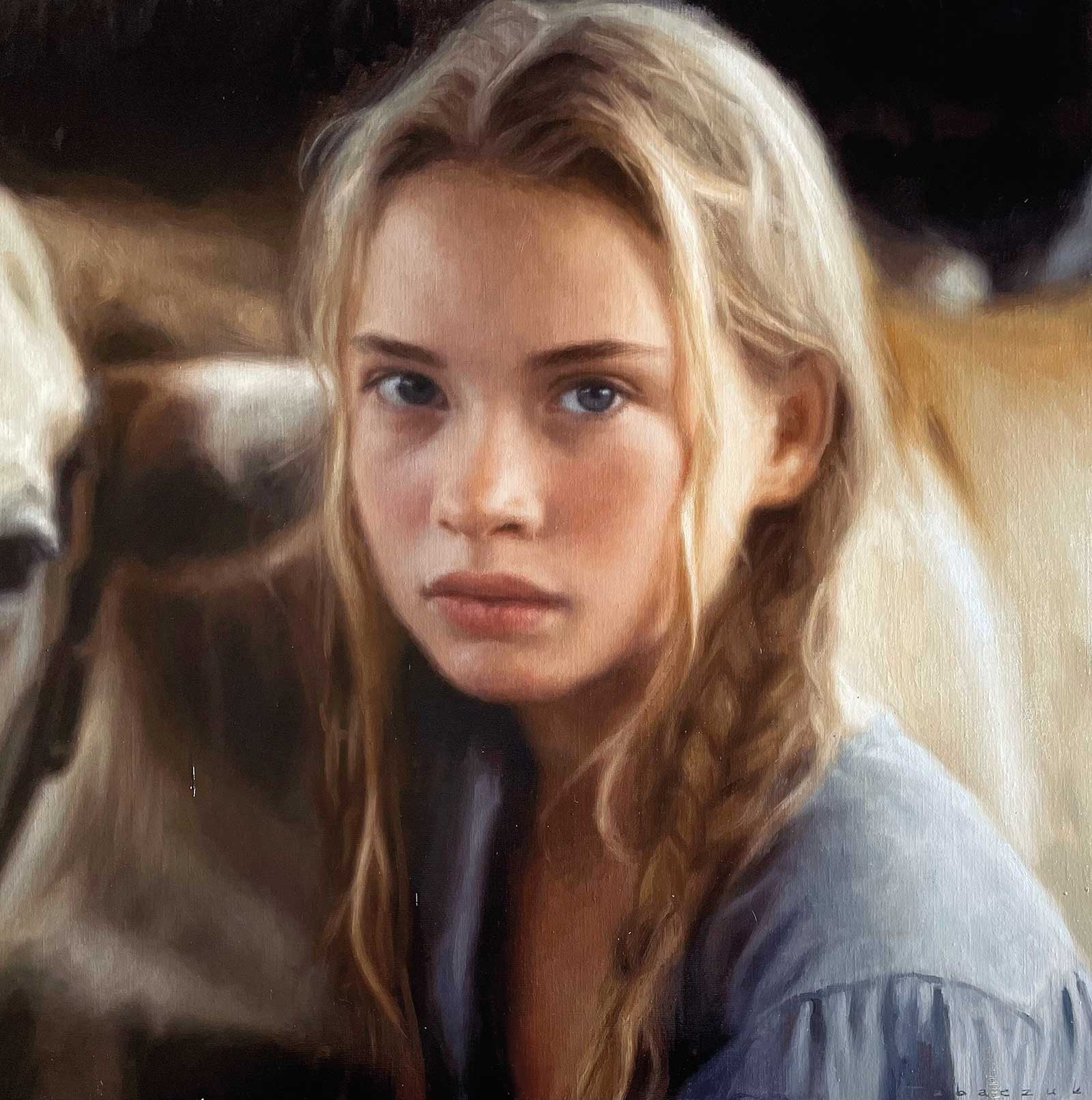
Hiding in Plain Sight, oil on linen, 27½ x 27½" (70 x 70 cm)
Understanding how to see values was a turning point in my artistic development. This lesson profoundly impacted my art, emphasizing the crucial role of training your eyes to reproduce visual effects accurately. The concept of value became a cornerstone in my creative process. Color is another essential element in my art. In addition to values, I pay attention to the temperature of colors. Every paint spot or brushstroke has significance for me. During the process of painting and mixing colors, I continuously ask myself, “Should this color be cooler or warmer? Tending towards red or green? Yellow or blue?” and so on. Throughout the painting process, I engage in a constant dialogue like this with my palette.
It is essential for me that the characters I paint exude subtly hidden emotions. These are not intense feelings like anger or joy. I am more interested in those hidden behind a calm face that seemingly expresses nothing but actually conceals something more. Sometimes, even the tiniest detail—a single brushstroke, a spot, a line, can alter the expression on a face.
My Art in the Making Hushed Dreams
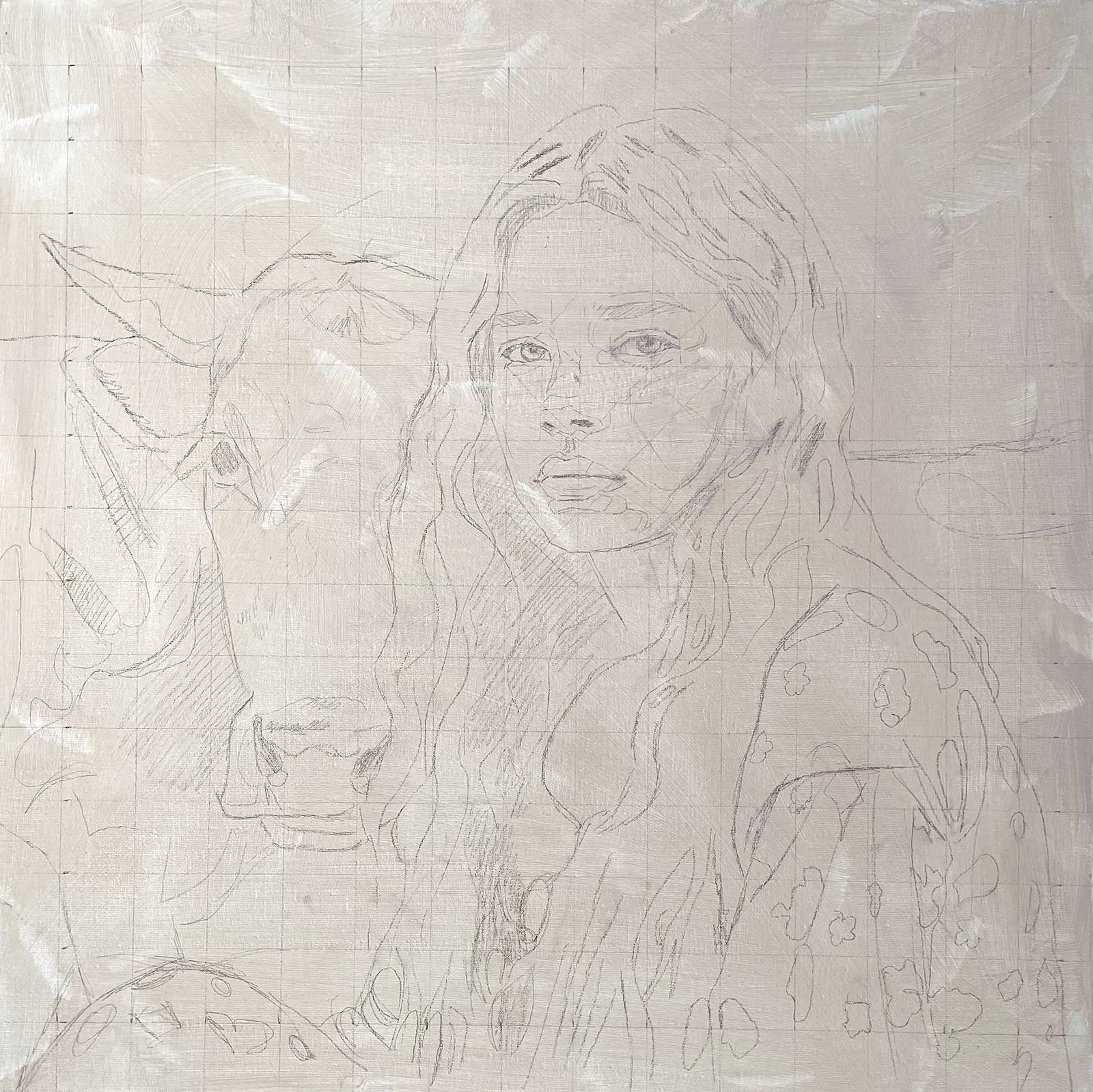 Stage 1
Stage 1 Sketch
I paint on linen canvas, priming it with a special non-absorbent primer from Michael Harding. I choose the primer in either titanium buff or neutral gray, which additionally helps me get rid of the white background that hinders color perception. I begin the process with a general sketch.
WHAT THE ARTIST USED
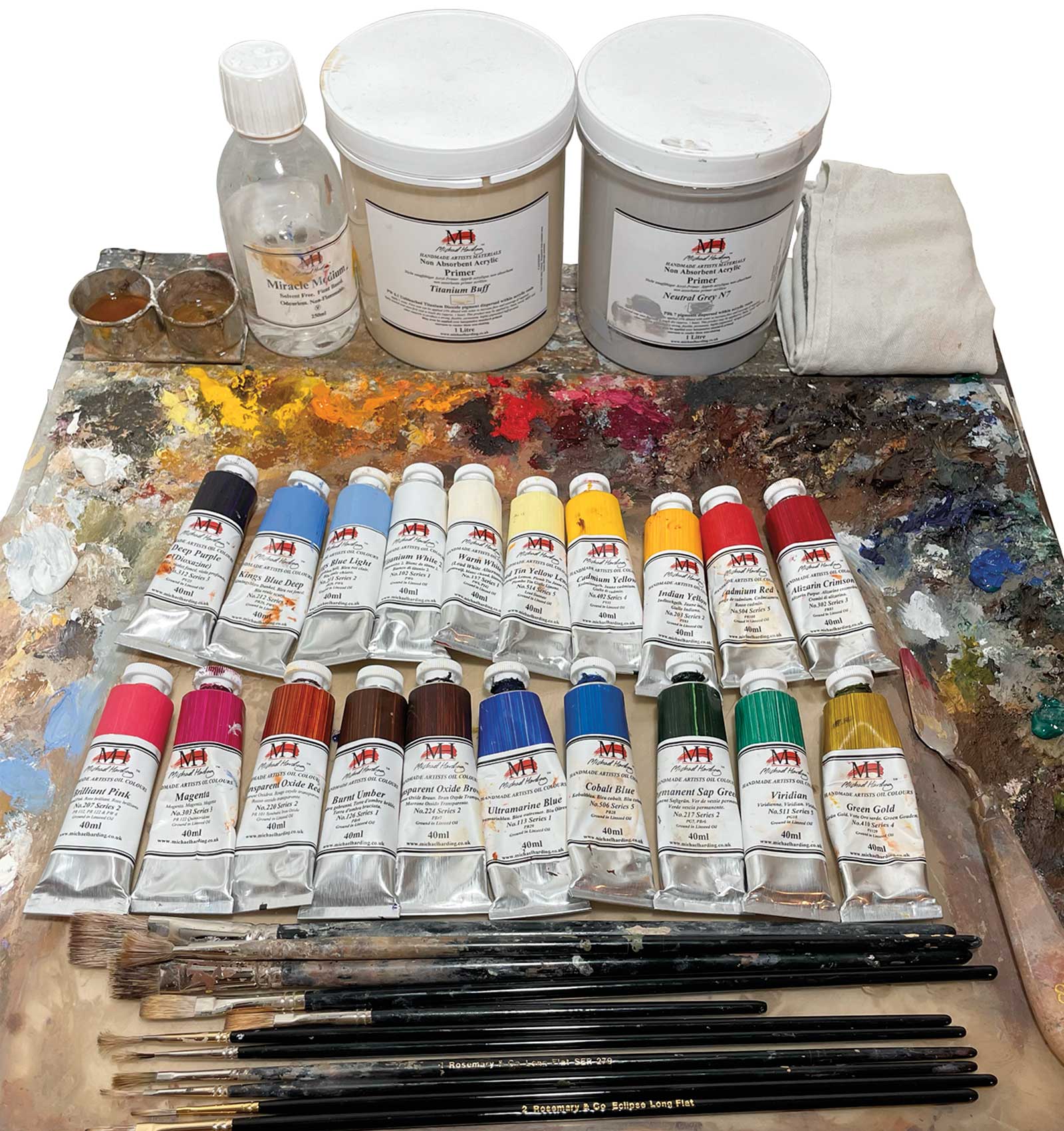
Michael Harding Oils
Titanium white, Cremnitz white, Warm white, Lead tin yellow lemon, Cadmium yellow, Indian yellow, Cadmium red, Alizarin crimson, Magenta, Transparent red oxide, Burnt umber, Transparent brown oxide, Ultramarine blue, Permanent sap green, Viridian, Green gold, Kings blue light, Deep purple
Rosemary & Co. Brushes
Eclipse long flat, sizes 0-8, Long flat SER 279, sizes 0-8
Additional Materials
Claessens linen canvas, Michael Harding non-absorbent acrylic primer in titanium buff, Michael Harding Miracle Medium
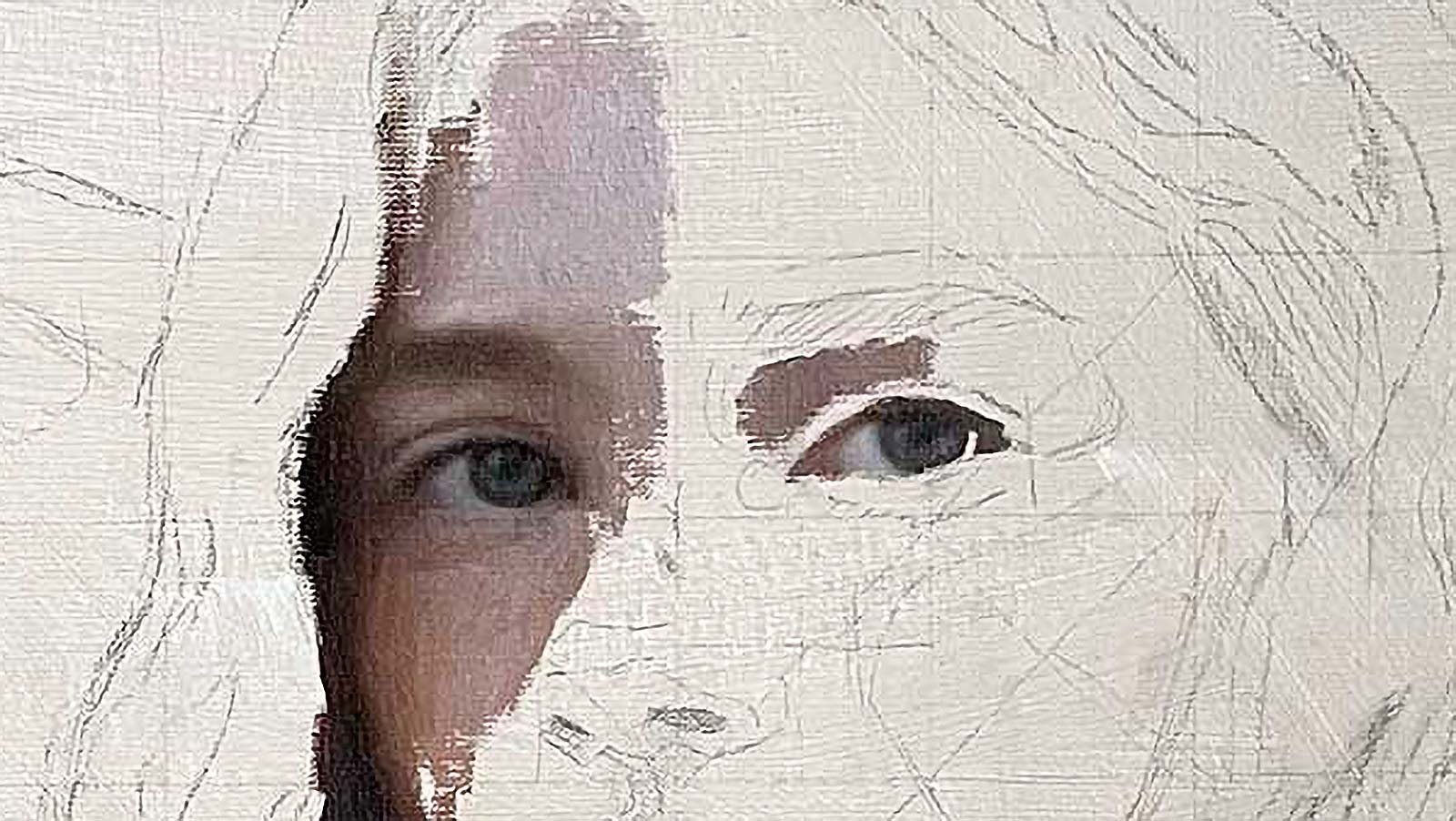 Stage 2
Stage 2 The Eyes
I start by painting the eyes of the subject and the area around the eyes. This is the most challenging and stressful stage. I am sure that starting a painting this way is not the best method, and there are better, easier and more sensible ways. However, this is the way I enjoy painting.
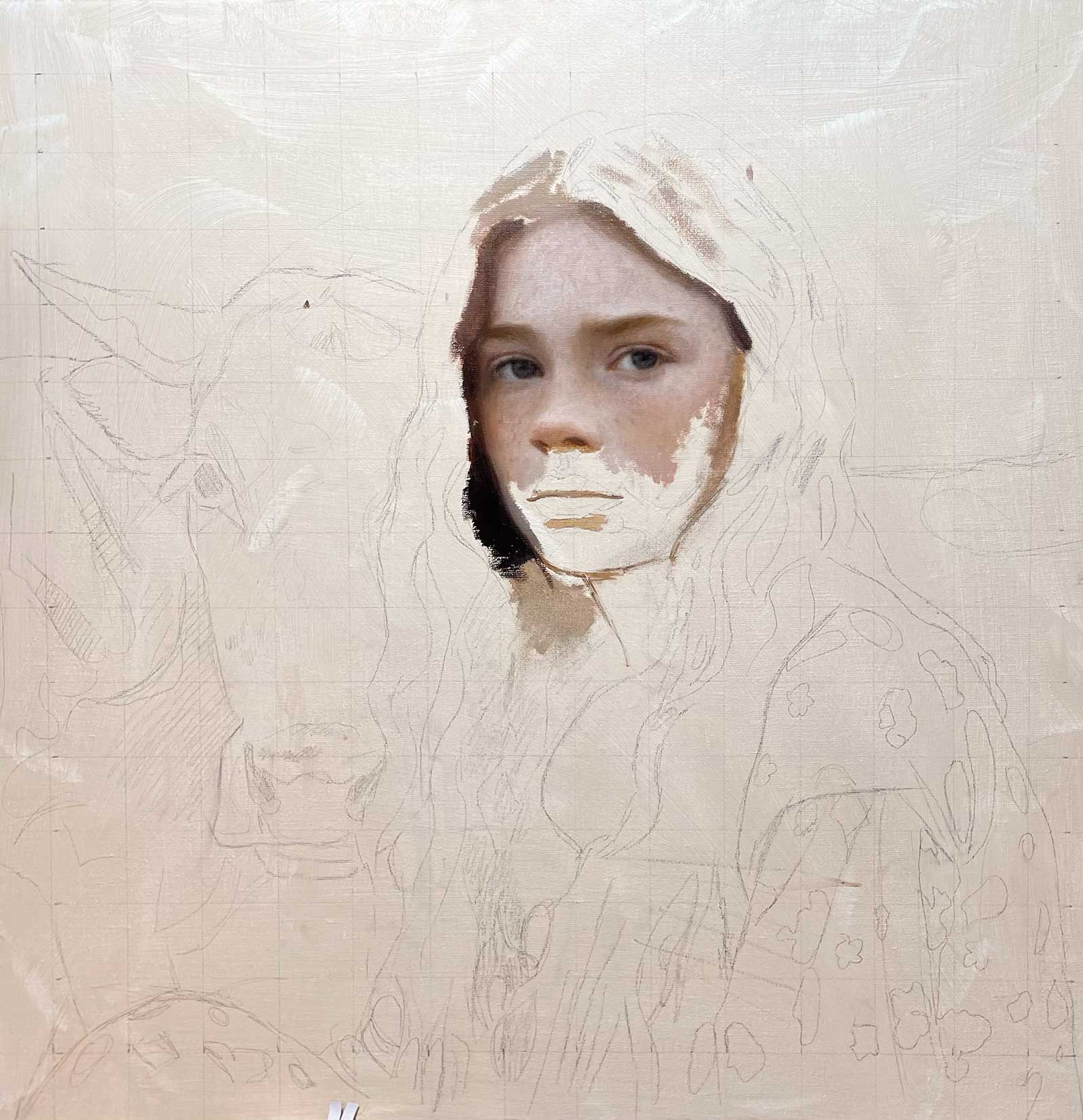 Stage 3
Stage 3 Viewing the Piece as a Whole
Then, the process becomes much smoother. Once the part of the face with the eyes is painted, the rest flows smoothly and becomes pure pleasure. Throughout the process, I constantly check how what I’m painting relates to the whole, making sure everything harmonizes. I squint a lot, always making sure my eyes aren’t playing tricks on me. From here, I continue painting the face.
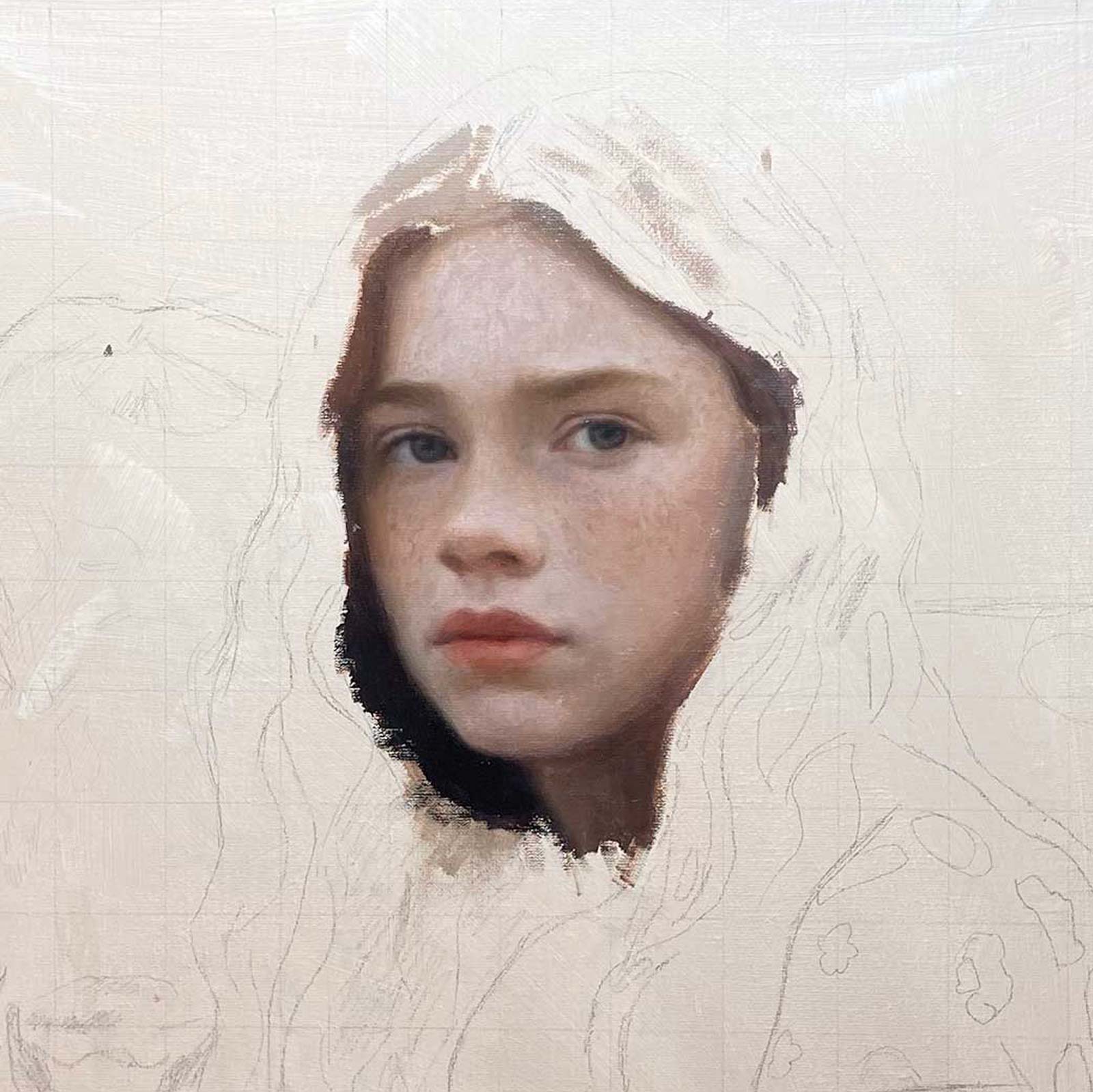 Stage 4
Stage 4 Utilizing Larger Brushes
Once the face is completely painted, I usually set aside the small brushes and reach for larger ones. I don’t have a strict rule about what to paint next, but I go section by section. Someone once said it looks like I’m assembling a puzzle. I guess I agree with that.
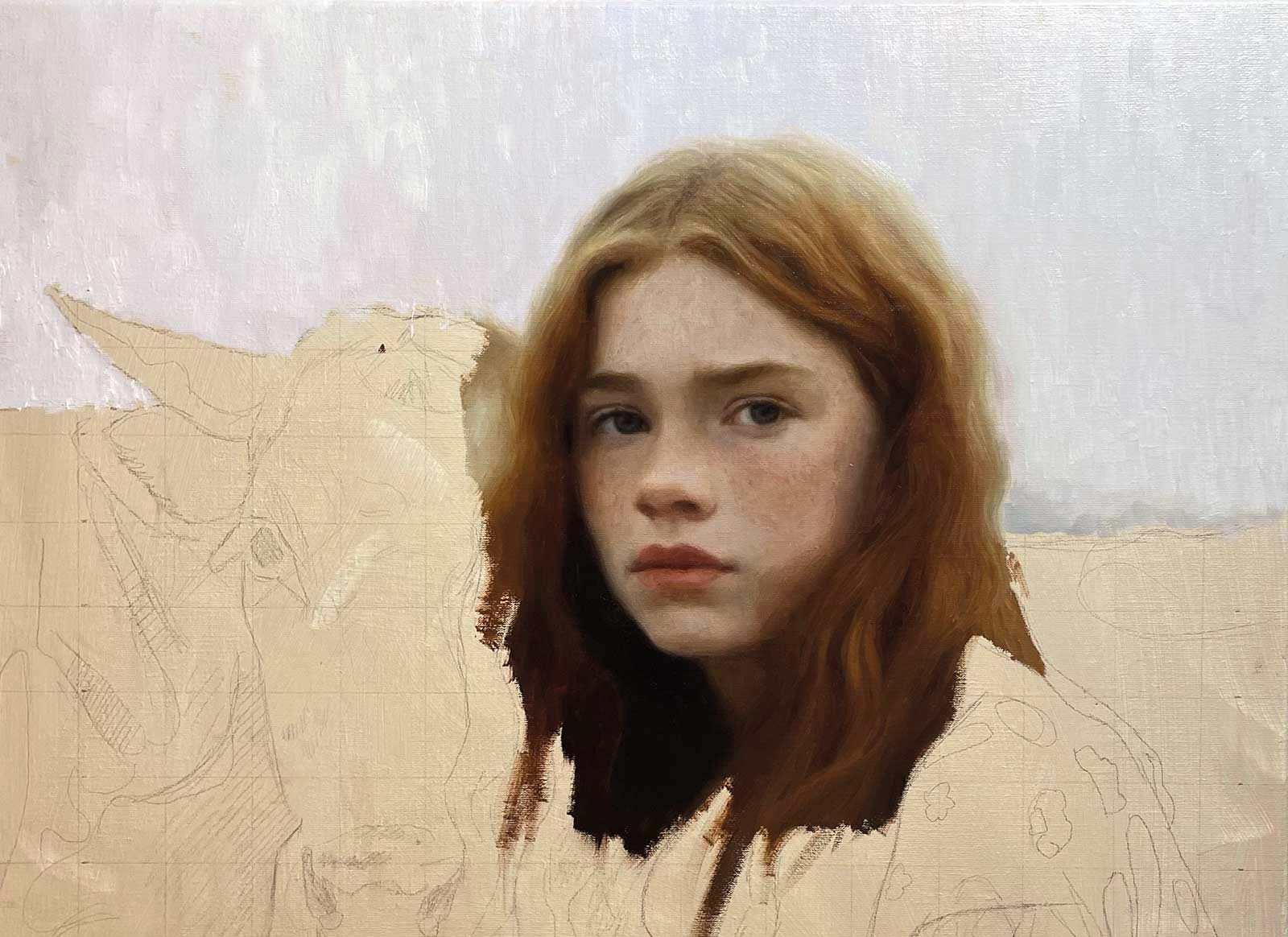 Stage 5
Stage 5 Looser Brushwork
I am continuing to piece together the puzzle, but now using a larger brush with a looser technique. Believe me, there are no details there, just patches creating the illusion of complexity. I still check if everything holds together. Even though I paint section by section, I constantly think of the painting as a whole. This is crucial.
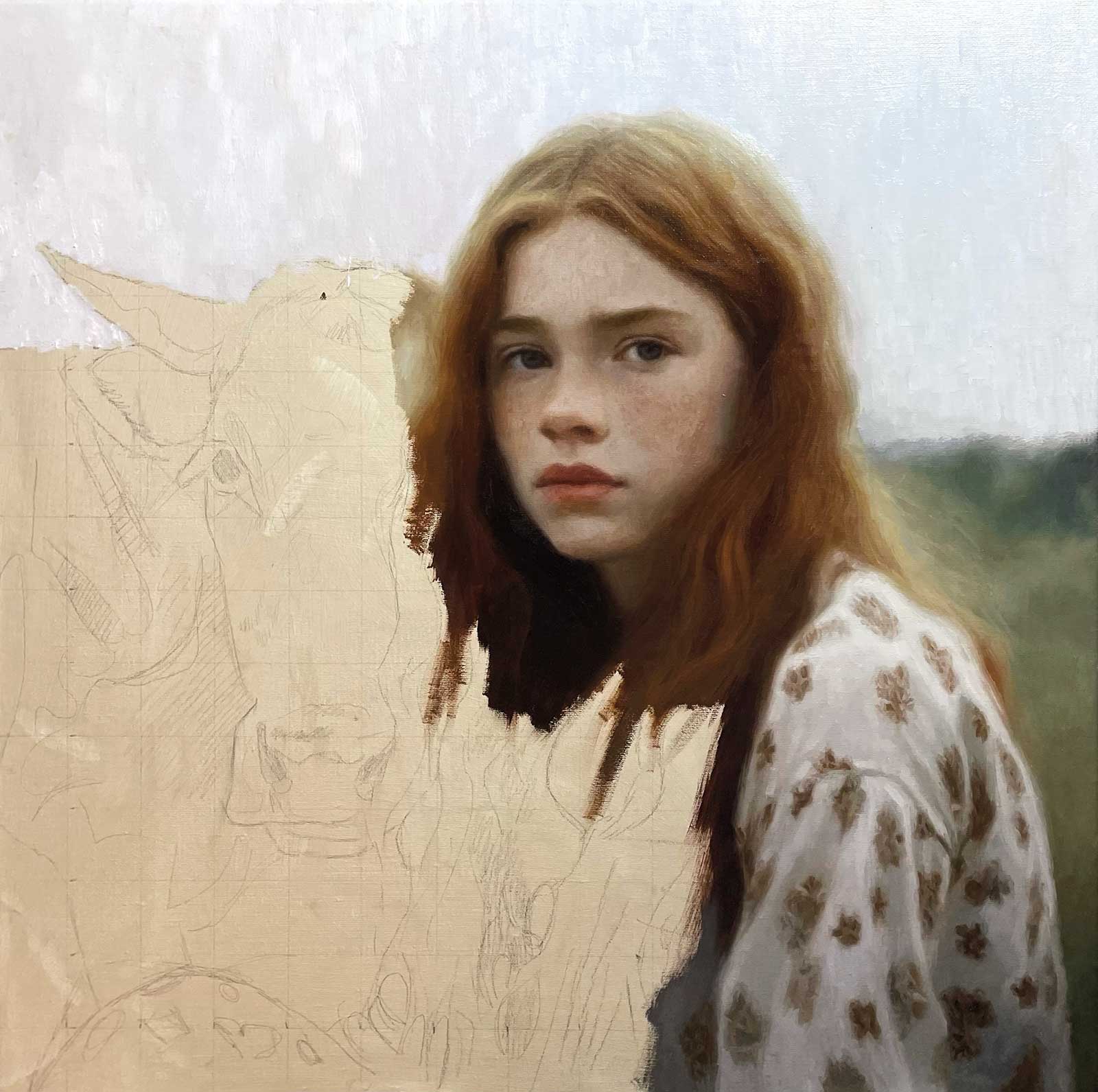 Stage 6
Stage 6 Final Sections
The last element left to paint, of course, is the cow. When I deem the painting ready, I take a few photos of it. This helps me see if everything works well together. I also take photos at other stages of the painting. If everything looks good, I leave the painting and come back to it after a few days to view it with fresh eyes and make any necessary adjustments.
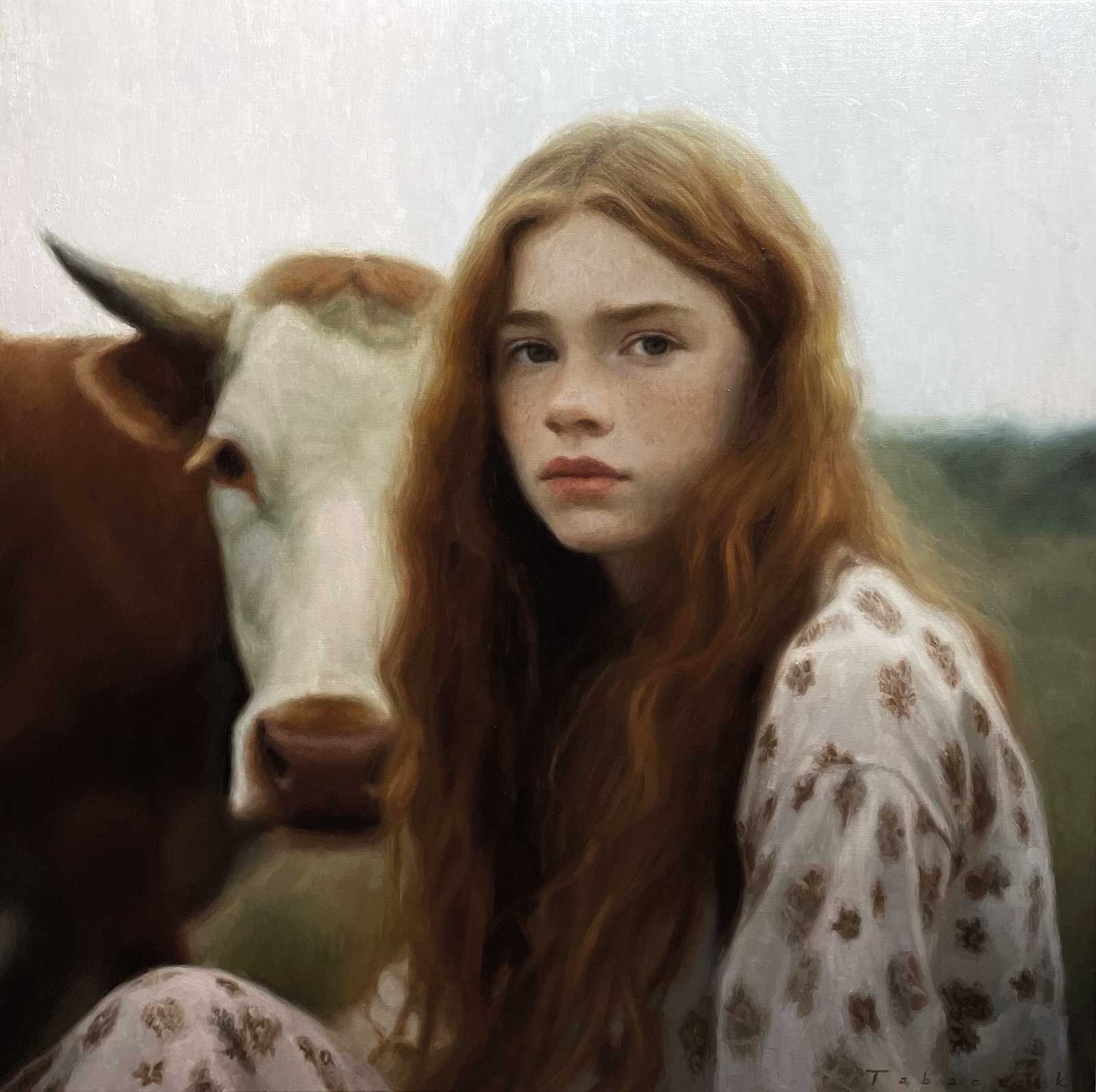 Stage 7
Stage 7 Finished Artworka
Hushed Dreams, oil on linen, 29½ x 29½" (75 x 75 cm)
About the artist
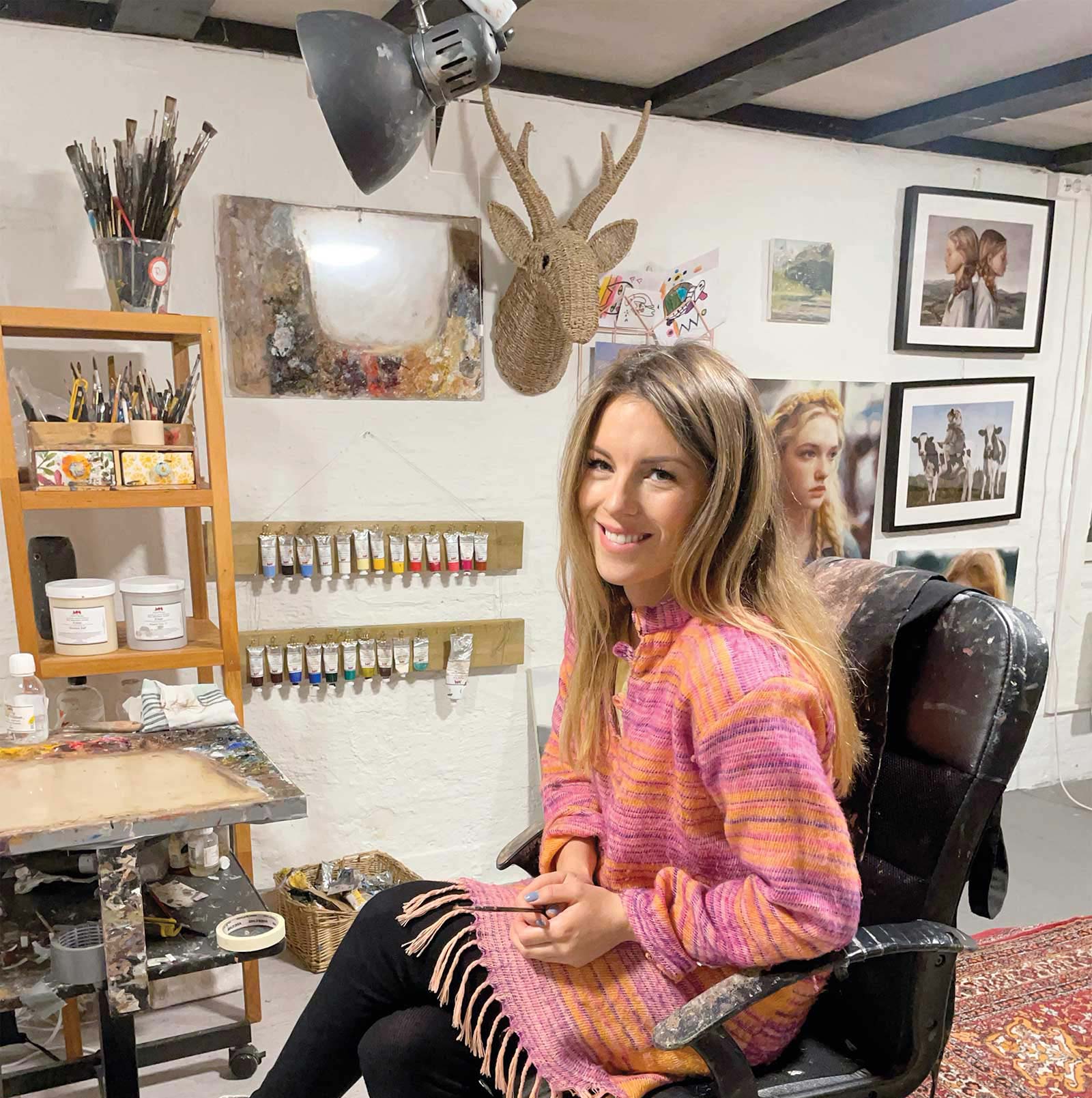 Kesja Tabaczuk in her studio
Kesja Tabaczuk was born in Opole, Poland, and currently resides in Oslo, Norway. She discovered her passion for drawing and painting at a young age, beginning her artistic journey at age 12, where she excelled in the arts, passing drawing and painting tests with full scores. Tabaczuk continued her education at OSSP high school in Opole, where she studied drawing, painting, design, sculptures and art history for six years, significantly influencing her later creations.
From there, she attended art school in Poland. In recent years, Tabaczuk has actively participated in numerous group exhibitions and art fairs around the world, including LA Art Show and several artist residencies. She has also had three solo exhibitions in Oslo, Norway. Notably, she will hold her first solo exhibition at Arcadia Contemporary in New York in July 2024.
Tabaczuk’s achievements also include winning the Almenara Travel Award in 2023 and receiving an honorable mention from Raymar in the 2022 Beautiful Bizarre Art Prize. She is proudly represented by Galleri Ramfjord in Oslo and Arcadia Contemporary in New York. Her art has found a place in numerous private collections worldwide, including the New Salem Museum in Massachusetts.
Represented by
Arcadia Contemporary, New York, USA, arcadiacontemporary.com
Galleri Ramfjord, Oslo, Norway, galleriramfjord.no
Contact at
kesjatabaczuk.com