My drawing style is based on the techniques of classical drawings of the Old Masters, using elements of expressionism and impressionism. I never try to copy nature exactly. Instead, I always try to add some elements from myself to make the composition more expressive, because whether it’s a big multi-figure painting or a small sketch of a head, your artwork should always be based on good composition.
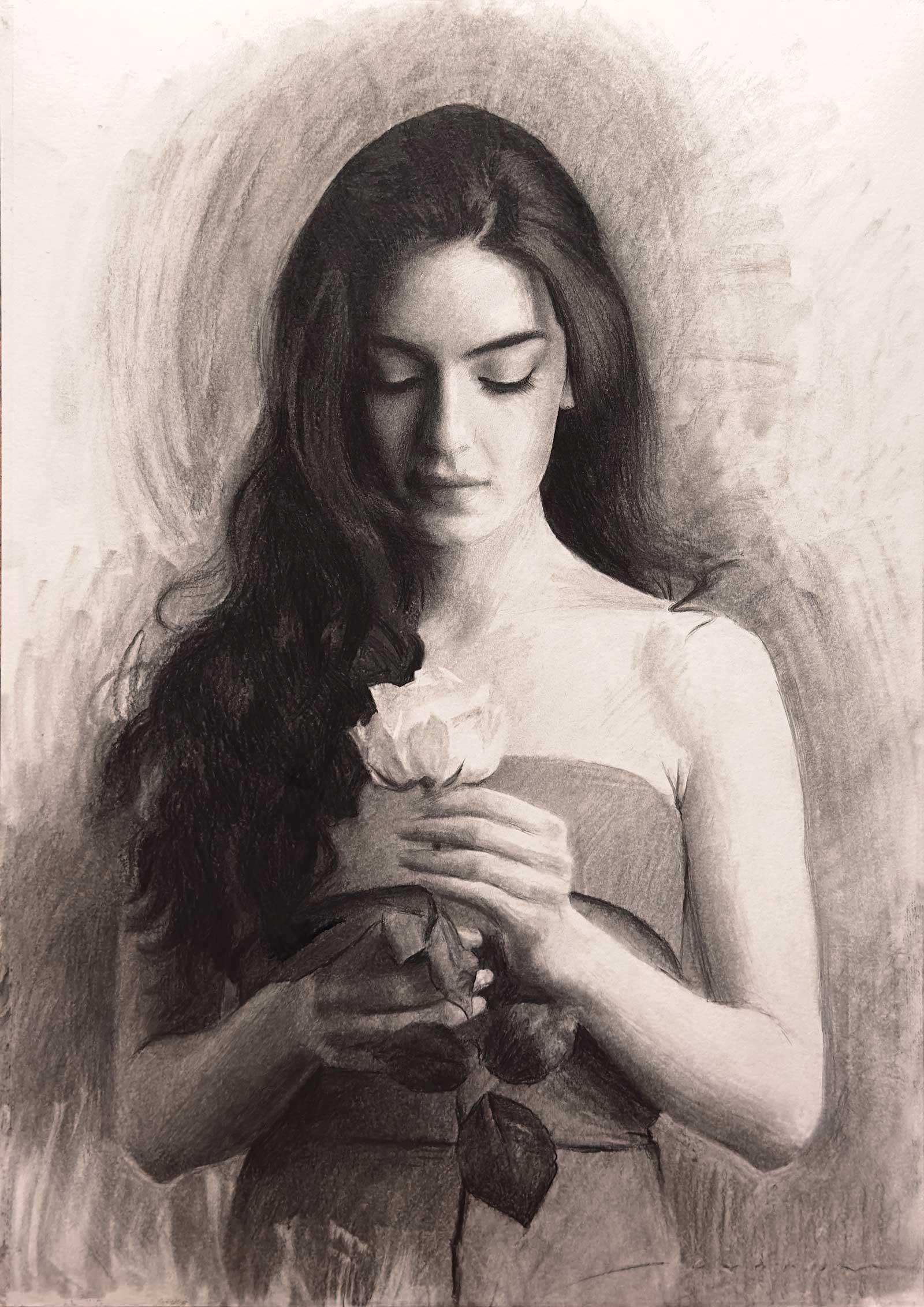
Girl with flower, charcoal and graphite on paper, 22¾ x 16" (58 x 41 cm)
Technique is limited, but ideas and concepts are not. Compositional techniques are diverse, and each of them is intended to be a means of expressing a certain idea. The ability to build a drawing follows from the ability to see nature. To compose means to express one’s attitude towards an object. The artist always manifests himself as an appraiser of the phenomena of life. At the preliminary stage of a drawing is the organization of the story—to select and separate the essential from the random. It’s impossible to reveal a topic without a selection of phenomena and facts, without a figurative generalization.
One of the functions of composition is to capture the attention of the viewer. The eye first searches for that visual center that helps to understand the idea and concept of the artwork. Attention is scattered if the semantic connection is not observed in the very arrangement of the objects.
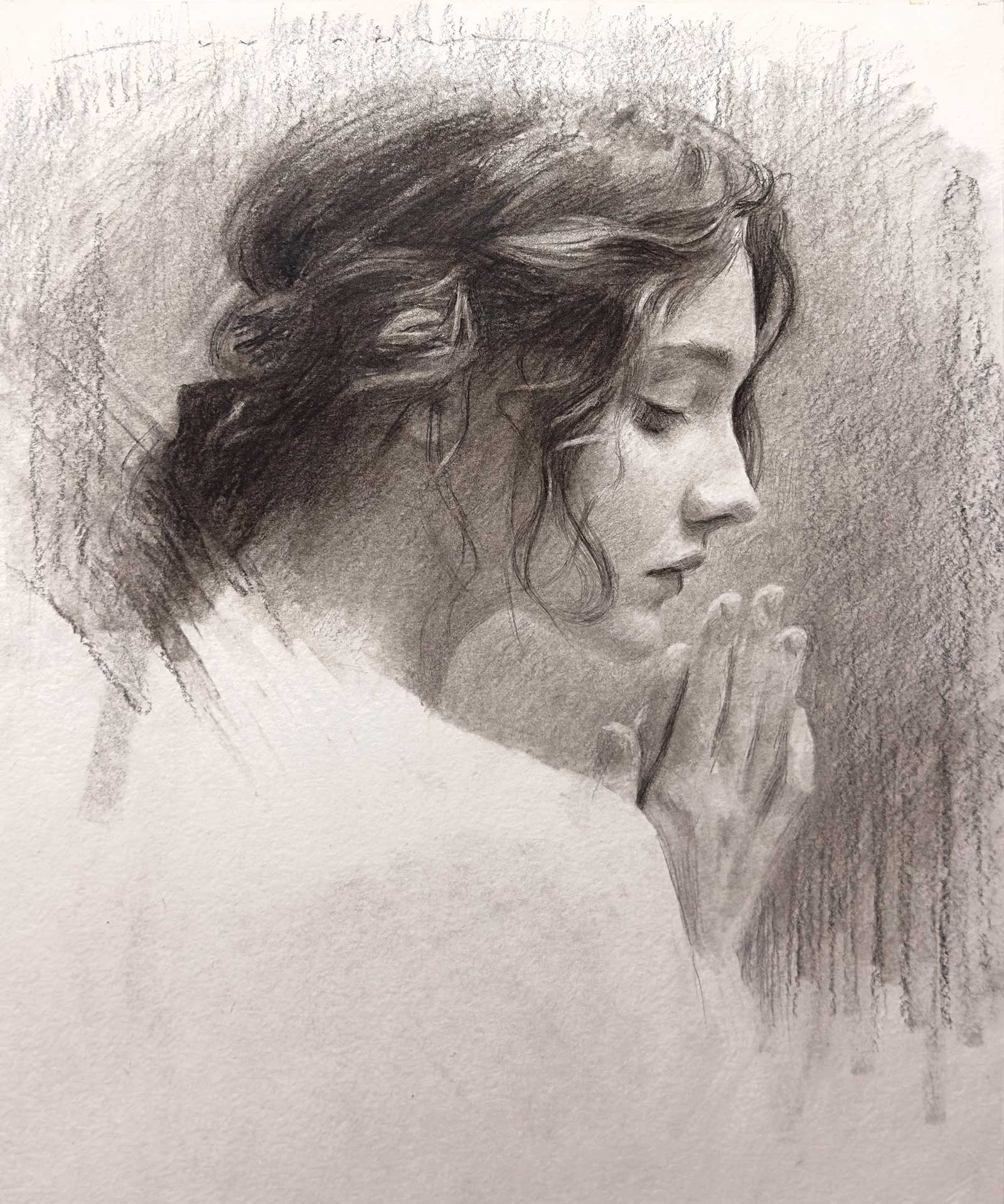
Portrait of a young lady in profile, charcoal on paper, 131/3 x 11½" (34 x 29 cm)
While working from nature, I have also studied a lot of the techniques of the Old Masters, and one of my favorite masters, like many, is John Singer Sargent. Thanks to him, I moved to a method of drawing with more freedom, rather than strict academism. I began to work more with large strokes, combining them with classic lines and strokes.
The composition of the portrait depends on the psychological state of the person, her posture, movements and external data. Due to the format and size of the canvas or paper as well as the organization of the composition of the portrait, it’s possible to emphasize the individuality of the person being portrayed.
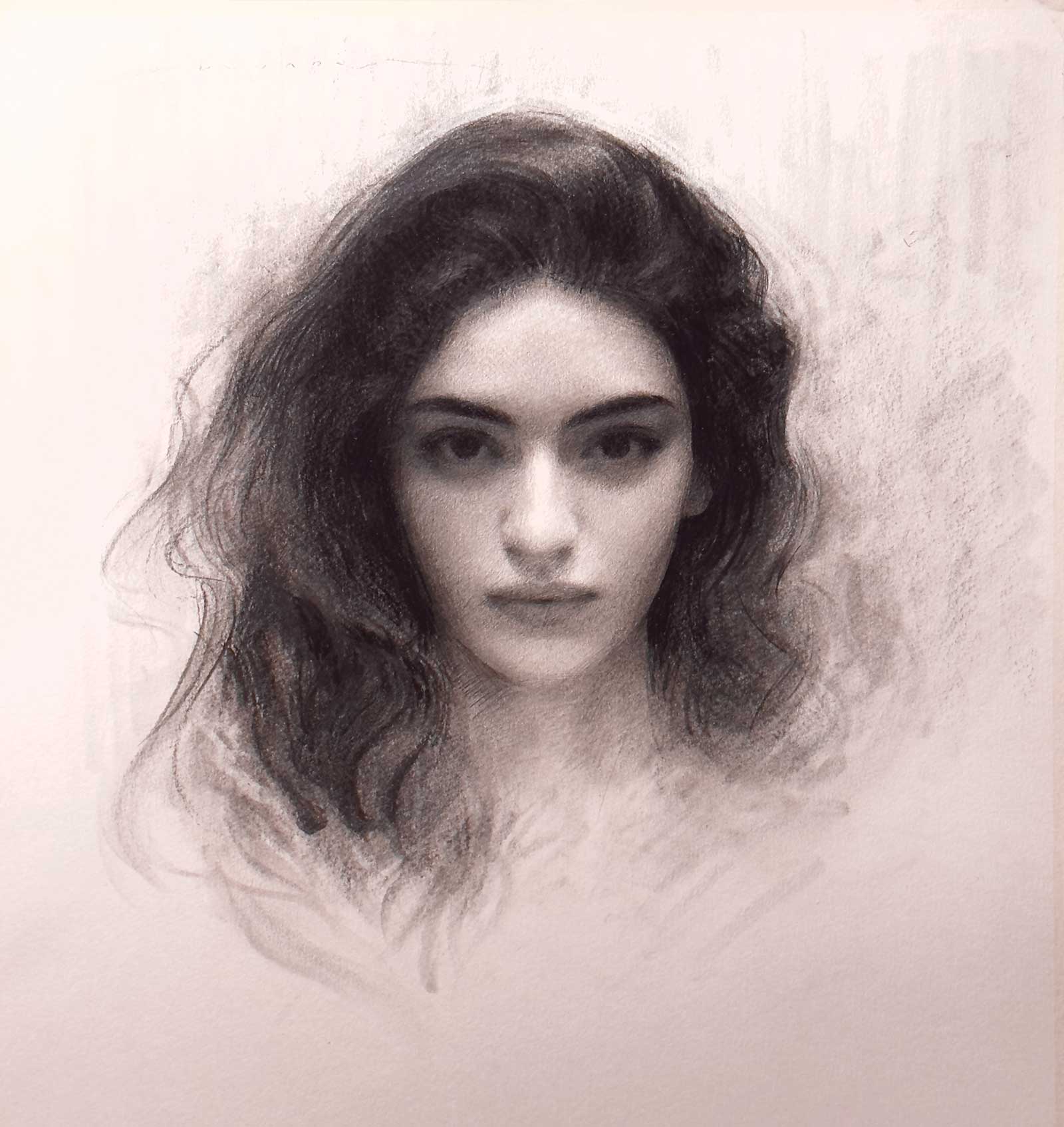
Sketch for the painting “Impression”, charcoal and graphite on paper, 171/3 x 14½" (44 x 37 cm)
A calm, balanced construction of the composition will emphasize the harmonious, calm state of a person. Asymmetry and sharp corners will indicate the storm of emotions and experiences of the person being portrayed. If a person looks to the left, then the image in the portrait shifts to the right. It leaves more space on the left specifically, in order to guide where to look. The balance of the composition in this case is achieved due to the details of the environment around the subject. The number of details doesn’t interfere with the portrait, as long as all of them tactfully support the main image. Excessive detail should not interfere with the perception of the image of a person. Sometimes, besides charcoal and graphite, I use various other materials and experiment.
Although it should be noted separately that the approach to composition and the very manner of drawing a portrait is highly dependent on the artist themselves and their approach to creativity. However, your own style of drawing comes with experience. For myself, I find that it’s important to follow the rules of composition.
My Art in the Making Fragrance
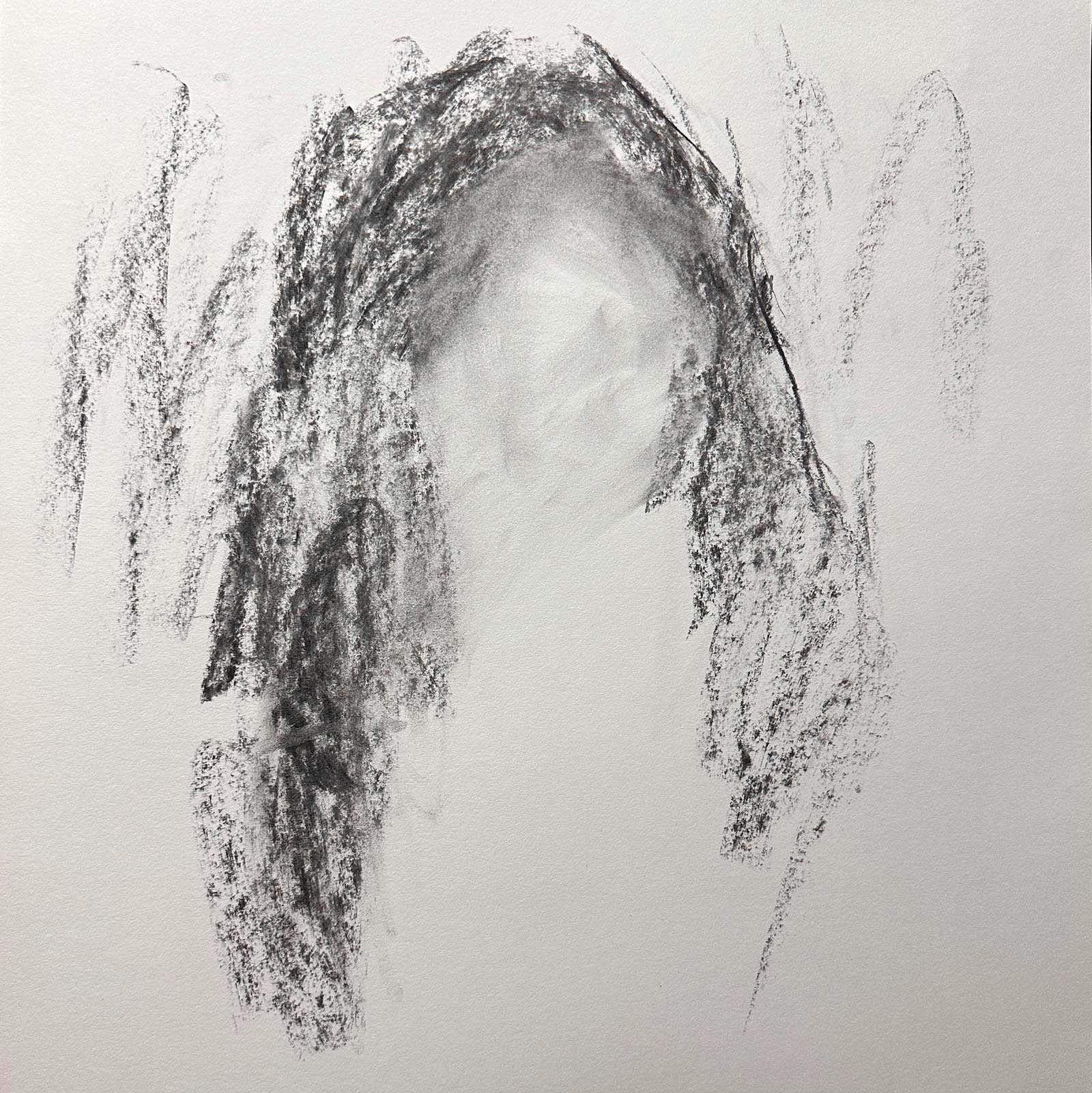 Stage 1
Stage 1 Basic Shape
First of all, I try to find the most important spots. I usually use softer, wider pencils or charcoal sticks. To soften the strokes, I use paper shading.
WHAT THE ARTIST USED
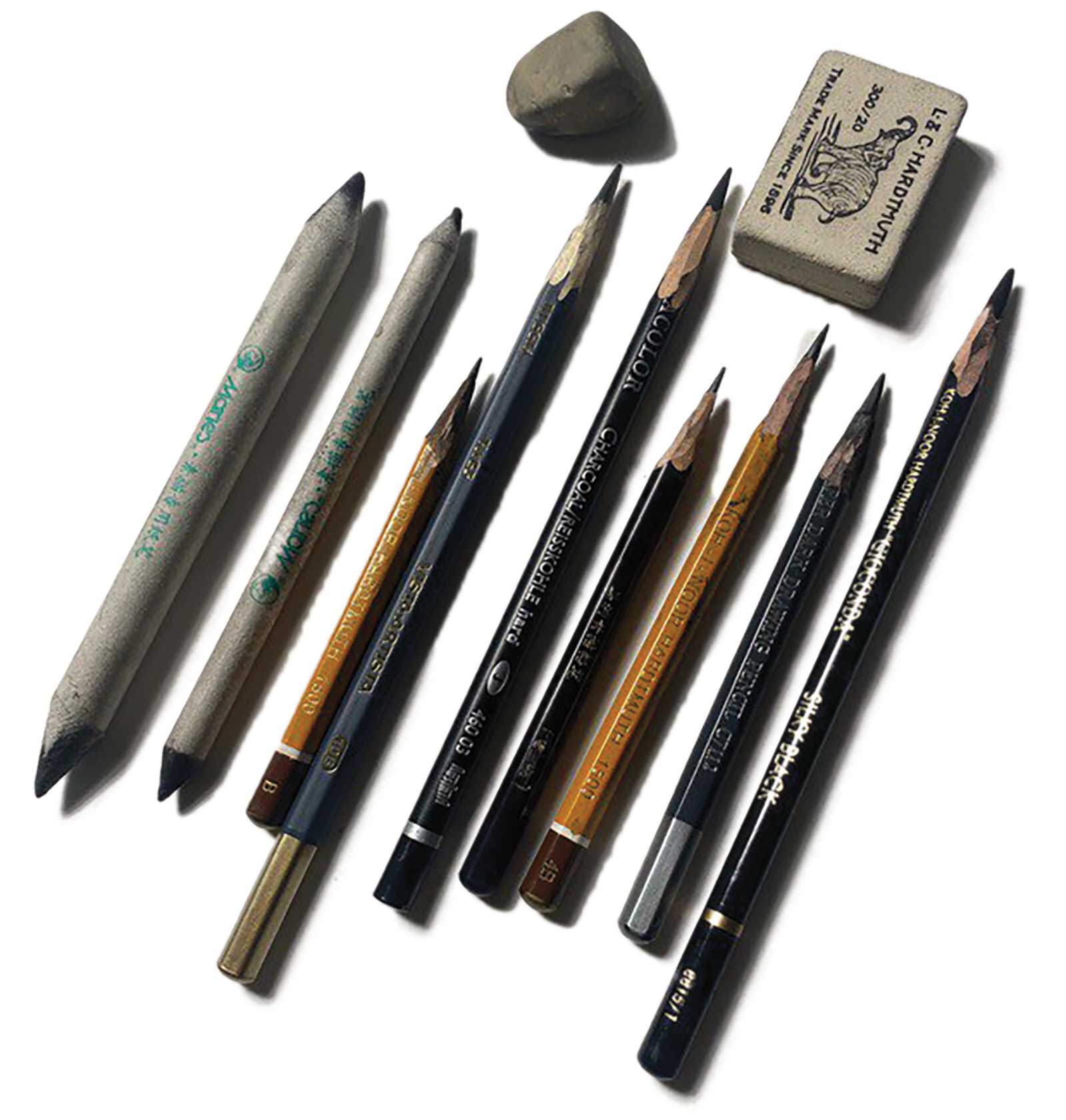
Charcoal Pencils
Dark pressing charcoal, Extra soft charcoal
Graphite Pencils
Regular, 2H, TM, M, 2M, Soft, 4B, 8B, 12B, 12B
Additional Supplies
Soft elastic and hard contoured erasers, Paper roll, Toned watercolor paper
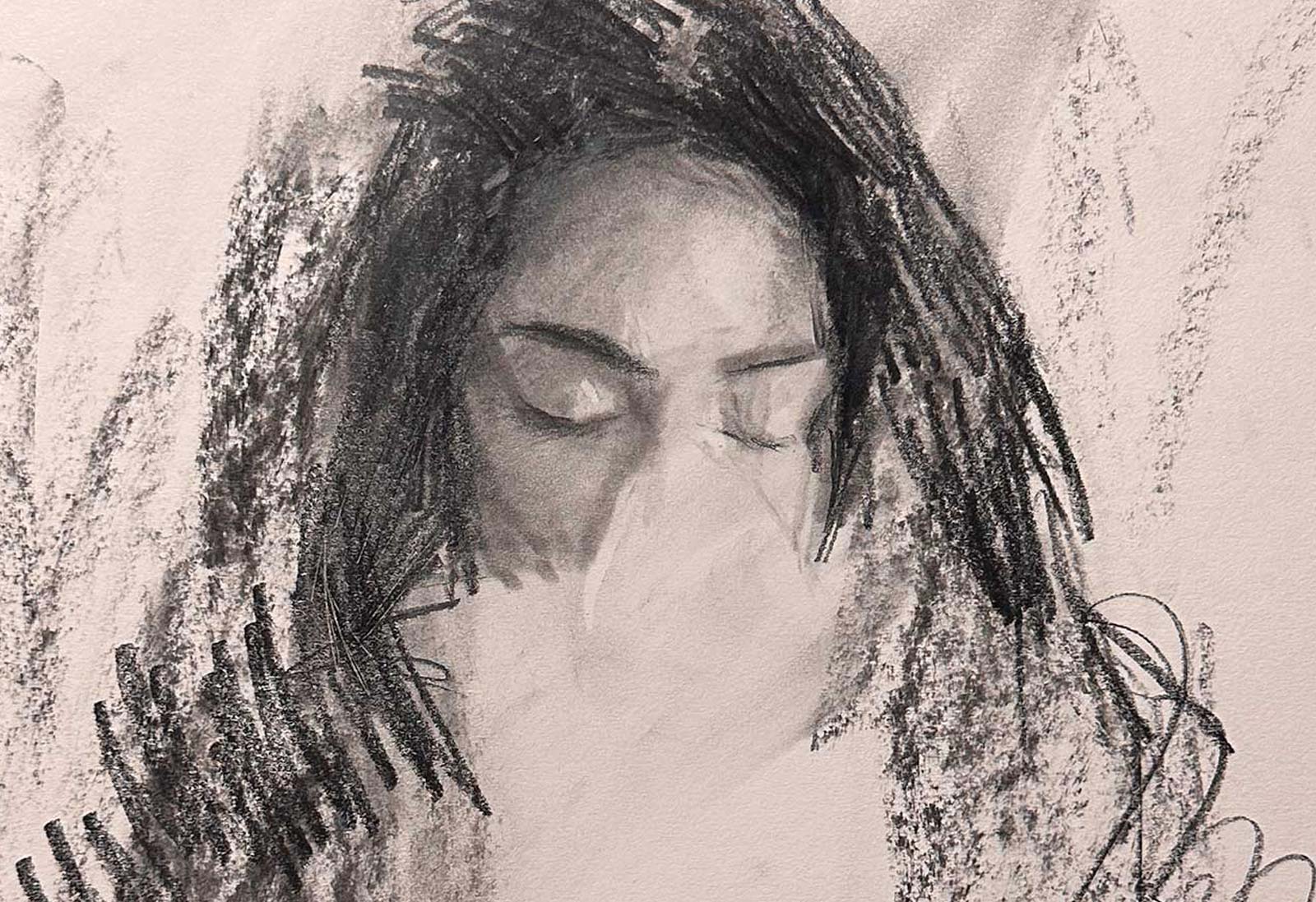 Stage 2
Stage 2 Sketches of Face
At the next stage, I make primary sketches of parts of the face. So that the white background does not distract, I apply the tone with a pencil and soften with a shading stick.
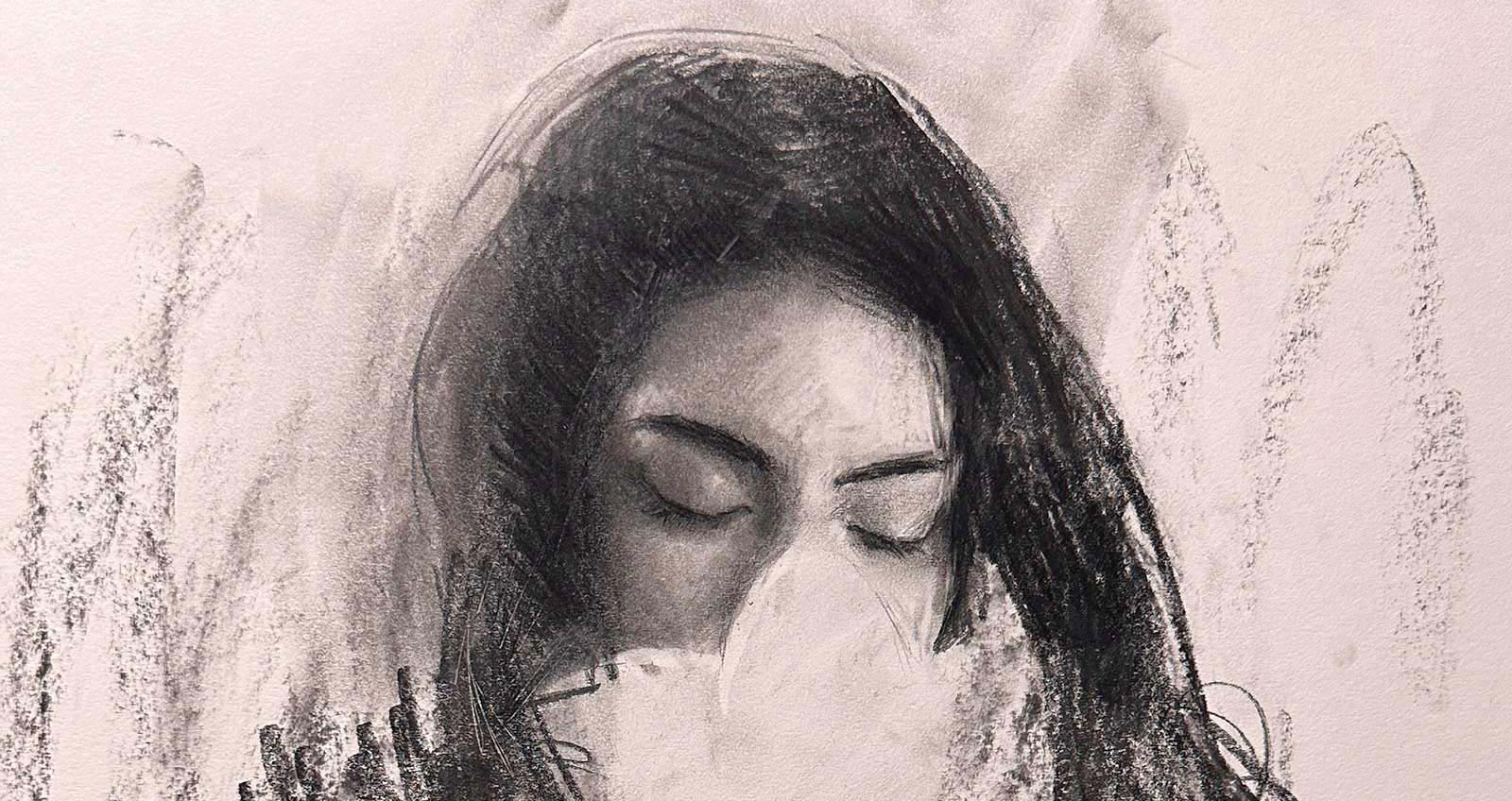 Stage 3
Stage 3 Details of Face and Volume in Hair
At this stage I’m working on the details of the face and also adding volume to the hair with a graphite pencil and charcoal.
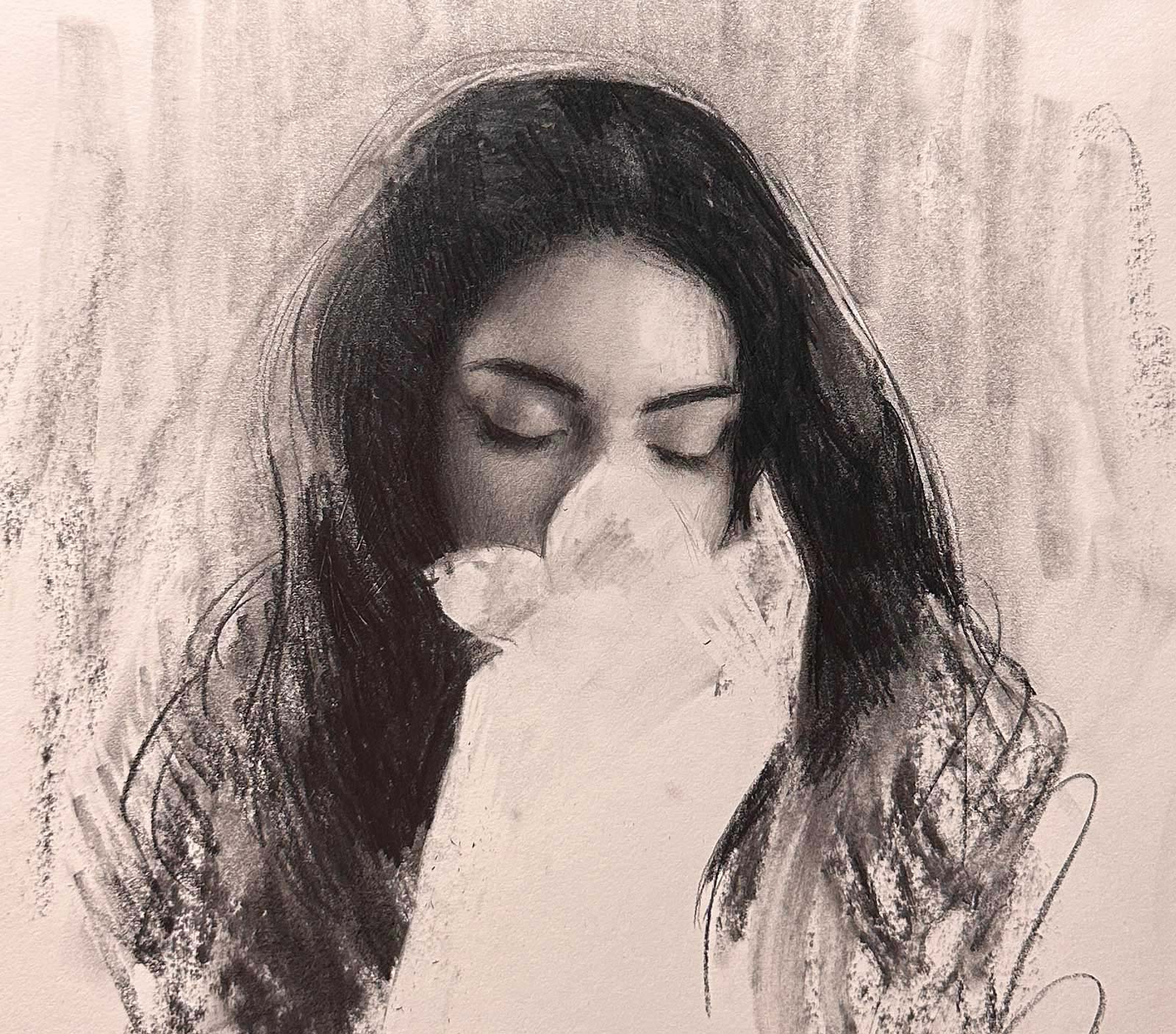 Stage 4
Stage 4 The Head
If I draw a portrait with hands I always try to complete the head first because it helps me to draw the hands relative to the head, along with everything else.
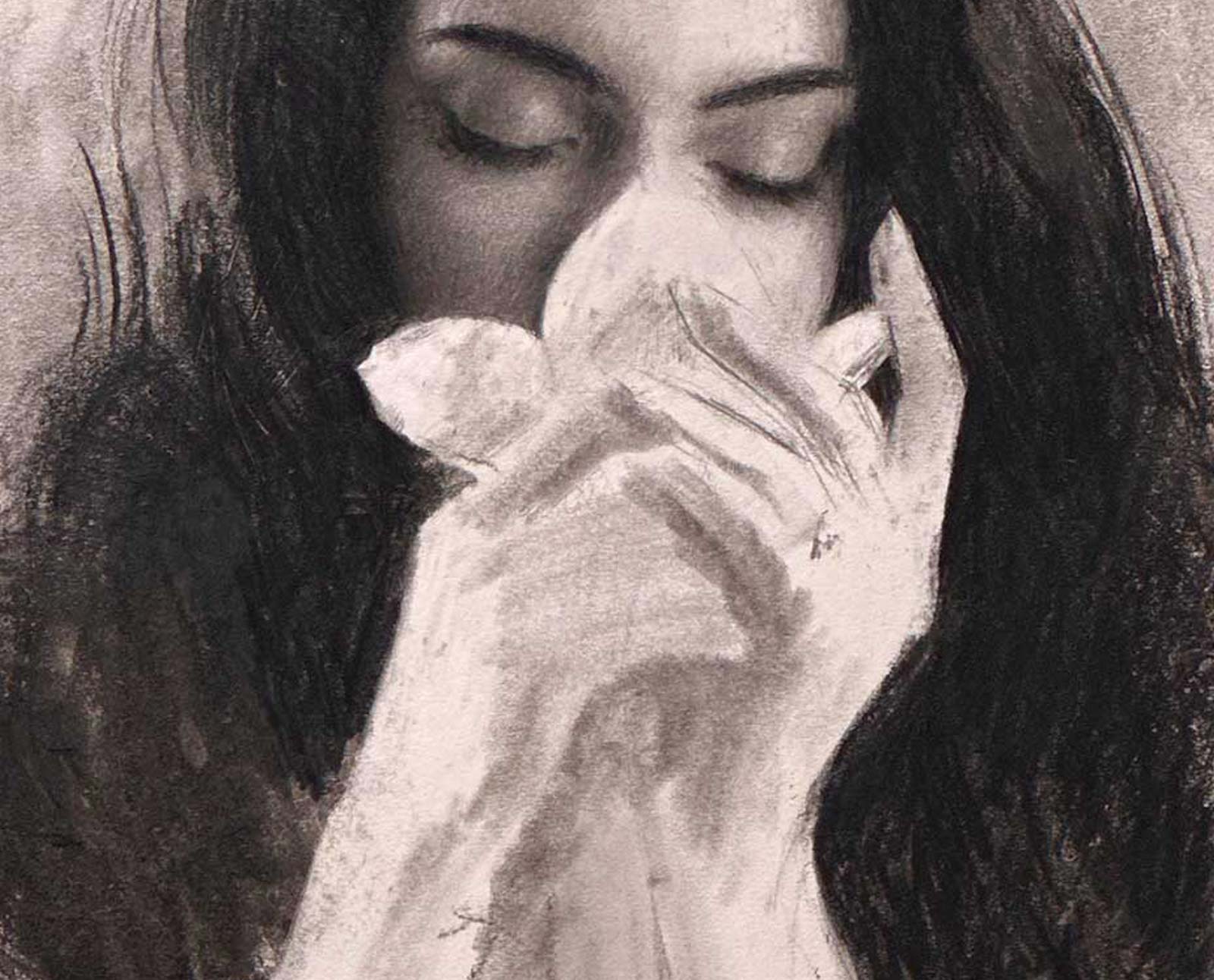 Stage 5
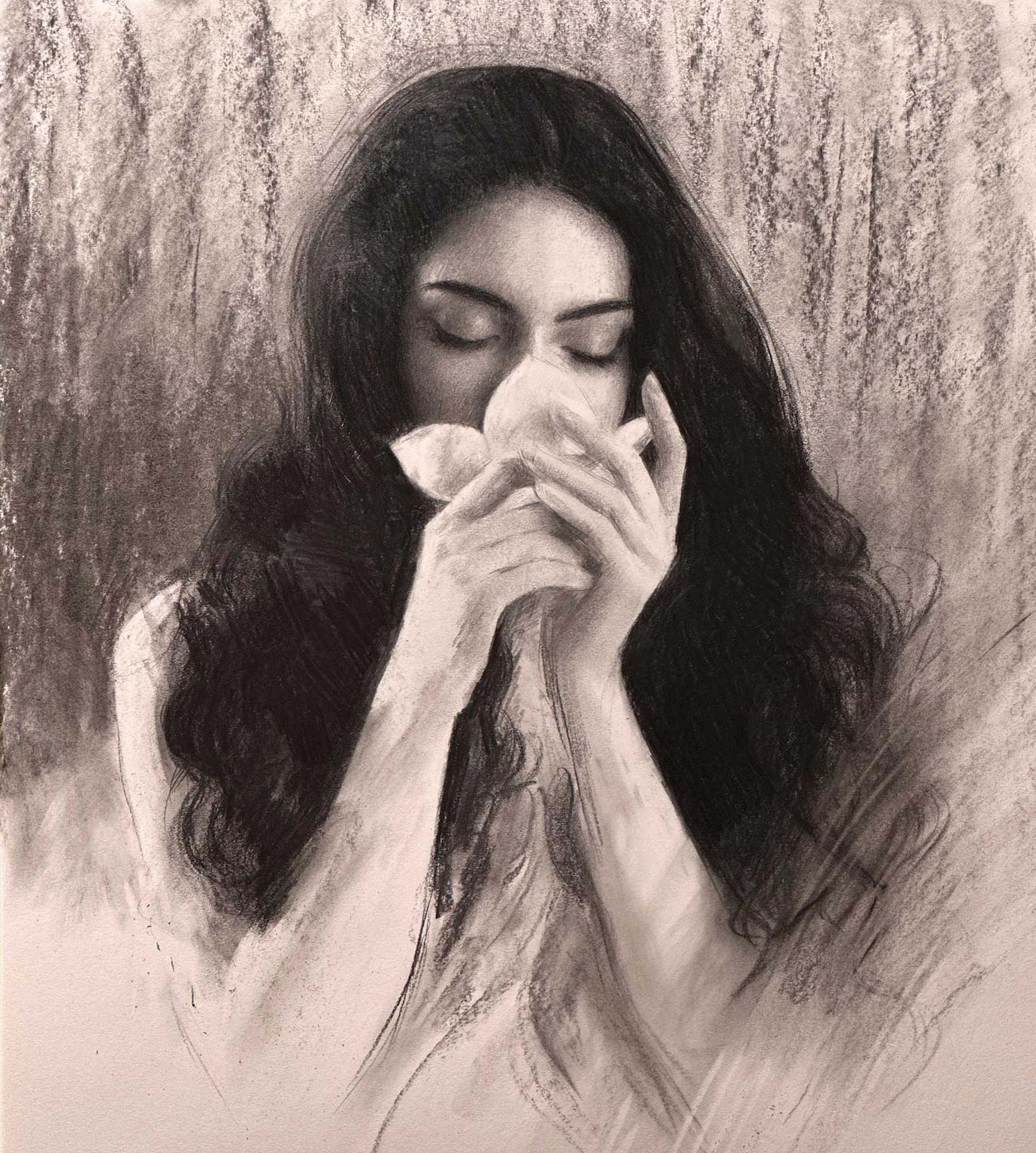
Stage 5 The Hands
At this stage, as well as on the head, I first sketch out the main spots trying to find the correct position of the hands, then draw them anatomically correct.
 Stage 6
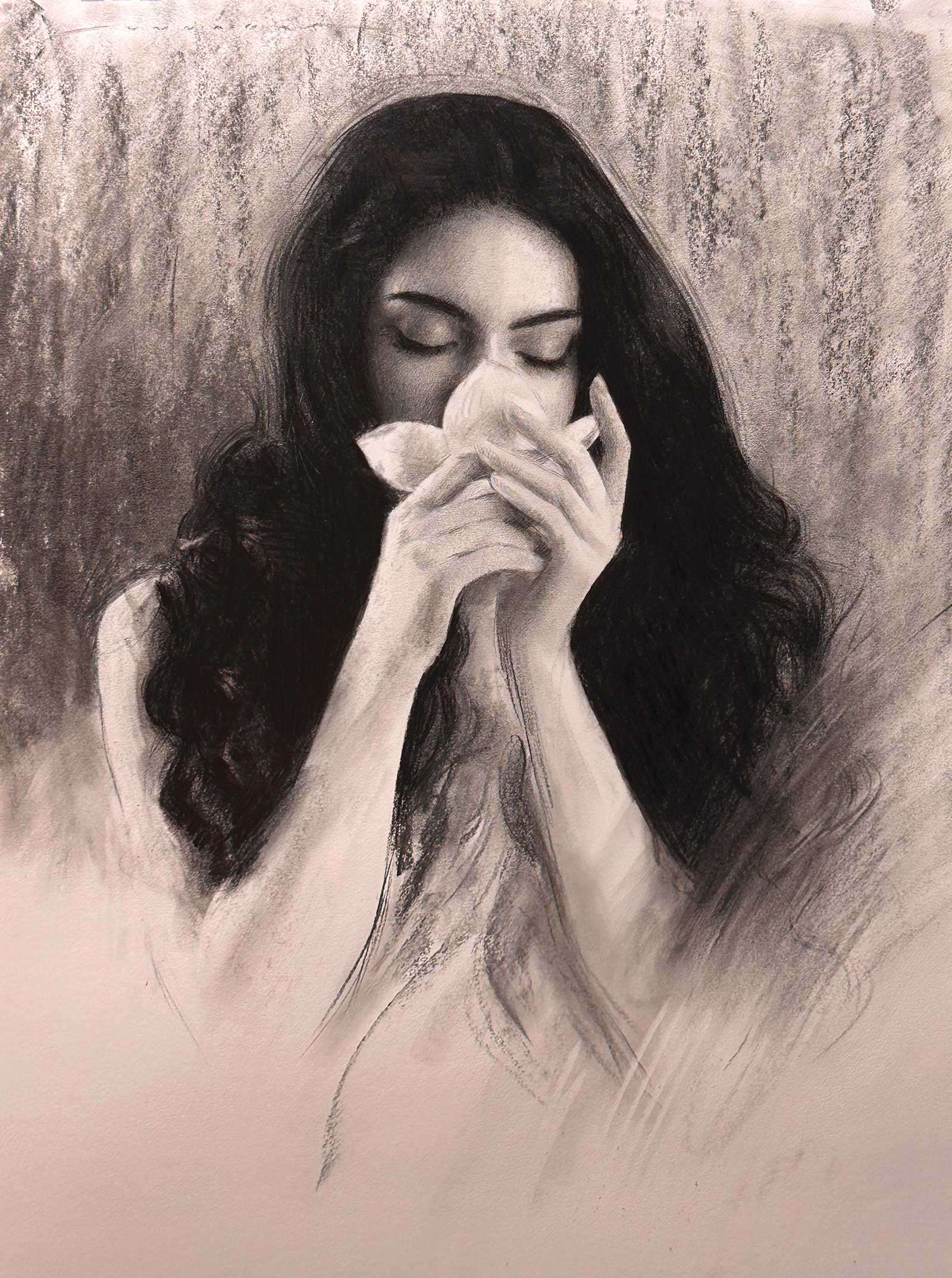
Stage 6 Detail and Expression
After I’ve made the correct sketches of the hands and the flower, I can proceed to the detailed study. After completing the hands and flower, I check the whole drawing again and work on the most basic objects of the drawing for more expressiveness.
 Stage 7
Stage 7 Finished Artwork
Fragrance, charcoal and graphite on paper, 21¼ x 15" (54 x 38 cm)
About the artist
 Bunyod Suvonov
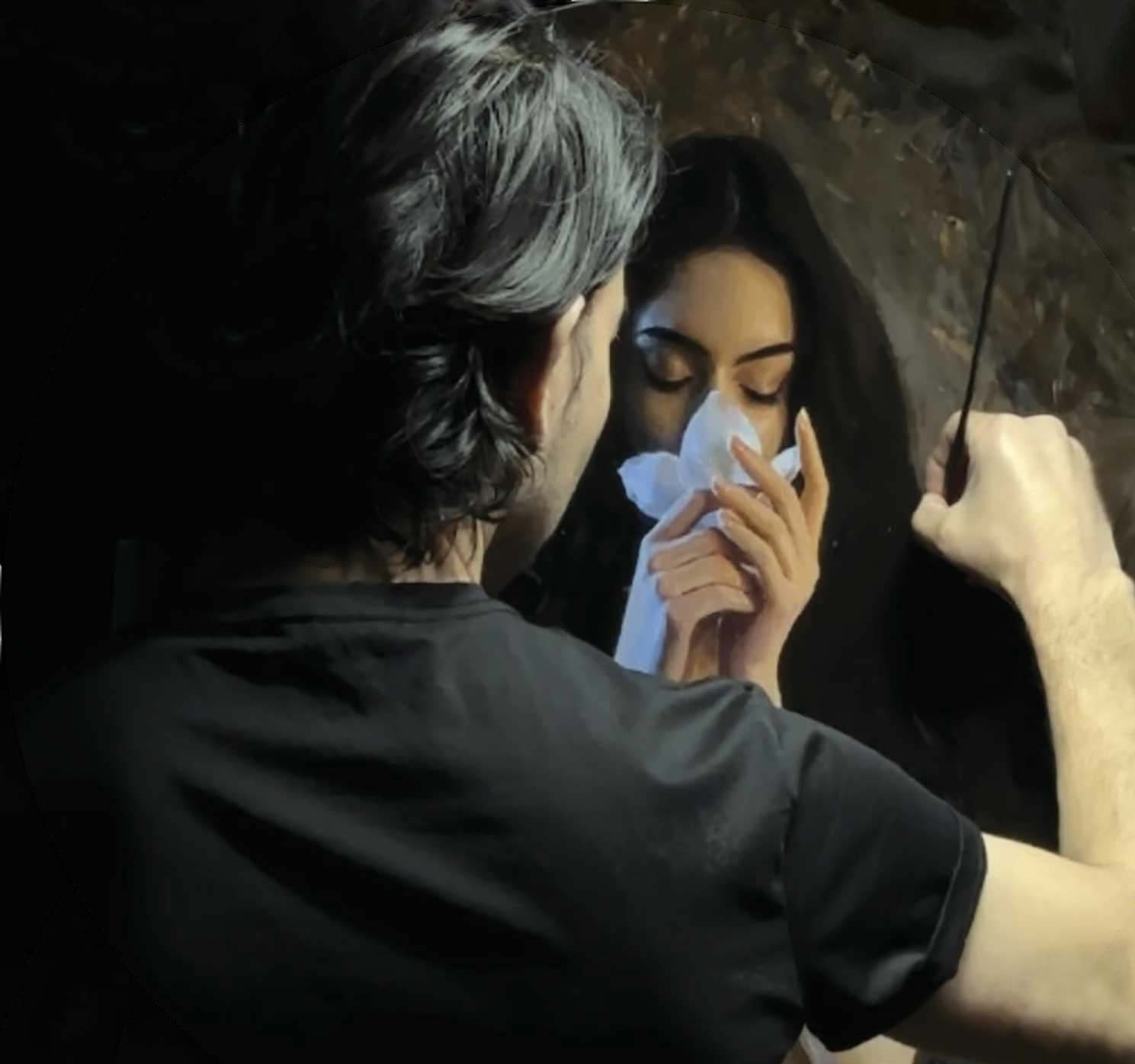
Bunyod Suvonov is a self-taught fine artist and portrait painter from Tashkent, Uzbekistan. After graduating from college studying information technology, he decided to devote himself to creativity. Although he had no basic training in painting, he considers himself a devotee of traditional art. In the early period of his creativity, he was actively interested in the period of impressionism. He copied a lot of works by such masters as Pierre-Auguste Renoir, Claude Monet, Édouard Manet and Edgar Degas, but later he became more interested in portraiture because of John Singer Sargent. Like many portrait artists who specialize in traditional painting, Suvonov considers Sargent his idol. Today, he has developed his own unique method where viewers can see the technique of expressionism from the impressionists based on the traditional and academic school of the Old Masters.
Contact at
www.suvonov.com