The Portrait Society of America is thrilled to celebrate another exciting year of portraiture during our 26th annual The Art of the Portrait conference to be held in Atlanta, Georgia, from April 25 to 28. Our program this year features many new and returning faculty artists who will participate in crowd favorite events, such as the opening night Face-Off demonstration, Portfolio Critique sessions, Open Drawing Studios and the 6x9 Mystery Art Sale. Over the weekend, the top 20 finalists of The International, the world’s premier portrait competition, will exhibit their outstanding works in hopes of winning the Draper Grand Prize and a cash award of $50,000. In preparation for our grand event, I had a chance to sit down and talk with a few of our new and returning faculty artists to discuss a range of subjects from mentoring and moving beyond technique to overcoming the most challenging obstacles. In this issue, we will hear from renowned artists Anna Rose Bain, John Coleman, Grace DeVito, Sharon Sprung, Jamie Coreth and Thomas Caleb Goggans.
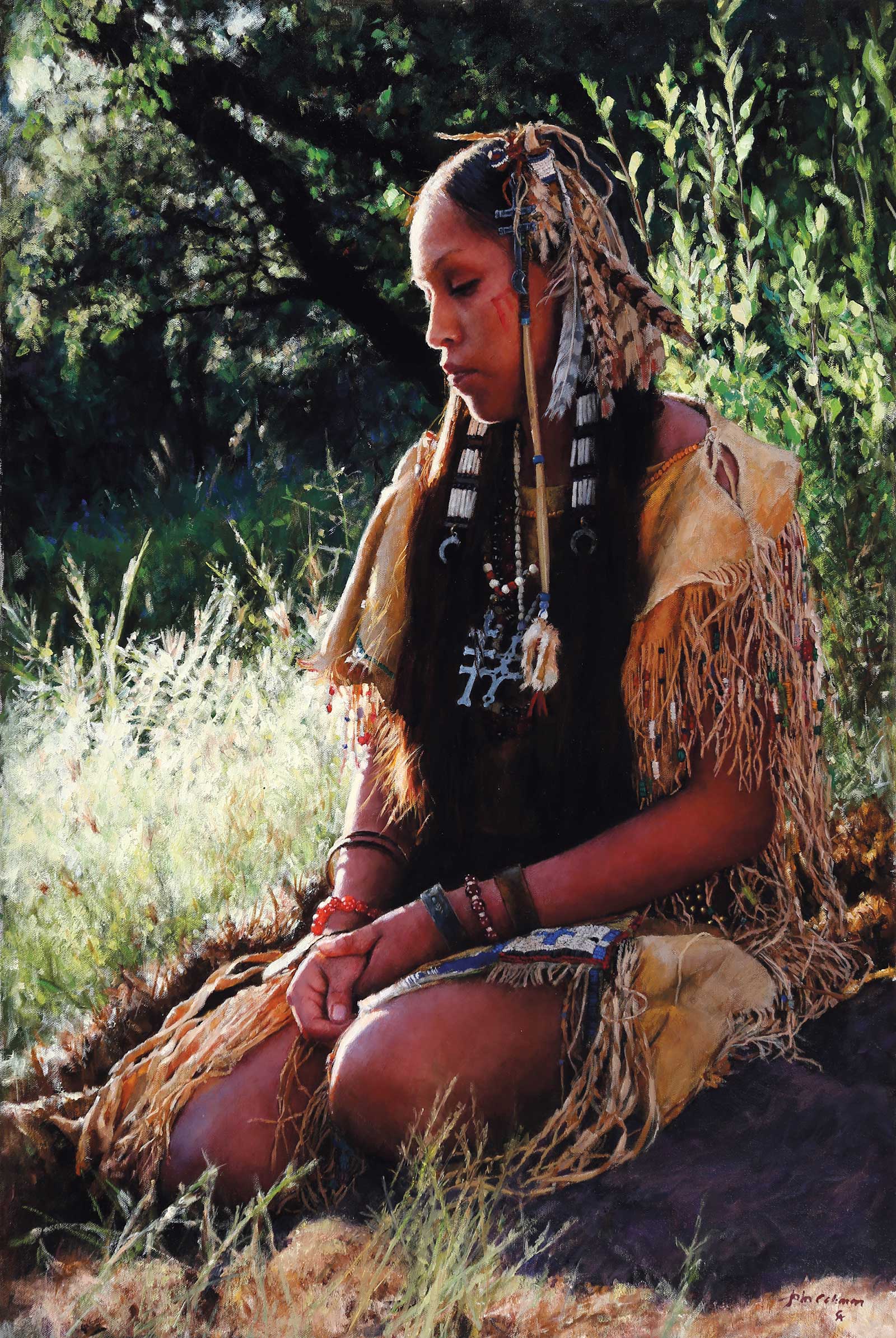
John Coleman, Magic Hour, oil on canvas, 37 x 25" (93 x 63 cm)
Mentoring can be a critical step in an artist’s journey. “Without a doubt, the most significant mentor I’ve had throughout my career is my father, Mark,” says Coreth. “He is a wildlife sculptor, and my childhood memories are replete with time spent in his studio, watching him work and proudly accompanying him to his exhibitions.” While his father, Mark, works in a different medium, his way of thinking creatively has had a huge impact on Coreth. “His work comes from a place of feeling, rather than technique,” Coreth explains. “So, he likes to watch animals in their wild environment in order to get a sense of how an animal acts when it is in nature. The result is that his work has a sense of potential energy, and it gives his sculptures life. So, too, I have always attempted to let a sitter prompt the creative decisions I make by quietly spending time with them.” Some of the most valuable advice Coreth’s father gave him is to always adopt a positive persona in the studio. “Speak with excitement and enthusiasm to yourself, rather than with negativity. Harsh self-talk, and an inner voice which imagines poor results, will grind away at the fundamental joy which creativity can offer you. A positive internal language will help keep your mind open to creative opportunities and will drive you forward in your practice, whether you are motivated in the moment or not.”
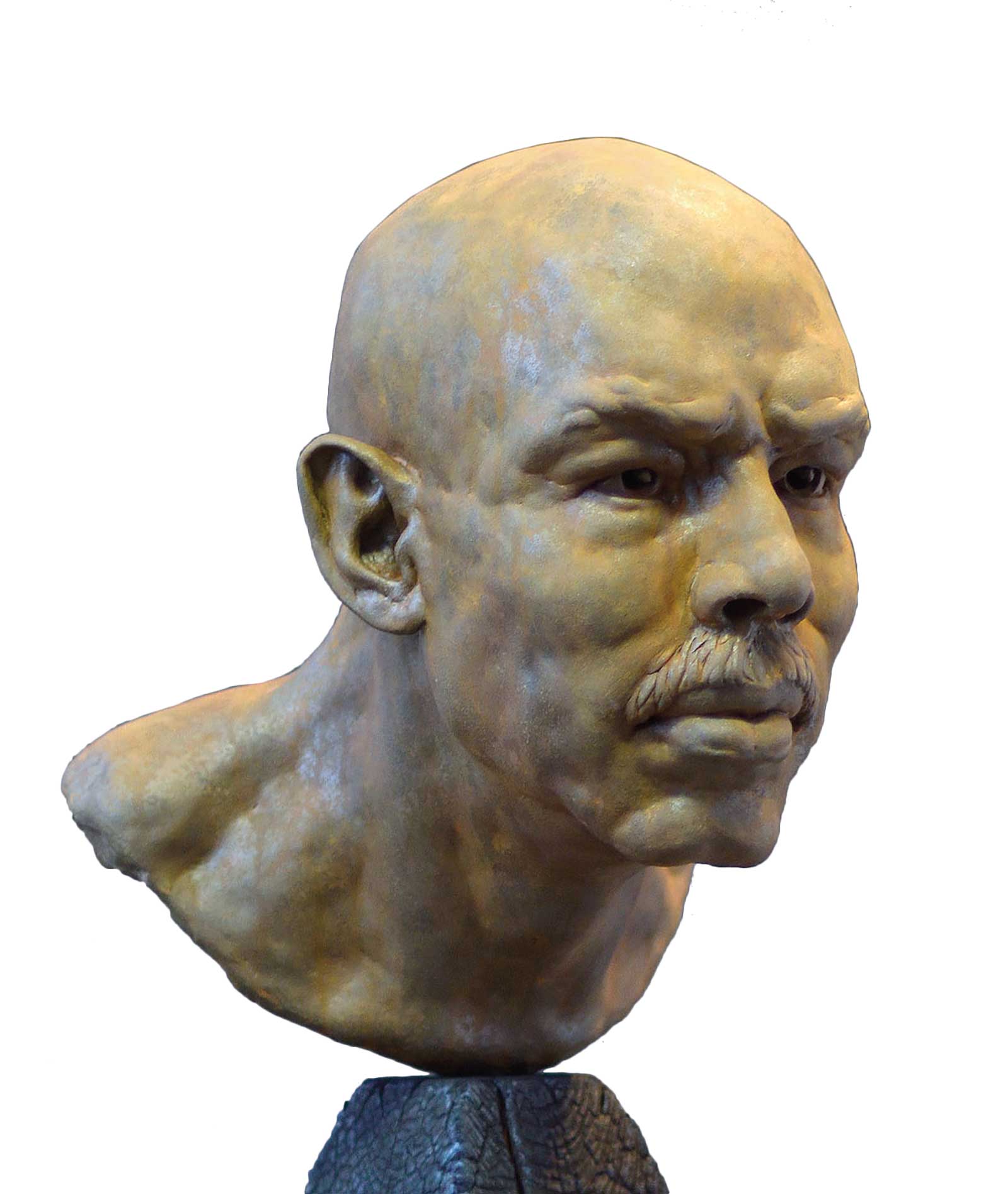
Thomas Caleb Goggans, The Buffalo Soldier, resin and wood, 22 x 11 x 12" (55 x 27 x 30 cm)
Goggans has had many mentors throughout his career, including Gordon Wetmore, Bart Lindstrom and Edward Jonas. “Gordon Wetmore had the most significant role as a mentor to me, and I can’t begin to calculate how much I gained from that relationship,” says Goggans. “It had a huge impact on what I valued as an artist, the type of work I wanted to make, and what I wanted my career to look like. I think one of the most significant things it gave me was the knowledge and surety that you can make a truly successful and financially rewarding career as a fine artist.” Goggans recalls being 13 years old and floored at seeing photos of Gordon in the White House with the president of the United States, with the Royal Family of Monaco and from his travels around the world. “He imparted so much knowledge, confidence and carved paths to countless opportunities,” says Goggans. “When I was a teenager, Gordon told me many times, ‘The world is your oyster!’ which was his way of telling me he believed in me—that I could achieve whatever I wanted as an artist. At the time, I didn’t really understand or appreciate what he meant. Later in his life he expressed sadness and regret that he didn’t make more time in his career to paint many of the things that meant the most to him. I know now that he was trying to tell me I could, and should, build my career around what mattered most to me, to set out with that clear-eyed focus, and to start today.”
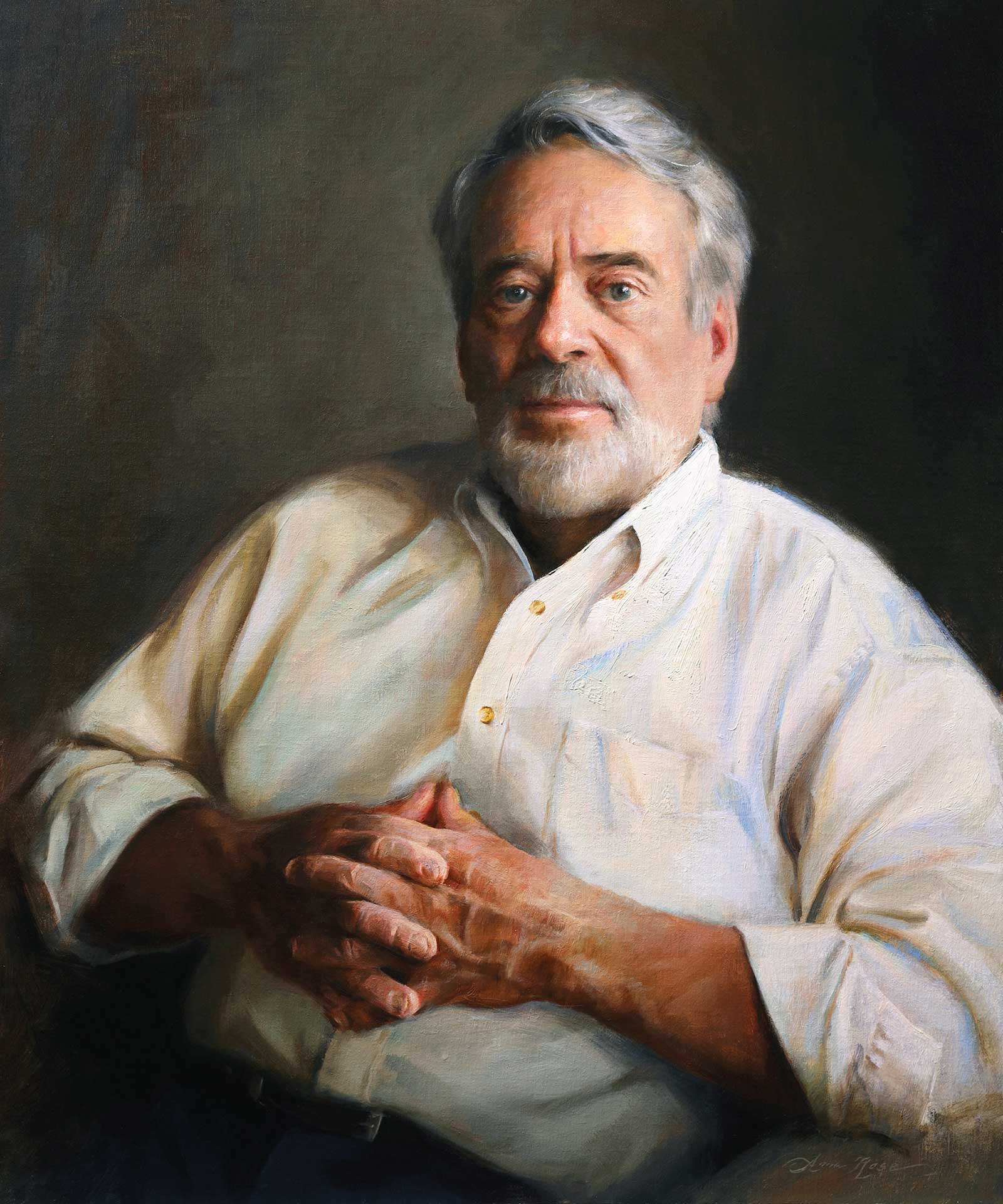
Anna Rose Bain, Portrait of John Parker, oil on linen panel, 24 x 20" (60 x 50 cm)
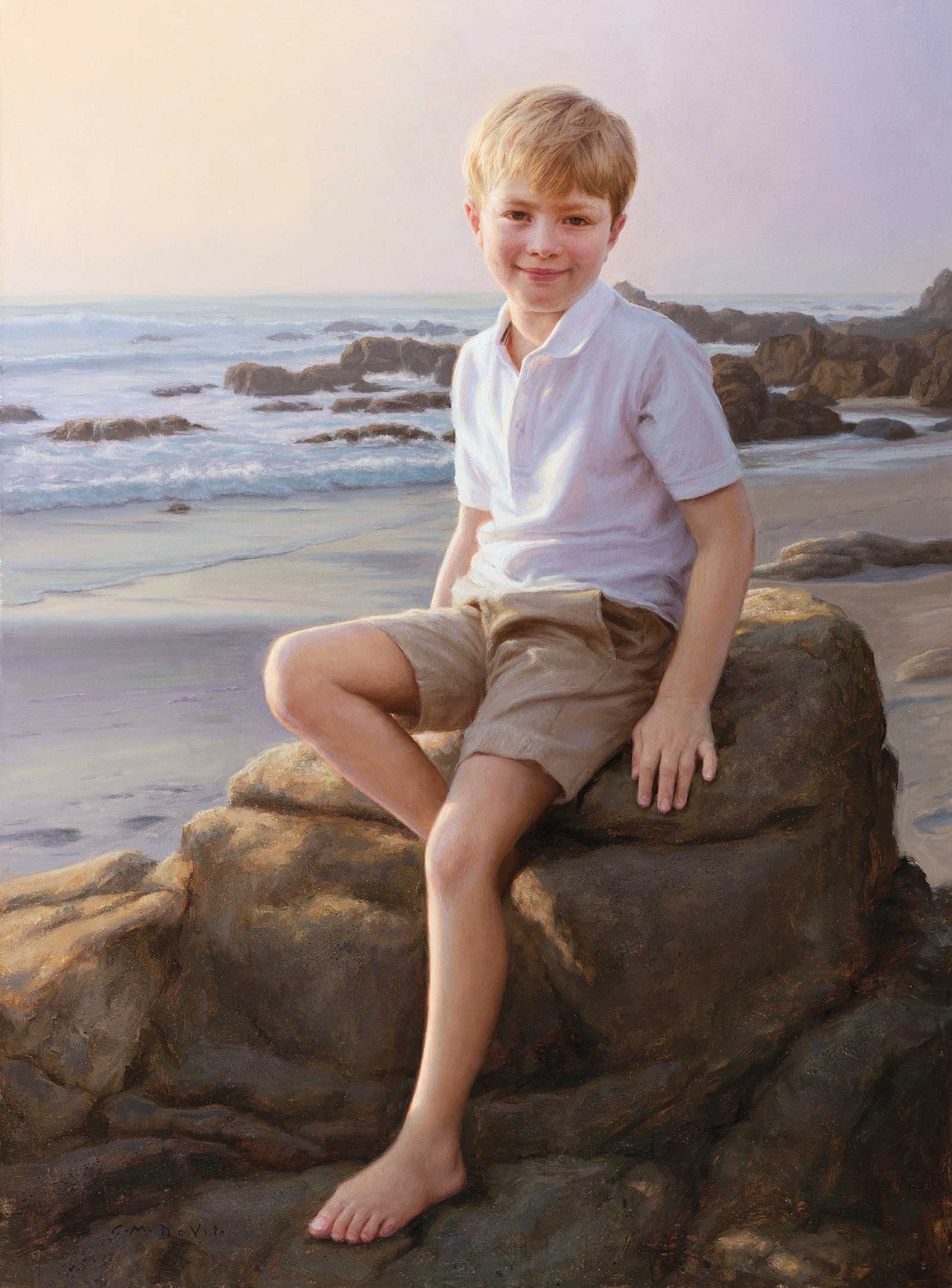
Grace DeVito, August, oil on canvas, 40 x 30" (101 x 76 cm)
Obstacles are something every artist, from beginners to masters, must learn to overcome. “For me the most challenging thing when creating a commissioned portrait is getting a good design from the setting that is available to me for the sitting,” says DeVito. “When I arrive, I will scout out the best possible locations for a background that also has good lighting. Sometimes the setting isn’t optimal, and other areas need to be explored. I feel that if I can get the design of the lighting and value patterns right from the start, it will make things easier later in the process.”
DeVito admits to making mistakes early in her career, for example, showing too many of the reference photos to the client during the initial sitting. “This created a situation of too many choices and a ‘mix and match’ situation would happen,” she explains. “Then I didn’t have the confidence to say ‘no’ that a particular image wouldn’t work out best. As I did more commissions my confidence grew, and I made the decision not to show the photos to the client until I had a chance to go over them all and cull them down to the very best ones. This gives the client a choice, but only of photos that I would like to work from as well.” Working with clients can present many obstacles for an artist to overcome. “Usually, a client will have a favorite portrait of mine from my portfolio,” DeVito says. “This gives me an idea of what they are looking for. Then the goals of the commission are discussed, and I make sure I reach them. They have chosen me for a reason, so I use my judgement on the design and hope they will agree. I always give choices and I’m open to suggestions as I think portrait commissions are a collaborative venture.”
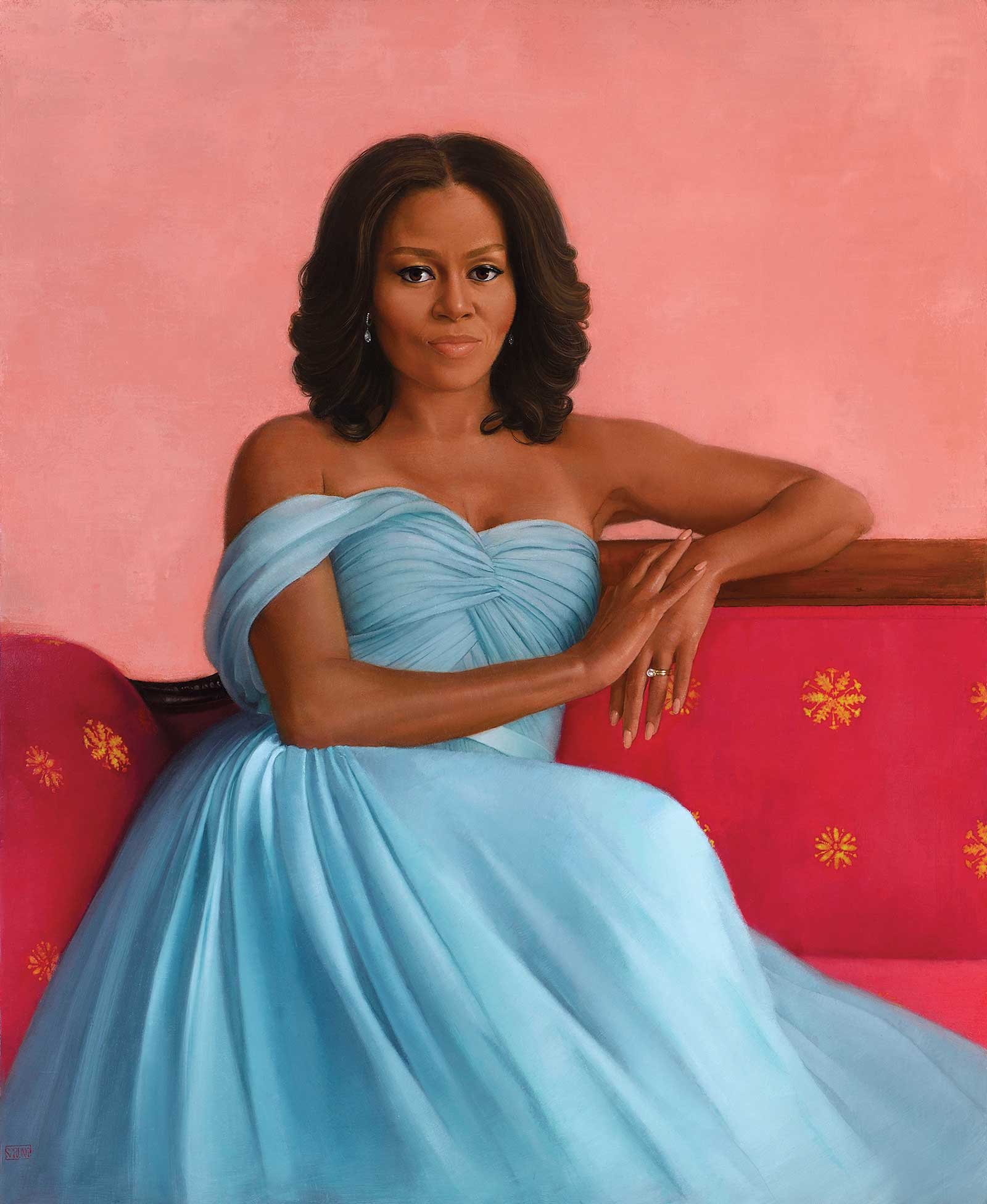
Sharon Sprung, Michelle Obama, Former First Lady of the United States, oil on panel, 44x36". White House Historical Assoc./White House Collection.
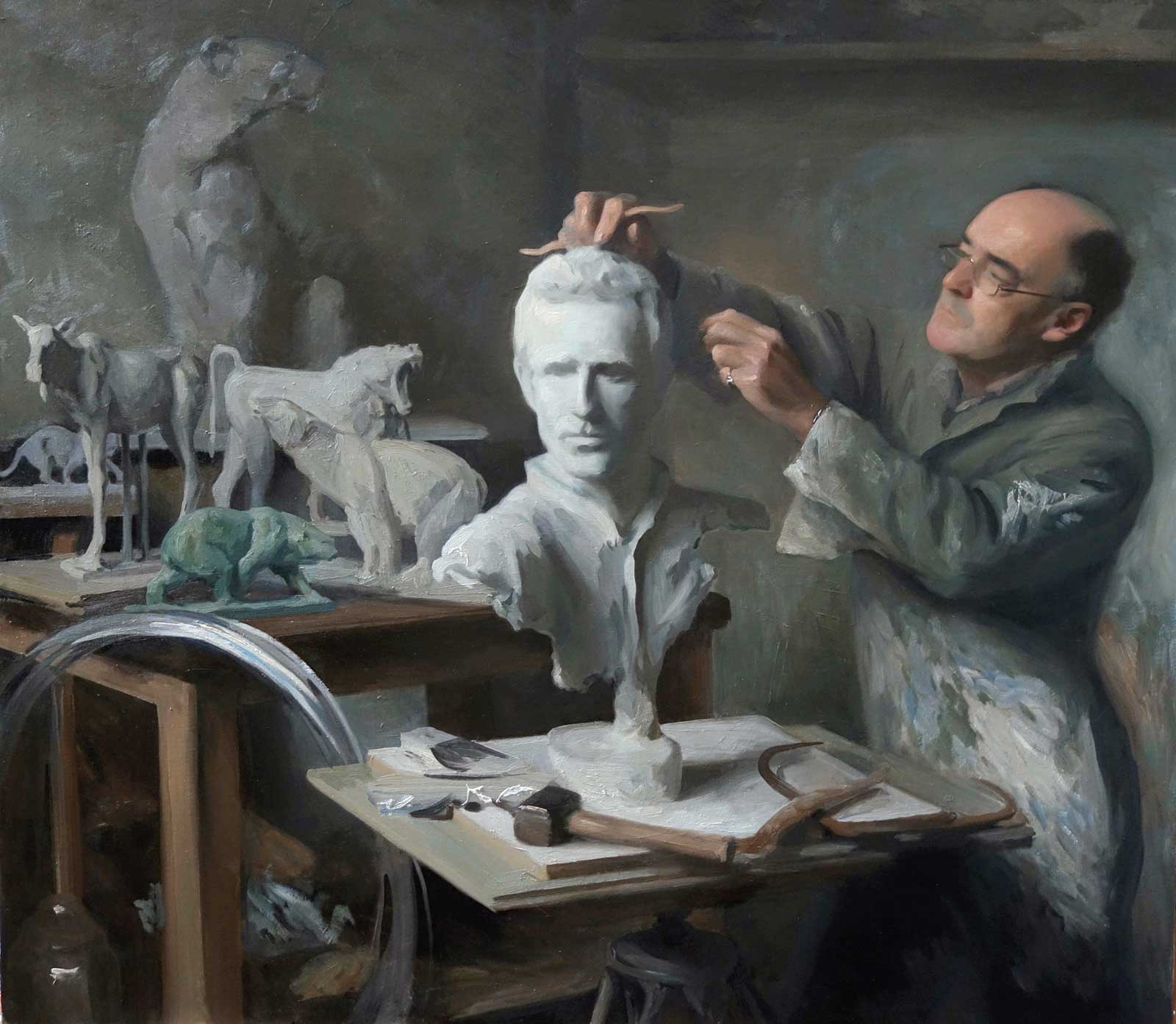
Jamie Coreth, Dad Sculpting Me, 2016, oil on linen, 41 x 47" (104 x 119 cm)
When facing her own obstacles, Sprung admits there are many. “The list would include arranging a pose that is expressive and reflective of the client, getting a sense of a person so they are comfortable working with you, and quietly observing them,” she says. “I came to portrait painting after I established myself as a figurative contemporary painter. People started approaching me based on that work to paint their portrait. I was not a traditional portrait painter because of my less conventional style. I enjoy that reputation.” When asked about how she finds a balance with a client’s preconceived expectations and her own vision for a work, Sprung explains, “I try to have many conversations with the client, and now my portraits also attract clients who are looking for something different.”
Moving beyond technique to capture a sitter’s emotions and inner life is constantly a goal for portrait artists. As Coleman explains, “Art is a vocabulary to inform the viewer what is behind the physical structure, where the emotions of life reside.” However, moving from simply rendering what you see to incorporating more of a story is a tricky task. “I usually start with the story first and develop clarity for the emotions that I want to convey next. The better the rendering, the easier these emotions can be conveyed. That being said, I have experienced examples where accuracy for accuracy’s sake can get in the way of a good story. The metaphor or story is always first in my mind,” says Coleman. “As a child, I started off drawing people, then I started to learn how to communicate what these drawings of people might be thinking. Since then, I have become fascinated with inflection and gesture that communicate different emotions.”
For Bain, her own emotions play an important role in her process. “I’m always aware of my own emotional response to a painting as I’m creating it,” says Bain, who prefers to paint close family and friends in her studio. “Sometimes the emotional content is planned, but other times there is an unconscious level of vulnerability and emotion that comes through. I think the latter is more authentic because it is entirely uncontrived and flows from a deeper, more metaphysical creative state.” Bain admits that learning to switch focus from technique to narrative or poetry is a long journey of discovery. “For years, I focused almost entirely on technique and what oil paint is capable of,” says Bain, “until it reached a point where I had to grant myself ‘permission’ to move beyond the elements of the language and learn to create poetry or a story with them. Actually, I needed to be told by a friend. Once I believed for myself that my technique was actually pretty good, I felt courageous enough to venture out onto more experimental turf, and I’m having so much fun with this newfound freedom.”
Look out for more words of wisdom from our 2024 The Art of the Portrait Faculty in the following issue. For information on registering for the conference or submitting your work to The International, visit www.portraitsociety.org. —