


We have access to hundreds of pigments that the Old Masters did not have access to. However, not all pigments are created equally. Even two identical pigments to the eye have a lot more going on than we think.
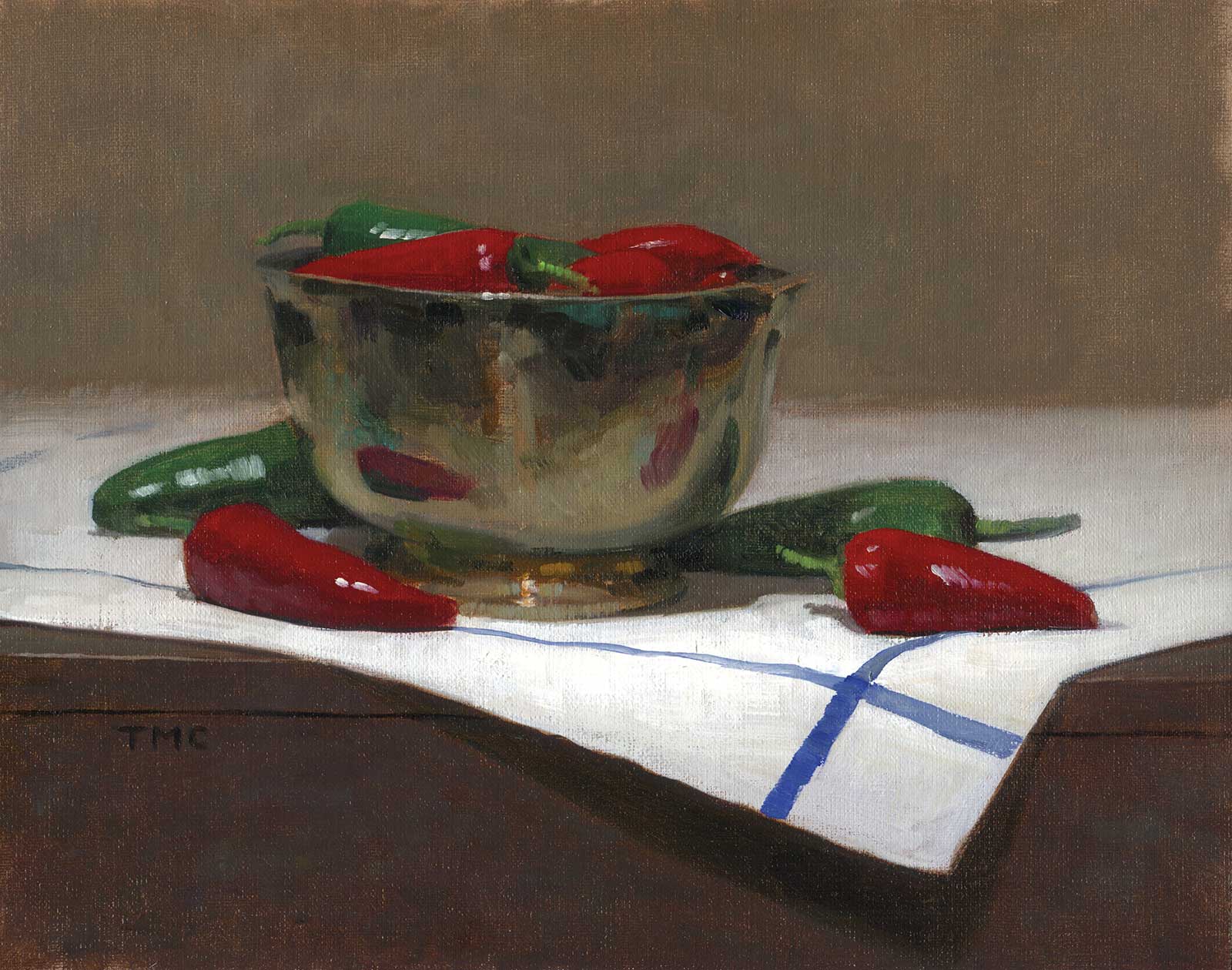
This painting is done with almost entirely mineral pigments, which is what I prefer to work with. They tend to be semi-opaque and opaque and have excellent lightfastness.
Pigments come from many different sources, and some have rich histories. The earliest pigments—ochres, umbers and siennas—are natural iron oxides mined from the earth. These colors remain some of the most permanent we have. Human beings have also derived pigments from animals, including crimson, purple lake and carmine (all from insects), as well as sepia (from cuttlefish ink). From the vegetable world, we’ve derived indigo, gamboge and madders. As new pigments are discovered or developed in laboratories, the range of colors we can access has become broader and broader.
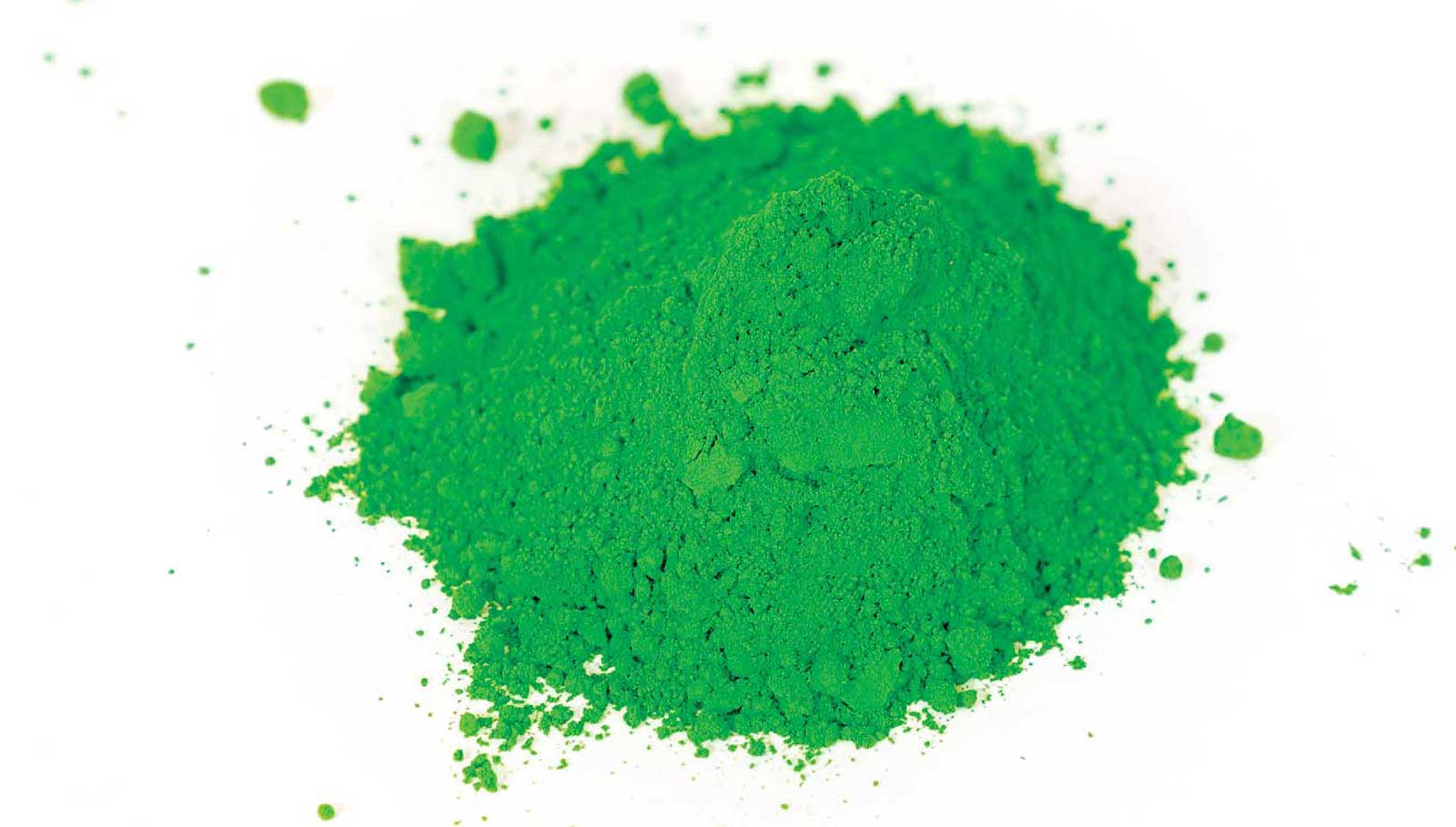
This is a convenience mixture commonly known as cadmium green in pigment form. There is no high chroma/intense single mineral pigment, but you can get a high chroma yellow/green when you mix viridian with cadmium green light.
Organic (Modern) and Inorganic (Mineral)
Pigments can be broken down into two basic families: inorganic and organic. In this context, the word organic has nothing to do with purity or sustainability (as in organic food); it simply means that the pigment has been created by organic chemistry. In general, inorganic colors, derived from mineral sources, are more traditional, and organic colors are more modern.
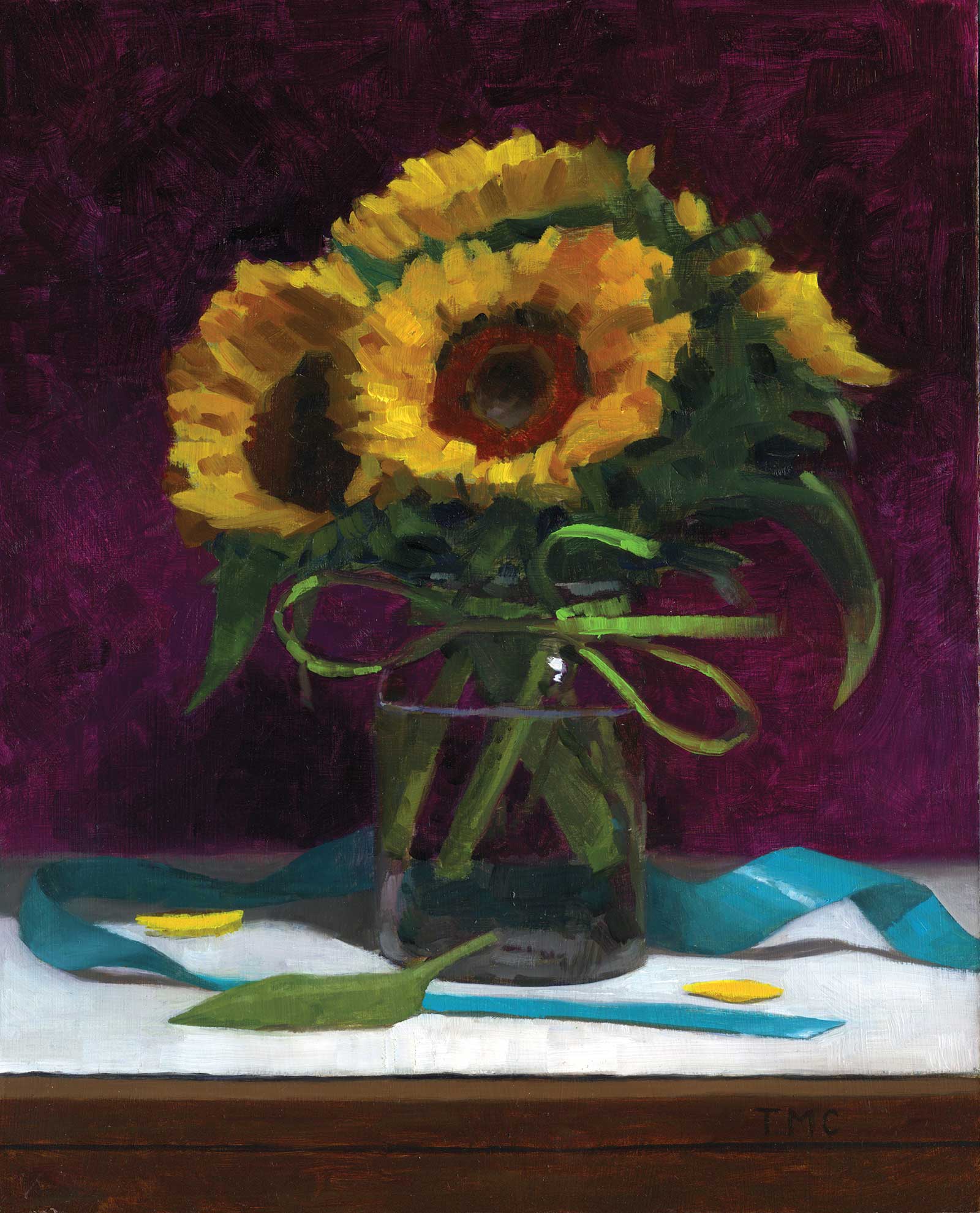
This painting uses cadmium green (PG18/PY37) to get the high chroma/intense green on the ribbon. The background is created with the use of quinacridone magenta (PR122).
Inorganic Pigments
Inorganic pigments are made of natural minerals/ores pulled from the earth and from metals such as titanium or cadmium and are sometimes refined from minerals or derived from controlled chemical reactions. Many of these colors are heated in a furnace at a high temperature, which can alter/deepen the color. Inorganic pigments can be broken into three groups: earth, mineral and synthetic colors.
Earth Pigments
Earth pigments generally refer to natural minerals containing metal, such as iron and manganese oxides. These are generally brown colors—ochre, sienna and umber—belonging to the hue families of yellow, orange, red and sometimes violet. Known for drying fast, they have been used in paintings since the Renaissance. These colors can be deepened by heating or burning them in a furnace, which is the case with burnt umber (made by burning raw umber) and burnt sienna (made by burning raw sienna). Both of these colors have the same color identification number (CIN) of PBr7, but one is raw (raw umber) and the other cooked (burnt umber). Iron oxides all share the same color index number. These colors can also vary in hue depending on where the ore they’re made from was mined. Mars colors tend to be more consistent in color because they are controlled (synthetic).
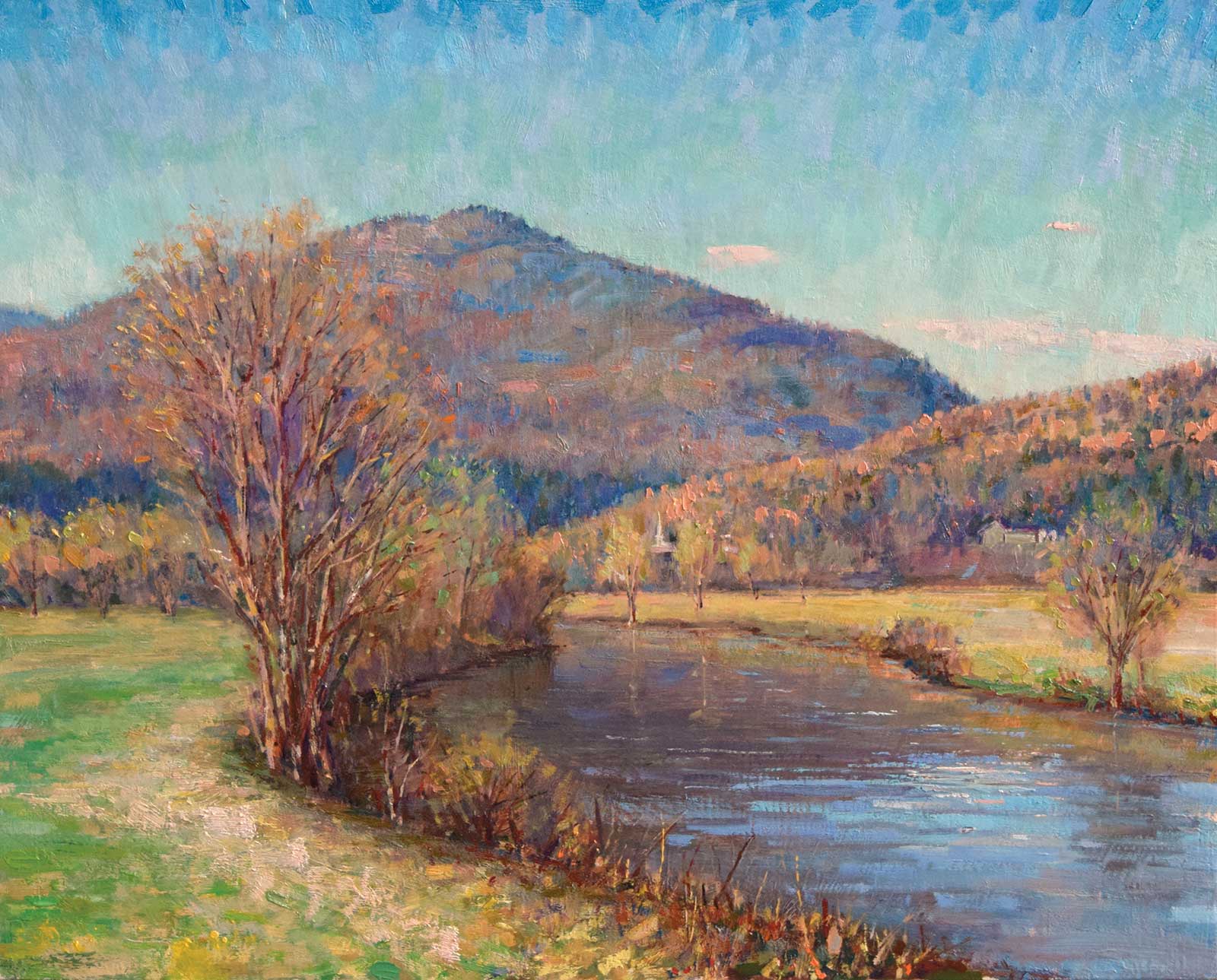
Leo Mancini-Hresko, Changing Seasons, 16 x 20" (40 x 50 cm). Prussian blue is thought to be the first synthetic pigment and is still used today, as can be seen in the sky of this painting.
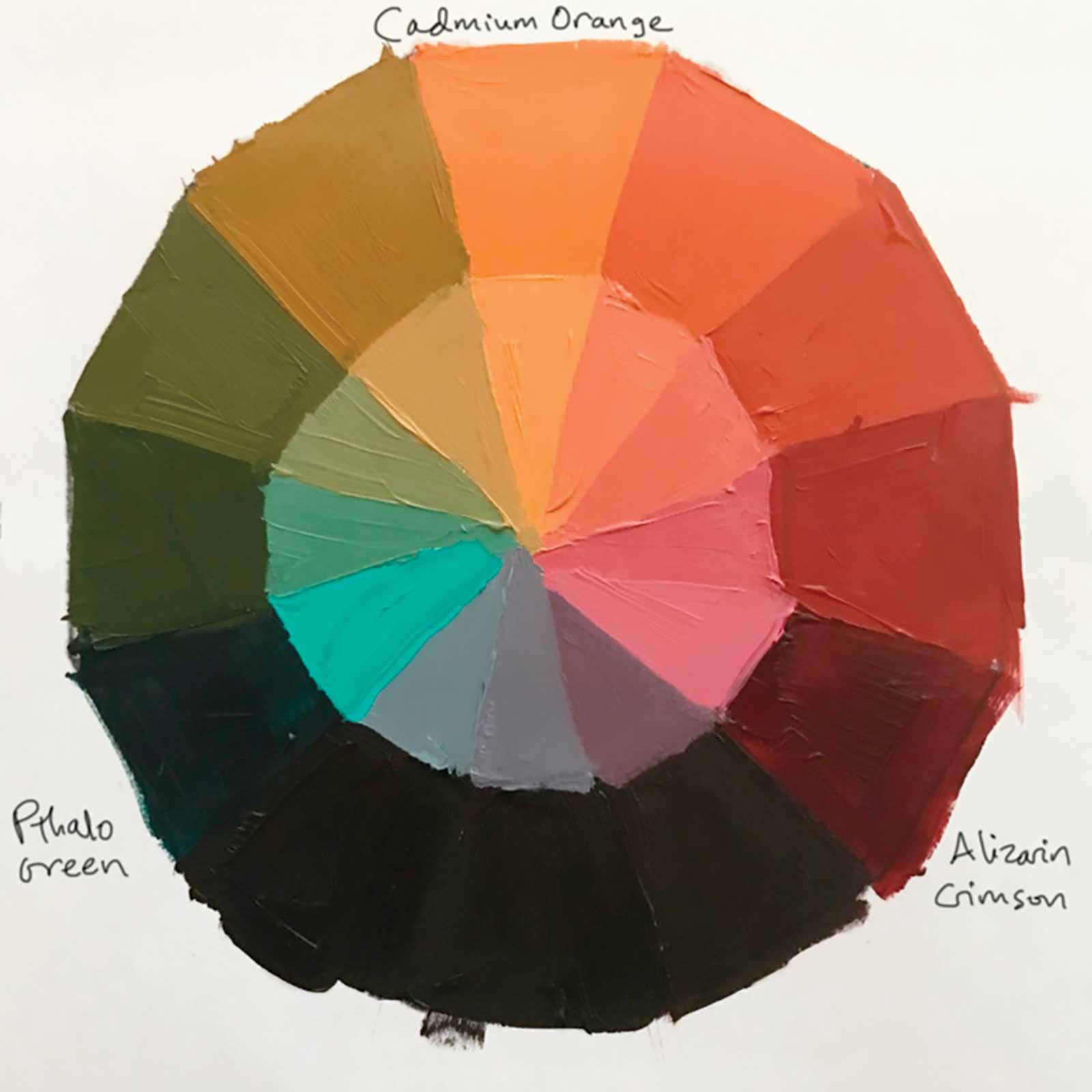
Some artists, like Sarah Sedwick, love to use limited palettes to create a painting. With organic pigments you’ll get a larger range of secondary and tertiary colors. This image shows the gamut she can get with just phthalo green (organic), cadmium orange (inorganic), alizarin crimson (organic) and titanium white (inorganic), which is what she used to create the painting Halved Plums.
Mineral Pigments
Mineral pigments are, as the name states, made from minerals, including manganese, chromium, cobalt, titanium and cadmium. These are often referred to as industrially made pigments because they were first manufactured in factories during the industrial revolution in Europe. These heavy pigments are the highest-chroma inorganic colors. They are opaque because their pigment particle size is large, but they have a lower tinting strength than organic pigments.
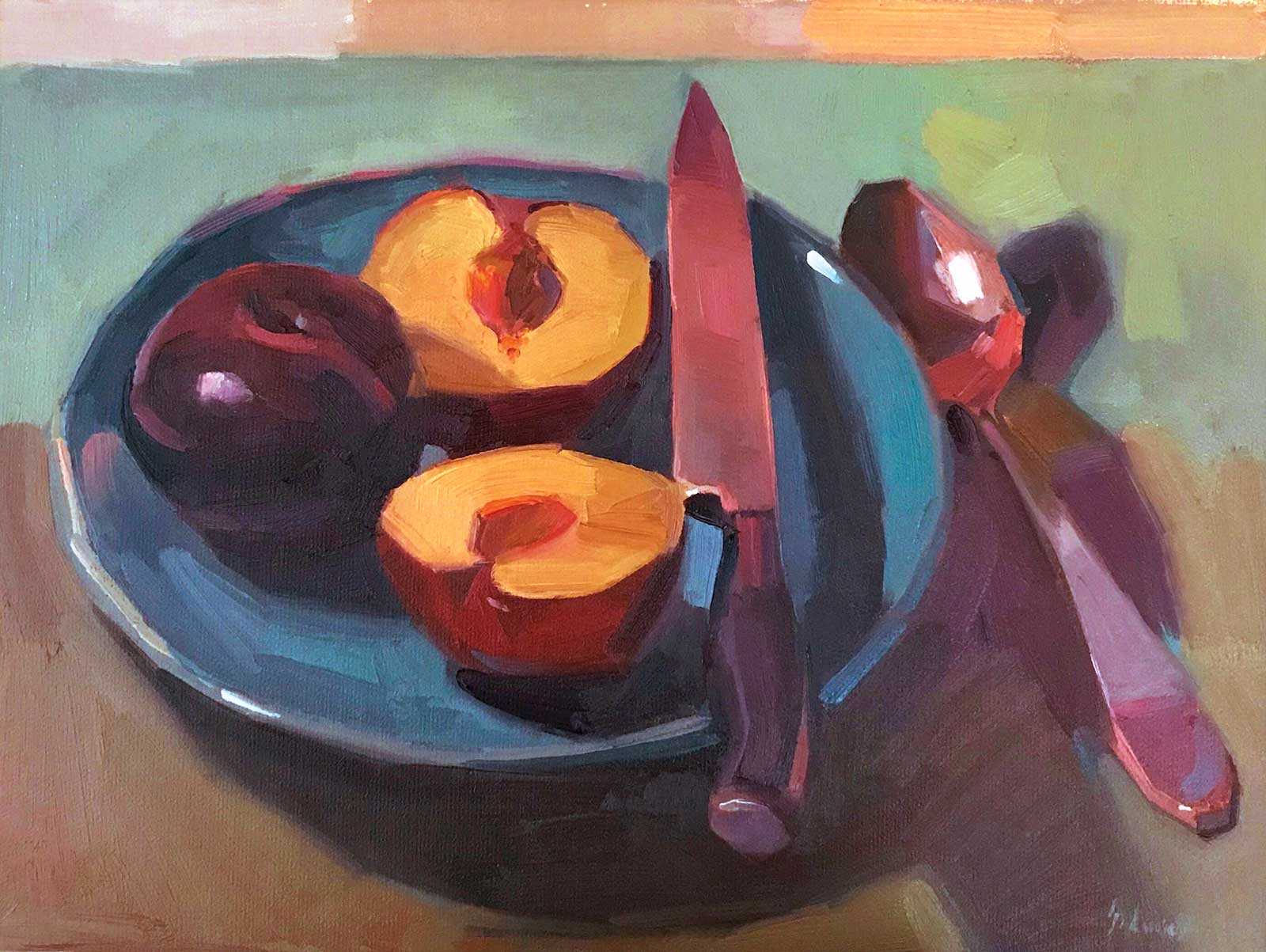
Sarah Sedwick, Halved Plums, oil on canvas, 9 x 12" (22 x 30 cm)
Synthetic Inorganic Pigments
In the 18th century, some of the synthetic colors came into production that rivaled the traditional earth colors named after Mars. Some of the impurities in naturally occurring pigments can make the Mars colors fugitive or expensive or both, so synthetic versions were developed. These newer colors start off as opaque, but when they are hydrated, they become transparent. Nearly identical to the older earth colors in many ways, these new colors are less grainy, which makes them a great alternative. They also do not dry to a matte surface (referred to as “sinking in”) but remain glossier than natural iron oxides. Ultramarine blue (PB29) and Prussian blue (PB27) are also synthetic inorganic pigments.
Organic (Modern) Pigments
Born in the 19th century, organic chemistry utterly changed the dye and paint industries. Organic pigments are laboratory-created compounds based on carbons and hydrocarbons. They have high tinting strength (i.e., they gain in chroma when mixed with titanium white) and are typically glossy when dry. They are either transparent or semi-transparent and can react unpredictably when mixed with other colors. One primary difference between organic and inorganic pigments is particle size. Inorganic pigments have larger particles and therefore are less “thirsty.” Because they need so little oil, they are described as “lean.” Organic pigments, which have smaller particles and require a lot of oil, are referred to as “fat.” The more oil in a tube of paint, the lighter in weight the tube is. Lean oil paints are paradoxically heavier because they have less oil.
Organic Doesn’t Mean Healthy
Don’t be misled by the term “organic” when referring to a category of pigments. It doesn’t mean “healthy” and has nothing to do with food or naturalness. In fact, organic colors are generally the products of laboratories. Because of the confusion the term may cause, I usually refer to organic colors as “modern” and inorganic colors as “mineral.”
Always keep in mind that two identical pigments can act differently when mixing depending on so many factors. Also remember that modern/organic pigments tend to mix higher intense/chromatic mixtures than mineral/inorganic pigments. This is due to the particle size being larger for mineral pigments, and they are mostly semi-opaque to opaque. Organic pigments tend to be smaller in particle size and transparent, which affects how they’re mixed.
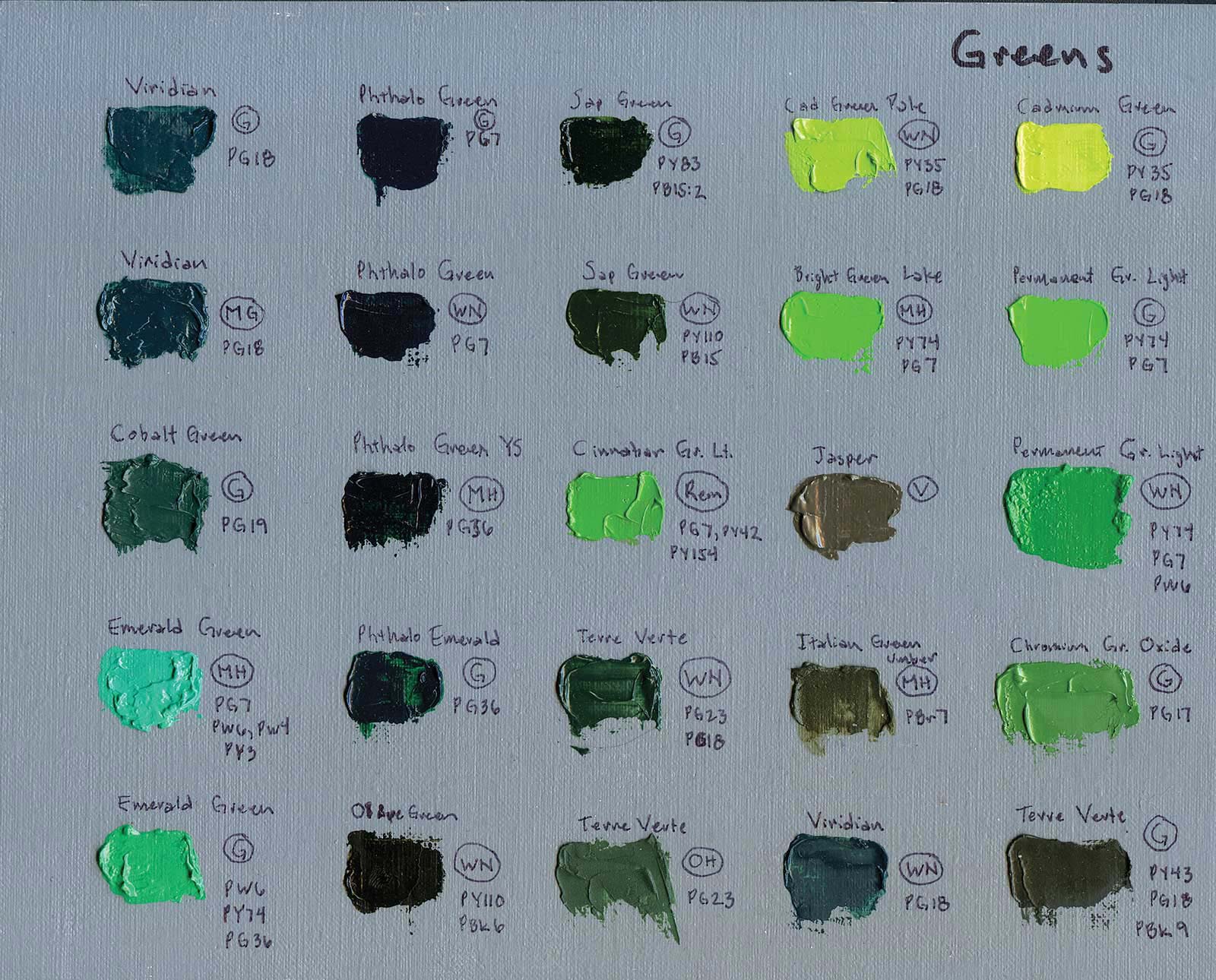
This is a pigment file for the green pigments I own. This comes in handy if I need a color that my palette can’t hit.
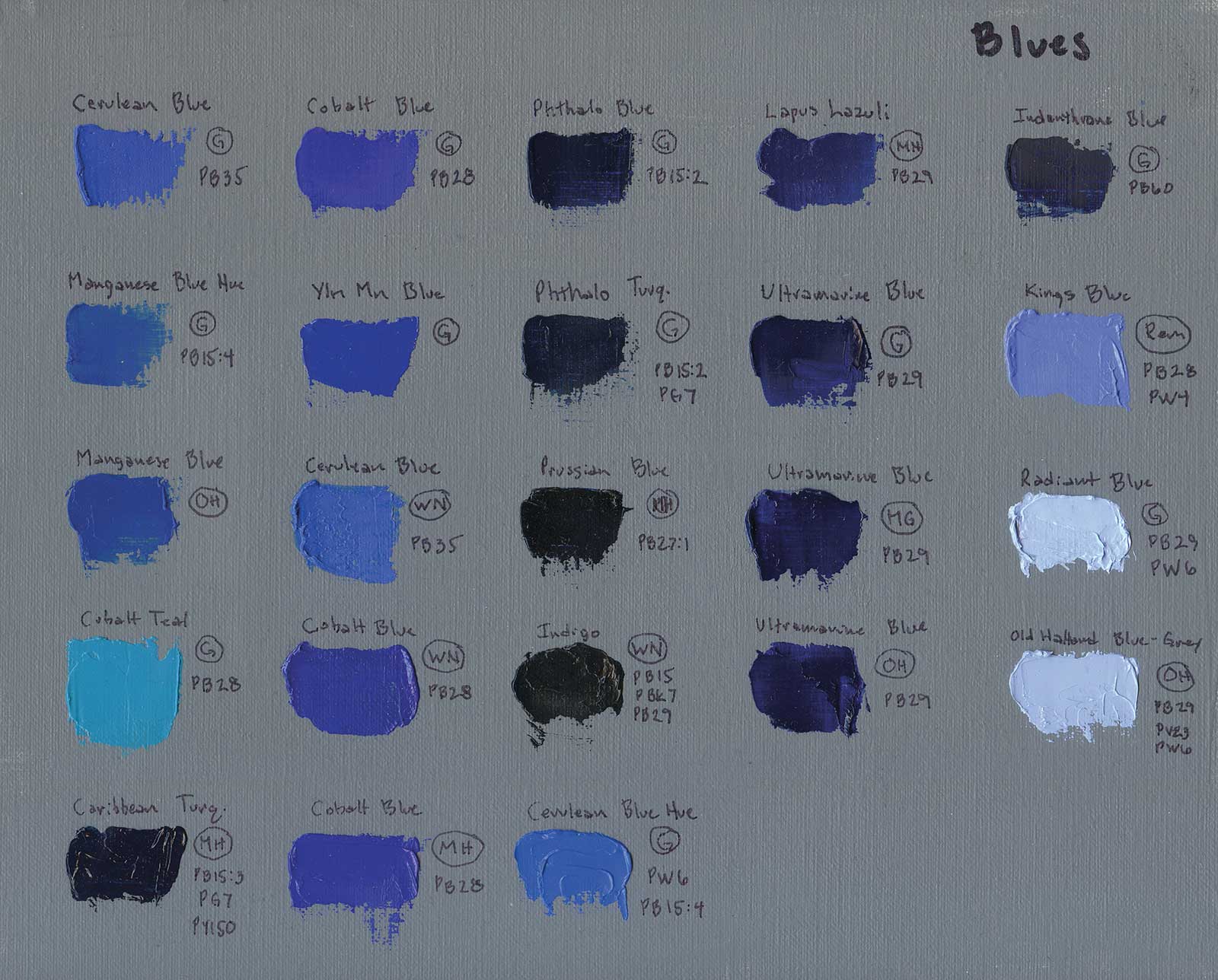
This is a pigment file for the blue pigments I own.
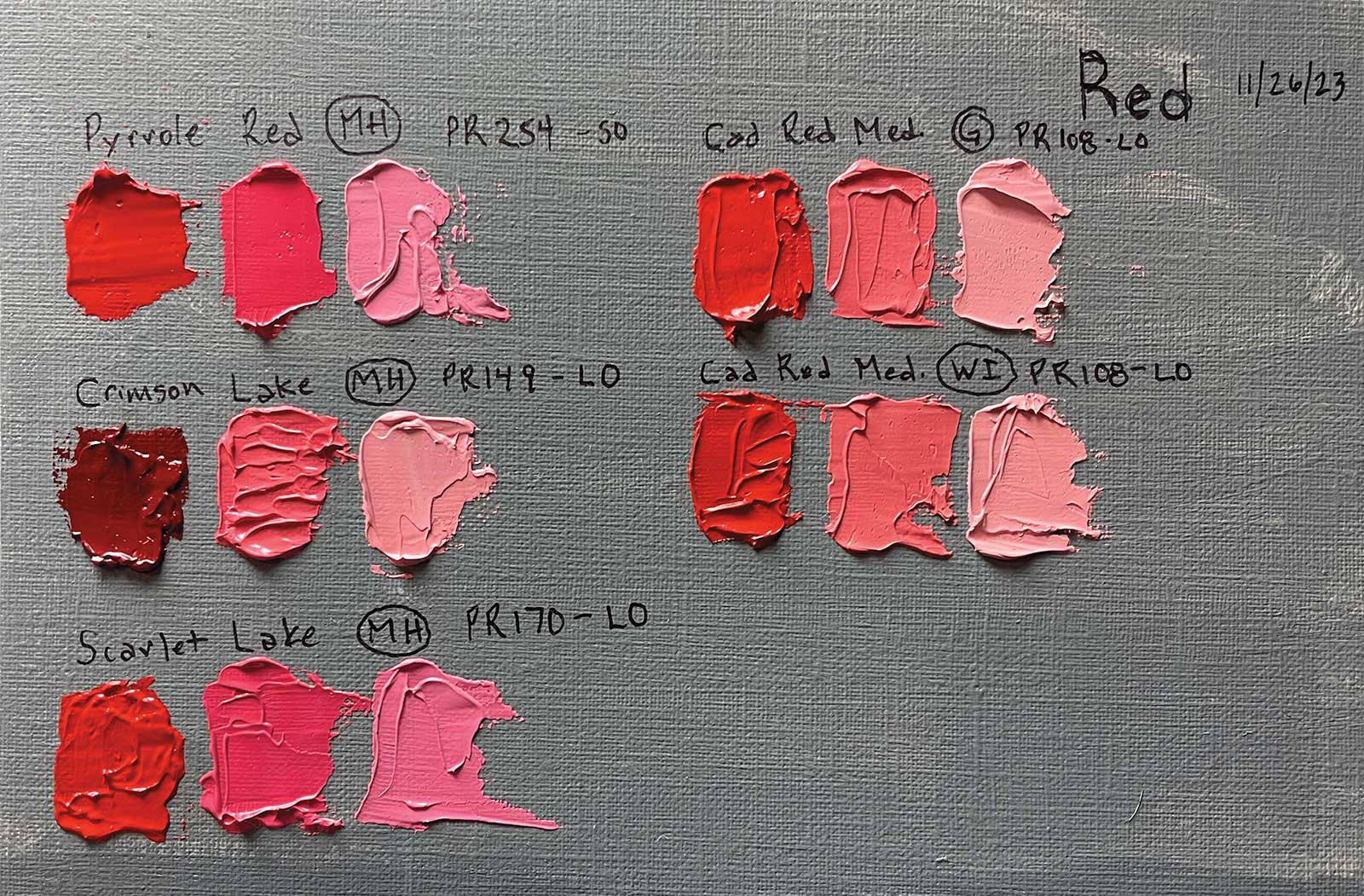
Notice how pyrrole red, cadmium red medium and scarlet red all look nearly identical but mix differently with titanium white.
Some Helpful Exercises
A great way to keep track of your tube colors is to create swatch charts. All brands of paint are slightly different, even when they share a CIN. Seeing them on a board alongside other colors from their hue family will help you to remember what they look like and to associate them to one another. You can make notes about the colors’ brands, marketing names and CINs directly on the charts—or take it a step further and note other properties of the colors, like opacity/transparency, mass tone and lightfastness, too. You’ll find yourself referring back to these charts often as you work on future projects.
To make a chart, begin by gessoing a wood panel or illustration board with gray gesso or primer (two coats) and let it dry overnight. Use the marketing name or CIN on each paint tube to identify which hue family a color belongs to. With your palette knife, apply the color thickly to the board. Label each color with its marketing name, the manufacturer’s name or initials and its CIN. Let the paint swatches dry for a week or more. When you buy new paint colors, add them to the boards to see how they relate to other colors.
Another good way to test your pigments is to do a tinting strength test. This can be done with a board and a white pigment. Take some white paint (titanium, lead or zinc) and do three swatches. Swatch the color out of the tube (masstone) and the next two with increased amounts of white, referred to as tinting. This will show if the color increases in chroma/intensity as white is added. —
About the Artist
 Todd M. Casey
Todd M. Casey’s work touches on more than simplistic realism. There is a haunting, nearly literary quality to each frame—a feeling that subjects are viewed from behind mottled glass, burnished by enigmatic candlelight or brushed by the soft, hazy edges of a half-remembered dream. His work is classically styled but progressive in approach. Every painting has a tale to tell, brewed from a deep well of introspective thought.
His paintings have been honored with awards several times in recent years. Most recently, he won first place four times at the Portrait Society of America’s Members Only Competition and placed first in oil painting from the Allied Artists of America in 2015. His work can be found in collections throughout the United States, and on the East Coast at Rehs Contemporary Gallery, in Midtown New York City, and Simie Maryles Gallery in Provincetown, Massachusetts.
In resulting years, Casey has made the transition from painter to author and teacher. He published his first art book The Art of Still Life in 2020, and his second book The Oil Painters’ Color Handbook came out in August of 2022. His work is also featured in Cocktails: A Still Life, by Christine Sismondo and James Waller, which was released in August 2022. When not painting, writing or illustrating, Casey teaches classes for the Massachusetts College of Art and the Academy of Art University Online, the Art Students League of New York and through private online classes and workshops.
Contact at
www.toddmcasey.com