I love nature because I find peace as well as inspiration in it. Sometimes I also dive into my imagination or sift through faded memories for ideas. Due to busy schedules of work and everyday responsibilities, we often don’t notice the beauty, captivating colors, soothing sounds and gentle smells of our surroundings. That’s why I enjoy sharing my art, and I hope to help others see the beauty of nature and inspire them to explore their own creative abilities.
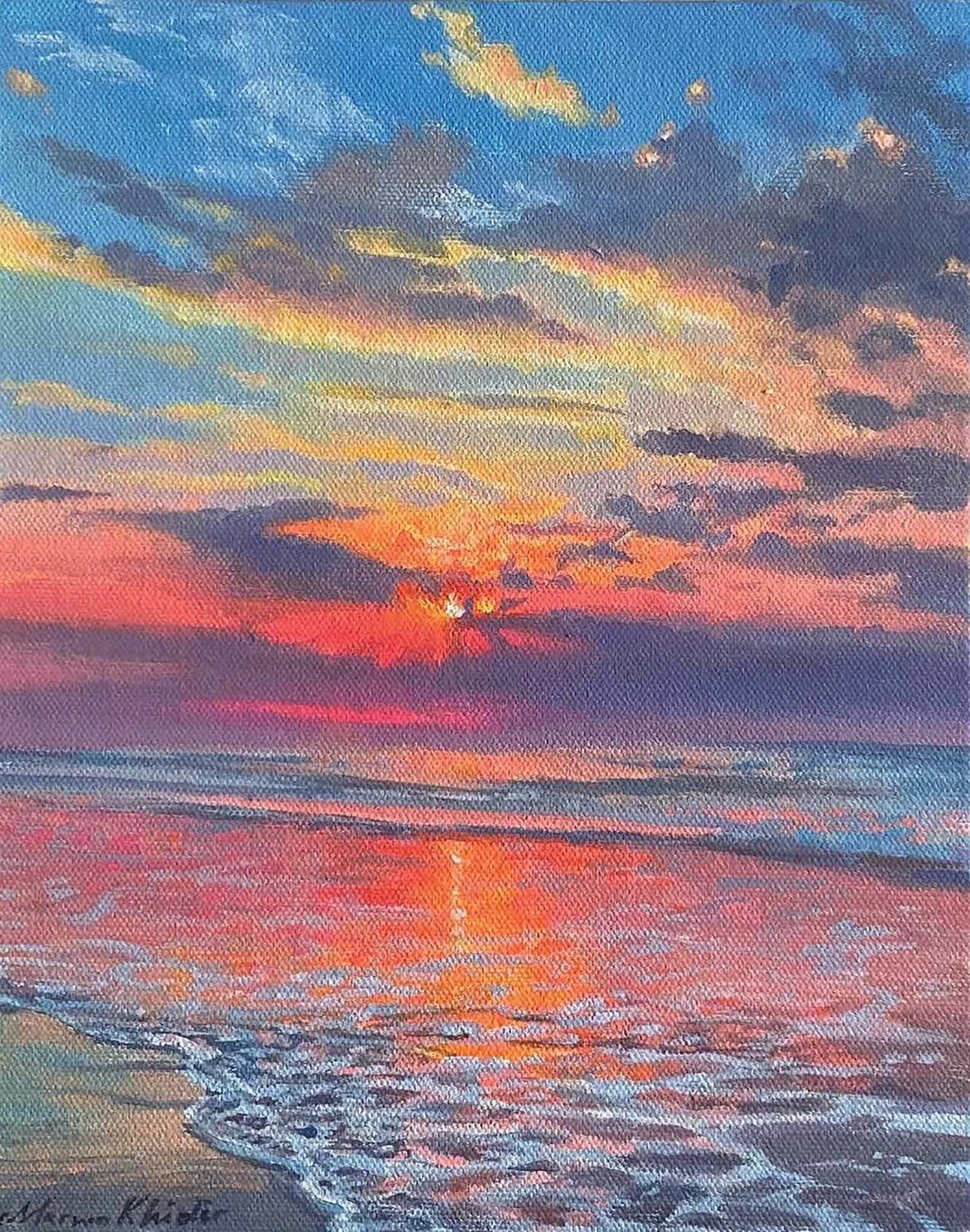
Sunset Catcher, acrylic on canvas panel, 9¾ x 7¾" (25 x 20 cm) This is painted after a photo taken by the photographer Matias Alonso Revelli.
When painting I like to create a calm and almost dreamy ambiance. I usually paint in one sitting, if possible. When I begin a painting, I start with a simple outline of the horizon and a few guiding shapes, allowing the rest of the painting to be guided by my intuition. Hereafter, I block in major shapes and colors before moving on to the finer details. By doing so, I can maintain an overview of the general composition, which gives me the flexibility to create adjustments as the artwork takes shape. When it comes to painting materials, I prefer to use acrylic paint. Due to my clumsiness, spilled water or paint over my artwork is something that happens way too often, which is where acrylics save me with their forgiving nature, making mistakes easy to cover up. Not to mention they are much easier to clean up from furniture and clothes compared to something like oil paints, making my life so much easier.
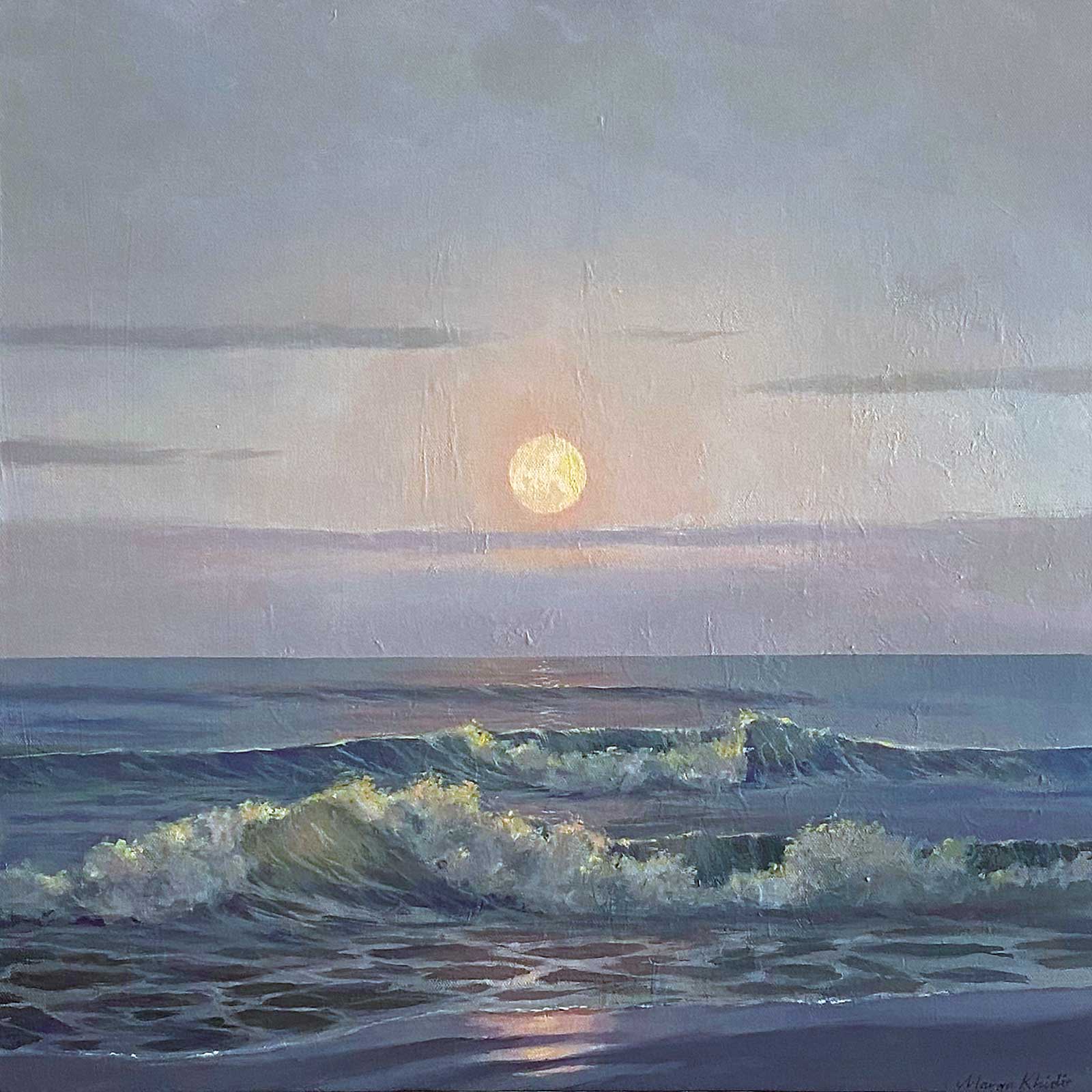
Taupe, acrylic on canvas, 23½ x 23½" (60 x 60 cm) For this painting I wanted to use more neutral and muted colors to create a calm atmosphere. I used the exact same color palette demonstrated in the step-by-step guide, I just used less mixed more less saturated colors such as browns and grays.
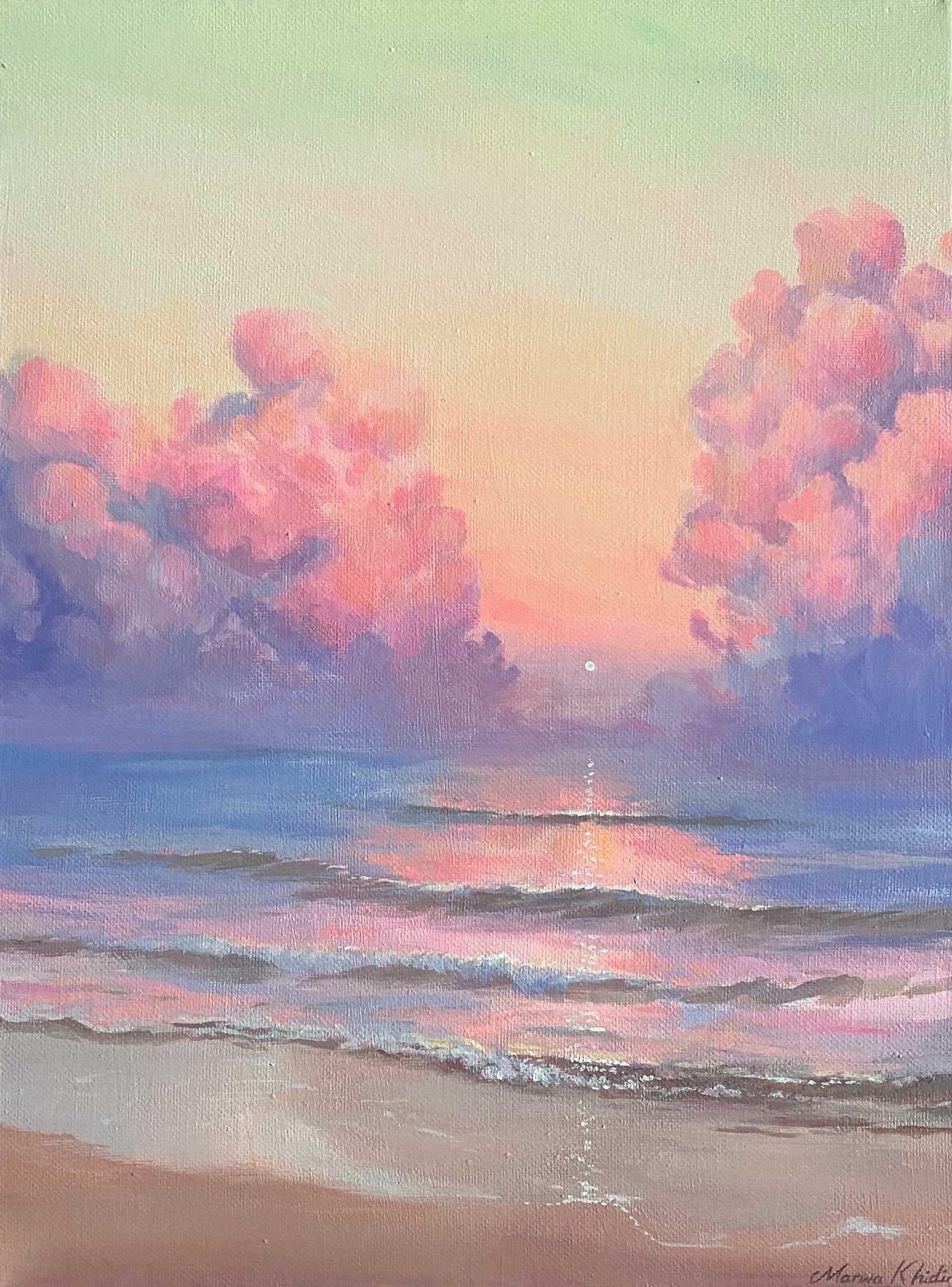
In Another Universe, acrylic on canvas, 15¾ x 11¾" (40 x 30 cm) Sometimes, I find myself envisioning calm settings and sceneries like the one I chose to capture in this painting.
My color palette is simple and almost always the same, consisting of a red or pink, blue, yellow and brown color accompanied by titanium white. This limited palette pushes me to mix my own colors, which is where color theory comes in handy. I also like to keep it simple when it comes to paint brushes. I stick to using only two to three paint brushes, and they are usually the same ones: a big/medium flat square brush for blocking in larger areas, switching to a medium/small round tip brush for smaller details. I don’t go for anything fancy, I just use whatever works best for me in the moment. Nevertheless, the whole process is far from smooth and predictable, often turning into an emotional roller coaster, beginning with excitement that sometimes turns into frustration, uncertainty or exhaustion. However, all these emotions are a part of the painting which makes art so unique. I try to always stick to the cliché motto of “trust the process,” because when I apply that final stroke of paint onto the canvas, it feels like a sigh of relief, witnessing all the brushstrokes coming together, even if I’m not always completely satisfied with the result. Nonetheless, I always find joy in the process as the canvas becomes a reflection of my emotions and passion, inviting the viewer to enter the painting itself.
My Art in the Making Dragonflies At Night
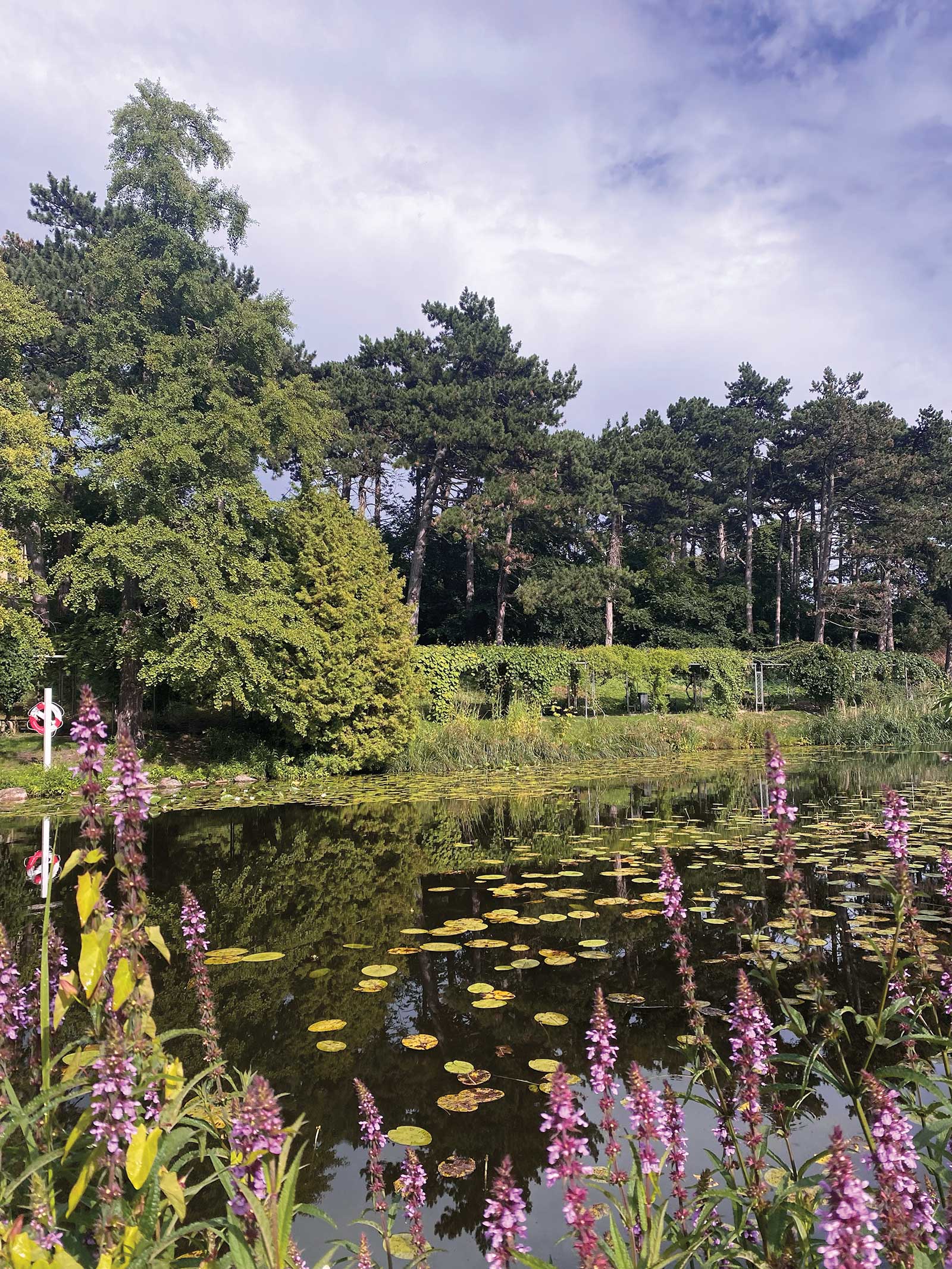
Reference Photo
This painting is inspired by the Botanical Garden in Copenhagen, Denmark.
 Stage 1
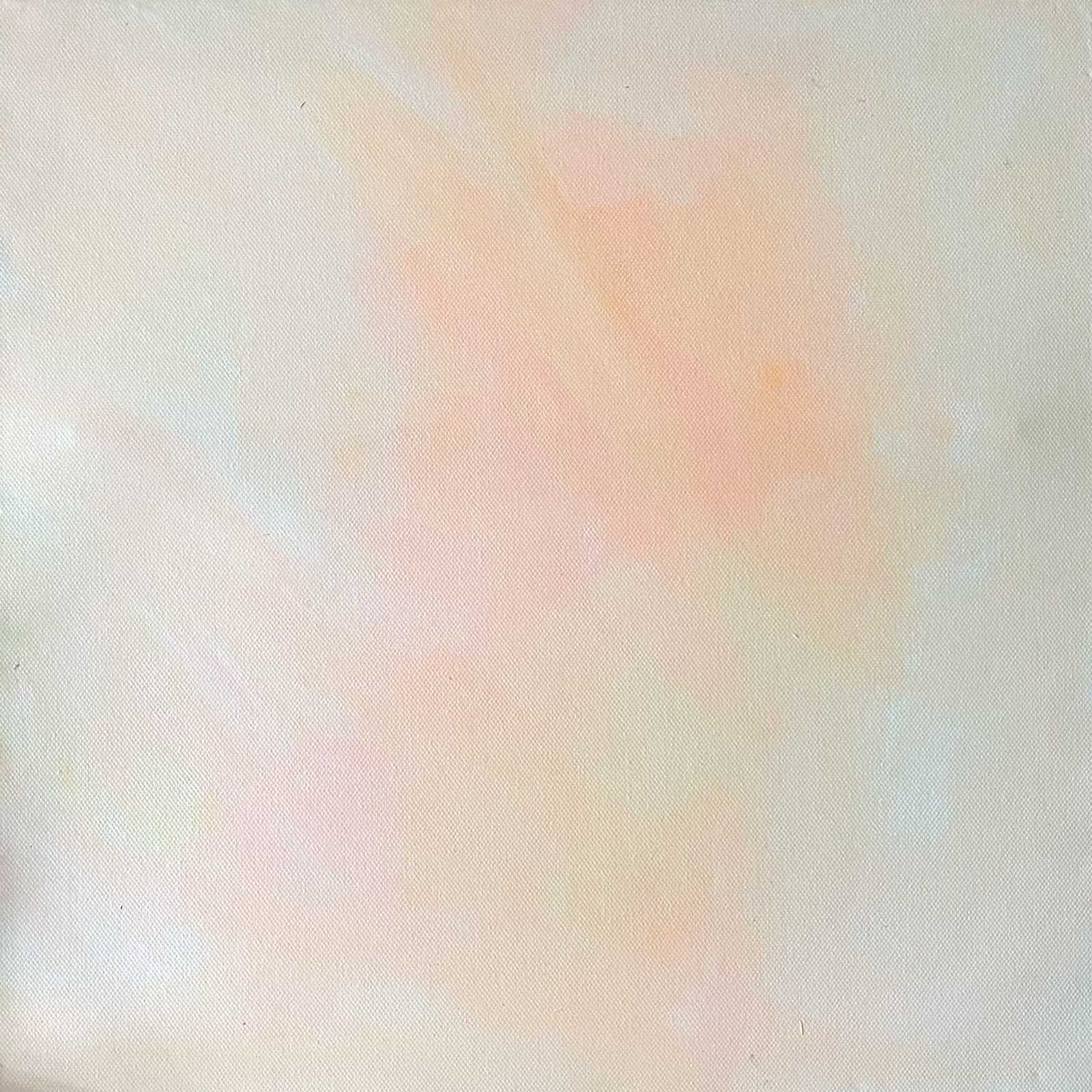
Stage 1 Layer of Pink
I start with a thin layer of fluorescent pink mixed with a little yellow to cover the white canvas. This enables the light pink to shine through the subsequent layers of paint. During this stage, I also loosely sketch out the composition.
WHAT THE ARTIST USED
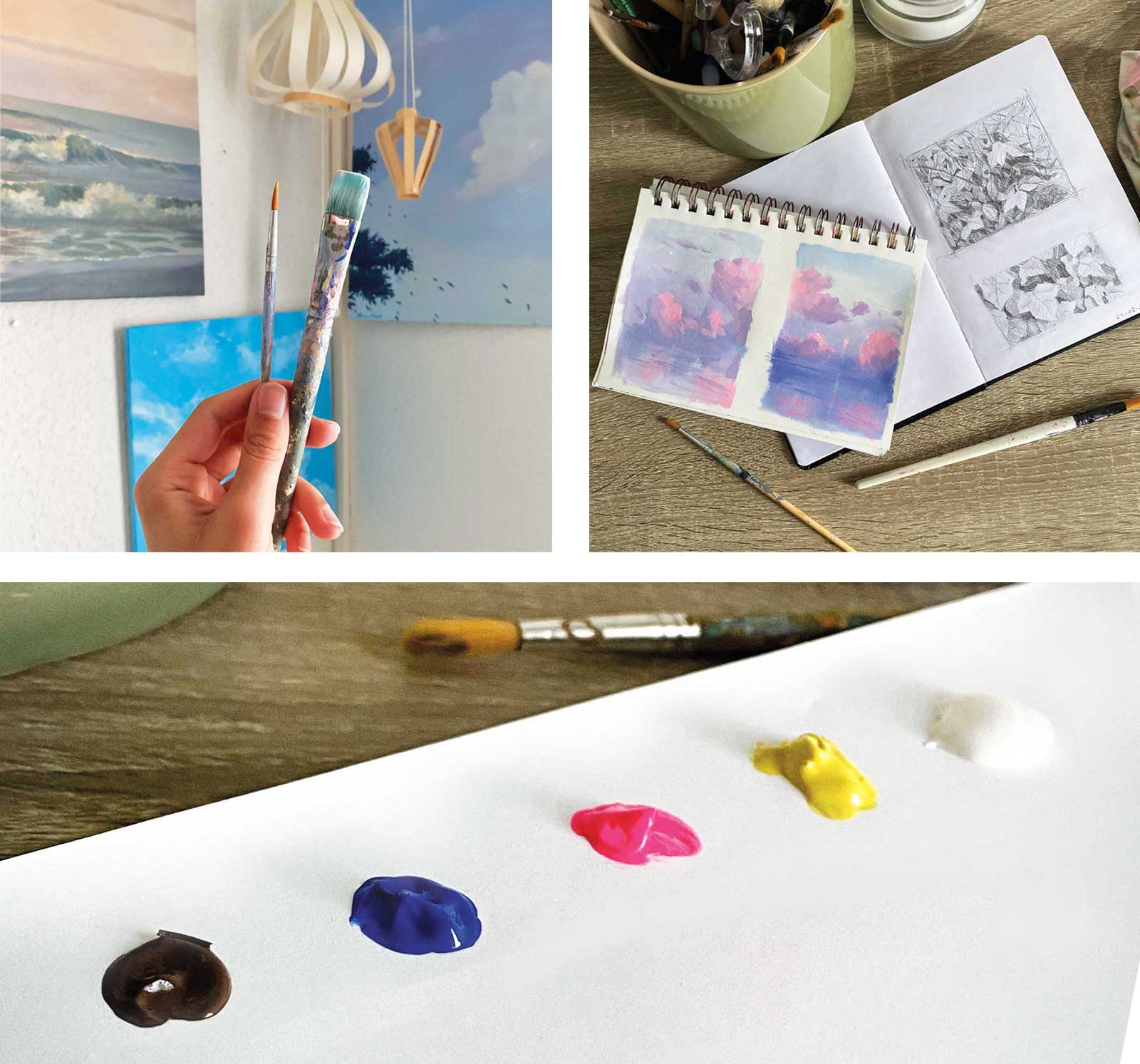
Acrylics
Burnt umber, Ultramarine blue, Fluorescent pink, Cadmium yellow, Titanium white
Additional Supplies
Nylon flat brush, Nylon fine-tipped brush, Spray varnish
 Stage 2
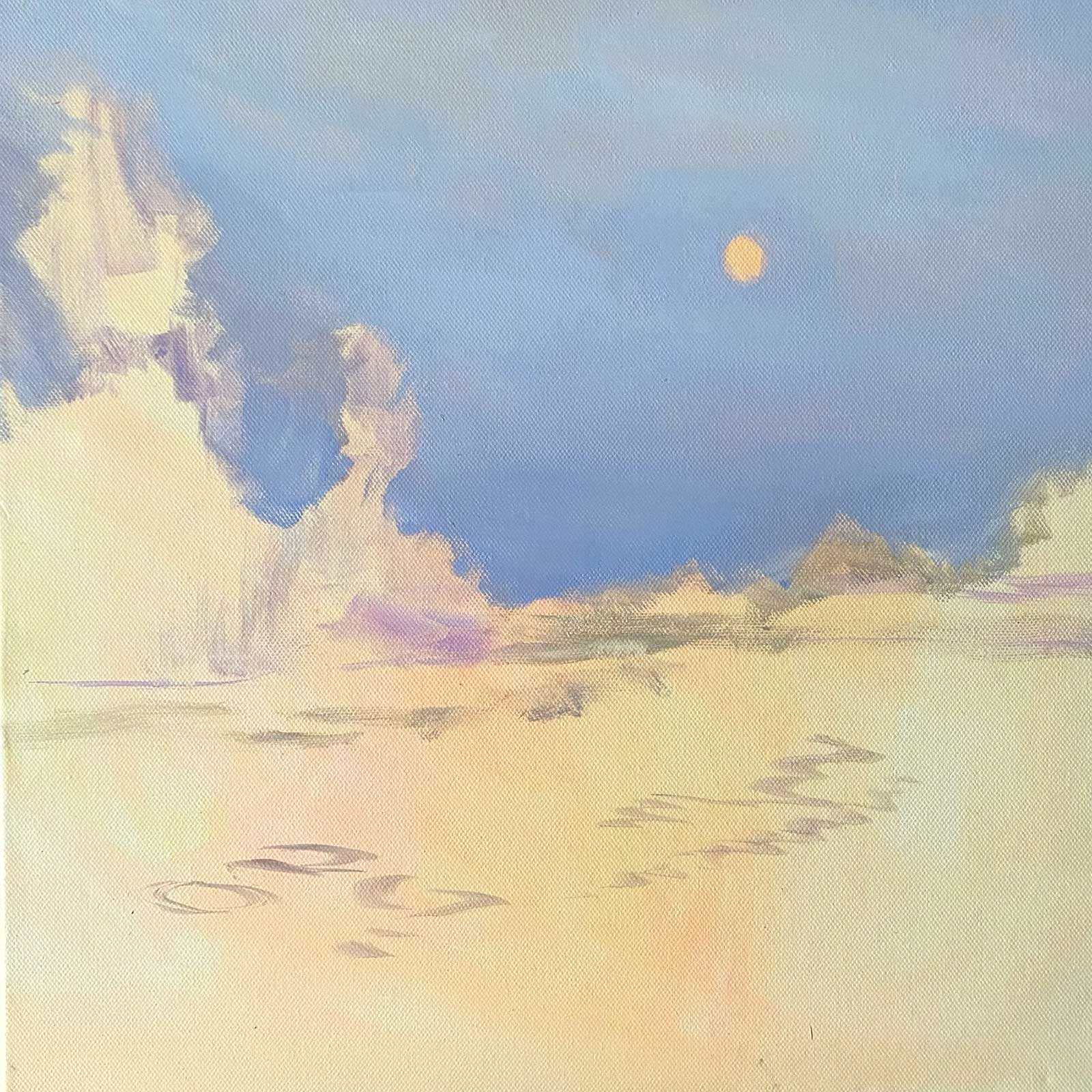
Stage 2 Starting on Background
Then I begin painting the background. I can always do changes later, but now I focus on general colors and shapes.
 Stage 3
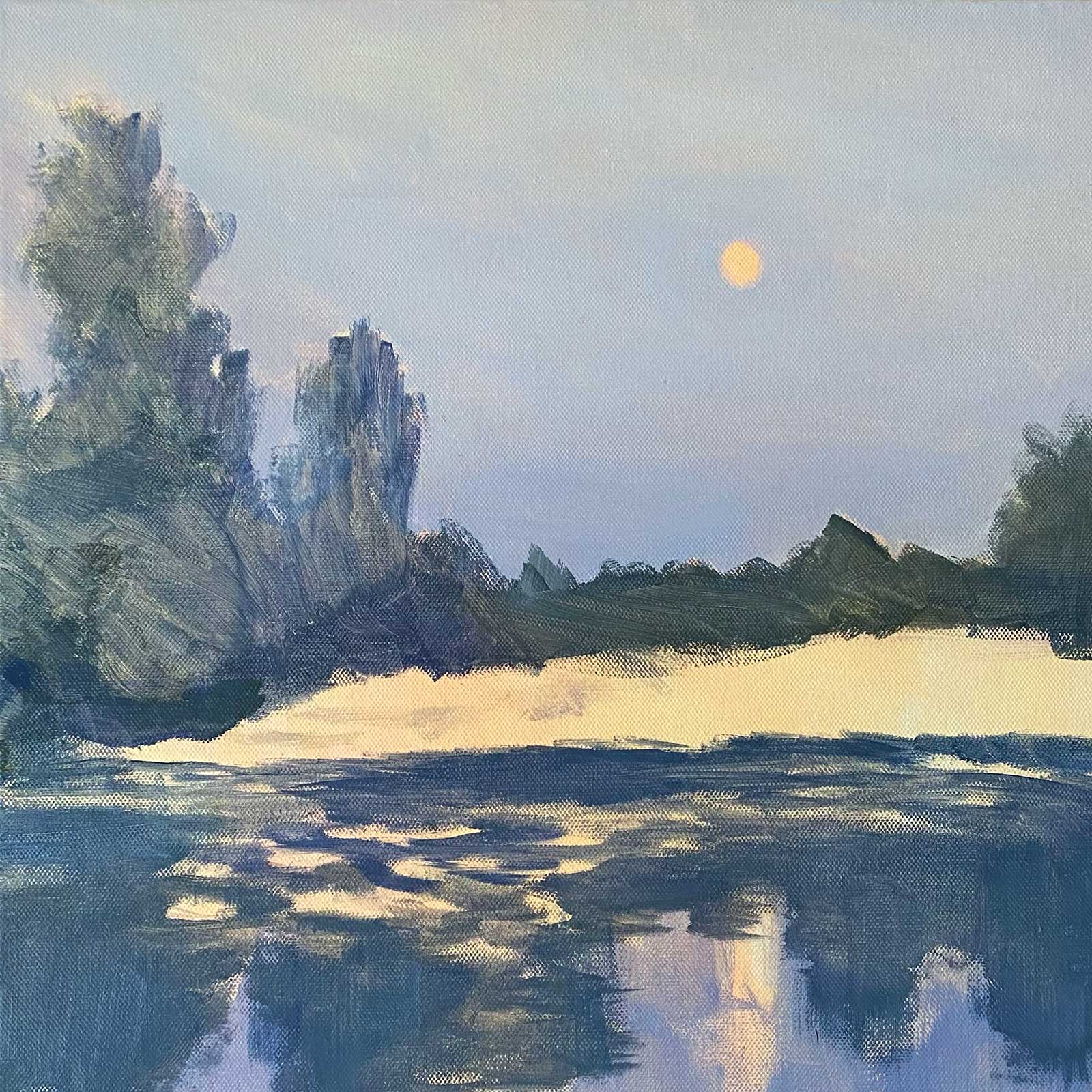
Stage 3 Mid-ground
Now I’m moving onto the middle ground and some parts of the foreground. Again no details, just basic shapes and colors.
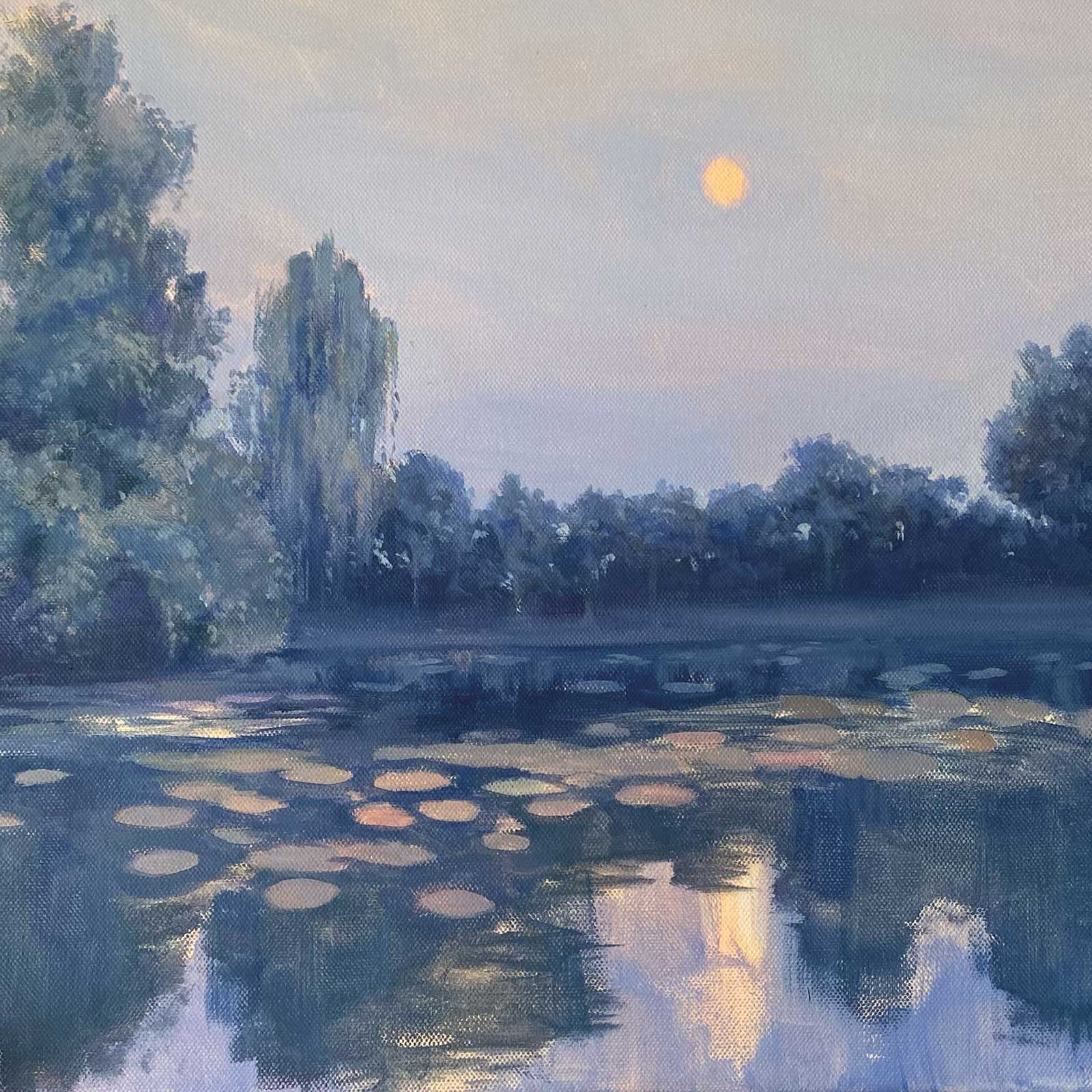 Stage 4
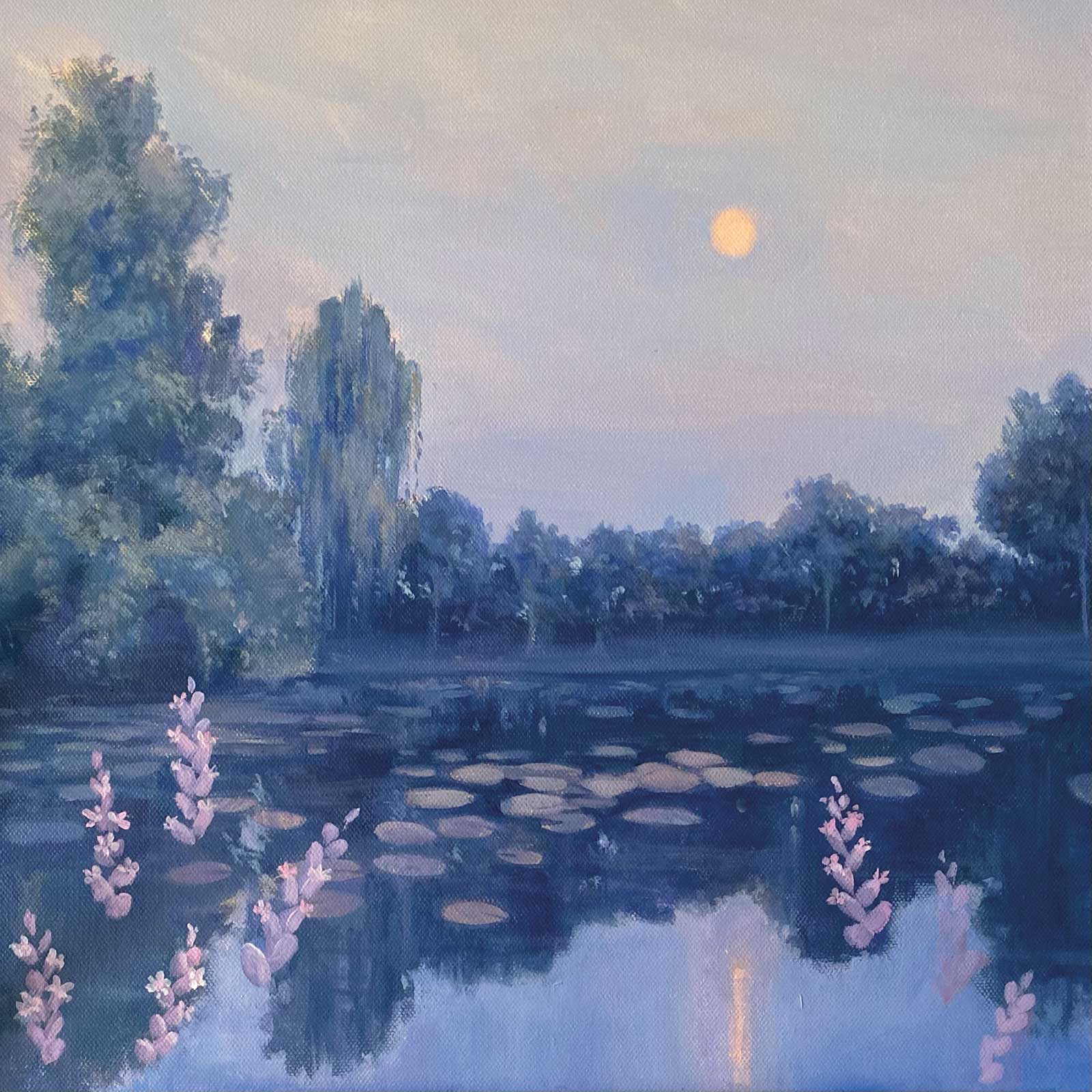
Stage 4 Details
I slowly work on the details such as the foliage on the trees.
 Stage 5
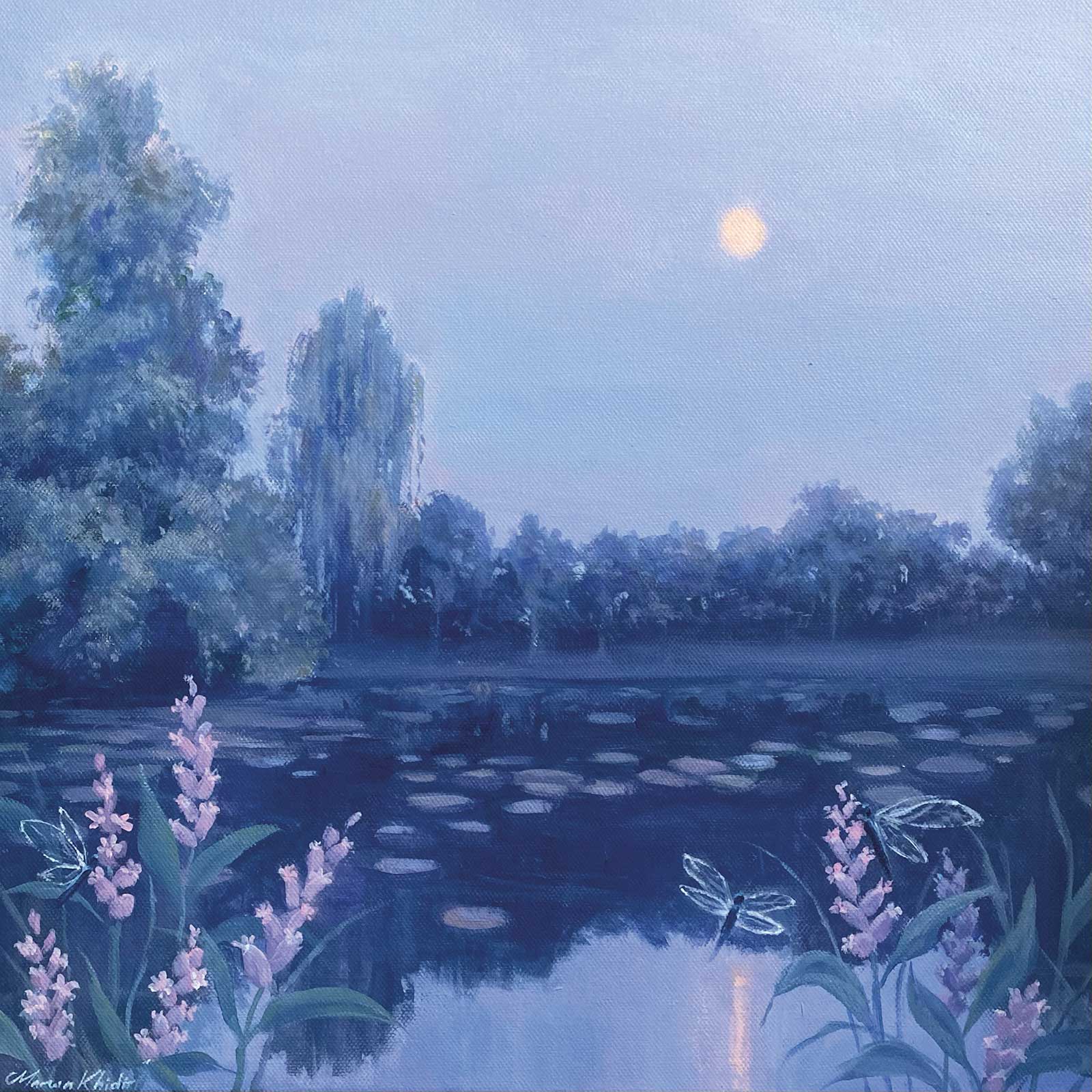
Stage 5 Foreground
After finishing the middle ground I can now add some details in the foreground such as flowers to push back the middle ground and background, creating more layers and depth. I’m also adjusting the colors of the scene gradually.
 Stage 6
Stage 6 Finished Artwork
Dragonflies At Night, acrylic, 15¾ x 15¾" (40 x 40 cm)
After adding the last details, I can declare this piece done! As you can see, I have changed the colors as well to be a little cooler to match the scenery I had imagined in my head of a Danish evening on a lake.
About the artist
 Marwa Khidir
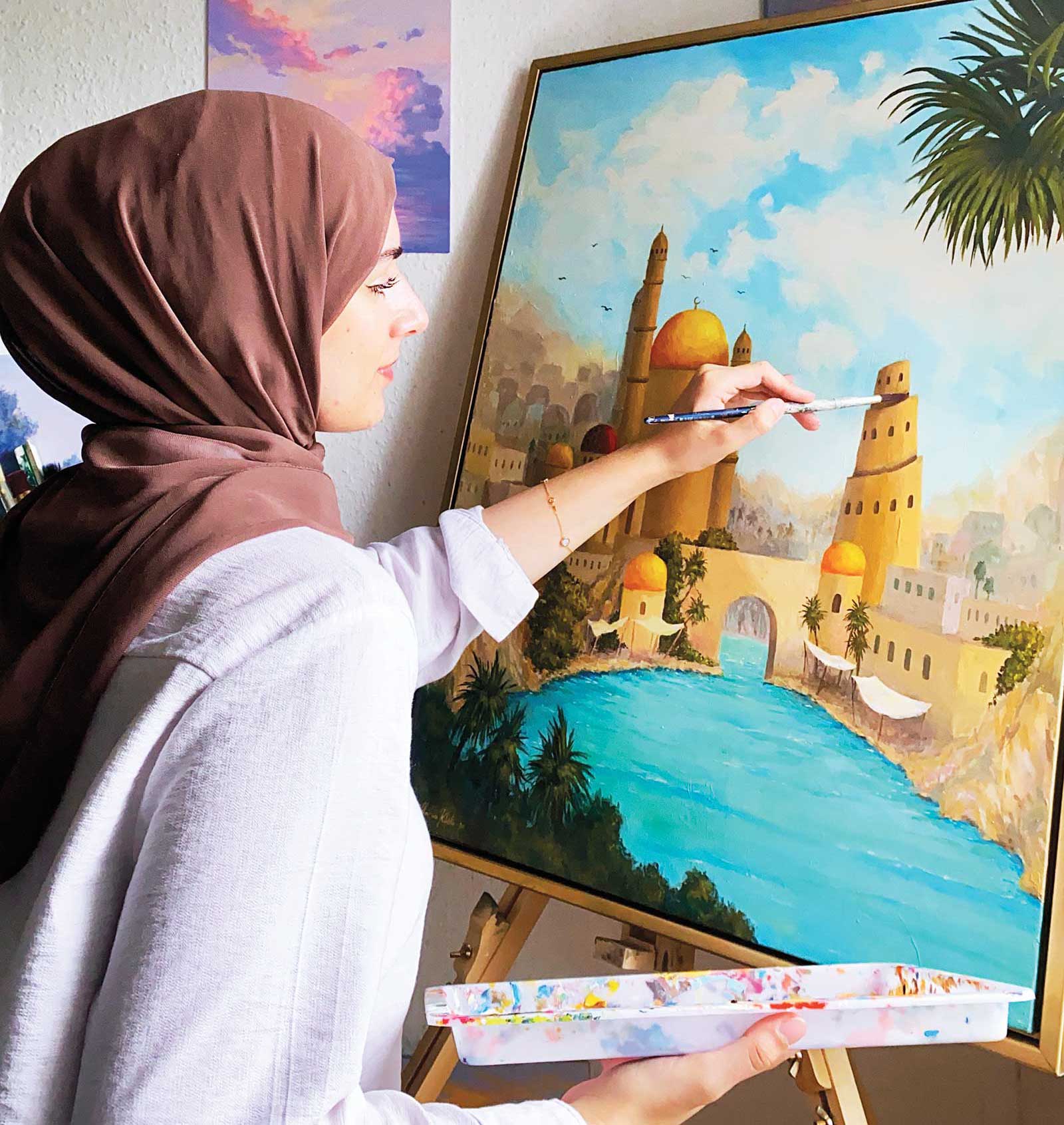
Marwa Khidir is a 23-year-old self-taught artist, born and raised in Denmark with roots originating from Iraq. She recently graduated as a dentist, where she uses her hands and creativity daily, sculpting teeth or matching colors to create the perfect smile. This creativity and artistic inclination started in her early childhood, where she used to practice her art skills using cheap pencils and printing paper.
Khidir started sharing her art online as an art diary for herself. Saving and sharing her creations over the years has been a fun way to track her progress and the development of her skills and style. However, she still believes that there is so much more to learn and explore. She is a perfectionist, so her pursuit of perfection often leaves her unsatisfied with her paintings, however, Khidir finds serenity in the creative process itself.
Contact at
mkkhidir@hotmail.com