
For some of you it may not be winter right now, but let’s take a moment to imagine that it is. Let’s also imagine you live in a place where it snows—where you wake up on a still, quiet morning to find a fresh blanket of white upon the ground. It’s cold and crisp, but it’s also gentle. The sun peeks through thick clouds, casting dazzling light across the snow, and you notice that the colors of these seemingly infinite ice crystals are far more than just white. And capturing the colors, the form and the feeling of snow is more beautifully nuanced than we could have imagined.
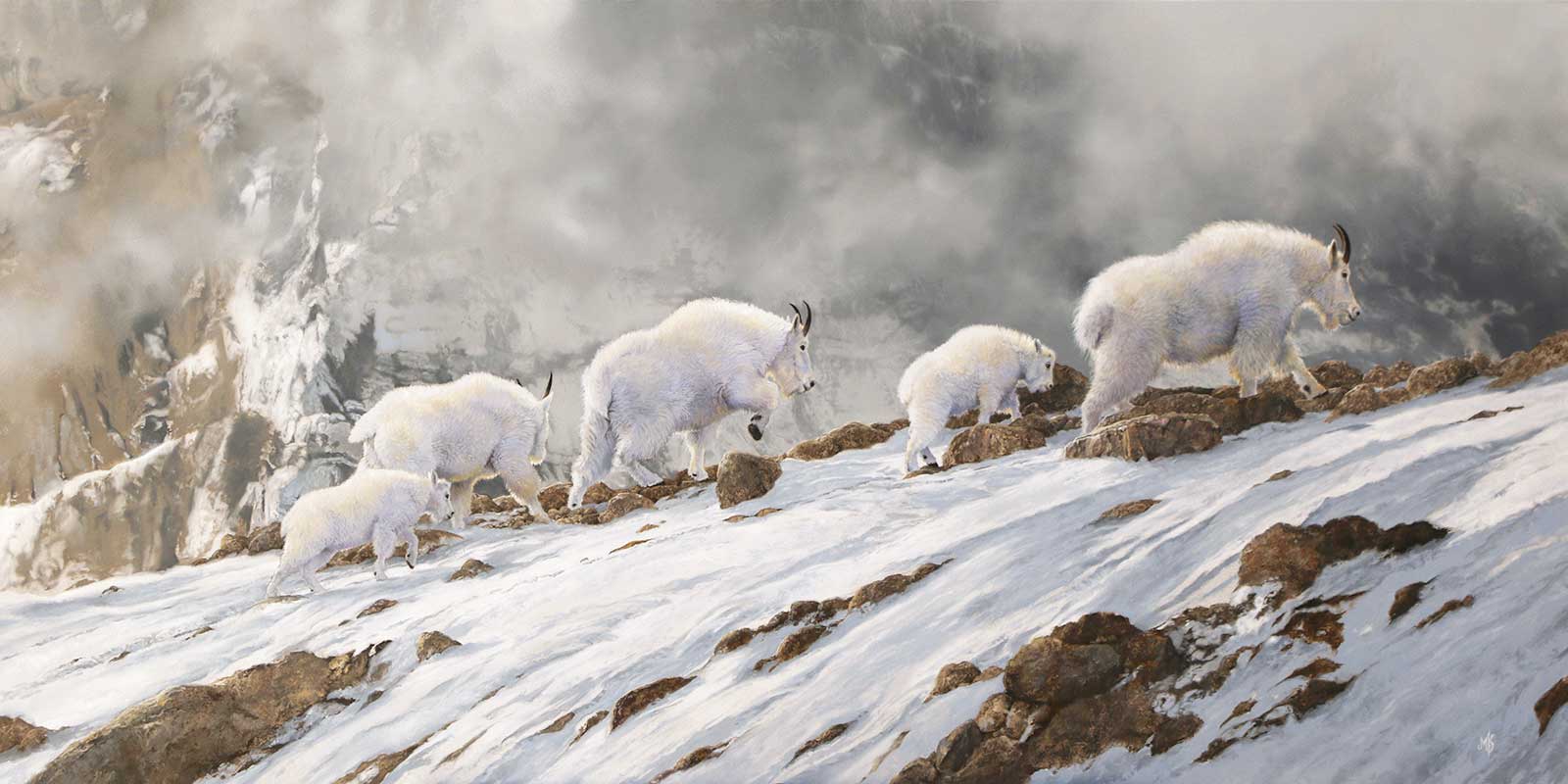
Mark Kelso, In the Land of the Snow Gods, oil on panel, 24 x 48" (60 x 121 cm)
“I love waking up to a winter wonderland after a big snowstorm, eager to get out there to enjoy the magical silence and to marvel at the sparkling morning crystals from the morning sunlight,” says oil painter Gail Descoeurs, who lives in Québec, Canada. “There is a beautiful calmness after a storm that I love to feel, and the silence is more profound from the weighted snow on the tree branches.” Descoeurs, represented by Rehs Contemporary in New York City and Galerie D’Art Iris in Québec, paints atmospheric landscapes of lakes, marshlands, prairies and more.
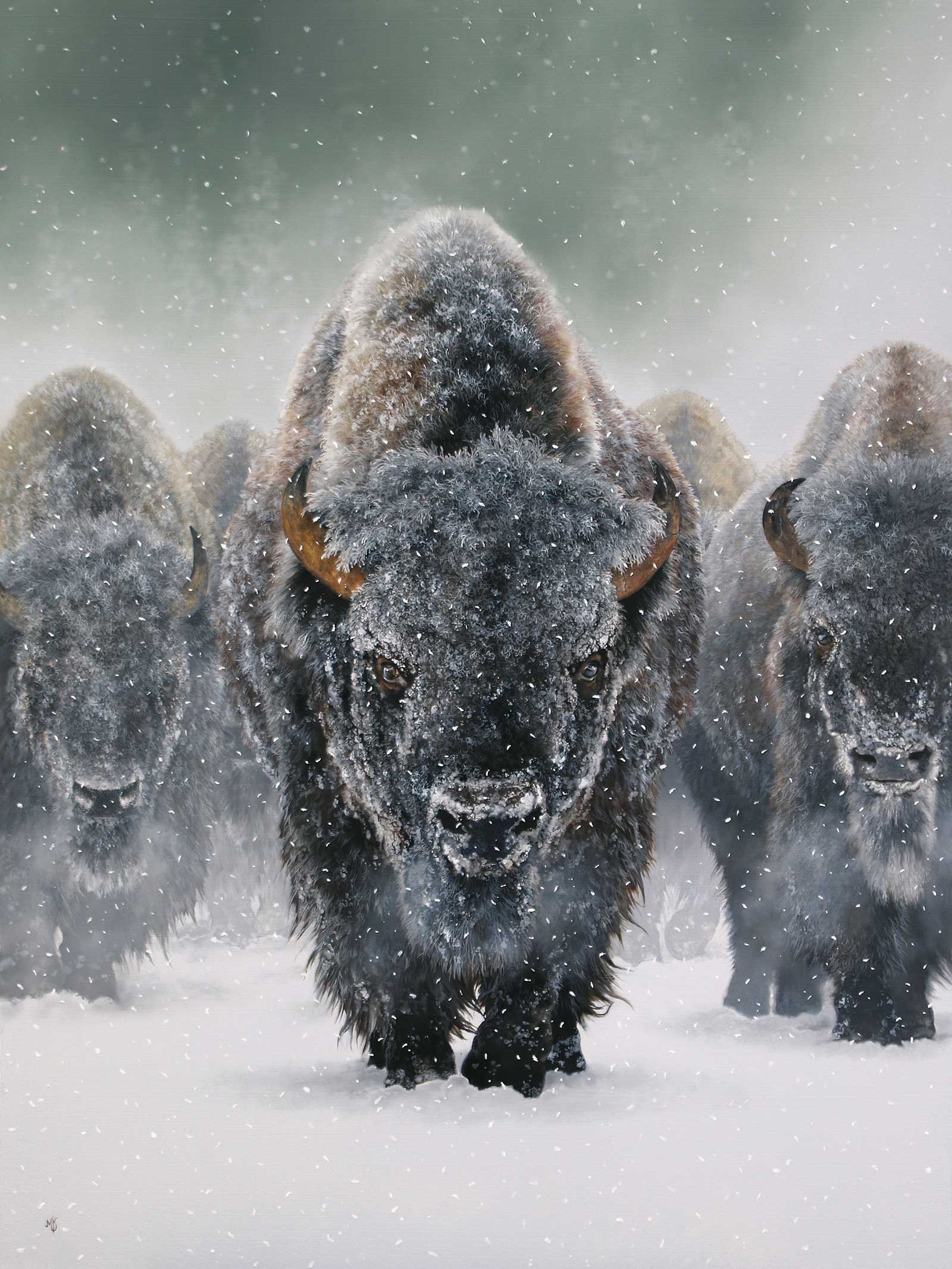
Mark Kelso, The Indomitable Spirit, oil on panel, 48 x 36" (121 x 91 cm)
“[There is] nothing like coming in from the cold to sit by a delightful warm fire. As you can see, I love snow, and it surely brings out the child in me every year,” she says. When painting a winter scene, Descoeurs notes the importance of studying the landscape throughout the day to observe the effects that different kinds of light have on the snowy landscape. “Those sunny blue sky days can be deceivingly very cold, and it will remind you that the temperature is an important part of painting winter. Understanding the temperatures of color—which color is warm or cool—is very important in painting and creating sensations of cold and warmth. For example, yellow ochre is warm and cadmium lemon yellow is cool. Snow, like water, is a highly reflective surface, reflecting light from the sky. Snow is not just white; its color is affected by the quality of the prevailing light.”
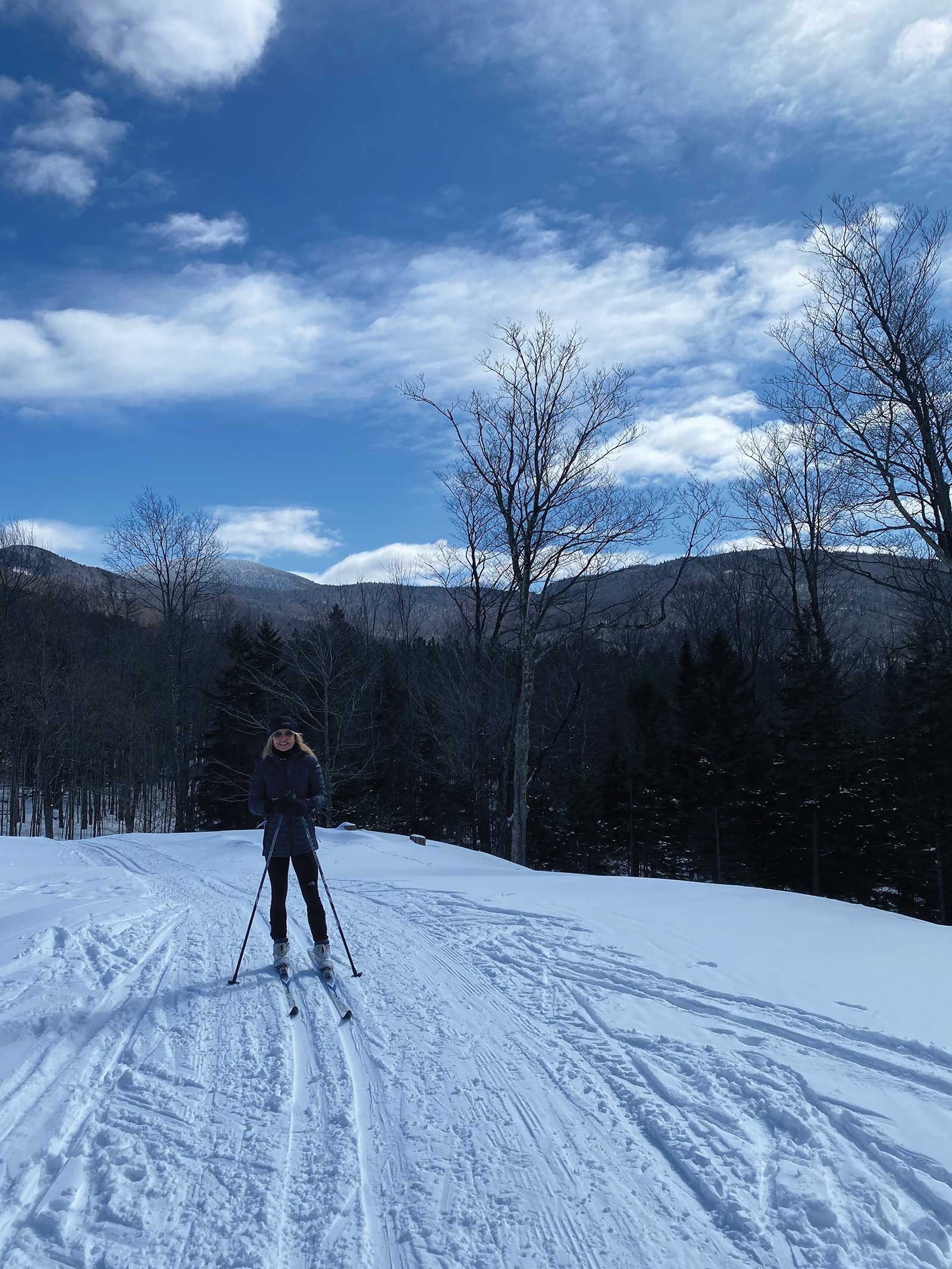
Artist Gail Descoeurs in the snow.
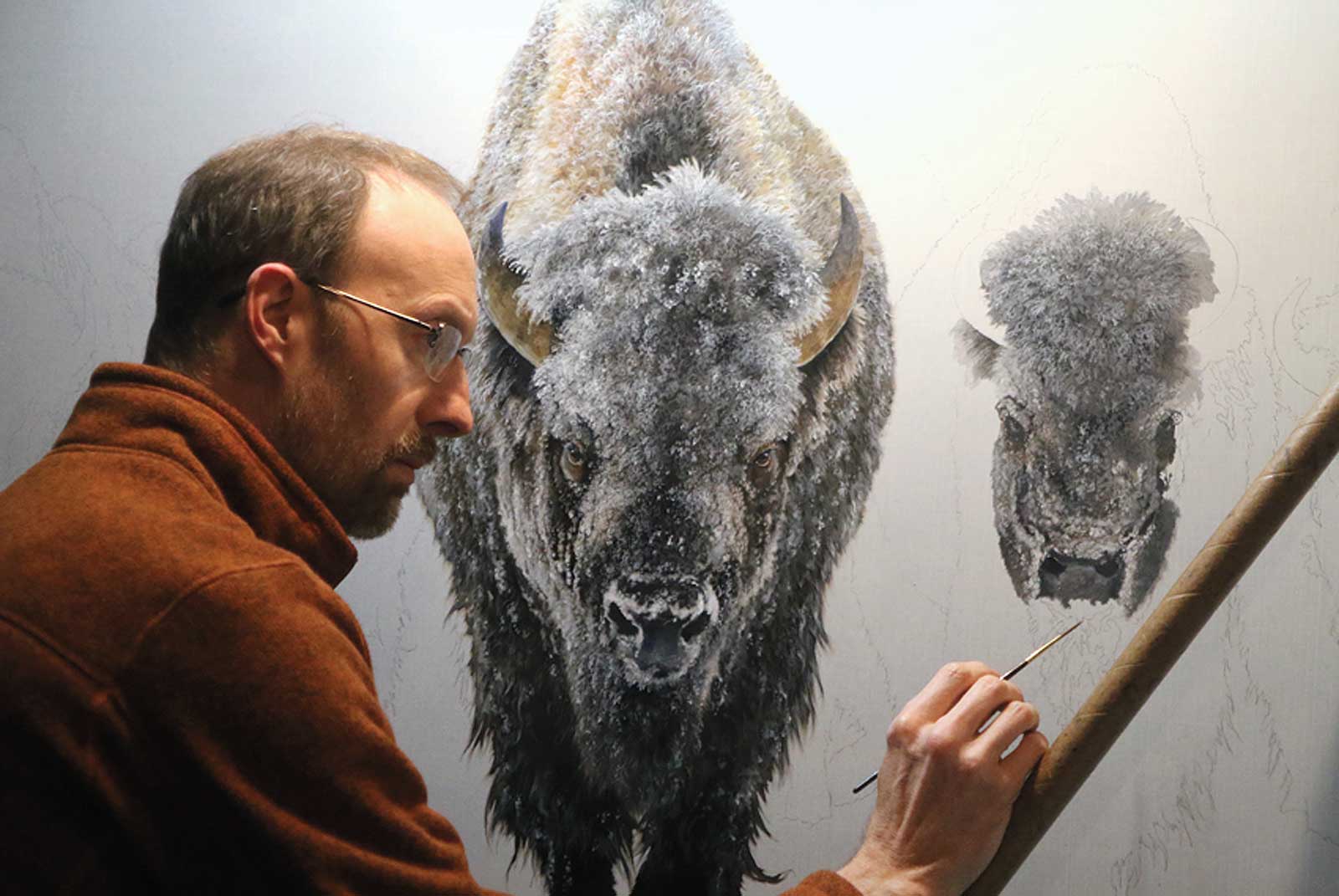
Mark Kelso working on his painting The Indomitable Spirit.
For nature and wildlife artist Mark Kelso, painting snow is all about subtlety. “I love the look of a virtually monochromatic snow scene, but it’s never just grays and white. I think that could be the death of the piece if you’re not careful,” he says. “Rather, I strive for these extremely tiny increments of variation in warm and cool colors, or miniscule differences in units of value that make for that really magical setting. So I still utilize color contrasts—for example yellows and oranges in sunlit areas against purples and blues in shadow—but they are mixed with whites and blacks and reduced to such a subtle degree that the color is only barely perceptible. This, hopefully, strikes a balance to where the piece feels very subdued in color, without being completely lacking in it.”
Kelso has won a number of prestigious awards for his oil paintings, including the Artist’s Choice Award at the Eiteljorg Museum’s Quest for the West and the Spirit Award at the Buffalo Bill Art Show and Sale. He paints all manner of North American beasts in their natural environments—craggy mountains, alpine forests, and at times, the ethereal wildness of winter. When it comes to capturing snow scenes, Kelso says the feeling of the piece takes priority above all else. “I find snow scenes particularly visually moving. They can be especially brutal or unimaginably peaceful and serene. Or sometimes they can be both, simultaneously,” he says. “The question constantly on my mind is how can I utilize my skills to best communicate what it is I’m trying to capture in paint, and what am I saying in the attempt to render a given scene or scenario? Can the viewer feel the cold? What might the story mean on a deeper level? For example, does it speak to a human condition: loneliness, warmth, being at peace, overcoming adversity?”
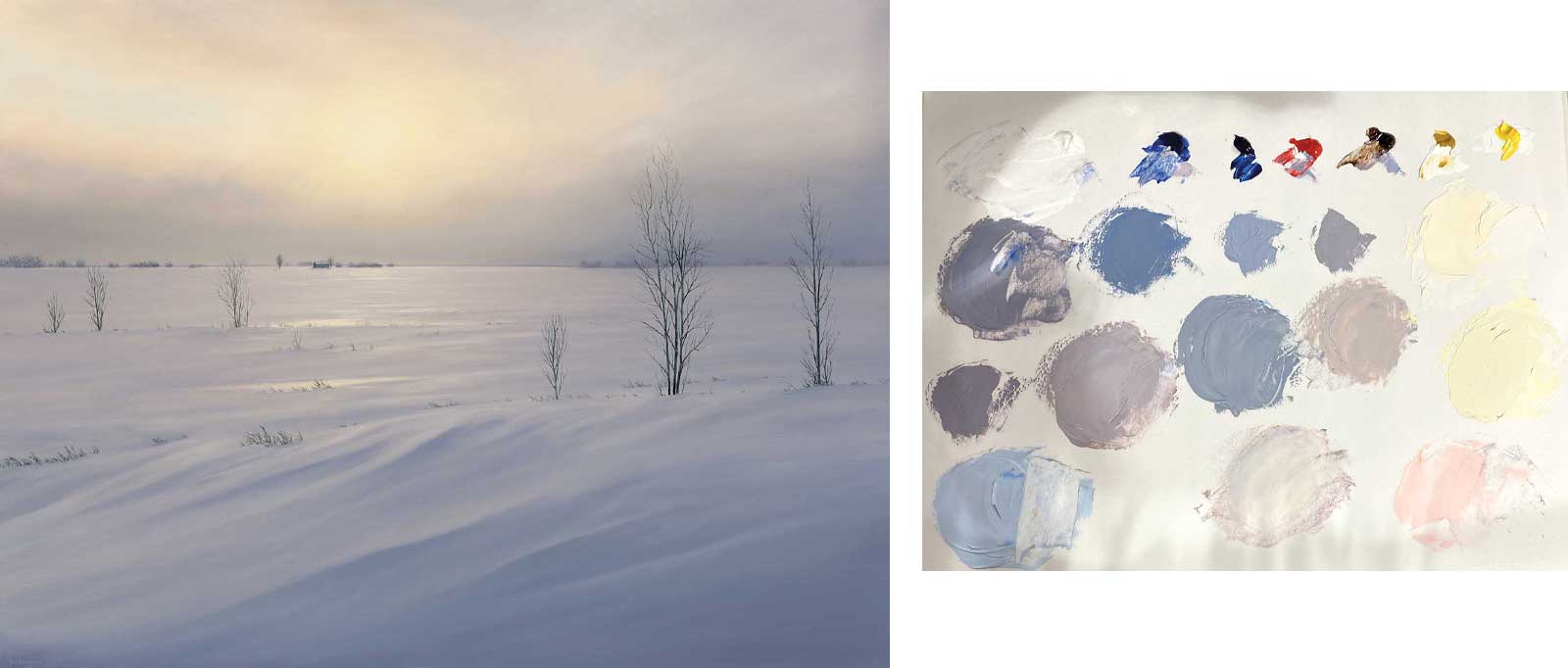
Gail’s palette for A Winter’s Eve includes French ultramarine blue, phthalo blue, cadmium red, cadmium yellow light, yellow ochre, burnt umber and titanium white.
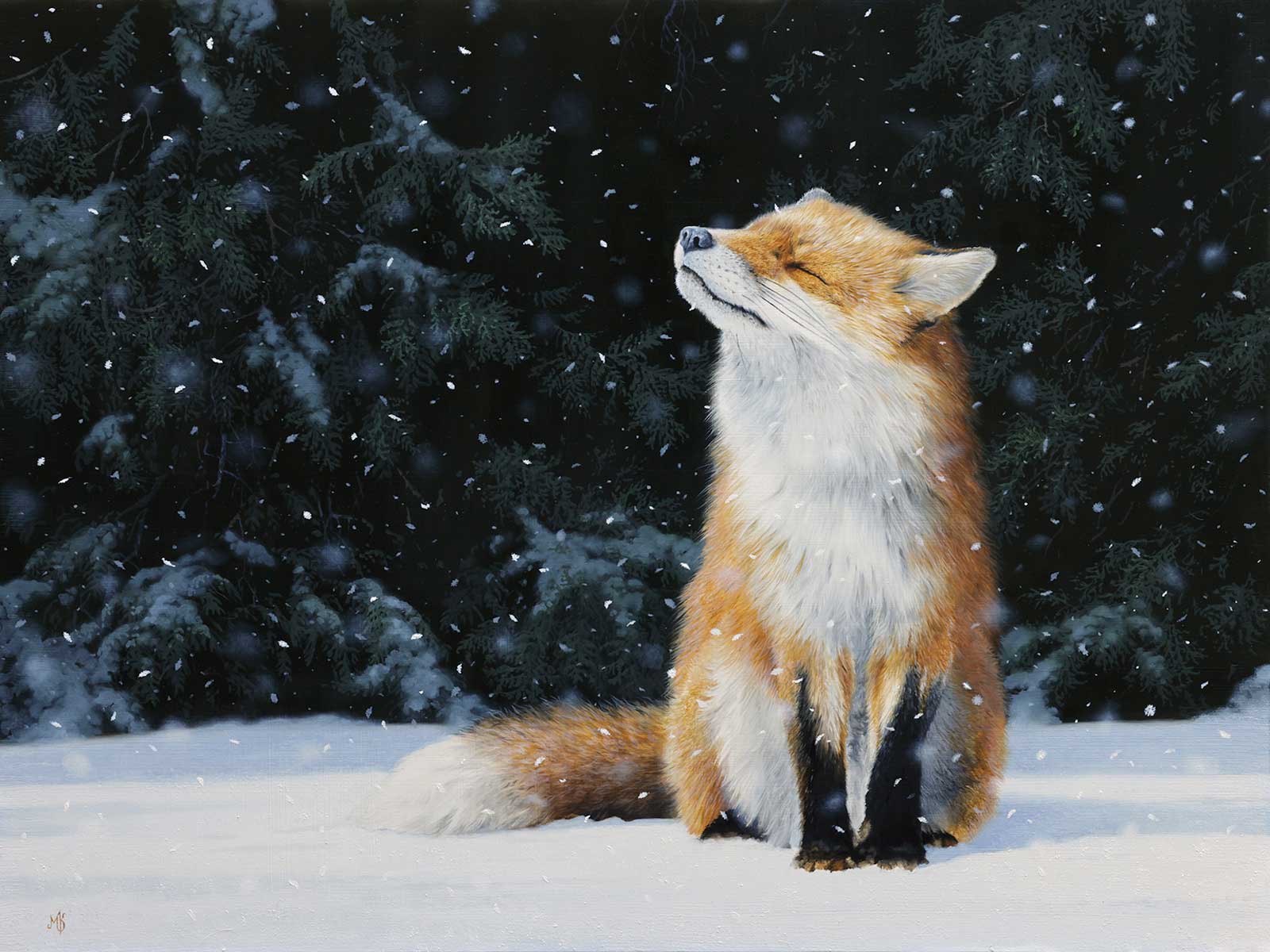
Mark Kelso, The Sound of Silence, oil on panel, 18 x 24" (45 x 60 cm)
Composition, brushwork and paint application techniques, he says, are simply tools for telling the story the way you, as the artist, want to tell it.
“The spirit of winter also has many moods,” Descoeurs adds. Before beginning a snowscape, she advises artists to contemplate the feeling they want to convey. “Planning the mood of your painting is as important as any of the technical aspects,” she says. “I believe that what the viewer feels is in many ways more important than what they see.”
Descoeurs highlights several winter moods she’s witnessed living in the North, along with the technical elements that bring these moods to life:
Overcast Day
An overcast day can offer a cold, dark and lonely mood. The sky is darker than the snow, and there are no strong shadows or highlights, just neutral tones. Adding a dark, skeletal shaped tree with delicate branches in a wide open field can emphasize solitude and adds to the dramatic contrast. Winter is a wonderful time to study tree structures.
Sunny Morning
A fresh sunny morning with snow sparkling like crystals under a brilliant blue sky makes for an exhilarating painting with lots of contrasts, even in the shadows. Here you get to play with colorful contrasting temperatures, such as warm creamy highlights against cool blue-violet shadows in the snow, each intensifying the other. A clear blue sky in winter appears more intense in color than at other times of year.
Winter Sunset
Winter sunsets can be as spectacular as those of other seasons with its rich violet, magenta and orange colors above the horizon. If you want to witness the sunset, you will have to hurry as the light will change quickly before the sun disappears. Warm evening light creates softer highlights, often with a yellowish or pinkish hue, and deep blue shadows.
Moonlit Night
A moonlit winter night makes for another dramatic, powerful painting. Here I love to add a little building with the windows aglow reflecting the warm, cozy fire in a fireplace. So inviting, especially on a dark winter’s night.
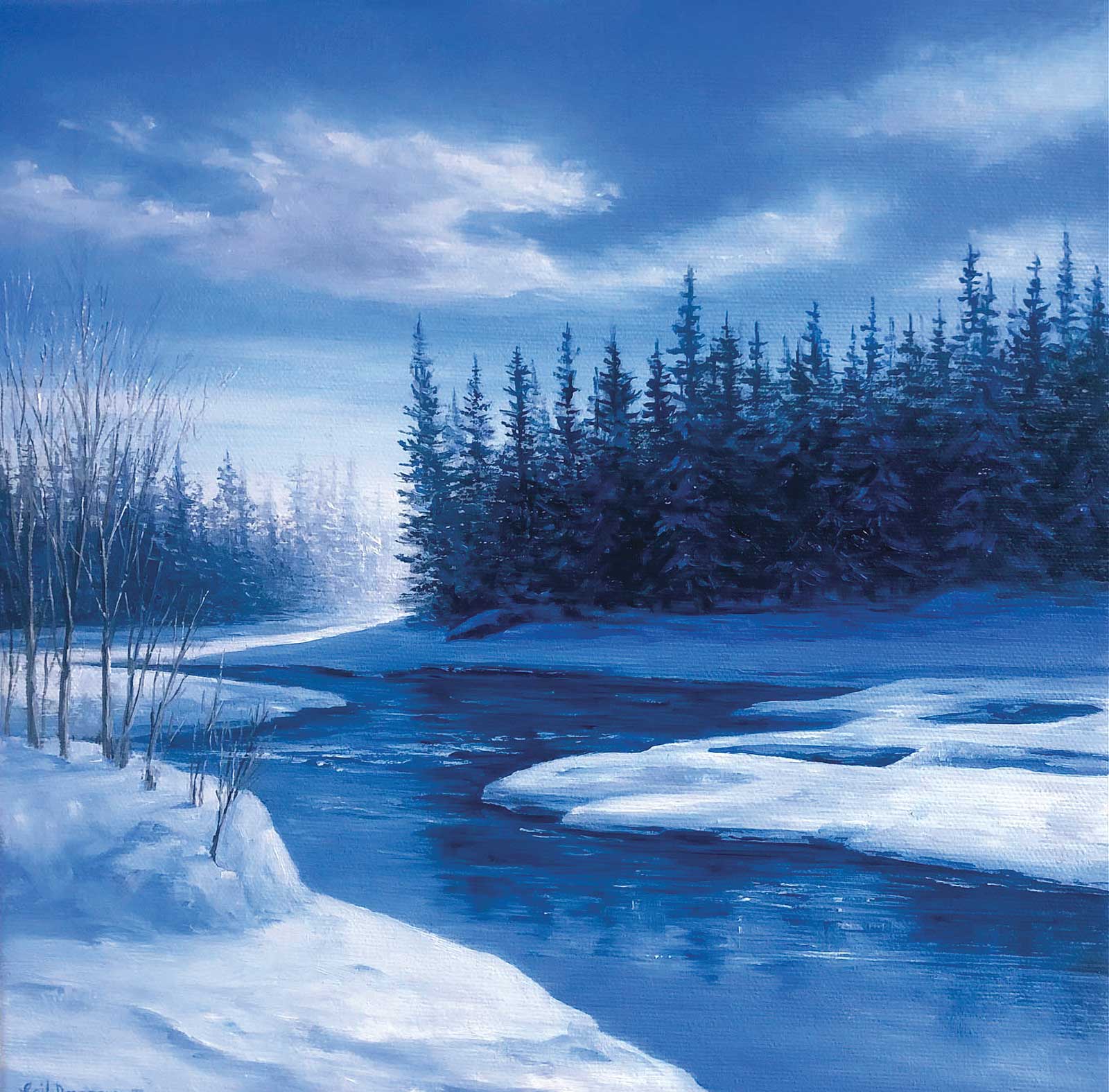
Gail Descoeurs, Un Matin Hivernal et Frisquent, oil, 10 x 10" (25 x 25 cm)
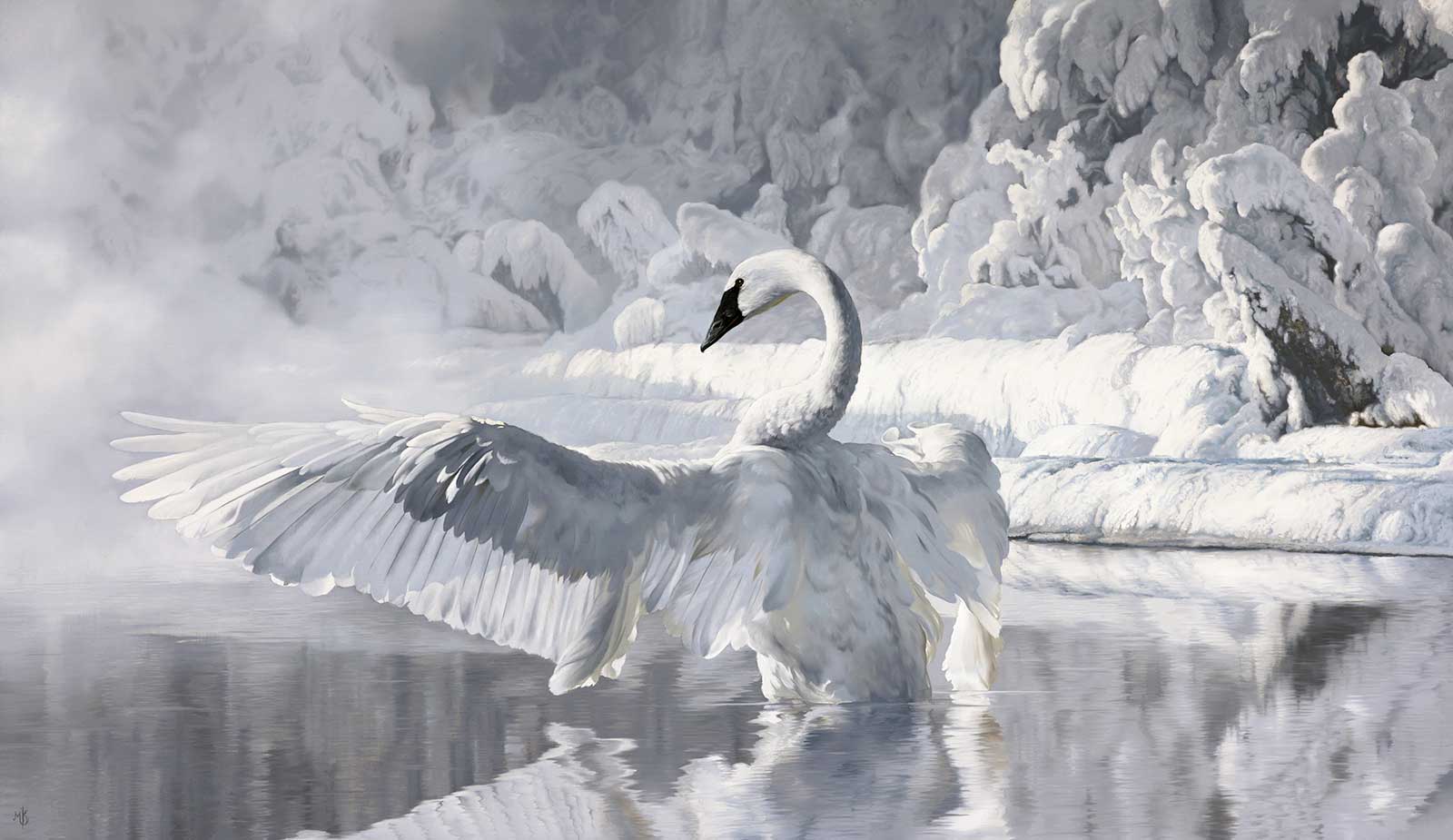
Mark Kelso, Etherealis, oil on panel, 30 x 52" (76 x 132 cm)
“Finally, there is the beautiful snowy day evoking emotions. Thick yet delicate snowflakes falling to the ground, muffling sounds and creating a hushed, still atmosphere,” Descoeurs finishes. “Like fog or mist, falling snow creates a veil of white forms and colors. There is a narrow range of values, and care must be taken when holding back contrast as you don’t want your painting to look too washed out as well.”
She uses a splattering technique for depicting falling snow once her painting is dry, adding that less is more. For producing the blurred effect of a snowstorm, splatter paint onto the canvas while it’s still wet.
As light and airy as snow might sometimes feel, there is substance and power to it as well. That sense of weight comes from building form, through variations in value. “The difference with snow compared to many other things is that the value range is often very limited, and reflective light can be quite strong, creating some challenges,” says Kelso. “But in the end, it’s still just rendering of form. Texture is also the same idea on a smaller scale—just subtle variations of value against one another. I can add texture to a snowy surface by stippling a slightly brighter value over a slightly darker value, using an old, splayed brush. The more splayed, the better!”
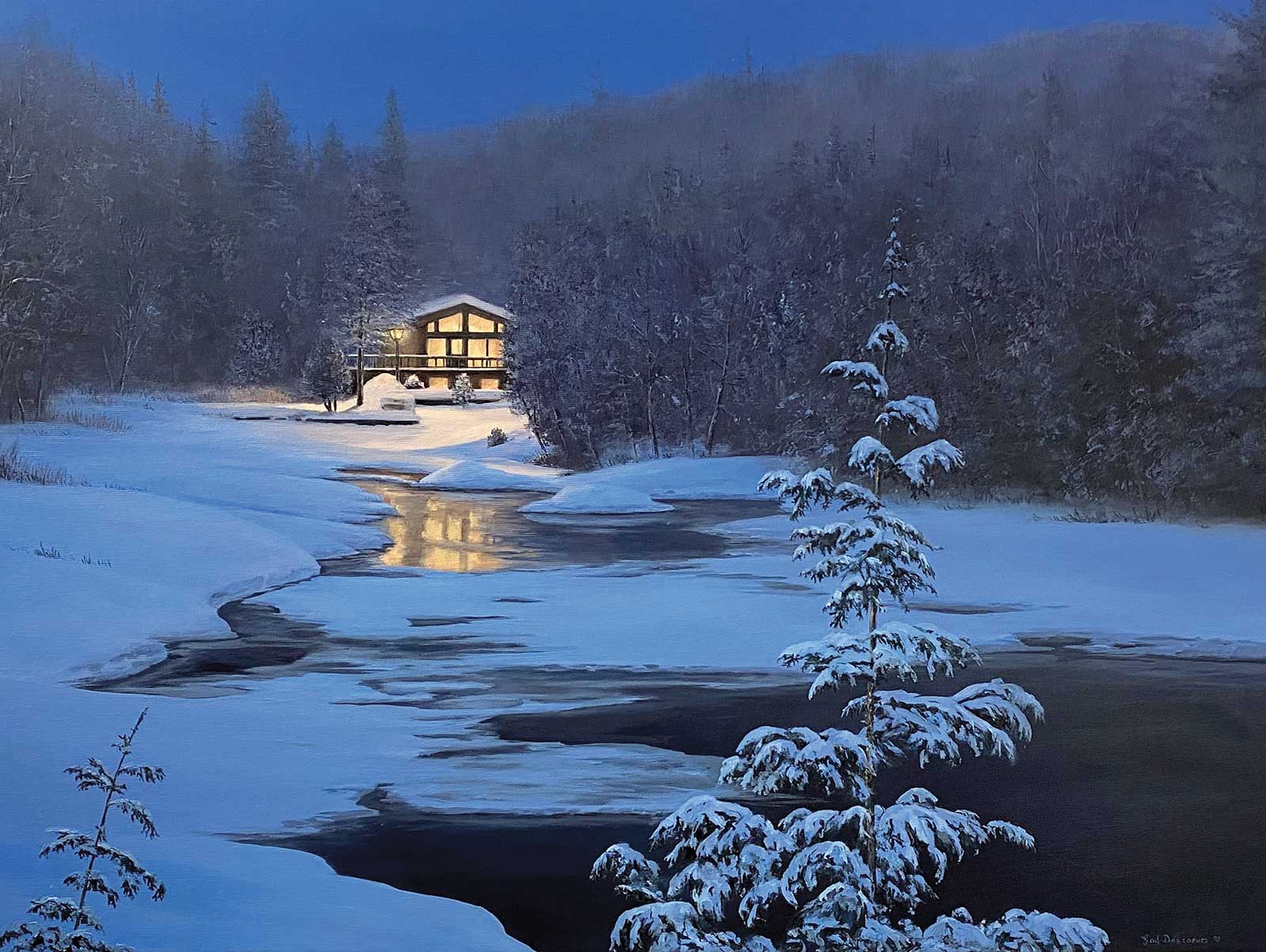
Gail Descoeurs, Un Nuit D’Hiver, oil, 18 x 24" (45 x 60 cm)
When creating a sense of weight and depth, another important element to keep in mind are the hard and soft edges of shadows. “If you look at shadows in the snow, you will notice that in bright light they are crisp-edged and noticeably darker near the objects casting them but paler and more diffused further out,” Descoeurs says. “This is because of reflected light, which is bounced into the shadows from the snow. To recreate this effect, gradually lighten the shade of your shadows near the edges and softly blend the edges into the surrounding snow color with wet-in-wet strokes. Keep the shadows delicate and airy by using glazes of color.”
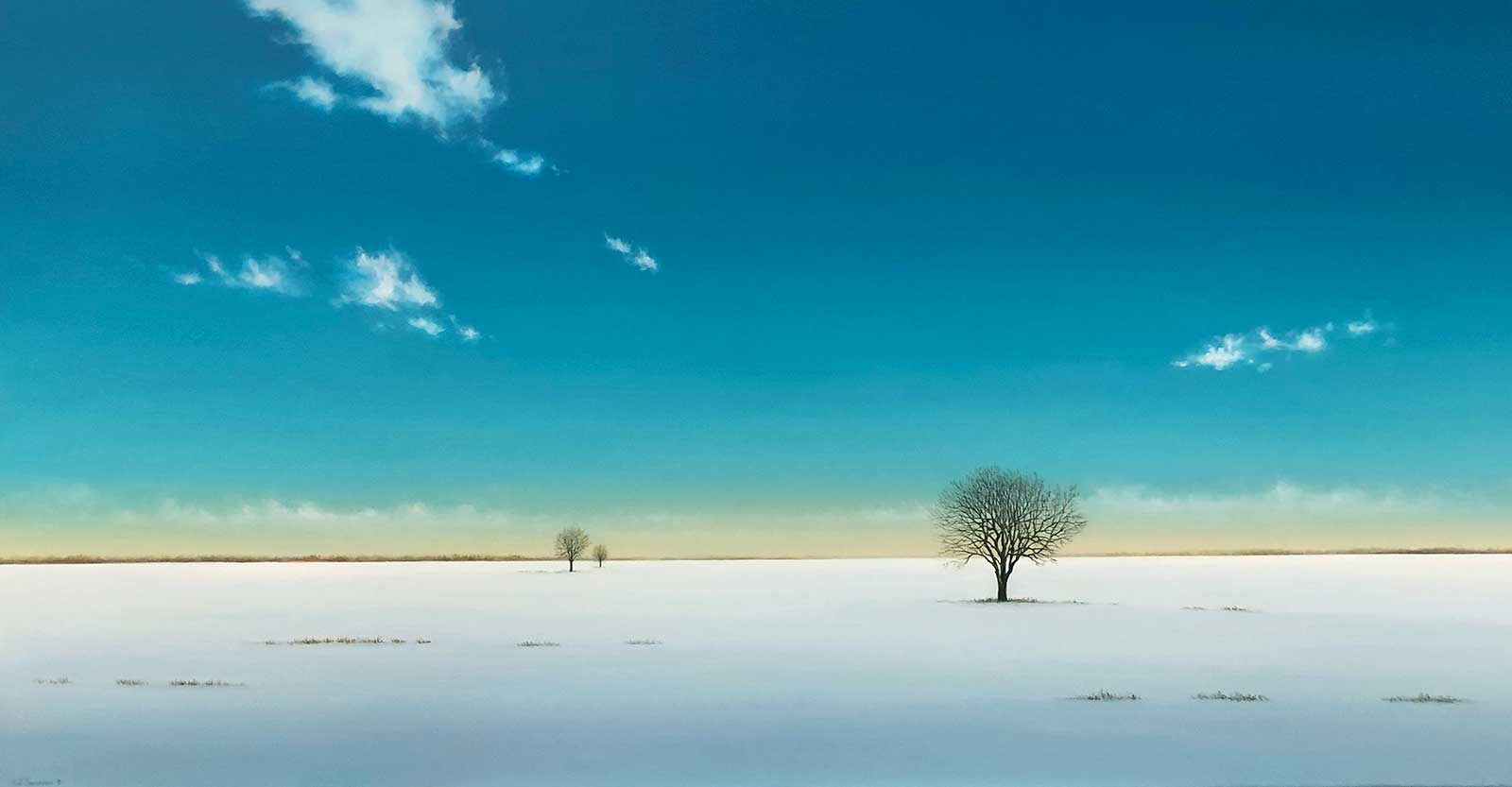
Gail Descoeurs, Spring Daze, oil, 24 x 48" (60 x 121 cm)
Although not everyone lives in places where it snows, Kelso encourages artists to travel and paint on location when they can. “Yeah, that takes some real backbone when it’s cold enough for snow, but it’s worth it,” he says. “And I try to stress awareness of the faint color and value differences in something that appears at the onset to lack color. Sunny snow scenes can actually be quite good for this, as the shadows can often be very obvious with blues and purples. But regardless, look hard enough, and you’ll see all kinds of warm and cool contrasts taking place, and allow them to come through, even if it’s in a very subtle way. This will give life to the work, versus using only whites and grays.”
Descoeurs adds, “As in all my paintings, I strive to express an emotional response and to carry the observers to a timeless place of quietude. Snow in a landscape can make for beautiful, quiet paintings.”
Whether it be a moment of quiet on a still winter’s day or the wild energy of a blizzard, painting a snow scene asks that artists look both outward and inward—at what they observe and what they feel. —