
Every color that comes out of a tube belongs to one of six hue families: red, orange, yellow, green, blue or violet. A color’s name, however, can be whatever the paint manufacturer would like to call it. Pigments differ, as each has its own grind and particle size specification. Still, the names of colors do often tell the names of the pigments they’re made from or the historical names of their pigments and which hue family they belong to.
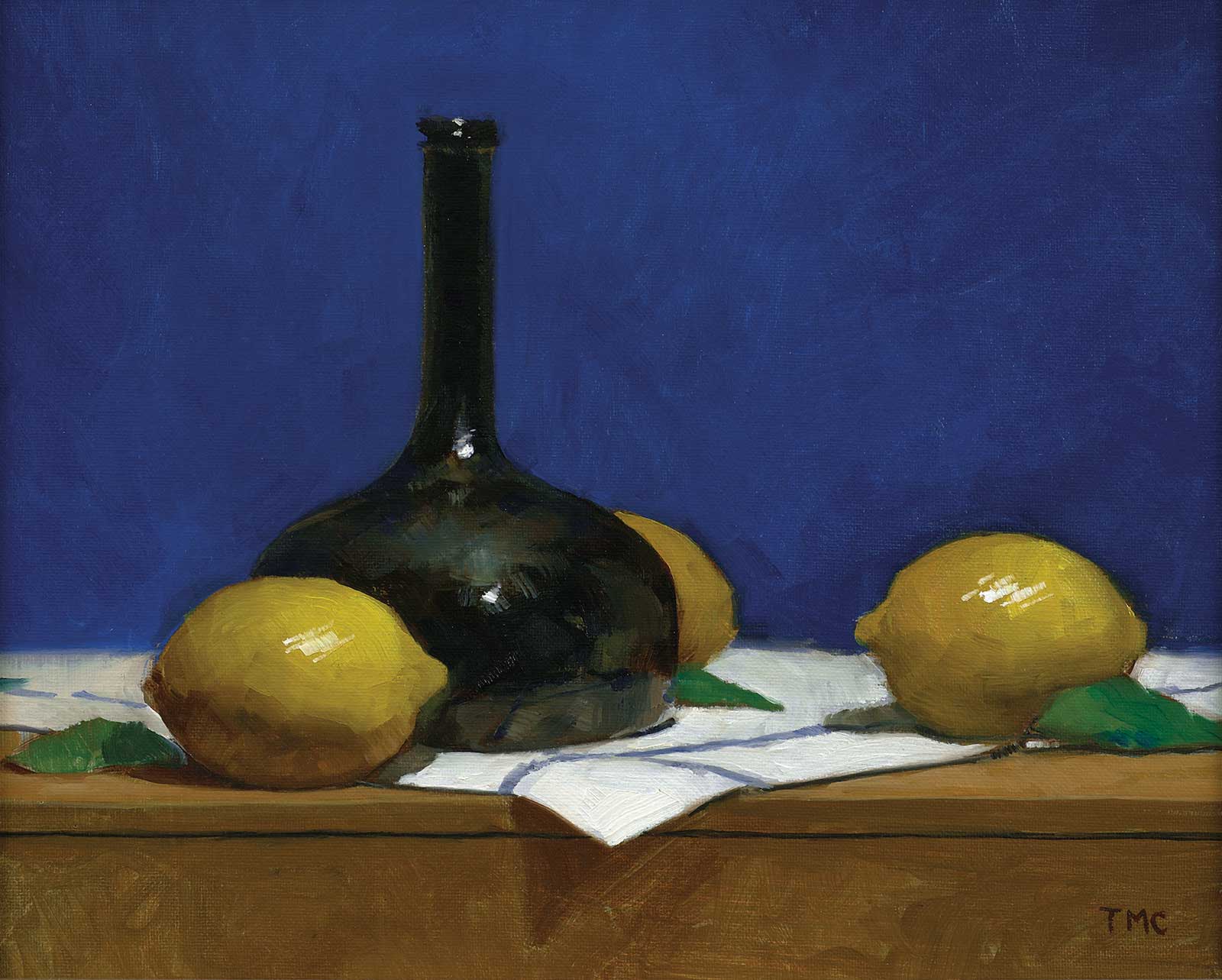
Todd M. Casey, Jug with Lemons, oil on linen, 2022, 11 x 14" (27 x 35 cm). The background color in this painting was achieved with ultramarine blue and titanium white.
Origins of Pigment Names
A pigment’s name might be based on any of the following sources, among others:
- The region where a pigment is extracted (or was historically extracted)—for example, burnt sienna, after the Italian city of Siena.
- The person who discovered or created a pigment—for example, Mas Blue (or Yin Mn Blue) was named after Mas Subramanian in 2009.
- The pigment’s chemical composition—for example, cadmium red (inorganic) or phthalo green (organic)
- The pigment’s resemblance to something found in nature—for example, teal, which resembles the color of a stripe of feathers on the head of a common teal, a kind of duck pigments.
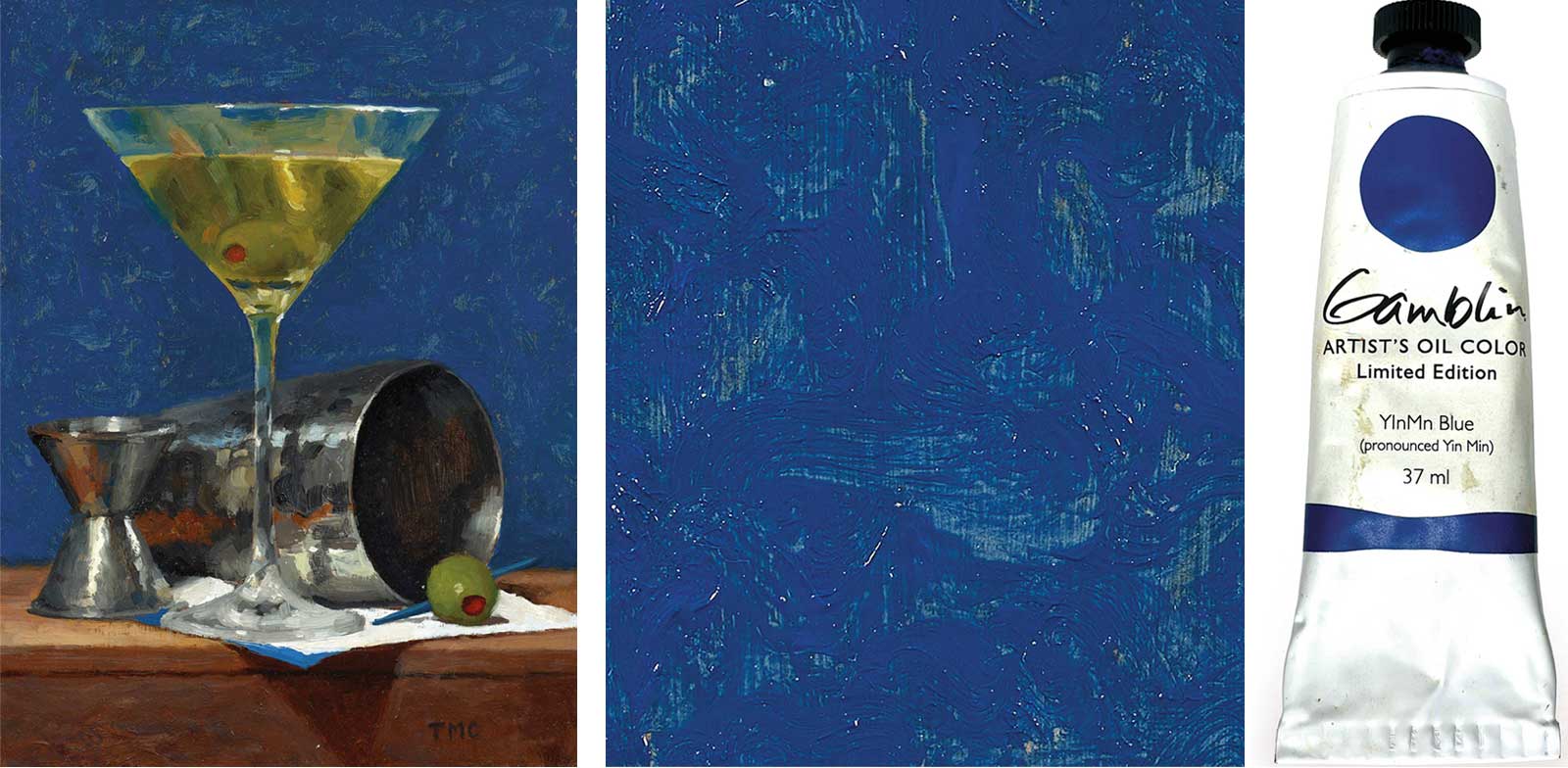
Left: Todd M. Casey, Dirty Martini, oil on panel, 8 x 6” (20 x 15 cm) Middle: A close up of Dirty Martini showing YInMn Blue. Right: A tube of YInMn Blue by Gamblin paints.
Reading a Paint Tube Label’s Color Index Name/Number (CIN)
Based on a standard that Color Index International set in 1925, the color index name/number, or CIN, identifies the pigment and hue family and provides a specific number for each pigment.
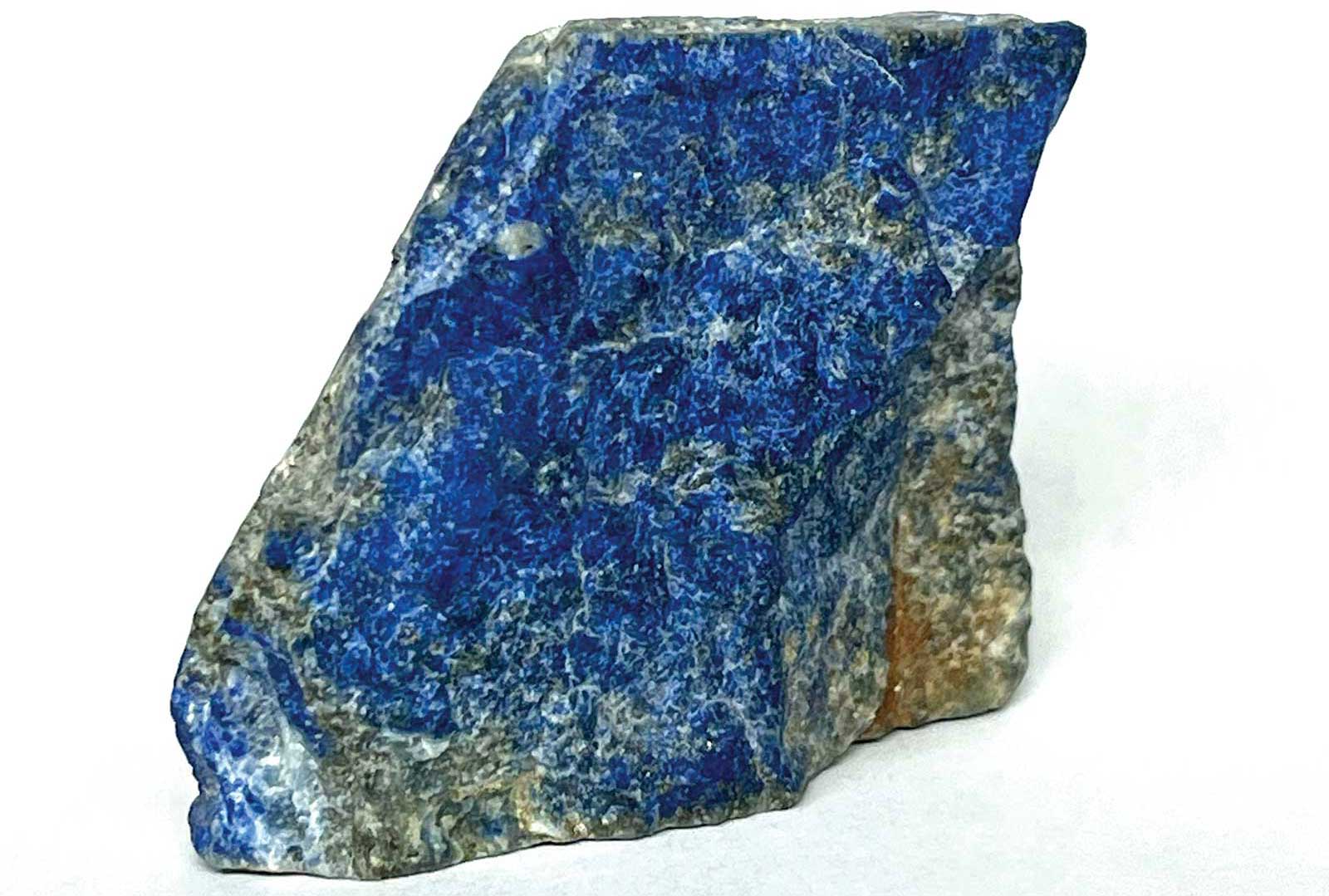
This is the lapis lazuli stone. The word “lapis lazuli” translates to “blue stone” and was the original ultramarine blue.
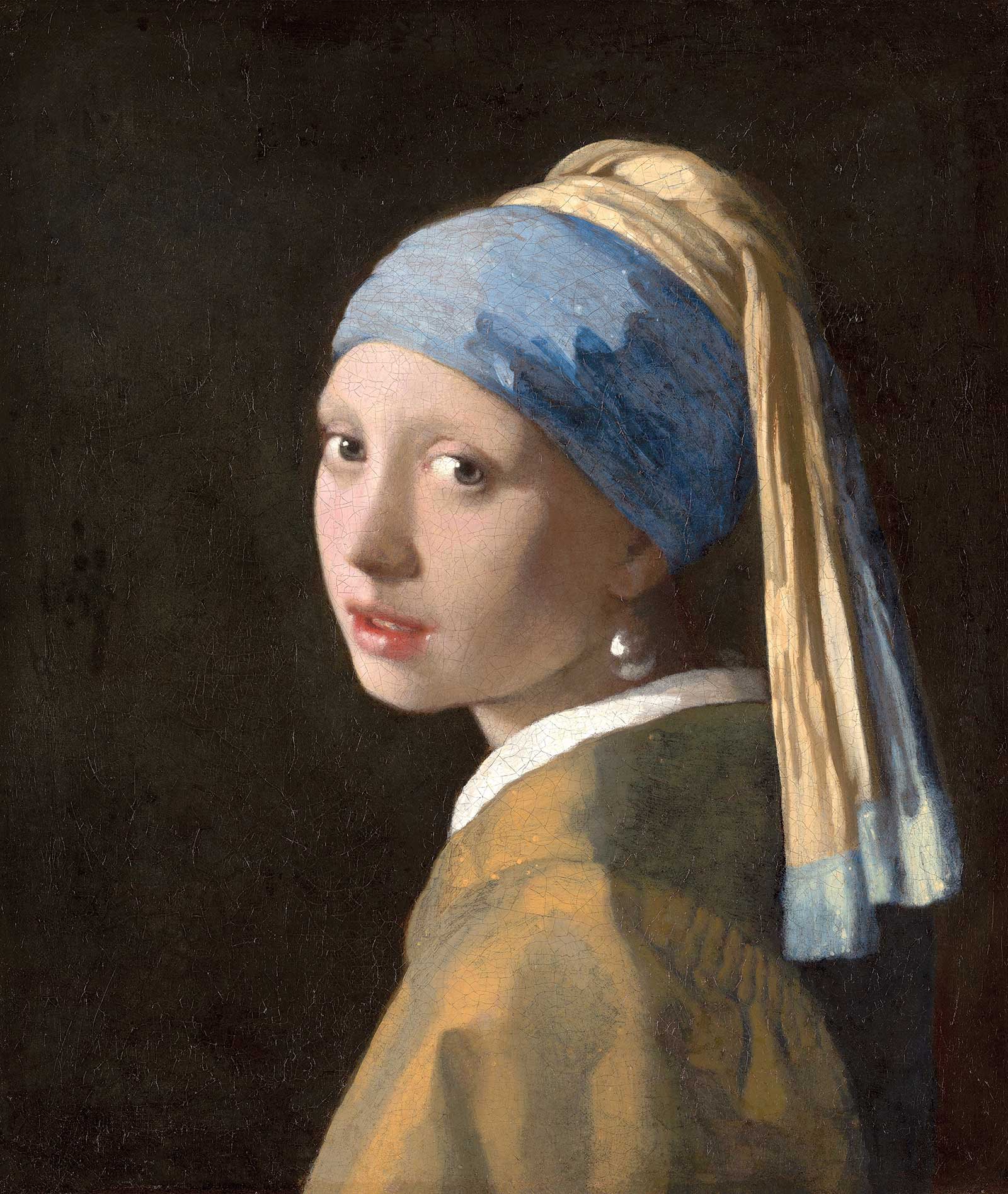
Johannes Vermeer (1632-1675), Girl with a Pearl Earring, ca. 1665, oil on canvas, 17½ x 15.3" (44½ x 39 cm). Mauritshuis, The Hague. Lapis lazuli was used in the girl’s turban.
Each pigment is assigned its own number, although the pigment itself may still vary slightly, as discussed elsewhere. It’s rare to see two colors with the same CIN, but it can happen, as with ultramarine blue and lapis lazuli. The semiprecious stone called lapis lazuli was the source of the original ultramarine blue back before a synthetic version was created. Most manufacturers show this information on the back of their labels. You should always check the CIN and marketing name. This comes in really handy when you are intending to switch brands or need to find out what is in your tube of paint. Below are some color index name abbreviations you will commonly see: PB = pigment blue, PBk = pigment black, PBr = pigment brown, PG = pigment green, PY = pigment yellow, PR = pigment red, PO = pigment orange, PV = pigment violet, PW = pigment white, N = natural
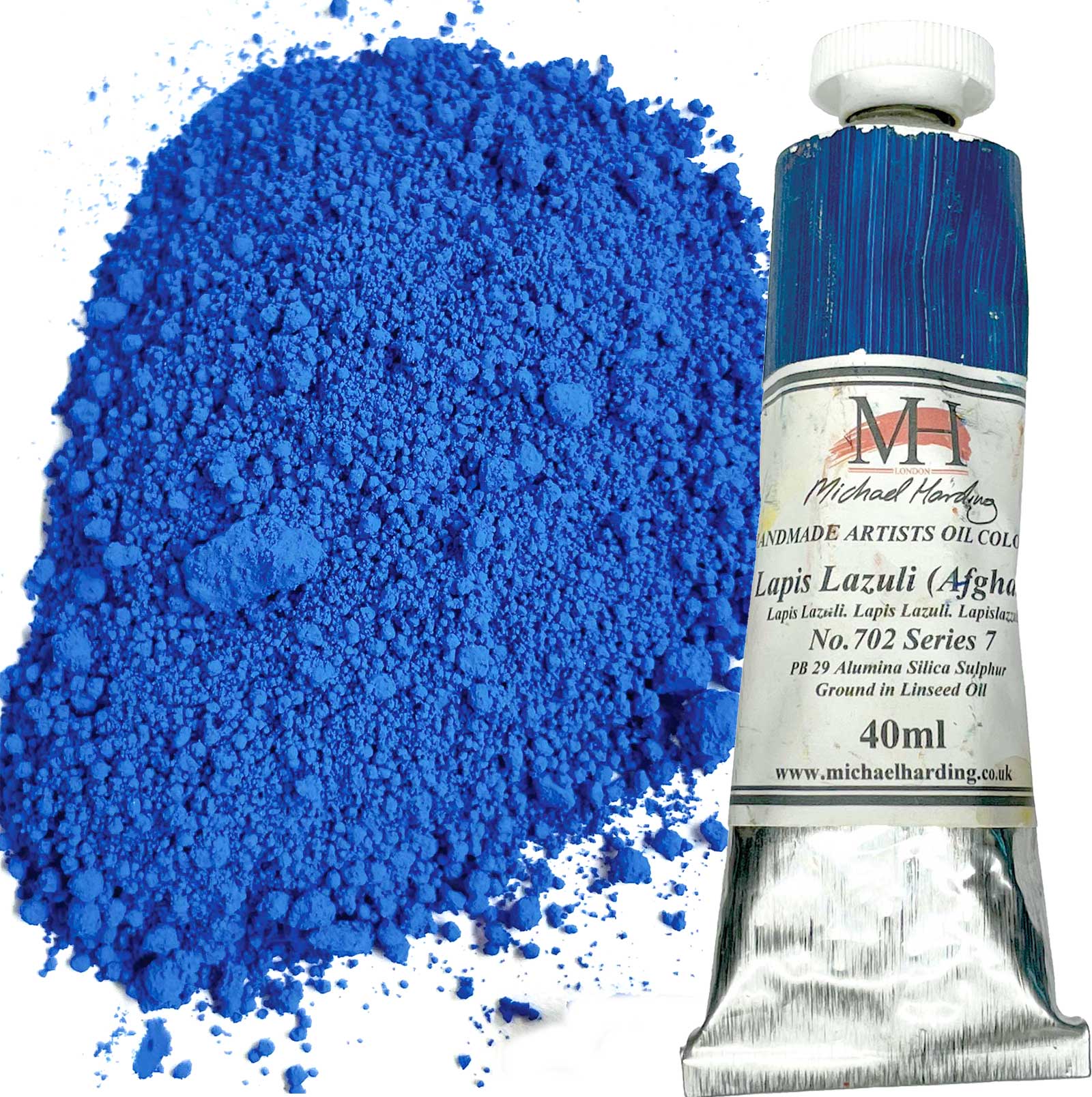
Left: Ultramarine blue in pigment form. Right: A tube of genuine lapis lazuli by Michael Harding. Note that paint tubes should be stored upside down.
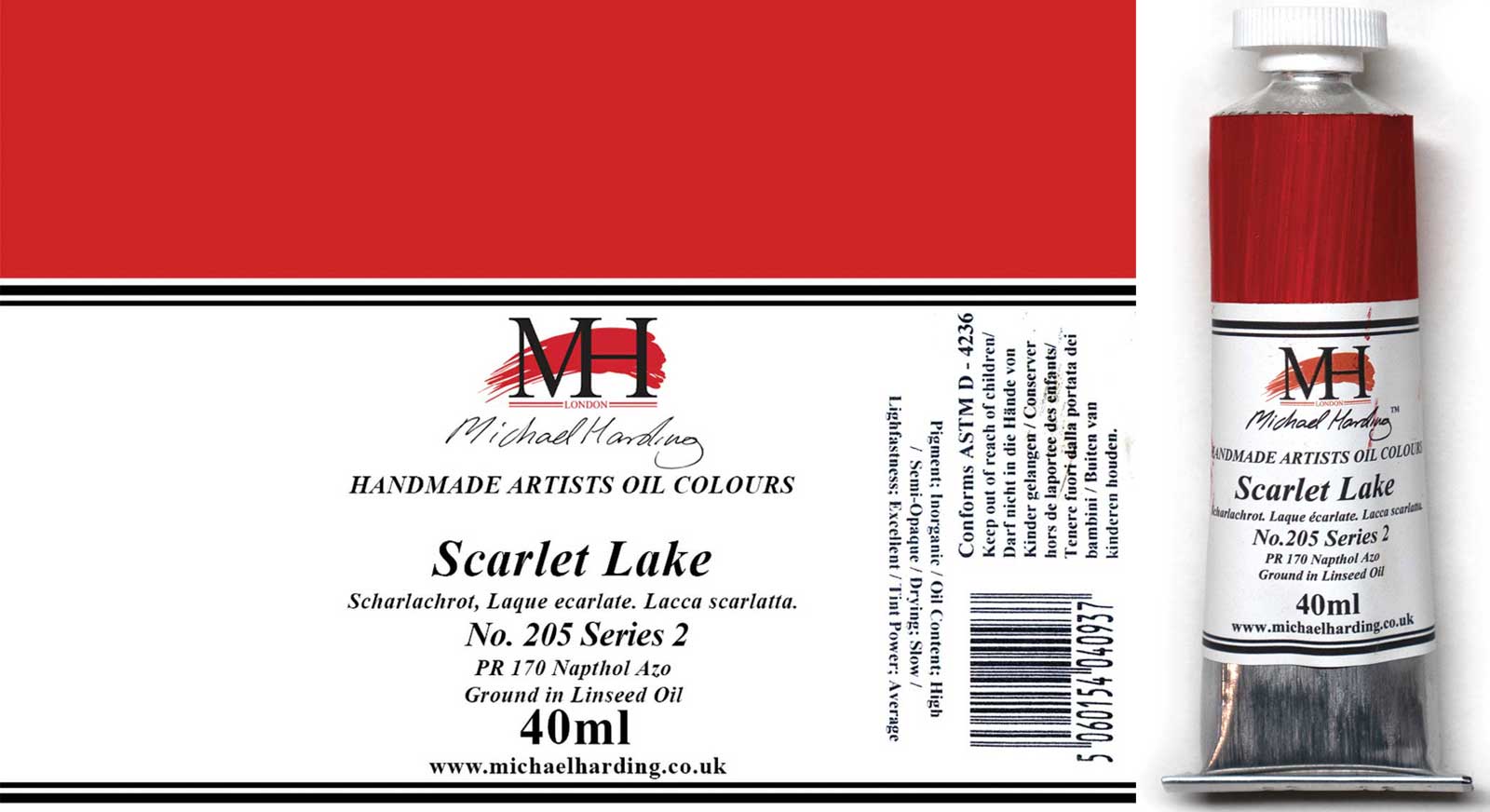
Michael Harding paints—like some paints by other manufacturers—provide all the information you need right on the label. Michael Harding uses actual paint swatches on his labels.
Brand and Marketing Names
The brand name is typically the most prominent item on each paint tube, along with the manufacturer’s name, logo or branding.
The name of the paint itself (which can vary from brand to brand) has more to do with marketing than with accurately identifying what’s in the tube. For example, some manufacturers will say that the name of a pigment is “cinnabar green” even though mercury (an essential ingredient in cinnabar green) is nowhere to be found in the tube. This is one reason why it’s really important to read the label and look for the CIN.
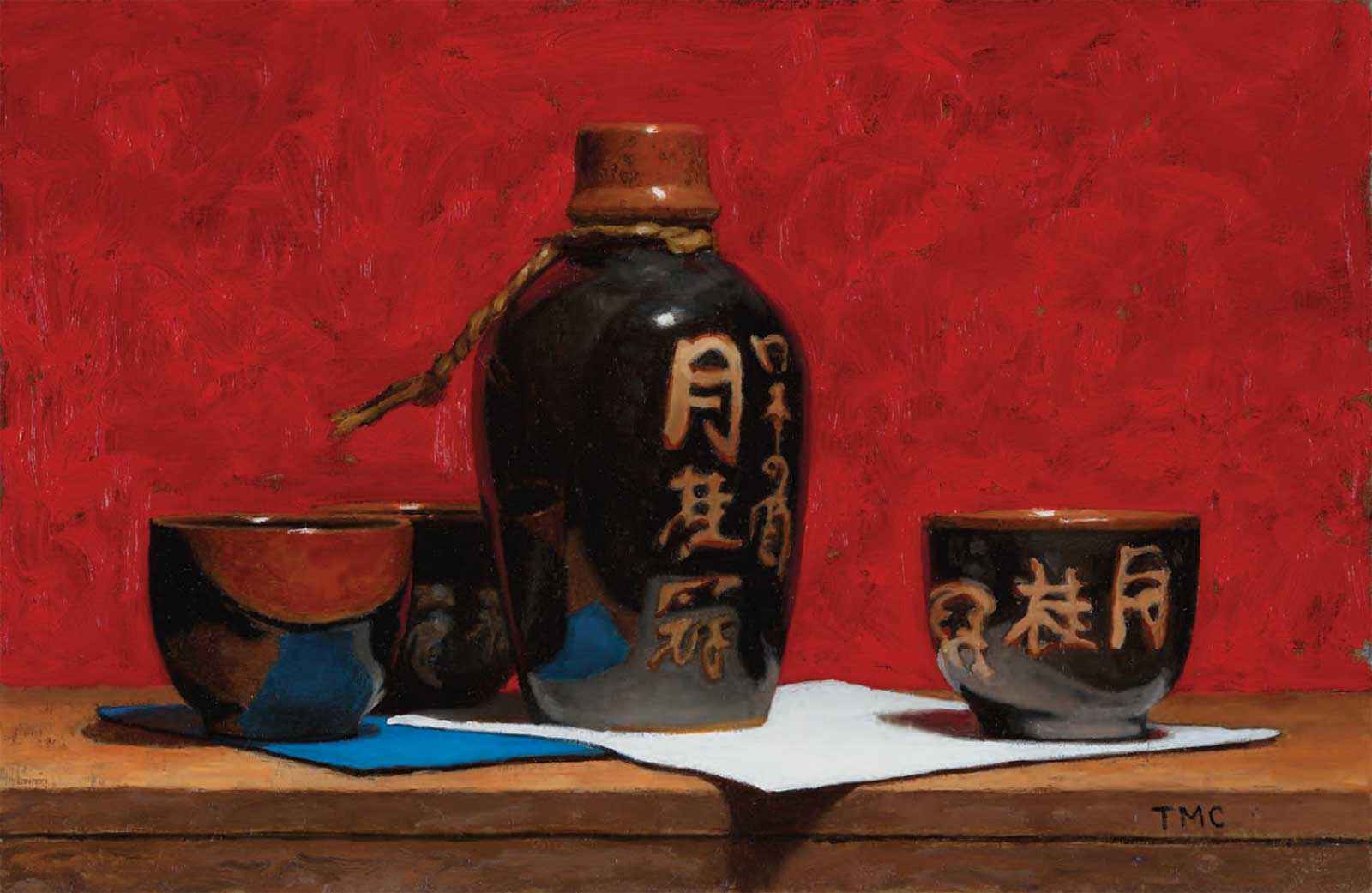
Todd M. Casey, Sake, 2018, oil on panel, 6 x 9" (15 x 22 cm). Private collection.
Pigment
A paint label should be clear about all the ingredients that are in the tube. It should show the actual name of the pigment and the type of binding oil used. This information helps the buyer understand the properties of the paint.
Oil
The most traditional drying oil is linseed oil, although it’s common to see safflower or walnut oil in a tube of paint.
Series Number
The series number refers to how rare/expensive the pigment is. If a color belongs to series 1, the pigment is common and inexpensive. A series 5, 6 or 7 paint, by contrast, is rarer and more expensive.
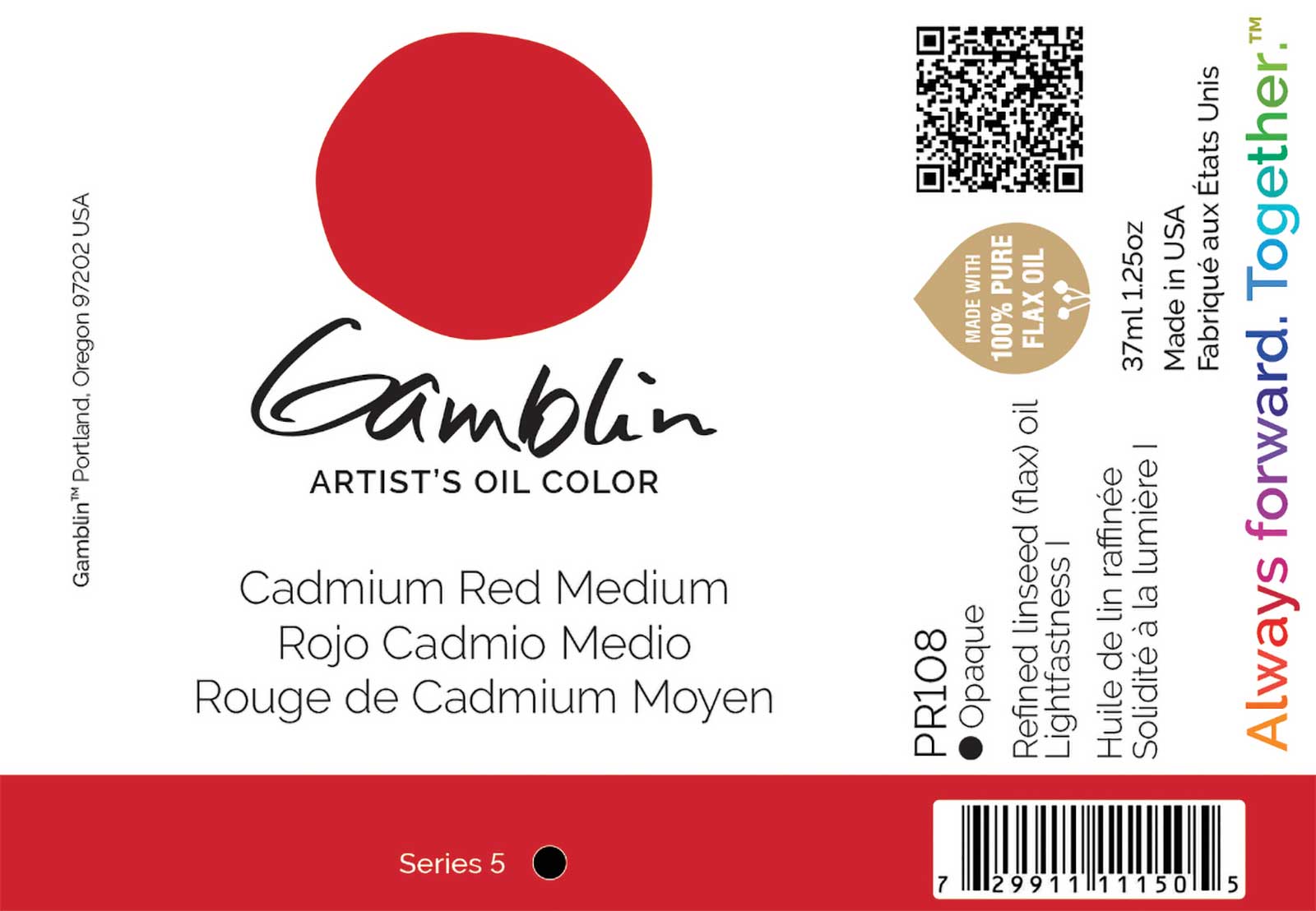
Gamblin’s cadmium red medium label, which provides all of the information that is helpful for an artist.
Tube Size
Paint tubes are usually measured by volume in milliliters (with the equivalent in fluid ounces often given in parentheses). Common tube sizes are 37, 40, 140, 150 and 225 milliliters. Paint also comes in jars and tins, which can be more economical if you’re using a lot of paint.
ASTM Rating and Lightfastness
The American Society for Testing Materials (ASTM) tests the lightfastness, or permanence, of pigments—the rate at which a pigment is likely to fade over time due to ultraviolet light exposure. Two international standards for lightfastness are in use today. Most of the world relies upon the so-called Blue Wool Scale, which ranges from 1 to 8, with 8 being the most lightfast. In this system, 8 is twice as long-lasting as 7, and 7 is twice as good as 6 (and so on). Colors whose lightfastness rating falls below 7 are not generally used, with the exception of alizarin crimson (PR83). Alizarin crimson is notoriously fugitive but remains a go-to hue because no other color hits that particular note. The higher the lightfastness rating, the more lightfast the pigment. The other standard is the ASTM standard. Used in the United States, it rates pigments’ lightfastness on a scale of I to V, with I being the highest score. So-called fugitive pigments are any pigments that have an ASTM rating higher than I or II, which means they are less resistant to the fading effect of UV light. A rating of V is the worst. You may sometimes see the word “permanent” added at the beginning of a color’s marketing name, as in permanent orange or permanent green. This is merely to assure customers that the color is lightfast.
Single-Pigment Versus Multi-Pigment Paints
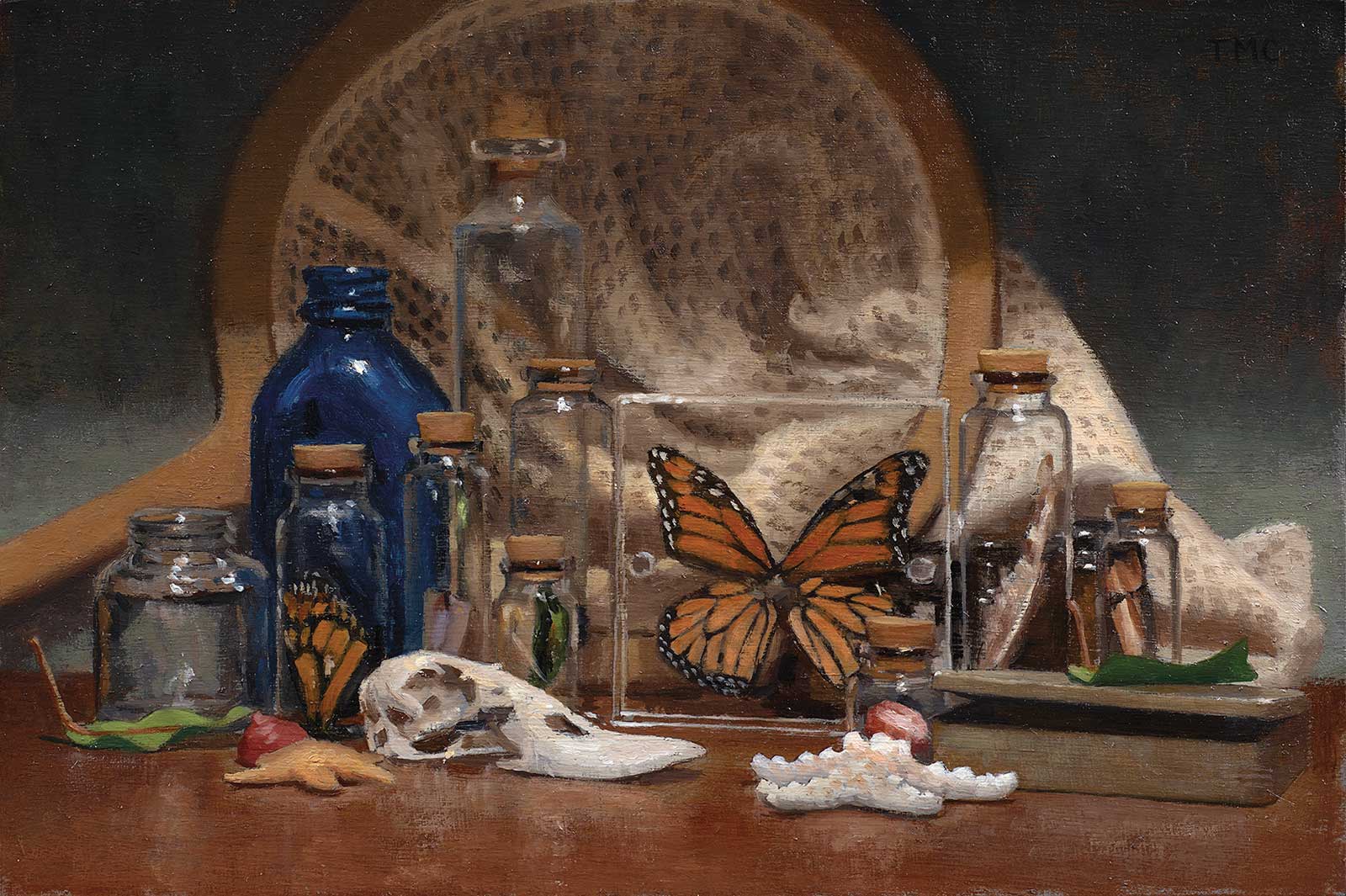
Todd M. Casey, The Naturalist, oil on canvas, 6 x 9" (15 x 22 cm). Private collection. I used cobalt blue—a single-pigment color—for the blue bottle in this painting.
A tube of paint can contain paint made from a single pigment or from several pigments mixed together. A single-pigment paint will have one CIN; for instance, cobalt blue has one pigment, whose CIN is PB28. A mixture of different pigments (sometimes referred to as a convenience mixture) will have a CIN for each pigment in the mixture; for example, the original one-pigment emerald green was discontinued because of its toxicity. Today, convenience mixtures like those by Michael Harding (incorporating the pigments PG7, PW6, PW4 and PY3) and Gamblin
(mixing PG36, PW6 and PY74) mimic the original emerald paint. The properties of such convenience mixtures differ from those of the original paints. One telltale sign of a convenience mixture is that a word—such as hue or extra—has been added to the color’s name: Naples yellow hue is an example.
About the Artist
 Todd M. Casey
Todd M. Casey’s work touches on more than simplistic realism. There is a haunting, nearly literary quality to each frame— a feeling that subjects are viewed from behind mottled glass, burnished by enigmatic candlelight, or brushed by the soft, hazy edges of a half-remembered dream. His work is classically styled but progressive in approach. Every painting has a tale to tell, brewed from a deep well of introspective thought.
His paintings have been honored with awards several times in recent years. Most recently, he won first four times at the Portrait Society of America’s Members Only Competition and placed first in oil painting from the Allied Artists of America in 2015. His work can be found in collections throughout the United States, and on the East Coast at Rehs Contemporary Gallery, in Midtown New York City, and Simie Maryles Gallery in Provincetown, Massachusetts.
In resulting years, Todd has made the transition from painter to author and teacher. He published his first art book The Art of Still Life in 2020, and his second book The Oil Painters’ Color Handbook came out in August of 2022. His work is also featured in Cocktails: A Still Life, by Christine Sismondo and James Waller, which was released in August 2022. When not painting, writing, or illustrating, Casey teaches classes for the Massachusetts College of Art and The Academy of Art University Online, The Art Students League of New York, and through private online classes and workshops.
Contact at
www.toddmcasey.com